Structural Characteristics and Properties of Zinc Coatings on Steel Structural Elements


Highlights
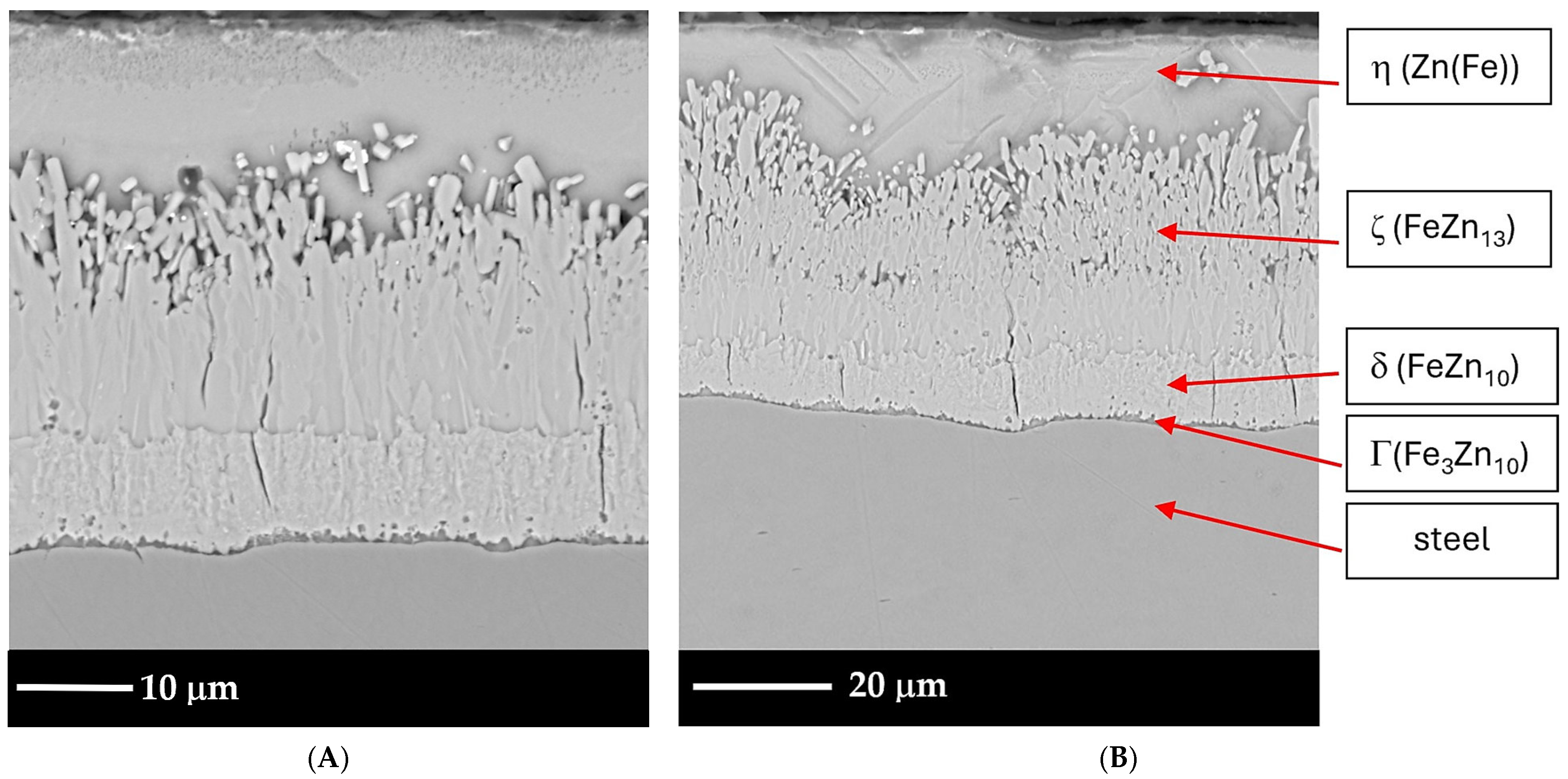
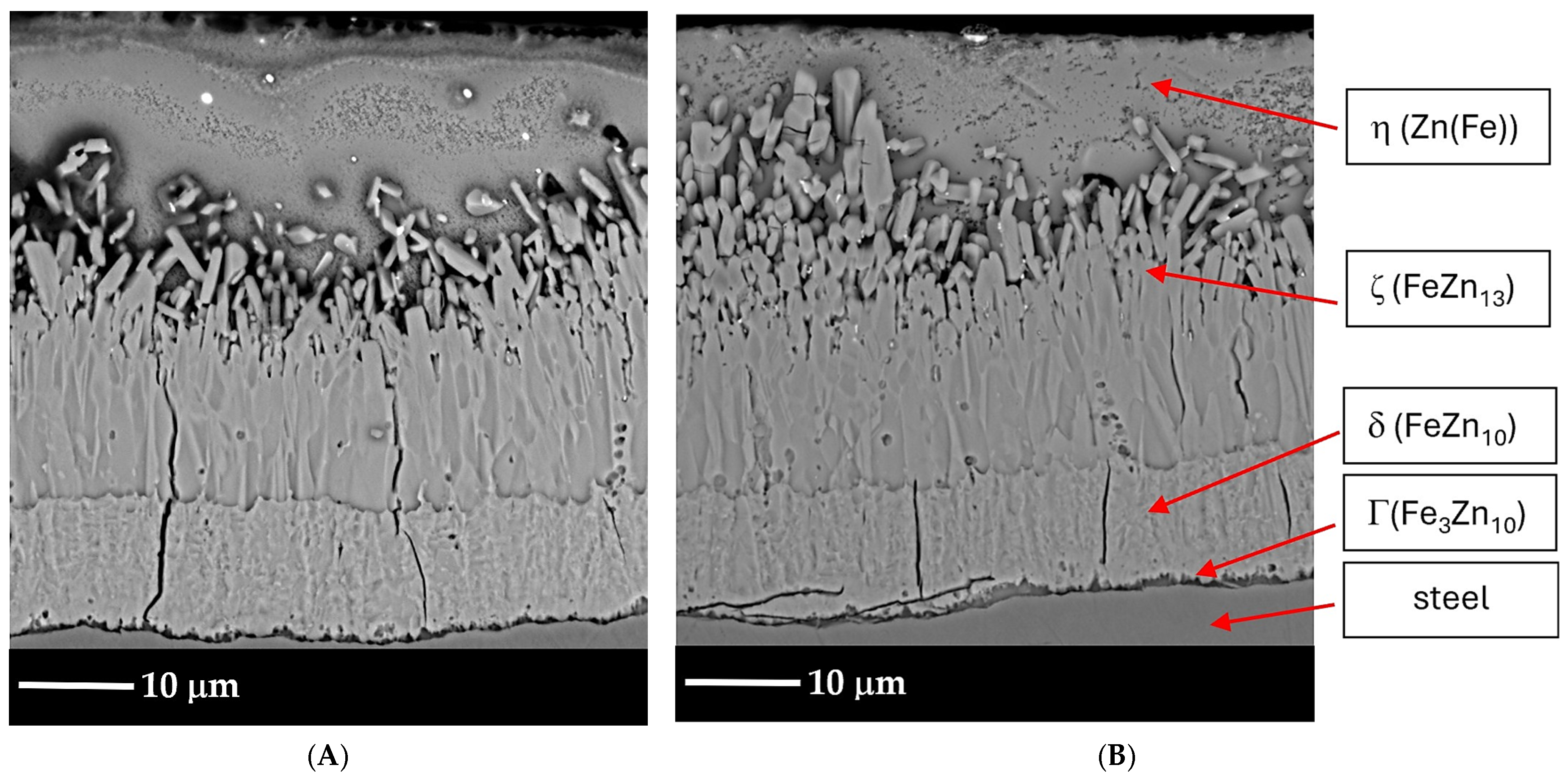
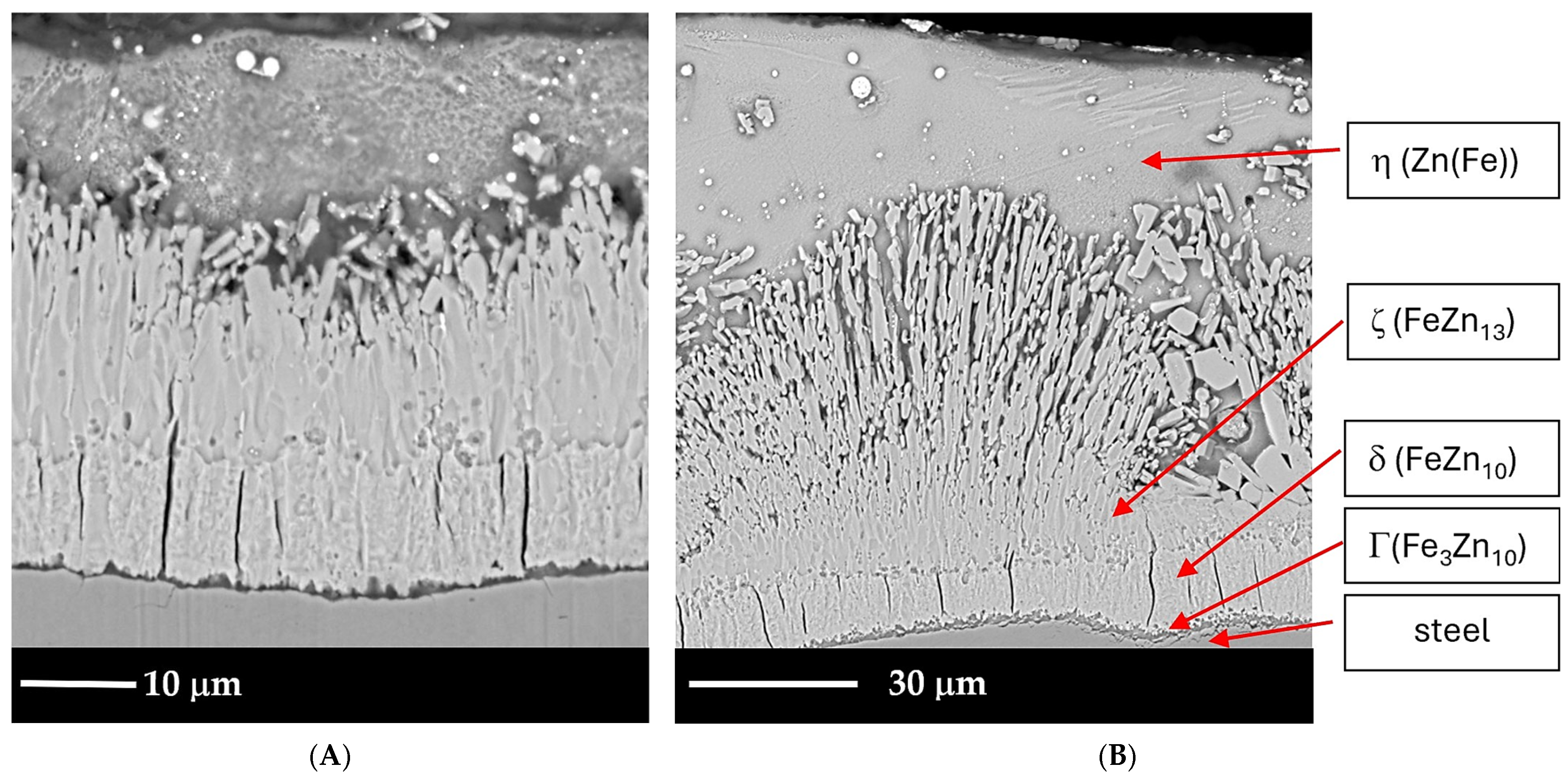
- Metallographic analysis revealed a multilayer structure composed of η, ζ, δ, and Γ phases with distinct chemical compositions.
- Hot dip zinc coatings produced on S235JR steel demonstrated good adhesion and structural stability.
- The study included metallographic, mechanical, diffraction, and tribological analyses, confirming the functional performance of the coatings.
Abstract
1. Introduction
2. Materials and Methods
- -
- Degreasing in an acidic solution,
- -
- Digestion in an 18% HCl solution for 40 min,
- -
- Rinsing in water,
- -
- Flux treatment in a ZnCl2-NH4Cl solution at 40 °C for about 5 min,
- -
- Drying at about 120 °C for 15 min,
- -
- Immersion in a bath of molten zinc for 4 min; the bath temperature was 450 ± 5 °C, and its chemical composition is given in Table 2. These values were obtained from the manufacturing process.
- X—X-ray penetration depth
- Gx—the intensity of the primary X-ray
- μ—the linear absorption coefficient
- V—volume of the worn material [mm3];
- Fn—normal force applied to the sample [N];
- n—friction path [m]
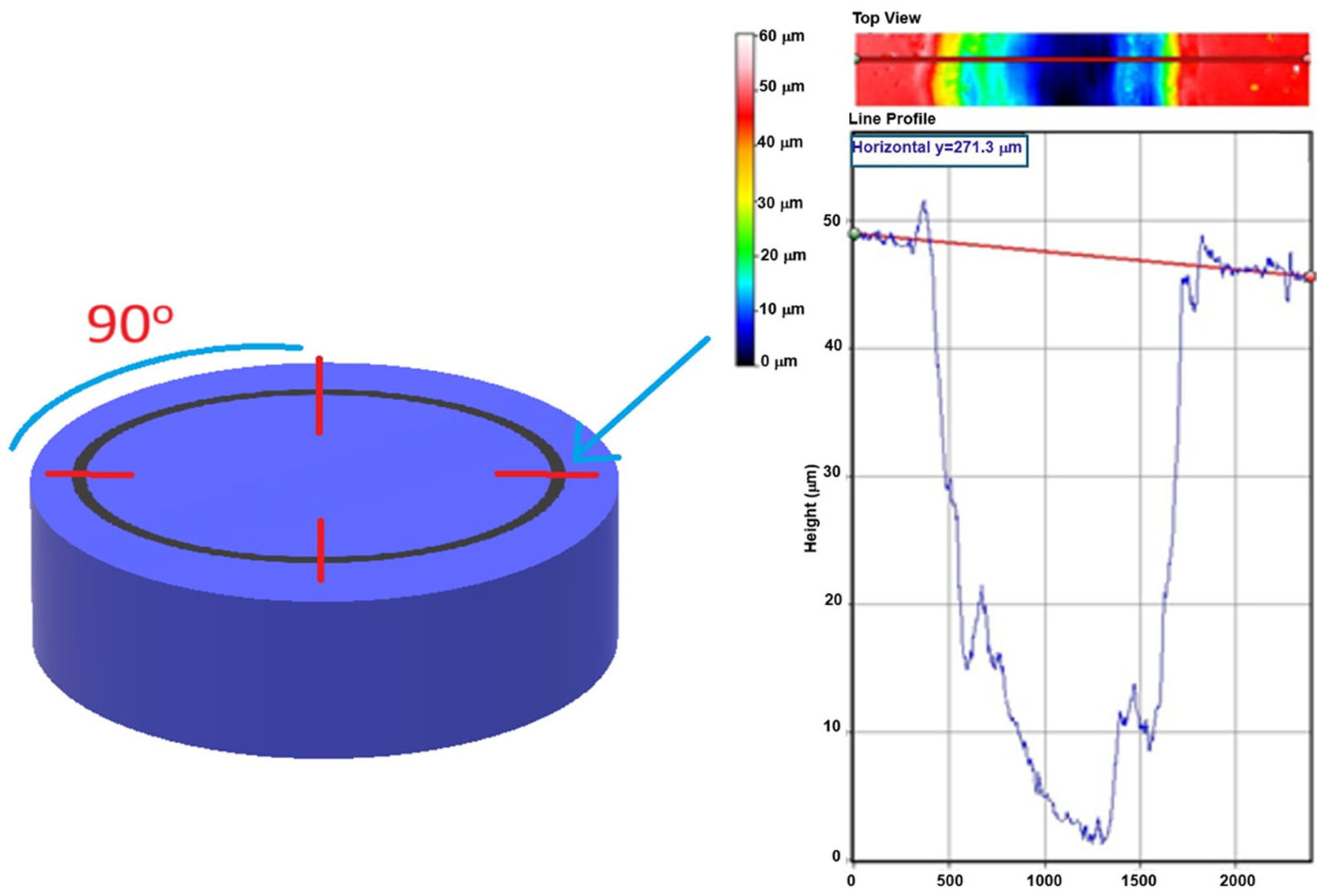
3. Results and Discussion
3.1. Microstructure and X-Ray Analysis
3.2. Microhardness Measurements
3.3. Tribological Measurements
4. Conclusions
- Metallographic observations revealed a layered structure of the zinc coating, consisting of the η, ζ, δ, and Γ phases with different chemical compositions, as confirmed by EDS analysis.
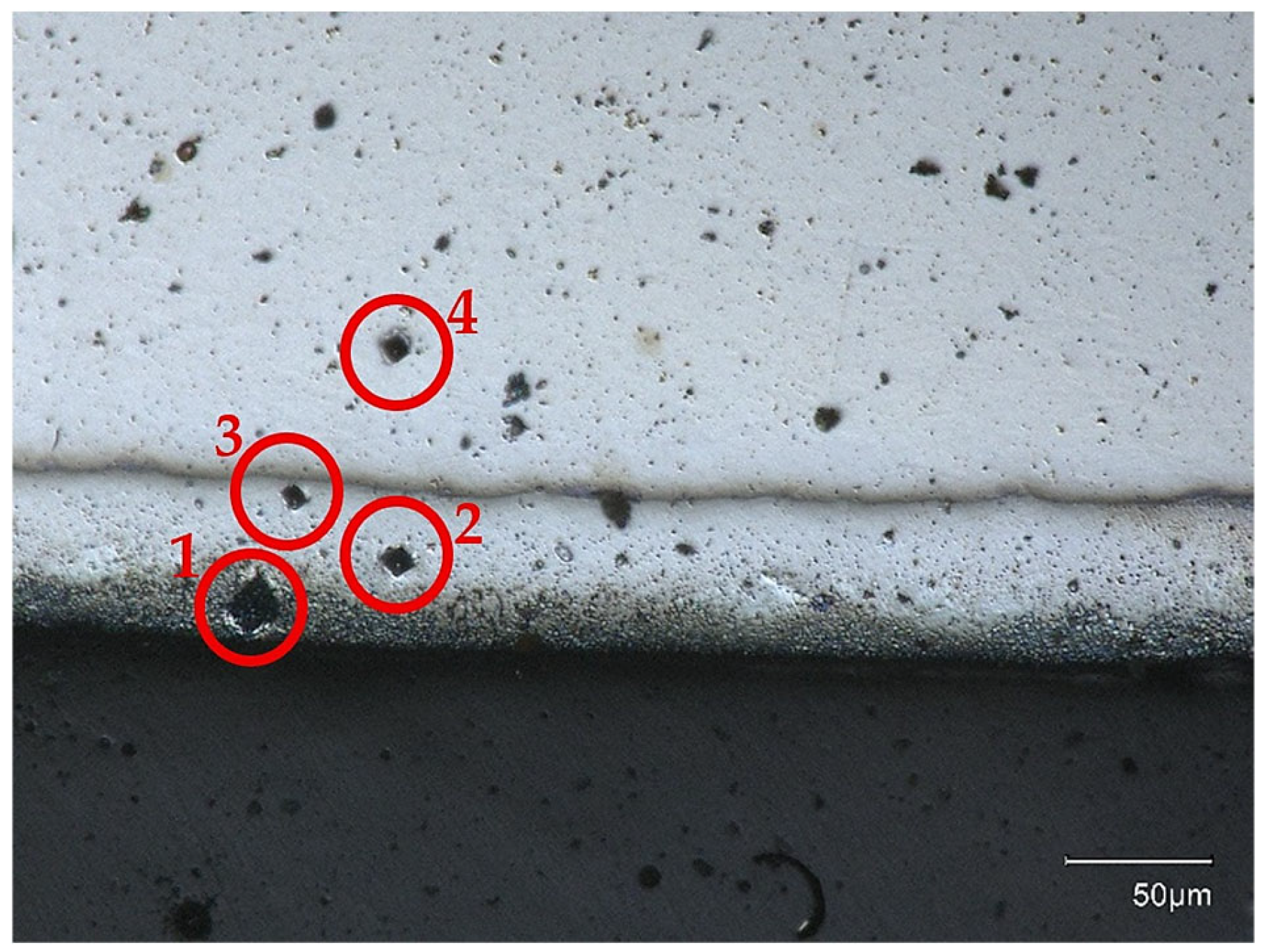
- The hardness measurement results reflect changes in the phase composition across the tested coatings. The lowest hardness was obtained in the η layer (Zn(Fe)), and the highest in the δ layer (FeZn10).
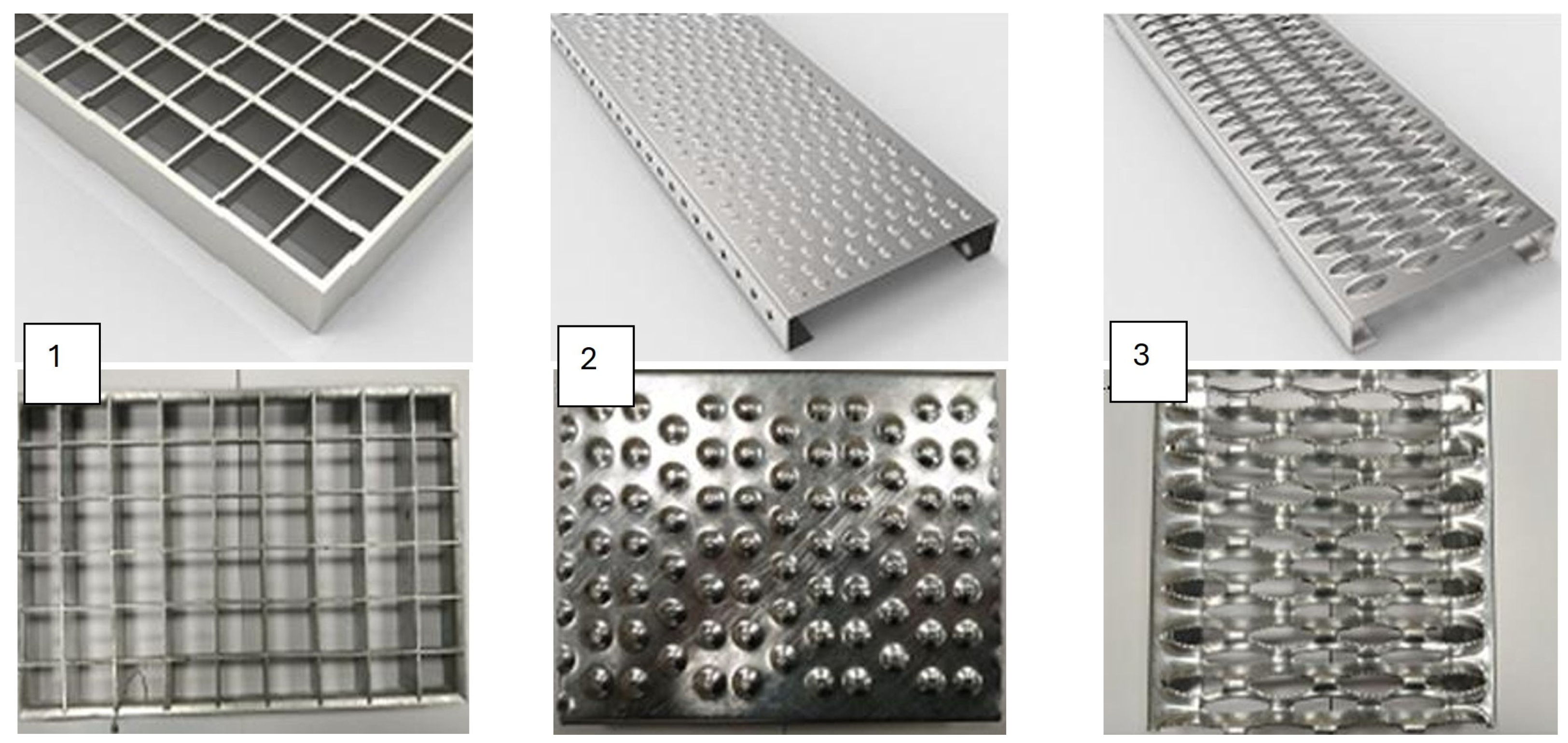
- The final coating thickness depends directly on the geometry of the grating. The increased coating thickness is associated with sharp edges, over which molten zinc flows more slowly. Zinc remains longer in hard-to-reach areas before draining, leading to local accumulations.
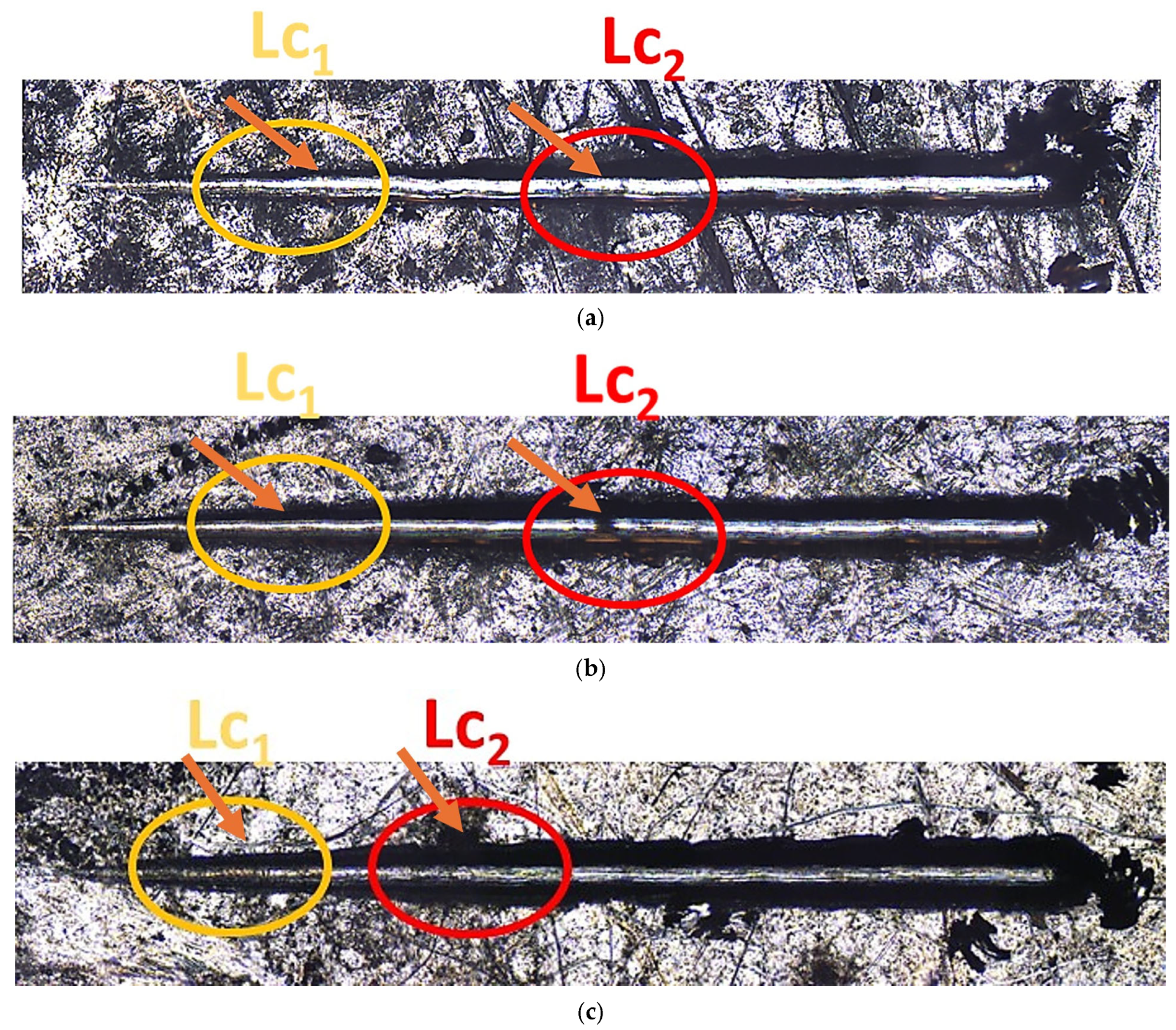
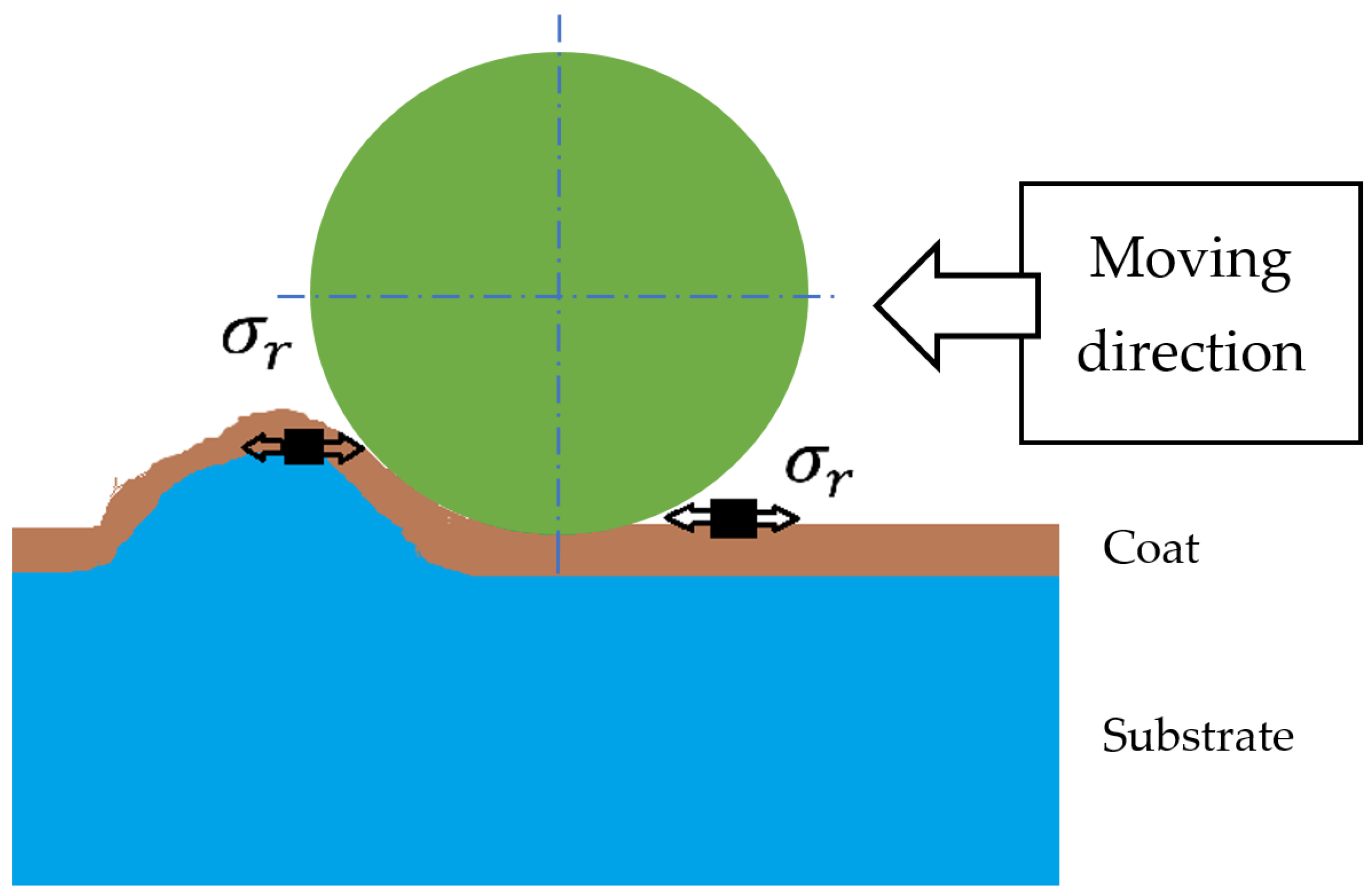
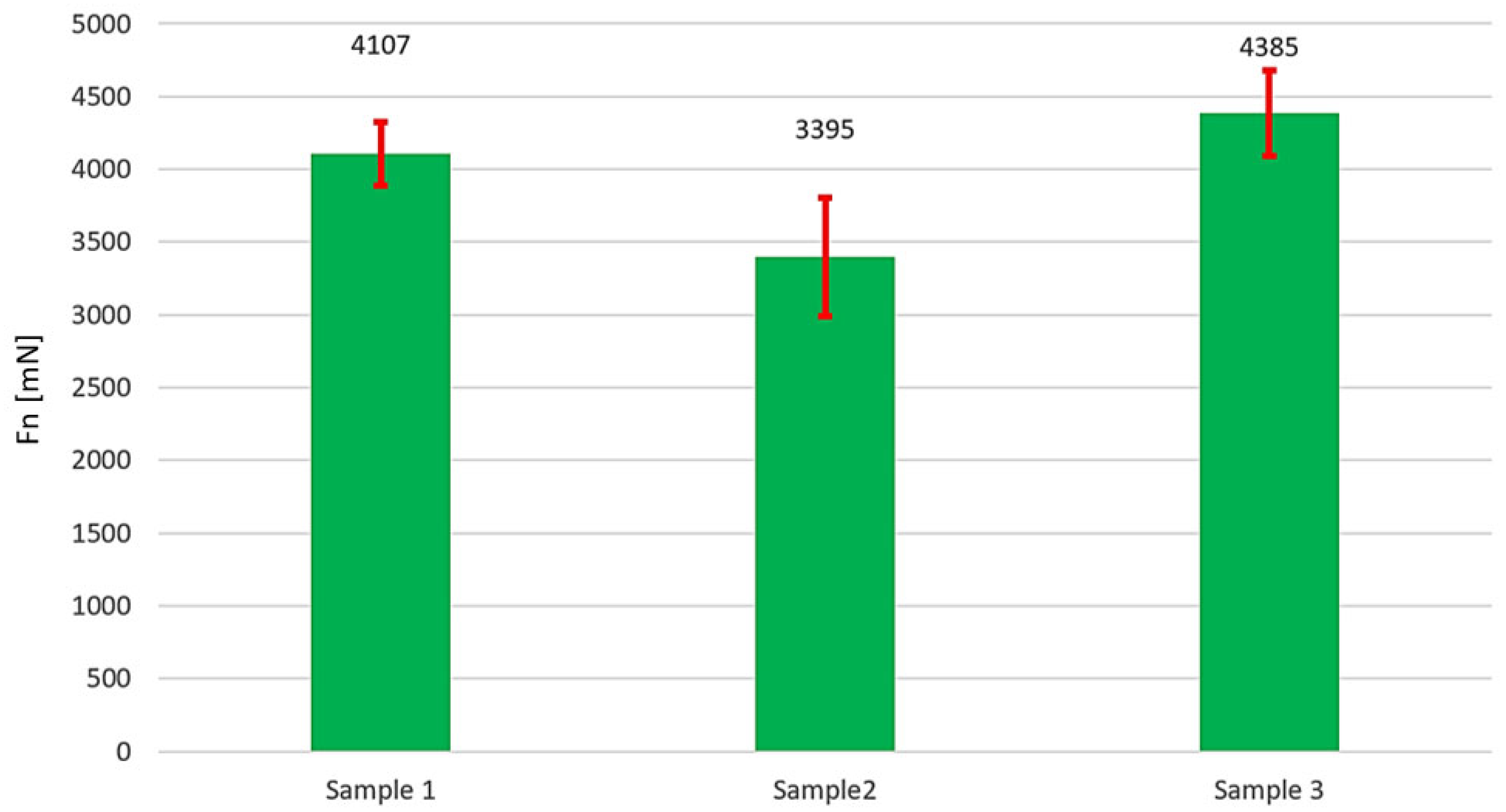
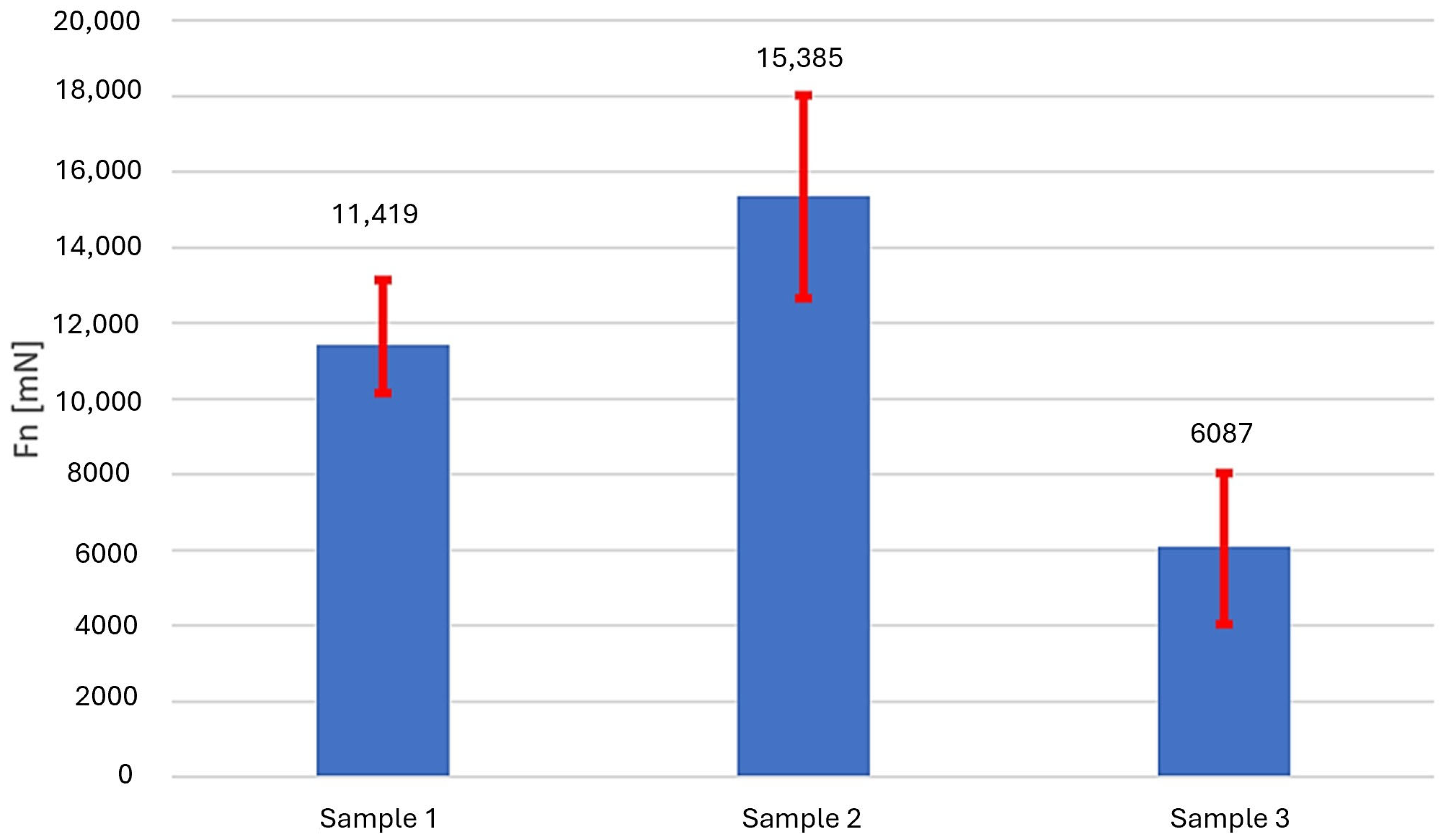
- The analysis of the scratch test results demonstrates that the critical load values are governed not only by the properties of the coating–substrate system but also by the test parameters themselves. Among these parameters, the loading rate exhibits the greatest influence, as it determines the distribution of contact stresses and affects the onset of both cohesive and adhesive failure mechanisms.
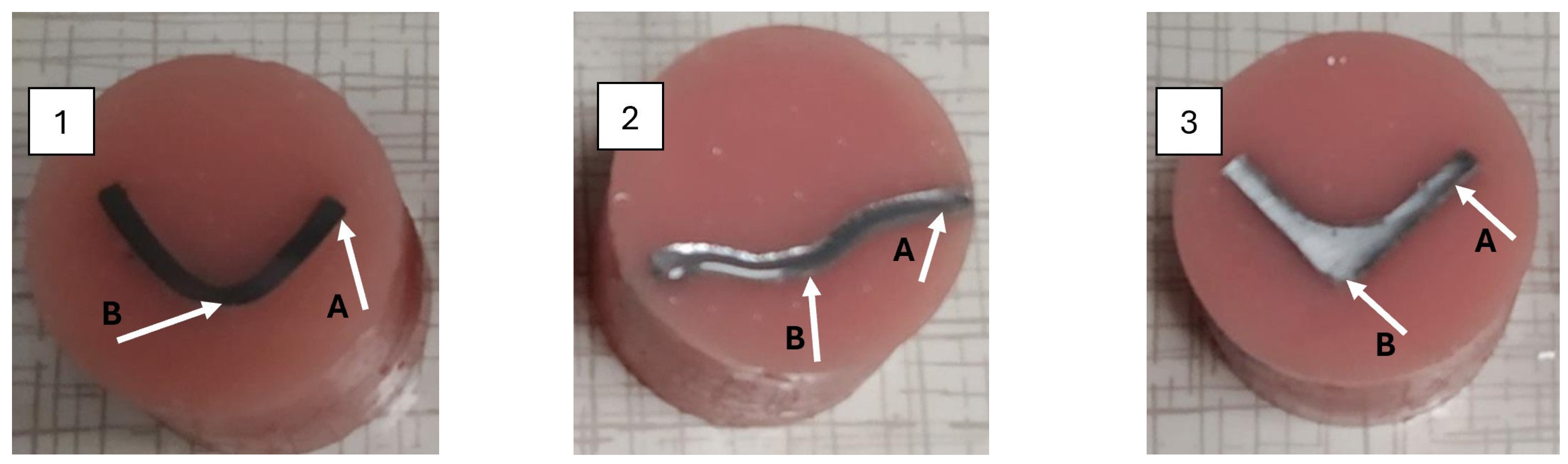
- The first cohesive cracks and the onset of coating delamination were observed at similar critical load values for all investigated coatings. These results indicate a comparable resistance of the coating systems to damage initiation under progressive loading conditions.
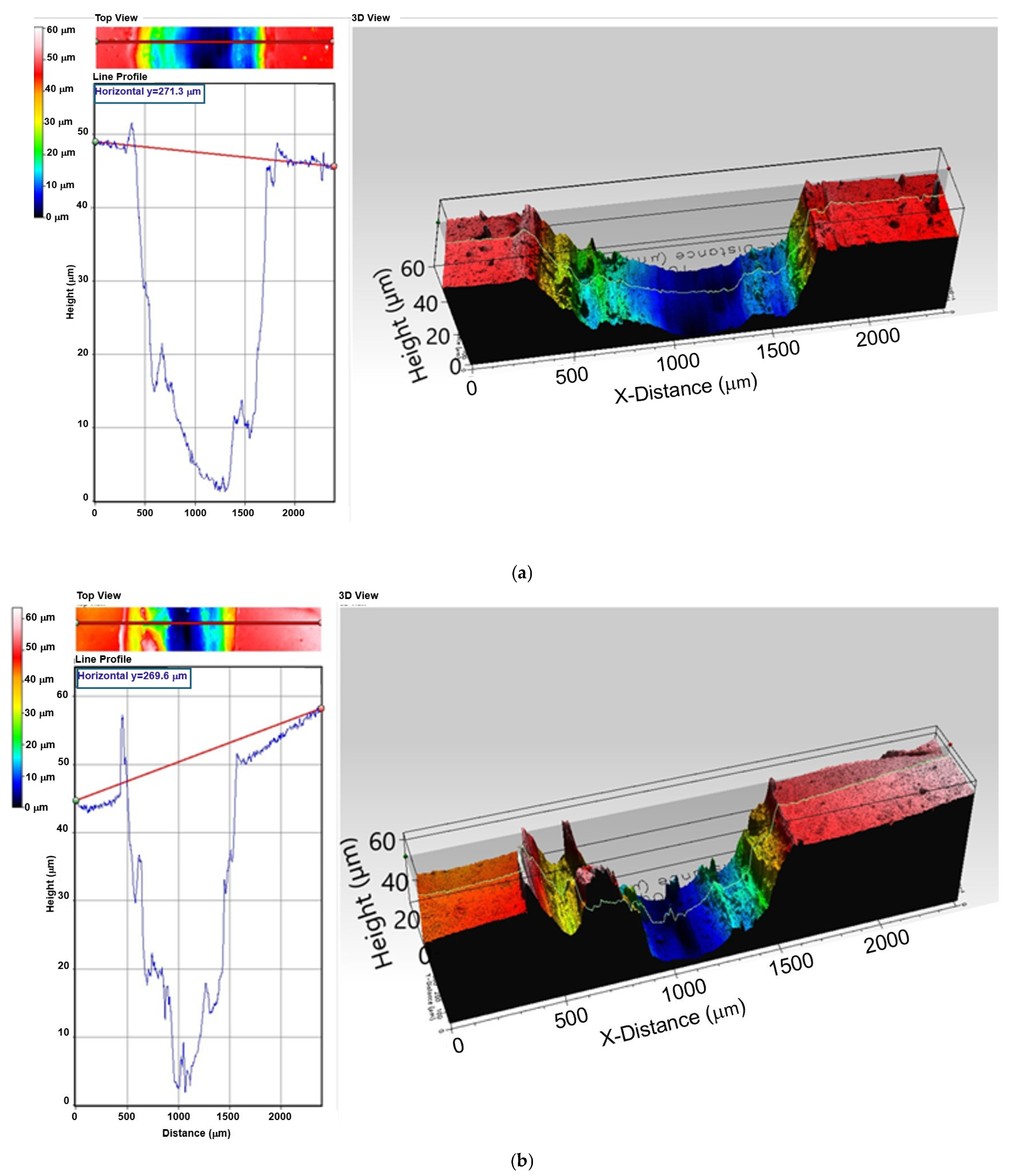
- However, the microscopic analysis of the scratch tracks revealed differences in the damage evolution mechanisms. In the case of sample 3, which exhibited the greatest coating thickness, adhesive cracks appeared at an earlier stage of damage propagation than in the other coating systems. This behavior may suggest that increased coating thickness promotes stress concentration within the coating–substrate system, thereby accelerating the development of adhesive failure despite the similar critical load values associated with damage initiation.
Author Contributions
Funding
Institutional Review Board Statement
Informed Consent Statement
Data Availability Statement
Conflicts of Interest
References
- Song, G.M.; Vystavel, T.; van der Pers, N.; De Hosson, J.T.; Sloof, W.G. Relation between microstructure and adhesion of hot dip galvanized zinc coatings on dual phase steel. Acta Mater. 2012, 60, 2973–2981. [Google Scholar] [CrossRef]
- Di Cocco, V.; Iacoviello, F.; Natali, S. Damaging micromechanisms in hot-dip galvanizing Zn based coating. Theor. Appl. Fract. Mech. 2014, 70, 91–98. [Google Scholar] [CrossRef]
- Verma, A.R.B.; van Ooij, W.J. High-temperature batch hot-dip galvanizing. Part 1. General description of coatings formed at 560 °C. Surf. Coat. Technol. 1997, 89, 132–142. [Google Scholar] [CrossRef]
- Winnicki, M.; Piątek, M.; Piwowarczyk, T.; Rutkowska-Gorczyca, M.; Ambroziak, A. Corrosion resistance comparison of zinc coatings deposited by various methods. Weld. Technol. Rev. 2014, 86, 34–40. [Google Scholar] [CrossRef]
- Kania, H.; Liberski, P. Cynkowanie wysokotemperaturowe. Ochr. Przed Korozją 2008, 10, 370–376. [Google Scholar]
- Di Cocco, V.; Iacoviello, F.; D’Agostino, L.; Natali, S. Damage micromechanisms in hot dip galvanized steel. Procedia Struct. Integr. 2017, 3, 231–236. [Google Scholar] [CrossRef]
- Kuklík, V.; Kudláček, J. 5—Morphology of hot-dip galvanized coatings. In Hot-Dip Galvanizing of Steel Structures; Butterworth-Heinemann: Waltham, MA, USA, 2016; pp. 41–65. [Google Scholar] [CrossRef]
- Li, J.; Du, A.; Fan, Y.; Zhao, X.; Ma, R.; Wu, J. Effect of shot-blasting pretreatment on microstructure of hot-dip galvanized coating. Surf. Coat. Technol. 2019, 364, 218–224. [Google Scholar] [CrossRef]
- Liberski, P. Anticorrosive Hot-Dip Coating; Wydawnictwo Politechniki Śląskiej: Gliwice, Poland, 2013. [Google Scholar]
- Bellini, C.; Carlino, F.; Natali, S. Analysis of the Al and Ti additions influences on phases generation and damage in a hot dip galvanizing process. Procedia Struct. Integr. 2019, 18, 688–693. [Google Scholar] [CrossRef]
- Kania, H.; Liberski, P.; Podolski, P. The kinetics growth and structure of zinc coating obtained in alloy baths. Hut. Wiadomości Hut. 2006, 73, 233–238. [Google Scholar]
- Kania, H.; Liberski, P.; Podolski, P.; Tatarek, A. Reasons of surface faulty formation of zinc coatings on steel pipes. Hut. Wiadomości Hut. 2007, 74, 274–278. [Google Scholar]
- Tzimas, E.; Papadimitriou, G. Cracking mechanisms in high temperature hot dip galvanized coatings. Surf. Coat. Technol. 2001, 145, 176–185. [Google Scholar] [CrossRef]
- PN-EN ISO 1461:2011; Powłoki Cynkowe Nanoszone Metodą Zanurzeniową na Wyroby Stalowe—Wymagania i Badania. PKN: Warsaw, Poland, 2011.
- ASM International. Corrosion. In Metals Handbook, 9th ed.; ASM International: Metals Park, OH, USA, 1987; Volume 13. [Google Scholar]
- Maćkowiak, J.; Short, N.R. Metallurgy of galvanized coatings. Int. Metall. Rev. 1979, 24, 1–19. [Google Scholar] [CrossRef]
- De Abreu, Y.; Da Silva, A.; Ruiz, A.; Réquiz, R.; Angulo, N.; Alanis, R. Study of zinc coatings on steel substrate attained by two different techniques. Surf. Coat. Technol. 1999, 120–121, 682–686. [Google Scholar] [CrossRef]
- Bondareva, O.S.; Melnikov, A. Effect of the silicon content in steel on the hot-dip zinc coating microstructure formation. IOP Conf. Ser. Mater. Sci. Eng. 2016, 156, 012015. [Google Scholar] [CrossRef]
- Kania, H.; Mendala, J.; Kozuba, J.; Saternus, M. Development of bath chemical composition for batch hot-dip galvanizing-A Review. Materials 2020, 13, 4168. [Google Scholar] [CrossRef] [PubMed]
- Strutzenberger, J.; Faderl, J. Solidification and spangle formation of hot-dip-galvanized zinc coatings. Metall. Mater. Trans. A 1998, 29, 631–646. [Google Scholar] [CrossRef]
- Kopyciński, D. The sequence of shaping of intermetallic phases in the zinc coating. Mater. Eng. 2015, 5, 251–255. [Google Scholar]
- Kopyciński, D. The shaping of zinc coating on surface steels and ductile iron casting. Arch. Foundry Eng. 2010, 10, 463–470. [Google Scholar]
- Jain, R.; Pitchumani, R. Fabrication and characterization of zinc-based superhydrophobic coatings. Surf. Coat. Technol. 2018, 337, 223–231. [Google Scholar] [CrossRef]
- Natesan, M.; Venkatachari, G.; Palaniswamy, N. Kinetics of atmospheric corrosion of mild steel, zinc, galvanized iron and aluminium at 10 exposure stations in India. Corros. Sci. 2006, 48, 3584–3608. [Google Scholar] [CrossRef]
- Natali, S.; Di Cocco, V.; Iacoviello, F. Prove di flessione non tradizionali su acciai zincati: Caratterizzazione e statica del meccanismo ed identificazione dello stato di danneggiamento dei rivestimenti. La Metall. Ital. 2004, 96, 47–55. [Google Scholar]
- Suliga, M.; Wartacz, R. The influence of the angle of working part of die on the zinc coating thickness and mechanical properties of medium carbon steel wires. Arch. Metall. Mater. 2019, 64, 1295–1299. [Google Scholar] [CrossRef]
- Jiao, X.; Jia, J.; Chen, W.; Yang, W. Electrochemical corrosion and wear behavior of hot-dip galvanized steel in soils of northern China. Coatings 2025, 15, 112. [Google Scholar] [CrossRef]
- Jędrzejczyk, D.; Szatkowska, E. The influence of heat treatment on corrosion resistance and microhardness of hot-dip zinc coating deposited on steel bolts. Materials 2022, 15, 5887. [Google Scholar] [CrossRef] [PubMed]
- Chaouki, A.; Naamane, S.; Cifuentes, S.C.; Benabdallah, I.; Bedmar, J.; Rams, J.; El Fatimy, A.; El Maalam, K.; Ben Ali, M. Investigation of coating weight and steel substrate on the properties of hot-dip galvanized coatings. Surf. Coat. Technol. 2025, 497, 131804. [Google Scholar] [CrossRef]
- Seré, P.R.; Culcasi, J.D.; Elsner, C.I.; Di Sarli, A.R. Factors affecting the hot-dip zinc coatings structure. Rev. Metal. 1997, 33, 376–381. [Google Scholar] [CrossRef]
- Lin, C.S.; Meshii, M. The effect of steel chemistry on the formation of Fe-Zn intermetallic compounds of galvanneal-coated steel sheets. Metall. Mater. Trans. B 1994, 25, 721–730. [Google Scholar] [CrossRef]
- Feliu, S.; Barranco, V. XPS study of the surface chemistry of conventional hot-dip galvanized pure Zn, galvanneal and Zn-Al alloy coatings on steel. Acta Mater. 2003, 51, 5413–5424. [Google Scholar] [CrossRef]
- Chakraborty, A.; Ghosh, R.; Sudan, M.; Mondal, A. Improvement in hot dip galvanized coating microstructure and properties by pre-metallic deposition on steel surface: A comprehensive review. Surf. Coat. Technol. 2022, 449, 12897. [Google Scholar] [CrossRef]
- de Damborenea, J.; Conde, A.; Bernal, P.; Ortuño, F.; Pinto da Silva, C.; Arenas, M.A. Surface erosion damage in mounting structures of large-scale photovoltaic systems. Sol. Energy Mater. Sol. Cells 2026, 298, 114121. [Google Scholar] [CrossRef]
- Sánchez, C.; Bustos, O.; Artigas, A.; Bruna, H. Silicon Effect and microstructural evolution of hot dip galvanized Coating of Structural Steels. Metals 2023, 13, 1892. [Google Scholar] [CrossRef]
- Sepper, S.; Peetsalu, P.; Kulu, P.; Saarna, M.; Mikli, V. The role of silicon in the hot dip galvanizing process. Proc. Est. Acad. Sci. 2016, 65, 159–165. [Google Scholar] [CrossRef]
- Fasoyino, F.A.; Weinberg, F. Spangle formation in galvanized sheet steel coatings. Metall. Trans. B 1990, 21, 549–558. [Google Scholar] [CrossRef]
- Kania, H.; Liberski, P. Synergistic influence of the addition of Al, Ni and Pb to a zinc bath upon growth kinetics and structure of coatings. Solid State Phenom. 2014, 212, 115–120. [Google Scholar] [CrossRef]
- Chaouki, A.; Ali, M.B.; El Maalam, K.; Aouadi, K.; Benabdallah, I.; El Fatimy, A.; Naamane, S. The effect of zinc bath formulation on the corrosion resistance of galvanized steel: A Short Review. ACS Omega 2025, 10, 9809−9823. [Google Scholar] [CrossRef] [PubMed]
- Najafabadia, E.P.; Heidarpoura, A.; Rainab, S. Hot-dip galvanizing of high and ultra-high strength thin-walled CHS steel tubes: Mechanical performance and coating characteristics. Thin-Walled Struct. 2021, 164, 107744. [Google Scholar] [CrossRef]
- Jędrzejczyk, D.; Szatkowska, E. The impact of heat treatment on the behavior of a hot-dip zinc coating applied to steel during dry friction. Materials 2021, 14, 660. [Google Scholar] [CrossRef] [PubMed]
- Pinger, T.; Brand, M.; Grothe, S.; Marginean, G. Abrasive wear behavior of batch hot-dip galvanized coatings. Materials 2024, 17, 1547. [Google Scholar] [CrossRef] [PubMed]
- Chaouki, A.; Ben Ali, M.; El Maalam, K.; Aouadi, K.; Benabdallah, I.; El Fatim, A.; Naaman, S. Optimizing corrosion protection: Performance comparison of Zn and Zn-Al-Mg alloys Hot-Dip galvanized coatings. J. Alloys Compd. 2024, 1007, 176371. [Google Scholar] [CrossRef]
- Dudziak, T.; Gajewski, P.; Śnieżyński, B.; Deodeshmukh, V.; Witkowska, M.; Ratuszek, W.; Chruściel, K. Neural network modelling studies of steam oxidised kinetic behaviour of advanced steels and Ni-based alloys at 800 °C for 3000 h. Corros. Sci. 2018, 133, 94–111. [Google Scholar] [CrossRef]
- ISO 20808:2016; Fine Ceramics (Advanced Ceramics, Advanced Technical Ceramics)—Determination of Friction and Wear Characteristics of Monolithic Ceramics by Ball-on-Disc Method. International Organization for Standardization: Geneva, Switzerland, 2016.
- Gao, J.; Luedtke, W.D.; Gourdon, D.; Ruths, M.; Israelachvili, J.N.; Landman, U. Frictional Forces and Amontons’ Law: From the Molecular to the Macroscopic Scale. J. Phys. Chem. B 2004, 108, 3410–3425. [Google Scholar] [CrossRef]
- Archard, J.F. Contact and Rubbing of Flat Surfaces. J. Appl. Phys. 1953, 24, 981–988. [Google Scholar] [CrossRef]
- EN 1071-3:2005; Advanced Technical Ceramics—Methods of Test for Ceramic Coatings—Part 3: Determination of Adhesion and Other Mechanical Failure Modes by a Scratch Test. European Committee for Standardization: Brussels, Belgium, 2005.
- Bull, S.J.; Berasetegui, E.G. An Overview of the Potential of Quantitative Coating Adhesion Measurement by Scratch Testing. Tribol. Int. 2006, 39, 99–114. [Google Scholar] [CrossRef]
- Bull, S.J. Failure mode maps in the thin film scratch adhesion test. Tribol. Int. 1997, 30, 491–498. [Google Scholar] [CrossRef]
- Bull, S.J. Failure modes in scratch adhesion testing. Surf. Coat. Technol. 1991, 50, 25–32. [Google Scholar] [CrossRef]
- Bergengren, Y.; Melander, A. An experimental and theoretical study of the fatigue properties of hot-dip-galvanized high-strength sheet steel. Int. J. Fatigue 1992, 14, 154–162. [Google Scholar] [CrossRef]
- De la Cruz, P.; Ericsson, T. Influence of hot dip galvanizing on fatigue and corrosion fatigue resistance of a B-Mn steel. Scand. J. Metall. 1997, 26, 145–152. [Google Scholar]
- Berchem, K.; Hocking, M.G. The influence of pre-straining on the high-cycle fatigue performance of two hot-dip galvanised car body steels. Mater. Charact. 2007, 58, 593–602. [Google Scholar] [CrossRef]
- Sirin, S.Y. Effect of hot dip galvanizing on the fatigue behavior of hot rolled and ion nitrided AISI 4340 steel. Int. J. Fatigue 2019, 123, 1–9. [Google Scholar] [CrossRef]
- Burakowski, T.; Wierzchoń, T. Inżynieria Powierzchni Metali; WNT: Warszawa, Poland, 1995. [Google Scholar]





| Content of Elements, wt. % | ||||||||||
|---|---|---|---|---|---|---|---|---|---|---|
| C | Mn | Si | P | S | Cu | Cr | Ni | Al | N | Fe |
| 0.1 | 0.38 | 0.02 | 0.018 | 0.0018 | 0.03 | 0.09 | 0.04 | 0.03 | 0.006 | balance |
| Zinc Bath Element Content, wt. % | ||||||||
|---|---|---|---|---|---|---|---|---|
| Pb | Fe | Cd | Cu | Sn | Al | Ni | Bi | Zn |
| 0.34 | 0.026 | 0.0007 | 0.0034 | <0.0005 | 0.0025 | 0.041 | <0.005 | balance |
| Phase | η | ζ | δ | Γ | |||||
|---|---|---|---|---|---|---|---|---|---|
| Sample No | Area | Zn | Fe | Zn | Fe | Zn | Fe | Zn | Fe |
| 1 | A | 100 | 0 | 93.5 | 6.5 | 90.5 | 9.5 | 72.8 | 27.2 |
| 1 | B | 100 | 0 | 93.5 | 6.5 | 91.5 | 8.5 | 57.4 | 42.6 |
| 2 | A | 100 | 0 | 93.5 | 6.5 | 91.7 | 8.3 | 70.9 | 29.1 |
| 2 | B | 100 | 0 | 93.9 | 6.1 | 91.5 | 8.5 | 67.7 | 32.3 |
| 3 | A | 100 | 0 | 93.7 | 6.3 | 90.2 | 9.8 | 70.2 | 29.8 |
| 3 | B | 100 | 0 | 93.7 | 6.3 | 91.3 | 8.7 | 67.0 | 33.0 |
| Phase | η | ζ | δ | Total Thickness | |
|---|---|---|---|---|---|
| Sample No | Area | Layer Thickness | |||
| 1 | A | 13.9 | 15.9 | 10.0 | 39.8 |
| 1 | B | 15.6 | 29.9 | 7.9 | 53.4 |
| 2 | A | 15.2 | 24.2 | 11.6 | 51 |
| 2 | B | 9.2 | 30.8 | 10 | 50 |
| 3 | A | 16.6 | 20.0 | 10.5 | 47.1 |
| 3 | B | 31.8 | 53.7 | 9.5 | 95 |
| Measurement | 1 (η) | 2 (ζ) | 3 (δ) | 4 (Steel) | |
|---|---|---|---|---|---|
| Sample No | Area | HV0.01 | HV0.01 | HV0.01 | HV0.01 |
| 1 | A | 57 ± 3 | 157 ± 19 | 259 ± 10 | 150 ± 5 |
| 1 | B | 52 ± 6 | 173 ± 14 | 266 ± 18 | 171 ± 7 |
| 2 | A | 56 ± 5 | 112 ± 25 | 249 ± 12 | 160 ± 3 |
| 2 | B | 63 ± 7 | 137 ± 24 | 267 ± 13 | 148 ± 6 |
| 3 | A | 78 ± 4 | 132 ± 17 | 280 ± 9 | 151 ± 4 |
| 3 | B | 62 ± 6 | 123 ± 27 | 230 ± 7 | 173 ± 5 |
Disclaimer/Publisher’s Note: The statements, opinions and data contained in all publications are solely those of the individual author(s) and contributor(s) and not of MDPI and/or the editor(s). MDPI and/or the editor(s) disclaim responsibility for any injury to people or property resulting from any ideas, methods, instructions or products referred to in the content. |
© 2026 by the authors. Licensee MDPI, Basel, Switzerland. This article is an open access article distributed under the terms and conditions of the Creative Commons Attribution (CC BY) license.
Share and Cite
Witkowska, M.; Kowalski, M.; Kowalska, J.; Chronowska-Przywara, K. Structural Characteristics and Properties of Zinc Coatings on Steel Structural Elements. Materials 2026, 19, 2727. https://doi.org/10.3390/ma19132727
Witkowska M, Kowalski M, Kowalska J, Chronowska-Przywara K. Structural Characteristics and Properties of Zinc Coatings on Steel Structural Elements. Materials. 2026; 19(13):2727. https://doi.org/10.3390/ma19132727
Chicago/Turabian StyleWitkowska, Małgorzata, Marcin Kowalski, Joanna Kowalska, and Kinga Chronowska-Przywara. 2026. "Structural Characteristics and Properties of Zinc Coatings on Steel Structural Elements" Materials 19, no. 13: 2727. https://doi.org/10.3390/ma19132727
APA StyleWitkowska, M., Kowalski, M., Kowalska, J., & Chronowska-Przywara, K. (2026). Structural Characteristics and Properties of Zinc Coatings on Steel Structural Elements. Materials, 19(13), 2727. https://doi.org/10.3390/ma19132727