Engineering Performance of Expansive Soil Stabilized with Cement and Montmorillonite Adsorption Modifier



Abstract
1. Introduction
2. Materials and Methods
2.1. Materials
2.2. Experimental Program
2.2.1. Test Mix Proportion
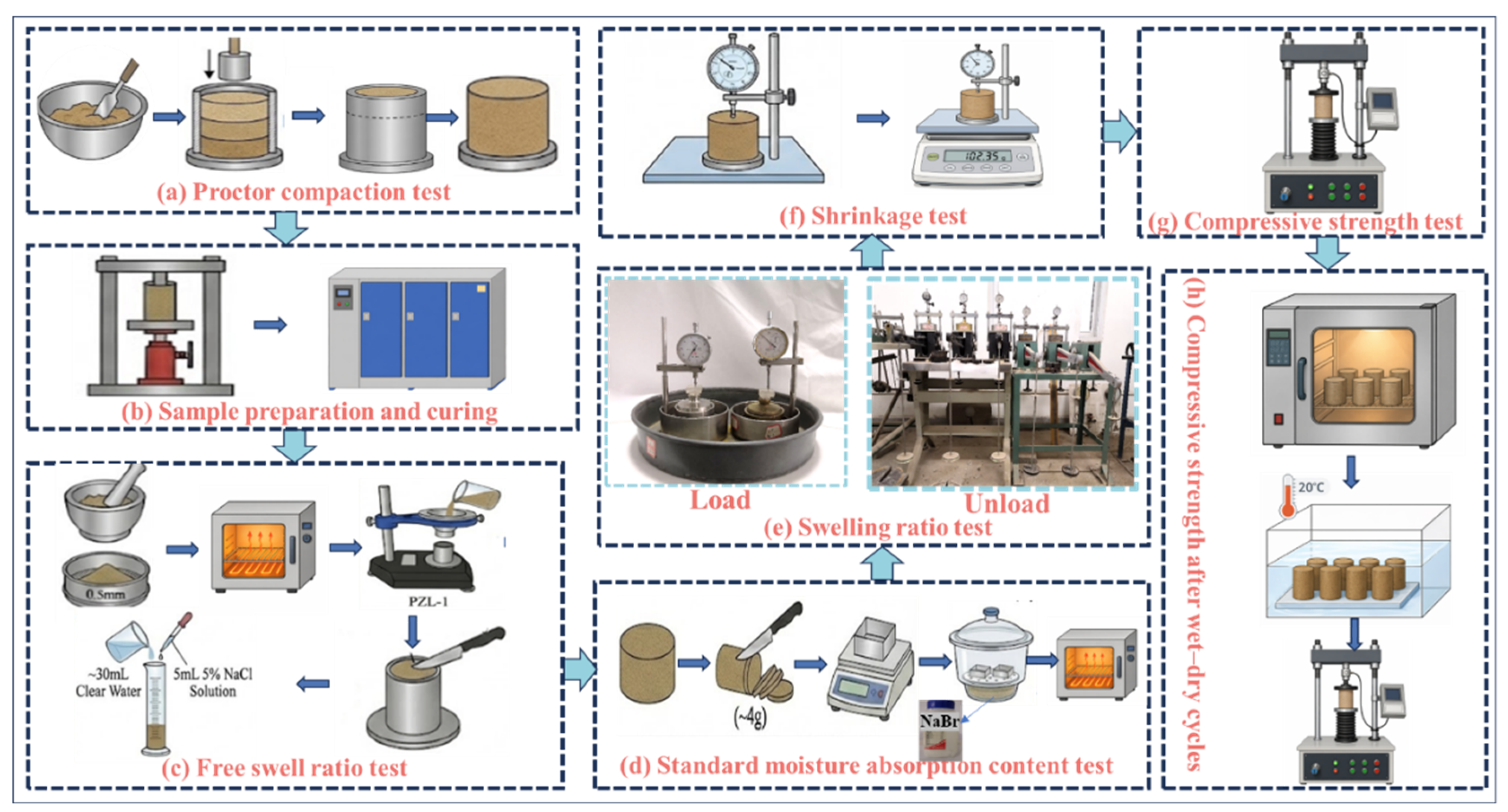
2.2.2. Testing Procedure and Methods
3. Results and Analysis
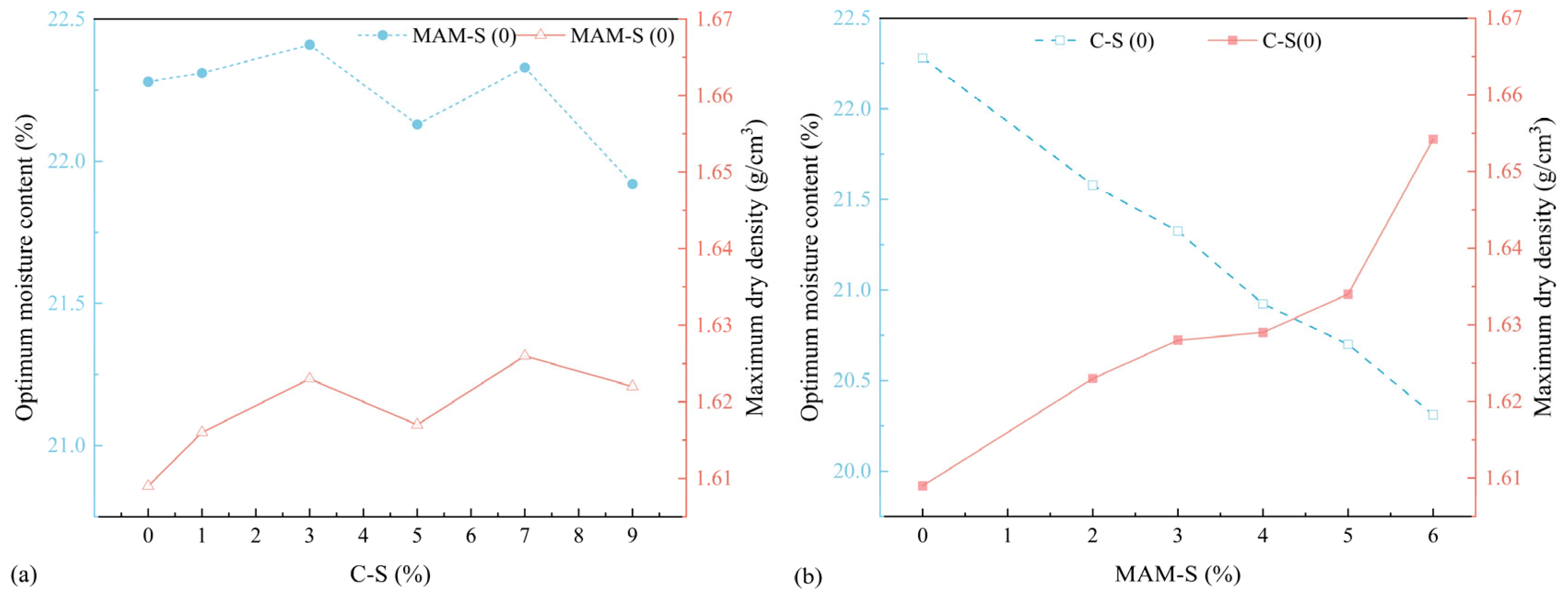
3.1. Compaction Characteristics
3.2. Swelling Potential
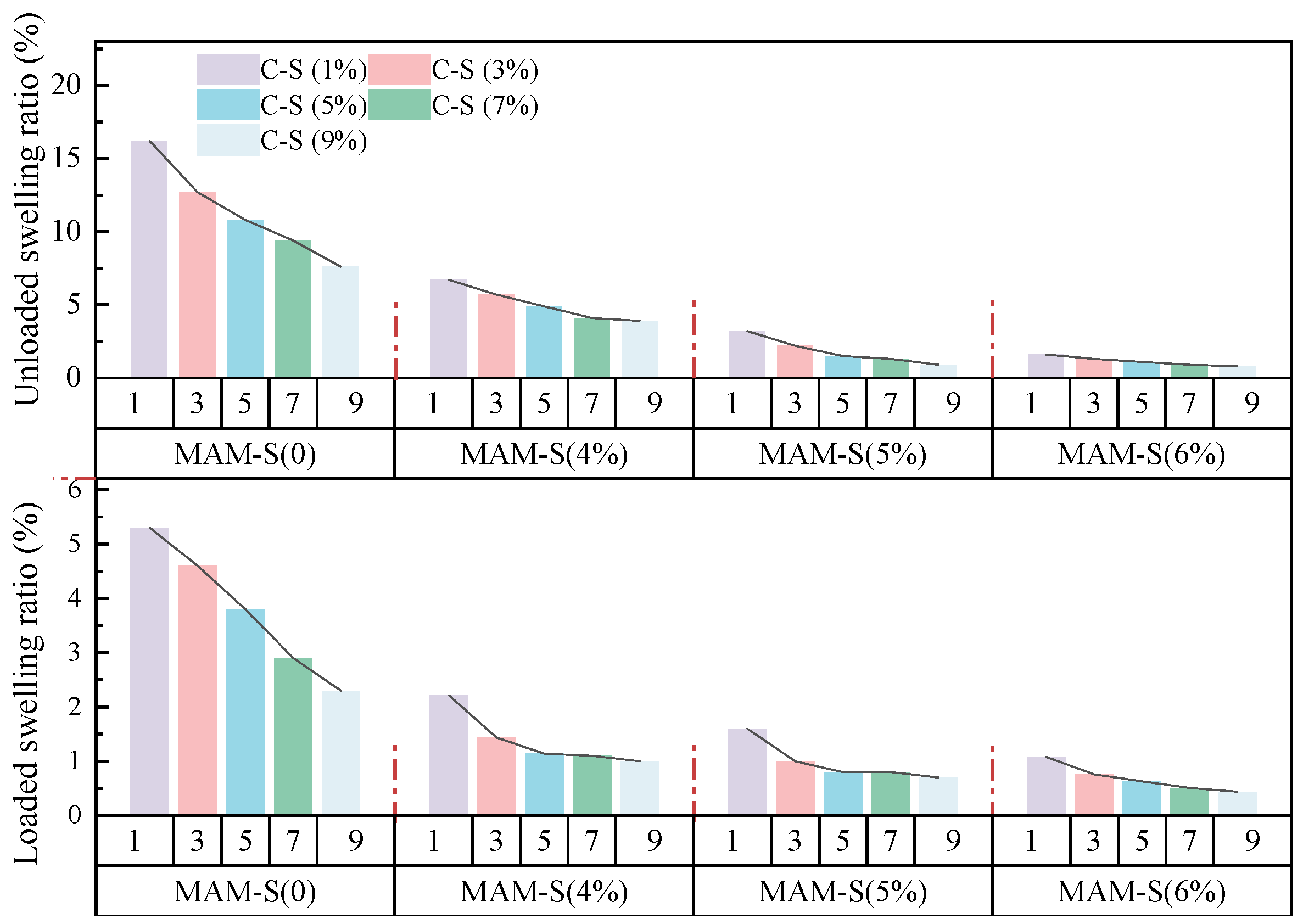
3.3. Swelling Ratio
3.4. Shrinkage Behavior
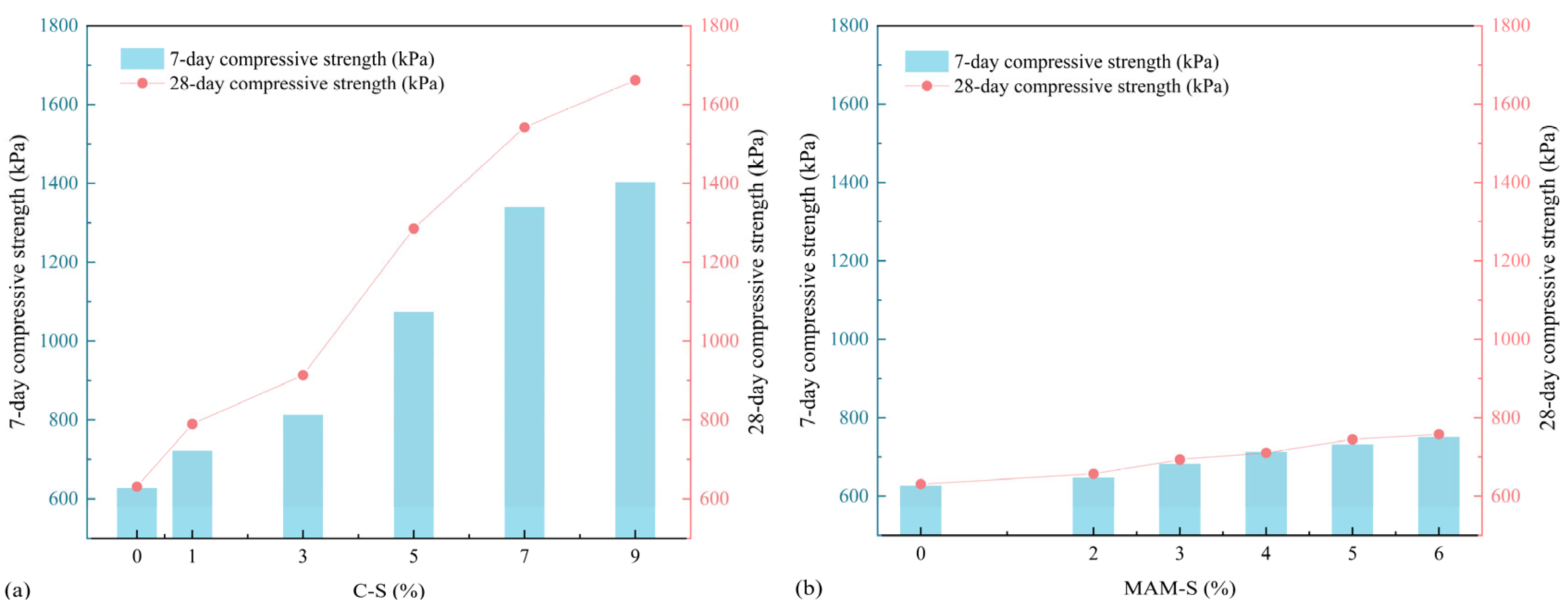
3.5. Unconfined Compressive Strength
3.5.1. Without Dry–Wet Cycles
3.5.2. Dry–Wet Cycles
4. Discussion of Mix Proportion
5. Conclusions
- (1)
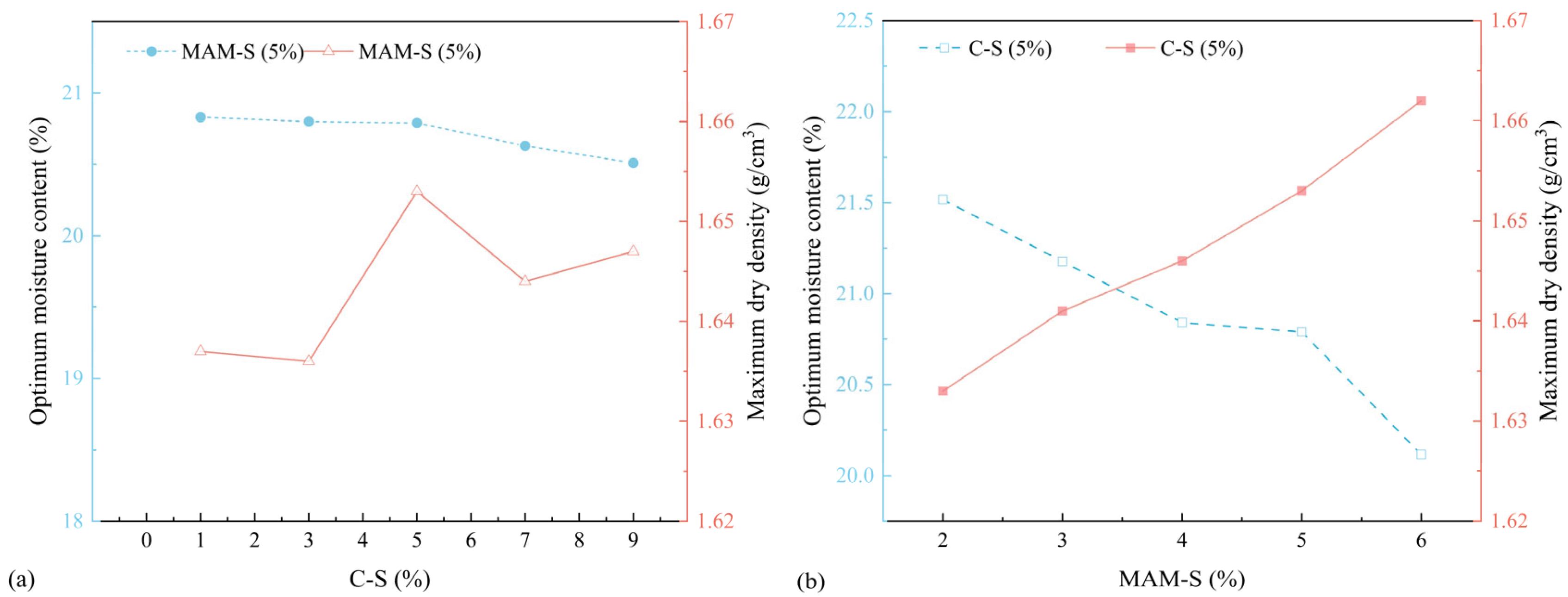
- Cement has limited influence on maximum dry density (ρdmax) and optimum moisture content (wopt), whereas MAM exhibits a more pronounced effect; 6% MAM increases ρdmax by ≈0.04 g/cm3 and decreases wopt by ≈2%.
- (2)
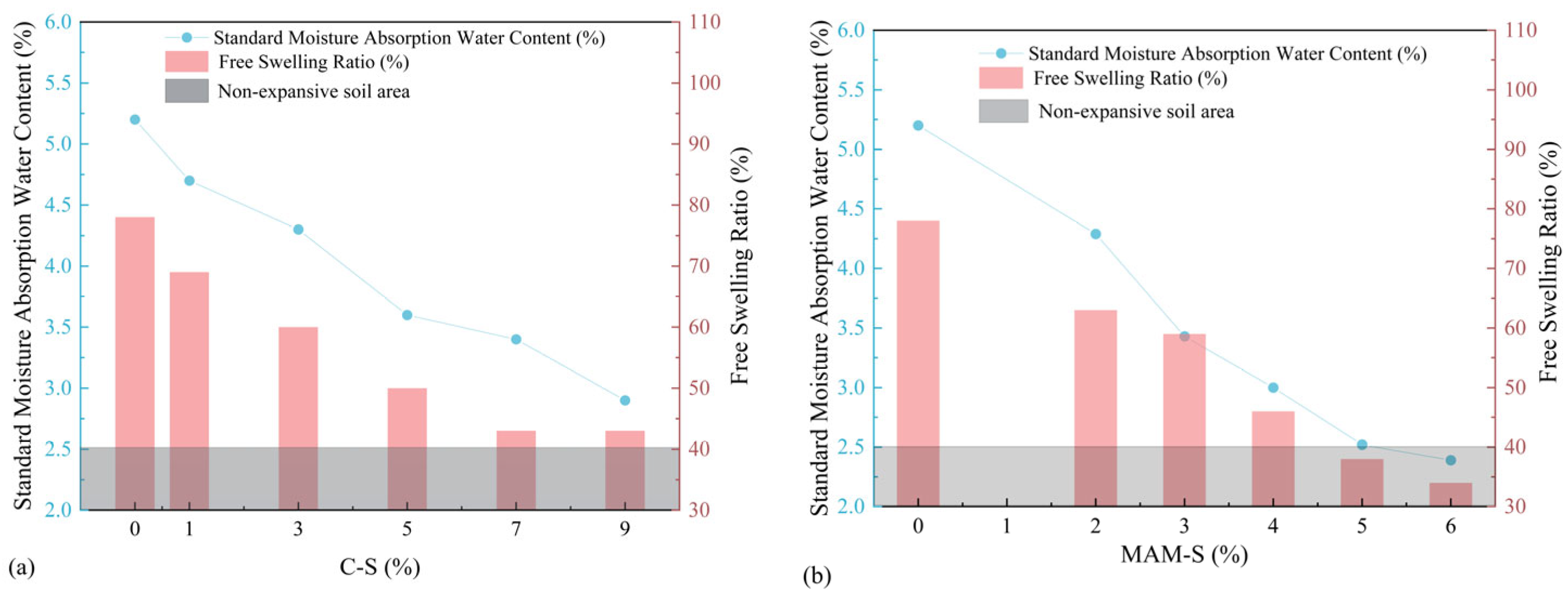
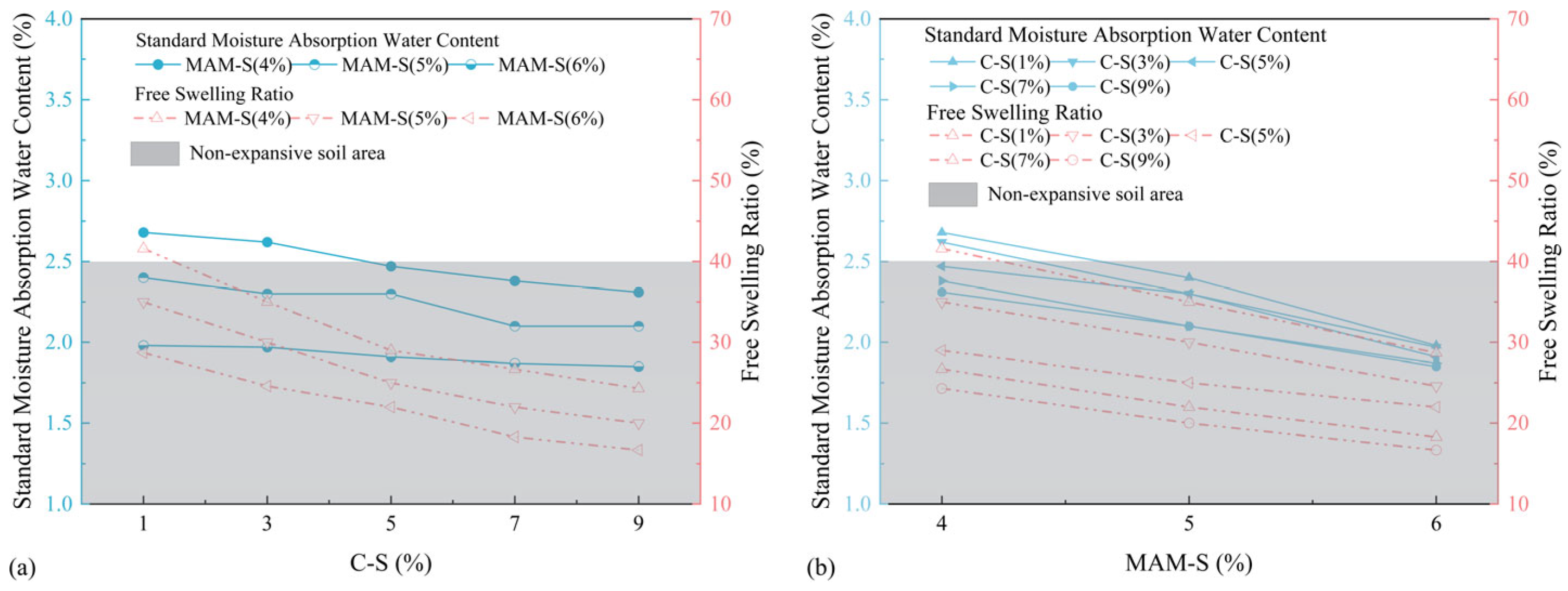
- C-S of 9% reduces the free swelling ratio (FS) by 35% and equilibrium moisture absorption (wa) by 2.3%; MAM is more effective, with 5% MAM reducing FS by 40% and wa by 2.7%, lowering the swelling potential grade to the non-expansive soil range.
- (3)
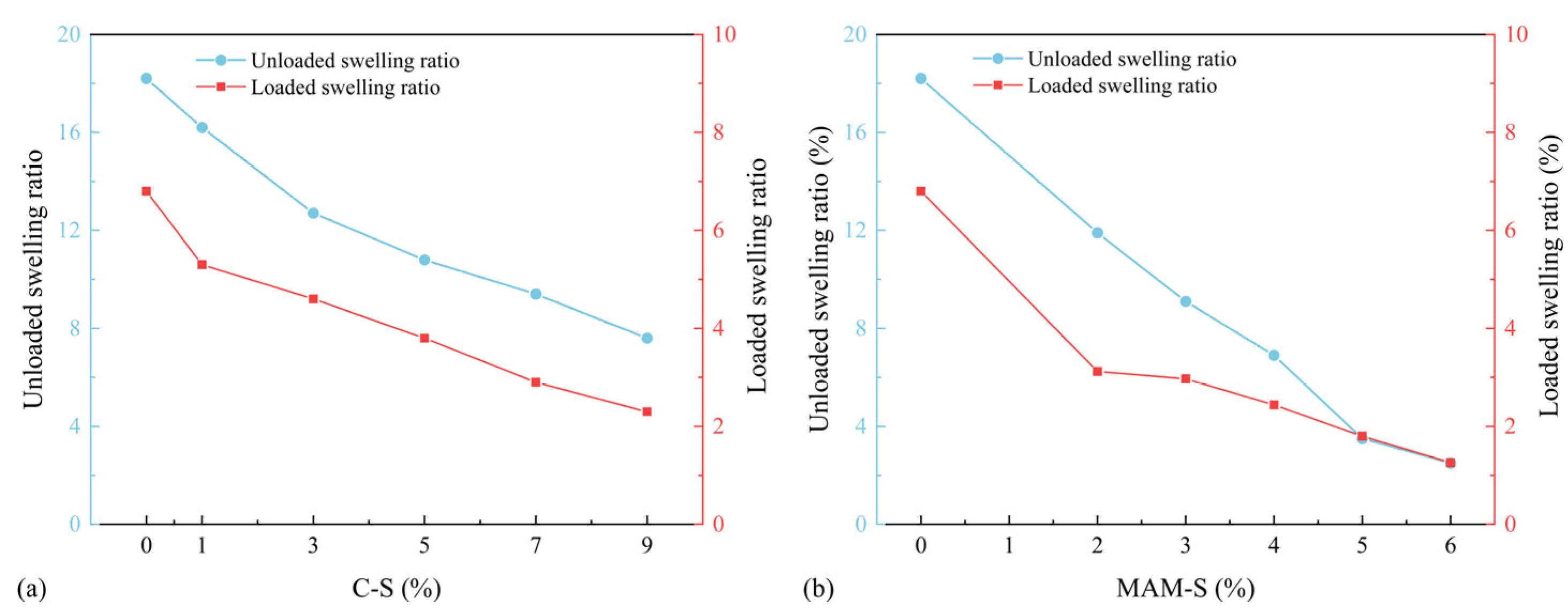
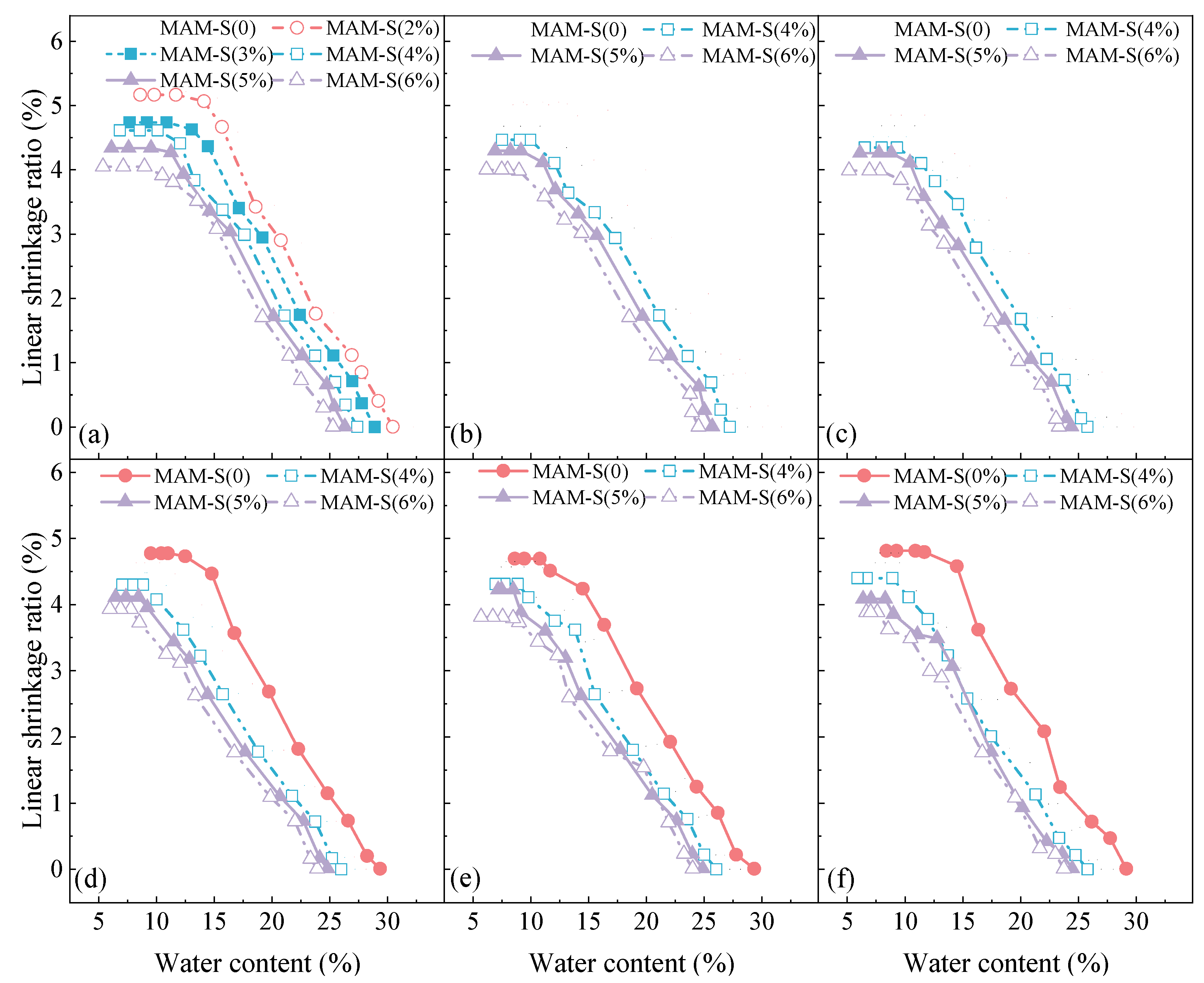
- MAM has a markedly greater effect on controlling the swell–shrink behavior of specimens than cement. At C-S = 5%, cement reduces the unloaded swelling ratio (δe) by 7.4% and the loaded swelling ratio (δep) by 3%; MAM-S at 5% decreases δe by 14.7% and δep by 5%, producing larger reductions. Cement has a negligible impact on linear shrinkage (esL), whereas MAM shows significant mitigation; when C-S = 0, increasing MAM-S by 4% reduces esL by 1.12%. However, at higher C-S, MAM’s effect on esL diminishes.
- (4)
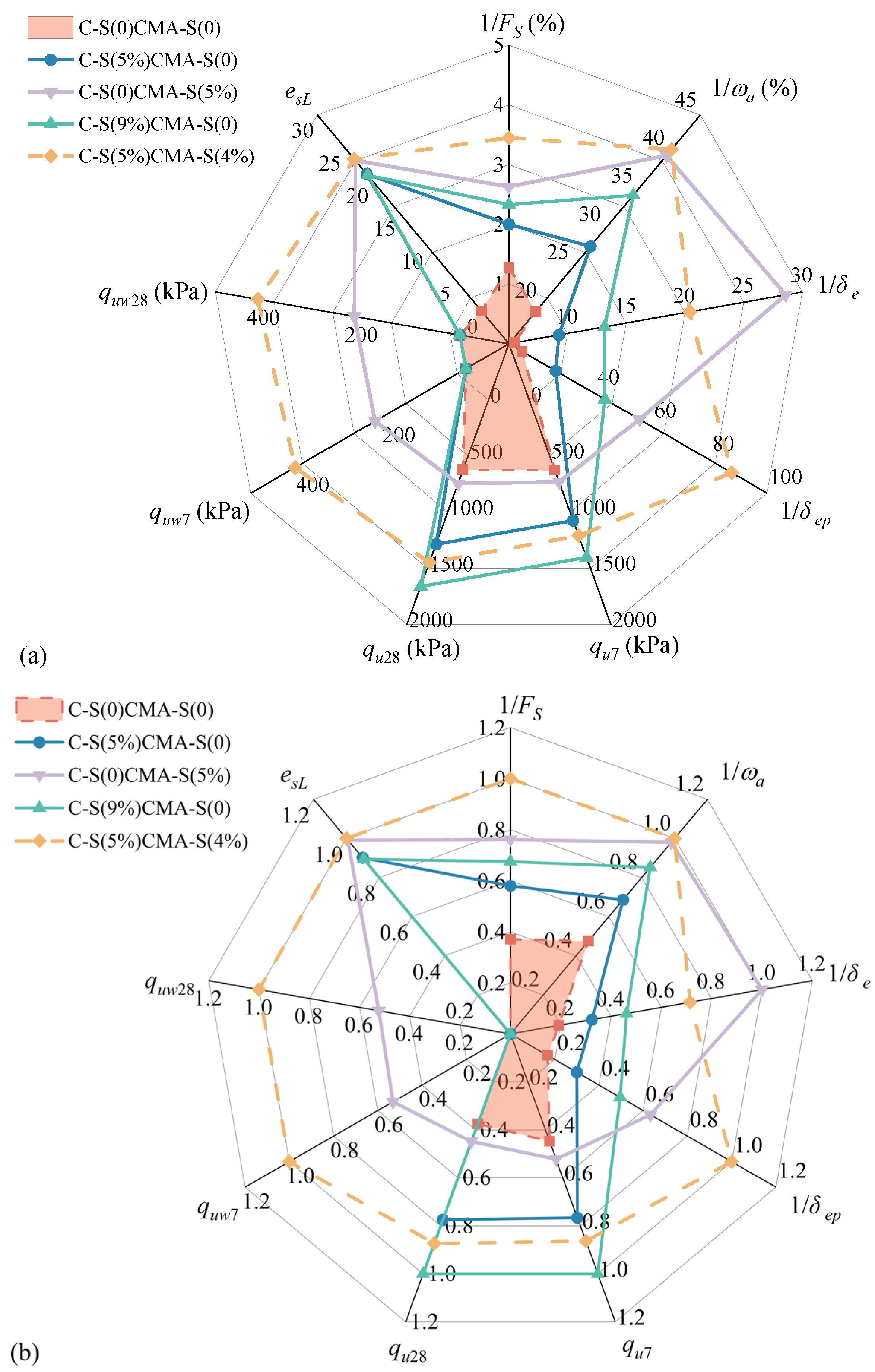
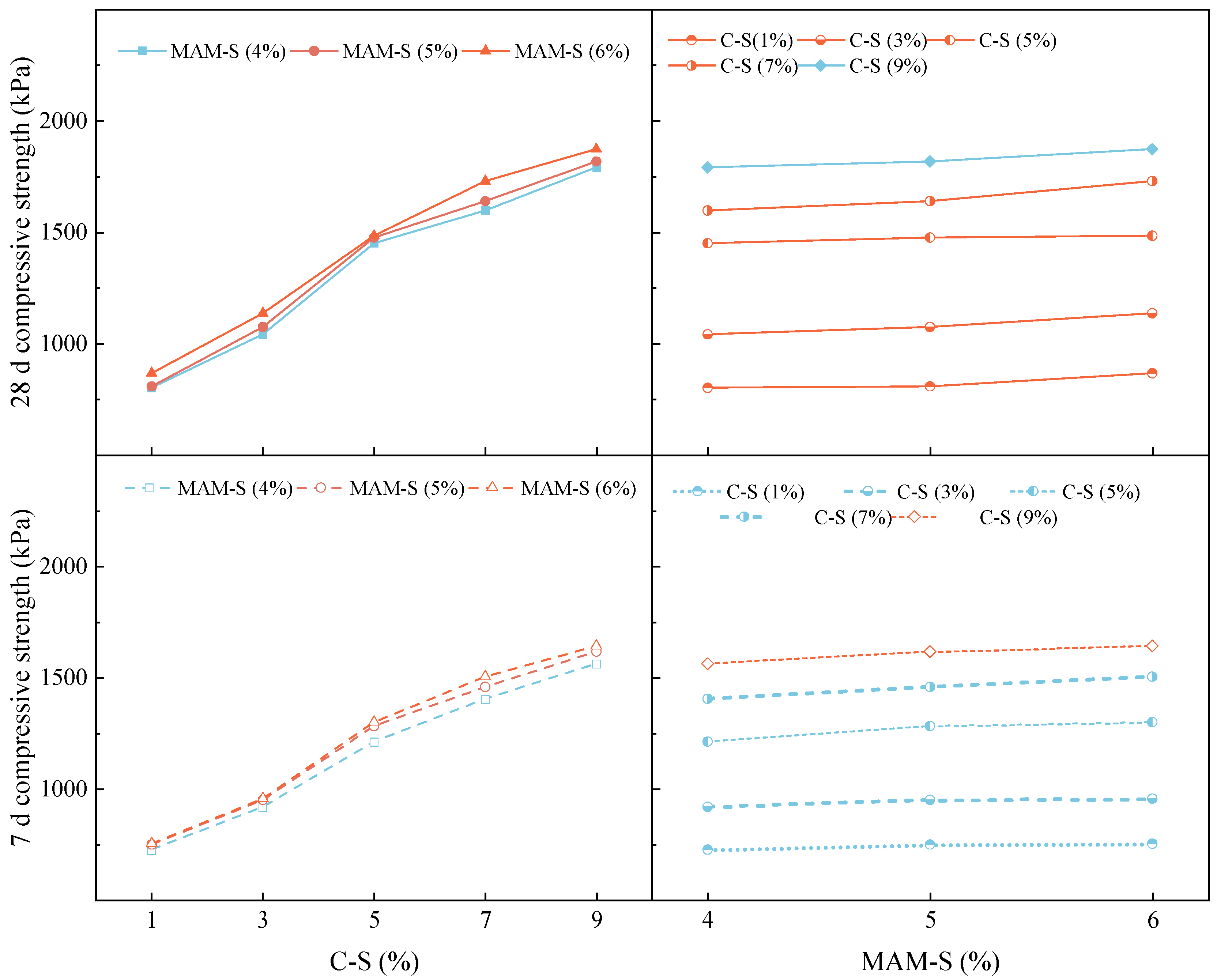
- Cement markedly enhances unconfined compressive strength (qu); at C-S = 9%, 7-day and 28-day qu are 2.2–2.7 times those of untreated soil. MAM-S does not affect the strength increase due to C-S. However, relying solely on cement is insufficient to ensure good water stability of the specimens, necessitating the incorporation of MAM. Overall, composite stabilization simultaneously improves strength and water stability, making it a preferable option for mix proportion selection.
Author Contributions
Funding
Data Availability Statement
Conflicts of Interest
References
- Zeng, Z.; Lu, H.; Zhao, Y.; Qin, Y. Analysis of the mineral compositions of swell-shrink clays from Guangxi Province, China. Clays Clay Miner. 2020, 68, 161–174. [Google Scholar] [CrossRef] [Scilit]
- Basma, A.A.; Al-Homoud, A.S.; Husein Malkawi, A.I.; Al-Bashabsheh, M.A. Swelling-shrinkage behavior of natural expansive clays. Appl. Clay Sci. 1996, 11, 211–227. [Google Scholar] [CrossRef] [Scilit]
- Ikeagwuani, C.C.; Nwonu, D.C. Emerging trends in expansive soil stabilisation: A review. J. Rock. Mech. Geotech. Eng. 2019, 11, 423–440. [Google Scholar] [CrossRef] [Scilit]
- Ye, H.; Chu, C.; Xu, L.; Guo, K.; Li, D. Experimental studies on drying-wetting cycle characteristics of expansive soils improved by industrial wastes. Adv. Civ. Eng. 2018, 2018, 2321361. [Google Scholar] [CrossRef] [Scilit]
- Turkoz, M.; Savas, H.; Acaz, A.; Tosun, H. The effect of magnesium chloride solution on the engineering properties of clay soil with expansive and dispersive characteristics. Appl. Clay Sci. 2014, 101, 1–9. [Google Scholar] [CrossRef] [Scilit]
- Mobarezi, M.; Nikooee, E.; Owji, R.; Habibagahi, G. Enzyme-induced carbonate precipitation as a novel remedy for expansive soils: Assessing microfabric and swelling characteristics. Geotech. Geol. Eng. 2024, 42, 6457–6475. [Google Scholar] [CrossRef] [Scilit]
- Liu, L.; Yao, H.L.; Lu, Z.; Yin, Z.W.; Luo, X.W.; Fang, R. Study on the effect of [Al13]7+ over the free swelling ratio of expansive soil. Key Eng. Mater. 2017, 748, 341–345. [Google Scholar] [CrossRef] [Scilit]
- Maheepala, M.M.A.L.N.; Nasvi, M.C.M.; Robert, D.J.; Gunasekara, C.; Kurukulasuriya, L.C. Mix design development for geopolymer treated expansive subgrades using artificial neural network. Comput. Geotech. 2023, 161, 105534. [Google Scholar] [CrossRef] [Scilit]
- Du, J.; Zhang, L.; Hu, Q.; Luo, Q.; Connolly, D.P.; Liu, K.; Hu, T.; Zhu, J.; Wang, T. Characterization of controlled low-strength materials from waste expansive soils. Constr. Build. Mater. 2024, 411, 134690. [Google Scholar] [CrossRef] [Scilit]
- Arm, M.; Wik, O.; Engelsen, C.J.; Erlandsson, M.; Hjelmar, O.; Wahlström, M. How does the European recovery target for construction & demolition waste affect resource management? Waste Biomass Valorization 2017, 8, 1491–1504. [Google Scholar] [CrossRef] [Scilit]
- Duan, H.; Miller, T.R.; Liu, G.; Tam, V.W.Y. Construction debris becomes growing concern of growing cities. Waste Manag. 2019, 83, 1–5. [Google Scholar] [CrossRef] [Scilit]
- Barman, D.; Dash, S.K. Stabilization of expansive soils using chemical additives: A review. J. Rock. Mech. Geotech. Eng. 2022, 14, 1319–1342. [Google Scholar] [CrossRef] [Scilit]
- Seco, A.; Ramírez, F.; Miqueleiz, L.; García, B. Stabilization of expansive soils for use in construction. Appl. Clay Sci. 2011, 51, 348–352. [Google Scholar] [CrossRef] [Scilit]
- Bian, X.; Zeng, L.; Ji, F.; Xie, M.; Hong, Z. Plasticity role in strength behavior of cement-phosphogypsum stabilized soils. J. Rock. Mech. Geotech. Eng. 2022, 14, 1977–1988. [Google Scholar] [CrossRef] [Scilit]
- Wang, P.; Song, X.; Xu, H.; Zhou, W. Experiments on basic characteristics of cement-modified expansive soil. Adv. Sci. Technol. Water Resour. 2021, 41, 56–60. [Google Scholar] [CrossRef]
- Yang, J.; Liu, Z.; Zhang, G.; Tang, Y. Experimental research on unconfined compressive strength of expansive soil improved by composite method. Chin. J. Undergr. Space Eng. 2016, 12, 1069–1075. [Google Scholar] [CrossRef]
- Tang, X.; Li, Y.; Luo, D. Research on road performance of chemical modified expansive soil in Nanning. Highway 2015, 60, 169–174. [Google Scholar]
- Saride, S.; Puppala, A.J.; Chikyala, S.R. Swell-shrink and strength behaviors of lime and cement stabilized expansive organic clays. Appl. Clay Sci. 2013, 85, 39–45. [Google Scholar] [CrossRef] [Scilit]
- Wu, C.; Jierula, A.; Tang, F.; Wu, J.; Oh, T.-M. Preparation of foamed concrete with bentonite instead of cement: Compressive strength and durability. Constr. Build. Mater. 2026, 510, 145297. [Google Scholar] [CrossRef] [Scilit]
- Ahmadi Chenarboni, H.; Hamid Lajevardi, S.; MolaAbasi, H.; Zeighami, E. The effect of zeolite and cement stabilization on the mechanical behavior of expansive soils. Constr. Build. Mater. 2021, 272, 121630. [Google Scholar] [CrossRef] [Scilit]
- Jamsawang, P.; Nuansrithong, N.; Voottipruex, P.; Songpiriyakij, S.; Jongpradist, P. Laboratory investigations on the swelling behavior of composite expansive clays stabilized with shallow and deep clay-cement mixing methods. Appl. Clay Sci. 2017, 148, 83–94. [Google Scholar] [CrossRef] [Scilit]
- Al-Subari, B.L.; Hilal, A.; Ekinci, A. Life cycle assessment of soil stabilization using cement and waste additives. Constr. Build. Mater. 2023, 403, 133045. [Google Scholar] [CrossRef] [Scilit]
- Ijaz, N.; Ye, W.; Rehman, Z.U.; Ijaz, Z. Novel application of low carbon limestone calcined clay cement (LC3) in expansive soil stabilization: An eco-efficient approach. J. Clean. Prod. 2022, 371, 133492. [Google Scholar] [CrossRef] [Scilit]
- Wang, T.; Yang, G.; Du, J.; He, E.; Luo, Q. Low-carbon design of expansive soil-based controlled low-strength material guided by eco-strength efficiency. Mater. Lett. 2026, 418, 140840. [Google Scholar] [CrossRef] [Scilit]
- Kumar, S.; Prince, A.; Nasir, H.; Singh, D.; Bhatt, P.; Li, Y. Fly ash-GGBS blended geopolymers for expansive soil stabilization: A critical review of evidence, limitations, and pathways to practice. Next Mater. 2026, 12, 102196. [Google Scholar] [CrossRef] [Scilit]
- Abbey, S.J.; Amakye, S.Y.O.; Eyo, E.U.; Booth, C.A.; Jeremiah, J.J. Wet–dry cycles and microstructural characteristics of expansive subgrade treated with sustainable cementitious waste materials. Materials 2023, 16, 3124. [Google Scholar] [CrossRef] [Scilit]
- Yu, F.; Yu, J.; Chen, S.; Yu, S. Comparison test between CMA treated and lime treated expansive soils. J. Huazhong Univ. Sci. Tech. (Nat. Sci. Ed.) 2006, 34, 100–103. [Google Scholar] [CrossRef]
- Gautam, S.; Hoyos, L.R.; He, S.; Prabakar, S.; Yu, X. Chemical treatment of a highly expansive clay using a liquid ionic soil stabilizer. Geotech. Geol. Eng. 2020, 38, 4981–4993. [Google Scholar] [CrossRef] [Scilit]
- Yu, S.; Chen, S.; Xu, X.; Yu, F. Laboratory test study on CMA-treated expansive soils. Rock. Soil Mech. 2006, 27, 1622–1627. [Google Scholar] [CrossRef]
- Xiang, W.; Cui, D.; Liu, Q.; Lu, X.; Cao, L. Theory and practice of ionic soil stabilizer reinforcing special clay. J. Earth Sci. 2010, 21, 882–887. [Google Scholar] [CrossRef] [Scilit]
- JTG C20-2011; Code for Highway Engineering Geological Investigation. Ministry of Transport of the People’s Republic of China: Beijing, China, 2011.
- ASTM D2487-17; Standard Practice for Classification of Soils for Engineering Purposes (Unified Soil Classification System). ASTM International: West Conshohocken, PA, USA, 2017.
- Skempton, A.W. Selected Papers on Soil Mechanics; Thomas Telford: London, UK, 1984; ISBN 978-0-7277-0205-0. [Google Scholar]
- Kodikara, J.; Islam, T.; Sounthararajah, A. Review of soil compaction: History and recent developments. Transp. Geotech. 2018, 17, 24–34. [Google Scholar] [CrossRef] [Scilit]
- JTG 3430-2020; Test Methods of Soils for Highway Engineering. Ministry of Transport of the People’s Republic of China: Beijing, China, 2020.
- Du, J.; Luo, Q.; Jiang, L.; Cao, Z.; Wang, T.; Zhang, L. Fluidized solidification modification tests on expansive soil and its mixing proportions study. J. Zhejiang Univ. (Eng. Sci.) 2024, 58, 2137–2148. [Google Scholar] [CrossRef]
- ASTM D559/D559M-15; Standard Test Methods for Wetting and Drying Compacted Soil-Cement Mixtures. ASTM International: West Conshohocken, PA, USA, 2015.
- Thwe, K.S.; Ayawanna, J.; Mase, L.Z.; Chaiyaput, S. Enhancing lateritic soil performance with cement and calcined limestone dust for road base application. Sci. Rep. 2026. [Google Scholar] [CrossRef] [Scilit]
- Yang, Y.; Meng, L.; Zhou, S.; Liu, P.; Zhang, C.; Cheng, Y.; Bate, B. Hydraulic conductivity prediction of pristine and polymer-modified bentonite-rich porous media via molecular dynamics. J. Geophys. Res. Solid Earth 2026, 131, e2025JB033456. [Google Scholar] [CrossRef] [Scilit]
- Hu, Q.; Zhang, L.; Luo, Q.; Yu, K.; Connolly, D.P.; Qin, L.; Wang, L.; Wang, T. Impact of polycarboxylate superplasticizer dosage on controlled low strength material flowability and bleeding: Insights from water film thickness. Constr. Build. Mater. 2024, 447, 138145. [Google Scholar] [CrossRef] [Scilit]
- Wang, T.; Wang, L.; Liu, S.; Zhang, S.; Wang, O. Experimental study on mechanical properties of expansive soil improved by xanthan gum and guar gum. China Railw. Sci. 2023, 44, 1–10. [Google Scholar]
- Sharmila, B.; Bhuvaneshwari, S.; Landlin, G. Application of lignosulphonate—A sustainable approach towards strength improvement and swell management of expansive soils. Bull. Eng. Geol. Environ. 2021, 80, 6395–6413. [Google Scholar] [CrossRef] [Scilit]
- Yao, H. Theory and practice concerning classification for expansive soils using standard moisture absorption water content. Sci. China Ser. E Technol. Sci. 2005, 48, 31. [Google Scholar] [CrossRef] [Scilit]
- Sun, H.; Scaringi, G.; Mašín, D.; Najser, J. An experimental investigation on the swelling behavior of compacted B75 bentonite. Eng. Geol. 2022, 296, 106452. [Google Scholar] [CrossRef] [Scilit]
- Widjaja, B.; Chriswandi, C. New relationship between linear shrinkage and shrinkage limit for expansive soils. IOP Conf. Ser. Mater. Sci. Eng. 2020, 1007, 012187. [Google Scholar] [CrossRef] [Scilit]
- Tang, C.; Shi, B. Swelling and shrinkage behaviour of expansive soil during wetting-drying cycles. Chin. J. Geotech. Eng. 2011, 33, 1376–1384. [Google Scholar]
- Wang, X.; Tan, X.; Xin, Z.; Xu, Q.; Xie, Y. Experimental study on shrinkage properties of expansive soils. Chin. J. Geotech. Eng. 2015, 37, 107–114. [Google Scholar] [CrossRef]
- Zhang, Y.; Wang, A.; Zhang, J.; Ma, T.; Chen, S. Dry shrinkage in cement-stabilized macadam: A review. J. Jilin Univ. (Eng. Technol. Ed.) 2023, 53, 297–311. [Google Scholar] [CrossRef]
- Almuaythir, S.; Abbas, M.F. Expansive soil remediation using cement kiln dust as stabilizer. Case Stud. Constr. Mater. 2023, 18, e01983. [Google Scholar] [CrossRef] [Scilit]
- Zhou, Y.; Huo, M.; Zhang, L.; Guan, Q. Strength development and solidification mechanism of soils with different properties stabilized by cement-slag-based materials. Case Stud. Constr. Mater. 2024, 21, e04034. [Google Scholar] [CrossRef] [Scilit]
- Goodarzi, A.R.; Akbari, H.R.; Salimi, M. Enhanced stabilization of highly expansive clays by mixing cement and silica fume. Appl. Clay Sci. 2016, 132–133, 675–684. [Google Scholar] [CrossRef] [Scilit]
- Du, J.; Jiang, X.; Wang, T.; Luo, Q.; Connolly, D.P.; Zhang, L.; Hu, Q. Optimization of mix design for controlled low-strength material produced from red-bed mudstone. Constr. Build. Mater. 2025, 493, 143280. [Google Scholar] [CrossRef] [Scilit]
- Wang, J.; Gao, Y. Study on the strength degradation mechanism of cement soils resulting from dry-wet cycles. China Railw. Sci. 2006, 27, 23–27. [Google Scholar]
- Wassermann, A.; Abdallah, A.; Cuisinier, O. Impact of wetting and drying cycles on the mechanical behaviour of a cement-treated soil. Transp. Geotech. 2022, 36, 100804. [Google Scholar] [CrossRef] [Scilit]
- Qi, W.; Fu, N.; Du, J.; Wang, X.; Wang, T. Transforming waste red-bed mudstone into sustainable controlled low-strength materials: Mix design for enhanced engineering performance. Buildings 2025, 15, 1439. [Google Scholar] [CrossRef] [Scilit]
- He, Q.; Ghofrani, F.; Gao, T.; Wang, P.; He, C.; Li, Y.; Ai, C. Intelligent construction for the transportation infrastructure: A review. Intell. Transp. Infrastruct. 2022, 1, liac007. [Google Scholar] [CrossRef] [Scilit]
- Liu, X.; Xiao, J.; Cai, D.; Su, Q.; Yang, G.; Yuan, S.; Jiang, G. Recent advances in subgrade engineering for high-speed railway. Intell. Transp. Infrastruct. 2023, 2, liad001. [Google Scholar] [CrossRef] [Scilit]
- Phusakulkajorn, W.; Núñez, A.; Wang, H.; Jamshidi, A.; Zoeteman, A.; Ripke, B.; Dollevoet, R.; De Schutter, B.; Li, Z. Artificial intelligence in railway infrastructure: Current research, challenges, and future opportunities. Intell. Transp. Infrastruct. 2023, 2, liad016. [Google Scholar] [CrossRef] [Scilit]
- Zhang, J.; Liu, L.; Yang, H. An overview of intelligent construction and maintenance technology for highway subgrade engineering. Intell. Transp. Infrastruct. 2023, 2, liad019. [Google Scholar] [CrossRef] [Scilit]
- Jing, P.; Song, X.; Nowamooz, H.; Zhang, J.; Tang, F. Permanent deformation of unsaturated granular material under multiple drying and wetting cycles. Intell. Transp. Infrastruct. 2023, 2, liad006. [Google Scholar] [CrossRef] [Scilit]
- Khetwal, S.; Gutierrez, M.; Pei, S. Sensitivity analysis of road tunnel resilience through data-driven stochastic simulation. Intell. Transp. Infrastruct. 2022, 1, liac003. [Google Scholar] [CrossRef] [Scilit]






| Parameter | Value |
|---|---|
| Specific gravity | 2.72 |
| Maximum dry density (g·cm−3) | 1.61 |
| Optimum moisture content, OMC (%) | 22.28 |
| Liquidity index | −0.19 |
| Liquid limit (%) | 74.9 |
| Plasticity index | 46.9 |
| Free swelling ratio (%) | 78 |
| Equilibrium moisture absorption (%) | 5.2 |
| Test Type | Stabilized Group | C-S (%) | MAM-S (%) | Curing Time (d) |
|---|---|---|---|---|
| Compaction Test | Cement | 1, 3, 5, 7, 9 | 0 | 7 and 28 d |
| MAM | 0 | 2, 3, 4, 5, 6 | ||
| Composite | 5 | 2, 3, 4, 5, 6 | ||
| 1, 3, 5, 7, 9 | 5 | |||
| Free Swelling Ratio, equilibrium moisture absorption, Loaded Swelling Ratio, Unloaded Swelling Ratio, Shrinkage and Unconfined Compressive Strength Test | Cement | 1, 3, 5, 7, 9 | 0 | |
| MAM | 0 | 2, 3, 4, 5, 6 | ||
| Composite | 1, 3, 5, 7, 9 | 4, 5, 6 |
| MAM-S (%) | C-S (%) | |||||
|---|---|---|---|---|---|---|
| 0% | 1% | 3% | 5% | 7% | 9% | |
| 0 | × (×) | × (×) | × (×) | 4.77% (11.00%) | 4.69% (10.80%) | 4.81% (10.92%) |
| 2 | 5.17% (11.67%) | N/A | N/A | N/A | N/A | N/A |
| 3 | 4.74% (10.88%) | N/A | N/A | N/A | N/A | N/A |
| 4 | 4.62% (10.12%) | 4.47% (9.96%) | 4.35% (9.30%) | 4.30% (8.85%) | 4.31% (8.87%) | 4.40% (8.91%) |
| 5 | 4.34% (9.54%) | 4.30% (9.17%) | 4.26% (8.85%) | 4.11% (8.46%) | 4.22% (8.51%) | 4.08% (8.31%) |
| 6 | 4.05% (8.96%) | 4.00% (8.02%) | 3.99% (7.87%) | 3.93% (7.78%) | 3.81% (7.59%) | 3.88% (7.63%) |
| MAM-S (%) | C-S (%) | |||||
|---|---|---|---|---|---|---|
| 0 | 1 | 3 | 5 | 7 | 9 | |
| 0 | × (×) | × (×) | × (×) | × (×) | × (×) | × (×) |
| 2 | × (×) | N/A | N/A | N/A | N/A | N/A |
| 3 | × (×) | N/A | N/A | N/A | N/A | N/A |
| 4 | × (×) | × (×) | 348 (370) | 397 (413) | 389 (491) | 455 (568) |
| 5 | 211 (216) | 275 (303) | 357 (405) | 431 (517) | 474 (532) | 522 (611) |
| 6 | 215 (221) | 289 (321) | 365 (416) | 452 (525) | 594 (654) | 659 (792) |
| Mix Proportion | RANK | |||
|---|---|---|---|---|
| C-S(0) MAM-S(0) | 2.39 | 0 | 0 | 5 |
| C-S(5%) MAM-S(0) | 1.83 | 1.094 | 0.374 | 4 |
| C-S(9%) MAM-S(0) | 1.64 | 1.382 | 0.458 | 3 |
| C-S(0) MAM-S(5%) | 1.08 | 1.681 | 0.608 | 2 |
| C-S(5%) MAM-S(4%) | 0.34 | 2.249 | 0.868 | 1 |
Disclaimer/Publisher’s Note: The statements, opinions and data contained in all publications are solely those of the individual author(s) and contributor(s) and not of MDPI and/or the editor(s). MDPI and/or the editor(s) disclaim responsibility for any injury to people or property resulting from any ideas, methods, instructions or products referred to in the content. |
© 2026 by the authors. Licensee MDPI, Basel, Switzerland. This article is an open access article distributed under the terms and conditions of the Creative Commons Attribution (CC BY) license.
Share and Cite
Chen, A.; Cao, Y.; Qi, W.; Shu, L.; Liu, F.; Yang, G.; Du, J.; Wang, T. Engineering Performance of Expansive Soil Stabilized with Cement and Montmorillonite Adsorption Modifier. Materials 2026, 19, 2522. https://doi.org/10.3390/ma19122522
Chen A, Cao Y, Qi W, Shu L, Liu F, Yang G, Du J, Wang T. Engineering Performance of Expansive Soil Stabilized with Cement and Montmorillonite Adsorption Modifier. Materials. 2026; 19(12):2522. https://doi.org/10.3390/ma19122522
Chicago/Turabian StyleChen, Aiping, Yong Cao, Wei Qi, Lihong Shu, Feiyang Liu, Ge Yang, Jianbiao Du, and Tengfei Wang. 2026. "Engineering Performance of Expansive Soil Stabilized with Cement and Montmorillonite Adsorption Modifier" Materials 19, no. 12: 2522. https://doi.org/10.3390/ma19122522
APA StyleChen, A., Cao, Y., Qi, W., Shu, L., Liu, F., Yang, G., Du, J., & Wang, T. (2026). Engineering Performance of Expansive Soil Stabilized with Cement and Montmorillonite Adsorption Modifier. Materials, 19(12), 2522. https://doi.org/10.3390/ma19122522