1. Introduction
Steel-concrete composite structures have been extensively applied in engineering fields such as bridges, high-rise buildings, and large-span spatial structures, owing to their outstanding advantages, including high bearing capacity, large stiffness, excellent seismic performance, and significant economic benefits [
1]. To illustrate these structural advantages in practice,
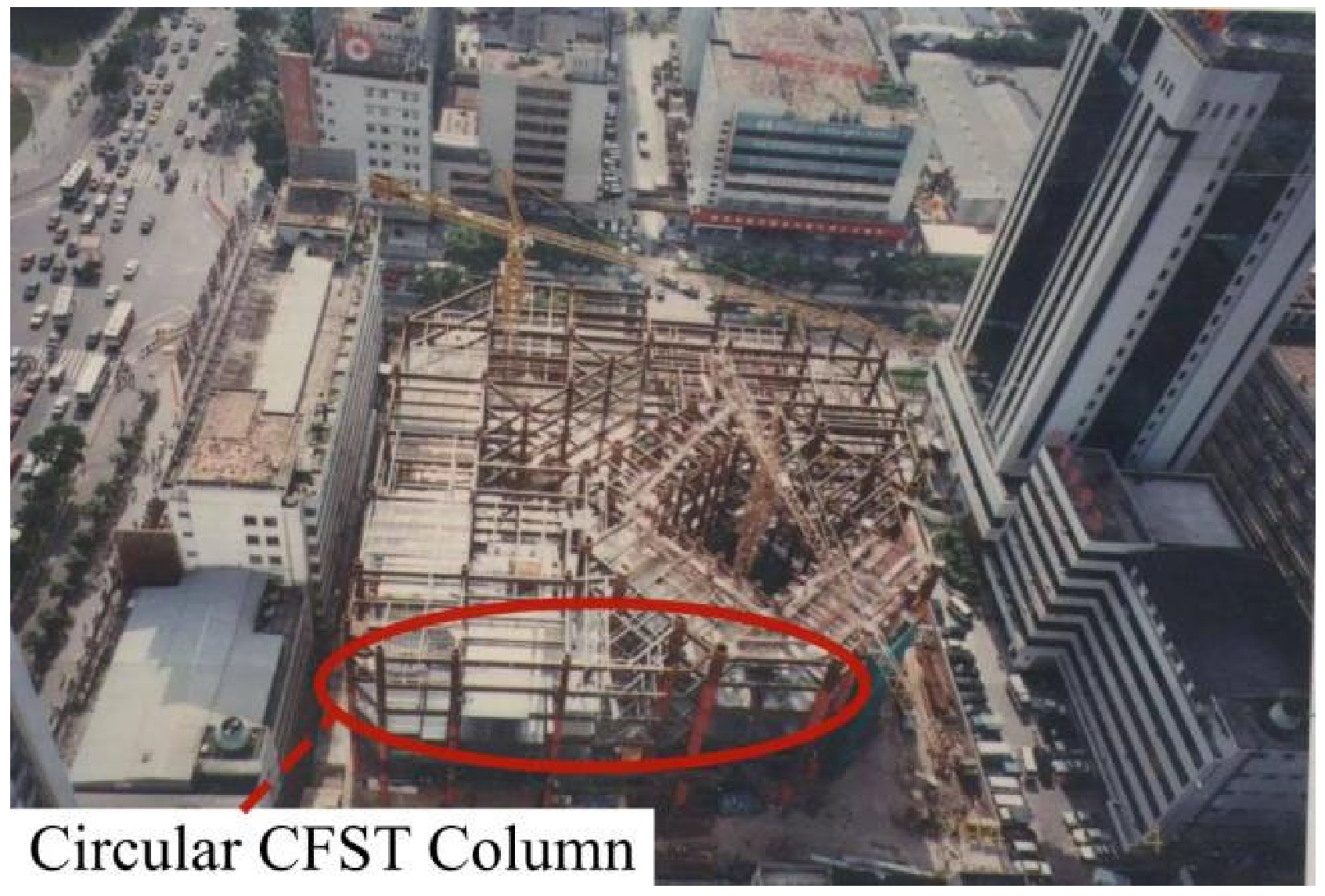
Figure 1 and
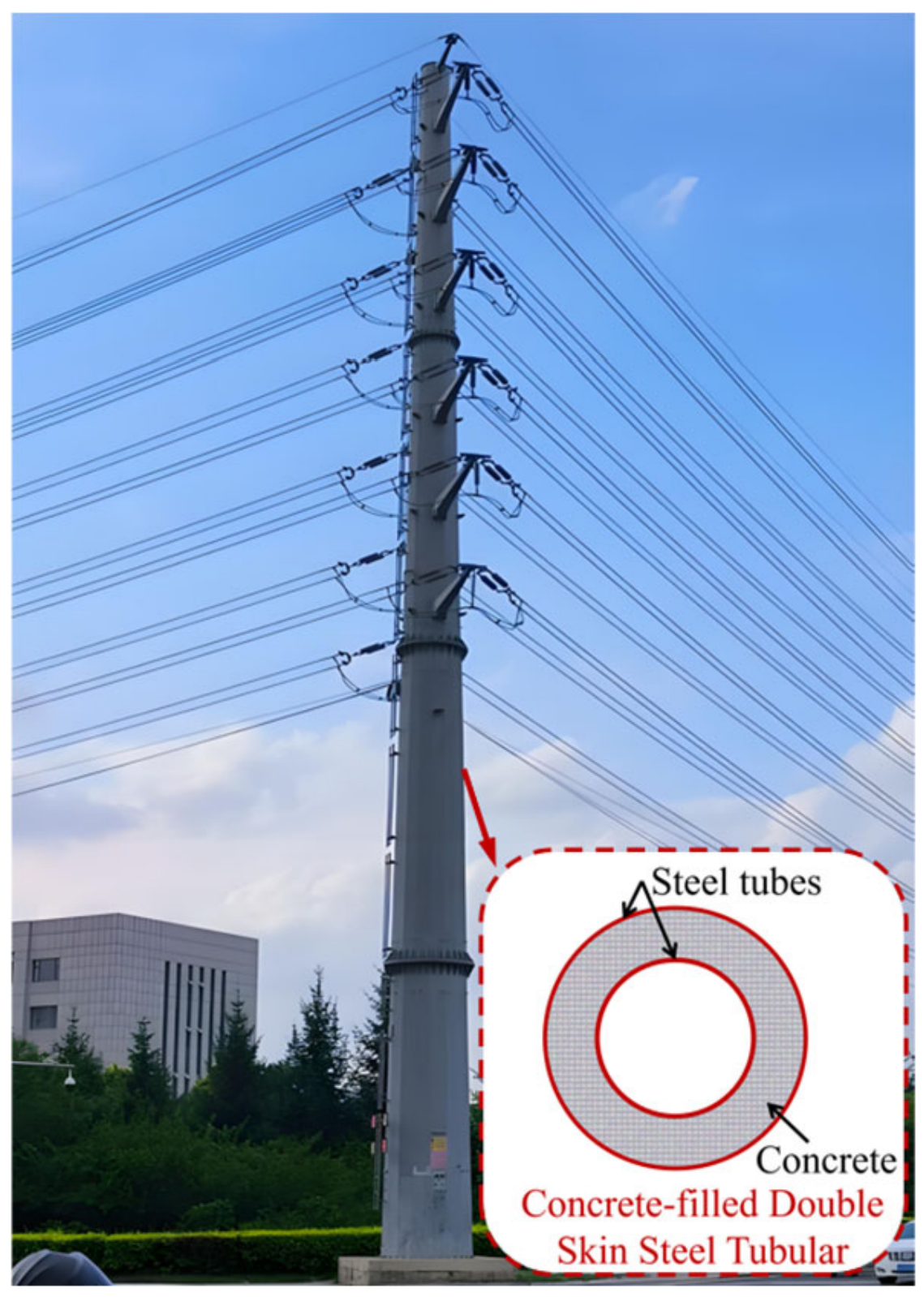
Figure 2 present typical engineering applications where CFST members serve as critical load-bearing components. Specifically,
Figure 1 shows the application of CFST in practical engineering, while
Figure 2 illustrates concrete-filled double skin steel tubular (CFDST) structures in power transmission engineering. Representative examples also include super high-rise buildings like the SEG Plaza and CITIC Plaza [
2,
3,
4]. Furthermore, these structures are widely utilized in large-scale infrastructure projects, such as the Pinglu Canal housing construction, which adopts a “permanent–temporary integrated” construction mode, wherein CFST-based composite structural members are extensively employed as critical load-bearing components. This practice provides a replicable engineering paradigm for the broader application of steel-concrete composite structures in major infrastructure projects [
5]. However, as complex hybrid systems, the mechanical behaviors of structures in steel-concrete composite structures, such as concrete-filled double skin steel tubular (CFDST) structures, as shown in
Figure 2, exhibit mechanical behaviors influenced by the coupling effects of various complex factors, including material nonlinearity, geometric nonlinearity, interface slip, construction errors, and initial imperfections [
2,
6]. Accurately predicting the ultimate bearing capacity of members under various loading conditions has become a core challenge in structural design and safety assessment [
7,
8,
9]. Traditional calculation methods based on superposition theory ignore the complex interactions between steel and concrete, resulting in limited computational accuracy. In particular, when dealing with high-strength materials, complex stress states, or novel section types, these methods face severe challenges in terms of applicability and accuracy [
10].
Researchers studying the ultimate bearing capacity of traditional steel-concrete composite structures typically employ unified theory and superposition theory as theoretical models for calculating ultimate bearing capacity [
11]. Unified theory treats the CFST components in steel-concrete composite structures as an integrated unit, solving for ultimate load through equilibrium differential equations that consider material nonlinearity and geometric imperfections. While it can better reflect the interactions between materials, its mathematical derivation is complex and requires numerous simplifying assumptions, limiting its application under complex loading conditions [
12,
13]. In contrast, superposition theory is simpler and more practical, treating bearing capacity as the simple superposition of the bearing capacities of steel and concrete, and roughly considering confinement effects through confinement coefficients [
14]. While this theory facilitates engineering design, it cannot be applied to torsional members and fails to account for the complex interactions between steel and concrete, presenting deficiencies in calculating ultimate axial compressive strength [
15].
To meet the demands of modern engineering, researchers have begun exploring the engineering applications of machine learning algorithms. While classical algorithms like support vector machines excel at handling small-sample and nonlinear problems but are sensitive to hyperparameters and exhibit lower training efficiency [
16,
17]. In contrast, recent advancements in Deep Learning (DL) and artificial neural networks possess powerful function approximation capabilities; they heavily rely on massive datasets and suffer from poor interpretability, making them less ideal for structural engineering, where experimental data is often limited and physical interpretability is mandatory [
18]. For the complex regression problem of CFST ultimate bearing capacity, which involves high nonlinearity and parameter coupling, ensemble learning methods demonstrate significant advantages. Although gradient boosting decision trees slightly outperform Random Forests in accuracy, they require longer training times and are more sensitive to outliers [
19,
20]. Conversely, the Random Forest (RF) algorithm reduces the risk of over-parameterization through ensemble learning, provides robust generalization on small-to-medium datasets, and uniquely offers feature importance evaluation, which is crucial for engineering validation and physical interpretability. Meanwhile, due to parallel training characteristics and robustness to noise, Random Forests demonstrate superior performance in computational efficiency and model stability.
As an ensemble learning algorithm, Random Forest reduces the risk of over-parameterization by constructing multiple decision trees, featuring high robustness and generalization capability, insensitivity to noise, and the ability to evaluate feature importance [
21,
22]. It has been widely applied in fields such as ground surface settlement prediction and slope stability analysis [
23,
24,
25,
26]. For the complex regression problem of ultimate bearing capacity of steel-concrete composite structural members, which is highly nonlinear and involves parameter coupling [
27], Random Forest demonstrates natural applicability, enabling high-precision prediction for axially and eccentrically compressed members [
28,
29]. Meanwhile, the field of steel-concrete composite structures has accumulated abundant experimental and numerical simulation data, providing a solid foundation for training high-precision models [
21,
30,
31,
32]. In summary, with high precision, high efficiency, strong robustness, certain interpretability, and extensive data support, Random Forest has become an ideal tool for solving the complex nonlinear regression problem of ultimate bearing capacity prediction for CFST members.
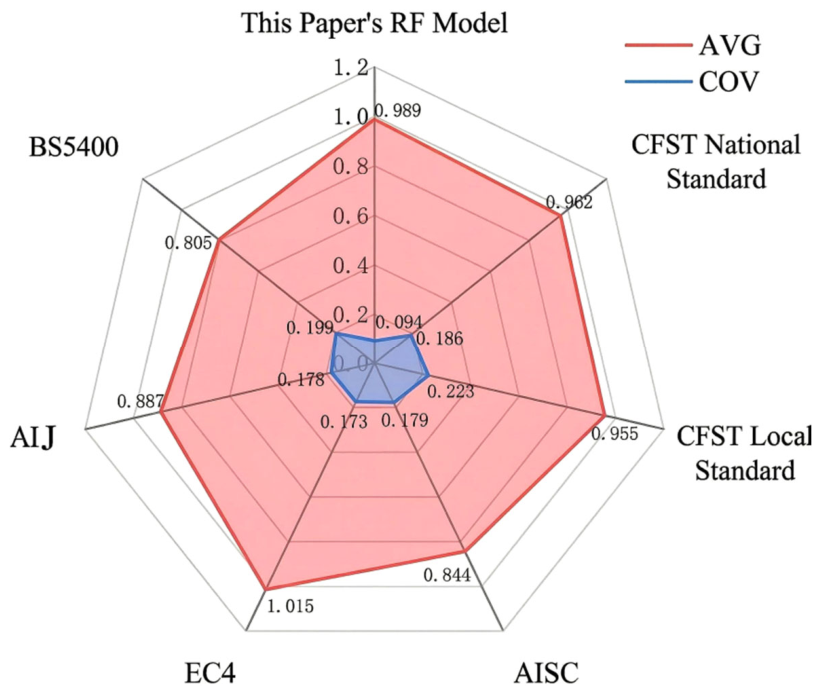
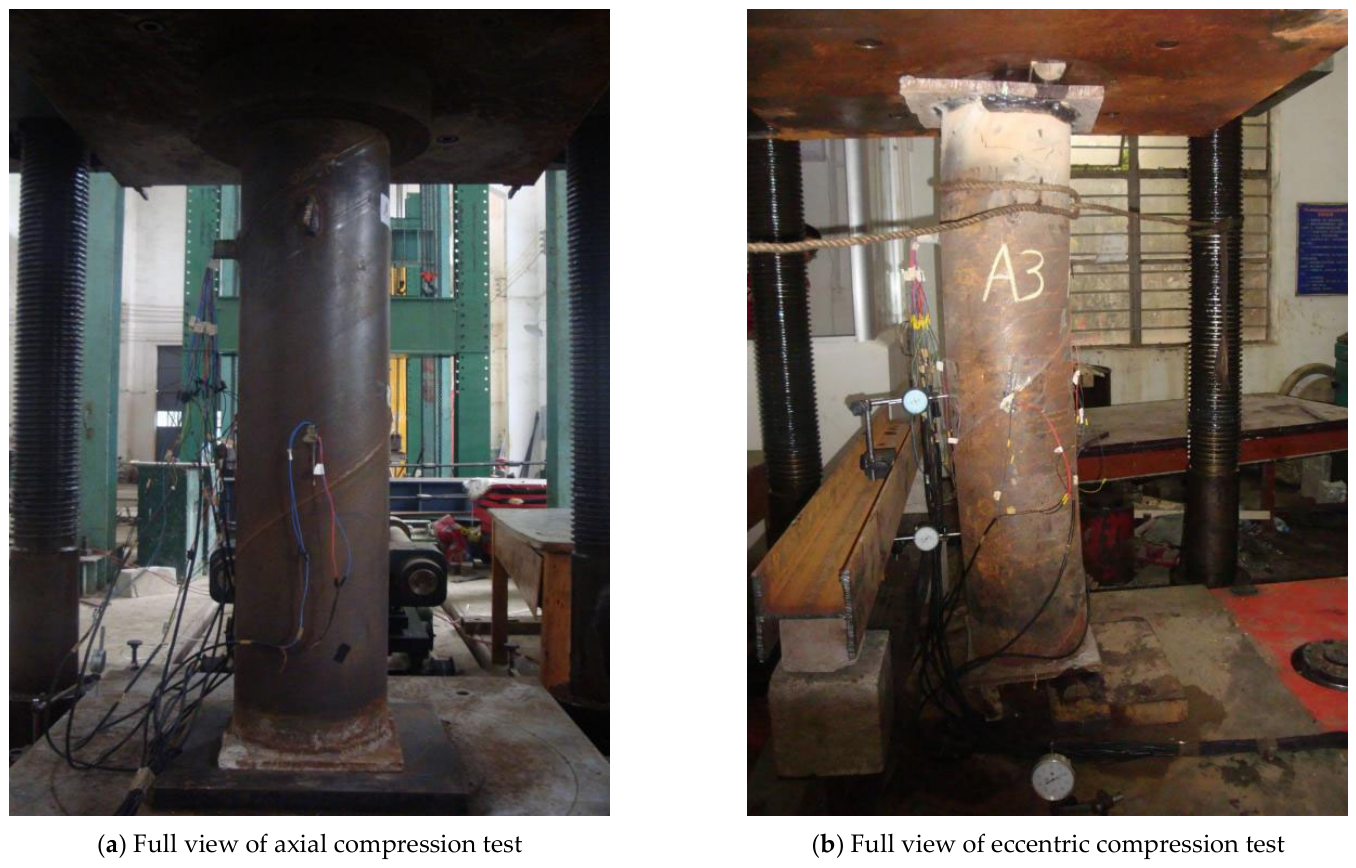
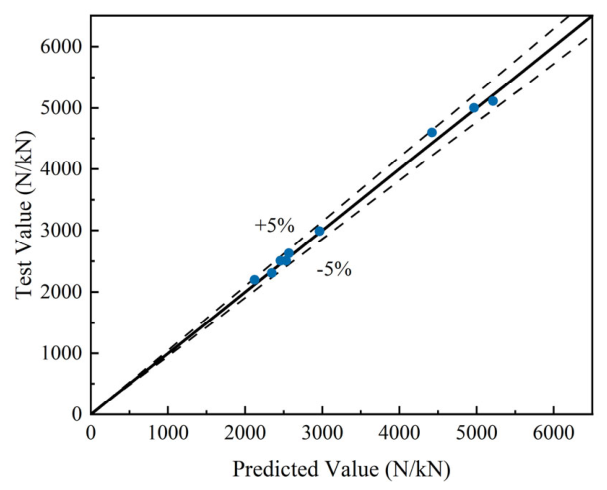
A Random Forest-based machine learning predictive model is proposed in this study to estimate the ultimate bearing capacity of CFST members. To validate the model, a series of axial compression tests was performed on CFST specimens, involving comprehensive characterization of the material properties of steel tubes and core concrete, as well as measurement of the ultimate compressive capacities. The results indicate that the RF model yields predictions in close agreement with the experimental data, thereby verifying both its computational accuracy and practical applicability. Ultimately, the novelty of this study lies in explicitly quantifying the structural mechanics hierarchy through data-driven feature importance, revealing that the steel tube inertia dominates the prediction with a 35.56% contribution. Unlike existing black-box ML models that focus solely on prediction accuracy, this quantification provides new physical insights that complement classical CFST theory, demonstrating that the top seven parameters collectively account for over 80% of the variance, which aligns with the confinement mechanism. Furthermore, the proposed model achieves a mean predicted-to-experimental ratio of 0.989 for the testing set with maximum deviations within 15%, improving prediction accuracy by approximately 9% compared with existing design codes, and is rigorously validated by nine independent CFST column tests with prediction errors within 5%.
4. Model Prediction Results
4.1. Result Coefficient
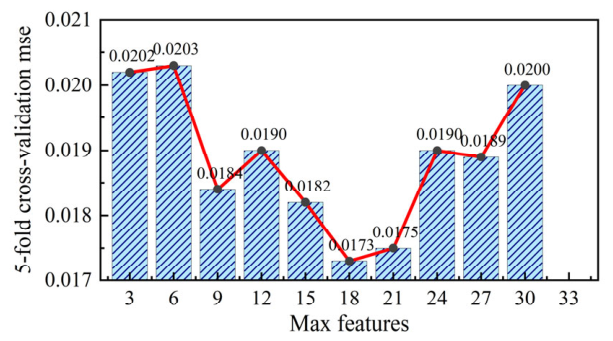
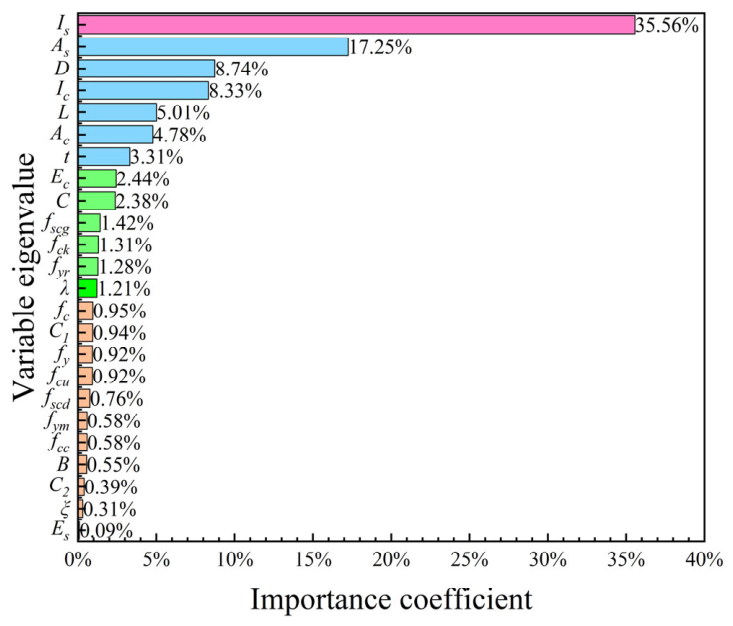
The importance coefficients from the optimized parameter model in
Section 3.2.2 are shown in
Figure 12. The contribution of each independent variable to the RF model is based on the largest or relatively significant coefficients. Among the 24 features,
Is contributes the most, accounting for 35.56%.
As,
D,
Ic,
L,
Ac, and
t account for 17.25%, 8.74%, 8.33%, 5.01%, 4.78%, and 3.31%, respectively.
Ec,
C,
fscg,
fck,
fyr, and
λ contribute between 1.21% and 2.44%, with respective contributions of 2.44%, 2.38%, 1.42%, 1.31%, 1.28%, and 1.21%. Other variables contribute less than 1%. This shows that the ultimate bearing capacity is primarily influenced by
Is, with factors like
As,
D,
Ic,
L,
Ac, and
t also playing important roles. In practical engineering, careful attention should be given to selecting values for these variables. Although the impact of variables like
Ec,
C,
fscg,
fck,
fyr, and
λ is smaller, they should be adjusted with appropriate reduction factors when constructing the bearing capacity equation for comprehensive analysis.
While the Random Forest model assigns feature importance values (e.g., Is = 35.56%), it is essential to link these results to structural mechanics principles to provide engineering insight. For instance, the high contribution of the steel ratio (Is) aligns with classical CFST column theory, where the steel content significantly affects both confinement and ductility. Higher steel ratios improve the column’s ability to resist axial loads and enhance post-yield behavior due to the interaction between steel and concrete.
Similarly, the concrete compressive strength, which also shows notable importance, directly influences the ultimate axial capacity. According to the standard design formula, the axial strength of CFST columns is a function of both steel and concrete contributions. The model’s feature importance reflects this underlying physical relationship, validating that the ML predictions are not only statistically accurate but also physically meaningful.
This interpretability enables engineers to understand which parameters most strongly affect performance, supporting informed design and optimization of CFST structures, beyond the purely predictive capability of the model.
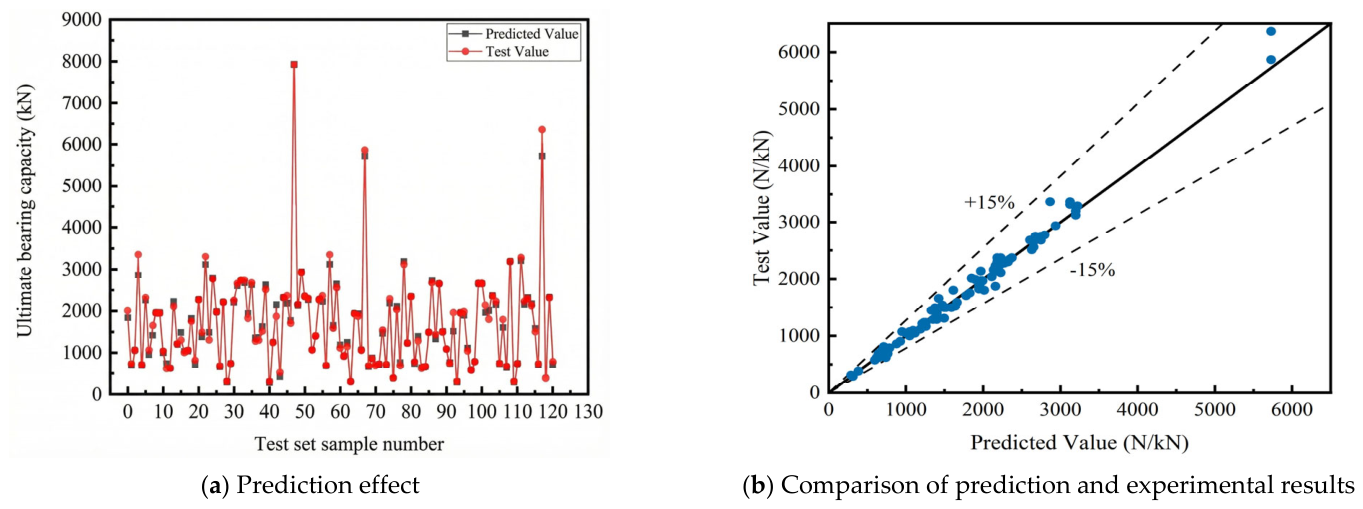
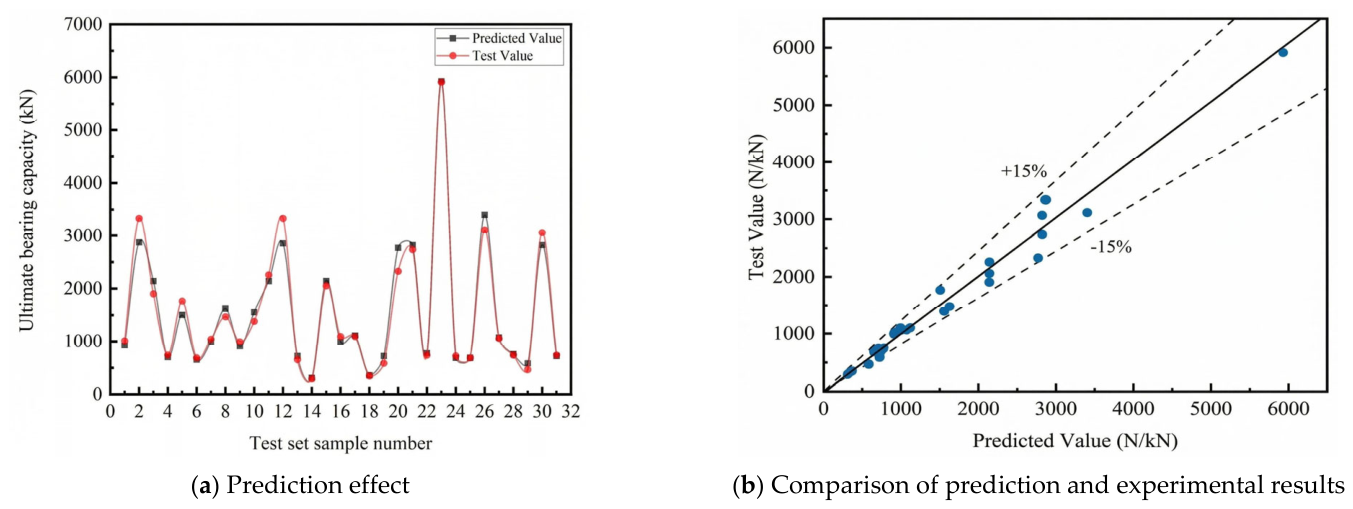
Optimized training samples from 154 datasets capture the macroscopic mechanical behavior of component ultimate bearing capacity under various conditions. Statistical results are presented in
Table 2, enabling a clear comparison between predicted and experimental values. As shown in
Figure 13a and
Figure 14a, the RF model predictions for the training (80%) and test (20%) sets closely align with experimental results, with curves nearly overlapping, indicating minimal deviation and high accuracy.
Figure 13b and
Figure 14b show that predicted points are evenly distributed, with most coinciding with the isoline and maximum deviations within 15%, confirming strong generalization and avoidance of overfitting. These results validate the improved RF model’s predictive reliability, supporting rapid and accurate estimation of ultimate bearing capacity for concrete-filled steel tubes.
Table 3 presents the average value (
AVG), mean square deviation (
σ), and coefficient of variation (
COV) for the ratio between predicted and experimental values. The low σ and COV indicate minimal deviation between predicted and actual values.
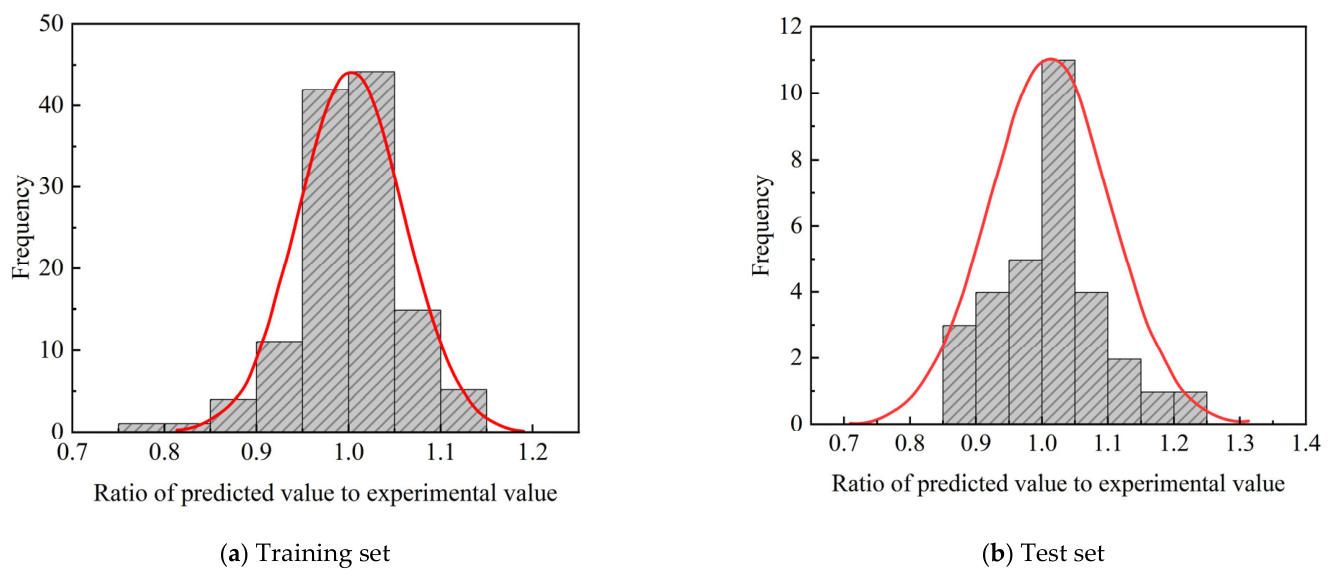
Figure 15a,b show the histogram distributions of predicted-to-experimental ratios of ultimate bearing capacity for the training and testing datasets. For both datasets, the median and mean of the ratio distributions are close (1.0008 and 1.0020 for training, 0.9849 and 0.9890 for testing), indicating minimal bias and high accuracy of the improved RF prediction model.
For practical engineering applications, the proposed RF model can be deployed as an interactive computational tool or Application Programming Interface (API), enabling the direct input of the 24 parameters for rapid bearing capacity estimation without requiring machine learning expertise. Based on the feature importance analysis, priority should be given to the selection of Is, As and D during the preliminary design phase, as these parameters dominate the prediction. However, the practical application of this model has inherent limitations: Predictions are reliable only within the parameter ranges of the training dataset; extrapolation beyond these bounds may lead to inaccuracies. The current model does not explicitly account for long-term loading effects, local buckling, or initial geometric imperfections beyond their implicit capture in the experimental dataset. Future work should incorporate numerical simulation data to expand the applicable parameter space and physical constraints.
4.2. Discussion on Physical Interpretability
The RF is a typical data-driven model, and the order of characteristic importance revealed by it is highly consistent with the classical mechanical behavior of CFST, which provides a strong physical basis for the prediction results of the model.
The results showed that Is (35.56%), Ic (8.33%), D (8.74%) and L (5.01%) were the most important characteristics. These parameters jointly define the slenderness ratio and section bending stiffness. In structural mechanics, slenderness ratio and flexural stiffness are the core parameters to control whether the overall buckling instability of members occurs under axial load. Especially for long- and medium-length columns, the ultimate bearing capacity is far lower than the section strength, which is mainly determined by the stability performance. This shows that the ranking of characteristic importance of the Random Forest model is not a random statistical result, but an accurate mapping of the physical reality that, under axial compression, the contribution of geometric stiffness is greater than that of material strength, which conforms to the basic principles of structural mechanics.
7. Conclusions
Through research on concrete-filled steel tubes, based on experimental data and combining existing experimental data, a prediction model for the ultimate bearing capacity of concrete-filled steel tubes was established using the RF algorithm. Experimental verification was conducted to assess the accuracy of the model, and the prediction results were evaluated based on the MSE index. The following conclusions were drawn:
- (1)
The steel tube section moment of inertia (Is) contributes the most to the bearing capacity, accounting for 35.56%; other significant factors include steel tube cross-sectional area (As, 17.25%), component diameter (D, 8.74%), concrete section moment of inertia (Ic, 8.33%), column length (L, 5.01%), concrete area (Ac, 4.78%), and steel tube wall thickness (t, 3.31%), highlighting their critical importance in design considerations.
- (2)
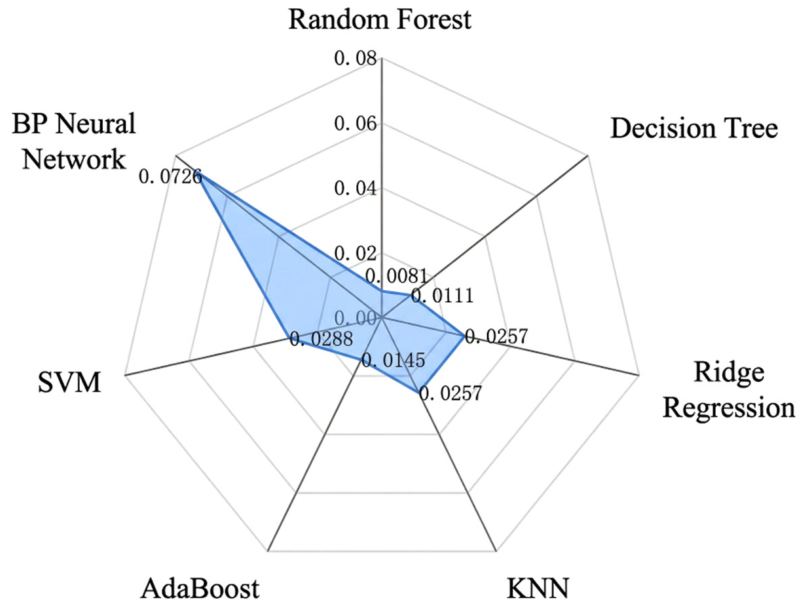
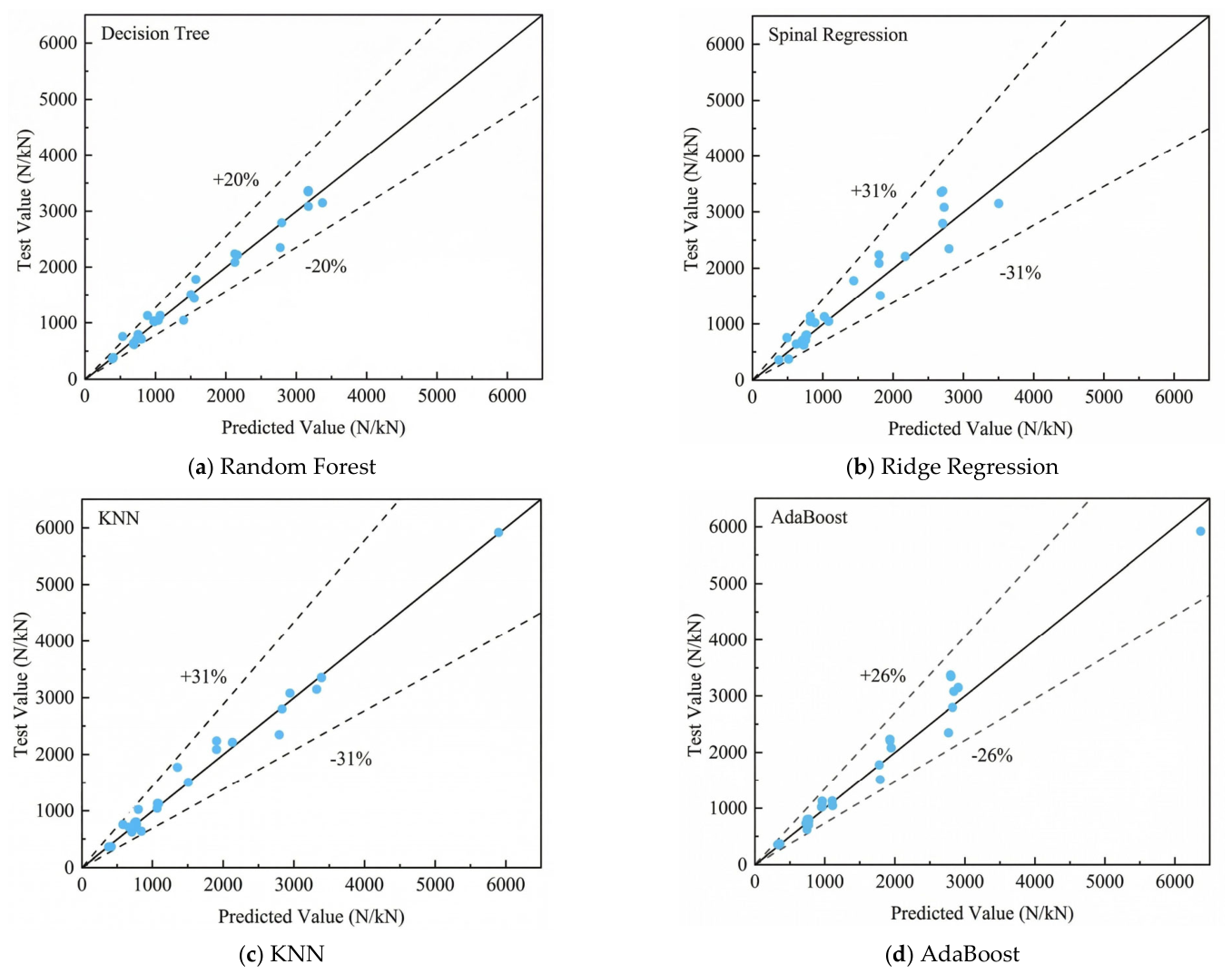
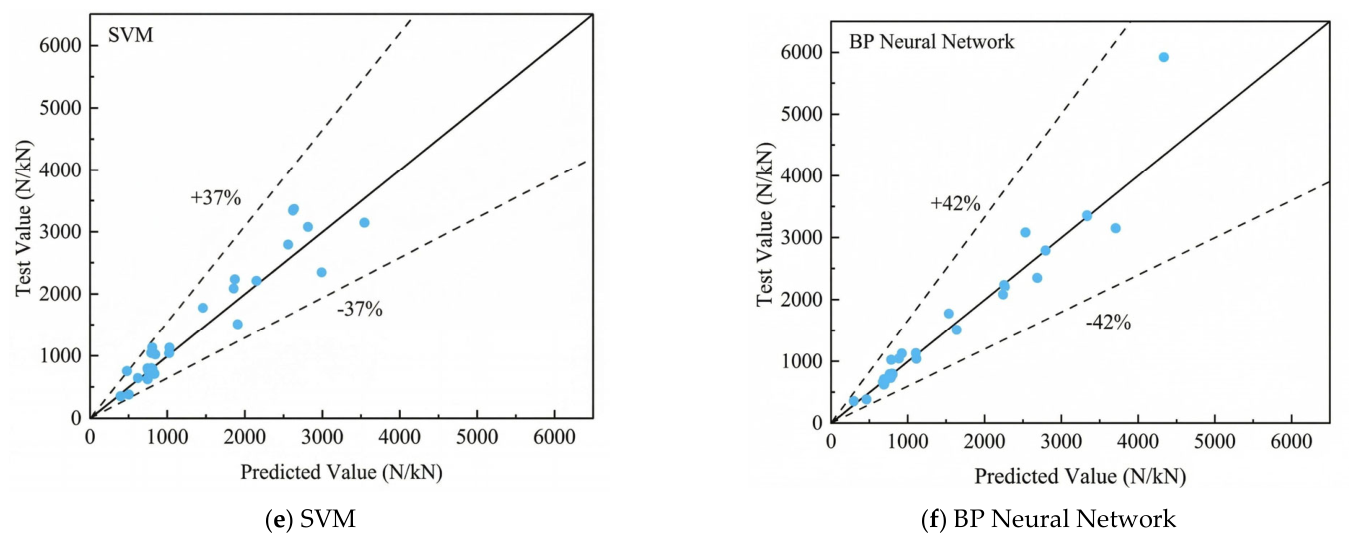
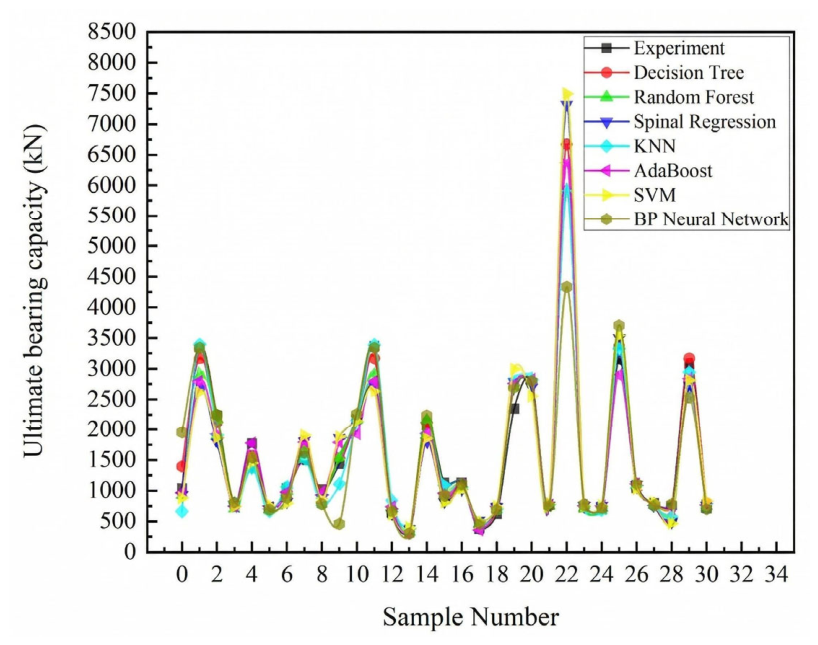
Compared with other algorithm models, the average accuracy of the improved RF model is increased by 42%. The average prediction and experimental ratios of the training set and the test set are 1.002 and 0.989, respectively. The maximum deviation is within 15%, and the mean square error is 0.0081. The improved RF model is superior to other algorithms in prediction accuracy, robustness and data fitting. Compared with the design specification, the overall error is about 1%, which proves its superior reliability in accurately and consistently predicting the ultimate bearing capacity of concrete-filled steel tubular members.
- (3)
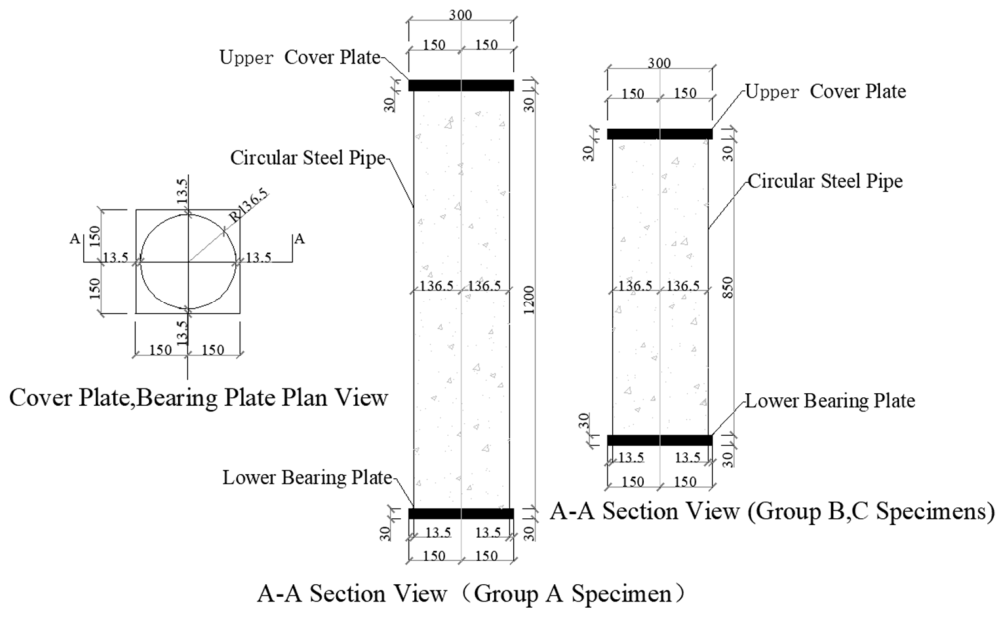
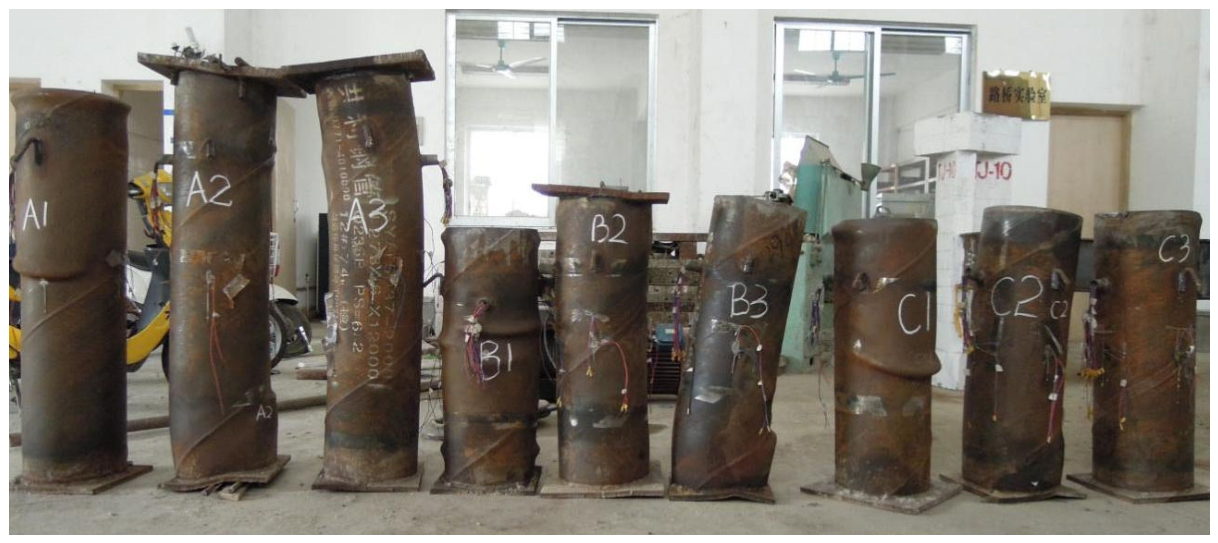
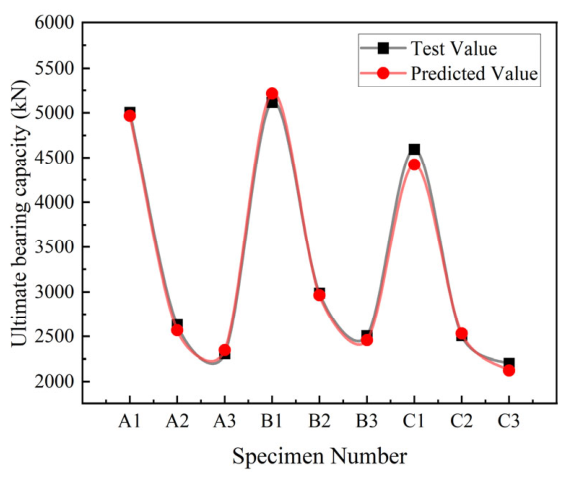
Specialized experiments further validated the accuracy and robustness of the RF model. For nine CFST column specimens varying in concrete strength, column length, slenderness ratio, and eccentricity, the maximum deviation between measured ultimate bearing capacity and RF predictions was below 5%. Moreover, predicted and experimental curves showed excellent agreement, confirming that the RF model can accurately predict the bearing capacity of CFST members under both axial and eccentric compression across a wide range of parameters.
Looking ahead, translating the proposed RF model into a practical solution for structural engineers represents a promising avenue, which we plan to actively pursue in our subsequent work. Given the model’s high accuracy and computational efficiency, exploring its deployment as a cloud-based API can be pursued to enable seamless integration into Building Information Modeling (BIM) software (Revit 2025). This will allow real-time predictions to be obtained directly within design workflows. Furthermore, developing interactive web applications can be explored to democratize access to this data-driven tool without requiring machine learning expertise. Beyond CFST structures, extending the proposed methodology—integrating comprehensive feature engineering, ensemble learning, and mechanics-interpretable feature importance—to other concrete structures characterized by nonlinear behavior and complex interactions can also be investigated. For instance, in concrete gravity dams and high-rise structures, where complex coupling effects critically affect structural integrity, applying this interpretable RF framework can be explored not only to predict structural responses but also to identify dominant influencing factors, thereby practically advancing intelligent structural design. The current stochastic forest models give deterministic prediction values, which fail to quantify the uncertainty of the prediction itself. For structural reliability analysis or probability-based design, if the prediction results lack a confidence interval or distribution information, the uncertainty quantification method can be introduced on the basis of the existing model in the subsequent work. For example, the bootstrap mechanism of Random Forest or quantile regression forest can be used to directly output the confidence interval or probability distribution of the predicted value. We can also try to link this kind of prediction with the structural reliability calculation method to estimate the bearing capacity failure probability or reliability index, so as to better serve the probability-based assessment and design.




 and
and