Multiscale Analysis of Reinforced Concrete Frames with Embedded Metamaterials Under Progressive Collapse

 ,
,  ,
, 
Abstract
1. Introduction
2. Implementation of Macroscale and Mesoscale FE Models
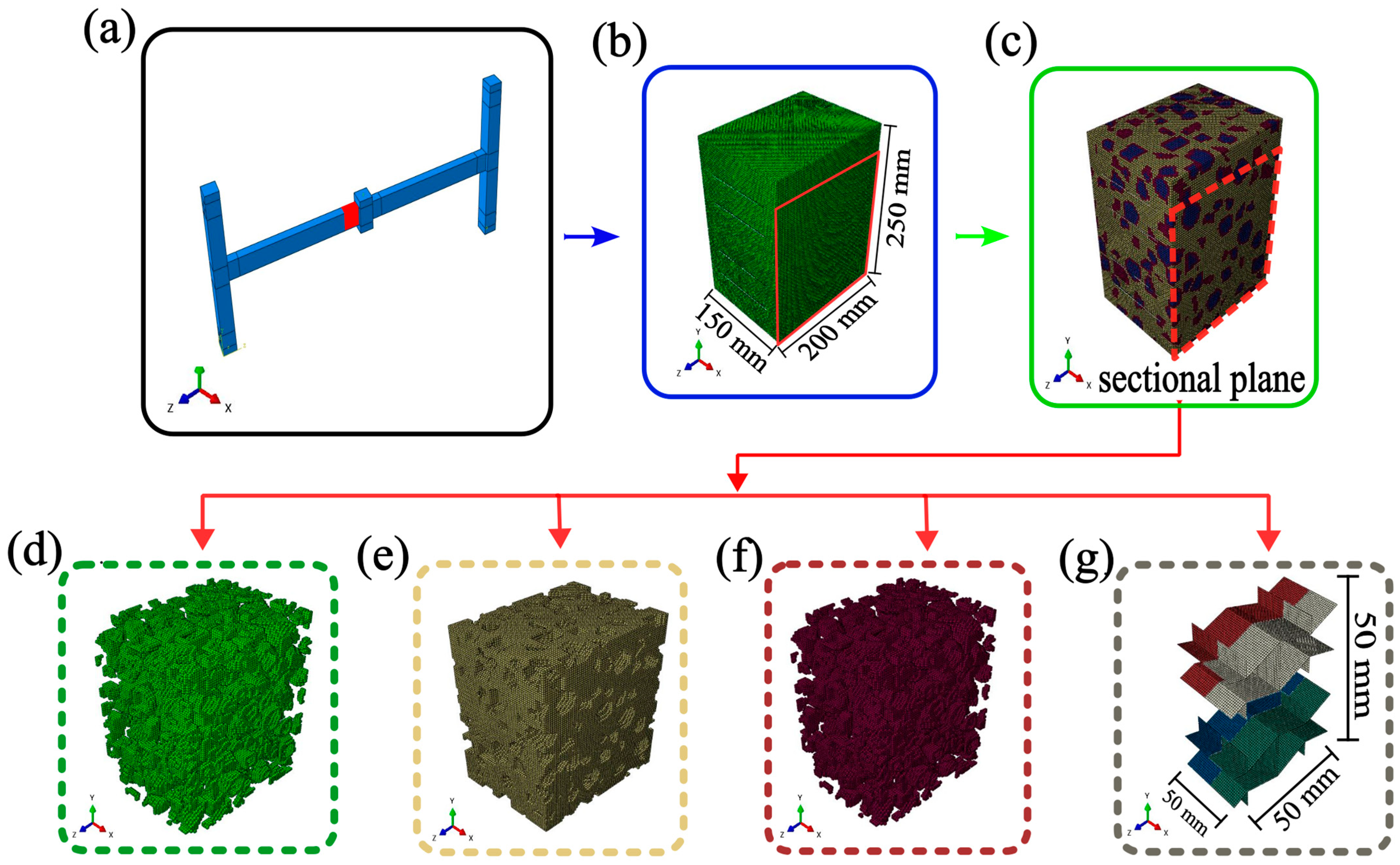
2.1. Multiscale Numerical Framework
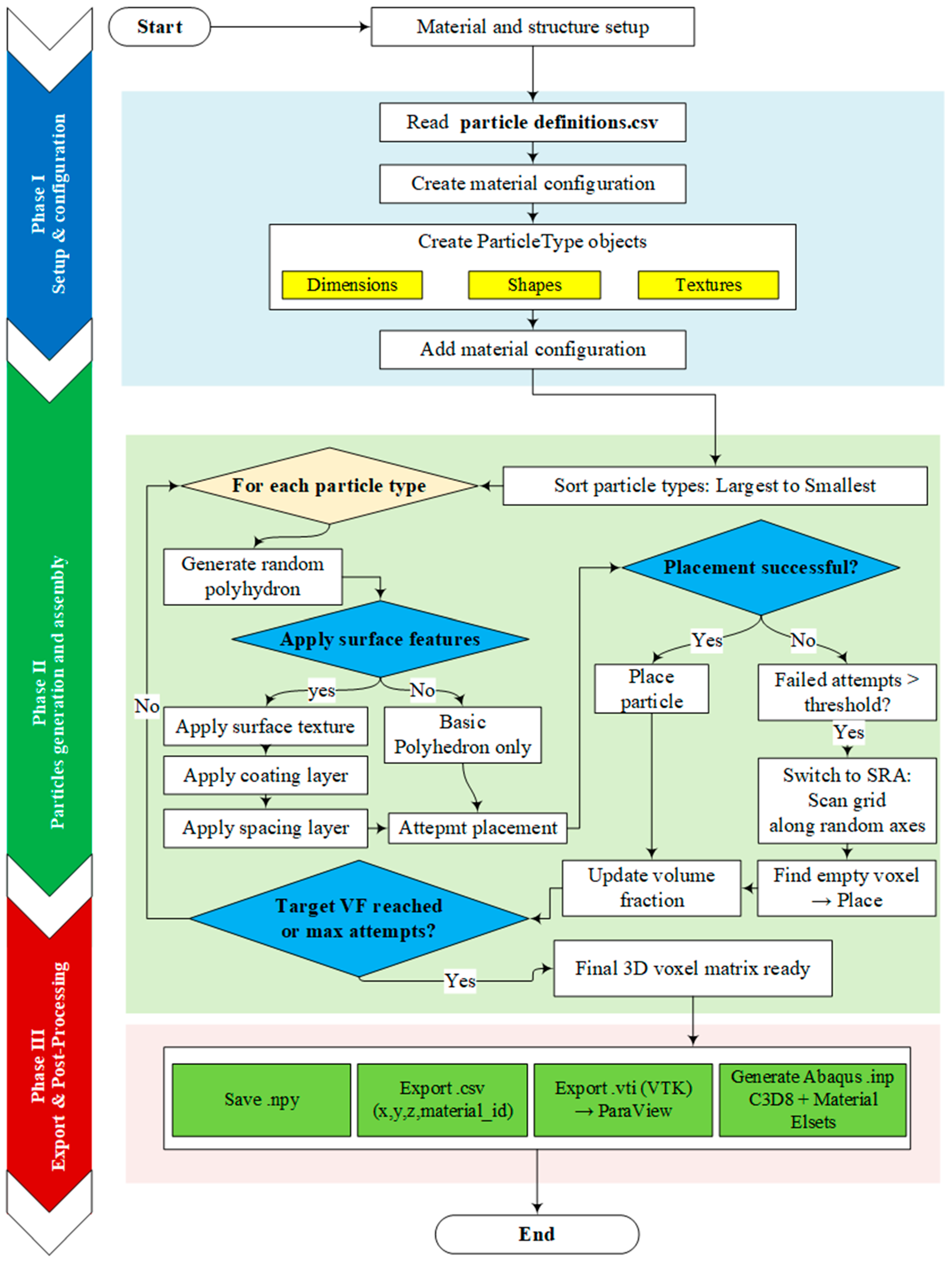
2.2. Mesoscale FE Model
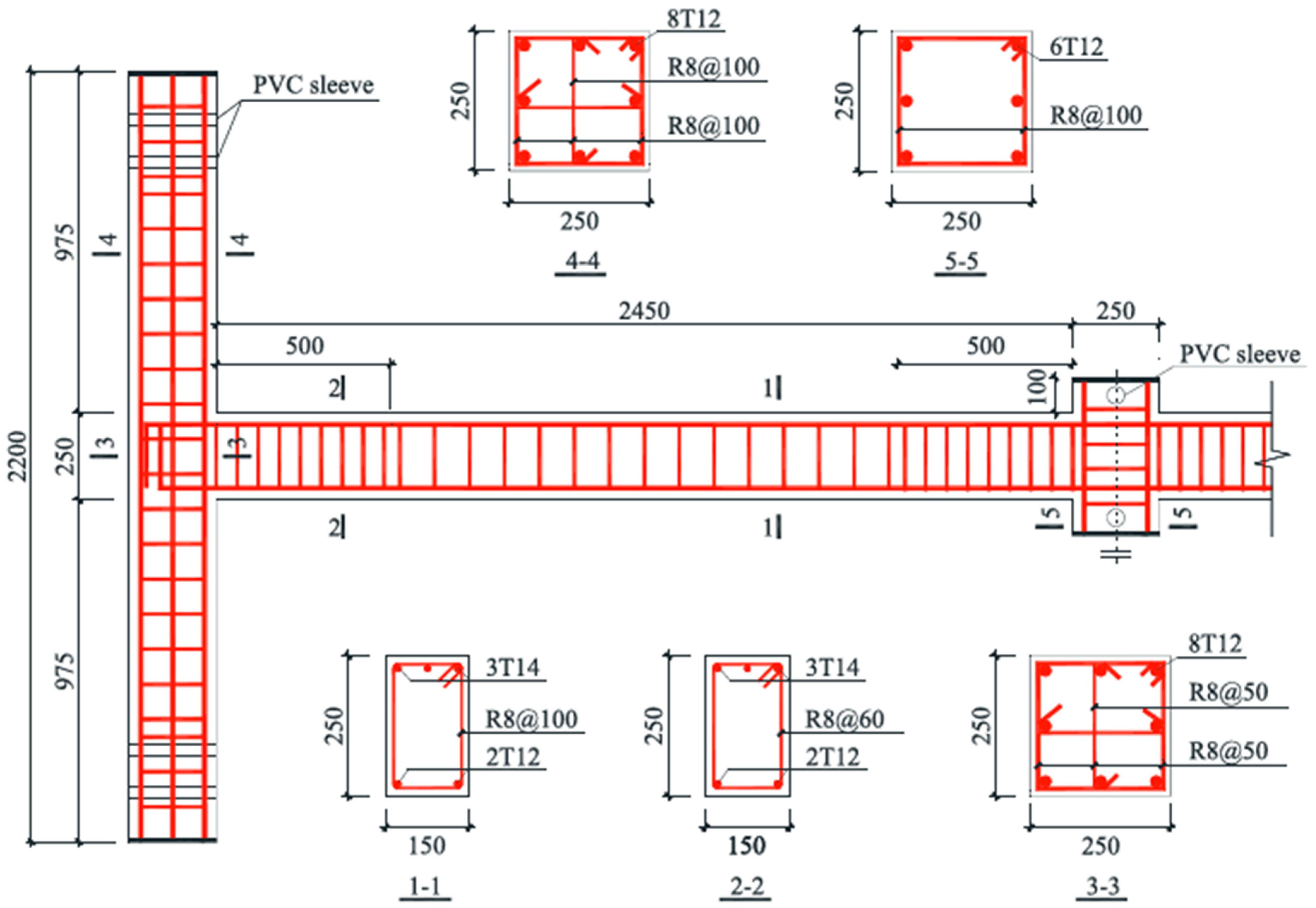
2.3. Macroscale FE Model
2.4. Constitutive Models of Materials
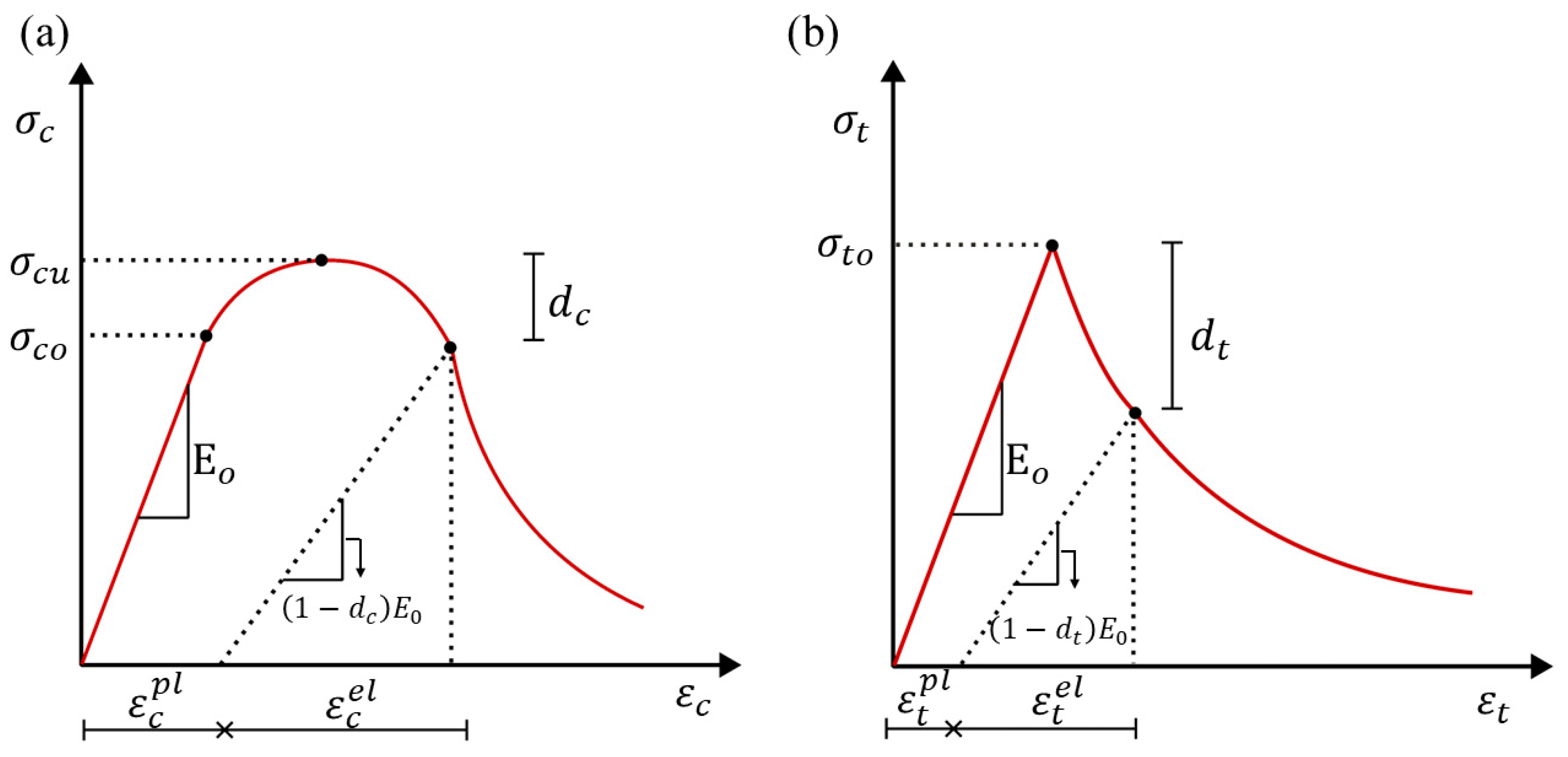
2.4.1. Concrete Damage Plasticity Model
2.4.2. Continuum Damage Mechanics Model for Steel Reinforcement
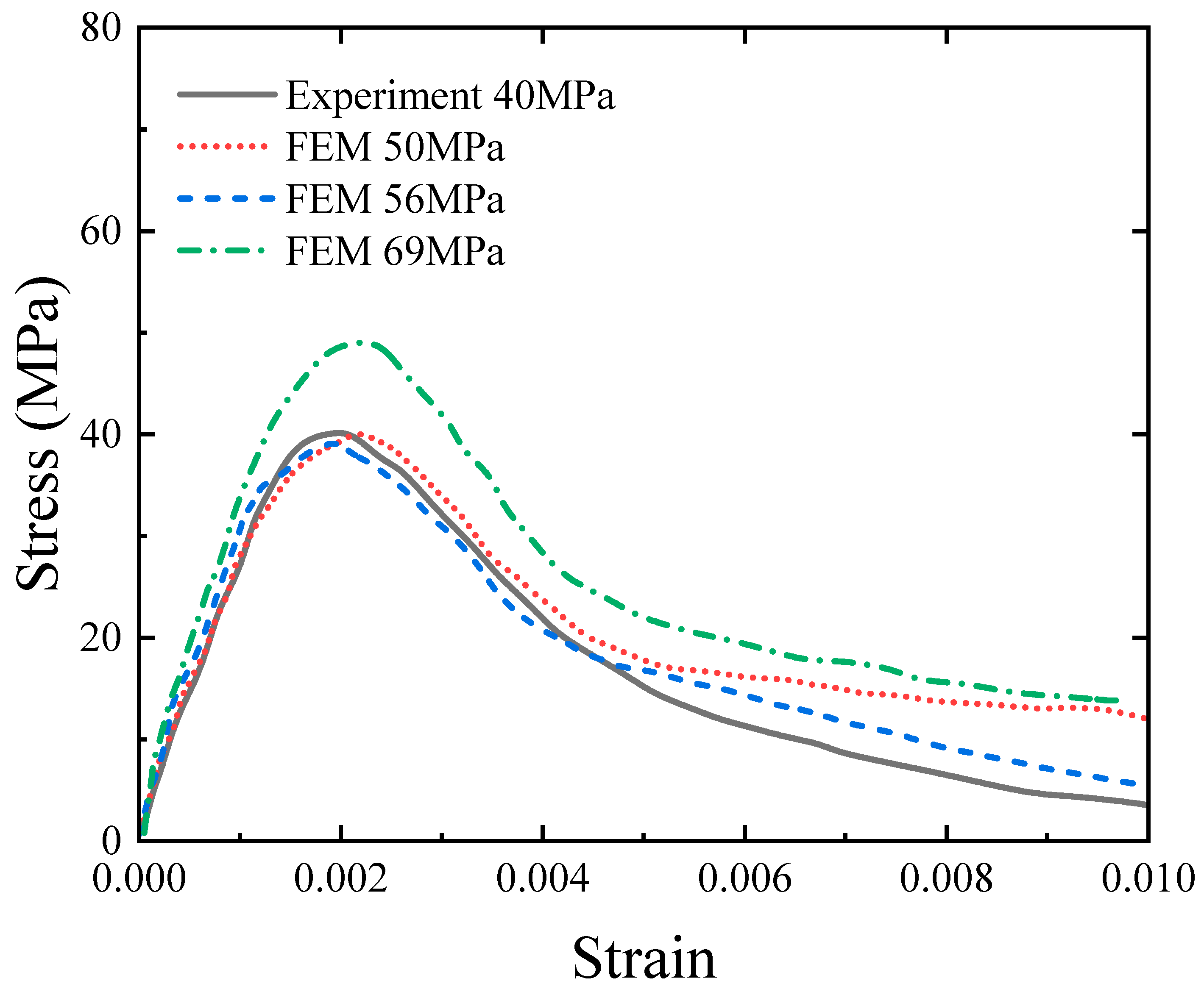
2.4.3. Constitutive Models for Mesoscale Components of Concrete
2.4.4. Justification for Homogenized Auxetic Insert Properties
2.5. Discretization, Interactions, and Boundary Condition
3. Steel Reinforcement Response and Comparative Analysis
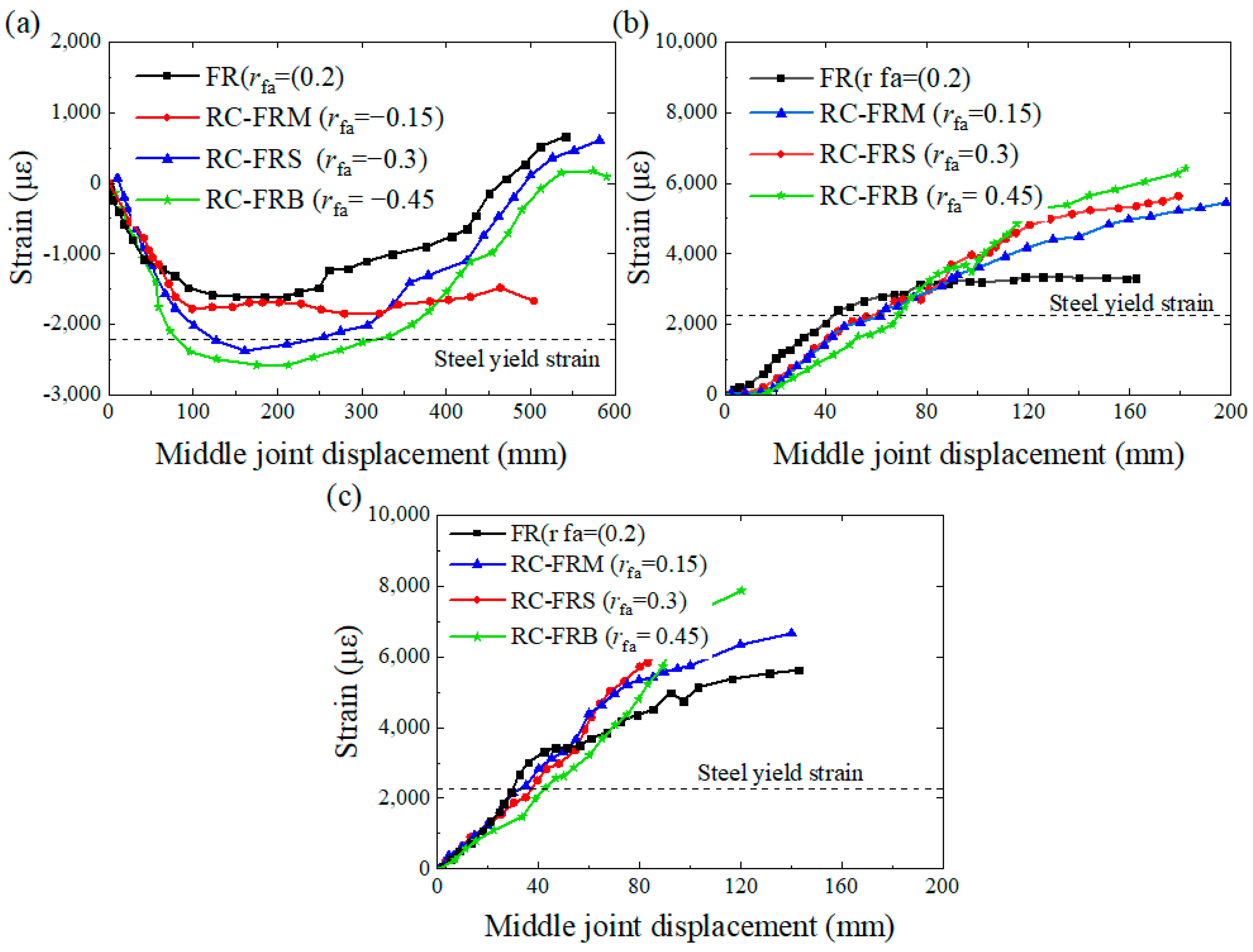
3.1. Reinforcement Strain Response at Critical Structural Locations
3.2. Systematic Performance Enhancement
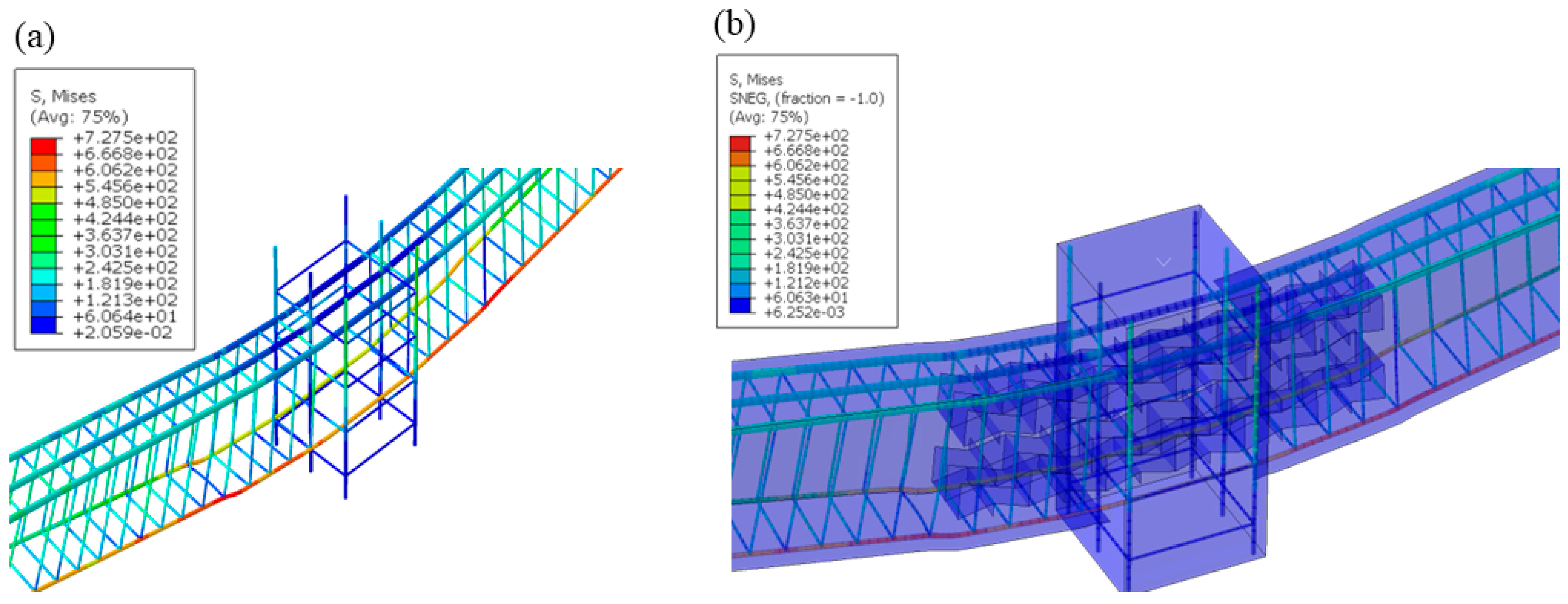
3.3. Stress Distribution in Steel Reinforcement: Comparative Analysis with and Without Auxetic Metamaterial
4. FE Simulation Results and Discussions
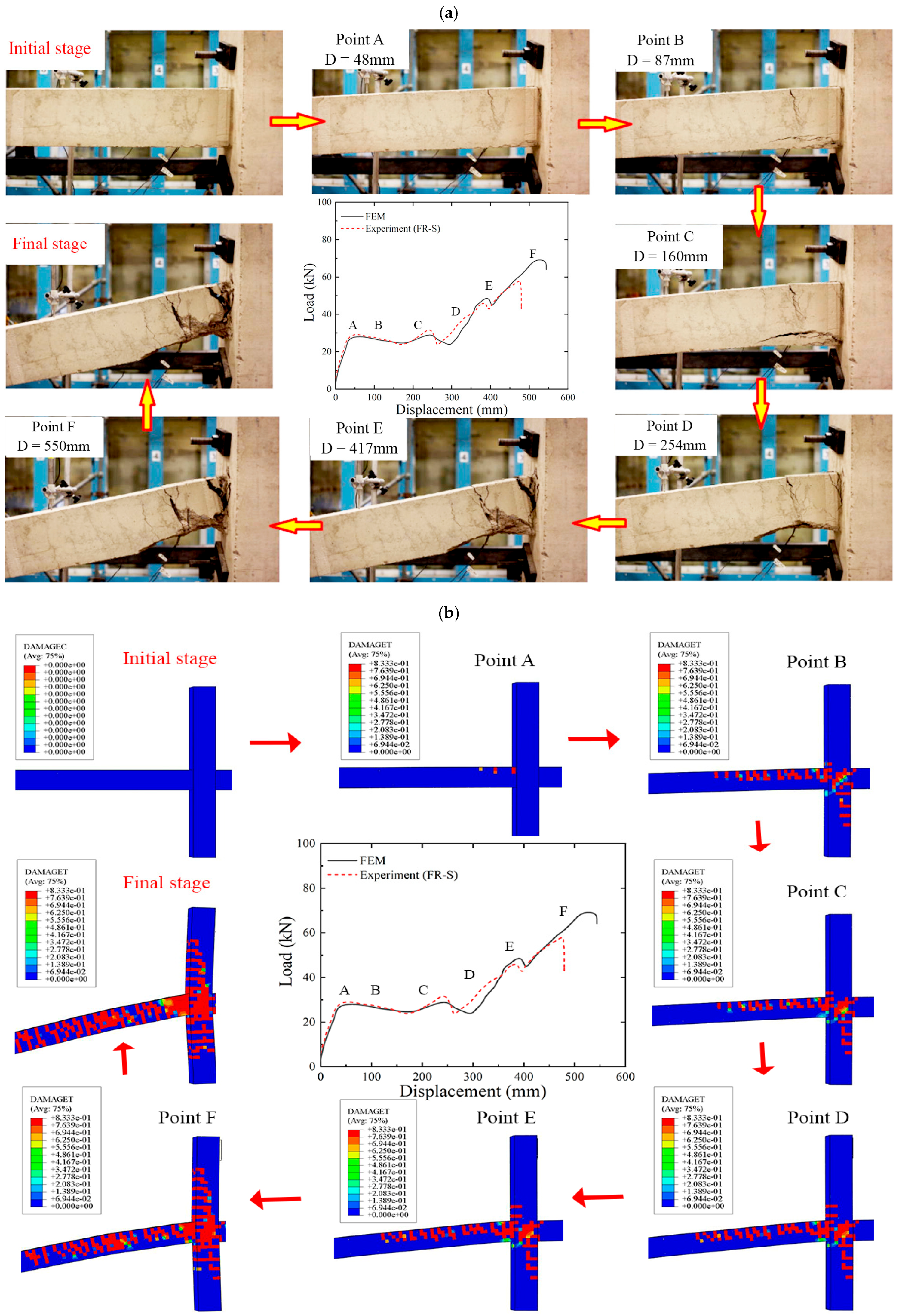
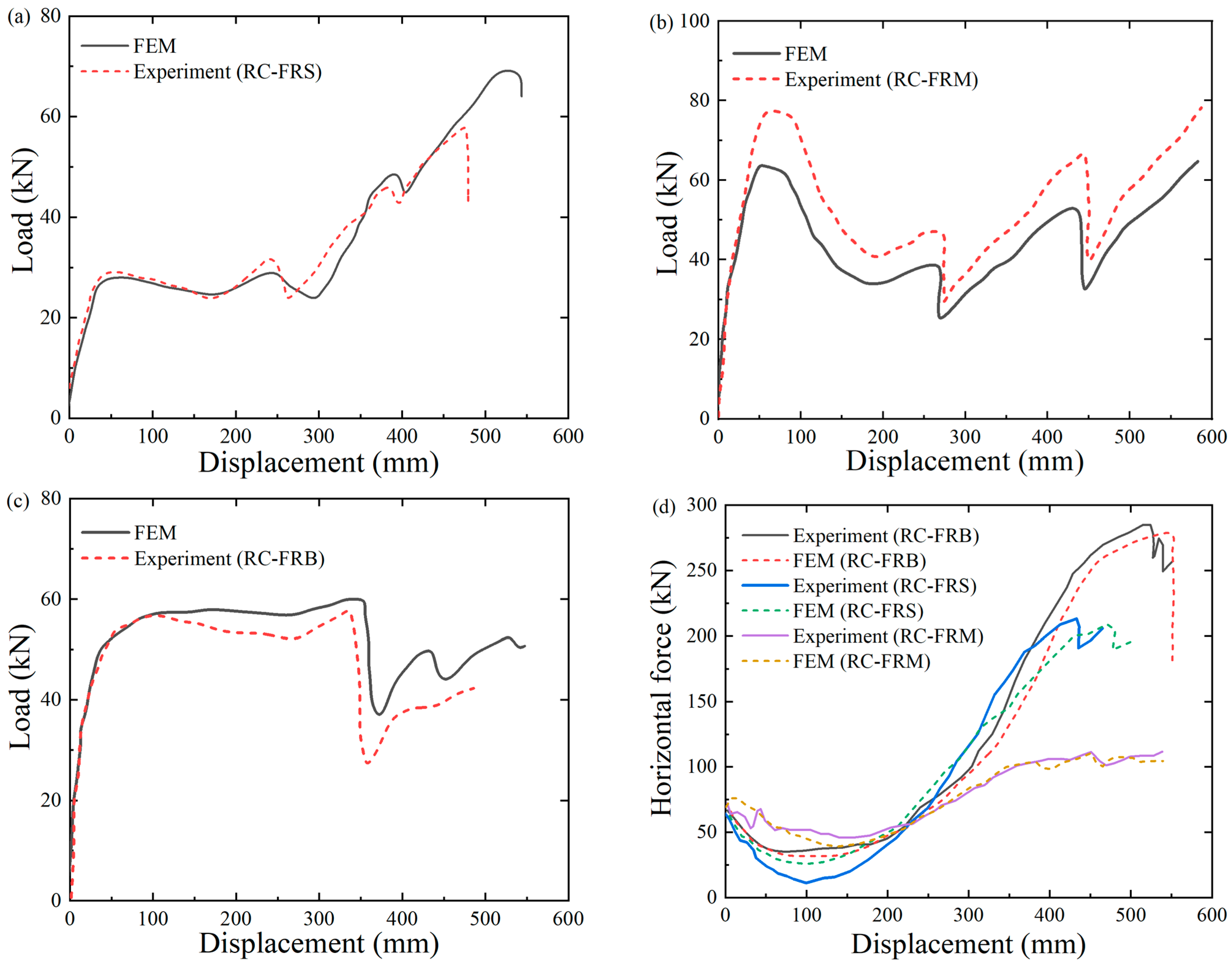
4.1. Full Restraint-Conventional Detailing (RC-FRS)
4.2. Full Restraint- Seismic Detailing (RC-FRM)
4.3. Exterior RC Frame with Seismic Detailing (RC-FRB)
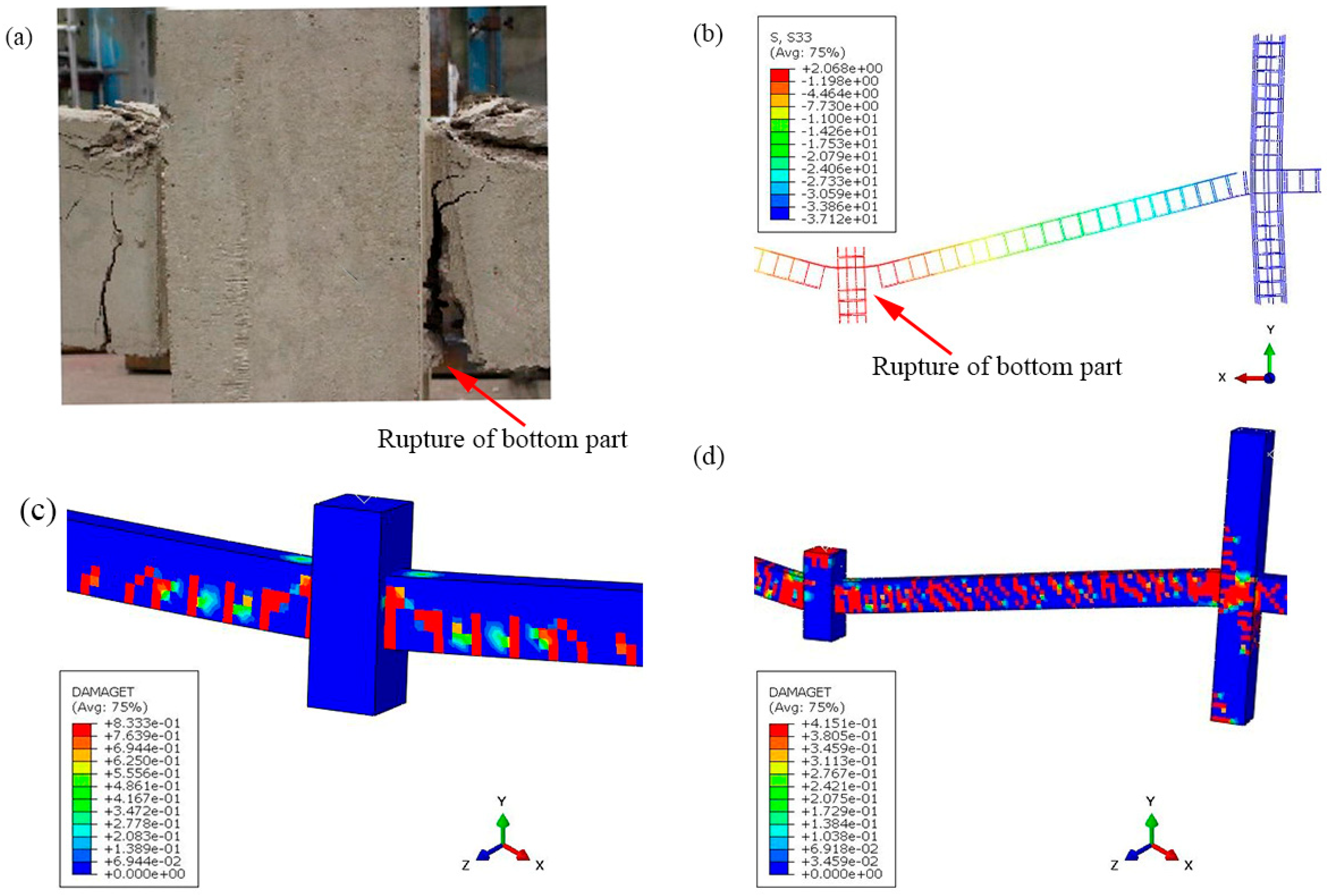
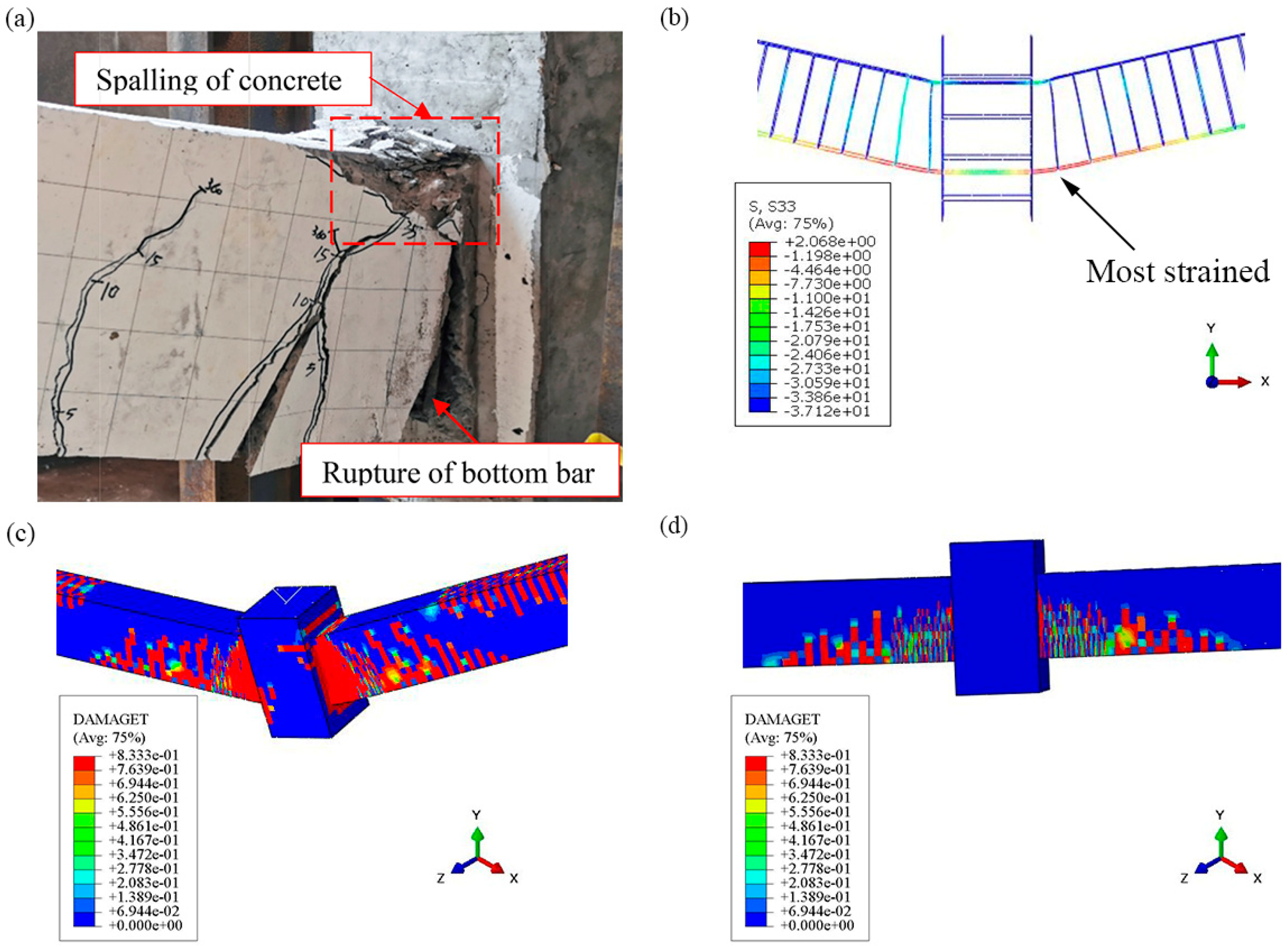
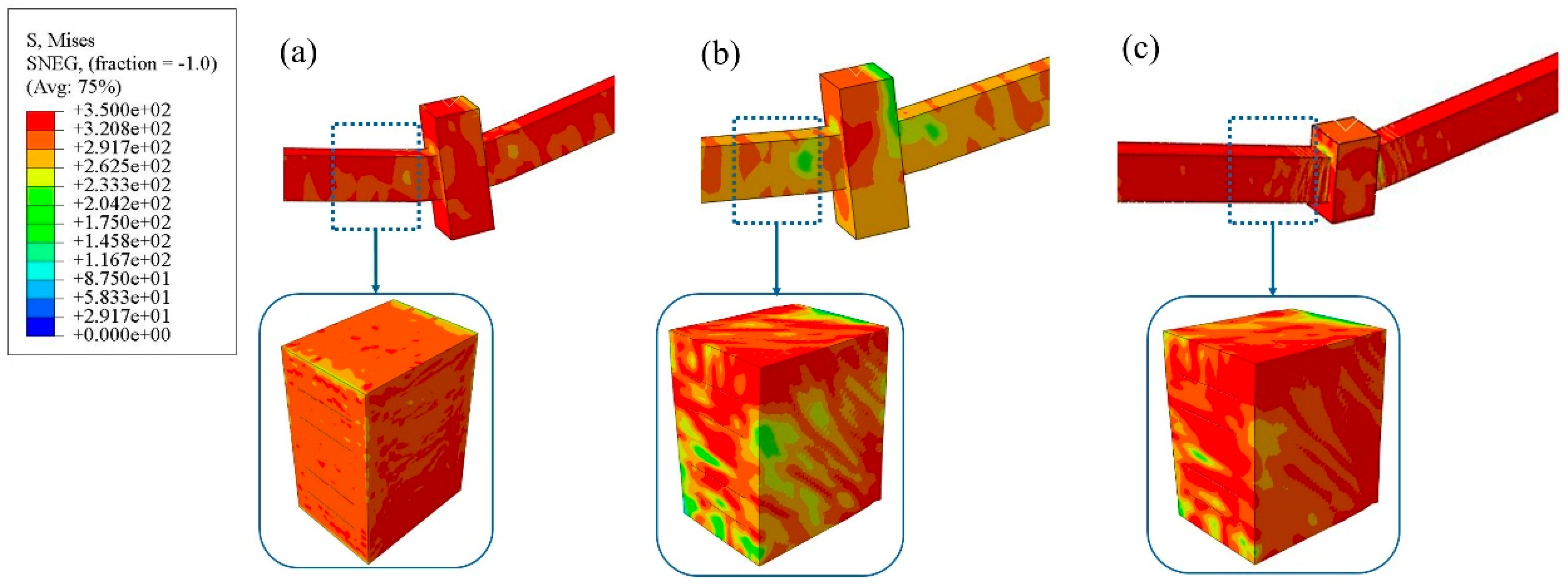
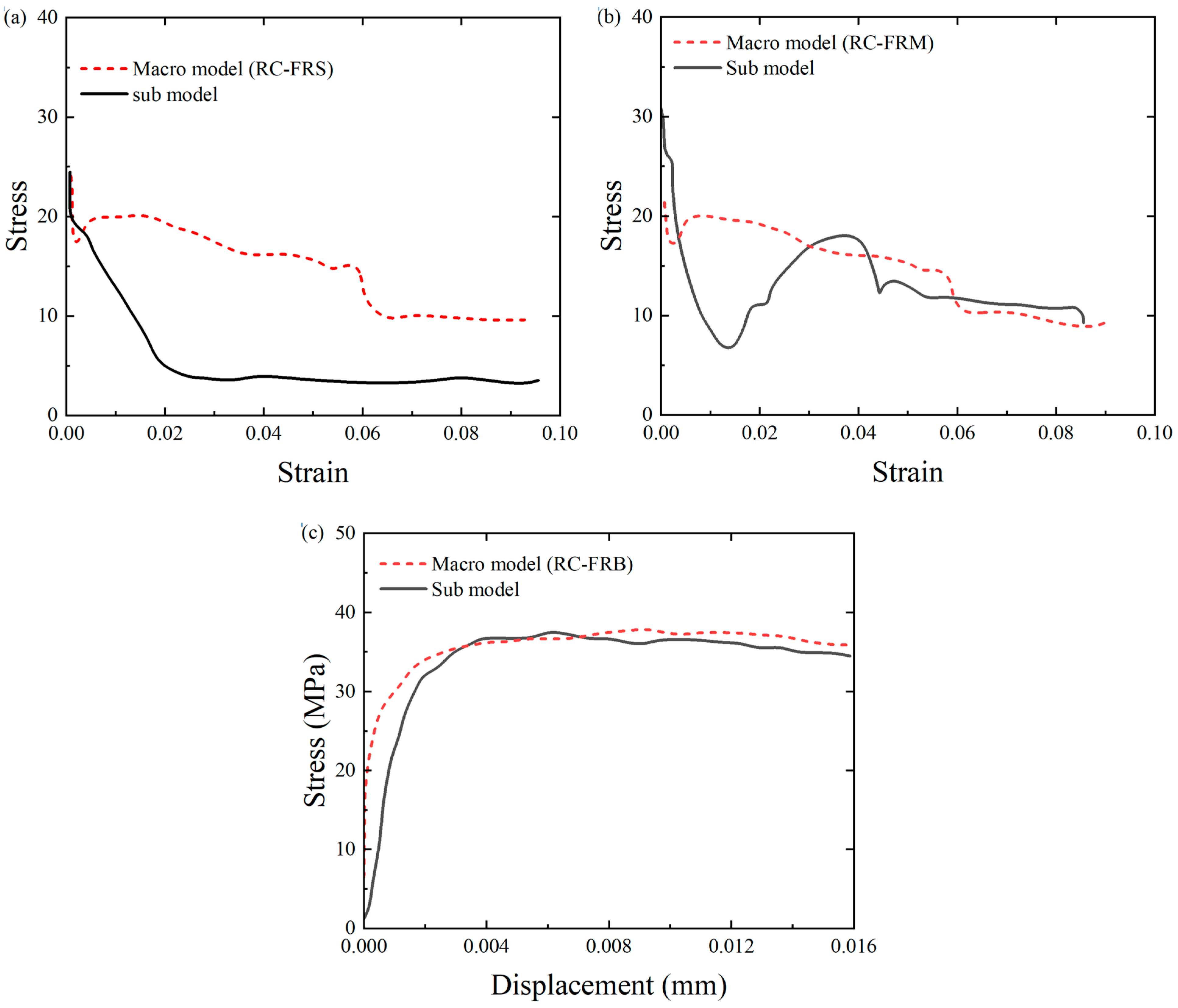
4.4. Local Response from the Sub-Modeling Analysis
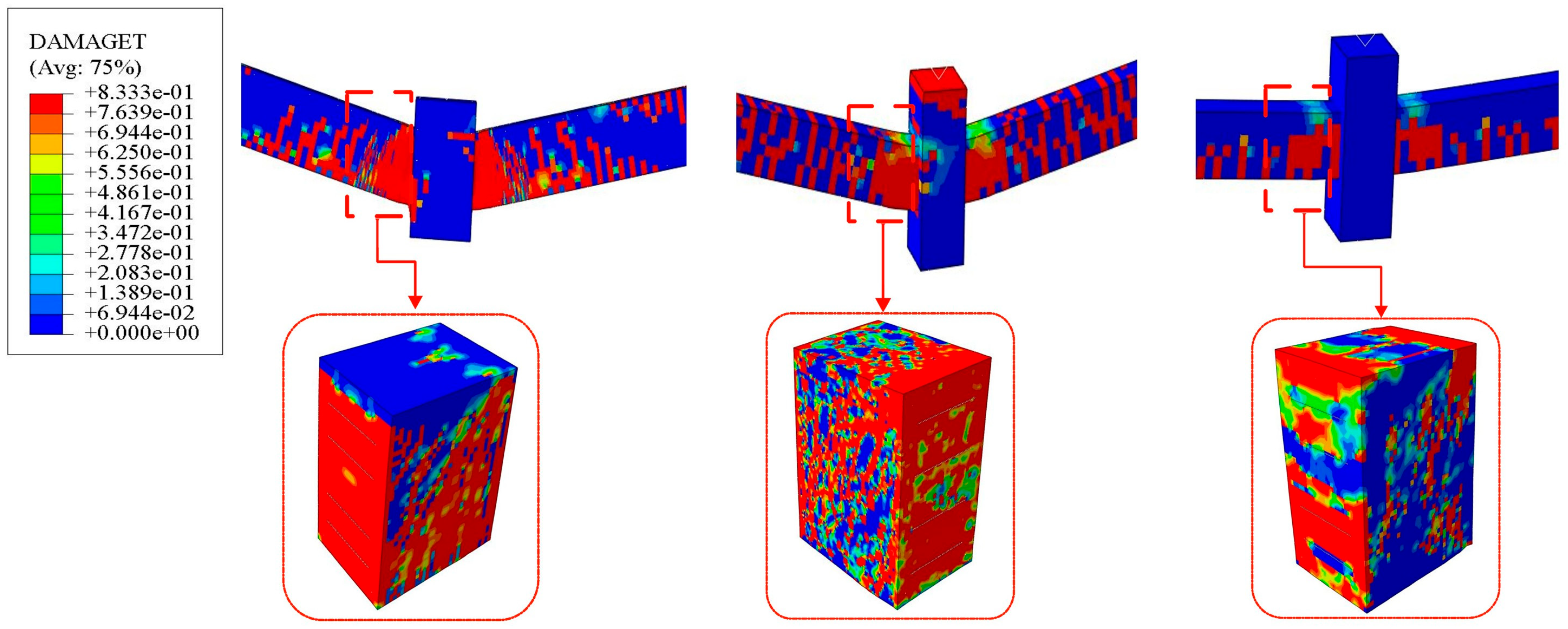
4.5. Plastic Damage of Concrete at Middle Joint
5. Discussion of Failure Mechanism Using Mesoscale Model
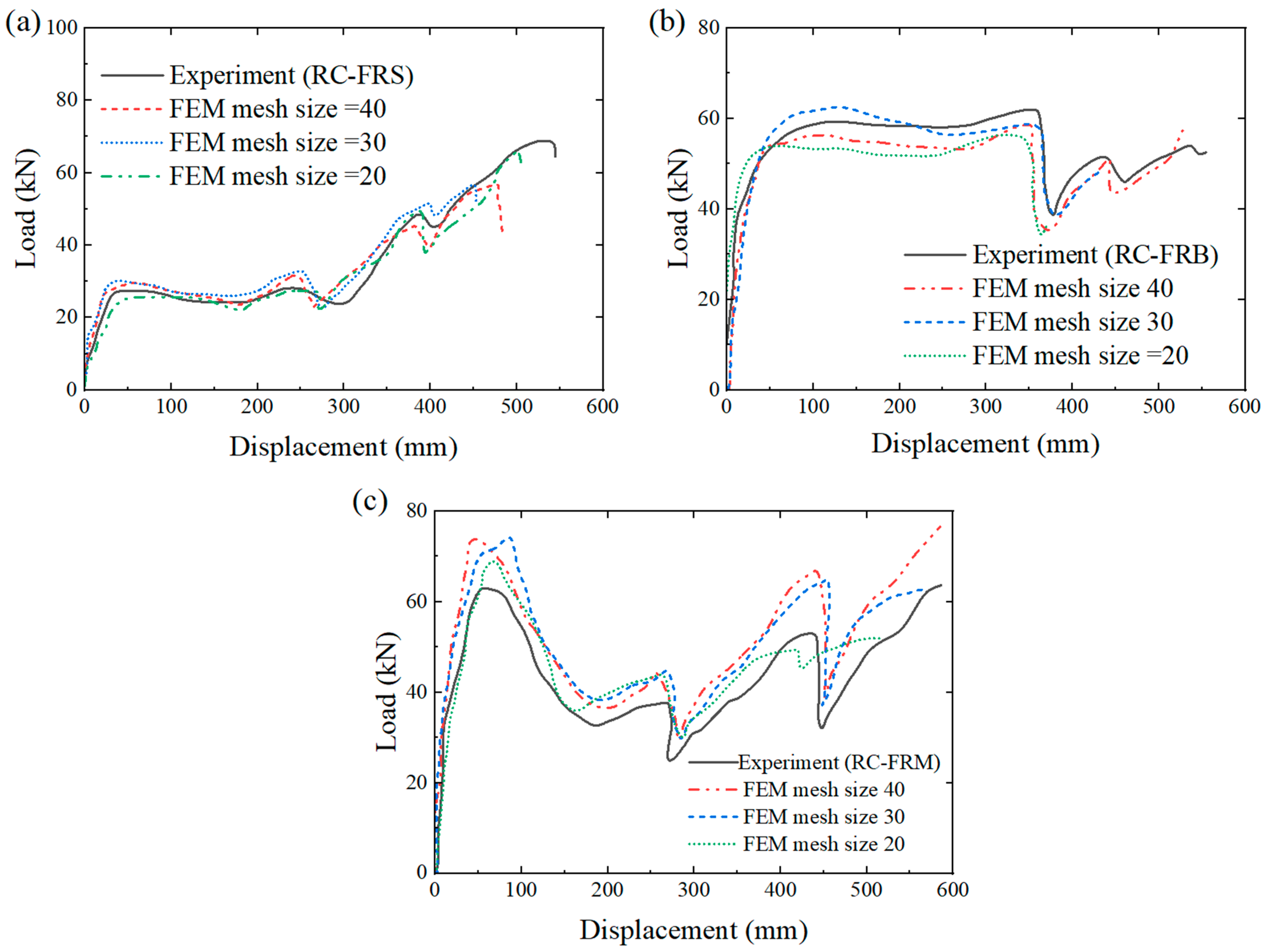
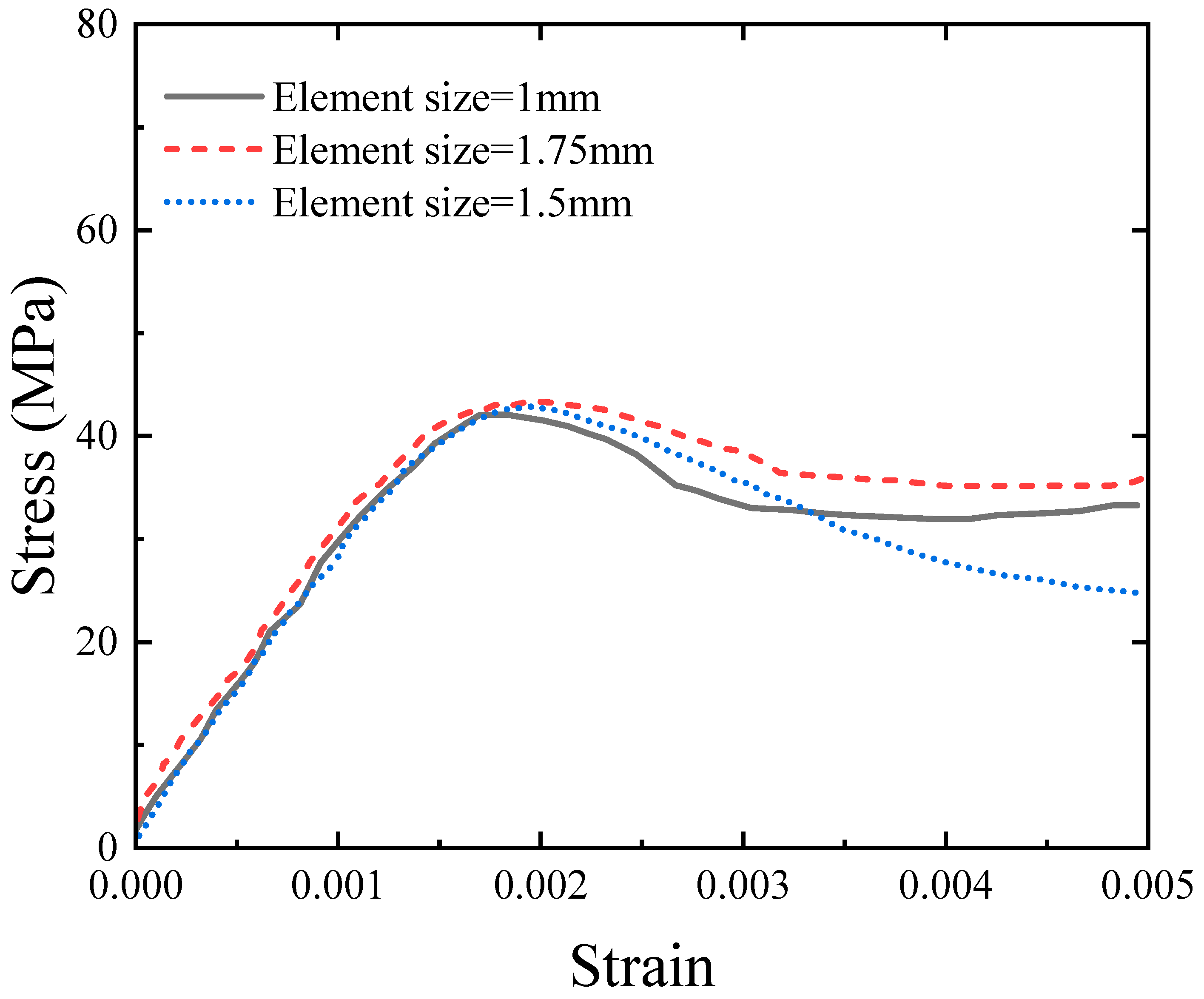
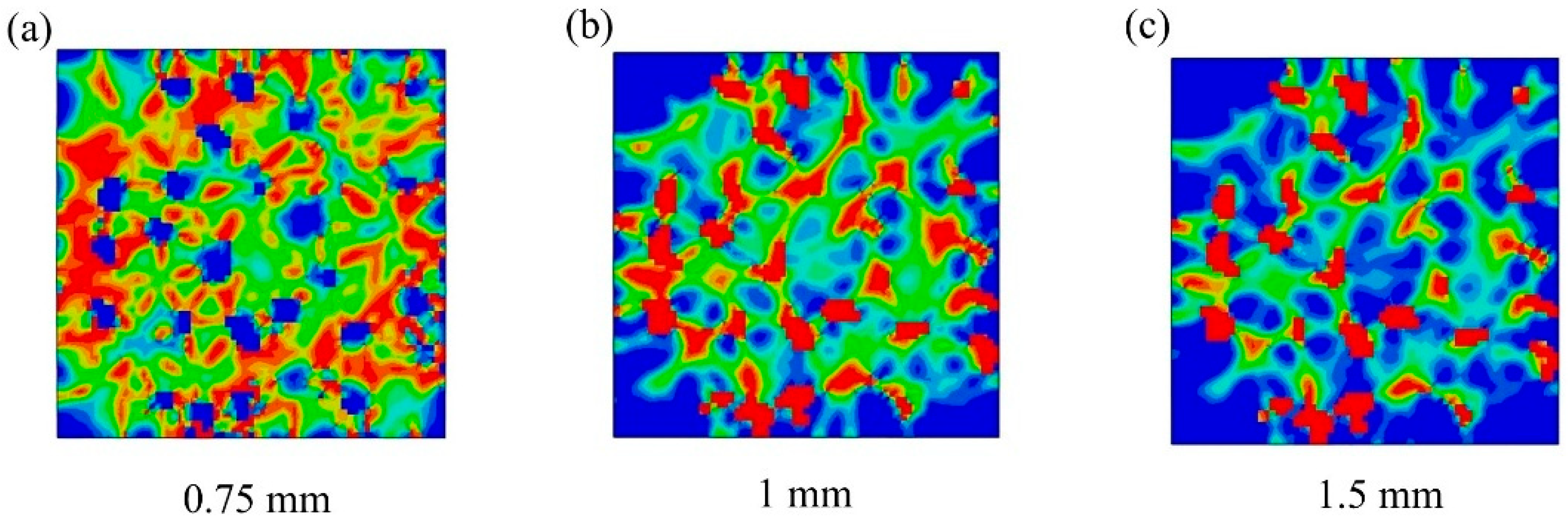
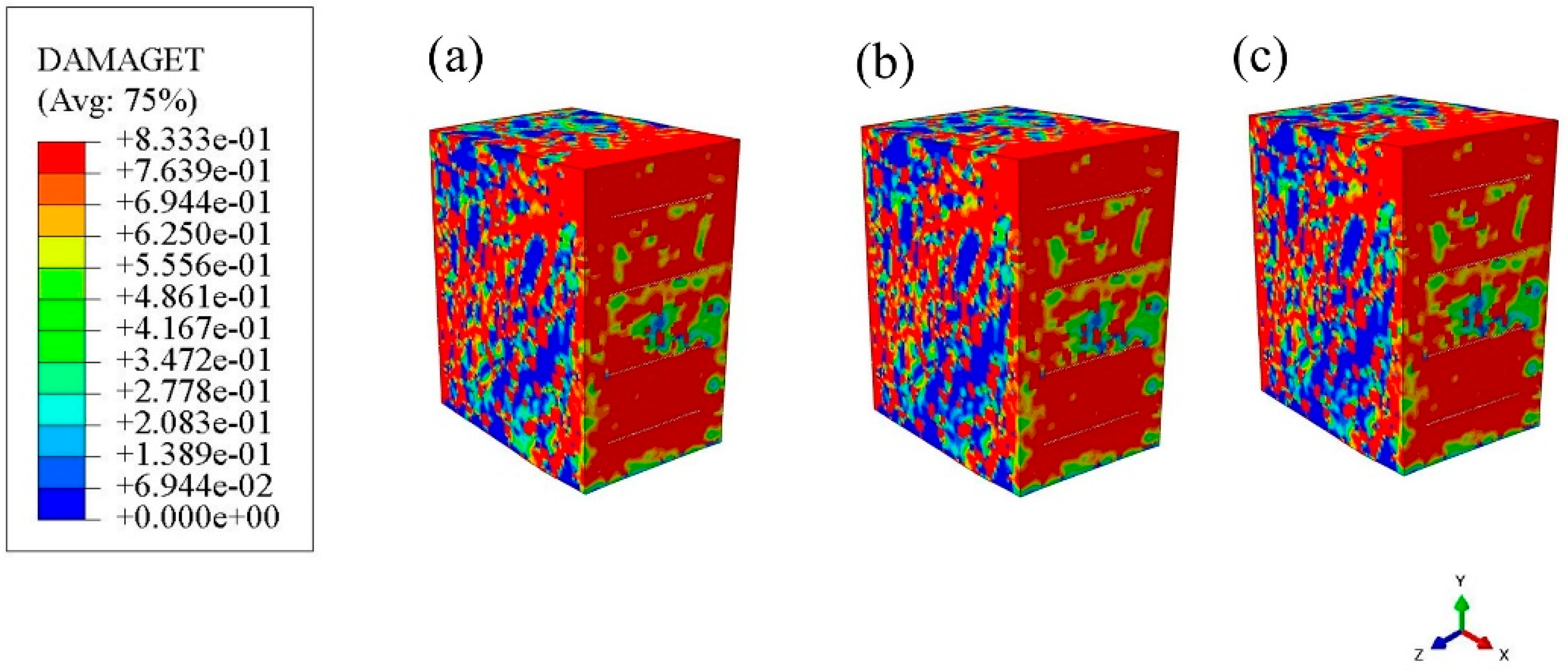
5.1. Mesh Sensitivity Study
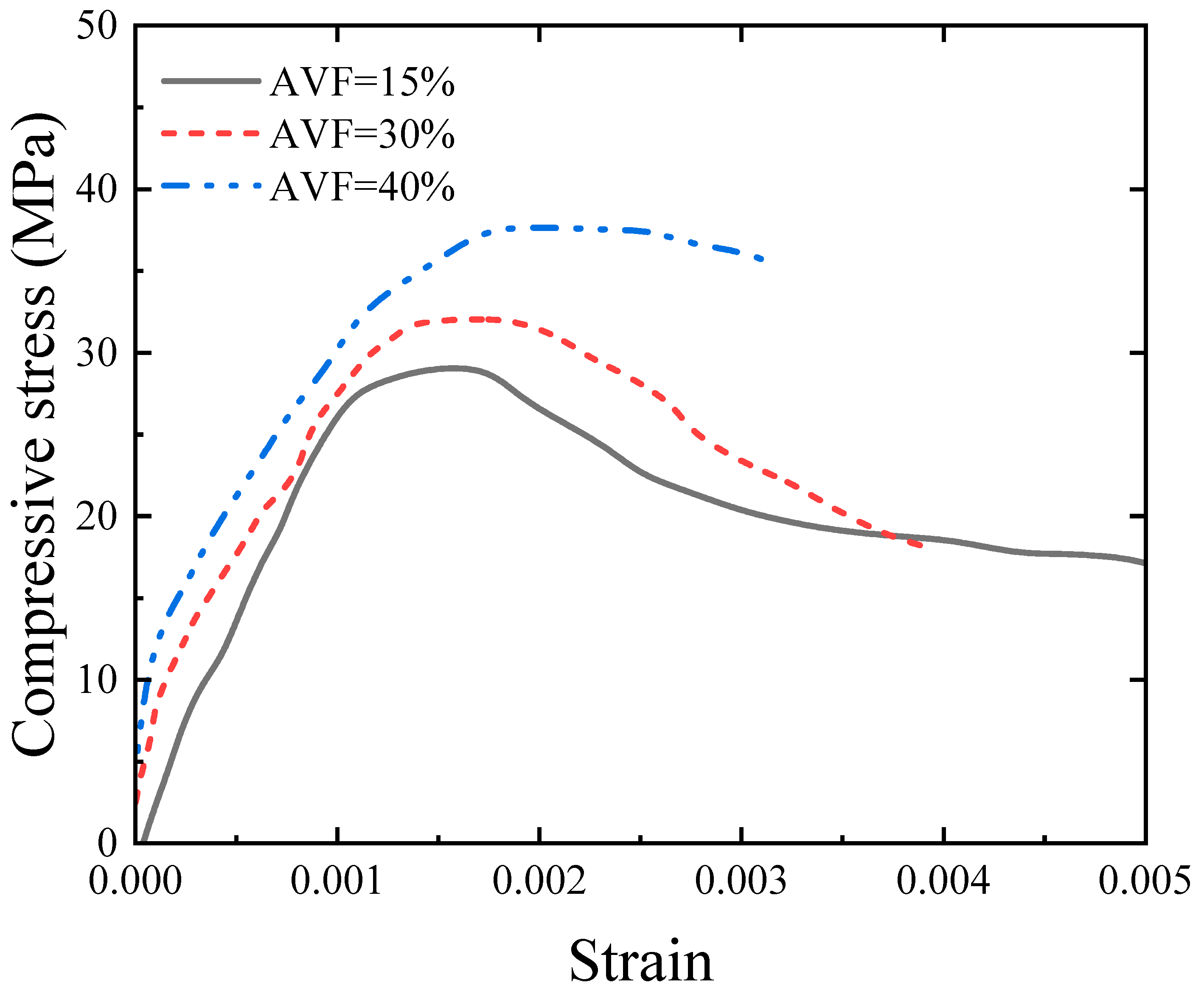
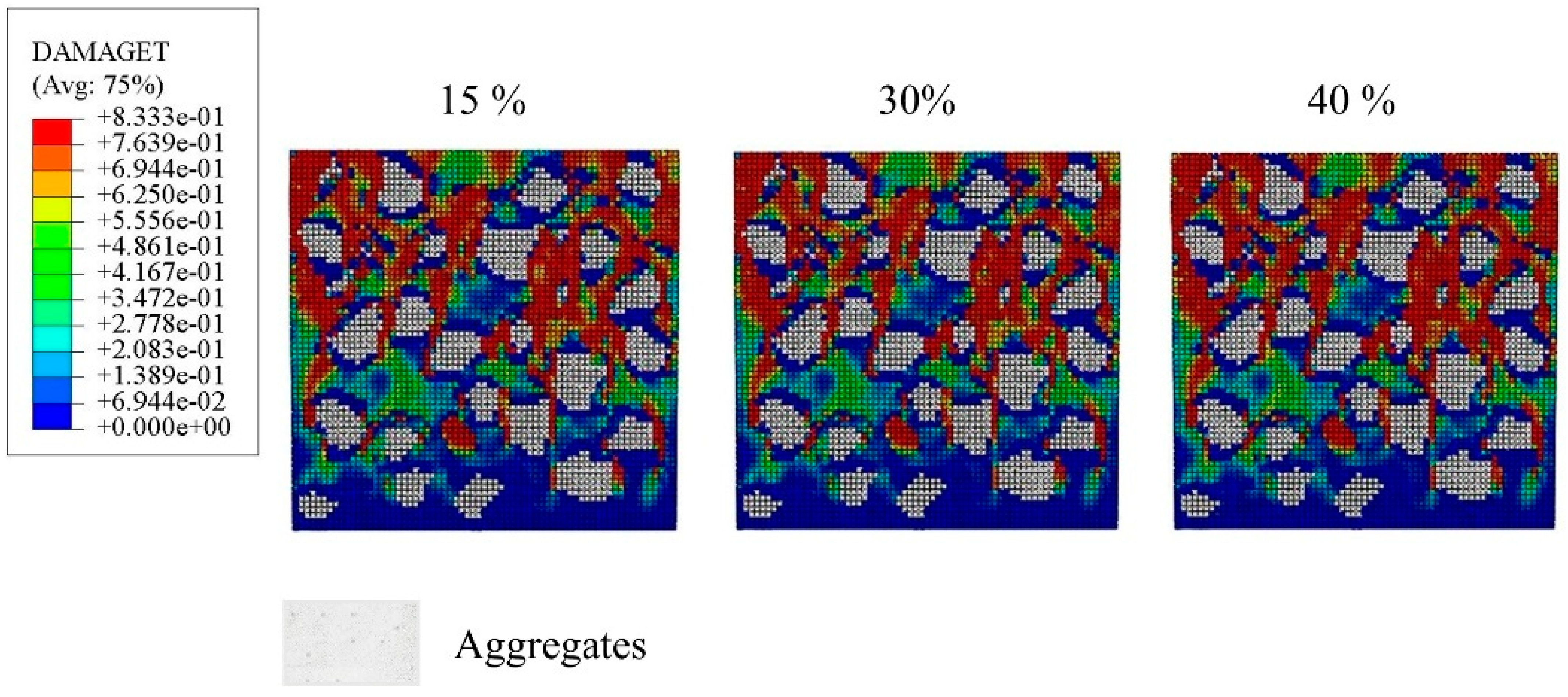
5.2. Effect of AVF on Failure Mechanisms with Embedded Metamaterials
5.3. Practical Considerations for Auxetic Insert Implementation
6. Conclusions
- (1)
- The proposed framework provides a numerical bridge between material-scale auxetic behavior and structural-scale collapse response. The validated macroscale models capture the global response of conventional RC sub-assemblages, while the sub-model and mesoscale simulations provide additional insight into local stress redistribution and damage evolution near critical joint regions.
- (2)
- The auxetic insert acts as a strain-dependent confinement system in the numerical model. Under large tensile deformation, its negative Poisson’s ratio drives lateral expansion and generates localized confinement within the surrounding concrete. This confinement may reduce tensile stress concentration, delay crushing, and modify damage evolution near the joint.
- (3)
- The numerical results suggest a shift from localized brittle fracture toward more distributed ductile damage. The auxetic insert promotes crack bifurcation and spreads damage over a wider region in the model. Compared with the corresponding conventional RC configurations, the auxetic-enhanced configurations predict a 25% increase in load redistribution capacity and a 20% enhancement in deformation ductility. These values are numerical predictions and require future experimental validation using physical specimens containing auxetic metamaterial inserts.
Author Contributions
Funding
Data Availability Statement
Conflicts of Interest
References
- Long, X.; Yuan, W.; Tan, K.H.; Lee, C.K. A superelement formulation for efficient structural analysis in progressive collapse. Struct. Eng. Mech. 2013, 48, 309–331. [Google Scholar] [CrossRef]
- Zheludev, N.I.; Kivshar, Y.S. From metamaterials to metadevices. Nat. Mater. 2012, 11, 917–924. [Google Scholar] [CrossRef] [PubMed]
- Barri, K.; Zhang, Q.; Kline, J.; Lu, W.; Luo, J.; Sun, Z.; Taylor, B.E.; Sachs, S.G.; Khazanovich, L.; Wang, Z.L. Multifunctional nanogenerator-integrated metamaterial concrete systems for smart civil infrastructure. Adv. Mater. 2023, 35, 2211027. [Google Scholar] [CrossRef] [PubMed]
- Simeonov, P.; Ahmad, S. Effect of transition zone on the elastic behavior of cement-based composites. Cem. Concr. Res. 1995, 25, 165–176. [Google Scholar] [CrossRef]
- Jin, L.; Yu, W.; Du, X.; Yang, W. Meso-scale simulations of size effect on concrete dynamic splitting tensile strength: Influence of aggregate content and maximum aggregate size. Eng. Fract. Mech. 2020, 230, 106979. [Google Scholar] [CrossRef]
- Naderi, S.; Zhang, M. Meso-scale modelling of static and dynamic tensile fracture of concrete accounting for real-shape aggregates. Cem. Concr. Compos. 2021, 116, 103889. [Google Scholar] [CrossRef]
- Bao, J.; Long, X.; Tan, K.H.; Lee, C.K. A new generalized Drucker–Prager flow rule for concrete under compression. Eng. Struct. 2013, 56, 2076–2082. [Google Scholar] [CrossRef]
- Ali, I.; Long, X. Penetration resistance of reinforced concrete slab subjected to rigid projectile impact based on finite element and analytical models. Constr. Build. Mater. 2025, 473, 140828. [Google Scholar] [CrossRef]
- Momoh, E.O.; Jayasinghe, A.; Hajsadeghi, M.; Vinai, R.; Evans, K.E.; Kripakaran, P.; Orr, J. A state-of-the-art review on the application of auxetic materials in cementitious composites. Thin-Walled Struct. 2024, 196, 111447. [Google Scholar] [CrossRef]
- Sengul, M.; Tasdemir, H.A.; Tamer, A. Real-world applications of auxetic structures in engineering: A review. Structures 2025, 80, 109673. [Google Scholar] [CrossRef]
- El-Ariss, B.; Elkholy, S.; Shehada, A. Benchmark Numerical Model for Progressive Collapse Analysis of RC Beam-Column Sub-Assemblages. Buildings 2022, 12, 122. [Google Scholar] [CrossRef]
- Zeng, Y.; Khan, F.; Wang, C.; Noori, M. Prediction model for progressive collapse resistance of concrete beam-column subassemblies considering tensile catenary action using machine learning algorithms. Results Eng. 2026, 29, 108944. [Google Scholar] [CrossRef]
- Chen, B.; Yu, H.; Zhang, J.; Ma, H.; Tian, F. Effects of the embedding of cohesive zone model on the mesoscopic fracture behavior of Concrete: A case study of uniaxial tension and compression tests. Eng. Fail. Anal. 2022, 142, 106709. [Google Scholar] [CrossRef]
- Chen, Q.; Zhang, J.; Wang, Z.; Zhao, T.; Wang, Z. A review of the interfacial transition zones in concrete: Identification, physical characteristics, and mechanical properties. Eng. Fract. Mech. 2024, 300, 109979. [Google Scholar] [CrossRef]
- Guo, C.; Lu, Z. A 3D FEM mesoscale numerical analysis of concrete tensile strength behaviour. Adv. Mater. Sci. Eng. 2021, 2021, 5538477. [Google Scholar] [CrossRef]
- Long, X.; Hu, Y.; Su, T.; Iyela, P.M.; Su, Y.; Yan, W.; Liu, J.; Geng, X.; Chang, C.; Wu, X. Thermomechanical constitutive behaviour of 3D printed biomimetic polymer material under high strain rates. Polym. Test. 2024, 134, 108439. [Google Scholar] [CrossRef]
- Huang, Y.; Yang, Z.; Ren, W.; Liu, G.; Zhang, C. 3D meso-scale fracture modelling and validation of concrete based on in-situ X-ray Computed Tomography images using damage plasticity model. Int. J. Solids Struct. 2015, 67, 340–352. [Google Scholar] [CrossRef]
- Zheng, Y.; Zhang, Y.; Zhuo, J.; Zhang, P.; Hu, S. Mesoscale synergistic effect mechanism of aggregate grading and specimen size on compressive strength of concrete with large aggregate size. Constr. Build. Mater. 2023, 367, 130346. [Google Scholar] [CrossRef]
- Ouyang, H.; Chen, X. 3D meso-scale modeling of concrete with a local background grid method. Constr. Build. Mater. 2020, 257, 119382. [Google Scholar] [CrossRef]
- Van der Putte, T. Using the Discrete 3D Voronoi Diagram for the Modelling of 3D Continuous Information in Geosciences; ITC: Enschede, The Netherlands, 2009. [Google Scholar]
- Fuller William, B.; Thompson Sanford, E. The Laws of Proportioning Concrete. Trans. Am. Soc. Civ. Eng. 1907, 59, 67–143. [Google Scholar] [CrossRef]
- Song, Z.; Lu, Y. Mesoscopic analysis of concrete under excessively high strain rate compression and implications on interpretation of test data. Int. J. Impact Eng. 2012, 46, 41–55. [Google Scholar] [CrossRef]
- Grondin, F.; Matallah, M. How to consider the Interfacial Transition Zones in the finite element modelling of concrete? Cem. Concr. Res. 2014, 58, 67–75. [Google Scholar] [CrossRef]
- Lyu, K.; She, W.; Chang, H.; Gu, Y. Effect of fine aggregate size on the overlapping of interfacial transition zone (ITZ) in mortars. Constr. Build. Mater. 2020, 248, 118559. [Google Scholar] [CrossRef]
- Maleki, M.; Rasoolan, I.; Khajehdezfuly, A.; Jivkov, A.P. On the effect of ITZ thickness in meso-scale models of concrete. Constr. Build. Mater. 2020, 258, 119639. [Google Scholar] [CrossRef]
- Thilakarathna, P.S.M.; Baduge, K.K.; Mendis, P.; Vimonsatit, V.; Lee, H. Mesoscale modelling of concrete–a review of geometry generation, placing algorithms, constitutive relations and applications. Eng. Fract. Mech. 2020, 231, 106974. [Google Scholar] [CrossRef]
- Zhao, H.; Wu, Z.; Liu, A.; Zhang, L. Numerical insights into the effect of ITZ and aggregate strength on concrete properties. Theor. Appl. Fract. Mech. 2022, 120, 103415. [Google Scholar] [CrossRef]
- Wang, J.; Jivkov, A.P.; Li, Q.; Engelberg, D.L. Experimental and numerical investigation of mortar and ITZ parameters in meso-scale models of concrete. Theor. Appl. Fract. Mech. 2020, 109, 102722. [Google Scholar] [CrossRef]
- Zhou, R.; Song, Z.; Lu, Y. 3D mesoscale finite element modelling of concrete. Comput. Struct. 2017, 192, 96–113. [Google Scholar] [CrossRef]
- Long, X.; Wang, S.; Huang, X.-J.; Li, C.; Kang, S.-B. Progressive collapse resistance of exterior reinforced concrete frames and simplified method for catenary action. Eng. Struct. 2021, 249, 113316. [Google Scholar] [CrossRef]
- Lim, J.C.; Ozbakkaloglu, T. Stress–strain model for normal-and light-weight concretes under uniaxial and triaxial compression. Constr. Build. Mater. 2014, 71, 492–509. [Google Scholar] [CrossRef]
- Gyengo, T. Effect of type of test specimen and gradation of aggregate on compressive strength of concrete. J. Proc. 1938, 34, 269–284. [Google Scholar]
- Smith, M. ABAQUS/Standard User’s Manual, Version 6.9; Dassault Systèmes Simulia Corp.: Providence, RI, USA, 2009. [Google Scholar]
- Long, X.; Kawkabi, K.W.; Iyela, P.M.; Ali, I. Mesoscopic modeling of concrete under high strain rates. In Multiscale Finite Element Simulation of Reinforced Concrete; Woodhead Publishing: Cambridge, UK, 2026; pp. 111–132. [Google Scholar] [CrossRef]
- Yu, J.; Tan, K.-H. Experimental and numerical investigation on progressive collapse resistance of reinforced concrete beam column sub-assemblages. Eng. Struct. 2013, 55, 90–106. [Google Scholar] [CrossRef]
- Pedersen, R.; Simone, A.; Sluys, L. Mesoscopic modeling and simulation of the dynamic tensile behavior of concrete. Cem. Concr. Res. 2013, 50, 74–87. [Google Scholar] [CrossRef]
- Chen, H.; Xu, B.; Mo, Y.; Zhou, T. Behavior of meso-scale heterogeneous concrete under uniaxial tensile and compressive loadings. Constr. Build. Mater. 2018, 178, 418–431. [Google Scholar] [CrossRef]
- Thilakarathna, P.S.M.; Baduge, K.K.; Mendis, P.; Chandrathilaka, E.R.K.; Vimonsatit, V.; Lee, H. Understanding fracture mechanism and behaviour of ultra-high strength concrete using mesoscale modelling. Eng. Fract. Mech. 2020, 234, 107080. [Google Scholar] [CrossRef]
- Benzeggagh, M.; Kenane, M. Measurement of mixed-mode delamination fracture toughness of unidirectional glass/epoxy composites with mixed-mode bending apparatus. Compos. Sci. Technol. 1996, 56, 439–449. [Google Scholar] [CrossRef]
- Zhang, X.; Yang, D. Mechanical Properties of Auxetic Cellular Material Consisting of Re-Entrant Hexagonal Honeycombs. Materials 2016, 9, 900. [Google Scholar] [CrossRef]
- Intrigila, C.; Micheletti, A.; Nodargi, N.A.; Bisegna, P. Mechanical response of multistable tensegrity-like lattice chains. Addit. Manuf. 2023, 74, 103724. [Google Scholar] [CrossRef]
- Long, X.; Iyela, P.M.; Su, Y.; Atlaw, M.M.; Kang, S.-B. Numerical predictions of progressive collapse in reinforced concrete beam-column sub-assemblages: A focus on 3D multiscale modeling. Eng. Struct. 2024, 315, 118485. [Google Scholar] [CrossRef]
- Ying, J.; Guo, J. Fracture behaviour of real coarse aggregate distributed concrete under uniaxial compressive load based on cohesive zone model. Materials 2021, 14, 4314. [Google Scholar] [CrossRef] [PubMed]
- Wang, X.; Zhang, M.; Jivkov, A.P. Computational technology for analysis of 3D meso-structure effects on damage and failure of concrete. Int. J. Solids Struct. 2016, 80, 310–333. [Google Scholar] [CrossRef]
- Ellingwood, B.R.; Smilowitz, R.; Dusenberry, D.O.; Duthinh, D.; Lew, H.S.; Carino, N.J. Best Practices for Reducing the Potential for Progressive Collapse in Buildings; NIST Interagency/Internal Report (NISTIR); National Institute of Standards and Technology: Gaithersburg, MD, USA, 2007. [Google Scholar]
- Zhou, R. Mesoscopic Analysis of Damage Mechanisms in Concrete Material; The University of Edinburgh: Edinburgh, UK, 2016. [Google Scholar]
- Belliazzi, S.; Fabbrocino, F.; Lignola, G.P.; Prota, A. Advantages of using DIC for capturing mechanical shear sliding behaviour of the FRCM strengthened masonry. Structures 2024, 68, 107056. [Google Scholar] [CrossRef]
- Fagerholt, E.; Morin, D.; Aune, V.; Børvik, T.; Hopperstad, O.S. Using DIC-based FEM to determine work-hardening parameters in structural steels. Adv. Model. Simul. Eng. Sci. 2025, 12, 18. [Google Scholar] [CrossRef]
- Xin, R.; Le, V.T.; Goo, N.S. Buckling identification in composite cylindrical shells with measured imperfections using a Multi-DIC method and finite element analysis. Thin-Walled Struct. 2022, 177, 109436. [Google Scholar] [CrossRef]
- AbdelAleem, B.H.; Ismail, M.K.; Hassan, A.A.A.; El-Dakhakhni, W. Cyclic behavior of lightweight engineered cementitious composite beam-column joints. Eng. Struct. 2023, 295, 116786. [Google Scholar] [CrossRef]
- Sapidis, G.M.; Naoum, M.C.; Papadopoulos, N.A.; Golias, E.; Karayannis, C.G.; Chalioris, C.E. A Novel Approach to Monitoring the Performance of Carbon-Fiber-Reinforced Polymer Retrofitting in Reinforced Concrete Beam–Column Joints. Appl. Sci. 2024, 14, 9173. [Google Scholar] [CrossRef]
- Al-Fakih, A. Finite element modeling and construction aspects of masonry walls: An overview. Rev. Int. Métodos Numéricos Cálculo Diseño Ing. 2025, 41, 43. [Google Scholar] [CrossRef]
- Feng, Q.; Qian, M.; Qu, C.; Ye, N. Numerical simulation of the influence of different opening parameters on the flexural performance of fixed open-web steel beams. Rev. Int. Métodos Numéricos Cálculo Diseño Ing. 2025, 41, 39. [Google Scholar] [CrossRef]
- Lu, Z.; Shou, L.; Abdullah, R.-A.; Shahrin, M.-I.-B.; Chen, Y.; Shao, X.; Fan, W.; Islam, A.; Zhang, H. Analysis of deformation of levee caused by large diameter shield tunneling in river crossing tunnel. Rev. Int. Métodos Numéricos Cálculo Diseño Ing. 2024, 40, 10. [Google Scholar]
- Ma, H.; Qin, W.; Zhang, B.; Wang, Z. Landslide control in the excavation of a shallowly buried tunnel with a large front slope. Rev. Int. Métodos Numéricos Cálculo Diseño Ing. 2024, 40, 30. [Google Scholar] [CrossRef]
- Meng, D.; Lei, W.; Han, J.; Li, H.; Huang, Y. Research on the effects of pit excavation on adjacent existing subway tunnel structures based on the FEM-DEM coupling method. Rev. Int. Métodos Numéricos Cálculo Diseño Ing. 2024, 40, 43. [Google Scholar] [CrossRef]
- Sun, Q.; Yuan, C.; Zhao, S. Numerical modeling of progressive damage and failure of tunnels deeply-buried in rock considering the strain-energy-density theory. Rev. Int. Métodos Numéricos Cálculo Diseño Ing. 2024, 40, 33. [Google Scholar] [CrossRef]
- Xiao, Z.; Wang, J.; Wang, J.; Zhou, H. Determination of local stiffness for the joint of tunnel lining in the simulation. Rev. Int. Métodos Numéricos Cálculo Diseño Ing. 2024, 40, 12. [Google Scholar] [CrossRef]
- Zheng, Z.; Xia, X.; Ji, W.; Ye, J.; Wu, J.; Lin, H. Experimental and numerical investigations on bending behavior of fixed open-web steel beams. Rev. Int. Métodos Numéricos Cálculo Diseño Ing. 2024, 40, 24. [Google Scholar] [CrossRef]
- Long, X.; Iyela, P.M.; Su, Y.; Zhu, J.; Jia, F.; Wan, X. Phase-field modeling of thermo-mechanical fracture in heterogeneous concrete. Int. J. Mech. Sci. 2025, 308, 110984. [Google Scholar] [CrossRef]
- Cao, H.; Wang, G.; Liu, H. Research on seismic performance of corrugated web rigid structures. Rev. Int. Métodos Numéricos Cálculo Diseño Ing. 2024, 40, 9. [Google Scholar] [CrossRef]
- Chen, S.; Zhang, M.; Zhao, L.; Wei, T. Calculation of the initial peak loads on thin-walled circular tubes with internal and external staggered grooves under low-velocity impacts. Rev. Int. Métodos Numéricos Cálculo Diseño Ing. 2024, 40, 23. [Google Scholar] [CrossRef]
- Long, X.; Steve, N.T.N.A.; Wahaajuddin, K.K. Physics-constrained machine learning for constitutive modelling of high-strength concrete across strain rates. Eng. Appl. Artif. Intell. 2026, 171, 114314. [Google Scholar] [CrossRef]



| Sieve Size (mm) | Mass Retained (%) | Cumulative Passing (%) |
|---|---|---|
| 25.0 | 0.0 | 100.0 |
| 19.0 | 8.0 | 92.0 |
| 12.5 | 10.0 | 82.0 |
| 4.75 | 12.0 | 70.0 |
| Phase | Density (kg/m3) | E/Enn, G1/Ess, G2/Ett | Nominal Stress Normal Only Mode | Nominal Stress First Direction | Nominal Stress Second Direction | Fracture Energy | Viscosity Coefficient |
|---|---|---|---|---|---|---|---|
| ITZ | 2200 | 100,000 | 2.8 | 50 | 4.2 | 0.09 | 0.0001 |
| Configuration | v | Joint Region | Beam Bottom | Column Base |
|---|---|---|---|---|
| Aux-FRM | +0.20 | −2200/+800 με | 3000 με (μ = 1.5) | 5500 με (μ = 2.75) |
| Aux-FRM | −0.15 | −1500/+1200 με | 4600 με (+28%) | 6600 με (+20%) |
| Aux-FRS | −0.30 | −1200/+1600 με | 5400 με (+50%) | 7200 με (+31%) |
| Aux-FRB | −0.45 | −1000/+2000 με | 6000 με (+100%) | 8000 με (+45%) |
| Damage Stage | RC-FRM (Conventional) | Aux-FRM (Auxetic-Enhanced) | Change |
|---|---|---|---|
| Peak load | 0.42 | 0.38 | −10% |
| Onset of strain localization | 0.61 | 0.52 | −15% |
| Failure (50% peak load) | 0.89 | 0.83 | −7% |
| Maximum damage factor | 0.92 | 0.83 | −10% |
Disclaimer/Publisher’s Note: The statements, opinions and data contained in all publications are solely those of the individual author(s) and contributor(s) and not of MDPI and/or the editor(s). MDPI and/or the editor(s) disclaim responsibility for any injury to people or property resulting from any ideas, methods, instructions or products referred to in the content. |
© 2026 by the authors. Licensee MDPI, Basel, Switzerland. This article is an open access article distributed under the terms and conditions of the Creative Commons Attribution (CC BY) license.
Share and Cite
Long, X.; Samuneti, C.; Iyela, P.M.; Kawkabi, K.W.; Ngangura, P.M.; Fan, K. Multiscale Analysis of Reinforced Concrete Frames with Embedded Metamaterials Under Progressive Collapse. Materials 2026, 19, 2363. https://doi.org/10.3390/ma19112363
Long X, Samuneti C, Iyela PM, Kawkabi KW, Ngangura PM, Fan K. Multiscale Analysis of Reinforced Concrete Frames with Embedded Metamaterials Under Progressive Collapse. Materials. 2026; 19(11):2363. https://doi.org/10.3390/ma19112363
Chicago/Turabian StyleLong, Xu, Christopher Samuneti, Percy M. Iyela, Khaja Wahaajuddin Kawkabi, Prince Manyanya Ngangura, and Kunjie Fan. 2026. "Multiscale Analysis of Reinforced Concrete Frames with Embedded Metamaterials Under Progressive Collapse" Materials 19, no. 11: 2363. https://doi.org/10.3390/ma19112363
APA StyleLong, X., Samuneti, C., Iyela, P. M., Kawkabi, K. W., Ngangura, P. M., & Fan, K. (2026). Multiscale Analysis of Reinforced Concrete Frames with Embedded Metamaterials Under Progressive Collapse. Materials, 19(11), 2363. https://doi.org/10.3390/ma19112363