Preparation of Vanadium Tailings-Based Ceramsite and Evaluation of Its Adsorption Performance for High-Fluoride Wastewater


 and
and
Highlights
- Ceramsite was produced using vanadium tailings as raw material.
- Ceramsite demonstrates a high level of efficiency in fluoride ion adsorption.
- Vanadium tailings-based ceramsite complies with national standards.
Abstract
1. Introduction
2. Materials and Methods
2.1. Materials
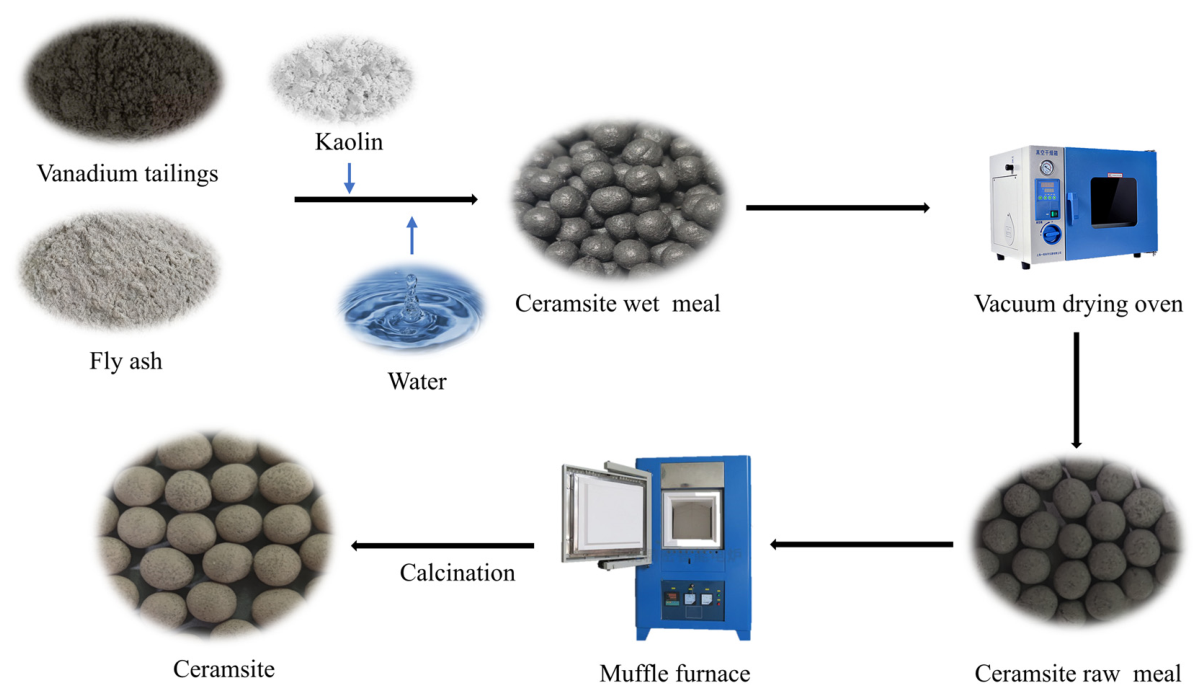
2.2. Preparation of VT-Ceramsite
2.3. Adsorption Experiments
2.4. Reusability Experiments and Environmental Safety Assessment
2.5. Characterization
3. Results and Discussion
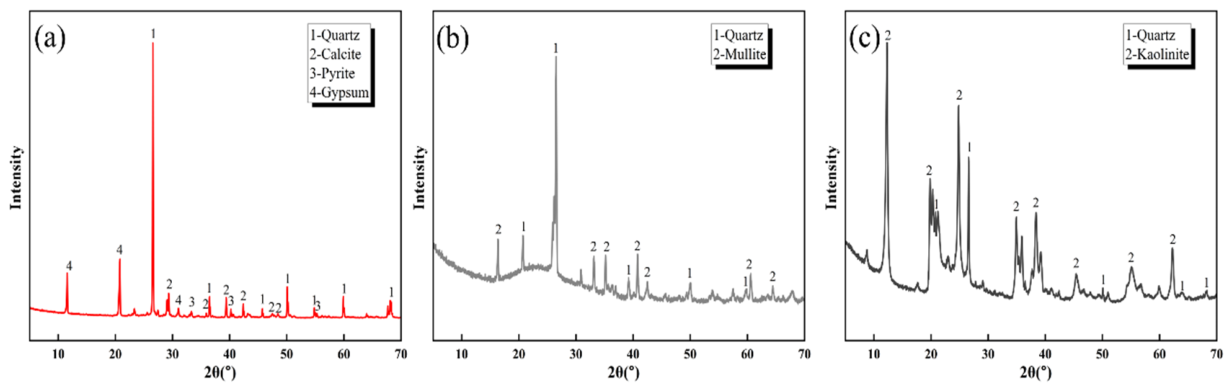
3.1. Characterization of Raw Materials
3.2. Effects of Preparation and Operating Parameters on the Fluoride Adsorption Capacity of VT-Ceramsite
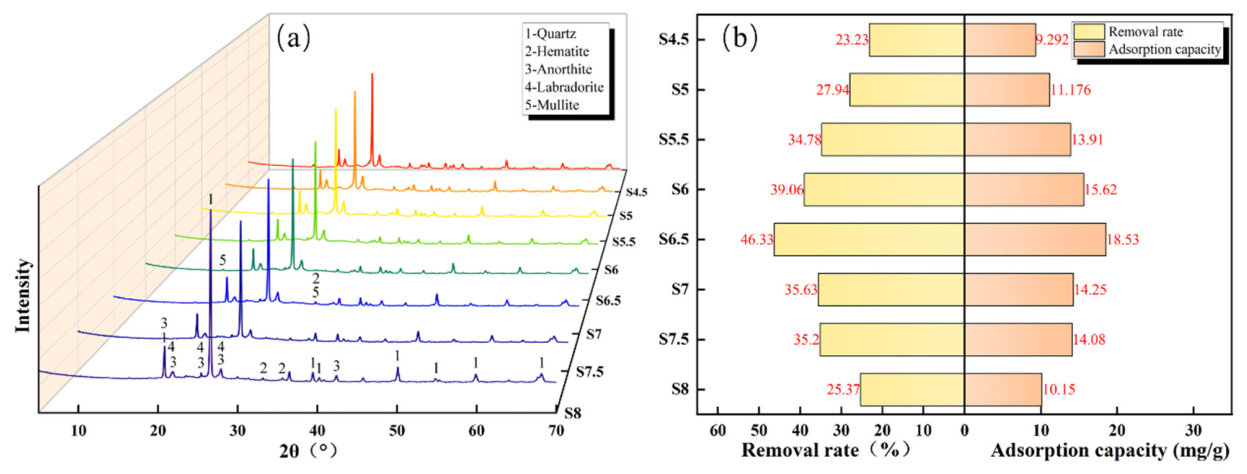
3.2.1. Raw Material Ratio
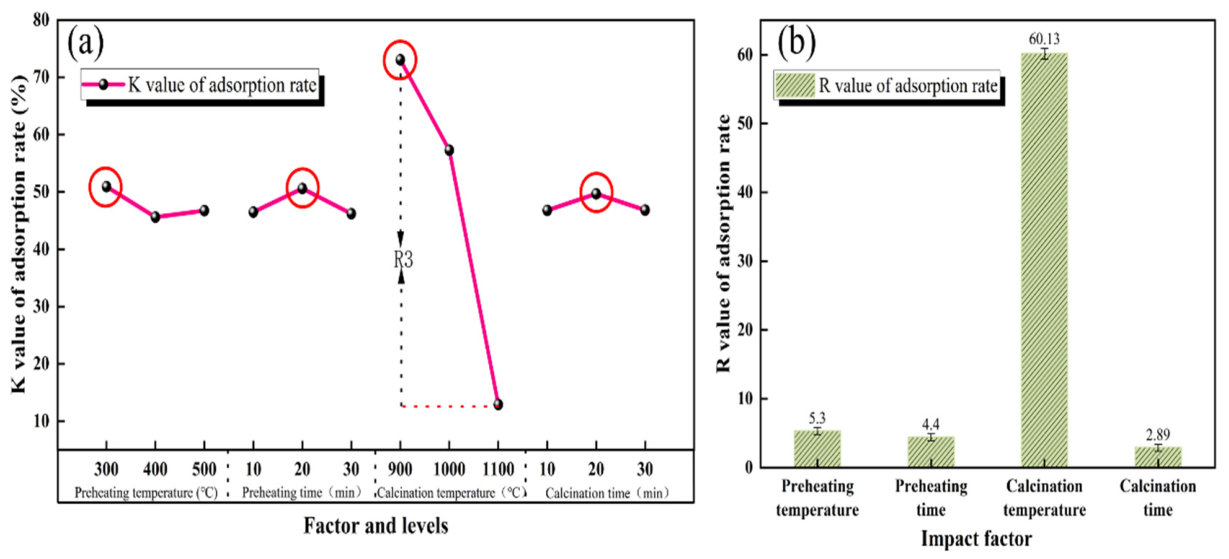
3.2.2. Sintering Environment
3.2.3. Optimized Sintering Conditions for VT-Ceramsite Fabrication
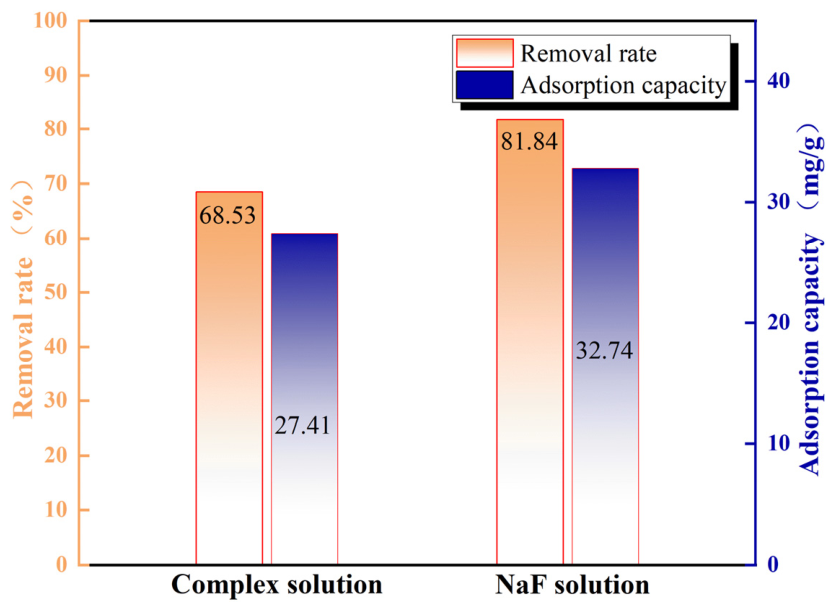
3.2.4. Effect of Coexisting Ions on Adsorption Performance
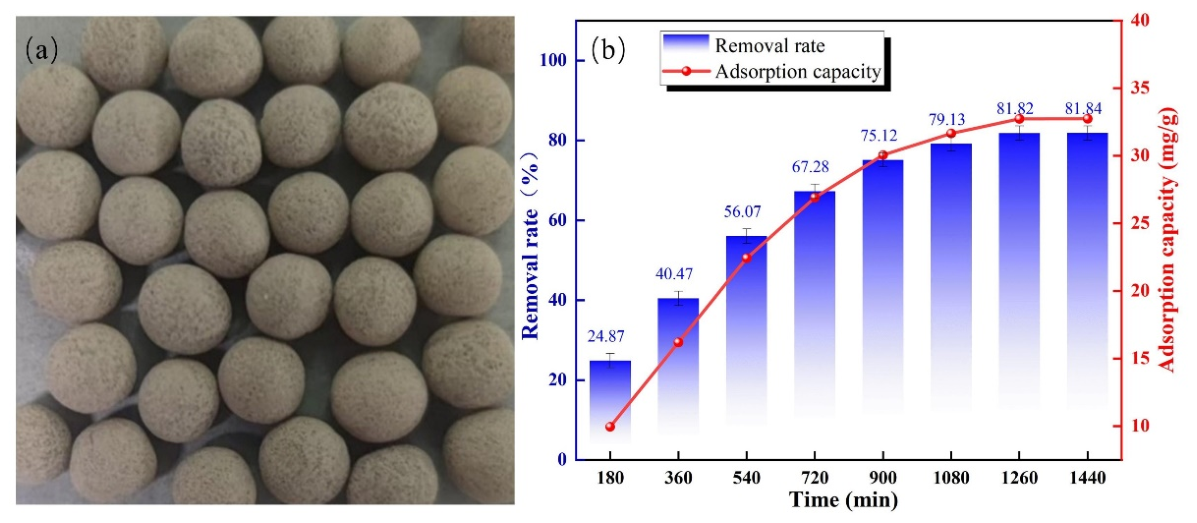
3.3. Characterization and Adsorption Mechanism of VT-Ceramsite
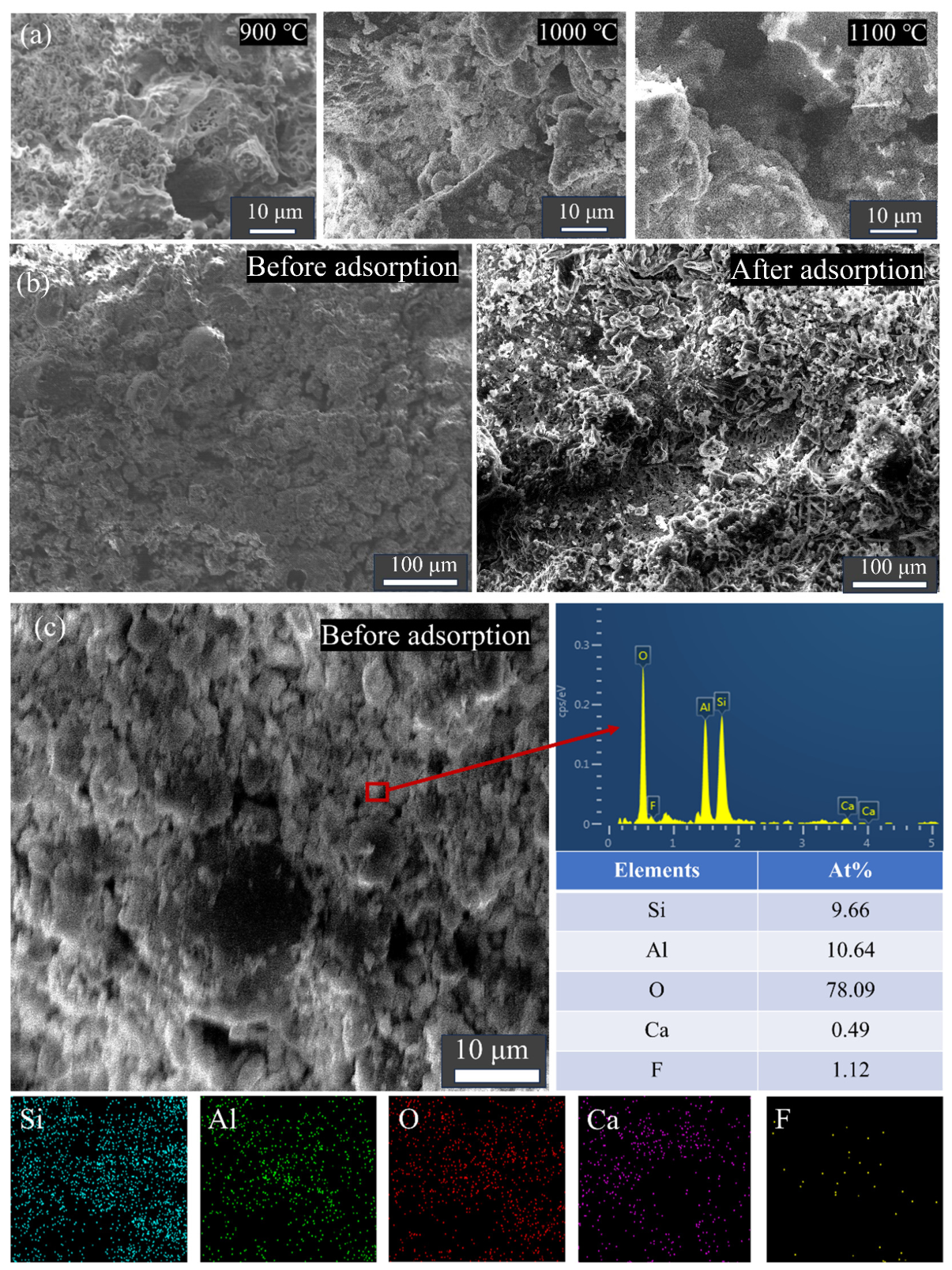
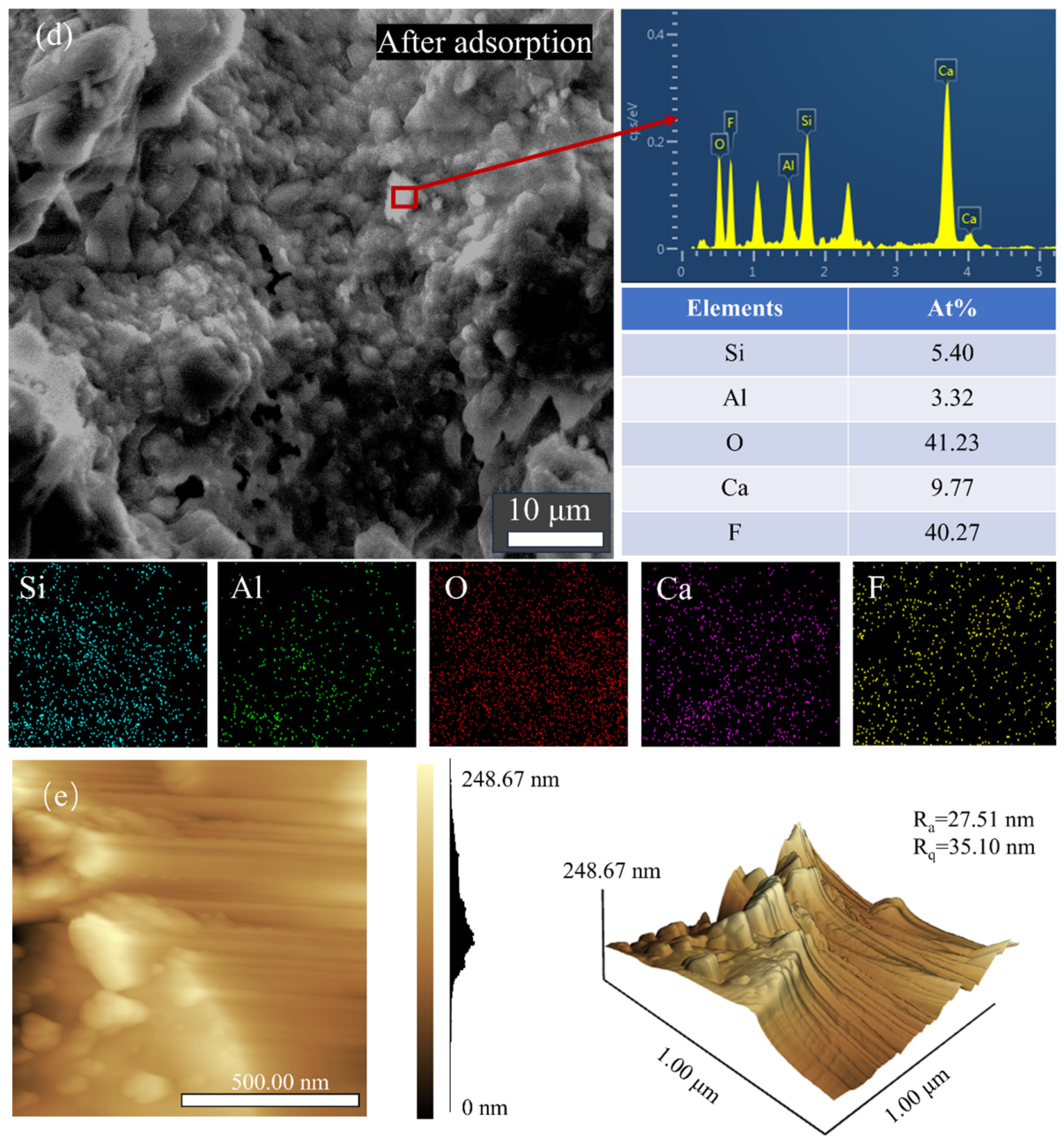
3.3.1. Microstructural Characterization of the Surface
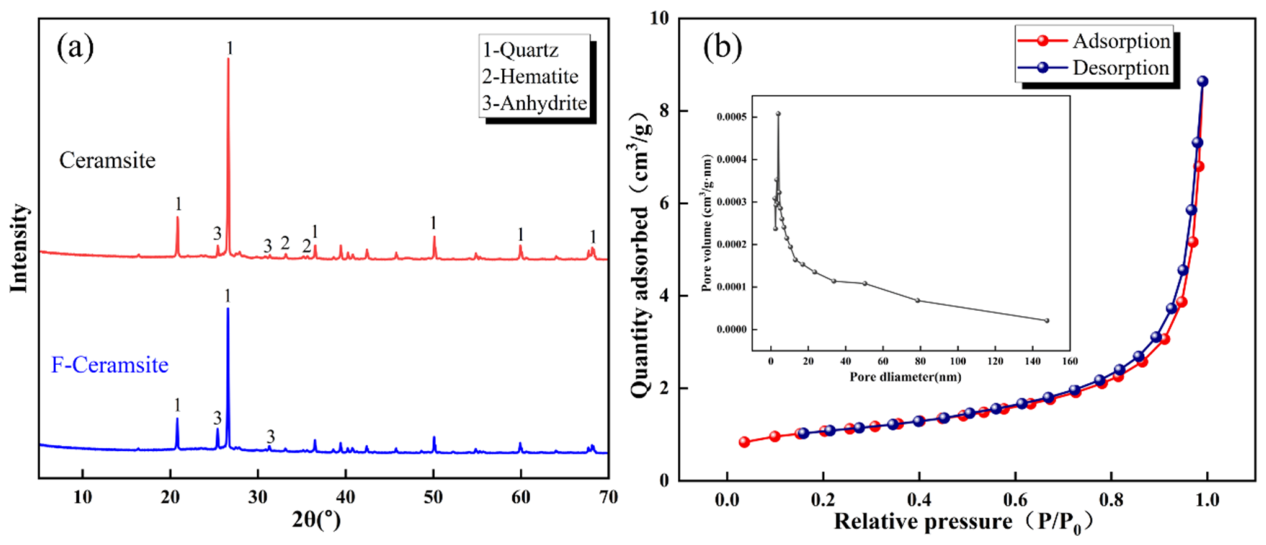
3.3.2. XRD and BET Analysis
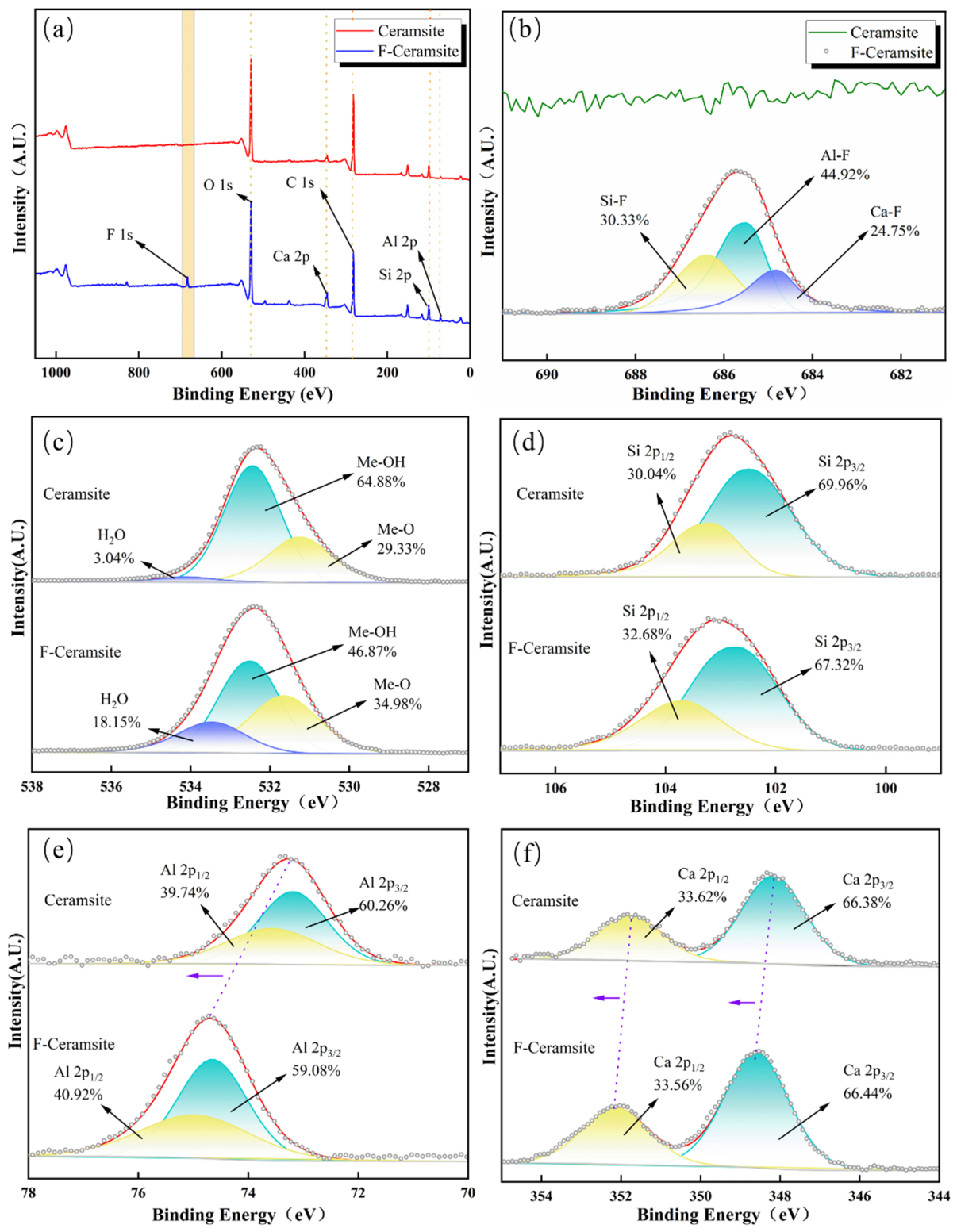
3.3.3. XPS Analysis
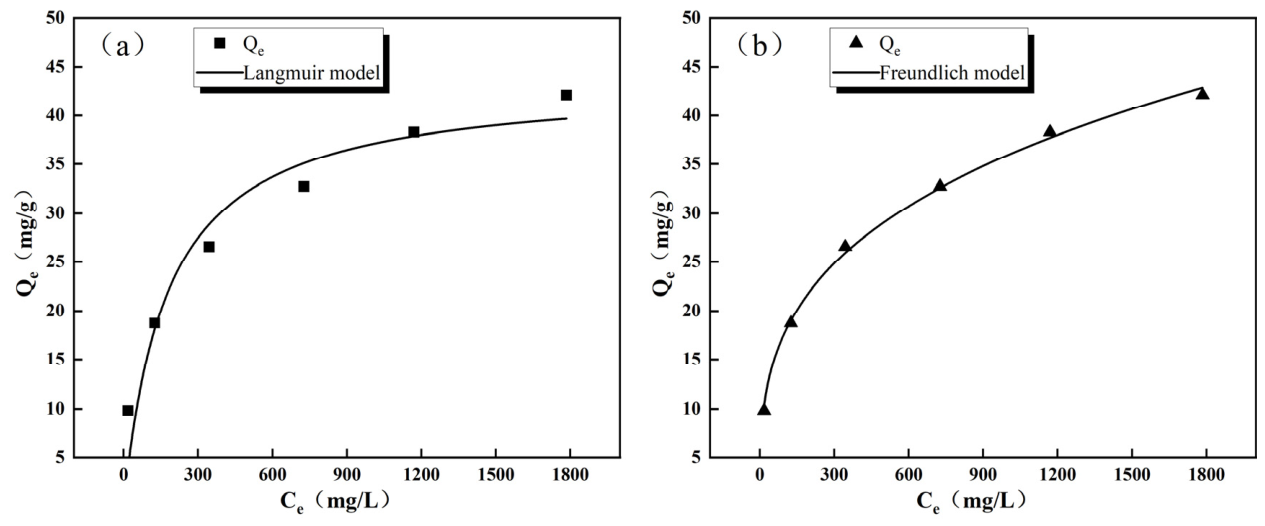
3.3.4. Adsorption Isotherm Models
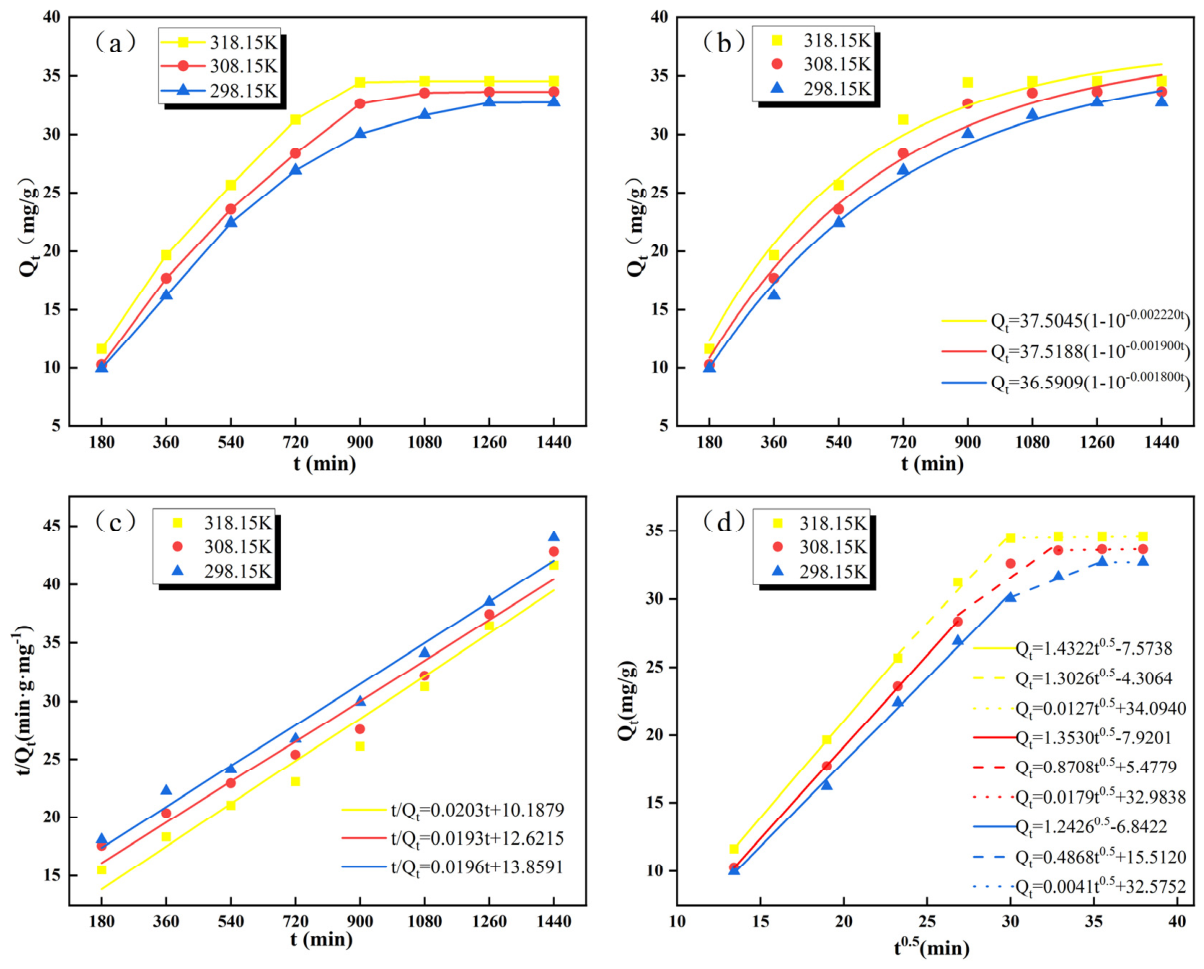
3.3.5. Adsorption Kinetics Models
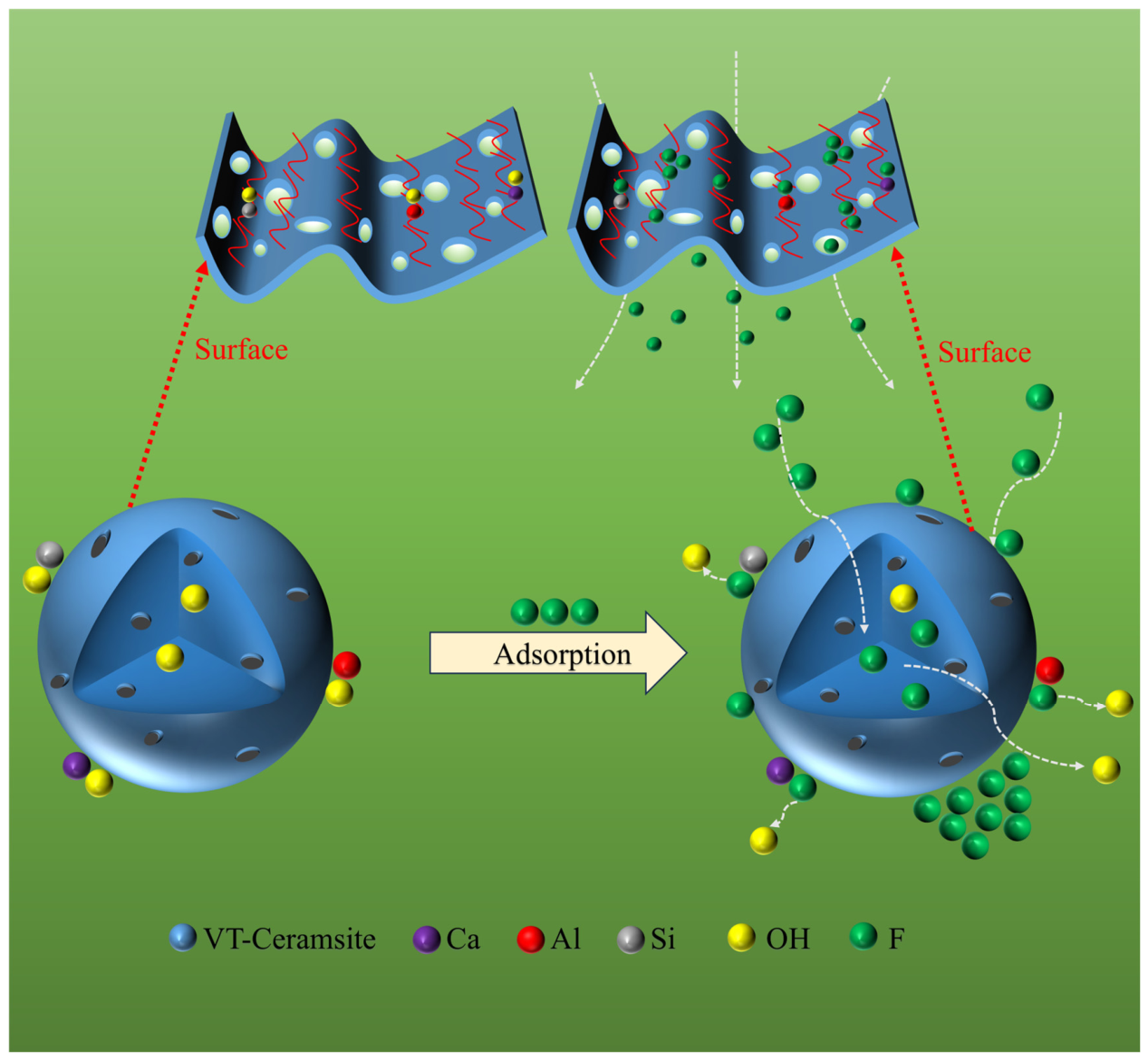
3.3.6. Adsorption Mechanism
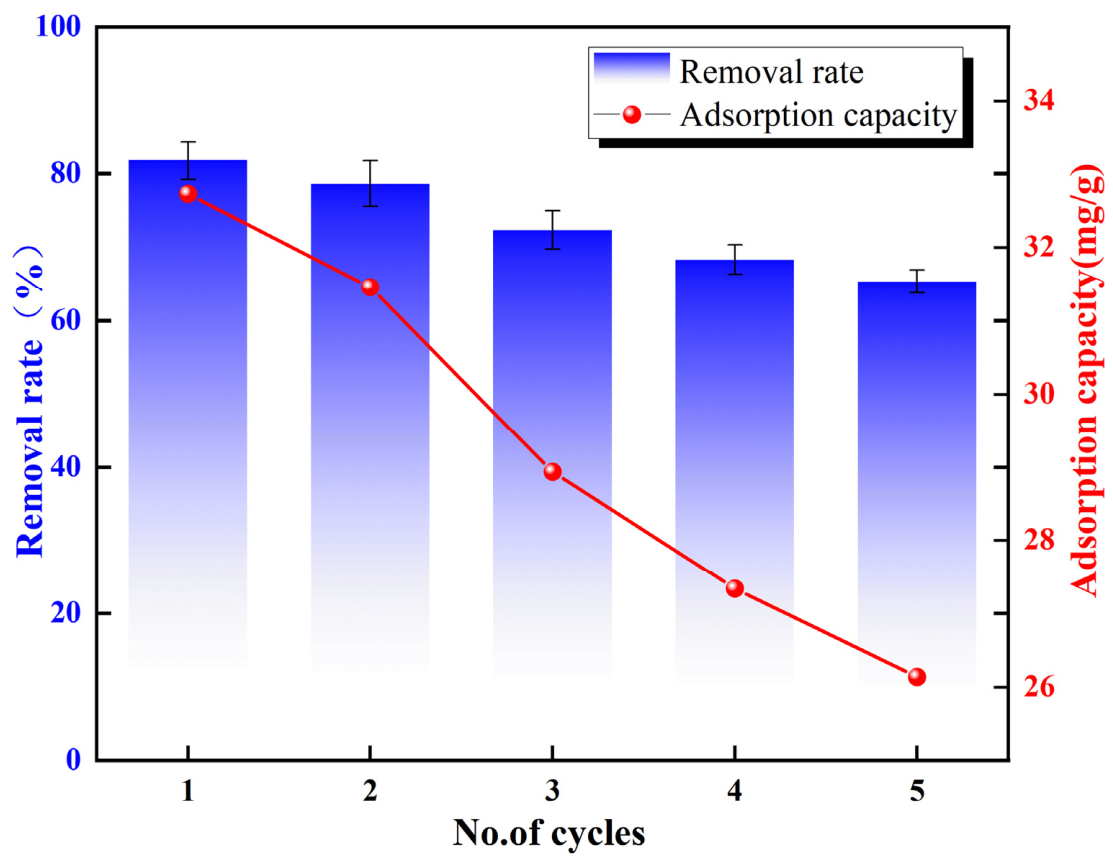
3.4. Reusability of VT-Ceramsite
3.5. Environmental Safety Analysis of VT-Ceramsite
3.6. Literature Contrast Analysis
4. Conclusions
- (1)
- The optimal adsorption performance of the VT-Ceramsite was achieved when the mass ratio of VT, FA, and KL was 6.5:2.5:1, with a preheating temperature of 300 °C for 20 min and a calcination temperature of 900 °C for 20 min. While the synthesis of VT-Ceramsite involves a high-temperature calcination process, the associated thermal costs should be balanced against the significant environmental and economic savings achieved through large-scale solid waste management. Based on the Langmuir model, the theoretical fluoride removal capacity of the prepared ceramic pellets is 43.59 mg/g, surpassing the capacities of most solid waste-based fluoride removal agents reported in the literature. This work validates the fundamental feasibility of using unmodified VT as a primary raw material for functional adsorbents, achieving the goal of high-volume solid waste consumption.
- (2)
- VT-Ceramsite exhibited a specific surface area of 3.61 m2/g, solubility in hydrochloric acid of 1.2%, and a void fraction of 48.68%, meeting the national standard for artificial ceramsite filter materials used in water treatment. The leaching concentration of heavy metals in the ceramic granules falls below national standard limits, indicating no risk of secondary environmental pollution.
- (3)
- During the fluoride adsorption process by ceramsite, distinct complexation effects involving Si-F, Al-F, and Ca-F are observed, which contribute to an enhanced adsorption performance. The adsorption behavior conforms well to the Freundlich isotherm and the pseudo-first-order kinetic model, which is attributed to the complex morphology of the VT-Ceramsite; the distinct differences between the internal pore structures and surface rugosity result in a wide distribution of adsorption sites with varying energy levels. In summary, the removal of fluoride by VT-Ceramsite is a complex, multi-mechanistic process synergistically driven by physical diffusion and chemical complexation between fluoride ions and surface metal-active sites.
- (4)
- Preliminary investigations confirm that VT-Ceramsite possesses exceptional resistance to the interference of coexisting ions, maintaining a high fluoride adsorption capacity in diverse ionic environments. This inherent selectivity confirms the material’s practical utility for treating multi-component industrial wastewater. Furthermore, while the current batch experiments establish the high intrinsic capacity of VT-Ceramsite, subsequent investigations using continuous fixed-bed columns are essential to evaluate breakthrough curves and operational longevity, providing the necessary engineering data to scale up the treatment process for industrial applications.
Author Contributions
Funding
Data Availability Statement
Acknowledgments
Conflicts of Interest
References
- Wang, M.; Wang, H.; Lei, G.; Yang, B.; Hu, T.; Ye, Y.; Li, W.; Zhou, Y.; Yang, X.; Xu, H. Current Progress on Fluoride Occurrence in the Soil Environment: Sources, Transformation, Regulations and Remediation. Chemosphere 2023, 341, 139901. [Google Scholar] [CrossRef]
- Zhang, Y.; Bo, W.; Zheng, Q.; Liu, T.; Xue, N.; Hu, P.; Liu, H. A Review of Processing and Utilization Technology for Vanadium Shale Resources. Sep. Purif. Technol. 2025, 379, 135185. [Google Scholar] [CrossRef]
- Wu, D.; Geng, Y.; Gao, Z.; Wu, Y. Uncovering the Evolution of Vanadium Cycle in China during 2000–2022. Resour. Environ. Sustain. 2025, 19, 100188. [Google Scholar] [CrossRef]
- Huang, J.; Liu, T.; Zhang, Y.; Hu, P. Reinforced Adsorption Mechanism of Fluorine Ions by Calcium-Depleted Hydroxyapatite and Application in the Raffinate from the Vanadium Industry. Chem. Eng. J. 2023, 452, 139379. [Google Scholar] [CrossRef]
- Lacson, C.F.Z.; Lu, M.-C.; Huang, Y.-H. Fluoride-Containing Water: A Global Perspective and a Pursuit to Sustainable Water Defluoridation Management—An Overview. J. Clean. Prod. 2021, 280, 124236. [Google Scholar] [CrossRef]
- Jat Baloch, M.Y.; Zhang, W.; Chai, J.; Al Shoumik, B.A.; Tariq, A.; Iqbal, J.; Talpur, S.A.; Hussain, S.; Khan, Z. Groundwater Contamination, Fate, and Transport of Fluoride and Nitrate in Western Jilin, China: Implications for Water Quality and Health Risks. Environ. Chem. Ecotoxicol. 2025, 7, 1189–1202. [Google Scholar] [CrossRef]
- Kashyap, S.J.; Sankannavar, R.; Madhu, G.M. Fluoride Sources, Toxicity and Fluorosis Management Techniques—A Brief Review. J. Hazard. Mater. Lett. 2021, 2, 100033. [Google Scholar] [CrossRef]
- Rawat, N.; Sivanesan, S.; Kanade, G.S.; Bafana, A. Interaction of Environmental Fluoride Exposure and Gut Microbes: Potential Implication in the Development of Fluorosis in Human Subjects. Food Chem. Toxicol. 2025, 200, 115388. [Google Scholar] [CrossRef]
- Bodzek, M.; Konieczny, K. Removal of Fluoride from Aquatic Environment. Desalination Water Treat. 2018, 117, 118–141. [Google Scholar] [CrossRef]
- Wang, D.; Guo, L.; Qiao, Z.; Liu, H.; Zhang, Y.; Wang, Y. Portable Hydroxyl-Functionalized Coal Gangue-Based Cordierite Porous Ceramics Sheets for Effective Adsorption of Fluorine-Containing Wastewater. RSC Adv. 2024, 14, 15155–15166. [Google Scholar] [CrossRef] [PubMed]
- Bennett, G. Chemical Analysis of Contaminated LandK. Clive Thompson, C. Paul Nathanail (Eds.), Blackwell Publishing/CRC Press, Oxford, UK, 2003, E89.50, 305 Pp., ISBN: 1-84127-334-1. J. Hazard. Mater. 2004, 109, 227. [Google Scholar] [CrossRef]
- Pei, J.; Pan, X.; Lv, Z.; Yu, H.; Tu, G.; Jiang, F. Synergistic Mechanism to Prepare Ultra-Lightweight Ceramsite Using Multiple Industrial Solid Wastes. Constr. Build. Mater. 2024, 425, 136139. [Google Scholar] [CrossRef]
- Bhatnagar, A.; Kumar, E.; Sillanpää, M. Fluoride Removal from Water by Adsorption—A Review. Chem. Eng. J. 2011, 171, 811–840. [Google Scholar] [CrossRef]
- Wang, Z.; Zheng, S.; Wang, S.; Liu, B.; Wang, D.; Du, H.; Zhang, Y. Research and Prospect on Extraction of Vanadium from Vanadium Slag by Liquid Oxidation Technologies. Trans. Nonferrous Met. Soc. China 2014, 24, 1273–1288. [Google Scholar] [CrossRef]
- Li, X.; Zeng, H.; Sun, N.; Sun, W.; Tang, H.; Wang, L. Preparation of Lightweight Ceramsite by Stone Coal Leaching Slag, Feldspar, and Pore-Forming Reagents. Constr. Build. Mater. 2023, 370, 130642. [Google Scholar] [CrossRef]
- Li, P.; Luo, S.; Zhang, L.; Wang, Q.; Huang, X.; Zhang, Y.; Liu, X.; Liang, J.; Duan, X. Study on Preparation and Performance of Iron Tailings-Based Porous Ceramsite Filter Materials for Water Treatment. Sep. Purif. Technol. 2021, 276, 119380. [Google Scholar] [CrossRef]
- Riley, C.M. Relation of Chemical Properties to the Bloating of Clays. J. Am. Ceram. Soc. 1951, 34, 121–128. [Google Scholar] [CrossRef]
- Hou, H.; Zhang, S.; Guo, D.; Su, L.; Xu, H. Synergetic Benefits of Pollution and Carbon Reduction from Fly Ash Resource Utilization—Based on the Life Cycle Perspective. Sci. Total Environ. 2023, 903, 166197. [Google Scholar] [CrossRef] [PubMed]
- Lou, Y.; Jiang, S.; Du, B.; Dai, X.; Wang, T.; Wang, J.; Zhang, Y. Leaching Morphology Characteristics and Environmental Risk Assessment of 13 Hazardous Trace Elements from Municipal Solid Waste Incineration Fly Ash. Fuel 2023, 346, 128374. [Google Scholar] [CrossRef]
- Luo, C.; Pajala, G.; Yekta, S.S.; Sarkar, S.; Klump, J.V.; Pujari, P.; Routh, J. Soil Contamination Caused by Fly Ash from Coal-Fired Thermal Power Plants in India: Spatiotemporal Distribution and Elemental Leaching Potential. Appl. Geochem. 2024, 170, 106080. [Google Scholar] [CrossRef]
- Mi, H.; Yi, L.; Wu, Q.; Xia, J.; Zhang, B. Preparation of High-Strength Ceramsite from Red Mud, Fly Ash, and Bentonite. Ceram. Int. 2021, 47, 18218–18229. [Google Scholar] [CrossRef]
- Chen, G.-J.; Chang, Y.-S. Effects of Annealing Atmospheres on the Structure and Ferromagnetic Properties of Fe0.12Cu0.02Zn0.86O Thin Films. Ceram. Int. 2016, 42, 18025–18030. [Google Scholar] [CrossRef]
- GB 5085.3-2007; Identification Standards for Hazardous Wastes—Identification for Extraction Toxicity. China Environmental Science Press: Beijing, China, 2007.
- Zhang, C.; Ren, Z.; Wang, L.; Zhang, N.; Li, X.; Han, X.; Liang, J. The Synergistic Sintering of Ultra-Lightweight Ceramsite from Molybdenum Ore Tailings, Iron Ore Tailings and Waste Glass Powders: Properties and Formation Mechanism. Constr. Build. Mater. 2024, 452, 138852. [Google Scholar] [CrossRef]
- GB/T 17431.2-2010; Lightweight Aggregates and Its Test Methods—Part 2: Test Methods for Lightweight Aggregates. China Standards Press: Beijing, China, 2010.
- CJ/T 299-2008; Artificial Ceramsite Filter Material for Water Treatment. China Standards Press: Beijing, China, 2008.
- Corbillon, M.S.; Olazabal, M.A.; Madariaga, J.M. Potentiometric Study of Aluminium-Fluoride Complexation Equilibria and Definition of the Thermodynamic Model. J. Solut. Chem. 2008, 37, 567–579. [Google Scholar] [CrossRef]
- Tang, Y.; Guan, X.; Wang, J.; Gao, N.; McPhail, M.R.; Chusuei, C.C. Fluoride Adsorption onto Granular Ferric Hydroxide: Effects of Ionic Strength, pH, Surface Loading, and Major Co-Existing Anions. J. Hazard. Mater. 2009, 171, 774–779. [Google Scholar] [CrossRef] [PubMed]
- Chen, N.; Zhang, Z.; Feng, C.; Sugiura, N.; Li, M.; Chen, R. Fluoride Removal from Water by Granular Ceramic Adsorption. J. Colloid Interface Sci. 2010, 348, 579–584. [Google Scholar] [CrossRef]
- Gai, W.-Z.; Zhang, S.-H.; Yang, Y.; Zhang, X.; Deng, Z.-Y. Separation of Excess Fluoride from Water Using Amorphous and Crystalline AlOOH Adsorbents. ACS Omega 2021, 6, 16488–16497. [Google Scholar] [CrossRef] [PubMed]
- Thommes, M.; Kaneko, K.; Neimark, A.V.; Olivier, J.P.; Rodriguez-Reinoso, F.; Rouquerol, J.; Sing, K.S.W. Physisorption of Gases, with Special Reference to the Evaluation of Surface Area and Pore Size Distribution (IUPAC Technical Report). Pure Appl. Chem. 2015, 87, 1051–1069. [Google Scholar] [CrossRef]
- Ke, F.; Peng, C.; Zhang, T.; Zhang, M.; Zhou, C.; Cai, H.; Zhu, J.; Wan, X. Fumarate-Based Metal-Organic Frameworks as a New Platform for Highly Selective Removal of Fluoride from Brick Tea. Sci. Rep. 2018, 8, 939. [Google Scholar] [CrossRef]
- Langmuir, I. The adsorption of gases on plane surfaces of glass, mica and platinum. J. Am. Chem. Soc. 1918, 40, 1361–1403. [Google Scholar] [CrossRef]
- Freundlich, H. Über Die Adsorption in Lösungen. Z. Für Phys. Chem. 1907, 57, 385–470. [Google Scholar] [CrossRef]
- Shahwan, T. Lagergren Equation: Can Maximum Loading of Sorption Replace Equilibrium Loading? Chem. Eng. Res. Des. 2015, 96, 172–176. [Google Scholar] [CrossRef]
- Ho, Y.S.; McKay, G. Sorption of Dye from Aqueous Solution by Peat. Chem. Eng. J. 1998, 70, 115–124. [Google Scholar] [CrossRef]
- Delgado, N.; Capparelli, A.; Navarro, A.; Marino, D. Pharmaceutical Emerging Pollutants Removal from Water Using Powdered Activated Carbon: Study of Kinetics and Adsorption Equilibrium. J. Environ. Manag. 2019, 236, 301–308. [Google Scholar] [CrossRef]
- Huang, J.; Liu, T.; Zhang, Y.; Hu, P. Internal Coordination of Vanadium Industrial Waste—Preparation of Hydroxyapatite and Fluorine Wastewater Purification. J. Water Process Eng. 2022, 49, 103041. [Google Scholar] [CrossRef]
- Vitorette, P.J.; Zaccaron, A.; Müller, T.G.; De Oliveira, C.M.; Peterson, M.; Raupp-Pereira, F. Analysis of Solid Waste Discharged from Water Treatment Plant as a Fluoride-Absorbing Functional Material. Groundw. Sustain. Dev. 2022, 17, 100765. [Google Scholar] [CrossRef]
- Dos Santos, H.V.R.; Scalize, P.S.; Teran, F.J.C.; Cuba, R.M.F. Fluoride Removal from Aqueous Medium Using Biochar Produced from Coffee Ground. Resources 2023, 12, 84. [Google Scholar] [CrossRef]
- Liu, Y.; Zhang, H.; Xiao, D.; Wu, H.; Zhang, Z.; Xu, L.; Cheng, Q.; Zhou, H.; Yu, J.; Pan, Z.; et al. Removal of Fluoride from Phosphogypsum Leaching Solution with Phosphate Tailing Based Layered Double Hydroxides: Kinetics and Equilibrium Isotherms. Minerals 2022, 12, 858. [Google Scholar] [CrossRef]
- Behera, B.; Sahu, H.B. Coal Mine Waste Characterization and Defluoridation Property. Heliyon 2023, 9, e13244. [Google Scholar] [CrossRef]
- Yi, M.; Wang, K.; Wei, H.; Wei, D.; Wei, X.; Wei, B.; Shao, L.; Fujita, T.; Cui, X. Efficient Preparation of Red Mud-Based Geopolymer Microspheres (RM@GMs) and Adsorption of Fluoride Ions in Wastewater. J. Hazard. Mater. 2023, 442, 130027. [Google Scholar] [CrossRef]
- Li, X.; Guo, Y.; Xie, Y.; Sun, Y. Treatment of Fluorinated Wastewater with Chitosan Modified Activated Sludge Lysis Ash. RSC Adv. 2022, 12, 34006–34019. [Google Scholar] [CrossRef] [PubMed]
- Deng, H.; Chen, Y.; Cao, Y.; Chen, W. Enhanced Phosphate and Fluoride Removal from Aqueous Solution by Ferric-Modified Chromium (III)-Fibrous Protein. J. Taiwan Inst. Chem. Eng. 2016, 68, 323–331. [Google Scholar] [CrossRef]
- Bakhta, S.; Sadaoui, Z.; Bouazizi, N.; Samir, B.; Allalou, O.; Devouge-Boyer, C.; Mignot, M.; Vieillard, J. Functional Activated Carbon: From Synthesis to Groundwater Fluoride Removal. RSC Adv. 2022, 12, 2332–2348. [Google Scholar] [CrossRef]
- Ramezani, A.; Lorestani, B.; Sobhanardakani, S.; Cheraghi, M.; Nourmoradi, H. Fabricating Modified Carbon of Oak Fruit for Adsorption of Fluoride and Nitrate from Aqueous Media: Isotherm and Kinetic Models. Appl. Water Sci. 2023, 13, 221. [Google Scholar] [CrossRef]
- Du, H.; Fang, L.; Shi, X.; Li, T.; Sui, Z.; Zhong, J.; Li, K. Efficient Defluoridation of High-Fluoride Water Using Rare Earth-Based Adsorbents: Adsorption Performance, Mechanism, and Kinetics. Sci. Rep. 2025, 15, 42709. [Google Scholar] [CrossRef] [PubMed]





| Material | SiO2 | Al2O3 | Fe2O3 | CaO | MgO | Na2O | V2O5 |
|---|---|---|---|---|---|---|---|
| VT | 66.63 | 2.54 | 2.38 | 6.26 | 0.31 | 0.44 | 0.12 |
| FA | 43 | 23 | 2.5 | 5.6 | 0.95 | 0.66 | - |
| KL | 52.15 | 42.01 | 1.25 | 0.099 | 0.3 | 0.072 | - |
| Sample | VT (wt.%) | FA (wt.%) | KL (wt.%) |
|---|---|---|---|
| S8 | 80 | 10 | 10 |
| S7.5 | 75 | 15 | 10 |
| S7 | 70 | 20 | 10 |
| S6.5 | 65 | 25 | 10 |
| S6 | 60 | 30 | 10 |
| S5.5 | 55 | 35 | 10 |
| S5 | 50 | 40 | 10 |
| S4.5 | 45 | 45 | 10 |
| NO | Preheating Temperature (°C) | Preheating Time (min) | Calcination Temperature (°C) | Calcination Time (min) | Adsorption Rate (%) |
|---|---|---|---|---|---|
| 1 | 300 | 10 | 900 | 10 | 73.96 |
| 2 | 300 | 20 | 1000 | 20 | 65.20 |
| 3 | 300 | 30 | 1100 | 30 | 13.61 |
| 4 | 400 | 10 | 1000 | 30 | 52.94 |
| 5 | 400 | 20 | 1100 | 10 | 12.66 |
| 6 | 400 | 30 | 900 | 20 | 71.27 |
| 7 | 500 | 10 | 1100 | 20 | 12.53 |
| 8 | 500 | 20 | 900 | 30 | 73.96 |
| 9 | 500 | 30 | 1000 | 10 | 53.75 |
| Standard | Product | |
|---|---|---|
| Grain diameter (mm) | 0.5–9.0 | 6.0–8.0 |
| Apparent density (g/cm3) | - | 1.57 |
| Density (g/cm3) | - | 2.17 |
| Porosity (%) | - | 27.65 |
| Solubility in hydrochloric acid (%) | ≤2 | 1.20 |
| Void fraction (%) | ≥40 | 48.68 |
| Specific surface area (m2/g) | ≥0.5 | 3.61 |
| Ion | F− | Al3+ | Ca2+ | Mg2+ | Cl− | ||
|---|---|---|---|---|---|---|---|
| Concentration (mg/L) | 4000 | 500 | 500 | 500 | 300 | 4580 | 1000 |
| Model | Langmuir | Freundlich | ||||
|---|---|---|---|---|---|---|
| Parameter | KL (L/mg) | Qm (mg/g) | R2 | KF (L/mg) | R2 | |
| 298.15 K | 0.0057 | 43.5932 | 0.9129 | 4.3203 | 0.3067 | 0.9971 |
| Model | Pseudo-First-Order | Pseudo-Second-Order | ||||
|---|---|---|---|---|---|---|
| Parameter | K1 (min−1) | Qe (mg/g) | R2 | K2 (g/mg·min−1) | Qe (mg/g) | R2 |
| 298.15 K | 0.0018 | 36.5909 | 0.9920 | 0.0196 | 51.0204 | 0.9765 |
| 308.15 K | 0.0019 | 37.5188 | 0.9825 | 0.0193 | 51.8135 | 0.9614 |
| 318.15 K | 0.0022 | 37.5045 | 0.9770 | 0.0203 | 48.2611 | 0.9635 |
| Model | Intra-Particle Diffusion | |||||
|---|---|---|---|---|---|---|
| Liquid Firm Diffusion | Surface Chemisorption | Particle Diffusion | ||||
| Parameter | Kip (g/mg·min−0.5) | R2 | Kip (g/mg·min−0.5) | R2 | Kip (g/mg·min−0.5) | R2 |
| 298.15 K | 1.2426 | 0.9960 | 0.4868 | 0.9839 | 0.0041 | - |
| 308.15 K | 1.3530 | 0.9999 | 0.8708 | 0.7972 | 0.0179 | 0.6947 |
| 318.15 K | 1.4322 | 0.9999 | 1.3026 | 0.9722 | 0.0127 | 0.5549 |
| Heavy Metals | Cr | Cd | Pb | Zn | As |
|---|---|---|---|---|---|
| Limits (mg/L) | 15 | 1.00 | 5.00 | 100 | 5.00 |
| Concentration (mg/L) | 0.67 | 0.45 | <0.01 | 11.25 | 1.56 |
| Absorbent | Adsorbent Dosage (g/L) | Fluoride Concentration (mg/L) | Qe (mg/g) | Removal Percent (%) | References |
|---|---|---|---|---|---|
| Water treatment plant (WTP sludge) | 6 | 5 | 0.21 | 28 | [39] |
| Biochar produced from coffee grounds | 10 | 14 | 0.53 | 27 | [40] |
| Phosphate tailings | 0.4 | 10 | 26.89 | - | [41] |
| Weathered coal shale | 60 | 3 | 23.66 | 47.19 | [42] |
| Red mud-based geopolymer microspheres (RM@GMs) | 1 | 1.5 | 76.57 | 98.88 | [43] |
| Activated sludge lysis ash/chitosan (ASLA/C) | 10 | 10 | 5.71 | 89.13 | [44] |
| Ferric modified chromium (III)-fibrous protein (Fe-CrFP) | 1 | 19 | 14.12 | - | [45] |
| Functional activated carbon | 4 | 4 | 20 | 99 | [46] |
| Modified carbon of oak fruit | 1 | 50 | 26 | - | [47] |
| Rare earth-based adsorbents | 2 | 100 | 114.47–118.43 | - | [48] |
| VT-Ceramsite | 100 | 4000 | 43.59/42.15 | >90 | This work |
Disclaimer/Publisher’s Note: The statements, opinions and data contained in all publications are solely those of the individual author(s) and contributor(s) and not of MDPI and/or the editor(s). MDPI and/or the editor(s) disclaim responsibility for any injury to people or property resulting from any ideas, methods, instructions or products referred to in the content. |
© 2026 by the authors. Licensee MDPI, Basel, Switzerland. This article is an open access article distributed under the terms and conditions of the Creative Commons Attribution (CC BY) license.
Share and Cite
Fan, J.; Huang, J.; Zhang, Y.; Wan, Q.; Xue, N. Preparation of Vanadium Tailings-Based Ceramsite and Evaluation of Its Adsorption Performance for High-Fluoride Wastewater. Materials 2026, 19, 2201. https://doi.org/10.3390/ma19112201
Fan J, Huang J, Zhang Y, Wan Q, Xue N. Preparation of Vanadium Tailings-Based Ceramsite and Evaluation of Its Adsorption Performance for High-Fluoride Wastewater. Materials. 2026; 19(11):2201. https://doi.org/10.3390/ma19112201
Chicago/Turabian StyleFan, Jiangke, Jing Huang, Yimin Zhang, Qian Wan, and Nannan Xue. 2026. "Preparation of Vanadium Tailings-Based Ceramsite and Evaluation of Its Adsorption Performance for High-Fluoride Wastewater" Materials 19, no. 11: 2201. https://doi.org/10.3390/ma19112201
APA StyleFan, J., Huang, J., Zhang, Y., Wan, Q., & Xue, N. (2026). Preparation of Vanadium Tailings-Based Ceramsite and Evaluation of Its Adsorption Performance for High-Fluoride Wastewater. Materials, 19(11), 2201. https://doi.org/10.3390/ma19112201