Study on Dynamic Mechanical Properties and Constitutive Model of Z-Shaped Steel Wire for Sealing Cable

Abstract
1. Introduction
2. Experimental Investigation
3. Results and Analysis
3.1. Quasi-Static Tensile Test at Room Temperature
3.2. Hopkinson Pressure Bar Experiment
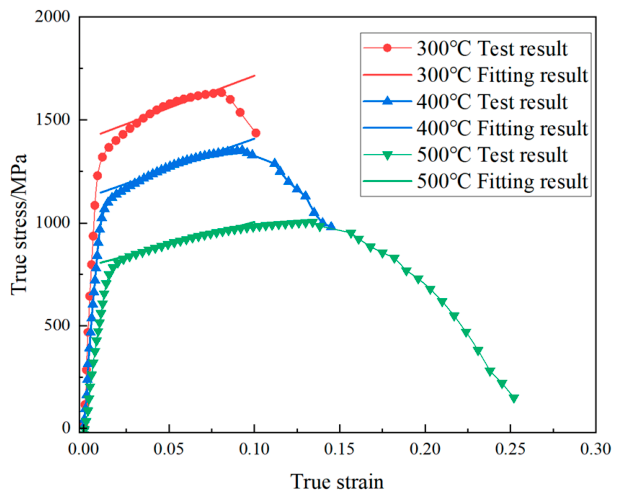
3.3. Quasi-Static High-Temperature Tensile Test
3.4. Fractography of Z-Shaped Steel Wire
4. Constitutive Model and Parameter Calibration
4.1. Constitutive Model of Material
4.2. Constitutive Model Fitting
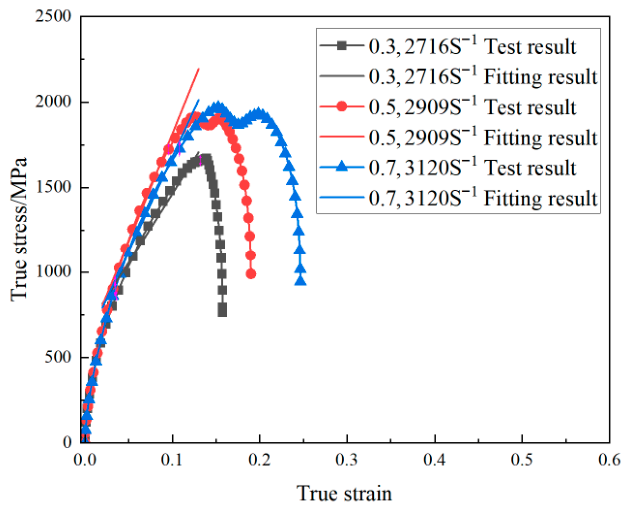
4.3. Fitting Results
5. SHPB Simulation Study on Dynamic Mechanical Properties of Z-Shaped Steel Wire
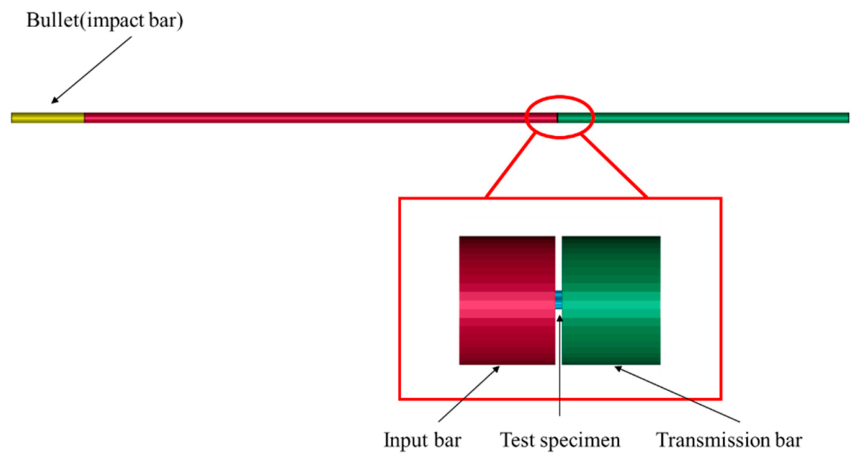
5.1. Finite Element Model
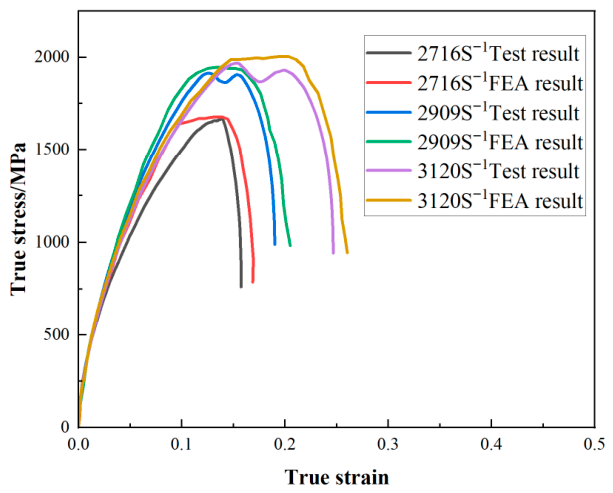
5.2. The Simulation Results Are Compared with the Experimental Results
6. Conclusions
- (1)
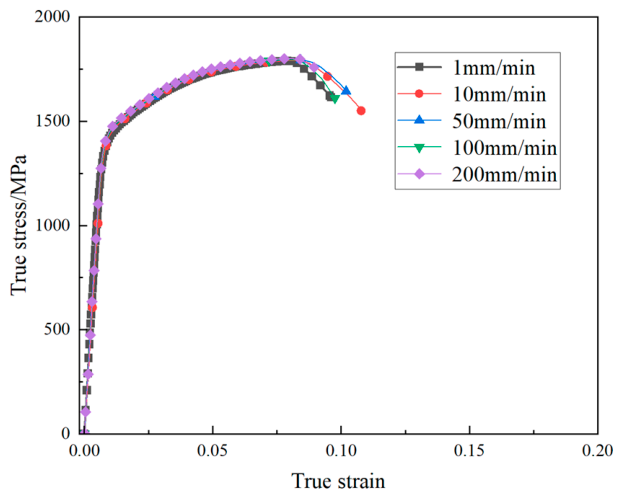
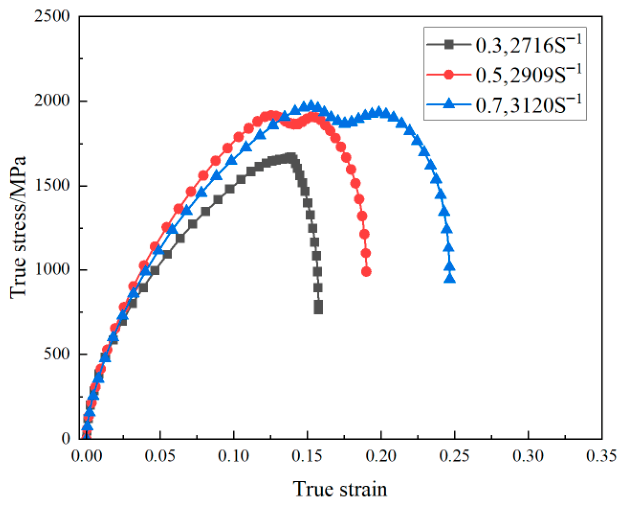
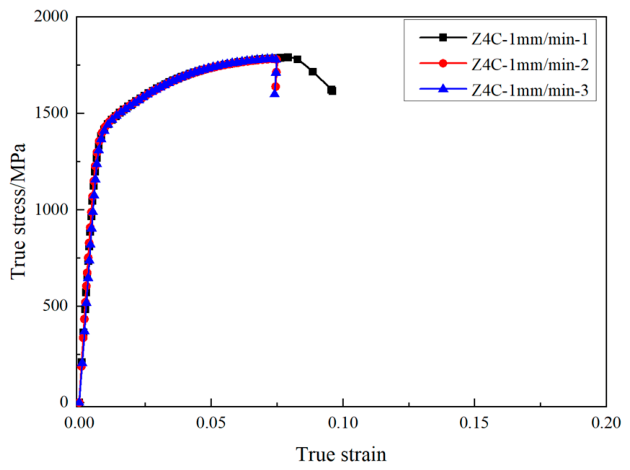
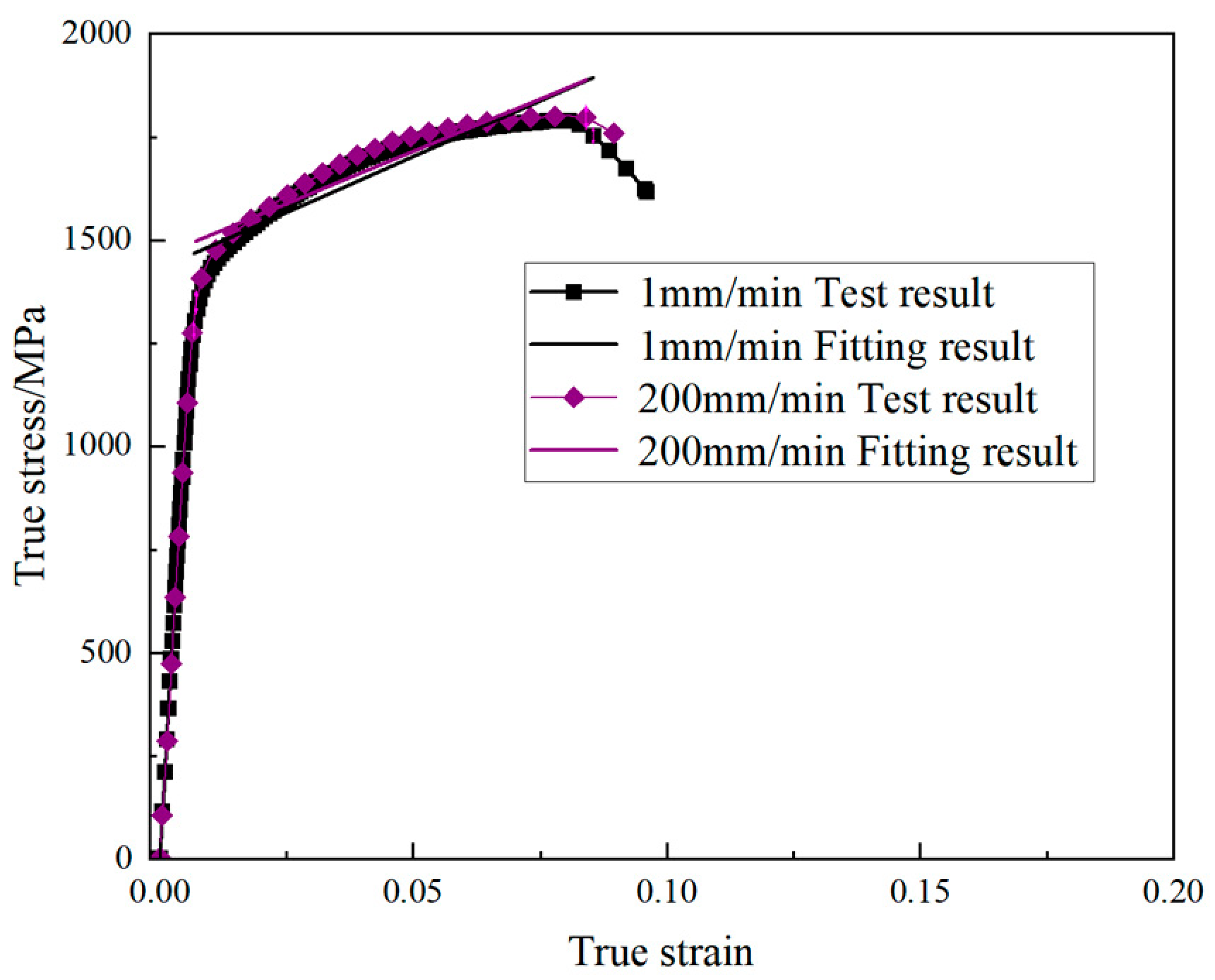
- At room temperature, the Z-shaped steel wire exhibits a pronounced strain hardening effect under both low and high strain rate conditions. Following yielding, the flow stress increases progressively with strain, and the tensile strength, reaching up to 1875 MPa, is substantially higher than the yield strength.
- (2)
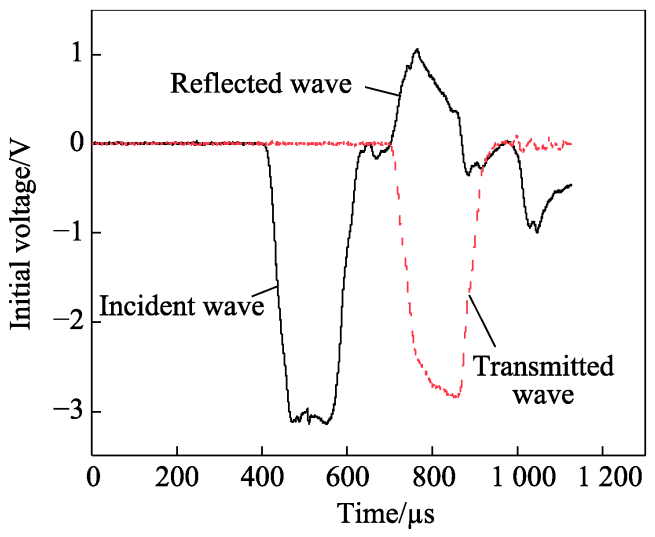
- Comparison of quasi-static and high-strain-rate experimental data reveals that the flow stress of the Z-shaped steel wire is highly sensitive to strain rate variations, demonstrating a significant strain rate strengthening effect.
- (3)
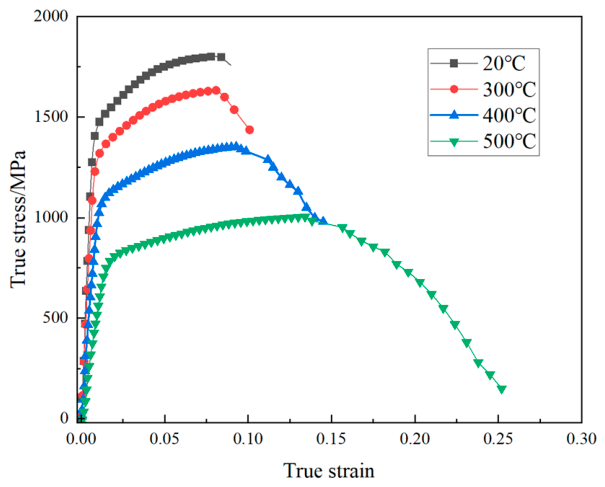
- The material also shows strong thermal softening behavior. As temperature increases, the flow stress decreases notably, while the strain of failure (unloading strain) increases accordingly.
- (4)
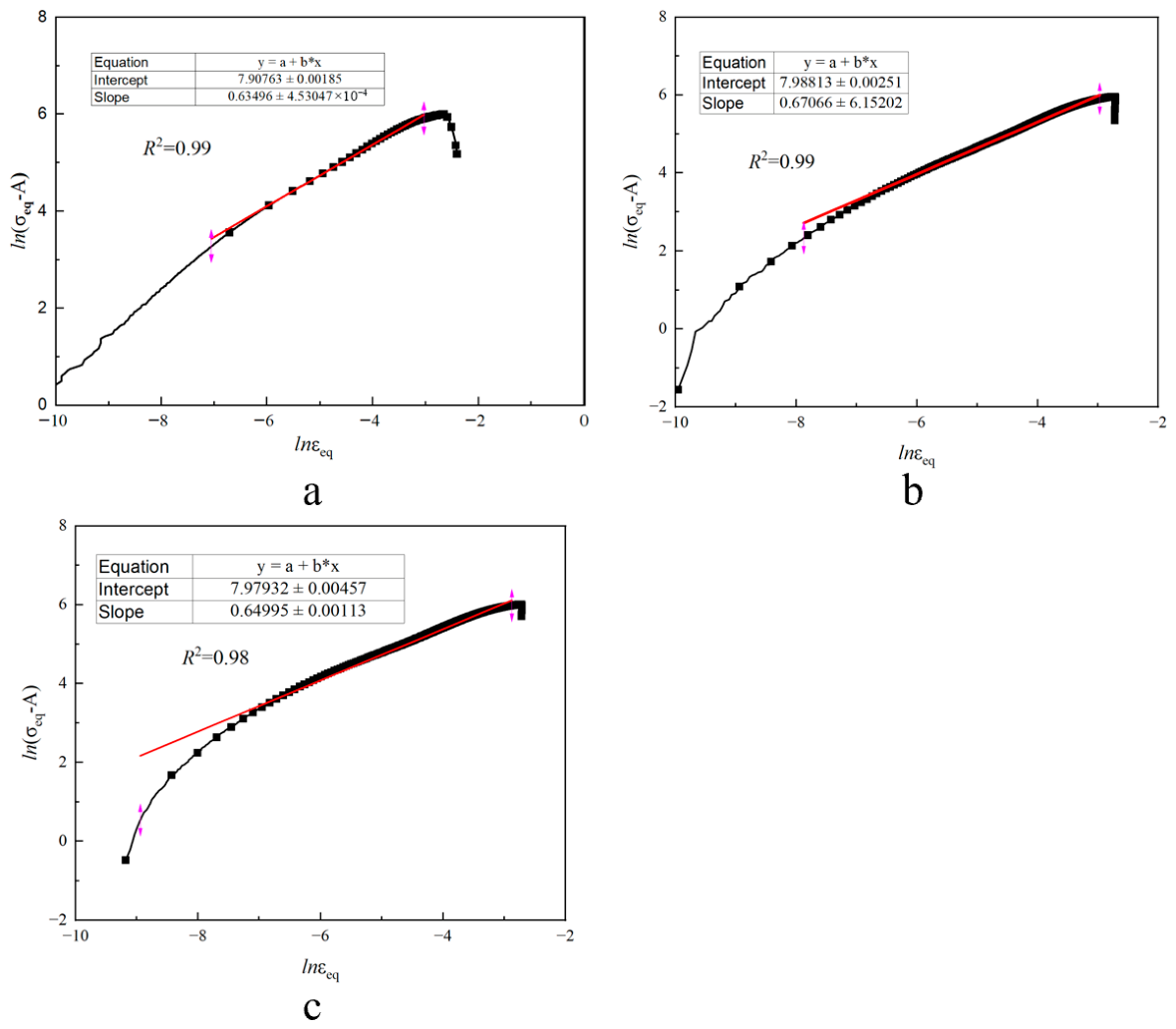
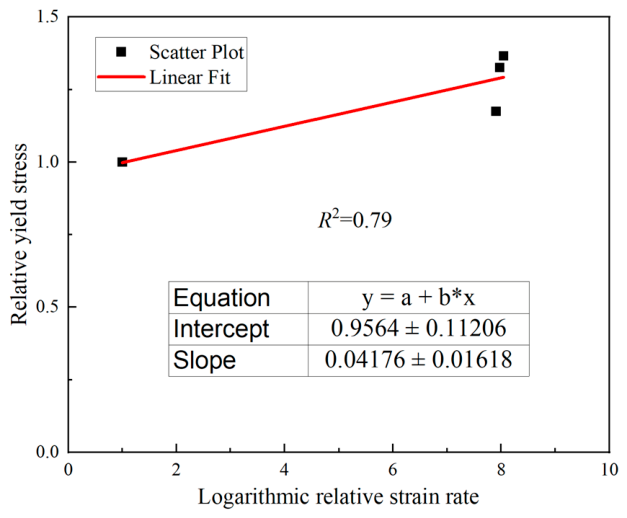
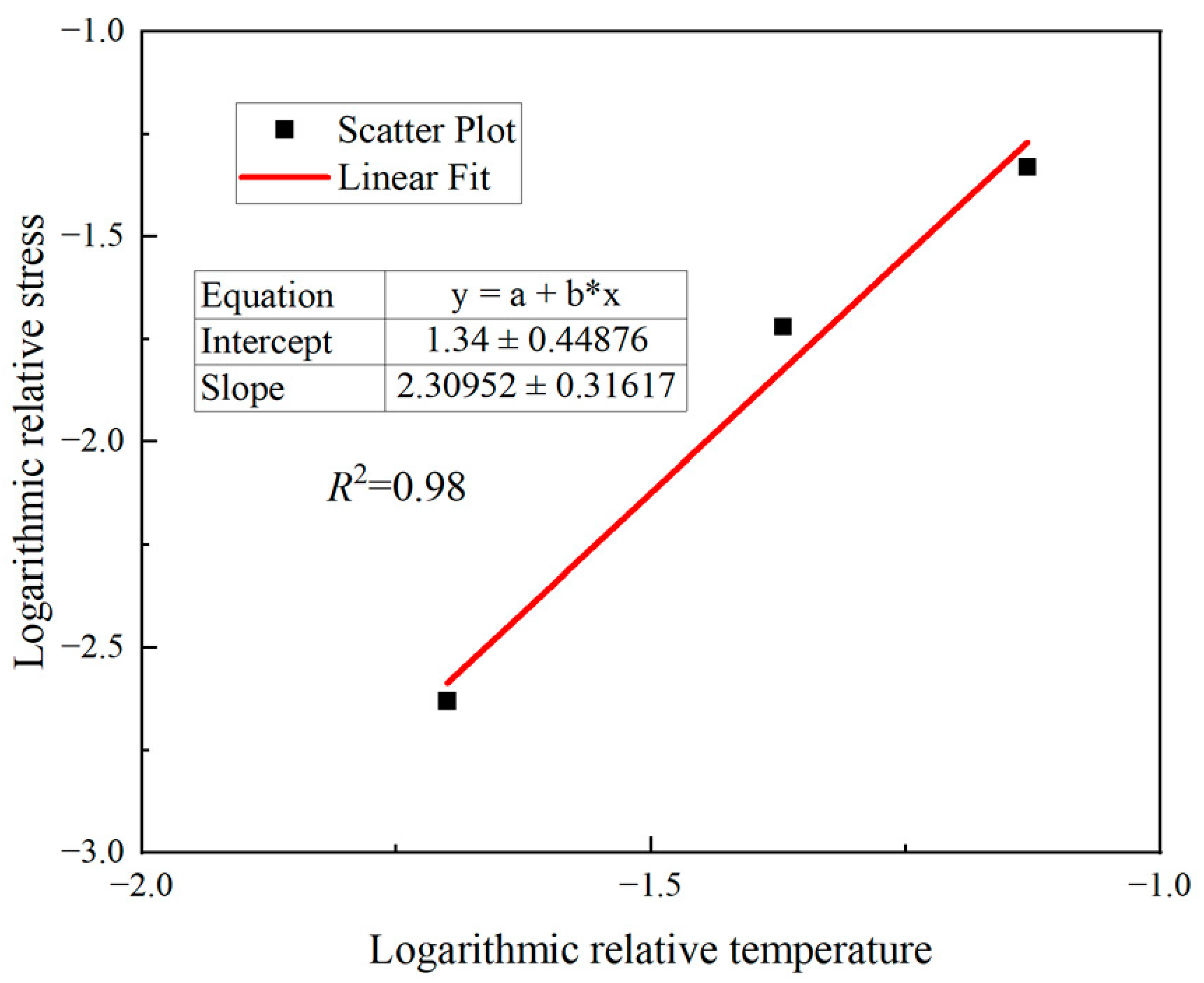
- Based on the experimental results from room-temperature quasi-static tension, room-temperature high-strain-rate tension, and high-temperature tension, the parameters of the Johnson–Cook constitutive model for the Z-shaped steel wire were calibrated as follows: A = 1395.5 MPa, B = 3.041 MPa, n = 0.67, C = 0.04176, and m = 2.31. The model accurately captures the evolution of flow stress from yield to the onset of necking, thereby providing a reliable foundation for numerical and finite element simulations of Z-shaped steel wire under various loading conditions.
- (5)
- Furthermore, the calibrated Johnson–Cook model effectively describes the dynamic compressive behavior of the Z-shaped steel wire as characterized by SHPB tests, confirming its reliability for predicting material response under high-strain-rate deformation.
Author Contributions
Funding
Data Availability Statement
Conflicts of Interest
References
- Liu, X.; Ma, H.; Fan, F. Modified Johnson-Cook model of SWRH82B steel under different manufacturing and cold-drawing conditions. J. Constr. Steel Res. 2021, 186, 106894. [Google Scholar] [CrossRef]
- Xie, Z.Y.; Tan, J.K.; Yang, H.; Pan, J.Y. Research on the Characteristics of Steel Frame Node under Explosive and Impact Load. Adv. Mater. Res. 2013, 779, 1188–1193. [Google Scholar] [CrossRef]
- Shi, Y.H.; Xin, Z.J.; Lu, H.H.; Cui, J.; Huang, X.B. Dynamic Mechanical Properties and Constitutive Model of ZL205A Aluminum Alloy. J. Netshape Form. Eng. 2023, 15, 104–110. (In Chinese) [Google Scholar]
- Khan, A.S.; Liang, R. Behaviors of three BCC metal over a wide range of strain rates and temperatures: Experiments and modeling. Int. J. Plast. 1999, 10, 1089–1109. [Google Scholar] [CrossRef]
- Qiu, X.L.; Cheng, X.Q.; Dong, P.H.; Peng, H.; Zhou, X. Sensitivity Analysis of Johnson-Cook Material Constants and Friction Coefficient Influence on Finite Element Simulation of Turning Inconel 718. Materials 2019, 12, 3121. [Google Scholar] [CrossRef] [PubMed]
- Liu, L.; He, X.; Wang, J.; Wu, J.; Cai, Z.; Yao, Y. A finite strain micromechanical-based constitutive model: Application to porous polycrystal. Int. J. Mech. Sci. 2024, 279, 109500. [Google Scholar] [CrossRef]
- Bodner, S.R.; Partom, Y. Constitutive equations for elastic-viscoplastic strain hardening materials. J. Appl. Mech. 1975, 42, 385–389. [Google Scholar] [CrossRef]
- Dubey, N.; Kumar, S.; Laik, A.; Gopalakrishnan, S.; Kapoor, K. A Comparative Study on Johnson-Cook, Arrhenius, and Modified Zerilli-Armstrong Constitutive Models for Predicting High-Temperature Flow Stress of Zircaloy-4. Prog. Nucl. Energy 2026, 191, 106103. [Google Scholar] [CrossRef]
- Gurusamy, M.M.; Rao, B.C. On the performance of modified Zerilli-Armstrong constitutive model in simulating the metal-cutting process. J. Manuf. Process. 2017, 28, 253–265. [Google Scholar] [CrossRef]
- Abd El-Aty, A.; Xu, Y.; Alzahrani, B.; Ali, A.; Shokry, A. Advanced Constitutive Modeling of the Hot Deformation Behavior of Ni-Based Superalloys: Modified Kobayashi-Dodd and Khan-Huang-Liang Models with Experimental Validation. Materials 2025, 18, 2500. [Google Scholar] [CrossRef]
- Khan, A.S.; Huang, S. Experimental and theoretical study of mechanical behavior of 1100 aluminum in the strain rate range 10−5–10−4 s−1. Int. J. Plast. 1991, 8, 397–424. [Google Scholar] [CrossRef]
- Khan, A.S.; Zhang, H.Y.; Takacs, L. Mechanical response and modelling of fully compacted nanocrystalline iron and copper. Int. J. Plast. 2000, 16, 1459–1476. [Google Scholar] [CrossRef]
- Wang, H.; Gan, Y.C.; Chen, X.R.; Wang, Y.X.; Geng, H.Y. Modified Steinberg-Guinan elasticity model to describe softening-hardening dual anomaly in vanadium. J. Appl. Phys. 2024, 135, 115901. [Google Scholar] [CrossRef]
- Steinberg, D.J.; Lund, C.M. A constitutive model for strain rates from 10−4 to 106 s−1. J. Appl. Phys. 1989, 65, 1528–1533. [Google Scholar] [CrossRef]
- James, J.R.; Gonzales, M.; Gerlt, A.R.C.; Arroyave, R. Parameter range estimation and uncertainty analysis for high strain rate material response via model fusion. J. Appl. Phys. 2022, 132, 235101. [Google Scholar] [CrossRef]
- Rypina, Ł.; Lipiński, D.; Tomkowski, R. Parameter Optimisation of Johnson-Cook Constitutive Models for Single Abrasive Grain Micro-Cutting Simulation: A Novel Methodology Based on Lateral Material Displacement Analysis. Materials 2025, 18, 5559. [Google Scholar] [CrossRef] [PubMed]
- Tan, J.Q.; Zhan, M.; Liu, S. A modified Johnson-cook model for tensile flow behaviors of 7050-T7451 aluminum alloy at high strain rates. Mater. Sci. Eng. A 2015, 631, 214–219. [Google Scholar] [CrossRef]
- Bakhshan, H.; Carbonell, J.M.; Onate, E. A modified Johnson-cook model for the plastic behavior of metals in ultrasonic vibration-assisted upsetting processes. J. Manuf. Process. 2024, 121, 361–373. [Google Scholar] [CrossRef]
- Li, H.; Feng, R. Dynamic deformation behavior and corresponding constitutive model of ultra-high strength DP1000 steel. J. Constr. Steel Res. 2022, 191, 107188. [Google Scholar] [CrossRef]
- Barik, S.K.; Narayanan, R.G.; Sahoo, N. Formability and failure response of AA5052-H32 thin sheets with friction stir spot welds during the shock tube-based impact forming. Int. J. Adv. Manuf. Technol. 2022, 11, 7921–7945. [Google Scholar] [CrossRef]
- Ghara, T.; Bandyopadhyay, P.P. Understanding the Role of In-flight Particle Temperature and Velocity on the Residual Stress Depth Profile and Other Mechanical Properties of Atmospheric Plasma sprayed Al2O3 Coating. J. Eur. Ceram. Soc. 2022, 10, 4353–4368. [Google Scholar]
- Zhang, H.B.; Hu, D.Y.; Ye, X.B.; Chen, X.; He, Y. A simplified Johnson-Cook model of TC4T for aeroengine foreign object damage prediction. Eng. Fract. Mech. 2022, 269, 108523. [Google Scholar]
- Muniraj, D.; Sreehari, V.M. Damage assessment of sandwich structures with Al/SiC functionally graded plasma sprayed faceplates subjected to single and repeated impacts. Compos. Struct. 2022, 287, 115369. [Google Scholar] [CrossRef]
- Liu, X.Y. Research on the Anti-Side-impact Performance of Screw-Type Sealed Cable. Harbin Inst. Technol. 2023, 18–26. (In Chinese) [Google Scholar]
- Xiao, X.K.; Wang, Y.P.; Vladislav, V.V.; Chen, L. Effect of Lode Angle in Predicting the Ballistic Resistance of Weldox 700 E Steel Plates Struck by Blunt Projectiles. Int. J. Impact Eng. 2019, 128, 46–71. [Google Scholar] [CrossRef]





| Element | C | Mn | Si | P | S | Fe |
|---|---|---|---|---|---|---|
| Contents (wt.%) | 0.84 | 0.71 | 0.23 | 0.02 | 0.01 | Bal. |
| Specimen Number | 1 mm/min−1 | 1 mm/min−2 | 1 mm/min−3 | Mean Value |
|---|---|---|---|---|
| Yield strength | 1388.5 | 1396.9 | 1401.0 | 1395.5 |
| Elastic modulus | 208,690 | 209,062 | 196,773 | 204,841 |
| Ultimate strength | 1789.9 | 1782.8 | 1783.3 | 1785.3 |
| 1 mm/min−1 | 1 mm/min−2 | 1 mm/min−3 | Mean Value | |
|---|---|---|---|---|
| ln B | 7.91 | 7.99 | 7.97 | 7.96 |
| n | 0.63 | 0.67 | 0.71 | 0.67 |
| Component Material | Density/(kg/m3) | Elastic Modulus/GPa | Poisson Ratio |
|---|---|---|---|
| High-strength steel | 7830 | 210 | 0.3 |
Disclaimer/Publisher’s Note: The statements, opinions and data contained in all publications are solely those of the individual author(s) and contributor(s) and not of MDPI and/or the editor(s). MDPI and/or the editor(s) disclaim responsibility for any injury to people or property resulting from any ideas, methods, instructions or products referred to in the content. |
© 2026 by the authors. Licensee MDPI, Basel, Switzerland. This article is an open access article distributed under the terms and conditions of the Creative Commons Attribution (CC BY) license.
Share and Cite
Shen, K.-Y.; Fan, F.; Zhi, X.-D.; Zhang, R. Study on Dynamic Mechanical Properties and Constitutive Model of Z-Shaped Steel Wire for Sealing Cable. Materials 2026, 19, 2180. https://doi.org/10.3390/ma19112180
Shen K-Y, Fan F, Zhi X-D, Zhang R. Study on Dynamic Mechanical Properties and Constitutive Model of Z-Shaped Steel Wire for Sealing Cable. Materials. 2026; 19(11):2180. https://doi.org/10.3390/ma19112180
Chicago/Turabian StyleShen, Ke-Yu, Feng Fan, Xu-Dong Zhi, and Rong Zhang. 2026. "Study on Dynamic Mechanical Properties and Constitutive Model of Z-Shaped Steel Wire for Sealing Cable" Materials 19, no. 11: 2180. https://doi.org/10.3390/ma19112180
APA StyleShen, K.-Y., Fan, F., Zhi, X.-D., & Zhang, R. (2026). Study on Dynamic Mechanical Properties and Constitutive Model of Z-Shaped Steel Wire for Sealing Cable. Materials, 19(11), 2180. https://doi.org/10.3390/ma19112180