1. Introduction
Titanium and its alloys are extensively utilized in dental medicine, orthopedics, and implantology due to their exceptional corrosion resistance, highly specific mechanical properties, and biocompatibility. In response to the growing demand for components with highly customized geometries and tailored properties, additive manufacturing technologies—particularly laser powder bed fusion (L-PBF)—have experienced significant advancements in recent years. L-PBF operates by selectively melting a powder bed in accordance with a CAD model using a high-energy laser. Comprehensive details regarding the technology are provided in [
1,
2,
3].
Among titanium alloys, Ti-6Al-4V is the most commonly employed in medical applications. However, it is anticipated that non-vanadium alloys may see wider application due to the reported cytotoxicity of vanadium ions [
4,
5]. Studies conducted by Costa et al. [
6] demonstrated that the continuous exposition for V ions and their accumulation in surrounding tissues can induce cytotoxic effects, raising concerns regarding long-term biocompatibility—particularly for implants susceptible to corrosion or wear. Furthermore, research has shown that Ti-6Al-7Nb exhibits superior corrosion resistance compared to Ti-6Al-4V [
7,
8]. Both alloys are α + β dual-phase alloys, in which aluminum acts as the α-phase stabilizer, while vanadium and niobium serve as the β-phase stabilizers, respectively [
9].
Several factors influence the properties of titanium alloys, among which microstructure is one of the most significant. It is primarily governed by the alloy’s chemical composition and the manufacturing process. The specific characteristics of the L-PBF process—particularly the high temperature of the molten pool and the rapid solidification times—lead dual-phase titanium alloys to develop a microstructure composed of non-equilibrium acicular α′ martensite alongside large columnar β grains. Such a microstructure leads to high hardness and tensile strength but low ductility [
10,
11]. According to ISO 5832-3:2021 [
12], Ti-6Al-4V intended for surgical implant production should achieve a minimum elongation of 10%. However, Yan et al. [
13], Vilaro et al. [
14], and Gong et al. [
15] reported elongation values of 4.4 ± 0.7%, 1.7 ± 0.3%, and 5.4 ± 3.8%, respectively. Studies by Laskowska et al. [
16] demonstrated that Ti-6Al-7Nb produced via L-PBT exhibits greater elongation compared to Ti-6Al-4V. The maximum elongation recorded for Ti-6Al-7Nb was 7.6 ± 0.9%, roughly four times higher than that observed for Ti-6Al-4V (2.2 ± 0.2%). Xu et al. [
17] reported an elongation of 9.7 ± 0.3% for the Ti-6Al-7Nb alloy.
To enhance the reproducibility and stability of the functional properties of titanium components produced via additive manufacturing, appropriate heat treatment plays a crucial role. Heat treatment allows for controlled modification of the microstructure [
18,
19,
20], reduction in residual stresses [
21,
22], and tailoring of mechanical properties to meet application-specific requirements [
23,
24,
25]. The selection of heat treatment parameters is a complex issue, depending both on the employed additive manufacturing technology and the specific characteristics of the titanium alloy. Key parameters include the annealing temperature and duration [
26,
27] as well as the cooling rate [
28].
Many authors highlight that the selection of an appropriate heat treatment strategy represents a trade-off, where improvements in ductility and reduction in residual stresses may be accompanied by a decrease in hardness and tensile strength [
29,
30,
31]. Zhao et al. [
32] demonstrated that heat treatment of Ti-6Al-4V titanium alloy within the temperature range of 750–950 °C leads to the decomposition of α′ martensite and the formation of an α + β structure, resulting in a significant increase in ductility with an acceptable reduction in tensile strength. Studies conducted by Cao et al. [
33] confirmed these findings while also indicating that further temperature increases lead to excessive grain growth and a deterioration in the homogeneity of mechanical properties.
Despite extensive studies on Ti-6Al-4V and Ti-6Al-7Nb alloys processed via additive manufacturing, most reports have focused on individual alloys or on different processing and heat treatment conditions. A systematic, side-by-side comparison of these two alloys subjected to identical L-PBF parameters and thermal cycles has not yet been reported. Such a direct comparison is crucial to elucidate the influence of Nb substitution on phase stability, microstructure evolution, and mechanical behavior under the same processing conditions. Therefore, the present study aims to fill this research gap by providing a comprehensive analysis of both alloys, highlighting the effects of heat treatment on their microstructure and mechanical properties, and offering guidance for application-specific optimization.
3. Results and Discussion
3.1. Relative Density
Relative density is widely used as a key metric for evaluating the quality of additively manufactured components and the adequacy of the selected processing parameters. The measurement results are presented in
Table 5. The relative density of the samples investigated before heat treatment was approximately 99% for both alloys. The results obtained for the heat-treated samples indicate that the heat treatment had no effect on their relative density.
3.2. Surface Topography
Table 6 summarizes the average Sa and Sz values, which were used to evaluate the surface roughness of the investigated samples. The analysis was first conducted on the surface roughness of the samples prior to heat treatment. In this case, the average Sa values ranged from 9.7 ± 1.2 µm to 14.4 ± 2.4 µm for samples fabricated from Ti-6Al-4V and from 14.2 ± 0.4 µm to 21.4 ± 1.7 µm for samples fabricated from Ti-6Al-7Nb. The value obtained were higher than those reported in previous studies. These findings support the previously proposed hypothesis that the surface roughness of L-PBF-fabricated components is influenced not only by process parameters but also by additional factors that may be difficult or impossible to control during manufacturing. Moreover, variations in roughness parameters were observed among samples produced using the same strategy, which can be attributed to their position and orientation within the build chamber. This further emphasizes the importance of considering the spatial orientation of individual surfaces when evaluating surface quality.
The measurement results for the heat-treated samples indicate that the treatment had no effect on surface roughness as expressed by the Sa parameter. However, the Sz values decreased. This can be attributed to local plasticization and micro-diffusion of the material, leading to slight smoothing of surface artifacts typical of L-PBF, such as partially melted powder particles, sphericity effects, and laser path irregularities. These changes are subtle and non-uniform, representing a secondary effect rather than the primary objective of heat treatment in L-PBF-fabricated materials.
3.3. Microhardness
Table 7 presents the average microhardness values for the five regions of the samples investigated. Due to the rapid heating, melting, and solidification of the alloy, different areas of components produced via L-PBF experience multiple cycles of heating and cooling, which affects their local microstructure and properties. This is likely the main reason for the observed variability in microhardness across the different regions [
36,
37,
38].
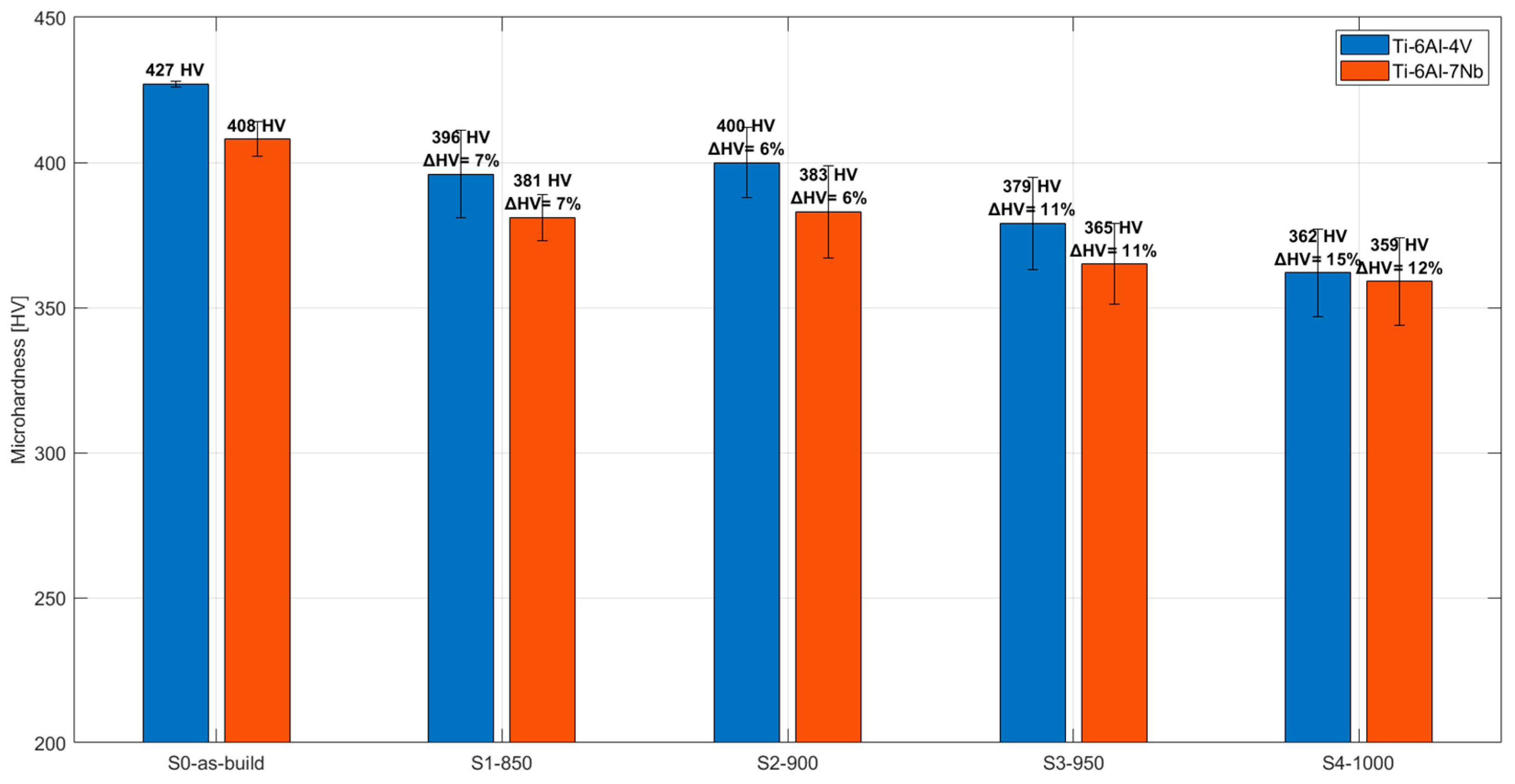
Figure 1 presents the changes in microhardness of the core region of the samples investigated with varying heat treatment conditions. Analysis of the results showed that increasing the annealing temperature was associated with a decrease in microhardness. For Ti-6Al-4V, the microhardness after heat treatment according to the S4_1000 strategy was 362 ± 25 HV, which is 15% lower than in the as-built condition (427 ± 1 HV). In the case of Ti-6Al-7Nb, the decrease in microhardness was 12% (from 408 ± 6 HV in the as-built state to 359 ± 15 HV after heat treatment). The reduction in microhardness reflects changes in the metallographic structure induced by heat treatment. As the annealing temperature increases, the α/α′ → β phase transformation occurs. The β phase exhibits lower hardness, so an increase in its fraction within the microstructure leads to a decrease in the overall microhardness of the alloy [
9]. The increased β-phase fraction was also confirmed by other analyses.
3.4. Microstructure
A material’s metallographic structure largely determines its mechanical behavior. As shown in
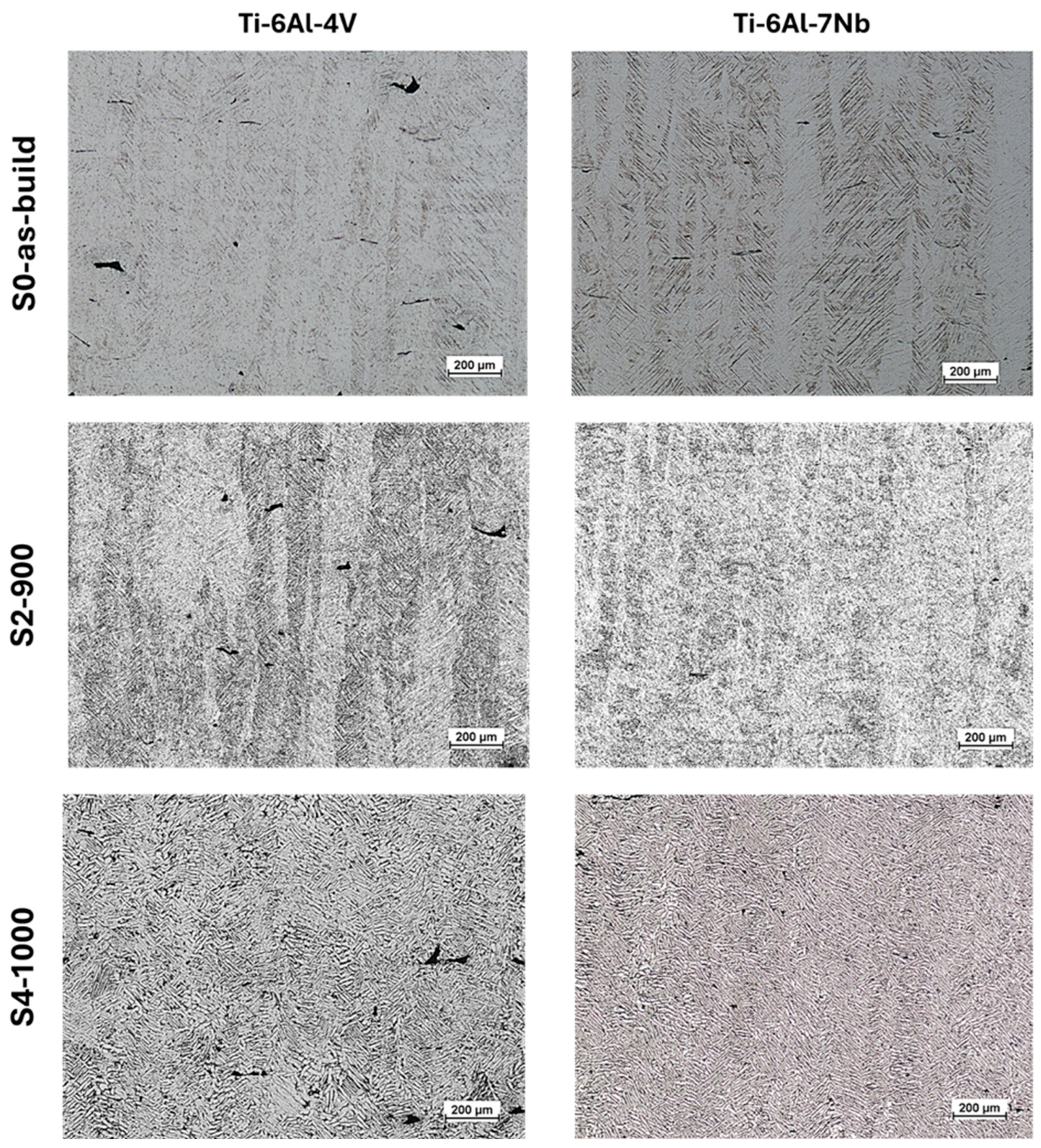
Figure 2, the as-built microstructure (S0_as-built) of the investigated titanium alloys is characteristic of dual-phase alloys produced via L-PBF [
10,
11]. Rapid solidification during L-PBF induces the formation of a metastable α′ phase within the columnar β grains, corroborating previous research [
16,
39].
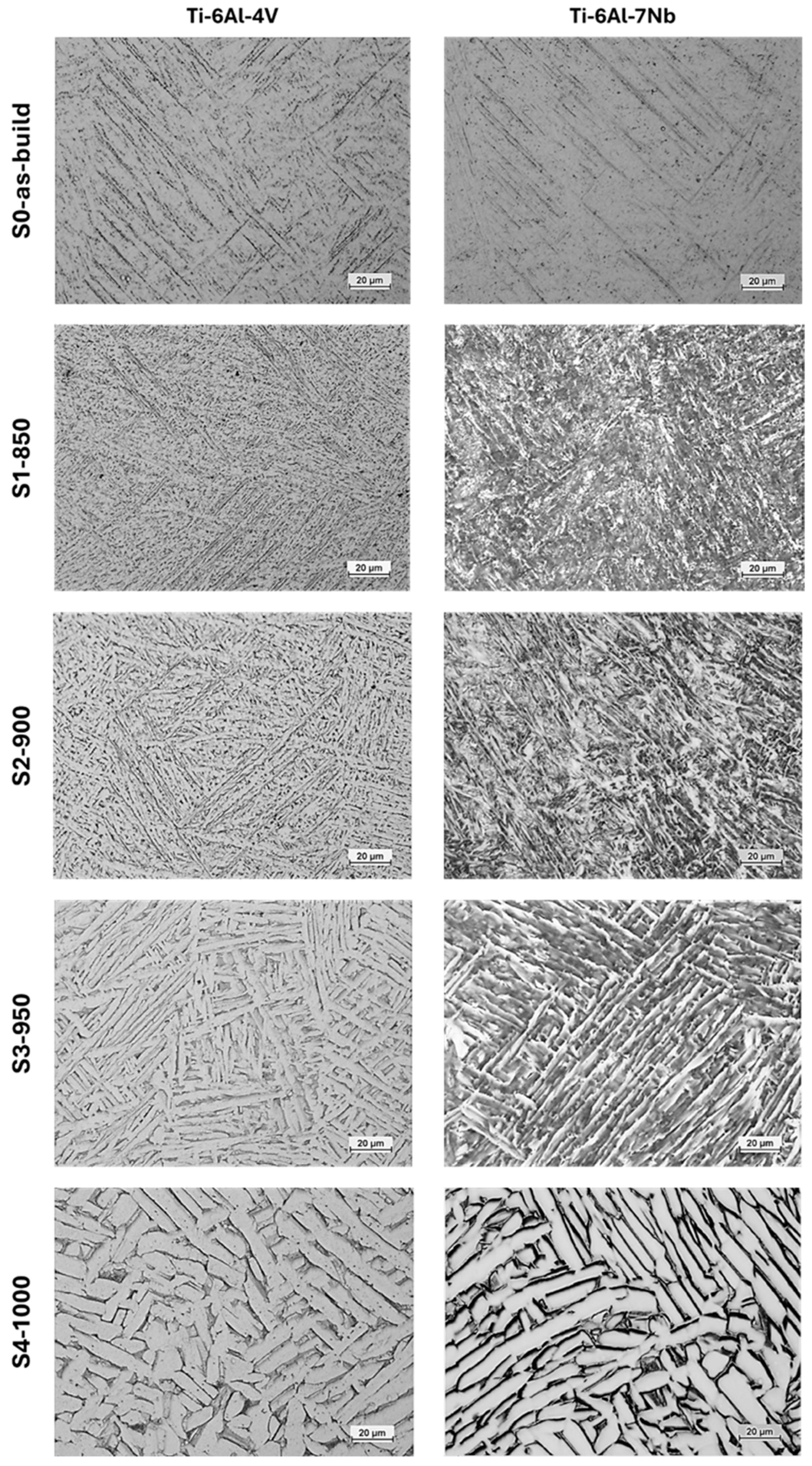
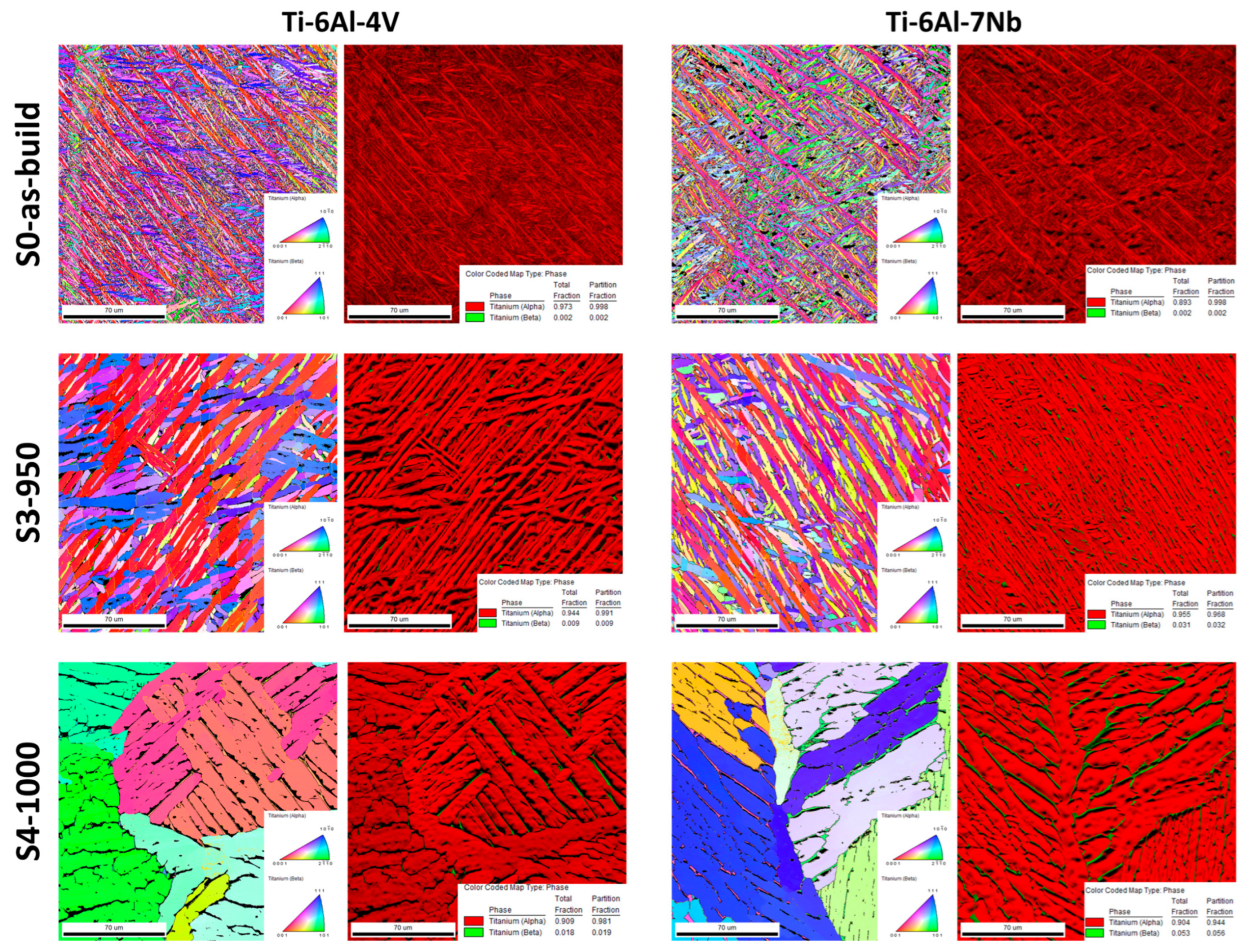
Images of the etched metallographic specimens (
Figure 3), accompanied by orientation maps and phase maps (
Figure 4), enabled a comprehensive assessment of the microstructural evolution of the investigated alloys depending on the heat treatment conditions. As the annealing temperature increases, the primary α′ martensite phase transforms into an α + β phase mixture. Image analysis indicates that both alloys begin to exhibit a Widmanstätten (or basket-weave) microstructure. The acicular α′ phase transforms into the stable α phase, and further increases in annealing temperature result in a pronounced thickening of the α-phase plates. When heat treatment is conducted below the β-trans temperature, the columnar grain structure is preserved (
Figure 2, S2-900).
Subjecting both alloys to heat treatment above the β-trans temperature increases the volumetric fraction of the β phase until partially equiaxed grains of this phase are formed, as confirmed by the data presented in
Table 8. During slow furnace cooling, these grains transform into a lamellar α + β structure, resulting in a dual-phase microstructure. Ultimately, heat treatment above the β-trans temperature completely transformed the columnar structure into an equiaxed one (
Figure 2, S4-1000).
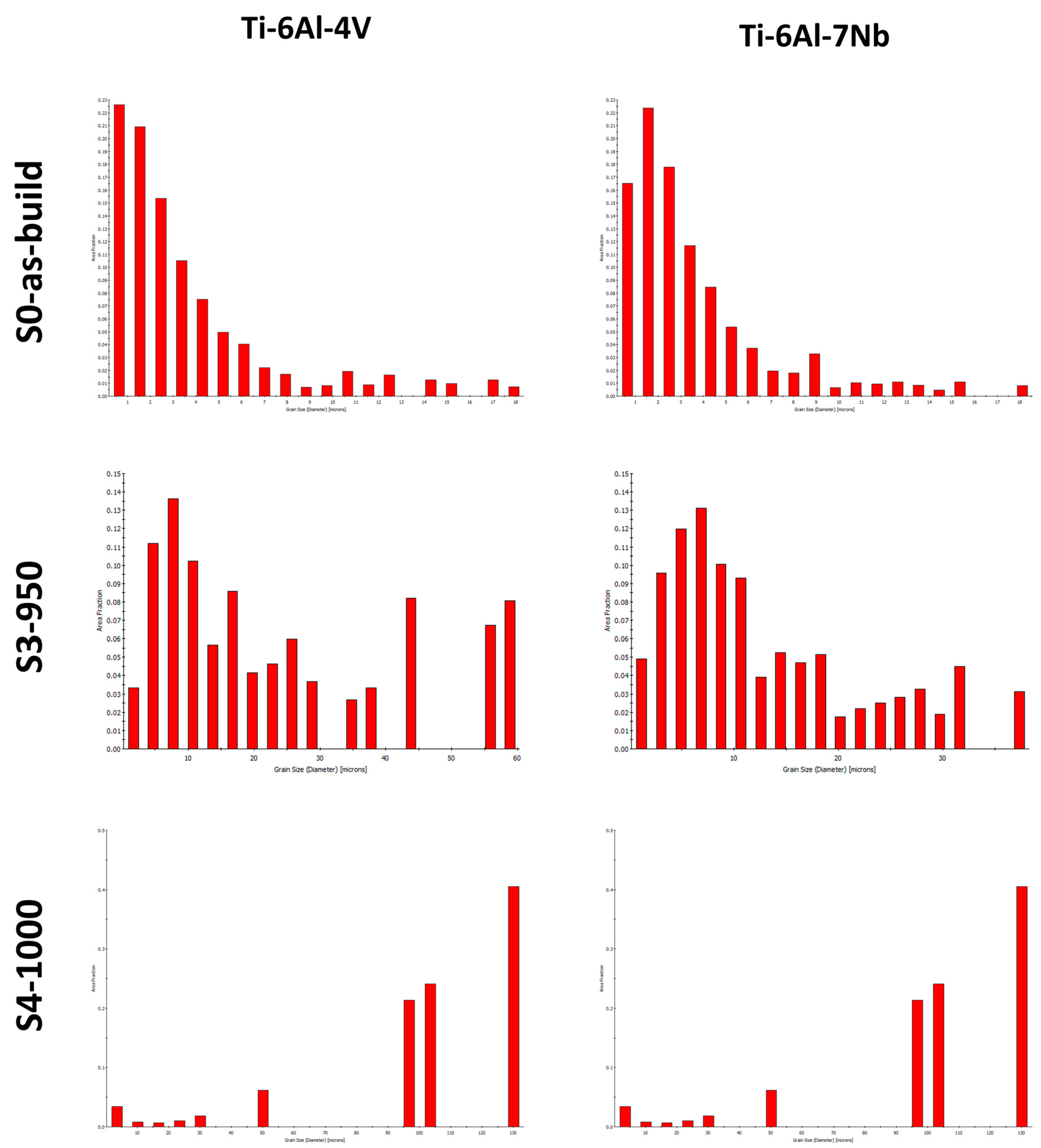
Figure 5 presents grain size distribution histograms for the investigated samples. Analysis of the histograms revealed that the as-built Ti-6Al-4V and Ti-6Al-7Nb alloys are characterized by a fine-grained microstructure, with grain sizes in range from several nanometers to 18 µm and 19 µm, respectively. Modification of the heat treatment parameters leads to a pronounced increase in grain size: for the S4-950 strategy, the maximum grain size reached 60 µm for Ti-6Al-4V and 48 µm for Ti-6Al-7Nb, whereas under the S5-1000 condition a further increase up to 130 µm was observed for both alloys. The grain growth observed in Ti-6Al-4V and Ti-6Al-7Nb alloys during heat treatment results from several correlated mechanisms. Elevated temperature and soaking time enhance atomic mobility, thereby intensifying diffusion and grain boundary migration and promoting coalescence and recrystallization processes. The α↔β phase transformations increase the fraction of the more mobile β phase, which facilitates the formation of larger grains. In addition, alloying elements such as V and Nb further modify the grain growth kinetics [
40,
41].
The higher fraction of the β phase observed in the Ti-6Al-7Nb alloy compared to Ti-6Al-4V can be attributed to the stronger β-stabilizing effect of niobium. Nb is an isomorphous β stabilizer that more effectively lowers the β → α transformation temperature in titanium than vanadium [
42,
43]. As a result, a greater amount of the β phase can be retained at room temperature, even after heat treatment involving aging.
In addition, the diffusion of Nb in the titanium matrix is slower than that of V, which promotes kinetic suppression of the β → α transformation during cooling after aging. This leads to the stabilization of metastable β phase and limits its decomposition into α and α′ phases [
44,
45].
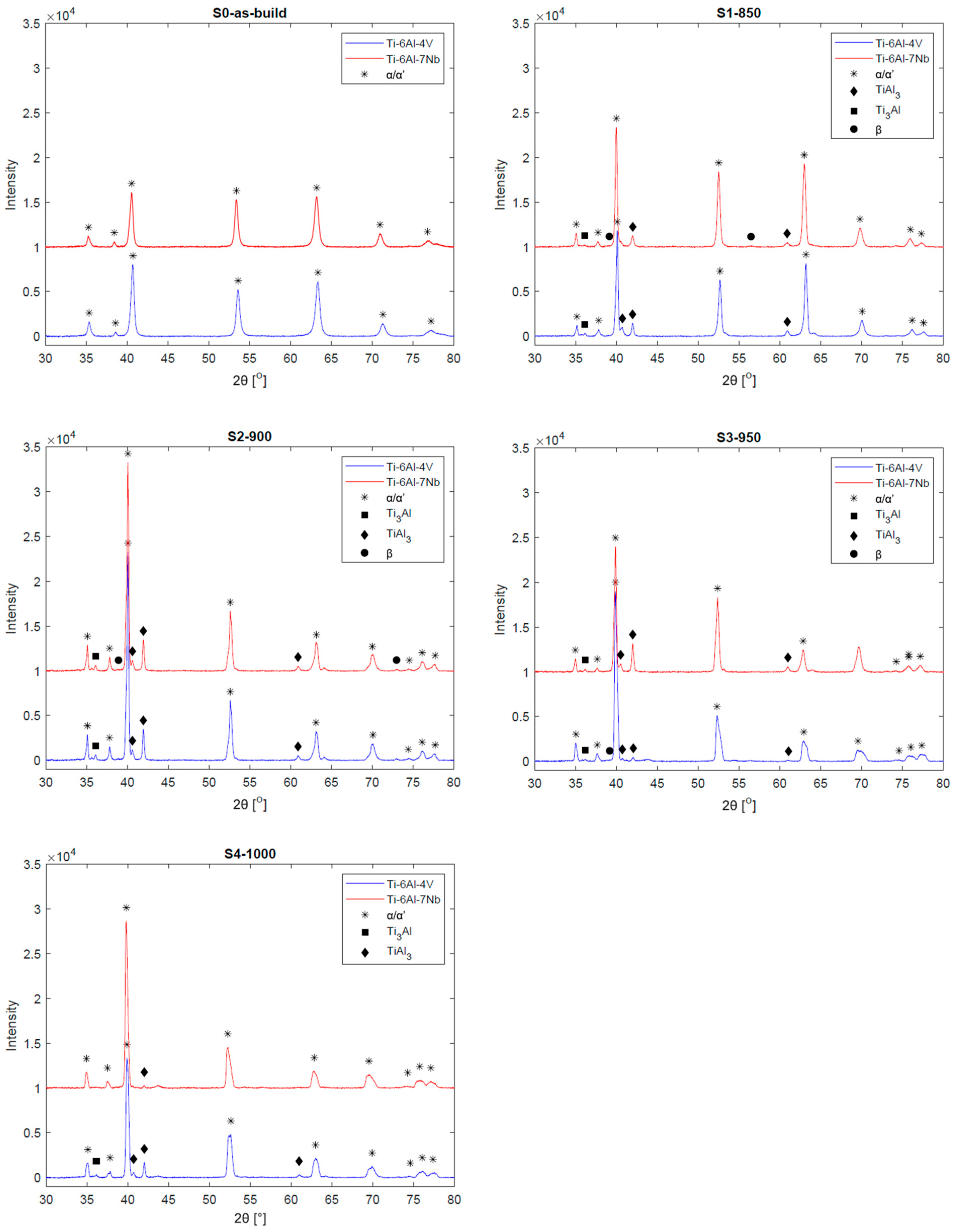
To further assess the phase composition of the investigated samples, X-ray diffraction (XRD) analysis was performed. The obtained diffractograms are presented in
Figure 6. In the XRD patterns of the as-built samples (i.e., prior to heat treatment), peaks characteristic of a hexagonal close-packed (HCP) phase are observed. The specifics of the L-PBF process, particularly the high solidification rates of the molten pool, allow these peaks to be attributed to the presence of the metastable α′ phase [
17,
28,
46].
The intensity of the characteristic α′/α peaks in the heat-treated samples was higher compared to the as-built sample, indicating the dissolution of the α′ phase and the growth of α-phase grains. In the XRD patterns of samples subjected to heat treatment below the β-trans temperature, peaks likely originating from intermetallic Ti
3Al and TiAl
3 phases were observed. As previously noted, increasing the heat treatment temperature promotes the formation and growth of the β phase. However, the intensity of the characteristic peaks of this phase in the analyzed patterns was low. This is likely due to the high content of the α-phase stabilizer, namely aluminum, in the investigated alloys [
47,
48].
3.5. Mechanical Properties
The microstructure of a material, including titanium alloys, is a key factor strongly influencing its mechanical properties.
Table 9 summarizes the parameters describing the mechanical properties of the investigated alloys, including Young’s modulus (E), ultimate tensile strength (Rm), and elongation (A).
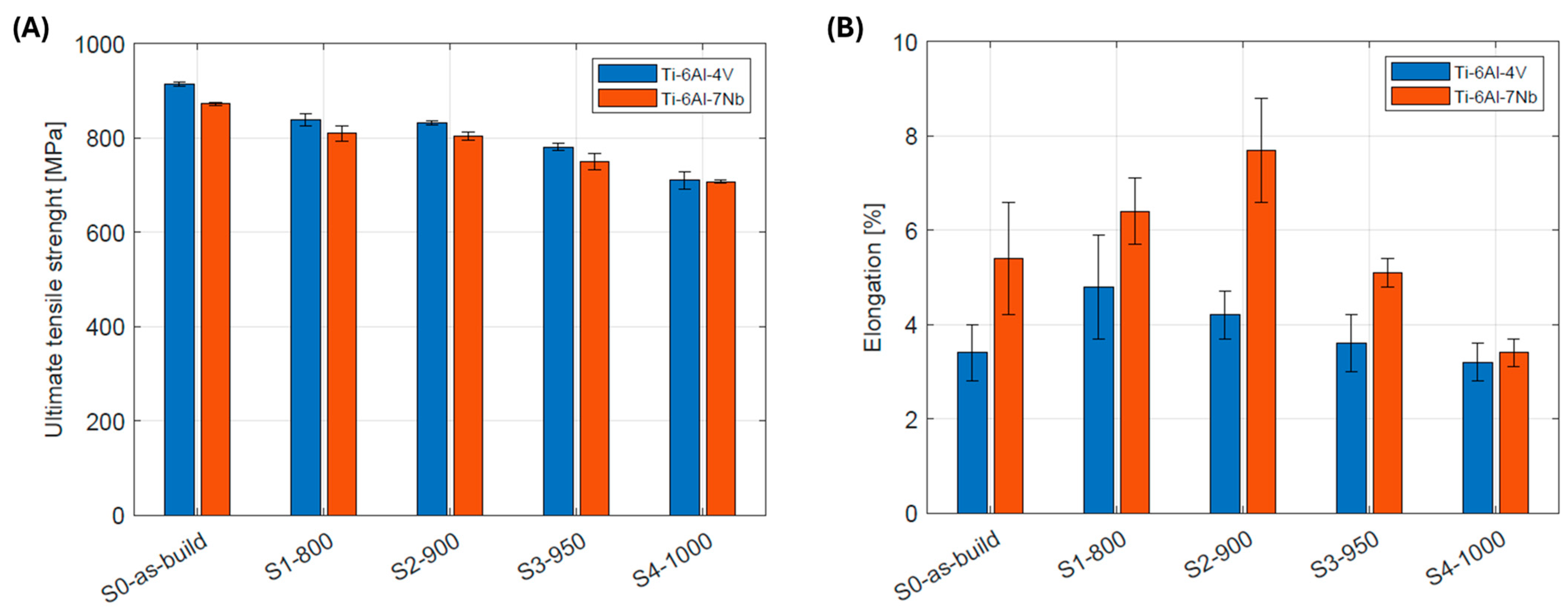
The observed changes in the mechanical properties of tested alloys are closely correlated with their microstructural evolution under successive heat treatment strategies. In the as-built state, both materials exhibit a very fine, acicular α′ martensitic microstructure, resulting in the highest tensile strength alongside the lowest elongation (
Figure 7). Annealing at 850 –900 °C leads to a gradual decomposition of the martensite and the formation of a fine, equilibrium α + β phase mixture. As a result, a decrease in tensile strength is observed (by 9% for both alloys), accompanied by a significant increase in ductility (41.2% for Ti-6Al-4V and 42.6% for Ti-6Al-7Nb). Further increasing the heat treatment temperature to 950 °C and 1000 °C causes intensive coarsening of the α lamellae and growth of the β grains, leading to reductions in both tensile strength and elongation. The obtained results clearly indicate that the optimum mechanical properties for both alloys are achieved within the 850–900 °C temperature range.
The Ti-6Al-7Nb alloy exhibits higher elongation than Ti-6Al-4V, due to stronger β-phase stabilization by Nb and its higher volumetric fraction. At the same time, this alloy shows slightly lower tensile strength compared to Ti-6Al-4V, due to the reduced α-phase fraction and diminished dispersion strengthening. The maximum elongation of ~7.7% is below the ISO 5832-3 requirement of ≥10% for medical implants applications. This behavior may also be influenced by the specific parameters of L-PBF process, which affect the microstructure and phase distribution.
This indicates that, despite its favorable combination of strength and microstructural stability, the alloy’s ductility may be insufficient for certain load-bearing biomedical applications without further optimization. Heat treatment strategies need to be adapted to account for the unique microstructural characteristics introduced by L-PBF in order to optimize ductility for load-bearing applications. Potential strategies to enhance ductility, such as modifying heat treatment parameters or applying post-processing treatments, could be considered to improve its practical suitability.
4. Conclusions
The aim of this study was to evaluate the evolution of the microstructure and mechanical properties of Ti-6Al-4V and Ti-6Al-7Nb titanium alloys under varying heat treatment conditions. The alloys were additively manufactured using L-PBF and subjected to heat treatment consisting of annealing at 850 °C, 900 °C, 950 °C, or 1000 °C for 1 h, followed by aging at 500 °C for 4 h. The process was conducted in a high-purity argon atmosphere with slow furnace cooling.
Based on the experiments and analyses conducted, the following conclusions were drawn:
The applied heat treatment had no significant effect on the relative density of the fabricated Ti-6Al-4V and Ti-6Al-7Nb alloys. Heat treatment at temperatures below the melting point did not induce additional discontinuities, such as porosity or microcracks, that could affect the density of the components. The samples retained a similar degree of densification. Therefore, any observed changes in mechanical properties should be primarily attributed to transformations occurring in the metallographic structure of the alloys.
The effect of heat treatment on the topography of the upper surface is limited and non-uniform. The observed changes were primarily associated with the partial smoothing of L-PBF-specific surface irregularities due to local plasticization and micro-diffusion of the material, resulting in a reduction in the Sz parameter.
The investigated alloys subjected to heat treatment under identical processing conditions exhibited similar metallographic structures. Analysis of etched metallographic images, combined with EBSD and XRD data, clearly indicates that increasing the annealing temperature led to a complete reconstruction of the titanium alloys’ microstructure: from the columnar structure typical of L-PBF to a stable, equilibrium Widmanstätten microstructure characterized by increased homogeneity.
The alloys investigated exhibited the same trend in mechanical property changes with varying annealing temperatures, which is closely correlated with the corresponding changes in their metallographic structure.
With increasing annealing temperature, a significant decrease in tensile strength was observed for both alloys, which can be attributed to the gradual decomposition of the α/α′ martensite and the formation of a fine, equilibrium α + β phase mixture. The highest elongation values were achieved within the 850–900 °C temperature range. With further increases in heat treatment temperature, the dominant factor limiting the mechanical properties becomes the coarsening of α lamellae and the growth of lamellar colonies.
The Ti-6Al-7Nb alloy exhibited higher elongation values compared to Ti-6Al-4V. This difference is attributed to the higher fraction of the β phase in its microstructure, which promotes increased material ductility. This indicates that, despite similarities in the overall metallographic structure of both alloys, their mechanical response is differently influenced by the proportion of the individual phases.
The obtained results represent a significant contribution to the advancement of additive manufacturing technology for titanium alloys, highlighting the critical role of the controlled α′ → α + β transformation and the volumetric fraction of individual phases in determining the functional properties of titanium alloys.
These findings can have a direct impact on the optimization of manufacturing processes for medical implants and structural components used in aerospace applications. In the case of load-bearing implants, the ability to control the β-phase fraction and the intensity of α-lamella coarsening enables the design of structures with enhanced ductility and resistance to brittle fracture. Therefore, heat treatments that maximize β-phase stabilization and ductility may be preferred for medical implants, where elongation and toughness are critical. In the other hand, heat treatments enhancing tensile strength and hardness are better suited for aerospace components, where load-bearing capacity is paramount. Moreover, the experimental data on microstructural evolution provide a solid basis for the development and validation of advanced predictive models, reducing the number of experiments required in the design of new components and streamlining the certification process for additively manufactured parts.
In summary, the obtained results provide a foundation for both the further development of technology and the practical implementation of solutions based on the additive manufacturing of titanium alloys in industries with the highest material performance requirements. Future research should focus on the optimization and tailoring of heat treatment cycles to the specific microstructural characteristics and performance requirements of additively manufactured titanium alloys, enabling further improvement in their functional properties and reliability.