
Article

The Preparation of ZnFe2O4 from Coal Gangue for Use as a Photocatalytic Reagent in the Purification of Dye Wastewater via the PMS Reaction

1
School of Civil Engineering and Urban Planning, Liupanshui Normal University, Liupanshui 553004, China
2
School of Chemistry and Materials Engineering, Liupanshui Normal University, Liupanshui 553004, China
*
Authors to whom correspondence should be addressed.
Materials 2026, 19(1), 169; https://doi.org/10.3390/ma19010169
Submission received: 11 December 2025 / Revised: 26 December 2025 / Accepted: 31 December 2025 / Published: 2 January 2026
(This article belongs to the Special Issue Advanced Nanomaterials for Photocatalytic Application)

Abstract

The widespread application of Rhodamine B (RhB) poses a serious threat to the aquatic environment. ZnFe2O4, as a catalyst material, can effectively activate persulfate (PMS) and respond to visible light, thus effectively degrading RhB with the joint assistance of sunlight and PMS. This study recovered Fe2O3 from high-iron coal gangue through an activating–acid leaching–extracting–back-extracting process and synthesized ZnFe2O4 catalysts (CG-ZFO) using coal gangue back-extraction liquid as the Fe source by a hydrothermal method and cetyltrimethylammonium bromide (CTAB)-assisted hydrothermal method. The characterization results of X-ray diffraction (XRD), scanning electron microscopy (SEM), and diffuse reflectance spectroscopy (DRS) showed that the CG-ZFO has a pure crystal phase, and the addition of CTAB can effectively improve the photoelectric performance of the catalyst. The synthesized CG-ZFO can produce a significant synergistic effect with simulated sunlight (SS) and PMS, and the constructed SS/CG-ZFO/PMS system had a good degradation effect on RhB. Based on the conclusions of free radical-quenching experiments, electron paramagnetic resonance (EPR) spectroscopy, and X-ray photoelectron spectroscopy (XPS), the main active species in the SS/CG-ZFO/PMS system was identified as 1O2, and the degradation mechanism of RhB was elucidated. CG-ZFO prepared from coal gangue holds promising potential for application in the remediation of organic dye wastewater, and this study also provides a new approach for the resource regeneration of high-iron coal gangue.

1. Introduction

Rhodamine B (RhB) is an artificially synthesized organic dye, which is widely used in industries such as textiles, fireworks, and biology [1]. Rhodamine B is a persistent environmental pollutant, with its residues detectable in both surface water and the effluent from sewage treatment plants. The discharge of wastewater into natural drainage channels can cause severe damage to ecosystems, trigger water-related diseases, and even lead to human fatalities. In recent years, considerable attention has been focused on dye pollutants that are difficult to degrade and exert negative environmental impacts [2]. It is therefore crucial to develop effective methods for removing Rhodamine B from wastewater prior to its discharge, in order to mitigate its environmental impacts [3]. Traditional degradation methods for RhB have issues like long time consumption, high cost, and potential for secondary pollution [4]. Advanced Oxidation Processes (AOPs) are a category of chemical treatment techniques that degrade organic pollutants in water through strong oxidative radicals [5]. Persulfate (PMS) is one of the most commonly used oxidants in AOPs. It can be activated to produce strong oxidative radicals like SO4˙ and ·OH to degrade various organic pollutants [6]. Light energy, as an environmentally friendly PMS activation technique, has received widespread attention in recent years [7]. However, the most commonly used ultraviolet-light activation technology faces challenges such as high energy consumption, poor penetration, and low utilization rate [8]. Although sunlight has broader applicability and lower cost, its activation efficiency is relatively low. The introduction of a sunlight-responsive photocatalyst within the sunlight/PMS system can significantly amplify the activation efficiency of PMS, produce a large number of strong oxidative radicals in a short time, and achieve efficient, rapid, and thorough degradation of RhB without introducing other pollutants except sulfate ions [9,10,11,12,13].
ZnFe2O4 is a ferrite material with a spinel structure, excellent electromagnetic properties, good chemical stability, high catalytic activity, and low eddy current loss, which is widely used in water treatment, organic synthesis, battery manufacturing, aerospace, and electronic communication [14,15]. In addition to the above characteristics, ZnFe2O4, as an n-type semiconductor material responsive to visible light, has attracted significant attention in the field of photocatalysis. It possesses a relatively narrow band gap (1.9~2.1 eV) and can be rapidly excited by UV-Vis light (<700 nm) to generate electrons and holes [16]. The relatively high magnetism and stable catalytic performance further expand the application scope of ZnFe2O4. Despite the advantages of ZnFe2O4 as a photocatalyst, such as good chemical stability, a narrow band gap, and high magnetism, the rapid electron-hole recombination rate of ZnFe2O4 results in a photocatalytic efficiency significantly lower than traditional photocatalysts (ZnO, TiO2, etc.) [17]. To improve the photocatalytic efficiency of ZnFe2O4, surfactants can be added during synthesis to improve the morphological structure and particle size distribution, thereby exposing more photocatalytically active crystal planes [18]. Moreover, studies have found that the presence of oxidants like PMS can capture the photo-generated electrons from ZnFe2O4, effectively reducing the electron-hole recombination rate of zinc ferrate and enhancing the photocatalytic efficiency of the system [19]. Currently, ZnFe2O4 is mainly synthesized through sol–gel, solution combustion, and hydrothermal methods using chemicals containing Fe and Zn [20,21,22].
High-iron coal gangue typically refers to coal gangue with an Fe2O3 content exceeding 8 wt%. The presence of excess Fe2O3 impurities can greatly affect the resource regeneration of the rich SiO2 and Al2O3 components in the coal gangue [23,24,25]. Acid leaching is commonly employed to pre-treat such coal gangue, achieving the removal and separation of Fe2O3 and improving the grade [26]. However, adopting this method also generates a large amount of leaching waste solution. Due to the complex metal element composition in the leaching solution, it is difficult to directly use it as a raw material for producing various products. Usually, the pH value is adjusted to precipitate and separate elements such as Fe, Al, and Mg, achieving their separation and recovery [27,28]. This method has drawbacks when dealing with complex element systems like coal gangue leaching solution, including stringent operating conditions, poor selectivity, low separation degree, and impure products.
In this study, high-iron coal gangue was employed as the raw material, and an efficient separation of the Fe2O3 component was achieved via a sequential process consisting of mechanical ball milling, high-temperature calcination, acid leaching, extraction, and back-extraction. Subsequently, the coal gangue back-extracted solution was combined with an additional Zn source to synthesize a pure-phase ZnFe2O4 catalyst via the hydrothermal method. The structure and photoelectric properties of the synthesized CG-ZFO were characterized using X-ray diffraction (XRD), scanning electron microscopy (SEM), Fourier transform–infrared spectroscopy (FT-IR), diffuse reflectance spectroscopy (DRS), and i-t transient photocurrent tests. RhB was used as the degradation target, and the SS/CG-ZFO/PMS catalytic system was constructed to perform photocatalytic degradation experiments. The synergistic action between SS, PMS, and CG-ZFO was thoroughly studied, as were the effects of the addition of the surfactant CTAB, PMS dosage, and initial pH value on the degradation efficiency of CG-ZFO. Finally, the degradation mechanism of the SS/CG-ZFO/PMS system was studied through radical-quenching experiments, XPS, and EPR.

2. Experimental Section

2.1. Experimental Materials

2.1.1. Chemicals

Rhodamine B (C28H31ClN2O3, RhB) and methanol (CH3OH, MeOH) were purchased from Tianjin Kemiou Chemical Co., Ltd. (CHN) (Tianjin, China). Zinc chloride (ZnCl2) was purchased from Meryer (Shanghai) Chemical Technology Co., Ltd. (CHN) (Shanghai, China). Hydrochloric acid (HCl) and sulfuric acid (H2SO4) were purchased from Chongqing Chuandong Chemical (Group) Co., Ltd. (CHN) (Chongqing, China). Tributyl phosphate (C12H27O4P, TBP) was purchased from Aladdin reagent (Shanghai) Co., Ltd. (CHN) (Shanghai, China). Sulfonated kerosene and peroxymonosulfate (KHSO4·0.5KHSO4·0.5K2SO4, PMS) were purchased from Shanghai Yien Chemical Technology Co., Ltd. (CHN) (Shanghai, China). L-histidine (C6H9N3O2, L-His) and p-benzoquinone (C6H4O2, BQ) were purchased from Shanghai Macklin Biochemical Co., Ltd. (CHN) (Shanghai, China). Sodium thiosulphate (Na2S2O3) and sodium hydroxide (NaOH) were purchased from Tianjin Zhiyuan Chemical Reagent Co., Ltd. (CHN) (Tianjin, China). Tertiary butyl alcohol (C4H10O, TBA) was purchased from Tianjin Fuchen Chemical Reagent Co., Ltd. (CHN) (Tianjin, China). All chemicals in this work were analytical reagents (ARs) and used directly without further purification.

2.1.2. Coal Gangue Raw Materials

The coal gangue used in the experiment comes from the Dahebian Coal Mine in Liupanshui, which has the characteristics of a high silicon–aluminum ratio and high iron content. The chemical composition of the coal gangue was shown in Table 1, with an Fe2O3 content of 20.6% and a certain amount of other impurity components.

2.2. Acid Leaching and Extraction of Coal Gangue

The coal gangue was ball milled to pass through a 200-mesh sieve and calcined at 500 °C for 1 h. Afterward, the activated coal gangue was leached under an HCl concentration of 20%, leaching temperature of 90 °C, leaching time of 3 h, and liquid–solid mass ratio of 4: 1 to obtain a coal gangue leaching solution. The leaching solution was collected multiple times and heated to concentrate. The additional HCl was added until the acid concentration of the concentrated solution reached 15%. TBP extractant (with the sulfonated kerosene as the diluent) was used to extract Fe3+ in the solution under conditions of 40% TBP concentration, O/A = 2:1 (oil phase/aqueous phase), 20 °C extraction temperature, and 10 min extraction time. Deionized water was used to back-extract Fe3+ in the organic phase under conditions of O/A = 1:1, 20 °C extraction temperature, and 10 min extraction time. The above extracting–back-extracting process was repeated twice (during which the TBP extractant could be reused), finally obtaining the coal gangue back-extraction solution.

2.3. Preparation of Catalysts

A certain amount of ZnCl2 was added to the coal gangue back-extraction solution to make nZn2+:nFe3+ = 1:2 (molar ratio), and deionized water was added to form a 50 mL homogeneous solution. The solution was heated to 60 °C, and NaOH solution (2 mol·L−1) was added dropwise to adjust the pH value to 12 while stirring. The mixed suspension was heated to 80 °C and kept for 1 h, then transferred to a 100 mL Teflon-lined autoclave and kept at 180 °C for 12 h. Finally, the product was filtered and washed with deionized water and ethanol and dried at 80 °C for 12 h to form the CG-ZFO1 catalyst. An additional CTAB was added to the homogeneous solution to make nZn2+:nFe3+:nCTAB = 1:2:4, and the CG-ZFO2 catalyst was synthesized using the same steps above.

2.4. Experimental Procedures

The 30 mg of CG-ZFO catalyst was added to 100 mL of RhB solution (20 mg·L−1) and then placed in a self-built photochemical reaction apparatus for dark adsorption at 20 °C. After the adsorption equilibrium was reached, a certain amount of PMS was added, and the xenon lamp was turned on to initiate the reaction. A 0.1 mol·L−1 solution of H2SO4 and NaOH was used to adjust the initial pH value of the RhB solution. During the reaction process, a 3 mL sample was taken every 20 min. After separating the catalyst using 0.22 μm filter membranes, 3 mL of Na2S2O3 solution was added to terminate the reaction. The concentration of RhB was measured at a wavelength of 554 nm using a UV-Vis spectrophotometer (TU-1901, CHN, Beijing, China). The degradation rate of RhB was calculated by Equation (1):
R = C - C 0 C 0 × 100 %
where R (%) represents the degradation rate; C0 (mg·L−1) represents the initial concentration of RhB; and C (mg·L−1) represents the concentration of RhB at a specific moment.

2.5. Characterization and Analysis Methods

The phase of the catalysts was characterized using a Rigaku Ultima IV X-ray powder diffractometer (XRD, Tokyo, Japan) with Cu Kα radiation (50 kV, 30 mA), and the scanning angle ranged from 10° to 80°. The structure of the catalysts was analyzed using a Fourier transform–infrared spectrometer (FT-IR, Nicolet iS50, Madison, WI, USA). The surface morphology of the catalysts was characterized by a scanning electron microscope (SEM, ZEISS Sigma 300, GER, Oberkochen, Germany) equipped with energy-dispersive X-ray spectroscopy (EDS, Smartedx, GER, Oberkochen, Germany). Using a UV-Vis spectrophotometer equipped with an integrating sphere (UV-Vis DRS, Shimadzu UV-3600, JPN, Kyoto, Japan), the UV–visible diffuse reflectance spectroscopy (DRS) of the catalysts was detected using BaSO4 substrate as the background. Na2SO4 (0.5 mol·L−1) was used as the electrolyte solution; the photoelectric properties of the catalysts were measured by a three-electrode cell with a 300 W xenon lamp (with filter-to-filter UV light) as a light source. X-ray photoelectron spectroscopy (XPS, Thermo Scientific K-Alpha, Waltham, MA, USA) was used to analyze the elemental composition and valence state of the catalyst. The elemental composition of coal gangue and coal gangue leaching residue was determined by X-ray Fluorescence (XRF, Rigaku Supermini 200, JPN, Tokyo, Japan). The concentration of ions in the solution was determined by inductively coupled plasma–optical emission spectroscopy (ICP, Agilent 5110, Santa Clara, CA, USA). Electron paramagnetic resonance spectroscopy (EPR, Bruker EMXplus-6/1, GER, Berlin, Germany) was used to detect and confirm active species during the reaction process.

3. Results and Discussion

3.1. Resource Utilization Process of Coal Gangue

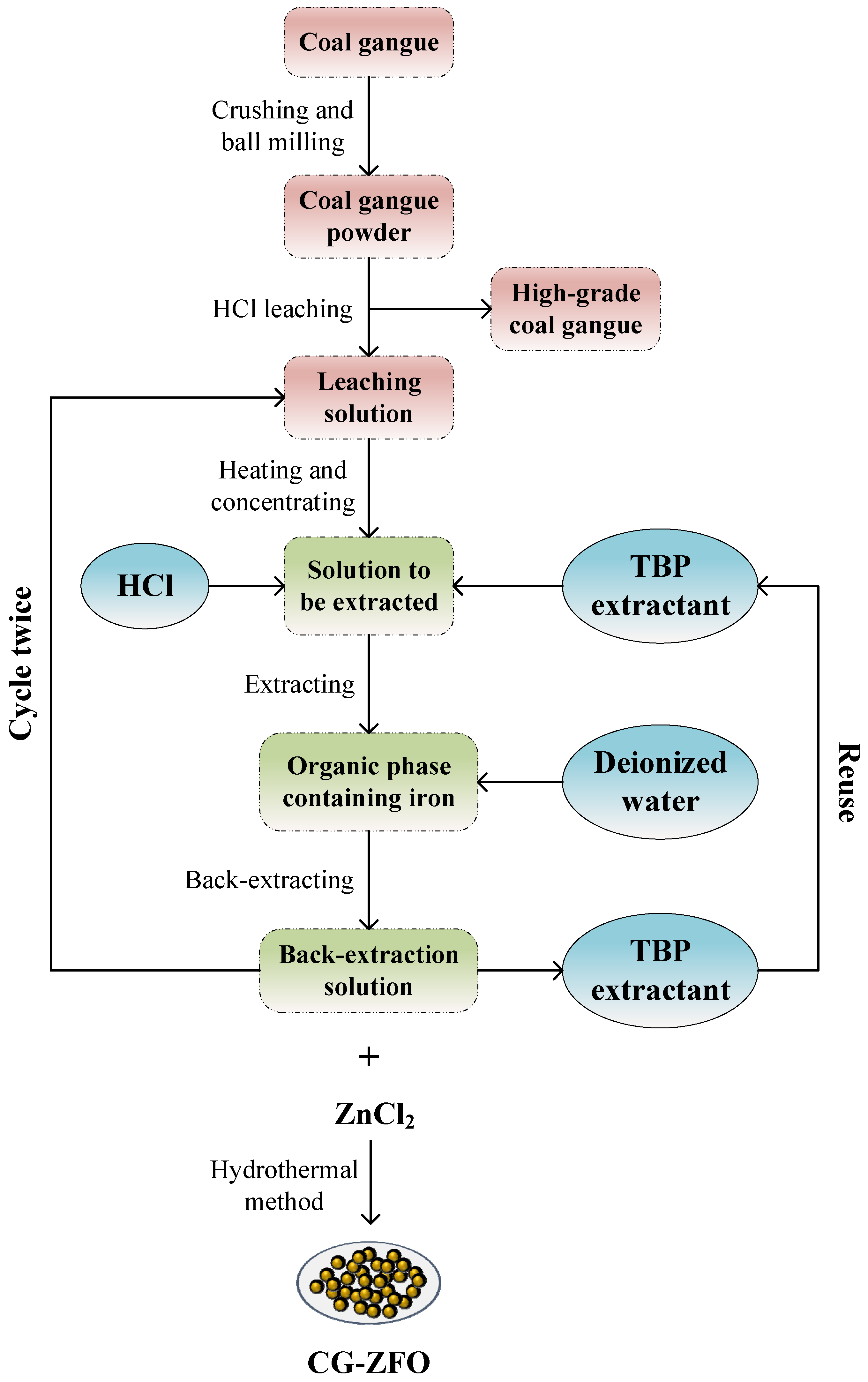
The flowchart for the preparation of CG-ZFO from high-iron coal gangue is shown in Figure 1, with the main steps including mechanical ball milling, high-temperature calcination, HCl leaching, TBP extraction, and deionized water back-extraction.
To remove the Fe2O3 component from the coal gangue, mechanical ball milling and high-temperature calcination were used for effective activation, followed by leaching under the action of HCl [29]. The chemical composition of the coal gangue leaching residue is shown in Table 2. After acid leaching, most of the impurity components, such as Fe2O3, in the coal gangue were removed, thereby facilitating the enrichment and recovery of the SiO2 and Al2O3 components in the coal gangue. Additionally, tributyl phosphate (TBP) was used to extract Fe3+ from the coal gangue leaching solution, and deionized water was used for back-extraction, which increased the Fe content in the leaching solution from 46.29% to 99.64%, achieving the separation and purification of Fe elements in the coal gangue (Table 3) [30]. Through the above process, the Fe2O3 component in the coal gangue was fully recovered and regenerated, and the grade of high-iron coal gangue was simultaneously improved.

3.2. Catalyst Characterization

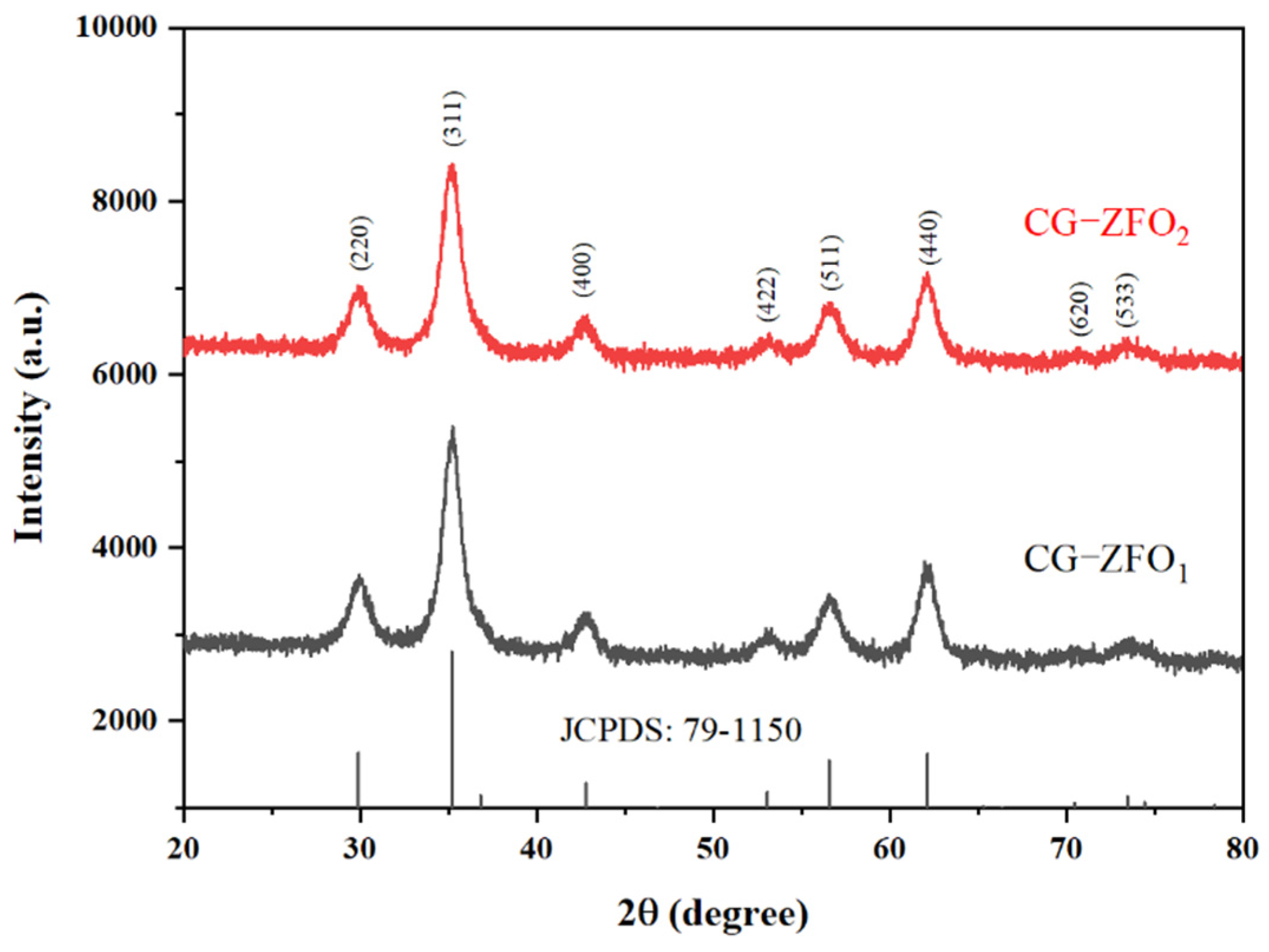
Figure 2 shows the XRD pattern of CG-ZFO synthesized using coal gangue back-leaching solution as the Fe source. The complete characteristic peaks corresponding to the (220), (311), (400), (422), (511), (440), and (553) planes (JCPDS: 79-1150) can be observed in both the conventionally synthesized CG-ZFO1 and the CTAB-assisted-synthesized CG-ZFO2, indicative of the successful synthesis of pure-phase ZnFe2O4 [31]. Compared with CG-ZFO2, the characteristic peaks of CG-ZFO1 are sharper, which is due to the absence of surfactant coating on the particle surface to restrict grain growth [32]. According to the Scherrer equation and the main diffraction peak (2θ = 35.211°) value, the average crystallite sizes of CG-ZFO1 and CG-ZFO2 are calculated to be 8.7 nm and 7.6 nm, respectively. In summary, pure-phase ZnFe2O4 crystals with spinel structure were successfully synthesized using a coal gangue back-leaching solution, and the addition of CTAB can effectively reduce the crystallite size of the product.
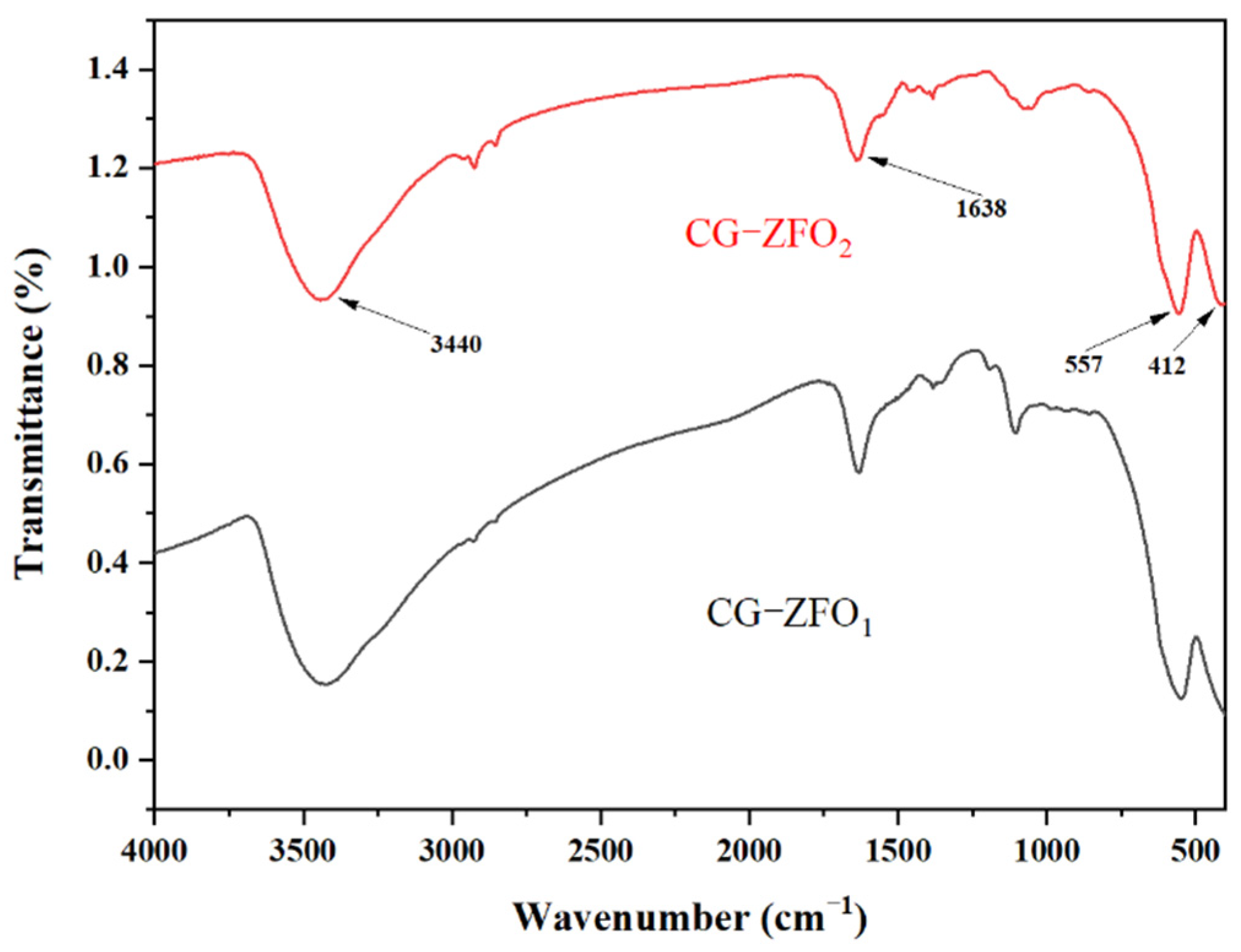
Figure 3 shows the FT-IR spectra of CG-ZFO1 and CG-ZFO2. Through comparison, it was found that the two catalysts have similar peak shapes, representing that their internal structures are basically the same. The broad bands at 3440 cm−1 and 1638 cm−1 correspond to the stretching and bending vibrations of hydroxyl groups adsorbed on the material surface, which may be due to the hydrothermal reaction. The spectral band appearing at 557 cm−1 can be identified as the stretching vibration of the Zn-O bond in the tetrahedral Zn2+, and the spectral band appearing at 412 cm−1 can be identified as the stretching vibration of the Fe-O bond in the octahedral Fe3+ [33]. This result indicates the successful formation of the ZnFe2O4 crystal structure in the CG-ZFO1 and CG-ZFO2, which is consistent with the characterization results of XRD.
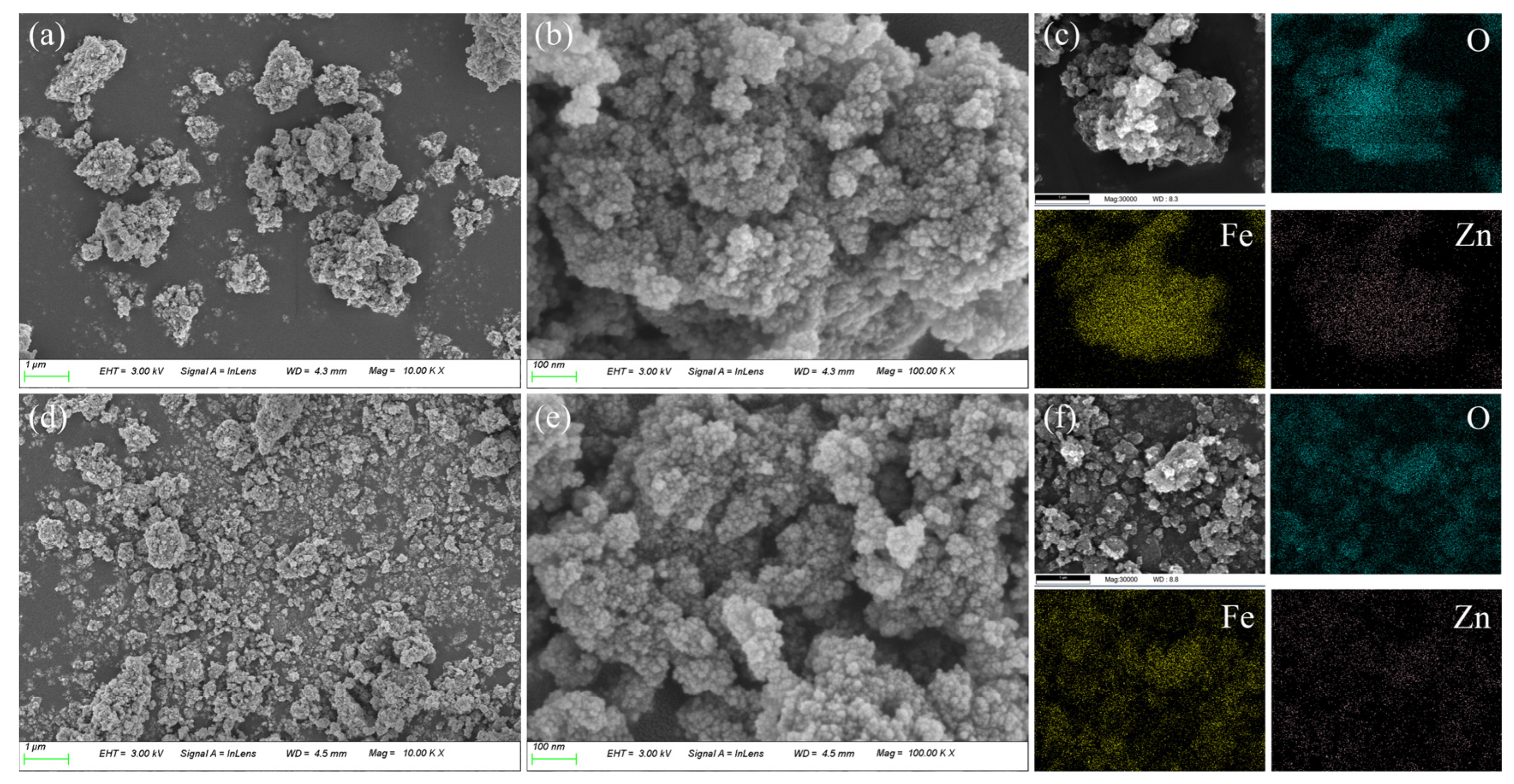
The SEM and EDS mapping images of CG-ZFO are shown in Figure 4, Figure 4a,b show the microscopic surface morphology of CG-ZFO1, and Figure 4d,e show that of CG-ZFO2. Both catalysts displayed large-particle morphology resulting from the agglomeration of numerous small grains. CG-ZFO1 exhibited heterogeneous particle sizes, irregular shapes, and a highly rough surface. In contrast, CG-ZFO2 particles were smaller and more uniformly distributed, and exhibited a more regular overall shape. This is because the cationic surfactant CTAB quickly adsorbs on the surface of CG-ZFO2 seeds to form an electric double layer at the initial stage of the hydrothermal process, reducing the surface energy of the grains and effectively inhibiting their growth and agglomeration. In addition, the micelles, vesicles, and other aggregates formed by CTAB in the solution also play the role of a soft template during the particle-coating process, controlling the growth and accumulation direction of the grains [34]. Figure 4c,f are the EDS mapping images of CG-ZFO1 and CG-ZFO2, and the results show that Zn, Fe, and O elements can be evenly distributed in both catalysts.
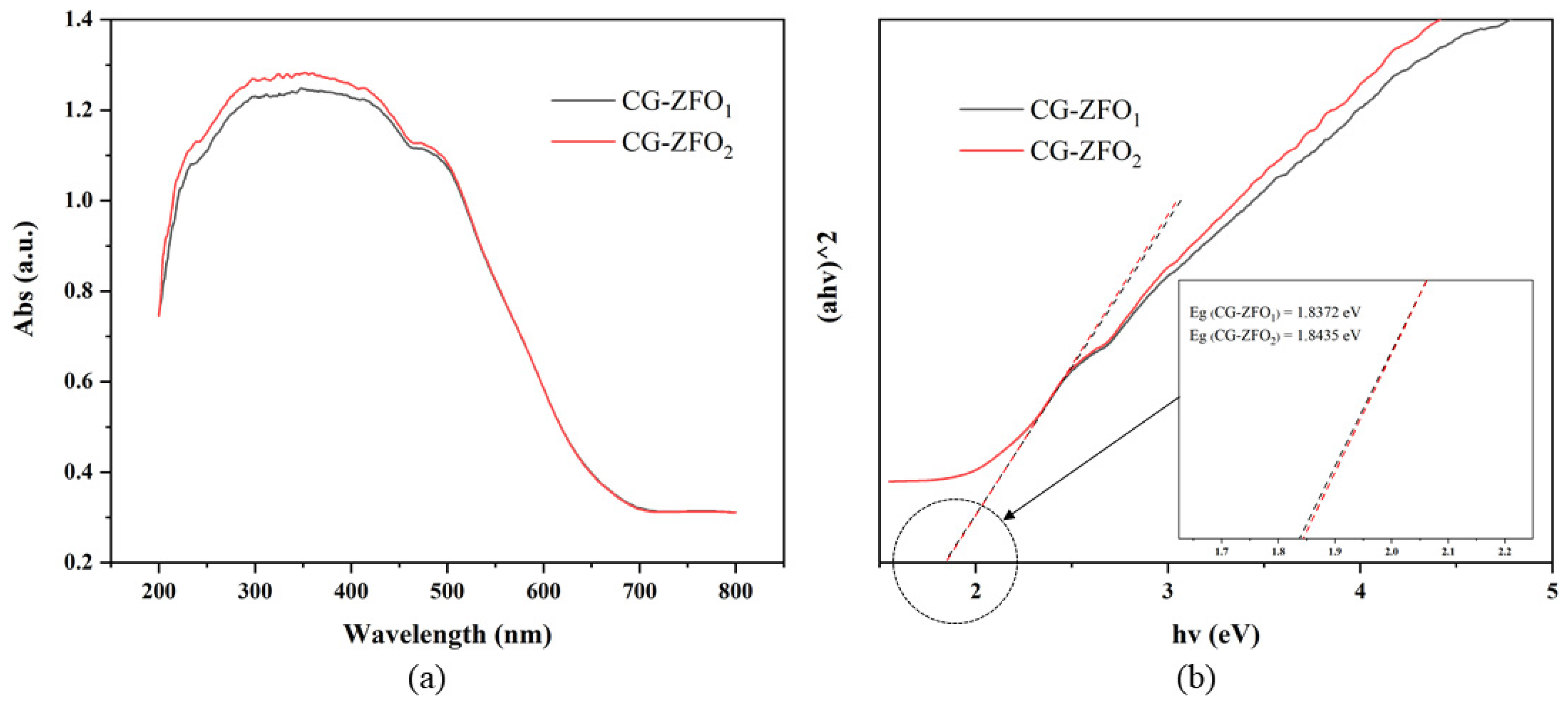
Figure 5a presents the UV-Vis diffuse reflectance spectroscopy (DRS) for CG-ZFO1 and CG-ZFO2. From the DRS, it can be observed that CG-ZFO2 exhibited stronger light absorption capabilities within a certain wavelength range. Figure 5b represents the Tauc plot, derived from the Kubelka–Munk transformation of the DRS spectral data [35]. The band gaps of CG-ZFO1 and CG-ZFO2 are 1.8372 eV and 1.8435 eV, respectively, exhibiting a negligible difference. In summary, the addition of CTAB had a minor effect on the band gap but significantly enhances the light absorption capability of the catalyst.
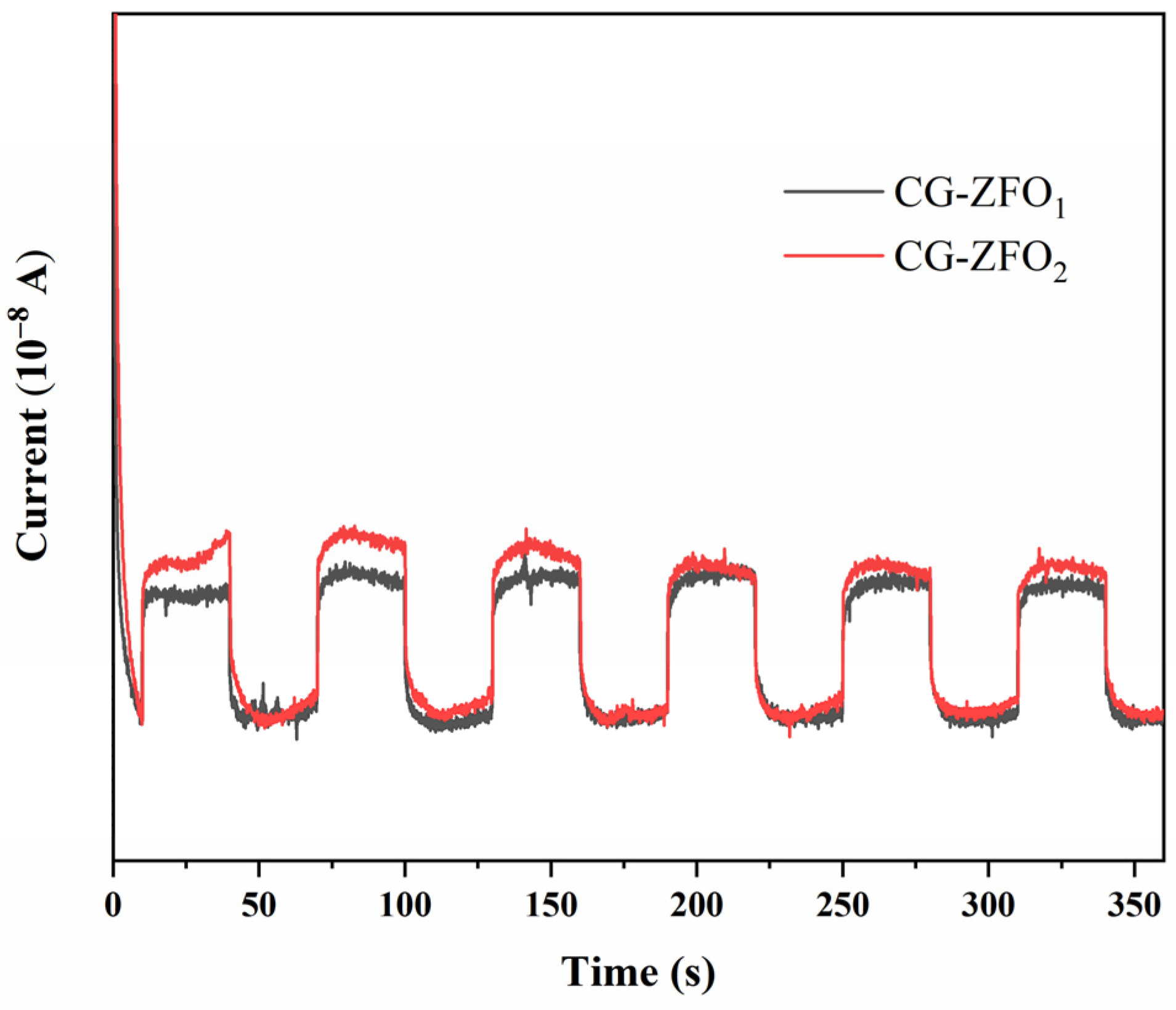
Transient photocurrent tests were repeatedly used to analyze the photoelectrochemical dynamic behavior of semiconductor materials. The photoelectric performance of a semiconductor material was evaluated by analyzing the changes in photocurrent generated by the material under the cyclic on–off illumination of the light source [36]. The i-t photocurrent curves for CG-ZFO1 and CG-ZFO2 are shown in Figure 6. Both CG-ZFO1 and CG-ZFO2 exhibit significant photocurrent signals instantaneously under visible-light irradiation, and both their photocurrent transient shapes were nearly perfect rectangles. This indicates that the photocurrent signals of the catalysts were very stable, and the separation of photogenerated electrons and holes was good. Notably, CG-ZFO2 exhibited a stronger photocurrent signal during the light-on stage, indicating superior visible-light absorption capability and photo-generated charge separation capability. This was attributed to the addition of CTAB, which resulted in smaller and more uniform grain sizes of CG-ZFO and effectively inhibited large-scale agglomeration between particles. This was beneficial for exposing more photocatalytically active crystal planes per unit irradiation area of CG-ZFO, thereby enhancing the photoelectric performance.

3.3. Catalytic Performance Study of CG-ZFO Catalysts

3.3.1. Effects of CTAB Addition on RhB Degradation

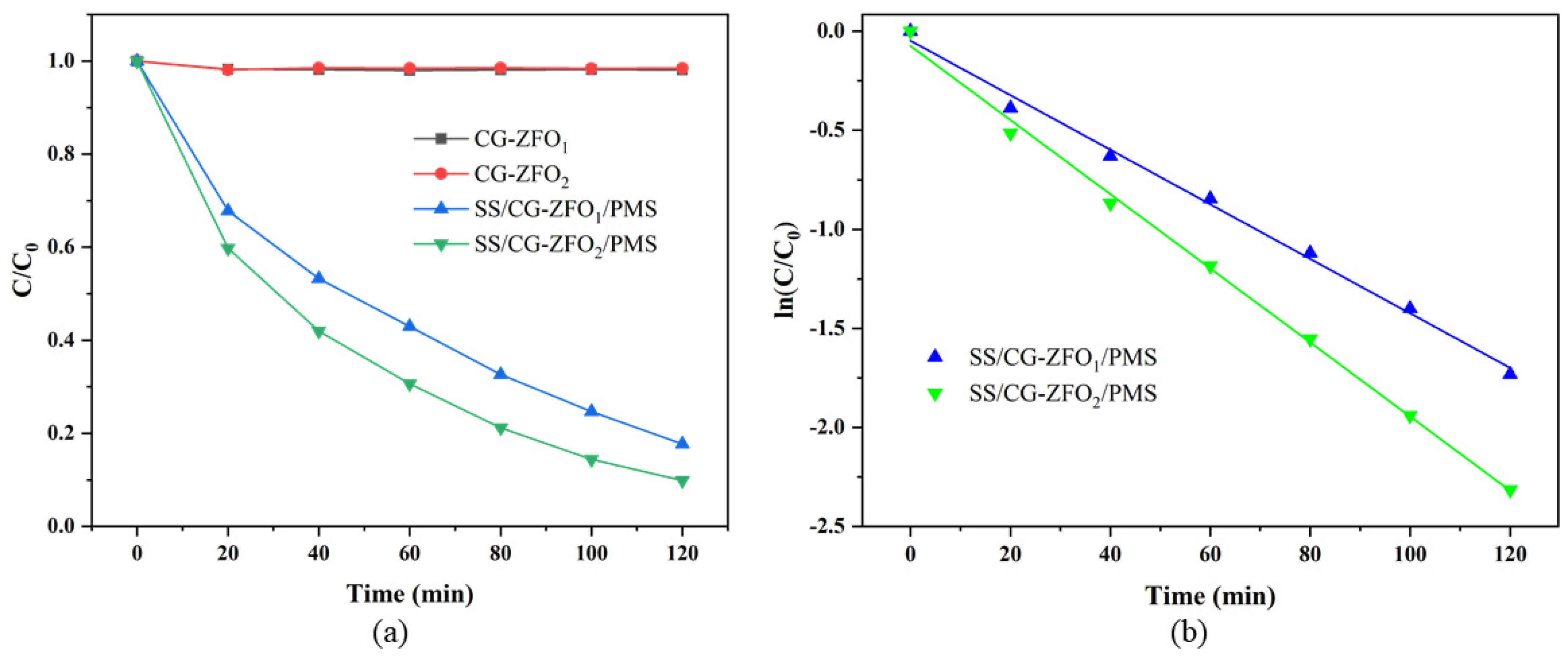
Figure 7a shows the difference between CG-ZFO1 and CG-ZFO2 in terms of adsorption and degradation performance for RhB. It can be seen that the adsorption capabilities of the two catalysts can be basically ignored, and both can reach adsorption equilibrium within 40 min. The SS/CG-ZFO1/PMS system can degrade RhB by 82.31% within 2 h, and the SS/CG-ZFO2/PMS system can degrade RhB by 90.12% within 2 h. CG-ZFO2 exhibited superior catalytic performance compared to CG-ZFO1, attributable to its stronger light absorption capability and photo-generated charge separation capability. This result was consistent with the DRS and i-t test results. By fitting the degradation curve, it was found that the degradation process of RhB conformed to the first-order kinetic model (kt = −ln(C/C0)). Figure 7b is the degradation kinetics fitting diagram of the SS/CG-ZFO1/PMS and SS/CG-ZFO2/PMS systems, and the degradation kinetic constants are shown in Table 4. The reaction kinetic constant of the SS/CG-ZFO1/PMS system was 0.0138 min−1, and the reaction kinetic constant of the SS/CG-ZFO2/PMS system was 0.0187 min−1. The addition of surfactants increased the degradation rate of the CG-ZFO catalyst by 35.51%. Consequently, all subsequent experiments employed the CG-ZFO2 catalyst.

3.3.2. Effects of Catalytic Systems on RhB Degradation

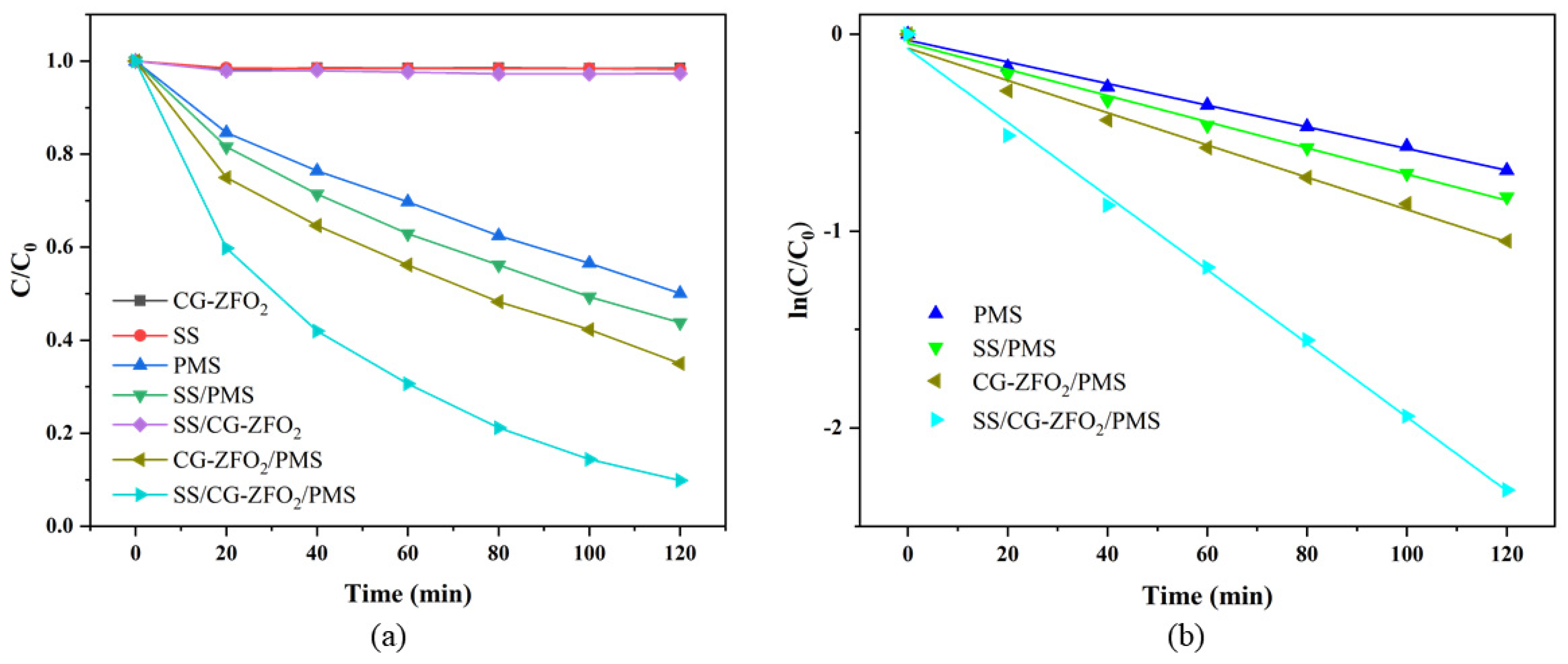
In order to study the roles of the CG-ZFO2, SS, and PMS in the degradation process of RhB, seven catalytic systems, including CG-ZFO2, SS, PMS, SS/PMS, SS/CG-ZFO2, CG-ZFO2/PMS, and SS/CG-ZFO2/PMS, were constructed for catalytic degradation experiments. As shown in Figure 8a, the concentration of RhB solution under SS irradiation only had a slight change (about 2%), indicating that RhB exhibited good chemical stability under light conditions. Similarly, RhB was also essentially undegraded in the SS/CG-ZFO2 system, primarily due to the rapid electron-hole recombination rate of ZnFe2O4. PMS can self-activate in water to produce the strong oxidizing radical SO4˙; hence, the PMS system exhibited a considerable degradation effect, achieving a 50% degradation of RhB within 2 h. The introduction of SS and CG-ZFO2 into the PMS system can significantly accelerate the degradation rate of RhB. The SS/PMS catalytic system can degrade RhB by 56.23% within 2 h, and the CG-ZFO2/PMS catalytic system can degrade RhB by 65% within 2 h. Among all catalytic systems, the SS/CG-ZFO2/PMS system had the best degradation effect, and this system can degrade RhB by 90.12% within 2 h. The degradation efficiency of the SS+PMS+CG-ZFO2 catalytic system for RhB degradation is also compared with other compounds reported in the literature, listed in Table 5.
Figure 8b is the degradation kinetics fitting diagram of the PMS, SS/PMS, CG-ZFO2/PMS, and SS/CG-ZFO2/PMS catalytic systems, with the reaction kinetic constants shown in Table 6. The kinetic constant of the SS/CG-ZFO2/PMS system surpasses the sum of the kinetic constants of the SS/PMS system and the CG-ZFO2/PMS system, indicating that the high degradation efficiency of the SS/CG-ZFO2/PMS system was not merely a simple addition of SS, CG-ZFO2, and PMS, but rather, they exhibit significant synergistic effects.

3.3.3. Effects of Initial pH on RhB Degradation

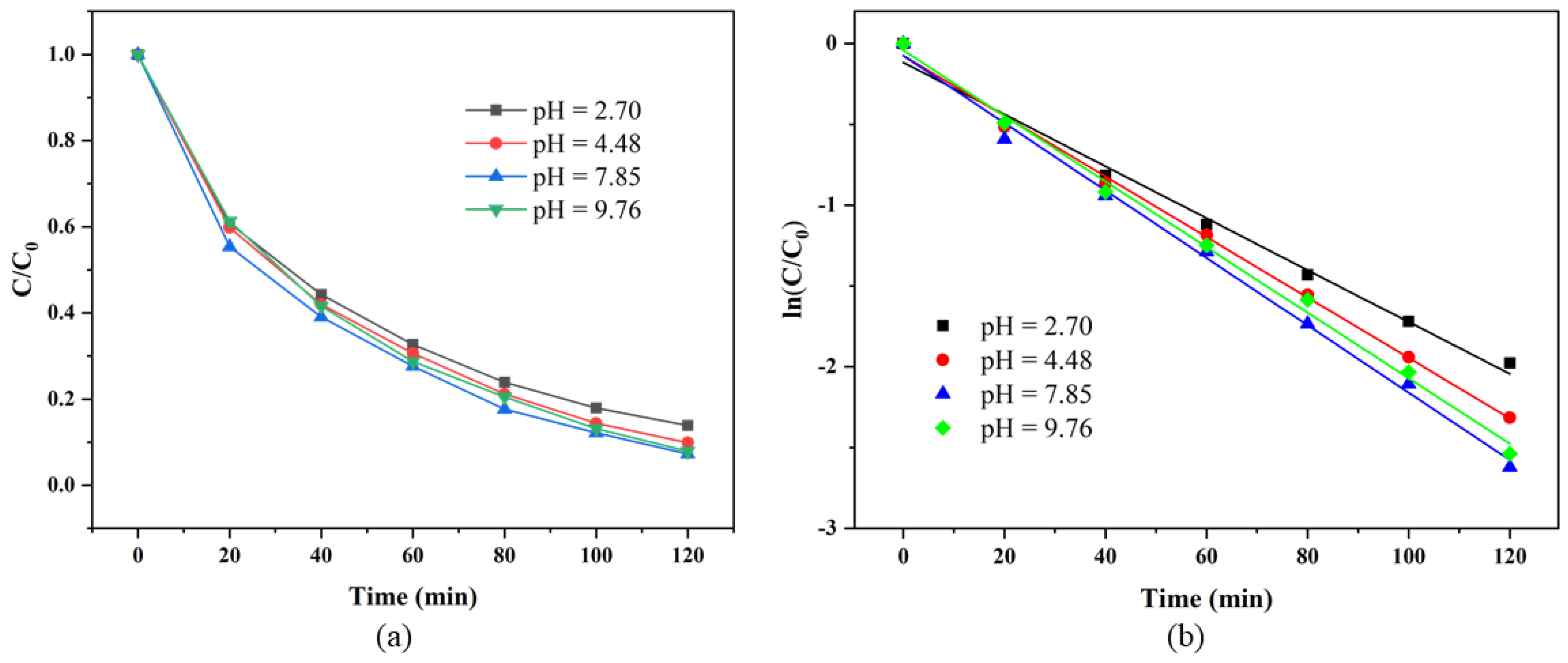
Figure 9a shows the effect of the initial pH on the degradation efficiency of the SS/CG-ZFO2/PMS system. The SS/CG-ZFO2/PMS system exhibited good degradation performance within a wide pH range of 2.7 to 9.76. Specifically, within the pH range of 2.7 to 7.85, the degradation rate of RhB escalated with increases in pH. However, when the pH value exceeded 9.76, the degradation rate of RhB began to decline. The kinetics fitting diagram of the degradation curves under different initial pH values is shown in Figure 9b, with the corresponding reaction kinetic constants enumerated in Table 7. From a kinetics perspective, within the pH range of 2.7 to 7.85, the reaction kinetic constant increased from 0.0161 min−1 to 0.0209 min−1. Further increasing the pH value caused the reaction kinetic constant to decrease to 0.0203 min−1. The main reason for the lower degradation rate of RhB in an acidic environment was the high concentration of H+ in the solution, which quenched the free radicals (mainly SO4˙ and ·OH) in the solution (Equations (2) and (3)) [42].
·OH + H+ + e → H2O
SO4˙ + H+ + e → HSO4˙
Therefore, as the concentration of H+ in the solution significantly decreased, the quenching probability of free radicals in the solution greatly reduced, and the degradation efficiency of RhB significantly improved. When the pH value reached 9.76, the degradation rate of RhB began to decrease. This was because when the pH value reached above 8, the SO4˙ in the solution began to react with H2O or OH to produce ·OH with a lower redox potential (Equations (4) and (5)) [43].
SO4˙ + H2O → SO2− + ·OH + H+
SO4˙ + OH → SO2− + ·OH
In addition, when the pH value reached above 9.4, the form of PMS in the solution changed from HSO5 to SO52−, which also affected the generation of active species and thus reduced the degradation efficiency of RhB [44].

3.3.4. Effects of PMS Dosage on RhB Degradation

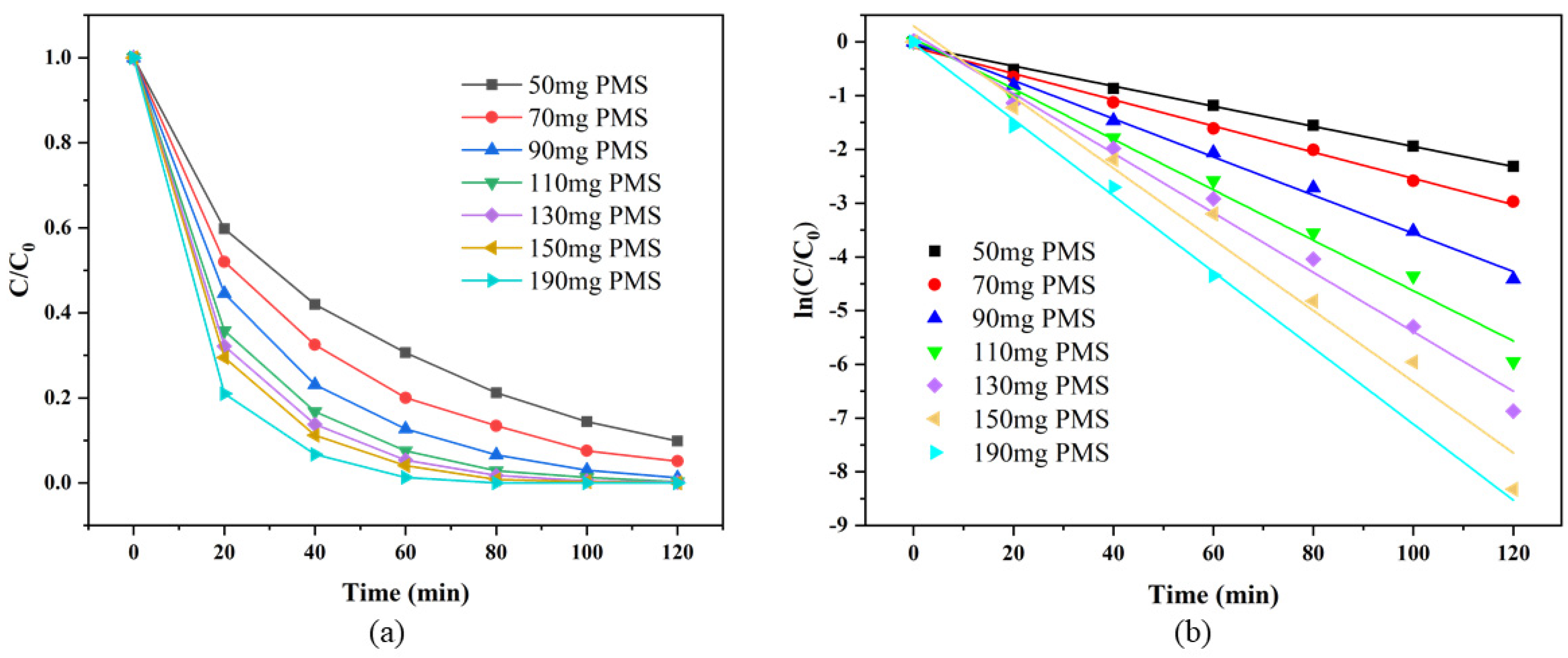
The effect of PMS dosage on the degradation efficiency in the SS/CG-ZFO2/PMS system is shown in Figure 10a. As the PMS dosage increased, the degradation rate of RhB obviously rose. This was because the more PMS was added, the higher the concentration of free radicals produced by activation. Overall, within the range of 50 to 190 mg, the addition of PMS always played a positive role in the degradation of RhB in the SS/CG-ZFO2/PMS system. However, as the PMS dosage gradually increased, the effect on enhancing the degradation rate of RhB exhibited a gradually weakening trend. Figure 10b is the kinetic fitting diagram of the degradation curves under different initial pH values, and the specific reaction kinetic constants are shown in Table 8. It can be found that within the range of 50 to 110 mg PMS dosage, each increase of 20 mg PMS dosage gradually increased the reaction kinetic constant of the system by 30.36%, 45.76%, and 32.04%, while within the range of 110 to 150 mg PMS dosage, each increase of 20 mg PMS dosage only gradually increased the reaction kinetic constant of the system by 17.98% and 19.57%. When the PMS dosage in the system reached 150 mg, an increase of 40 mg PMS dosage only increased the reaction kinetic constant of the system by 6.97%. This suggests that in the SS/CG-ZFO2/PMS system, when the PMS dosage reached a certain amount, the catalytic efficiency was significantly inhibited. This was mainly because the excessive HSO5, SO4˙, ·OH in the solution produced self-quenching reactions, producing SO42−, HSO4 with no degradation ability or SO5˙ with weak degradation ability (Equations (6)–(8)) [45].
SO4˙ + SO4˙ → 2SO42−
·OH + HSO5 → SO4˙ + H2O
SO4˙ + HSO5 → SO5˙ + HSO4

3.4. Degradation Mechanism Study

3.4.1. Identification of Active Species

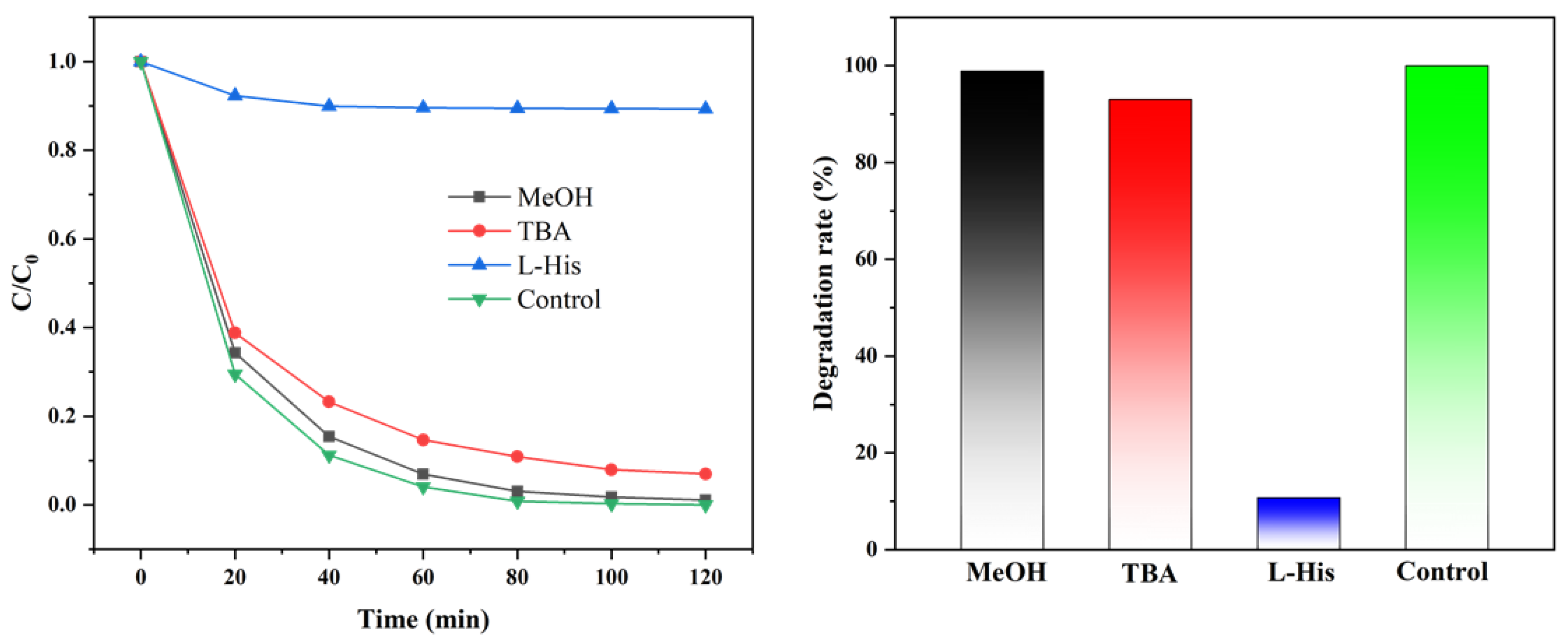
A radical-quenching experiment was used to explore the main active species in the SS/CG-ZFO2/PMS catalytic system. The study showed that in the SS/CG-ZFO2/PMS catalytic system, SO4˙, ·OH, and 1O2 are important active species in the reaction [46,47]. The reaction rate of methanol (MeOH) with SO4˙ is 1.1 × 10⁷ M−1S−1, and the reaction rate with ·OH is 2.5 × 10⁸ M−1S−1, while the reaction rate of tert-butanol (TBA) with SO4˙ is 4.0∼9.1 × 10⁵ M−1S−1, and the reaction rate with ·OH is 3.8∼7.6 × 10⁸ M−1S−1 [48]. Therefore, in this experiment, MeOH (500 mM) was used as a quencher for both SO4˙ and ·OH, and TBA (500 mM) was used as a quencher for ·OH. The respective contributions of SO4˙ and ·OH to the reaction system were determined by comparing the degradation rate changes between two sets of experiments. The reaction rate between L-histidine (L-His) and 1O2 is 1.2 × 10⁸ M−1S−1; hence, L-His (10 mM) was used as a quencher for 1O2 [49]. The final experimental results are shown in Figure 11. L-His had the most significant inhibitory effect on the degradation in the SS/CG-ZFO2/PMS catalytic system. At 100 min of reaction time, the presence of L-His reduced the degradation rate of RhB from 100% to 10.63%, indicating that 1O2 was the main active species in the SS/CG-ZFO2/PMS catalytic system. Additionally, at 100 min of reaction time, TBA reduced the degradation rate of RhB from 100% to 92.08%, and MeOH reduced it to 98.21%, indicating that SO4˙ and ·OH also played a certain role in the reaction system. It is worth noting that the inhibitory effect of MeOH on the SS/CG-ZFO2/PMS catalytic system was significantly lower than that of TBA, which may be due to the fact that most of the active radicals in the SS/CG-ZFO2/PMS catalytic system were generated on the surface of the CG-ZFO2 catalyst, and MeOH, with strong hydrophilicity, had difficulty fully contacting and reacting with the free radicals on the catalyst surface [48].
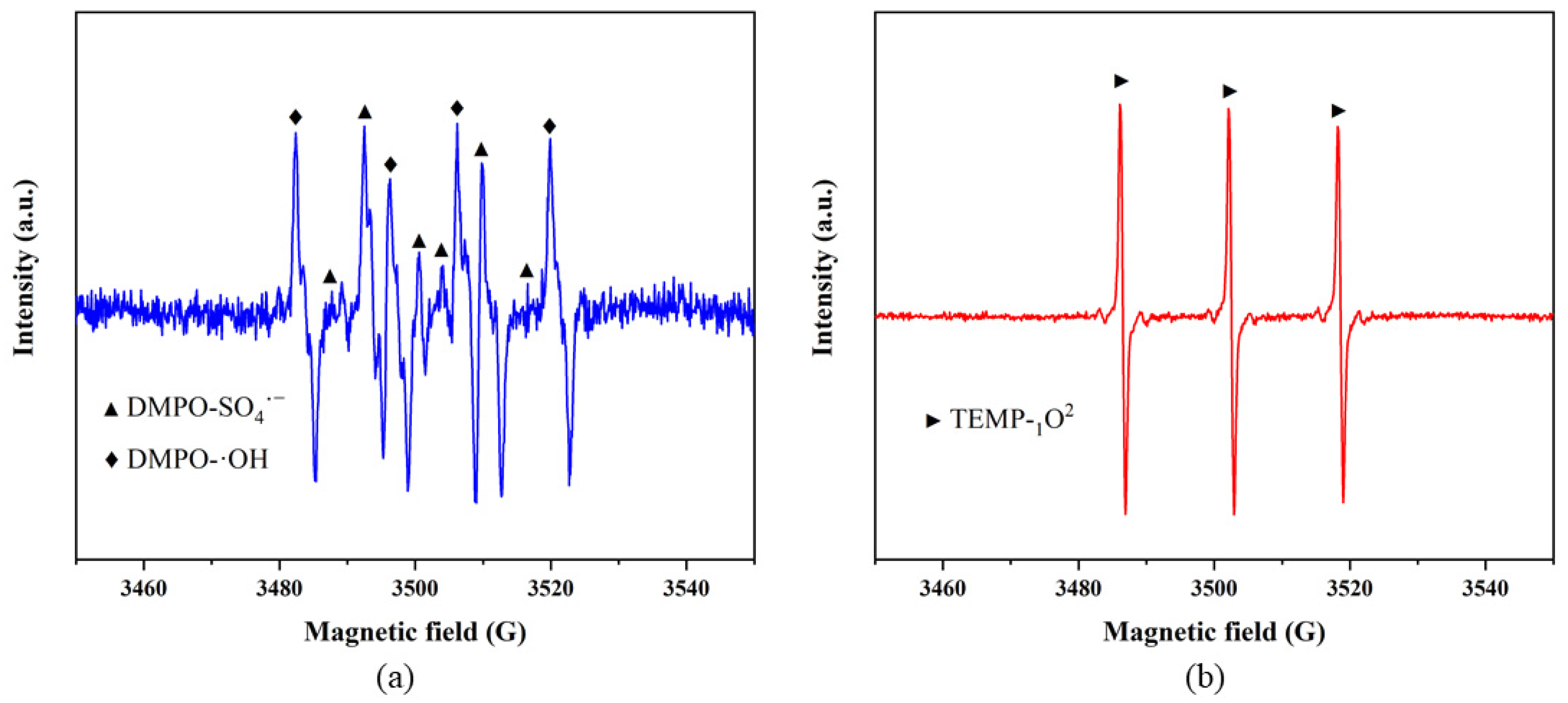
EPR was used to further confirm the active species within the SS/CG-ZFO2/PMS system. During the testing process, DMPO (5,5-dimethyl-1-pyrroline N-oxide) was used to capture SO4˙ and ·OH, while TEMP (2,2,6,6-tetramethylpiperidine-1-oxyl) was used to capture 1O2. After adding PMS to the solution containing the catalyst and turning on the xenon lamp for 15 min, significant radical signal peaks can be observed in the EPR spectra. The peaks in Figure 12a belonged to DMPO-SO4˙ and DMPO-OH, and the peaks in Figure 12b belonged to TEMP-1O2 [50]. This conclusion fully confirms the generation of sulfate radicals (SO4˙), hydroxyl radicals (·OH), and singlet oxygen (1O2) during the catalytic process, and this finding is consistent with the results obtained from the radical-quenching experiments.

3.4.2. XPS Analysis

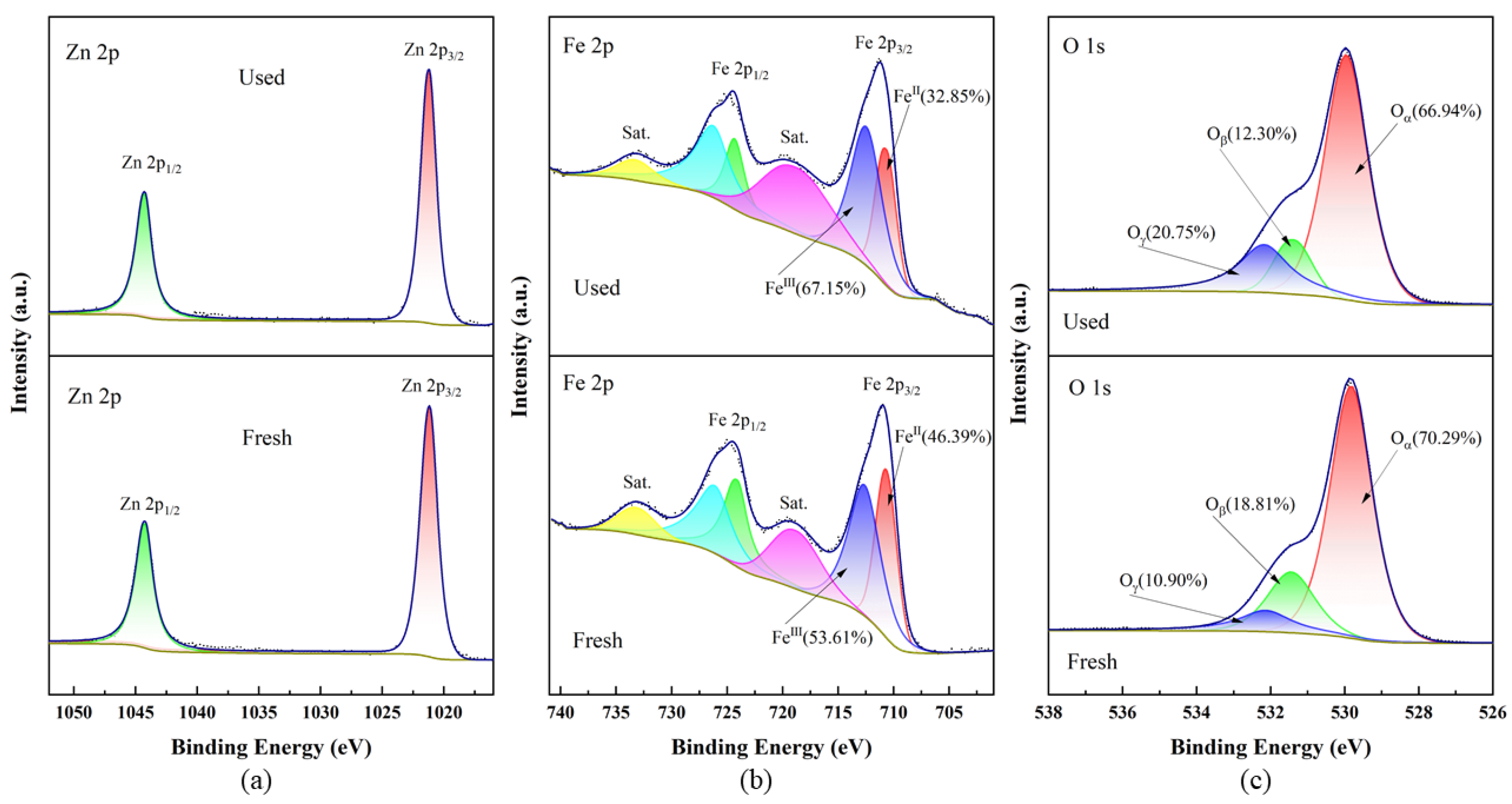
The XPS spectra of the CG-ZFO2 before and after the degradation reaction in the SS/CG-ZFO2/PMS catalytic system are shown in Figure 13. The binding energies of all elements in the spectra were calibrated using C 1s (284.8 eV) as the reference peak. In the Zn 2p XPS spectra of the fresh CG-ZFO2 shown in Figure 13a, two characteristic peaks can be observed at binding energies of 1021.17 eV and 1044.21 eV, which are attributed to the Zn 2p3/2 peak and 2p1/2 peak in the tetrahedral sites of Zn2+ in CG-ZFO2 [51]. In the Fe 2p XPS spectra of the fresh CG-ZFO2 shown in Figure 13b, four characteristic peaks can be observed at binding energies of 710.98 eV, 718.84 eV, 724.86 eV, and 733.15 eV. The peaks at 710.98 eV and 724.86 eV are attributed to Fe 2p3/2 and Fe 2p1/2, while the peaks at 718.84 eV and 733.15 eV are attributed to two distinct satellite peaks of Fe 2p. The two peaks at 710.67 eV and 712.63 eV, divided from the Fe 2p3/2 characteristic peak, were fitting peaks attributed to FeII and FeIII [52]. The O 1s spectra of the fresh CG-ZFO2 surface are shown in Figure 13c, where the O 1s peak can be divided into three distinct fitting peaks at binding energies of 529.82 eV, 531.44 eV, and 532.14 eV, which were attributed to lattice oxygen (Oα), surface oxygen (Oβ) (brought by surface oxygen-containing groups), and adsorbed oxygen (Oγ) (brought by surface-adsorbed H2O) [53]. After the degradation reaction, the elemental chemical state of the CG-ZFO2 surface underwent significant changes. As can be seen from Figure 13a, the peak shape and position of the Zn 2p3/2 and 2p1/2 peaks did not basically change in the used CG-ZFO2, indicating that Zn did not participate in reactions affecting the valence state of the used CG-ZFO2. The relative content of FeII in the fresh CG-ZFO2 catalyst was 46.39%, and the relative content of FeIII was 53.61%. After the degradation reaction occurred, the relative content of FeII decreased to 32.85%, and the relative content of FeIII increased to 67.15%. This indicates that Fe plays an important role in the degradation reaction of the SS/CG-ZFO2/PMS system. In the O 1s fitting peaks of fresh CG-ZFO2, the relative content of Oα, Oβ, and Oγ was 70.29%, 18.81%, and 10.9%, respectively. After the degradation reaction occurred, the relative content of Oα on the used CG-ZFO2 surface decreased to 66.94%, the relative content of Oβ decreased to 12.3%, and the relative content of Oγ increased to 20.75%. This indicates that Oα and Oβ participated in the reaction. The significant increase in Oγ is caused by the surface-adsorbed H2O formed by the degradation of RhB.

3.4.3. Degradation Mechanism

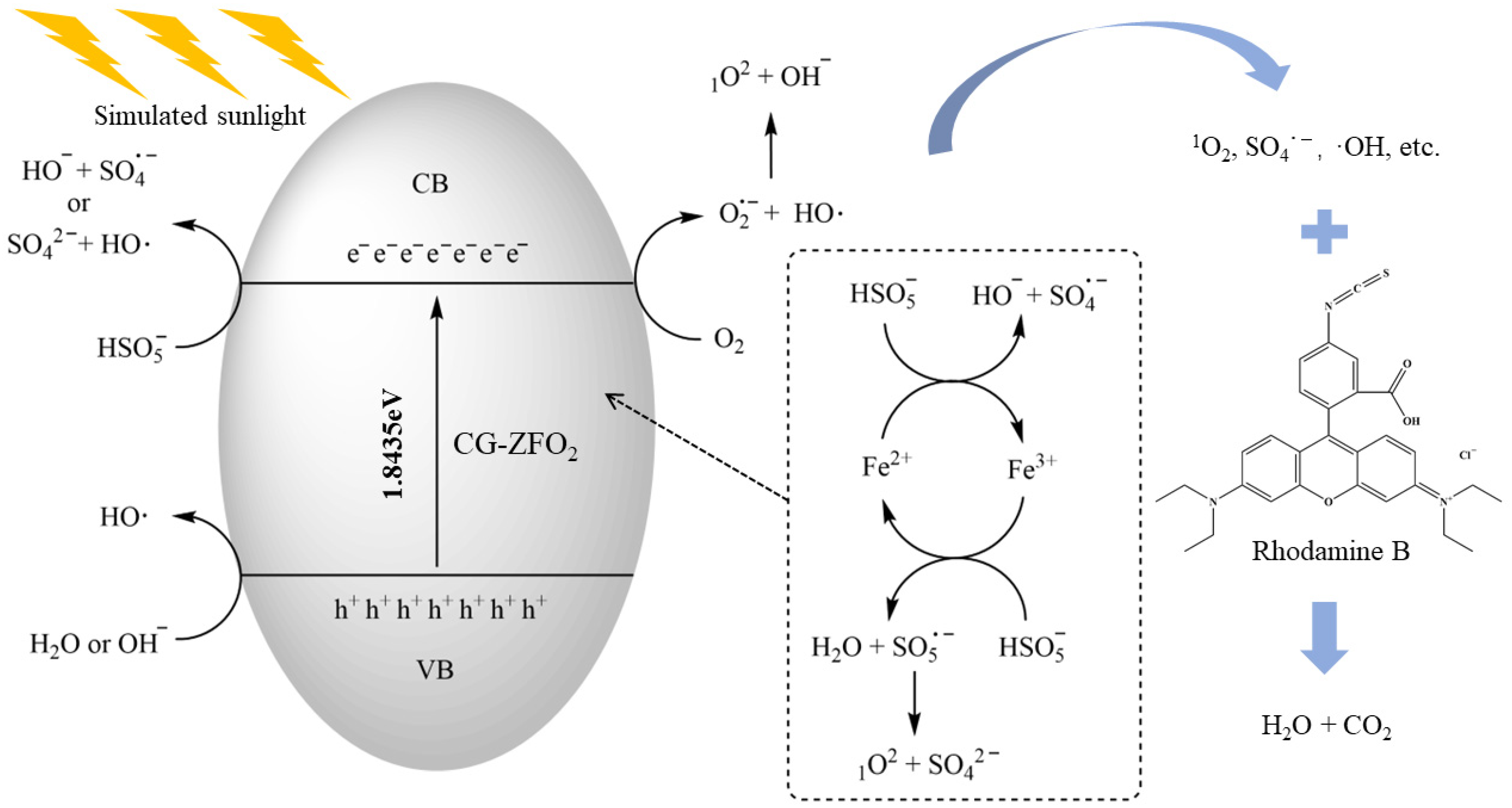
Based on the conclusions of the quenching experiments, EPR, and XPS, a possible degradation mechanism of the SS/CG-ZFO2/PMS catalytic system is proposed, as shown in Figure 14. The electron transfer promoted by the redox cycle of FeII and FeIII on the surface of CG-ZFO2 facilitated the activation of PMS in water, resulting in the generation of SO4˙ and SO5˙ (Equations (9) and (10)) [54]. The SO5˙ generated by the above reaction self-quenches to produce 1O2 (Equation (11)) [55]. In addition, the photo-generated electrons and holes produced by the excitation of CG-ZFO2 by simulated sunlight can also participate in the reactions within the system to promote the activation of PMS. The PMS in the solution can be activated by photo-generated electrons to generate SO4˙ and ·OH (Equations (13) and (14)) [46]. Moreover, O2 adsorbed on the surface of CG-ZFO2 can react with photo-generated electrons to generate O2˙ (Equation 15), which then reacts with ·OH or H2O to produce 1O2 (Equations (16) and (17)) [56]. OH and H2O can be activated by photo-generated holes to generate ·OH (Equations (18) and (19)) [47]. In summary, the redox cycle of FeII/FeIII and the generation of photo-generated electrons and holes can effectively promote the activation of PMS in the catalytic system, forming a variety of active free radicals with 1O2 as the main component to achieve the degradation of RhB.
FeII + HSO5 → FeIII + SO4˙ + OH
FeIII + HSO5 + H+ → FeII + SO5˙ + H2O
SO5˙ + SO5˙ → 1O2 + 2SO42−
ZnFe2O4 + hν → e + h+
e + HSO5 → SO42− + ·OH
e + HSO5 → SO4˙ + OH
O2 + e → O2˙
O2˙+ ·OH → 1O2 + OH
2O2˙ + 2H2O → 1O2 + H2O2 + 2OH
h+ + OH → ·OH
h+ + H2O → ·OH + H+
SO4˙/OH/1O2 + RhB → intermediates → CO2 + H2O

4. Conclusions

This paper used the continuous process of activating–acid leaching–extracting–back-extracting to recover Fe2O3 from high-iron coal gangue as an Fe source, and synthesized the CG-ZFO catalyst through the hydrothermal method, subsequent to the addition of a Zn source. The CG-ZFO was used for the activation of PMS by the synergistic action of SS to degrade RhB in water. A series of degradation experiments based on CG-ZFO were constructed to clarify the synergistic action between SS, PMS, and CG-ZFO. Furthermore, the influence of CTAB addition, initial pH, and PMS dosage on the degradation efficiency was studied. Finally, based on radical-quenching experiment, EPR, and XPS conclusions, the degradation mechanism of the SS/CG-ZFO/PMS catalytic system is proposed.
  • Through activation and acid leaching processes, Fe2O3 in the coal gangue was effectively removed. Subsequently, the leaching solution was subjected to extraction using tributyl phosphate (TBP) followed by back-extraction with deionized water. This series of operations increased the iron (Fe) concentration in the solution from 46.29% to 99.64%, making it a feasible iron source for the synthesis of the ZnFe2O4 catalyst.
  • CG-ZFO was characterized by XRD, SEM, FT-IR, etc., showing that the catalysts have a pure ZnFe2O4 crystal structure. The addition of CTAB resulted in a smaller crystal grain size, higher dispersion, and better light absorption capability and photo-generated charge separation capability of the catalyst.
  • A series of degradation experiments based on CG-ZFO further confirmed the enhancement of the catalyst’s photoelectric performance by CTAB addition and the synergistic action between SS, PMS, and CG-ZFO. It was found that when the initial pH was 7.85 and the PMS dosage was 150 mg, the degradation performance of the catalytic system was maximized.
  • Combining the conclusions of radical-quenching experiments, EPR, and XPS, it was determined that in the SS/CG-ZFO2/PMS catalytic system, 1O2 was the main active species. The CG-ZFO2 catalyst mainly relies on the FeII/FeIII redox cycle and the generation of photo-generated electron-holes to promote the activation of PMS for the degradation of RhB.
In summary, our future research will focus on optimizing the recovery process, enhancing catalyst performance, deepening mechanistic understanding, expanding application scope, and ensuring sustainability. By pursuing these directions, we aim to contribute significantly to the field of environmental catalysis and promote the development of sustainable wastewater treatment technologies.

Author Contributions

M.Z.: Writing—Original Draft, Conceptualization, Methodology, Investigation, and Validation; J.D.: Methodology and Investigation; X.Z.: Visualization and Resources; A.M.: Investigation, Validation, Funding Acquisition, Supervision, and Writing—Review and Editing. All authors have read and agreed to the published version of the manuscript.

Funding

This work was supported by the Guizhou Province Youth Guidance Project (Qiankehe Jichu QN[2025]260), the Natural Science Research Project of Education Department of Guizhou Province (NO. [2024]157), Liupanshui Science and Technology Development Project (52020-2023-0-2-6, 52020-2024-0-2-8), scientific research and cultivation project of Liupanshui Normal University (LPSSY2023KJYBPY06), and key cultivation disciplines of Liupanshui Normal University (LPSSYZDXK202001).

Institutional Review Board Statement

Not applicable.

Informed Consent Statement

Not applicable.

Data Availability Statement

The original contributions presented in this study are included in the article. Further inquiries can be directed to the corresponding author.

Acknowledgments

The authors acknowledge the financial support to carry out this work.

Conflicts of Interest

The authors declare no conflicts of interest.

References

  1. Liu, Q.Q.; Ghosh, M.K.; Cai, S.L.; Liu, X.H.; Lu, L.; Muddassir, M.; Ghorai, T.K.; Wang, J. Three new Zn (II)-based coordination polymers: Optical properties and dye degradation against RhB. Polyhedron 2024, 247, 116731. [Google Scholar] [CrossRef]
  2. Farhadi, S.; Siadatnasab, F.; Khataee, A. Ultrasound-assisted degradation of organic dyes over magnetic CoFe2O4@ZnS core-shell nanocomposite. Ultrason. Sonochem. 2017, 37, 298–309. [Google Scholar] [CrossRef] [PubMed]
  3. Isari, A.A.; Payan, A.; Fattahi, M.; Jorfi, S.; Kakavandi, B. Photocatalytic degradation of rhodamine B and real textile wastewater using Fe-doped TiO2 anchored on reduced graphene oxide (Fe-TiO2/rGO): Characterization and feasibility, mechanism and pathway studies. Appl. Surf. Sci. 2018, 462, 549–564. [Google Scholar] [CrossRef]
  4. Leng, Y.; Guo, W.; Shi, X.; Li, Y.; Wang, A.; Hao, F.; Xing, L. Degradation of Rhodamine B by persulfate activated with Fe3O4: Effect of polyhydroquinone serving as an electron shuttle. Chem. Eng. J. 2014, 240, 338–343. [Google Scholar] [CrossRef]
  5. Vogelpohl, A. Applications of AOPs in wastewater treatment. Water Sci. Technol. 2007, 55, 207–211. [Google Scholar] [CrossRef]
  6. Zhi, D.; Lin, Y.; Jiang, L.; Zhou, Y.; Huang, A.; Yang, J.; Luo, L. Remediation of persistent organic pollutants in aqueous systems by electrochemical activation of persulfates: A review. J. Environ. Manag. 2020, 260, 110125. [Google Scholar] [CrossRef]
  7. Azimi, S.C.; Shirini, F.; Pendashteh, A.R. Advanced oxidation process as a green technology for dyes removal from wastewater: A review. Iran. J. Chem. Chem. Eng. 2021, 40, 1467–1489. [Google Scholar] [CrossRef]
  8. Wu, Z.; Gong, S.; Liu, J.; Shi, J.; Deng, H. Progress and problems of water treatment based on UV/persulfate oxidation process for degradation of emerging contaminants: A review. J. Water Process Eng. 2024, 58, 104870. [Google Scholar] [CrossRef]
  9. Li, N.; Li, R.; Yu, Y.; Zhao, J.; Yan, B.; Chen, G. Efficient degradation of bentazone via peroxymonosulfate activation by 1D/2D γ-MnOOH-rGO under simulated sunlight: Performance and mechanism insight. Sci. Total Environ. 2020, 741, 140492. [Google Scholar] [CrossRef]
  10. Zhang, X.; Gao, Y.; Li, Y.; Zhou, Y.; Ma, H.; Shang, J.; Cheng, X. Synthesis of magnetic NiFe2O4/CuS activator for degradation of lomefloxacin via the activation of peroxymonosulfate under simulated sunlight illumination. Sep. Purif. Technol. 2022, 288, 120664. [Google Scholar] [CrossRef]
  11. Zhao, X.Y.; Li, W.; Gao, J.Y.; Li, C.B.; Xiao, Y.S.; Liu, X.; Song, D.A.; Zhang, J.G. Activation of peroxymonosulphate using a highly efficient and stable ZnFe2O4 catalyst for tetracycline degradation. Sci. Rep. 2023, 13, 13932. [Google Scholar] [CrossRef]
  12. Abouri, M.; Benzaouak, A.; Elouardi, M.; Hamdaoui, L.E.; Zaaboul, F.; Azzaoui, K.; Hammouti, B.; Sabbahi, R.; Jodeh, S.; Belghiti, M.A.E.; et al. Enhanced photocatalytic degradation of Rhodamine B using polyaniline-coated XTiO3(X = Co, Ni) nanocomposites. Sci. Rep. 2025, 15, 3595. [Google Scholar] [CrossRef] [PubMed]
  13. Pylnev, M.; Su, T.S.; Wei, T.C. Titania augmented with TiI4 as electron transporting layer for perovskite solar cells. Appl. Surf. Sci. 2021, 549, 149224. [Google Scholar] [CrossRef]
  14. Garg, J.; Chiu, M.N.; Krishnan, S.; Kumar, R.; Rifah, M.; Ahlawat, P.; Jha, N.K.; Kesari, K.K.; Ruokolainen, J.; Gupta, P.K. Emerging Trends in Zinc Ferrite Nanoparticles for Biomedical and Environmental Applications. Appl. Biochem. Biotechnol. 2024, 196, 1008–1043. [Google Scholar] [CrossRef] [PubMed]
  15. Anjaneyulu, B.; Chinmay, V.; Chauhan, S.A.C.; Carabineiro, M. Recent Advances on Zinc Ferrite and Its Derivatives as the Forerunner of the Nanomaterials in Catalytic Applications. J. Inorg. Organomet. Polym. Mater. 2023, 34, 1887–1907. [Google Scholar] [CrossRef]
  16. Arimi, A.; Megatif, L.; Granone, L.I.; Dillert, R.; Bahnemann, D.W. Visible-light photocatalytic activity of zinc ferrites. J. Photochem. Photobiol. A Chem. 2018, 366, 118–126. [Google Scholar] [CrossRef]
  17. Cheng, P.; Li, W.; Zhou, T.; Jin, Y.; Gu, M. Physical and photocatalytic properties of zinc ferrite doped titania under visible light irradiation. J. Photochem. Photobiol. A Chem. 2004, 168, 97–101. [Google Scholar] [CrossRef]
  18. Singh, C.; Jauhar, S.; Kumar, V.; Singh, J.; Singhal, S. Synthesis of zinc substituted cobalt ferrites via reverse micelle technique involving in situ template formation: A study on their structural, magnetic, optical and catalytic properties. Mater. Chem. Phys. 2015, 156, 188–197. [Google Scholar] [CrossRef]
  19. Nguyen, X.S.; Pham, T.D.; Ngo, K.D. Effect of different salt precursors on zinc ferrite synthesis and their photo-Fenton activity. Ceram. Int. 2024, 50, 17957–17967. [Google Scholar] [CrossRef]
  20. Renuka, L.; Anantharaju, K.S.; Sharma, S.C.; Vidya, Y.S.; Nagaswarupa, H.P.; Prashantha, S.C.; Nagabhushana, H. Synthesis of ZnFe2O4 Nanoparticle by Combustion and Sol Gel Methods and their Structural, Photoluminescence and Photocatalytic Performance. Mater. Today Proc. 2018, 5, 20819–20826. [Google Scholar] [CrossRef]
  21. Cao, X. Zinc ferrite nanoparticles: Simple synthesis via lyophilisation and electrochemical application as glucose biosensor. Nano Express 2021, 2, 024001. [Google Scholar] [CrossRef]
  22. Shakil, M.; Inayat, U.; Ashraf, M.; Tanveer, M.; Gillani, S.S.A.; Dahshan, A. Photocatalytic performance of novel zinc ferrite/copper sulfide composites for the degradation of Rhodamine B dye from wastewater using visible spectrum. Optik 2023, 272, 170353. [Google Scholar] [CrossRef]
  23. Jin, Y.; Li, L.; Liu, Z.; Zhu, S.; Wang, D. Synthesis and characterization of low-cost zeolite NaA from coal gangue by hydrothermal method. Adv. Powder Technol. 2021, 32, 791–801. [Google Scholar] [CrossRef]
  24. Zhang, X.; Li, C.; Zheng, S.; Di, Y.; Sun, Z. A review of the synthesis and application of zeolites from coal-based solid wastes. Int. J. Miner. Metall. Mater. 2022, 29, 1–21. [Google Scholar] [CrossRef]
  25. Du, J.; Ma, A.; Wang, X.; Zheng, X. Review of the Preparation and Application of Porous Materials for Typical Coal-Based Solid Waste. Materials 2023, 16, 5434. [Google Scholar] [CrossRef]
  26. Kong, D.; Zhou, Z.; Jiang, R.; Song, S.; Feng, S.; Lian, M. Extraction of Aluminum and Iron Ions from Coal Gangue by Acid Leaching and Kinetic Analyses. Minerals 2022, 12, 215. [Google Scholar] [CrossRef]
  27. Dong, L.; Li, Y.; Yan, J.; Shu, X.Q. Efficient Extraction of SiO2 and Al2O3 from Coal Gangue by Means of Acidic Leaching. Adv. Mater. Res. 2014, 878, 149–156. [Google Scholar] [CrossRef]
  28. Xiao, J.; Li, F.; Zhong, Q.; Bao, H.; Wang, B.; Huang, J.; Zhang, Y. Separation of aluminum and silica from coal gangue by elevated temperature acid leaching for the preparation of alumina and SiC. Hydrometallurgy 2015, 155, 118–124. [Google Scholar] [CrossRef]
  29. Shao, S.; Ma, B.; Wang, C.; Chen, Y. Extraction of valuable components from coal gangue through thermal activation and HNO3 leaching. J. Ind. Eng. Chem. 2022, 113, 564–574. [Google Scholar] [CrossRef]
  30. Hu, Z.; Zhang, T.; Lv, L.; Chen, Y.; Zhong, B.; Tang, S. Extraction performance and mechanism of TBP in the separation of Fe3+ from wet-processing phosphoric acid. Sep. Purif. Technol. 2021, 272, 118822. [Google Scholar] [CrossRef]
  31. Mozaffari, M.; Masoudi, H. Zinc Ferrite Nanoparticles: New Preparation Method and Magnetic Properties. J. Supercond. Nov. Magn. 2014, 27, 2563–2567. [Google Scholar] [CrossRef]
  32. Raland, R.D.; Borah, J.P. Efficacy of heat generation in CTAB coated Mn doped ZnFe2O4 nanoparticles for magnetic hyperthermia. J. Phys. D Appl. Phys. 2017, 50, 035001. [Google Scholar] [CrossRef]
  33. Nadeem, N.; Zahid, M.; Tabasum, A.; Mansha, A.; Jilani, A.; Bhatti, I.A.; Bhatti, H.N. Degradation of reactive dye using heterogeneous photo-Fenton catalysts: ZnFe2O4 and GO-ZnFe2O4 composite. Mater. Res. Express 2020, 7, 015519. [Google Scholar] [CrossRef]
  34. Luo, L.; Yan, Z.; Yang, M.; Yin, H.; Fu, H.; Jin, M.; Feng, H.; Zhou, G.; Shui, L. Two-dimensional colloidal particle assembly in ionic surfactant solutions under an oscillatory electric field. J. Phys. D Appl. Phys. 2021, 54, 475302. [Google Scholar] [CrossRef]
  35. Salesi, S.; Nezamzadeh-Ejhieh, A. An experimental design study of photocatalytic activity of the Z-scheme silver iodide/tungstate binary nano photocatalyst. Environ. Sci. Pollut. Res. 2023, 30, 105440–105456. [Google Scholar] [CrossRef] [PubMed]
  36. Wang, W.; Zhao, W.; Zhang, H.; Dou, X.; Shi, H. 2D/2D step-scheme α-Fe2O3/Bi2WO6 photocatalyst with efficient charge transfer for enhanced photo-Fenton catalytic activity. Chin. J. Catal. 2021, 42, 97–106. [Google Scholar] [CrossRef]
  37. Hao, Y.; Xiao, Y.; Liu, X.Z.; Ma, J.W.; Lu, Y.; Chang, Z.; Luo, D.Y.; Li, L.; Feng, Q.; Xu, L.J.; et al. A Novel SnO2/ZnFe2O4 Magnetic Photocatalyst with Excellent Photocatalytic Performance in Rhodamine B Removal. Catalysts 2024, 14, 350. [Google Scholar] [CrossRef]
  38. Nagesh, T.; Ramesh, K.; Ashok, B.; Jyothi, L.; Vijaya Kumar, B.; Upender, G. Insights into charge transfer via Z-scheme for Rhodamine B degradation over novel Co3O4/ZnFe2O4 nanocomposites. Opt. Mater. 2023, 143, 114140. [Google Scholar] [CrossRef]
  39. Manohar, A.; Chintagumpala, K.; Kim, K.H. Magnetic hyperthermia and photocatalytic degradation of rhodamine B dye using Zn-doped spinel Fe3O4 nanoparticles. J. Mater. Sci. Mater. Electron. 2021, 32, 8778–8787. [Google Scholar] [CrossRef]
  40. Zeng, M.; Liu, J.; Yu, R.H.; Zhu, M.G. Photocatalytic Activity of Magnetically Retrievable Bi2WO6/ZnFe2O4 Adsorbent for Rhodamine B. IEEE Trans. Magn. 2014, 50, 5200604. [Google Scholar] [CrossRef]
  41. Loan, T.T.N.; Dai-Viet, N.V.; Lan, T.H.N.; Anh, T.T.D.; Hai, Q.N.; Nhuong, M.C.; Duyen, T.C.N.; Thuan, V.T. Synthesis, characterization, and application of ZnFe@ZnO nanoparticles for photocatalytic degradation of Rhodamine B under visible-light illumination. Environ. Technol. Innov. 2022, 25, 102130. [Google Scholar] [CrossRef]
  42. Huang, Y.H.; Huang, Y.F.; Huang, C.; Chen, C.Y. Efficient decolorization of azo dye Reactive Black B involving aromatic fragment degradation in buffered Co2+/PMS oxidative processes with a ppb level dosage of Co2+-catalyst. J. Hazard. Mater. 2009, 170, 1110–1118. [Google Scholar] [CrossRef] [PubMed]
  43. Liu, D.; Chen, D.; Hao, Z.; Tang, Y.; Jiang, L.; Li, T.; Tian, B.; Yan, C.; Luo, Y.; Jia, B. Efficient degradation of Rhodamine B in water by CoFe2O4/H2O2 and CoFe2O4/PMS systems: A comparative study. Chemosphere 2022, 307, 135935. [Google Scholar] [CrossRef] [PubMed]
  44. Zhou, R.; Zhao, J.; Shen, N.; Ma, T.; Su, Y.; Ren, H. Efficient degradation of 2,4-dichlorophenol in aqueous solution by peroxymonosulfate activated with magnetic spinel FeCo2O4 nanoparticles. Chemosphere 2018, 197, 670–679. [Google Scholar] [CrossRef]
  45. Deng, J.; Chen, Y.J.; Lu, Y.A.; Ma, X.Y.; Feng, S.F.; Gao, N.; Li, J. Synthesis of magnetic CoFe2O4/ordered mesoporous carbon nanocomposites and application in Fenton-like oxidation of rhodamine B. Environ. Sci. Pollut. Res. 2017, 24, 14396–14408. [Google Scholar] [CrossRef] [PubMed]
  46. Zhang, S.; Guo, R.; Liang, M.; Li, L. Regulation of ZnFe2O4 synthesis for optimizing photoelectric response and its application for ciprofloxacin degradation: The synergistic effect with peroxymonosulfate and visible light. Process Saf. Environ. Prot. 2022, 165, 323–335. [Google Scholar] [CrossRef]
  47. Zhu, K.; Wang, J.; Wang, Y.; Jin, C.; Ganeshraja, A.S. Visible-light-induced photocatalysis and peroxymonosulfate activation over ZnFe2O4 fine nanoparticles for degradation of Orange II. Catal. Sci. Technol. 2016, 6, 2296–2304. [Google Scholar] [CrossRef]
  48. Xu, Y.; Ai, J.; Zhang, H. The mechanism of degradation of bisphenol A using the magnetically separable CuFe2O4/peroxymonosulfate heterogeneous oxidation process. J. Hazard. Mater. 2016, 309, 87–96. [Google Scholar] [CrossRef]
  49. Jing, J.; Pervez, M.N.; Sun, P.; Cao, C.; Li, B.; Naddeo, V.; Jin, W.; Zhao, Y. Highly efficient removal of bisphenol A by a novel Co-doped LaFeO3 perovskite/PMS system in salinity water. Sci. Total Environ. 2021, 801, 149490. [Google Scholar] [CrossRef]
  50. Niu, P.; Li, C.; Wang, D.; Jia, C.; Zhao, J.; Liu, Z.; Zhang, X.; Geng, L. Electronic modulation of fiber-shaped-CoFe2O4 via Mg doping for improved PMS activation and sustainable degradation of organic pollutants. Appl. Surf. Sci. 2022, 605, 154732. [Google Scholar] [CrossRef]
  51. Siriwardane, R.V.; Poston, J.A. Characterization of copper oxides, iron oxides, and zinc copper ferrite desulfurization sorbents by X-ray photoelectron spectroscopy and scanning electron microscopy. Appl. Surf. Sci. 1993, 68, 65–80. [Google Scholar] [CrossRef]
  52. Huang, Z.; Wu, P.; Liu, J.; Yang, S.; Chen, M.; Li, Y.; Niu, W.; Ye, Q. Defect-rich carbon based bimetallic oxides with abundant oxygen vacancies as highly active catalysts for enhanced 4-aminobenzoic acid ethyl ester (ABEE) degradation toward peroxymonosulfate activation. Chem. Eng. J. 2020, 395, 124936. [Google Scholar] [CrossRef]
  53. Liu, L.; Sun, J.; Ding, J.; Zhang, Y.; Jia, J.; Sun, T. Catalytic Oxidation of VOCs over SmMnO3 Perovskites: Catalyst Synthesis, Change Mechanism of Active Species, and Degradation Path of Toluene. Inorg. Chem. 2019, 58, 14275–14283. [Google Scholar] [CrossRef] [PubMed]
  54. Dhiman, P.; Kumar, A.; Rana, G.; Sharma, G. Cobalt–zinc nanoferrite for synergistic photocatalytic and peroxymonosulfate-assisted degradation of sulfosalicylic acid. J. Mater. Sci. 2023, 58, 9938–9966. [Google Scholar] [CrossRef]
  55. Mo, Y.; Zhang, X. Insights into the mechanism of multiple Cu-doped CoFe2O4 nanocatalyst activated peroxymonosulfate for efficient degradation of Rhodamine B. J. Environ. Sci. 2024, 137, 382–394. [Google Scholar] [CrossRef] [PubMed]
  56. Zhang, K.; Wei, Y.; Cao, H.; Xin, Y.; Wang, C. Modulation of reactive species in peroxymonosulfate activation by photothermal effect: A case of MOF-derived ZnFe2O4/C. Sep. Purif. Technol. 2023, 306, 122732. [Google Scholar] [CrossRef]
Figure 1. Flowchart of coal gangue resource utilization.
Materials 19 00169 g001
Figure 2. XRD pattern of CG-ZFO catalysts.
Materials 19 00169 g002
Figure 3. The FT-IR spectra of CG-ZFO catalysts.
Materials 19 00169 g003
Figure 4. SEM and EDS mapping images of CG-ZFO catalysts, (ac) CFO1, (df) CFO2.
Materials 19 00169 g004
Figure 5. DRS spectra (a) and Tauc spectra (b) of CG-ZFO catalysts.
Materials 19 00169 g005
Figure 6. Transient photocurrent response of CG-ZFO catalysts.
Materials 19 00169 g006
Figure 7. (a) Degradation curve and (b) degradation kinetics fitting diagram of CG-ZFO1 and CG-ZFO2. Experimental conditions: (Catalyst, 0.3 g·L−1, PMS, 0.5 g·L−1, RhB, 20 mg/L, Initial pH = 4.48, Temperature = 20 °C).
Materials 19 00169 g007
Figure 8. Degradation curve (a) and degradation kinetics fitting diagram (b) of different catalytic systems. Experimental conditions: (Catalyst, 0.3 g·L−1, PMS, 0.5 g·L−1, RhB, 20 mg/L, Initial pH = 4.48, Temperature = 20 °C).
Materials 19 00169 g008
Figure 9. Degradation curve (a) and degradation kinetics fitting diagram (b) at different initial pH values. Experimental conditions: (Catalyst, 0.3 g·L−1, PMS, 0.5 g·L−1, RhB, 20 mg/L, Temperature = 20 °C).
Materials 19 00169 g009
Figure 10. Degradation curve (a) and degradation kinetics fitting diagram (b) under different PMS dosages. Experimental conditions: (Catalyst, 0.3 g·L−1, RhB, 20 mg/L, Initial pH = 4.48, Temperature = 20 °C).
Materials 19 00169 g010
Figure 11. Free radical-quenching experiment in SS/CG-ZFO2/PMS system. Control conditions: (Catalyst, 0.3 g·L−1, PMS, 1.5 g·L−1, RhB, 20 mg/L, Initial pH = 4.48, Temperature = 20 °C).
Materials 19 00169 g011
Figure 12. EPR spectra of the SS/CG-ZFO2/PMS system with trapping agent (a) DMPO, (b) TEMP. Experimental conditions: (Catalyst, 0.3 g·L−1; PMS, 1.5 g·L−1; reaction time, 15 min; DMPO/TEMP, 100 mM; reaction temperature, ambient temperature).
Materials 19 00169 g012
Figure 13. XPS spectra of fresh and used CG-ZFO2 catalysts, (a) Zn 2p, (b) Fe 2p, (c) O 1s.
Materials 19 00169 g013
Figure 14. Degradation mechanism of the SS/CG-ZFO2/PMS system.
Materials 19 00169 g014
Table 1. Chemical composition of coal gangue. Unit: %.
CompositionSiO2Al2O3Fe2O3TiO2CaOK2OMgOP2O5ZrO2Cr2O3
Content44.8017.4020.606.643.543.111.140.270.220.11
Table 2. Chemical composition of leaching residue. Unit: %.
CompositionSiO2Al2O3Fe2O3TiO2CaOK2OMgOP2O5ZrO2
Content70.9012.002.959.820.142.970.420.0910.23
Table 3. Element content of leaching solution and back-extraction solution. Unit: %.
ElementFeAlCaMgKNaPZn
Leaching solution46.2932.169.906.752.840.920.420.10
Back-extraction solution99.6400.0090.03290.0030.0850.0270.0840.120
Table 4. Degradation kinetic constants of CG-ZFO1 and CG-ZFO2.
Catalytic Systemkobs (min−1)R2
SS/CG-ZFO1/PMS0.01380.9939
SS/CG-ZFO2/PMS0.01870.9962
Table 5. The comparative degradation efficiency of similar catalysts under the different experimental conditions.
No.Catalyst SystemDyeIrradiation/Time (min)DegradtionRef.
1SS+PMS+CG-ZFO2 Rhodamine BXe-lamp 120 min90.12%Present work
2SnO2Rhodamine BXe-lamp 120 min54.7%[37]
3ZnFe2O4Rhodamine BXe-lamp 120 min32.5%[37]
4SnO2/ZnFe2O4Rhodamine BXe-lamp 120 min72.6%[37]
5Co3O4Rhodamine BUV light 240min61%[38]
6ZnFe2O4Rhodamine BUV light 240 min43%[38]
70.8Co3O4/0.2ZnFe2O4Rhodamine BUV light 240 min92%[38]
8ZnFe2O4 nanoparticlesRhodamine BUV light 300 min97%[39]
9ZnFe@CuS 25%Rhodamine Bvisible light 150 min93%[22]
10ZnFe2O4/Bi2WO6Rhodamine Bvisible light 180 min93%[40]
11ZnFe2O4-0%@ZnORhodamine Bvisible light 240 min34.62%[41]
12ZnFe2O4-50%@ZnORhodamine Bvisible light 240 min91.87%[41]
Table 6. Degradation kinetic constants of different catalytic systems.
Catalytic Systemkobs (min−1)R2
PMS0.00550.9927
SS/PMS0.00670.9904
CG-ZFO2/PMS0.00820.9864
SS/CG-ZFO2/PMS0.01870.9962
Table 7. Degradation kinetic constants at different initial pH values.
Initial pHkobs (min−1)R2
2.700.01610.9888
4.480.01870.9962
7.850.02090.9943
9.760.02030.9950
Table 8. Degradation kinetic constants under different PMS dosages.
PMS Dosage (mg)kobs (min−1)R2
500.01870.9962
700.02440.9954
900.03560.9954
1100.04690.9857
1300.05540.9885
1500.06620.9800
1900.07080.9934
Disclaimer/Publisher’s Note: The statements, opinions and data contained in all publications are solely those of the individual author(s) and contributor(s) and not of MDPI and/or the editor(s). MDPI and/or the editor(s) disclaim responsibility for any injury to people or property resulting from any ideas, methods, instructions or products referred to in the content.