Laser Power-Dependent Microstructural Evolution and Fracture Mechanisms in Ti80 Titanium Alloy Welds: A Multi-Scale Investigation

Abstract
1. Introduction
2. Experiment and Simulation Modeling Methods
2.1. Materials and Welding
2.2. The Vickers Hardness Test and the Residual Stress Test
2.3. Simulation Methods
3. Results and Discussion
3.1. Effect of Laser Power on Weld Morphology
3.2. Effect of Laser Power on Microstructure
3.3. Effect of Laser Power on the Vickers Hardness and Tensile Testing
3.4. The Simulation Results of the Temperature Field
3.5. The Simulation Results of the Stress Field
4. Conclusions
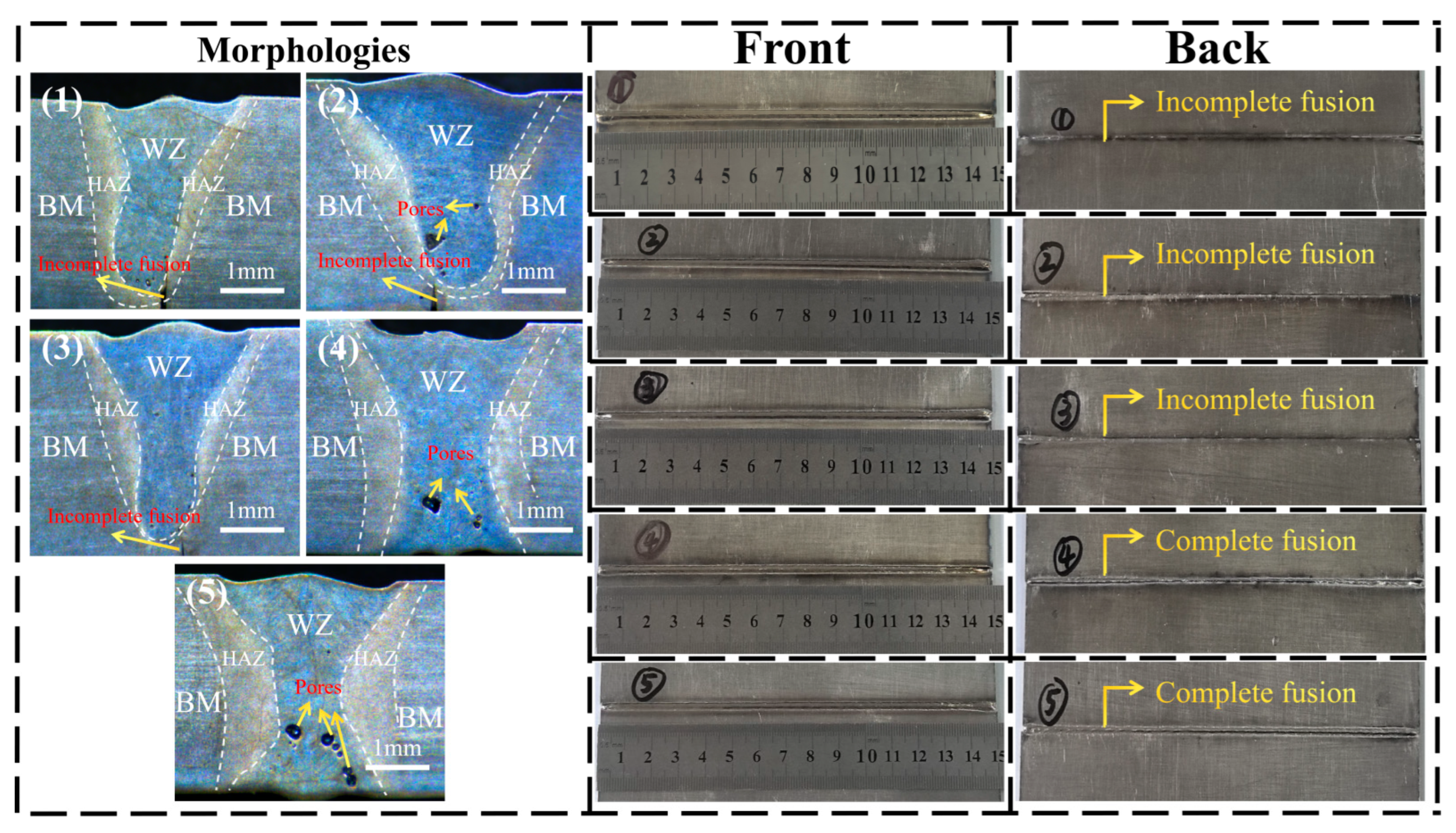
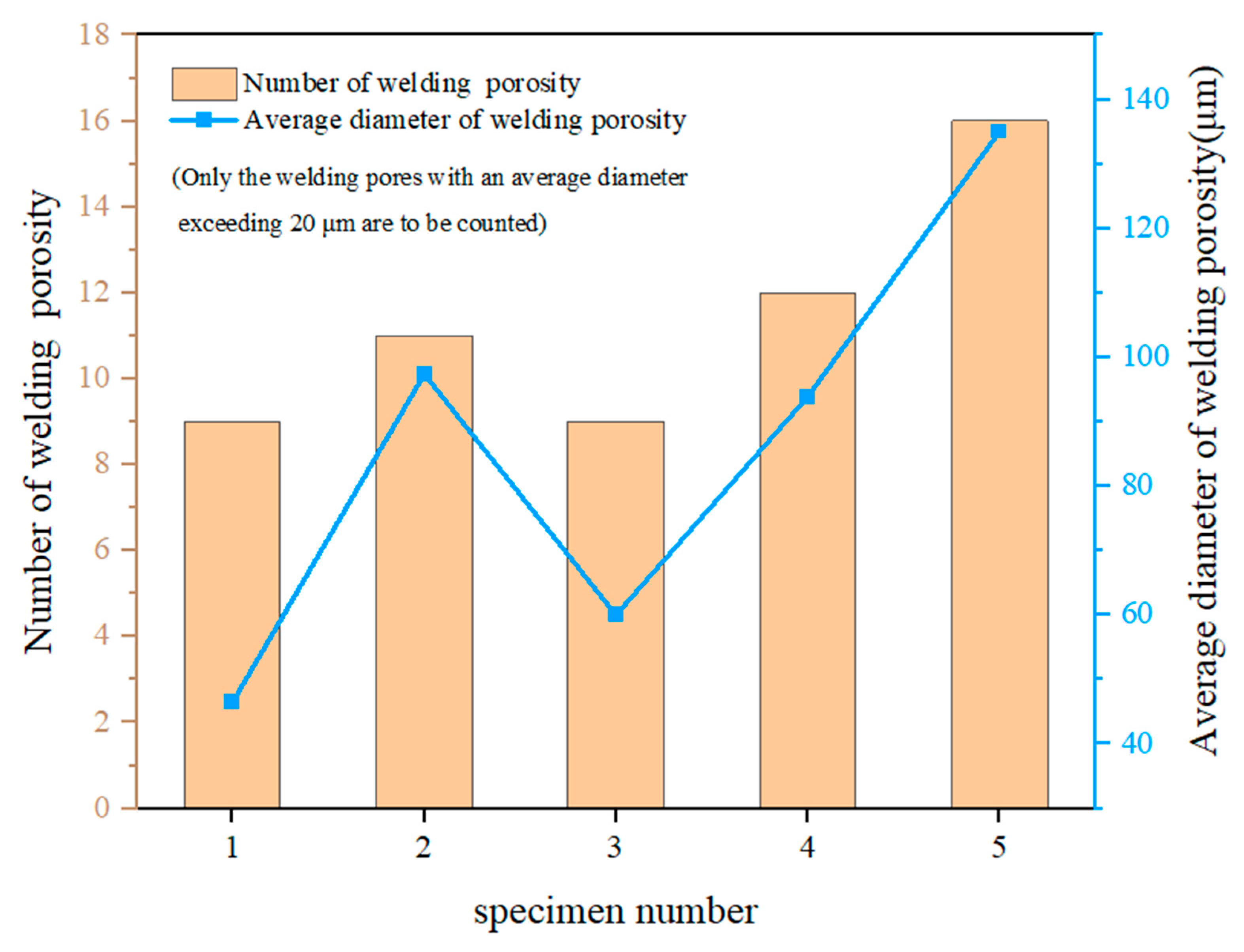
- Increasing laser power changes weld morphology from Y-type to X-type and affects pore distribution, with more pores in the lower weld areas. In incompletely penetrated welds, pore numbers rise then fall, while in fully penetrated ones, they increase with power.
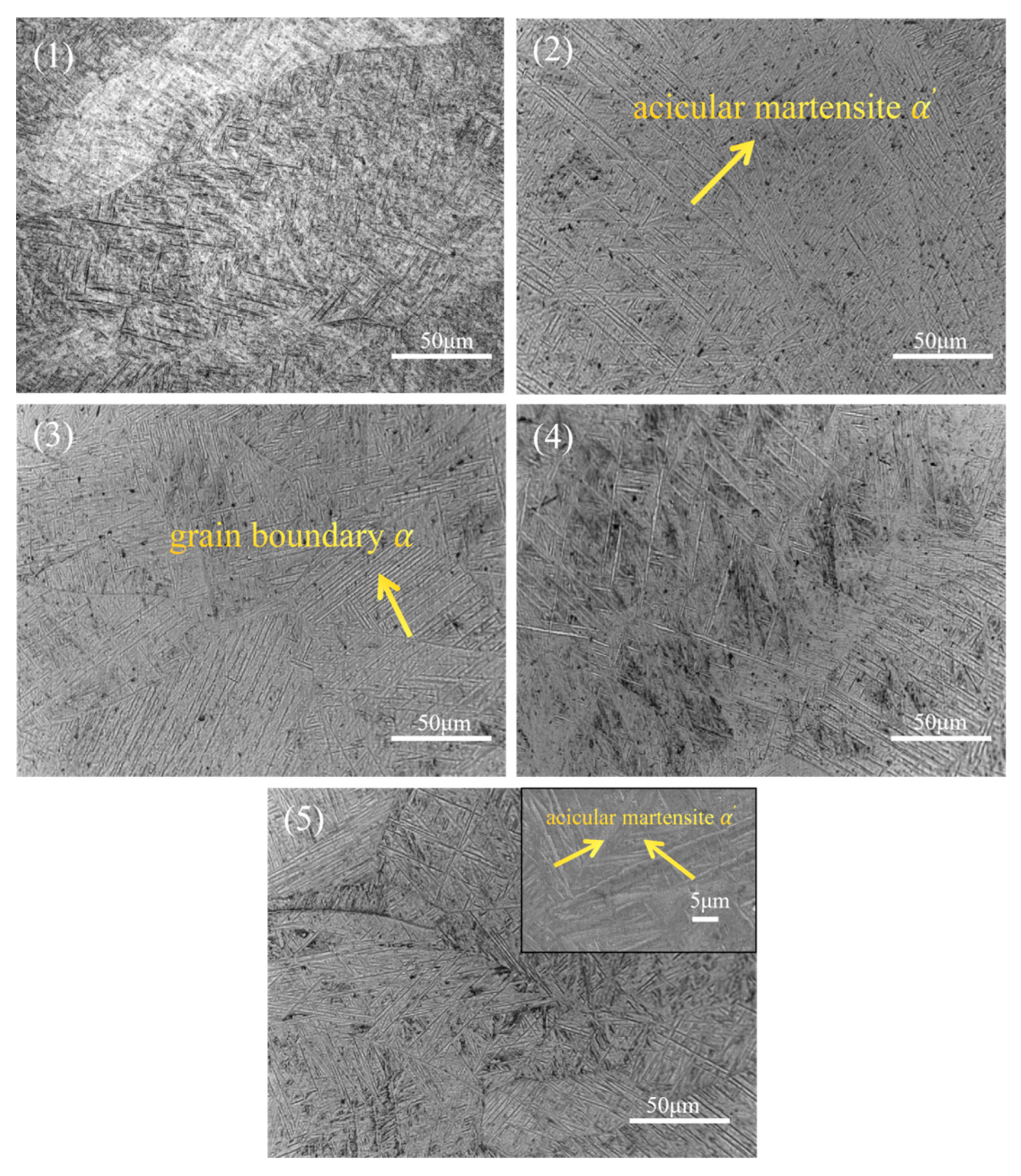
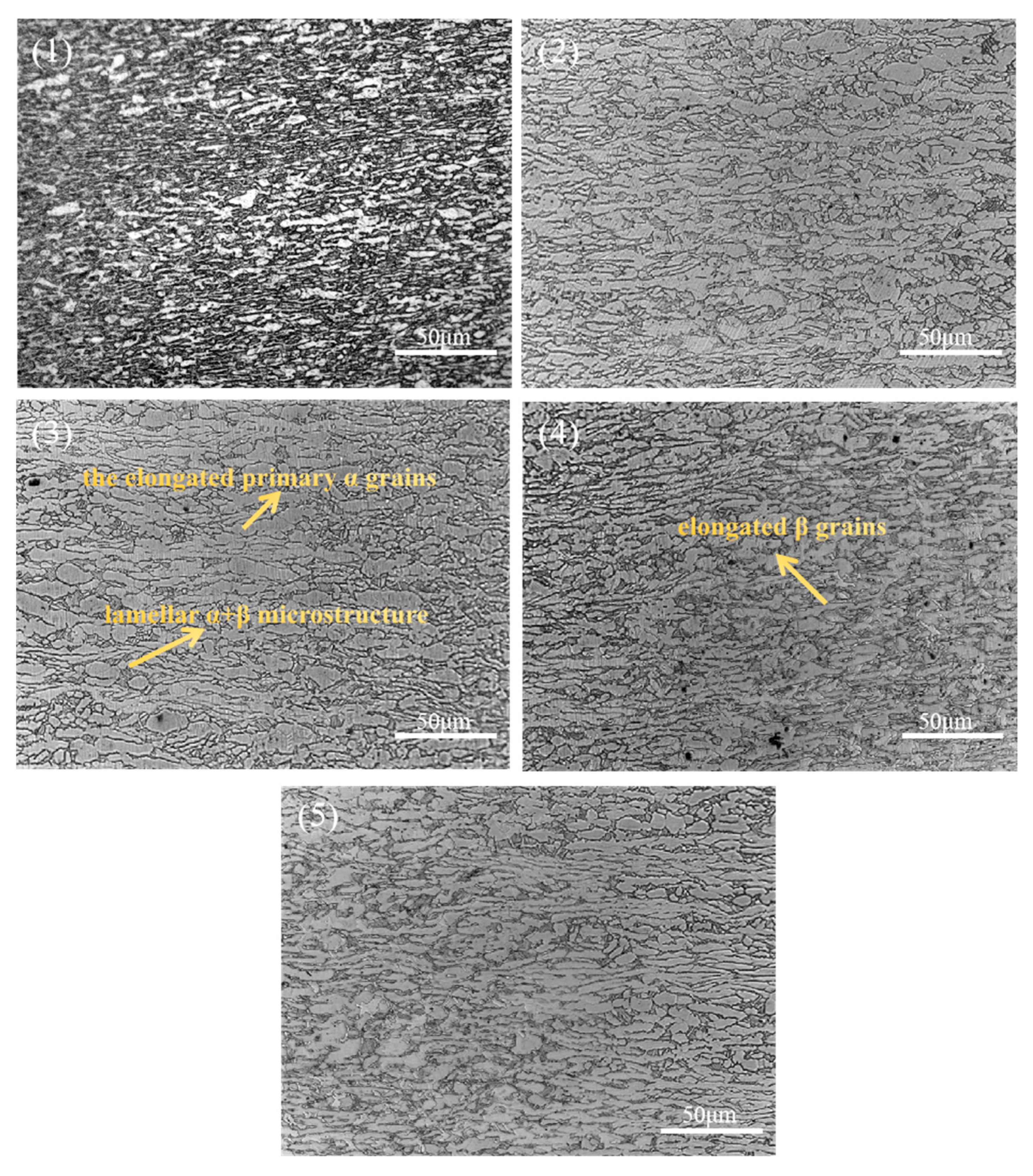
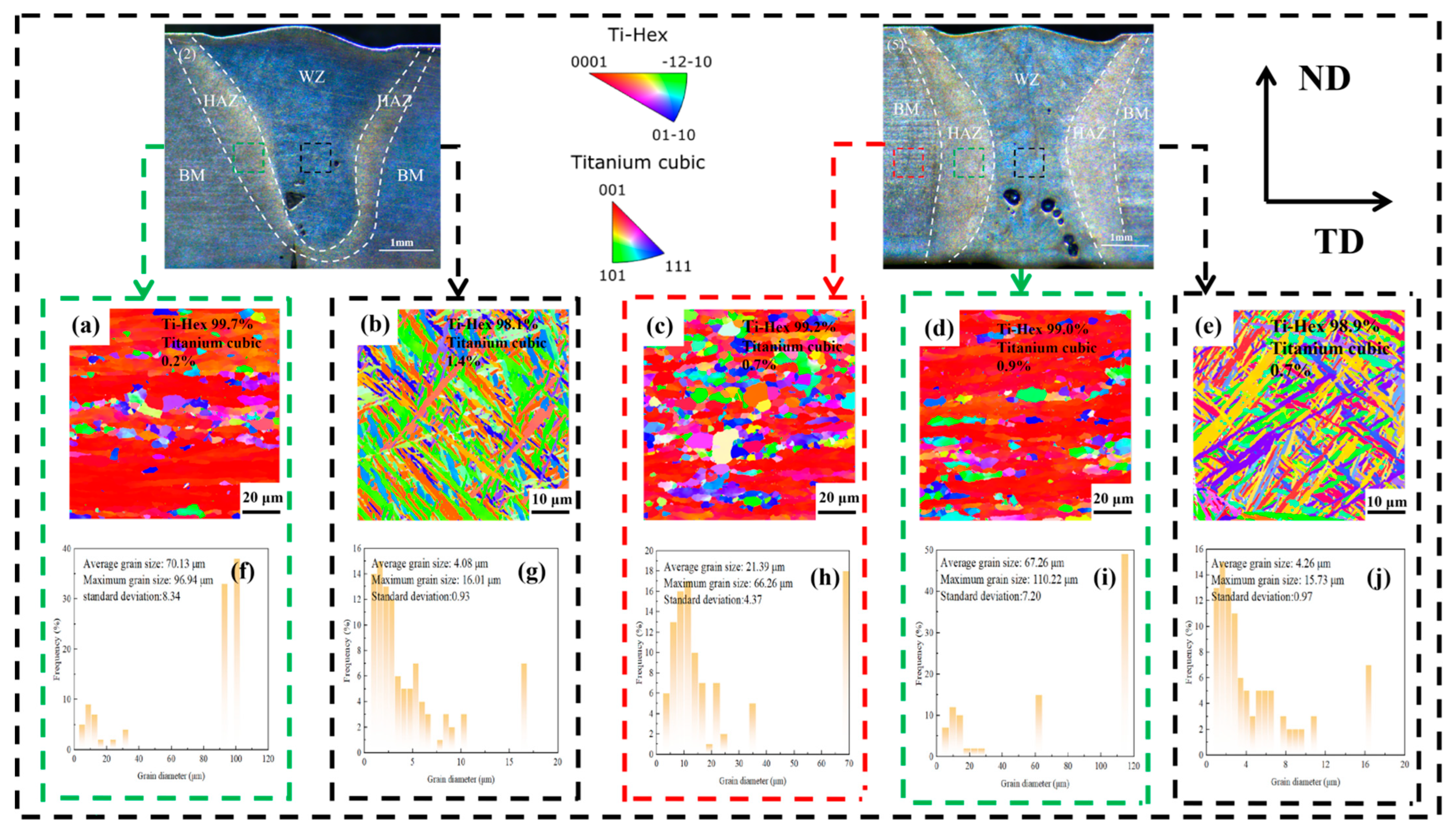
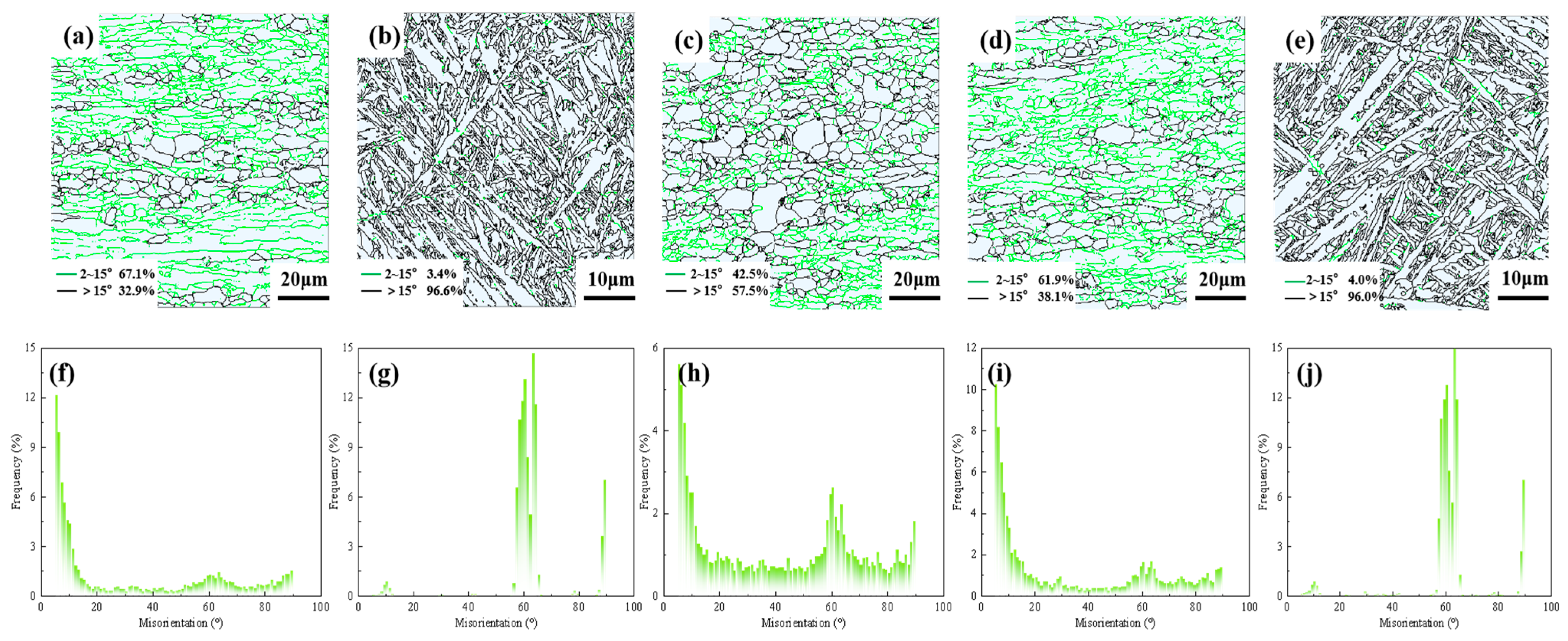
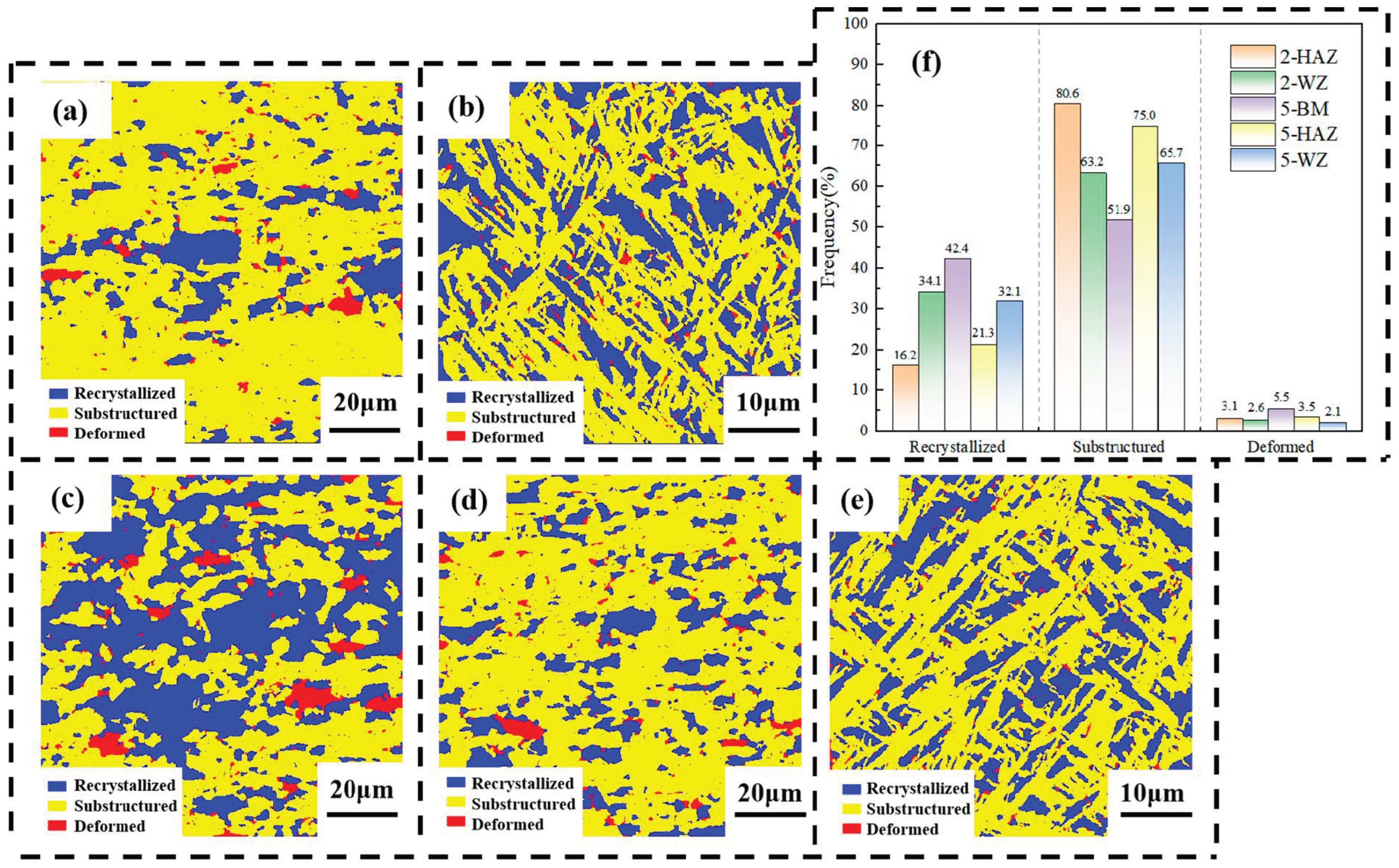
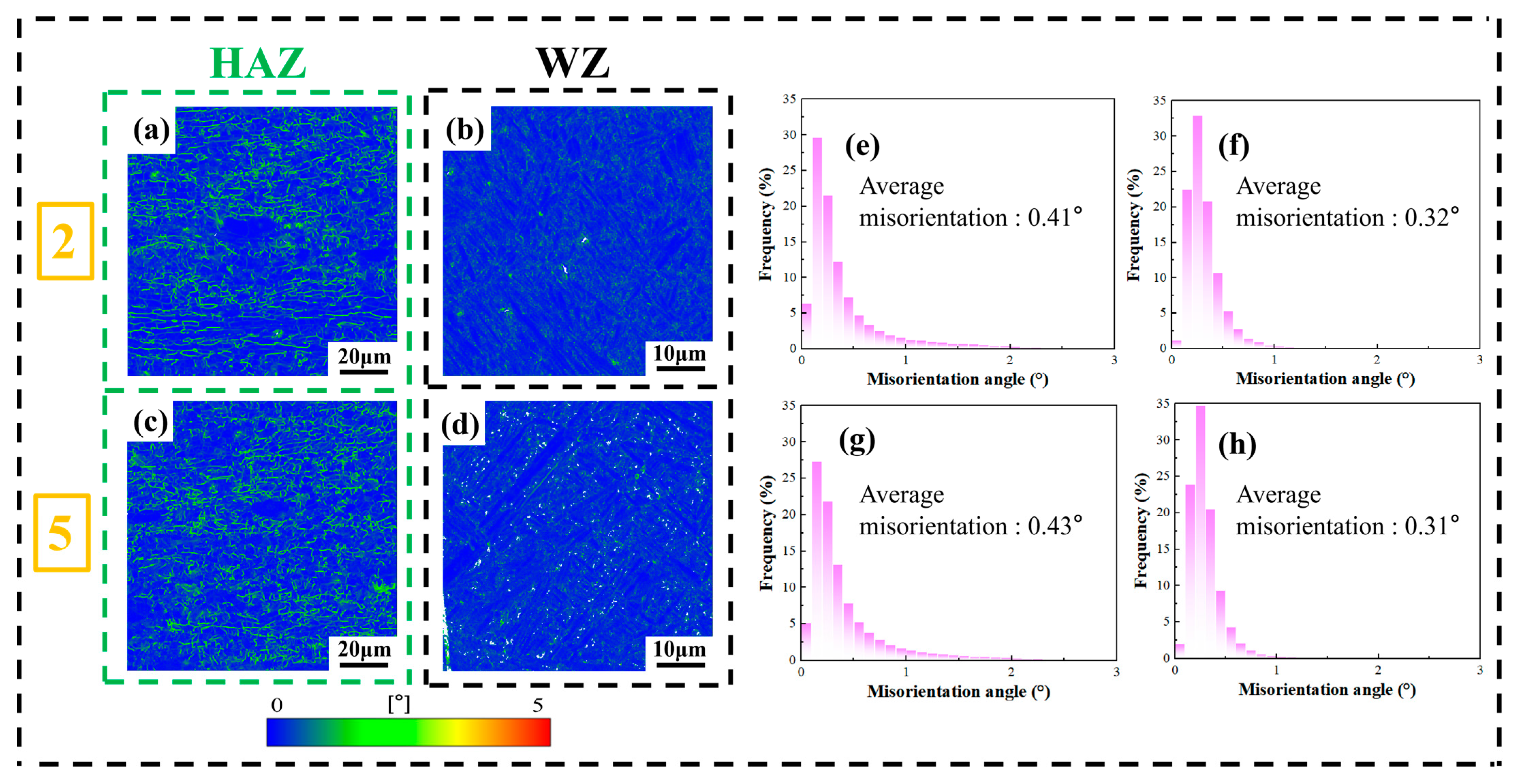
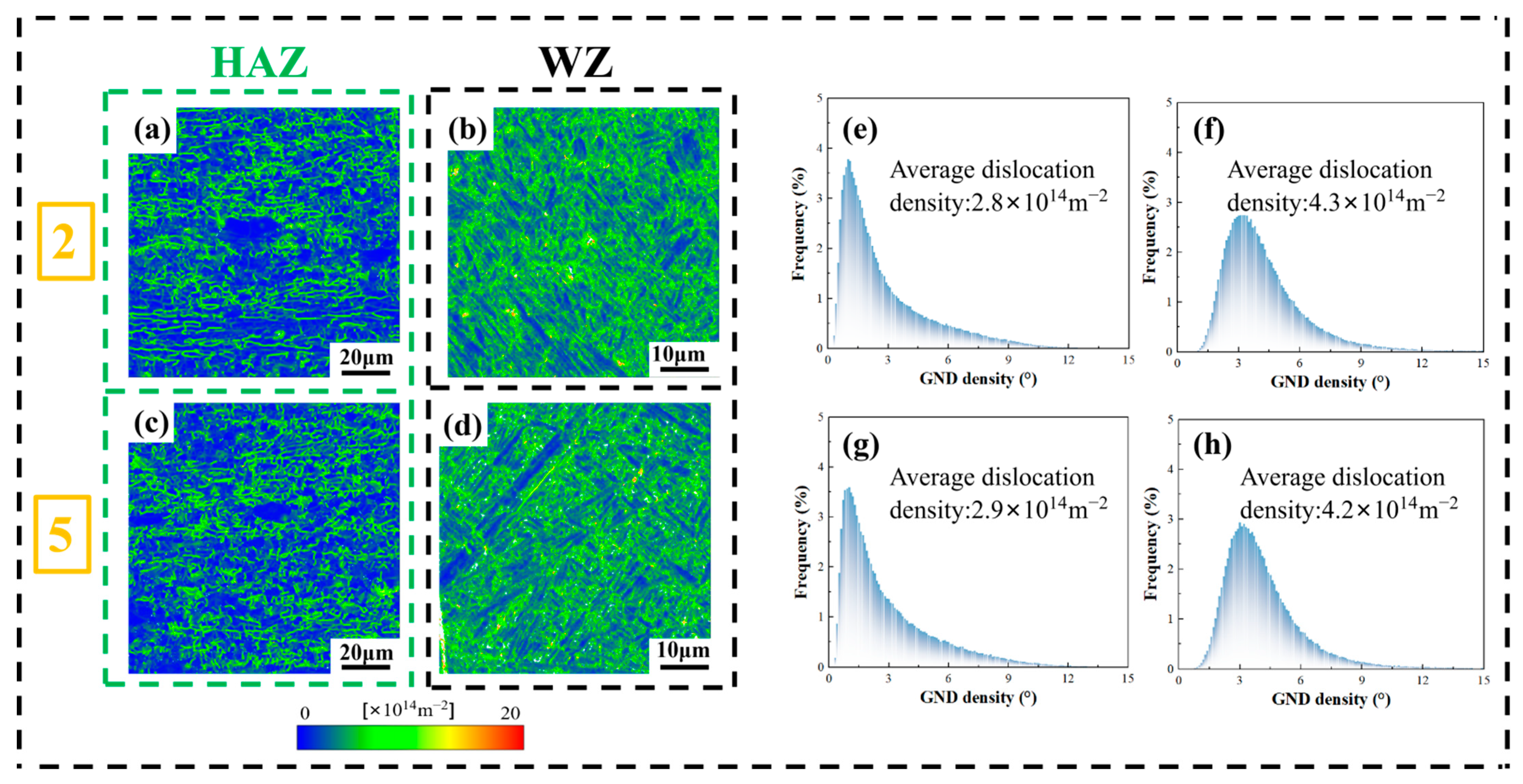
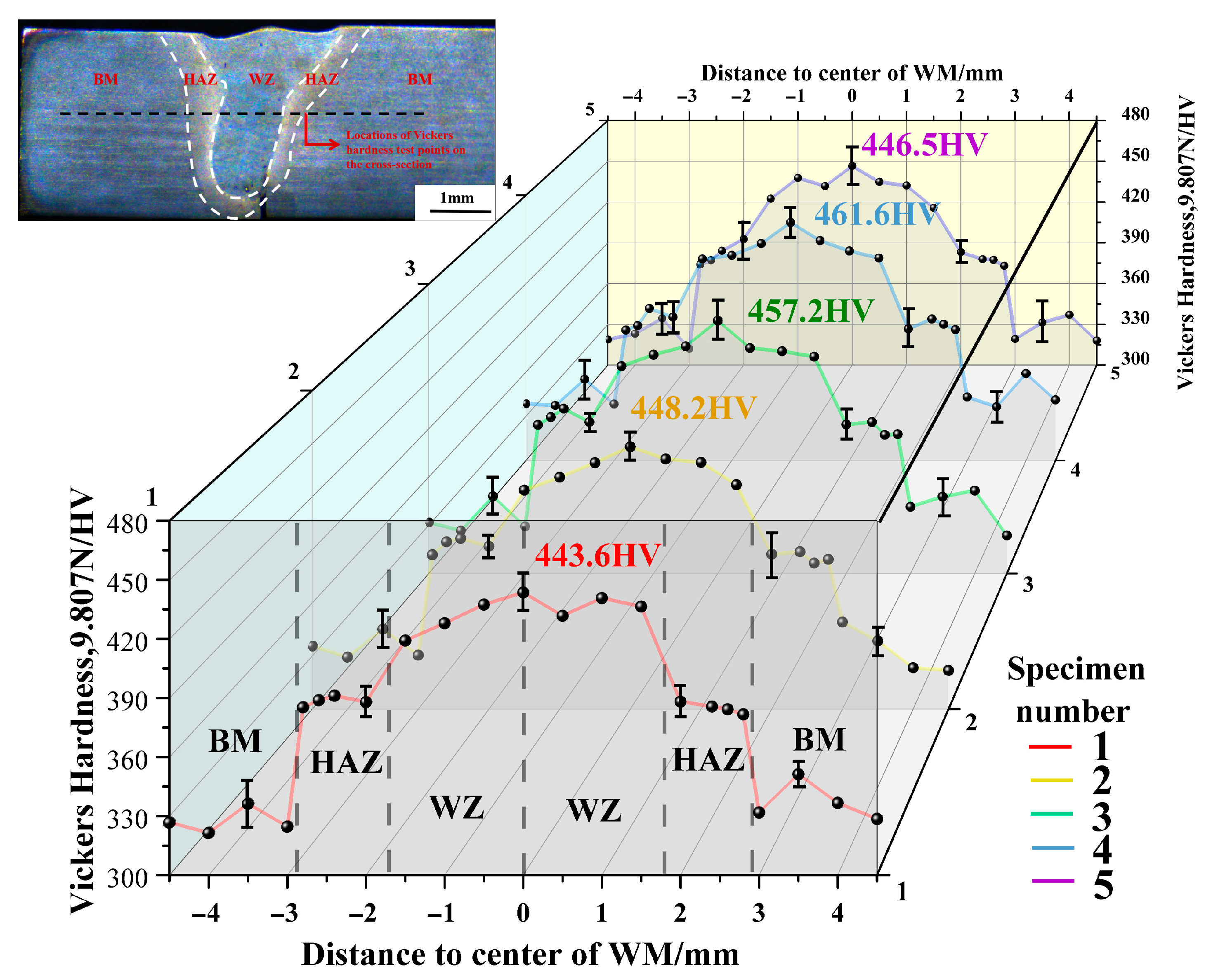
- In laser welding of Ti80 titanium alloy, the density of GND in the WZ is slightly higher than that in the HAZ. Increasing laser power not only reduces the recrystallization degree of WZ grains but also decreases GND density in WZ, and the Vickers hardness of the WZ first increases and then decreases. The average Vickers hardness of the WZ is approximately 420 HV to 460 HV, that of the HAZ is about 390 HV to 400 HV, and that of the BM is approximately 320 HV to 360 HV.
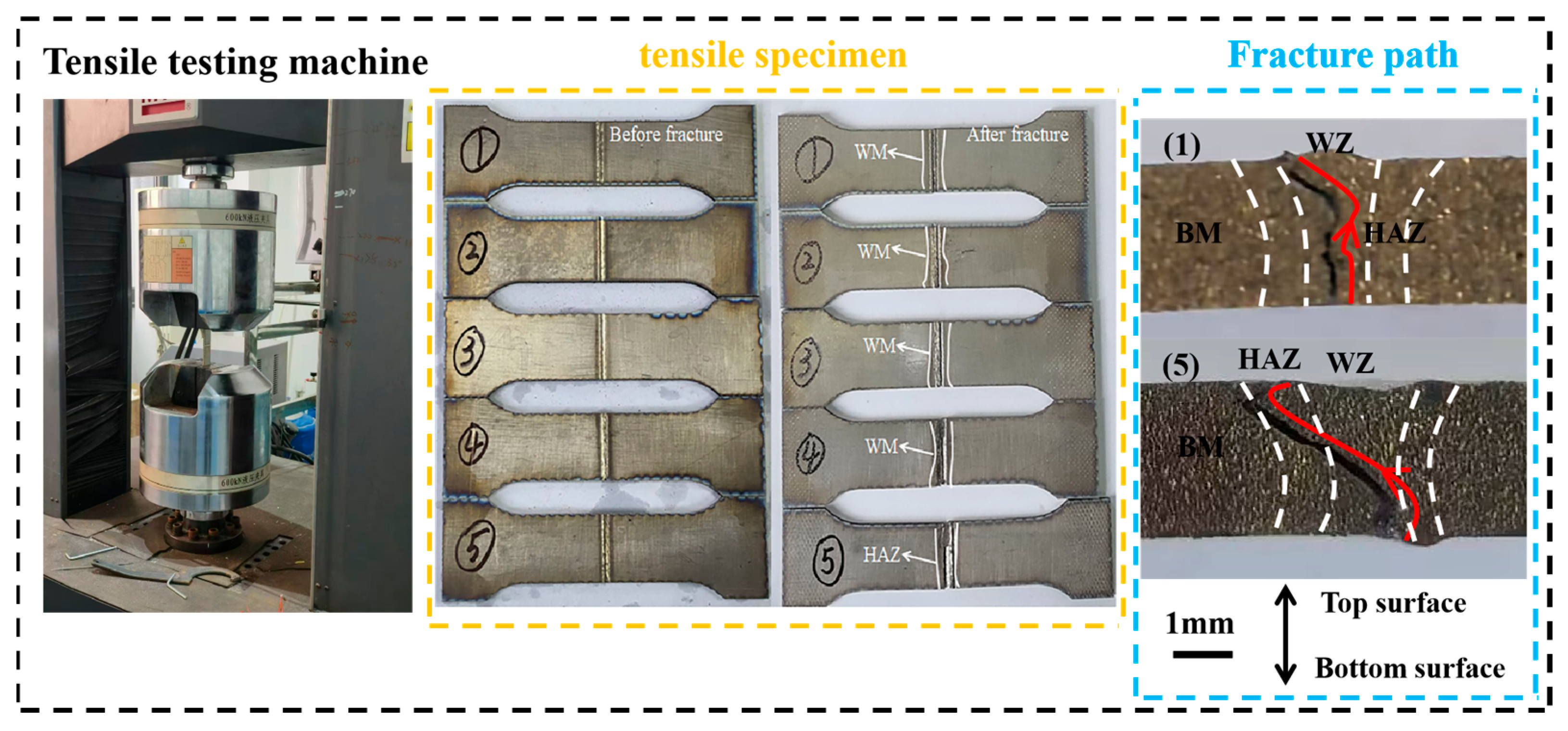
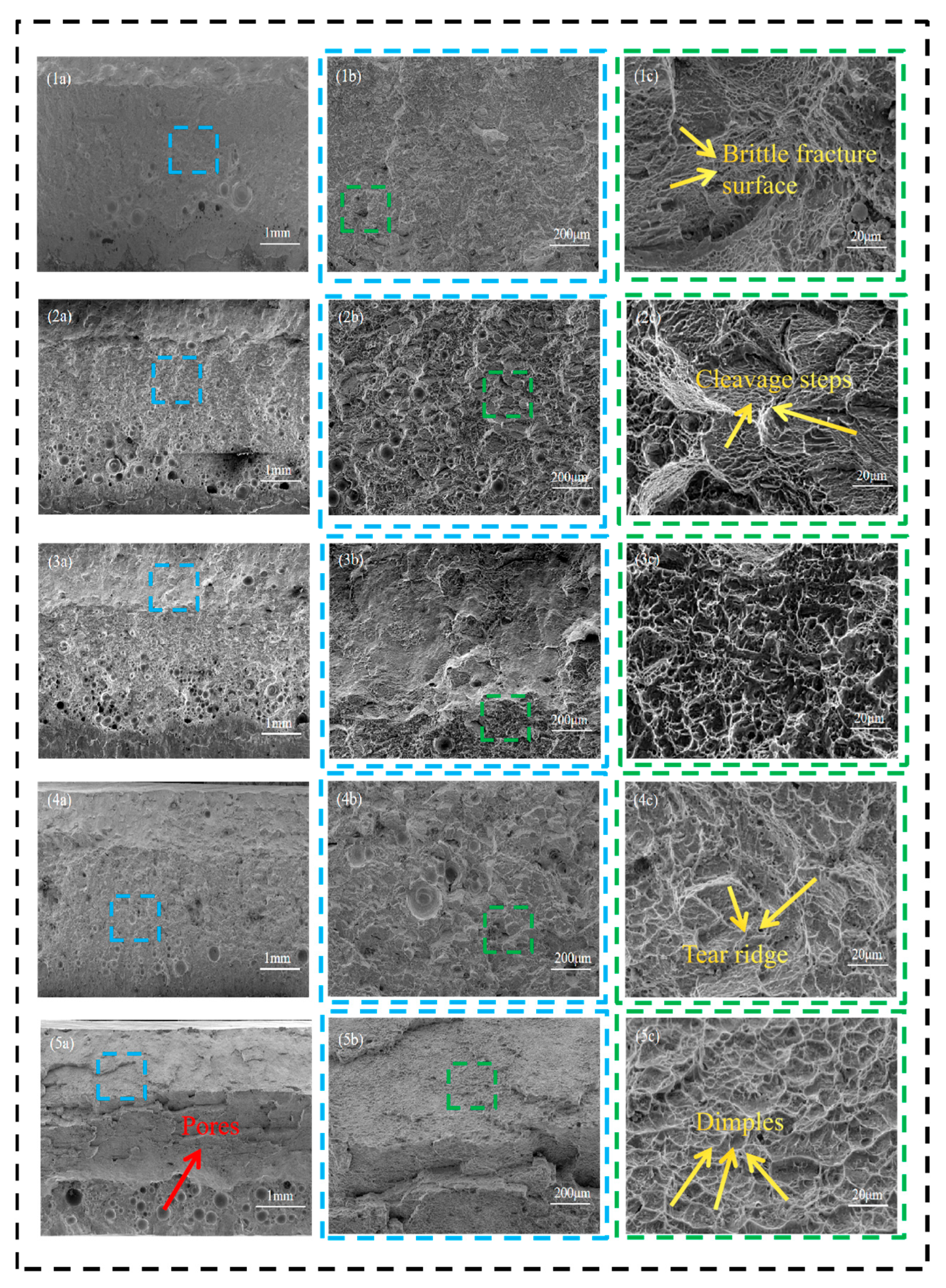
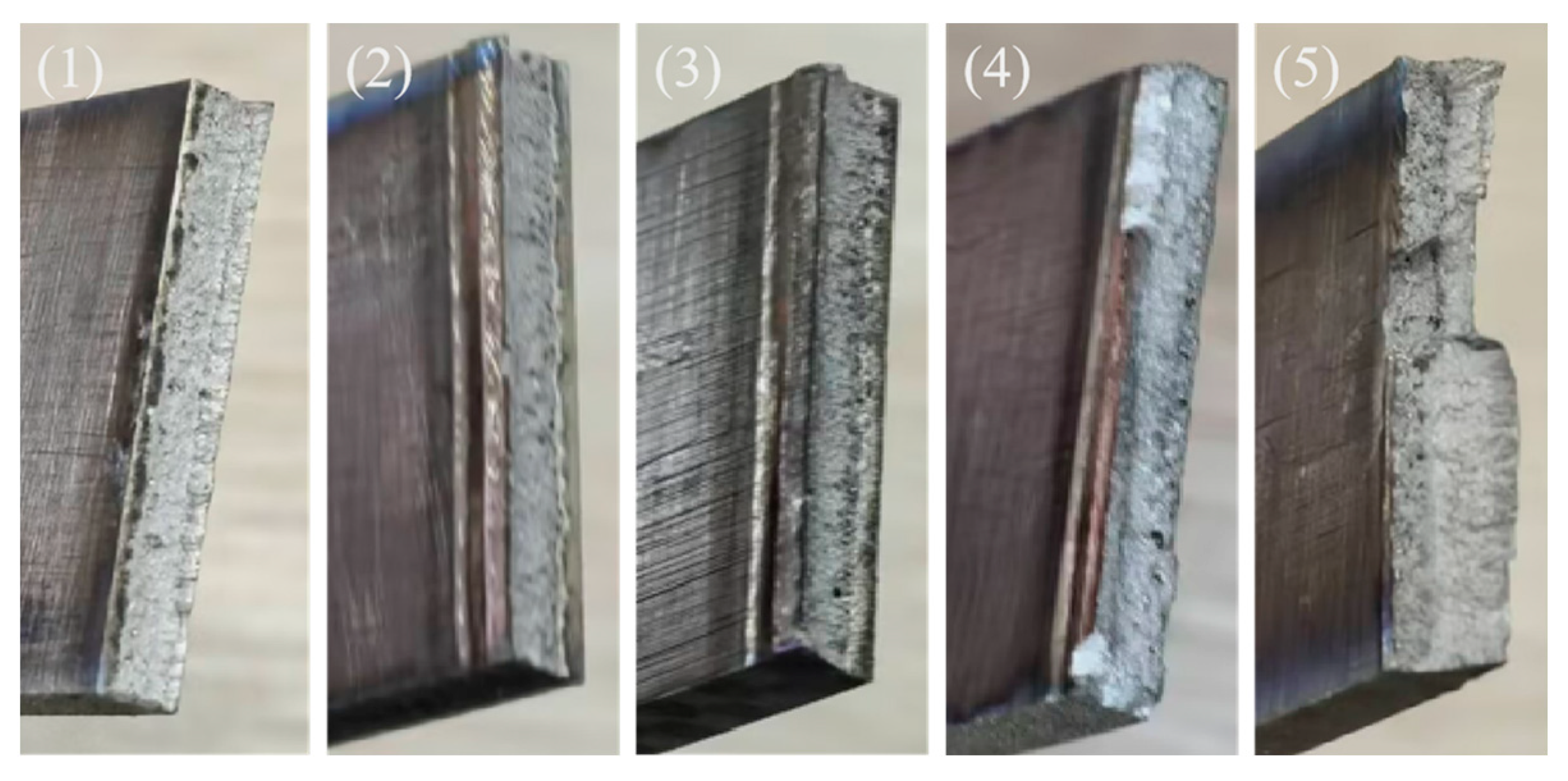
- All tensile specimens 1 to 4 started to fracture at the lower part of the WZ and the cracks ended at the upper part of the WZ. However, specimen 5 began to fracture in the HAZ and the crack ended at the upper part of the HAZ. The tensile strength of specimen 5 was 903.12 MPa and the tensile elongation was 10.4%. There are two mechanisms governing the fracture behavior of tensile specimens: 1. At low power levels (2400–2760 W), the WZ is characterized by fine grains and high defect density, while the HAZ maintains relatively stable microstructures and mechanical properties. Under these conditions, although the high proportion of HAGBs in the WZ inhibits crack formation, fracture is primarily attributed to critical defects within the WZ, including incomplete penetration and insufficient weld strength. 2. At high power levels (2760 W–3000 W), the HAZ undergoes significant expansion, leading to grain coarsening and localized softening. Concurrently, the proportion of high-angle grain boundaries in the WZ slightly decreases. Despite the relatively low residual stress in the WZ, pore formation predominantly concentrates at its bottom region, which becomes the critical factor for crack initiation. Consequently, fracture behavior is jointly influenced by both the HAZ and WZ regions.
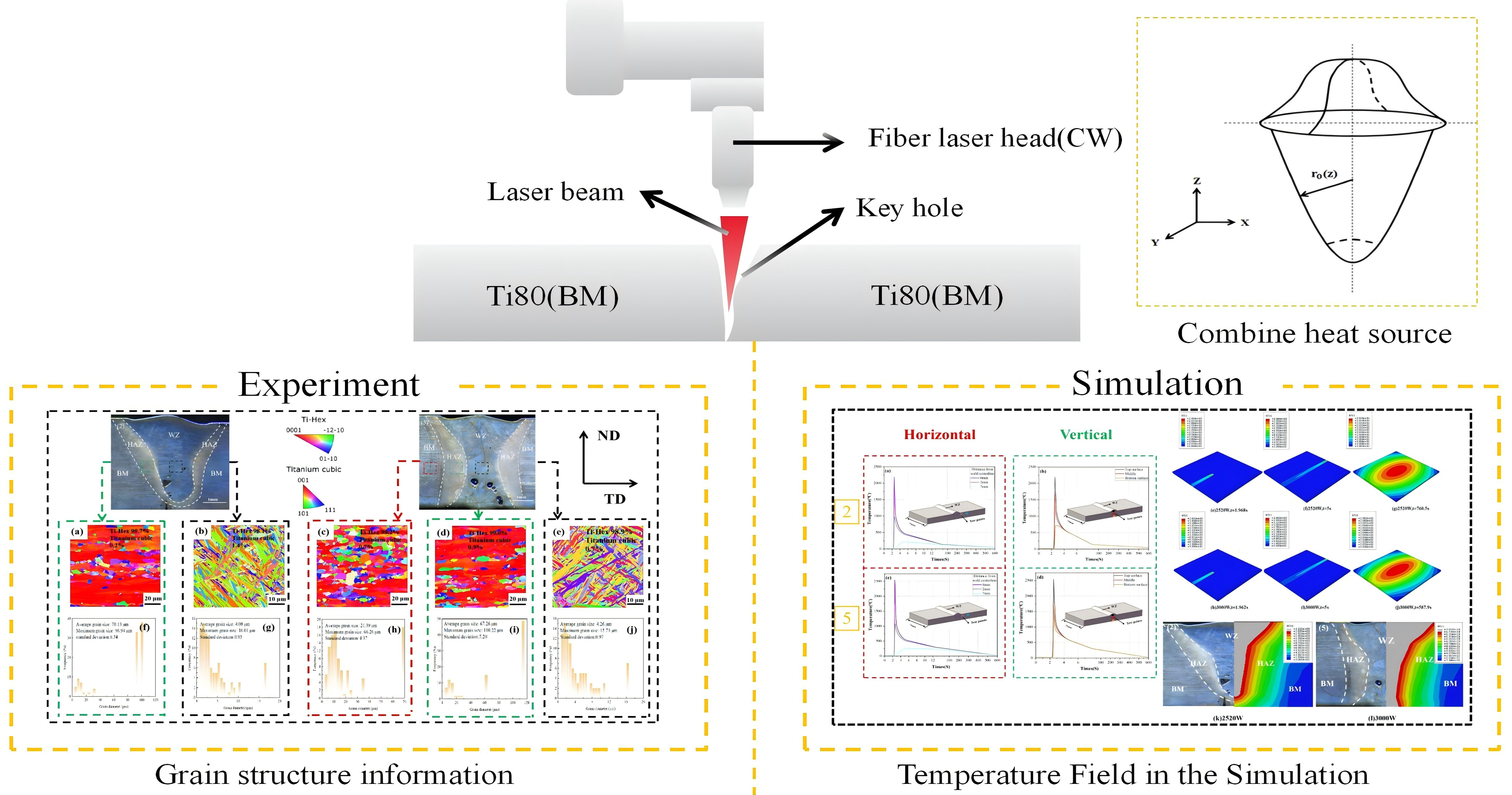
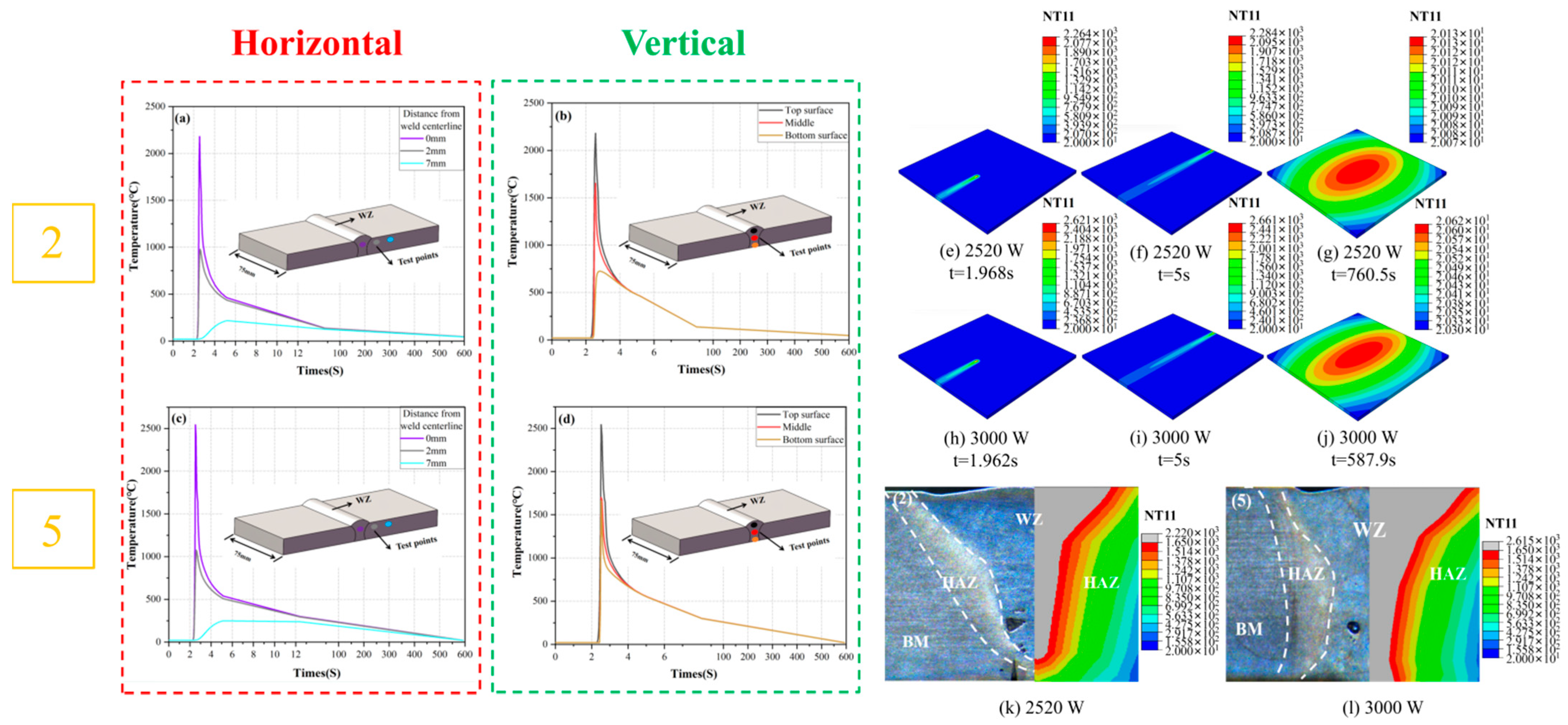
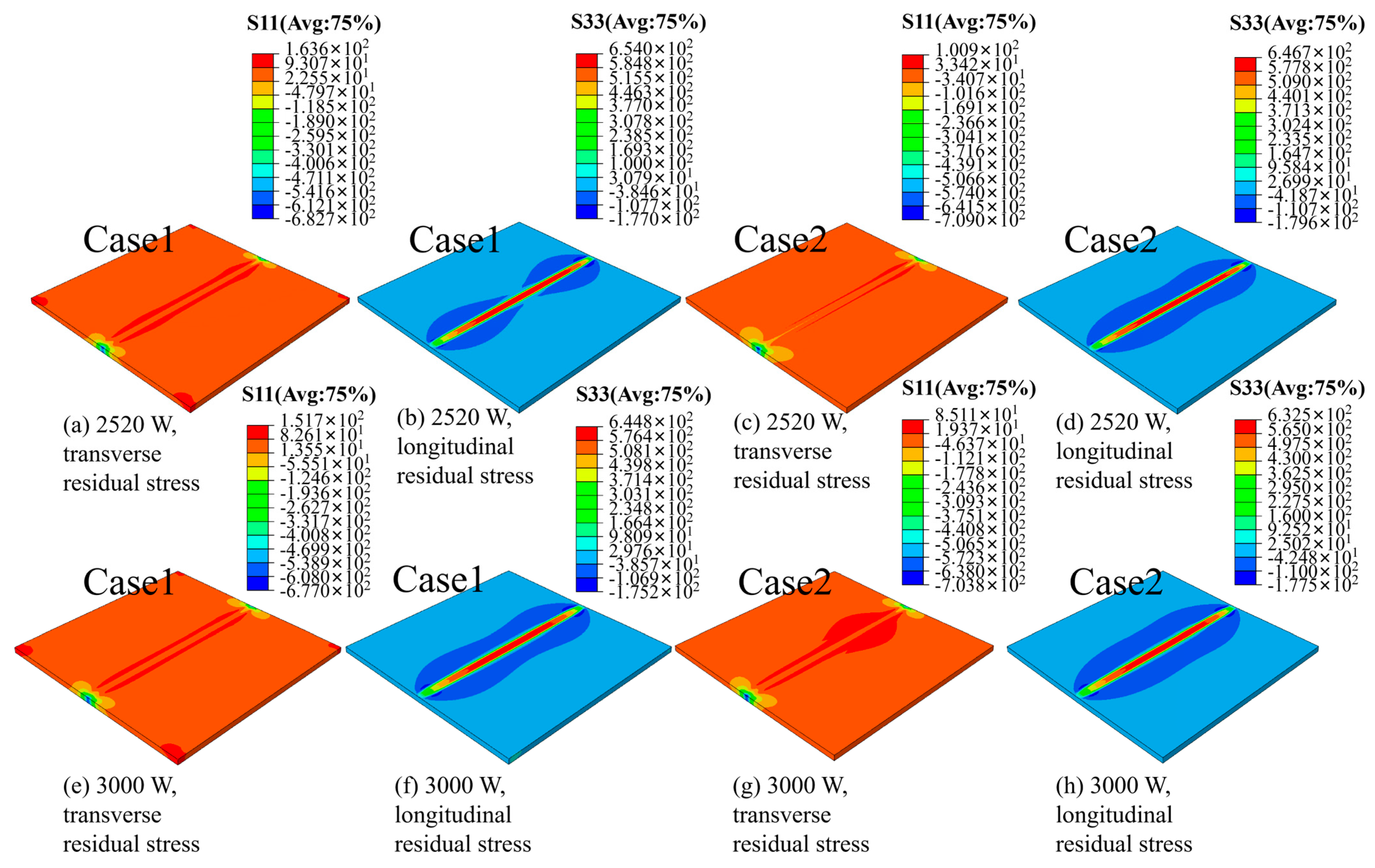
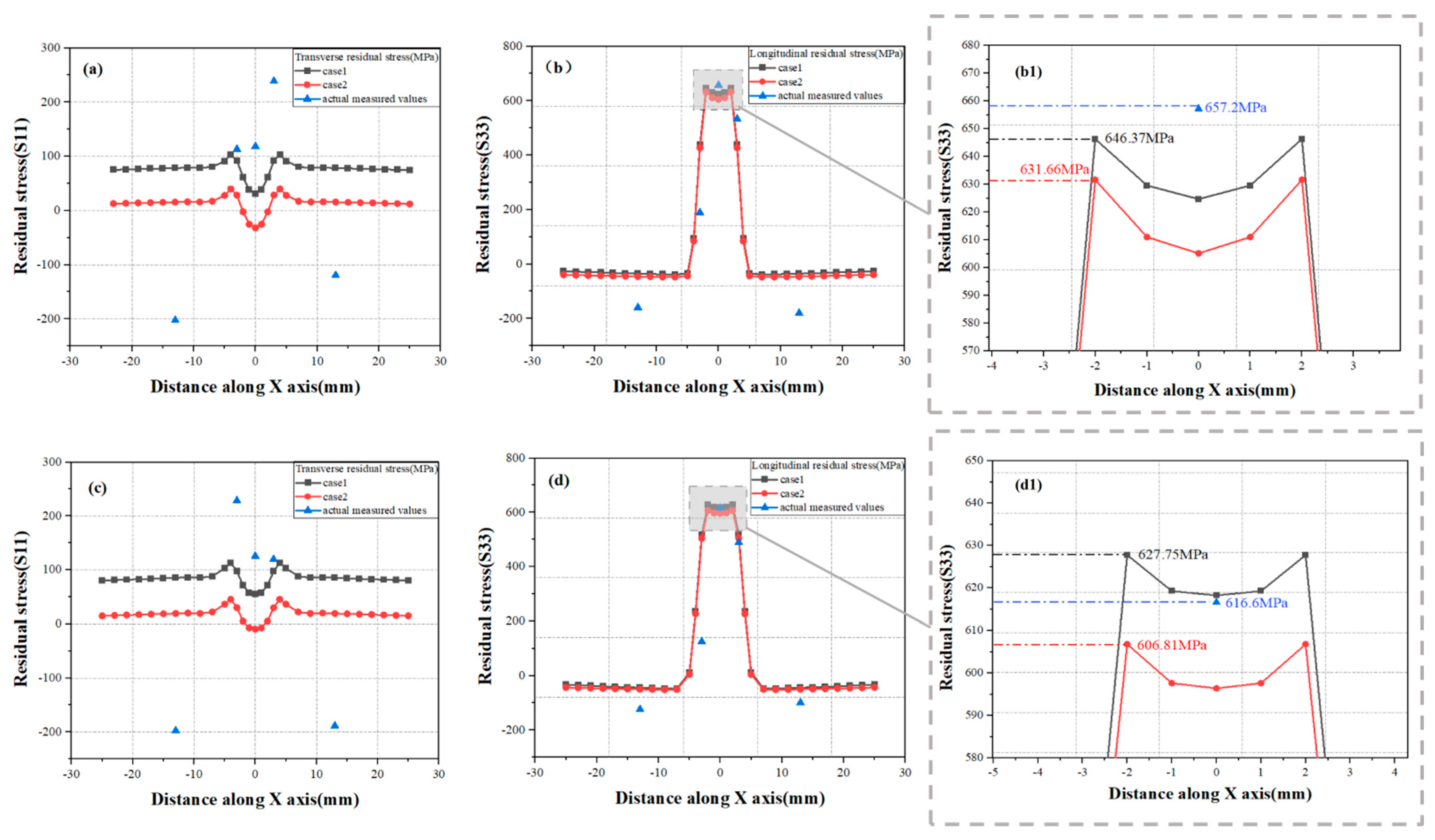
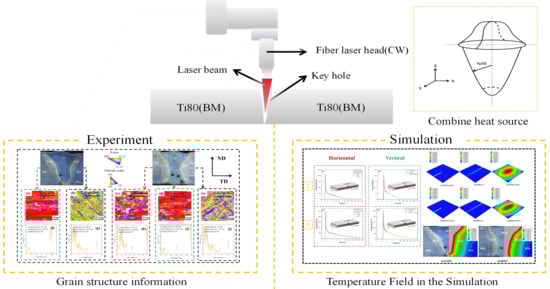
- In the simulation experiment, the simulation outcomes indicated that under the heat source condition of 2520 W, the temperature at the bottom of the plate was too low, resulting in incomplete weld penetration, which was in accordance with the actual experimental circumstances. In the stress field analysis, the errors between the maximum longitudinal residual stress in the WZ obtained through simulation under two different heat source power conditions and the actual measured longitudinal residual stress at the center of the WZ were 1.65% and 1.81%, respectively. The transverse residual stress is more significantly influenced by the clamping configuration and martensitic phase transformation, resulting in relative errors as high as 56.754% and 50.604%, respectively.
Author Contributions
Funding
Data Availability Statement
Conflicts of Interest
Abbreviations
| WM | Weld metal |
| WZ | Welding zone |
| HAZ | Heat affected zone |
| BM | Base material zone |
| KAM | The Kernel Average Misorientation |
| GND | The Geometrically Necessary Dislocations |
References
- Li, Z.; Fan, L.; Ma, L.; Duan, T.; Zhang, H.; Hou, J.; Sun, M. Perspective review on factors that influence the stress corrosion of Ti alloys for deep-sea applications. J. Mater. Sci. Technol. 2024, 222, 228–249. [Google Scholar] [CrossRef] [Scilit]
- Yu, Y.; Jiaqi, L. Current Application and Prospect of Titanium Alloys in Marine Engineering. Dev. Appl. Mater. 2018, 33, 111–116. [Google Scholar]
- Oryshchenko, A.S.; Gorynin, I.V.; Leonov, V.P.; Kudryavtsev, A.S.; Mikhailov, V.I.; Chudakov, E.V. Marine titanium alloys: Present and future. Inorg. Mater. Appl. Res. 2015, 6, 571–579. [Google Scholar] [CrossRef] [Scilit]
- Pei, W.; Xie, Z.; Pei, X.; Wang, J. Superhydrophobic carbon fiber composite coatings based on TC4 titanium alloy for improving corrosion resistance. Ceram. Int. 2024, 50, 53635–53645. [Google Scholar] [CrossRef] [Scilit]
- Yang, Z.; Jia, Y.; Zhang, Y.; Hou, S.; Sun, N. Solidification Microstructure and Mechanical Properties of Laser Additive Manufactured Near-α Ti-6Al-3Nb-2Zr-1Mo Titanium Alloy. J. Mater. Eng. Perform. 2024, 34, 2208–2218. [Google Scholar] [CrossRef] [Scilit]
- Su, Y.; Yang, X.; Zhao, W.; Gao, F.; Ma, S.; Meng, T.; Yin, S.; Li, W. Recrystallization behavior and strengthening mechanism of friction stir welded T-joint of Ti80 titanium alloy. Mater. Charact. 2024, 216, 114257. [Google Scholar] [CrossRef] [Scilit]
- Gao, F.; Yu, W.; Song, D.; Gao, Q.; Guo, L.; Liao, Z. Fracture toughness of TA31 titanium alloy joints welded by electron beam welding under constrained condition. Mater. Sci. Eng. A 2020, 772, 138612. [Google Scholar] [CrossRef] [Scilit]
- Li, Y.; Zhang, S.; Tang, X.; Zhang, Y.; Zhang, M.; Lv, Y. Elucidation of interfacial microstructure inhomogeneity and crack defects of laser fusion-brazing AA5083/TA31 dissimilar butt joints at different groove angles. Int. J. Adv. Manuf. Technol. 2023, 126, 3695–3711. [Google Scholar] [CrossRef] [Scilit]
- Auwal, S.T.; Ramesh, S.; Yusof, F.; Manladan, S.M. A review on laser beam welding of titanium alloys. Int. J. Adv. Manuf. Technol. 2018, 97, 1071–1098. [Google Scholar] [CrossRef] [Scilit]
- Yunlian, Q.; Ju, D.; Quan, H.; Liying, Z. Electron beam welding, laser beam welding and gas tungsten arc welding of titanium sheet. Mater. Sci. Eng. A 2000, 280, 177–181. [Google Scholar] [CrossRef] [Scilit]
- Costa, A.; Miranda, R.; Quintino, L.; Yapp, D. Analysis of Beam Material Interaction in Welding of Titanium with Fiber Lasers. Mater. Manuf. Process. 2007, 22, 798–803. [Google Scholar] [CrossRef] [Scilit]
- ISO 4136:2022; Destructive Testing of Metal Welds. International Organization for Standardization: Geneva, Switzerland, 2022.
- ISO 17636-1:2013; Non-Destructive Testing of Welds Using Radiographic Techniques. International Organization for Standardization: Geneva, Switzerland, 2013.
- Li, Y.; Hou, J.; Gu, L.; Li, L.; Wan, Z. Influence of hardening model on the simulation calculation of thermal-mechanical coupling in Ti80 thick plate welding. Electr. Weld. Mach. 2024, 54, 51–64. [Google Scholar]
- Wu, Y.; Mao, Y.; Fu, L.; Qin, D.; Xiao, X. Dual laser-beam synchronous self-fusion welding of Ti–6Al–4V titanium alloys T-joints based on prefabricated welding materials. J. Mater. Res. Technol. 2022, 17, 2560–2576. [Google Scholar] [CrossRef] [Scilit]
- Goldak, J.; Chakravarti, A.; Bibby, M. A new finite element model for welding heat sources. Metall. Trans. B 1984, 15, 299–305. [Google Scholar] [CrossRef] [Scilit]
- Chuan, L.; Jianxun, Z.; Jing, N. Numerical and Experimental Analysis of Residual Stresses in Full-Penetration Laser Beam Welding of Ti6Al4V Alloy. Rare Met. Mater. Eng. 2009, 38, 1317–1320. [Google Scholar] [CrossRef] [Scilit]
- Wu, D.; Hua, X.; Huang, L.; Li, F.; Cai, Y. Elucidation of keyhole induced bubble formation mechanism in fiber laser welding of low carbon steel. Int. J. Heat Mass Transf. 2018, 127, 1077–1086. [Google Scholar] [CrossRef] [Scilit]
- Wu, D.; Hua, X.; Huang, L.; Li, F.; Cai, Y. Observation of the keyhole behavior, spatter, and keyhole-induced bubble formation in laser welding of a steel/glass sandwich. Weld. World 2019, 63, 815–823. [Google Scholar] [CrossRef] [Scilit]
- Li, G.; Wang, Y.; Liang, Y.; Gao, P.; Liu, X.; Xu, W.; Yang, D. Microstructure and mechanical properties of laser welded Ti-6Al-4V (TC4) titanium alloy joints. Opt. Laser Technol. 2024, 170, 110320. [Google Scholar] [CrossRef] [Scilit]
- Beladi, H.; Chao, Q.; Rohrer, G.S. Variant selection and intervariant crystallographic planes distribution in martensite in a Ti–6Al–4V alloy. Acta Mater. 2014, 80, 478–489. [Google Scholar] [CrossRef] [Scilit]
- Li, C.; Cui, Y.; Zheng, W.; Song, L.; Wu, Y.; Wu, Y.; Yu, C.; Hui, X. Unveiling the dynamic softening mechanism via micromechanical behavior for a near-β titanium alloy deformed at a high strain rate. J. Mater. Res. Technol. 2023, 26, 9392–9405. [Google Scholar] [CrossRef] [Scilit]
- Furuhara, T.; Poorganji, B.; Abe, H.; Maki, T. Dynamic recovery and recrystallization in titanium alloys by hot deformation. JOM 2007, 59, 64–67. [Google Scholar] [CrossRef] [Scilit]
- Kondo, S.; Mitsuma, T.; Shibata, N.; Ikuhara, Y. Direct observation of individual dislocation interaction processes with grain boundaries. Sci. Adv. 2016, 2, e1501926. [Google Scholar] [CrossRef] [Scilit]
- Hirth, J.P. The influence of grain boundaries on mechanical properties. Met. Trans. 1972, 3, 3047–3067. [Google Scholar] [CrossRef] [Scilit]
- Kacher, J.; Eftink, B.; Cui, B.; Robertson, I. Dislocation interactions with grain boundaries. Curr. Opin. Solid State Mater. Sci. 2014, 18, 227–243. [Google Scholar] [CrossRef] [Scilit]
- Hall, E.O. The Deformation and Ageing of Mild Steel: III Discussion of Results. Proc. Phys. Soc. Sect. B 2002, 64, 495. [Google Scholar] [CrossRef] [Scilit]
- Petch, N.J. The Cleavage Strength of Polycrystals. J. Iron Steel Inst. 1953, 174, 25–28. [Google Scholar]
- Zhan, Y.; Zhang, E.; Ge, Y.; Liu, C. Residual Stress in Laser Welding of TC4 Titanium Alloy Based on Ultrasonic laser Technology. Appl. Sci. 2018, 8, 1997. [Google Scholar] [CrossRef] [Scilit]
- Zhao, X.; Wang, K. Finite element simulation of the residual stress in Ti6Al4V titanium alloy laser welded joint. Int. J. Mater. Res. 2019, 110, 466–475. [Google Scholar] [CrossRef] [Scilit]
- Chen, C.; Li, L.; Zhang, M.; Xu, M.; Zhang, W. Study on Laser Transmission Welding Technology of TC4 Titanium Alloy and High-Borosilicate Glass. Materials 2024, 17, 4371. [Google Scholar] [CrossRef] [Scilit] [PubMed]
- Patterson, T.; Lippold, J.; Panton, B. Beta grain size evolution in laser-welded Ti-6Al-4V. Weld. World 2022, 66, 2231–2243. [Google Scholar] [CrossRef] [Scilit]
- Guo, B.; Chen, H.; Chong, Y.; Mao, W.; Harjo, S.; Gong, W.; Zhang, Z.; Jonas, J.J.; Tsuji, N. Direct observations of dynamic and reverse transformation of Ti-6Al-4V alloy and pure titanium. Acta Mater. 2024, 268, 119780. [Google Scholar] [CrossRef] [Scilit]
- Xiao, C.; Hu, B.; Ge, J.; Kong, B.; Luo, D.; Zhang, X.; Zhou, K. Revealing the Effect of α’Decomposition on Microstructure Evolution and Mechanical Properties in Ti80 Alloy. Materials 2024, 17, 2238. [Google Scholar] [CrossRef] [Scilit]
- Ahn, J.; He, E.; Chen, L.; Wimpory, R.; Dear, J.; Davies, C. Prediction and measurement of residual stresses and distortions in fibre laser welded Ti-6Al-4V considering phase transformation. Mater. Des. 2017, 115, 441–457. [Google Scholar] [CrossRef] [Scilit]
- Zhou, X.; Cao, X.; Zhang, F.; Duan, J. Numerical and experimental investigation of thermal stress distribution in laser lap welding of Ti6Al4V and 2024 alloy plates. Int. J. Adv. Manuf. Technol. 2022, 118, 1427–1440. [Google Scholar] [CrossRef] [Scilit]
- Kumar, B.; Bag, S. Phase transformation effect in distortion and residual stress of thin-sheet laser welded Ti-alloy. Opt. Lasers Eng. 2019, 122, 209–224. [Google Scholar] [CrossRef] [Scilit]



| Al | Nb | Zr | Mo | Si | Fe | C | O | N | H | Ti |
|---|---|---|---|---|---|---|---|---|---|---|
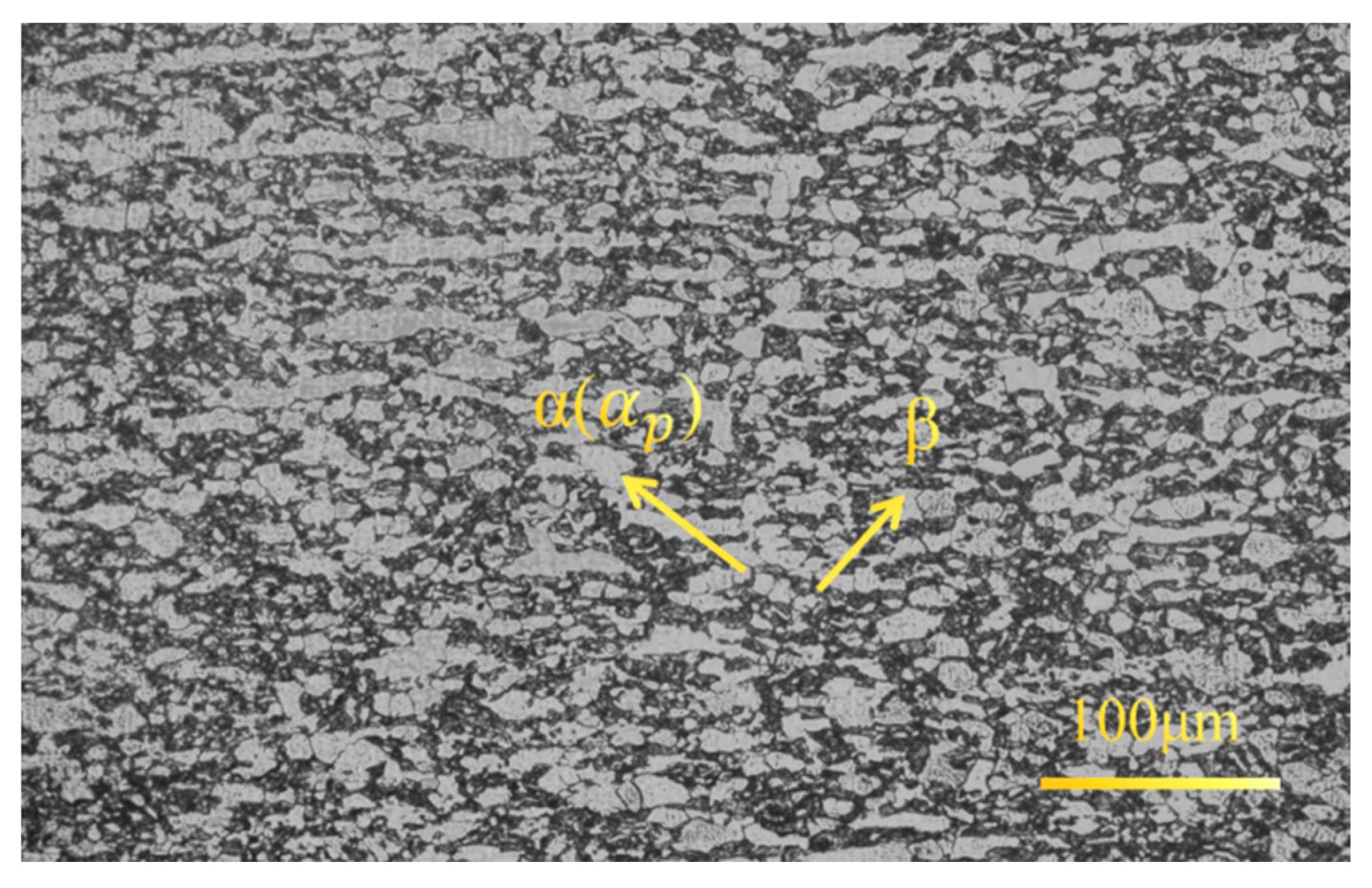
| 6.05 | 2.68 | 2.06 | 1.07 | 0.012 | 0.074 | 0.027 | 0.107 | 0.007 | 0.0013 | Bal |
| Specimen Number | Laser Power/kw | Welding Speed/ | Laser Defocusing/mm | Laser Heat Input/mm−1 | Shielding Gas |
|---|---|---|---|---|---|
| 1 | 2.40 | 30 | +3 | 80 | |
| 2 | 2.52 | 30 | +3 | 84 | |
| 3 | 2.64 | 30 | +3 | 88 | Ar |
| 4 | 2.76 | 30 | +3 | 92 | |
| 5 | 3.00 | 30 | +3 | 100 |
| Density | Poisson Ratio μ | Latent Heat | Solidus Temp | Liquidus Temp |
|---|---|---|---|---|
| 4657 | 0.33 | 300,000 | 1650 | 1716 |
| Specimen Number | Laser Power/W | Tensile Strength/ MPa | Tensile Elongation/% | Fracture Position |
|---|---|---|---|---|
| 1 | 2400 | 359.06 | 2.69 | WM |
| 2 | 2520 | 454.06 | 1.48 | WM |
| 3 | 2640 | 508.18 | 5.13 | WM |
| 4 | 2760 | 676.41 | 3.27 | WM |
| 5 | 3000 | 903.12 | 10.40 | HAZ |
Disclaimer/Publisher’s Note: The statements, opinions and data contained in all publications are solely those of the individual author(s) and contributor(s) and not of MDPI and/or the editor(s). MDPI and/or the editor(s) disclaim responsibility for any injury to people or property resulting from any ideas, methods, instructions or products referred to in the content. |
© 2025 by the authors. Licensee MDPI, Basel, Switzerland. This article is an open access article distributed under the terms and conditions of the Creative Commons Attribution (CC BY) license.
Share and Cite
Zheng, C.; Yang, Z.; Yi, G.; Zhang, L.; Zhou, X.; Yao, X. Laser Power-Dependent Microstructural Evolution and Fracture Mechanisms in Ti80 Titanium Alloy Welds: A Multi-Scale Investigation. Materials 2026, 19, 116. https://doi.org/10.3390/ma19010116
Zheng C, Yang Z, Yi G, Zhang L, Zhou X, Yao X. Laser Power-Dependent Microstructural Evolution and Fracture Mechanisms in Ti80 Titanium Alloy Welds: A Multi-Scale Investigation. Materials. 2026; 19(1):116. https://doi.org/10.3390/ma19010116
Chicago/Turabian StyleZheng, Chuanbo, Zhanwen Yang, Guo Yi, Liuyu Zhang, Xiaomeng Zhou, and Xinyu Yao. 2026. "Laser Power-Dependent Microstructural Evolution and Fracture Mechanisms in Ti80 Titanium Alloy Welds: A Multi-Scale Investigation" Materials 19, no. 1: 116. https://doi.org/10.3390/ma19010116
APA StyleZheng, C., Yang, Z., Yi, G., Zhang, L., Zhou, X., & Yao, X. (2026). Laser Power-Dependent Microstructural Evolution and Fracture Mechanisms in Ti80 Titanium Alloy Welds: A Multi-Scale Investigation. Materials, 19(1), 116. https://doi.org/10.3390/ma19010116