
Abstract
Thermal insulation is a basic property for describing a set of clothing and consists of the thermal resistance of the individual layers of clothing (which depends on the material used and its structure) and also takes into account the air gaps between the layers. Here, the total thermal insulation was measured in a climatic chamber with a thermal manikin. The air gaps were measured using a 3D scanning technique and calculated using the Blender 3D graphics program. Our study shows the effect of size (fit) on the size of the air gaps, as well as the influence of the air gap size on the thermal insulation value (both for static and dynamic conditions with 45 double steps and 45 double arm movements per minute) for workwear. The relationship of the total thermal insulation value on the volume and size of the air gap was described as a second-order polynomial (R2 > 0.8). It was observed that for workwear, thermal insulation did not increase when the air gaps exceeded approximately 30 mm or when the air gap volume reached 50–55 dm3. The highest total thermal insulation (~0.23 m2°C/W) was achieved when the garment closely fitted the wearer’s body (or in this case, the thermal manikin) without excessive tightness.
1. Introduction
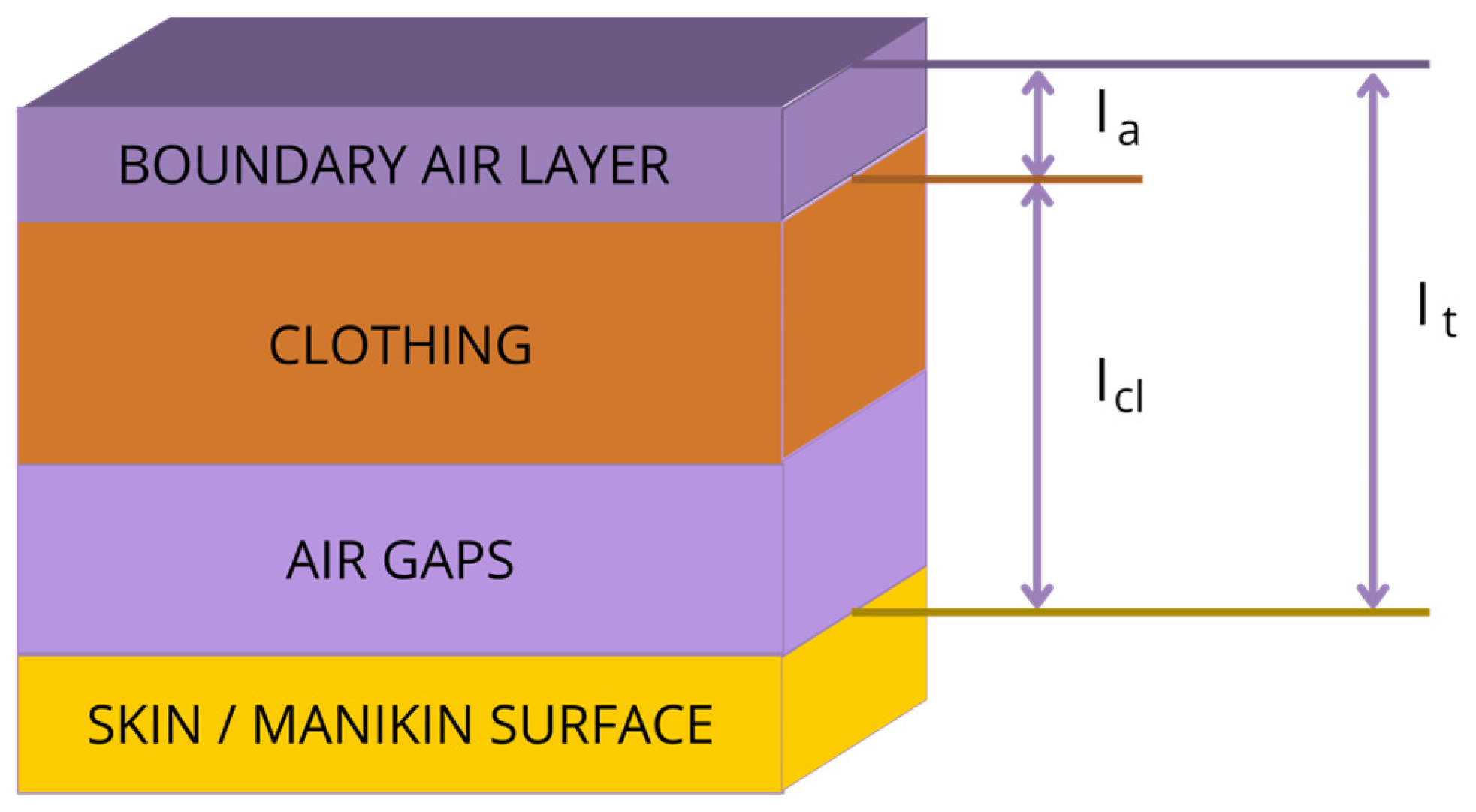
Heat transfer in the clothing and heat source system depends largely on the thermal insulation of the whole set of clothing. Thermal insulation is a basic property of clothing; it consists of the thermal insulation of the individual layers of clothing (which depends on the material used and its structure) as well as the air gaps between the layers [1]. According to EN ISO 9920 standard [2], several types of thermal insulation are defined, depending on which areas are taken into account (Figure 1). Total thermal insulation includes thermal insulation from the body/manikin surface to the surrounding environment, including clothing layers with enclosed air layers (air gaps) and the boundary air layer [2]. Depending on the test’s variants, two conditions were distinguished: static (on a stationary manikin, the reference condition) and dynamic (on a moving manikin with 45 double steps and 45 double arm movements per minute). The dynamic condition, therefore, takes into account the effect of activities, changes in position, and size of air gaps, as well as the “pumping effect”, where air can be exchanged via openings in clothing (such as collars, cuffs).
Figure 1.
Types of thermal insulation: Ia–thermal insulation of boundary air layer; Icl–basic/intrinsic thermal insulation; It–total thermal insulation [2].
In the case of clothing (apart from thermal insulation), heat transfer is also influenced by parameters such as air permeability and water tightness (i.e., moisture in clothing) [3]. They result from the very structure of the garments (i.e., the materials used and the design of the garments), over which the user has no real influence. Additionally, in the clothing–heat source system, the important aspects in heat exchange are as follows: the degree of clothing fit, air movement, physical activity, body posture, and, in the case of a sitting position, the impact of the seat [4,5]. These are factors which the user can consciously influence.
Depending on the fit of the garments to the human body, air gaps are created between the layers of materials that make up the set of garments, as well as air gaps between the skin and the closest layer of material [1]. The greater the air gap, the greater the airflow underneath the garments. This has a negative impact on the thermal insulation value of the set of clothing [5]. Therefore, improperly selected underwear and outerwear that affects the formation of air gaps can significantly reduce the thermal insulation value of a set of clothing.
Heat transfer, not only in an air gap, can take place by radiation, conduction, or convection [6,7,8] and depends on the size of the air gap [7,9,10]. Thermal insulation was found to increase proportionally with the size of the air gaps, up to the point where convective heat transfer begins to occur [7,11]. Thermal conductivity and radiation are the basic methods of heat transfer in a smaller air gap, and thermal insulation increases with increasing air gap size [10,12]. In small gaps (usually less than 10 mm), thermal conduction is the dominant mechanism, and when the air gap thickness exceeds a certain threshold (usually around 10–15 mm), natural convection can occur. Ke and Wang [13], in studies of various types of clothing, showed that up to a gap of about 10 mm, thermal insulation increases because the air acts as an effective insulator. It should be emphasized that this air must be enclosed in a space (static/stagnant) [14]. Then, thermal insulation increases with the increase in the size of the air gaps [7]. It should be noted that the moisture barrier permeability has an influence on the comfort level of the clothing user [15]. In the case of firefighter clothing, both air gaps and moisture have a major impact on the thermal protection. In the study by Lu et al. [16], in air spaces < 12 mm, moisture had a stronger positive effect, whereas when the air spaces were larger (>12 mm), the effect was smaller.
However, when the air gap size is too large, due to convective heat transfer [10,17,18,19], the insulating effect of the air gap will be weakened [10,20,21,22]. According to Ke and Wang [13], in a space above 10–15 mm, natural convection occurs, which increases heat transfer and may lead to a decrease in insulation. In spaces above 37–40 mm, convection becomes the dominant mechanism, which significantly reduces thermal insulation [13].
The research conducted on heat transfer coefficients, which defined how effectively heat transfers from a manikin’s surface to the environment [23,24], has shown that they depend on, among other factors, posture (standing, sitting, or lying) and air flow velocity. It has been shown that for the whole body, under standard measurement conditions, the convective heat transfer coefficient (hconv) is approximately 3.3 W/m2°C, and the radiative heat transfer coefficient (hrad) is approximately 4.0–4.5 W/m2°C. These values signify that for every square metre of a manikin’s body surface, at a temperature difference of 1 °C, the manikin releases into the environment: 3.3 W through air movement and ~4.0 W through radiation. In total (when these two effects were added together), this value was ~7.3 W/m2°C. It should be noted that the lower the combined heat exchange coefficient by convection and radiation (heff), the higher the thermal insulation value of the clothing. In the case of clothing for cold environments or rescue clothing, a low heff value is desirable; however, for clothing designed to effectively dissipate heat from the human body (e.g., sports clothing or for a hot environment), this indicator should be as low as possible.
In numerous publications, tests were presented on flat samples of materials, such as thin single-layer clothing or specialist clothing, e.g., for firefighters [7,14,15,25]. Heat exchange occurs differently in horizontal and vertical air spaces [26,27,28]. The position of the air spaces is significant; therefore, the use of manikins with human dimensions better reflects the position of the air spaces [29]. The aim of this study was to determine the effect of workwear fit on the thermal insulation of selected types of garments, taking into account air gaps assessed using 3D scanning technology. In the available literature, there are few reports on multi-layer clothing (e.g., [30]). Sets of clothing consisting of at least two layers were selected for this study. The tested underwear and outerwear were used by workers in the gas, fuel, and explosion hazard zone industries. These sets were deliberately selected to draw attention to the need to test such sets in order to protect employees using such clothing against radiant, convective, and contact heat, i.e., when working at a furnace, in metallurgy, or at a foundry. To demonstrate the influence of the fit to the manikin body shape on the thermal insulation value, one type of underwear (in three sizes) and four sets of outerwear (in three sizes) were used in the presented tests. The tests were conducted directly on a male-shaped thermal manikin. Using 3D scanning technology on the same thermal manikin model, both the total volume of air gaps (including between clothing layers) and the values of total thermal insulation, the resulting total thermal insulation, and the total evaporative resistance were determined.
2. Materials and Methods
2.1. Materials
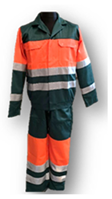
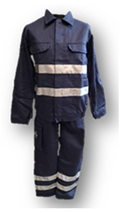
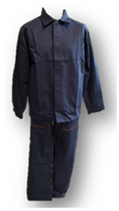
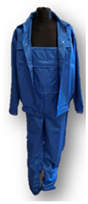
One type of underwear (U) (in 3 sizes: small (S), medium (M), and large (L)) and four types of outerwear (W1–W4) (also in 3 sizes: 50, 54, and 56) were used for this study’s tests. The tested clothing items are shown in Figure 1. The selected elements of protective clothing and underwear, along with the composition of materials and possible use (according to the manufacturer’s product sheets) are presented in Table 1.
Table 1.
Sets of clothing consisting of underwear (U) and sets of outerwear (W1–W4).
The tested underwear was used by workers in the gas, fuel, and explosion hazard zone industries and met the requirements of thematic standards (see Table 1 for normative requirements). The outerwear was used accordingly by workers of various professions in hot environments as follows: W1—construction or road service workers (professions where high-visibility clothing is required); W2—power industry, chemical industry, welding and hot environments, explosion hazard zone, high visibility; W3—welding and hot environments, explosion hazard zone, steel mills, foundries; and W4—chemical industry.
The following labels for sets of clothing were used in the study, as an example: U_S_W1_50 [underwear_/size of underwear/_set of clothing_/size of set of clothing/] denoting underwear size “S”, set of clothing “W1”, and size “50”.
The selected clothing sets were not subject to any specific requirements regarding thermal insulation values, as specified for clothing for cold environments (EN 342 [39]). In the literature, the size of air gaps and their effect on thermal insulation have been tested for specialist clothing intended for firefighters as protection against flames and burns. The selected clothing sets were intended for work in a hot environment in positions where dangerous situations such as explosions, fires, or exposure to other physical and chemical factors may occur.
2.2. Parameters and Methods
Since clothing for hot environments is not subject to any normative values related to thermal insulation, research procedures based on the EN 342 [39], EN ISO 15831 [40] and ASTM 2371-15 [41] standards were used to investigate the influence of air spaces on selected thermal parameters of clothing sets.
2.2.1. Test Variants
Selected physical parameters (such as thermal insulation and evaporative resistance) and air gaps of clothing sets composed of one type of underwear in 3 sizes (small, medium, and large) and outerwear in 3 sizes (50—tight-fitting, 54—properly selected, and 56—too loose in relation to the thermal manikin’s figure) were tested. In total, including a naked manikin dressed in specialist skin and tests of the underwear itself, 40 test variants were performed.
2.2.2. Thermal Insulation
Thermal insulation tests were carried out in accordance with the standards: EN 342 [39] and EN ISO 15831 [40] in a climatic chamber (Weiss, Buchen, Germany, type WK23’) using the Newton thermal manikin. Due to the construction of the manikin’s division into segments, there are two methods for calculating the thermal insulation value: serial determined (from the weighted surface areas of the individual segments of the manikin) and parallel averaged (for the total surface area of the manikin).
Total thermal insulation (It) of the boundary air layer and each clothing variant was calculated by the serial (Equation (1)) and parallel method (Equation (3)), using the following equations [40]:
where Tsi—the manikin surface temperature of ith segment [°C]; Ta—the air temperature [°C]; Hci—the observed dry heat loss at ith segment [W/m2]; ai—area of ith segment of manikin [m2]; A—total surface area of the manikin [m2]; fi—surface area coefficient; Ts—average surface temperature of the manikin [°C]; and Hc—total heating power delivered to the manikin [W/m2].
It = ∑fi × [[(Tsi − Ta) × ai]/Hci] [m2K/W]
fi = ai/A
It = [(Ts − Ta) × A]/Hc] [m2K/W]
Ts = ∑fi × Tsi [°C]
Hc = ∑Hci [W]
Thermal insulation is determined in static conditions (on a stationary manikin as a reference value) and in dynamic conditions (on a moving manikin as a resultant value). The dynamic condition takes into account the effect of activities, changes in position and size of air gaps, as well as the “pumping effect”, air exchanged via openings in clothing (such as collars, cuffs). The manikin then moves at a speed of 45 double steps and 45 double arm movements per minute [39]. To calculate the resultant total thermal insulation (Itr), Equations (1)–(5) were also used. It should be noted that tests in dynamic conditions more closely reflect real working conditions.
For selected sets of clothing, tests of dry heat exchange (thermal insulation) were carried out under static (total thermal insulation (It)) and dynamic conditions (resultant total thermal insulation (Itr)). Thermal insulation calculations were made according to the serial and parallel model calculation [42,43,44]. At least 2 repeats were performed for each test variant.
2.2.3. Evaporative Resistance
Total evaporative resistance of the clothing ensemble and surface air layer (Ret) tests were carried out according to a modified methodology contained in the ASTM F2370-15 standard [41]. Total evaporative resistance was calculated using Equation (6) [41]:
where Ps—water vapor pressure at the manikin’s sweating surface [kPa]; Pa—water vapor pressure in the air flowing over the clothing [kPa]; He—power required for sweating areas [W]; A—total area of manikin’s surface that is sweating [m2]; and Rt = It—total thermal resistance/insulation of the clothing ensemble and surface air layer [m2 °C/W]. According to the ASTM F2370 standard [41], total evaporative resistance tests can be performed under isothermal and non-isothermal conditions. It should be noted, however, that the non-isothermal variant is closer to actual operating conditions.
Ret = [(Ps − Pa) × A]/[He − (Ts − Ta) × A/Rt] [m2kPa/W]
As part of the research, evaporative resistance was measured (based on the heat loss method [43]) in static, non-isothermal conditions with the intensity of sweating at the level of 400 mL h−1m−2. At least 2 repeats were performed for each test variant.
2.2.4. Air Gap Size—3D Scanning Technique
A 3D scanner was used to determine the total air volume according to the EN ISO 20685-1 standard [45]. Each set of clothing was scanned two times.
The total volume of air gaps between the naked manikin and the outer layer of the outerwear (V0) was calculated according to the following Equation (7):
where V—total volume of the manikin (“lumps”, i.e., a manikin dressed in the entire set of clothes), dm3 and Vnaked_manikin—volume of a naked manikin (dressed in specialist skin), dm3.
V0 = V − Vnaked_manikin
The total volume of air gaps between the manikin dressed in underwear and the outer layer of the outerwear (VP) was calculated according to Equation (8):
where Vunderwear—volume of manikin dressed in underwear, dm3.
VP = V0 − Vunderwear
In order to determine the average (total) size of the air spaces (Agap_t [mm]) and the average size of the air gaps between underwear and the outer layer of clothing (Agap_P [mm]), the following formulae were used [according to [46]]:
where SAnaked—the surface area of the naked manikin [1.64 m2]; V0—the total volume of air gaps between the naked manikin and the outer layer of the outerwear [dm3]; and Agap_t_underwear—the average size of the air gaps between the underwear and the naked manikin [mm].
Agap_t = V0/SAnaked
Agap_P = Agap_t − Agap_t_underwear
2.3. Equipment
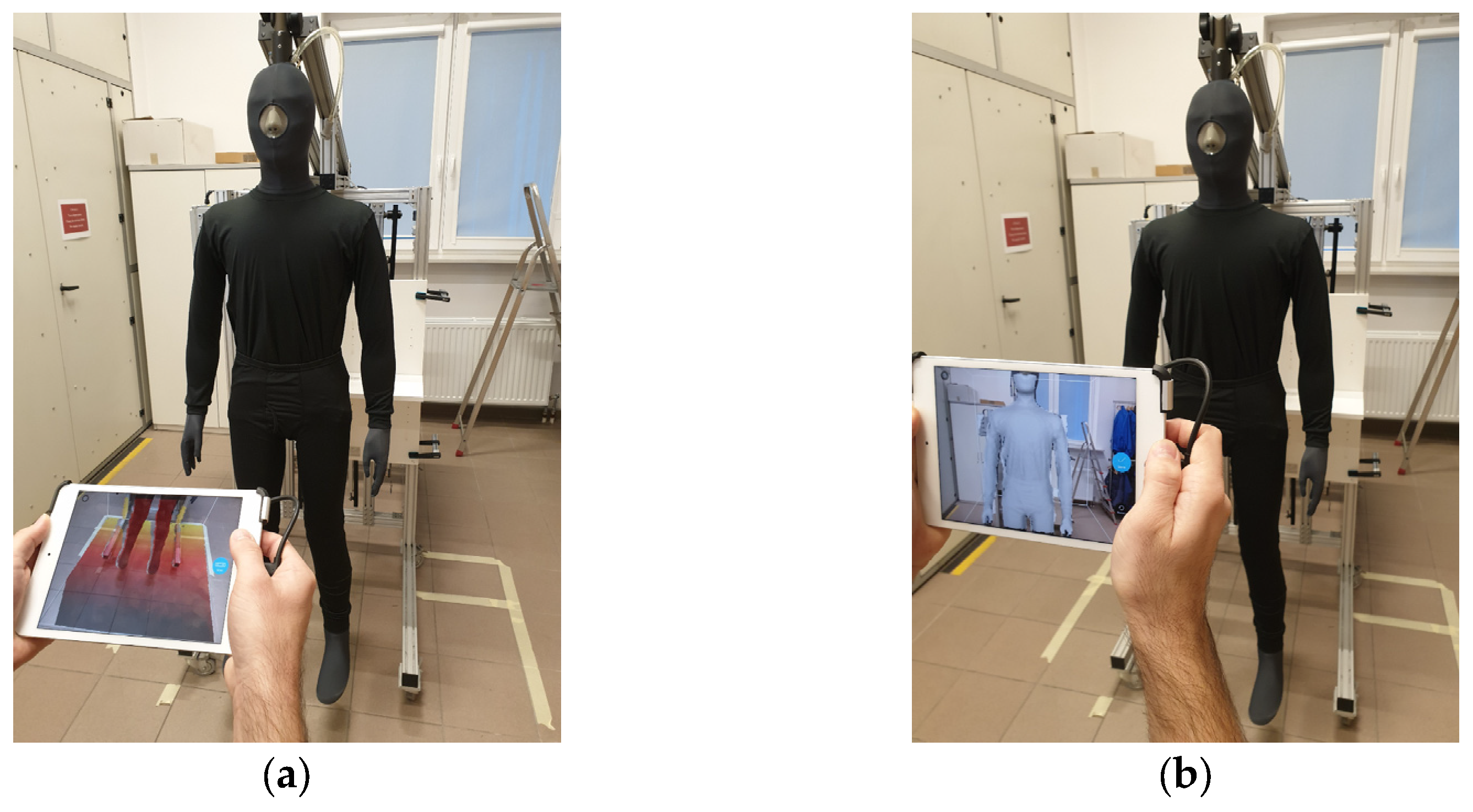
Physical parameters were measured using a Newton thermal manikin (Measurement Technology Northwest, Seattle, WA, USA) (Figure 2). The Newton thermal manikin, in the shape of a male body, consists of 34 segments [42,43,47,48,49]. The Newton manikin is 176 cm tall and has a chest circumference of 91 cm and a waist circumference of approx. 74 cm. The manikin has the ability to move and perform tests in dynamic conditions. The manikin can work in 3 modes: (1) constant temperature of the manikin’s surface, (2) constant flow of heat loss flux, (3) physiological mode [47]. In the presented research, the constant surface temperature mode of the manikin Ts = 34 °C was used to compare the obtained thermal insulation values [44].
Figure 2.
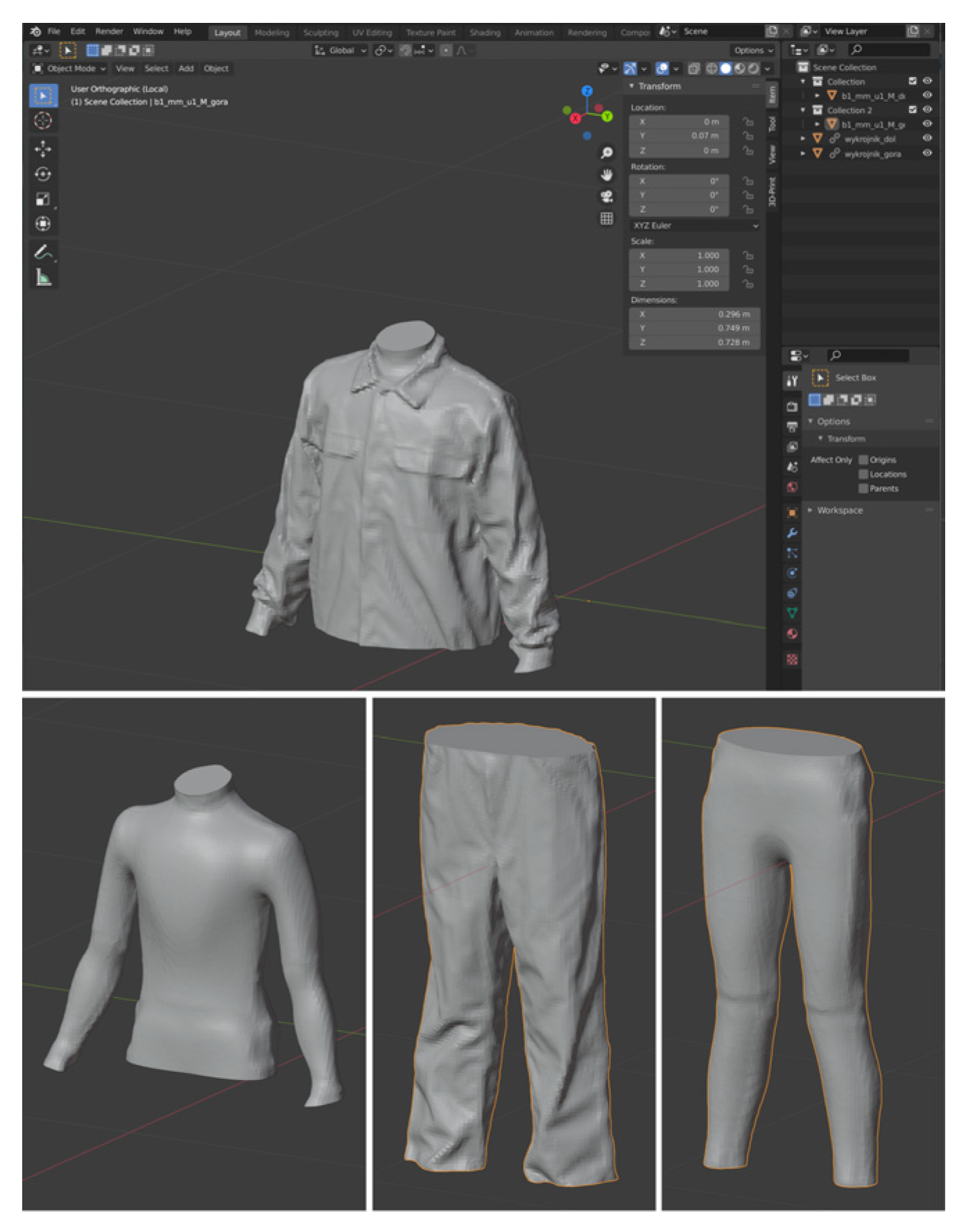
Determining the volume of the Newton thermal manikin using the following stages: (a) the software builds a three-dimensional mesh; (b) 3D scanning of the upper and lower part of manikin [48].
In order to measure the thermal insulation of the clothing, the manikin was placed in the climatic chamber (Weiss, Buchen, Germany, type WK23’) [47]. The chamber has the ability to control the temperature in the range from −40 °C to 70 °C and is characterized by an air flow in the range from 0.2 m/s to 3 m/s in the horizontal direction (with the air blowing directly to the front of the manikin).
For the 3D scanning, an iPad tablet (model number: MUQX2FD/A, software version 15.0) with a dedicated scanning adapter (MARK II sensor with model number ST02A v1.2, firmware 1.0.1) was used (Figure 1). The obtained images were computer processed using Blender 3.0 3D graphics software [48] (Figure 3).
Figure 3.
Sample calculations carried out in the Blender 3D graphics program [48].
3. Results
Total Volume and Average Total Size of Air Gaps
Measured and calculated total volumes of different air gaps are shown in Table 2.
Table 2.
Measured and calculated total volumes of the clothed manikin, the air gaps between the naked manikin and the outer layer of outerwear V0, and the air gaps between the manikin dressed in underwear and the outer layer of outerwear VP.
Average (total) air gap sizes and average air gap sizes between the underwear and outer garments are shown in Table 3.
Table 3.
Average (total) air gap sizes (Agap_t) and average air gap sizes between underwear and outer garments (Agap_P).
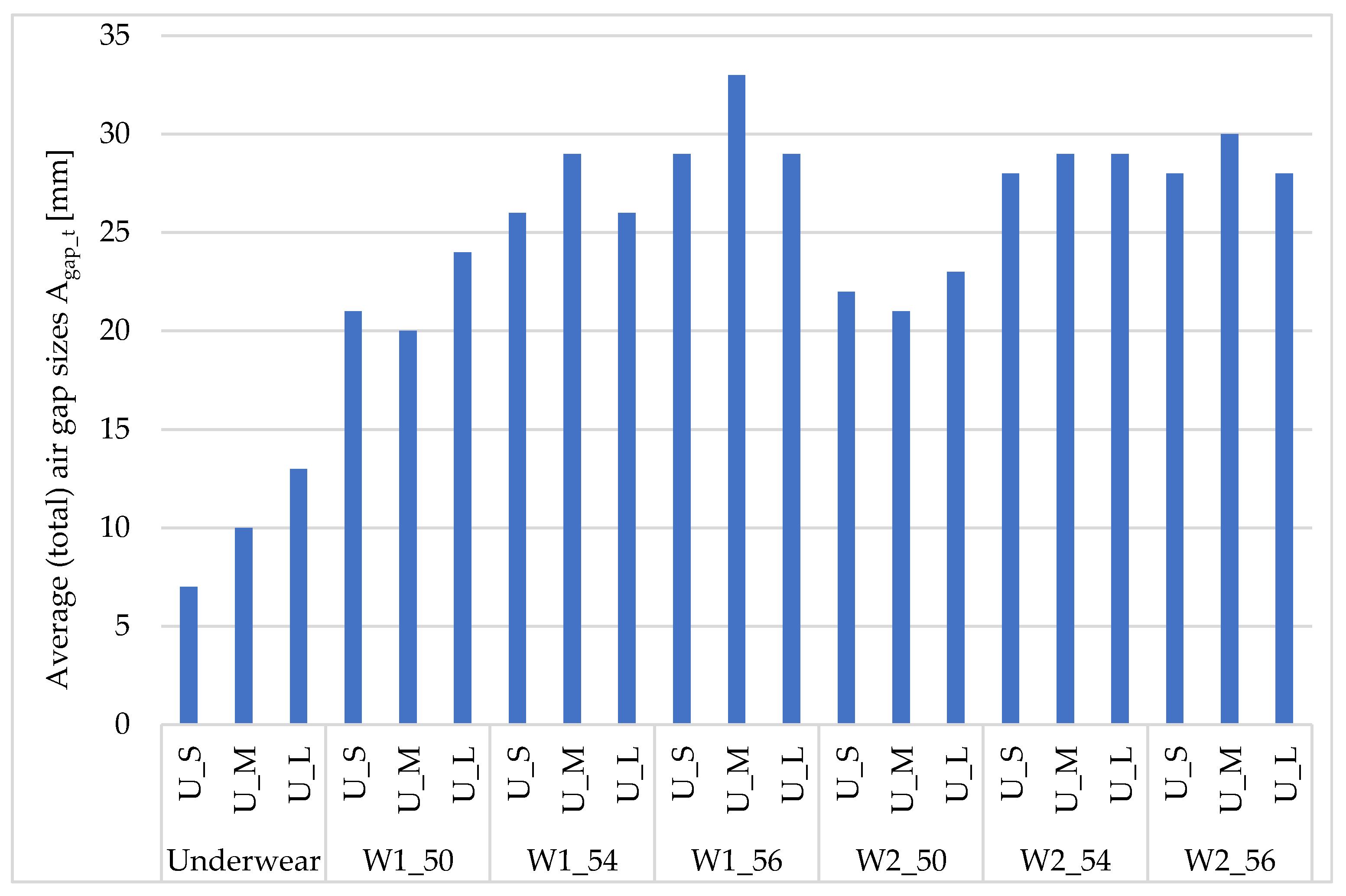
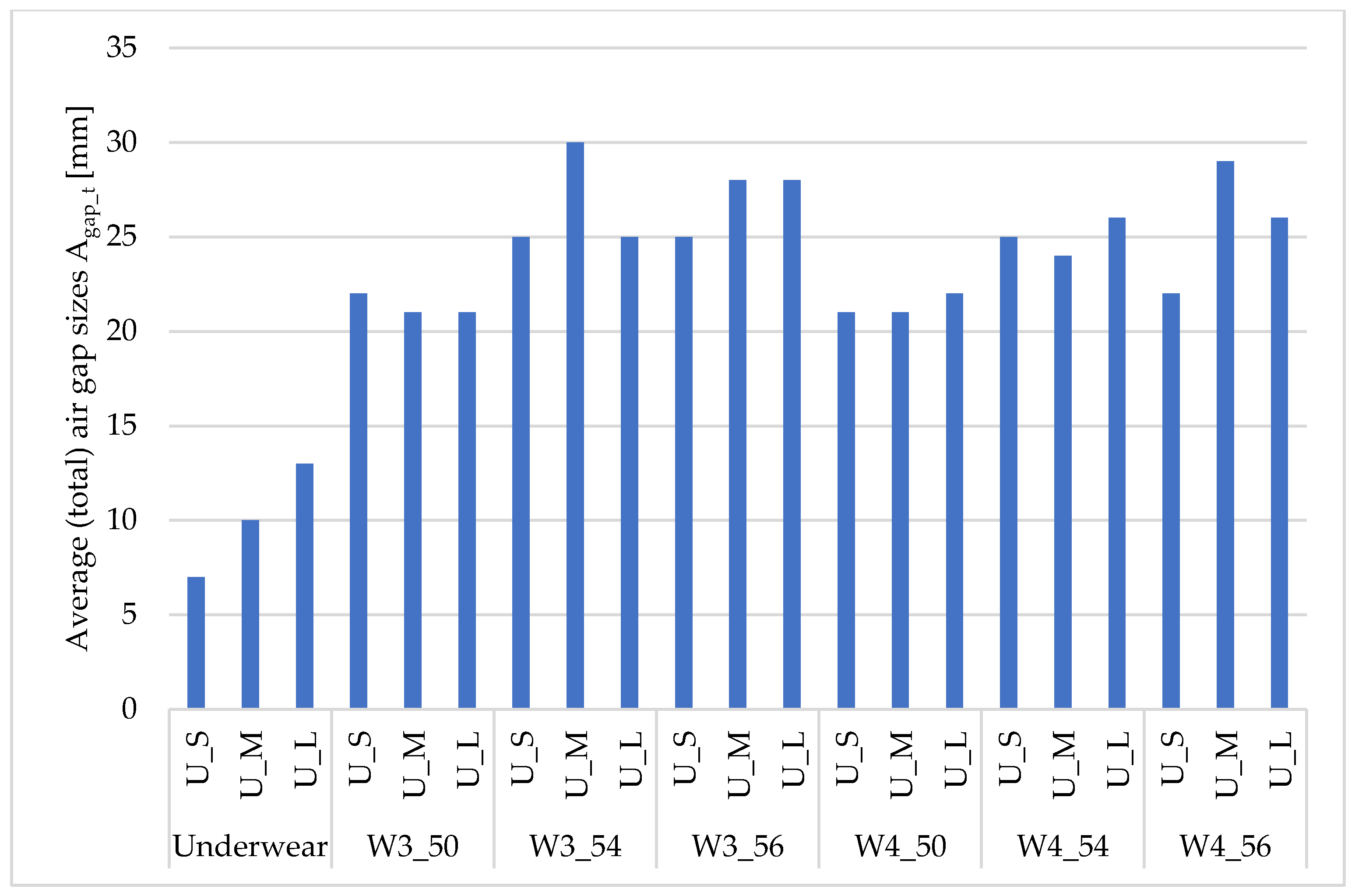
Figure 4 and Figure 5 show the average (total) size of total air gaps [mm] depending on the size of the underwear and outerwear.
Figure 4.
Average (total) sizes of air gaps Agap_t [mm] depending on the size of underwear and outerwear (W1–W2).
Figure 5.
Average (total) sizes of air gaps Agap_t [mm] depending on the size of underwear and outerwear (W3–W4).
The calculated average (total) size of air gaps Agap_t for underwear increased with its size (by approx. 3 mm) (Figure 4). In the case of the W1 clothing, the differences between the sizes of underwear (S, M, and L) for sizes 50, 54, and 56 were, respectively, 3–4 mm, 3 mm, and 4 mm. For the W2 clothing, the differences between the sizes of underwear (S, M, and L) for sizes 50, 54, and 56 were 2 mm, 1 mm, and 2 mm, respectively.
In the case of the W3 clothing, the differences between the sizes of underwear (S, M, and L) for sizes 50, 54, and 56 were 1 mm, 5 mm, and 3 mm, respectively (Figure 5). For the W4 clothing, the differences between the sizes of underwear (S, M, and L) for sizes 50, 54, and 56 were 1 mm, 1–2 mm, and 4–7 mm, respectively.
When analyzing the size of the air gaps in terms of underwear size, the smallest values were obtained for underwear sizes S and M (and outerwear size 50, regardless of the type of outerwear). For underwear in size L and outerwear size 56, similar values were obtained as for size 54. This fact can be explained by the observation that clothing of such a large size, due to its weight, adhered to the manikin in a manner similar to size 54.
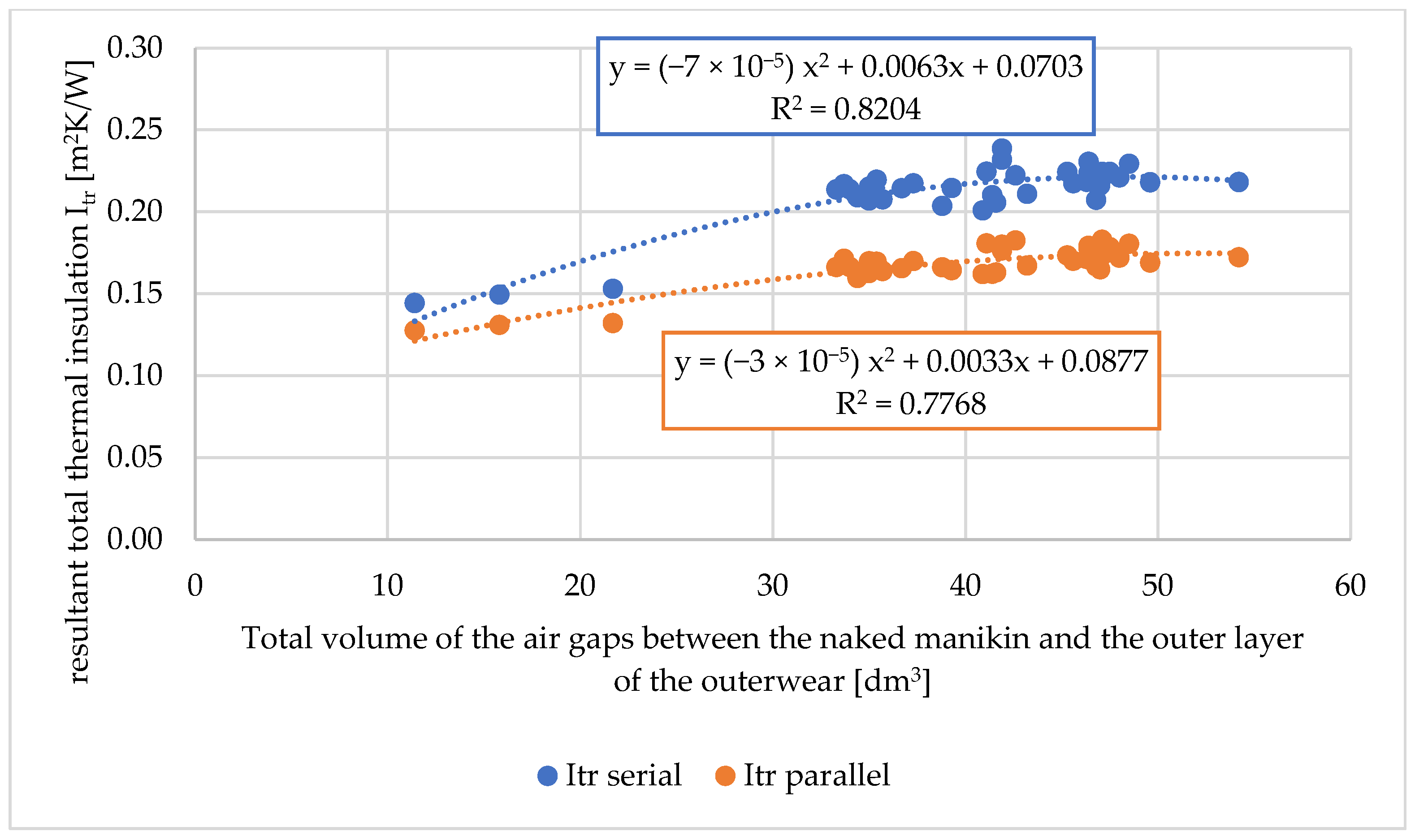
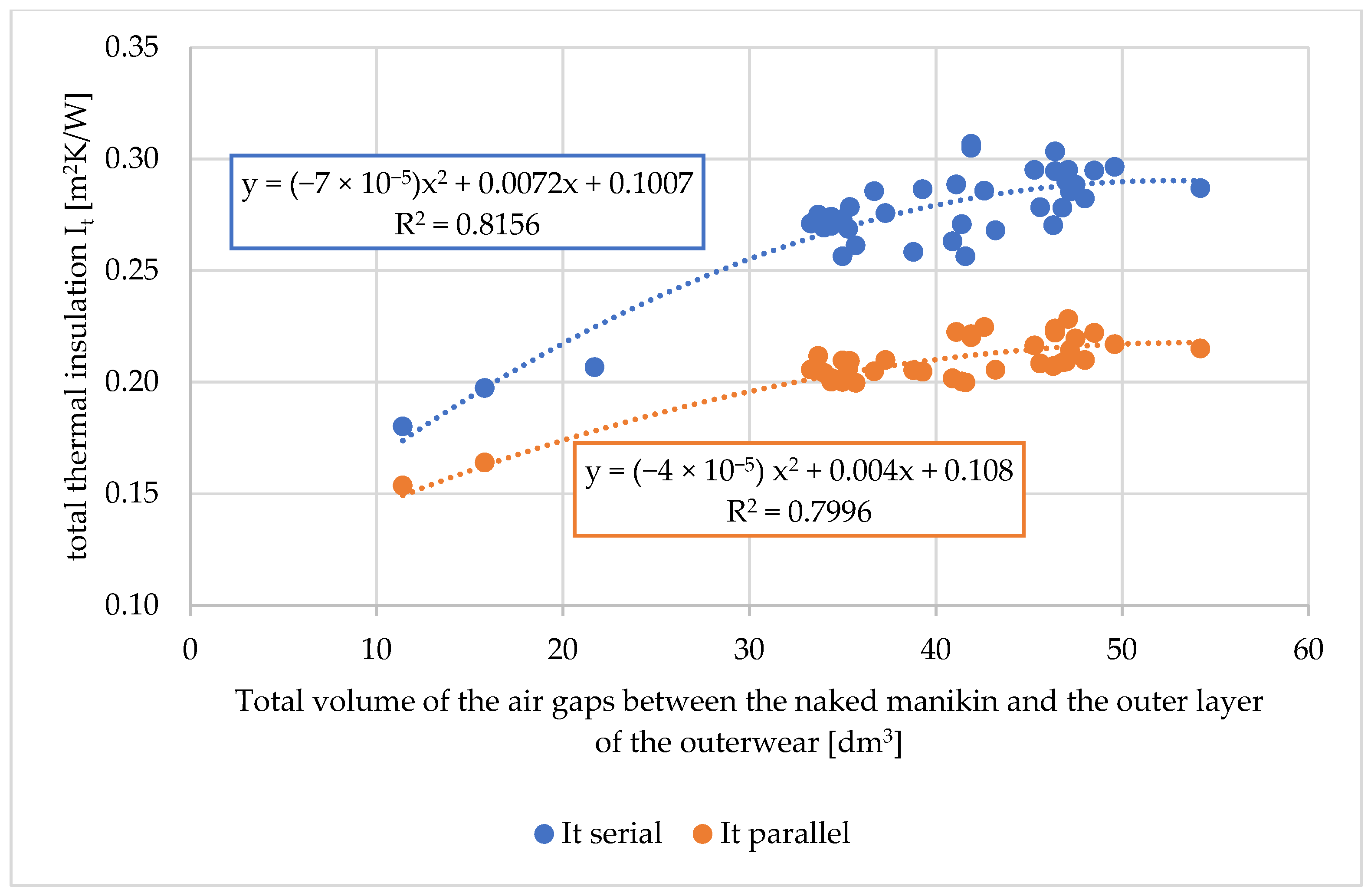
Based on the measured values of the total volumes of air gaps, the average (total) sizes of air gaps, the relationship of the above-mentioned values on the thermal parameters of the tested workwear were determined. The relationship between the total volumes of air gaps on the total thermal insulation, the resultant total insulation, and the water vapor resistance of the tested workwear are shown in Figure 6, Figure 7 and Figure 8.
Figure 6.
Relationship between the total thermal insulation of the tested sets of clothing (It) on the total volume of air gaps between the naked manikin and the outer layer of outerwear [dm3].
Figure 7.
Relationship between the resultant total thermal insulation of the tested sets of clothing (Itr) on the total volume of air gaps between the naked manikin and the outer layer of outerwear [dm3].
Figure 8.
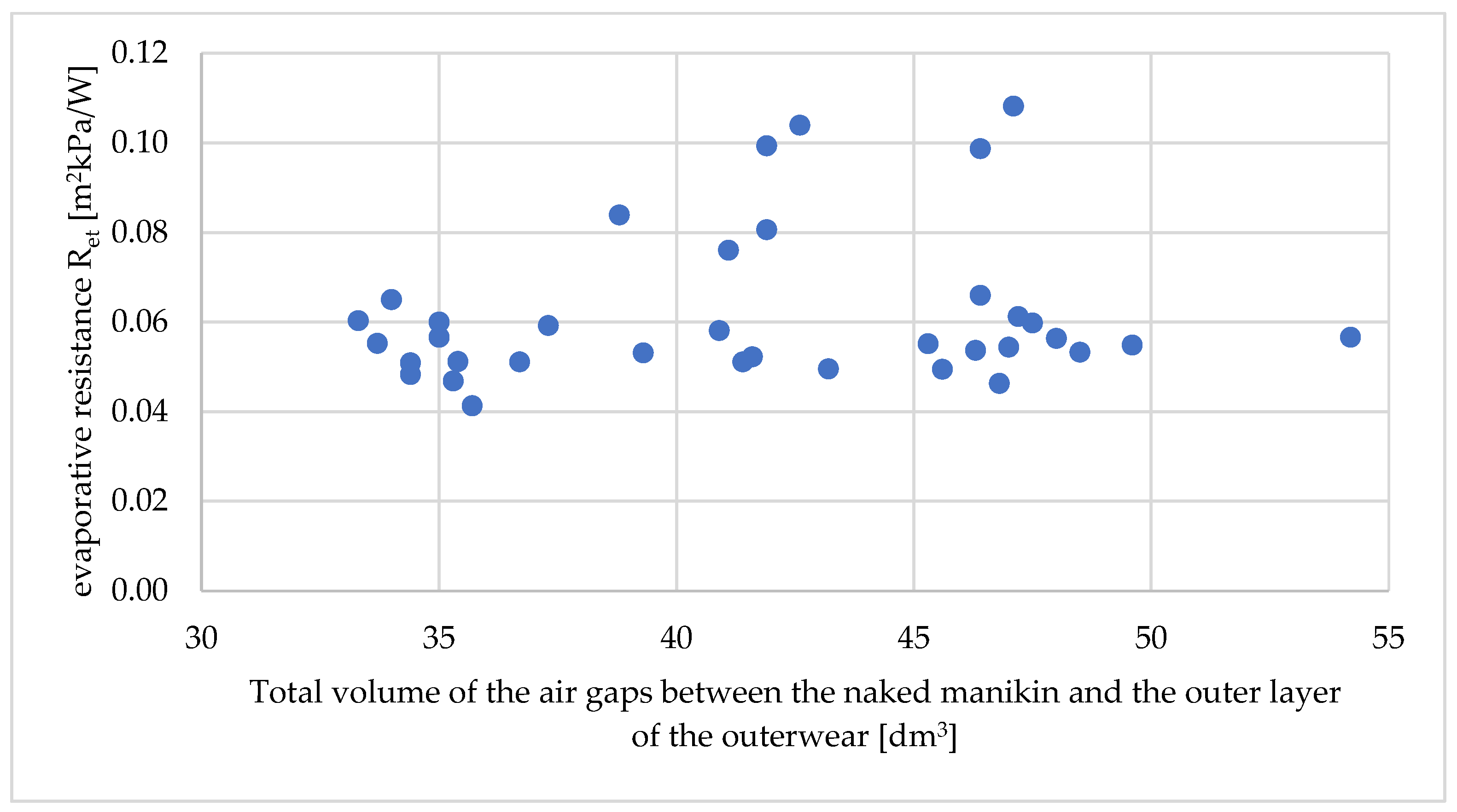
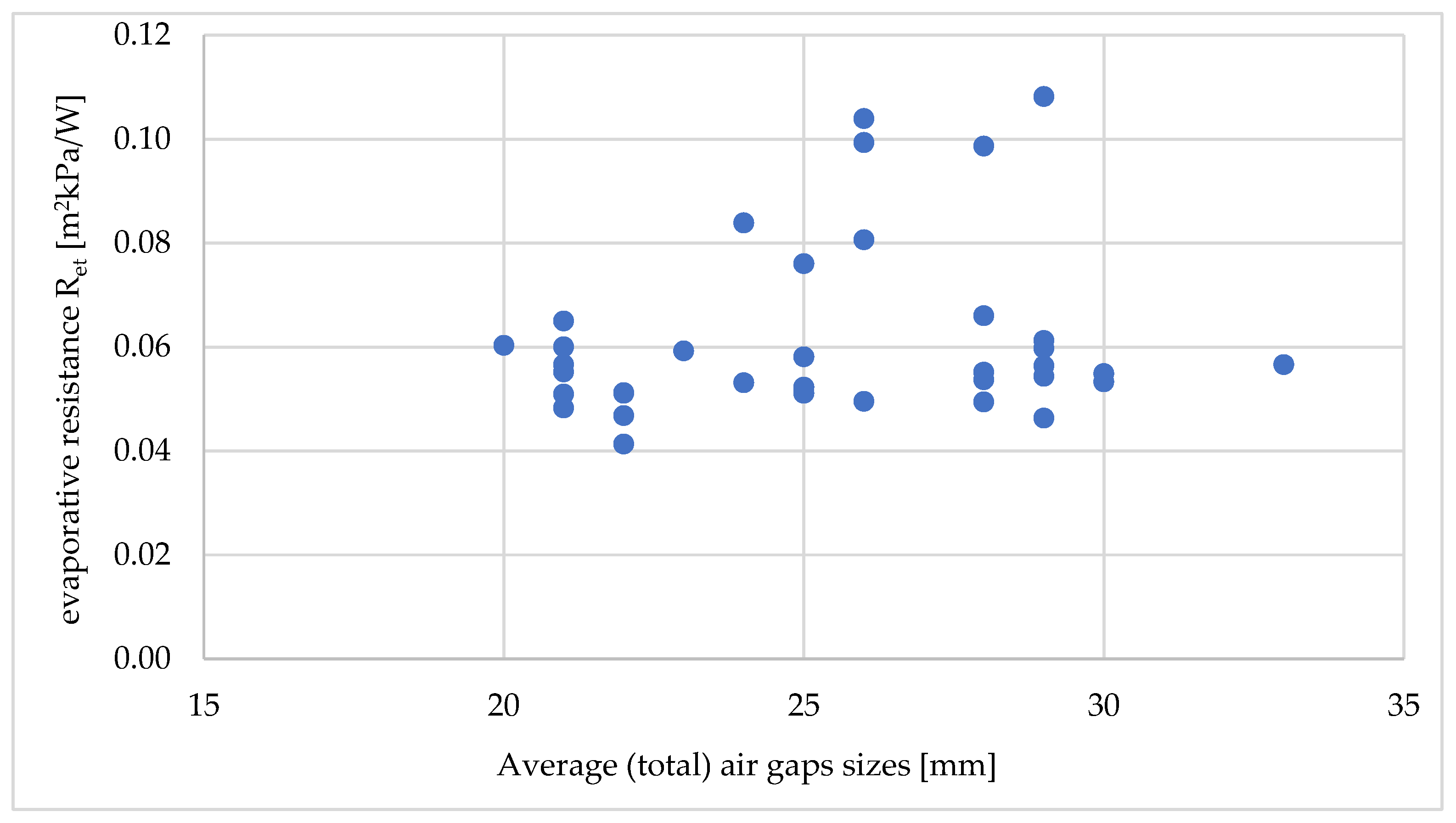
Relationship between the evaporative resistance (Ret) on the total volume of air gaps between the naked manikin and the outer layer of outerwear V0 [dm3].
Because the thermal manikin is divided into segments, two calculation approaches are used. The serial method tends to produce higher insulation values, as it considers the manikin as a whole, emphasizing the resistance across all segments. In contrast, the parallel method accounts for variations between segments, including those with lower thermal resistance [50]. When the tested clothing is uniform and evenly distributed across the manikin, the difference between the two methods should be low. According to Kuklane et al. [50], with an increasing number of clothing layers, the serial model value is higher relative to the parallel model. The parallel method is recommended for standard testing procedures.
For the total thermal insulation and the resultant total thermal insulation (both for the serial and parallel calculation methods), dependencies of second-order polynomials (for R2 approx. 0.8) were assigned (Figure 6 and Figure 7). Other mathematical relationships were also tested, but they were characterized by lower R2.
In the case of evaporative resistance, it was not possible to assign a mathematical relationship (Figure 8). The R2 value for the best mathematical fit (also as second-order polynomials) was approximately only 0.1.
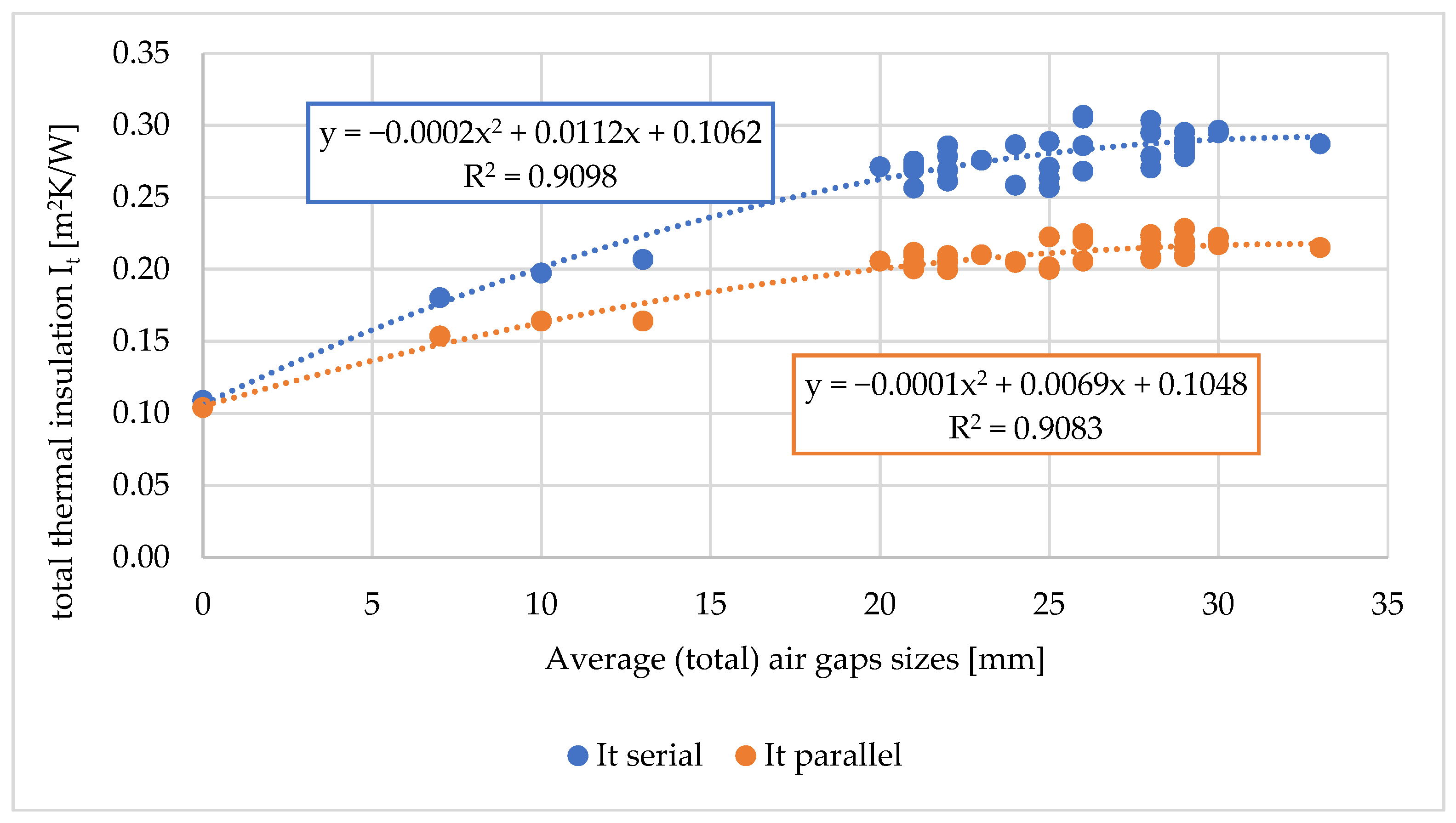
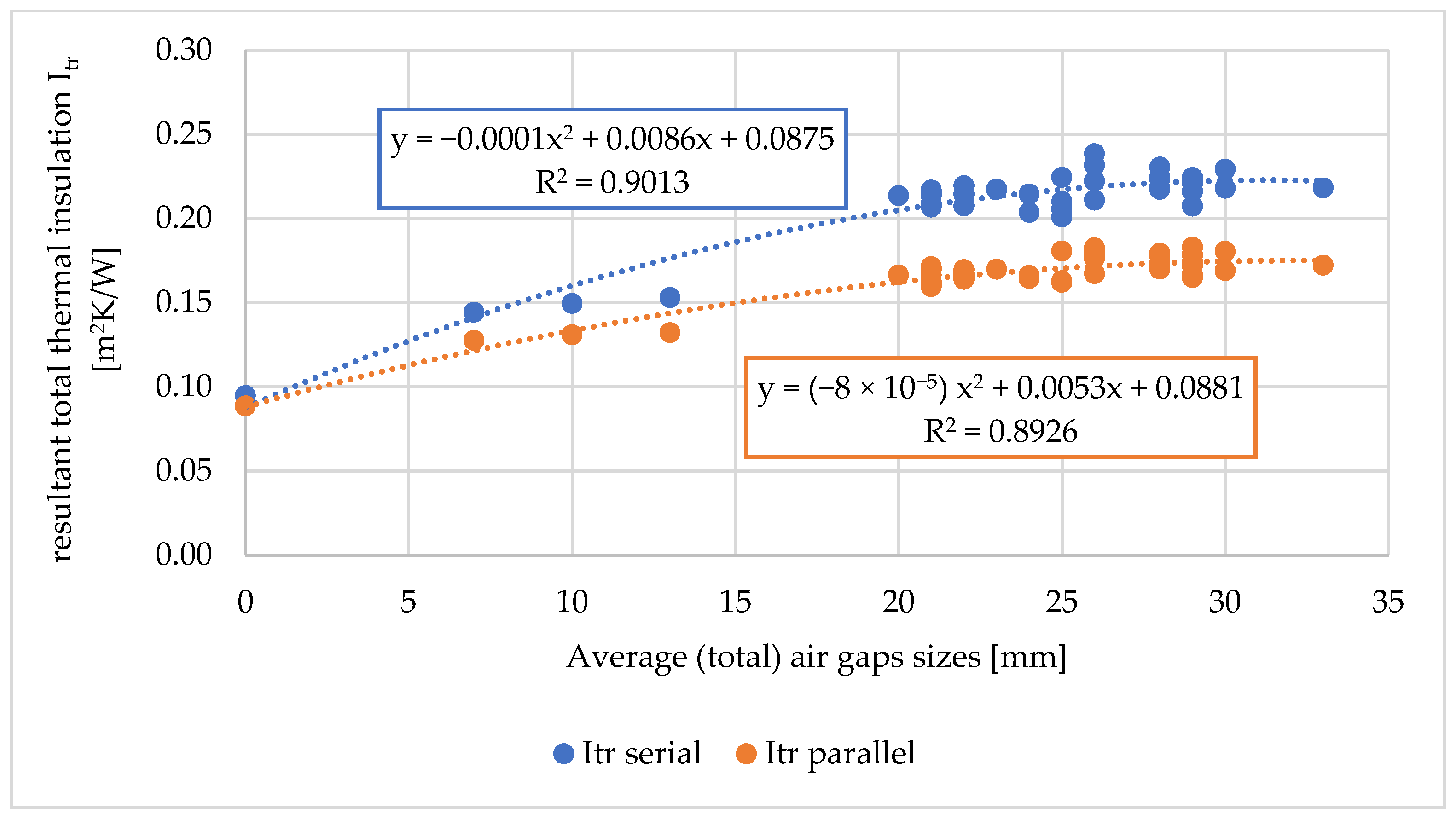
The calculated values of the size of the air gaps were compared with the values of total thermal insulation, the resulting total insulation, and water vapor resistance, and they are presented in Figure 9, Figure 10 and Figure 11.
Figure 9.
Relationship between the total thermal insulation of the tested sets of clothing (It) on the average (total) size of air gaps between the naked manikin and the outer layer of outerwear [mm].
Figure 10.
Relationship between the resulting total thermal insulation of the tested sets of clothing (Itr) and the average (total) size of air gaps between the naked manikin and the outer layer of outer clothing [mm].
Figure 11.
Relationship between evaporative resistance (Ret) and the average (total) size of air gaps between the naked manikin and the outer layer of outerwear [mm].
In the case of total thermal insulation and the resultant total thermal insulation (both for the serial and parallel calculation methods), the dependencies of second-order polynomials for (R2 approx. 0.9) were assigned (Figure 9 and Figure 10).
For the evaporative resistance, the mathematical relationships showed an R2 value of up to 0.1, which reflected a weak fit to the data (Figure 11).
In the case of the parameter thermal insulation, on the basis of the obtained mathematical relationships, the following results were determined: the total volume of air gaps and the average (total) size of air gaps of the tested sets of clothing (above which no increase in the thermal insulation value (total and resultant) was observed). The obtained results are presented in Table 4.
Table 4.
The total volume of air gaps and the average (total) size of air gaps of the tested sets of clothing (above which no increase in the value of thermal insulation (total It and resultant Itr) was observed for the serial and parallel calculation method).
The volume of air gaps above which the value of thermal insulation for the tested products did not increase was 50–55 dm3. On the other hand, the size of the air gaps above which no increase in the thermal insulation value was observed for the tested products was 28–43 mm (Table 4).
4. Discussion
Depending on the fit of the garments to the human body, air gaps are created between the layers of materials that make up the tested garments, as well as spaces between the skin and the nearest material layer [1].
The study conducted by Frąckiewicz-Kaczmarek [51] showed that, under the conditions set for wearing a T-shirt, even a slight change in the size of the air gaps, e.g., by 5 mm, noticeably affected both thermal resistance and evaporation. According to the Wissler model [52], the size of the air gap influences changes in thermal resistance. With a smaller air space (<3 mm) a large amount of energy is transferred by conduction. With a larger air space, 6–7 mm or >7.5 mm, convection is initiated and the dominant form of energy transfer is a combination of radiation and convection. According to Song [7], increasing the size of the air gaps above the 7–8 mm range does not increase thermal insulation but may reduce it. For larger air spaces (>8 mm), the local heat and water vapor exchange can be increased by initiating natural convection.
The results of the tested workwear indicate that thermal insulation is affected by clothing size and, consequently, the size of the air gaps, which is consistent with the scientific literature [53,54,55]. The obtained value of thermal insulation (regardless of the type of outerwear-for four types/sectors) first increased with the size of the garments. The obtained results were consistent with the results of other authors, in which thermal insulation was better in looser clothing than in tight-fitting clothing [13,56,57,58,59]. In the case of “loose” clothing, the differences in total air gap volume between sizes 54 and 56 were smaller. The size of the air gap decreases primarily in the lower torso, depending on the fit of the garments, while remaining relatively unchanged in the upper torso. This may be due to differences in the way the clothes fall down or fit in different areas of the body [59]. The size and the shape of the air gaps had an influence on the thermal parameters [44]. The same conclusions were drawn from the presented results (3D scan images). Therefore, when analyzing the results of total air volume and air gap size, it is also important to consider the design and fit of the garments on the manikin [49].
On the basis of the performed 3D scans, the total volumes of the air gap under the clothes were determined. The air gap volume for the tested sets was within 33–54 dm3. The highest thermal insulation values (parallel method: It~0.23 m2 °C/W; Itr~0.18 m2 °C/W) were obtained for the values of 47.1 dm3 (for total volume) and 29 mm (for average air gaps sizes). The calculated heat transfer coefficient for the It value was 4.4 W/m2·K. It is lower than for the naked manikin (~7.3 W/m2·K), which means that the clothing provides insulation from the thermal effects of the environment, limiting the heat flux reaching the body surface. This confirms its protective function in conditions of exposure to elevated temperature.
The test results were compared with the total air gap volume obtained from thermal scanning of one-piece work suits. According to Lu et al. [16], the total air volume for the tested single-layer suit ranged from 35 to 60 dm3. Similarly, Ke and Wang [13] examined five different multilayer ensembles, reporting a total air volume of approximately 46–74 dm3. These values align with the results of the present study, indirectly validating the accuracy of the measurements conducted.
Other studies show a correlation between air gap volume and thermal insulation of clothing [13,57,60]. Ke and Wang [13] also described the above-mentioned relationships as a quadratic function. After the initial increase in thermal insulation along with the increase in the size of air gaps, a decrease in insulation above a certain amount was observed [13,57,60]. The lack of a linear increase between thermal insulation and clothing size was most likely due to the fact that the air gaps reached the size/volume at which natural convection begins, and air circulates in the air gap underneath [13,57,60]. According to Epps and Song [61] and Wilson et al. [62], in the case of multi-layered clothing sets, the mathematical relationship between thermal insulation, size of air gaps, and number of layers becomes nonlinear. It was observed that natural convection occurred when the size or the volume of the air gaps were greater than 10 mm or 6 dm3, respectively [60]. In another study, a decrease in thermal insulation was observed when the air gap volume reached 11.9 dm3 [57]. In the present study, a decrease in thermal insulation was observed when the air gap volume exceeded 50–55 dm3 and the air gap size ranged from approximately 28–29 to 43 mm. Similarly, Ke and Wang [13] found that the threshold values for thermal insulation reduction were 55.8 dm3 and 37.8 mm for air volume and air gap size, respectively. However, it is important to note that those observations concerned single-layer clothing, sometimes covering only the upper or lower body [7,11,27,58,59,63,64].
The presented research, as well as examples from the available literature, indicate that the air volume under clothing could be the key parameter which determines their thermal insulation [49,59,65,66].
Taking into account the parameters, such as evaporative resistance, it was not possible to assign a satisfactory mathematical relationship (one can assign a second-order polynomial with R2~0.1). As stated in the ASTM F2370 standard [41], when tested on a thermal manikin, large air gaps in the garments system can contribute to a higher evaporative resistance than small air gaps. According to the standard, increasing air gaps may cause difficulties in the correct measurement of water vapor resistance. The inability to assign a mathematical relationship may be due to the fact that sets of different structures and materials used were analyzed. The ASTM F2370 standard [41] indicates that to compare measurements using a thermal manikin (for different materials), the clothing must be made according to the same pattern. Then, the influence of the variable design/cut and the location of the space is eliminated, since they are then kept at a constant level. Such an analysis was performed, but the relationships were determined on the basis of only three measurement points.
5. Conclusions
In conclusion, our study shows the effect of workwear clothing fit on the size of the air gaps, as well as the influence of the air gap size on the thermal insulation value (both for static and dynamic conditions). The relationship between the thermal insulation value on the volume and size of the air gap was described as a second-order polynomial (R2 > 0.8).
It may be concluded that for workwear, no increase in thermal insulation was observed when the air gap size reached approximately 30 mm or the air gap volume reached 50–55 dm3, and the best thermal insulation was achieved with a garment size that closely matched the wearer’s dimensions (in this case, to the thermal manikin’s dimensions) without overly tightening the figure.
Research also indicates the need to test multi-layer clothing and learn about the processes occurring in the individual layers of the clothing set. However, research is required not only for firefighter sets, but also for clothing designed for hot environments that protects against radiant and convective heat.
Author Contributions
Conceptualization, M.M.; methodology, M.M., J.O. and J.J.; formal analysis, M.M. and J.J.; investigation, M.M. and J.O.; data curation, M.M., J.O. and J.J.; writing—original draft preparation, M.M.; writing—review and editing, M.M. and J.O.; visualization, M.M.; supervision, M.M.; project administration, M.M.; funding acquisition, M.M. All authors have read and agreed to the published version of the manuscript.
Funding
This paper is published and based on the results of a research task carried out within the scope of the fifth stage of the National Programme “Improvement of safety and working conditions” supported within the scope of state services by the Ministry of Family and Social Policy. Task no. 3.SP.04 entitled “Study of the influence of clothing adaptation on thermal insulation and water vapor resistance in the clothing-heat source system”. The Central Institute for Labour Protection—National Research Institute is the Programme’s main co-ordinator.
Institutional Review Board Statement
Not applicable.
Informed Consent Statement
Not applicable.
Data Availability Statement
The datasets analyzed during the current study are available from the corresponding author on reasonable request.
Conflicts of Interest
The authors declare no conflicts of interest.
References
- Młynarczyk, M.; Orysiak, J. Przestrzenie powietrzne pod odzieżą—Ich pomiar i wpływ na poziom ciepłochronności. Occup. Saf.—Sci. Pract. 2021, 595, 22–24. [Google Scholar] [CrossRef]
- EN ISO 9920:2009; Ergonomics of the Thermal Environment-Estimation of the Thermal Insulation and Evaporative Resistance of Clothing. International Standard Organization for Standardization (ISO): Brussels, Belgium, 2009.
- Psikuta, A.; Frackiewicz-Kaczmarek, J.; Frydrych, I.; Rossi, R. Quantitative evaluation of air gap thickness and contact area between body and garments. Text. Res. J. 2012, 82, 1405–1413. [Google Scholar] [CrossRef]
- Bogdan, A.; Zwolińska, M. Wpływ odzieży na wymianę ciepła między człowiekiem a otoczeniem. Ciepłownictwo Ogrzew. Went. 2010, 41, 27–31. [Google Scholar]
- Havenith, G. Heat balance when wearing protective clothing. Ann. Occup. Hyg. 1999, 43, 289–296. [Google Scholar] [CrossRef] [PubMed]
- Kenney, W.L.; Wilmore, J.H.; Costill, D.L. Physiology of Sport and Exercise; Human kinetics: Champaign, IL, USA, 2021; ISBN 9781718201736. [Google Scholar]
- Song, G. Clothing air gap layers and thermal protective performance in single layer garments. J. Ind. Text. 2007, 36, 193–205. [Google Scholar] [CrossRef]
- Zhang, Y.; Jia, J. Numerical investigation of heat transfer in garment air gap. Autex Res. J. 2020, 22, 89–95. [Google Scholar] [CrossRef]
- Stoll, A.M.; Chianta, M.A.; Munroe, L.R. Flame-Contact Studies. J. Heat Transf. 1964, 86, 449–456. [Google Scholar] [CrossRef]
- Deng, M.; Wang, Y.; Li, P. Effect of air gaps characteristics on thermal protective performance of firefighters’ clothing. Int. J. Cloth. Sci. Technol. 2018, 30, 246–267. [Google Scholar] [CrossRef]
- Mert, E.; Böhnisch, S.; Psikuta, A.; Bueno, M.A.; Rossi, R.M. Determination of the Air Gap Thickness underneath the Garments for Lower Body Using 3D Body Scanning. In Proceedings of the 6th International Conference on 3D Body Scanning Technologies, Lugano, Switzerland, 27–28 October 2015; pp. 114–119. [Google Scholar] [CrossRef]
- Benisek, L.; Phillips, W.A. Protective clothing fabrics: Part II. Against convective heat (open-flame) hazards. Text. Res. J. 1981, 51, 191–196. [Google Scholar] [CrossRef]
- Ke, Y.; Wang, F. An Exploration of Relationships among Thermal Insulation, Area Factor and Air Gap of Male Chinese Ethnic Costumes. Polymers 2020, 12, 1302. [Google Scholar] [CrossRef]
- Rathour, R.; Islam, A.; Das, A.; Alagirusamy, R. Review of heat and Moisture transfer Models of Fire-Protective Clothing. Tekstilec 2024, 67, 292–307. [Google Scholar] [CrossRef]
- Zhu, F.; Zhang, W.; Chen, M. Investigation of material combinations for fire-fighter’s protective clothing on radiant protective and heat-moisture transfer performance. Fibres Text. East. Eur. 2007, 15, 72–75. [Google Scholar]
- Lu, Y.; Li, J.; Li, X.; Song, G. The effect of air gaps in moist protective clothing on protection from heat and flame. J. Fire Sci. 2012, 31, 99–111. [Google Scholar] [CrossRef]
- Torvi, D.A.; Dale, J.D.; Faulkner, B. Influence of air gaps on Bench-Top test results of flame resistant fabrics. J. Fire Prot. Eng. 1999, 10, 1–12. [Google Scholar] [CrossRef]
- Sawcyn, C.M.J. Heat Transfer Model of Horizontal Air Gaps in Bench Top Testing of Thermal Protective Fabrics. Master’s Thesis, University of Saskatchewan, Saskatoon, SK, Canada, 2003. Available online: https://researchers.usask.ca/david-torvi/documents/cmj-sawcyn-msc-thesis-2003.pdf (accessed on 1 April 2025).
- Talukdar, P.; Torvi, D.A.; Simonson, C.J.; Sawcyn, C.M.J. Coupled CFD and radiation simulation of air gaps in bench top protective fabric tests. Int. J. Heat Mass Transf. 2009, 53, 526–539. [Google Scholar] [CrossRef]
- Sawcyn, C.M.J.; Torvi, D.A. Improving heat transfer models of air gaps in bench top tests of thermal protective fabrics. Text. Res. J. 2009, 79, 632–644. [Google Scholar] [CrossRef]
- Song, G.; Chitrphiromsri, P.; Ding, D. Numerical simulations of heat and moisture transport in thermal protective clothing under flash fire conditions. Int. J. Occup. Saf. Ergon. 2008, 14, 89–106. [Google Scholar] [CrossRef]
- Torvi, D.A.; Eng, P.; Threlfall, T.G. Heat transfer model of flame resistant fabrics during cooling after exposure to fire. Fire Technol. 2005, 42, 27–48. [Google Scholar] [CrossRef]
- de Dear, R.J.; Arens, E.; Hui, Z.; Oguro, M. Convective and radiative heat transfer coefficients for individual human body segments. Int. J. Biometeorol. 1997, 40, 141–156. [Google Scholar] [CrossRef]
- Quintela, D.; Gaspar, A.; Borges, C. Analysis of sensible heat exchanges from a thermal manikin. Eur. J. Appl. Physiol. 2004, 92, 663–668. [Google Scholar] [CrossRef]
- Islam, M.R.; Golovin, K.; Dolez, P.I. Clothing Thermophysiological Comfort: A Textile Science Perspective. Textiles 2023, 3, 353–407. [Google Scholar] [CrossRef]
- Joshi, A. Comprehensive Model for Heat and Mass Transfer in Human Skin-Clothing-Environment System. Ph.D. Thesis, Université de Haute-Alsace, Mulhouse, France, 2019. [Google Scholar]
- Mert, E.; Psikuta, A.; Bueno, M.A.; Rossi, R.M. Effect of heterogenous and homogenous air gaps on dry heat loss through the garments. Int. J. Biometeorol. 2015, 59, 1701–1710. [Google Scholar] [CrossRef] [PubMed]
- Ding, D.; Tian Tang, T.; Song, G.; McDonald, A. Characterizing the Performance of a Single-Layer Fabric System through a Heat and Mass Transfer Model—Part II: Thermal and Evaporative Resistances. Text. Res. J. 2011, 81, 945–958. [Google Scholar] [CrossRef]
- Psikuta, A.; Allegrini, J.; Koelblen, B.; Bogdan, A.; Annaheim, S.; Martínez, N.; Derome, D.; Carmeliet, J.; Rossi, R.M. Thermal manikins controlled by human thermoregulation models for energy efficiency and thermal comfort research—A review. Renew. Sustain. Energy Rev. 2017, 78, 1315–1330. [Google Scholar] [CrossRef]
- Joshi, A.; Psikuta, A.; Bueno, M.; Annaheim, S.; Rossi, R.M. Analytical clothing model for sensible heat transfer considering spatial heterogeneity. Int. J. Therm. Sci. 2019, 145, 105949. [Google Scholar] [CrossRef]
- EN ISO 13688:2013; Protective clothing—General requirements. CEN: Brussels, Belgium, 2013.
- EN ISO 11612:2015; Protective clothing—Clothing to protect against heat and flame—Minimum performance requirements. CEN: Brussels, Belgium, 2015.
- EN 1149-5:2018; Protective clothing—Electrostatic properties—Part 5: Material performance and design requirements. CEN: Brussels, Belgium, 2018.
- EN ISO 20471:2013; High visibility clothing—Test methods and requirements. CEN: Brussels, Belgium, 2013.
- EN ISO 11611:2024; Protective clothing for use in welding and allied processes. CEN: Brussels, Belgium, 2024.
- EN 13034:2005+A1:2009; Protective clothing against liquid chemicals—Performance requirements for chemical protective clothing offering limited protective performance against liquid chemicals (Type 6 and Type PB [6] equipment). CEN: Brussels, Belgium, 2009.
- EN ISO 14116:2015; Protective clothing—Protection against flame—Limited flame spread materials, material assemblies and clothing. CEN: Brussels, Belgium, 2015.
- IEC 61482-2:2018; Live working—Protective clothing against the thermal hazards of an electric arc—Part 2: Requirements. International Electrotechnical Commission: Geneva, Switzerland, 2018.
- EN 342:2017; Protective Clothing—Ensembles and Garments for Protection Against Cold. CEN: Brussels, Belgium, 2017.
- EN ISO 15831:2004; Clothing—Physiological Effects—Measurement of Thermal Insulation by Means of a Thermal Manikin. CEN: Brussels, Belgium, 2004.
- ASTM F2370-15; Standard Test Method for Measuring the Evaporative Resistance of Clothing Using a Sweating Manikin. ASTM International: West Conshohocken, PA, USA, 2015.
- Młynarczyk, M.; Havenith, G.; Léonard, J.; Martins, R.; Hodder, S. Inter-laboratory proficiency tests in measuring thermal insulation and evaporative resistance of clothing using the Newton-type thermal manikin. Text. Res. J. 2016, 88, 453–466. [Google Scholar] [CrossRef]
- Młynarczyk, M. Characteristics of specialised firefighter clothing used in Poland—The thermal parameters. Fibres Text. East. Eur. 2020, 28, 65–70. [Google Scholar] [CrossRef]
- Rogale, D.; Firšt Rogale, S.; Knezić, Ž.; Jukl, N.; Majstorović, G. Measurement Methods of the Thermal Resistance of Materials Used in Clothing. Materials 2023, 16, 3842. [Google Scholar] [CrossRef]
- EN ISO 20685-1:2018; 3-D Scanning Methodologies for Internationally Compatible Anthropometric Databases—Part 1: Evaluation Protocol for Body Dimensions Extracted from 3-D Body Scans. CEN: Brussels, Belgium, 2018.
- McQuerry, M.; DenHartog, E.; Barker, R. Analysis of air gap volume in structural firefighter turnout suit constructions in relation to heat loss. Text. Res. J. 2017, 88, 2475–2484. [Google Scholar] [CrossRef]
- Młynarczyk, M.; Bartkowiak, G.; Dąbrowska, A. Cooling Effect of Phase Change Materials Applied in Undergarments of Mine Rescuers in Simulated Utility Conditions on Thermal Manikin. Materials 2022, 15, 1999. [Google Scholar] [CrossRef]
- Młynarczyk, M.; Jankowski, J.; Orysiak, J. Określanie objętości przestrzeni powietrznych pod odzieżą z wykorzystaniem techniki skanowania 3D—Studium przypadku. Occup. Saf.—Sci. Pract. 2022, 611, 17–21. [Google Scholar] [CrossRef]
- Młynarczyk, M.; Orysiak, J.; Jankowski, J.; Prus, P. Impact of clothing size on thermal insulation—A pilot study. Fibres Text. East. Eur. 2023, 31, 1–8. [Google Scholar] [CrossRef]
- Kuklane, K.; Gao, C.; Wang, F.; Holmér, I. Parallel and Serial Methods of Calculating Thermal Insulation in European Manikin Standards. Int. J. Occup. Saf. Ergon. 2012, 18, 171–179. [Google Scholar] [CrossRef] [PubMed]
- Frackiewicz-Kaczmarek, J.; Psikuta, A.; Rossi, R. Quantitative Analysis of the Air Gap between the Skin and the Clothing. In Proceedings of the 1st International Conference on 3D Body Scanning Technologies, Lugano, Switzerland, 19–20 October 2010; pp. 107–112. [Google Scholar] [CrossRef]
- Wissler, E.H.; Havenith, G. A simple theoretical model of heat and moisture transport in multi-layer garments in cool ambient air. Eur. J. Appl. Physiol. 2009, 105, 797–808. [Google Scholar] [CrossRef]
- He, H.; Yu, Z. Effect of air gap entrapped in firefighter protective clothing on thermal resistance and evaporative resistance. Autex Res. J. 2017, 18, 28–34. [Google Scholar] [CrossRef]
- Špelić, I.; Rogale, D.; Bogdanić, A.M. The laboratory investigation of the clothing microclimatic layers in accordance with the volume quantification and qualification. J. Text. Inst. 2018, 110, 26–36. [Google Scholar] [CrossRef]
- Psikuta, A.; Sherif, F.; Mert, E.; Mandal, S.; Annaheim, S. Clothing air gaps in various postures in firefighters’ work. Int. J. Biometeorol. 2022, 67, 121–131. [Google Scholar] [CrossRef]
- Chen, Y.S.; Fan, J.; Qian, X.; Zhang, W. Effect of garments fit on thermal insulation and evaporative resistance. Text. Res. J. 2004, 74, 742–748. [Google Scholar] [CrossRef]
- Li, J. Volume of Air Gaps under Clothing and Its Related Thermal Effects. J. Fiber Bioeng. Inform. 2011, 4, 137–144. [Google Scholar] [CrossRef]
- Lu, Y.; Song, G.; Li, J. A novel approach for fit analysis of thermal protective clothing using three-dimensional body scanning. Appl. Ergon. 2014, 45, 1439–1446. [Google Scholar] [CrossRef]
- Frackiewicz-Kaczmarek, J.; Psikuta, A.; Bueno, M.-A.; Rossi, R.M. Effect of garments properties on air gap thickness and the contact area distribution. Text. Res. J. 2015, 85, 1907–1918. [Google Scholar] [CrossRef]
- Li, J.; Zhang, Z.; Wang, Y. The relationship between air gap sizes and clothing heat transfer performance. J. Text. Inst. 2013, 104, 1327–1336. [Google Scholar] [CrossRef]
- Epps, H.H.; Song, N.M.K. Thermal transmittance and air permeability of plain weave fabrics. Cloth. Text. Res. J. 1992, 11, 10–17. [Google Scholar] [CrossRef]
- Wilson, C.A.; Laing, R.M.; Carr, D.J. Air and Air Spaces—The Invisible Addition to Thermal Resistance. J. Hum.-Environ. Syst. 2002, 5, 69–77. [Google Scholar] [CrossRef][Green Version]
- Frackiewicz-Kaczmarek, J.; Psikuta, A.; Bueno, M.-A.; Rossi, R.M. Air gap thickness and contact area in undershirts with various moisture contents: Influence of garments fit, fabric structure and fiber composition. Text. Res. J. 2015, 85, 2196–2207. [Google Scholar] [CrossRef]
- Mert, E.; Böhnisch, S.; Psikuta, A.; Bueno, M.A.; Rossi, R.M. Contribution of garments fit and style to thermal comfort at the lower body. Int. J. Biometeorol. 2016, 60, 1995–2004. [Google Scholar] [CrossRef]
- Mert, E.; Psikuta, A.; Arévalo, M.; Charbonnier, C.; Luible-Bär, C.; Bueno, M.; Rossi, R.M. A validation methodology and application of 3D garment simulation software to determine the distribution of air layers in garments during walking. Measurement 2017, 117, 153–164. [Google Scholar] [CrossRef]
- Lee, Y.; Hong, K.; Hong, S.A. 3D quantification of microclimate volume in layered clothing for the prediction of clothing insulation. Appl. Ergon. 2007, 38, 349–355. [Google Scholar] [CrossRef]
Disclaimer/Publisher’s Note: The statements, opinions and data contained in all publications are solely those of the individual author(s) and contributor(s) and not of MDPI and/or the editor(s). MDPI and/or the editor(s) disclaim responsibility for any injury to people or property resulting from any ideas, methods, instructions or products referred to in the content. |
© 2025 by the authors. Licensee MDPI, Basel, Switzerland. This article is an open access article distributed under the terms and conditions of the Creative Commons Attribution (CC BY) license (https://creativecommons.org/licenses/by/4.0/).