Article

Study on Salt-Frost Damage Durability of High-Performance Concrete with Polypropylene Fiber

by
Zongao Qi
,
Yan Liu
* and
Wei Zhang
*
College of Urban and Rural Construction, Hebei Agricultural University, Baoding 071001, China
*
Authors to whom correspondence should be addressed.
Materials 2025, 18(5), 1007; https://doi.org/10.3390/ma18051007
Submission received: 17 January 2025 / Revised: 17 February 2025 / Accepted: 23 February 2025 / Published: 25 February 2025

Abstract

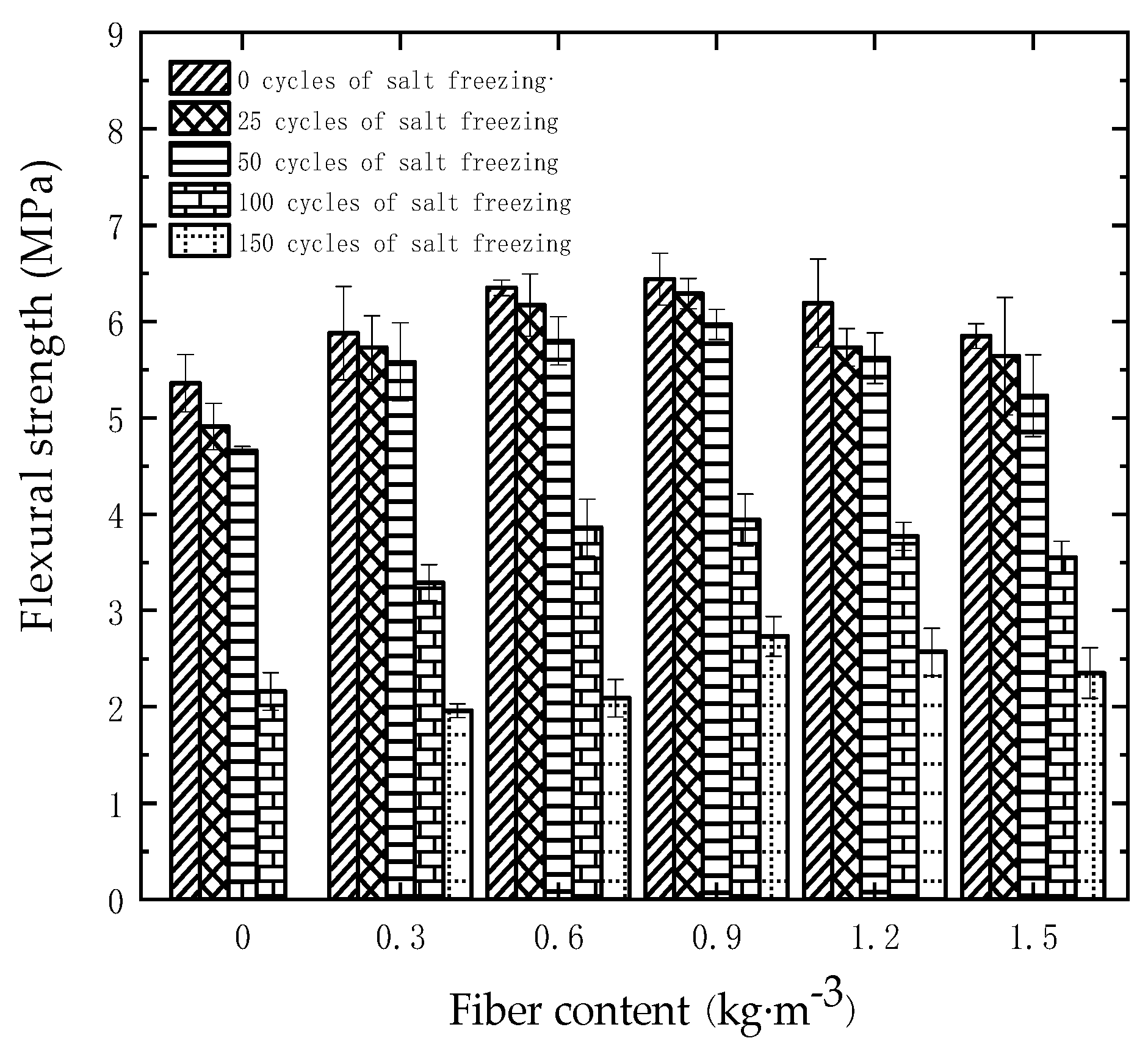
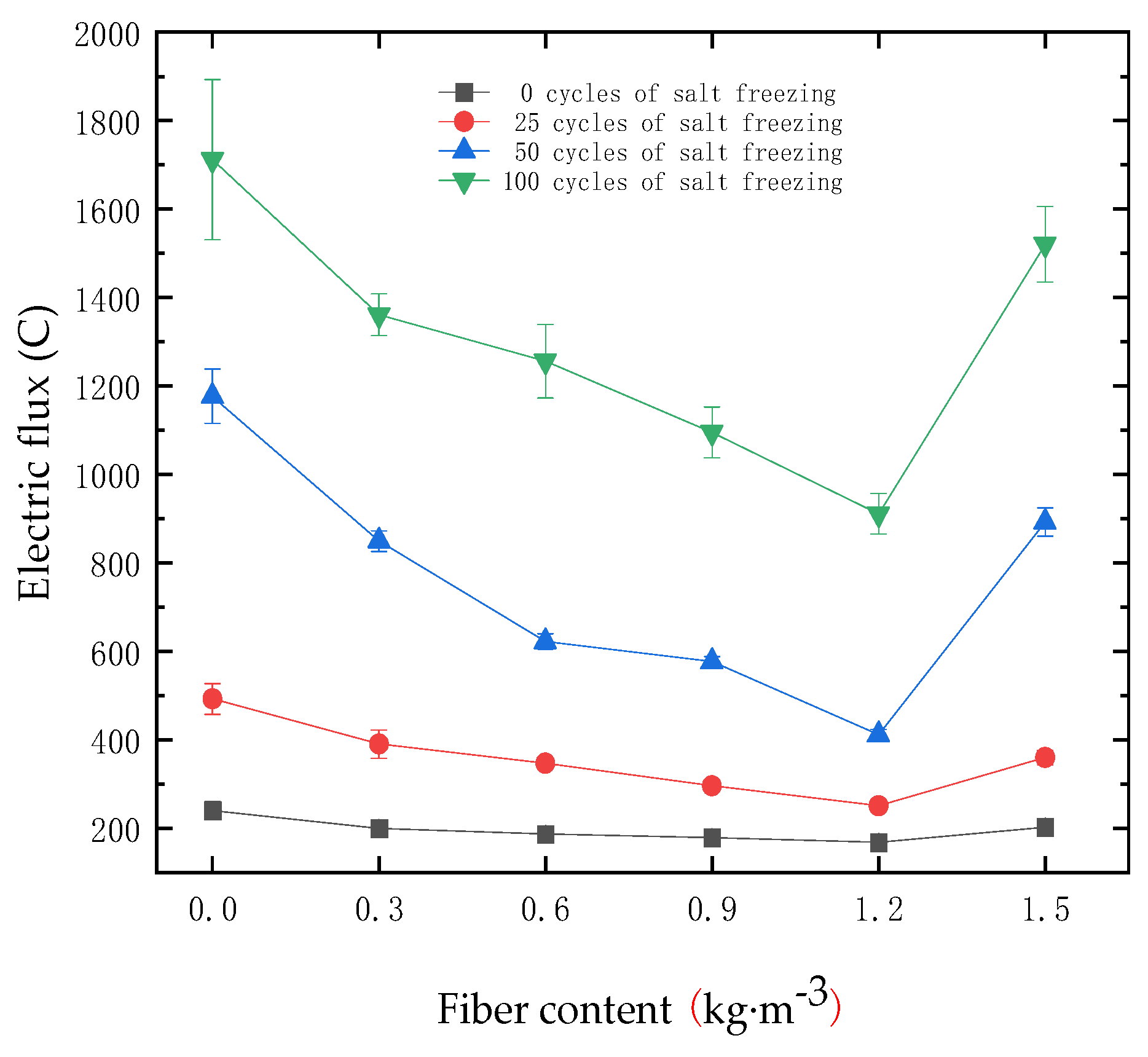
The durability of marine structures in the northern coastal areas is significantly damaged due to the double deterioration of chloride salt and freeze–thaw, and adding fiber can effectively improve the durability of marine structures. This work investigated the influence of polypropylene fiber content and salt freezing cycles on the flexural strength and durability of high-performance concrete through salt freezing cycle tests. The main experimental methods used included four-point load bending tests, relative dynamic elastic modulus tests, mass loss rate tests, and chloride ion permeability tests, with the mechanisms analyzed using SEM. The results indicated that an appropriate amount of polypropylene fibers significantly enhanced the flexural strength and durability of high-performance concrete. At a fiber content of 0.9 kg/m3, the concrete achieved the highest flexural strength. However, when the fiber content exceeded 0.9 kg/m3, excessive fibers caused uneven distribution and formed clusters, which reduced the flexural strength. At a fiber content of 1.2 kg/m3, the high-performance concrete showed optimal resistance to salt freezing and chloride ion permeability. However, exceeding this fiber content increased the concrete’s porosity, allowing harmful substances like chloride ions to penetrate more easily, thereby accelerating degradation under freeze–thaw conditions. This study contributes to a broader understanding of the durability of marine structures in coastal northern regions and provides theoretical data support for such environments.
Keywords: polypropylene fiber; high-performance concrete; flexural strength; salt freezing resistance; chloride ion penetration resistance polypropylene fiber; high-performance concrete; flexural strength; salt freezing resistance; chloride ion penetration resistance