



Toward Fully Bio-Based Polyurethane Foams: Effects of Radish Seed and Tall Oil Polyols on Biofoam Properties

 ,
,  ,
, Abstract
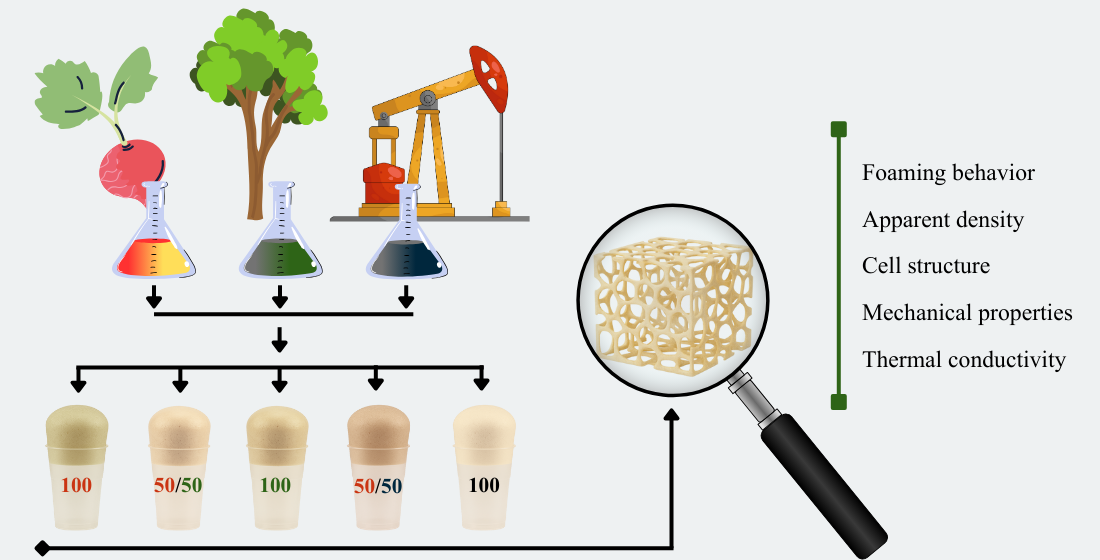
Share and Cite
Kirpluks, M.; Kurańska, M.; Malewska, E.; Bonder, Ł.; Dambe, N.; Grucela, D.; Kuciel, S. Toward Fully Bio-Based Polyurethane Foams: Effects of Radish Seed and Tall Oil Polyols on Biofoam Properties. Materials 2025, 18, 5692. https://doi.org/10.3390/ma18245692
Kirpluks M, Kurańska M, Malewska E, Bonder Ł, Dambe N, Grucela D, Kuciel S. Toward Fully Bio-Based Polyurethane Foams: Effects of Radish Seed and Tall Oil Polyols on Biofoam Properties. Materials. 2025; 18(24):5692. https://doi.org/10.3390/ma18245692
Chicago/Turabian StyleKirpluks, Mikelis, Maria Kurańska, Elżbieta Malewska, Łukasz Bonder, Nanija Dambe, Dominika Grucela, and Stanisław Kuciel. 2025. "Toward Fully Bio-Based Polyurethane Foams: Effects of Radish Seed and Tall Oil Polyols on Biofoam Properties" Materials 18, no. 24: 5692. https://doi.org/10.3390/ma18245692
APA StyleKirpluks, M., Kurańska, M., Malewska, E., Bonder, Ł., Dambe, N., Grucela, D., & Kuciel, S. (2025). Toward Fully Bio-Based Polyurethane Foams: Effects of Radish Seed and Tall Oil Polyols on Biofoam Properties. Materials, 18(24), 5692. https://doi.org/10.3390/ma18245692
