


Influence of Nodal Spheres on the Mechanical Behaviour of Auxetic Materials Manufactured with PA12

 ,
,  , ,
, ,  ,
,  and
and
Abstract
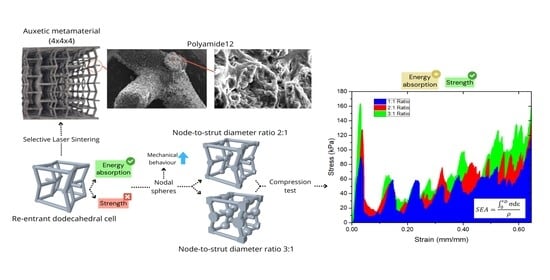
1. Introduction
2. Materials and Methods
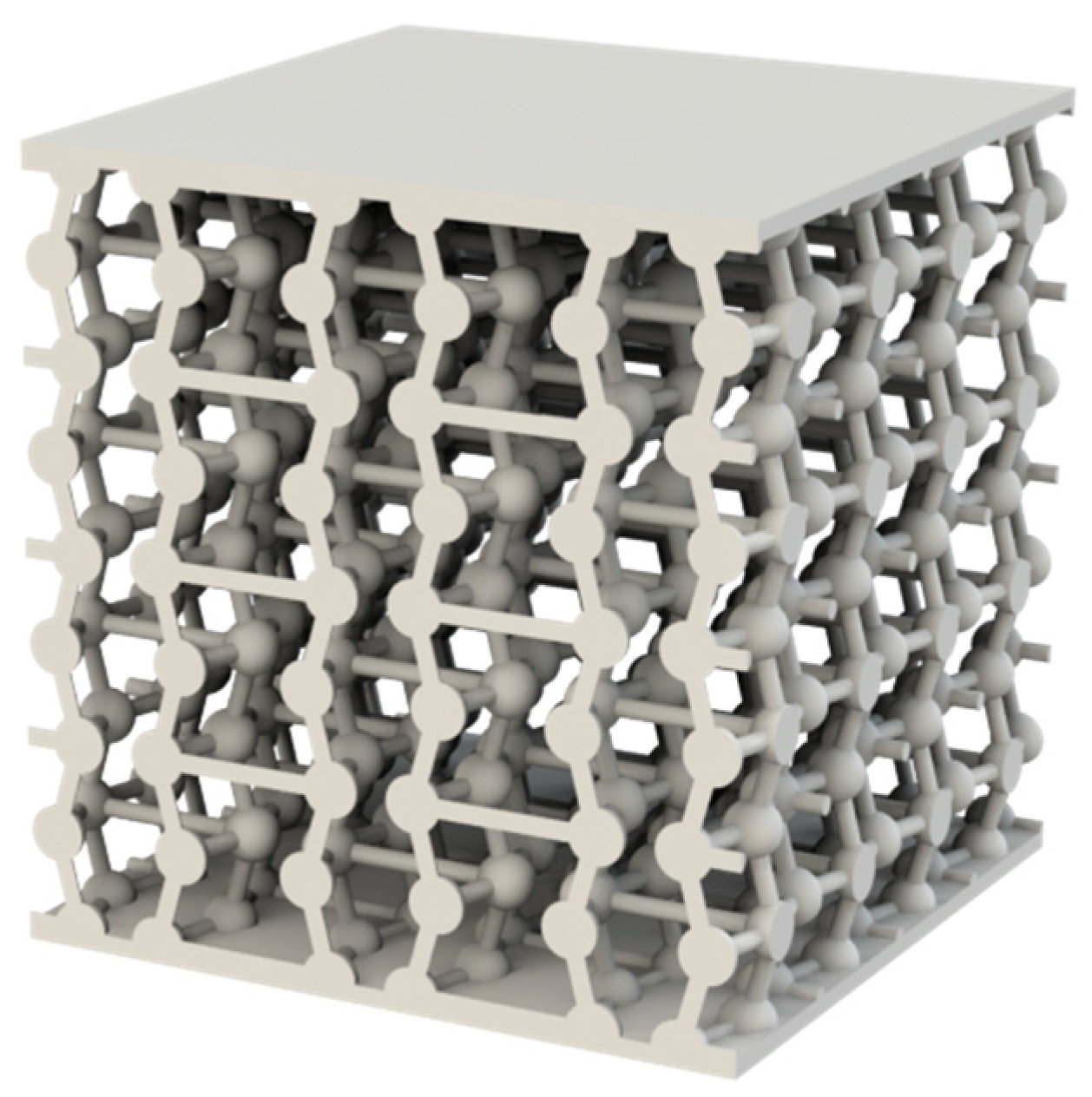
2.1. Design and Structures
2.2. Specimens Manufacture
2.3. Morphological Analysis
2.4. Compression Test
3. Results and Discussion
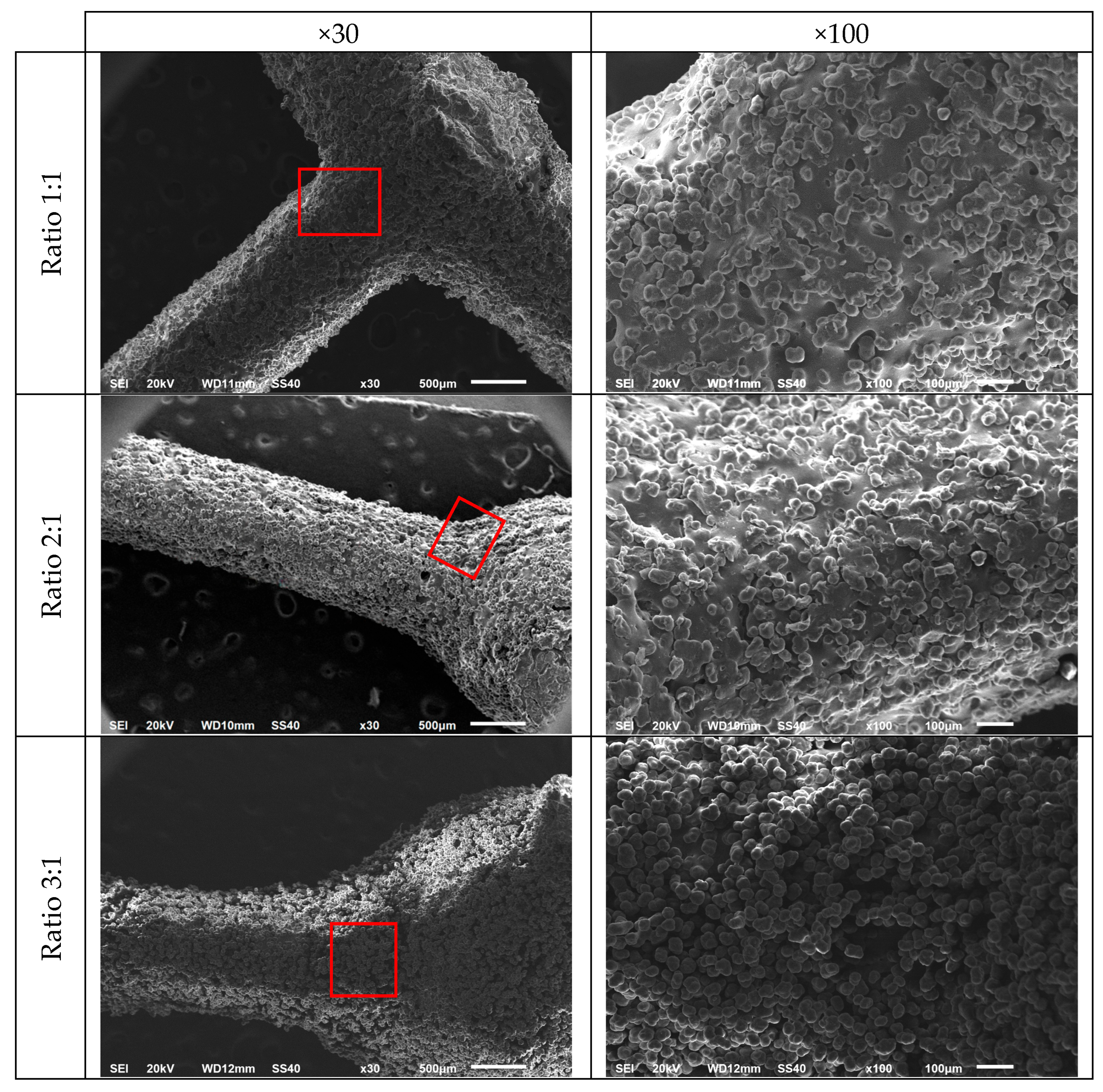
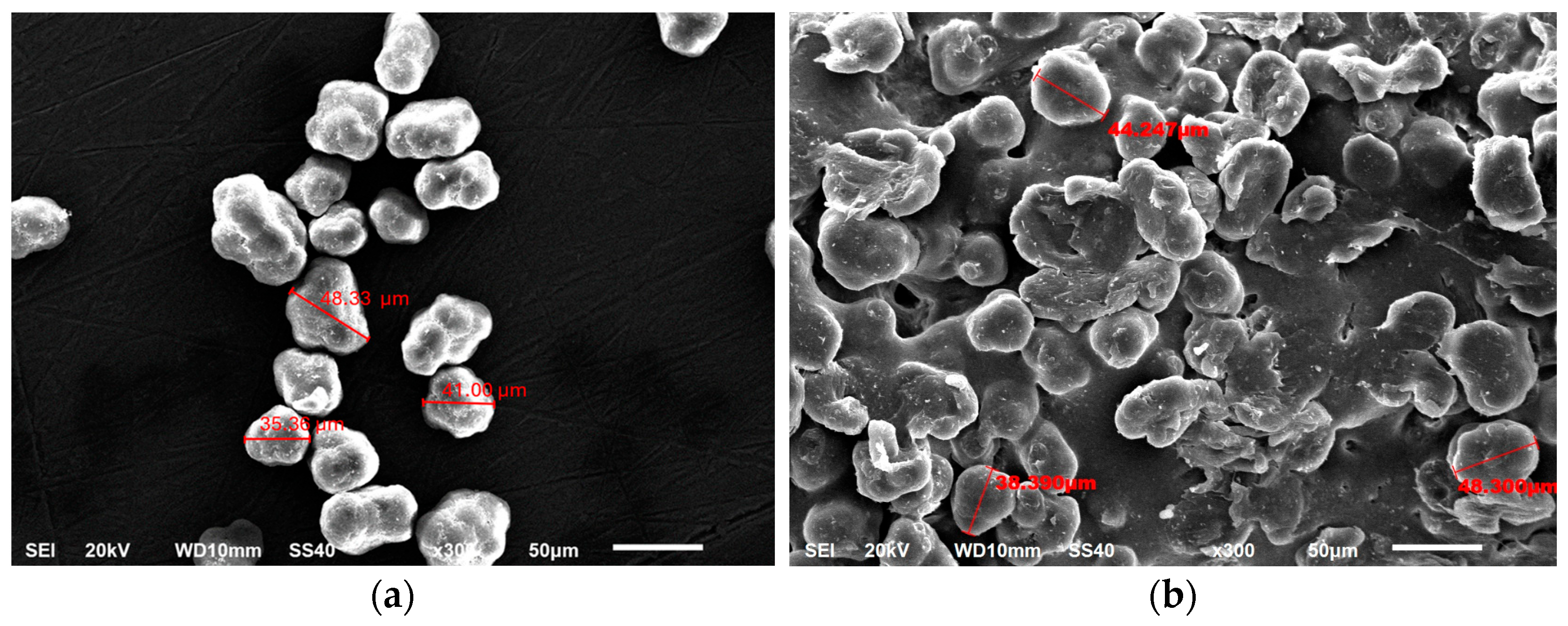
3.1. Morphological Analysis
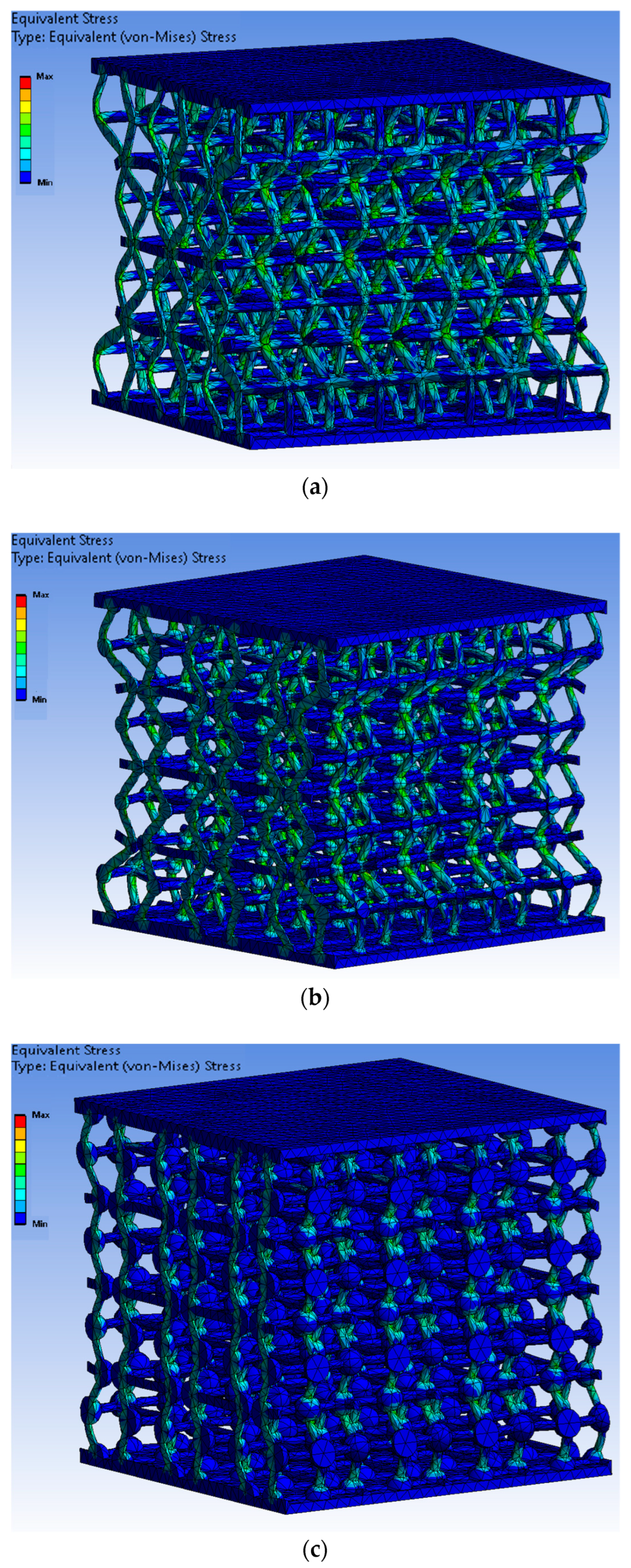
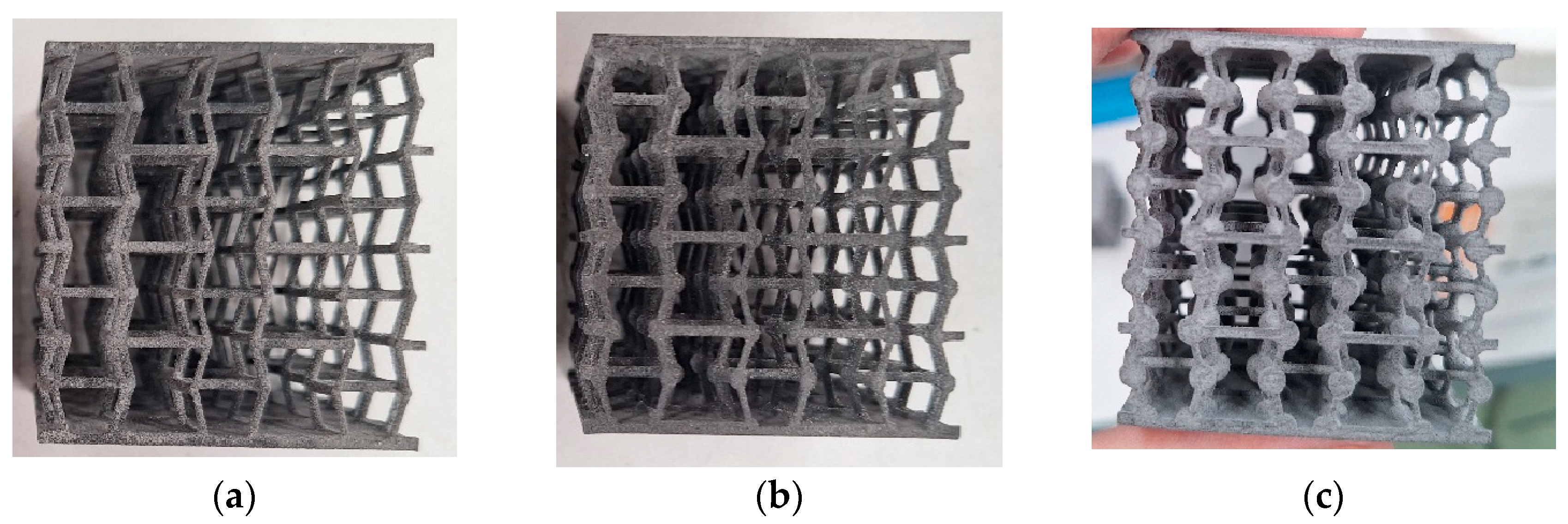
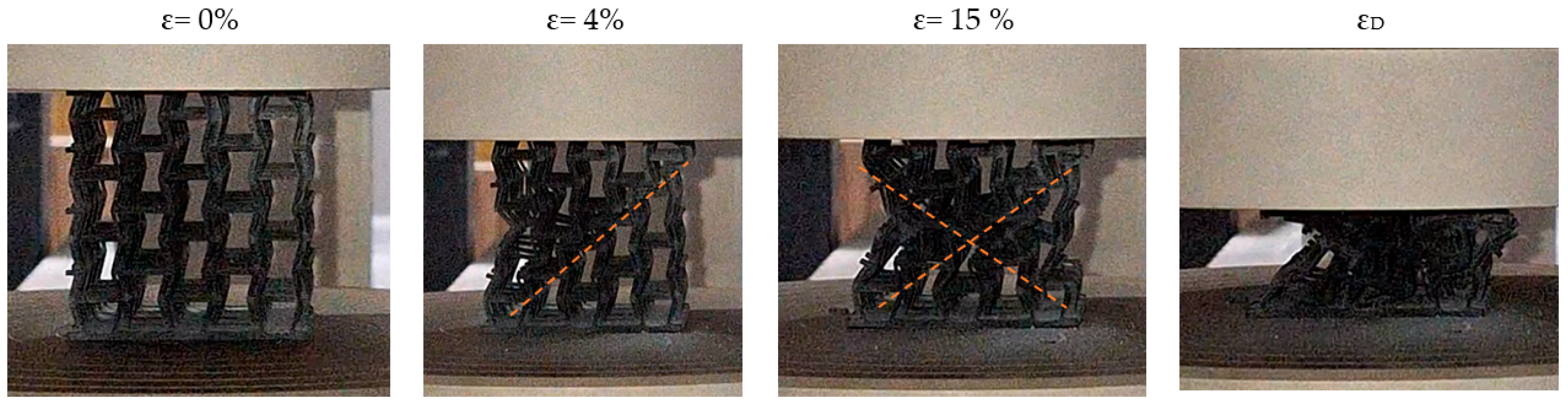
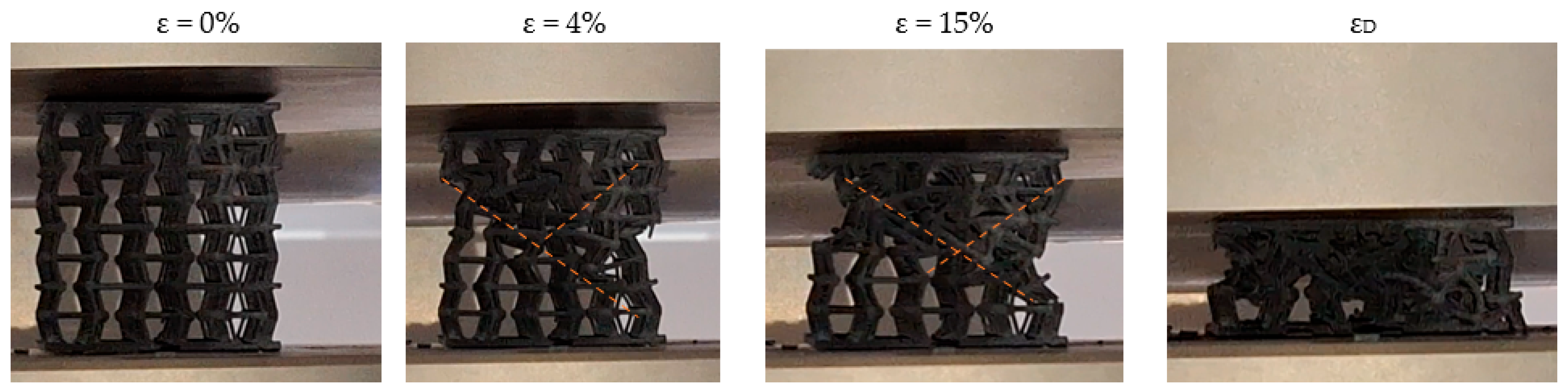
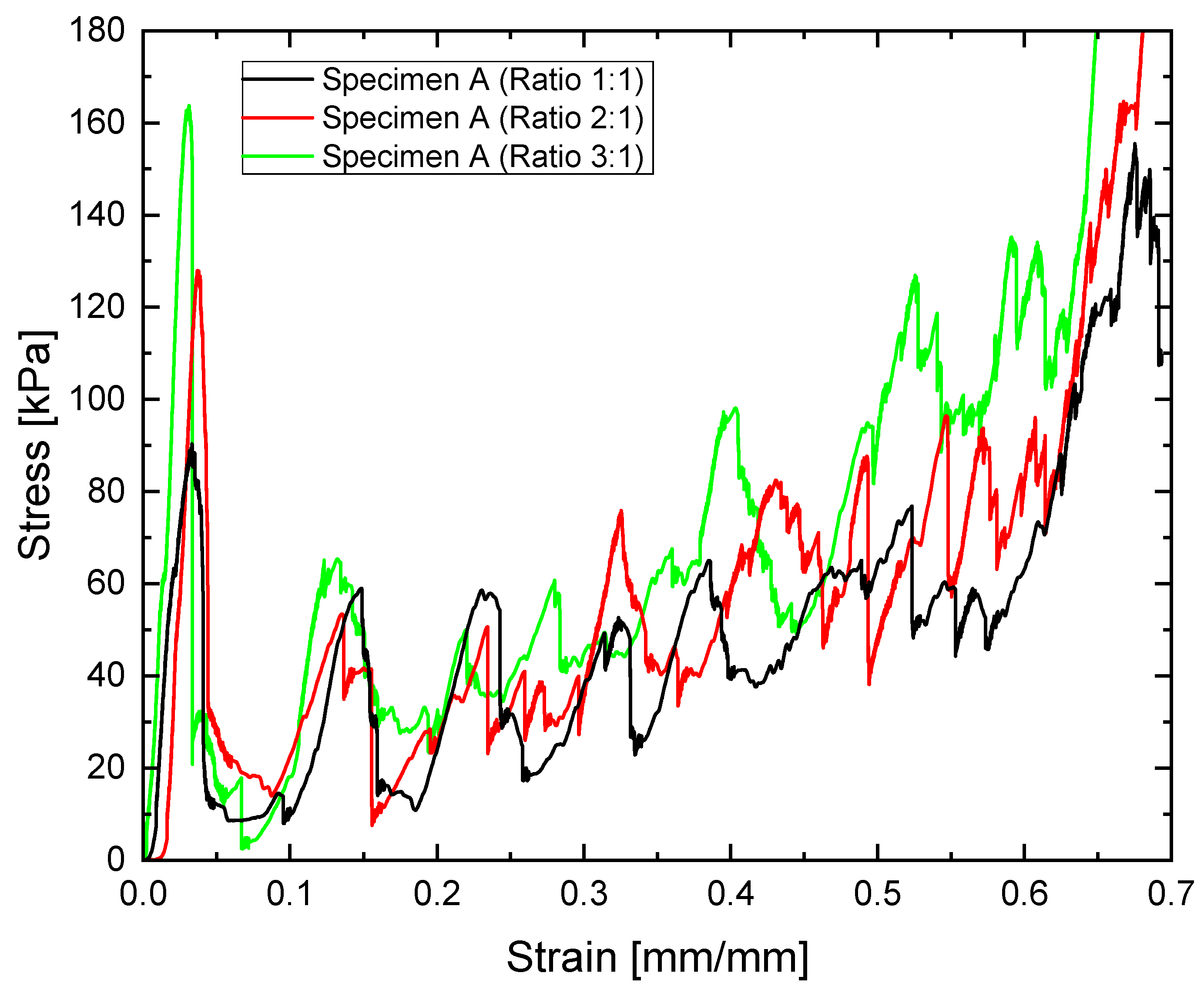
3.2. Compression Tests
4. Conclusions
Author Contributions
Funding
Institutional Review Board Statement
Informed Consent Statement
Data Availability Statement
Conflicts of Interest
References
- Surjadi, J.U.; Gao, L.; Du, H.; Li, X.; Xiong, X.; Fang, N.X.; Lu, Y. Mechanical Metamaterials and Their Engineering Applications. Adv. Eng. Mater. 2019, 21, 1800864. [Google Scholar] [CrossRef]
- Li, T.; Liu, F.; Wang, L. Enhancing Indentation and Impact Resistance in Auxetic Composite Materials. Compos. B Eng. 2020, 198, 108229. [Google Scholar] [CrossRef]
- Hu, L.L.; Zhou, M.Z.; Deng, H. Dynamic Indentation of Auxetic and Non-Auxetic Honeycombs Under Large Deformation. Compos. Struct. 2019, 207, 323–330. [Google Scholar] [CrossRef]
- Essassi, K.; Rebiere, J.; El mahi, A.; Souf, M.A.B.; Bouguecha, A.; Haddar, M. Indentation Characteristics of Auxetic Composite Material. In Design and Modeling of Mechanical Systems—V; Lecture Notes in Mechanical Engineering; Springer: Cham, Switzerland, 2023; pp. 520–526. [Google Scholar] [CrossRef]
- Choi, J.B.; Lakes, R.S. Non-Linear Properties of Metallic Cellular Materials with a Negative Poisson’s Ratio. J. Mater. Sci. 1992, 27, 5375–5381. [Google Scholar] [CrossRef]
- Novak, N.; Duncan, O.; Allen, T.; Alderson, A.; Vesenjak, M.; Ren, Z. Shear Modulus of Conventional and Auxetic Open-Cell Foam. Mech. Mater. 2021, 157, 103818. [Google Scholar] [CrossRef]
- Lakes, R. Foam Structures with a Negative Poisson’s Ratio. Science 1987, 235, 1038–1040. [Google Scholar] [CrossRef] [PubMed]
- Li, C.; Shen, H.S.; Wang, H. Nonlinear Dynamic Response of Sandwich Plates with Functionally Graded Auxetic 3D Lattice Core. Nonlinear Dyn. 2020, 100, 3235. [Google Scholar] [CrossRef]
- Etemadi, E.; Bashtani, M.; Hu, H. Novel Auxetic Metamaterials Inspired from Geometry Patterns of an Iranian Mosque with Improved Energy Absorption Capability. Mater. Today Commun. 2024, 41, 110470. [Google Scholar] [CrossRef]
- Imbalzano, G.; Tran, P.; Ngo, T.D.; Lee, P.V.S. A Numerical Study of Auxetic Composite Panels under Blast Loadings. Compos. Struct. 2016, 135, 339–352. [Google Scholar] [CrossRef]
- Ren, X.; Das, R.; Tran, P.; Ngo, T.D.; Xie, Y.M. Auxetic Metamaterials and Structures: A Review. Smart Mater. Struct. 2018, 27, 023001. [Google Scholar] [CrossRef]
- Banhart, J. Manufacture, Characterisation and Application of Cellular Metals and Metal Foams. Prog. Mater. Sci. 2001, 46, 559–632. [Google Scholar] [CrossRef]
- Imbalzano, G.; Tran, P.; Ngo, T.D.; Lee, P.V.S. Three-Dimensional Modelling of Auxetic Sandwich Panels for Localised Impact Resistance. J. Sandw. Struct. Mater. 2017, 19, 291–316. [Google Scholar] [CrossRef]
- Formas Auxéticas Para un Pedalear Perfectamente. Available online: https://demonerosso.dainese.com/es/formas-aux%C3%A9ticas-para-un-pedalear-perfectamente (accessed on 11 May 2024).
- NASA 4D-Print ‘Space Chain Mail’ to Protect Astronauts from Flying Meteorites. Available online: https://www.designboom.com/technology/nasa-space-fabric-4d-printing-04-27-2017/ (accessed on 4 April 2024).
- Wang, Z.; Zulifqar, A.; Hu, H. Auxetic Composites in Aerospace Engineering. In Advanced Composite Materials for Aerospace Engineering; Woodhead Publishing: Cambridge, UK, 2016; pp. 213–240. [Google Scholar] [CrossRef]
- Luo, C.; Han, Z.; Zhang, Y.; Zhang, X.G.; Ren, X.; Xie, Y.M. Design, Manufacturing and Applications of Auxetic Tubular Structures: A Review. Thin-Walled Struct. 2021, 163, 107682. [Google Scholar] [CrossRef]
- Pattinson, S.W.; Huber, M.E.; Kim, S.; Lee, J.; Grunsfeld, S.; Roberts, R.; Dreifus, G.; Meier, C.; Liu, L.; Hogan, N.; et al. Additive Manufacturing of Biomechanically Tailored Meshes for Compliant Wearable and Implantable Devices. Adv. Funct. Mater. 2019, 29, 1901815. [Google Scholar] [CrossRef]
- Jiang, W.; Ren, X.; Wang, S.L.; Zhang, X.G.; Zhang, Y.; Luo, C.; Xie, Y.M.; Scarpa, F.; Alderson, A.; Evans, K.E. Manufacturing, Characteristics and Applications of Auxetic Foams: A State-of-the-Art Review. Compos. Part B 2022, 235, 1359–8368. [Google Scholar] [CrossRef]
- Foster, L.; Peketi, P.; Allen, T.; Senior, T.; Duncan, O.; Alderson, A. Application of Auxetic Foam in Sports Helmets. Appl. Sci. 2018, 8, 354. [Google Scholar] [CrossRef]
- Ren, X.; Shen, J.; Tran, P.; Duc Ngo, T.; Xie, Y.M. Auxetic Nail: Design and Experimental Study. Compos. Struct. 2018, 184, 288–298. [Google Scholar] [CrossRef]
- Zhang, Z.; Zhang, Z.; Huang, X. Experimental Study on the Impact Response of the Polyurea-Coated 3D Auxetic Lattice Sandwich Panels Subjected to Air Explosion. Compos. Struct. 2023, 323, 117500. [Google Scholar] [CrossRef]
- Zhang, Z.; Gu, Y.; Wu, H.; Chen, Q. Investigation on the Energy Absorption Characteristics of Novel Graded Auxetic Re-Entrant Honeycombs. Compos. Struct. 2025, 352, 118633. [Google Scholar] [CrossRef]
- du Plessis, A.; Razavi, N.; Benedetti, M.; Murchio, S.; Leary, M.; Watson, M.; Bhate, D.; Berto, F. Properties and Applications of Additively Manufactured Metallic Cellular Materials: A Review. Prog. Mater. Sci. 2022, 125, 100918. [Google Scholar] [CrossRef]
- Wang, W.-J.; Zhang, W.-M.; Guo, M.-F.; Yang, H.; Ma, L. Impact Resistance of Assembled Plate-Lattice Auxetic Structures. Compos. Struct. 2024, 338, 118132. [Google Scholar] [CrossRef]
- Aplicaciones de las Propiedades Auxéticas en la Arquitectura|Archivo Digital UPM. Available online: https://oa.upm.es/48454/ (accessed on 4 April 2024).
- Yin, L.; Zhang, M.; Zhu, Y.; Li, B.; Wen, Y. Quasi-Static Cyclic Tension–Compression Behavior of Circular Anti-Chiral Auxetic Metamaterials. Constr. Build. Mater. 2024, 450, 138519. [Google Scholar] [CrossRef]
- Shivakumar, N.; Ramesh, T.; Muthukumaran, S. Mechanical Performance of SS 316L Node-Reinforced Diamond Metal Lattice Structure Manufactured via Selective Laser Melting. Mater. Res. Express 2025, 12, 025801. [Google Scholar] [CrossRef]
- Liu, Z.; Zhao, R.; Tao, C.; Wang, Y.; Liang, X. Mechanical Performance of a Node-Reinforced Body-Centered Cubic Lattice Structure: An Equal-Strength Concept Design. Aerospace 2024, 11, 4. [Google Scholar] [CrossRef]
- Wu, B.; Chen, Q.; Liu, F.; Chen, M.; Lu, Y.; Jiang, D.; Yi, Y. Study on Dynamic Mechanics of Node-Enhanced Graded Lattice Structure and Application Optimization in Automobile Energy Absorbing Box. Materials 2023, 16, 6893. [Google Scholar] [CrossRef]
- Wu, B.; Sun, F.; Wang, L.; Chen, M.; Lu, Y.; Jiang, D. Characterization of Mechanical Equivalent Properties for Node Enhanced Graded Lattice Structure. Model. Simul. Mat. Sci. Eng. 2023, 31, 065016. [Google Scholar] [CrossRef]
- Miao, X.; Hu, J.; Xu, Y.; Su, J.; Jing, Y. Review on Mechanical Properties of Metal Lattice Structures. Compos. Struct. 2024, 342, 118267. [Google Scholar] [CrossRef]
- Liu, R.; Chen, W.; Zhao, J. A Review on Factors Affecting the Mechanical Properties of Additively-Manufactured Lattice Structures. J. Mater. Eng. Perform. 2024, 33, 4685–4711. [Google Scholar] [CrossRef]
- Ge, S.; Zhuang, Q.; Mei, H.; Xu, J.; Zhang, D.; Li, Z. Enhanced Tensile Properties of Truss Lattice Architectures with Triply Periodic Minimal Surface Nodes. Scr. Mater. 2024, 248, 116125. [Google Scholar] [CrossRef]
- Benedetti, M.; du Plessis, A.; Ritchie, R.O.; Dallago, M.; Razavi, N.; Berto, F. Architected Cellular Materials: A Review on Their Mechanical Properties Towards Fatigue-Tolerant Design and Fabrication. Mater. Sci. Eng. R Rep. 2021, 144, 100606. [Google Scholar] [CrossRef]
- UNE-EN ISO 844:2021; Rigid cellular plastics-Determination of compression properties. International Organization for Standardization: Geneva, Switzerland, 2021.
- Deshpande, V.S.; Ashby, M.F.; Fleck, N.A. Foam Topology: Bending versus Stretching Dominated Architectures. Acta Mater. 2001, 49, 1035–1040. [Google Scholar] [CrossRef]
- Luxner, M.H.; Pettermann, H.E. Modeling and Simulation of Highly Porous Open Cell Structures: Elasto-Plasticity and Localization Versus Disorder and Defects. In IUTAM Symposium on Mechanical Properties of Cellular Materials; IUTAM Bookseries; Springer: Dordrecht, The Netherlands, 2009; Volume 12, pp. 125–134. [Google Scholar] [CrossRef]
- Kumar, A.; Verma, S.; Jeng, J.Y. Supportless Lattice Structures for Energy Absorption Fabricated by Fused Deposition Modeling. 3D Print. Addit. Manuf. 2020, 7, 85–96. [Google Scholar] [CrossRef]
- Zhang, Y.; Ren, X.; Han, D.; Cheng, X.; Jiang, W.; Zhang, X.G.; Zhang, X.Y.; Xie, Y.M. Static and Dynamic Properties of a Perforated Metallic Auxetic Metamaterial with Tunable Stiffness and Energy Absorption. Int. J. Impact Eng. 2022, 164, 104193. [Google Scholar] [CrossRef]
- Yang, L.; Harrysson, O.; West, H.; Cormier, D. Mechanical Properties of 3D Re-Entrant Honeycomb Auxetic Structures Realized via Additive Manufacturing. Int. J. Solids Struct. 2015, 69–70, 475–490. [Google Scholar] [CrossRef]
- Al-Ketan, O.; Rowshan, R.; Al-Rub, R.K.A. Topology-Mechanical Property Relationship of 3D Printed Strut, Skeletal, and Sheet Based Periodic Metallic Cellular Materials. Addit. Manuf. 2018, 19, 167–183. [Google Scholar] [CrossRef]
- Ashby, M.F. The Properties of Foams and Lattices. Philos. Trans. R. Soc. A Math. Phys. Eng. Sci. 2005, 364, 15–30. [Google Scholar] [CrossRef] [PubMed]
- Guo, M.F.; Yang, H.; Ma, L. Design and Characterization of 3D AuxHex Lattice Structures. Int. J. Mech. Sci. 2020, 181, 105700. [Google Scholar] [CrossRef]
- Liu, Y.; Zhu, L.; Zhou, L.; Li, Y. Microstructure and Mechanical Properties of Reinforced Polyamide 12 Composites Prepared by Laser Additive Manufacturing. Rapid Prototyp. J. 2019, 25, 1127–1134. [Google Scholar] [CrossRef]
- Harris, J.A.; Winter, R.E.; McShane, G.J. Impact Response of Additively Manufactured Metallic Hybrid Lattice Materials. Int. J. Impact Eng. 2017, 104, 177–191. [Google Scholar] [CrossRef]
- Liang, Y.; Zhou, W.; Liu, Y.; Li, Z.; Yang, Y.; Xi, H.; Wu, Z. Energy Absorption and Deformation Behavior of 3D Printed Triply Periodic Minimal Surface Stainless Steel Cellular Structures under Compression. Steel Res. Int. 2021, 92, 2000411. [Google Scholar] [CrossRef]
- Zhang, L.; Feih, S.; Daynes, S.; Chang, S.; Wang, M.Y.; Wei, J.; Lu, W.F. Energy Absorption Characteristics of Metallic Triply Periodic Minimal Surface Sheet Structures under Compressive Loading. Addit. Manuf. 2018, 23, 505–515. [Google Scholar] [CrossRef]
- Harris, J.A.; McShane, G.J. Metallic Stacked Origami Cellular Materials: Additive Manufacturing, Properties, and Modelling. Int. J. Solids Struct. 2020, 185–186, 448–466. [Google Scholar] [CrossRef]
- Ma, Z.; Zhang, D.Z.; Liu, F.; Jiang, J.; Zhao, M.; Zhang, T. Lattice Structures of Cu-Cr-Zr Copper Alloy by Selective Laser Melting: Microstructures, Mechanical Properties and Energy Absorption. Mater. Des. 2020, 187, 108406. [Google Scholar] [CrossRef]
- Liu, Y.; Schaedler, T.A.; Jacobsen, A.J.; Chen, X. Quasi-Static Energy Absorption of Hollow Microlattice Structures. Compos. B Eng. 2014, 67, 39–49. [Google Scholar] [CrossRef]
- Schaedler, T.A.; Ro, C.J.; Sorensen, A.E.; Eckel, Z.; Yang, S.S.; Carter, W.B.; Jacobsen, A.J. Designing Metallic Microlattices for Energy Absorber Applications. Adv. Eng. Mater. 2014, 16, 276–283. [Google Scholar] [CrossRef]
- Liu, X.; Suzuki, A.; Takata, N.; Kobashi, M.; Kato, M. Dual Plateau Stress of C15-Type Topologically Close-Packed Lattice Structures Additive-Manufactured by Laser Powder Bed Fusion. Scr. Mater. 2021, 202, 114003. [Google Scholar] [CrossRef]



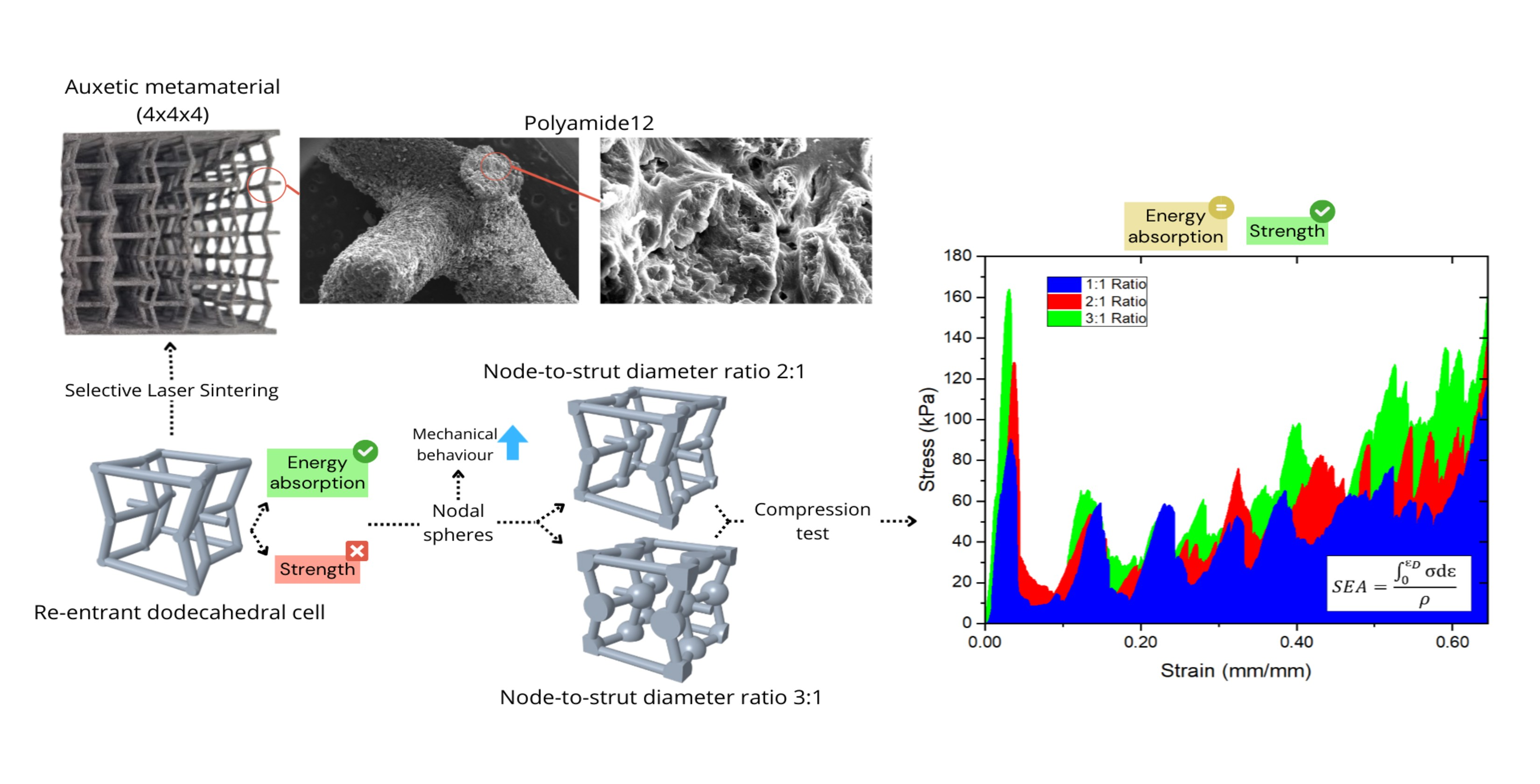
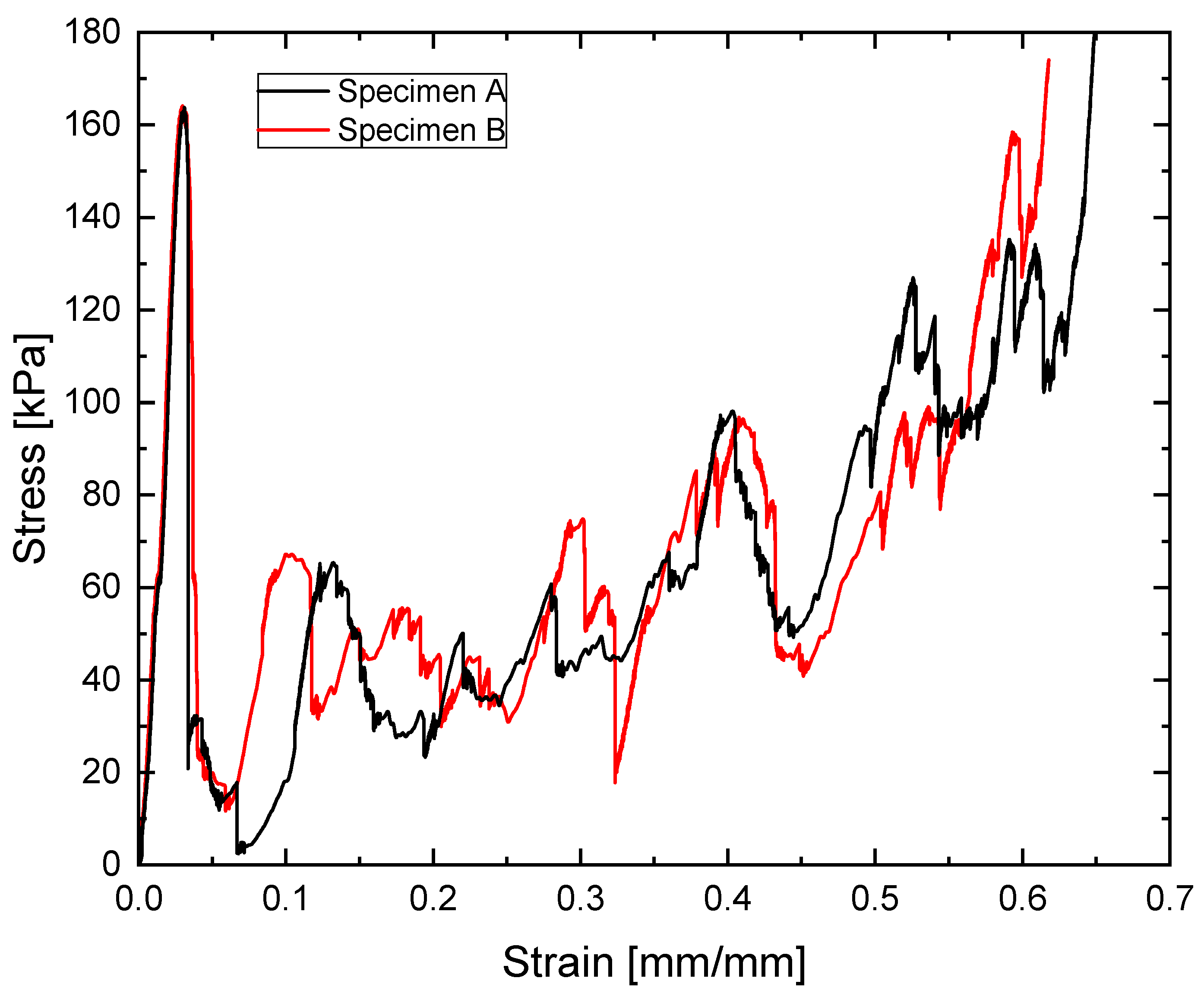
| Specimen | RC [kPa] | E [kPa] | εD [mm/mm] | Area [kPa] | SEA [J/Kg] |
|---|---|---|---|---|---|
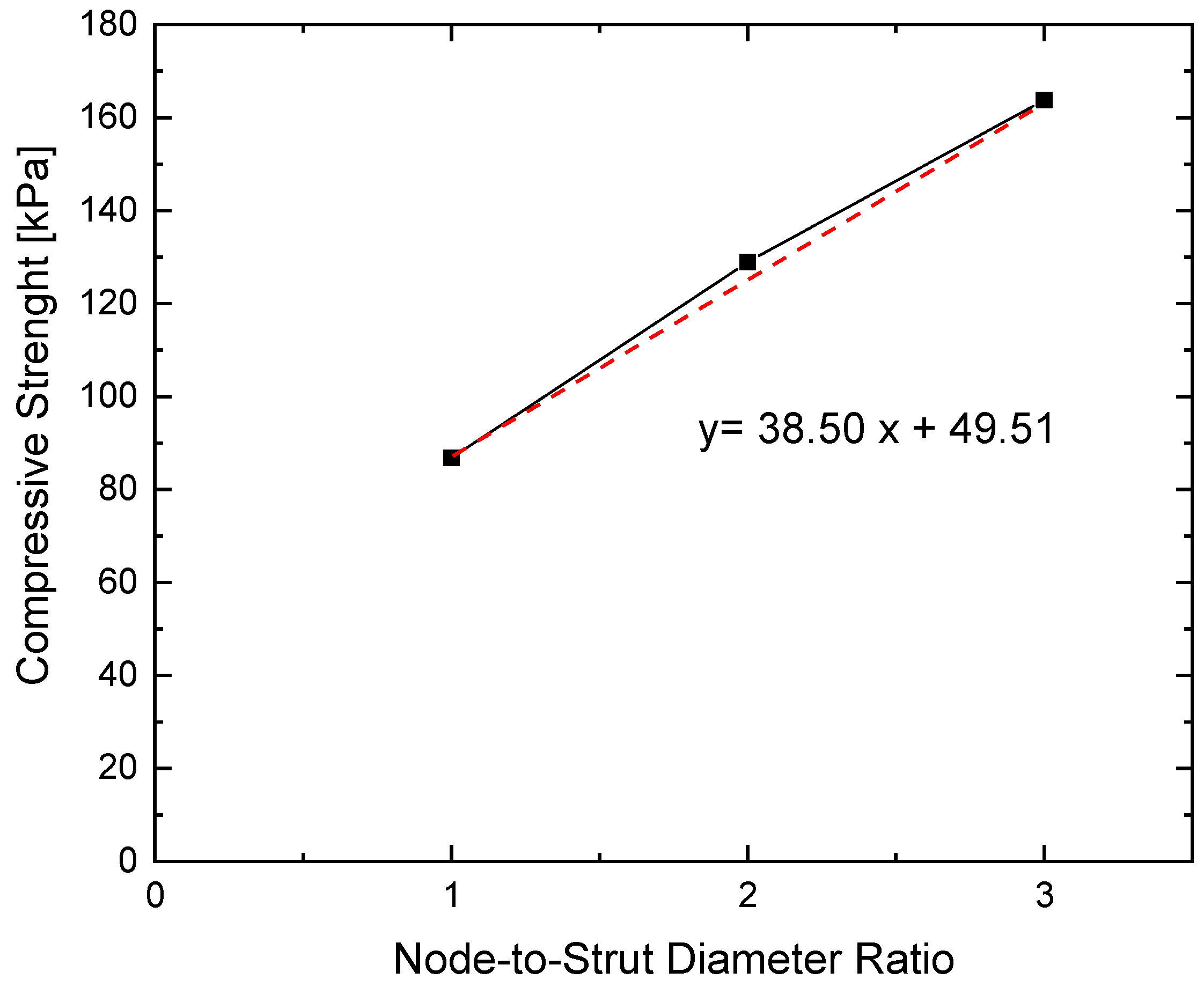
| A (Ratio 1:1) | 89.92 | 5058.10 | 0.63 | 26.83 | 29.98 |
| B (Ratio 1:1) | 83.69 | 4942.89 | 0.67 | 26.01 | 29.06 |
| Mean | 86.81 | 5000.50 | 0.65 | 26.42 | 29.52 |
| Deviation | 4.41 | 81.47 | 0.03 | 0.58 | 0.65 |
| A (Ratio 2:1) | 129.95 | 6936.70 | 0.66 | 30.71 | 36.28 |
| B (Ratio 2:1) | 127.93 | 6635.61 | 0.64 | 32.47 | 34.32 |
| Mean | 128.94 | 6786.16 | 0.65 | 31.59 | 35.30 |
| Deviation | 1.43 | 212.90 | 0.01 | 1.24 | 1.39 |
| A (Ratio 3:1) | 163.48 | 7336.97 | 0.65 | 42.02 | 46.95 |
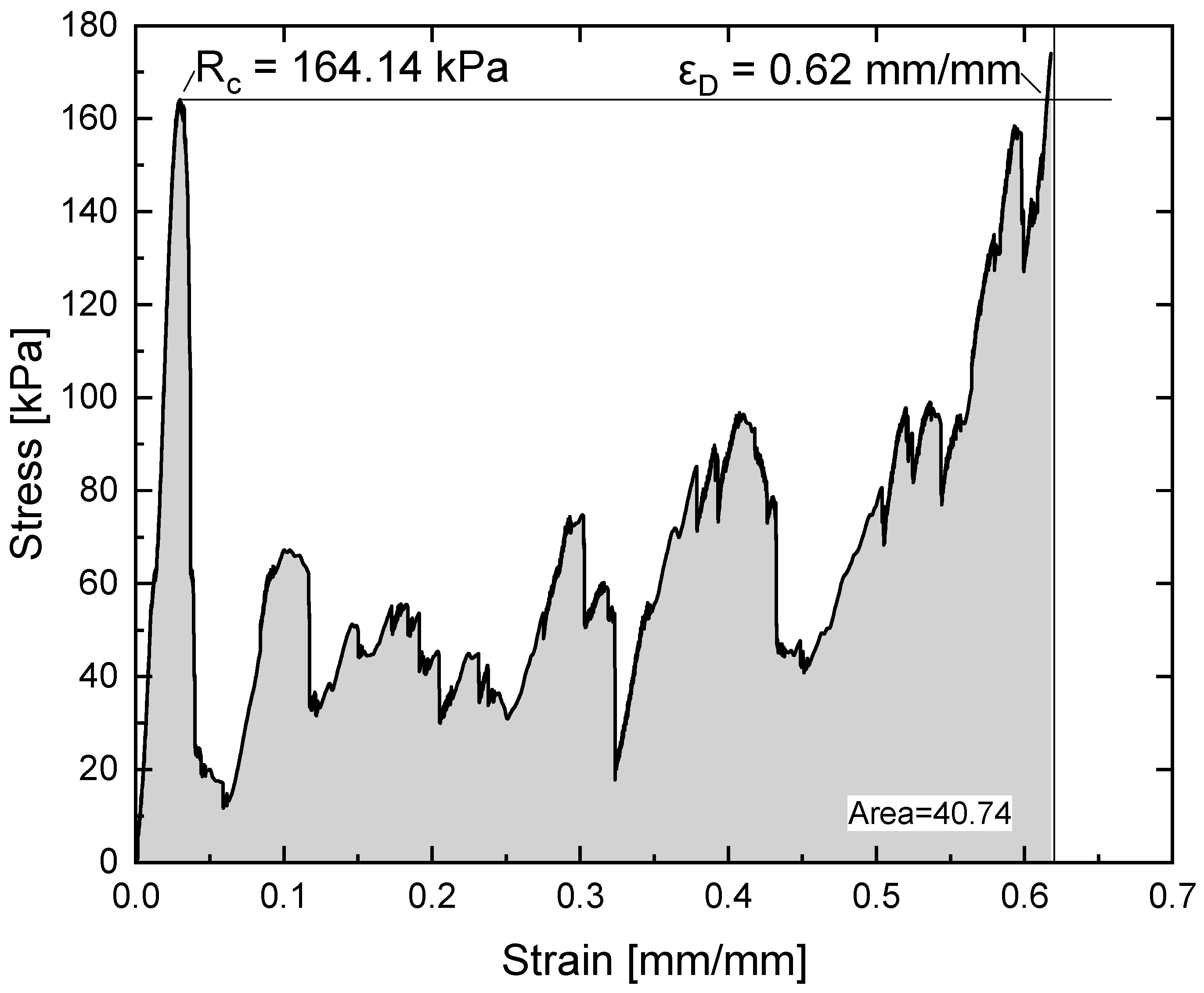
| B (Ratio 3:1) | 164.14 | 7227.32 | 0.62 | 40.74 | 45.52 |
| Mean | 163.81 | 7282.15 | 0.64 | 41.38 | 46.95 |
| Deviation | 0.47 | 77.53 | 0.02 | 0.91 | 1.01 |
| Specimen | RC/ρR [kPa] | E/ρR [kPa] | SEA/ρR [J/Kg] |
|---|---|---|---|
| A (Ratio 1:1) | 904.63 | 50,886.32 | 301.62 |
| B (Ratio 1:1) | 841.95 | 49,727.26 | 292.40 |
| Mean | 873.29 | 50,306.79 | 297.01 |
| Deviation | 44.32 | 819.58 | 6.52 |
| A (Ratio 2:1) | 1191.11 | 63,581.12 | 332.57 |
| B (Ratio 2:1) | 1172.59 | 60,821.36 | 314.54 |
| Mean | 1181.85 | 62,201.24 | 323.56 |
| Deviation | 13.10 | 1951.45 | 12.75 |
| A (Ratio 3:1) | 1063.63 | 47,735.65 | 305.50 |
| B (Ratio 3:1) | 1067.92 | 47,022.25 | 296.19 |
| Mean | 1065.78 | 47,378.95 | 305.50 |
| Deviation | 3.03 | 504.45 | 6.58 |
Disclaimer/Publisher’s Note: The statements, opinions and data contained in all publications are solely those of the individual author(s) and contributor(s) and not of MDPI and/or the editor(s). MDPI and/or the editor(s) disclaim responsibility for any injury to people or property resulting from any ideas, methods, instructions or products referred to in the content. |
© 2025 by the authors. Licensee MDPI, Basel, Switzerland. This article is an open access article distributed under the terms and conditions of the Creative Commons Attribution (CC BY) license (https://creativecommons.org/licenses/by/4.0/).
Share and Cite
Lamas, I.; Feijoo, I.; Gómez, S.; Pereira, A.; Pérez, J.A.; Pérez, M.C. Influence of Nodal Spheres on the Mechanical Behaviour of Auxetic Materials Manufactured with PA12. Materials 2025, 18, 5688. https://doi.org/10.3390/ma18245688
Lamas I, Feijoo I, Gómez S, Pereira A, Pérez JA, Pérez MC. Influence of Nodal Spheres on the Mechanical Behaviour of Auxetic Materials Manufactured with PA12. Materials. 2025; 18(24):5688. https://doi.org/10.3390/ma18245688
Chicago/Turabian StyleLamas, Ismael, Iria Feijoo, Silvia Gómez, Alejandro Pereira, José A. Pérez, and M. Consuelo Pérez. 2025. "Influence of Nodal Spheres on the Mechanical Behaviour of Auxetic Materials Manufactured with PA12" Materials 18, no. 24: 5688. https://doi.org/10.3390/ma18245688
APA StyleLamas, I., Feijoo, I., Gómez, S., Pereira, A., Pérez, J. A., & Pérez, M. C. (2025). Influence of Nodal Spheres on the Mechanical Behaviour of Auxetic Materials Manufactured with PA12. Materials, 18(24), 5688. https://doi.org/10.3390/ma18245688