Article

Effects of the Addition of Iron and Chromium on the Structure and Properties of the Ni-Co-Mn-In Alloy


Institute of Materials Engineering, Faculty of Science and Technology, University of Silesia in Katowice, 75 Pułku Piechoty 1a, 41500 Chorzów, Poland
*
Author to whom correspondence should be addressed.
Materials 2025, 18(19), 4597; https://doi.org/10.3390/ma18194597
Submission received: 29 July 2025 / Revised: 2 September 2025 / Accepted: 5 September 2025 / Published: 3 October 2025
(This article belongs to the Special Issue Processing of Metals and Alloys)

Abstract

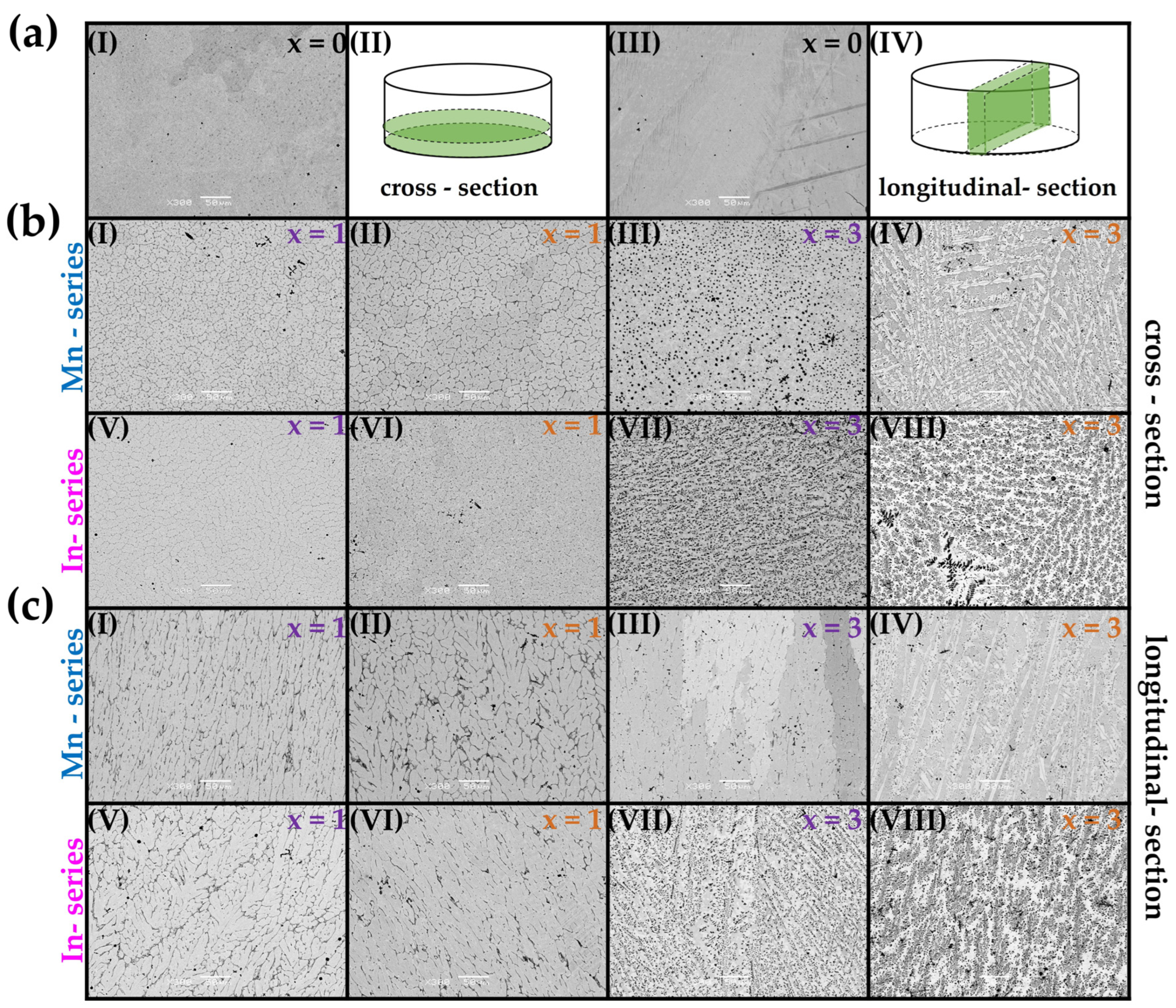
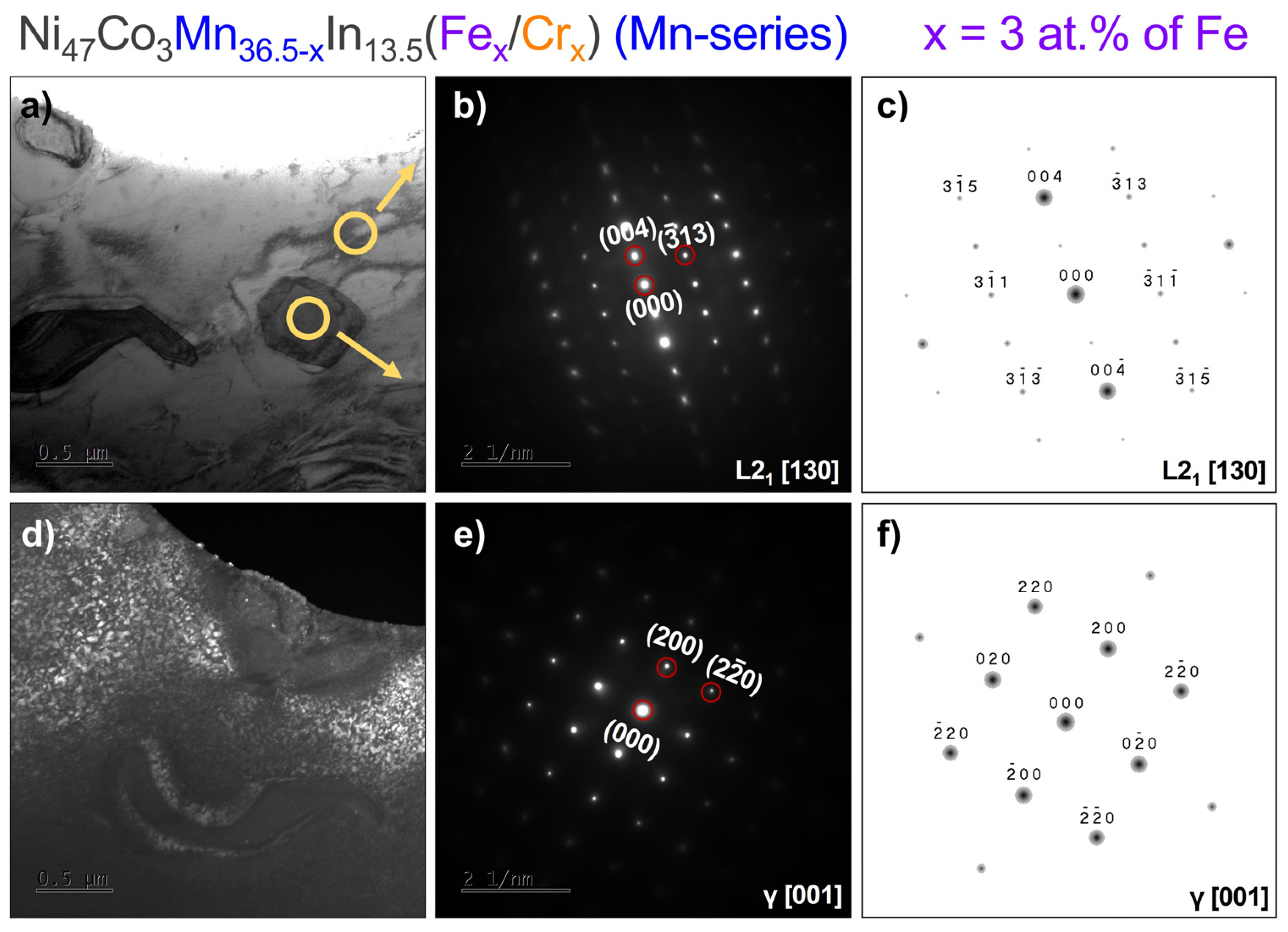
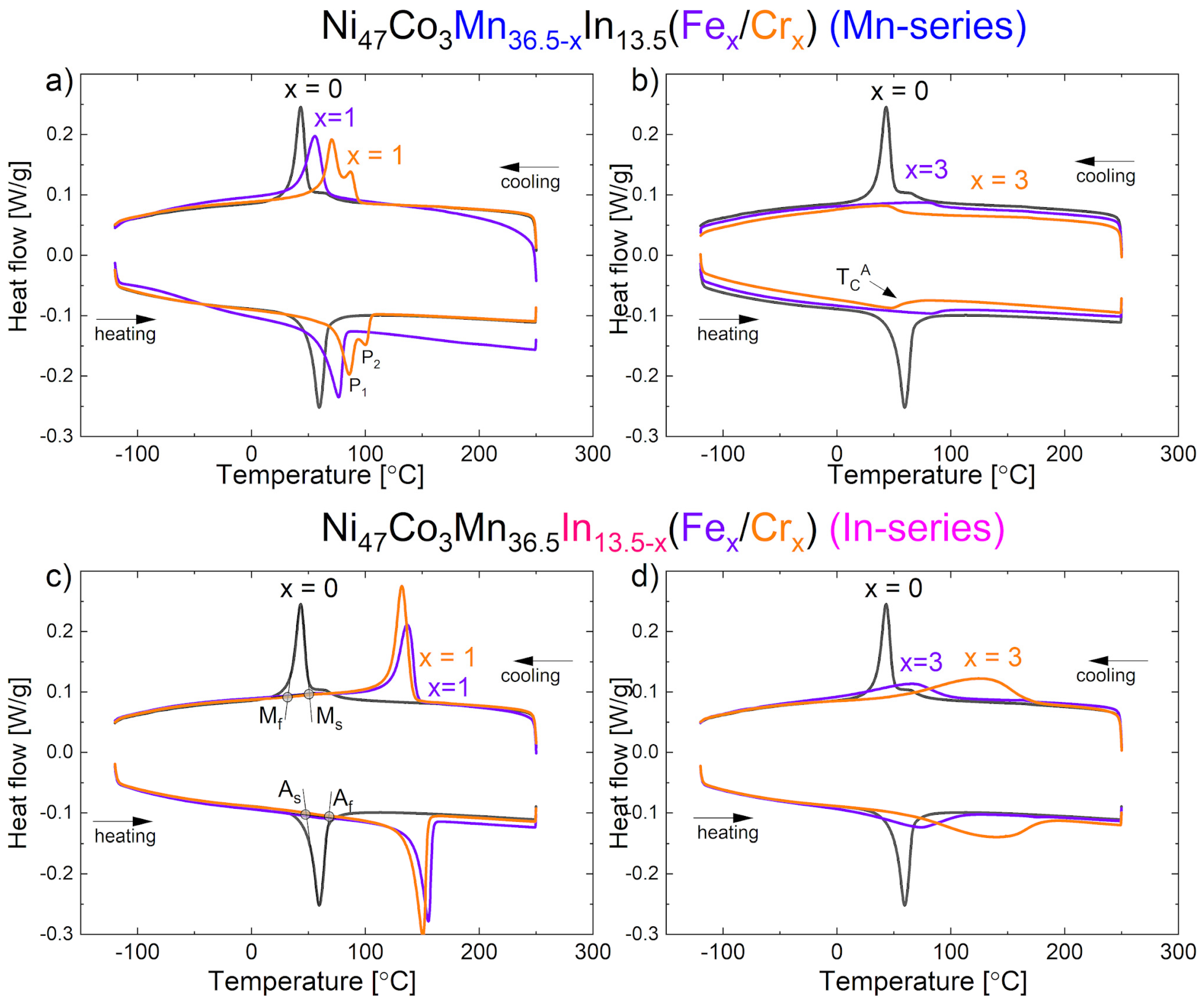
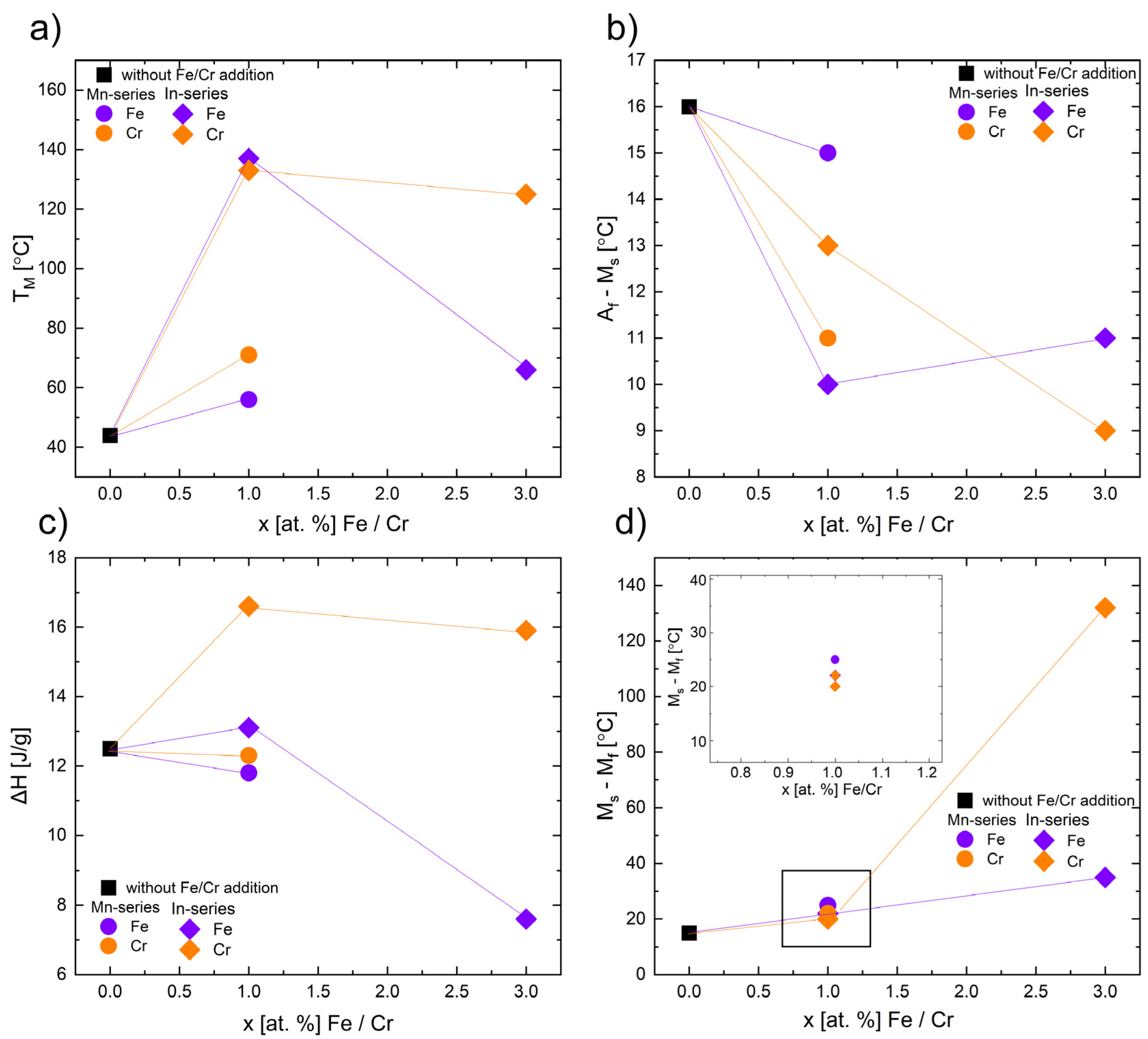
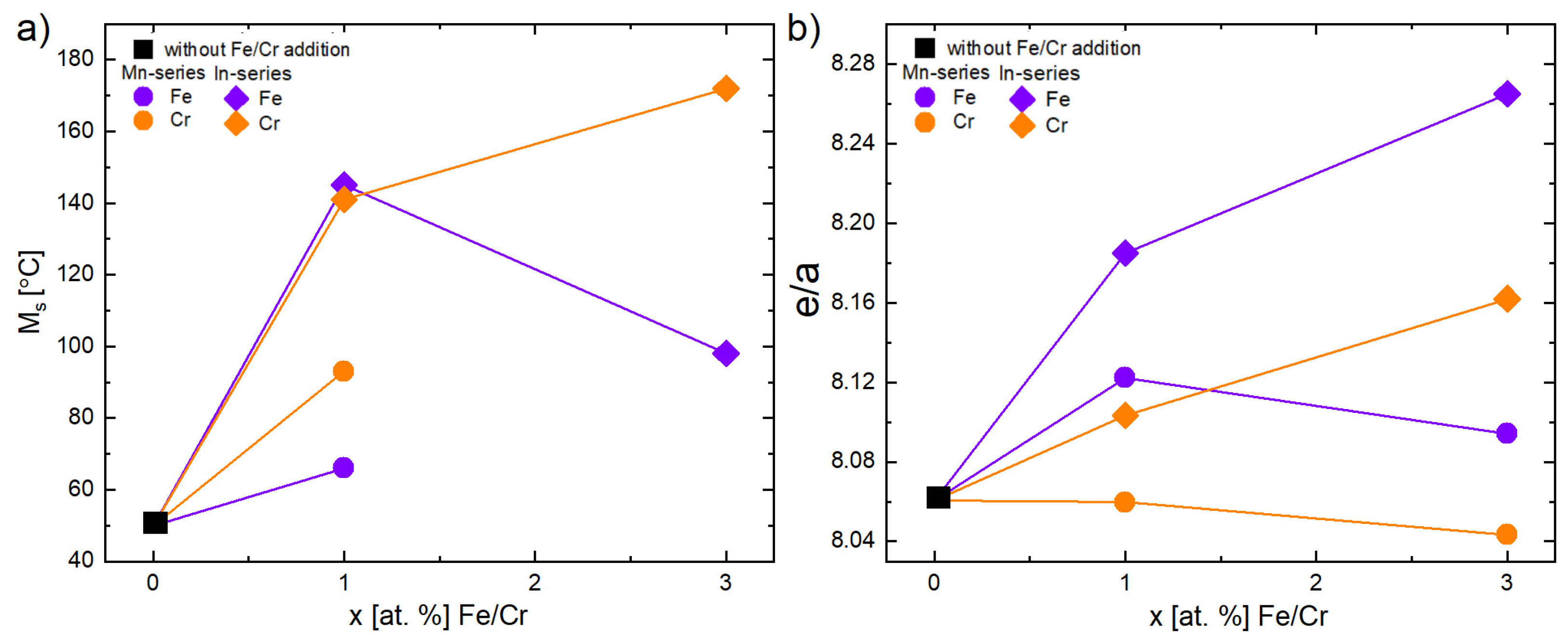
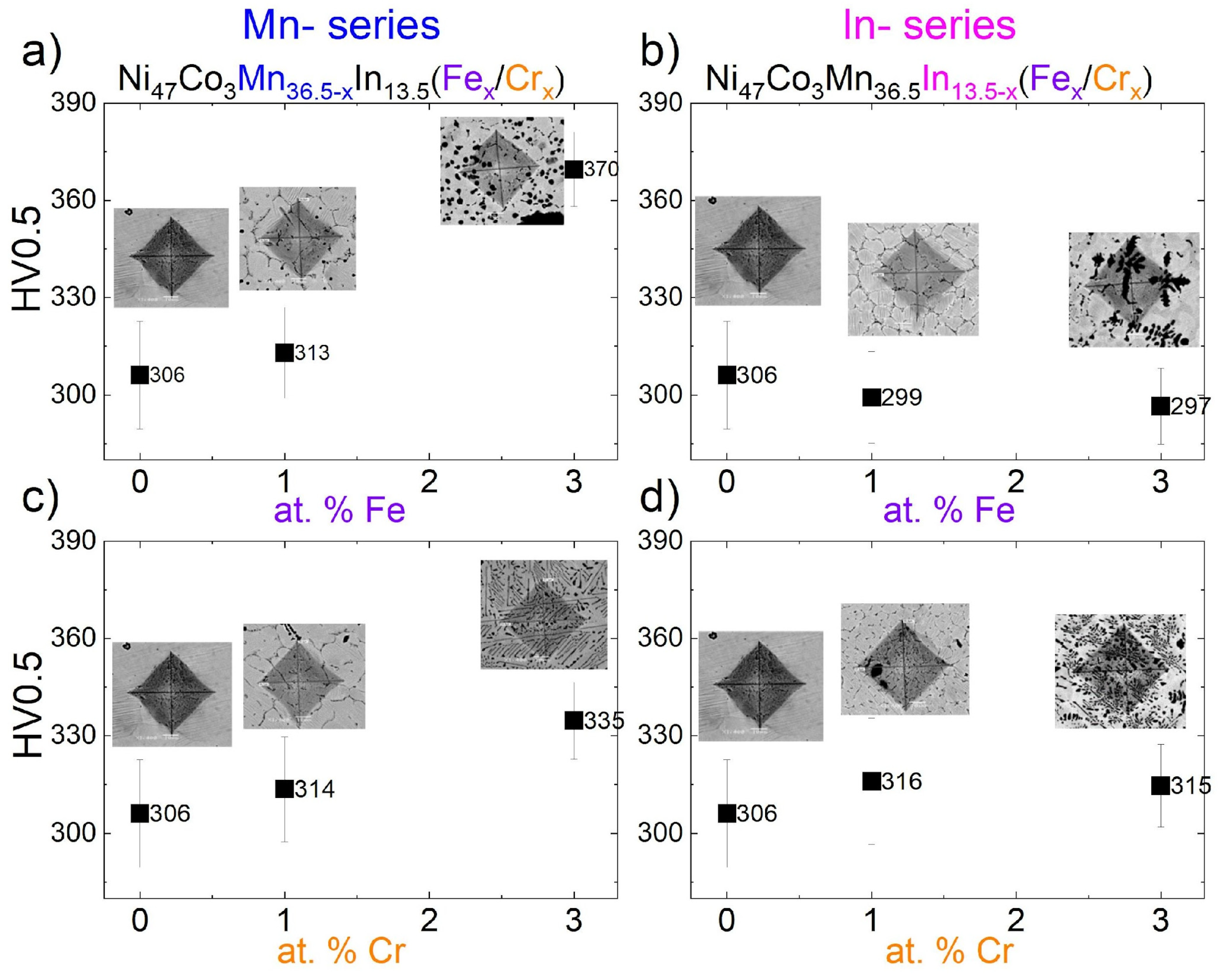
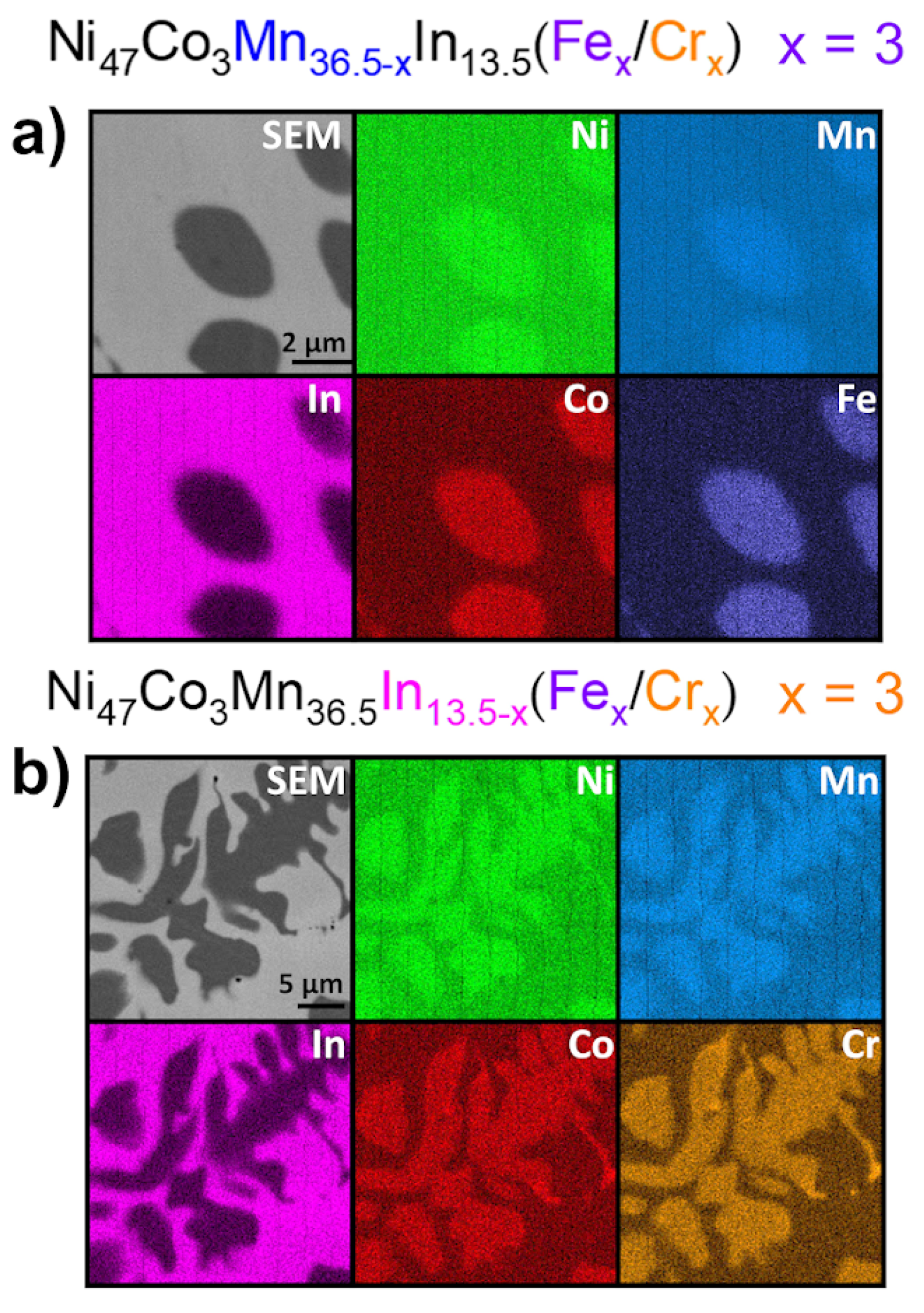
In this work, small amounts of Fe or Cr were added to Ni47Co3Mn36.5In13.5 alloy (x = 0) to produce five-component alloys with nominal compositions of Ni47Co3Mn35.5In13.5Fe1, Ni47Co3Mn33.5In13.5Fe3, Ni47Co3Mn35.5In13.5Cr1, and Ni47Co3Mn33.5In13.5Cr3, which are denoted as Ni47Co3Mn36.5−xIn13.5Fex/Crx (x = 1, 3 at.% Cr/Fe) series or as Mn-series (due to the addition of alloying elements instead of Mn), and Ni47Co3Mn36.5In12.5Fe1, Ni47Co3Mn36.5In10.5Fe3, Ni47Co3Mn36.5In12.5Cr1, and Ni47Co3Mn36.5In10.5Cr3, denoted as Ni47Co3Mn36.5In13.5−x (x = 1, 3 at.% Cr/Fe) series or In-series (due to the addition of alloying elements instead of In). The polycrystalline alloys were produced using the vacuum arc melting technique. The as-received alloys were characterized in structure, homogeneity, phase composition, martensitic transformation, and microhardness. The results showed that the addition of 1 at.% of Cr or Fe positively impacted the microstructure of the alloys. The quaternary alloy exhibited a single-phase coarse-grained structure. The addition of Fe and Cr (1 at.%) caused microstructure refinement with small Fe/Cr- and Co-rich γ particles appropriately distributed in the matrix, while the addition of 3% Fe or Cr resulted in γ formation in a dendritic form distributed more randomly. The addition of 1 at.% and 3 at.% of Cr or Fe significantly influenced the martensitic transformation temperatures. The microhardness increased by 21% in the Ni47Co3Mn33.5In13.5Fe3 alloy compared to the quaternary alloy.
Keywords: magnetic shape memory alloys; microstructure; Fe-doped; Cr-doped; martensitic transformation magnetic shape memory alloys; microstructure; Fe-doped; Cr-doped; martensitic transformation