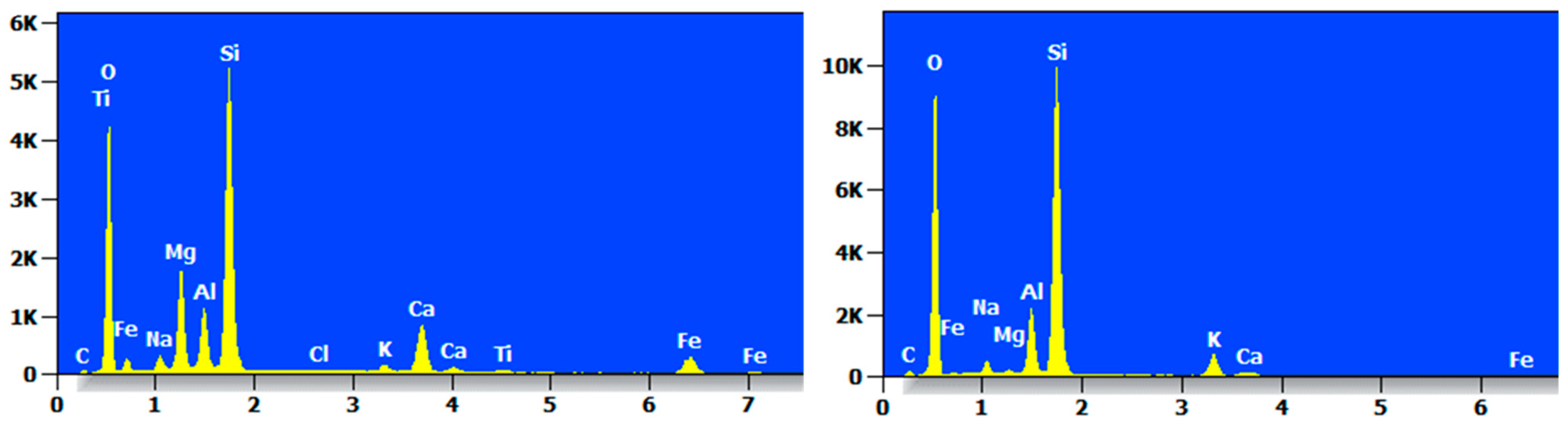
Strength Properties and Microscopic Experimental Study of Modified Sawdust Based on Solid Waste Synergistic Utilization


Highlights
- Research on the synergistic utilization of sawdust and other solid wastes using sawdust as the main raw material.
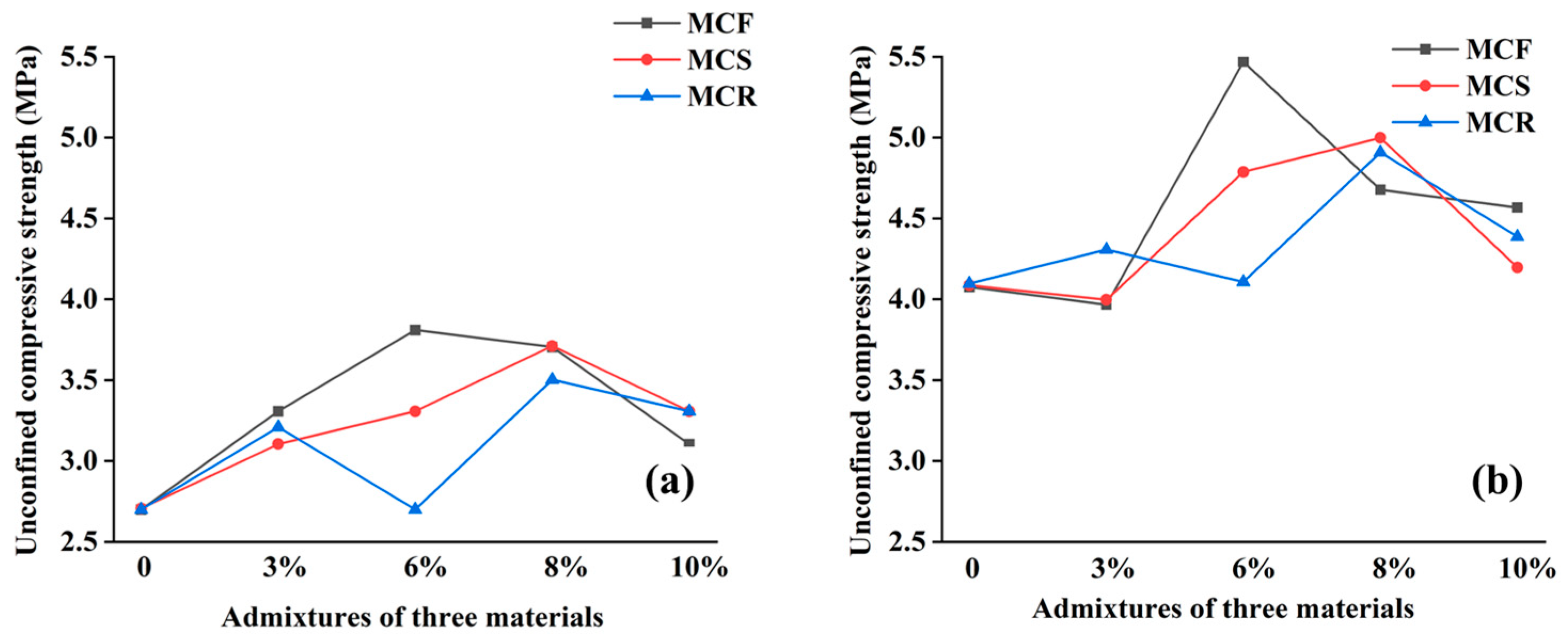
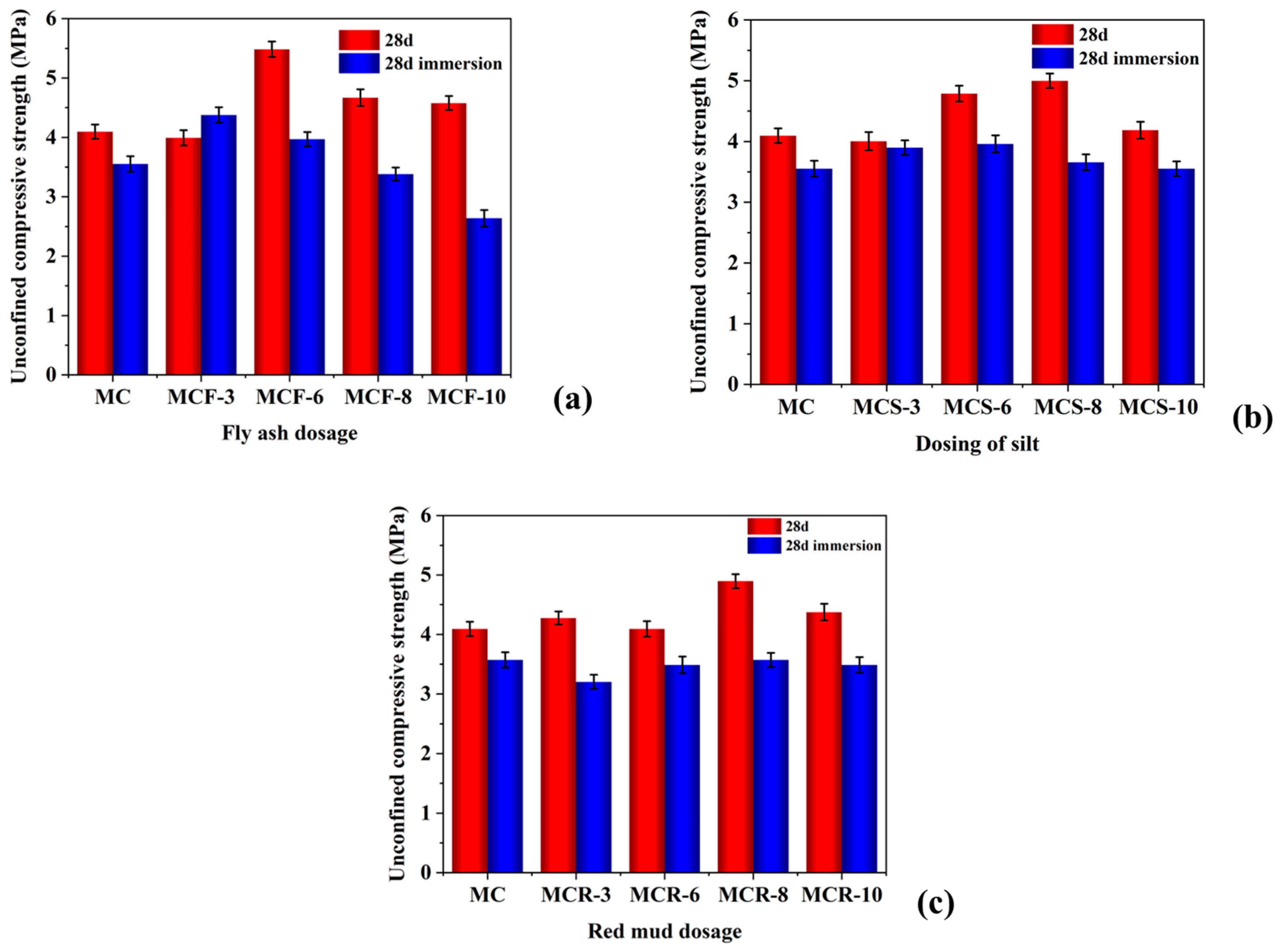
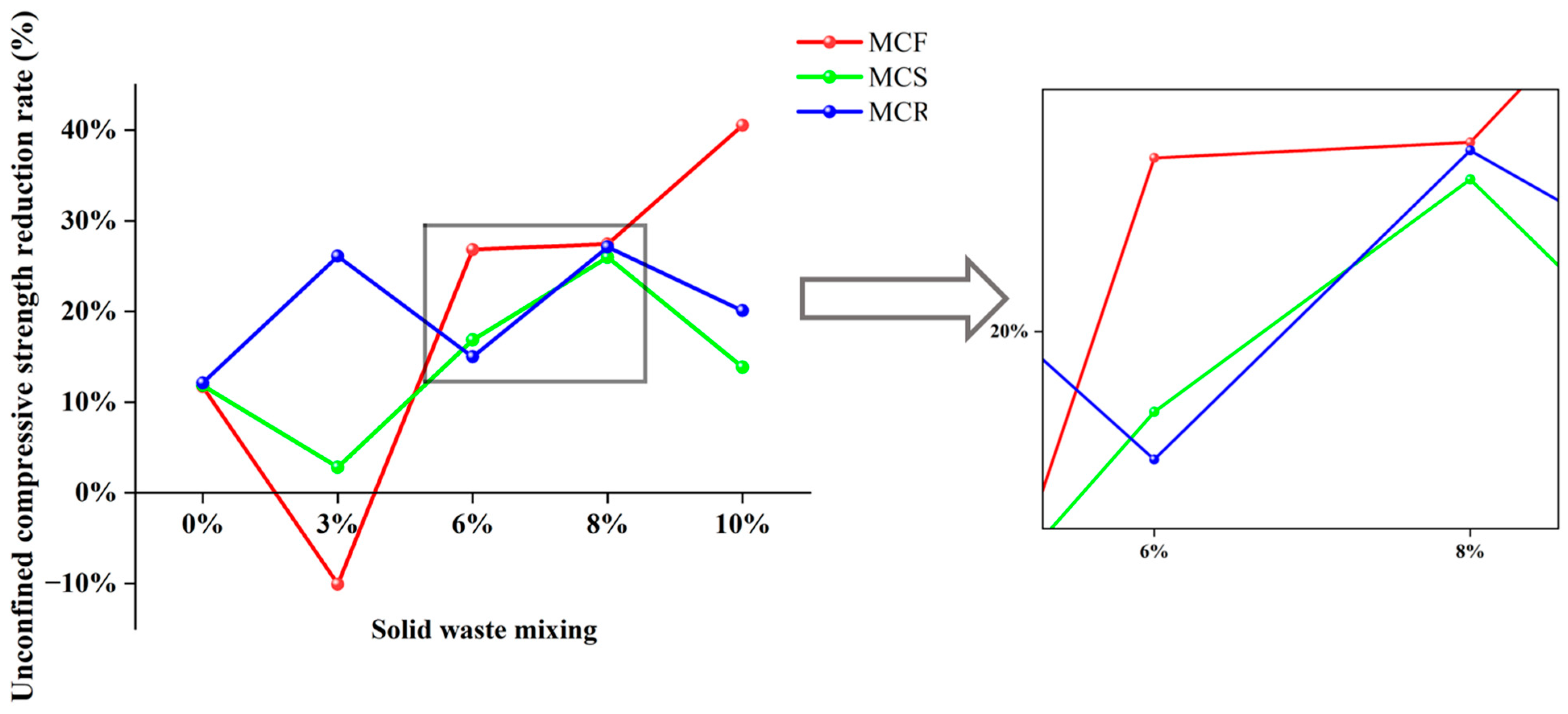
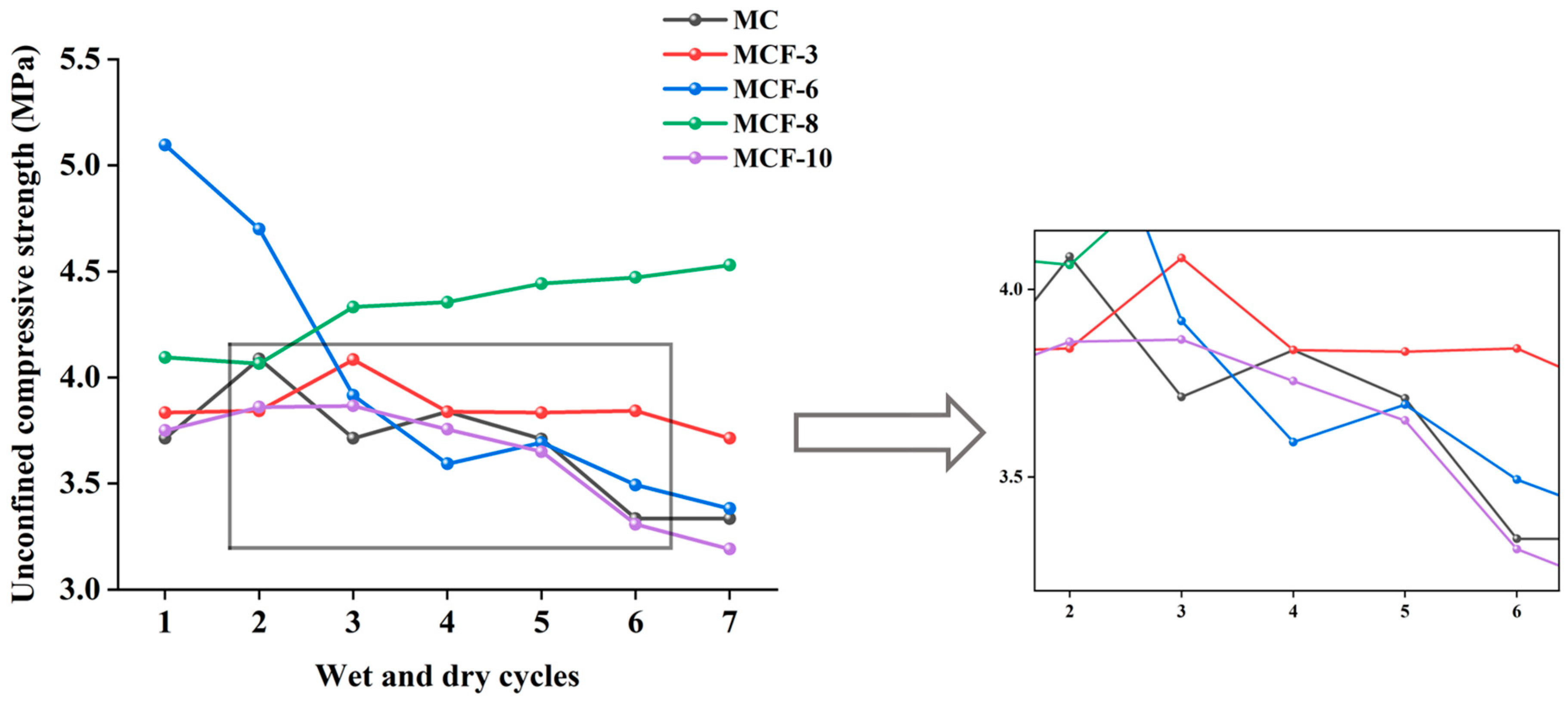
- Comparative study of the strength and wet/dry cycle resistance of different modified sawdust.
- Micro-analysis of modified sawdust with different solid waste admixtures.
- Derived the optimal mixing ratio of modified sawdust.
Abstract
Share and Cite
Cheng, Y.; Jiang, N.; Wang, W.; Jin, L. Strength Properties and Microscopic Experimental Study of Modified Sawdust Based on Solid Waste Synergistic Utilization. Materials 2024, 17, 5808. https://doi.org/10.3390/ma17235808
Cheng Y, Jiang N, Wang W, Jin L. Strength Properties and Microscopic Experimental Study of Modified Sawdust Based on Solid Waste Synergistic Utilization. Materials. 2024; 17(23):5808. https://doi.org/10.3390/ma17235808
Chicago/Turabian StyleCheng, Yu, Na Jiang, Wentong Wang, and Lu Jin. 2024. "Strength Properties and Microscopic Experimental Study of Modified Sawdust Based on Solid Waste Synergistic Utilization" Materials 17, no. 23: 5808. https://doi.org/10.3390/ma17235808
APA StyleCheng, Y., Jiang, N., Wang, W., & Jin, L. (2024). Strength Properties and Microscopic Experimental Study of Modified Sawdust Based on Solid Waste Synergistic Utilization. Materials, 17(23), 5808. https://doi.org/10.3390/ma17235808