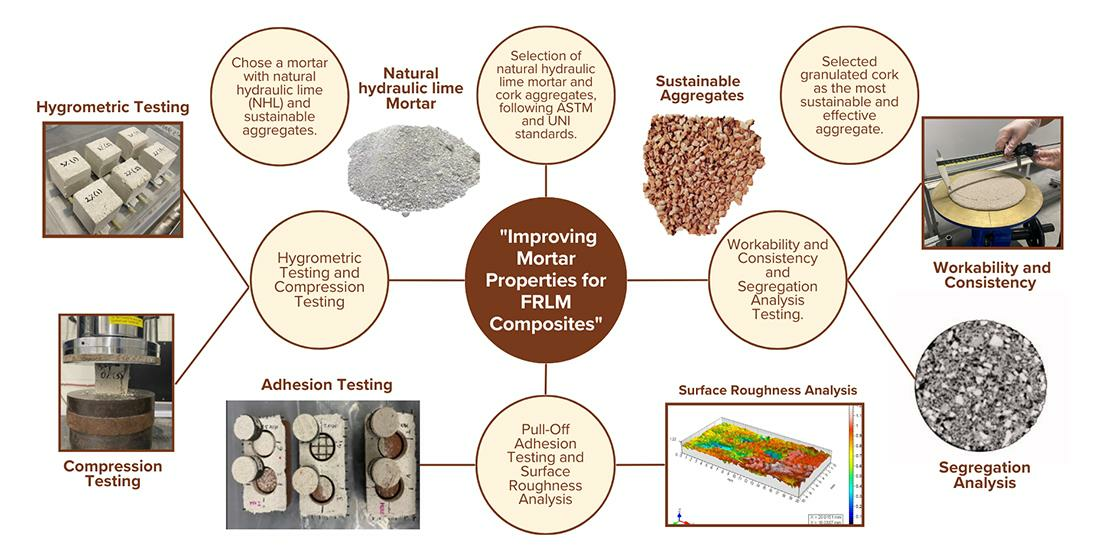
Development of Biodegradable and Recyclable FRLM Composites Incorporating Cork Aggregates for Sustainable Construction Practices
 , ,
, ,  , and
, and Abstract
Share and Cite
Pugliese, D.; Alecci, V.; Tale Masoule, M.S.; Ghahremaninezhad, A.; De Stefano, M.; Nanni, A. Development of Biodegradable and Recyclable FRLM Composites Incorporating Cork Aggregates for Sustainable Construction Practices. Materials 2024, 17, 5232. https://doi.org/10.3390/ma17215232
Pugliese D, Alecci V, Tale Masoule MS, Ghahremaninezhad A, De Stefano M, Nanni A. Development of Biodegradable and Recyclable FRLM Composites Incorporating Cork Aggregates for Sustainable Construction Practices. Materials. 2024; 17(21):5232. https://doi.org/10.3390/ma17215232
Chicago/Turabian StylePugliese, Dora, Valerio Alecci, Mohammad Sadegh Tale Masoule, Ali Ghahremaninezhad, Mario De Stefano, and Antonio Nanni. 2024. "Development of Biodegradable and Recyclable FRLM Composites Incorporating Cork Aggregates for Sustainable Construction Practices" Materials 17, no. 21: 5232. https://doi.org/10.3390/ma17215232
APA StylePugliese, D., Alecci, V., Tale Masoule, M. S., Ghahremaninezhad, A., De Stefano, M., & Nanni, A. (2024). Development of Biodegradable and Recyclable FRLM Composites Incorporating Cork Aggregates for Sustainable Construction Practices. Materials, 17(21), 5232. https://doi.org/10.3390/ma17215232