Article

Effects of Mixture Proportions and Molding Method on the Performance of Pervious Recycled Aggregate Concrete

1
China Communications Construction Company Limited, Beijing 100010, China
2
Jiangsu Key Laboratory of Disaster Impact and Intelligent Prevention in Civil Engineering, School of Mechanics and Civil Engineering, China University of Mining & Technology, Xuzhou 221116, China
3
Building Materials Engineering Laboratory, Department of Architecture, Graduate School of Engineering, The University of Tokyo, Tokyo 113-8654, Japan
*
Authors to whom correspondence should be addressed.
Materials 2024, 17(21), 5138; https://doi.org/10.3390/ma17215138

Submission received: 12 September 2024 / Revised: 6 October 2024 / Accepted: 17 October 2024 / Published: 22 October 2024

Abstract

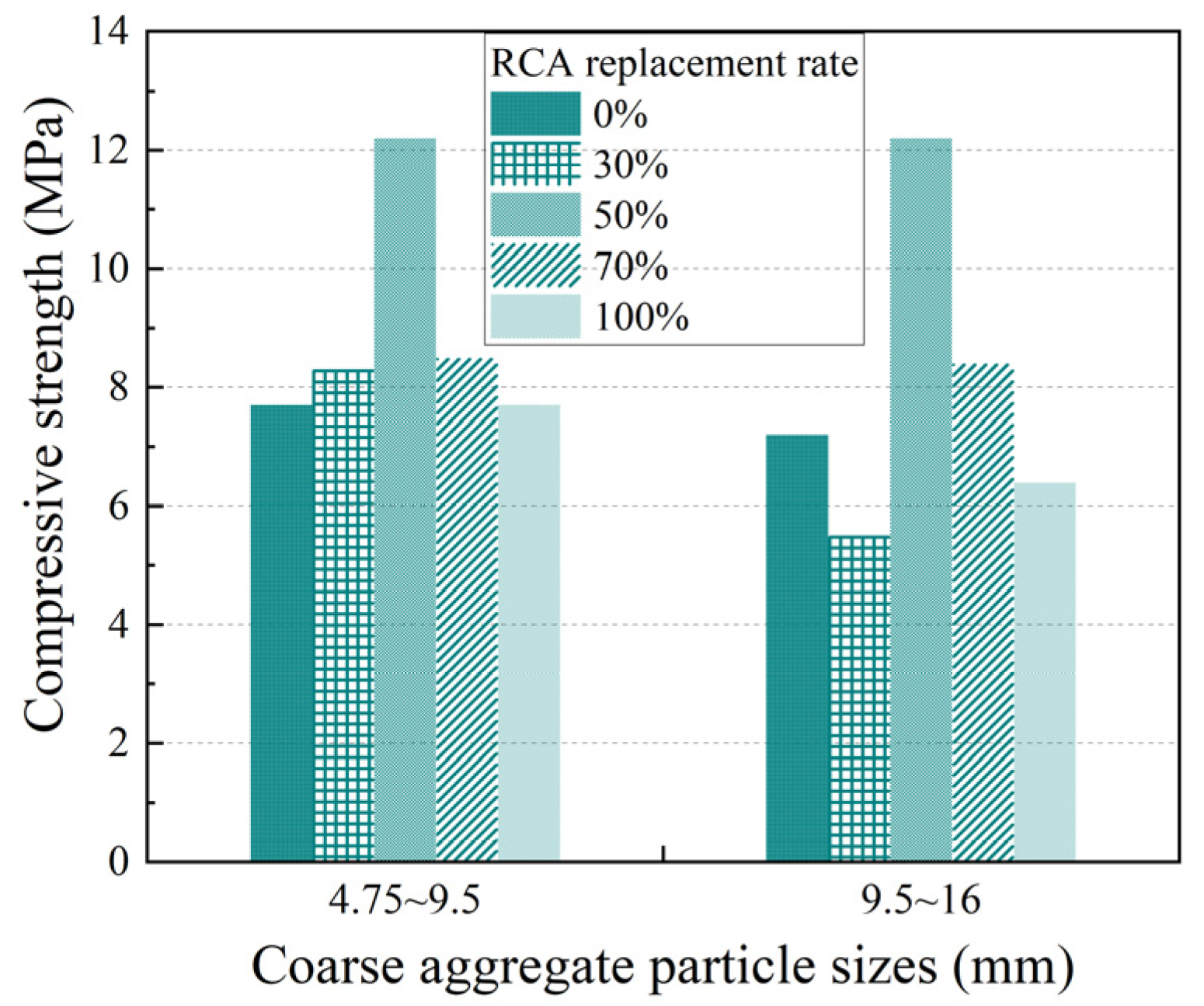
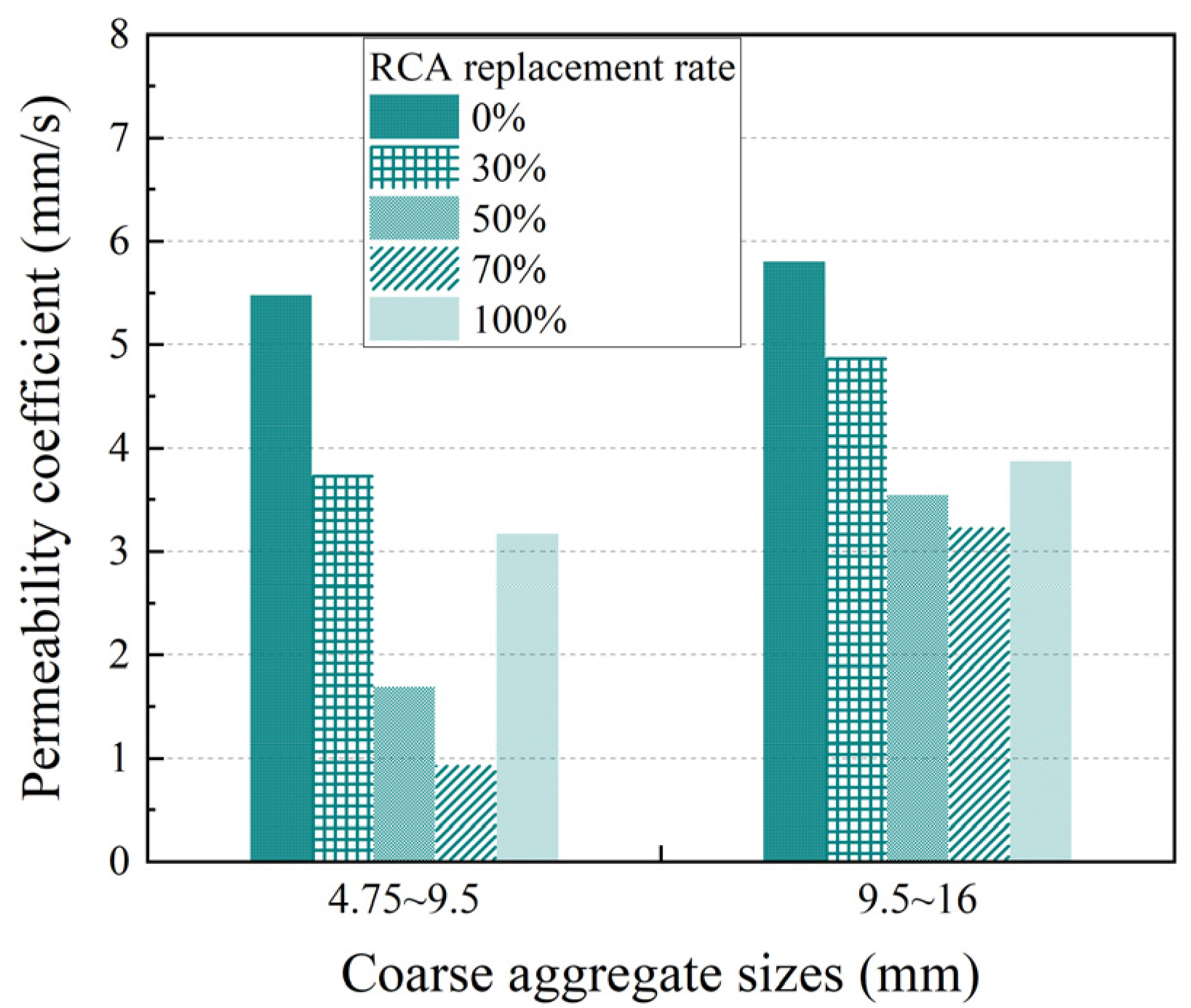
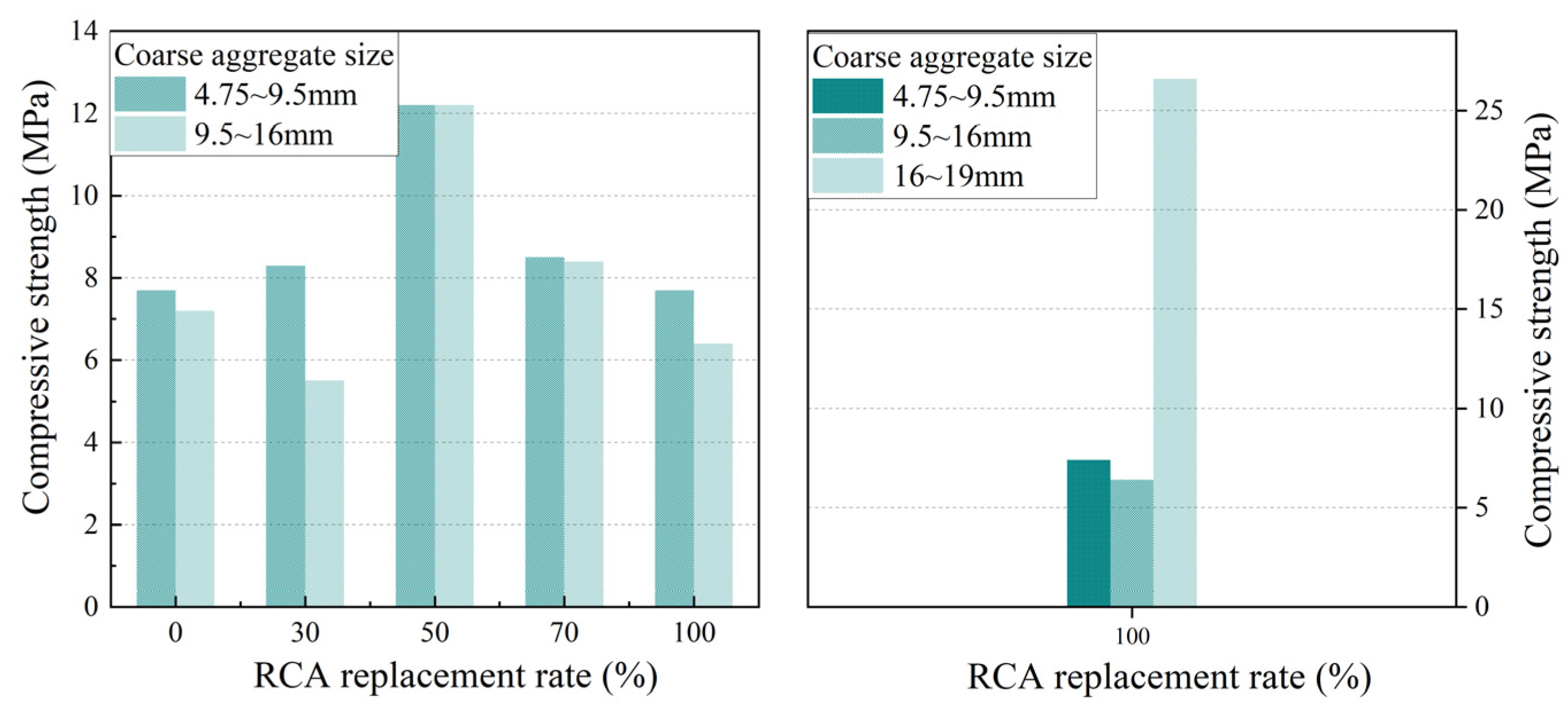
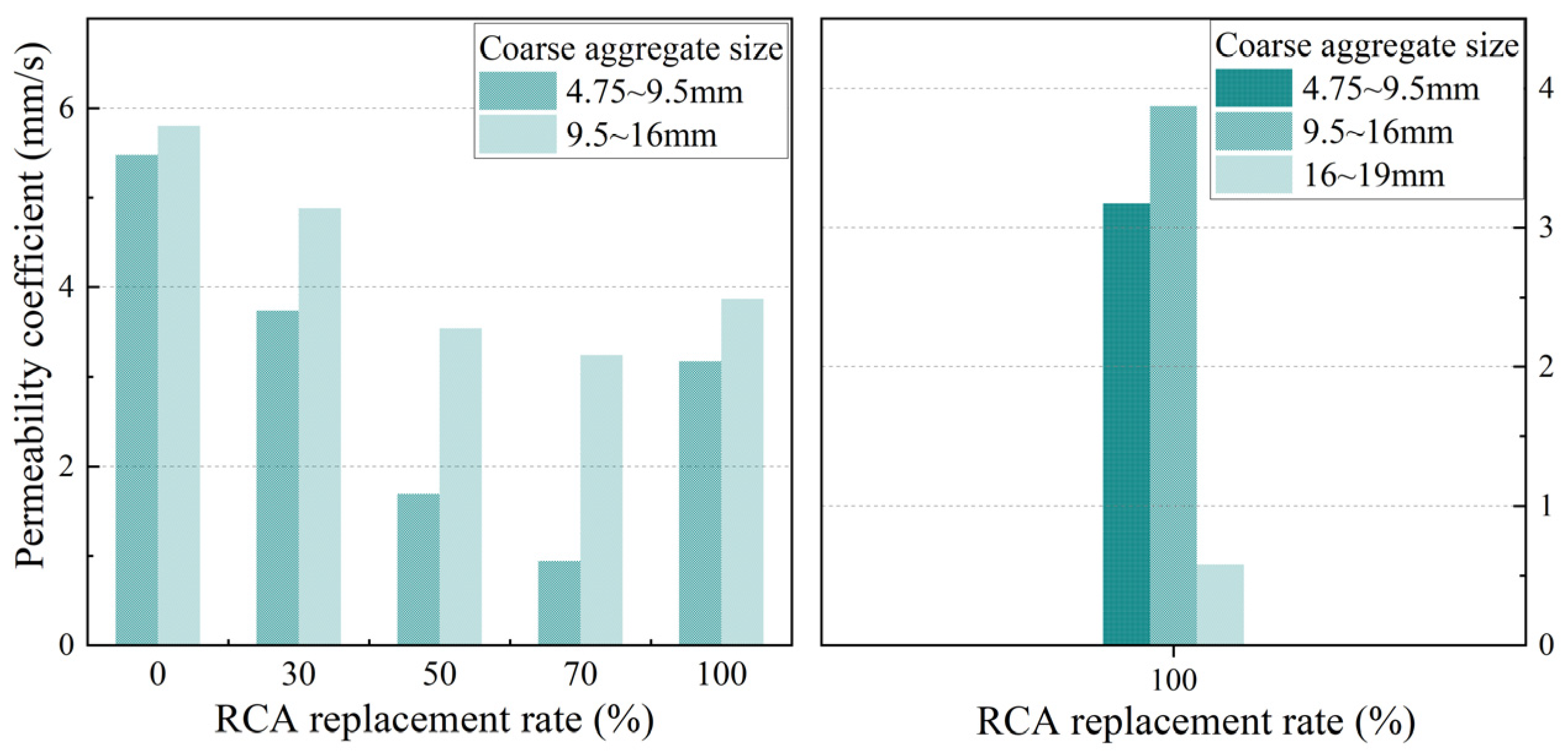
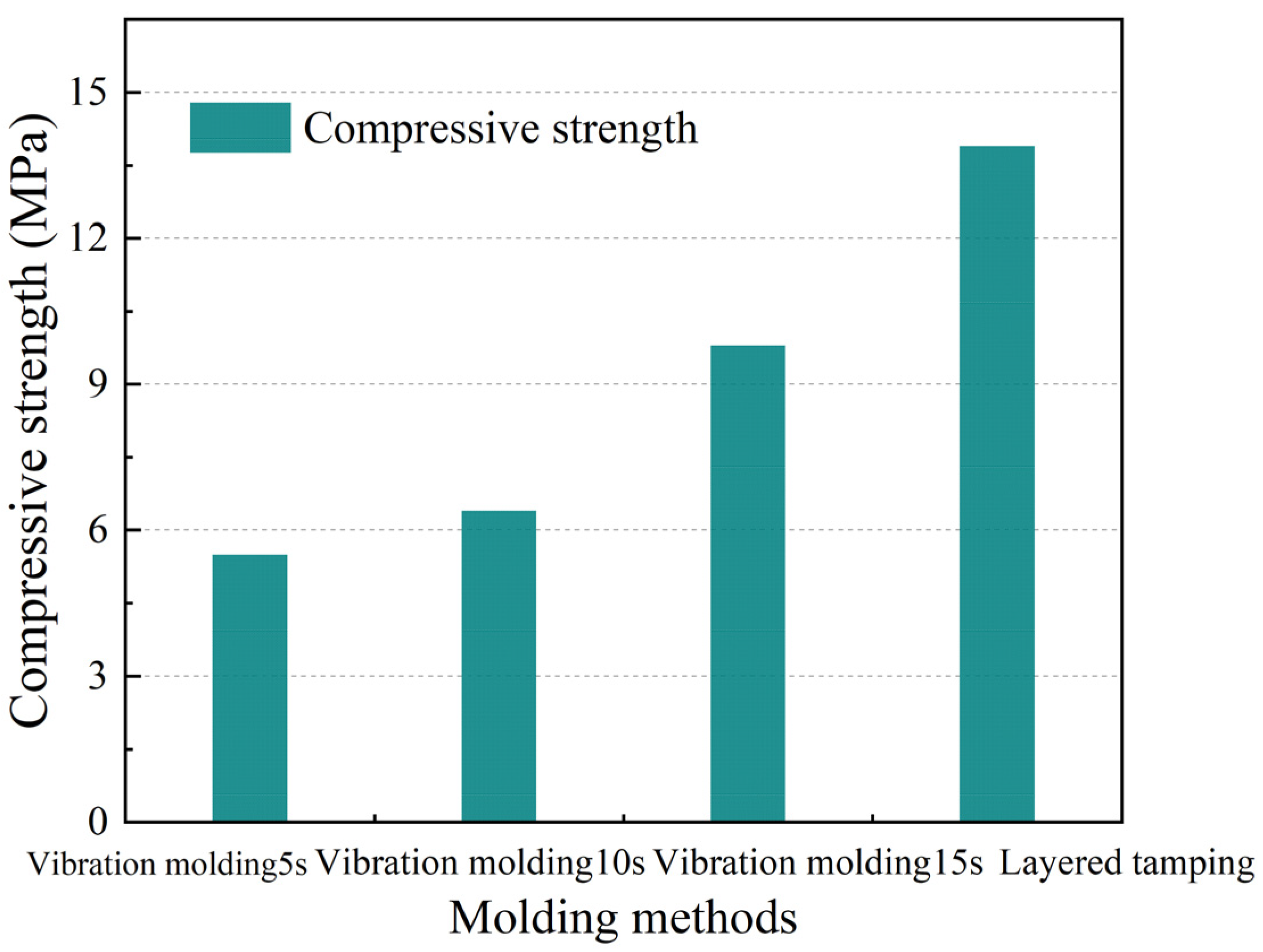
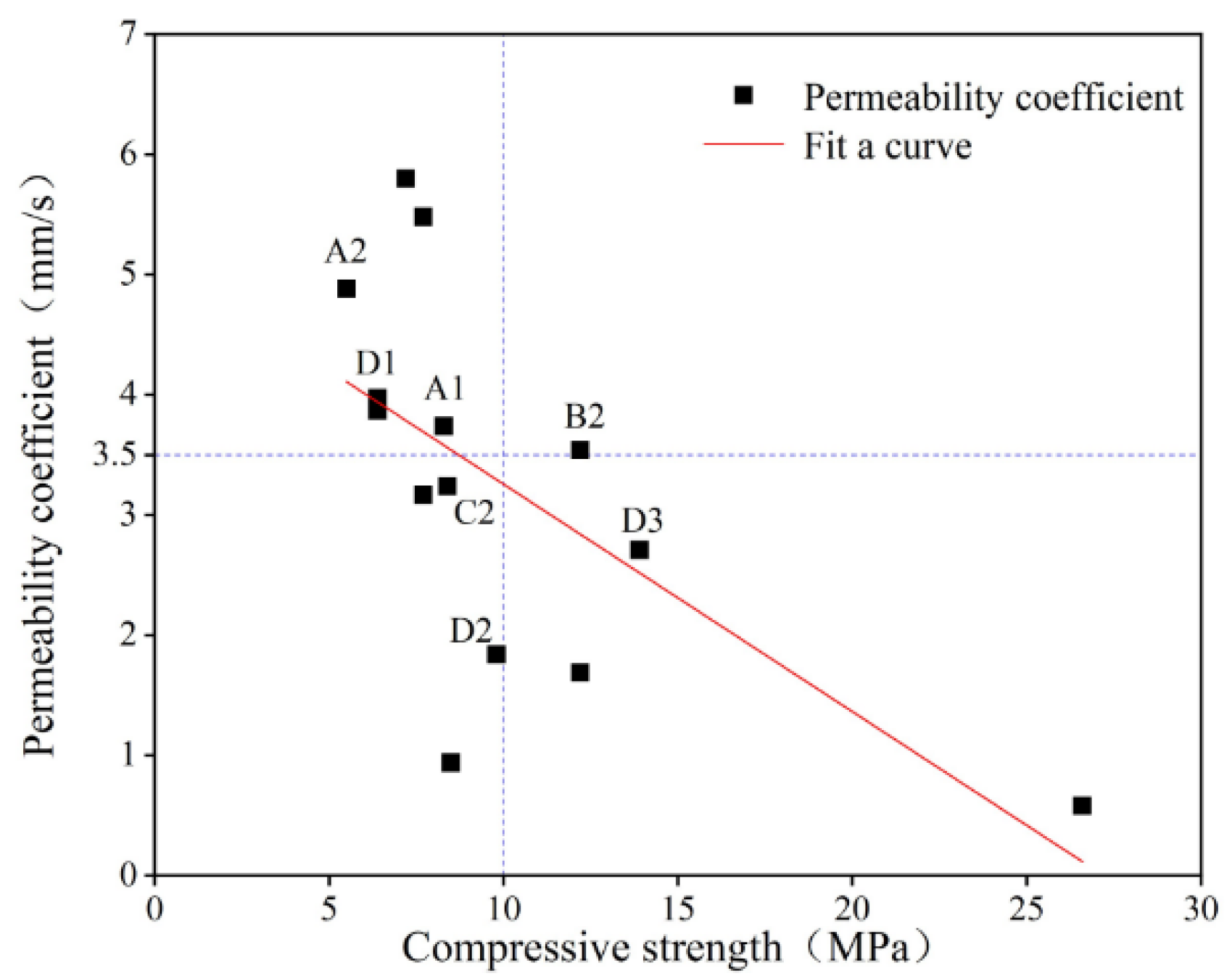
The use of pervious concrete pavement systems with recycled aggregates is a sustainable and innovative solution to major urbanization challenges such as repurposing construction waste, alleviating urban waterlogging, and reducing heat-island effects. This study aims to investigate the effects of mixture proportions and molding methods on the performance of pervious recycled aggregate concrete (PRAC). To this end, the coarse aggregate size (4.75~9.5 mm, 9.5~16 mm, and 16~19 mm), the molding method (layered insertion-tamping and vibration molding with vibration times of 5 s, 10 s, or 15 s, respectively), and the replacement rate of recycled coarse aggregate (RCA) (0%, 30%, 50%, and 100%, respectively) are considered. The results reveal that the addition of RCA to permeable concrete weakens its permeability. However, the compressive strength of PRAC reaches its maximum value when the RCA replacement rate is 50%. A larger aggregate particle size (16~19 mm) enhances the compressive strength of PRAC, yet decreases the permeability of PRAC. By using vibration molding to fabricate PRAC, an extension to the vibration duration increases the compressive strength, yet concurrently decreases the permeability. Based on the compressive strength and permeability coefficient of PRAC, the optimal mixture proportions and molding method are suggested.
Keywords: pervious concrete; demolished concrete waste; recycled coarse aggregate; permeability coefficient; compressive strength pervious concrete; demolished concrete waste; recycled coarse aggregate; permeability coefficient; compressive strength