Article

Biodegradable Silk Fibroin Matrices for Wound Closure in a Human 3D Ex Vivo Approach

by
Jan Tinson Strenge
1,
Ralf Smeets
1,2,
Fateme Nemati
2,3,
Sandra Fuest
2,
Sophie Charlotte Rhode
4 and
Ewa Klara Stuermer
5,*
1
Department of Oral and Maxillofacial Surgery, University Medical Center Hamburg-Eppendorf, 20246 Hamburg, Germany
2
Department of Oral and Maxillofacial Surgery, Division of Regenerative Orofacial Medicine, University Medical Center Hamburg-Eppendorf, 20246 Hamburg, Germany
3
Institute of Bioprocess and Biosystems Engineering, Hamburg University, 21073 Hamburg, Germany
4
Department of Plastic, Reconstructive and Aesthetic Surgery, University Medical Center Hamburg-Eppendorf, 20246 Hamburg, Germany
5
Department for Vascular Medicine, Translational Wound Research, University Medical Center Hamburg-Eppendorf, 20246 Hamburg, Germany
*
Author to whom correspondence should be addressed.
Materials 2024, 17(12), 3004; https://doi.org/10.3390/ma17123004
Submission received: 24 May 2024 / Revised: 13 June 2024 / Accepted: 15 June 2024 / Published: 19 June 2024
(This article belongs to the Section Biomaterials)

Abstract

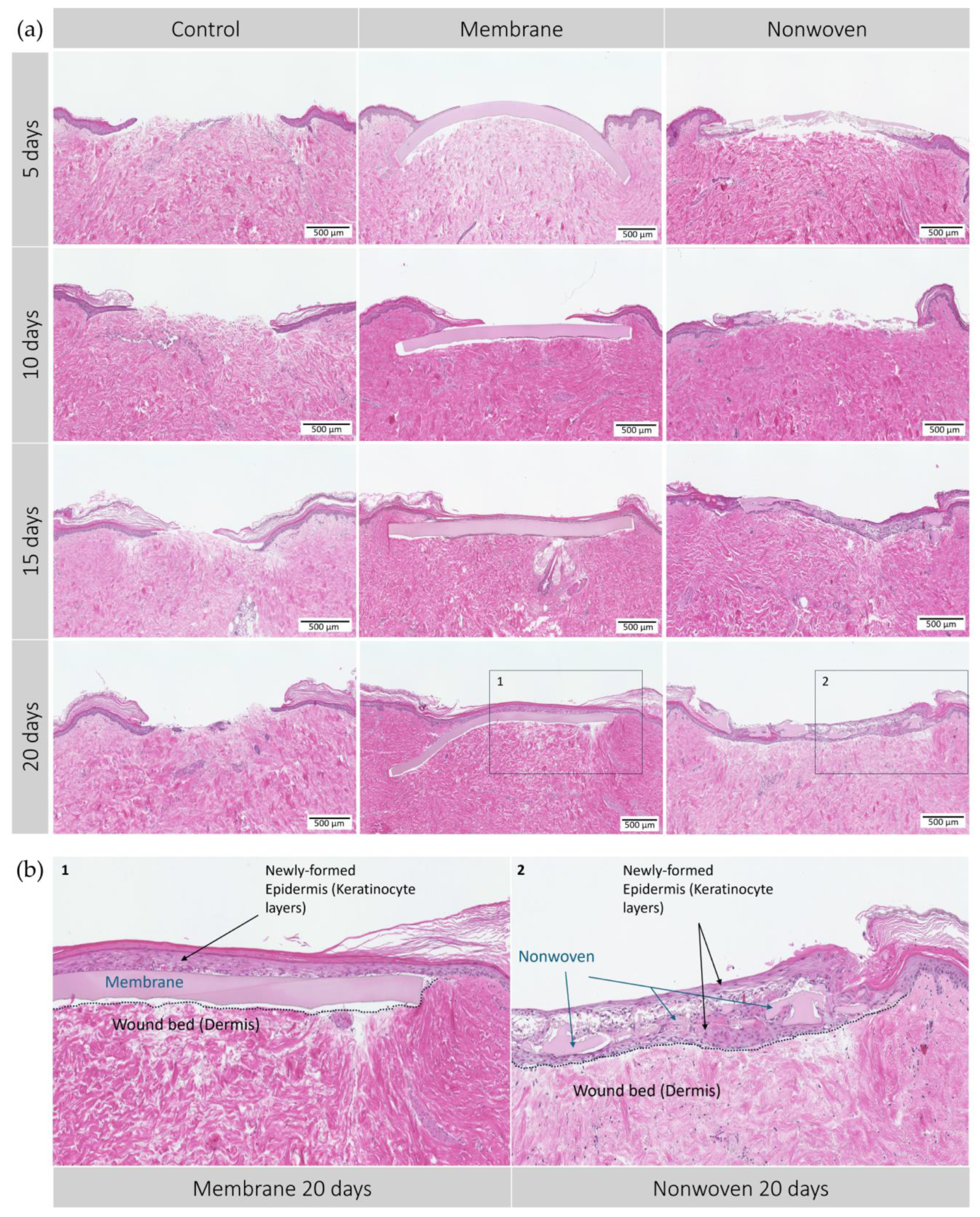
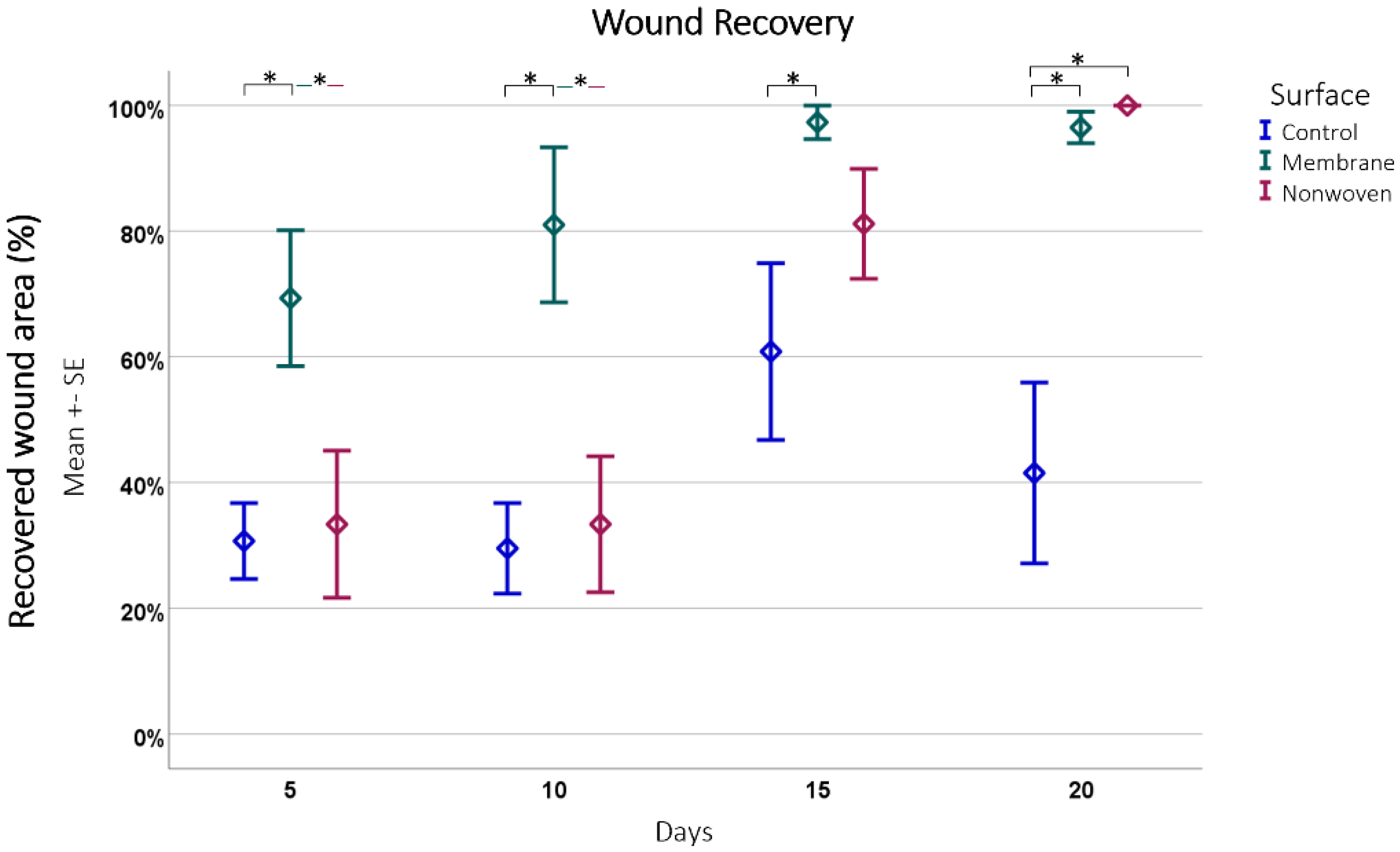
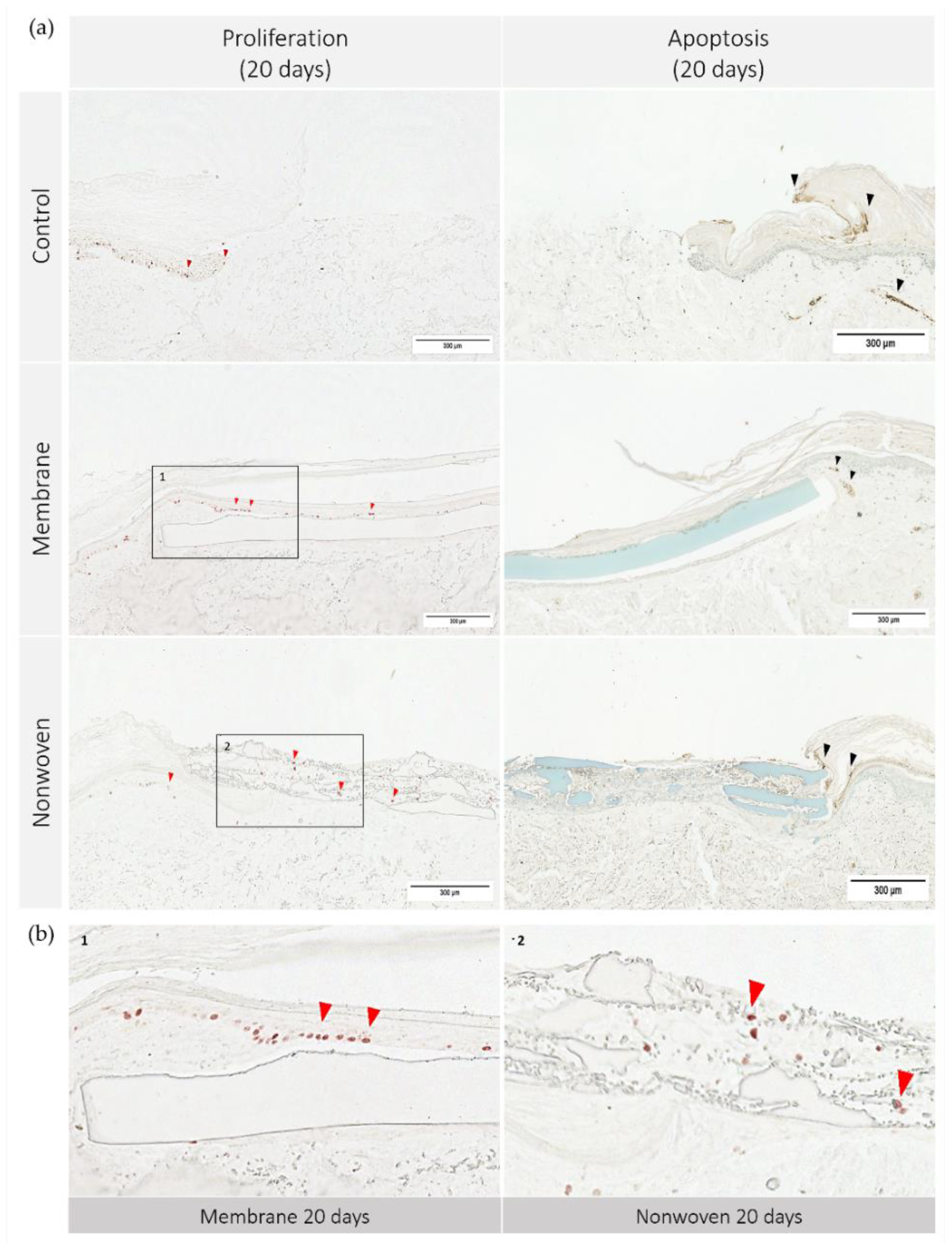
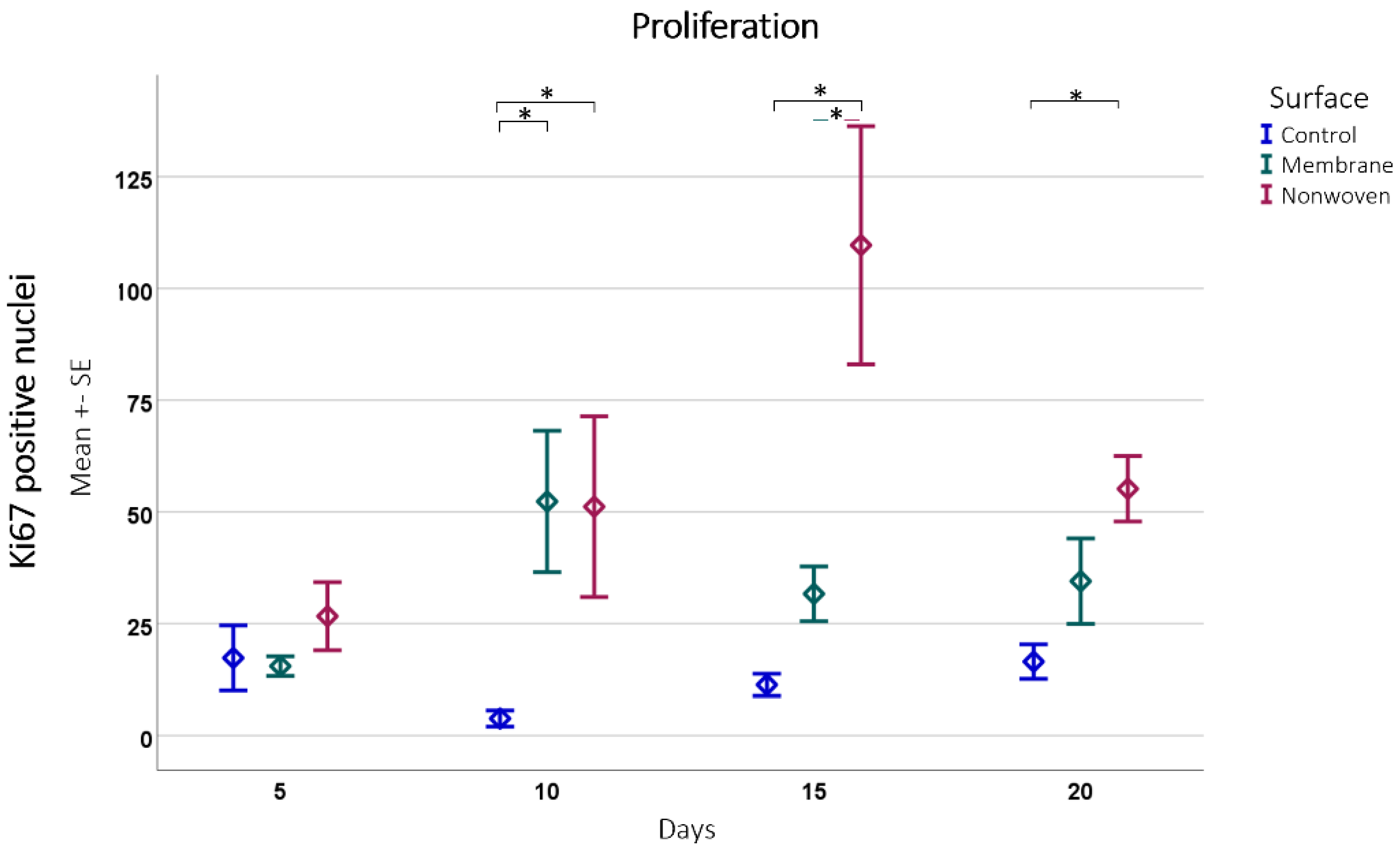
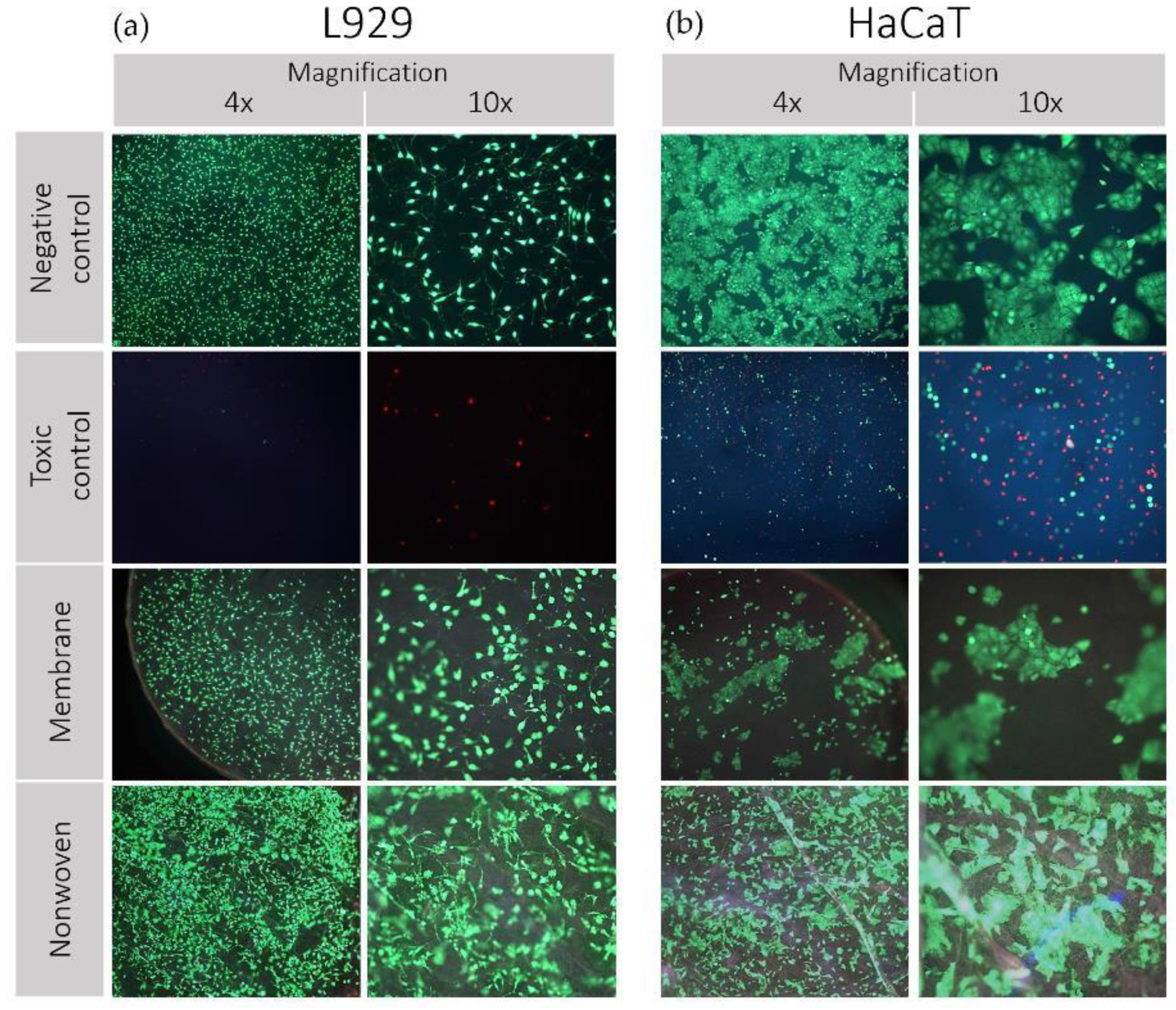
In this study, the potential of silk fibroin biomaterials for enhancing wound healing is explored, focusing on their integration into a human 3D ex vivo wound model derived from abdominoplasties. For this purpose, cast silk fibroin membranes and electrospun nonwoven matrices from Bombyx mori silk cocoons were compared to untreated controls over 20 days. Keratinocyte behavior and wound healing were analyzed qualitatively and quantitatively by histomorphometric and immune histochemical methods (HE, Ki67, TUNEL). Findings reveal rapid keratinocyte proliferation on both silk fibroin membrane and nonwoven matrices, along with enhanced infiltration in the matrix, suggesting improved early wound closure. Silk fibroin membranes exhibited a significantly improved early regeneration, followed by nonwoven matrices (p < 0.05) compared to untreated wounds, resulting in the formation of multi-layered epidermal structures with complete regeneration. Overall, the materials demonstrated excellent biocompatibility, supporting cell activity with no signs of increased apoptosis or early degradation. These results underscore silk fibroin’s potential in clinical wound care, particularly in tissue integration and re-epithelialization, offering valuable insights for advanced and—as a result of the electrospinning technique—individual wound care development. Furthermore, the use of an ex vivo wound model appears to be a viable option for pre-clinical testing.
Keywords: silk biomaterials; silk fibroin; wound healing; skin wounds; human skin ex vivo culture; keratinocyte migration silk biomaterials; silk fibroin; wound healing; skin wounds; human skin ex vivo culture; keratinocyte migration