In-Depth Characterization of Two Bioactive Coatings Obtained Using MAPLE on TiTaZrAg

 ,
,  ,
,  , , and
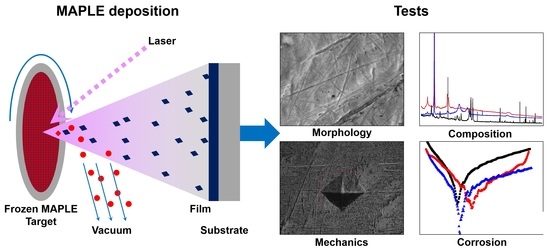
 Abstract
Share and Cite
Prodana, M.; Stoian, A.B.; Ionita, D.; Brajnicov, S.; Boerasu, I.; Enachescu, M.; Burnei, C. In-Depth Characterization of Two Bioactive Coatings Obtained Using MAPLE on TiTaZrAg. Materials 2024, 17, 2989. https://doi.org/10.3390/ma17122989
Prodana M, Stoian AB, Ionita D, Brajnicov S, Boerasu I, Enachescu M, Burnei C. In-Depth Characterization of Two Bioactive Coatings Obtained Using MAPLE on TiTaZrAg. Materials. 2024; 17(12):2989. https://doi.org/10.3390/ma17122989
Chicago/Turabian StyleProdana, Mariana, Andrei Bogdan Stoian, Daniela Ionita, Simona Brajnicov, Iulian Boerasu, Marius Enachescu, and Cristian Burnei. 2024. "In-Depth Characterization of Two Bioactive Coatings Obtained Using MAPLE on TiTaZrAg" Materials 17, no. 12: 2989. https://doi.org/10.3390/ma17122989
APA StyleProdana, M., Stoian, A. B., Ionita, D., Brajnicov, S., Boerasu, I., Enachescu, M., & Burnei, C. (2024). In-Depth Characterization of Two Bioactive Coatings Obtained Using MAPLE on TiTaZrAg. Materials, 17(12), 2989. https://doi.org/10.3390/ma17122989