

The Influence of Spray Cooling Parameters on Workpiece Residual Stress of Turning GH4169

Abstract
1. Introduction
2. Establishment of Finite Element Model
2.1. The Establishment of Material Constitutive Model and Friction Model
2.2. Mesh Delineation and Simulation Parameter Settings
2.2.1. Parameters Setting
2.2.2. Mesh
3. Finite Element Simulation Results Analysis
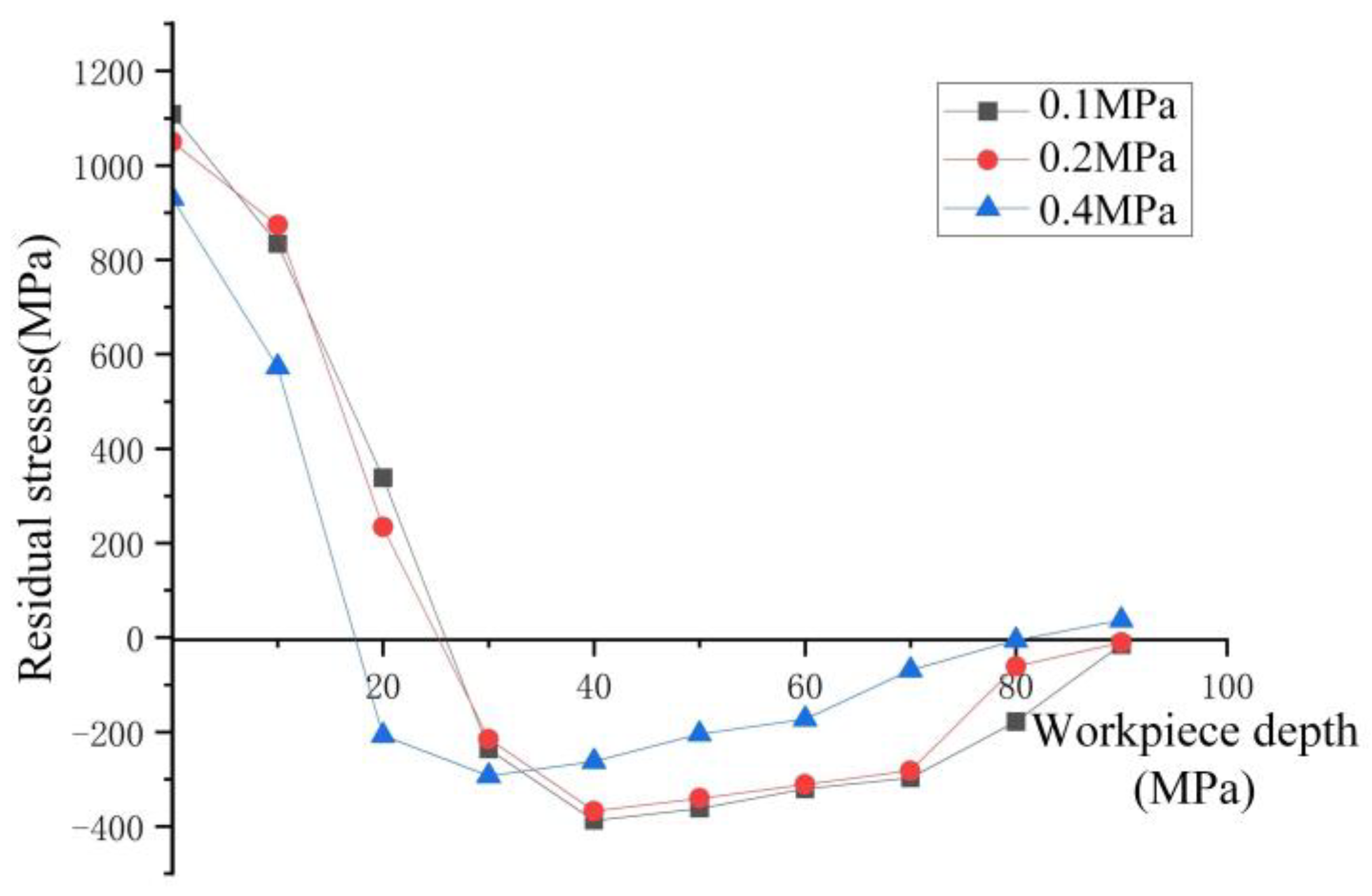
3.1. Effect of Spray Cooling Pressure on Residual Stresses
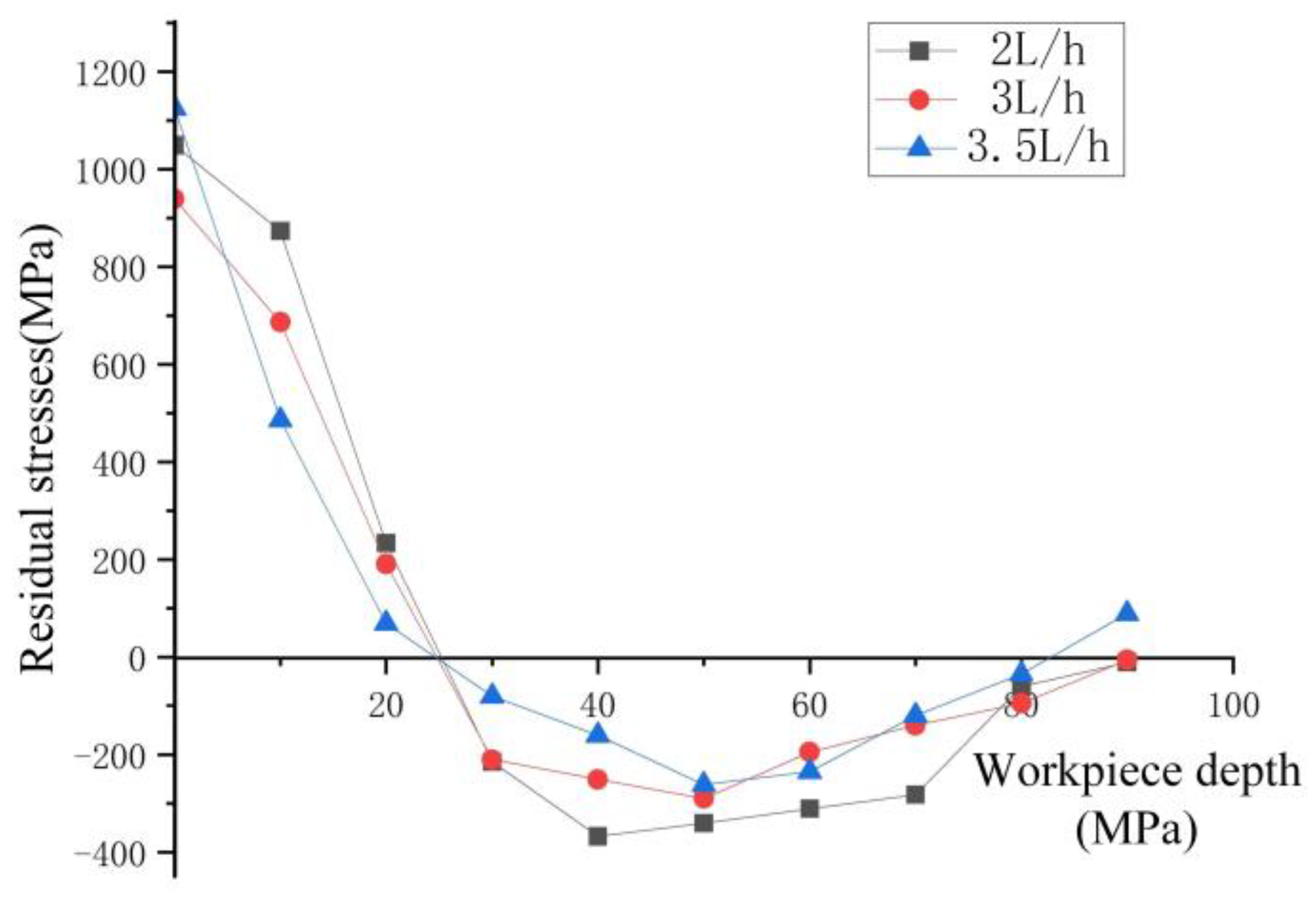
3.2. Effect of Flow Rate of Spray Cooling on Residual Stresses
3.3. Analysis of the Effect of Spray Cooling
4. Turning Experiment of GH4169 during Spray Cooling
4.1. Selection of Equipment and Materials for Experiment
4.2. GH4169 Residual Stress Measurement
4.3. Effect of Spray Cooling Pressure and Flow Rate on Residual Stresses
5. Conclusions
- (1)
- The experimentally measured residual stresses were consistent with the trends of the simulated values, with a relative error of less than 6%, validating the accuracy of the simulation model.
- (2)
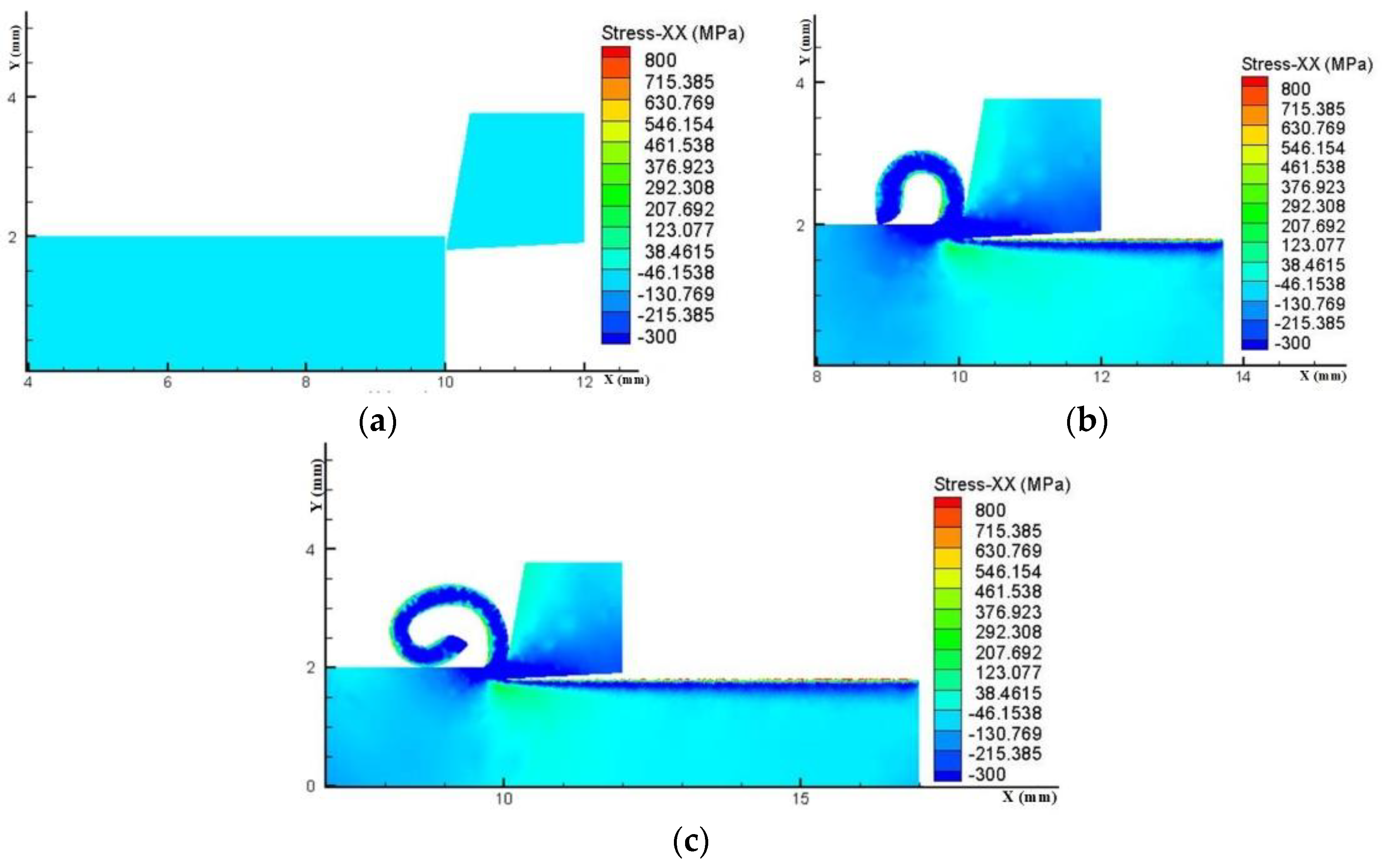
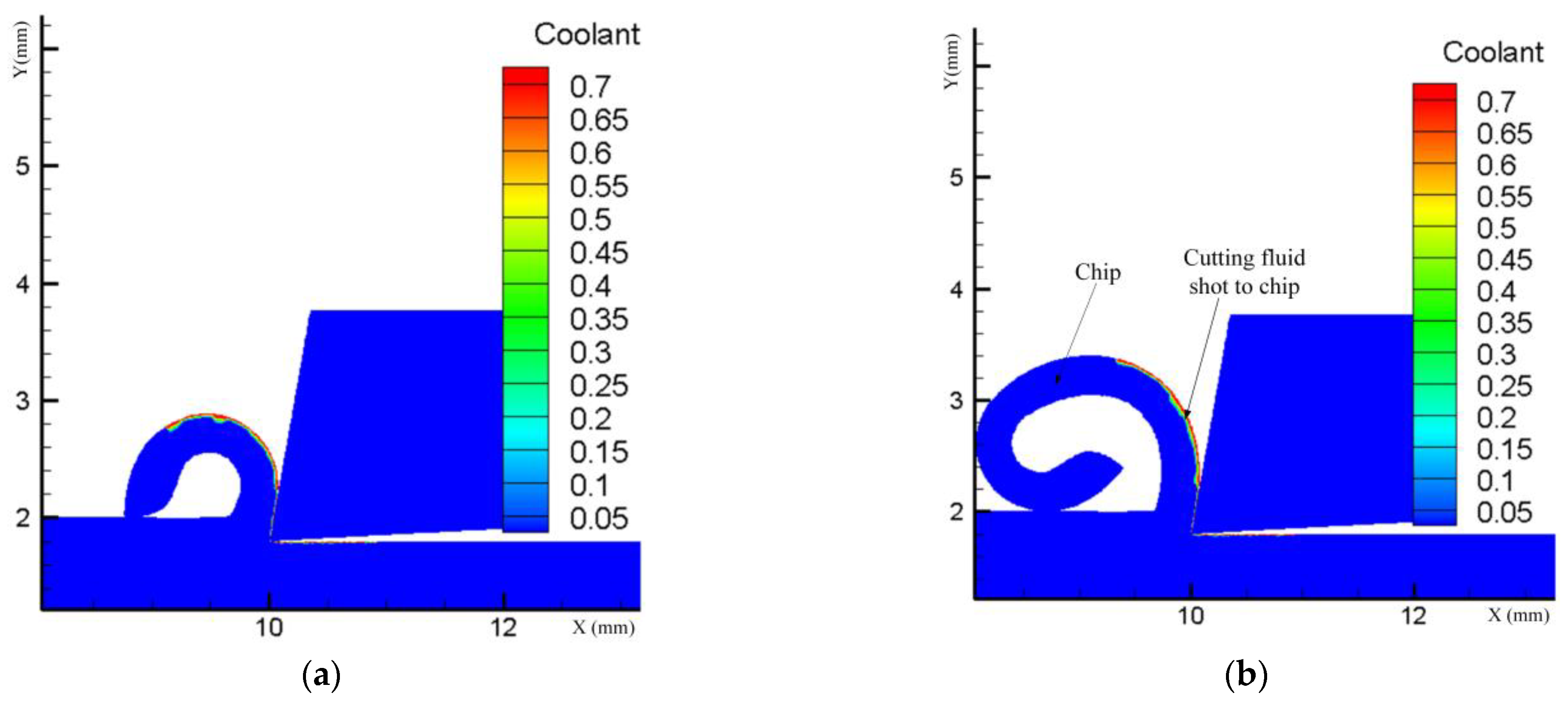
- Residual stress is the result of the mechanical–thermal coupling, and spray cooling can improve cutting conditions, thereby optimizing residual stress.
- (3)
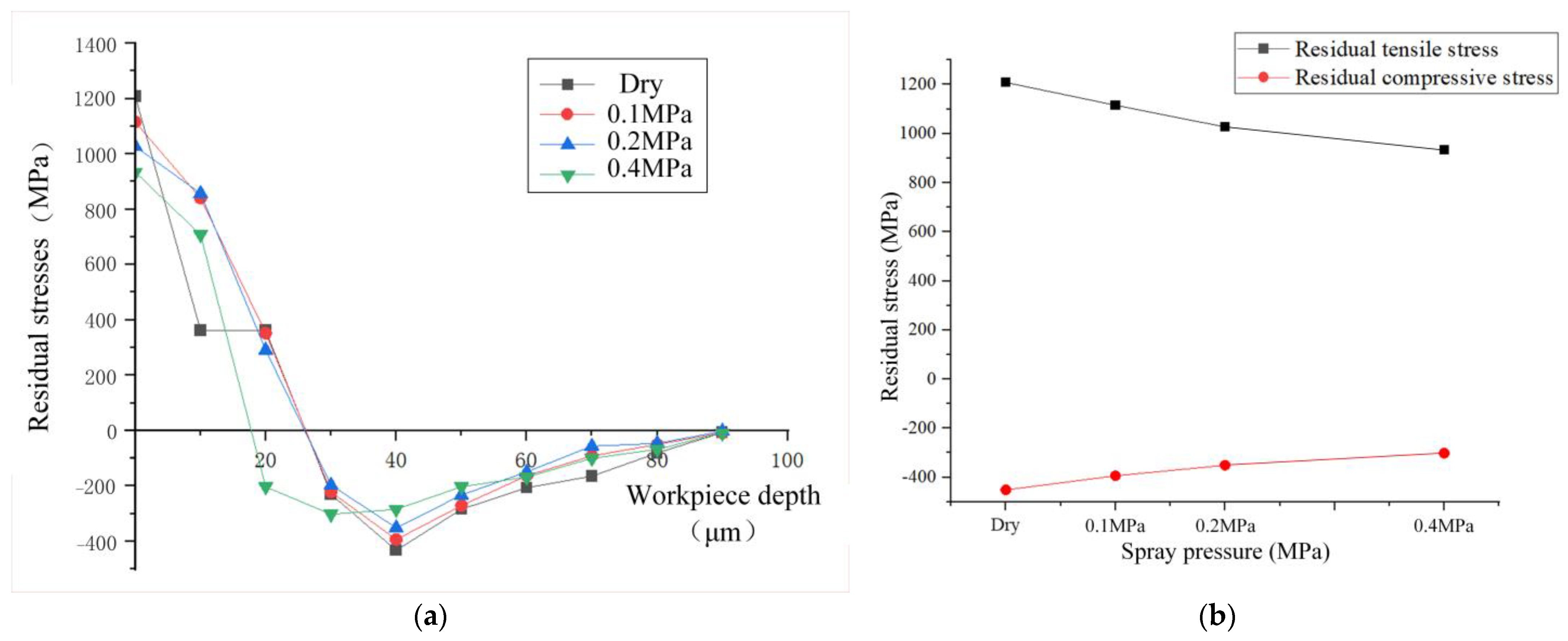
- When the spray flow rate is 0.2 L/h and the pressure is changed for simulation, it is found that when the spray pressure is 0.4 MPa, the residual stress reaches the optimal value. Compared with dry cutting, the residual tensile and compressive stress are relatively reduced by 22.72% and 26.54%, respectively.
- (4)
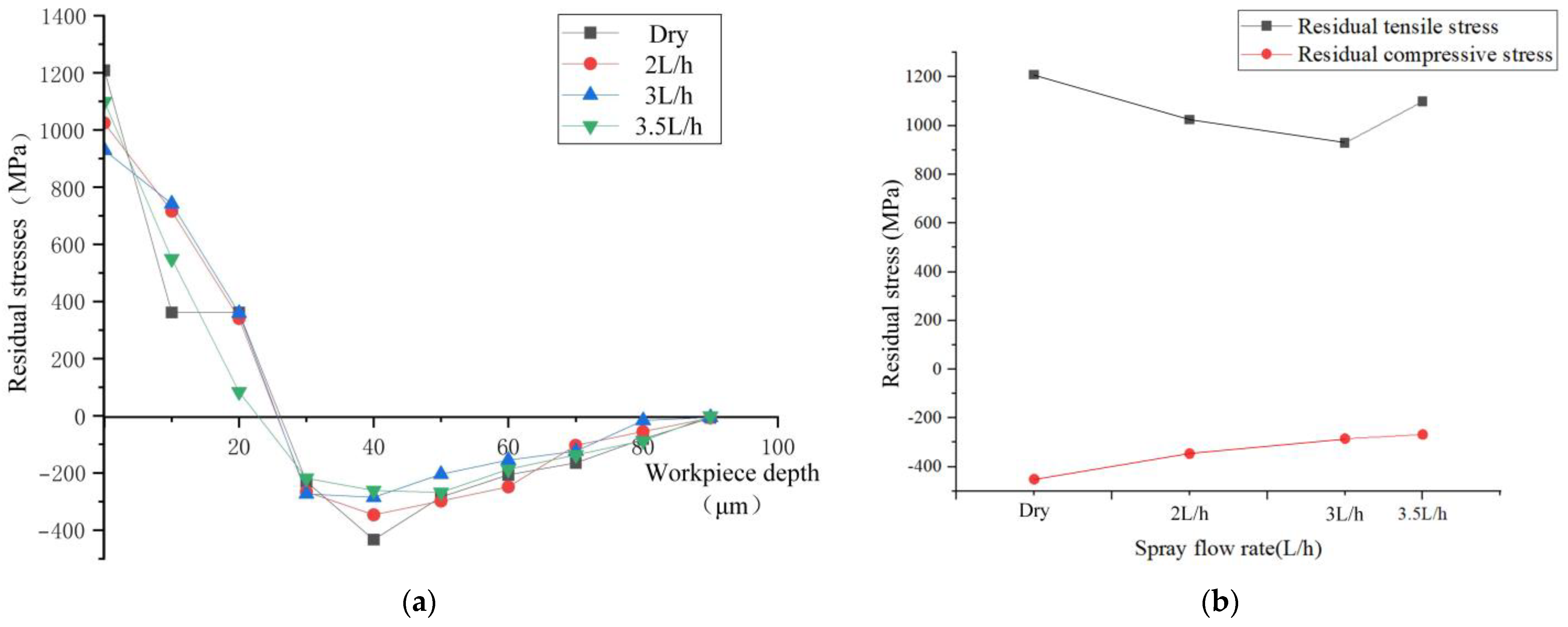
- When the spray pressure is 0.2 MPa and the flow rate is changed for simulation, it is found that when the spray flow rate is 3 L/h, the residual stress reaches the optimal value. Compared to dry cutting, residual tensile stress compressive stress was relatively reduced by 23.13% and 30.84%, respectively.
- (5)
- The residual tensile stress on the sample surface decreased with an increase in spray pressure, and the minimum residual tensile stress was obtained when the optimal parameters for spray pressure were 0.4 MPa. Specifically, at this point, the maximum residual compressive stress distance from the workpiece surface decreased, reaching around 30 μm, but the overall trend of residual stresses did not change.
- (6)
- The residual tensile stress on the sample surface initially decreased and then increased with an increase in spray flow rate. The residual tensile stress decreased when the flow rate was between 2 L/h and 3 L/h, and showed an upward trend from 3 L/h to 3.5 L/h, making 3 L/h the optimal spray flow rate. When the spray flow rate reached 3.5 L/h, the maximum residual compressive stress distance from the workpiece surface increased due to the influence of thermal stresses, occurring at around 50 μm, but the overall depth of residual stress change was not affected.
Author Contributions
Funding
Institutional Review Board Statement
Informed Consent Statement
Data Availability Statement
Conflicts of Interest
References
- Rachele, B.; Andrea, G.; Stefania, B. Graphene nanoplatelets as additives to MQL for improving tool life in machining Inconel 718 alloy. Wear 2021, 476, 203656. [Google Scholar]
- Luo, H.; Li, J.; Zhang, D.; Luo, M. Evolutions of multidimensional wear features in ball-end milling of Ni-based superalloy GH4169. Int. J. Adv. Manuf. Technol. 2024, 131, 1267–1287. [Google Scholar] [CrossRef] [Scilit]
- Yan, H.; Yue, Q.; Li, Y.; He, J.; Zhong, R. Multiscale residual stress and mechanical behavior analysis in machining of Ti-6Al-4V alloy with advanced microscopic characterization. J. Manuf. Process. 2024, 120, 568–578. [Google Scholar]
- Liu, Y.; Xu, D.; Agmell, M.; Ahadi, A.; Stahl, J.; Zhou, J. Investigation on residual stress evolution in nickel-based alloy affected by multiple cutting operations. J. Manuf. Process. 2021, 68, 818–833. [Google Scholar] [CrossRef] [Scilit]
- LI, J.; Zhao, X.; Wang, X.; Li, H. Research Status on Residual Stress of Hot-rolled Special-shaped Section Steel. Hot Work. Technol. 2023, 52, 1–6. [Google Scholar]
- Li, L.; Chen, S.; Li, T.; Wu, M. Research on Cutting Layer Characteristics of Superalloy under High-Pressure Cooling. Materials 2023, 16, 3931. [Google Scholar] [CrossRef] [Scilit]
- Li, L.; Wu, M. Research on the Residual Stress of the Machined Surface of Cutting Superalloy under High Pressure Cooling. Integr. Ferroelectr. 2022, 226, 42–57. [Google Scholar] [CrossRef] [Scilit]
- Oliveira, A.R.F.; da Silva, L.R.R.; Baldin, V.; Fonseca, M.P.C.; Silva, R.B.; Machado, A.R. Effect of tool wear on the surface integrity of Inconel 718 in face milling with cemented carbide tools. Wear 2021, 476, 203752. [Google Scholar] [CrossRef] [Scilit]
- Wu, M.; Chu, W.; Liu, K.; Wu, S.; Cheng, Y. Investigation on Machined Surface Quality During Cutting of GH4169 Under High-Pressure Cooling. Sci. Adv. Mater. 2020, 12, 994–1003. [Google Scholar] [CrossRef] [Scilit]
- Ji, X.; Liang, Y.S. Model-based sensitivity analysis of machining-induced residual stress under minimum quantity lubrication. Proc. Inst. Mech. Eng. 2017, 231, 1528–1541. [Google Scholar] [CrossRef] [Scilit]
- Khaliq, W.; Zhang, C.; Jamil, M. Tool wear, surface quality, and residual stresses analysis of micro-machined additive manufactured Ti–6Al–4V under dry and MQL conditions. Tribol. Int. 2020, 151, 106408. [Google Scholar] [CrossRef] [Scilit]
- Jamil, M.; He, N.; Huang, X.; Zhao, W.; Gupta, M.; Mashood, K.A. Measurement of machining characteristics under novel dry ice blasting cooling assisted milling of AISI 52100 tool steel. Measurement 2022, 191, 110821. [Google Scholar] [CrossRef] [Scilit]
- Yao, K.; Wang, C.; Ding, F. Effect of nozzles on cutting performance when machining with oil-on-water cooling technique. Int. J. Adv. Manuf. Technol. 2021, 112, 313–322. [Google Scholar] [CrossRef] [Scilit]
- Kumar, R.; Sahoo, K.; Mishra, P.C.; Das, R.K. Measurement and machinability study under environmentally conscious spray impingement cooling assisted machining. Measurement 2019, 135, 913–927. [Google Scholar] [CrossRef] [Scilit]
- Ukamanal, M.; Mishra, P.; Sahoo, A. Effects of Spray Cooling Process Parameters on Machining Performance AISI 316 Steel: A Novel Experimental Technique. Exp. Tech. 2020, 44, 19–36. [Google Scholar] [CrossRef] [Scilit]
- Li, X.; Gou, R.; Zhang, N. Effect of Force and Heat Coupling on Machined Surface Integrity and Fatigue Performance of Superalloy GH4169 Specimens. Metals 2024, 14, 540. [Google Scholar] [CrossRef] [Scilit]
- Yu, W.; Wang, T.; Yang, L.; An, Q.; Ming, W.; Chen, M. Finite element and experimental analysis of grain refinement caused by dynamic recrystallization during high-speed cutting of nickel-based superalloys. Simul. Model. Pract. Theory 2023, 128, 102807. [Google Scholar] [CrossRef] [Scilit]
- Zhou, T.; Zhou, T.; Zhang, C.; Sun, C. Hybrid modeling with finite element—Analysis—Neural network for predicting residual stress in orthogonal cutting of H13. J. Mater. Res. Technol. 2024, 29, 4954–4977. [Google Scholar] [CrossRef] [Scilit]
- Weng, J.; Zhou, S.; Zhang, Y.; Liu, Y.; Zhuang, K. Numerical and experimental investigations on residual stress evolution of multiple sequential cuts in turning. Int. J. Adv. Manuf. Technol. 2023, 129, 755–770. [Google Scholar] [CrossRef] [Scilit]
- Ullah, I.; Zhang, S.; Waqar, S. Numerical and experimental investigation on thermo-mechanically induced residual stress in high-speed milling of Ti-6Al-4V alloy. J. Manuf. Process. 2022, 76, 575–587. [Google Scholar] [CrossRef] [Scilit]
- Li, G.; Lu, W.; Huang, S.; Zhang, X.; Ding, S. Analysis and prediction of residual stresses based on cutting temperature and cutting force in rough turning of Ti-6Al-4V. Heliyon 2022, 8, e11661. [Google Scholar] [CrossRef] [Scilit] [PubMed]
- Alok, K.M.; Vivek, M.T. A FEM Analysis of Residual Stresses in Metal Cutting Process. Int. J. Res. Appl. Sci. Eng. Technol. 2019, 7, 381–385. [Google Scholar]
- Luo, H.; Wang, Y.; Zhang, P. Effect of cutting and vibration parameters on the cutting performance of 7075-T651 aluminum alloy by ultrasonic vibration. Int. J. Adv. Manuf. Technol. 2020, 107, 371–384. [Google Scholar] [CrossRef] [Scilit]
- Min, W.; Yu, X.; Yang, D. Modeling of machining-induced residual stresses. J. Mater. Sci. 2019, 54, 1–35. [Google Scholar]
- Li, Z.; Xia, Z.; He, S.; Wang, F. Dynamic Mechanical Properties of FGH4097 Powder Alloy and the Applications of its Constitutive Model. J. Mater. Res. Technol. 2022, 22, 1165–1184. [Google Scholar] [CrossRef] [Scilit]
- Huang, Y.; Sun, F.; Chen, Y.; Yang, L. Residual Stress of Ti6Al4V in Multi⁃step Turning Study on AdvantEdge. Tool Eng. 2023, 57, 82–88. [Google Scholar]
- Liu, W.; Liu, Z. Finite element analysis of turning Ti-6Al-4V under high-pressure coolant. Mod. Manuf. Eng. 2018, 457, 44–50. [Google Scholar]
- Sílvia, C.R.; Ana, H.; Paulo, J.D. Material model assessment in Ti6Al4V machining simulations with FEM. Proc. Inst. Mech. Eng. Part C J. Mech. Eng. Sci. 2021, 235, 5500–5510. [Google Scholar]
- Feng, X.; Dong, S.; Hu, J.; Wang, B. Simulation and Experimental Analysis of Cutting Temperature in Cutting of Superalloy GH4169 under Spray. Mech. Sci. Technol. Aerosp. Eng. 2022, 41, 985–991. [Google Scholar]
- Du, J.; Li, Y.; Wang, X.; Wu, X. Dynamics and heat transfer of water droplets impacting on heated surfaces: The role of surface structures in Leidenfrost point. Int. J. Heat Mass Transf. 2023, 212, 124241. [Google Scholar] [CrossRef] [Scilit]
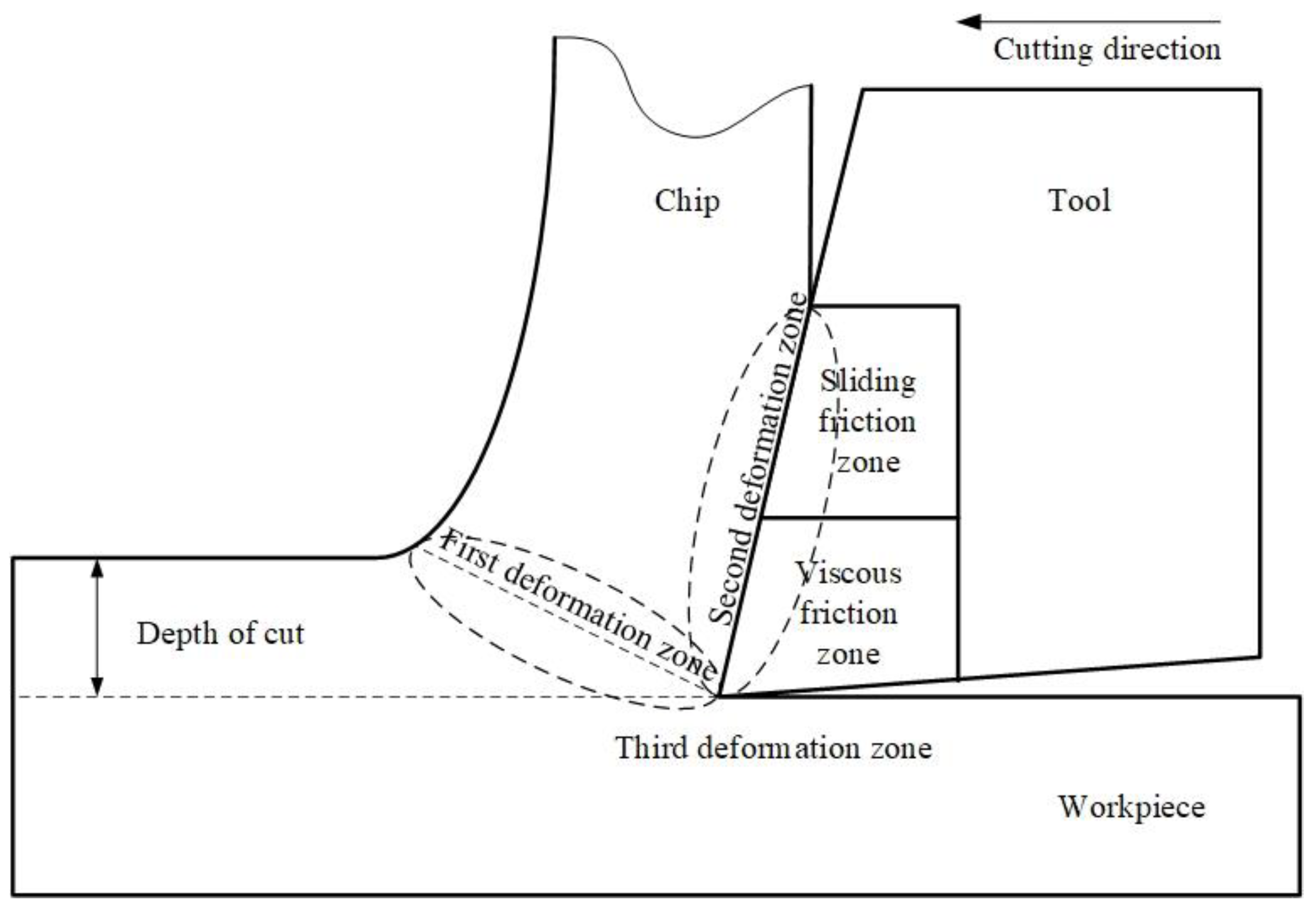
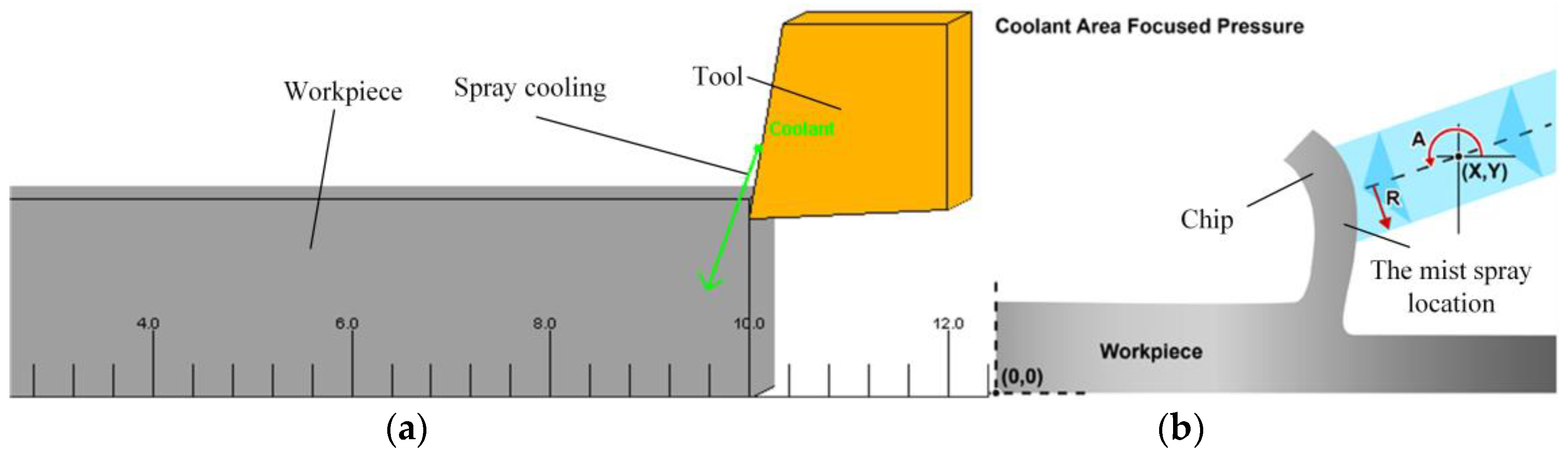
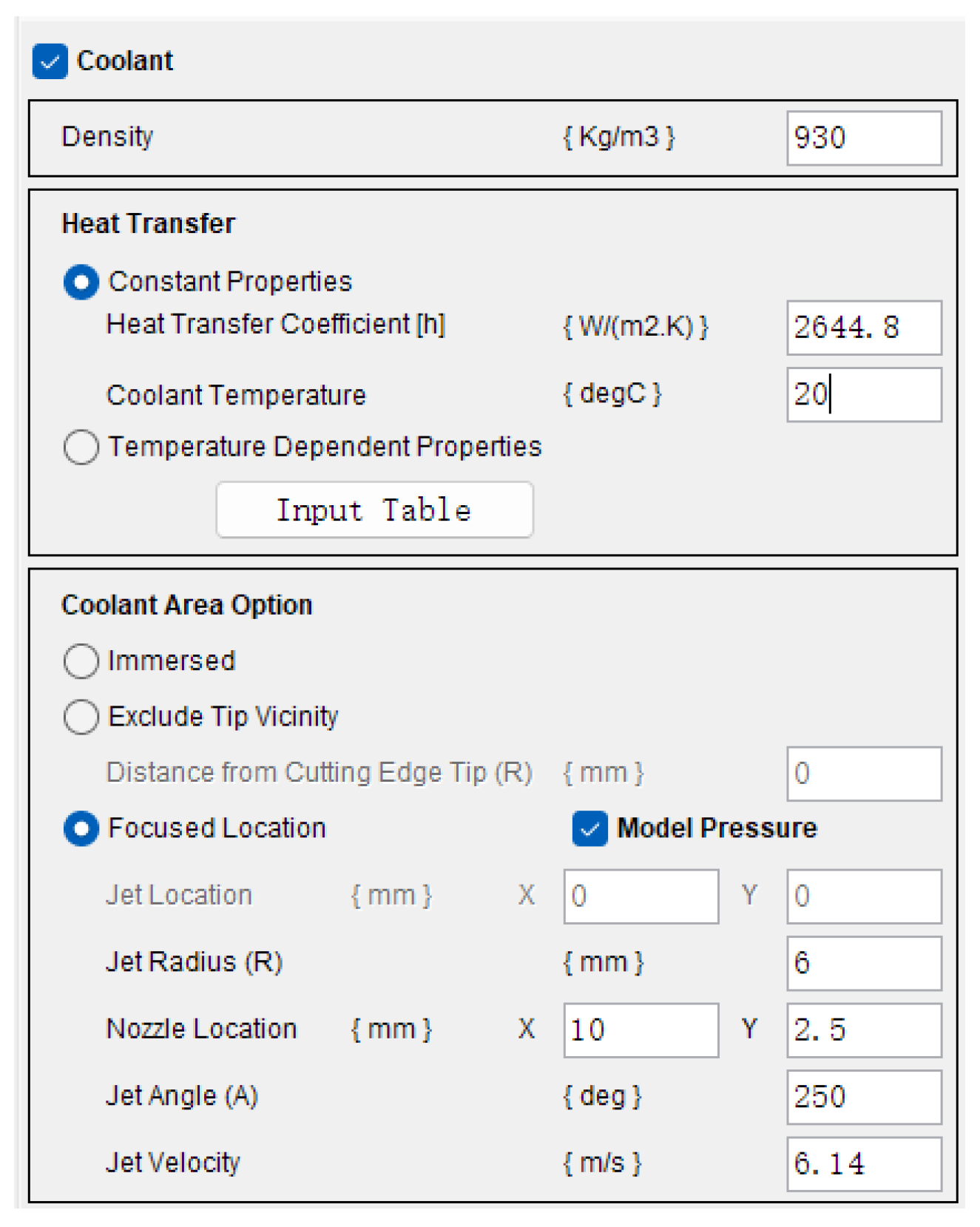
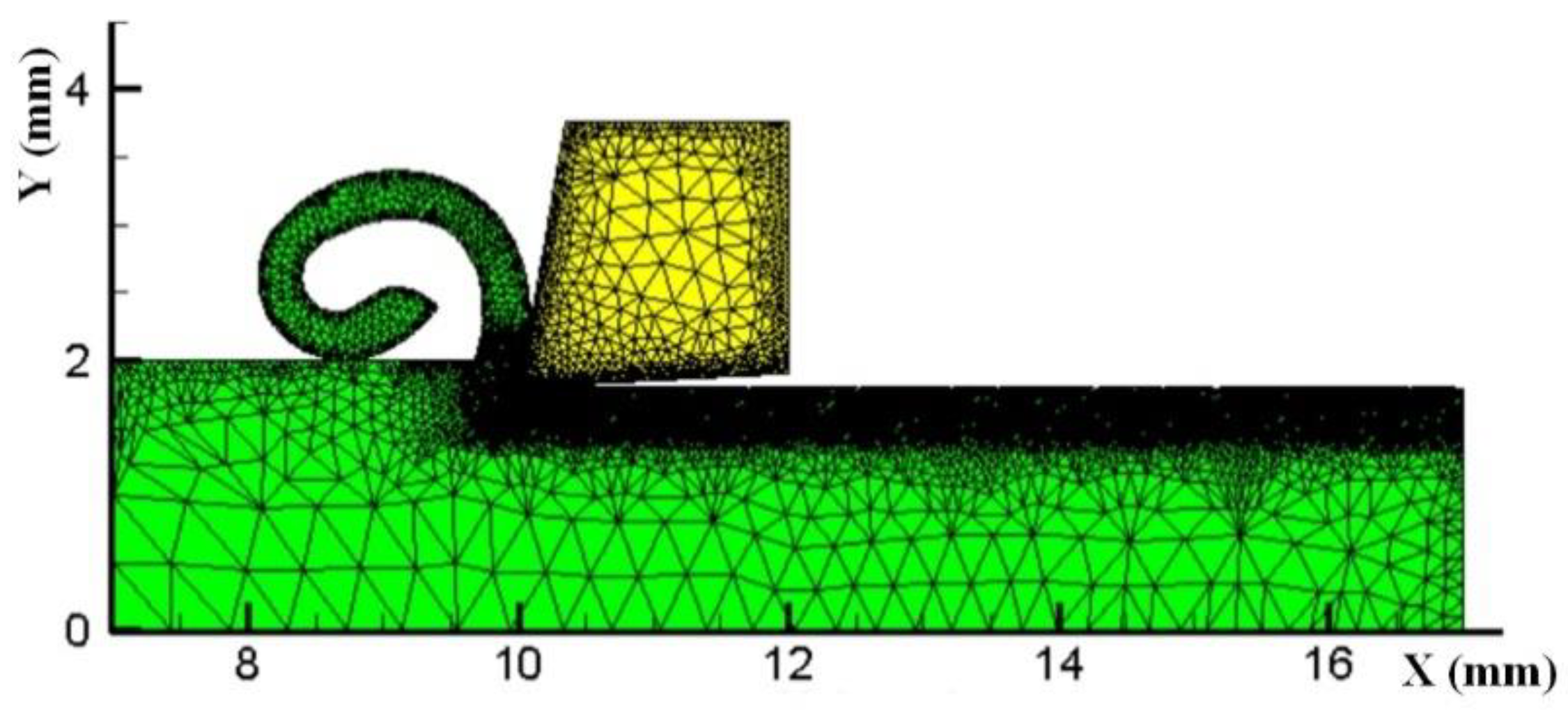

| Chemical Composition | Ni | Cr | Mo | Nb | Ti | Al |
|---|---|---|---|---|---|---|
| Percentage of elements | 50.8% | 17.74% | 2.96% | 4.93% | 0.85% | 0.68% |
| Material Indicators | Tensile Strength | Yield Strength | Elongation | Shrinkage | Specific Gravity | Durometer |
|---|---|---|---|---|---|---|
| Performance Parameters | 1280 MPa | 1030 MPa | 12% | 15% | 8.24 g/cm3 | 450 HBS |
| Cutting Parameters: Cutting Speed v = 100 m/min, Feed Rate f = 0.2 mm/r, Cutting Depth ap = 0.25 mm | ||
|---|---|---|
| Serial Number | Spray Pressure (MPa) | Spray Flow Rate (L/h) |
| 1 | 0.1 | 2 |
| 2 | 0.2 | 2 |
| 3 | 0.4 | 2 |
| 4 | 0.2 | 3 |
| 5 | 0.2 | 3.5 |
| Sample | Parameters | Residual Tensile Stress Value (MPa) | Residual Compressive Stress Value (MPa) | ||||
|---|---|---|---|---|---|---|---|
| Measured | Simulated | Relative Error | Measured | Simulated | Relative Error | ||
| 1 | 0.1 MPa | 1108.46 | 1115.51 | 0.6% | −387.29 | −393.74 | 1.6% |
| 2 | 0.2 MPa | 1049.68 | 1027.05 | 2.1% | −367.56 | −351.01 | 4.5% |
| 3 | 0.4 MPa | 930.83 | 933.93 | 0.3% | −293.42 | −302.01 | 2.9% |
| 4 | 2 L/h | 1049.68 | 1023.95 | 2.4% | −367.56 | −346.11 | 5.8% |
| 5 | 3 L/h | 939.5 | 928.98 | 1.1% | −290.12 | −284.30 | 2.0% |
| 6 | 3.5 L/h | 1124.5 | 1099.15 | 2.3% | −261.15 | −267.81 | 2.6% |
Disclaimer/Publisher’s Note: The statements, opinions and data contained in all publications are solely those of the individual author(s) and contributor(s) and not of MDPI and/or the editor(s). MDPI and/or the editor(s) disclaim responsibility for any injury to people or property resulting from any ideas, methods, instructions or products referred to in the content. |
© 2024 by the authors. Licensee MDPI, Basel, Switzerland. This article is an open access article distributed under the terms and conditions of the Creative Commons Attribution (CC BY) license (https://creativecommons.org/licenses/by/4.0/).
Share and Cite
Feng, X.; Liu, J.; Hu, J.; Liu, Z. The Influence of Spray Cooling Parameters on Workpiece Residual Stress of Turning GH4169. Materials 2024, 17, 2876. https://doi.org/10.3390/ma17122876
Feng X, Liu J, Hu J, Liu Z. The Influence of Spray Cooling Parameters on Workpiece Residual Stress of Turning GH4169. Materials. 2024; 17(12):2876. https://doi.org/10.3390/ma17122876
Chicago/Turabian StyleFeng, Xinmin, Jinrong Liu, Jingshu Hu, and Zhiwei Liu. 2024. "The Influence of Spray Cooling Parameters on Workpiece Residual Stress of Turning GH4169" Materials 17, no. 12: 2876. https://doi.org/10.3390/ma17122876
APA StyleFeng, X., Liu, J., Hu, J., & Liu, Z. (2024). The Influence of Spray Cooling Parameters on Workpiece Residual Stress of Turning GH4169. Materials, 17(12), 2876. https://doi.org/10.3390/ma17122876

