Article

The Investigation of the Production of Salt-Added Polyethylene Oxide/Chitosan Nanofibers

by
Sandra Varnaitė-Žuravliova
1,*,
Natalja Savest
2,
Julija Baltušnikaitė-Guzaitienė
1,
Aušra Abraitienė
1 and
Andres Krumme
2
1
Department of Textile Technologies, Center for Physical Sciences and Technology, Demokratų Str. 53, LT-48485 Kaunas, Lithuania
2
Department of Materials and Environmental Technology, Tallinn University of Technology, Ehitajate Tee 5, EE-19086 Tallinn, Estonia
*
Author to whom correspondence should be addressed.
Materials 2024, 17(1), 132; https://doi.org/10.3390/ma17010132
Submission received: 24 November 2023 / Revised: 21 December 2023 / Accepted: 24 December 2023 / Published: 27 December 2023
(This article belongs to the Section Advanced Composites)

Abstract

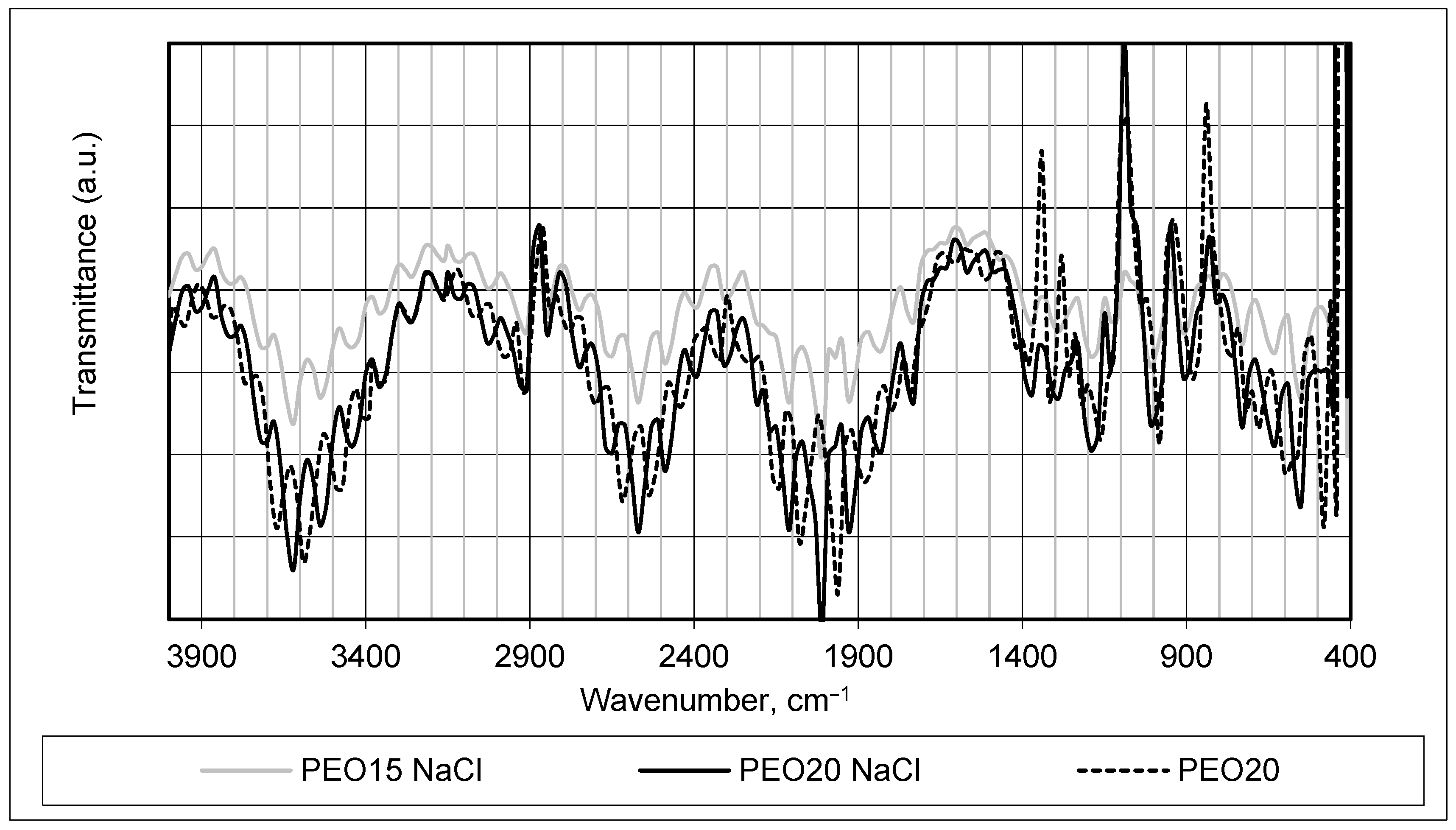
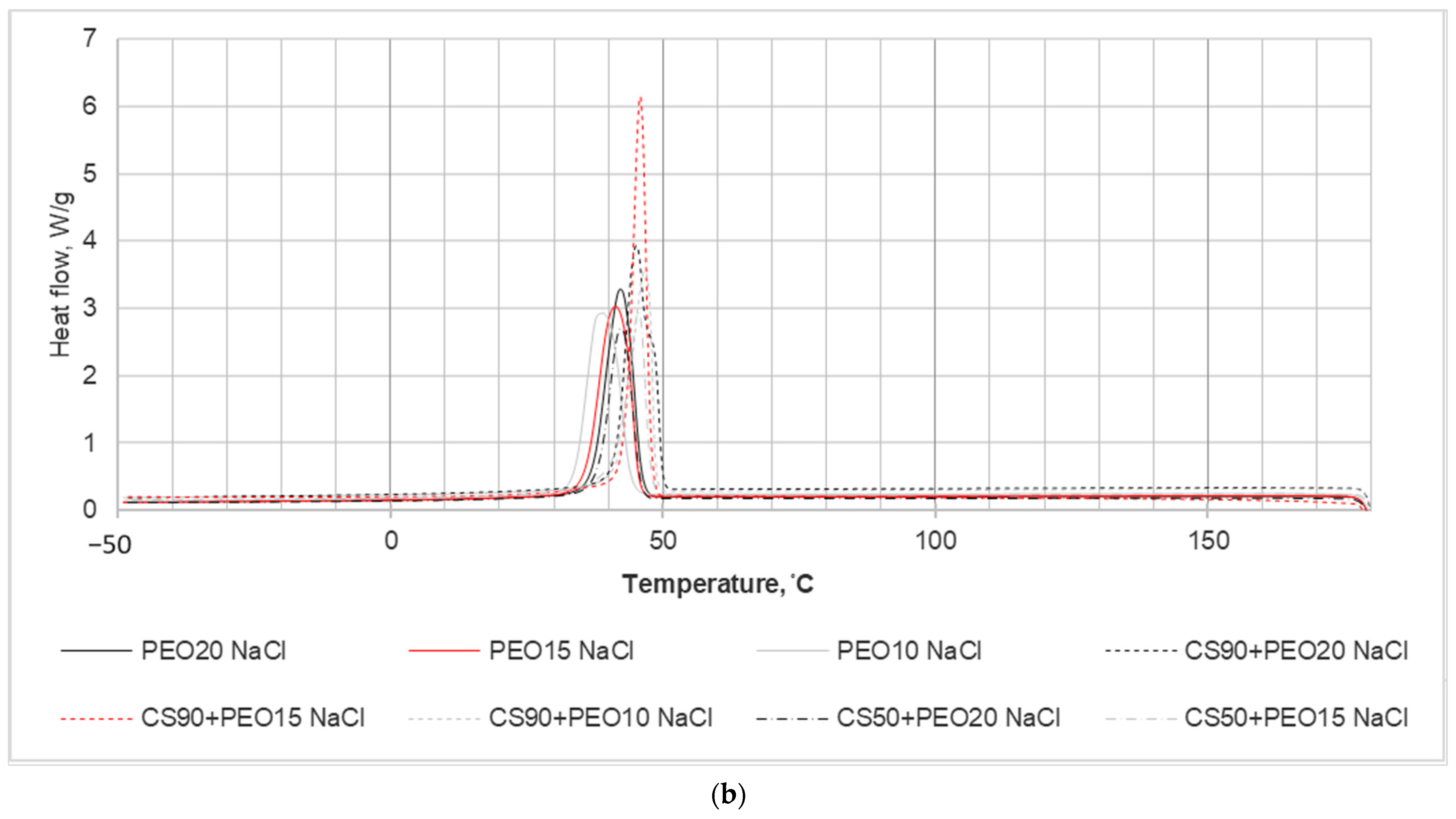
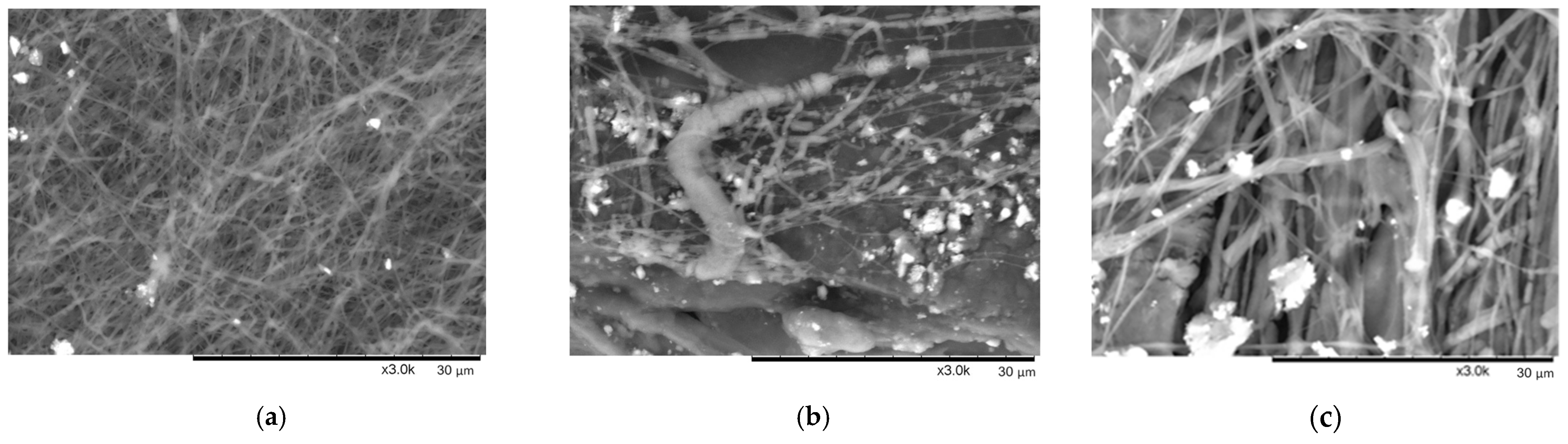
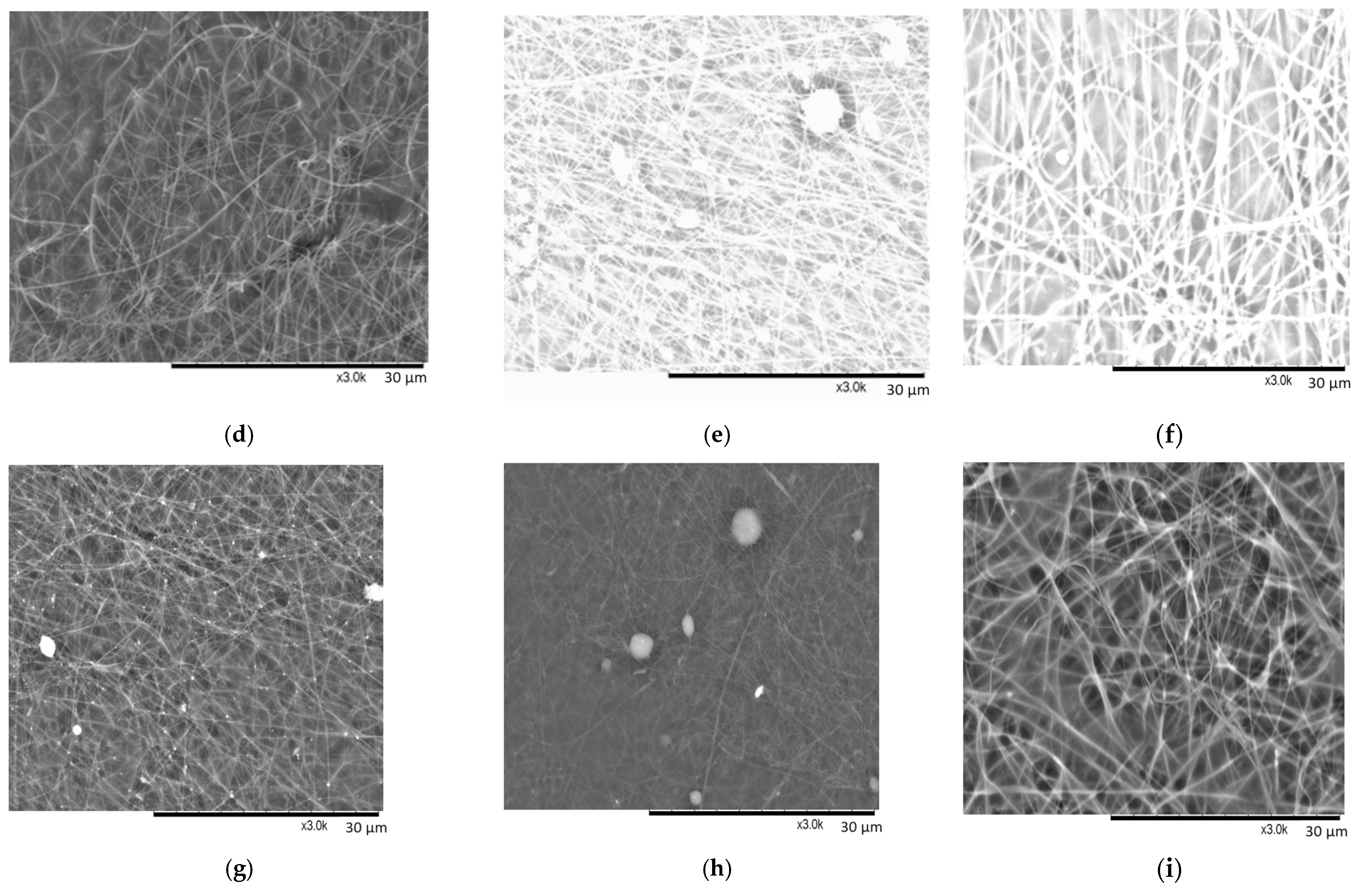
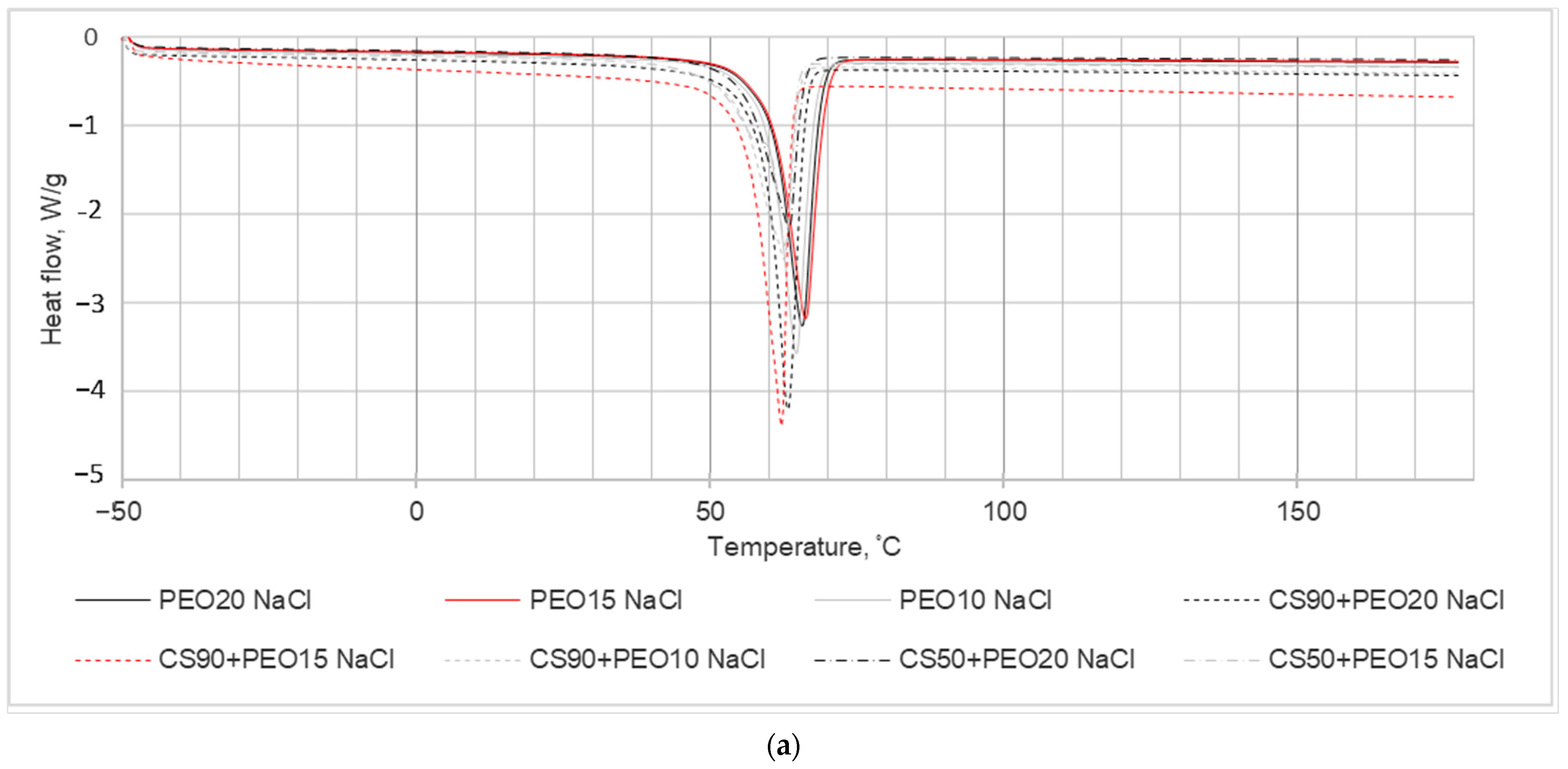
The influence of different concentrations of salt-added polyethylene oxide (PEO) on the spinnability of chitosan (CS)/PEO + NaCl blends that could be used as a component part of filters for water treatment or nanofiber membranes as well as for medical applications was investigated in this study. The morphological properties of manufactured nanofibers were analyzed as well. It was determined that an increase of PEO concentration resulted mostly in thin and round nanofibers formed during electrospinning, but the manufacturing process became complex, because many wet fibers reached the collector while spinning. Also, it was noticed that the salt was not dissolved completely in the polymer solutions and some crystals were seen in the SEM images of manufactured fiber mats. However, the addition of salt resulted in lower viscosity and better conductivity of solution and fiber mats as well. The opposite effect was observed as the concentration of PEO was increased. The orientation of produced nanofibers as well as their diameter were analyzed with commercially available software. It was determined that the results obtained by software and microscopically are repeatable. The difference among the results of diameter calculated with software and taken by microscope varied from 0% to approximately 12%. The FTIR analyses indicated that alterations in polymer concentrations or the addition of salt did not induce any discernible changes in the chemical composition or nature of the materials under investigation. The sodium chloride present in the solutions enhanced electrical properties and increased conductivity values more than 50 times for PEO solutions and six times for CS/PEO blend solutions, compared to conductivity values of solutions without salt. To assess the thermal characteristics of the PEO/CS blend nanofibers, measurements using a differential scanning calorimeter (DSC) to determine melting (Tm) and crystallization (Tc) temperatures, as well as specific heat capacities were conducted. These parameters were derived from the analysis of endothermic and exothermic peaks observed in the DSC data. It showed that all produced nanofibers were semicrystalline.
Keywords: electrospinning; nanofibers; salt; chitosan; polyethylene oxide electrospinning; nanofibers; salt; chitosan; polyethylene oxide