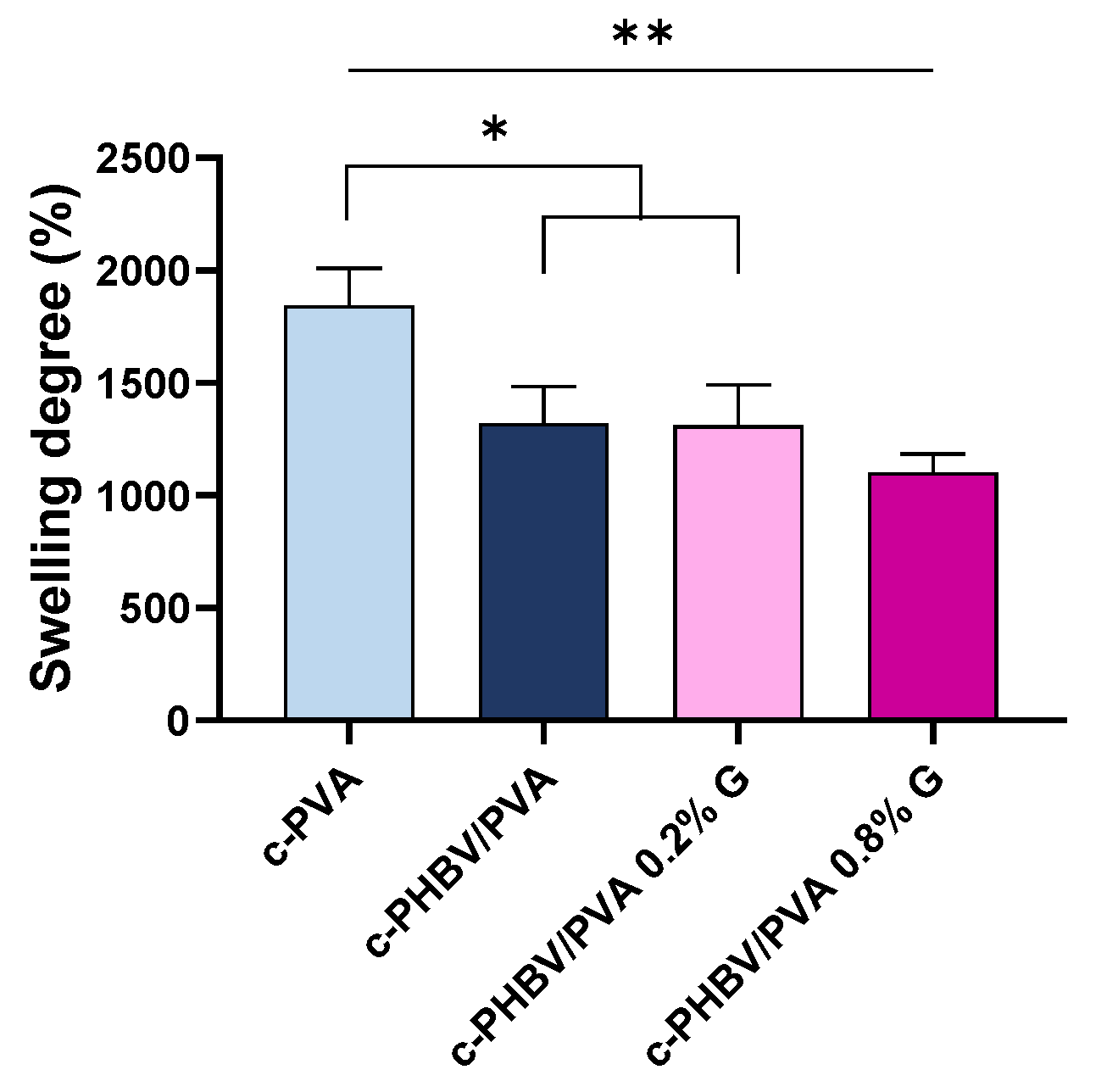
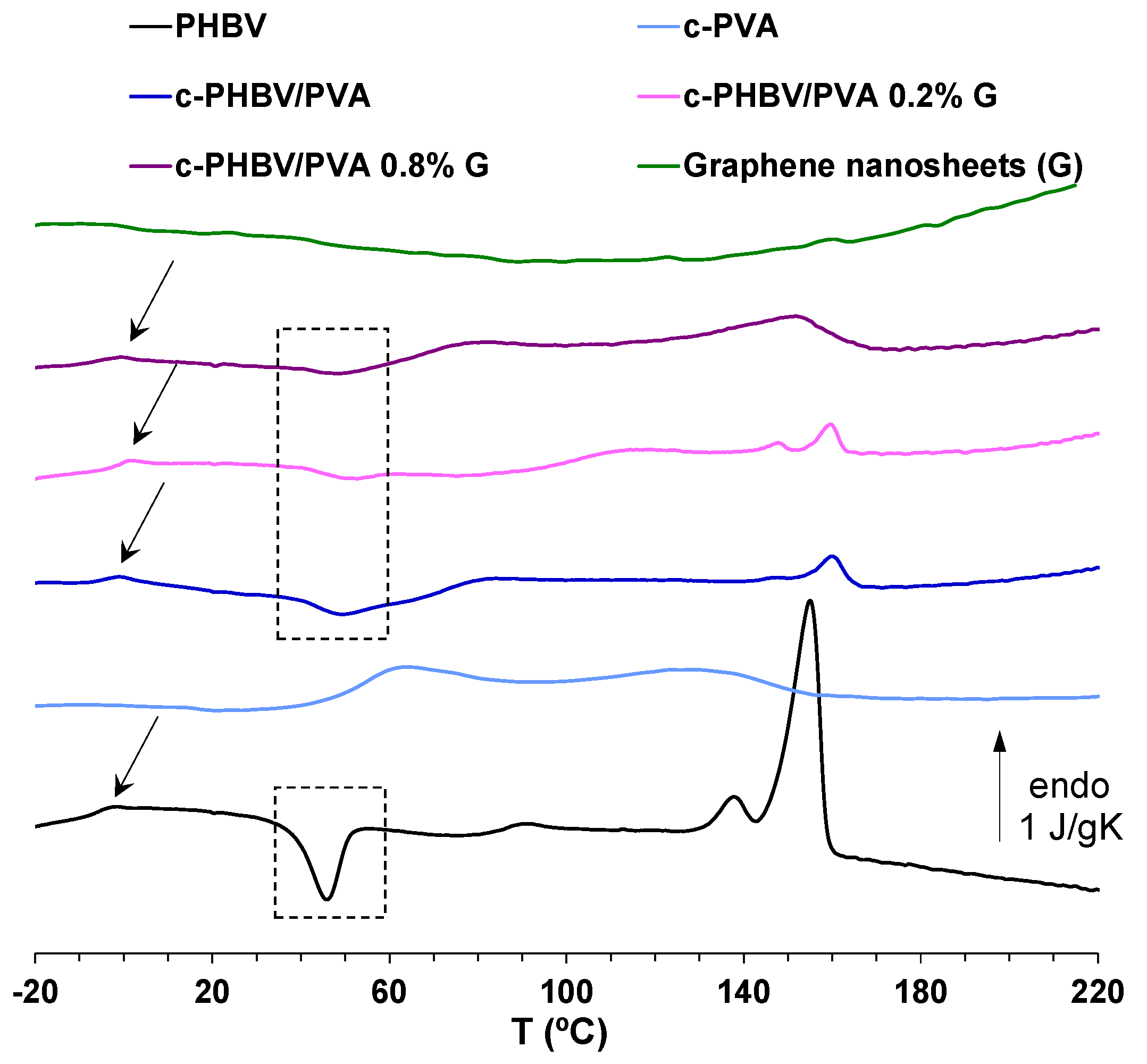
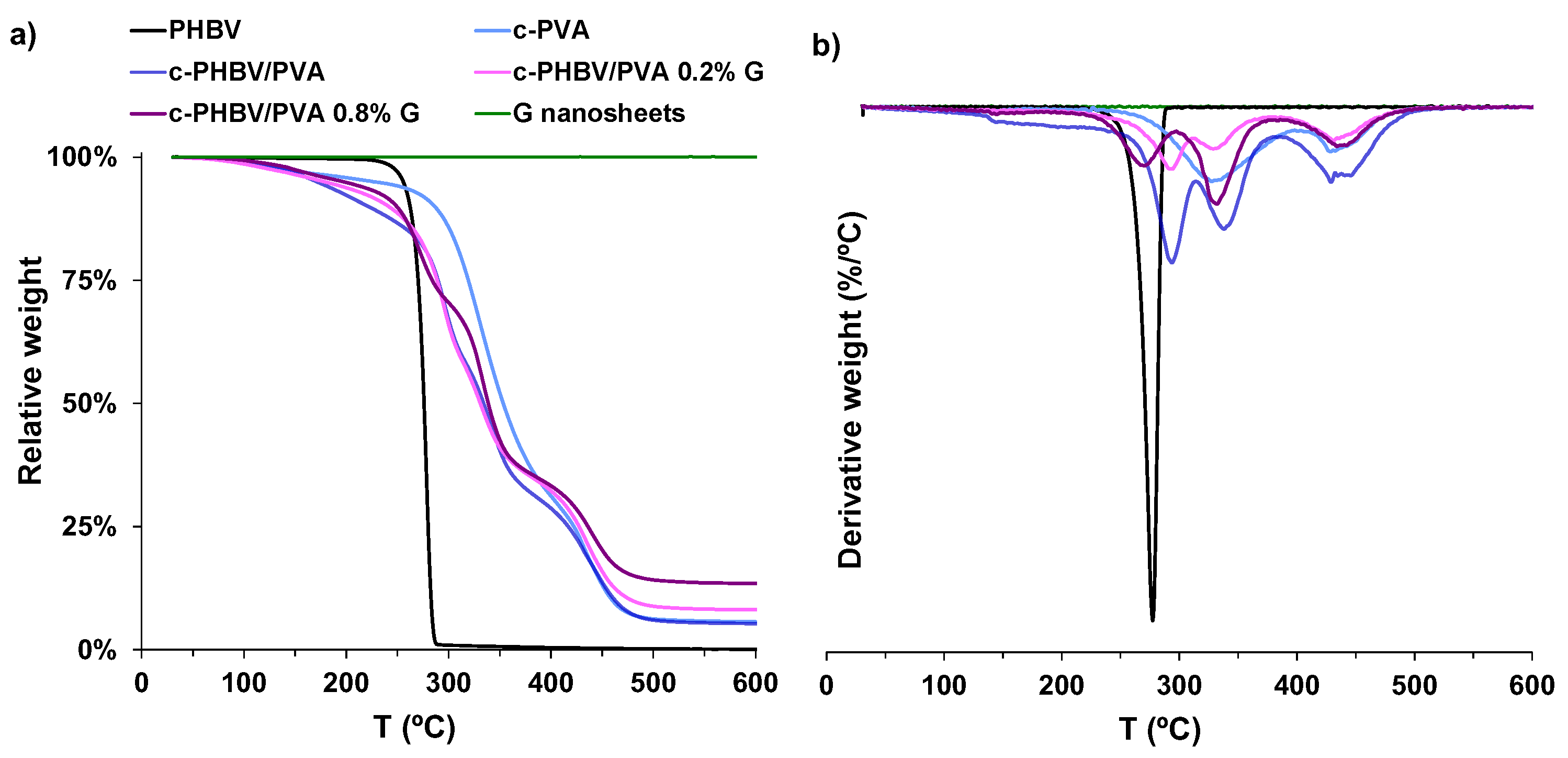
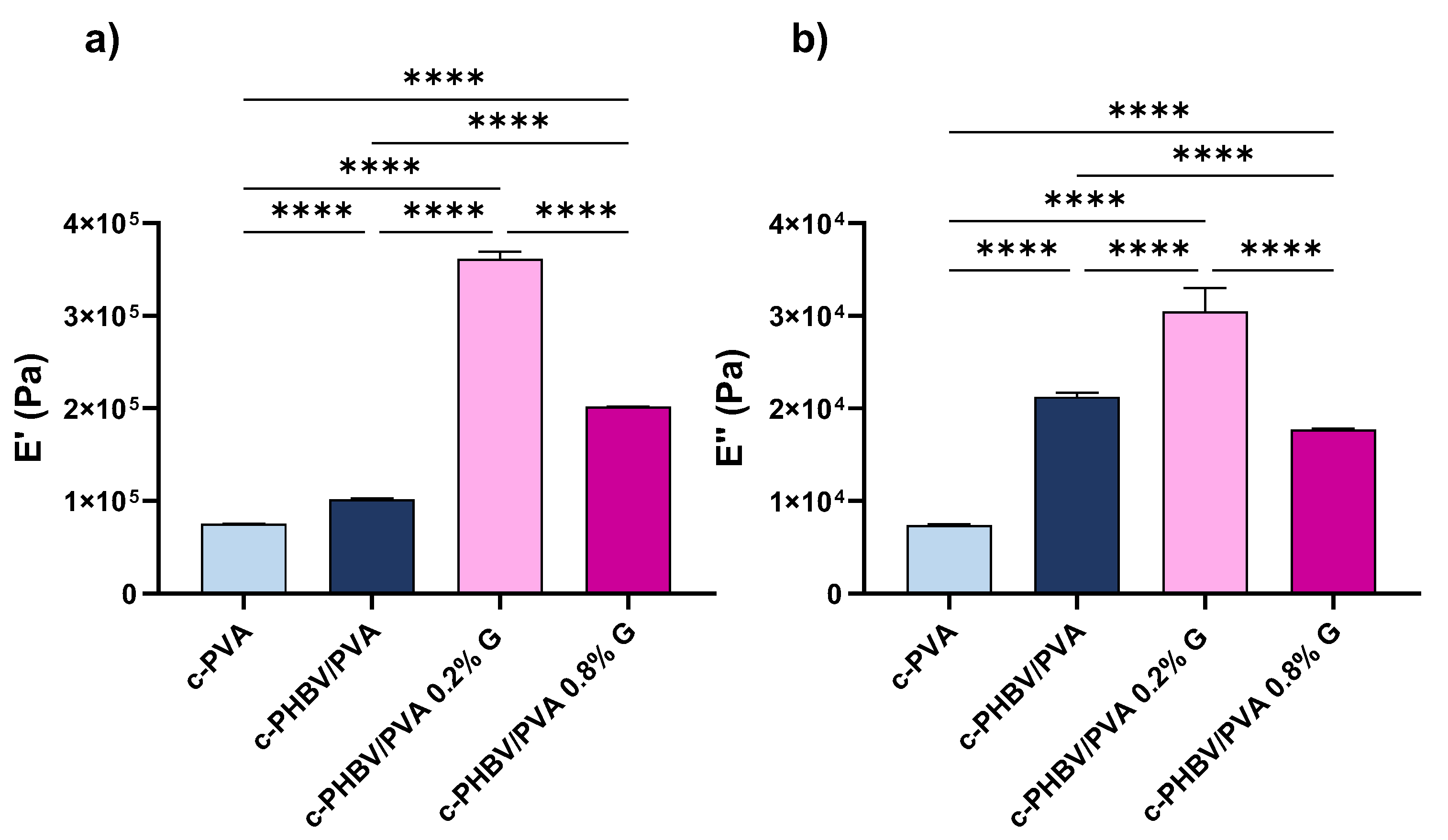
Engineered Highly Porous Polyvinyl Alcohol Hydrogels with Poly(3-hydroxybutyrate-co-3-hydroxyvalerate) and Graphene Nanosheets for Musculoskeletal Tissue Engineering: Morphology, Water Sorption, Thermal, Mechanical, Electrical Properties, and Biocompatibility

 ,
,  , , ,
, , ,  and
and Abstract
Share and Cite
Aparicio-Collado, J.L.; Zheng, Q.; Molina-Mateo, J.; Torregrosa Cabanilles, C.; Vidaurre, A.; Serrano-Aroca, Á.; Sabater i Serra, R. Engineered Highly Porous Polyvinyl Alcohol Hydrogels with Poly(3-hydroxybutyrate-co-3-hydroxyvalerate) and Graphene Nanosheets for Musculoskeletal Tissue Engineering: Morphology, Water Sorption, Thermal, Mechanical, Electrical Properties, and Biocompatibility. Materials 2023, 16, 3114. https://doi.org/10.3390/ma16083114
Aparicio-Collado JL, Zheng Q, Molina-Mateo J, Torregrosa Cabanilles C, Vidaurre A, Serrano-Aroca Á, Sabater i Serra R. Engineered Highly Porous Polyvinyl Alcohol Hydrogels with Poly(3-hydroxybutyrate-co-3-hydroxyvalerate) and Graphene Nanosheets for Musculoskeletal Tissue Engineering: Morphology, Water Sorption, Thermal, Mechanical, Electrical Properties, and Biocompatibility. Materials. 2023; 16(8):3114. https://doi.org/10.3390/ma16083114
Chicago/Turabian StyleAparicio-Collado, José Luis, Qiqi Zheng, José Molina-Mateo, Constantino Torregrosa Cabanilles, Ana Vidaurre, Ángel Serrano-Aroca, and Roser Sabater i Serra. 2023. "Engineered Highly Porous Polyvinyl Alcohol Hydrogels with Poly(3-hydroxybutyrate-co-3-hydroxyvalerate) and Graphene Nanosheets for Musculoskeletal Tissue Engineering: Morphology, Water Sorption, Thermal, Mechanical, Electrical Properties, and Biocompatibility" Materials 16, no. 8: 3114. https://doi.org/10.3390/ma16083114
APA StyleAparicio-Collado, J. L., Zheng, Q., Molina-Mateo, J., Torregrosa Cabanilles, C., Vidaurre, A., Serrano-Aroca, Á., & Sabater i Serra, R. (2023). Engineered Highly Porous Polyvinyl Alcohol Hydrogels with Poly(3-hydroxybutyrate-co-3-hydroxyvalerate) and Graphene Nanosheets for Musculoskeletal Tissue Engineering: Morphology, Water Sorption, Thermal, Mechanical, Electrical Properties, and Biocompatibility. Materials, 16(8), 3114. https://doi.org/10.3390/ma16083114