Review

Biomimetic Venus Flytrap Structures Using Smart Composites: A Review

1
School of Advanced Manufacturing, Fuzhou University, Fuzhou 362251, China
2
Fujian Provincial Key Laboratory of Terahertz Functional Devices and Intelligent Sensing, School of Mechanical Engineering and Automation, Fuzhou University, Fuzhou 350108, China
*
Author to whom correspondence should be addressed.
Materials 2023, 16(20), 6702; https://doi.org/10.3390/ma16206702
Submission received: 18 September 2023 / Revised: 5 October 2023 / Accepted: 7 October 2023 / Published: 16 October 2023
(This article belongs to the Special Issue Advances in Smart Materials and Structures)

Abstract

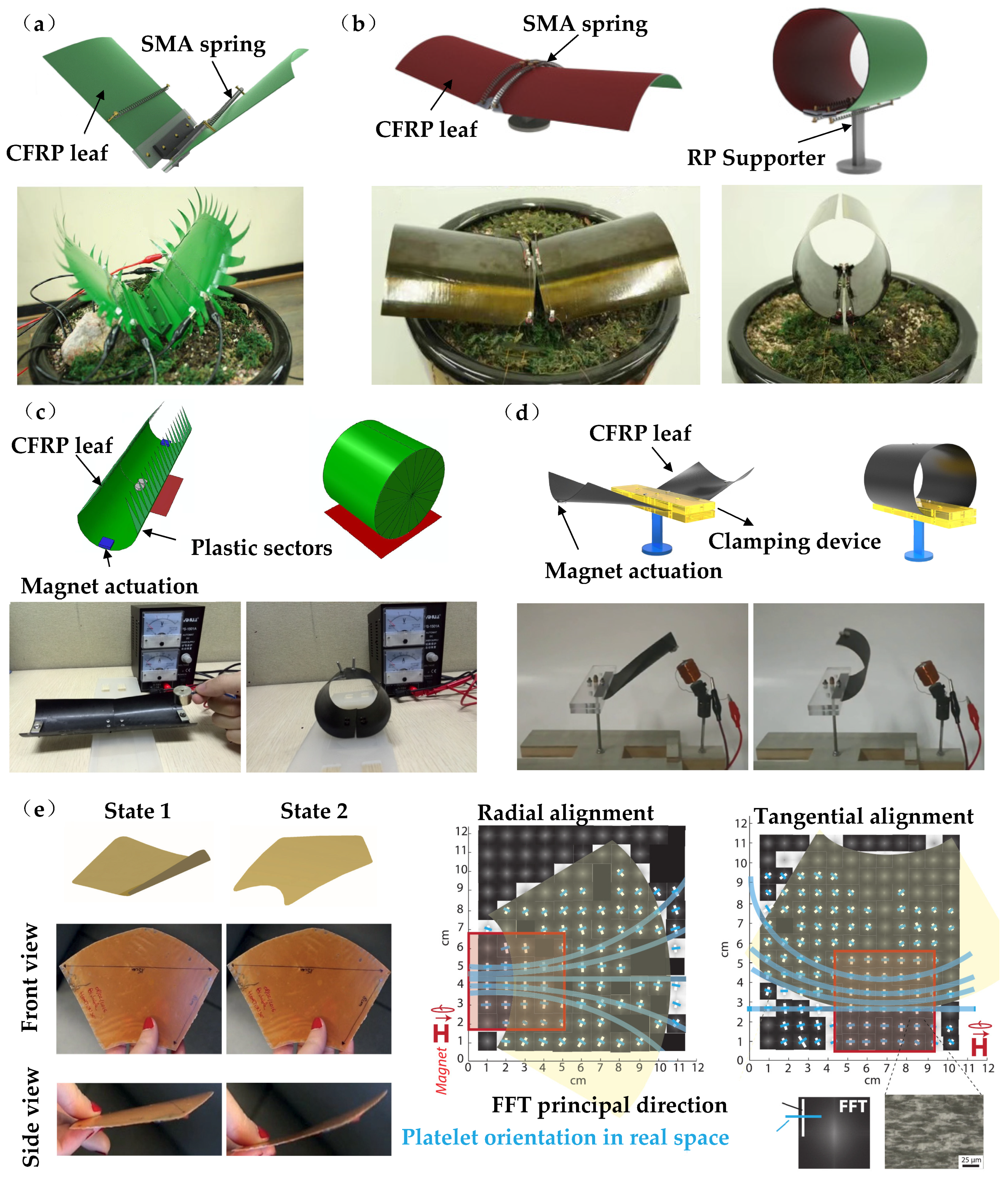
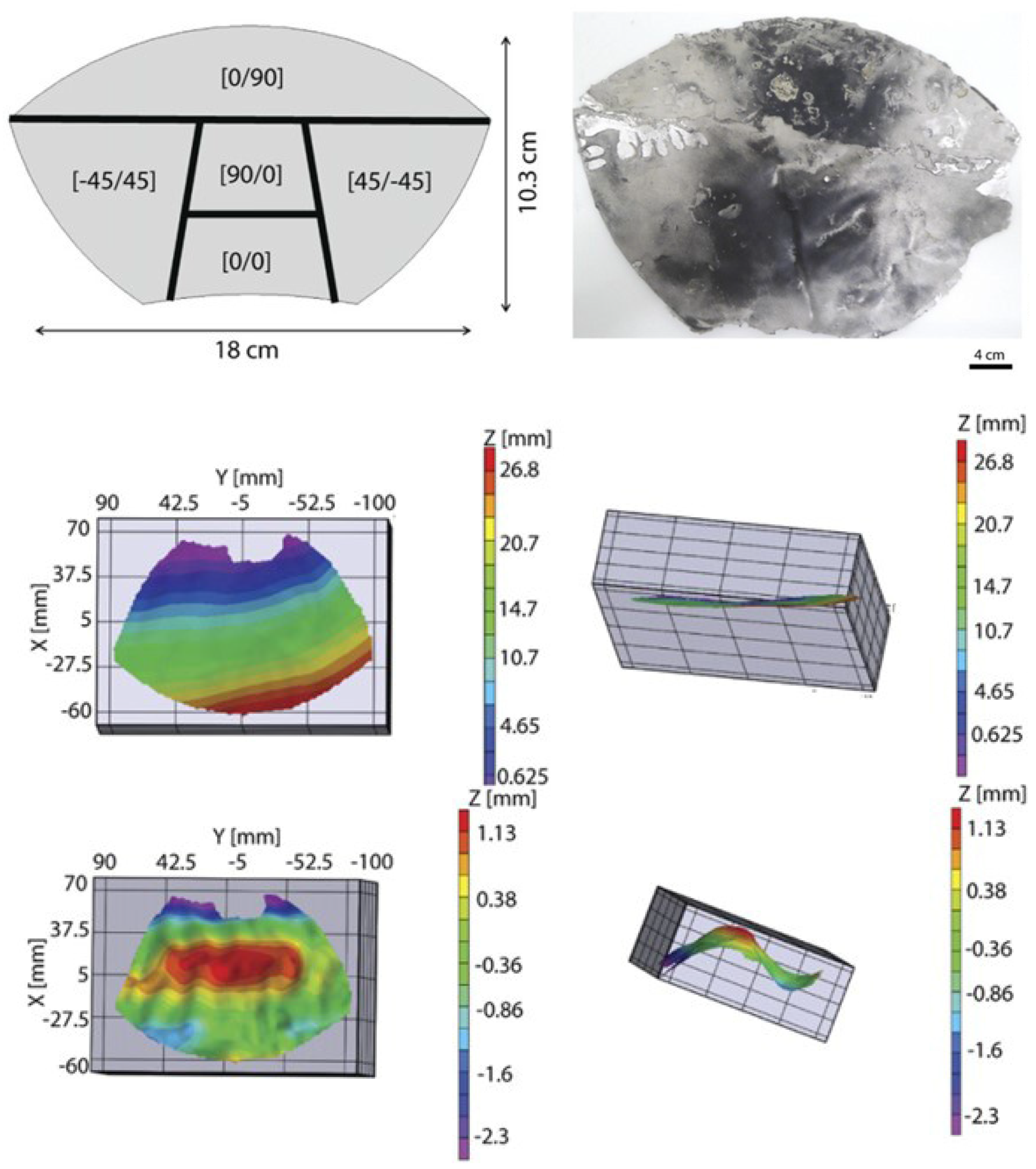
Biomimetic structures are inspired by elegant and complex architectures of natural creatures, drawing inspiration from biological structures to achieve specific functions or improve specific strength and modulus to reduce weight. In particular, the rapid closure of a Venus flytrap leaf is one of the fastest motions in plants, its biomechanics does not rely on muscle tissues to produce rapid shape-changing, which is significant for engineering applications. Composites are ubiquitous in nature and are used for biomimetic design due to their superior overall performance and programmability. Here, we focus on reviewing the most recent progress on biomimetic Venus flytrap structures based on smart composite technology. An overview of the biomechanics of Venus flytrap is first introduced, in order to reveal the underlying mechanisms. The smart composite technology was then discussed by covering mainly the principles and driving mechanics of various types of bistable composite structures, followed by research progress on the smart composite-based biomimetic flytrap structures, with a focus on the bionic strategies in terms of sensing, responding and actuation, as well as the rapid snap-trapping, aiming to enrich the diversities and reveal the fundamentals in order to further advance the multidisciplinary science and technological development into composite bionics.
Keywords: biomimetic; Venus flytrap; smart; composite; mechanics biomimetic; Venus flytrap; smart; composite; mechanics