Article

Influence of Nano-SiO2 Content on Cement Paste and the Interfacial Transition Zone

1
School of Transportation and Civil Engineering, Nantong University, Nantong 226019, China
2
Faculty of Civil Engineering and Mechanics, Jiangsu University, Zhenjiang 212013, China
3
Nantong Key Laboratory of Intelligent Civil Engineering and Digital Construction, Nantong University, Nantong 226019, China
4
School of Urban Construction, Changzhou University, Changzhou 213164, China
*
Author to whom correspondence should be addressed.
Materials 2023, 16(18), 6310; https://doi.org/10.3390/ma16186310
Submission received: 26 August 2023 / Revised: 9 September 2023 / Accepted: 18 September 2023 / Published: 20 September 2023

Abstract

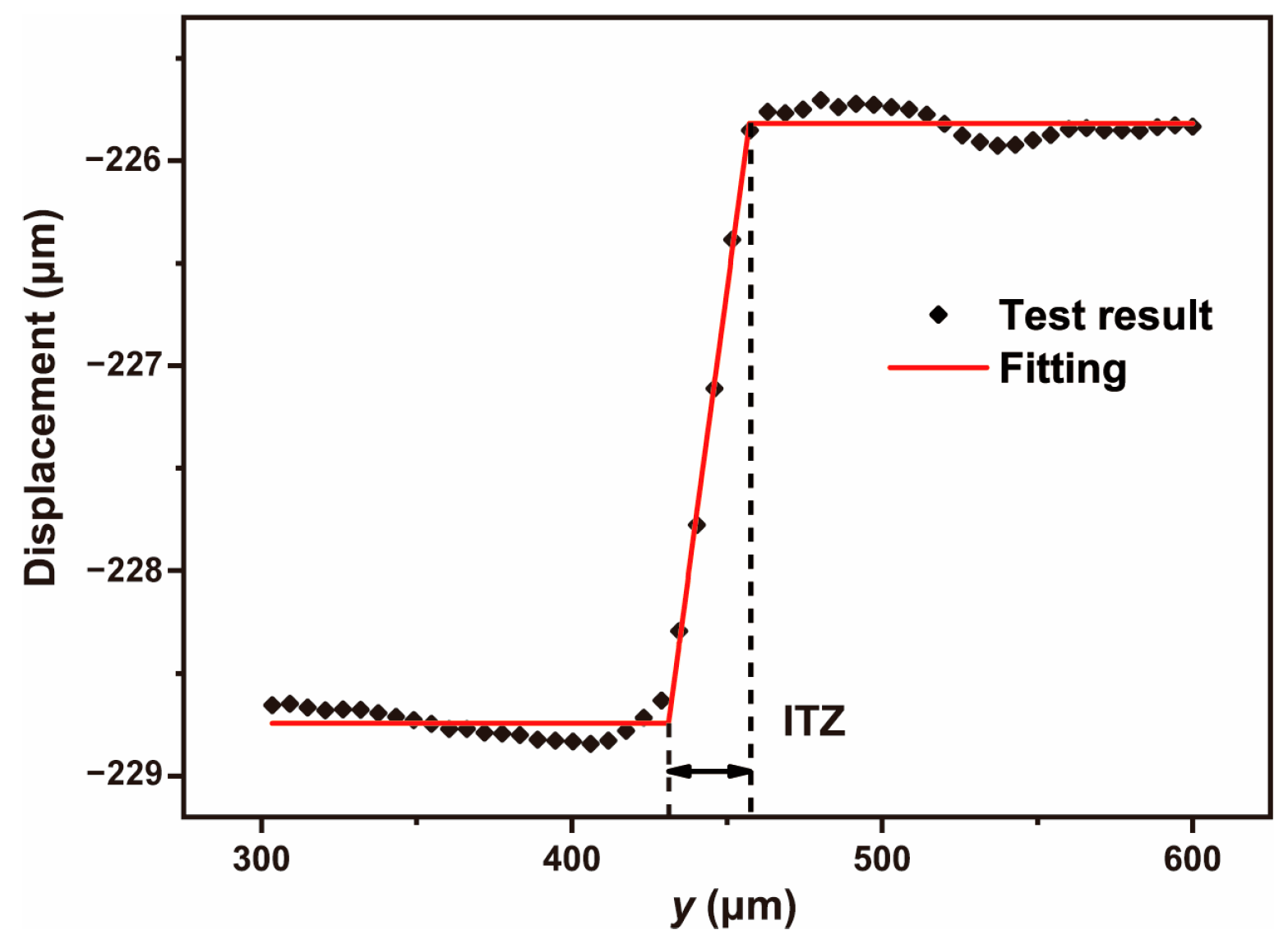
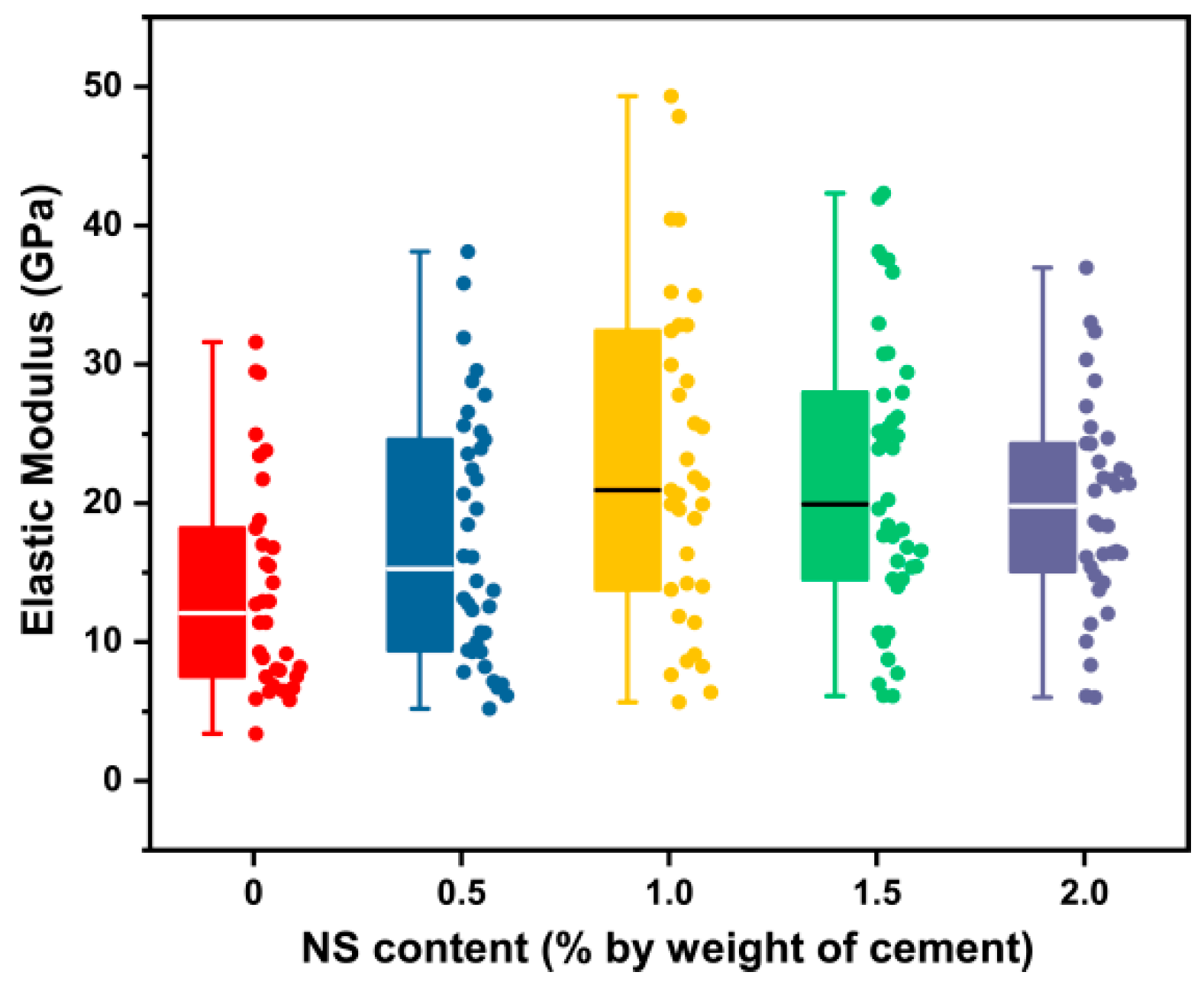
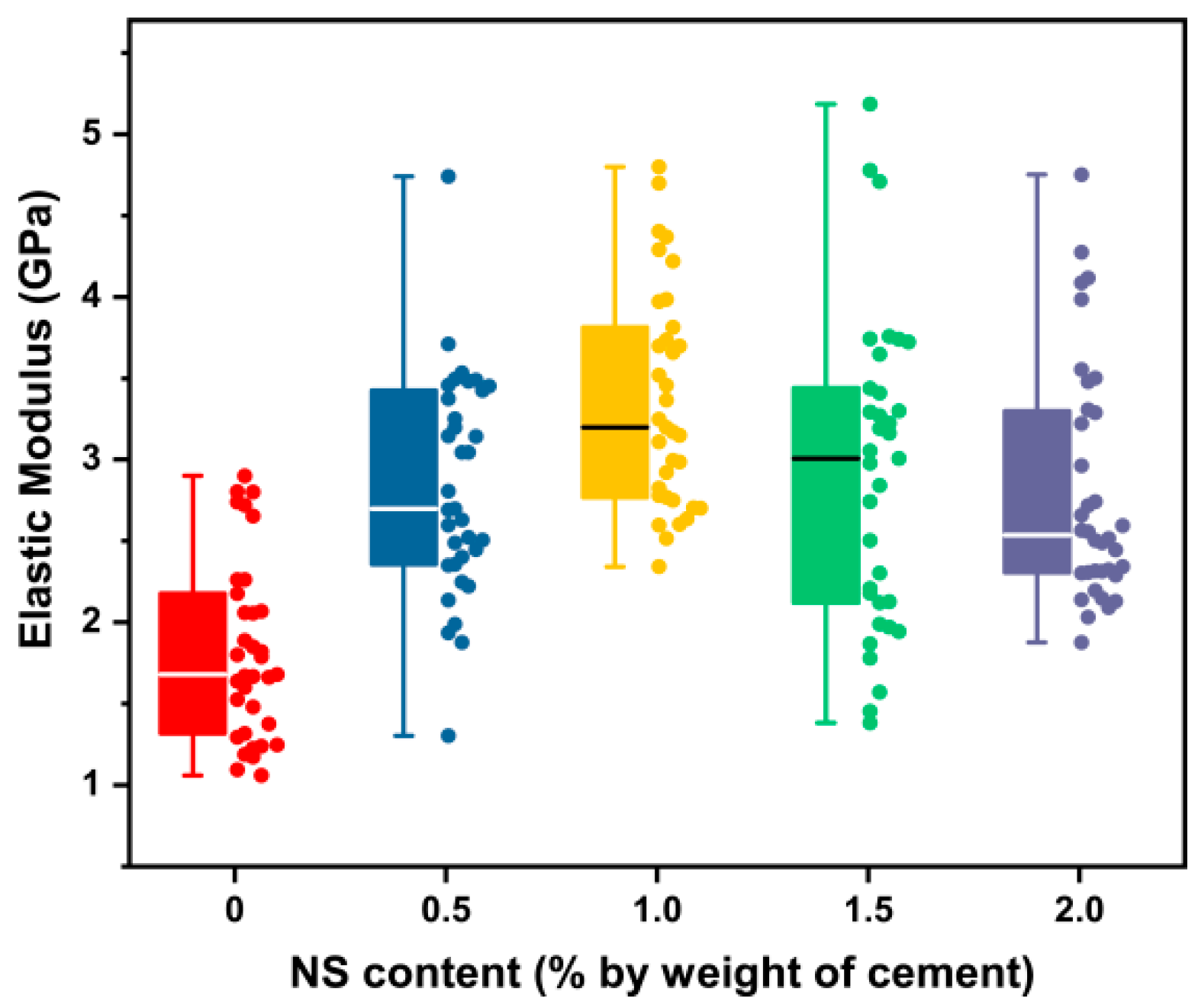
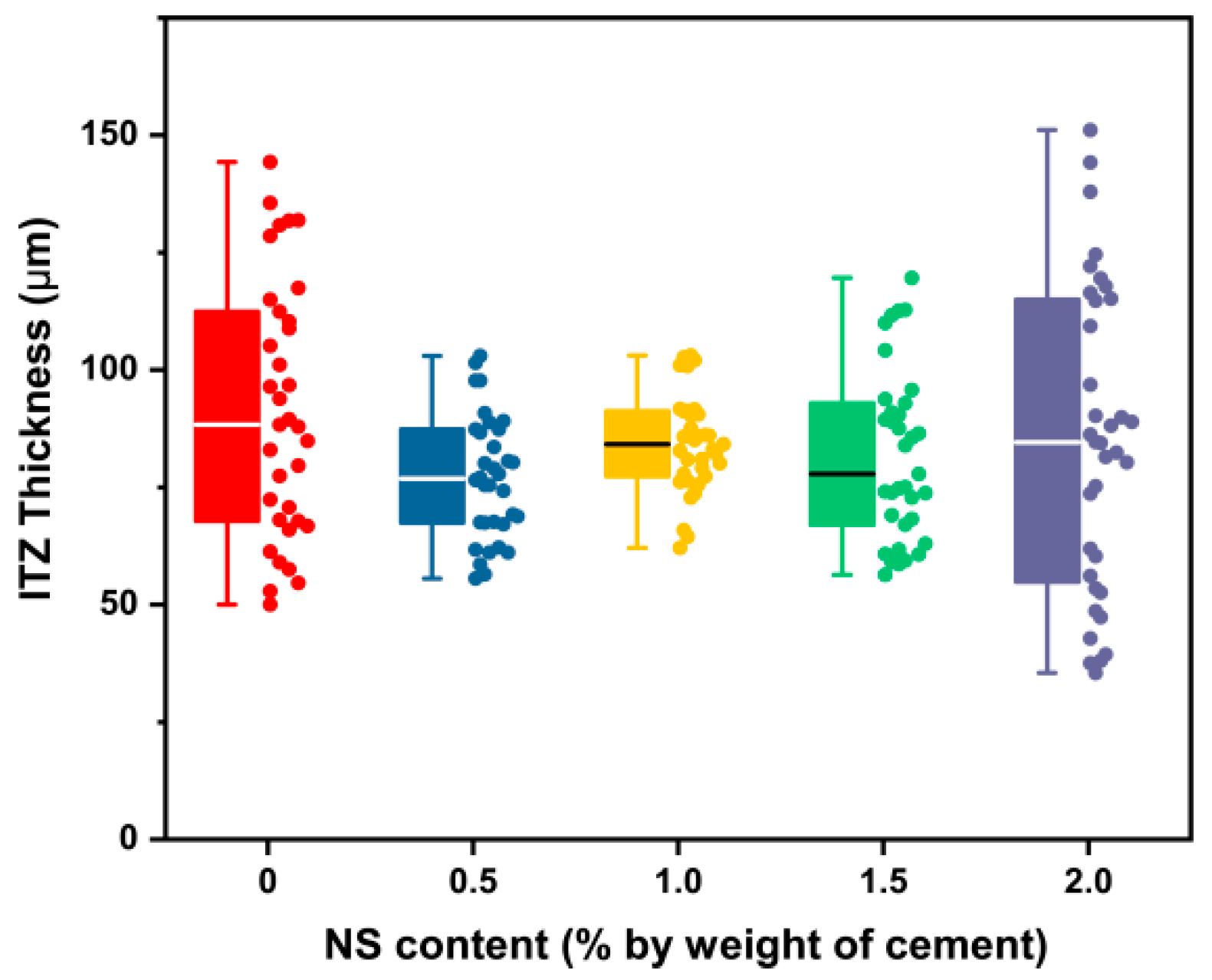
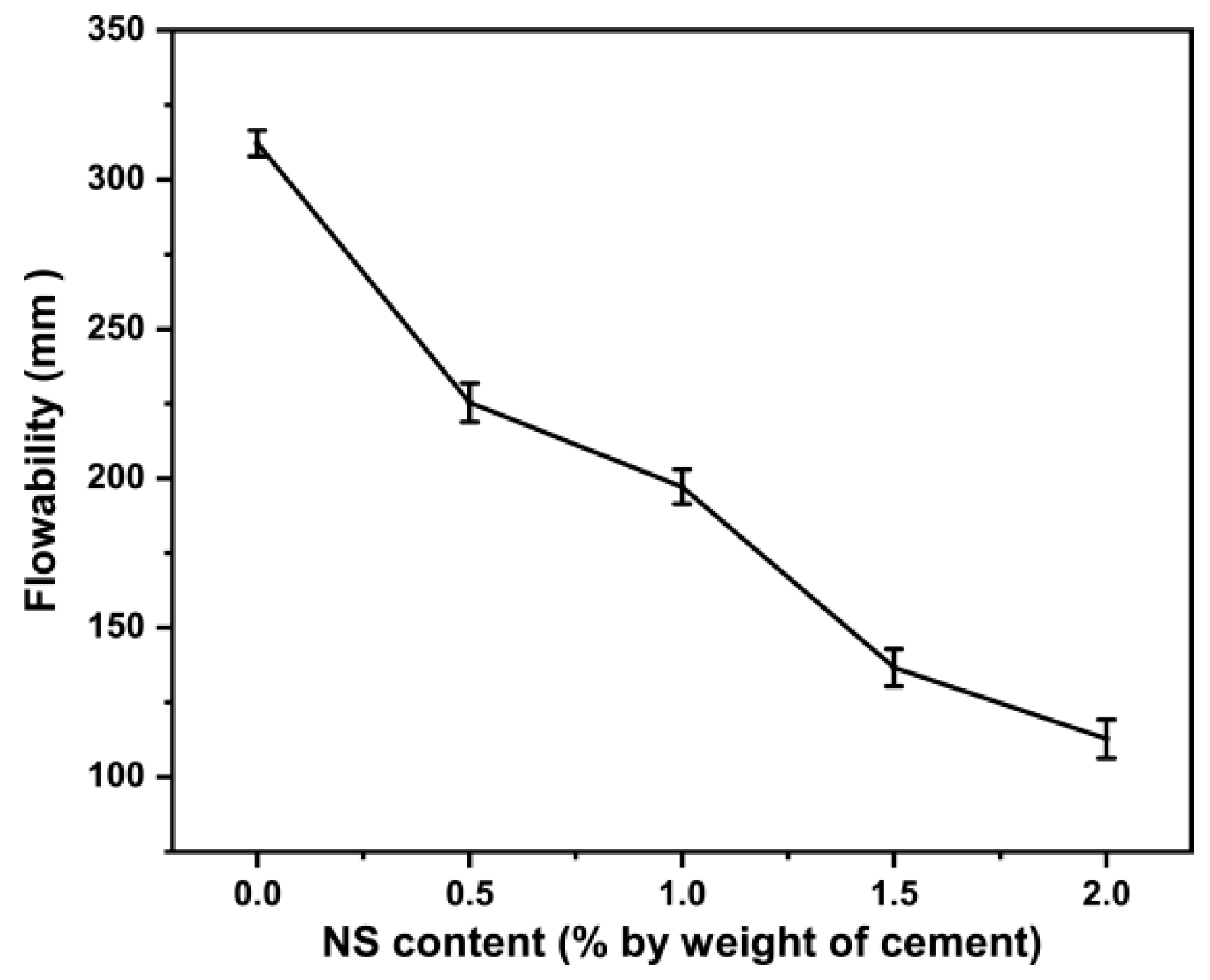
Nano-SiO2 (NS) is widely used in cement-based materials due to its excellent physical properties. To study the influence of NS content on a cement paste and the interfacial transition zone (ITZ), cement paste samples containing nano content ranging from 0 to 2% (by weight of cement) were prepared, and digital image correlation (DIC) technology was applied to test the mechanical properties. Finally, the optimal NS content was obtained with statistical analysis. The mini-slump cone test showed that, with the help of superplasticizer and ultrasonic treatment, the flowability decreased continuously, as the NS content increased. The DIC experimental results showed that NS could effectively improve the mechanical properties of the cement paste and the ITZ. Specifically, at the content level of 1%, the elastic modulus of cement paste and ITZ was 20.95 GPa and 3.20 GPa, respectively. When compared to that without nanomaterials, the increased amplitude was 73.50% and 90.50%, respectively. However, with the further increase in NS content, the mechanical properties decreased, which was mainly caused by the agglomeration of nanomaterials. Additionally, the NS content did not exhibit a significant effect on the thickness of the ITZ, and its value was maintained at 76.91–91.38 μm. SEM confirmed that NS would enhance the microstructure of both cement paste and ITZ.
Keywords: nano-SiO2 content; interfacial transition zone; digital image correlation; elastic modulus; ITZ thickness nano-SiO2 content; interfacial transition zone; digital image correlation; elastic modulus; ITZ thickness