Article

Line Shape Analysis and Dynamic Response of Ballastless Track during Jacking Rectification Fixing


1
School of Civil Engineering, Central South University, Changsha 410075, China
2
National Engineering Research Center of High-speed Railway Construction Technology, Central South University, Changsha 410075, China
3
School of Civil Engineering, Guangzhou University, Guangzhou 510006, China
*
Author to whom correspondence should be addressed.
Materials 2022, 15(22), 8265; https://doi.org/10.3390/ma15228265
Submission received: 28 August 2022 / Revised: 11 November 2022 / Accepted: 18 November 2022 / Published: 21 November 2022

Abstract

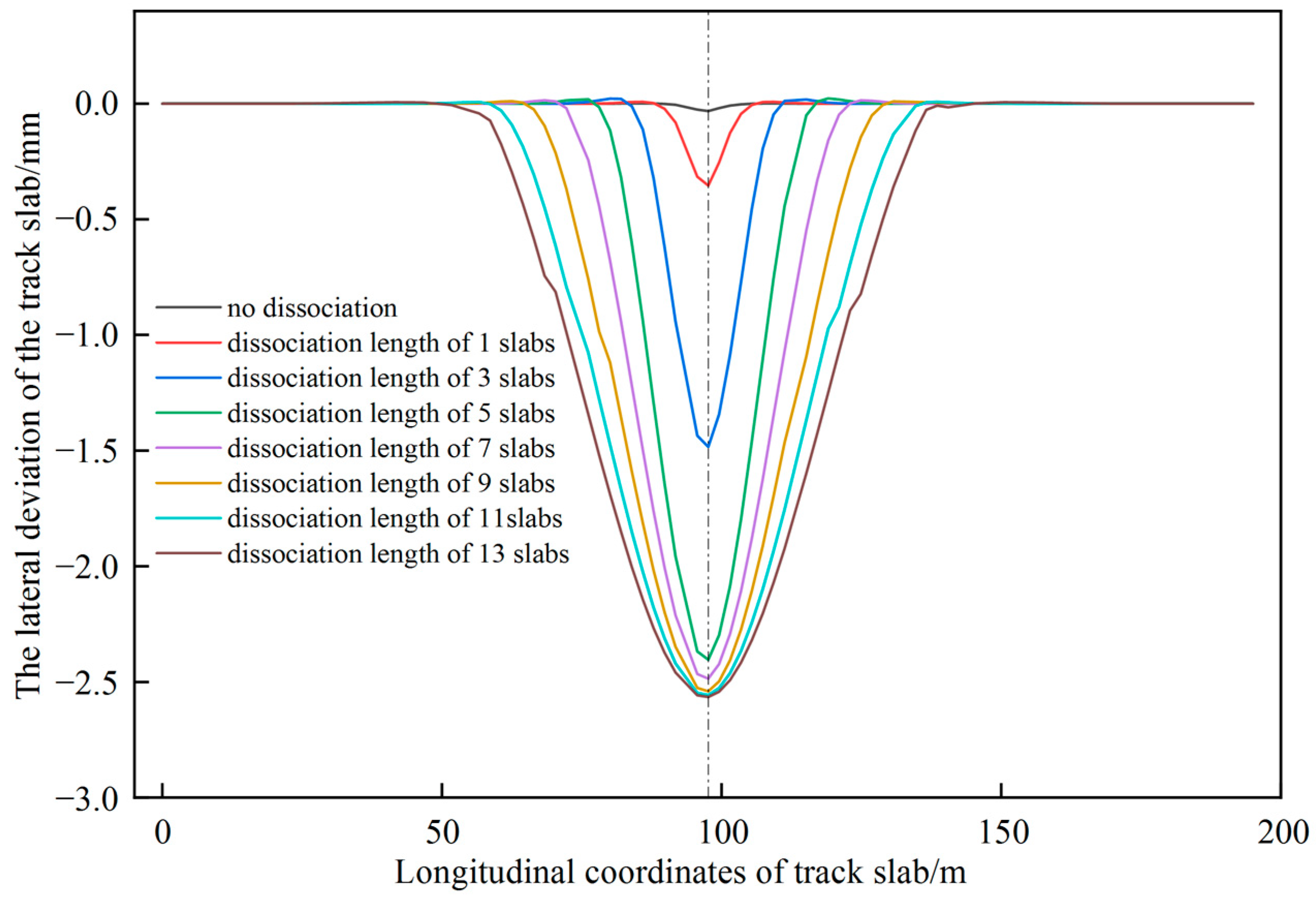
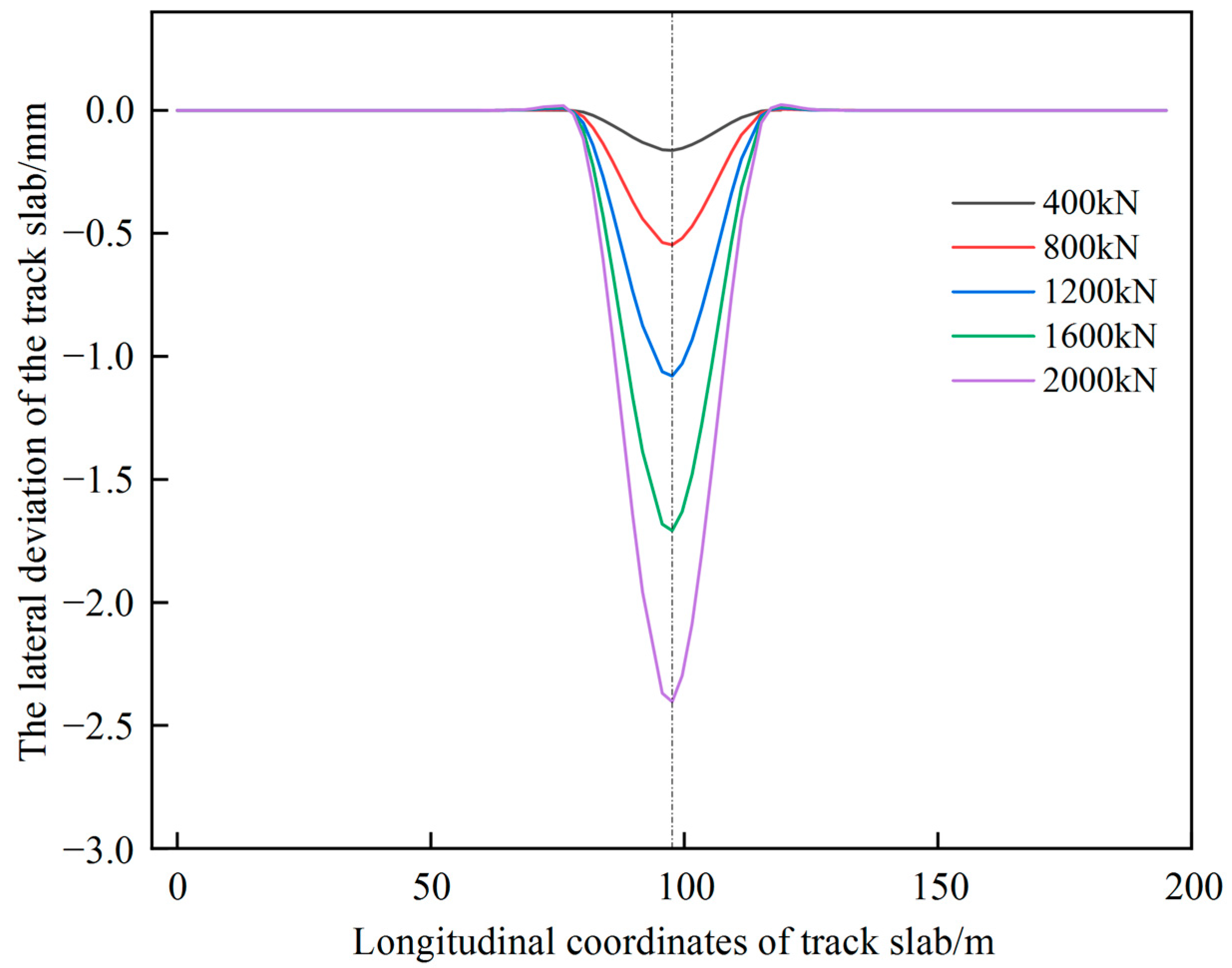
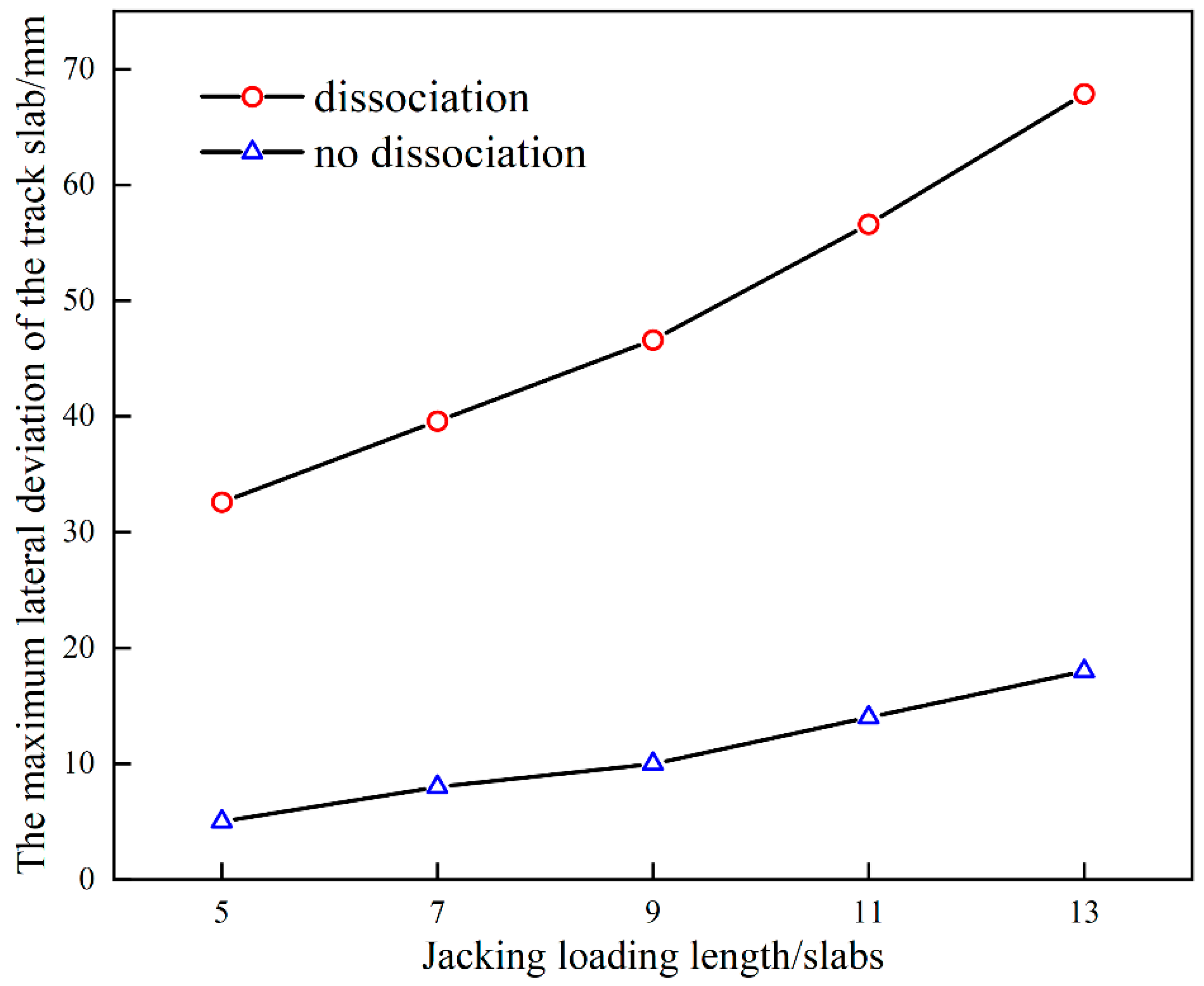
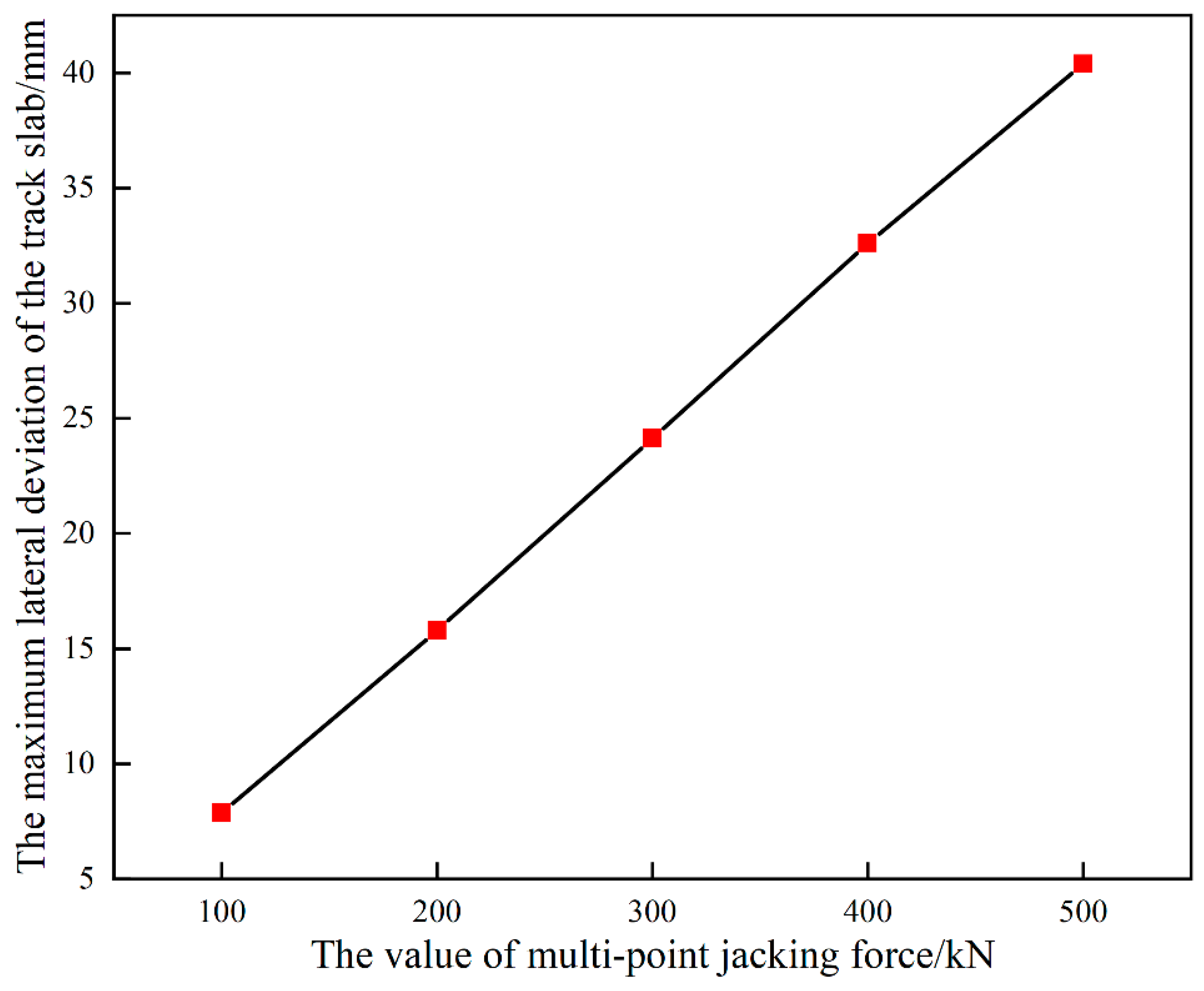
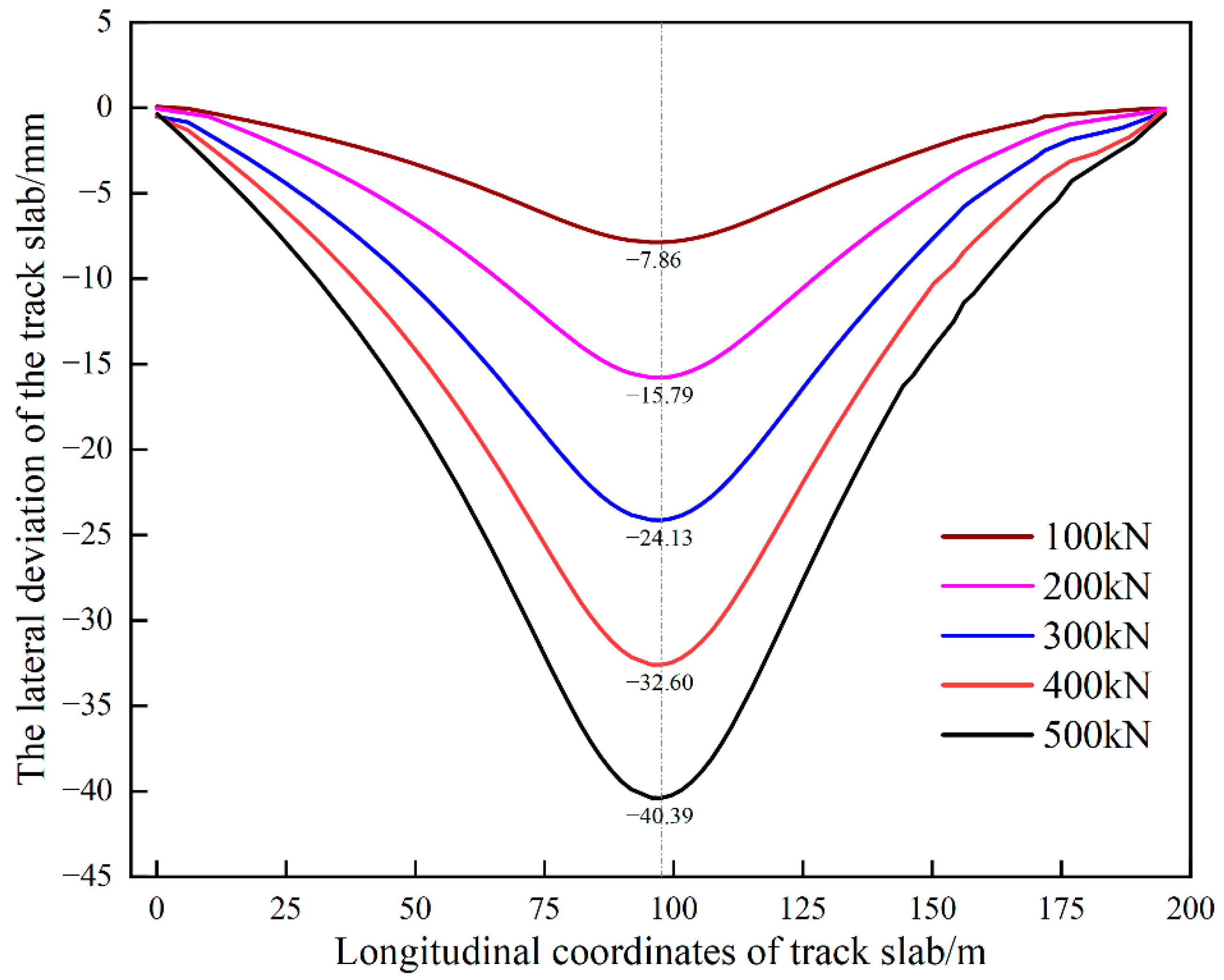
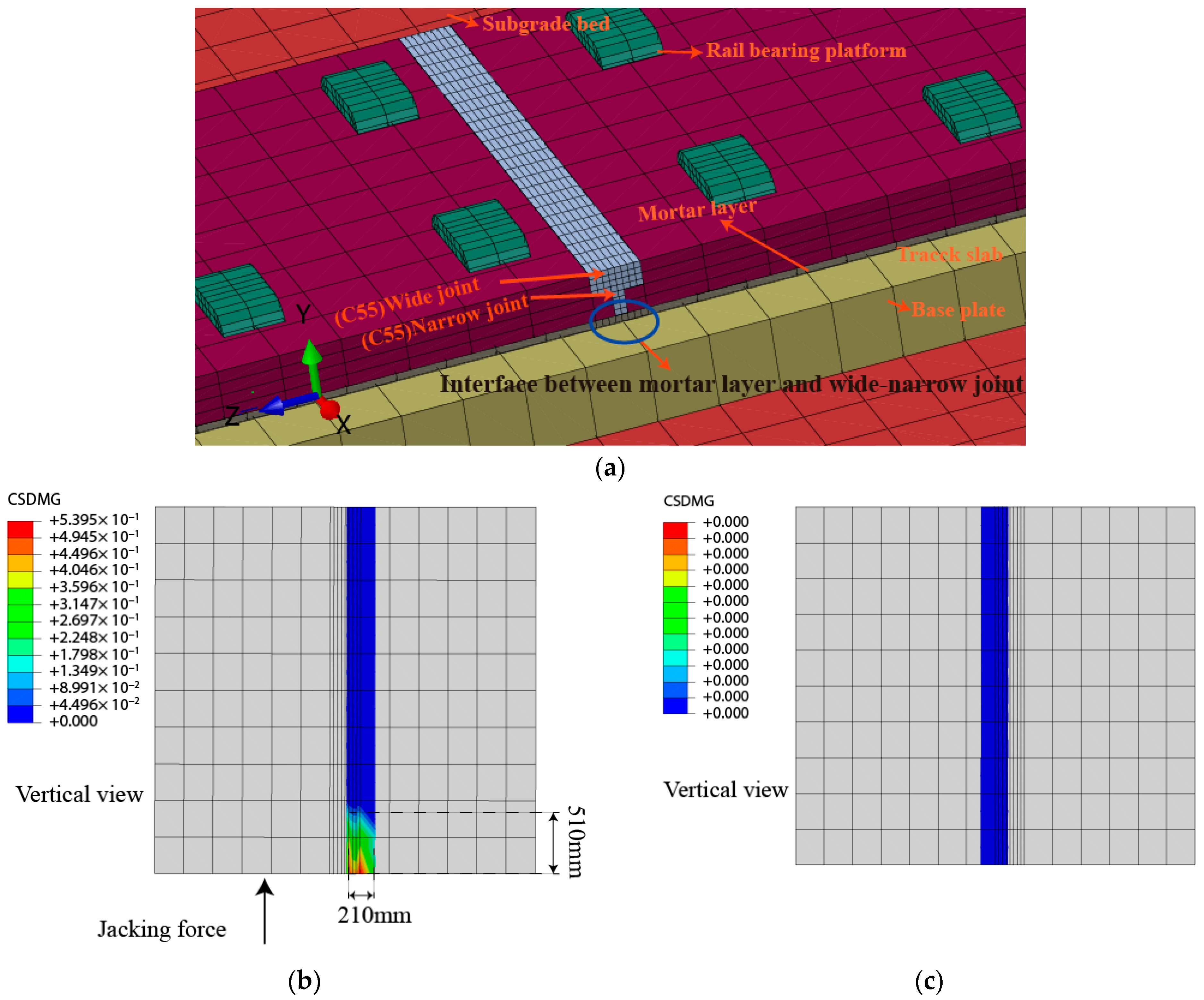
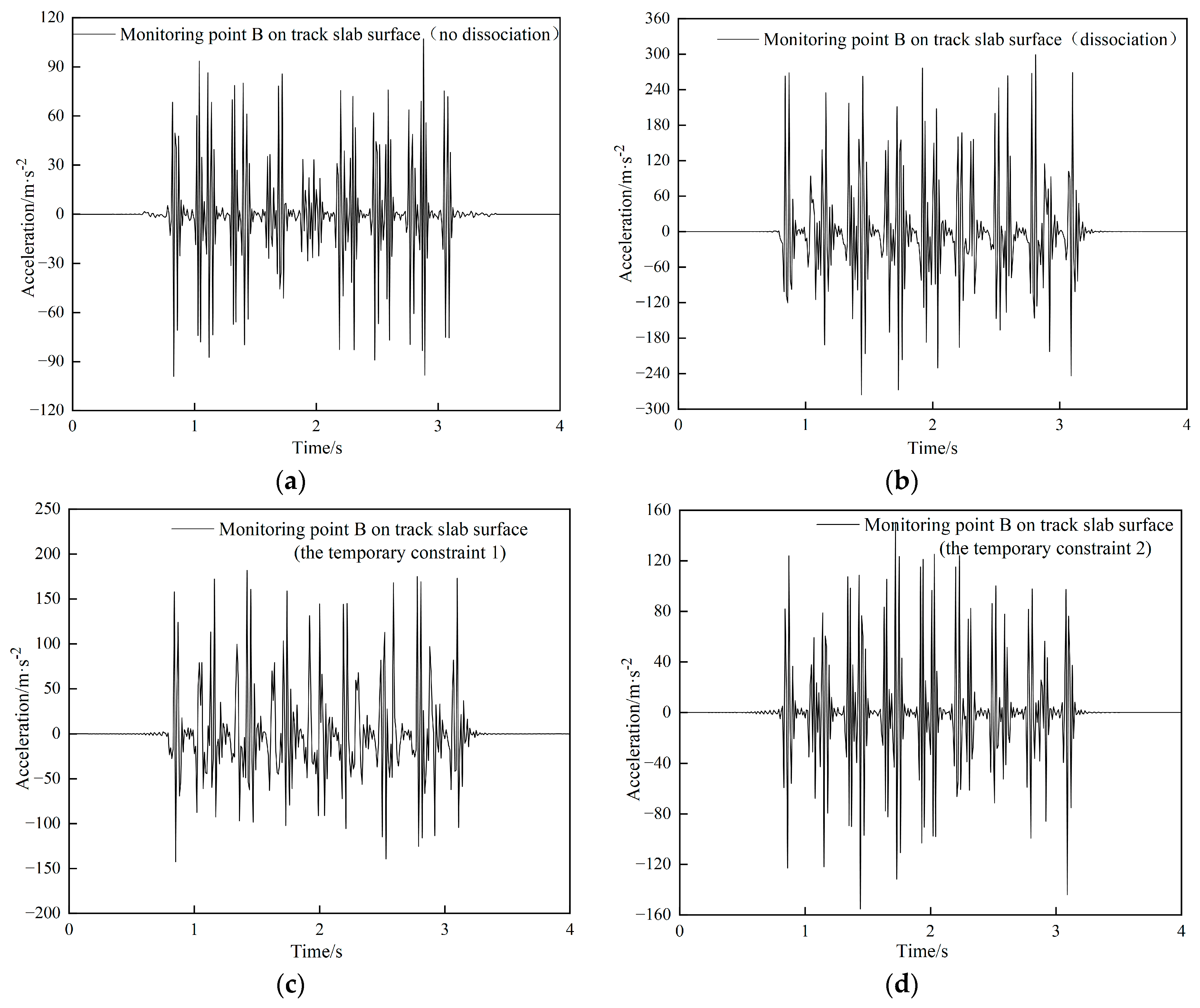
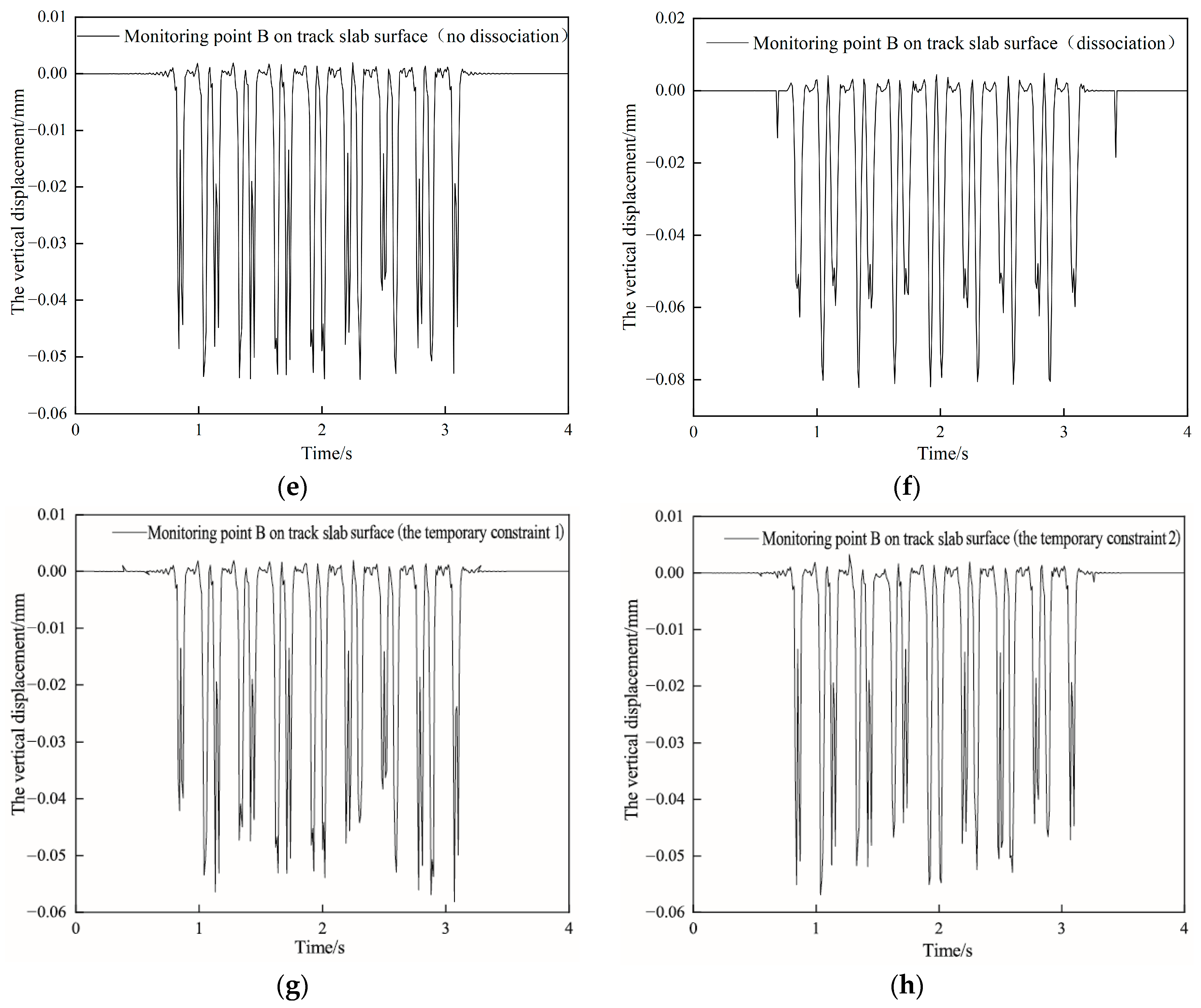
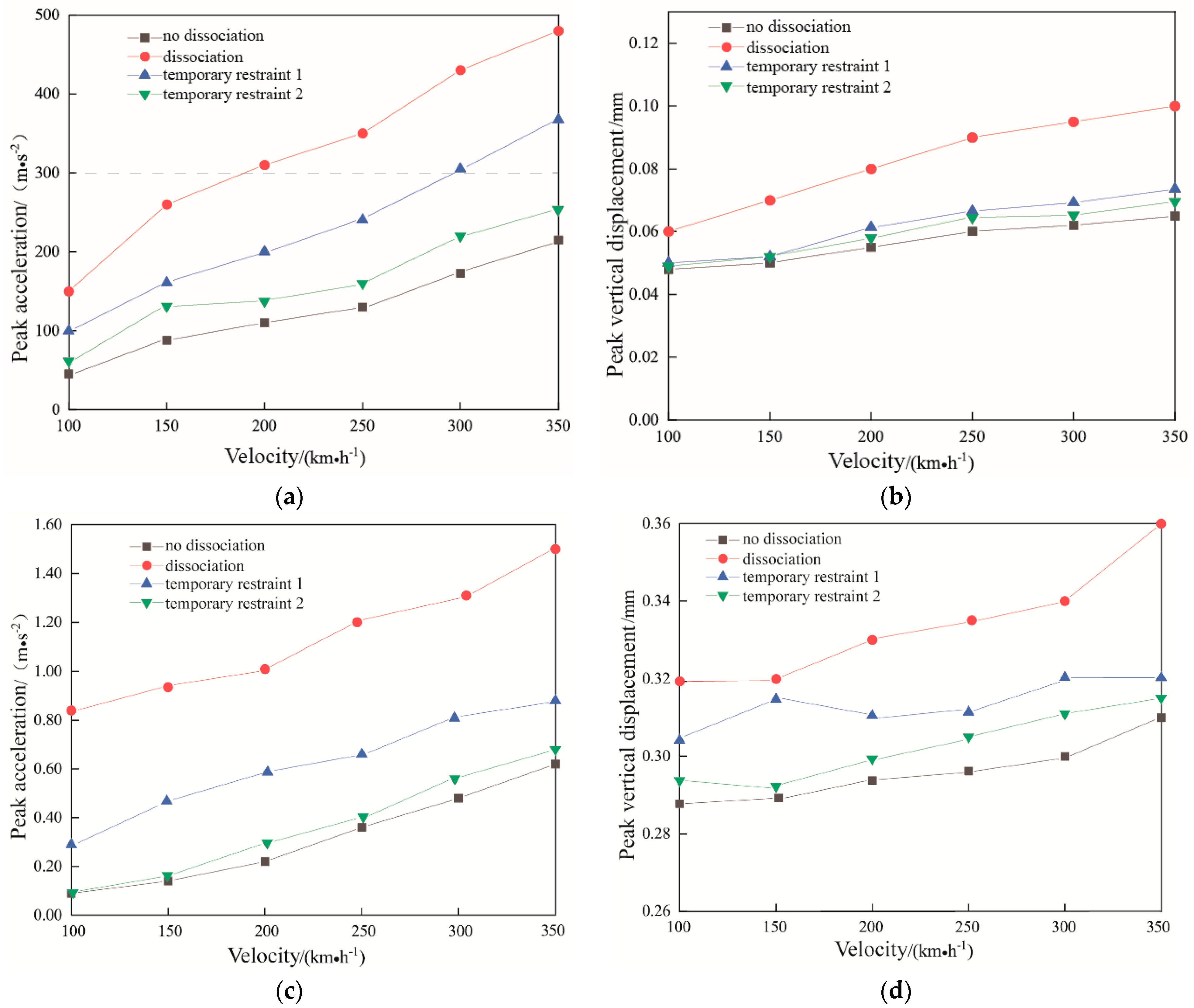
In order to study the railway line deformation and dynamic response of ballastless track structure under train load during jacking rectification fixing, a three-dimensional numerical model of the CRTS II slab ballastless track on subgrade is established by using the finite element method. The line deformation rule and local damage rule of ballastless track under jacking force are analyzed. The dynamic response laws of track structure and subgrade bed are compared considering four different connection modes between the base plate and subgrade bed under different train speeds in the process of jacking rectification fixing. The results show that jacking force and dissociation length have a small influence on the deviation value and the critical jacking force should be smaller than 375 kN in single point jacking. Under the condition of multi-point jacking, when the jacking loading length equals to 5 slabs, the critical jacking force should be smaller than 275 kN and the maximum lateral deviation value is about 22.11 mm. It is necessary to restrict the speed of passing trains to no more than 150 km/h during the jacking rectification fixing for dissociation condition without temporary restraint. When temporary restraint is applied, the speed of the train can be increased appropriately according to the actual situation. The above study results could be used as a theoretical reference for the ballastless track deviation correction.
Keywords: high-speed railway; CRTS II slab ballastless track; jacking rectification fixing; dynamic response high-speed railway; CRTS II slab ballastless track; jacking rectification fixing; dynamic response