Article

Finite Element Modelling of Corrosion-Damaged RC Beams Strengthened Using the UHPC Layers

by
Mohammed A. Al-Huri
1,
Mohammed A. Al-Osta
1,2 and
Shamsad Ahmad
1,2,*
1
Department of Civil & Environmental Engineering, King Fahd University of Petroleum and Minerals, Dhahran 31261, Saudi Arabia
2
Interdisciplinary Research Center for Construction and Building Materials, King Fahd University of Petroleum and Minerals, Dhahran 31261, Saudi Arabia
*
Author to whom correspondence should be addressed.
Materials 2022, 15(21), 7606; https://doi.org/10.3390/ma15217606
Submission received: 12 September 2022 / Revised: 15 October 2022 / Accepted: 26 October 2022 / Published: 29 October 2022

Abstract

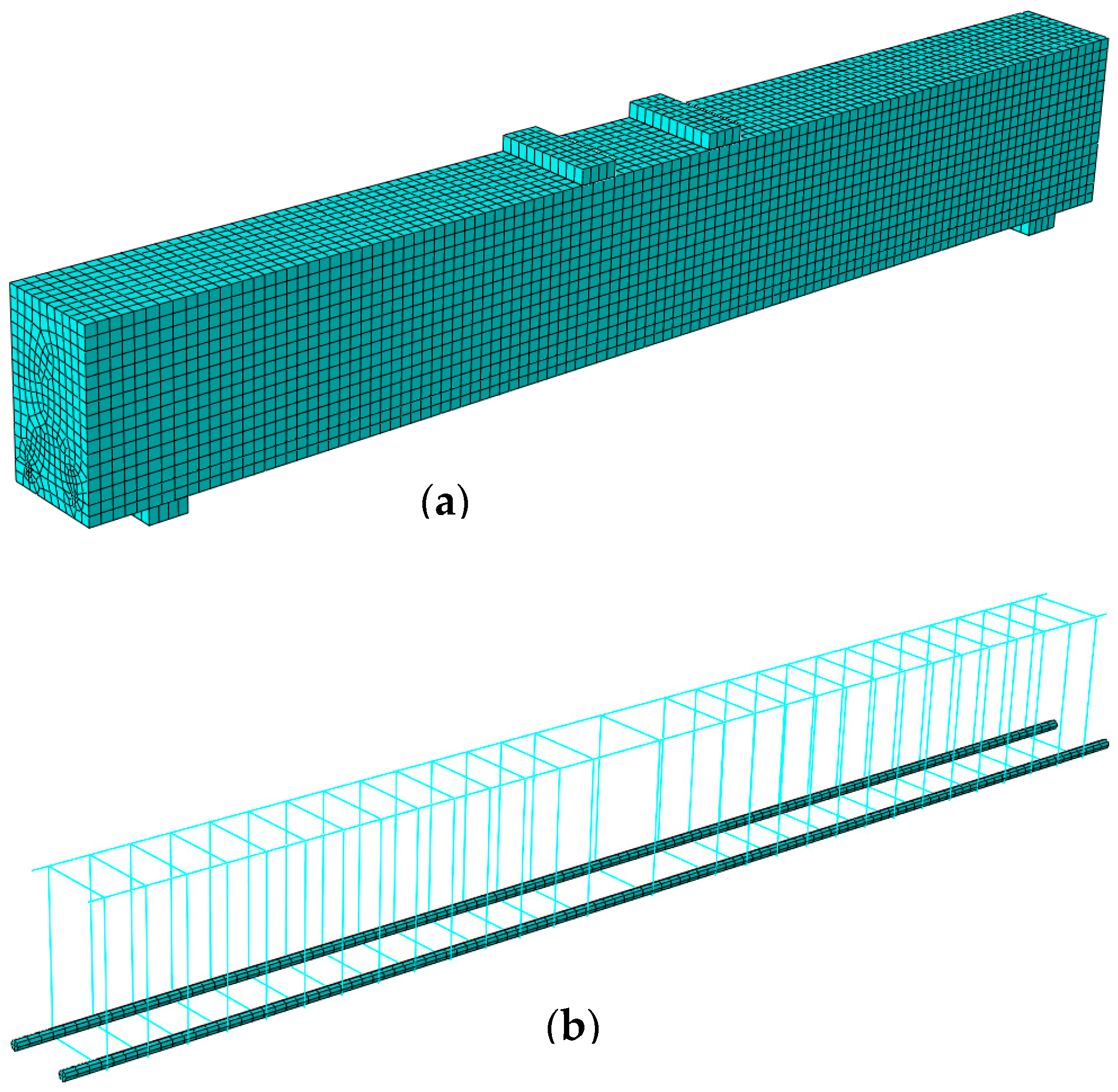
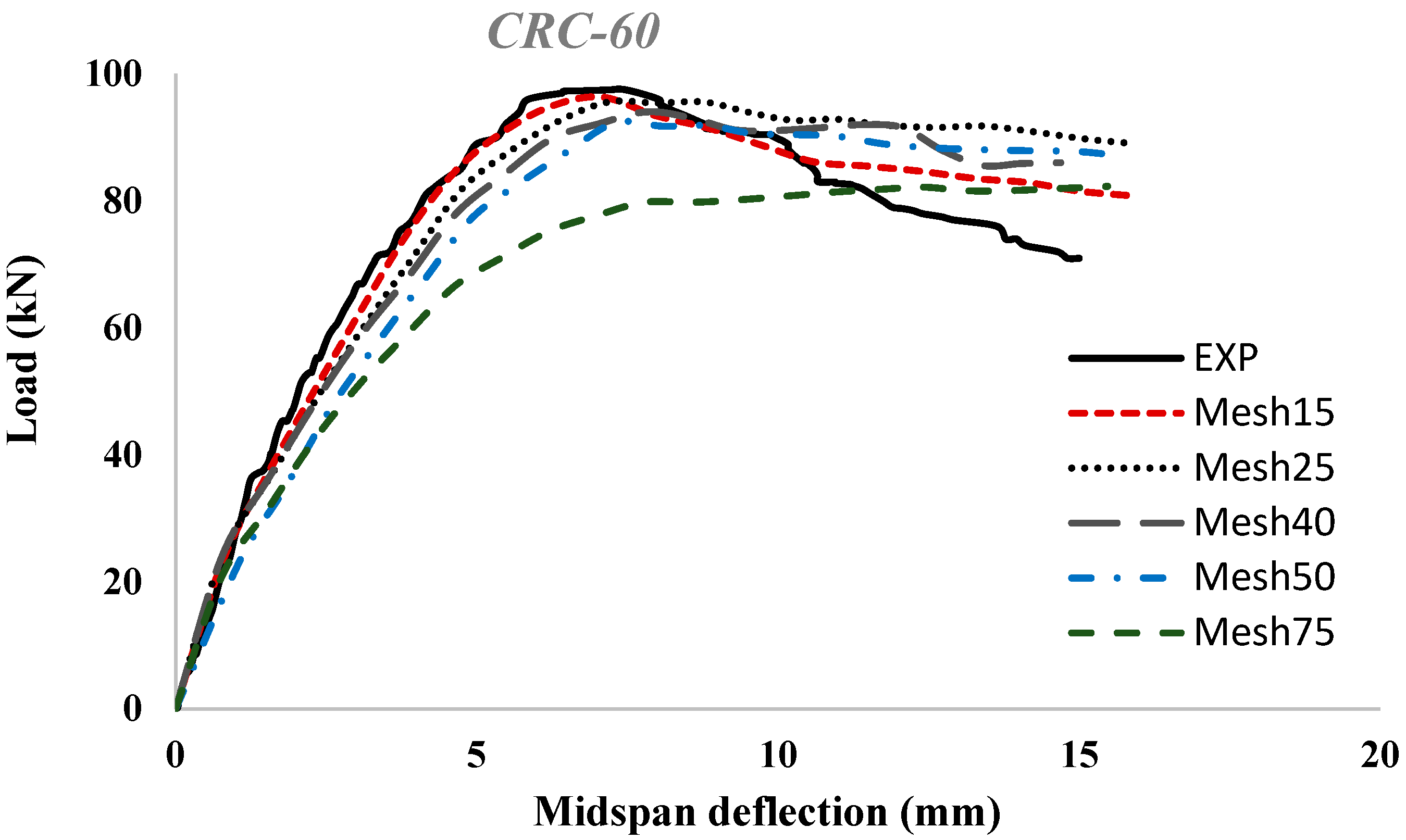
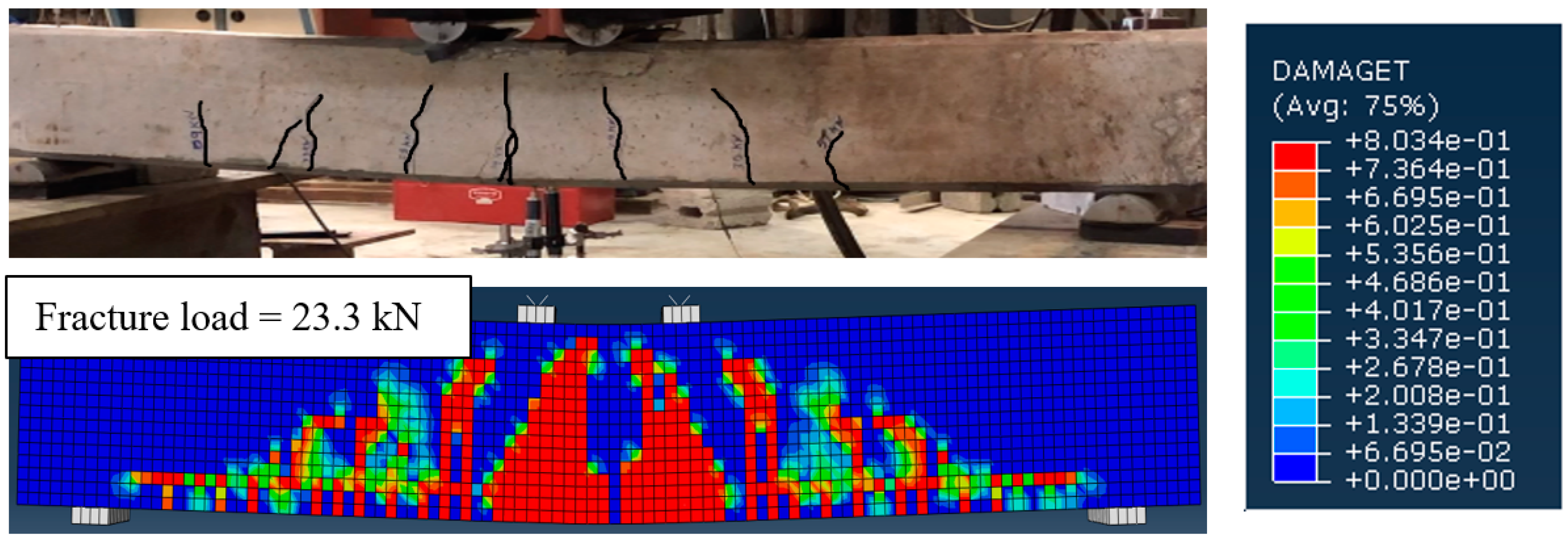
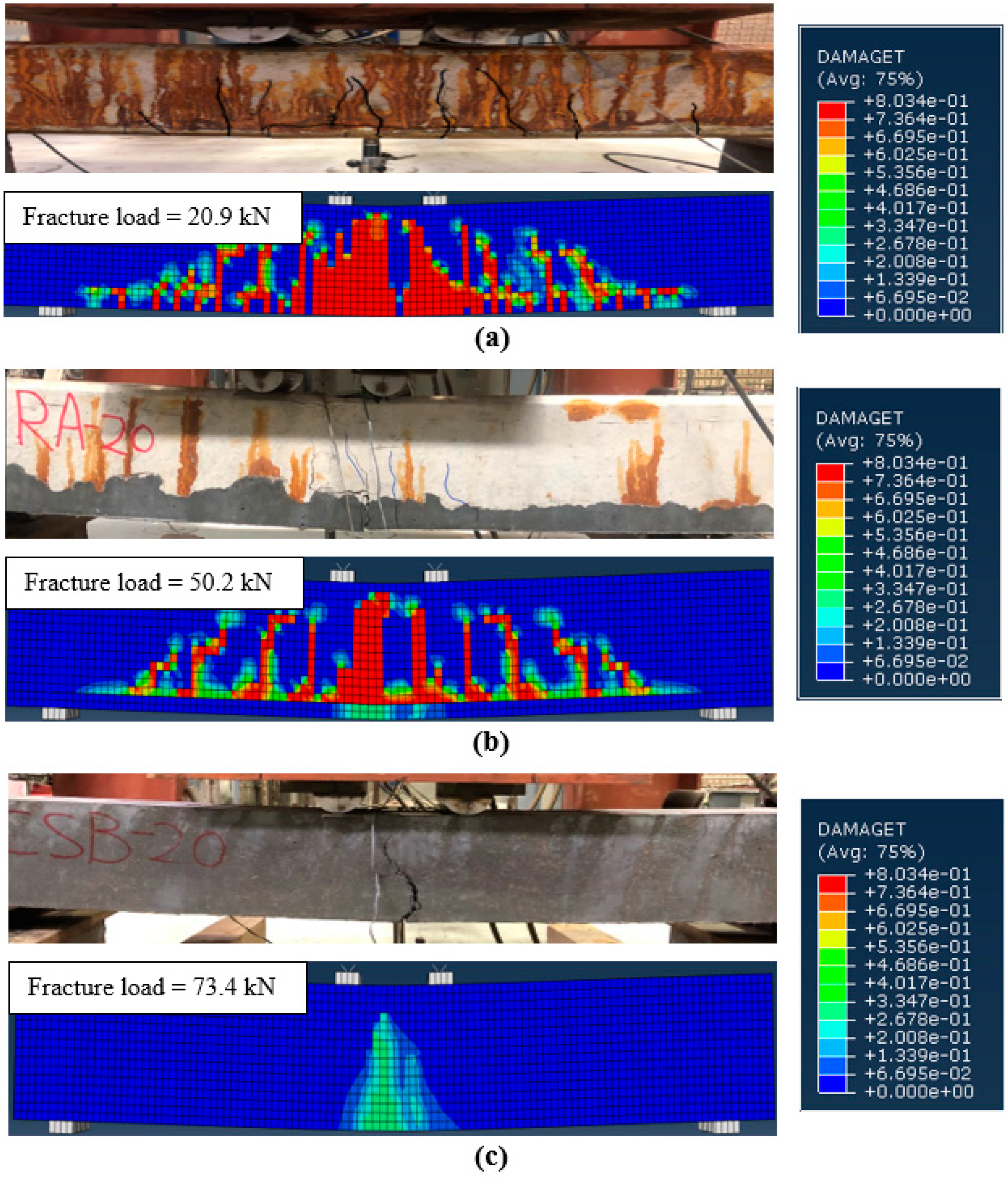
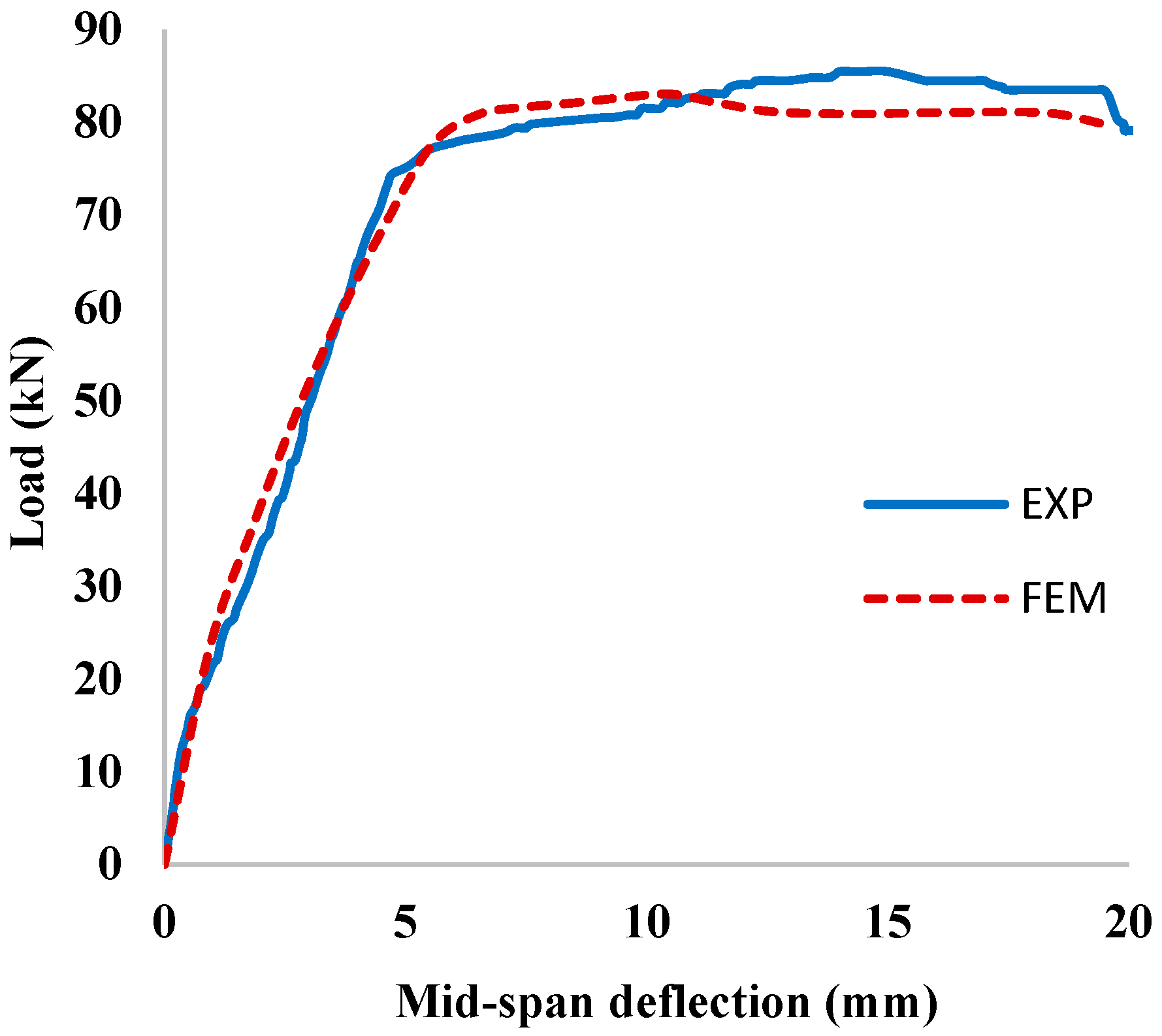
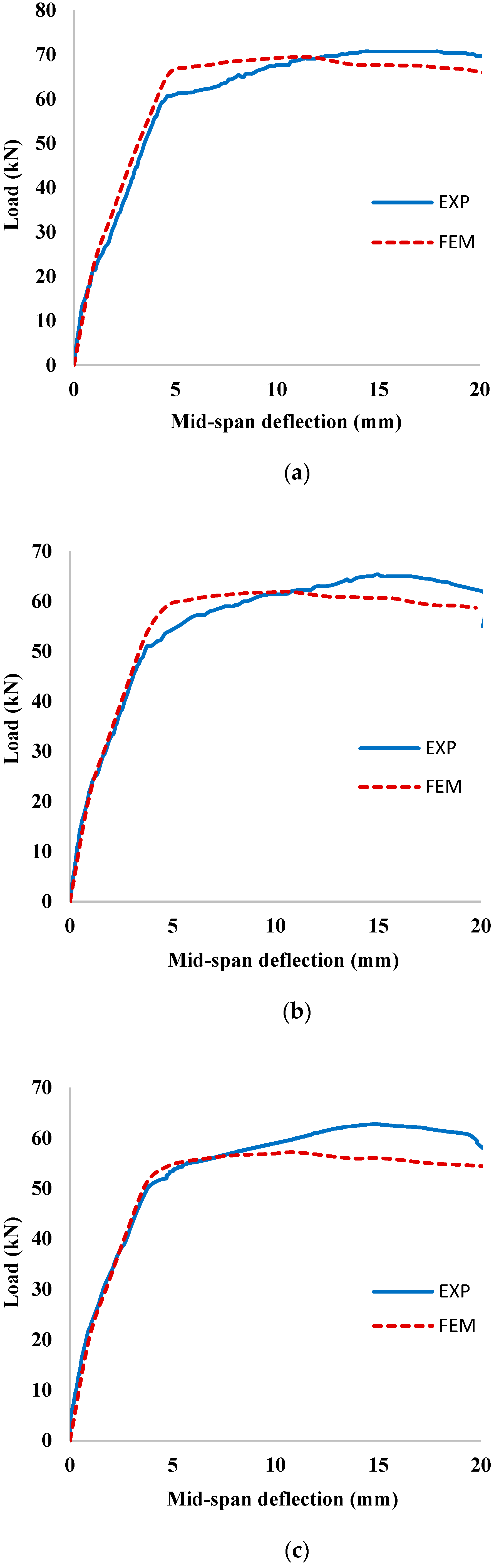
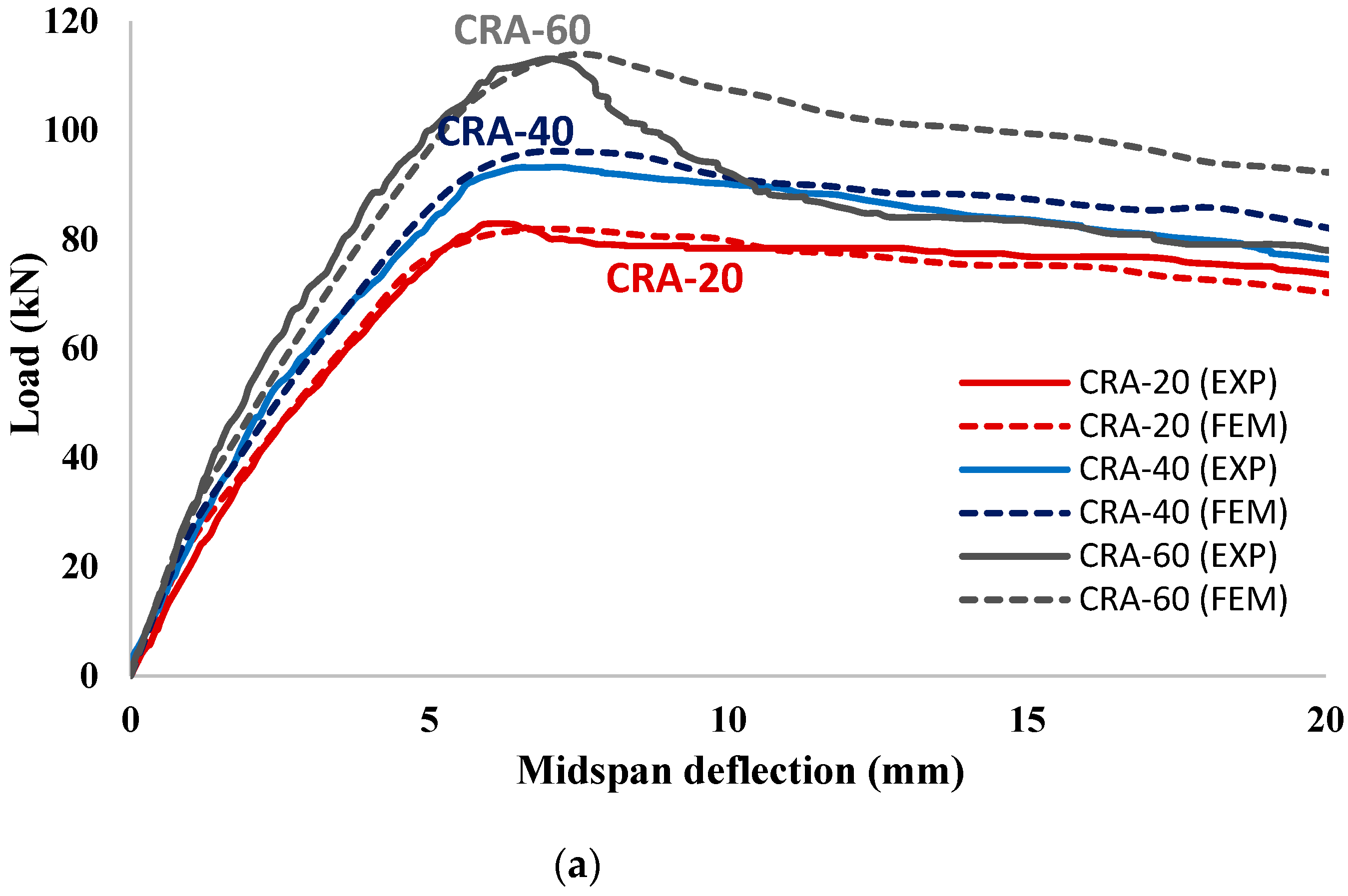
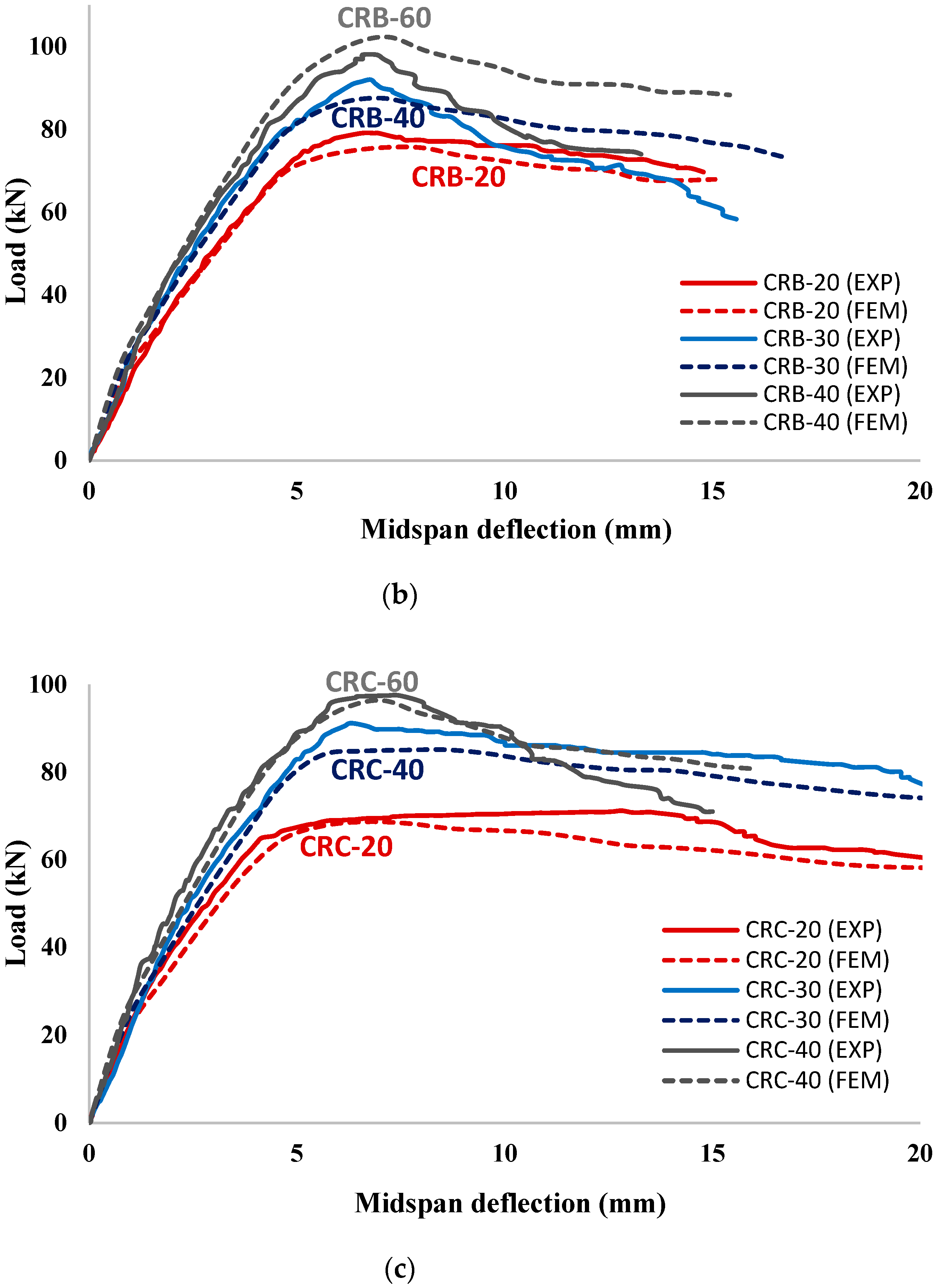
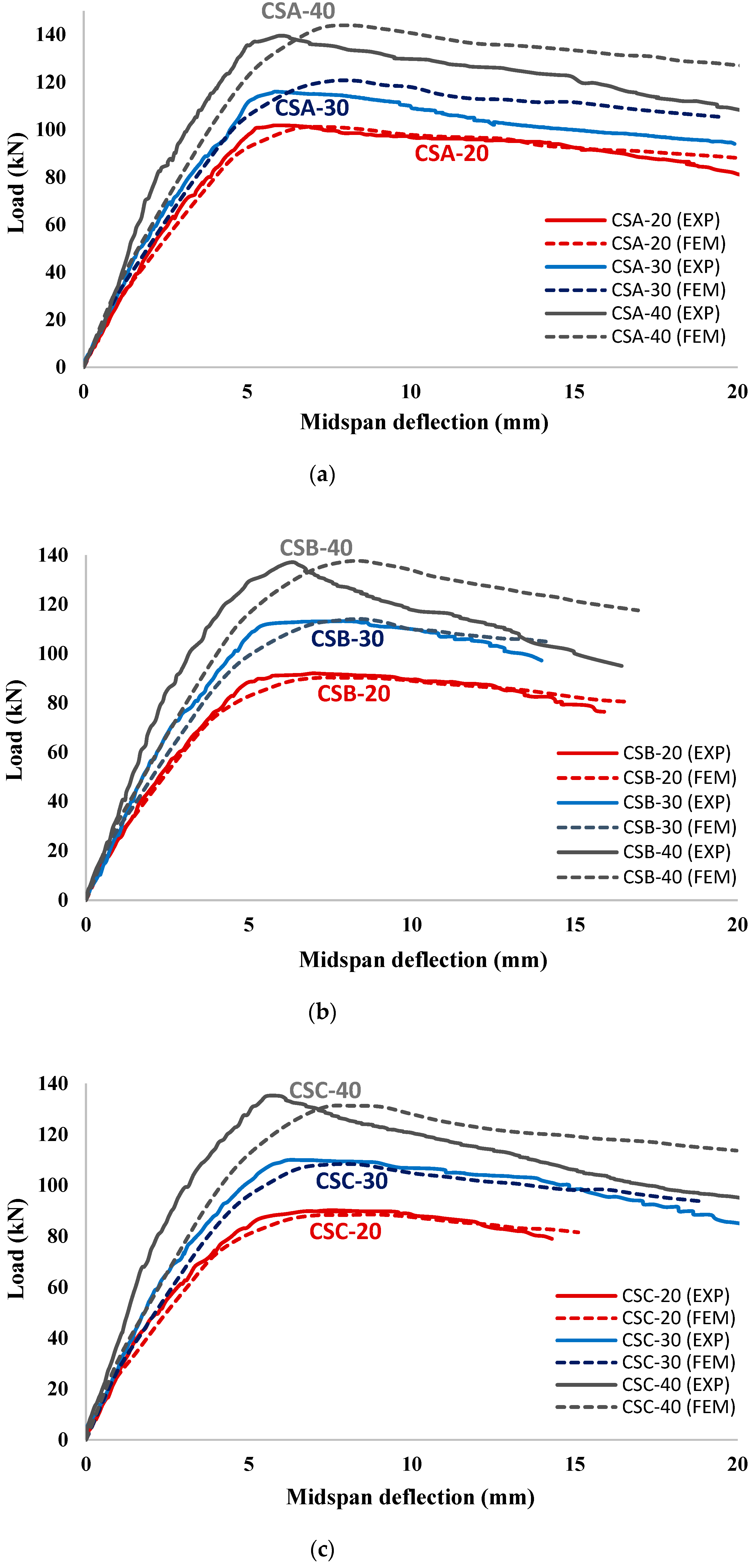
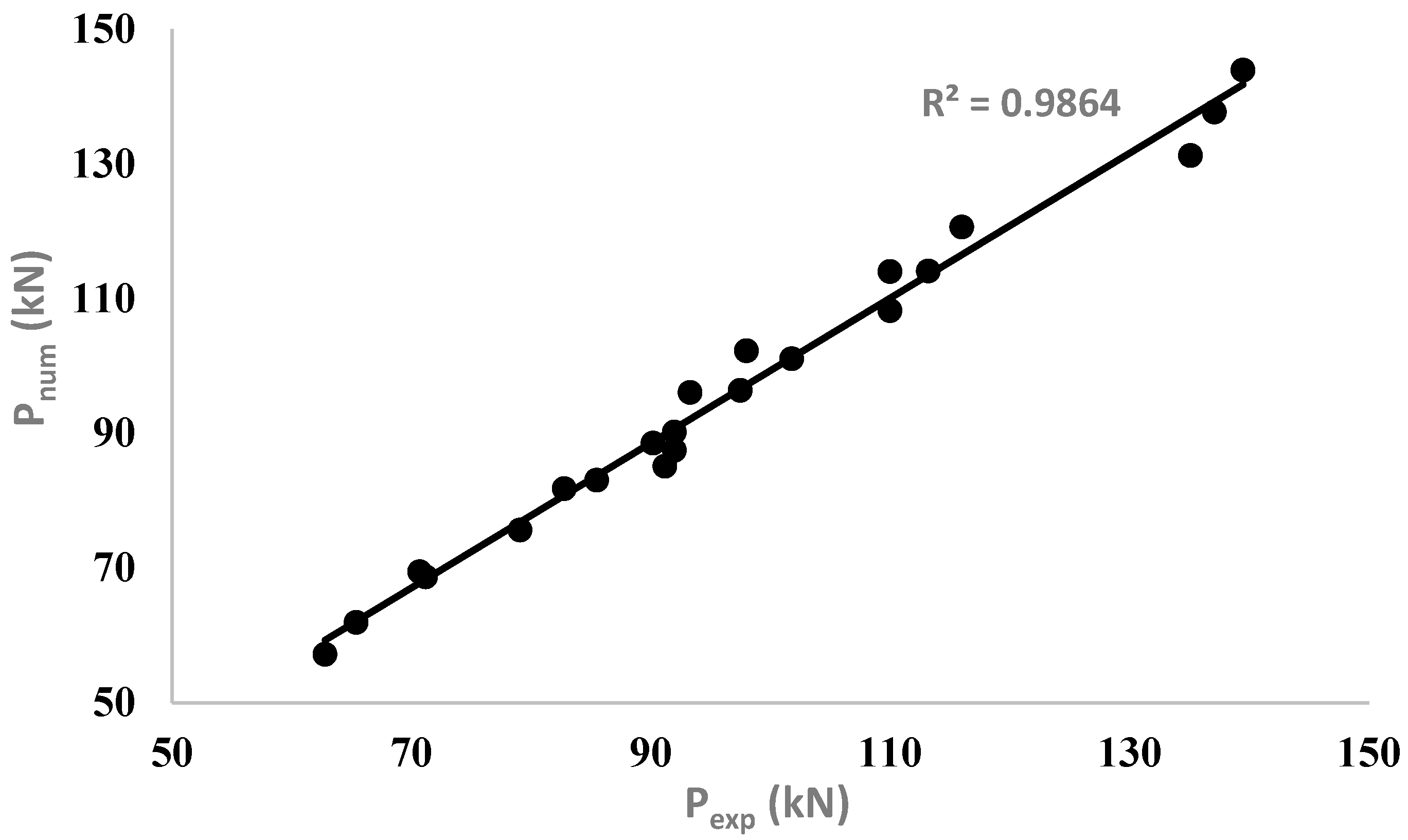
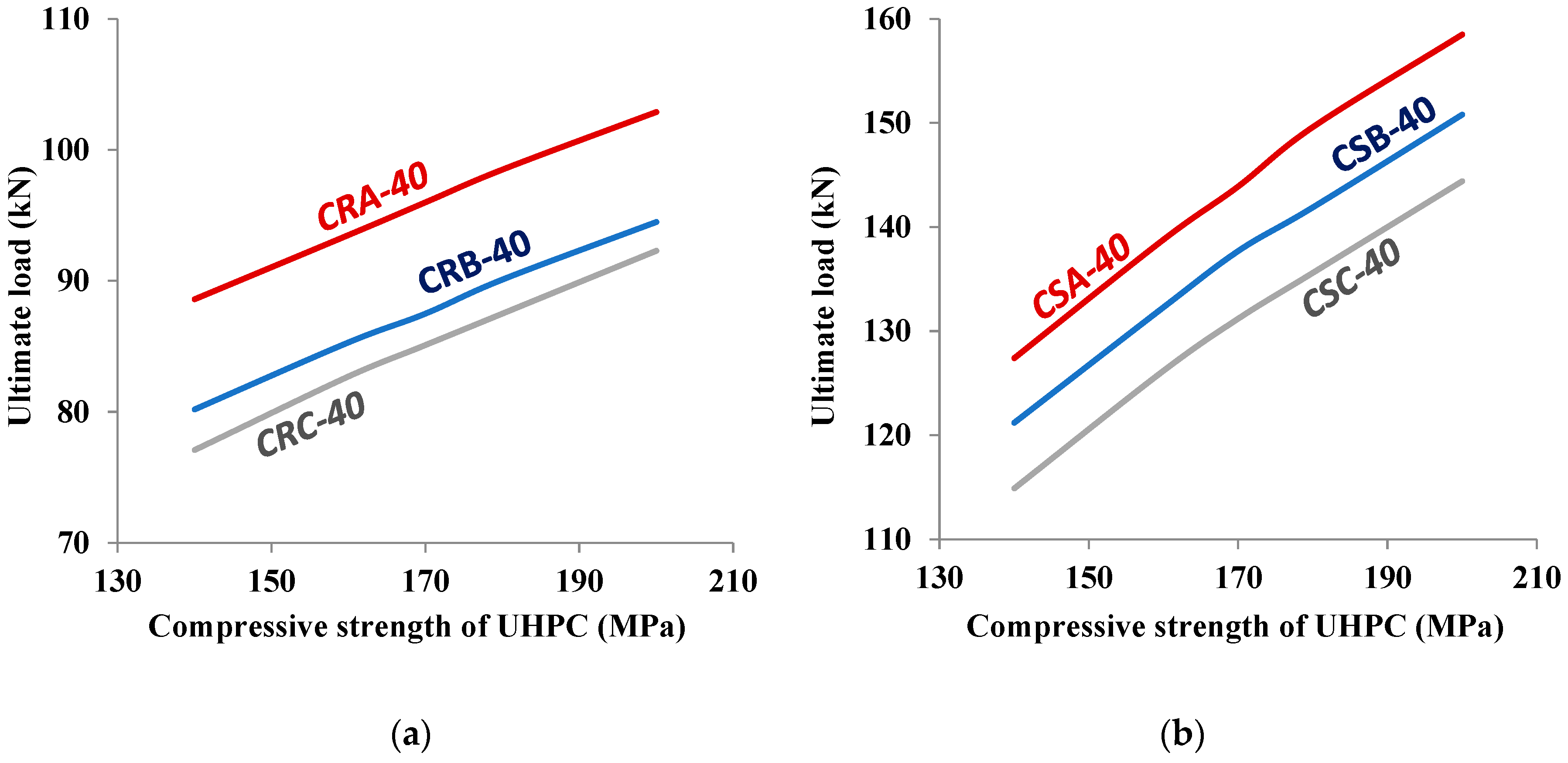
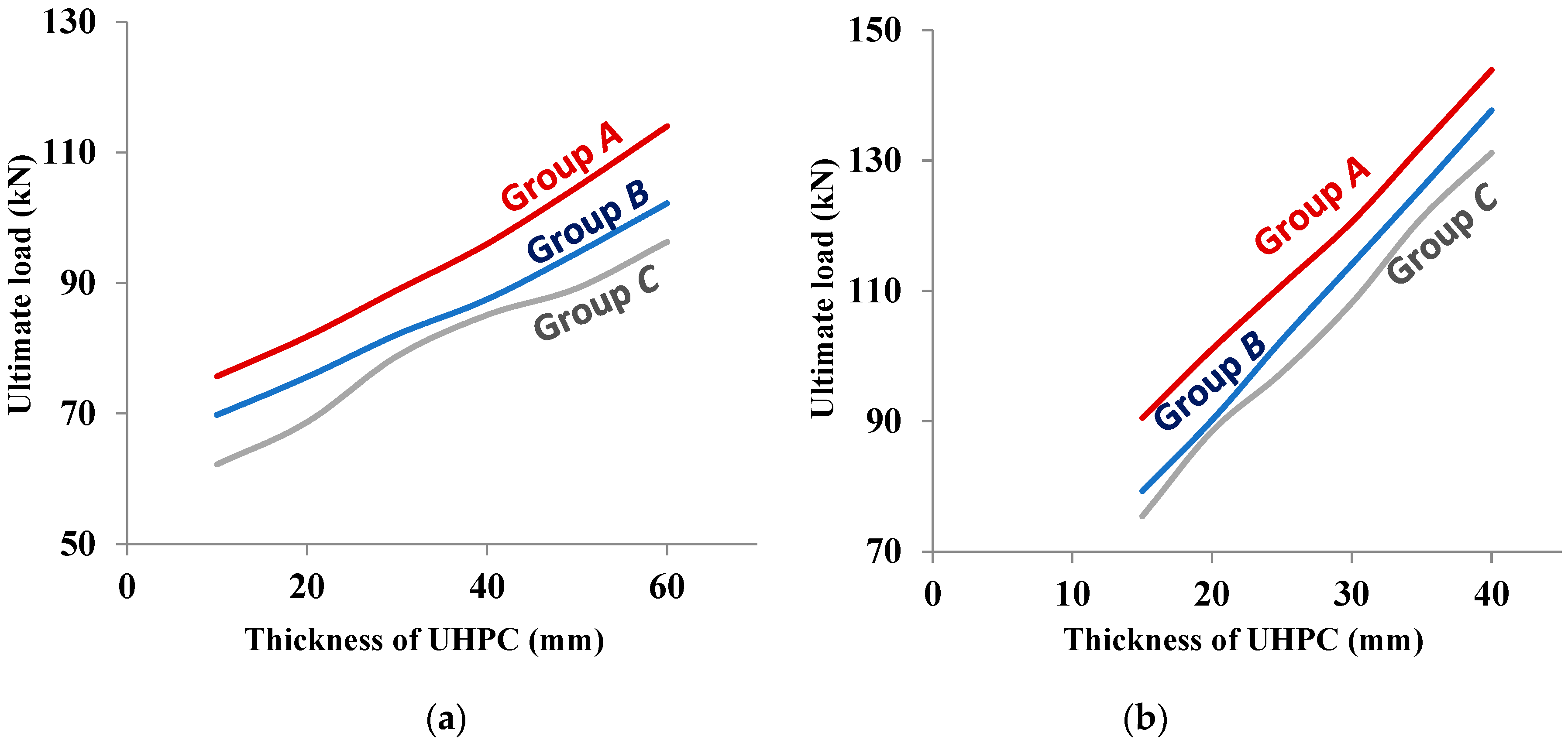
This paper describes a study on finite element modeling (FEM) carried out on the ABAQUS platform for the prediction of flexural strength of corrosion-damaged reinforced concrete (RC) beams strengthened using layers of ultra-high-performance concrete (UHPC). Considering different combinations of the degree of reinforcement corrosion and thickness and configuration of UHPC layers, a total of twenty-two corroded, un-strengthened, and strengthened RC beam specimens were tested to record their flexural behavior. Following the flexural testing, the FEM was carried out considering the degradation in the diameter and the yielding strength of the corroded reinforcing bars. The cohesive surface bonding approach was used to simulate the interfacial bond stress slip between the corroded bars and surrounding concrete. The results of the FEM were validated using the experimental test results of the respective beam specimens. The FEM results (including crack pattern, flexural strength, stiffness, and linear and nonlinear behavior of the strengthened RC beams) were found to be in close agreement with the corresponding experimental test results. This indicates that the proposed FEMs can capture the flexural behavior of the corroded RC beams strengthened using layers of UHPC with high accuracy. Furthermore, a parametric study was carried out using the validated FEMs to investigate the effects of varying the compressive strength and thickness of UHPC layers on the flexural strength of the corroded strengthened RC beams.
Keywords: reinforced concrete (RC) beams; reinforcement corrosion; strengthening; ultra-high-performance concrete (UHPC); finite element modelling (FEM); parametric study reinforced concrete (RC) beams; reinforcement corrosion; strengthening; ultra-high-performance concrete (UHPC); finite element modelling (FEM); parametric study