Prediction of the Mechanical Properties of Basalt Fiber Reinforced High-Performance Concrete Using Machine Learning Techniques

 ,
,  , ,
, ,  and
and
Abstract
1. Introduction
2. Methods and Materials
2.1. Methods
- Supervised Learning (SL)
- Unsupervised Learning (USL)
- Semi-Supervised Learning (SSL)
- Reinforcement Learning (RL)
2.2. Materials and Sample Preparation
3. Results and Discussion
3.1. Experimental Results
3.2. Prediction Results
3.2.1. Prediction of Compressive Strength
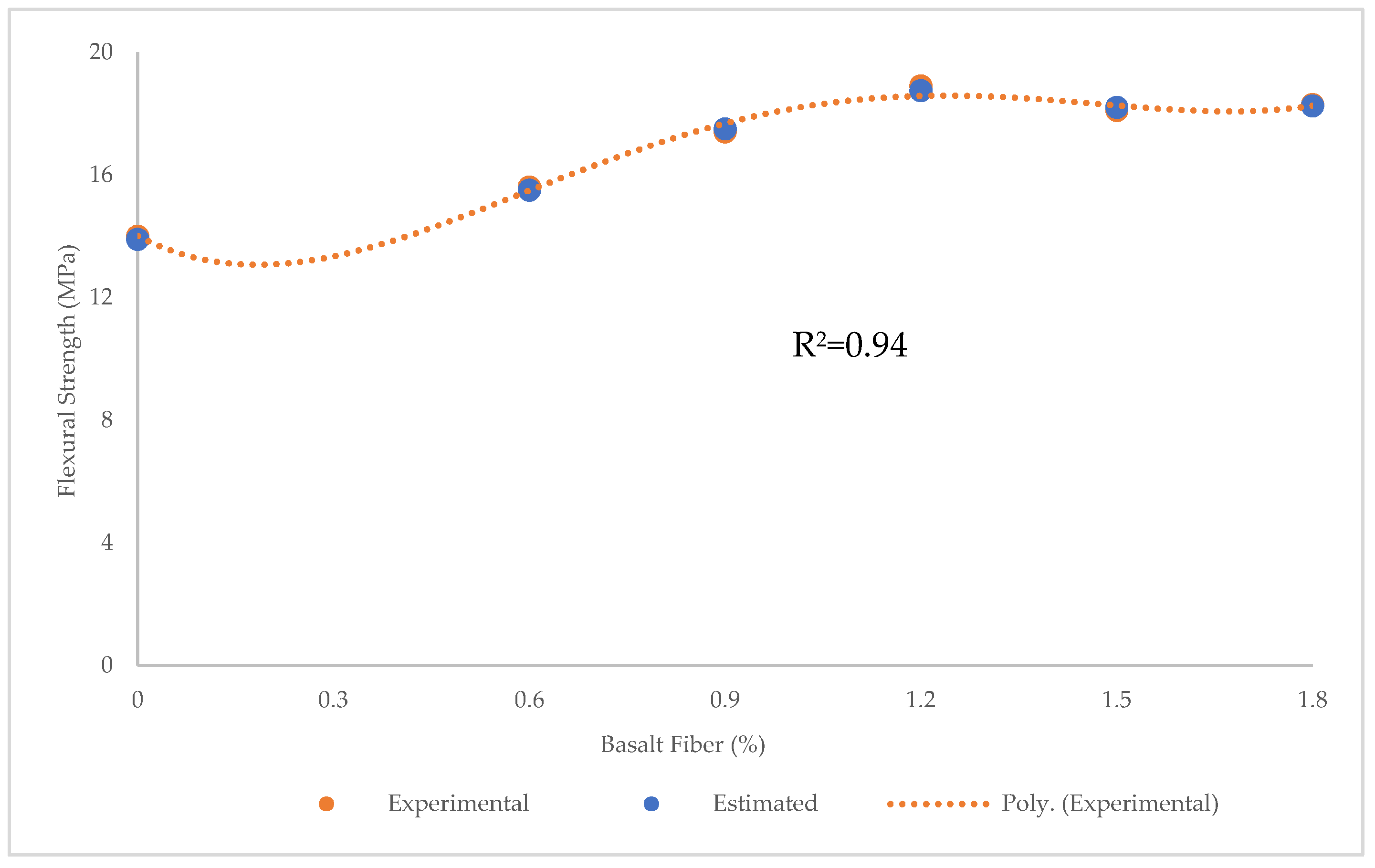
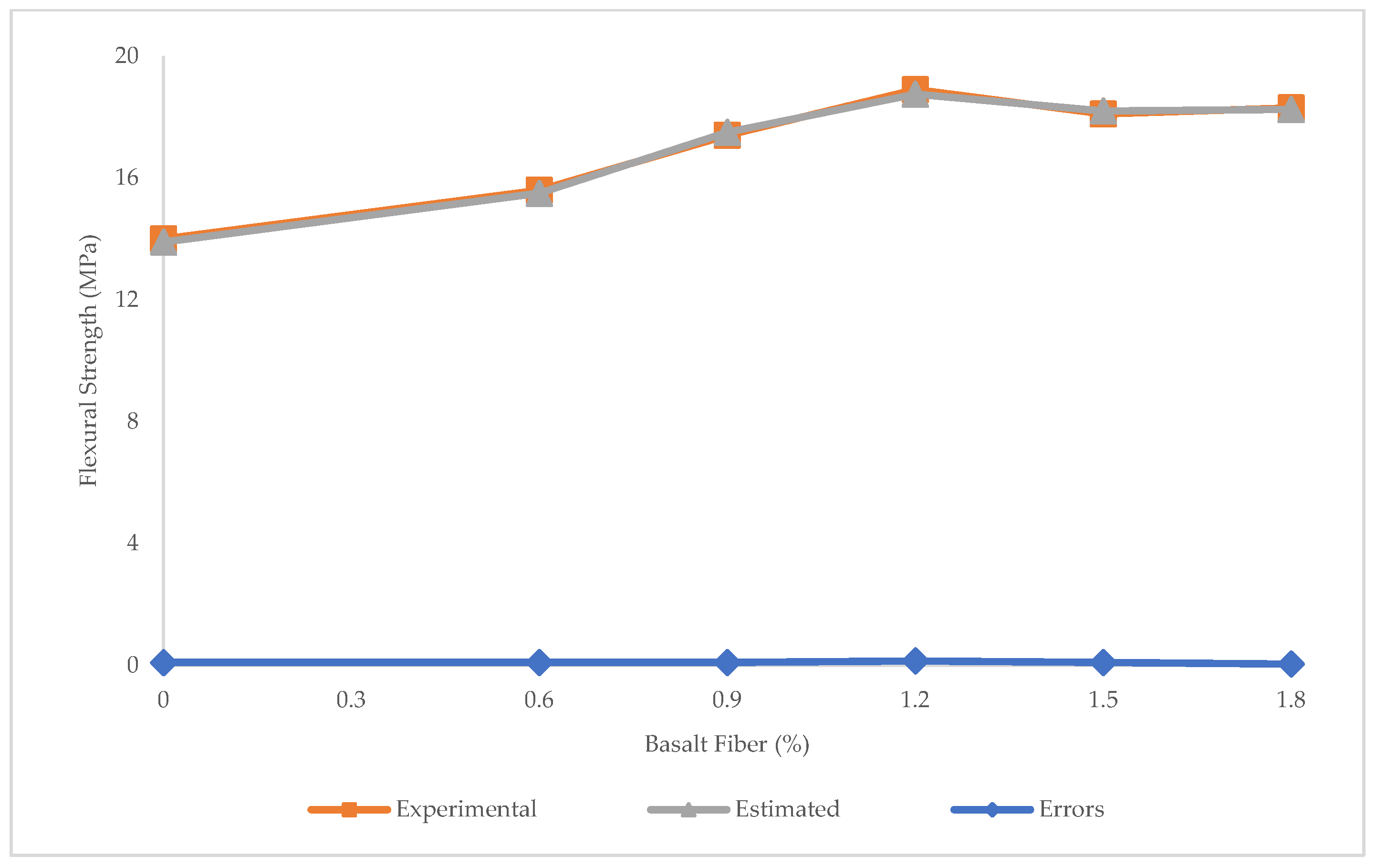
3.2.2. Prediction of Flexural Strength
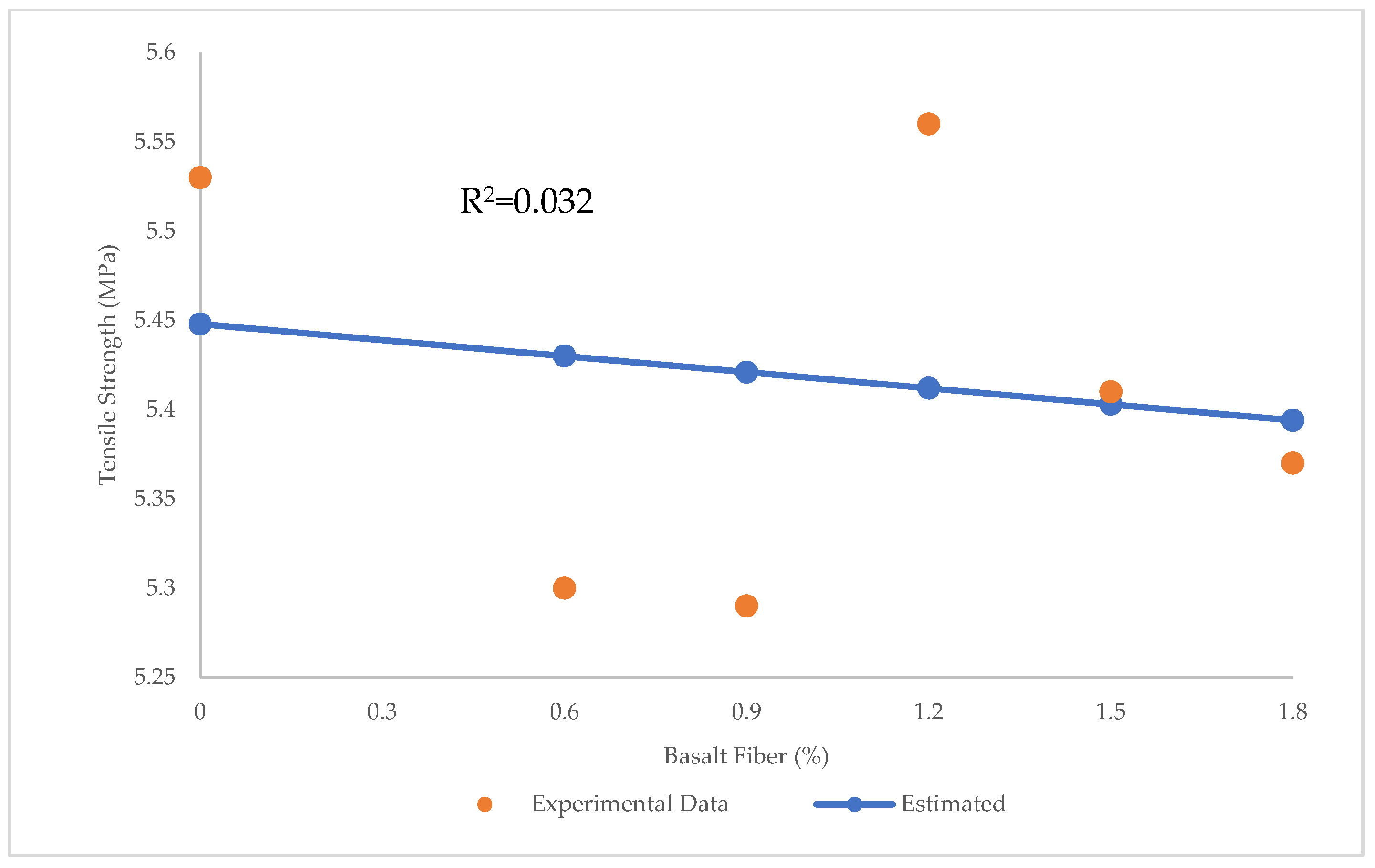
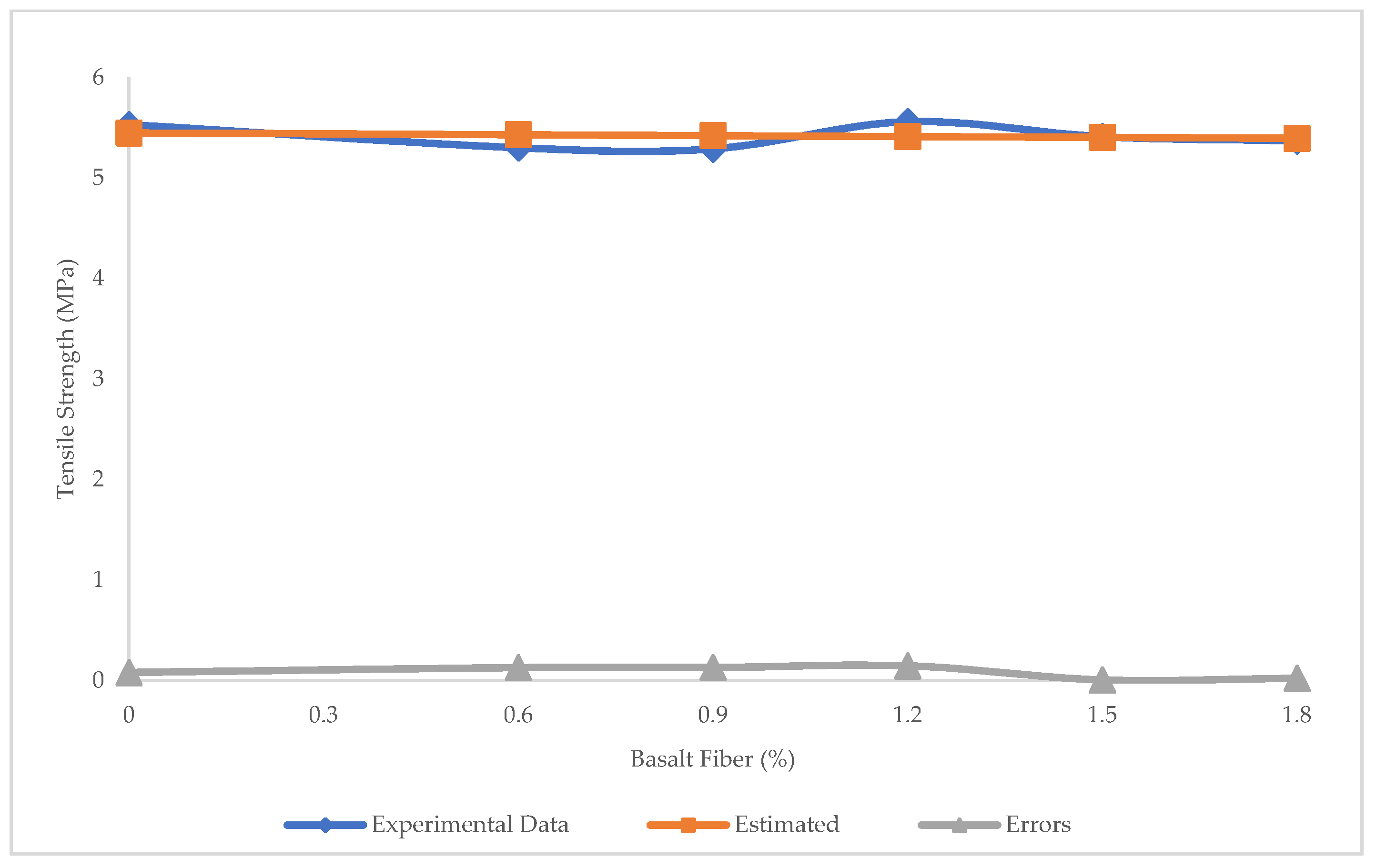
3.2.3. Prediction of Tensile Strength
3.3. Prediction of Stress–Strain Curves and Modulus of Elasticity
3.4. Relationship between Compressive, Flexural, and Tensile Strengths
4. Conclusions
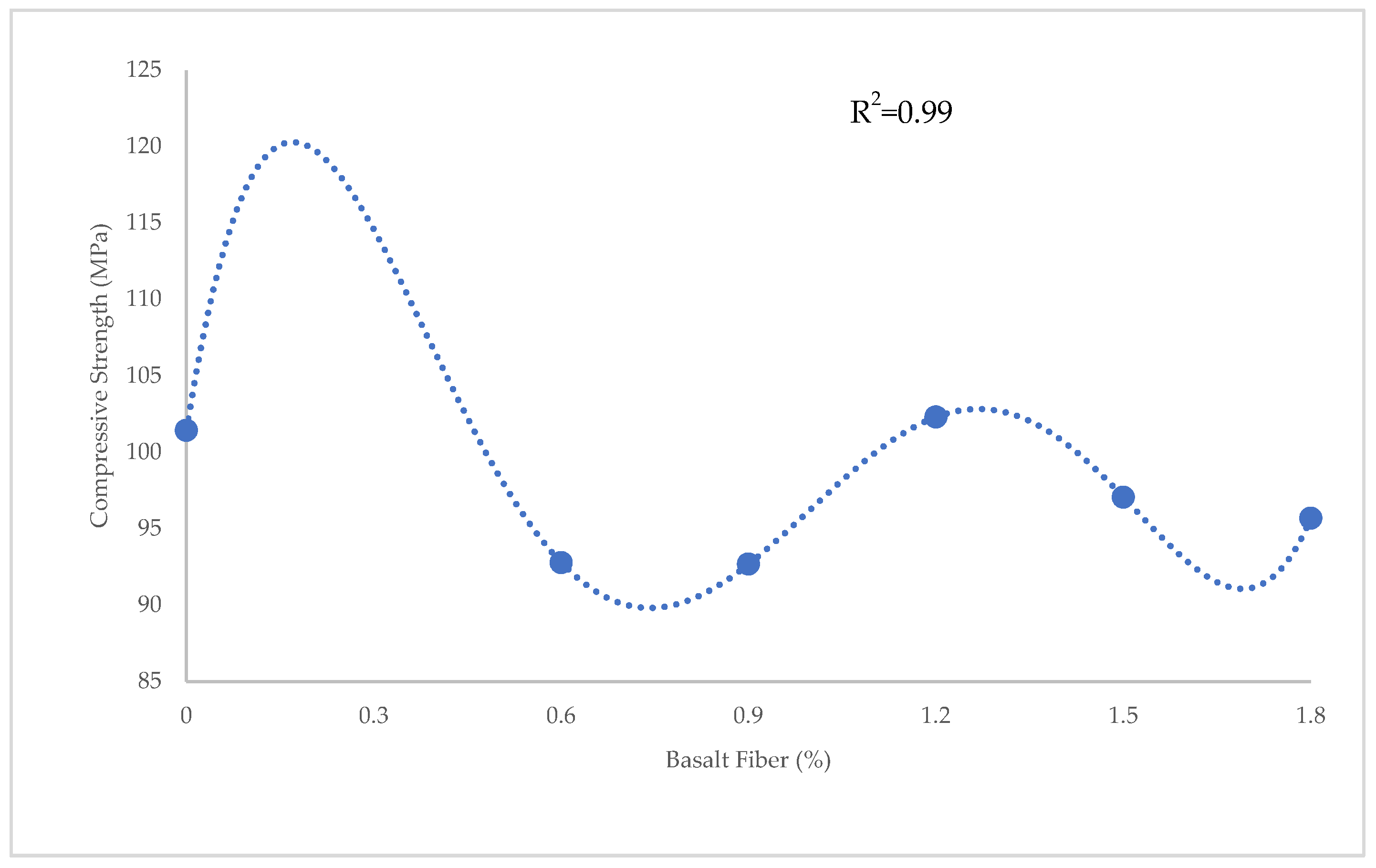
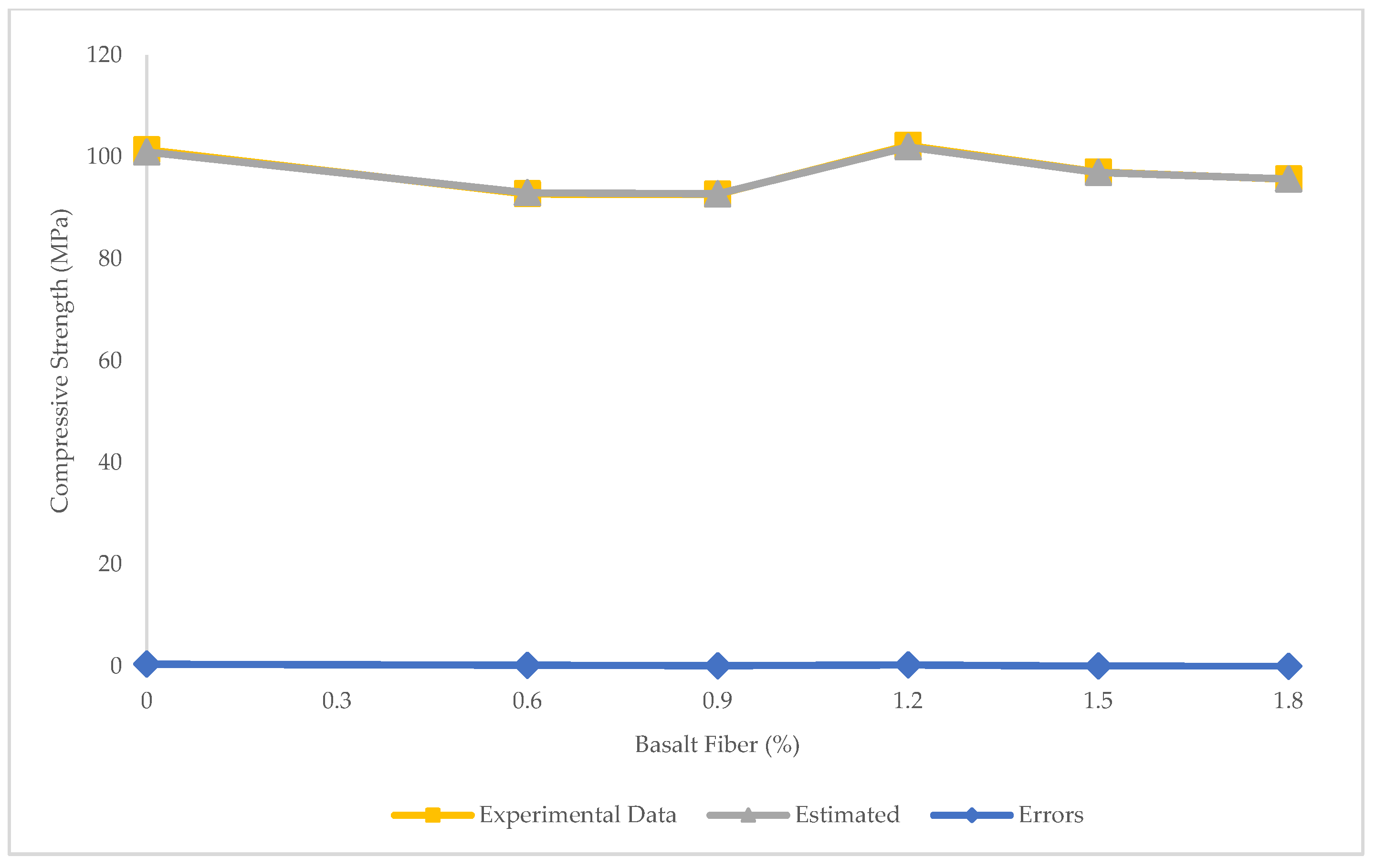
- The mechanical characteristics of BFHPC can be more accurately predicted via PR in comparison with LR and SVR. For example, in predicting the compressive strength through PR, the values of R2, RMSE, and MAE were 0.99, 0.05 Mpa, and 0.19 MPa, respectively. This confirms the high accuracy of PR in terms of its prediction.
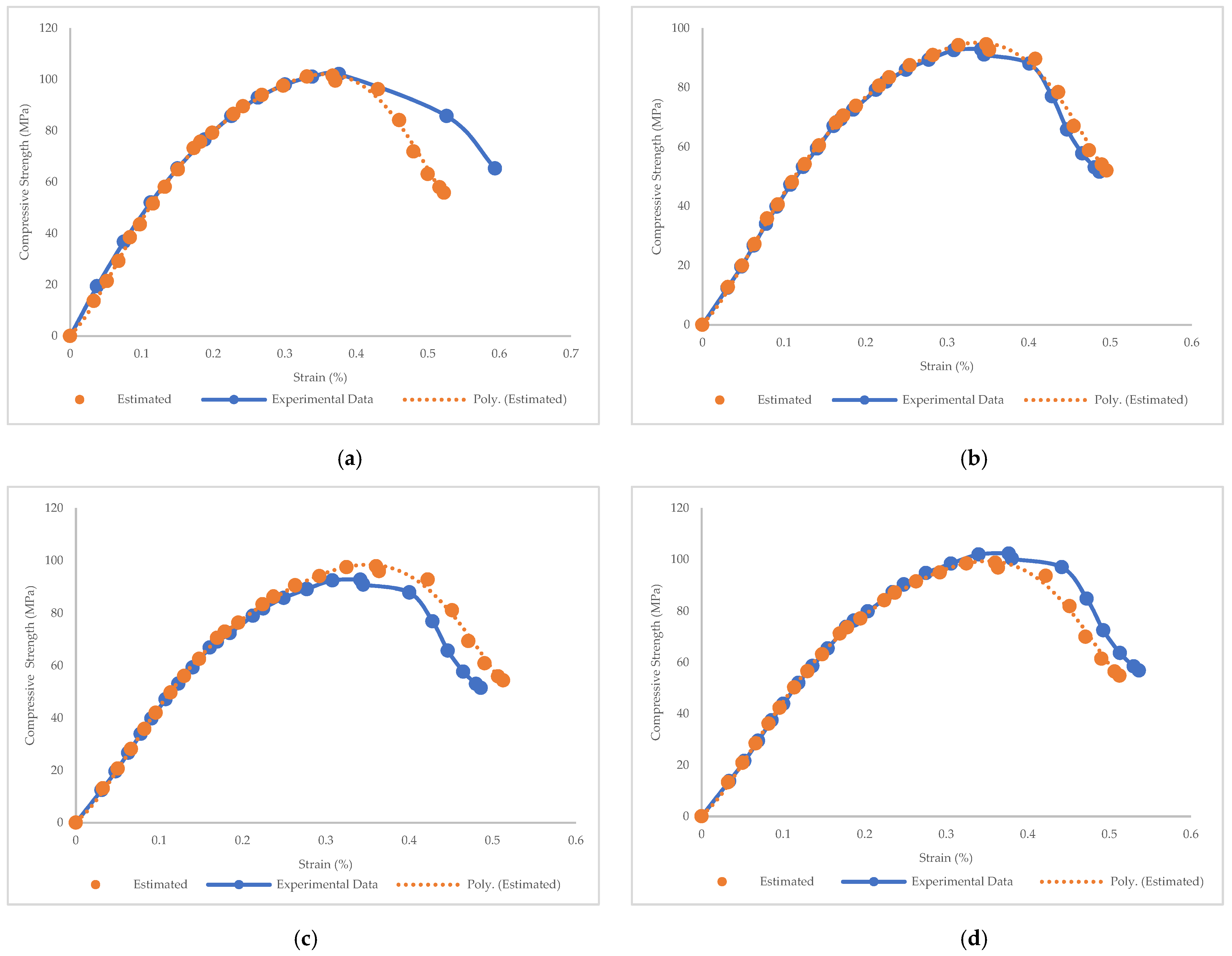
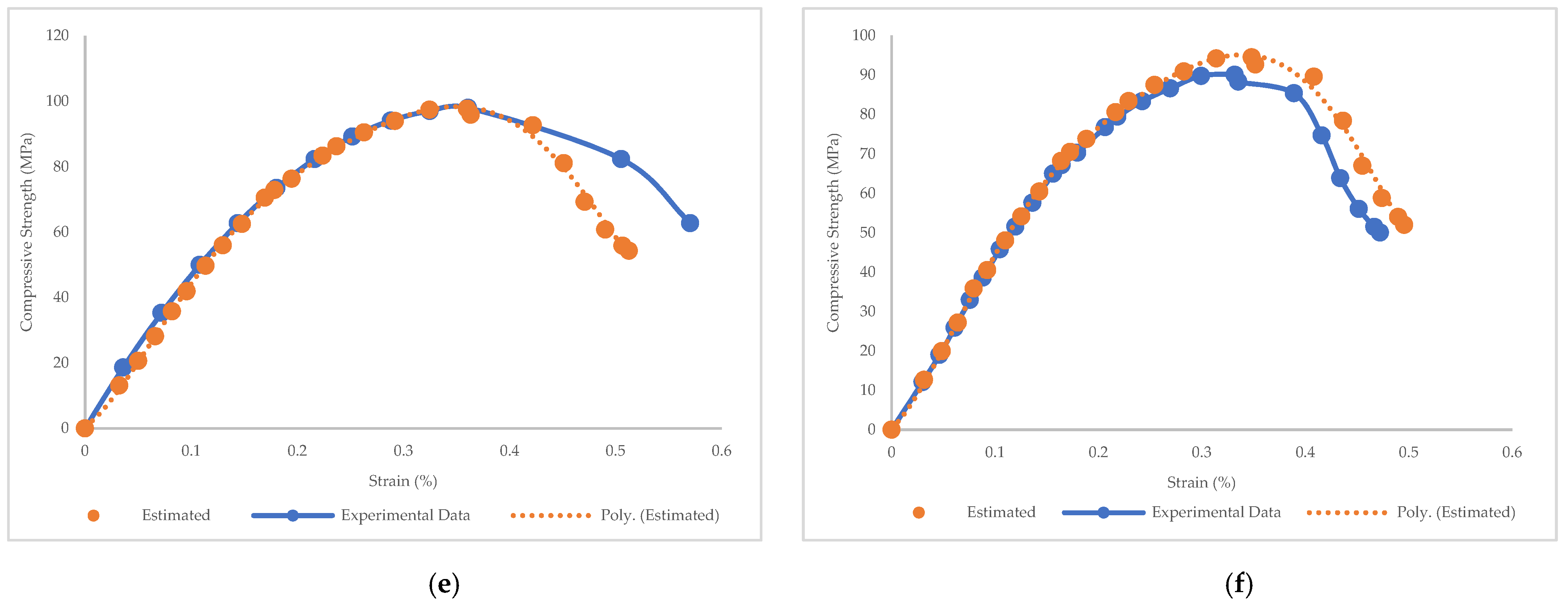
- Although simulation of compressive stress–strain curves has challenges (particularly simulation of the plastic phase), the PR technique was able to appropriately forecast these curves.
- The predicted values of ME, one the most important properties of concrete, using PR were close to the experimental results and results of some available formulas in the literature.
- Proposed models could be efficiently used at the construction site to minimize required laboratory work, as well as save time and costs.
Author Contributions
Funding
Institutional Review Board Statement
Informed Consent Statement
Data Availability Statement
Conflicts of Interest
References
- Morova, N. Investigation of usability of basalt fibres in hot mix asphalt concrete. Constr. Build. Mater. 2013, 47, 175–180. [Google Scholar] [CrossRef] [Scilit]
- Chiadighikaobi, P.C.; Jean Paul, V.; Brown, C.K.S. The effectiveness of basalt fiber in lightweight expanded clay to improve the strength of concrete helicoidal staircase. Mater. Sci. Forum 2021, 1034, 187–192. [Google Scholar] [CrossRef] [Scilit]
- High, C.; Seliem, H.M.; El-Safty, A.; Rizkalla, S.H. Use of basalt fibers for concrete structures. Constr. Build. Mater. 2015, 96, 37–46. [Google Scholar] [CrossRef] [Scilit]
- Lam, N.N.; Hung, L.V. Mechanical and shrinkage behavior of basalt fiber reinforced ultra-high-performance concrete. GEOMATE J. 2021, 20, 28–35. [Google Scholar] [CrossRef] [Scilit]
- Sondarva, D.; Bhogayata, A. Usage of chopped basalt fibers in concrete composites: A review. Int. J. Eng. Technol. Res. 2017, 6, 323–327. [Google Scholar] [CrossRef] [Scilit]
- Fiore, V.; Scalici, T.; Di Bella, G.; Valenza, G. A review on basalt fibre and its composites. Compos. Part B Eng. 2015, 74, 74–94. [Google Scholar] [CrossRef] [Scilit]
- Dhand, V.; Mittal, G.; Rhee, K.Y.; Park, S.J.; Hui, D. A short review on basalt fiber reinforced polymer composites. Compos. Part B Eng. 2015, 73, 166–180. [Google Scholar] [CrossRef] [Scilit]
- Sim, J.; Park, C.; Moon, D.Y. Characteristics of basalt fiber as a strengthening material for concrete structures. Compos. Part B Eng. 2005, 36, 504–512. [Google Scholar] [CrossRef] [Scilit]
- Niu, D.; Su, L.I.; Luo, Y.; Huang, D.; Luo, D. Experimental study on mechanical properties and durability of basalt fiber reinforced coral aggregate concrete. Constr. Build. Mater. 2020, 237, 117628. [Google Scholar] [CrossRef] [Scilit]
- Grzeszczyk, S.; Matuszek-Chmurowska, A.; Vejmelková, E.; Černý, R. Reactive powder concrete containing basalt fibers: Strength, abrasion and porosity. Materials 2020, 13, 2948. [Google Scholar] [CrossRef] [Scilit] [PubMed]
- Kharun, M.; Koroteev, D. Effect of basalt fibres on the parameters of fracture mechanics of MB modifier based high-strength concrete. MATEC Web Conf. 2018, 251, 02003. [Google Scholar] [CrossRef] [Scilit]
- Yang, L.; Xie, H.; Fang, S.; Huang, C.; Yang, A.; Chao, Y.J. Experimental study on mechanical properties and damage mechanism of basalt fiber reinforced concrete under uniaxial compression. Structures 2021, 31, 330–340. [Google Scholar] [CrossRef] [Scilit]
- Biradar, S.V.; Dileep, M.S.; Vijaya Gowri, D.T. Studies of concrete mechanical properties with basalt fibers. IOP Conf. Ser. Mater. Sci. Eng. 2020, 1006, 012031. [Google Scholar] [CrossRef] [Scilit]
- Katkhuda, H.; Shatarat, N. Improving the mechanical properties of recycled concrete aggregate using chopped basalt fibers and acid treatment. Constr. Build. Mater. 2017, 140, 328–335. [Google Scholar] [CrossRef] [Scilit]
- Kosmatka, S.H.; Wilson, M.L. Design and Control of Concrete Mixtures—The Guide to Applications; Portland Cement Association: Skokie, IL, USA, 2002; ISBN 0-89312-217-3. [Google Scholar]
- Ayub, T.; Shafiq, N.; Nuruddin, M.F. Mechanical properties of high-performance concrete reinforced with basalt fibers. Procedia Eng. 2014, 77, 131–139. [Google Scholar] [CrossRef] [Scilit]
- Ayub, T.; Shafiq, N.; Nuruddin, M.F. Effect of chopped basalt fibers on the mechanical properties and microstructure of high performance fiber reinforced concrete. Adv. Mater. Sci. Eng. 2014, 14, 587686. [Google Scholar] [CrossRef] [Scilit]
- Mohaghegh, A.M.; Silfwerbrand, J.; Årskog, V. Shear behavior of high-performance basalt fiber concrete—Part I: Laboratory shear tests on beams with macro fibers and bars. Struct. Concr. 2018, 19, 246–254. [Google Scholar] [CrossRef] [Scilit]
- Kharun, M.; Al Araza, H.A.A.; Hematibahar, M.; Al Daini, R.; Manoshin, A.A. Experimental study on the effect of chopped basalt fiber on the mechanical properties of high-performance concrete. AIP Conf. Proc. 2022, 2559, 050017. [Google Scholar]
- Hematibahar, M. Crack Resistance in Basalt Fibred High-Performance Concrete. Master’s Thesis, Department Civil Engineering, People Friendship University of Russia (RUDN), Moscow, Russia, 2021. [Google Scholar]
- Agrawal, R. Sustainable design guidelines for additive manufacturing applications. Rapid Prototyp. J. 2022, 28, 1221–1240. [Google Scholar] [CrossRef] [Scilit]
- Khorasani, M.; Loy, J.; Ghasemi, A.; Sharabian, E.; Leary, M.; Mirafzal, H.; Cochrane, P.; Rolfe, B.; Gibson, L. A review of industry 4.0 and additive manufacturing synergy. Rapid Prototyp. J. 2022, 28, 1462–1475. [Google Scholar] [CrossRef] [Scilit]
- AlAlaween, W.; Abueed, O.; Gharaibeh, B.; Alalawin, A.; Mahfouf, M.; Alsoussi, A.; Albashabsheh, N. The development of a radial based integrated network for the modelling of 3D fused deposition. Rapid Prototyp. J. 2022; ahead-of-print. [CrossRef] [Scilit]
- Farooq, F.F.; Czarnecki, S.; Niewiadomski, P.; Aslam, F.; Alabduljabbar, H.; Ostrowski, K.A.; Sliwa-Wieczorek, K.; Nowobilski, T.; Malazdrewicz, S. A comparative study for the prediction of the compressive strength of self-compacting concrete modified with fly ash. Materials 2021, 14, 4934. [Google Scholar] [CrossRef] [Scilit] [PubMed]
- Khan, M.A.; Memon, S.A.; Farooq, F.; Javed, M.F.; Aslam, F.; Alyousef, R. Compressive strength of fly-ash-based geopolymer concrete by gene expression programming and random forest. Adv. Civ. Eng. 2021, 1, 6618407. [Google Scholar] [CrossRef] [Scilit]
- Nafees, A.; Khan, S.; Javed, M.F.; Alrowais, R.; Mohamed, A.M.; Mohamed, A.; Vatin, N.I. Forecasting the mechanical properties of plastic concrete employing experimental data using machine learning algorithms: DT, MLPNN, SVM, and RF. Polymers 2022, 14, 1583. [Google Scholar] [CrossRef] [Scilit] [PubMed]
- Erdal, H.I. Two-level and hybrid ensembles of decision trees for high performance concrete compressive strength prediction. Eng. Appl. Artif. Intell. 2013, 26, 1689–1697. [Google Scholar] [CrossRef] [Scilit]
- Akande, K.O.; Owolabi, T.O.; Twaha, S.; Olatunji, S.O. Performance comparison of SVM and ANN in predicting compressive strength of concrete. IOSR J. Comput. Eng. 2014, 16, 88–94. [Google Scholar] [CrossRef] [Scilit]
- Chou, J.S.; Tsai, C.F.; Pham, A.D.; Lu, Y.H. Machine learning in concrete strength simulations: Multi-nation data analytics. Constr. Build. Mater. 2014, 73, 771–780. [Google Scholar] [CrossRef] [Scilit]
- Gupta, S.M. Support vector machines based modelling of concrete strength. World Acad. Sci. Eng. Technol. 2007, 36, 305–311. [Google Scholar]
- Salem, N.M.; Deifalla, A. Evaluation of the strength of slab-column connections with FRPs using machine learning algorithms. Polymers 2022, 14, 1517. [Google Scholar] [CrossRef] [Scilit]
- Ji, Y.; Xu, W.; Sun, Y.; Ma, Y.; He, Q.; Xing, Z. Grey correlation analysis of the durability of steel fiber-reinforced concrete under environmental action. Materials 2022, 15, 4748. [Google Scholar] [CrossRef] [Scilit]
- Yang, D.; Yan, C.; Liu, S.; Jia, Z.; Wang, C. Prediction of concrete compressive strength in saline soil environments. Materials 2022, 15, 4663. [Google Scholar] [CrossRef] [Scilit]
- Chen, P.; Wang, H.; Cao, S.; Lv, X. Prediction of mechanical behaviours of FRP-confined circular concrete columns using artificial neural network and support vector regression: Modelling and performance evaluation. Materials 2022, 15, 4971. [Google Scholar] [CrossRef] [Scilit] [PubMed]
- Peng, X.; Zhuang, Z.; Yang, Q. Predictive modeling of compressive strength for concrete at super early age. Materials 2022, 15, 4914. [Google Scholar] [CrossRef] [Scilit] [PubMed]
- Kodsy, A.; Morcous, G. Shear strength of ultra-high-performance concrete (UHPC) beams without transverse reinforcement: Prediction models and test data. Materials 2022, 15, 4794. [Google Scholar] [CrossRef] [Scilit] [PubMed]
- Asadi, M.; Taghavi Ghalesari, A.; Kumar, S. Machine learning techniques for estimation of Los Angeles abrasion value of rock aggregates. Eur. J. Environ. Civ. Eng. 2022, 26, 964–977. [Google Scholar] [CrossRef] [Scilit]
- Su, M.; Zhong, Q.; Peng, H.; Li, S. Selected machine learning approaches for predicting the interfacial bond strength between FRPs and concrete. Constr. Build. Mater. 2021, 270, 121456. [Google Scholar] [CrossRef] [Scilit]
- Nguyen, K.T.; Nguyen, Q.D.; Le, T.A.; Shin, J.; Lee, K. Analyzing the compressive strength of green fly ash based geopolymer concrete using experiment and machine learning approaches. Constr. Build. Mater. 2020, 247, 118581. [Google Scholar] [CrossRef] [Scilit]
- Sami Ullah, H.; Khushnood, R.A.; Farooq, F.; Ahmad, J.; Vatin, N.I.; Zakaria Ewais, D.Y. Prediction of compressive strength of sustainable foam concrete using individual and ensemble machine learning approaches. Materials 2022, 15, 3166. [Google Scholar] [CrossRef] [Scilit]
- Liu, Y. High-performance concrete strength prediction based on machine learning. Comput. Intell. Neurosci. 2022, 7, 5802217. [Google Scholar] [CrossRef] [Scilit]
- Kashyzadeh, K.R.; Amiri, N.; Ghorbani, S.; Souri, K. Prediction of concrete compressive strength using a back-propagation neural network optimized by a genetic algorithm and response surface analysis considering the appearance of aggregates and curing conditions. Buildings 2022, 12, 438. [Google Scholar] [CrossRef] [Scilit]
- De Marchi, L.; Mitchell, L. Hands-on Neural Networks: Learn How to Build and Train Your First Neural Network Model Using Python; Packt Publishing: Birmingham, UK, 2019; ISBN 1-78899-259-8. [Google Scholar]
- Khademi, F.; Behfarnia, K. Evaluation of concrete compressive strength using artificial neural network and multiple linear regression models. Int. J. Optim. Civ. Eng. 2016, 6, 423–432. [Google Scholar]
- Smola, A.J.; Scholkopf, B. A tutorial on support vector regression. Stat. Comput. 2004, 14, 199–222. [Google Scholar] [CrossRef] [Scilit]
- Riener, C.; Schabert, R. Linear slices of hyperbolic polynomials and positivity of symmetric polynomial functions. arXiv 2022, arXiv:2203.08727. [Google Scholar] [CrossRef] [Scilit]
- Nguyen, H.; Vu, T.; Vo, T.P.; Thai, H.T. Efficient machine learning models for prediction of concrete strengths. Constr. Build. Mater. 2021, 266, 120950. [Google Scholar] [CrossRef] [Scilit]
- GOST10180; Betony, Metody Opredeleniya Prochnosti po Kontrolnym Obraztsam [Concretes. Methods for Determination of Strength by Control Samples]. Standartinform: Moscow, Russia, 2013.
- ASTM C293/C293M-16; Standard Test Method for Flexural Strength of Concrete (Using Simple Beam with Center-Point Loading). American Society for Testing of Materials: West Conshohocken, PA, USA, 2016.
- ASTM C496; Standard Test Method for Splitting Tensile Strength of Cylindrical Concrete Specimens. American Society for Testing of Materials: West Conshohocken, PA, USA, 2017.
- Hussain, H.K.; Abbas, A.M.; Ojaimi, M.F. Fiber-type influence on the flexural behavior of RC two-way slabs with an opening. Buildings 2022, 12, 279. [Google Scholar] [CrossRef] [Scilit]
- Hasanzadeh, A.; Shooshpasha, I. A study on the combined effects of silica fume particles and polyethylene terephthalate fibres on the mechanical and microstructural characteristics of cemented sand. Int. J. Geosynth. Ground Eng. 2021, 7, 98. [Google Scholar] [CrossRef] [Scilit]
- Hasanzadeh, A.; Shooshpasha, I. Influences of silica fume particles and polyethylene terephthalate fibers on the mechanical characteristics of cement-treated sandy soil using ultrasonic pulse velocity. Bull. Eng. Geol. Environ. 2022, 81, 14. [Google Scholar] [CrossRef] [Scilit]
- Kumar, A.; Harish, C.A.; Raj Kapoor, N.; Mazin, A.M.; Kumar, K.; Majumdar, A.; Thinnukool, O. Compressive strength prediction of lightweight concrete: Machine learning models. Sustainability 2022, 14, 2404. [Google Scholar] [CrossRef] [Scilit]
- Zheng, D.; Wu, R.; Sufian, M.; Kahla, N.B.; Atig, M.; Deifalla, A.F.; Accouche, O.; Azab, M. Flexural strength prediction of steel fiber-reinforced concrete using artificial intelligence. Materials 2022, 15, 5194. [Google Scholar] [CrossRef] [Scilit]
- Pan, X.; Xiao, Y.; Suhail, S.A.; Ahmad, W.; Murali, G.; Salmi, A.; Mohamed, A. Use of artificial intelligence methods for predicting the strength of recycled aggregate concrete and the influence of raw ingredients. Materials 2022, 15, 4194. [Google Scholar] [CrossRef] [Scilit]
- Carreira, D.J.; Chu, K.H. Stress–strain relationship for plain concrete in compression. ACI J. 1985, 82, 797–804. [Google Scholar]
- Ezeldin, A.S.; Balaguru, P.N. Normal- and high- strength fiber-reinforced concrete under compression. J. Mater. Civ. Eng. 1992, 4, 415–429. [Google Scholar] [CrossRef] [Scilit]
- ACI 318-05; Building Code Requirements for Structural Concrete and Commentary. ACI: Farmington Hills, MI, USA, 2005.
- Gardner, N.J.; Lockman, M.J. Design provisions for drying shrinkage and creep of normal-strength concrete. ACI Mater. J. 2001, 98, 159–167. [Google Scholar]
- Eurocode 2; Design of Concrete Structures. Comité Européen de Normalisation (CEN): Brussels, Belgium, 2005.
- CEB-FIB Model code 1990; Design Code. Comité Euro International du Béton, Fédération International de la Précon- traint, Thomas Telford: London, UK, 1991.




| Oxide (%) | Blaine (m2/kg) | Specific Gravity | |||||||
|---|---|---|---|---|---|---|---|---|---|
| SiO2 | Fe2O3 | MgO | SO3 | Al2O3 | CaO | K2O | L.O.I. | ||
| 19.52 | 4.04 | 4.36 | 2.89 | 4.81 | 62.18 | 0.6 | 1.62 | 387 | 3.14 |
| Chemical Composition | Value (%) |
|---|---|
| Silicon dioxide (SiO2) | 90–92 |
| Alumina (Al2O3) | 0.68 |
| Iron oxide (Fe2O3) | 0.69 |
| Calcium oxide (CaO) | 1.58 |
| Magnesium oxide (MgO) | 1.01 |
| Sodium oxide (Na2O) | 0.61 |
| Potassium oxide (K2O) | 1.23 |
| Carbon (C) | 0.98 |
| Sulfur (S) | 0.26 |
| Length (mm) | Diameter (µm) | Tensile Strength (MPa) | Young’s Modulus (GPa) | Elongation (%) | Specific Gravity |
|---|---|---|---|---|---|
| 18 | 17.9 | 4100–4840 | 93.1–110 | 3.1 | 2.63–2.8 |
| Sample Name | Cement (kg/m3) | Silica Fume (kg/m3) | Quartz Sand (kg/m3) | Crushed Granite (kg/m3) | Superplasticizer (kg/m3) | Water (kg/m3) | BF (% of Concrete Volume) |
|---|---|---|---|---|---|---|---|
| HPC | 500 | 125 | 585 | 1005 | 12.5 | 187.5 | 0 |
| BFHPC0.6 | 500 | 125 | 585 | 1005 | 12.5 | 187.5 | 0.6 |
| BFHPC0.9 | 500 | 125 | 585 | 1005 | 12.5 | 187.5 | 0.9 |
| BFHPC1.2 | 500 | 125 | 585 | 1005 | 12.5 | 187.5 | 1.2 |
| BFHPC1.5 | 500 | 125 | 585 | 1005 | 12.5 | 187.5 | 1.5 |
| BFHPC1.8 | 500 | 125 | 585 | 1005 | 12.5 | 187.5 | 1.8 |
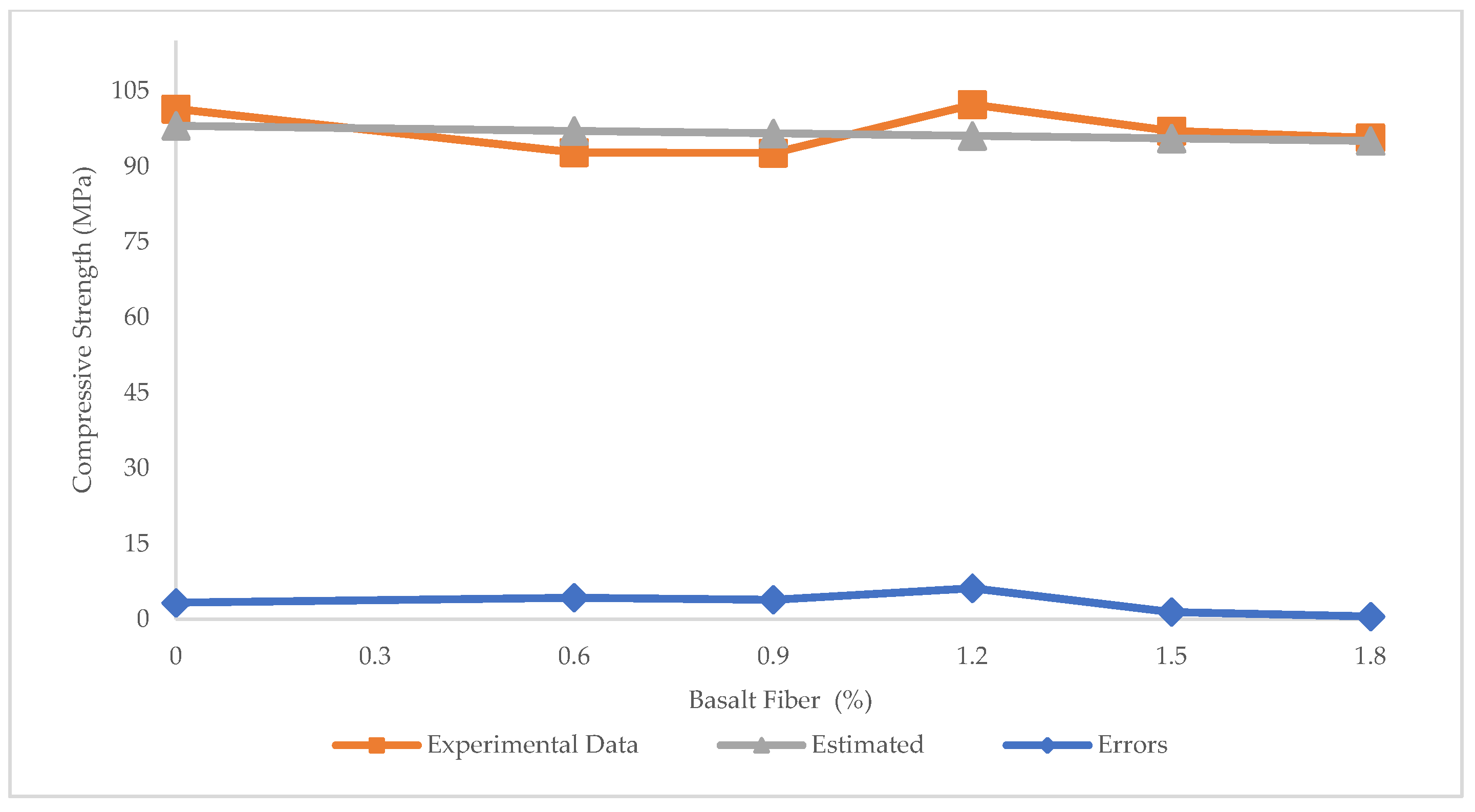
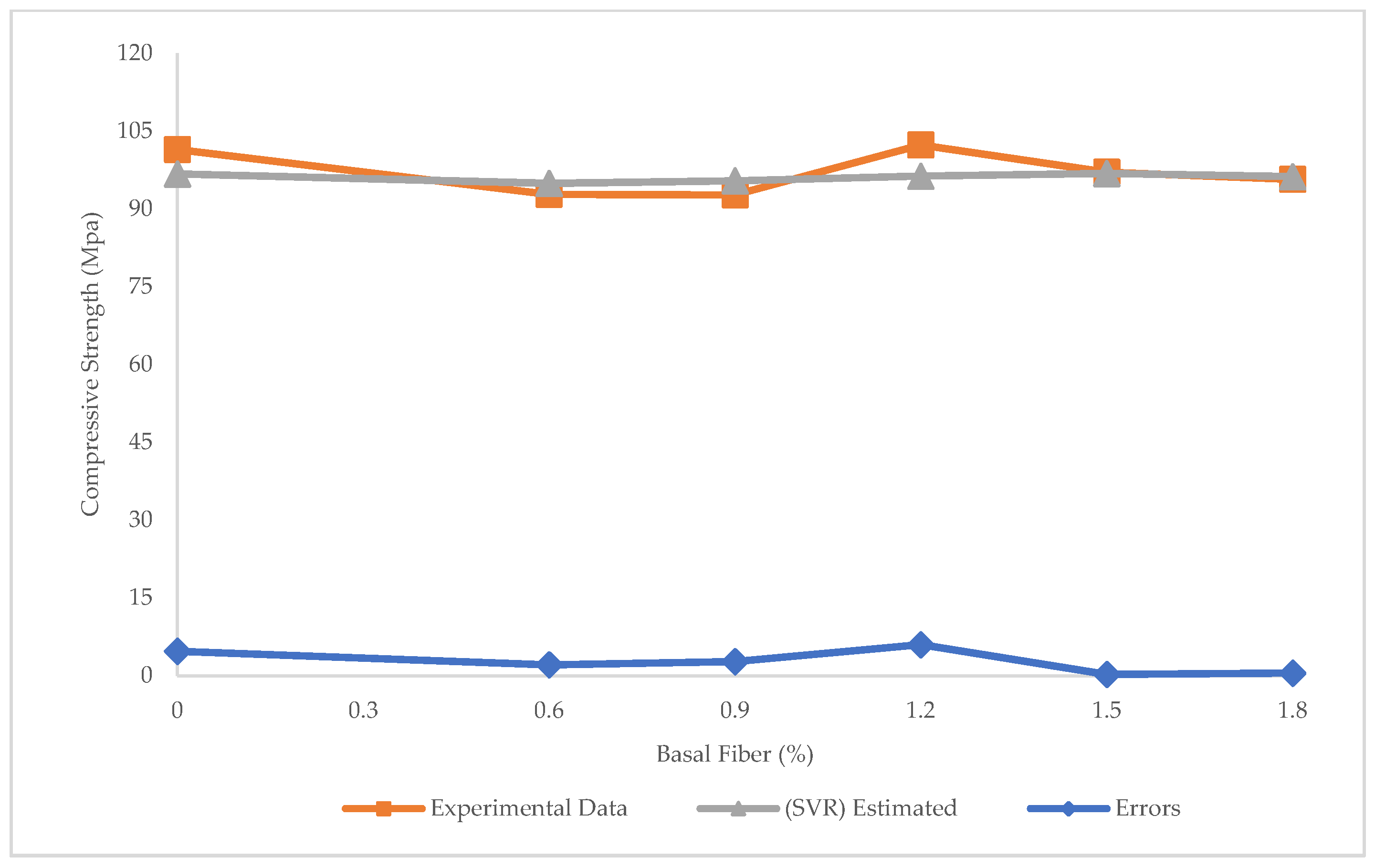
| Compressive Strength | HPC | BFHPC0.6 | BFHPC0.9 | BFHPC1.2 | BFHPC1.5 | BFHPC1.8 |
|---|---|---|---|---|---|---|
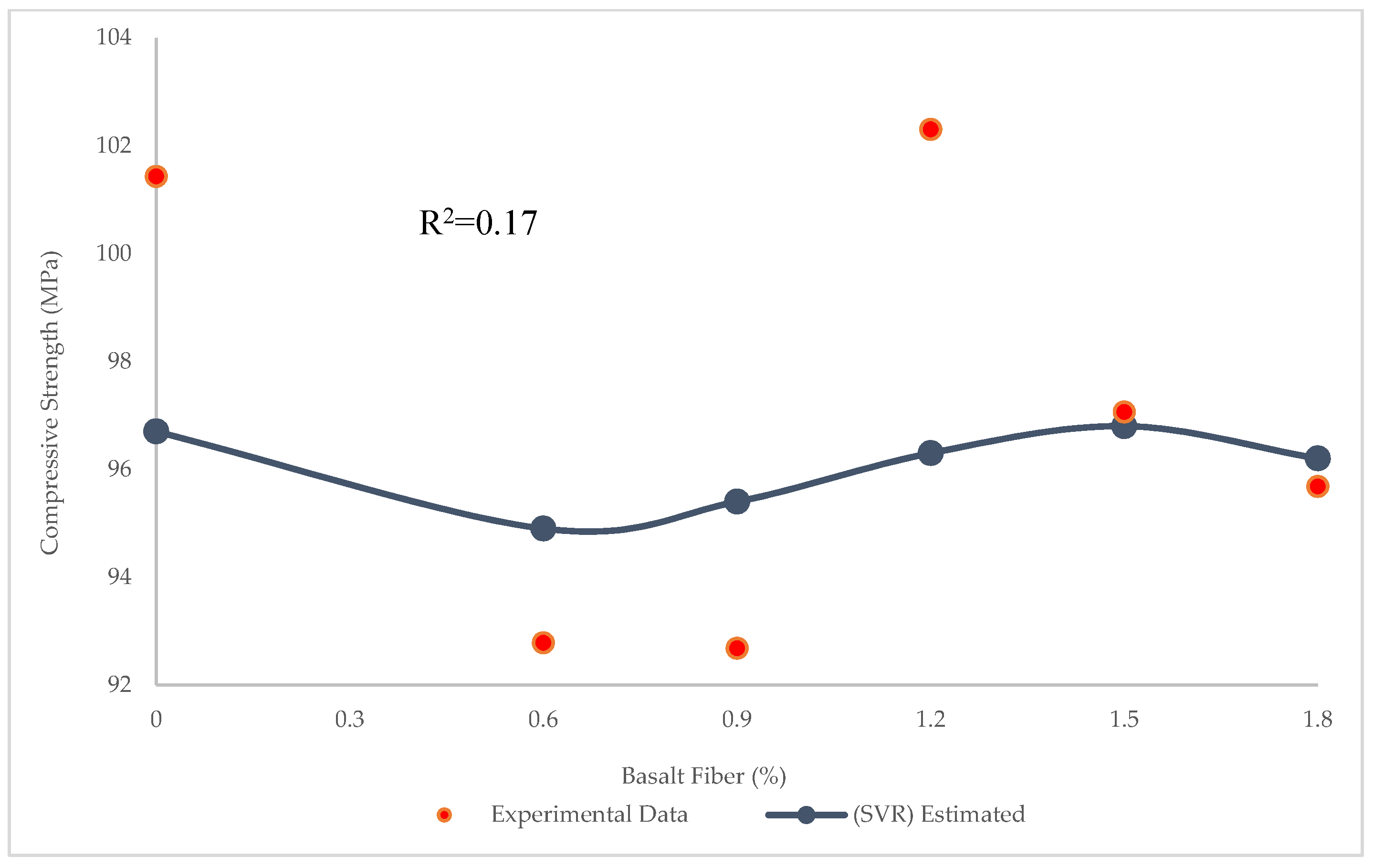
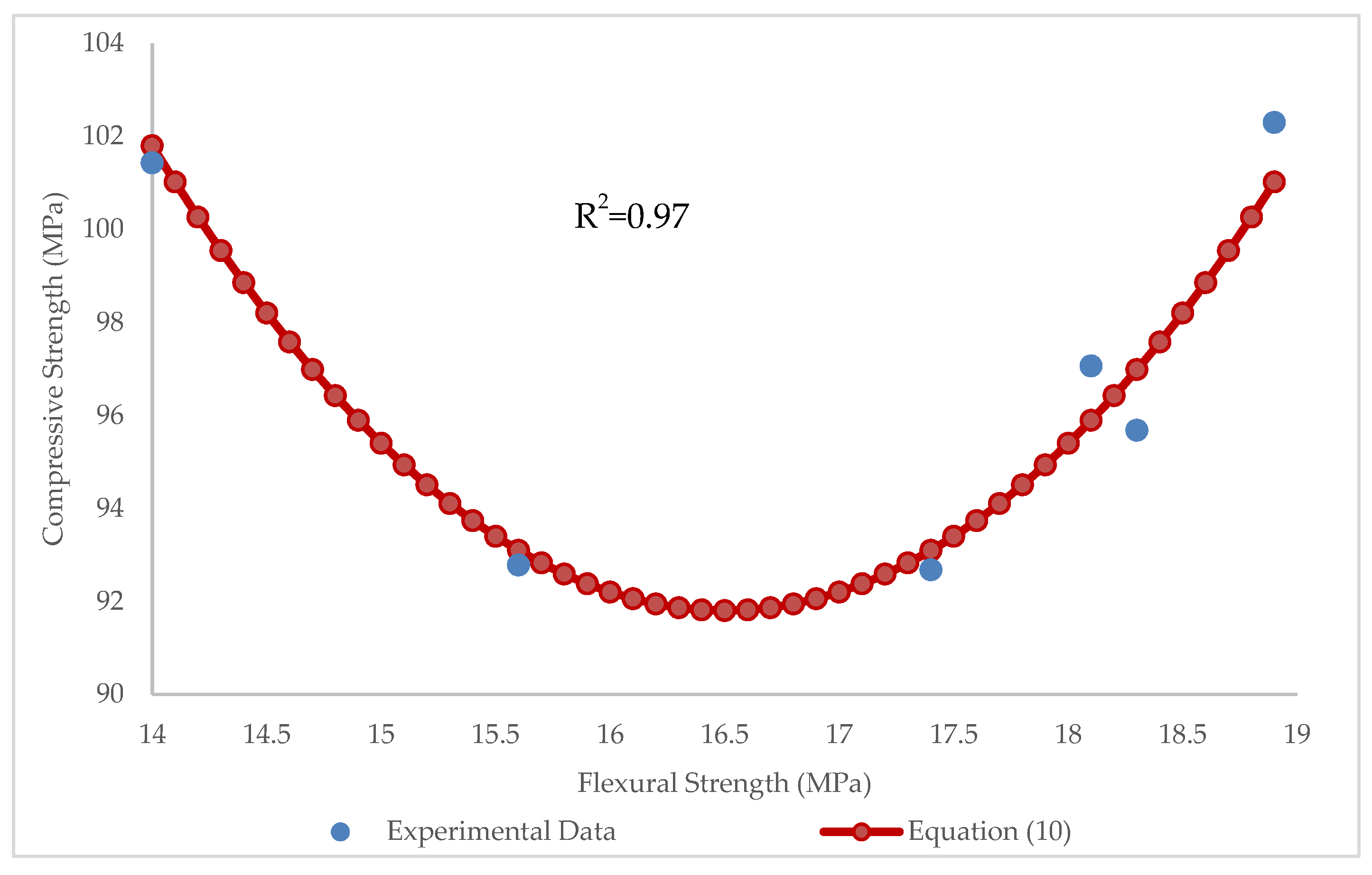
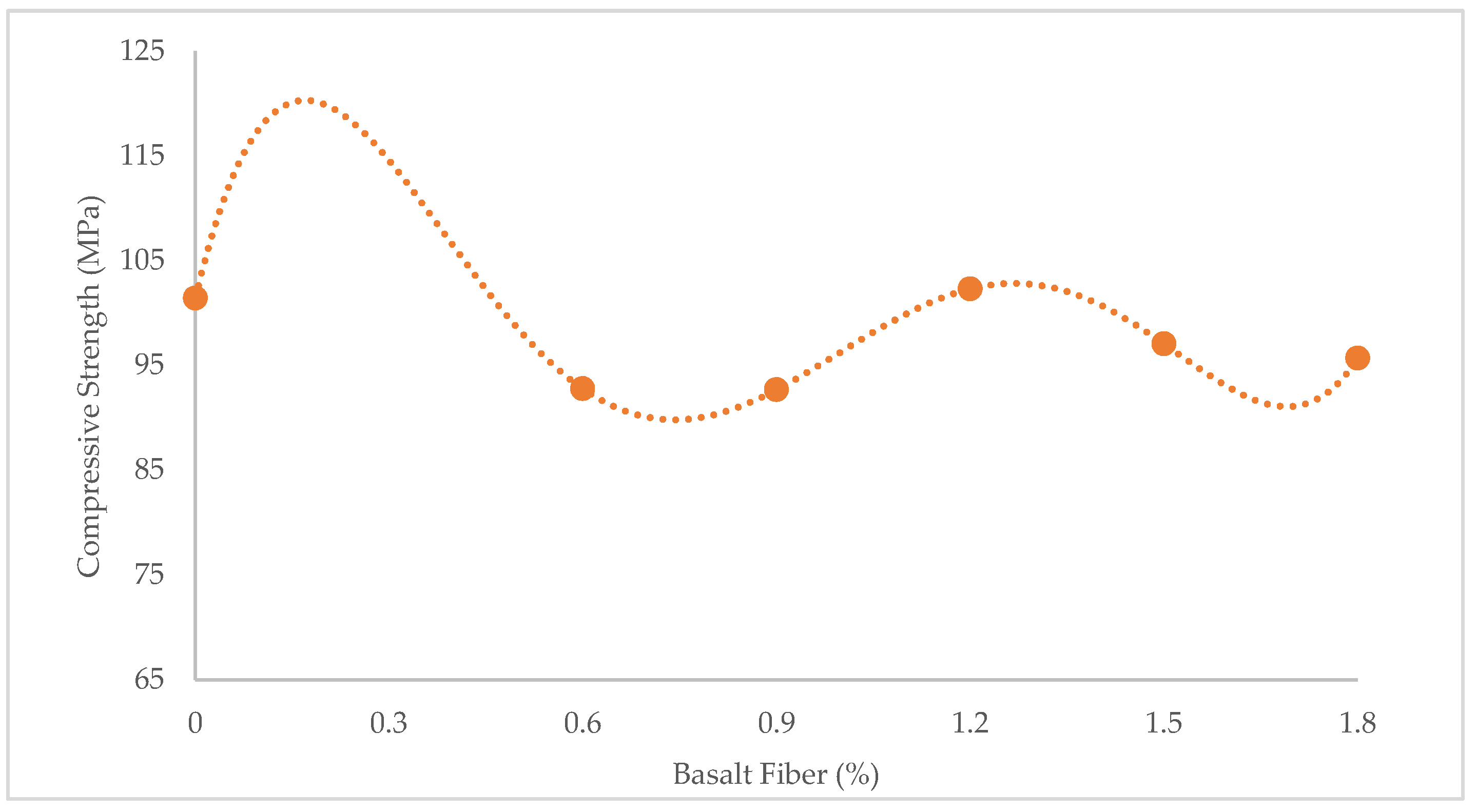
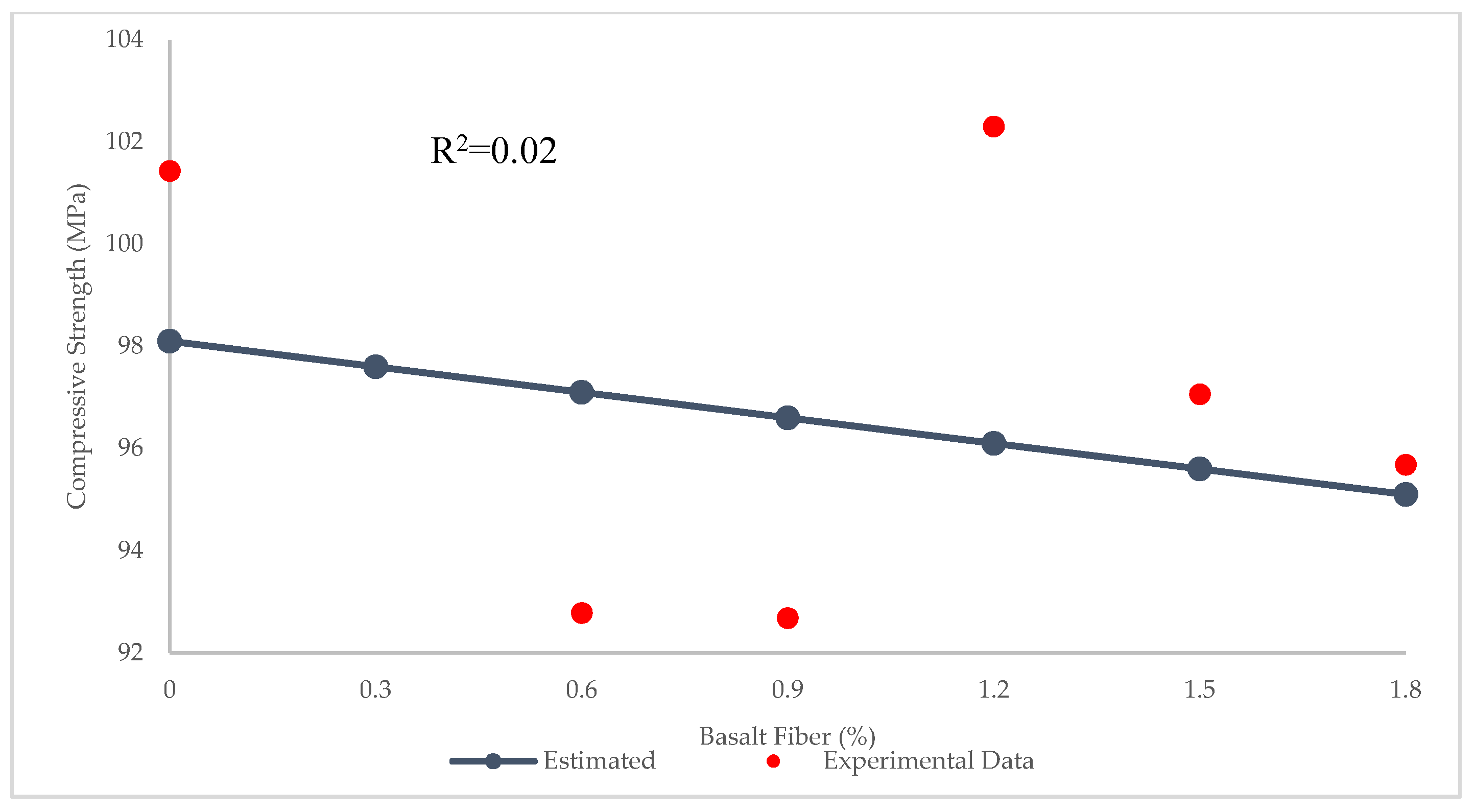
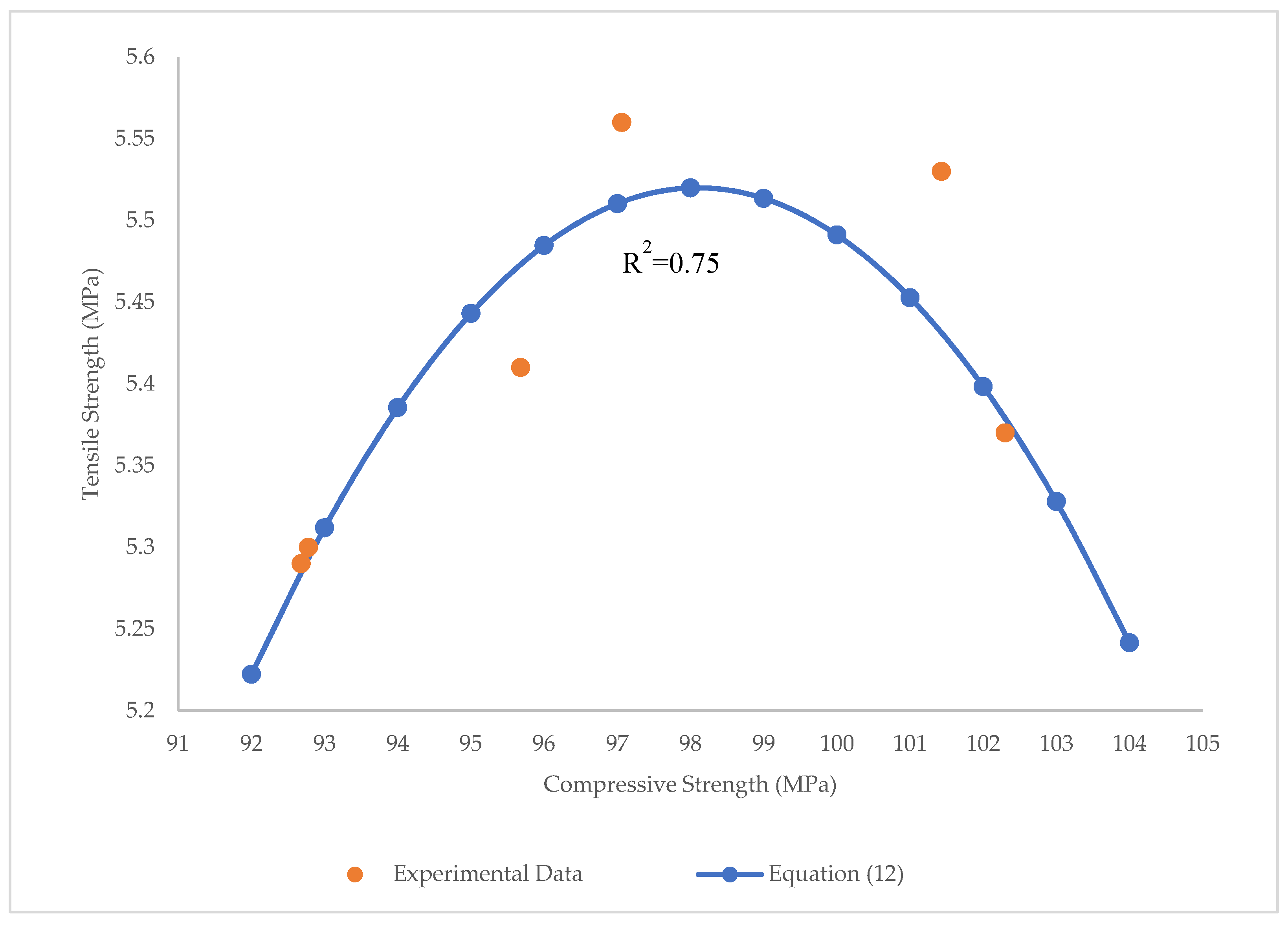
| Experimental | 101.43 | 92.78 | 92.68 | 102.3 | 97.06 | 95.68 |
| LR | 98.1 | 97.1 | 96.6 | 96.1 | 95.6 | 95.1 |
| SVR | 96.7 | 94.9 | 95.4 | 96.3 | 96.8 | 96.2 |
| PR | 101 | 93 | 92.8 | 102 | 97 | 95.7 |
| Flexural Strength | HPC | BFHPC0.6 | BFHPC0.9 | BFHPC1.2 | BFHPC1.5 | BFHPC1.8 |
|---|---|---|---|---|---|---|
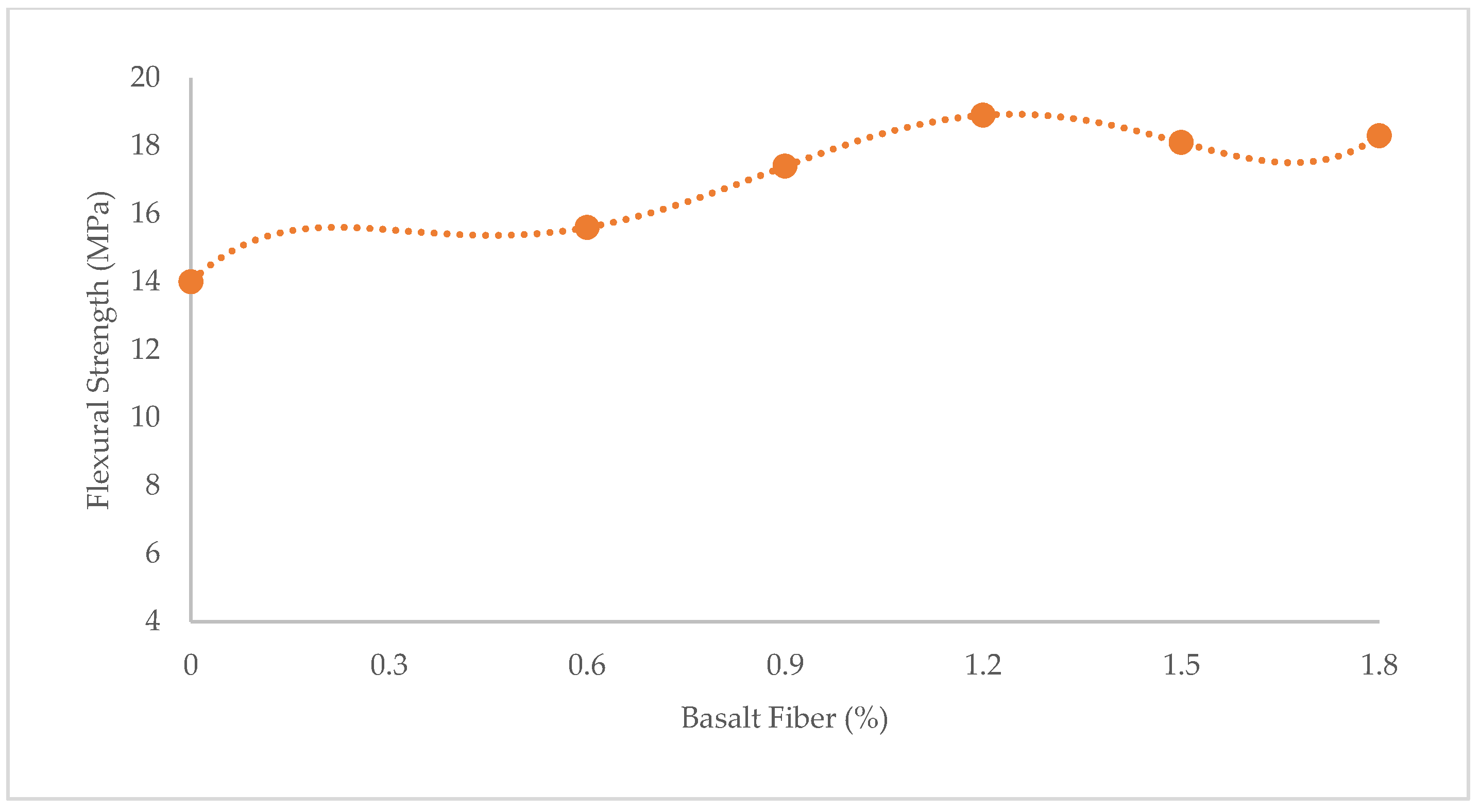
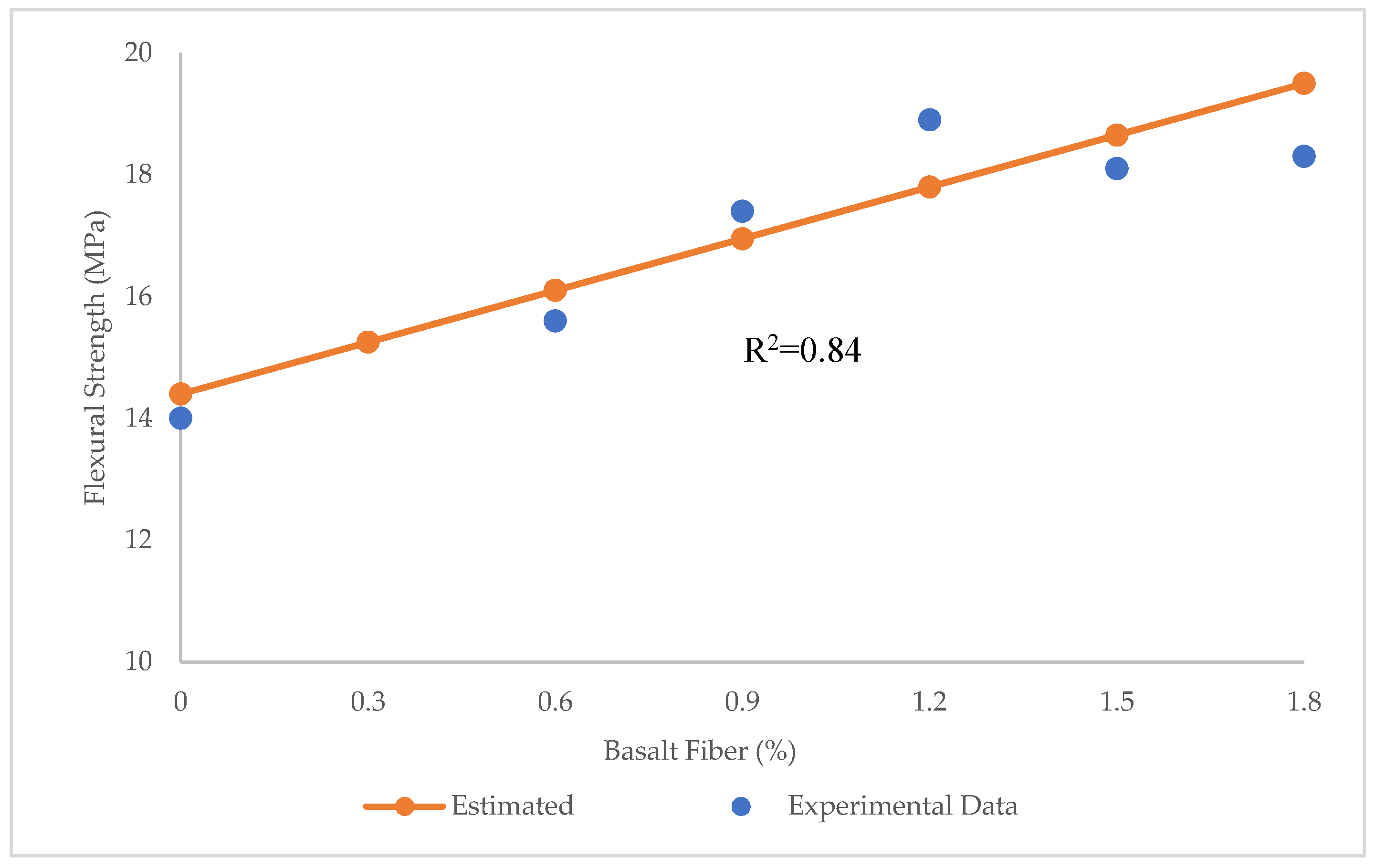
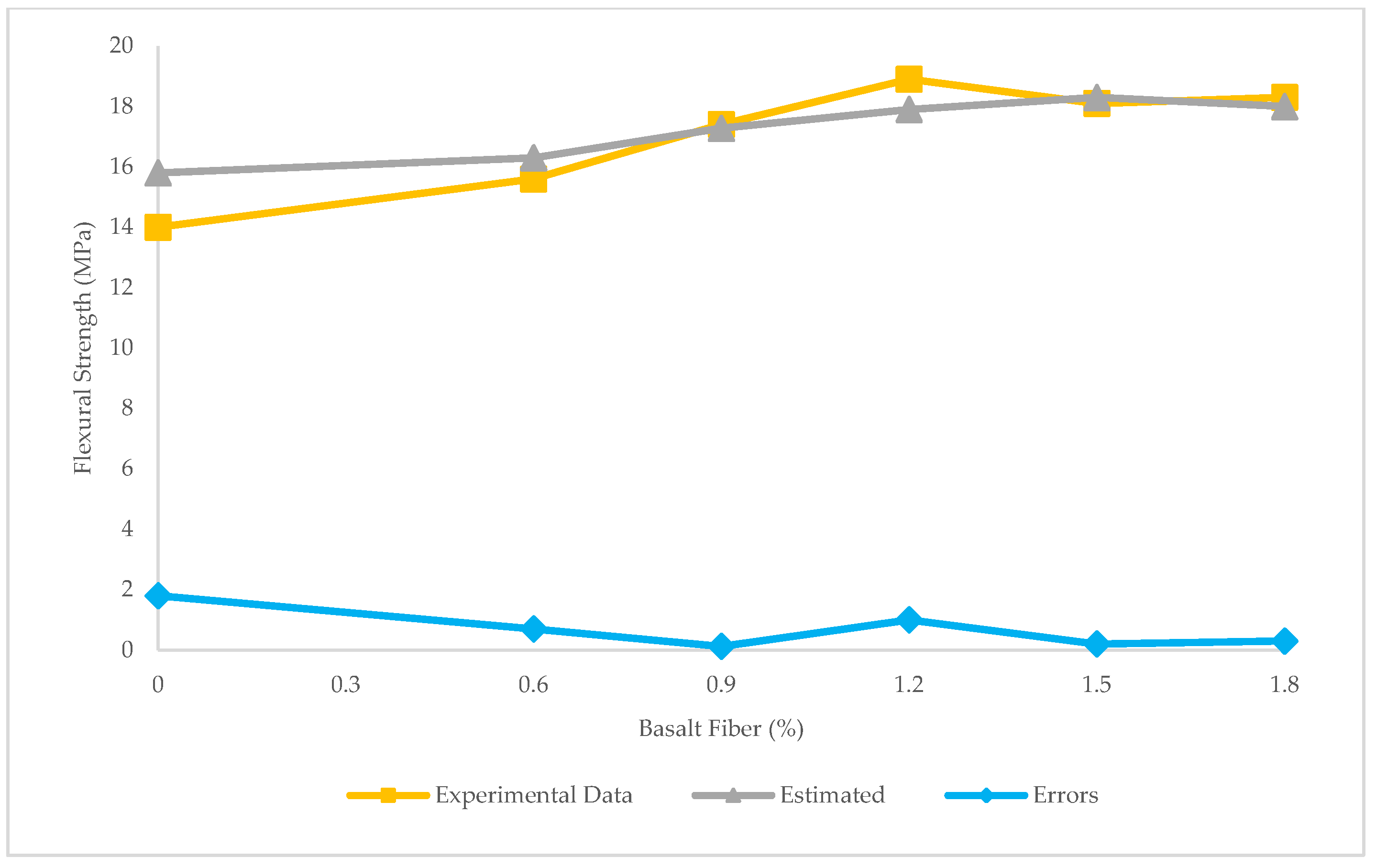
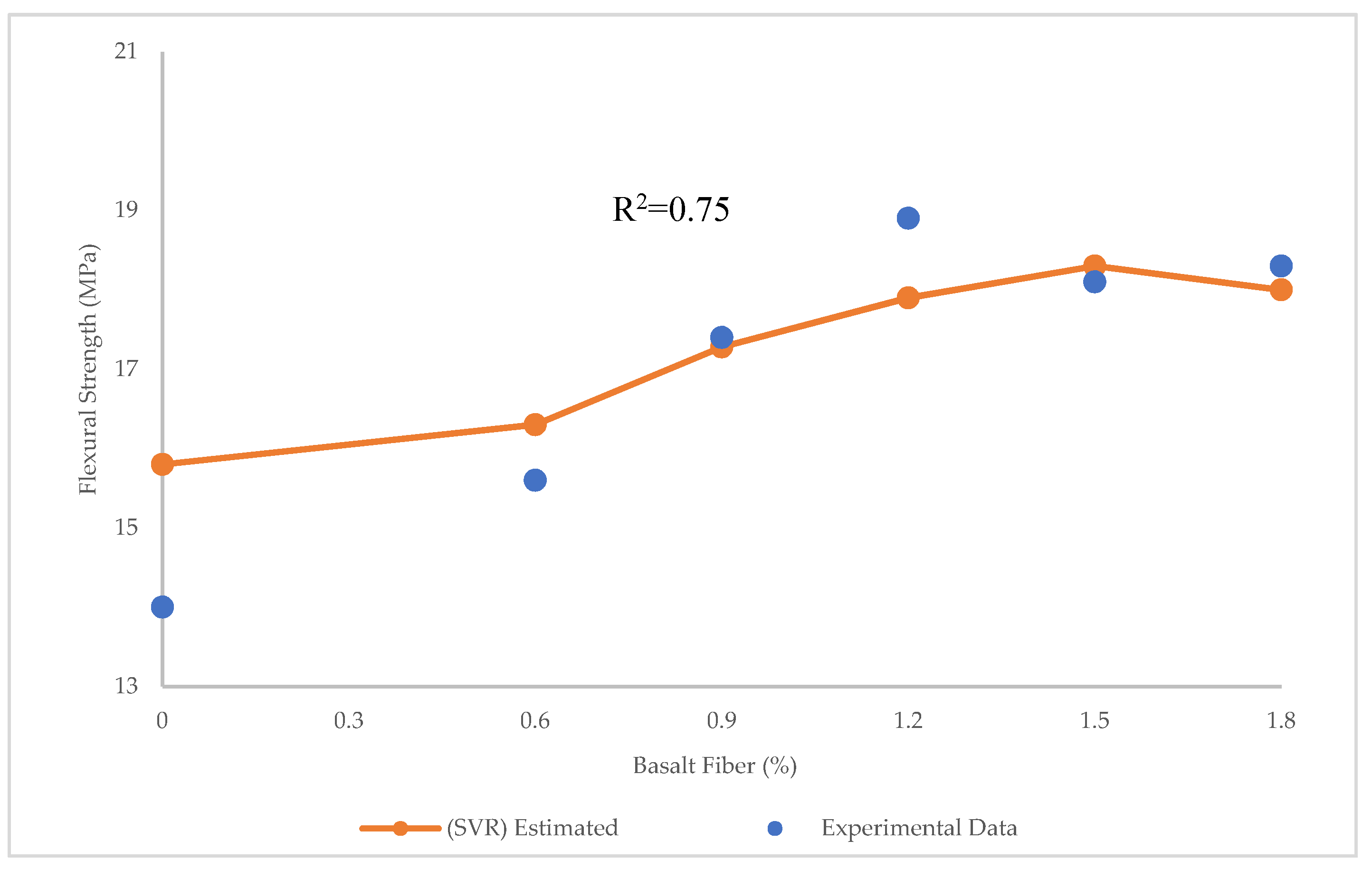
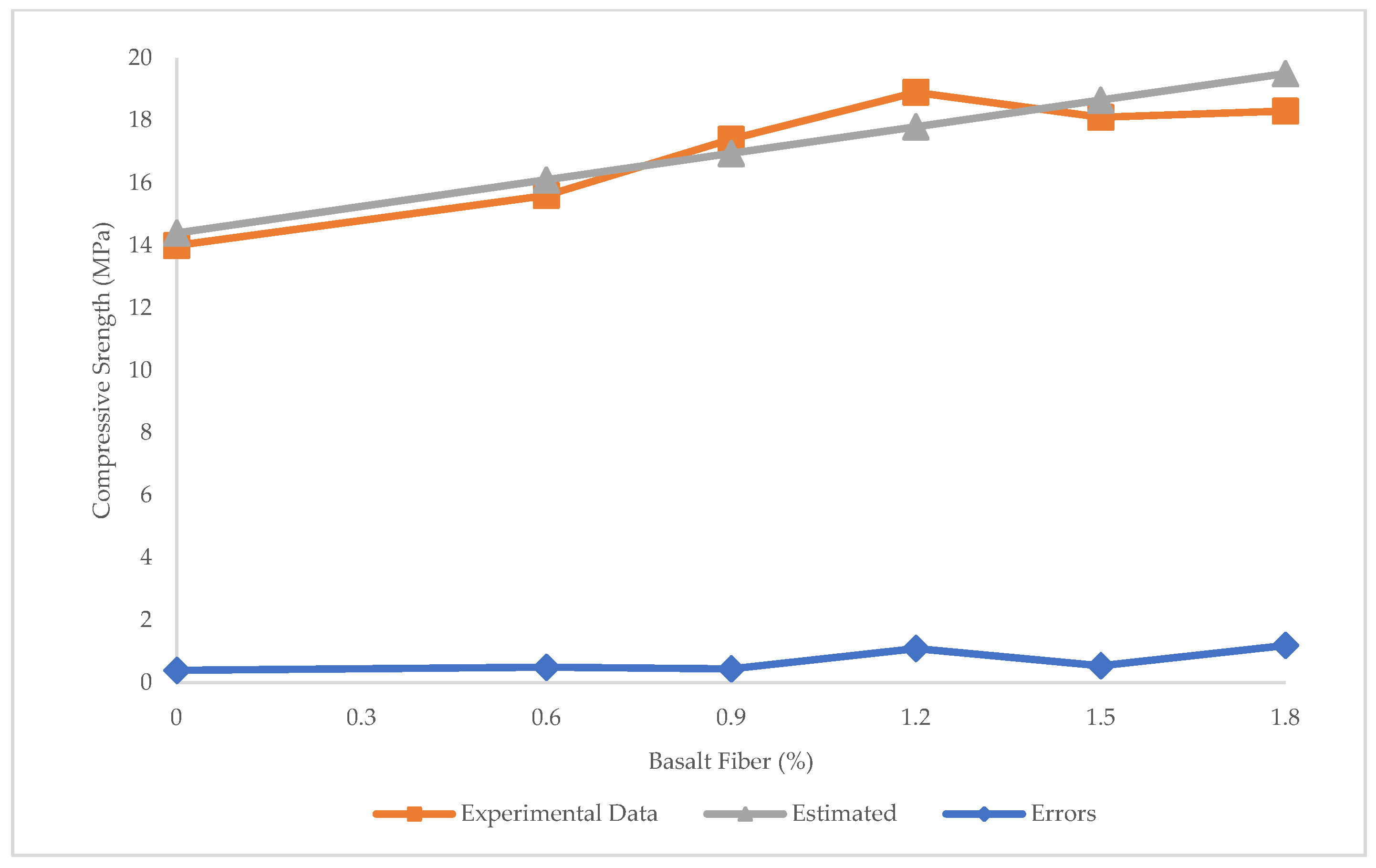
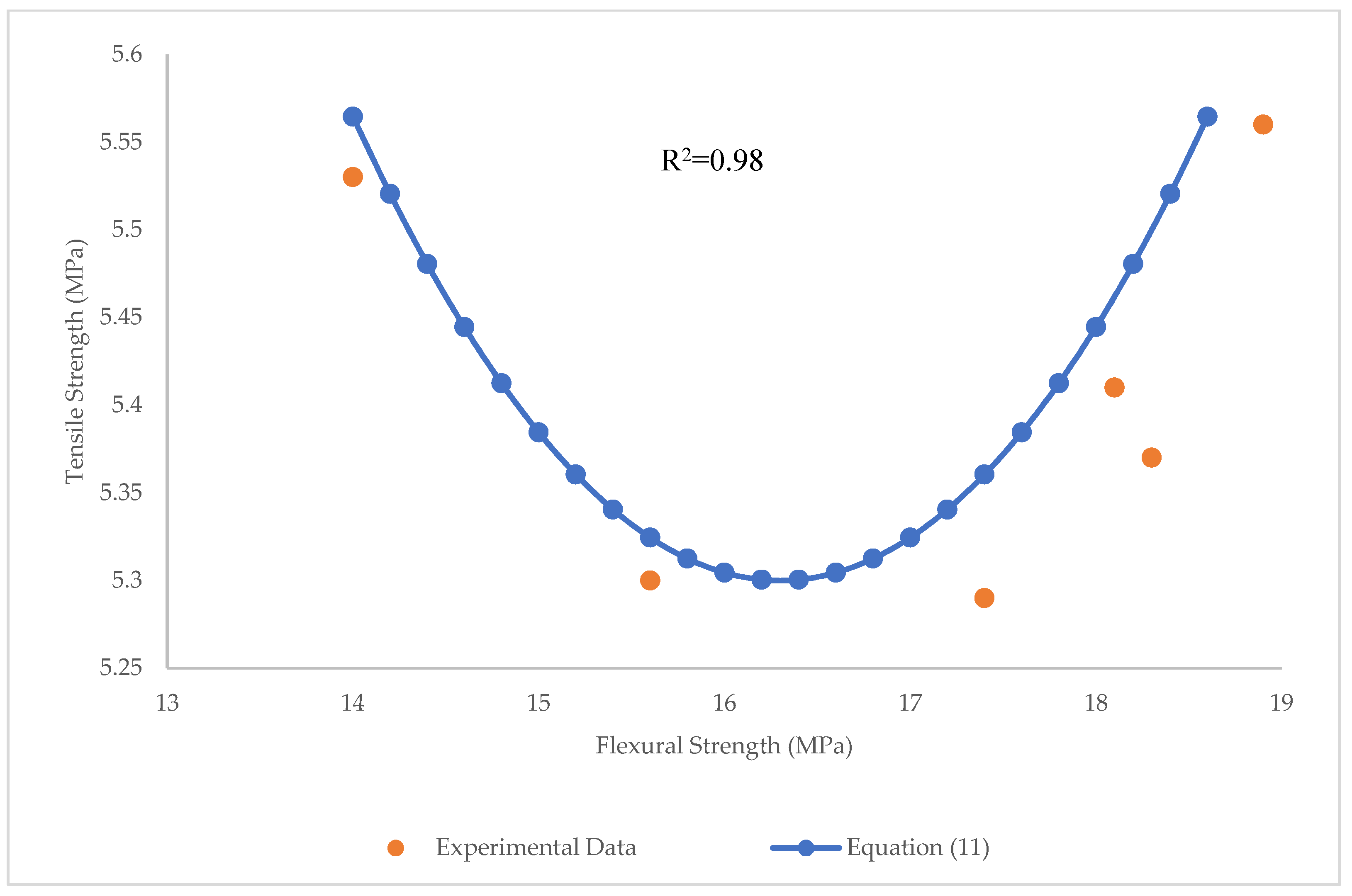
| Experimental | 14 | 15.6 | 17.4 | 18.9 | 18.1 | 18.3 |
| LR | 14.4 | 16.1 | 16.95 | 17.8 | 18.65 | 19.5 |
| SVR | 15.8 | 16.3 | 17.28 | 17.9 | 18.3 | 18 |
| PR | 13.9 | 15.5 | 17.5 | 18.75 | 18.2 | 18.25 |
| Tensile Strength | HPC | BFHPC0.6 | BFHPC0.9 | BFHPC1.2 | BFHPC1.5 | BFHPC1.8 |
|---|---|---|---|---|---|---|
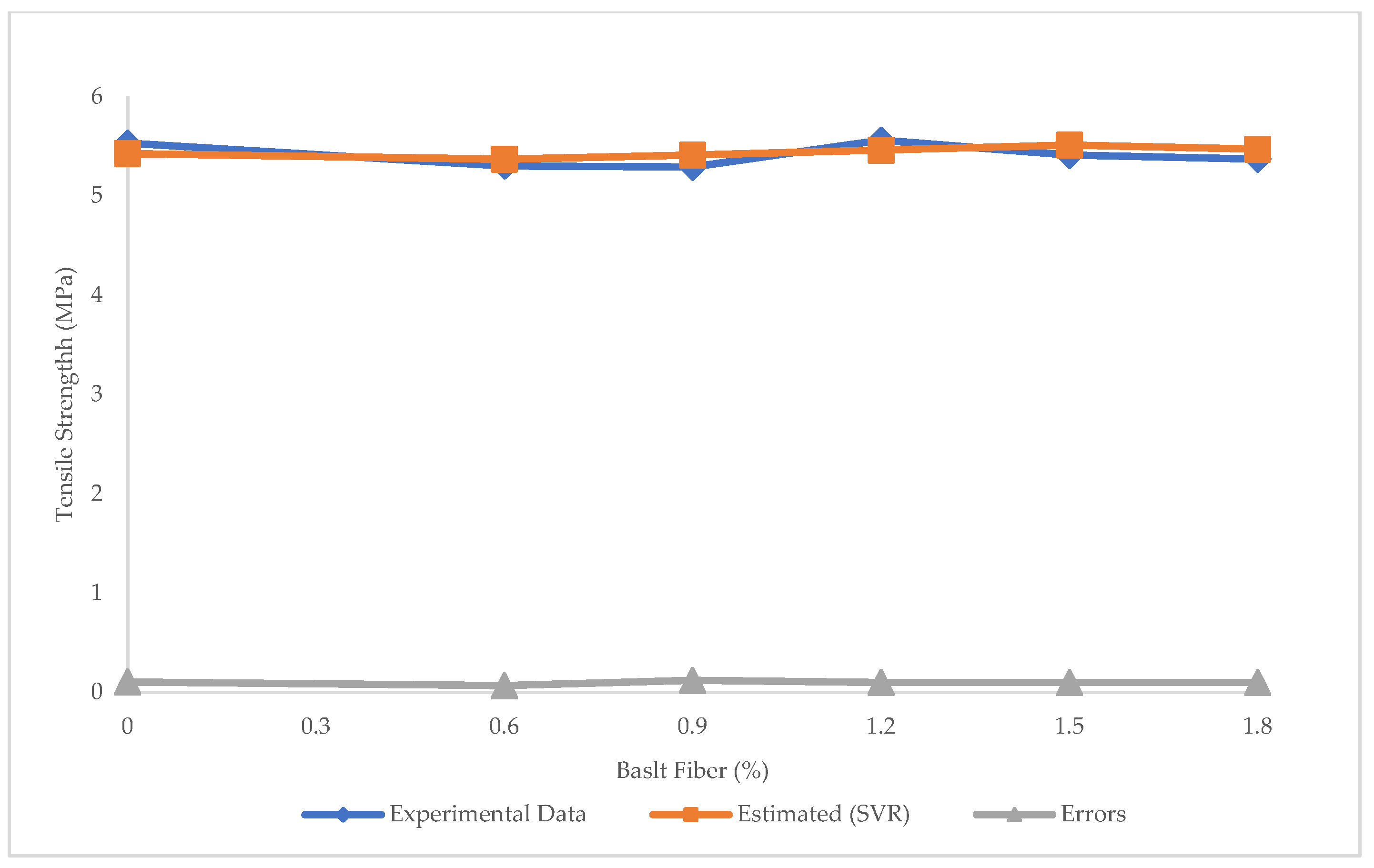
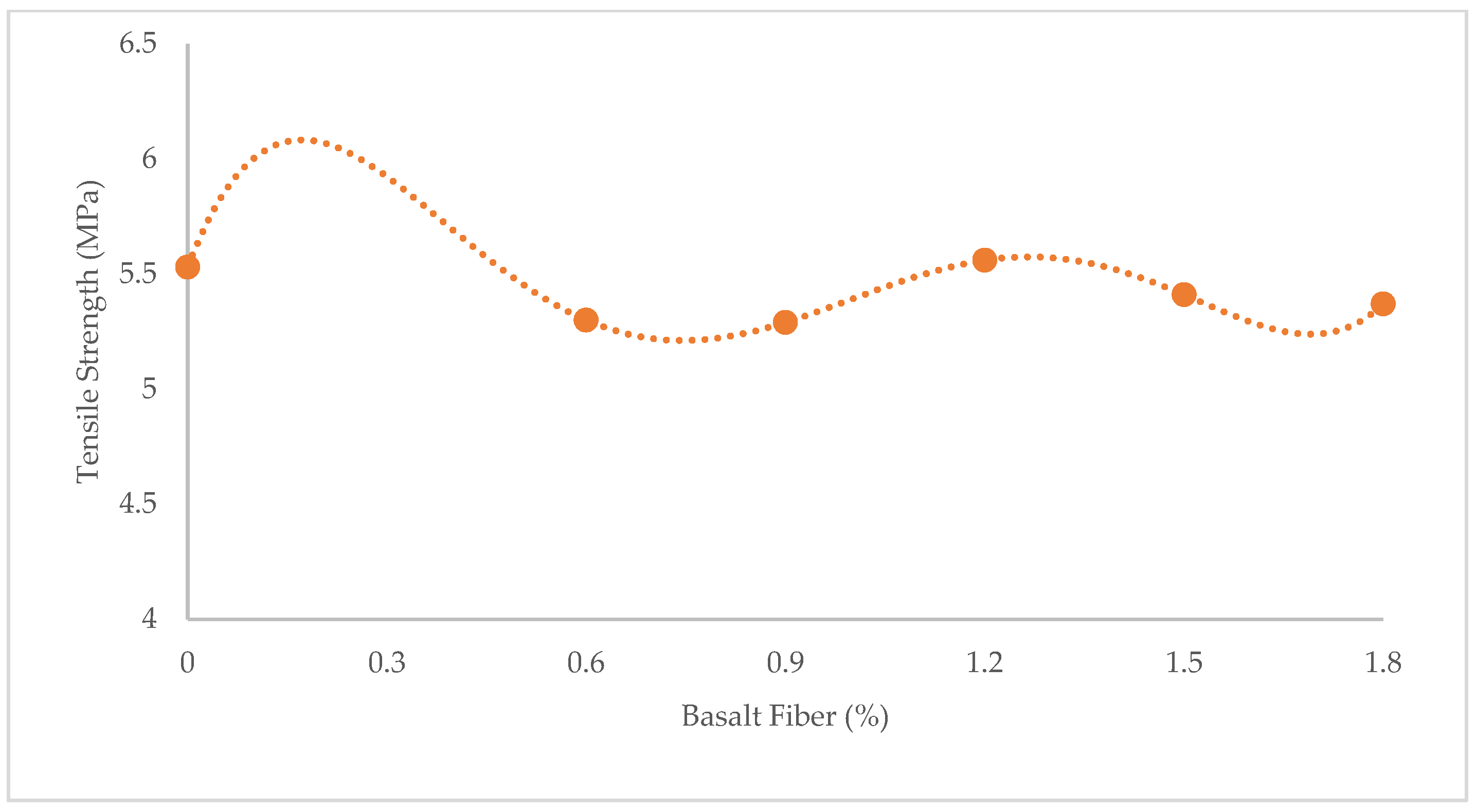
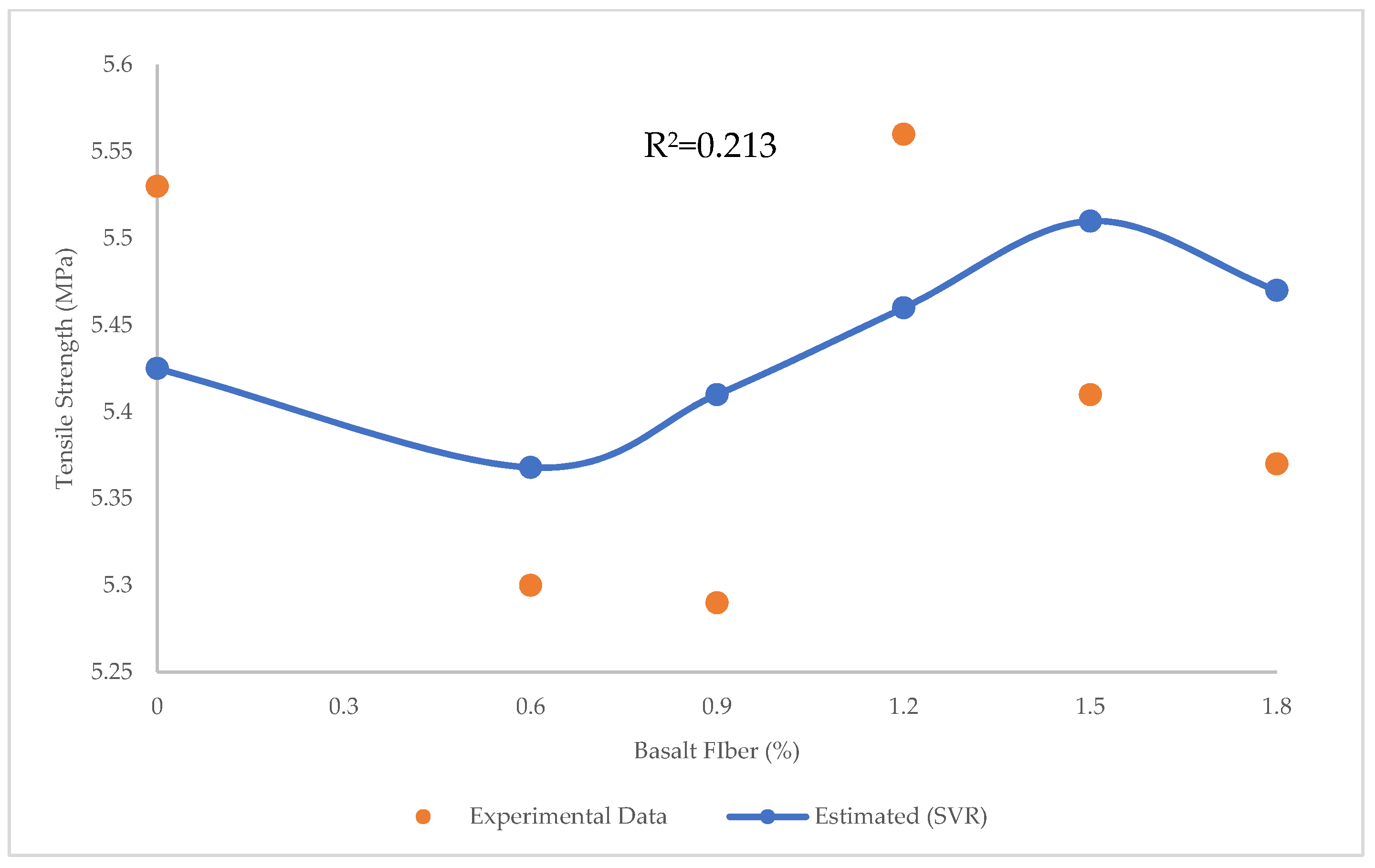
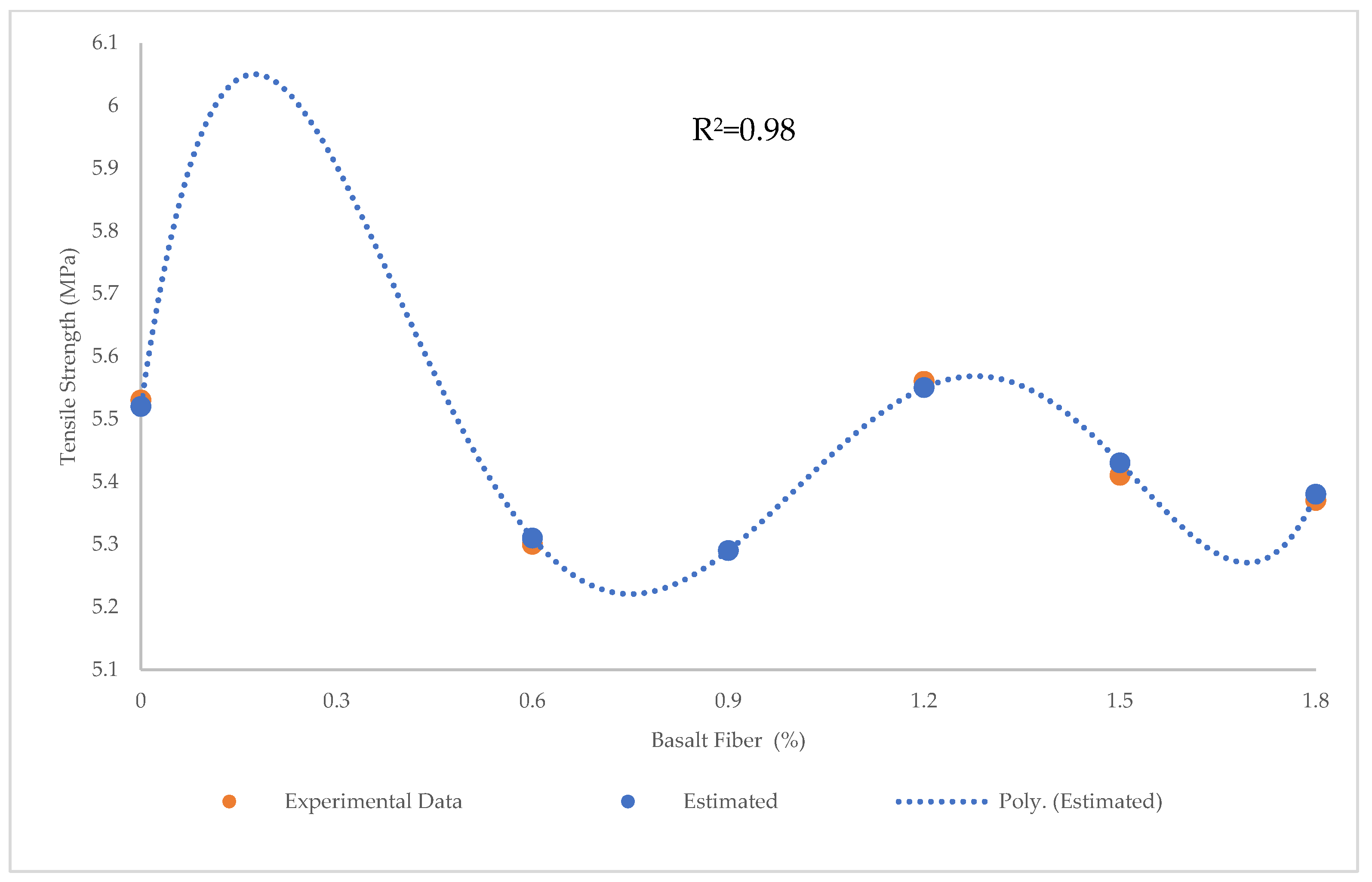
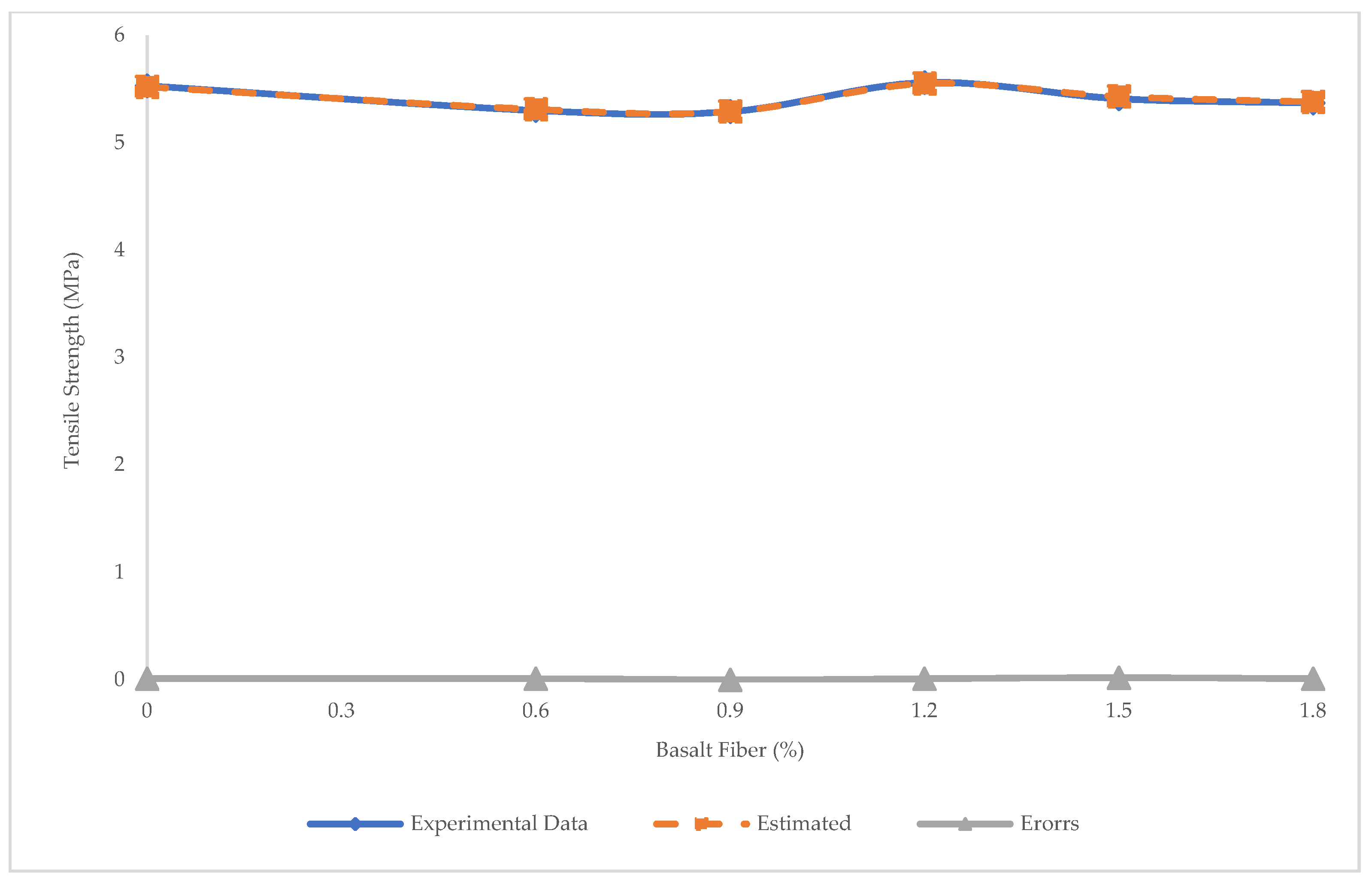
| Experimental | 5.53 | 5.3 | 5.29 | 5.56 | 5.41 | 5.37 |
| LR | 5.45 | 5.43 | 5.42 | 5.51 | 5.4 | 5.39 |
| SVR | 5.425 | 5.368 | 5.41 | 5.46 | 5.51 | 5.47 |
| PR | 5.52 | 5.31 | 5.29 | 5.55 | 5.43 | 5.38 |
| ME | HPC | BFHPC0.6 | BFHPC0.9 | BFHPC1.2 | BFHPC1.5 | BFHPC1.8 |
|---|---|---|---|---|---|---|
| Experiments | 47.6 | 45.6 | 45.57 | 47.88 | 46.63 | 46.28 |
| Prediction by LR | 48.1 | 45.7 | 46.9 | 48.2 | 47 | 45.7 |
| Prediction by SVR | 46.6 | 46.2 | 46.3 | 46.5 | 46.6 | 45.5 |
| Prediction by PR | 47.6 | 45.7 | 45.6 | 47.7 | 46.7 | 46.4 |
| ACI 318-08 [59] | 48.02 | 45.8 | 46.23 | 47.88 | 47.43 | 45.8 |
| Gardner and Lockman [60] | 44.27 | 43.03 | 43.27 | 44.19 | 43.95 | 43.03 |
| Eurocode [61] | 47.11 | 45.11 | 45.49 | 46.99 | 46.6 | 45.11 |
| CEB-FIP [62] | 46.6 | 45.31 | 45.06 | 46.67 | 46.35 | 45.13 |
Publisher’s Note: MDPI stays neutral with regard to jurisdictional claims in published maps and institutional affiliations. |
© 2022 by the authors. Licensee MDPI, Basel, Switzerland. This article is an open access article distributed under the terms and conditions of the Creative Commons Attribution (CC BY) license (https://creativecommons.org/licenses/by/4.0/).
Share and Cite
Hasanzadeh, A.; Vatin, N.I.; Hematibahar, M.; Kharun, M.; Shooshpasha, I. Prediction of the Mechanical Properties of Basalt Fiber Reinforced High-Performance Concrete Using Machine Learning Techniques. Materials 2022, 15, 7165. https://doi.org/10.3390/ma15207165
Hasanzadeh A, Vatin NI, Hematibahar M, Kharun M, Shooshpasha I. Prediction of the Mechanical Properties of Basalt Fiber Reinforced High-Performance Concrete Using Machine Learning Techniques. Materials. 2022; 15(20):7165. https://doi.org/10.3390/ma15207165
Chicago/Turabian StyleHasanzadeh, Ali, Nikolai Ivanovich Vatin, Mohammad Hematibahar, Makhmud Kharun, and Issa Shooshpasha. 2022. "Prediction of the Mechanical Properties of Basalt Fiber Reinforced High-Performance Concrete Using Machine Learning Techniques" Materials 15, no. 20: 7165. https://doi.org/10.3390/ma15207165
APA StyleHasanzadeh, A., Vatin, N. I., Hematibahar, M., Kharun, M., & Shooshpasha, I. (2022). Prediction of the Mechanical Properties of Basalt Fiber Reinforced High-Performance Concrete Using Machine Learning Techniques. Materials, 15(20), 7165. https://doi.org/10.3390/ma15207165