Article

Control of Porous Layer Thickness in Thermophoretic Deposition of Nanoparticles
1
Faculty of Production Engineering, University of Bremen, 28359 Bremen, Germany
2
Leibniz Institute for Materials Engineering IWT, 28359 Bremen, Germany
3
Institute of Solid State Physics, University of Bremen, 28359 Bremen, Germany
*
Author to whom correspondence should be addressed.
Materials 2021, 14(9), 2395; https://doi.org/10.3390/ma14092395
Submission received: 15 March 2021 / Revised: 30 April 2021 / Accepted: 1 May 2021 / Published: 4 May 2021
(This article belongs to the Special Issue Flame Synthesis and Characterization of Oxide Nanoparticles)

Abstract

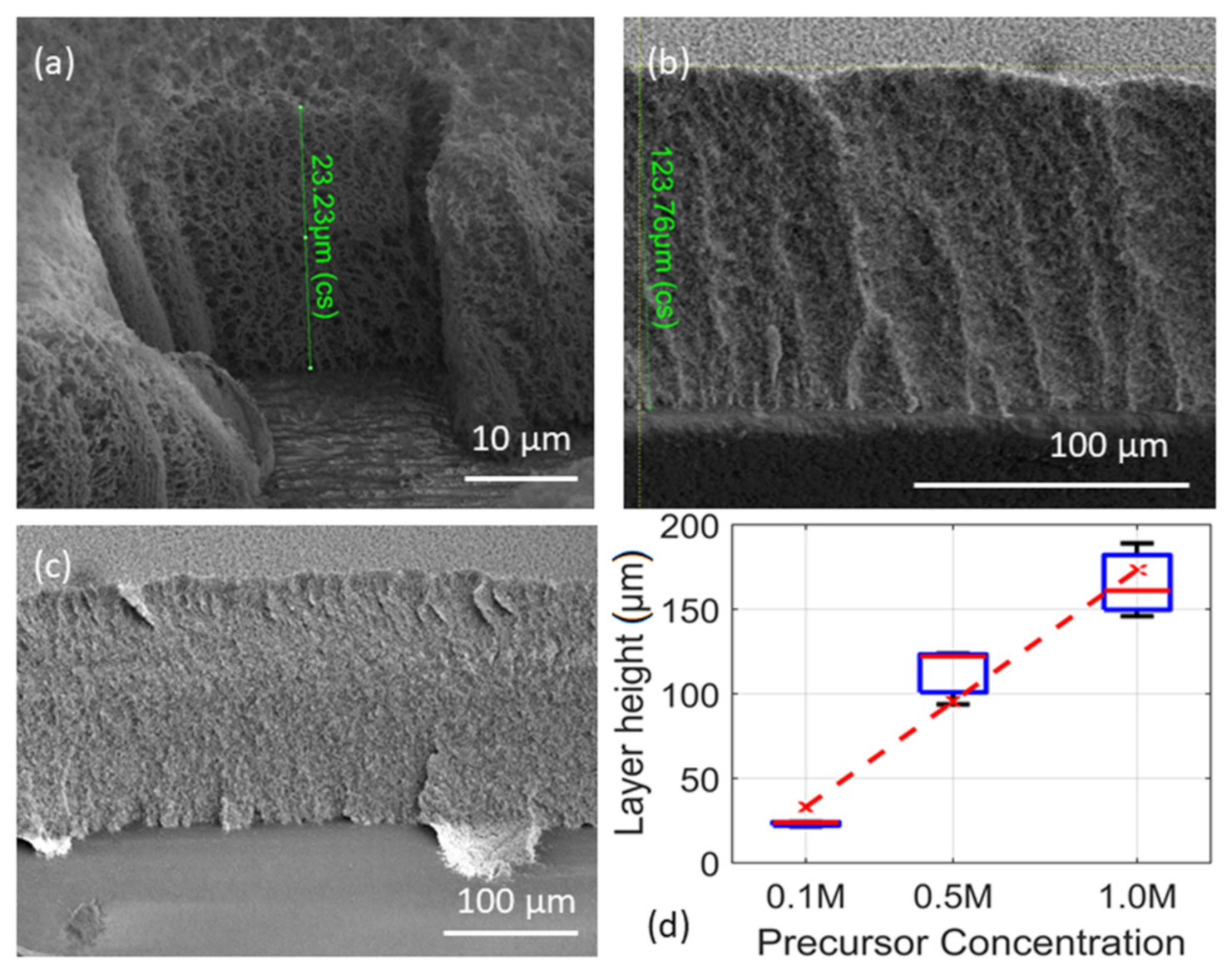
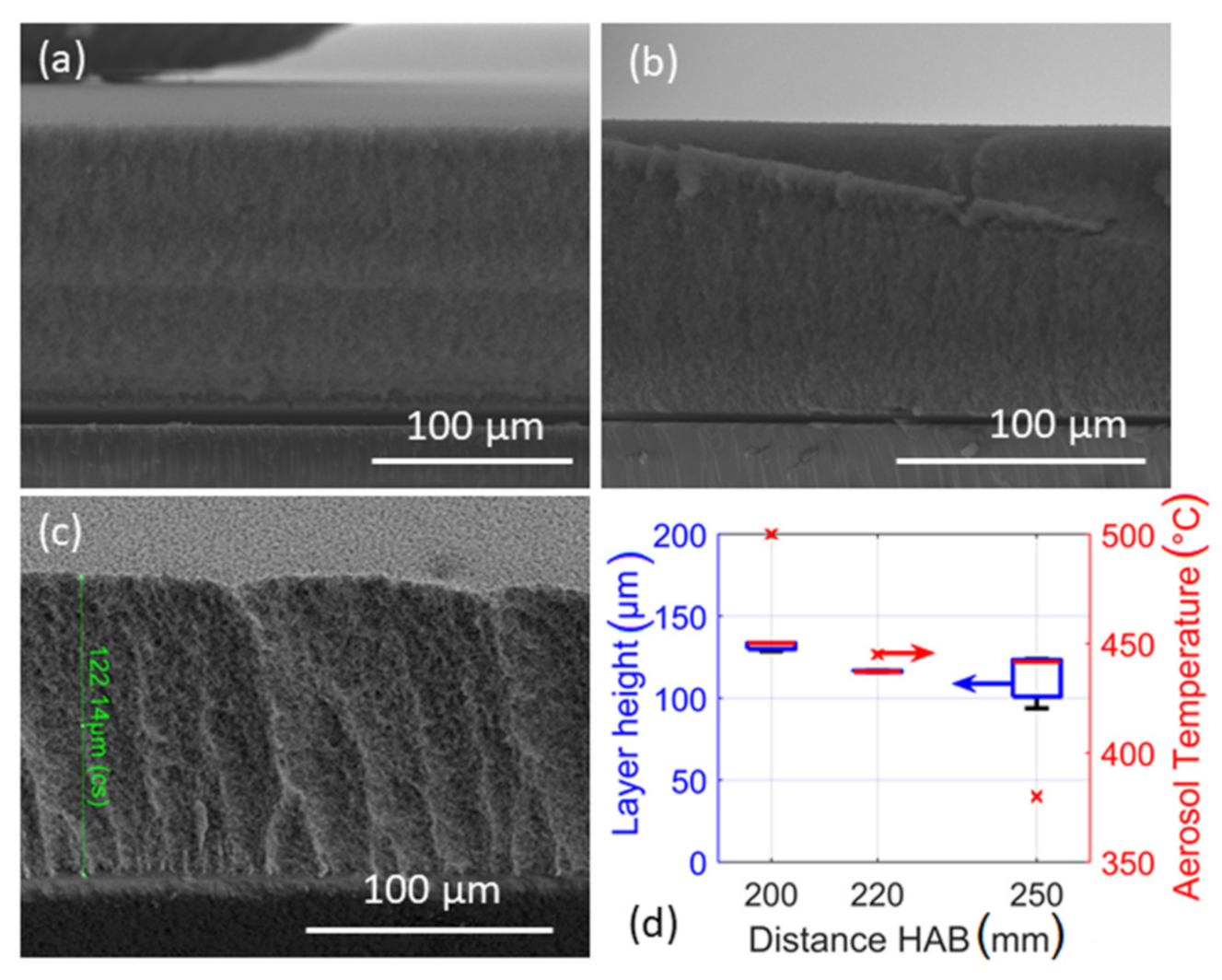
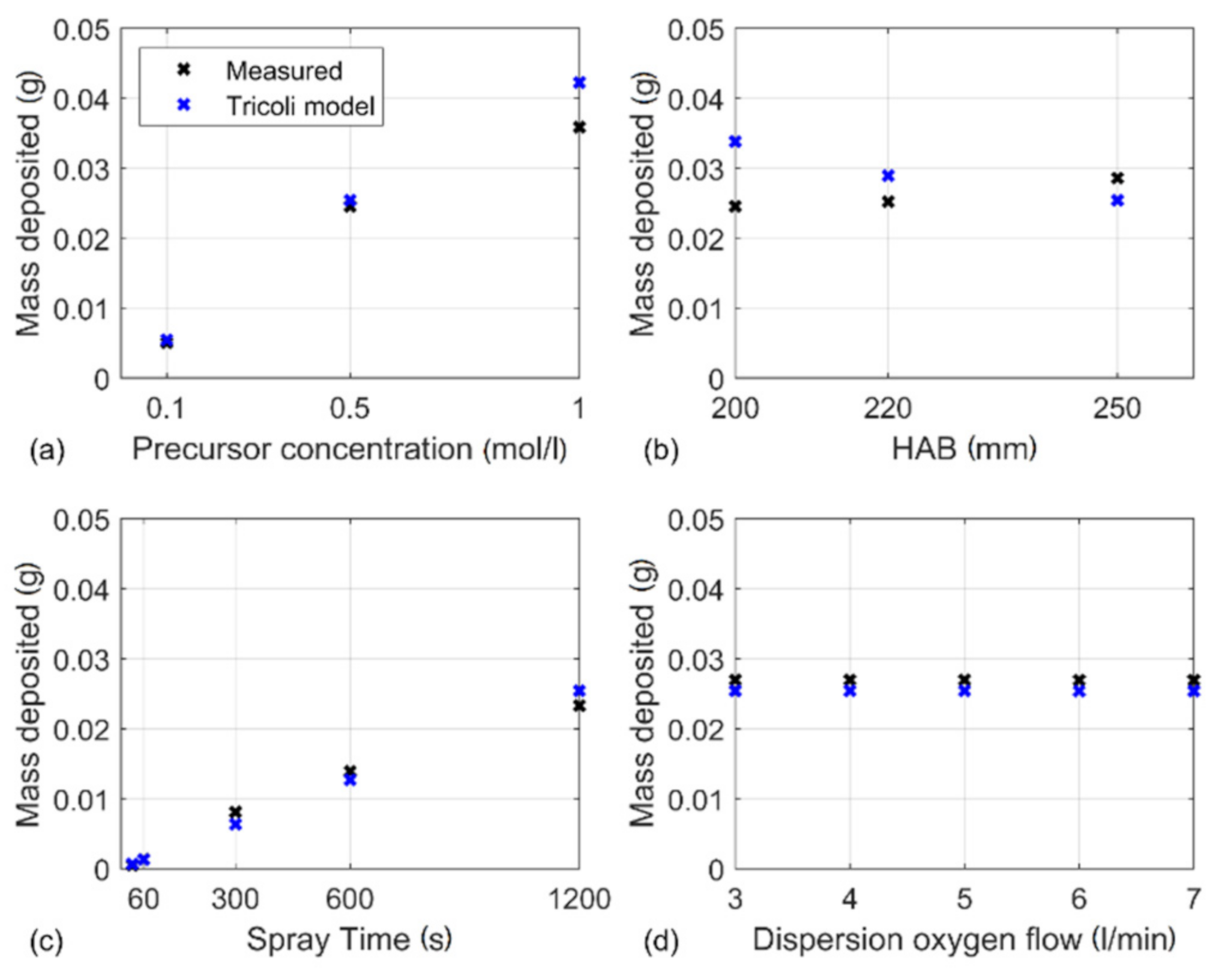
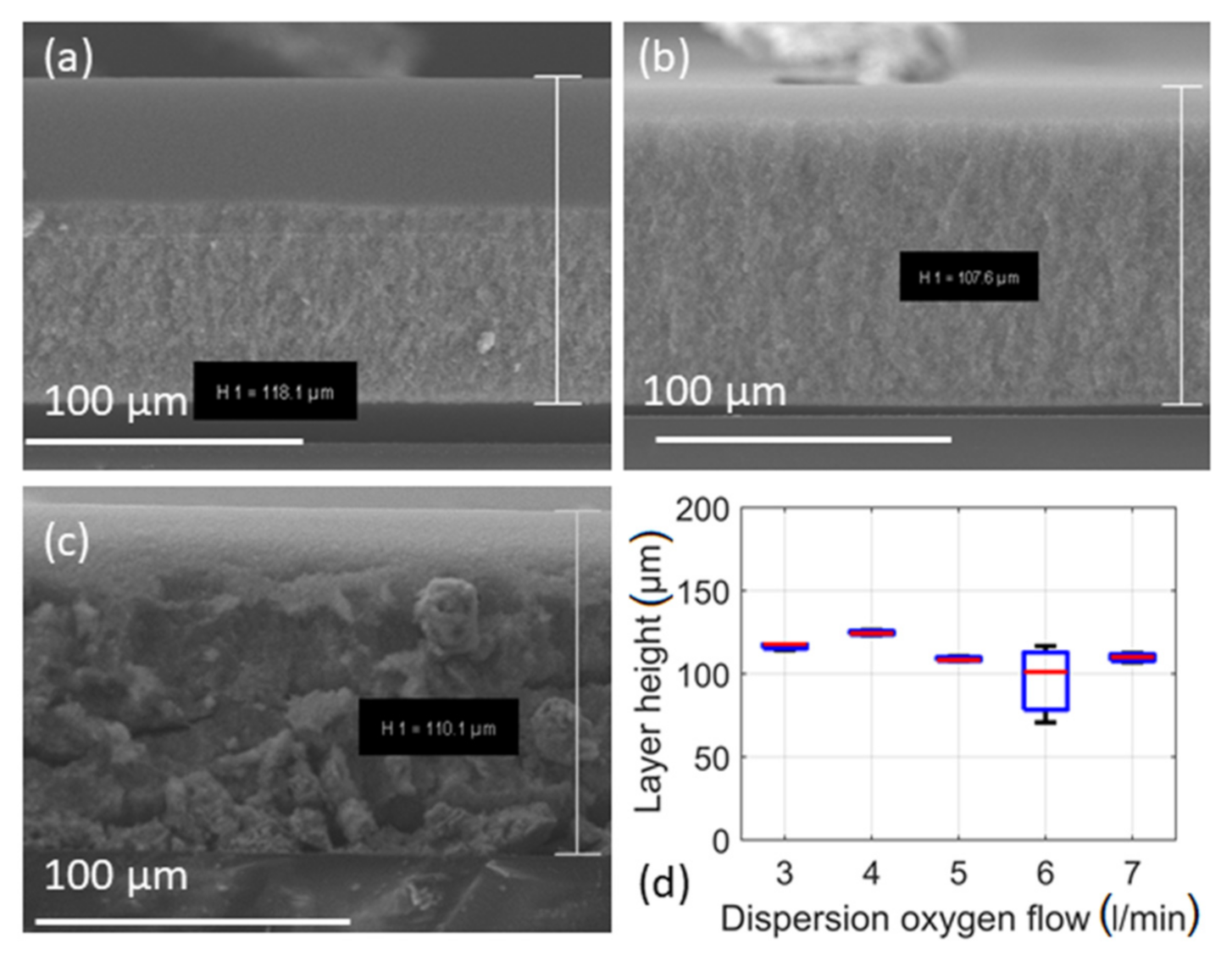
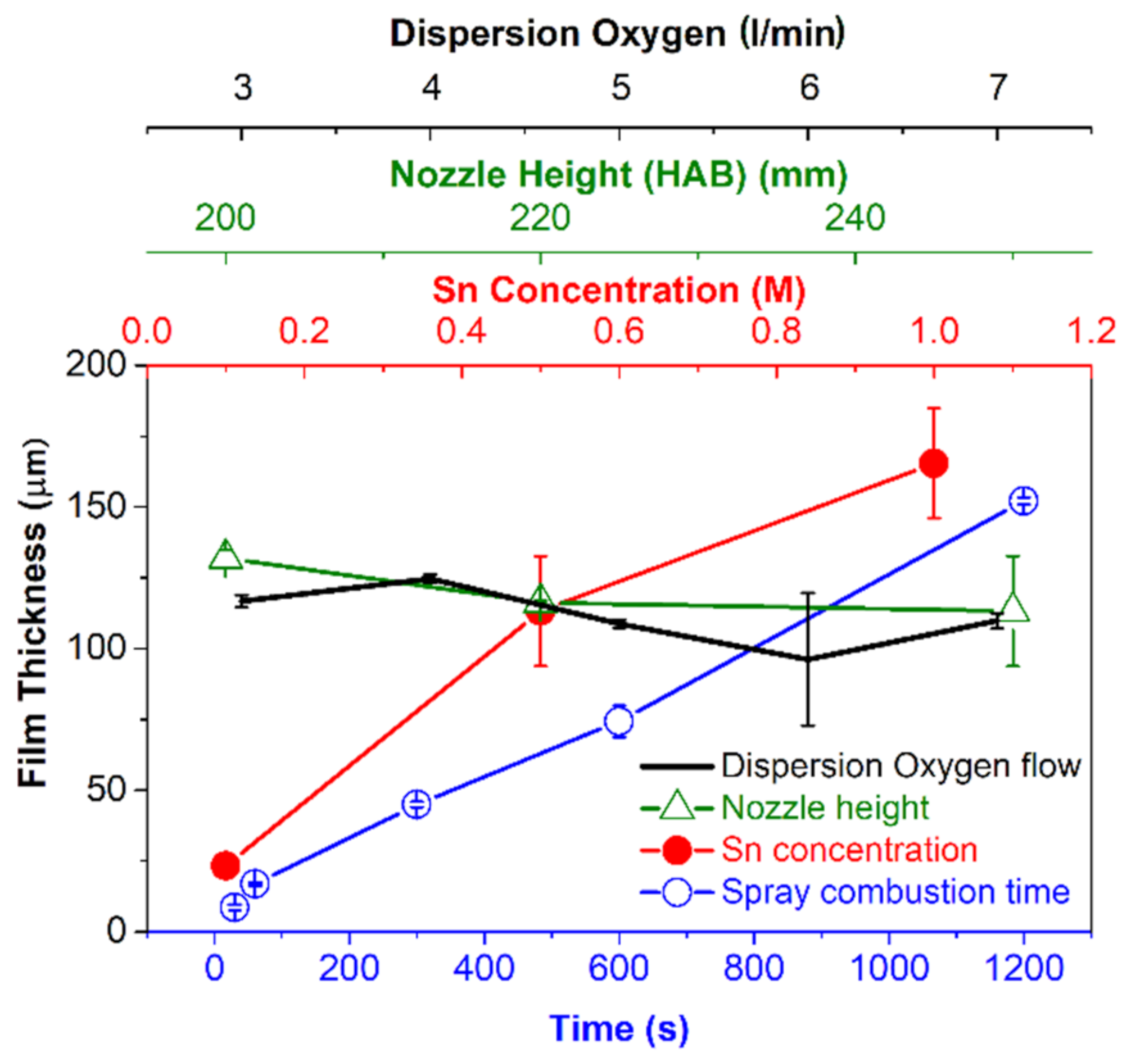
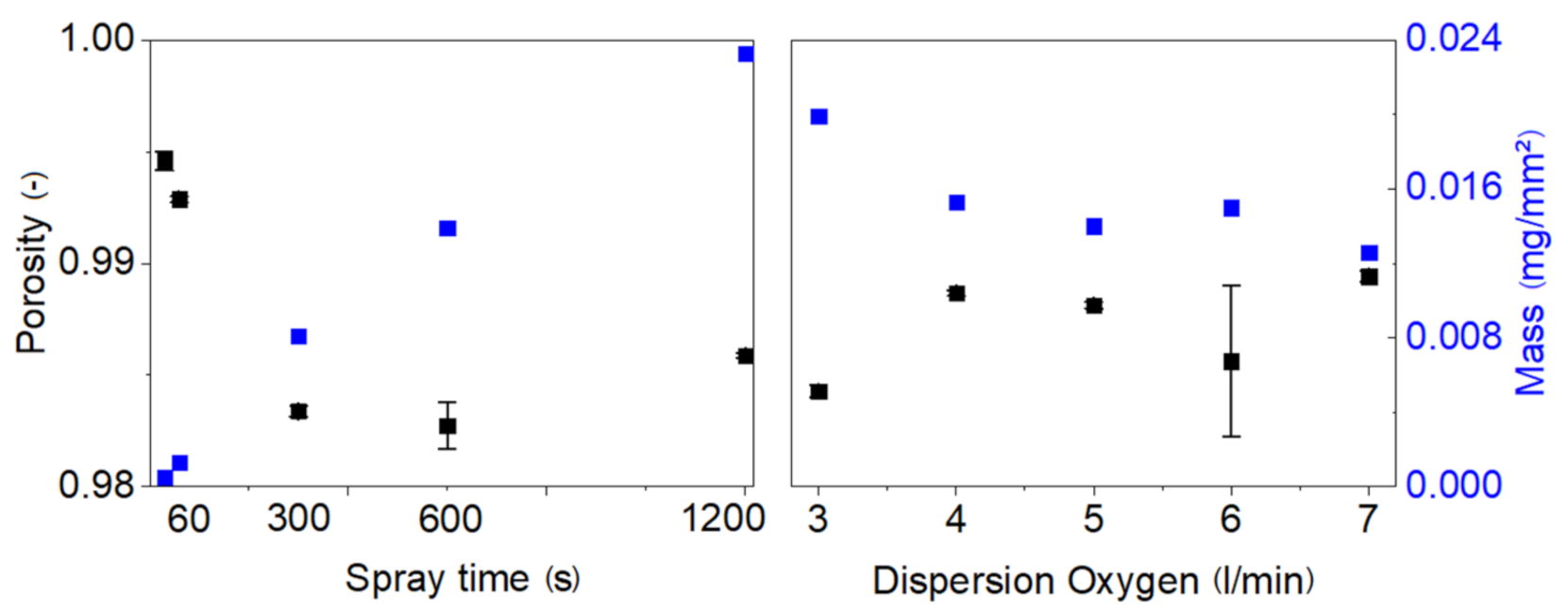
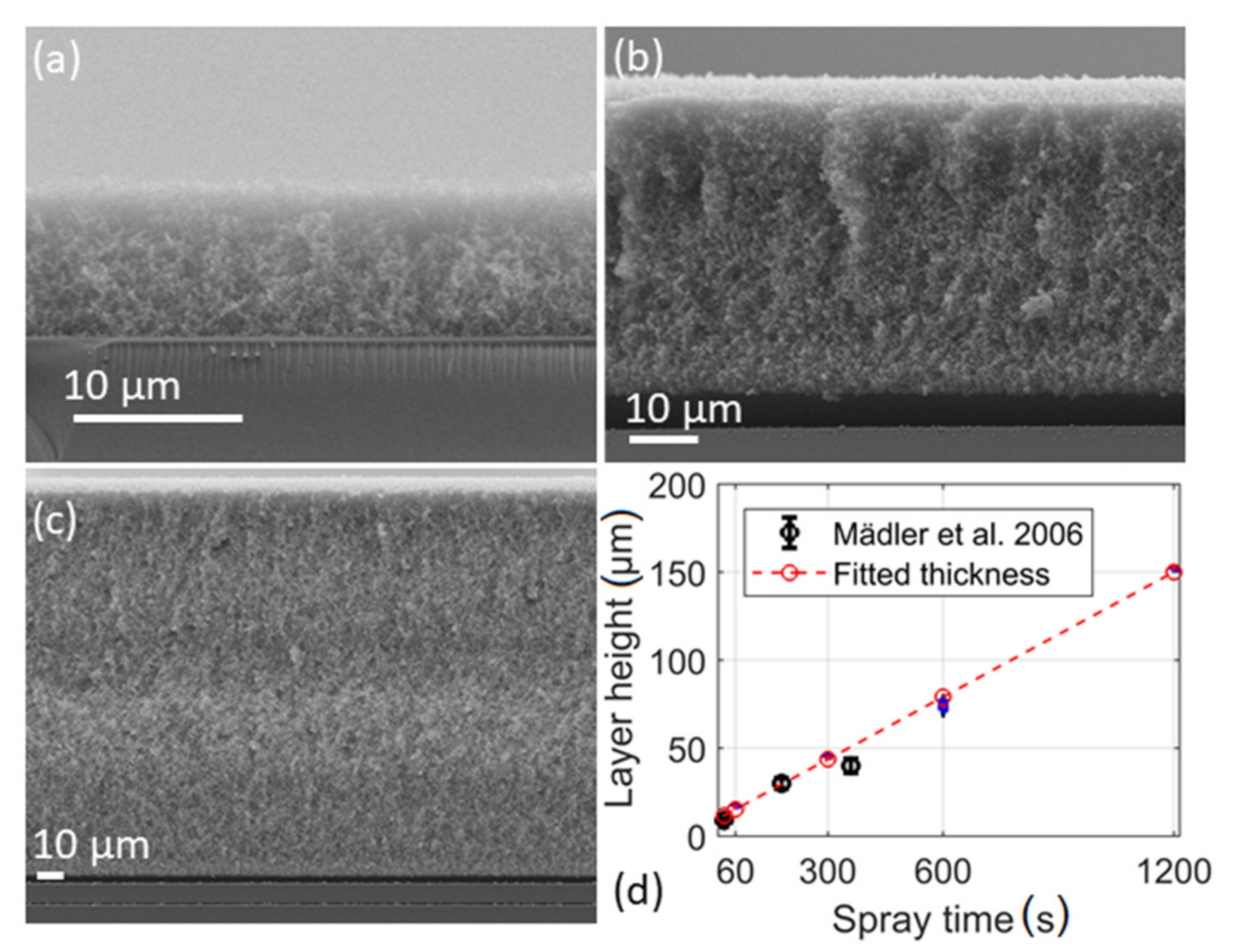
The film thickness plays an important role in the performance of materials applicable to different technologies including chemical sensors, catalysis and/or energy materials. The relationship between the surface and volume of the functional layers is key to high performance evaluations. Here we demonstrate the thermophoretic deposition of different thicknesses of the functional layers designed using flame combustion of tin 2-ethylhexanoate dissolved in xylene, and measurement of thickness by scanning electron microscopy and focused ion beam. The parameters such as spray fluid concentration (differing Sn2+ content), substrate-nozzle distance and time of the spray were considered to investigate the layer growth. The results showed ≈ 23, 124 and 161 μm thickness of the SnO2 layer after flame spray of 0.1, 0.5 M and 1.0 M tin 2-EHA-Xylene solutions for 1200 s. While Sn2+ concentration was 0.5 M for all the flame sprays, the substrates placed at 250, 220 and 200 mm from the flame nozzle had layer thicknesses of 113, 116 and 132 µm, respectively. Spray time dependent thickness growth showed a linear increase from 8.5 to 152.1 µm when the substrates were flame sprayed for 30 s to 1200 s using 0.5 M tin 2-EHA-Xylene solutions. Changing the dispersion oxygen flow (3–7 L/min) had almost no effect on layer thickness. Layers fabricated were compared to a model found in literature, which seems to describe the thickness well in the domain of varied parameters. It turned out that primary particle size deposited on the substrate can be tuned without altering the layer thickness and with little effect on porosity. Applications depending on porosity, such as catalysis or gas sensing, can benefit from tuning the layer thickness and primary particle size.
Keywords: flame spray pyrolysis; nanoparticles; thermophoretic deposition; film thickness flame spray pyrolysis; nanoparticles; thermophoretic deposition; film thickness