Article

Experimental and Numerical Study on the PG-7VM Warhead Performance against High-Hardness Armor Steel


1
Military Institute of Armament Technology, 7 Wyszynskiego Street, 05-220 Zielonka, Poland
2
Faculty of Production Engineering, Institute of Mechanics and Printing, Warsaw University of Technology, Narbutta 85 Street, 02-524 Warsaw, Poland
*
Authors to whom correspondence should be addressed.
Materials 2021, 14(11), 3020; https://doi.org/10.3390/ma14113020
Submission received: 12 May 2021 / Revised: 27 May 2021 / Accepted: 28 May 2021 / Published: 2 June 2021
(This article belongs to the Special Issue Materials Dedicated for Armours and Protection Systems)

Abstract

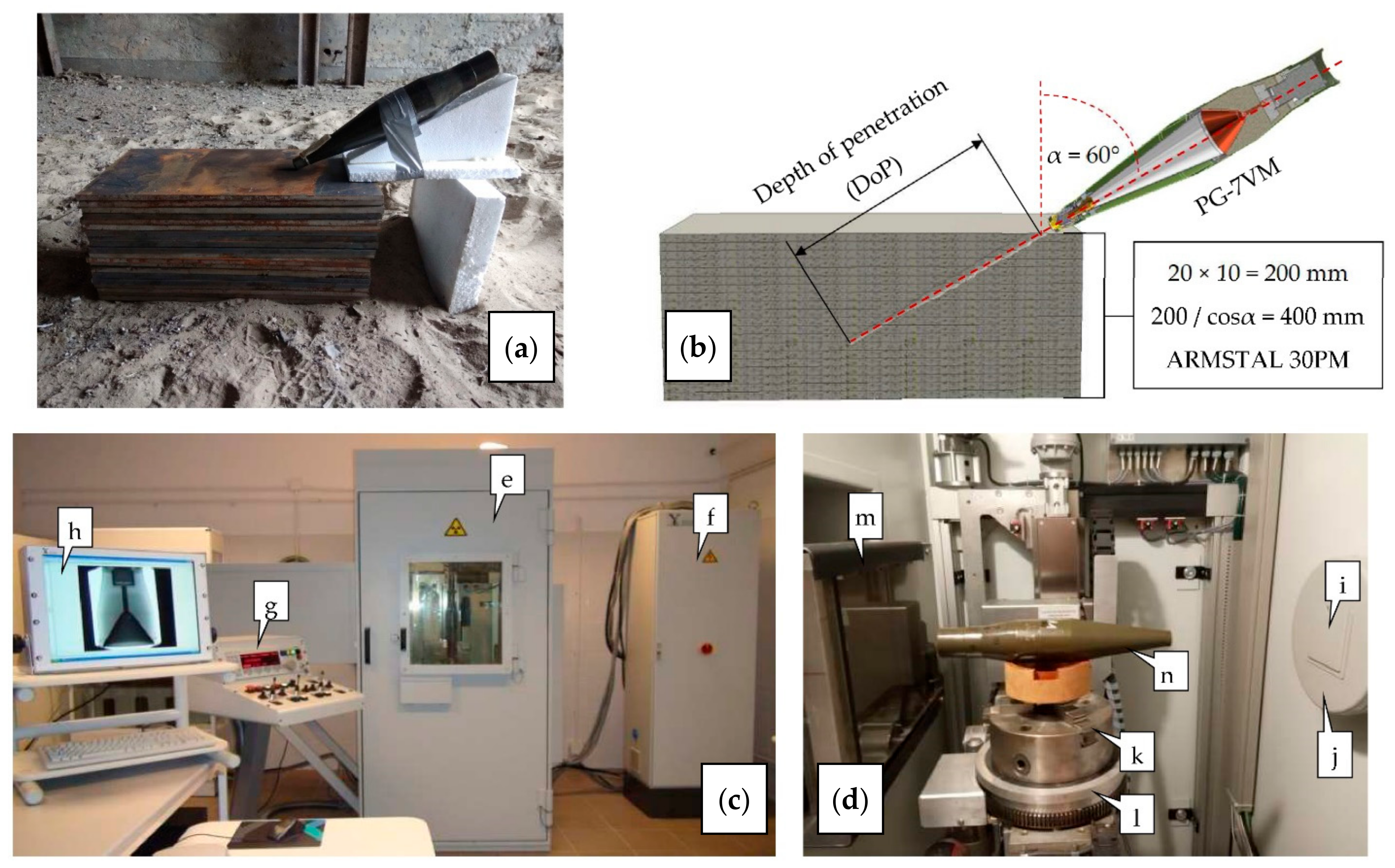
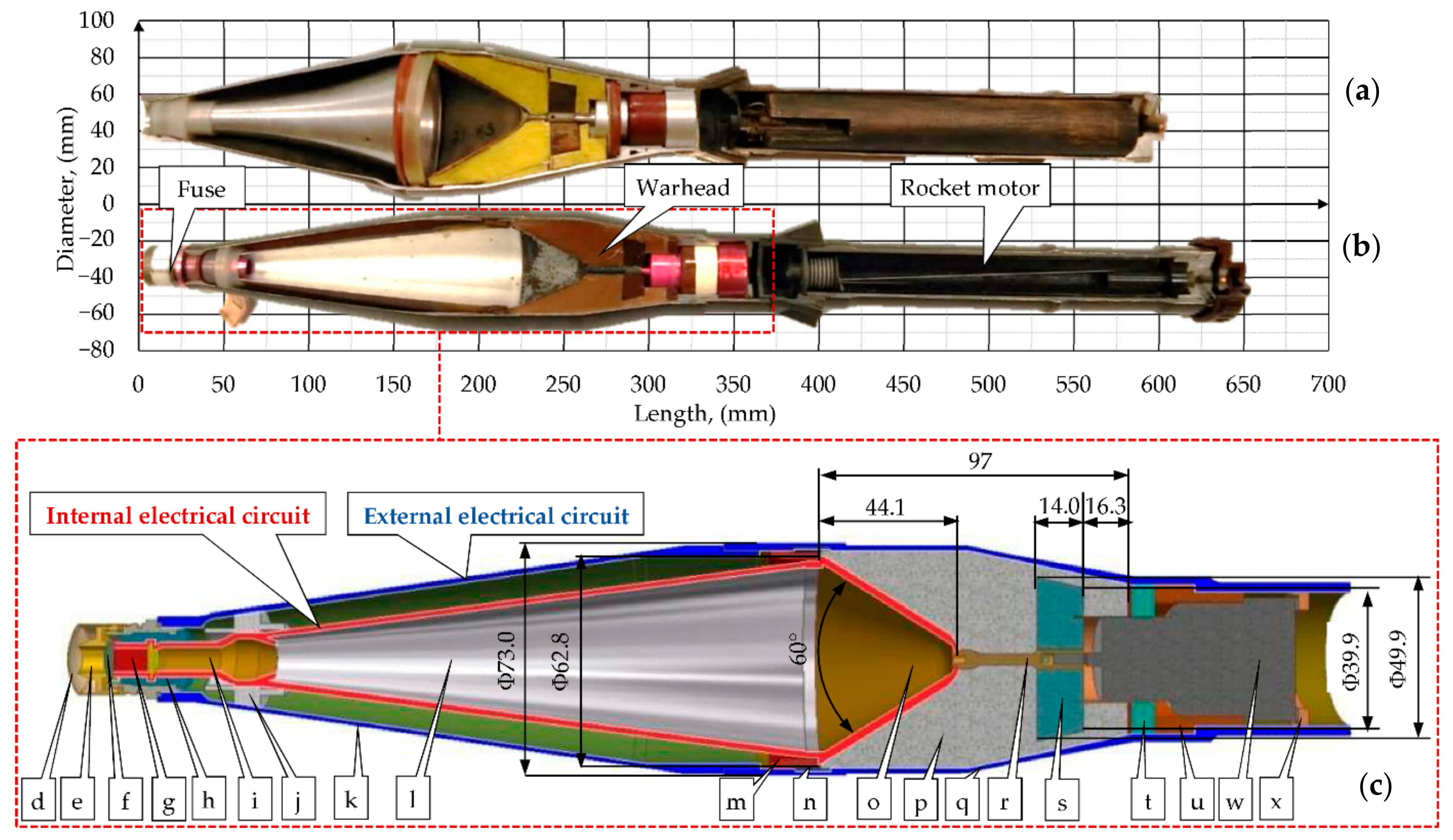
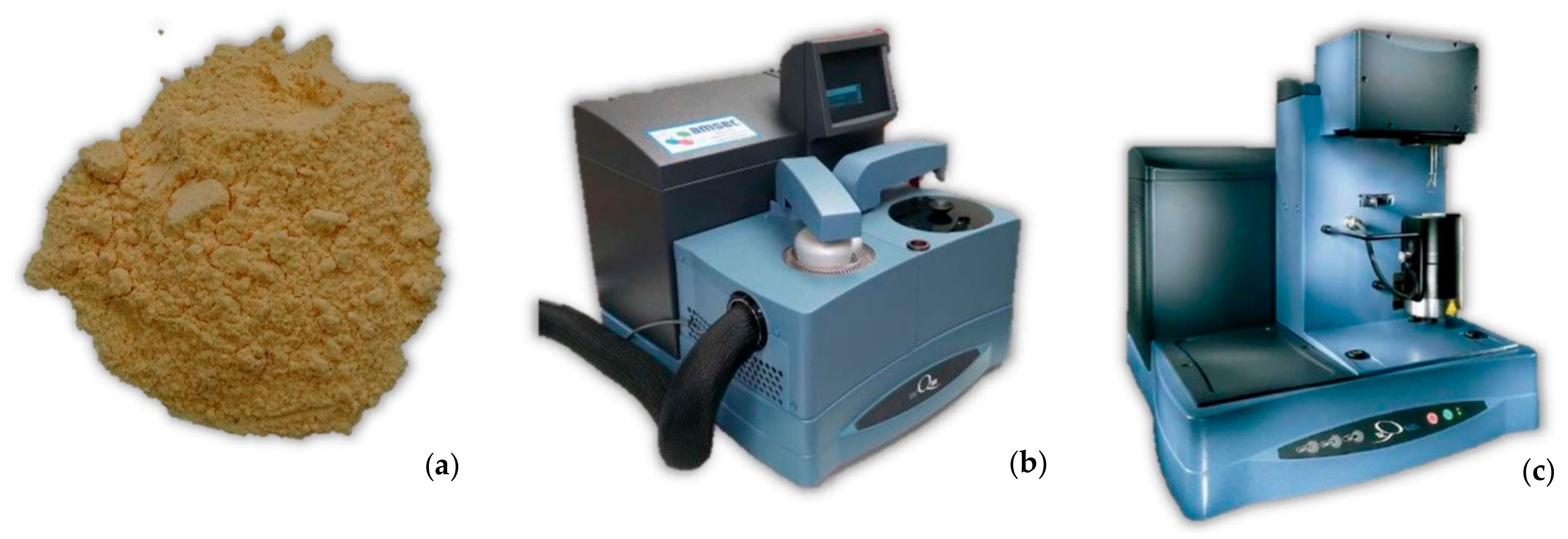
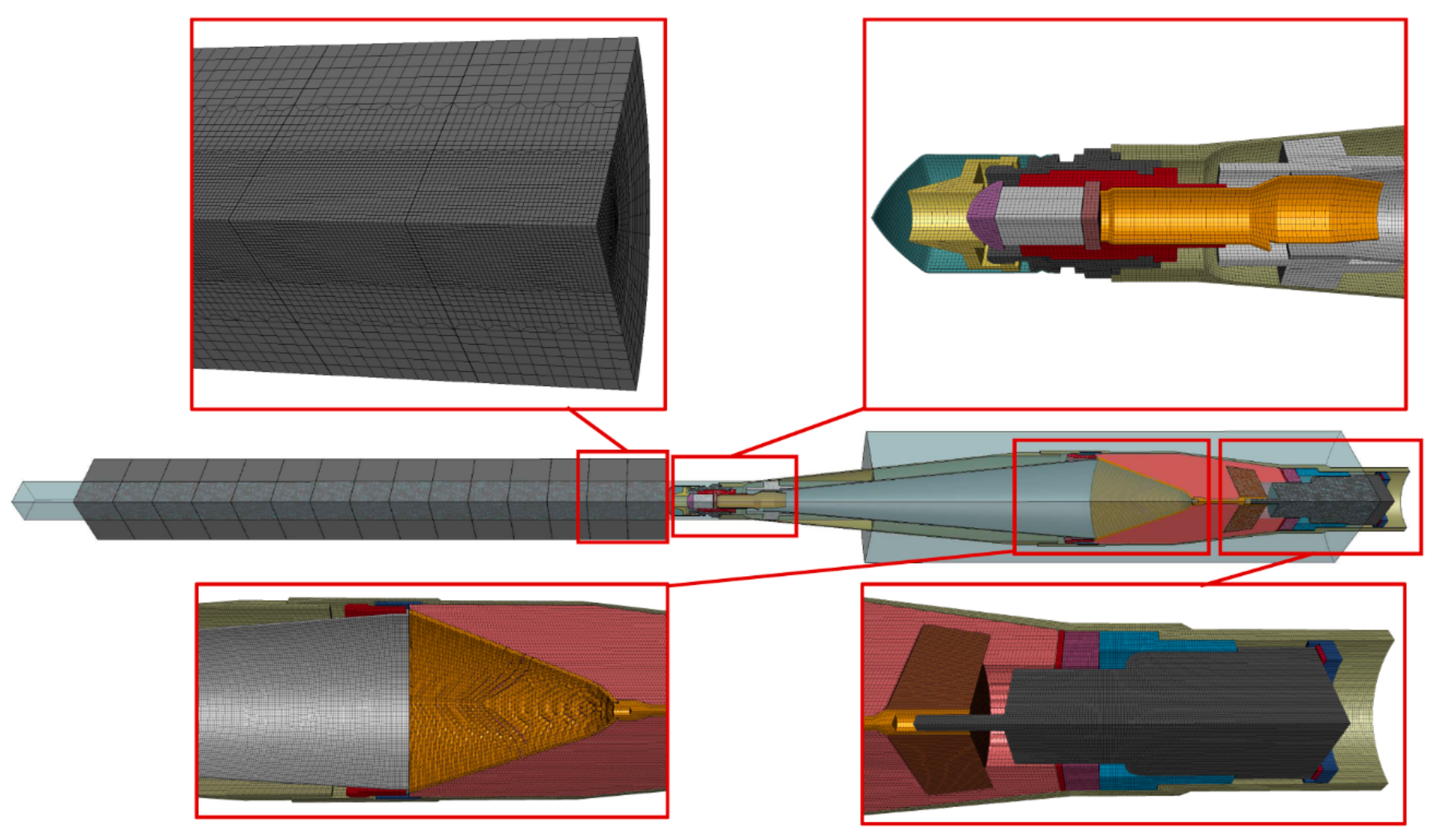
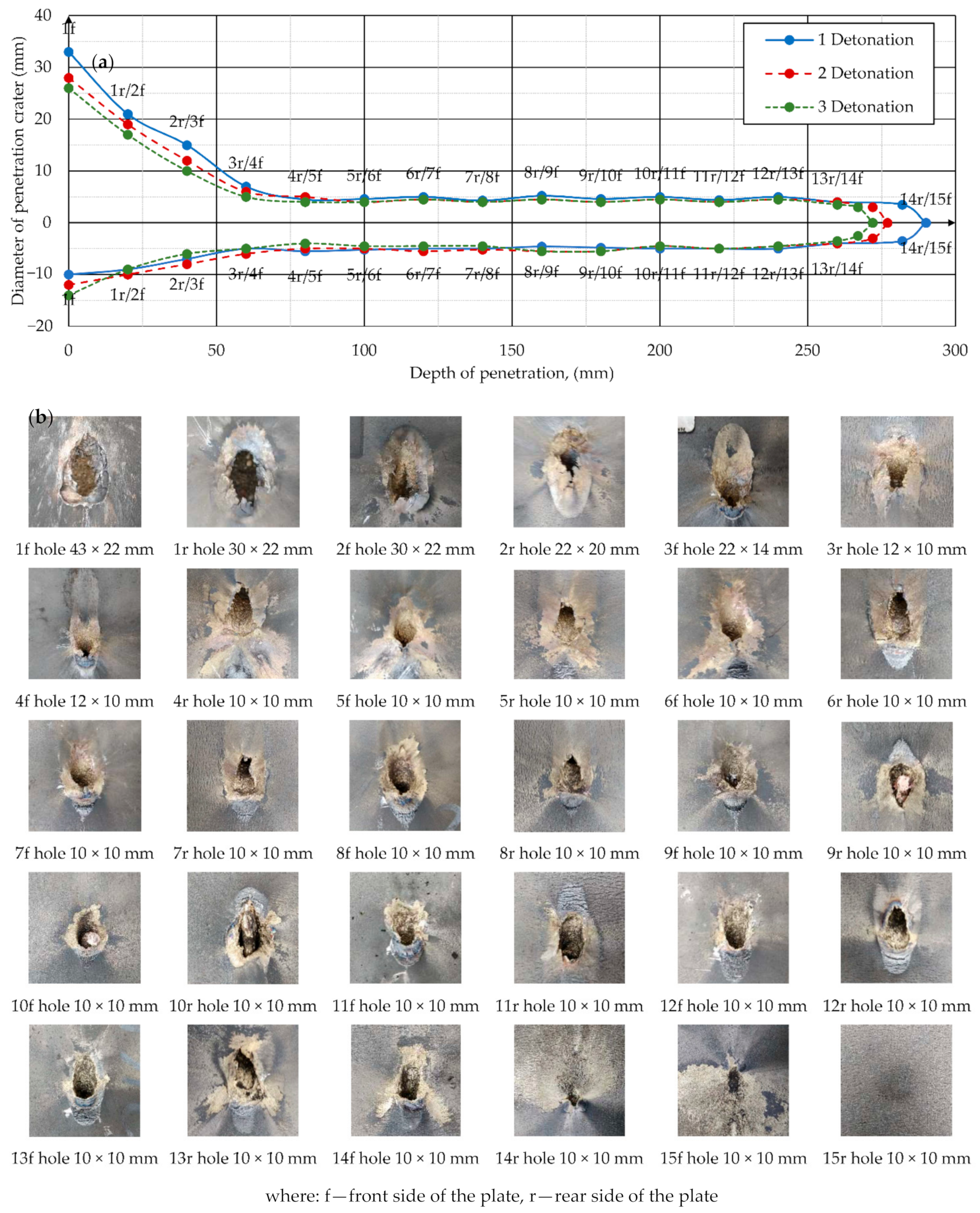
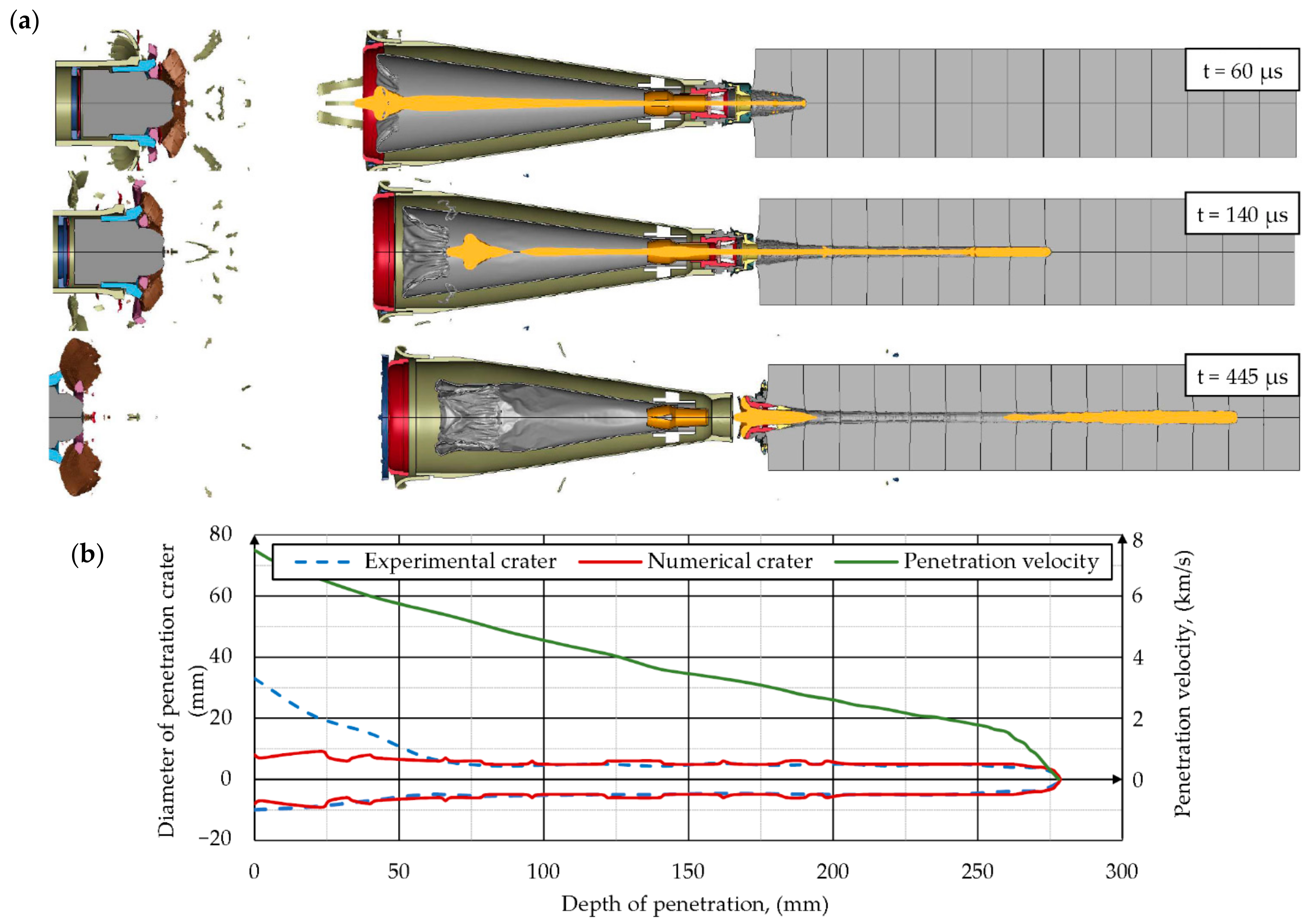
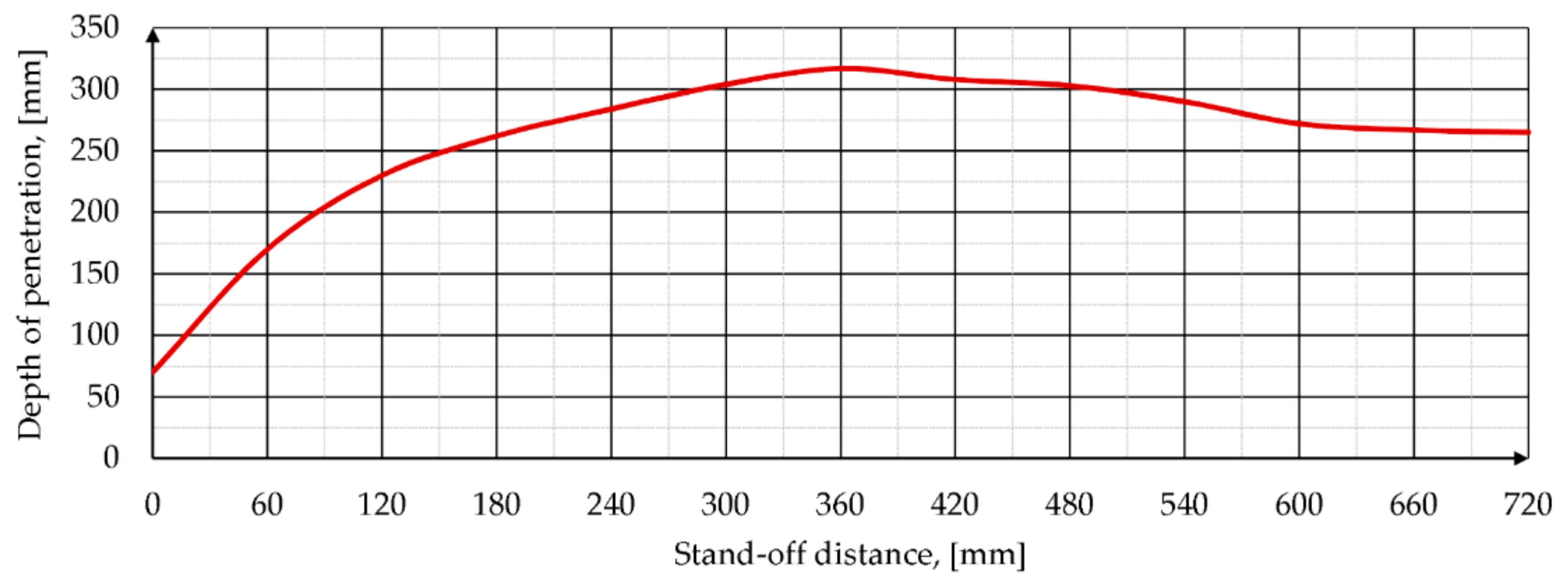
Analyses presented in the article were carried out in order to characterize the main parameters of the shaped charge jet formed due to detonation of the PG-7VM warhead. As opposed to the previously published studies in which rolled homogeneous armored steel was mainly used as a target, in the current work the warhead penetration capability was determined against more contemporary high-hardness (500 HB) ARMSTAL 30PM steel armor with precisely determined mechanical properties. The research included experimental depth of penetration tests and their numerical reproduction in the LS-Dyna software. Special attention was paid to factors that could perturbate the shaped charge jet formation process and under- or overestimate its penetration capability. For this reason, warheads were X-ray inspected for structural discrepancies (voids or air inclusions in explosive, misalignment between the body, explosive, and liner, or lack of contact between the explosive and the liner) and properties of materials (explosive, targets, and most important warhead components) were analyzed before the experiments. The numerical model of the warhead was defined more accurately than in previously published studies, since it was based on the real grenade dimensions and its technical documentation. Thanks to this, the depth of penetration of the target made of ARMSTAL 30PM armored steel plates by the shaped charge jet formed from the PG-7VM warhead obtained by numerical simulation was consistent with the experimental results and equaled 278 mm and 280 mm, respectively. The difference between the experimental and numerical value was smaller than 1%, which confirms that the developed methodology of modeling allows users to properly reproduce the PG-7VM shaped charge jet formation and target penetration processes. A verified numerical model of the shaped charge jet penetration into a steel target was used to determine depth of penetration in function of stand-off distance for the PG-7VM warhead. A maximum depth of penetration of about 317 mm was obtained for the stand-off distance of 360 mm, which may indicate the potential direction of modernization of warheads.
Keywords: shaped charge; shaped charge jet; high-explosive anti-tank warhead; PG-7 grenade; high-hardness armored steel; numerical simulation; penetration shaped charge; shaped charge jet; high-explosive anti-tank warhead; PG-7 grenade; high-hardness armored steel; numerical simulation; penetration