1. Introduction
The integration of distributed generation, such as wind and photovoltaic power, with energy storage technologies forms a microgrid system [
1,
2,
3]. Due to its flexibility, low-carbon nature, and control ability, it has become an effective form of renewable energy utilization [
4,
5,
6]. However, the increasing penetration rate of renewable energy and the integration of numerous electronic devices present new challenges to the power quality of the distribution network. The bidirectional AC/DC converter, acting as the key equipment linking AC and DC microgrids, provides crucial support for achieving bidirectional power flow between sub-microgrids and improving power quality [
7].
Although advanced voltage control algorithms exhibit satisfactory performance in standalone AC/DC conversion systems, formidable challenges are posed in regulating DC-bus voltage within AC/DC hybrid microgrids. During microgrid operation, the renewable energy output on the DC side is highly susceptible to meteorological disturbances, and load switching on both the AC and DC sides is frequent and unpredictable. The strong coupling and multi-source disturbances within the system make it difficult for traditional PI control and conventional linear active disturbance rejection control (LADRC) to balance disturbance rejection and stability. Therefore, under the background of AC/DC hybrid microgrids, the effectiveness of the improved LADRC algorithm in dealing with strong nonlinear disturbances is investigated in this paper through theoretical analysis, multi-condition simulations, and hardware experiments under representative source-side, grid-side, and load-side disturbances [
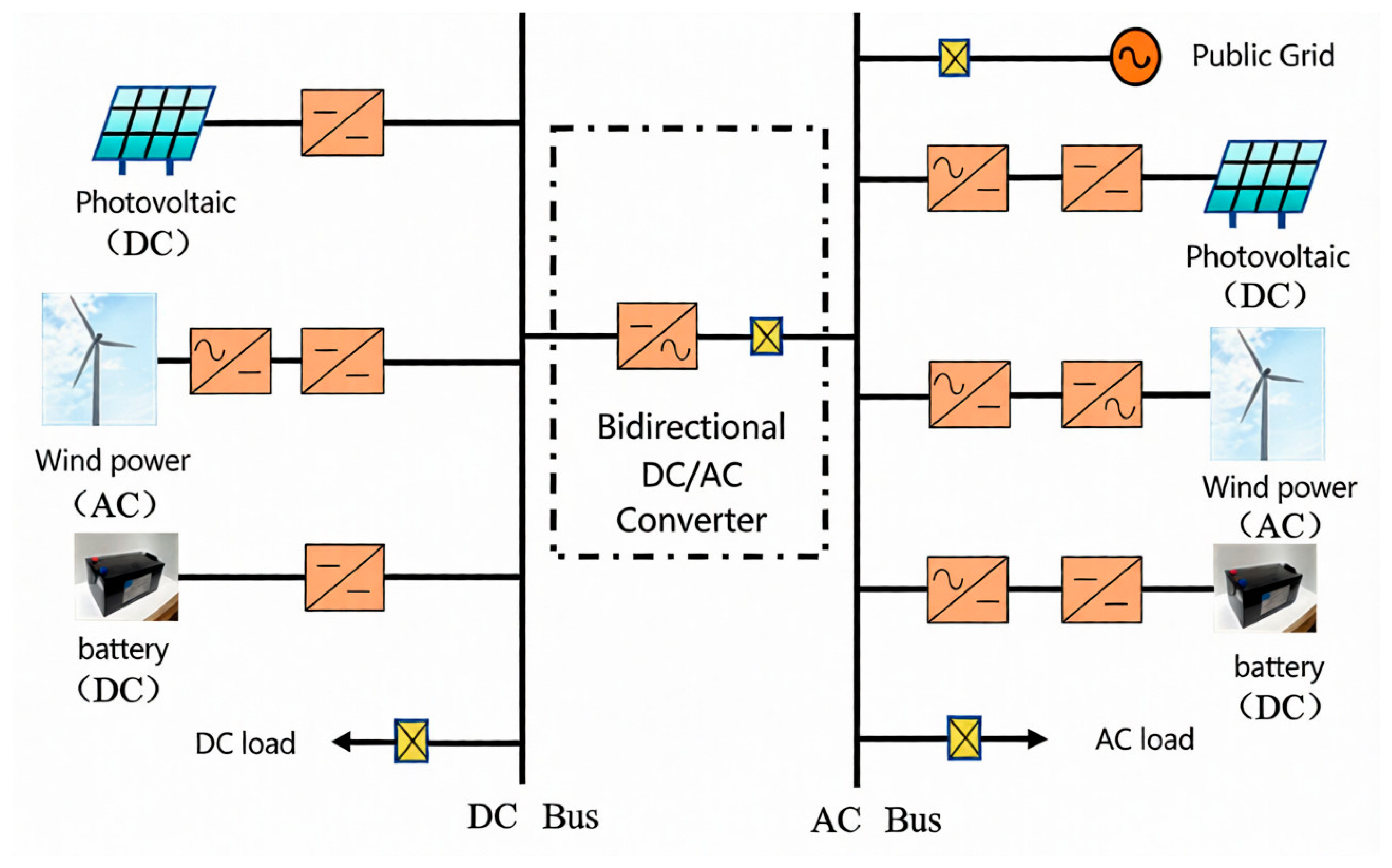
8]. In a grid-connected AC/DC microgrid scenario, the voltage and frequency of the AC microgrid are supported by the public grid, while the DC sub-microgrid is indirectly connected to the main grid through a bidirectional AC/DC converter [
9]. Within the DC sub-microgrid, distributed generation units are easily affected by external environmental factors, and the bus is directly connected to the load, leading to significant voltage fluctuations [
10]. To summarize, references [
8,
9,
10] lay a foundational understanding of the necessity of improved LADRC algorithms in hybrid microgrids, the topological connection of grid-connected AC/DC microgrids, and the key factors causing DC-bus voltage fluctuations. However, these existing studies still fall short in addressing practical engineering challenges such as balancing control stability and response speed, as well as avoiding noise amplification while ensuring control accuracy, which provides a direction for further disturbance rejection performance of the control strategy.
Thus, various strategies have been proposed for the stable control of DC-bus voltage in AC/DC hybrid microgrids [
11]. Reference [
12] proposed an improved virtual DC generator control strategy, which enhanced dynamic response and current sharing performance by cooperating with an average current controller; however, this strategy only addressed voltage fluctuations caused by sudden changes in loads and distributed generation units, neglecting input-side mutations. Reference [
13] introduced a dynamic compensation control strategy based on a residual generator, utilizing model matching theory to reversely compensate for current disturbances, but it lacked in-depth exploration regarding controller optimization, such as improving response speed, reducing overshoot, and synergistically enhancing stability and control accuracy. Reference [
14] proposed a sliding-mode active disturbance rejection control strategy, leveraging a linear extended state observer to provide state variables for the sliding-mode controller, effectively solving chattering and demonstrating good disturbance rejection; nevertheless, when increasing the observer bandwidth parameter
w0 to improve tracking accuracy, actual system noise was also amplified, negatively impacting the control effect. Despite theoretical progress, traditional LADRC faces obvious engineering bottlenecks in practical industrial microgrids when dealing with severe source–load fluctuations and transient grid faults [
15]. Blindly increasing the observation bandwidth to pursue high disturbance rejection inevitably amplifies high-frequency sampling noise and causes system phase lag. Simultaneously, during large-scale power step changes, the traditional framework struggles to achieve both fast tracking of the bus voltage and zero overshoot, restricting its deep application in bidirectional converters. To break through these bottlenecks, this paper proposes an improved LADRC strategy that balances dynamic flexibility and strong disturbance rejection.
Although existing ADRC-based studies have demonstrated improvements in DC-bus voltage regulation, several practical issues remain insufficiently addressed. First, many methods enhance disturbance rejection mainly by increasing the observer bandwidth, which may accelerate disturbance estimation but also tends to amplify measurement noise in practical digital-control systems [
16,
17]. Second, the contradiction between rapid voltage recovery and overshoot suppression during operating-condition transitions is often not explicitly resolved. Third, the validation of many existing methods is limited to either simulation or a single disturbance scenario, which makes it difficult to assess their applicability under coupled source-side, grid-side, and load-side disturbances in AC/DC hybrid microgrids. In contrast, the present work combines LTD-based reference shaping with a PD-enhanced LESO so as to improve transient response and disturbance estimation simultaneously without relying solely on bandwidth enlargement. Moreover, the proposed method is evaluated under representative source-side, grid-side, and load-side disturbances through both simulation and hardware experiments, which strengthens its practical relevance.
The main contributions of this paper are summarized as follows:
(1) A linear tracking differentiator (LTD) is introduced into the outer voltage loop to smooth the reference signal and suppress voltage overshoot during start-up and operating-condition transitions.
(2) A proportional-derivative (PD) term is incorporated into the linear extended state observer (LESO) to compensate for observer phase lag without significantly increasing noise sensitivity, thereby enhancing disturbance estimation and rejection capability.
(3) The proposed strategy is validated under representative source-side, grid-side, and load-side disturbances by combining frequency domain analysis, MATLAB 2020a/Simulink simulations, and full-hardware experiments.
3. Bus Voltage Control System Based on Improved LADRC
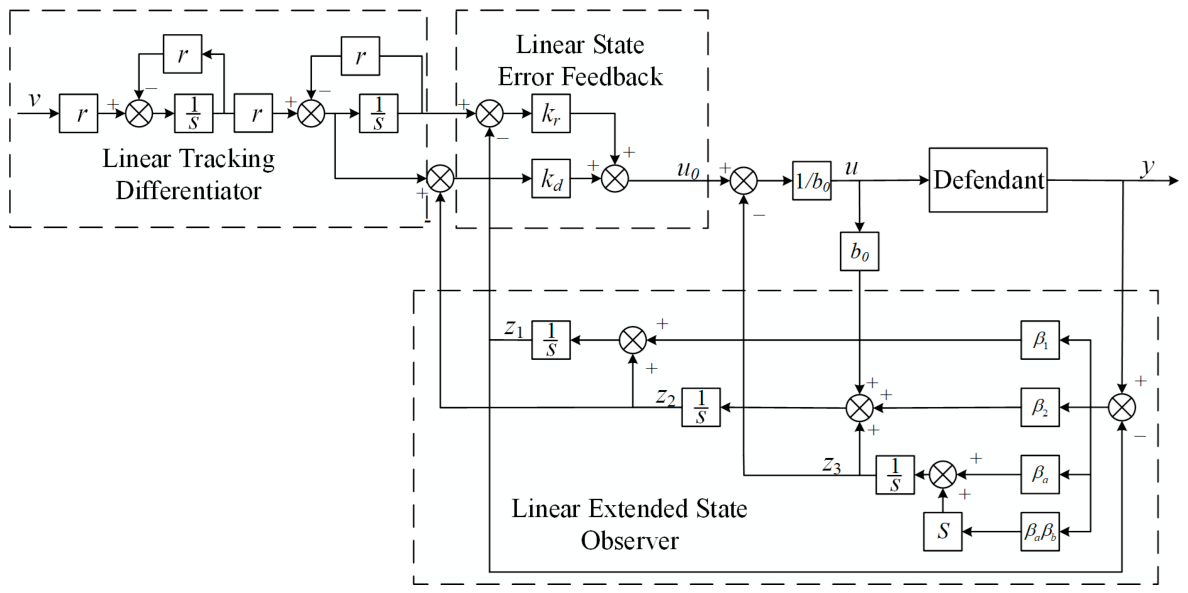
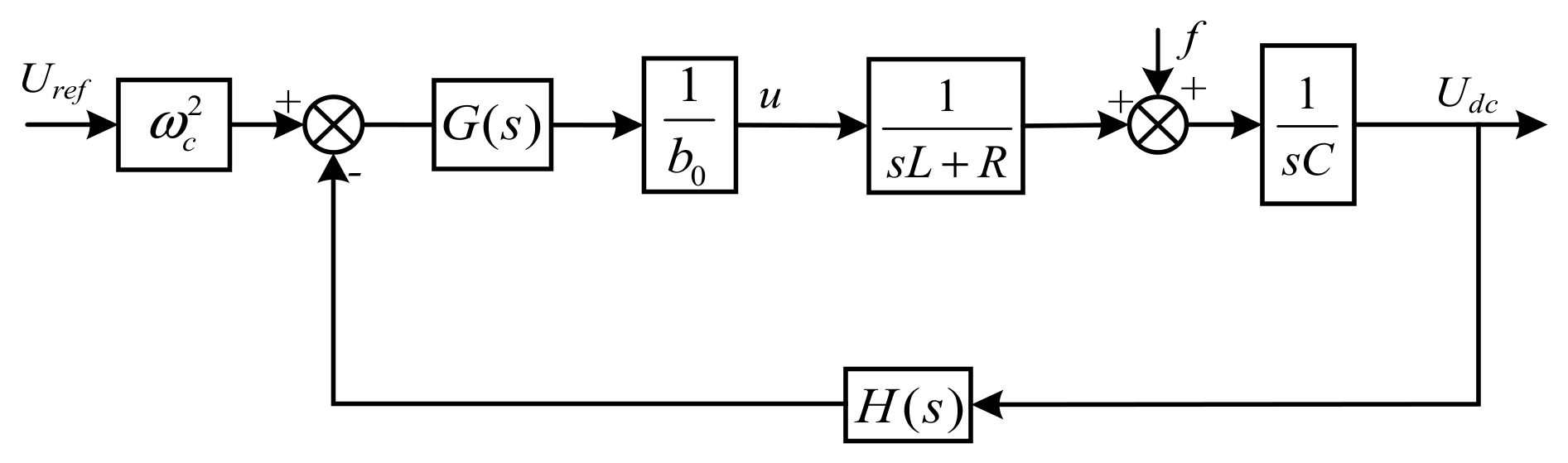
Based on traditional linear active disturbance rejection control (LADRC), an improved LADRC technique is proposed for the DC-bus voltage control problem, with the overall control framework shown in
Figure 3. The LADRC mainly consists of three parts: a linear tracking differentiator (LTD), a linear extended state observer (LESO), and a linear state error feedback (LSEF) law.
To apply the abstract LADRC theory to an actual physical AC/DC converter system, the mapping between the variables in
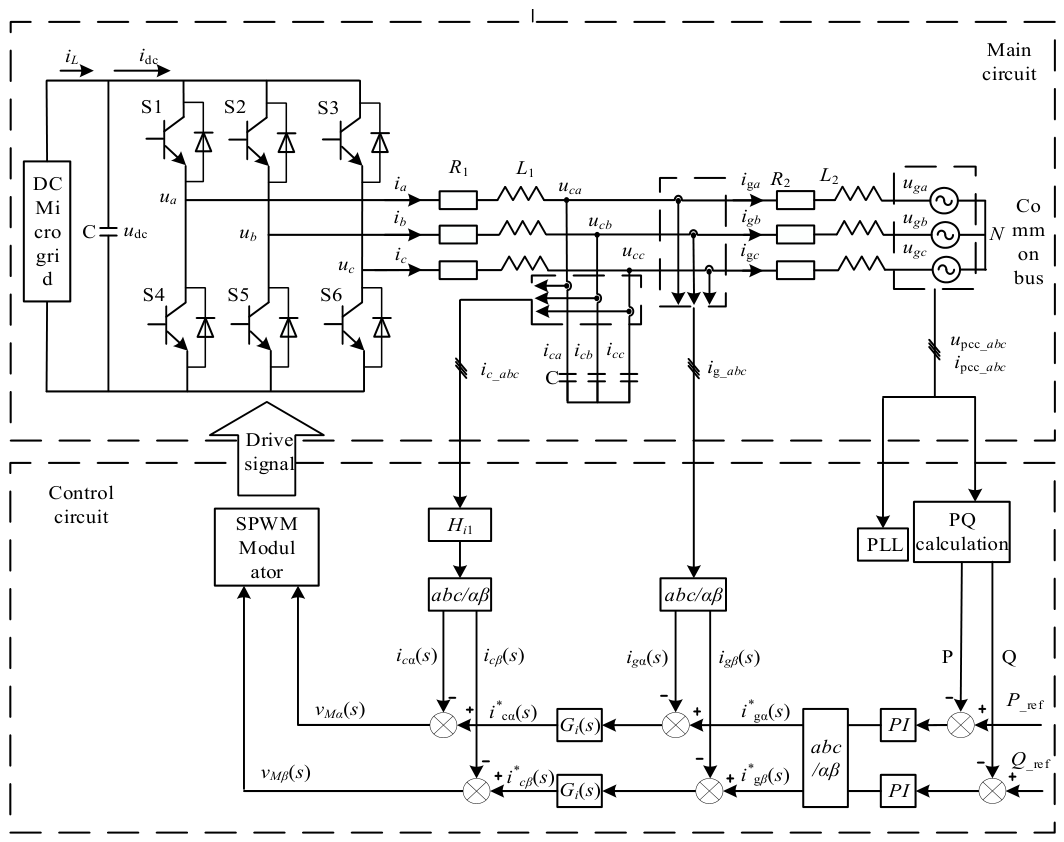
Figure 3 and the physical converter variables must be clarified. In this voltage control framework, the system input is the DC-bus voltage reference, and the system output is the actual sampled DC-bus voltage. The controller output acts on the “Plant,” which is equivalent to the
-axis active current command in the inner current loop. The “Plant” represents the equivalent generalized controlled model comprising the closed-loop transfer function of the inner current loop, converter losses, and the DC-side filter capacitor.
3.1. Design of the Second-Order Linear Tracking Differentiator (LTD)
In traditional control frameworks, a sudden step change in the DC-bus voltage reference introduces a massive initial error, forcing the system to face a severe contradiction between fast dynamic response and large voltage overshoot. To resolve this inherent contradiction, a linear tracking differentiator (LTD) is introduced at the input stage of the controller.
The LTD aims to smooth the rigid step reference signal into a trackable, continuous trajectory. Based on standard tracking differential theory, the expression of the bus voltage reference
after being processed by a second-order LTD in the complex frequency (
) domain is defined as:
where
represents the time constant. By introducing a bandwidth parameter
, this transfer function can be converted into a state-space form. This design enables the controller to smoothly extract the reference signal and its derivative, thereby fundamentally eliminating the step overshoot without sacrificing dynamic tracking speed.
Then, the linear error feedback rate designed by the above formula is shown as follows:
The closed-loop transfer function of the converter is obtained as follows:
Based on the design idea of pole placement, to simplify the analysis process, the influence of zeros is not considered for the time being. Combined with the above formula, it can be further derived that:
The parameters of LTD and LSEF are calculated as shown in the following formula:
Among them, kp and kd denote the proportional gain and derivative gain of the controller, respectively. The controller bandwidth is characterized by the parameter r = ωc, and the controller parameters are determined according to the pole-placement principle. By properly selecting ωc, a desirable balance between response speed and system robustness can be achieved.
3.2. Improvement of the Design of Linear Extended State Observer (LESO)
By improving the linear extended state observer (LESO), the selection of the controller gain
ωc is linked to the stability of the controller, and the transfer functions of the state variables
Z1,
Z2, and
Z3 are constructed in the frequency domain:
where
ω0—observation gain of the observer, and
y:
In the formula:
f-disturbance, .
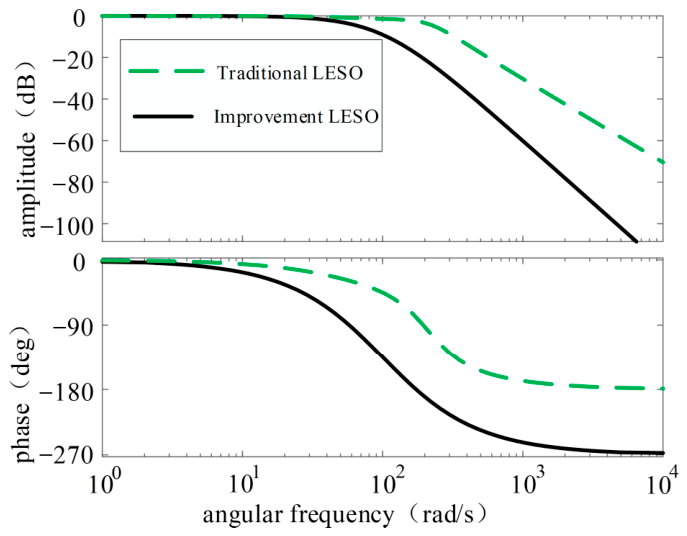
According to Equations (7) and (8), the disturbance-observation transfer function of LESO is obtained as:
The observation effect of the linear extended state observer on disturbances is determined by the characteristics of
ϕₐ(
s). As a second-order system, Equation (9) shows that
ϕₐ(
s) has a contradiction between response speed and overshoot, and exhibits a phase-lag phenomenon in frequency domain analysis. These issues reflect the inherent defects of the traditional LESO. Therefore, an improved design is carried out for the observation gain coefficient
β3, and the improved expression is as follows:
In the formula:
—Proportional coefficient;
—Differential coefficient.
This design can effectively improve the phase-lag problem in the observation process, and the disturbance-observation transfer function can be expressed as follows:
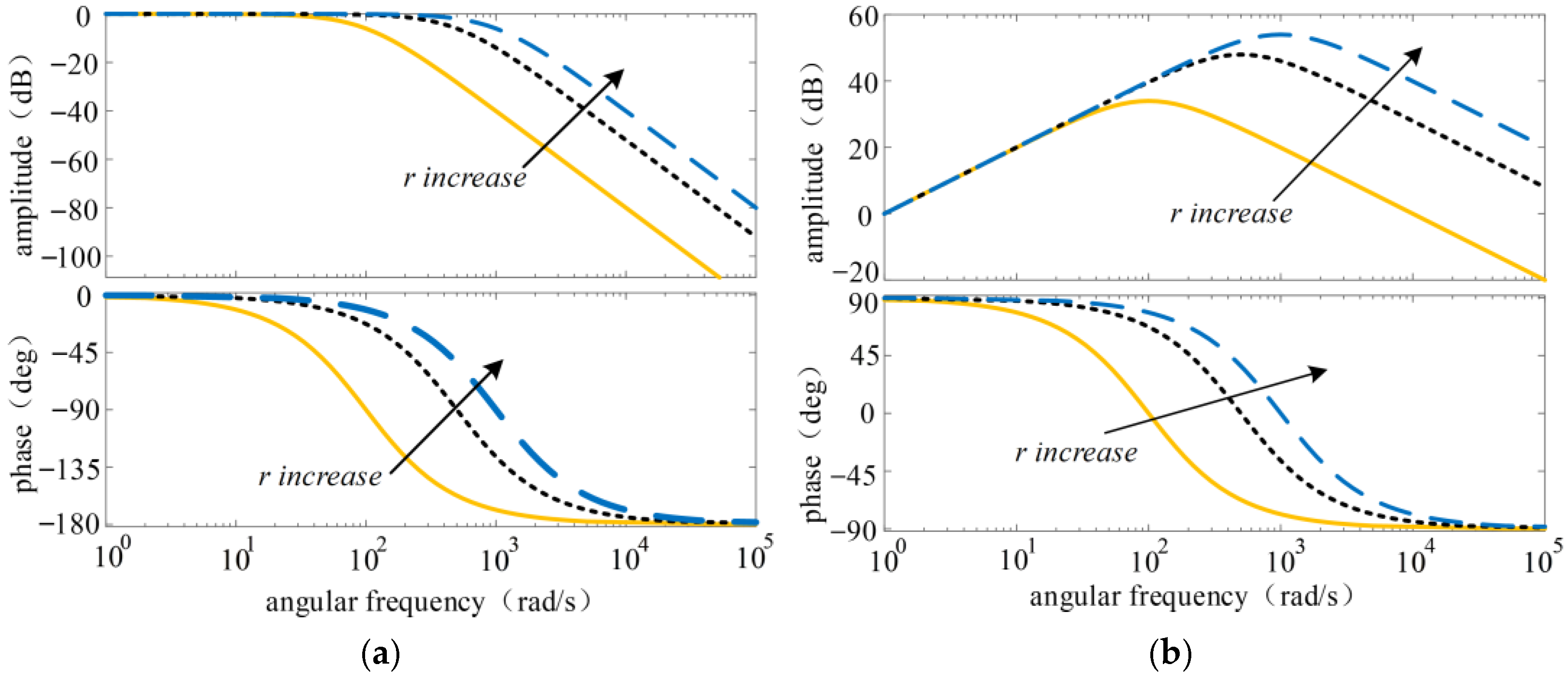
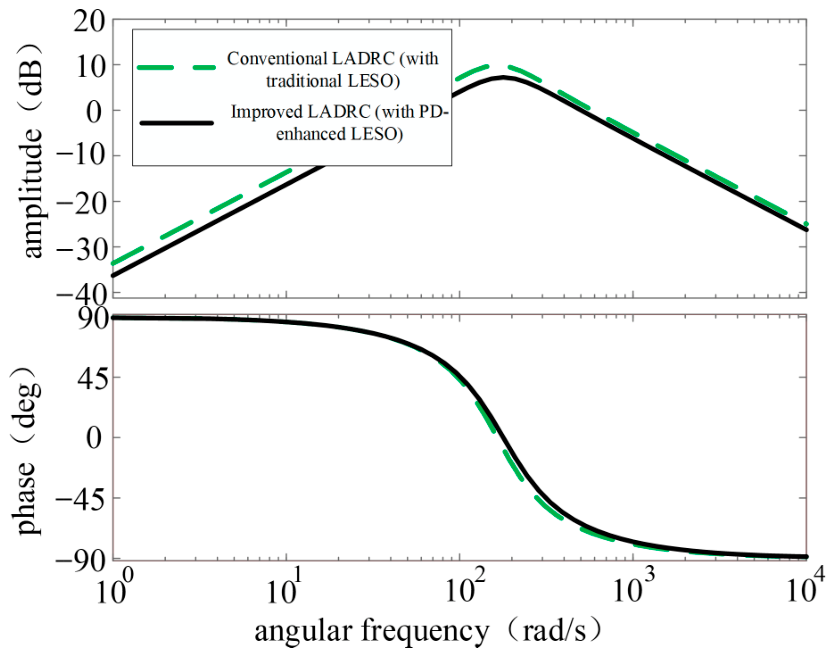
Among them, βa and βb need to be coordinated with the observer bandwidth ω0 and the controller bandwidth ωc. βa can inherit the dominant role of the traditional β3, and its initial value can be set as βa ≈ ω03 to ensure the observation capability in the mid-low frequency range. Due to the introduction of the zero point s = −1/βb, the phase characteristics in the high-frequency range are improved, and the phase lag of disturbance observation is reduced. Therefore, the zero frequency ω = 1/βb. The main frequencies of grid voltage fluctuations include the fundamental frequency of 50 Hz (314 rad/s), the 2nd harmonic of 100 Hz (628 rad/s), etc. To cover the above frequency bands, the zero frequency is initially set to 500 rad/s to calculate the value of βb.
Compared with Equation (9), Equation (11) adds a zero point. In the time domain, the role of the zero point can improve the response speed of the system; from a frequency domain perspective, a series lead network is added, which can reduce the problem of phase lag. It should be emphasized that the introduced PD term does not suppress noise directly. Instead, its main role is to improve the phase characteristics of the observer by introducing a compensating zero, so that the disturbance-estimation performance can be enhanced without relying solely on a further increase in observer bandwidth. In this sense, the proposed design helps mitigate the noise-amplification problem that would otherwise arise from excessively large observer gains in conventional LESO tuning.
5. Simulation Verification
To evaluate the performance of the improved LADRC under representative disturbances in AC/DC hybrid microgrids, the simulation study considers source-side, grid-side, and load-side operating scenarios. In the simulation model, photovoltaic source fluctuation is directly represented by irradiance variation in the PV array, whereas in the hardware platform, the same class of source-side disturbance is equivalently emulated by PV-side voltage reduction. In this way, the simulation and experimental studies remain physically consistent while being suitable for their respective implementation conditions.
To evaluate the performance of the improved LADRC strategy under multiple operating conditions, a microgrid simulation model was built based on Matlab/Simulink, with specific simulation parameters listed in
Table 1. To compare and analyze the performance differences between the improved and traditional LADRC, a comparative analysis of multi-condition simulations was conducted.
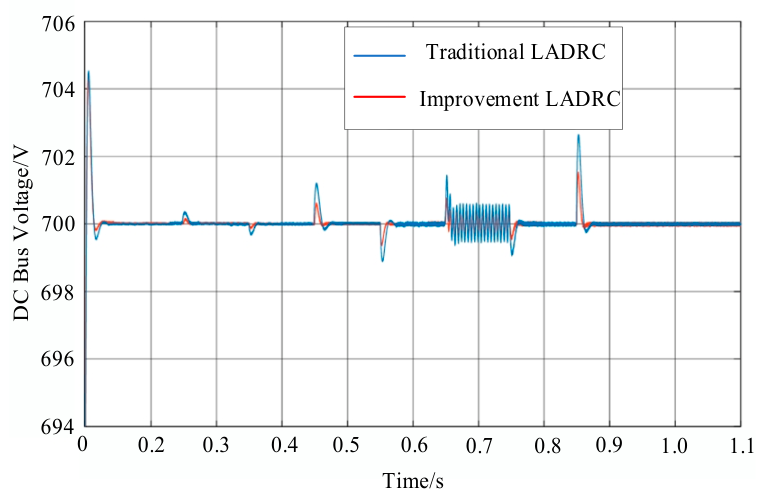
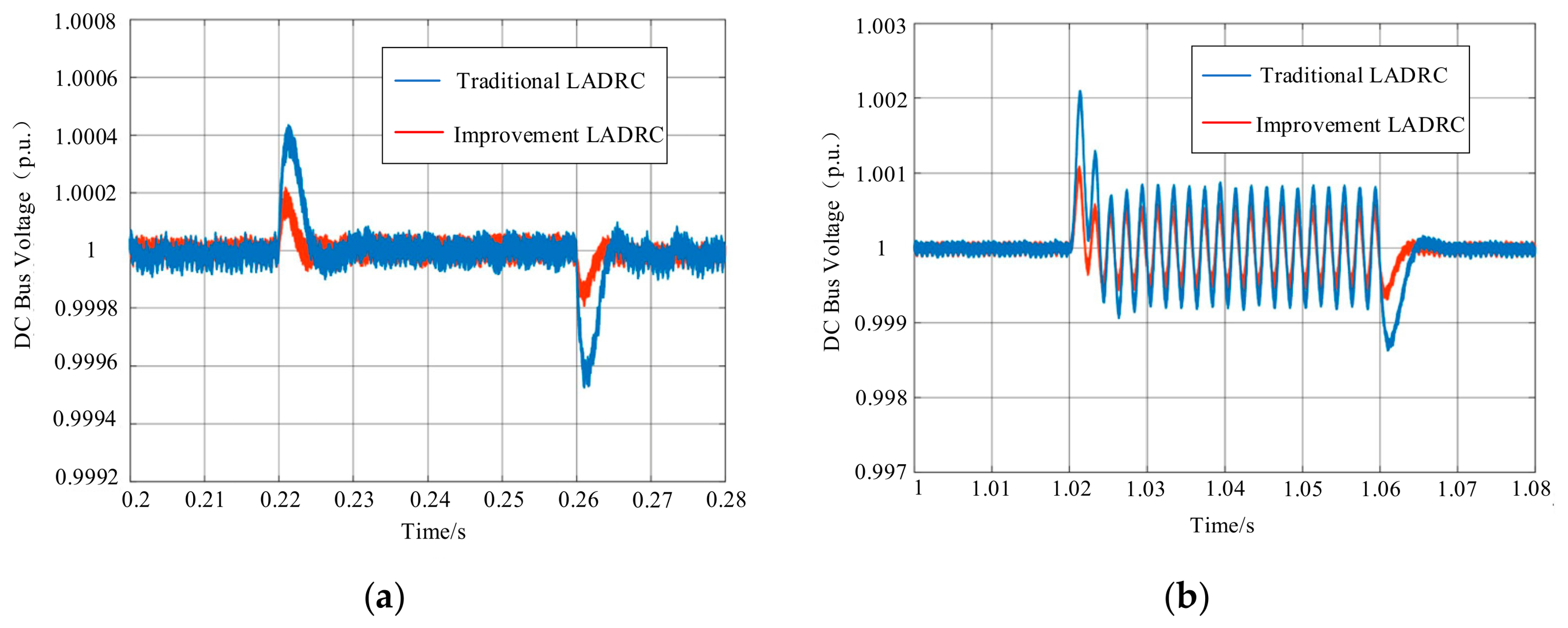
Figure 8 shows the simulation waveforms of the bus voltage under different operating conditions, covering the following typical conditions: (1) the grid-side voltage experiences a 15% symmetric drop and a 40% asymmetric drop respectively; (2) the light intensity of the photovoltaic array increases; (3) the experiment of switching between light load and heavy load on the DC side.
The parameters listed in
Table 1 were selected by considering the trade-off among dynamic response speed, disturbance-estimation capability, and noise sensitivity. Specifically, the controller bandwidth mainly determines the transient response of the outer voltage loop, while the observer bandwidth affects the convergence rate and accuracy of disturbance estimation. In practical tuning, the controller bandwidth should be chosen to ensure sufficiently fast voltage regulation without introducing excessive overshoot, whereas the observer bandwidth should be high enough to capture the dominant disturbance dynamics but should not be increased excessively, in order to avoid unnecessary amplification of high-frequency measurement noise. In addition,
βa is selected to preserve the dominant low- and mid-frequency disturbance-observation capability of the conventional LESO, whereas
βb is determined according to the desired zero location for phase compensation in the disturbance frequency range of interest. Therefore, the final parameter values were obtained according to the combined consideration of theoretical design requirements and practical closed-loop performance.
(1) Symmetrical and asymmetrical dips of grid voltage
Grid faults or disturbances can cause grid voltage dips. Therefore, this phenomenon is simulated. In the simulation, a symmetrical grid voltage dip of 15% is set at [specific time], and it recovers at [specific time], as shown in
Figure 9a. The grid-side voltage has an asymmetrical dip of 40% at [specific time] and recovers after 40 ms, with the simulation results shown in
Figure 9b.
Analysis of
Figure 9a shows that when the grid voltage experiences a 15% symmetrical drop, the traditional LADRC takes 10 ms to reach 1.0 p.u., with small-range steady-state error fluctuations of 0.0001 p.u. during this period; in contrast, the improved LADRC reaches 1.0 p.u. in only 7 ms with a smaller fluctuation range. During the grid voltage recovery phase, the improved LADRC has a faster response speed than the traditional LADRC. The maximum voltage fluctuation of the former is 0.0002 p.u., while that of the latter is 0.00045 p.u., indicating that this design effectively resolves the contradiction between overshoot and rapidity.
Figure 9b shows that after an asymmetric drop in grid voltage, the improved LADRC can achieve stability in approximately 5 ms, with voltage fluctuations of about 0.0006 p.u., and can quickly restabilize when the grid voltage recovers at 40 ms. However, for the traditional LADRC during an asymmetric drop, the voltage fluctuation reaches 0.0009 p.u., and it takes 10 ms to stabilize, with its rapidity significantly weaker than that of the improved scheme. Overall, the improved LADRC performs better in terms of dynamic response speed, steady-state accuracy, and ability to resist grid voltage disturbances.
(2) Simulation of increased light intensity
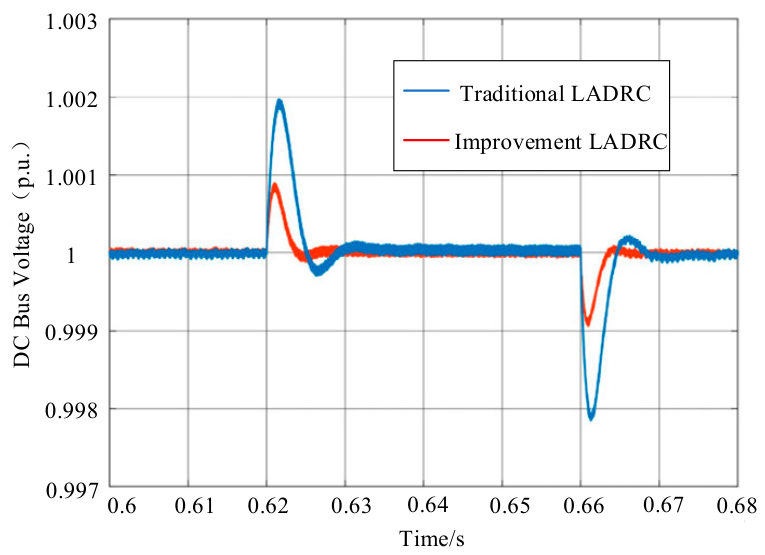
When the light intensity suddenly increases, the output voltage of the photovoltaic cell suddenly rises, which in turn causes fluctuations in the DC-bus voltage. When it recovers, the output voltage of the photovoltaic cell array decreases, and the simulation waveform is shown in
Figure 10.
It can be seen from
Figure 10 that
when the light intensity increases, the bus voltage of the traditional LADRC takes 10 ms to reach 1.0 p.u., with a steady-state error fluctuation of 0.0001 p.u., while the improved LADRC reaches 1.0 p.u. in only 7 ms, showing better stability. During the grid voltage recovery process, the improved LADRC stabilizes in only 5 ms, while the traditional LADRC takes about 10 ms, indicating that the response speed of the improved scheme is significantly faster.
In the simulation study, photovoltaic source fluctuation is directly represented by irradiance variation in the PV array model, whereas in the hardware platform, the same class of source-side disturbance is equivalently emulated by PV-side voltage reduction.
(3) DC-side load shedding simulation
An increase in DC load often leads to a rise in DC-bus voltage.
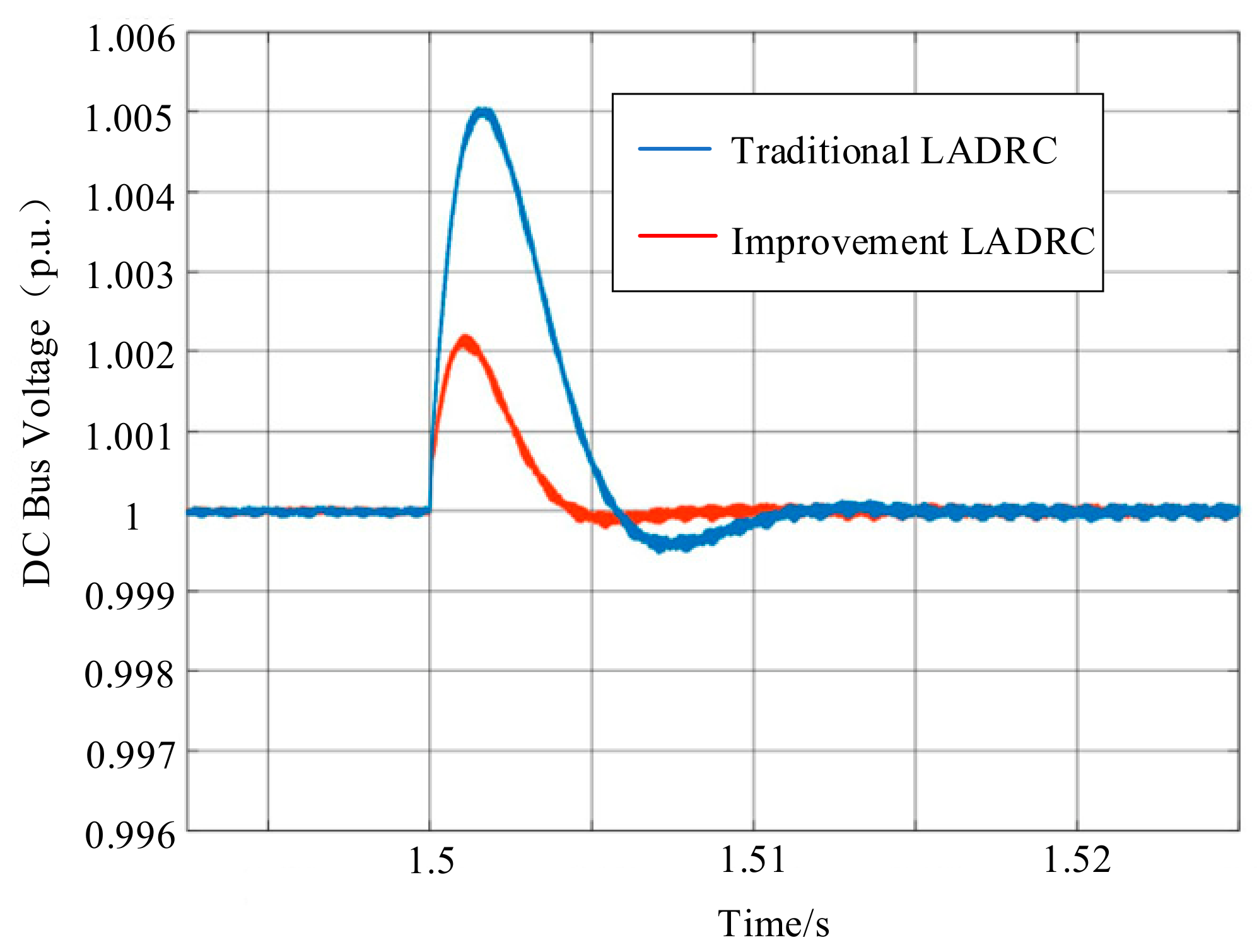
Figure 11 shows the simulation comparison results between 1.5 s of the traditional LADRC and the improved LADRC under the condition of simulating the DC load with a time-multiplying operation. It can be seen that after the load increases, the traditional LADRC takes 10 ms to restore the bus voltage to 1.0 p.u., with a maximum overshoot of 0.005 p.u., while the improved LADRC reaches 1.0 p.u. in only 6 ms, with a maximum overshoot of only 0.002 p.u., indicating that the improved control strategy has better performance.
6. Experimental Verification
6.1. Introduction to the Experimental Platform
To further verify the feasibility of the proposed improved LADRC strategy in a practical system, a full-hardware prototype platform was built instead of a simple hardware-in-the-loop (HIL) test. In order to maintain consistency with the disturbance scenarios analyzed in the simulation section, the experimental study is expanded from only DC-side load switching to representative source-side, grid-side, and load-side disturbances. Specifically, a grid voltage dip is introduced on the AC side by a programmable AC power supply, PV-side voltage reduction is applied to emulate source-side photovoltaic fluctuation, and DC-side load switching is realized by a programmable electronic load.
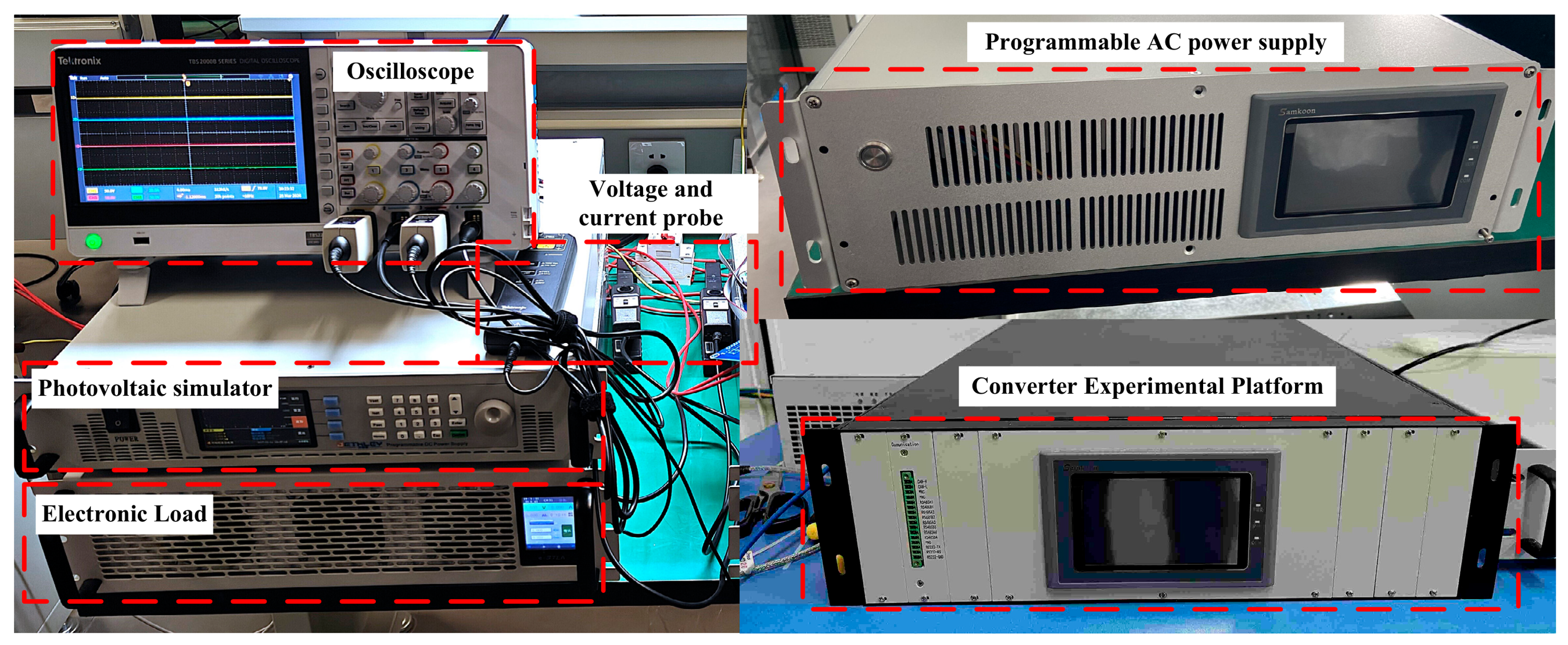
As shown in
Figure 12, the main circuit of the converter experimental platform consists of the converter platform itself, a photovoltaic simulator, an electronic load, a programmable AC power supply, an oscilloscope, and the associated voltage and current probes. On the DC side, a photovoltaic simulator is connected to provide a stable DC input source, while an electronic load is utilized to perform precise power switching and load variation tests. On the AC side, a programmable AC power supply is employed to emulate grid voltage disturbance conditions. The control core adopts a digital control board based on the TI TMS320F28335 DSP, in which the proposed improved LADRC algorithm is discretized and implemented in C language, with the control cycle set to 10 kHz. During the experiments, voltage and current waveforms are sampled in real time by Tektronix high-voltage differential probes and current probes, and ultimately recorded by a Tektronix oscilloscope for comparative analysis.
6.2. Experimental Verification Under Grid Voltage Dip
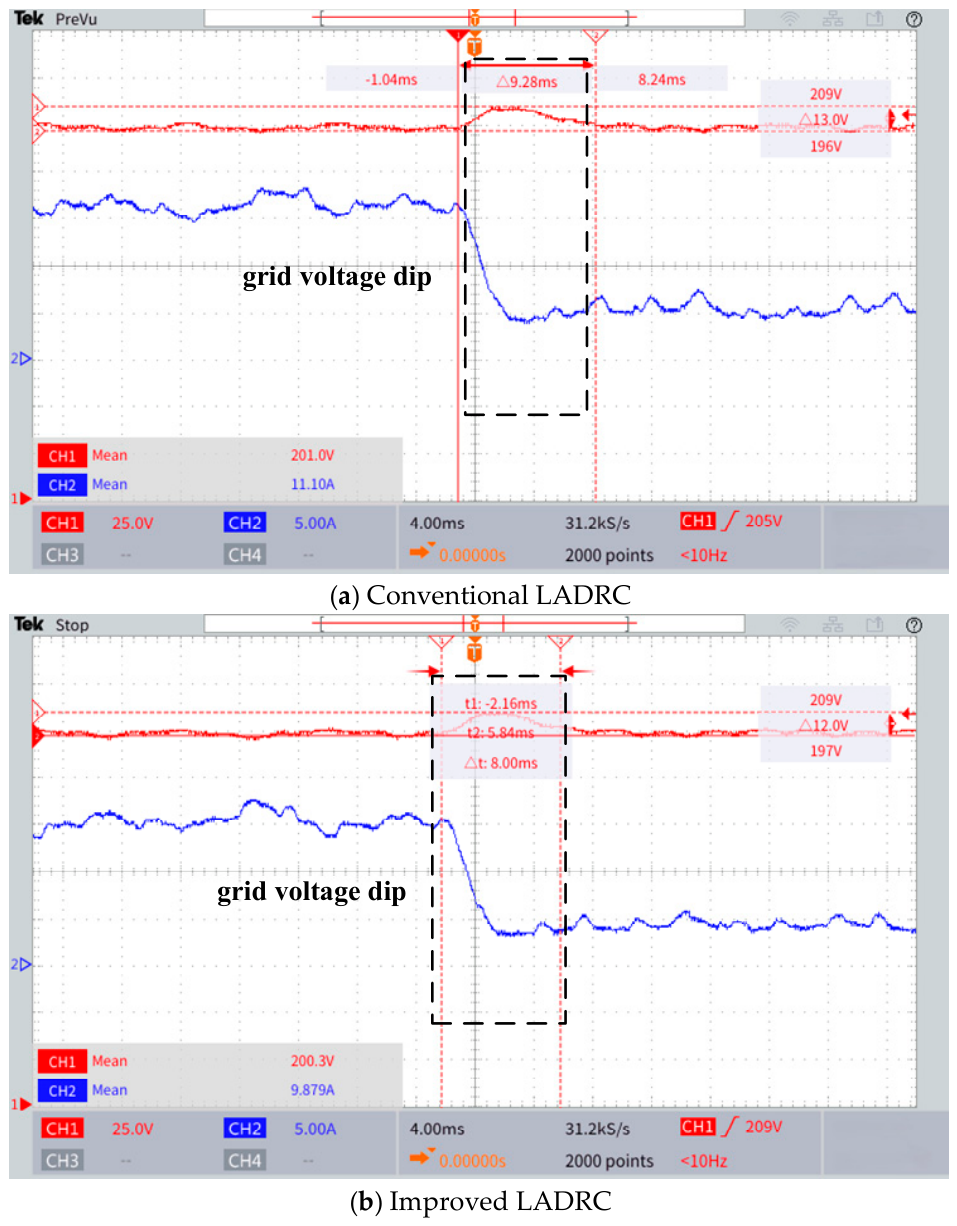
To verify the disturbance rejection capability of the proposed controller under grid-side disturbance, a grid voltage dip experiment was conducted on the hardware platform. The comparative waveforms before and after the improvement are shown in
Figure 13.
As can be observed, when the grid voltage suddenly dips, both control strategies can maintain the DC-bus voltage within a limited fluctuation range; however, the improved LADRC exhibits a faster recovery and a smaller transient deviation. According to the oscilloscope cursor measurements, the DC-bus voltage fluctuation amplitude decreases from 13.0 V under the conventional LADRC to 12.0 V under the improved LADRC, while the recovery interval is shortened from 9.28 ms to 8.00 ms. This indicates that the proposed PD-enhanced LESO improves the disturbance estimation and compensation capability under grid-side voltage disturbance, thereby enhancing the transient regulation performance of the DC bus.
6.3. Experimental Verification Under PV-Side Voltage Reduction
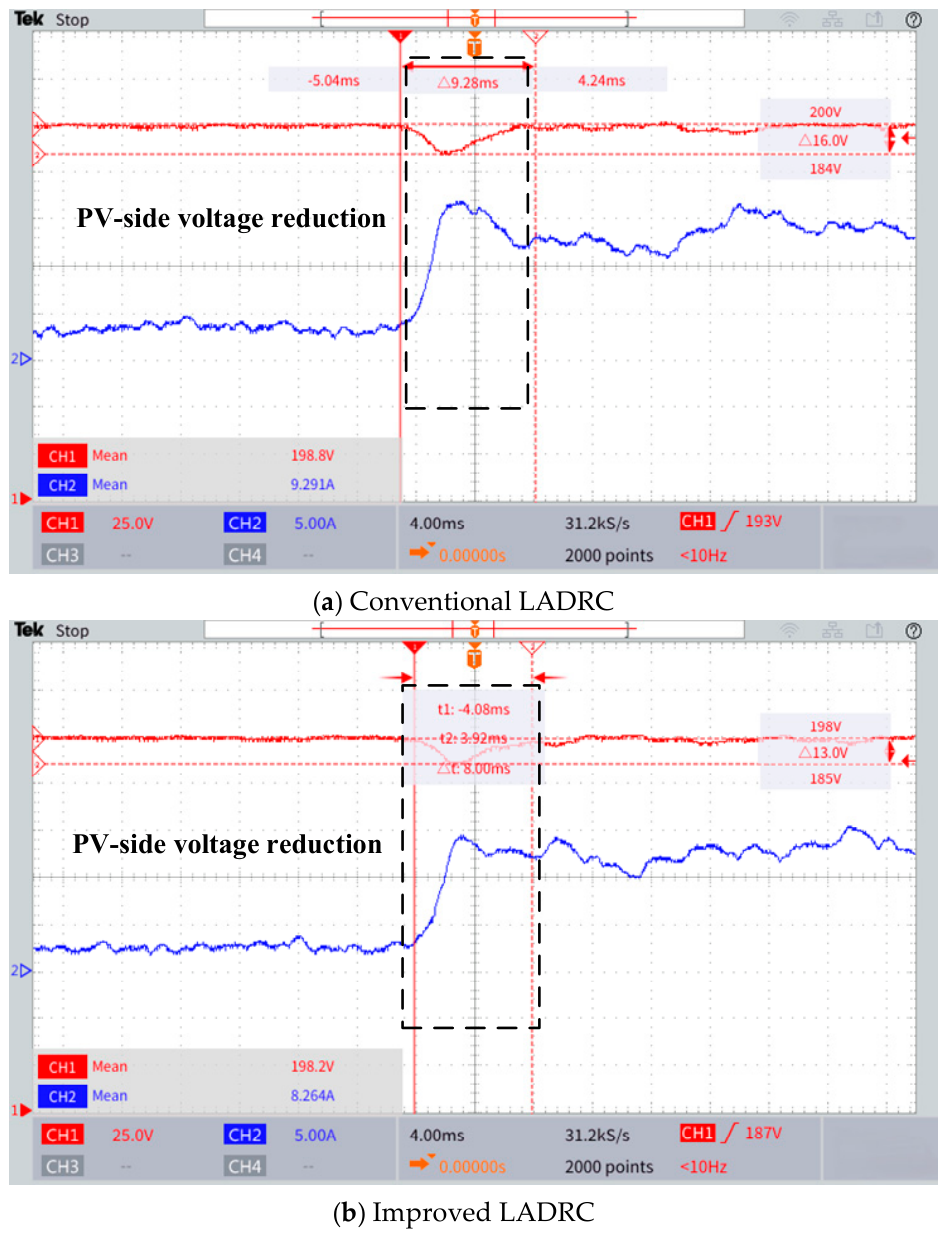
To experimentally evaluate the controller performance under source-side disturbance, a PV-side voltage reduction test was further carried out on the hardware platform. The corresponding waveforms before and after the controller improvement are shown in
Figure 14.
It can be seen that the sudden reduction in PV-side voltage causes a transient disturbance to the DC bus. Compared with the conventional LADRC, the improved LADRC suppresses the DC-bus voltage fluctuation more effectively and restores the steady-state condition faster. Based on the oscilloscope measurements, the transient voltage deviation is reduced from 16.0 V to 13.0 V, and the recovery interval is shortened from 9.28 ms to 8.00 ms after the proposed improvement is applied. These results verify that the proposed control strategy can effectively enhance the DC-bus voltage stability under source-side fluctuation.
6.4. Experimental Verification Under DC-Side Load Switching
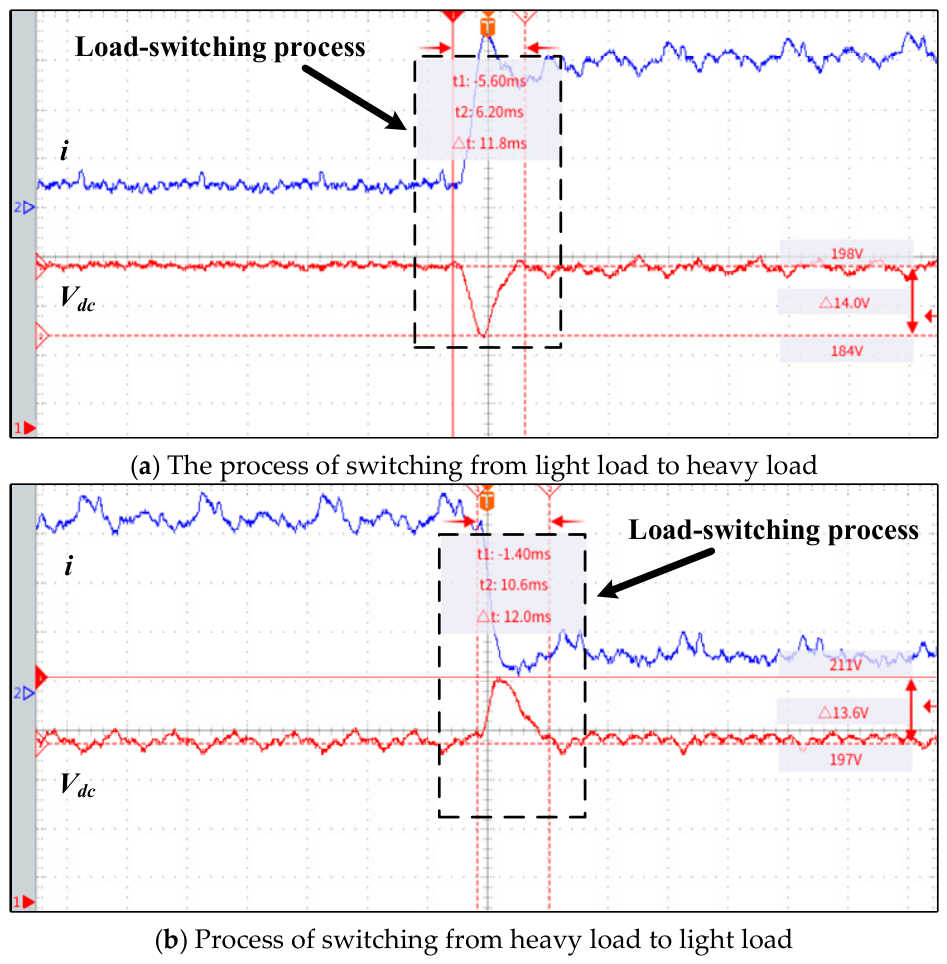
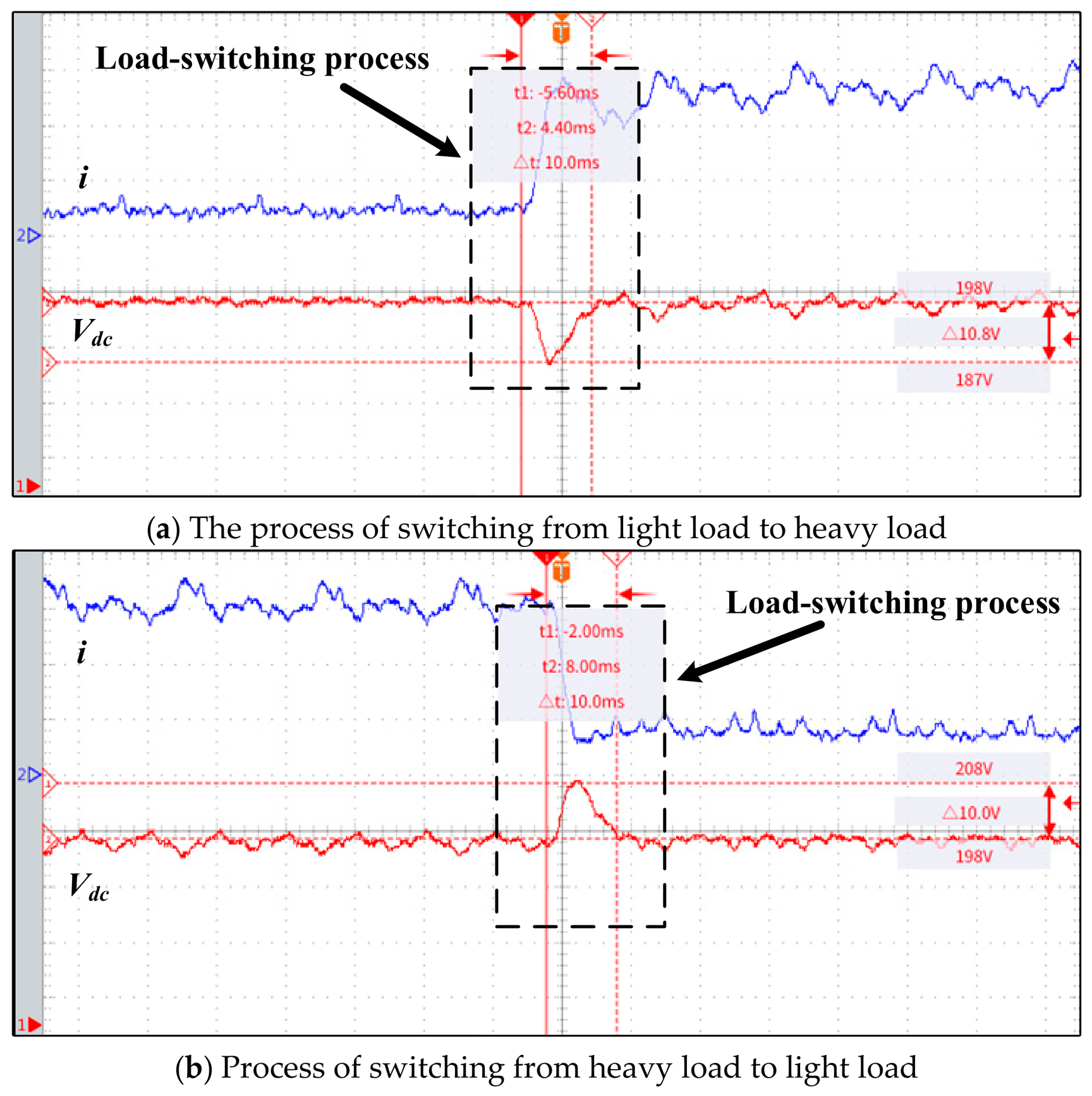
In addition to the grid-side and source-side disturbance tests, comparative hardware experiments were also conducted under DC-side load-switching conditions, including light-load to heavy-load switching and heavy-load to light-load switching. The corresponding waveforms are shown in
Figure 15 and
Figure 16.
To make the dynamic-performance comparison more explicit, the transient behaviors in
Figure 15 and
Figure 16 were further evaluated using two quantitative indices, namely the peak-to-peak DC-bus voltage deviation and the settling time under the same measurement criterion.
For the light-load-to-heavy-load transition, the improved LADRC reduces the peak-to-peak voltage deviation by 3.2 V and shortens the settling time by 1.8 ms compared with the conventional LADRC. For the heavy-load-to-light-load transition, the peak-to-peak voltage deviation is reduced by 3.6 V, and the settling time is shortened by 2.0 ms. These quantitative results demonstrate that the improved LADRC not only suppresses transient voltage fluctuation more effectively, but also accelerates the recovery of the DC-bus voltage after load switching. Therefore, the conclusion that the improved strategy enhances the transient response speed is supported not only by the waveform trend but also by explicit experimental indices. Quantitative comparison of hardware transient performance under DC-side load-switching conditions is shown in
Table 2.
Together with the PV-side voltage reduction and grid voltage dip experiments, the load-switching results demonstrate that the proposed controller achieves improved DC-bus voltage regulation under representative source-side, grid-side, and load-side disturbances.
7. Conclusions
This paper proposes an improved LADRC strategy for DC-bus voltage control of bidirectional converters in AC/DC hybrid microgrids. To address the phase lag and noise-sensitivity problems of the conventional LESO, a proportional-derivative (PD) term is introduced into the observer structure, which improves the disturbance-estimation capability without excessively increasing the observer bandwidth. Meanwhile, to alleviate the contradiction between fast response and overshoot suppression, a linear tracking differentiator (LTD) is incorporated into the outer voltage loop to smooth the reference signal and improve the dynamic tracking performance of the system. To validate the proposed control strategy, this paper combines theoretical analysis, multi-condition MATLAB/Simulink simulations, and full-hardware prototype experiments. The simulation study evaluates the controller under grid voltage sag, photovoltaic-side source fluctuation, and DC-side load disturbance conditions, while the hardware study further verifies its performance under grid voltage dip, PV-side voltage reduction, and DC-side load-switching disturbances. The results consistently demonstrate that the improved LADRC achieves smaller DC-bus voltage fluctuation and better transient recovery performance than the conventional LADRC. In the hardware tests, the recovery interval is shortened from 9.28 ms to 8.00 ms in both the grid voltage dip and PV-side voltage reduction experiments. In addition, under DC-side load-switching conditions, the improved LADRC reduces the peak-to-peak DC-bus voltage deviation by 3.2 V and 3.6 V for the light-load-to-heavy-load and heavy-load-to-light-load transitions, respectively, while the corresponding settling times are shortened by 1.8 ms and 2.0 ms. Therefore, the proposed method offers an effective and practically applicable solution for enhancing the DC-bus voltage stability of bidirectional converters in AC/DC hybrid microgrids.