Transient Temperature Rise and Grounding Characteristics of Vertical DC Grounding Electrodes Considering Soil Electro-Thermal Coupling


Abstract
1. Introduction
2. Materials and Methods
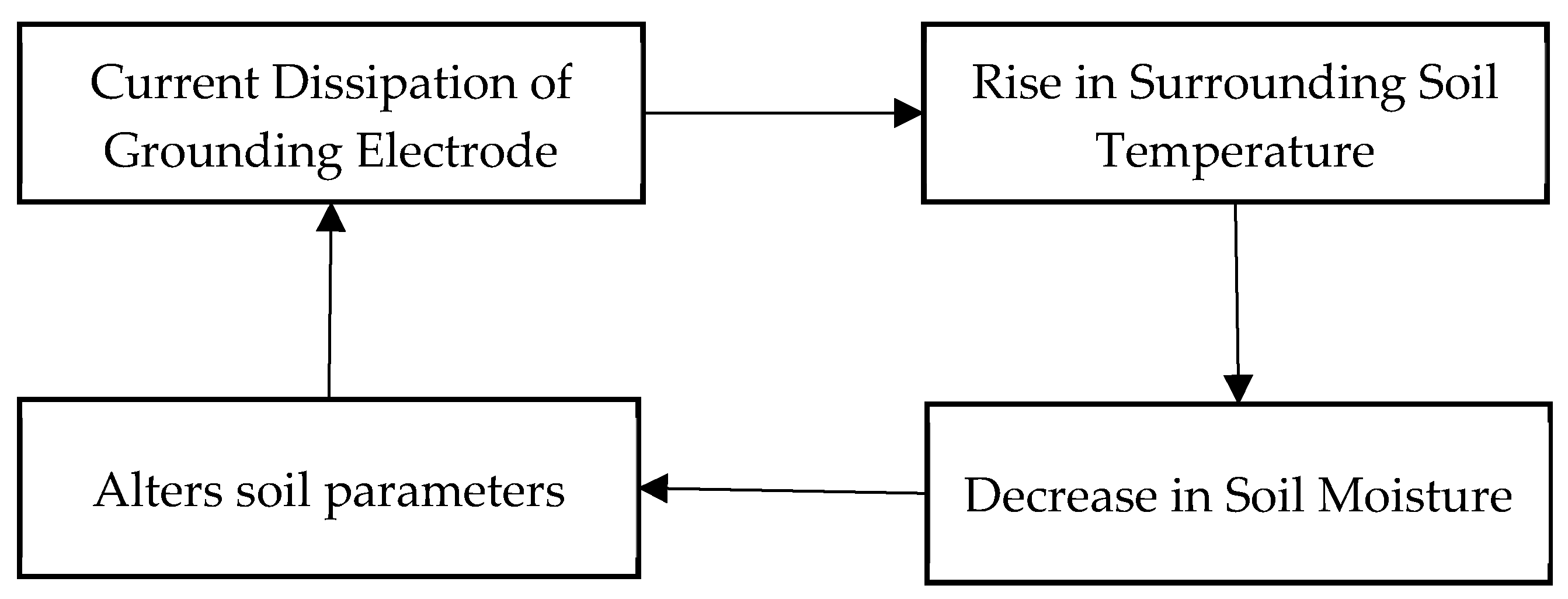
2.1. Temperature Characteristics of Soil Electro-Thermal Parameters
2.2. Electro-Thermal Coupled Finite Element Model of the Vertical DC Grounding Electrode
2.2.1. Current Field Finite Element Model of the Vertical DC Grounding Electrode
2.2.2. Temperature Field Finite Element Model of the Vertical DC Grounding Electrode
2.2.3. Fully Coupled Electro-Thermal Finite Element Model of the Vertical DC Grounding Electrode
2.3. Safety Criteria for DC Step Voltage
2.4. Establishment of the Temperature Rise Simulation Model for the Vertical Grounding Electrode
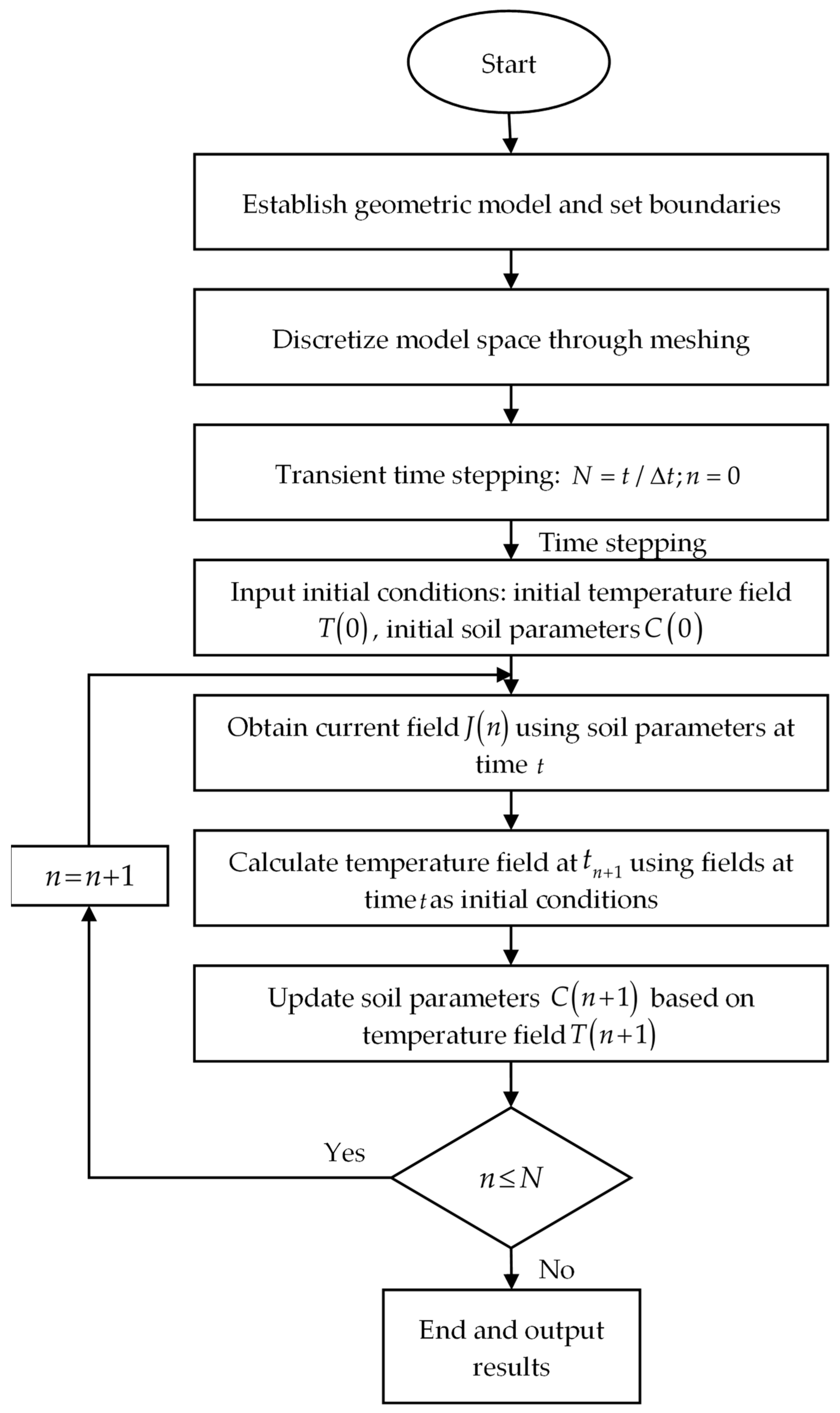
2.4.1. Modeling Workflow
- (1)
- Geometry Building
- (2)
- Parameter Setting
- (3)
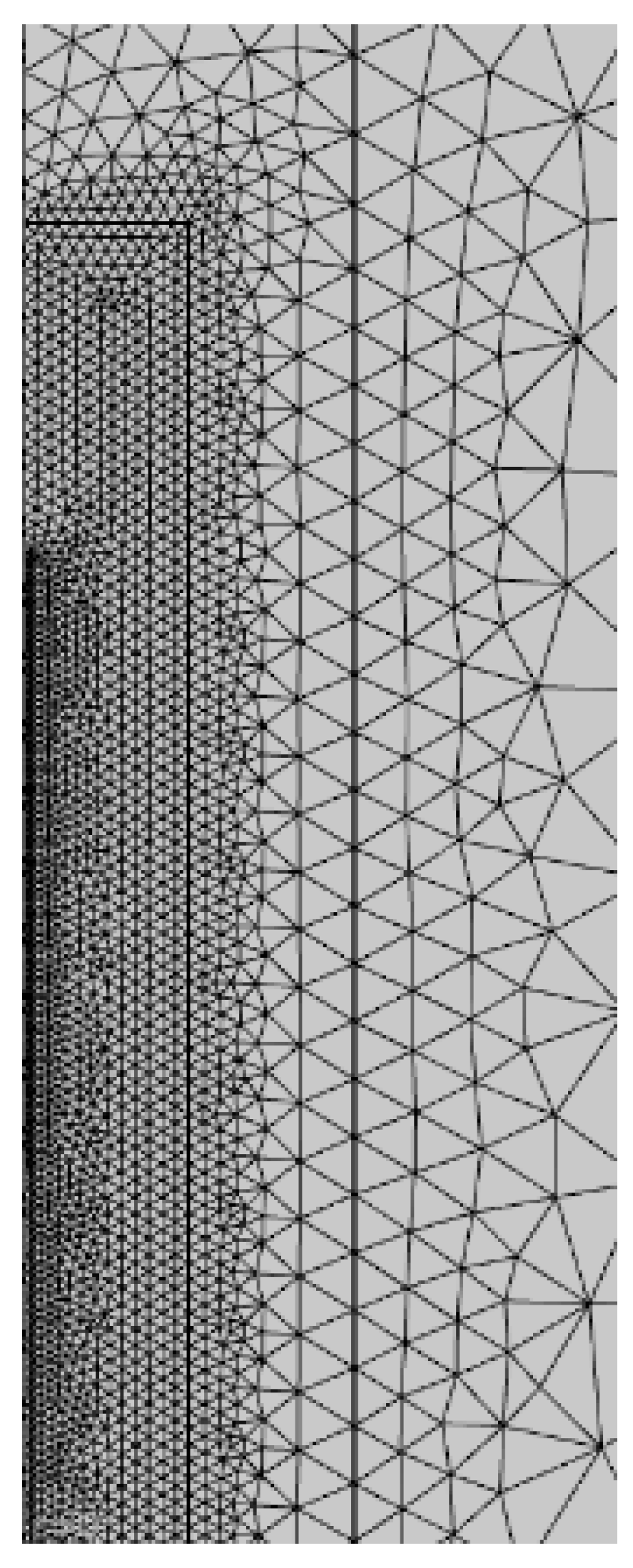
- Meshing
- (4)
- Numerical Solving and Result Extraction
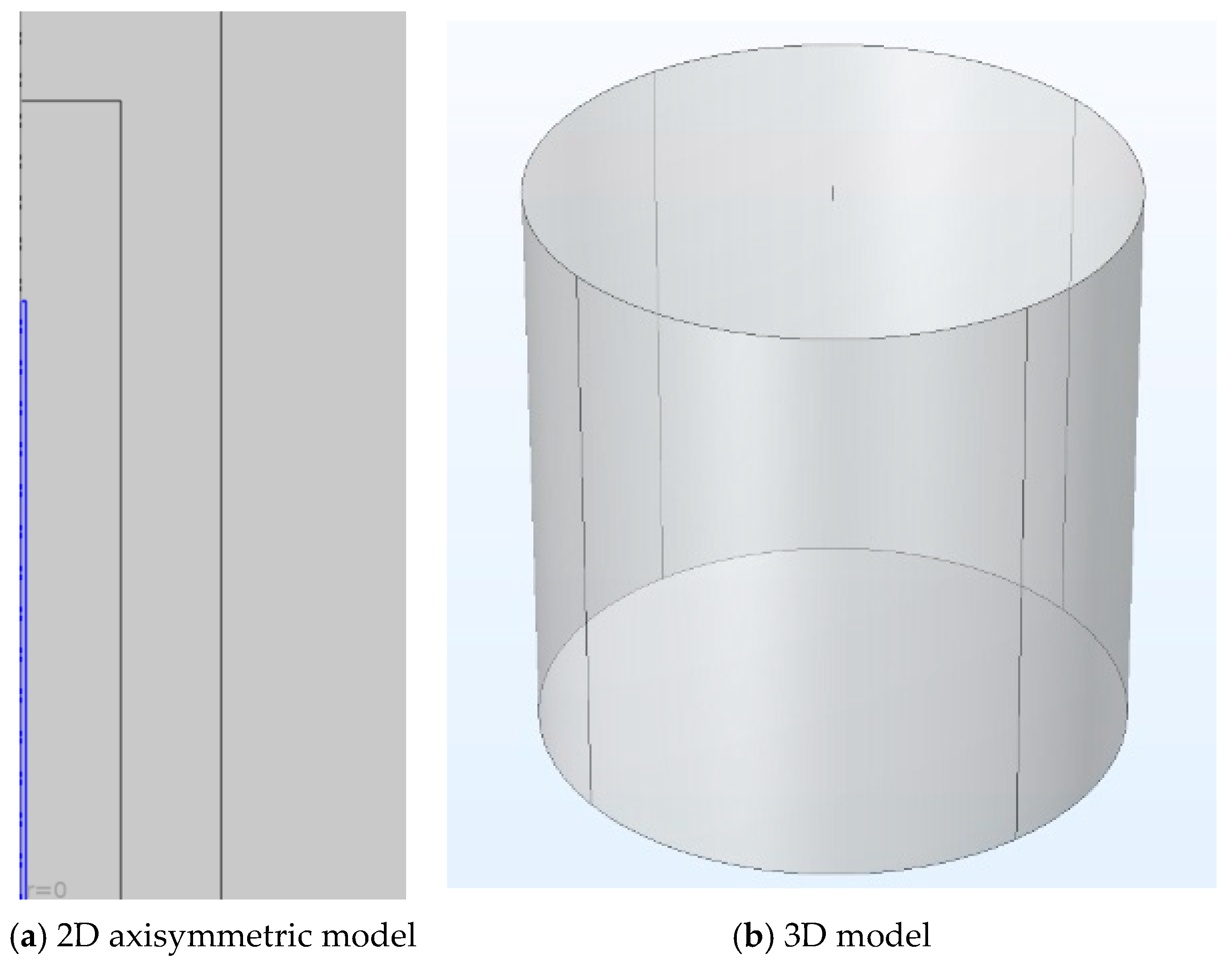
2.4.2. Establishment of the Simulation Model
2.5. Validation of the Temperature Rise Simulation Model for the Vertical Grounding Electrode
2.5.1. Validation of Electric Field Parameters
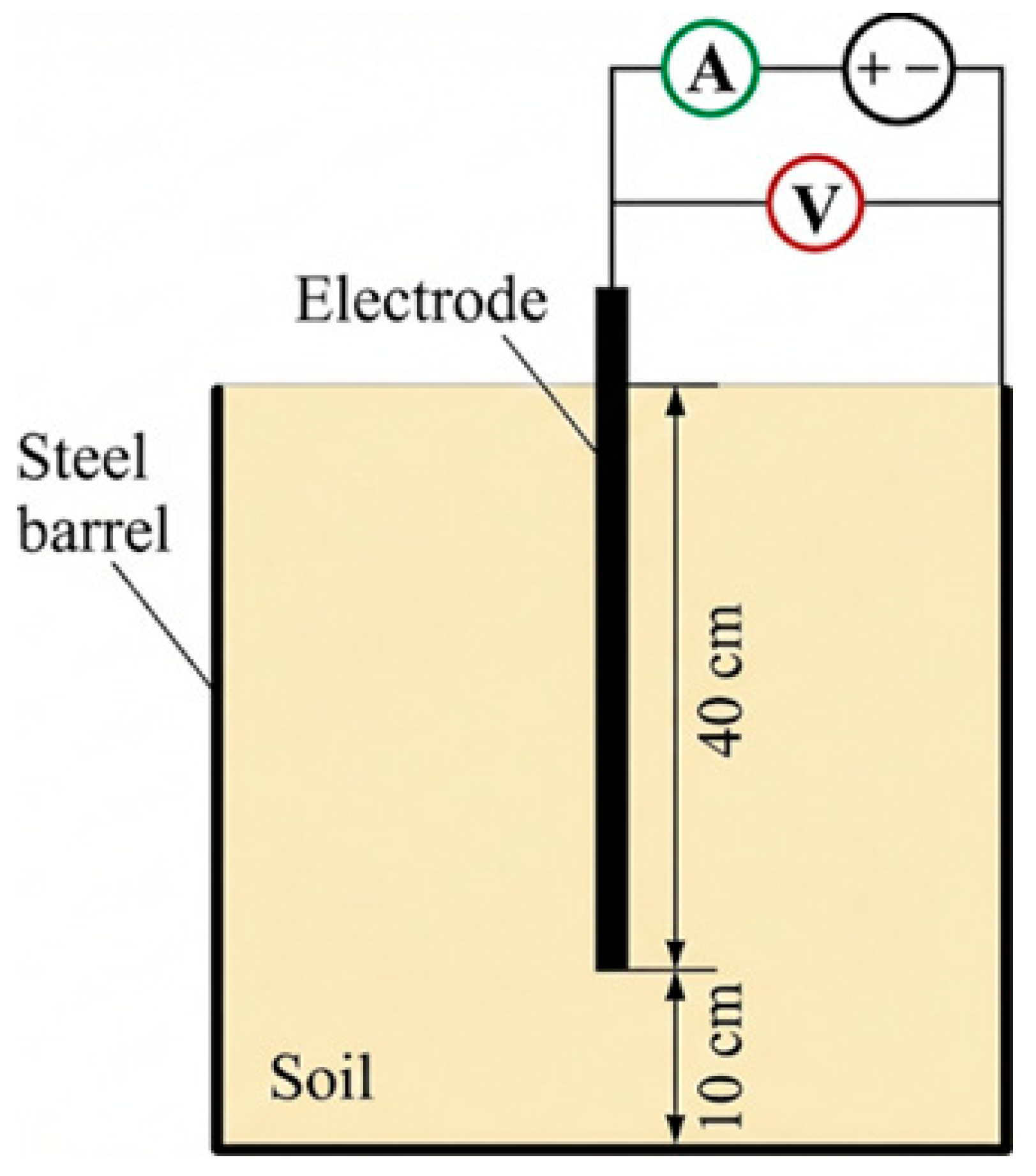
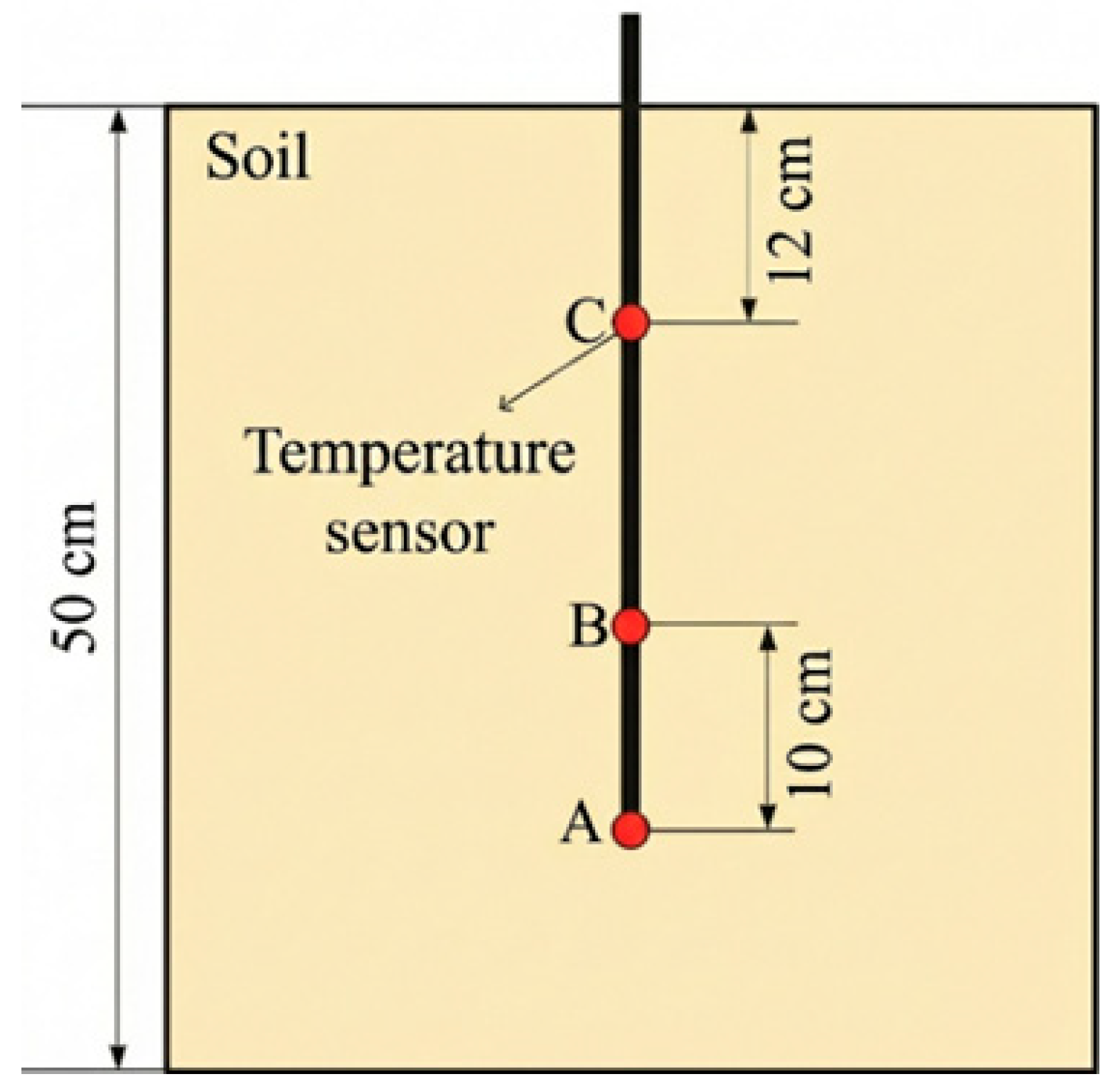
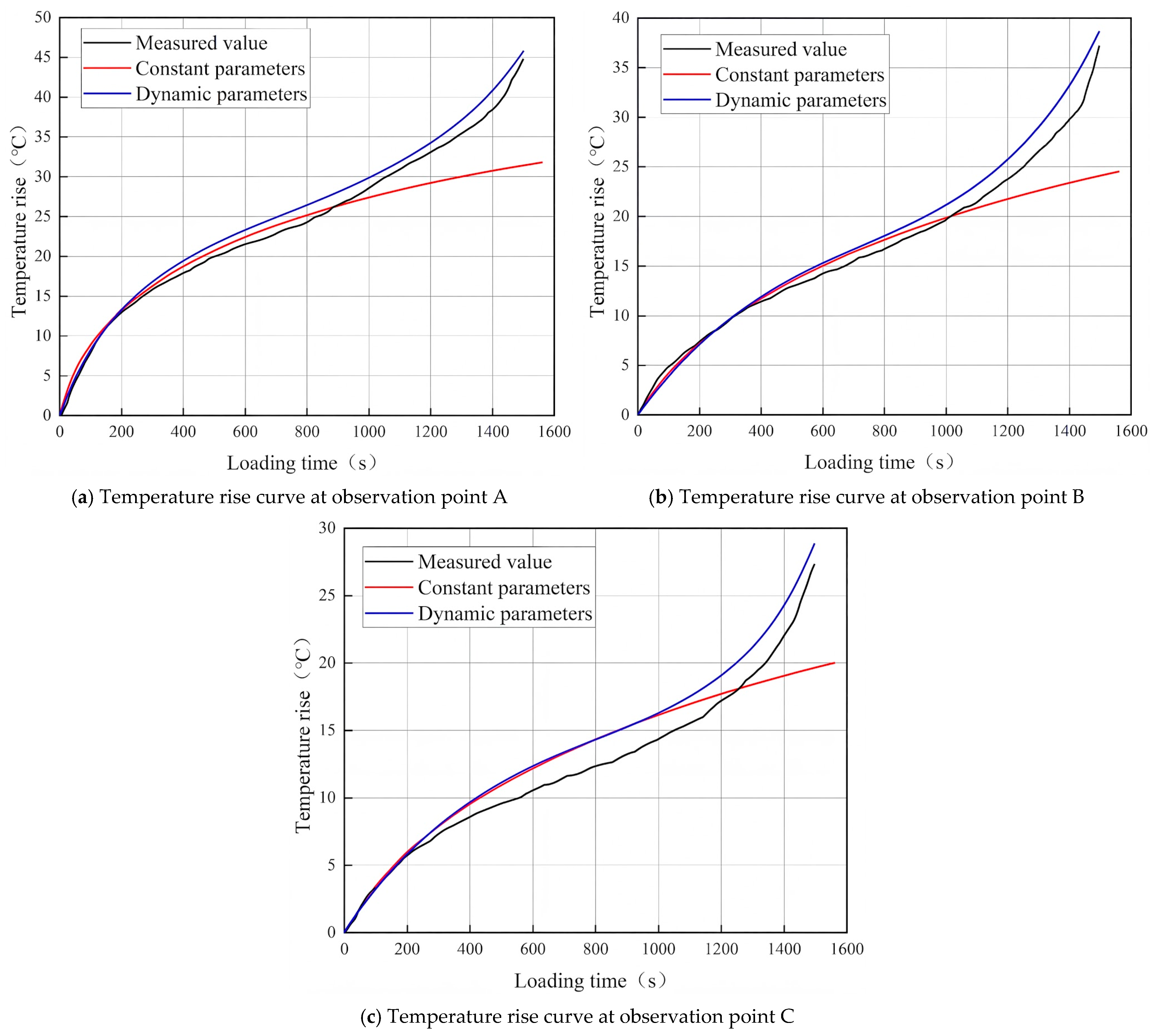
2.5.2. Validation of the Temperature Rise Process
3. Results
3.1. Effect of Uniform Soil Properties on the Temperature Rise of the Vertical Grounding Electrode
3.1.1. Soil Resistivity
3.1.2. Thermal Conductivity
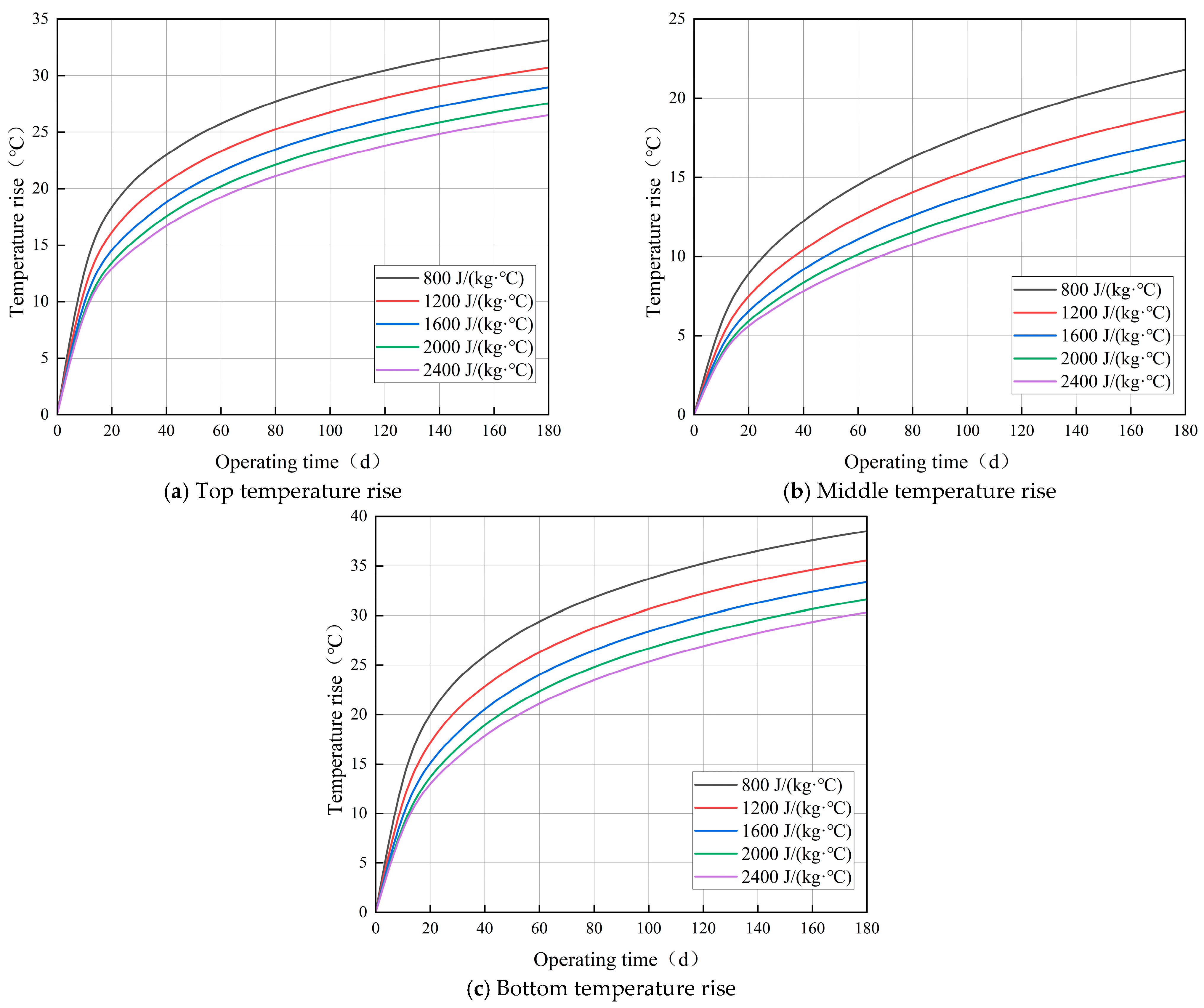
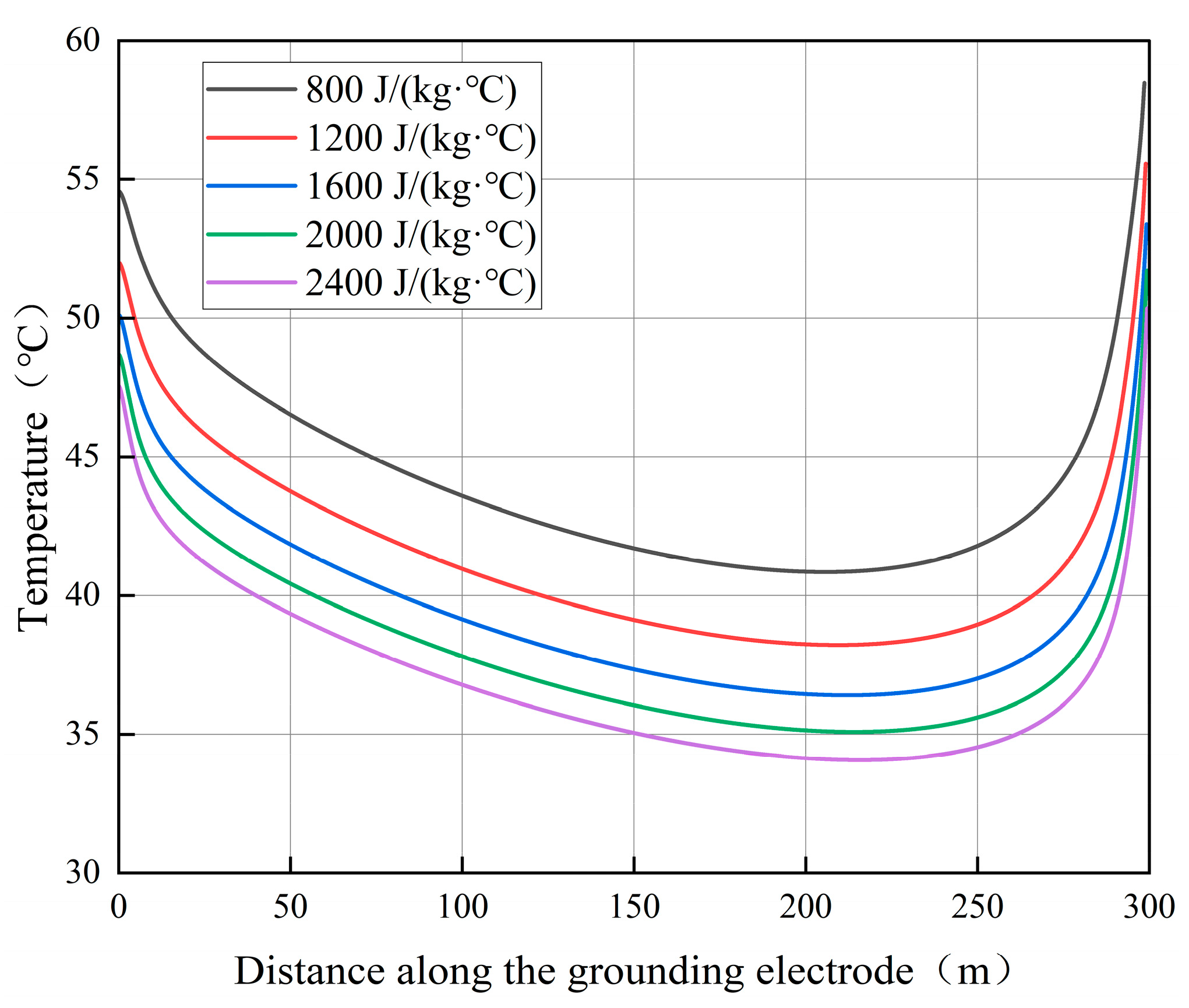
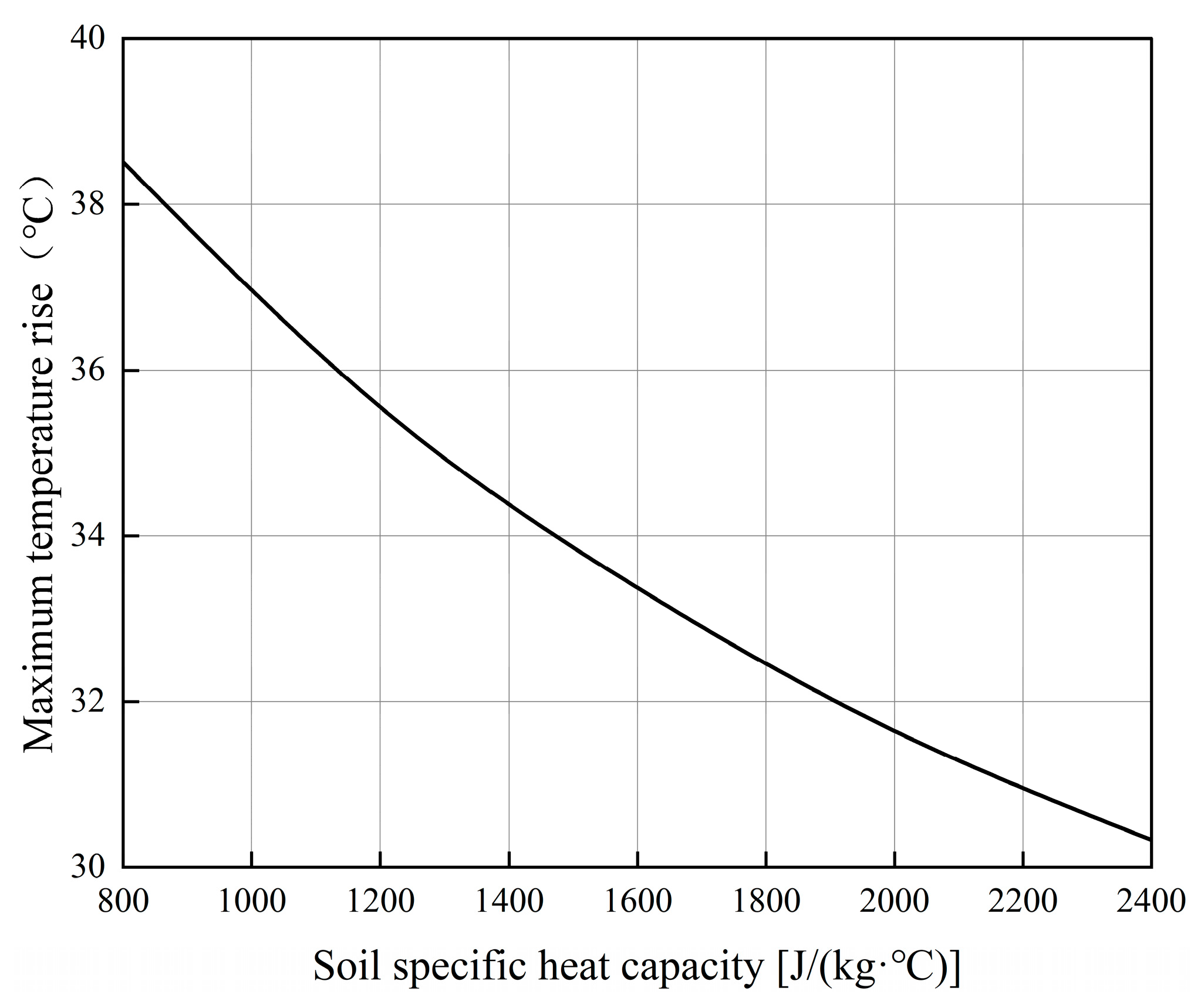
3.1.3. Specific Heat Capacity
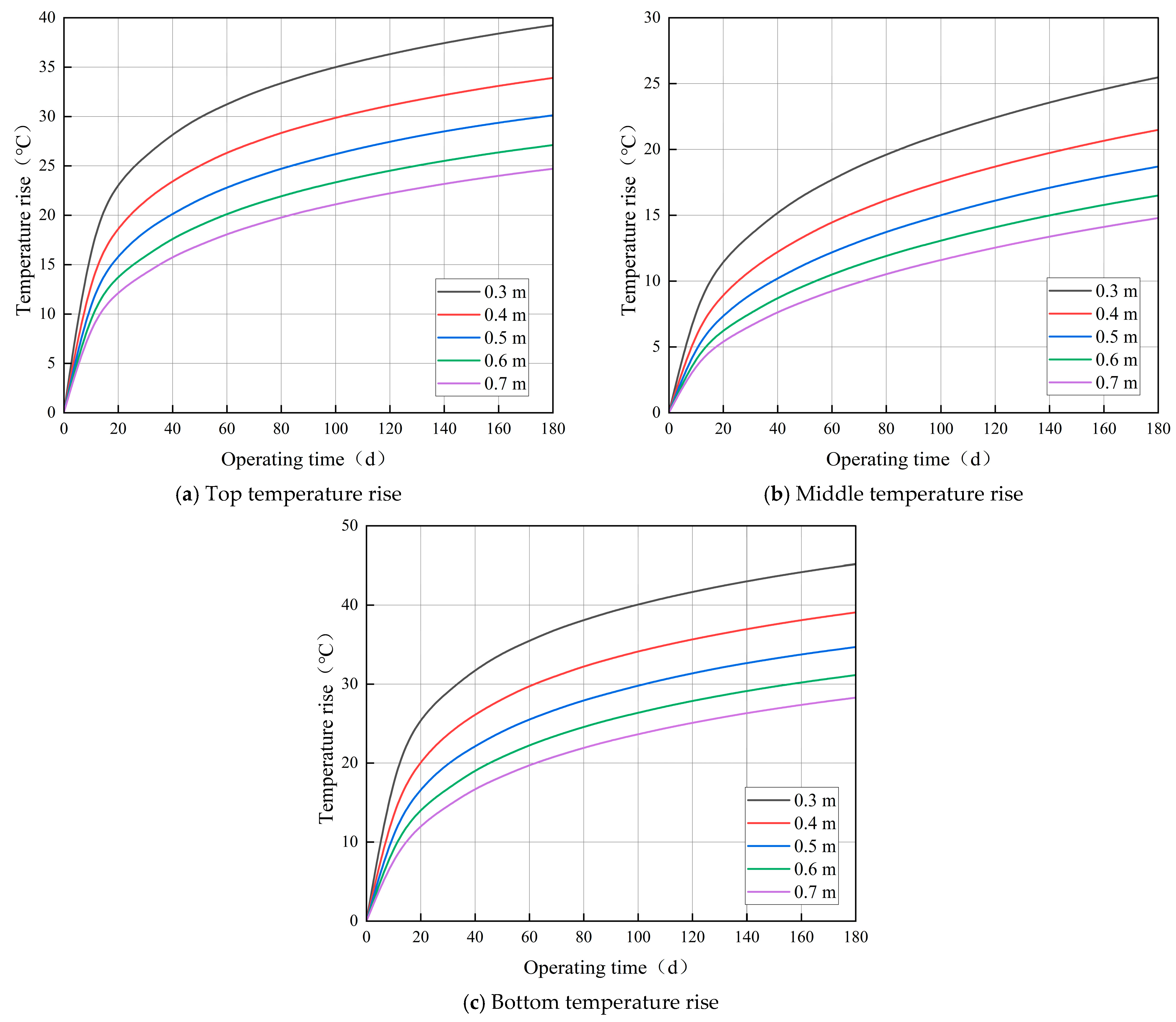
3.1.4. Coke Cross-Sectional Radius
3.2. Impact of Non-Uniform Soil Properties on Temperature Rise
3.2.1. Impact of Soil Interface Position on Temperature Rise
High-Resistivity Upper Soil Layer
High-Resistivity Lower Soil Layer
3.2.2. Impact of Different Soil Resistivities on Temperature Rise
Fixed Lower Soil Resistivity
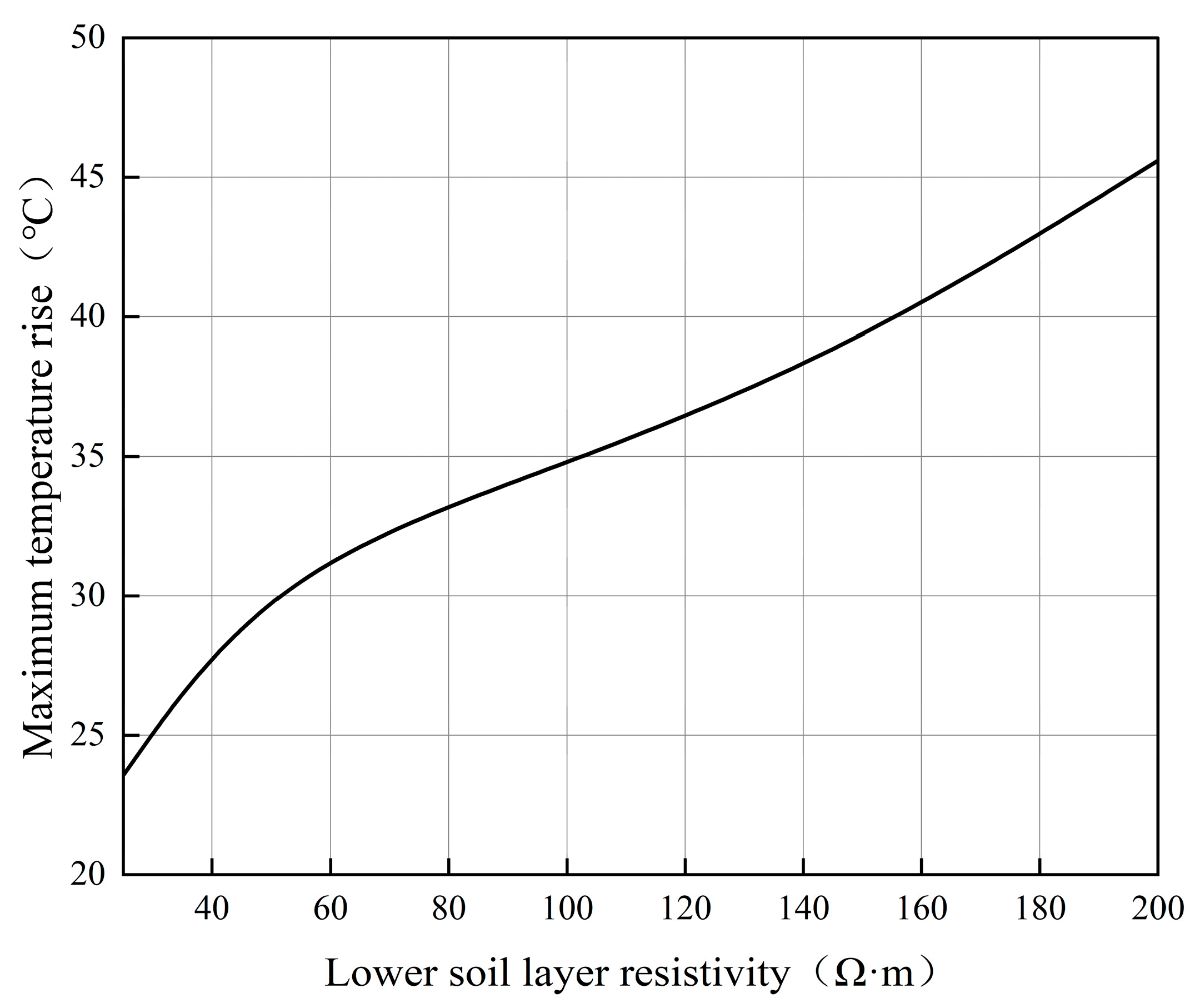
Fixed Upper Soil Resistivity
4. Discussion
5. Conclusions
- (1)
- Through a comprehensive comparison of the CDEGS software results, field measurements, the constant parameter model, and the dynamic parameter model, the accuracy and superiority of the proposed dynamic electrothermal coupled model are verified. Research indicates that under long-term, high-current operating conditions, the traditional constant parameter model severely underestimates the late-stage temperature rise. Therefore, it is strictly necessary to consider the nonlinear surge in soil resistivity caused by high-temperature moisture dissipation. The proposed dynamic model reflects the actual physical process of thermal runaway much more authentically than the constant parameter model.
- (2)
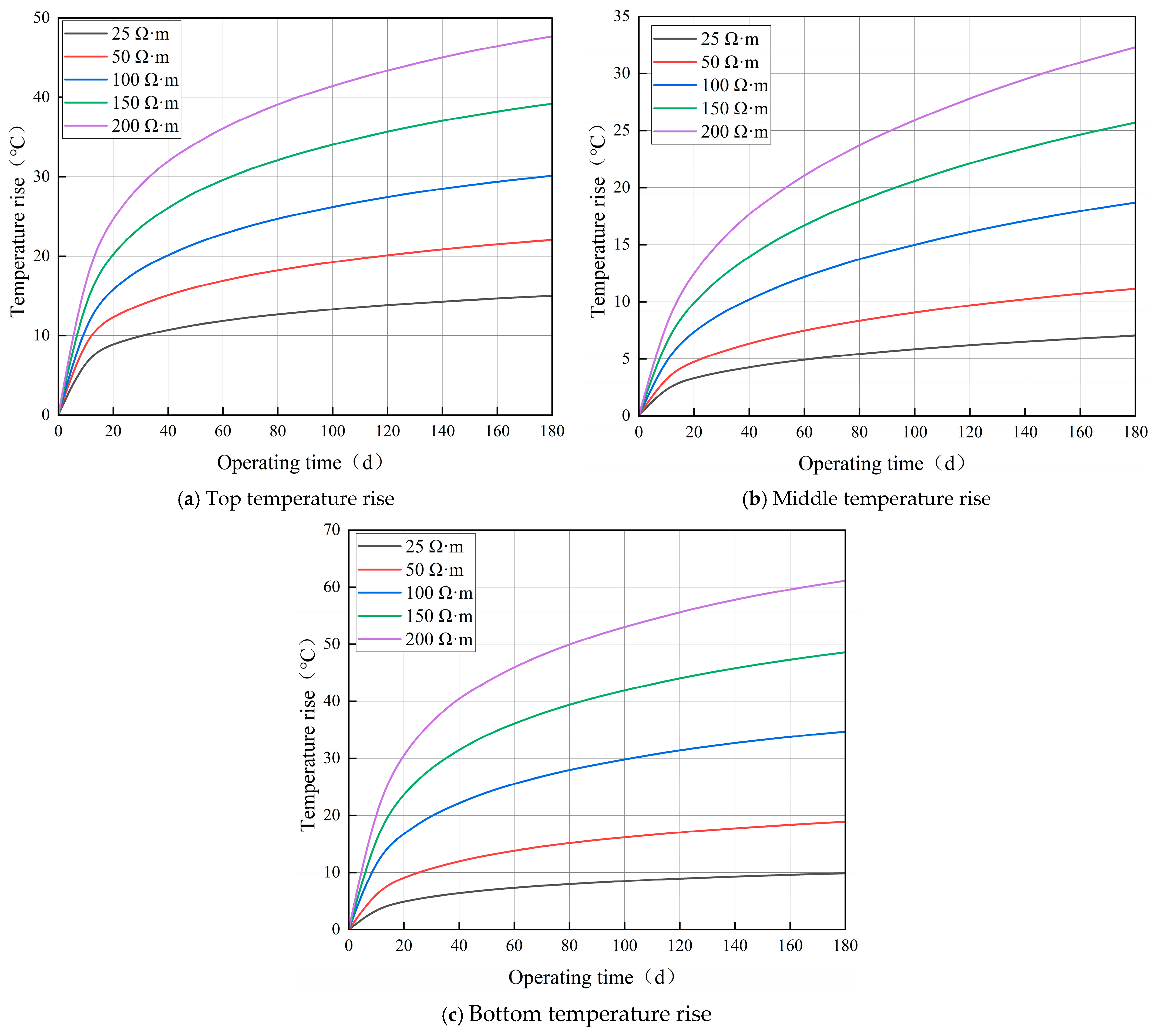
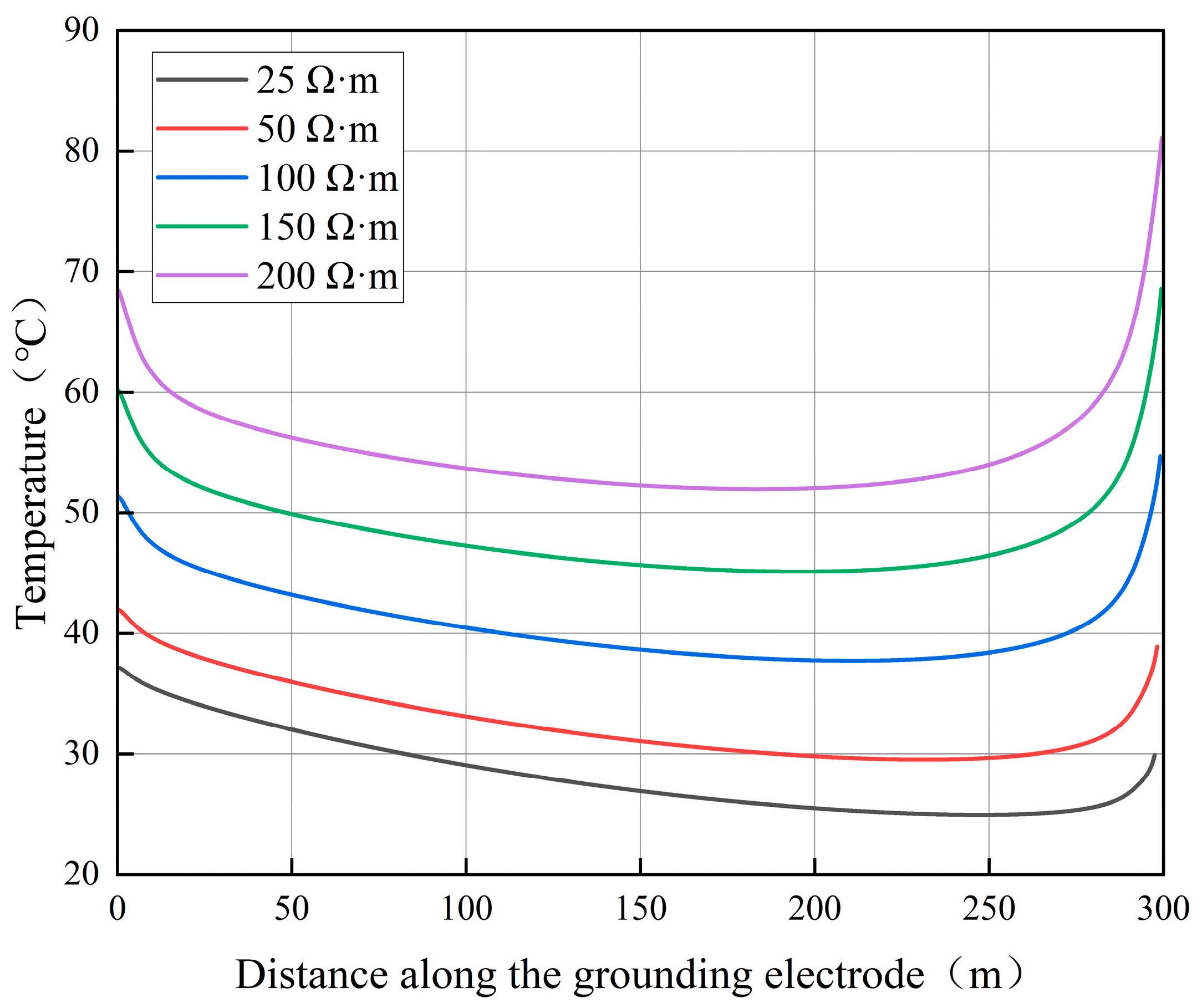
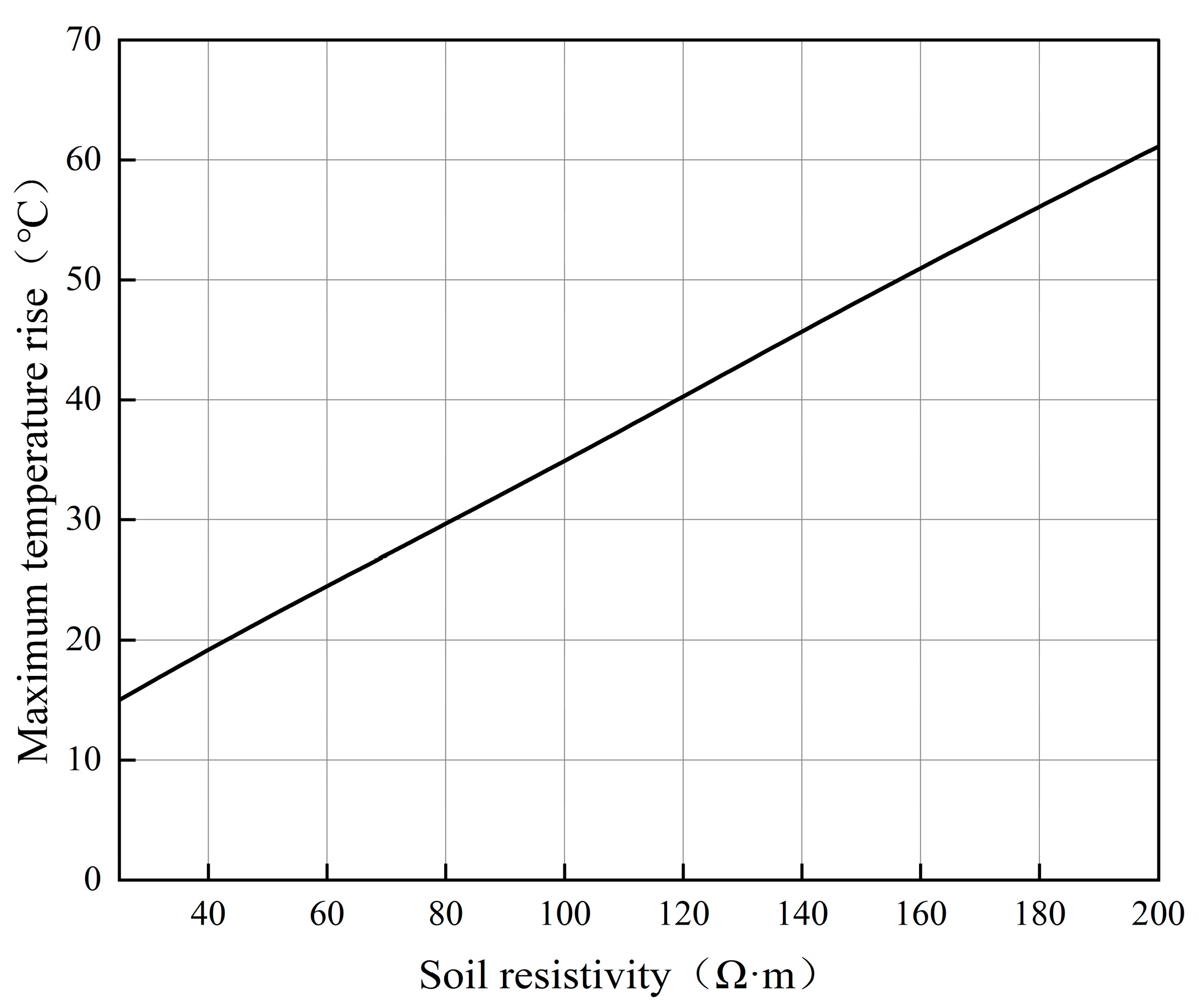
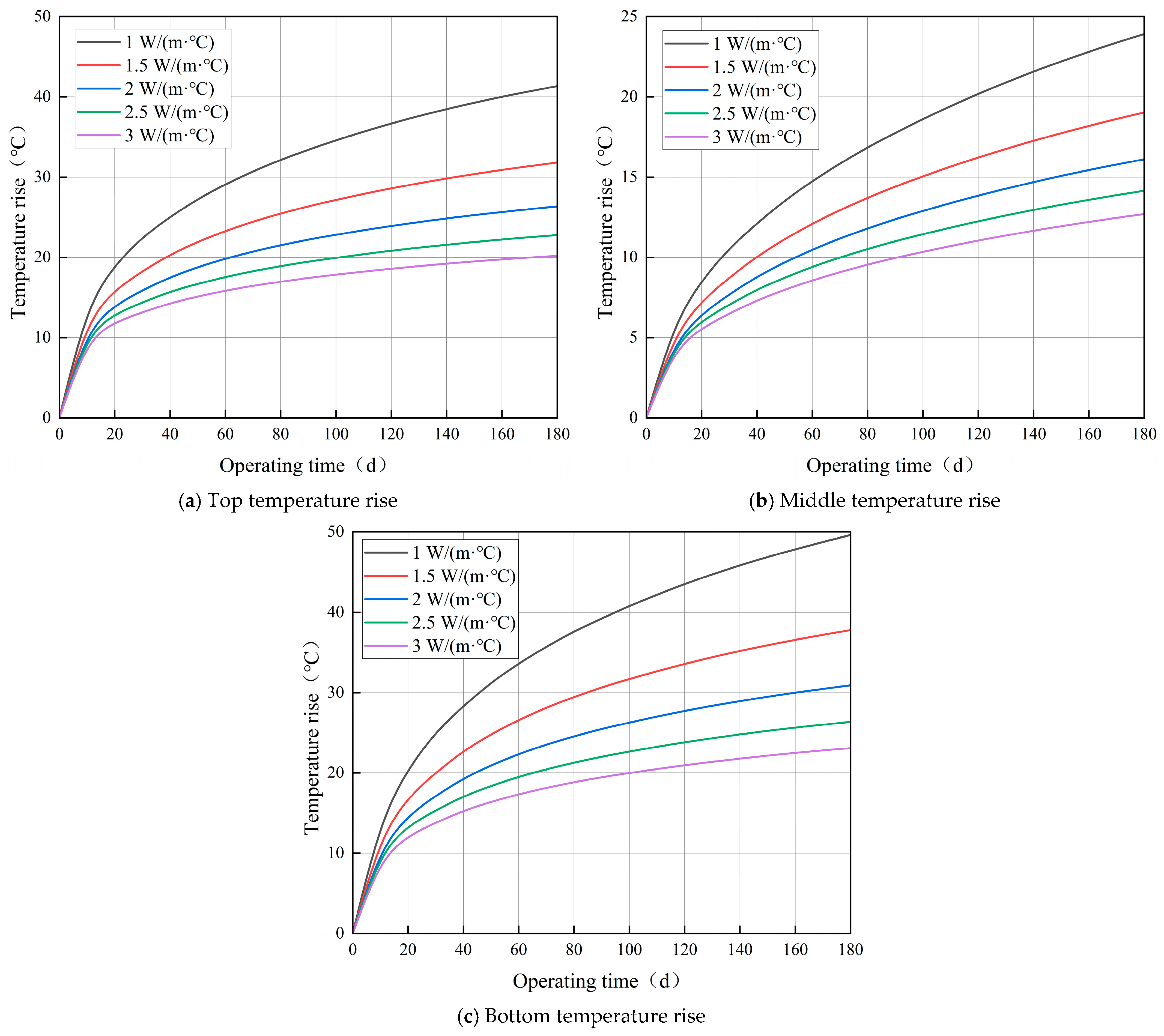
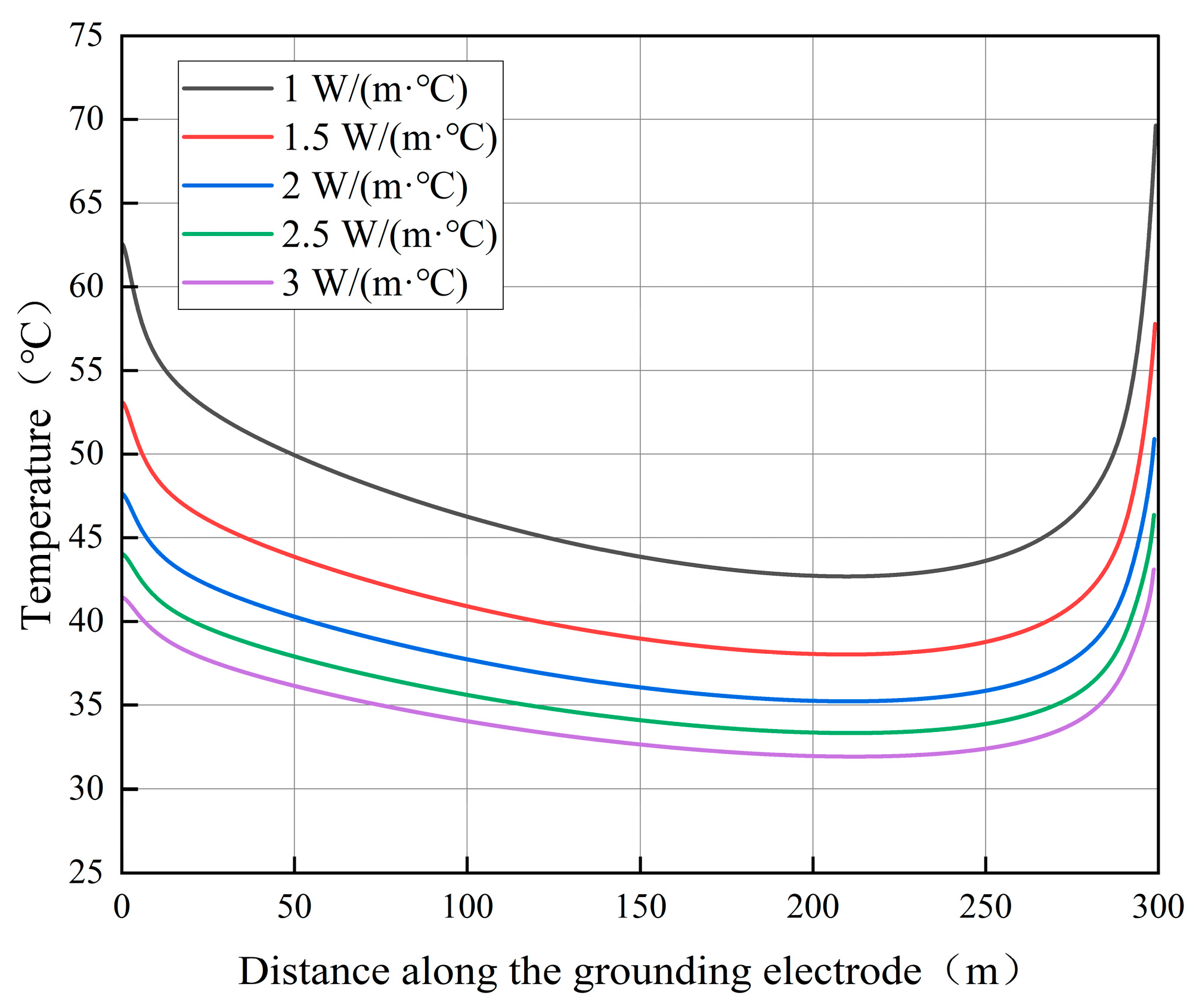
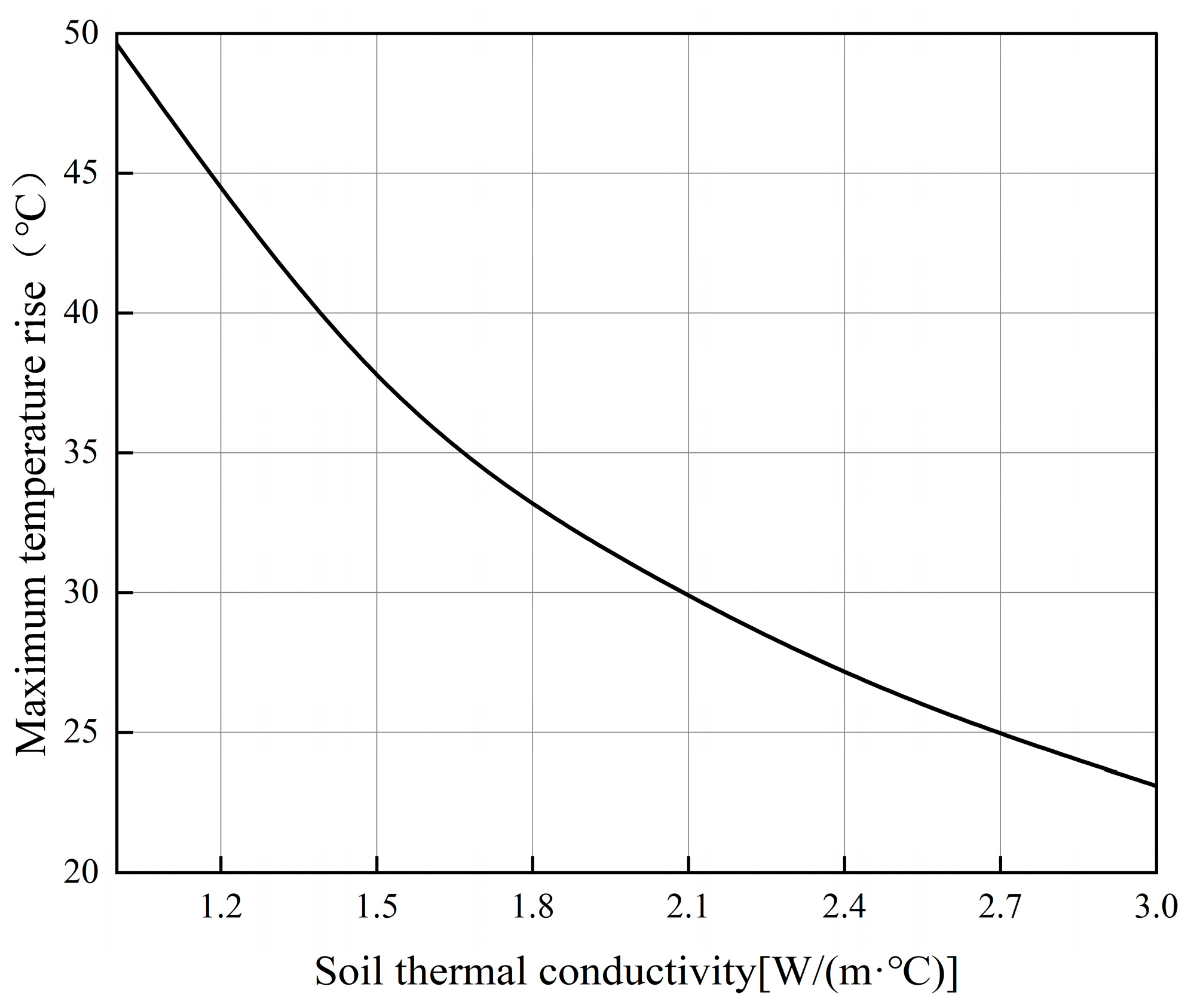
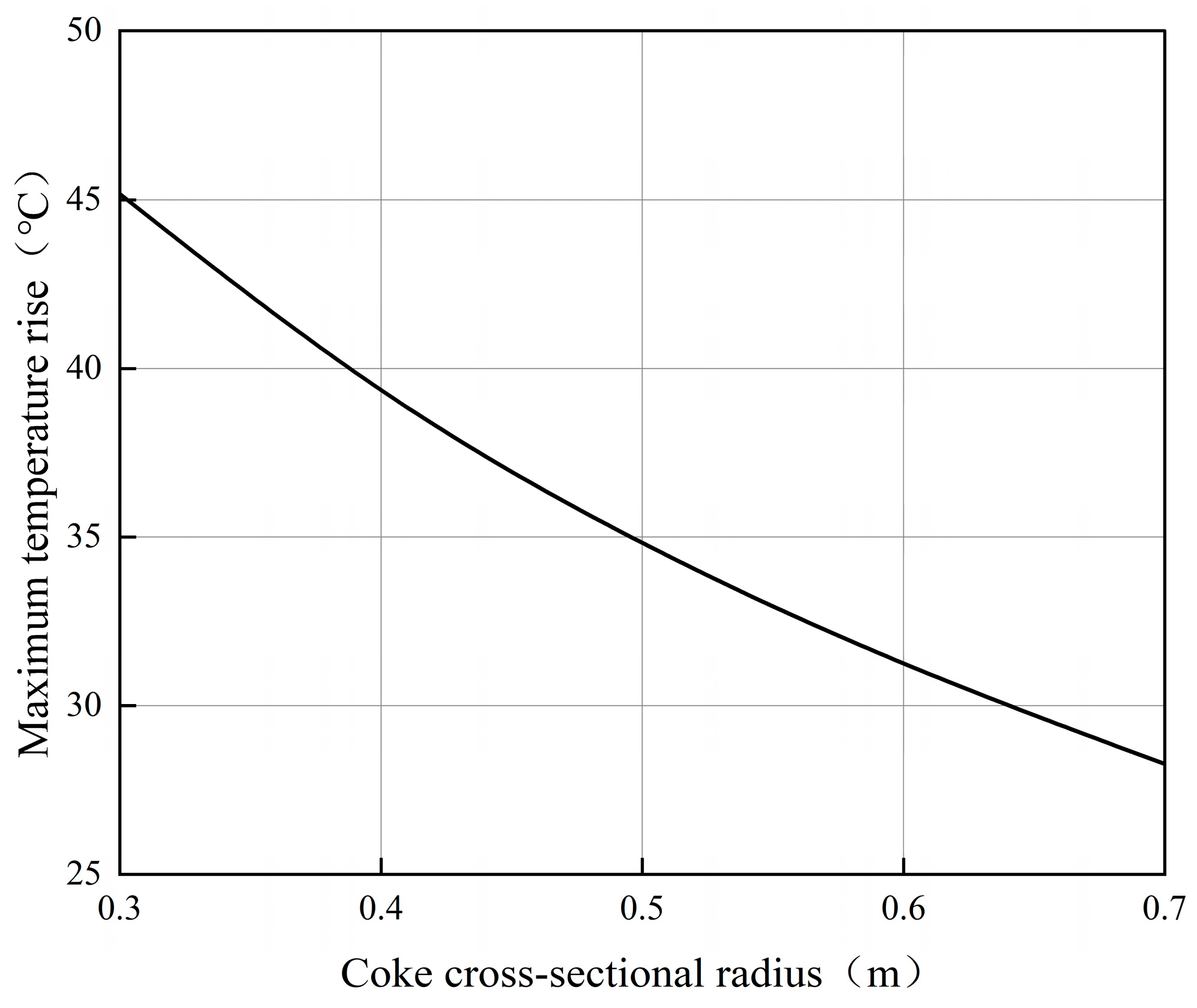
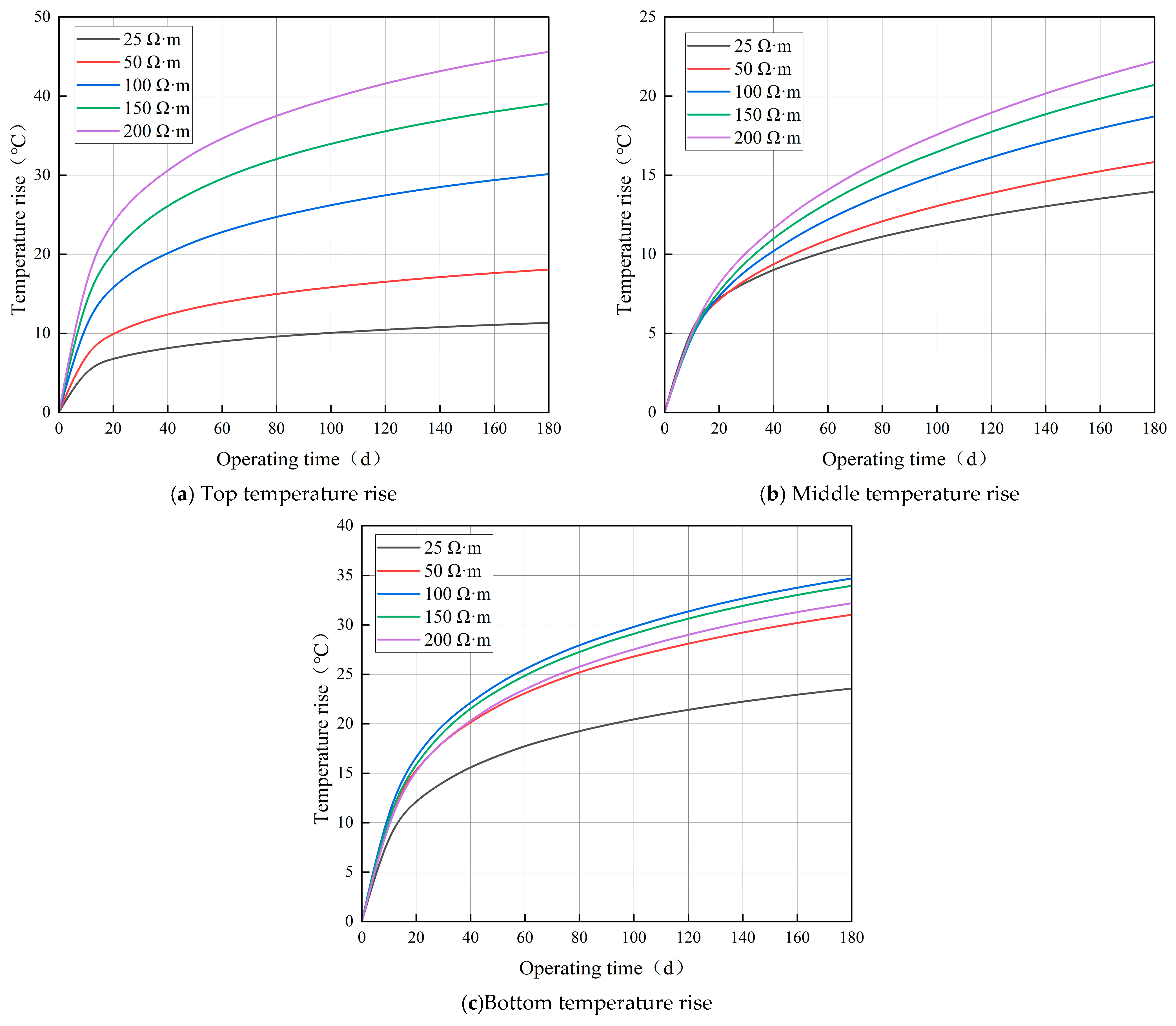
- In uniform soil structures, soil resistivity exhibits a significant positive linear correlation with the maximum temperature rise of the grounding electrode, acting as the primary factor influencing heat generation. An increase in soil resistivity obstructs current dissipation, leading to a significant elevation in grounding resistance and maximum step voltage, yet it has no impact on the average current dissipation density. Soil thermal conductivity is negatively correlated with the maximum temperature rise; high thermal conductivity effectively alleviates heat accumulation at the coke–soil interface, preventing local overheating, while its variation has virtually no substantial impact on grounding resistance, maximum step voltage, or average current dissipation density. Soil specific heat capacity is also negatively correlated with the maximum temperature rise, though its impact is relatively minor, and it has no obvious effect on the three grounding characteristics. Increasing the coke cross-sectional radius significantly reduces the current density at the contact surface and provides a larger heat dissipation area. This is an effective means of suppressing temperature rise—despite a diminishing marginal benefit—and it simultaneously reduces grounding resistance and maximum step voltage effectively.
- (3)
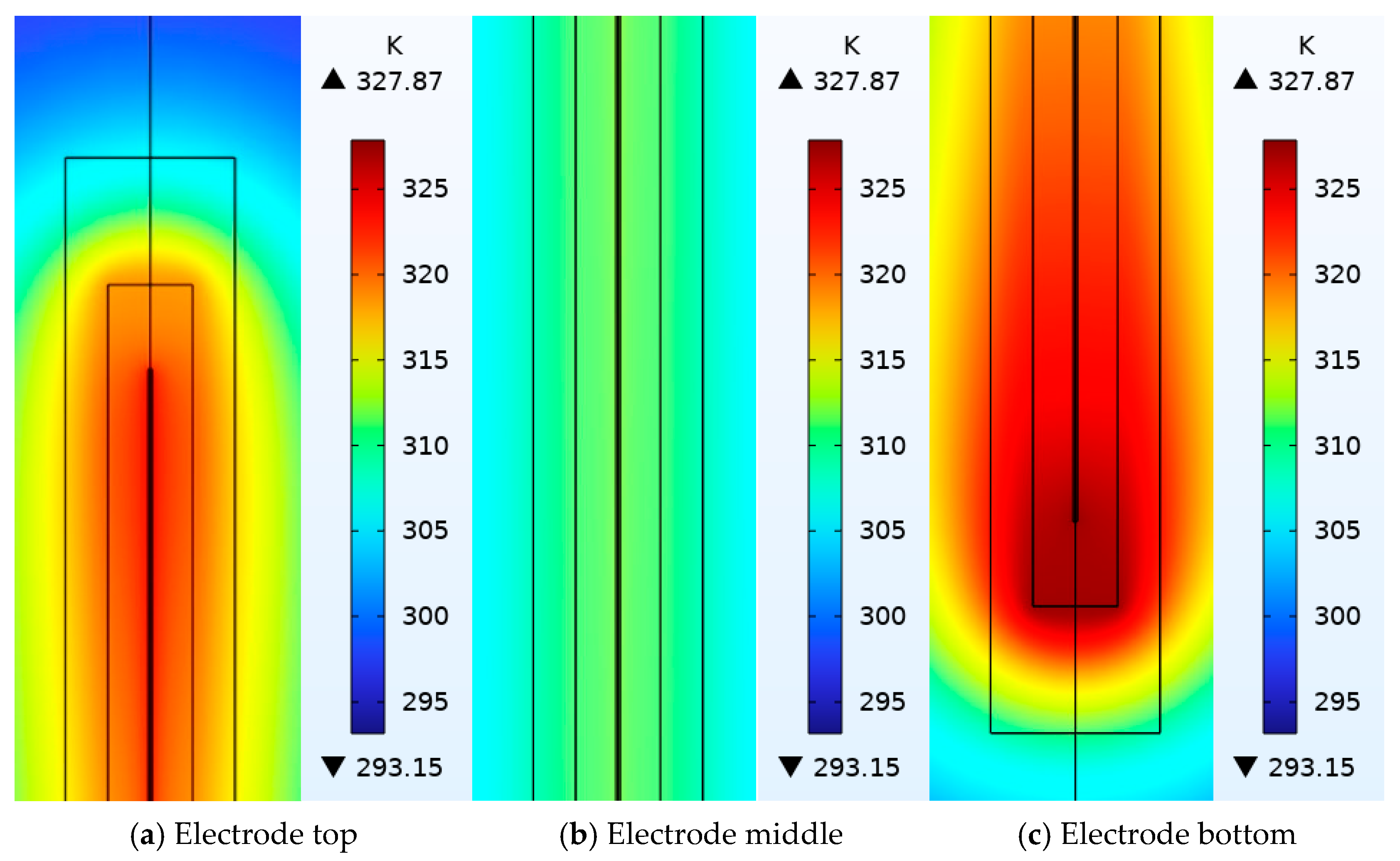
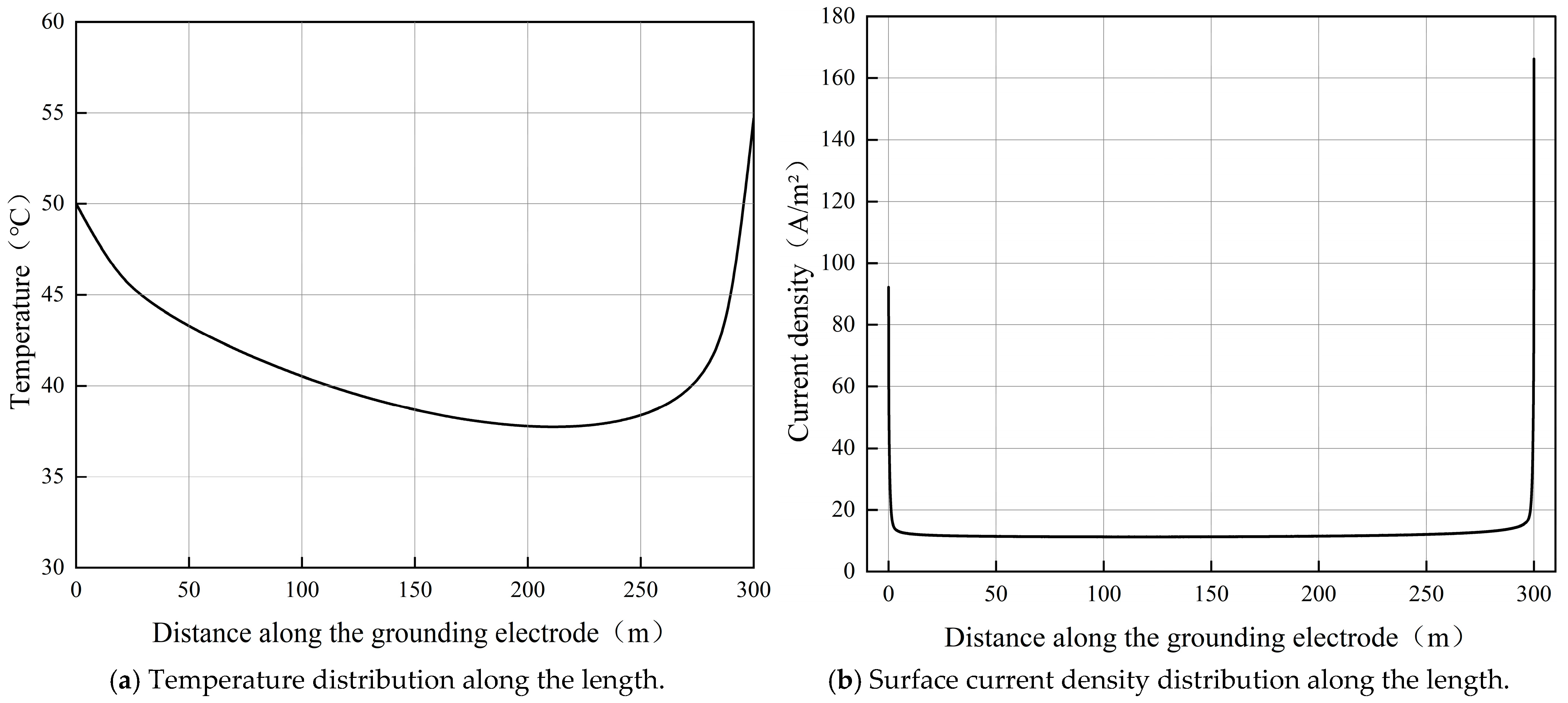
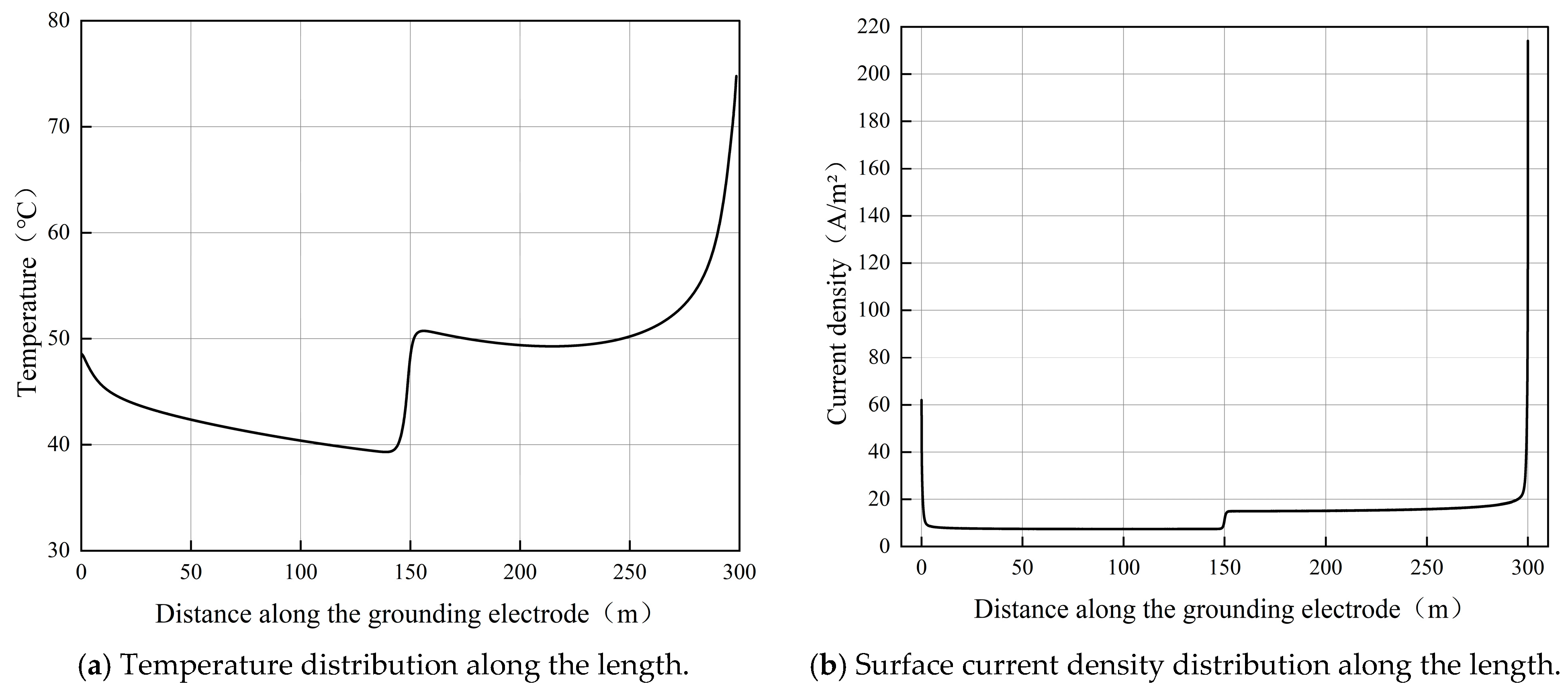
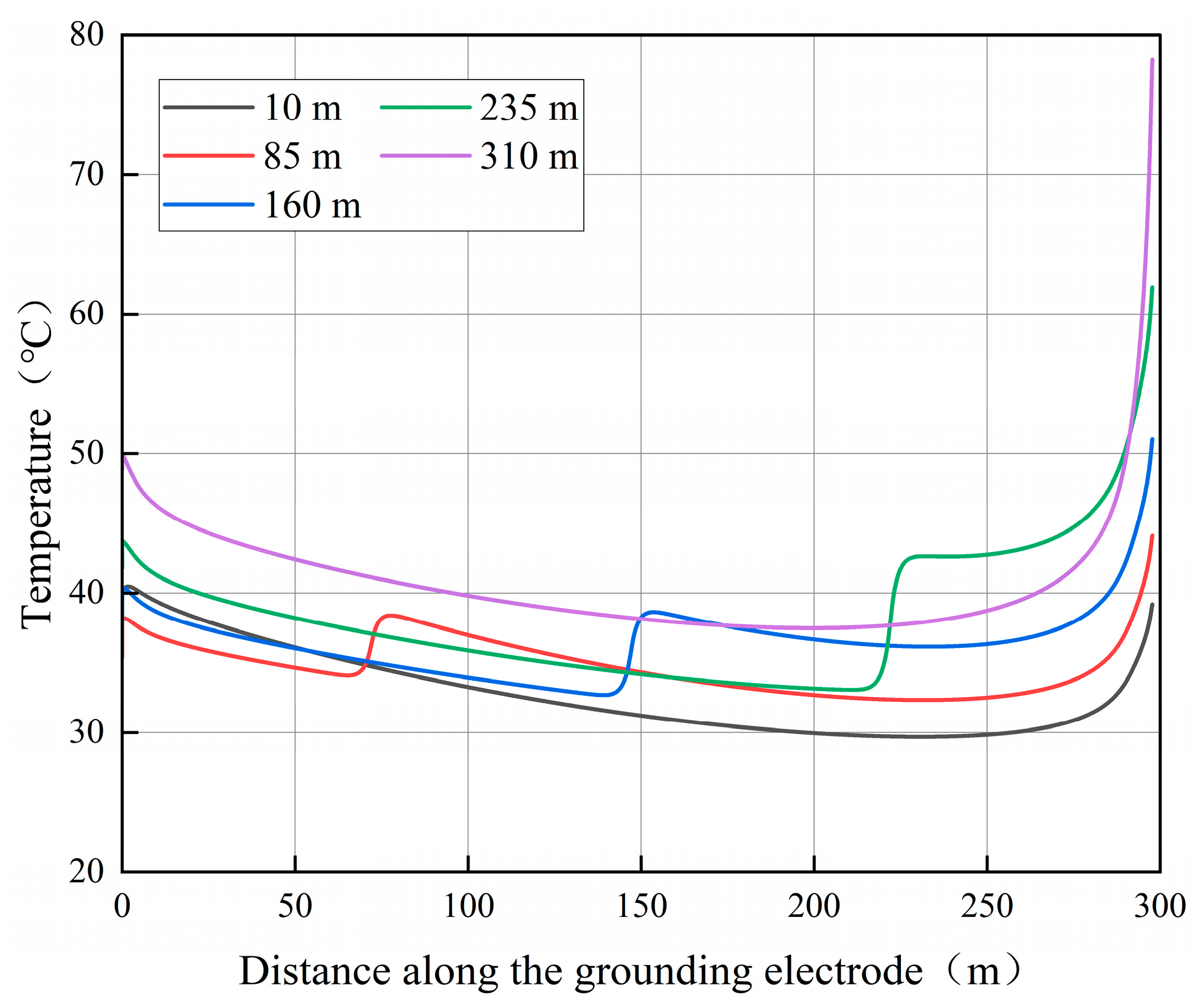
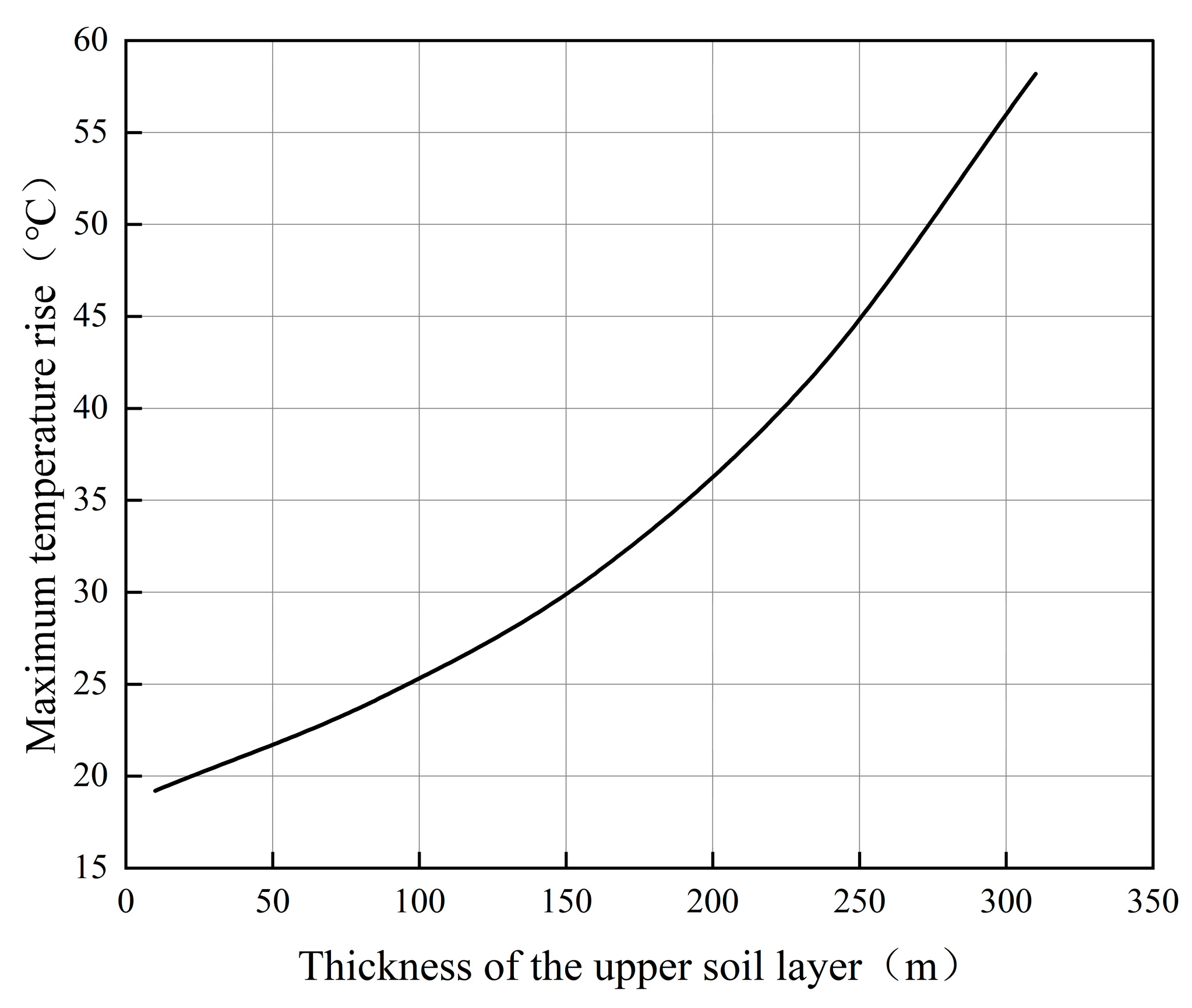
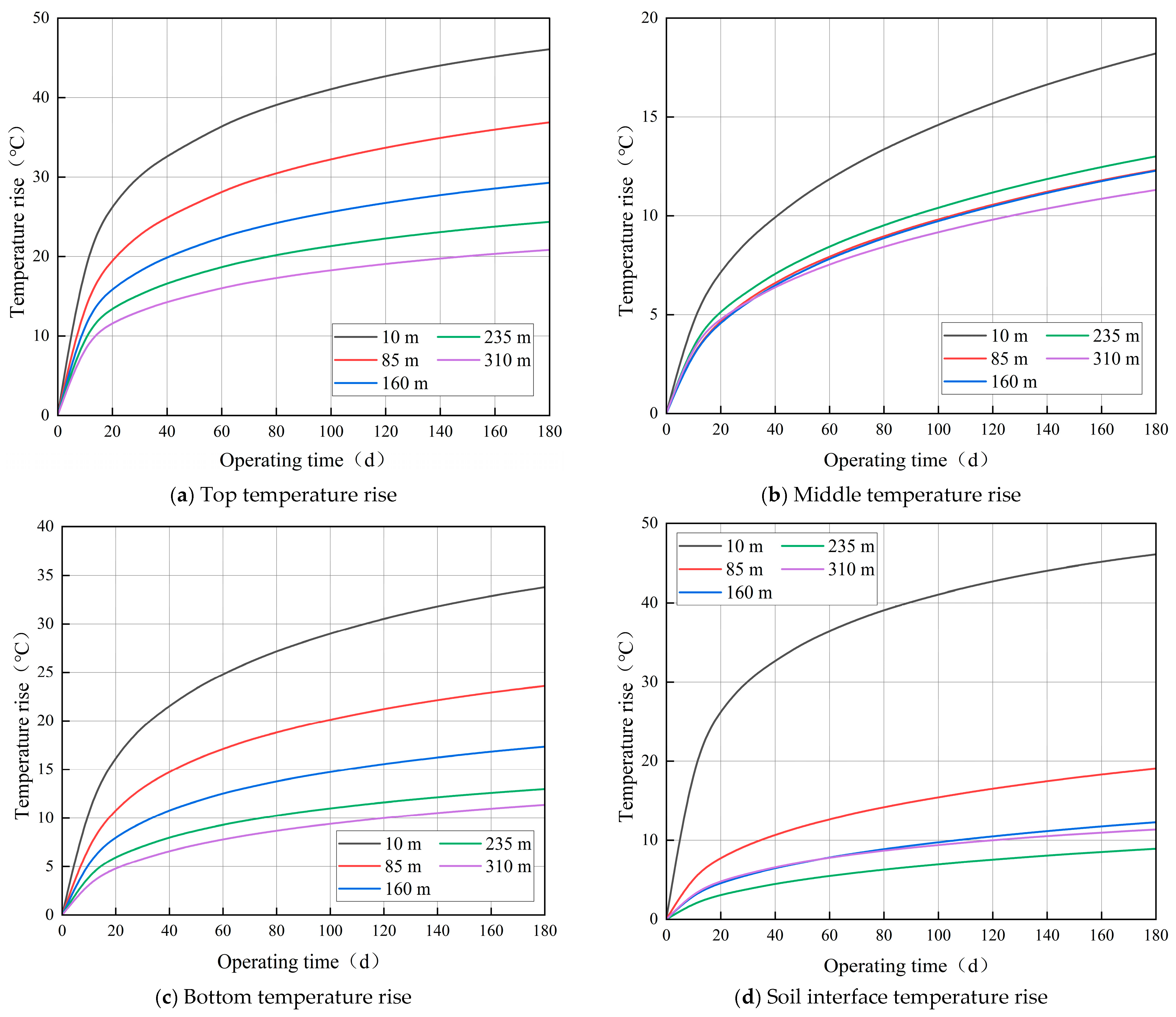
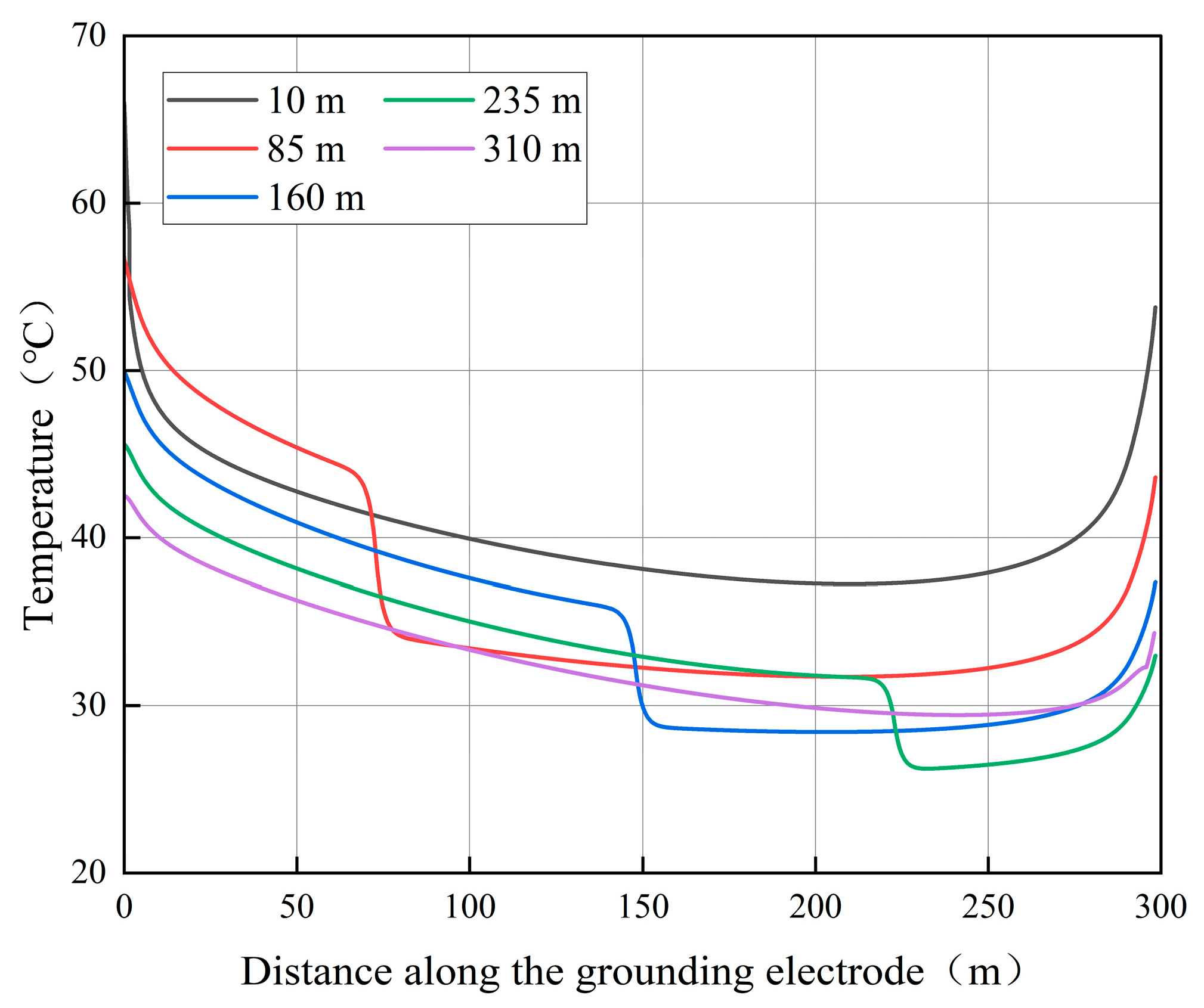
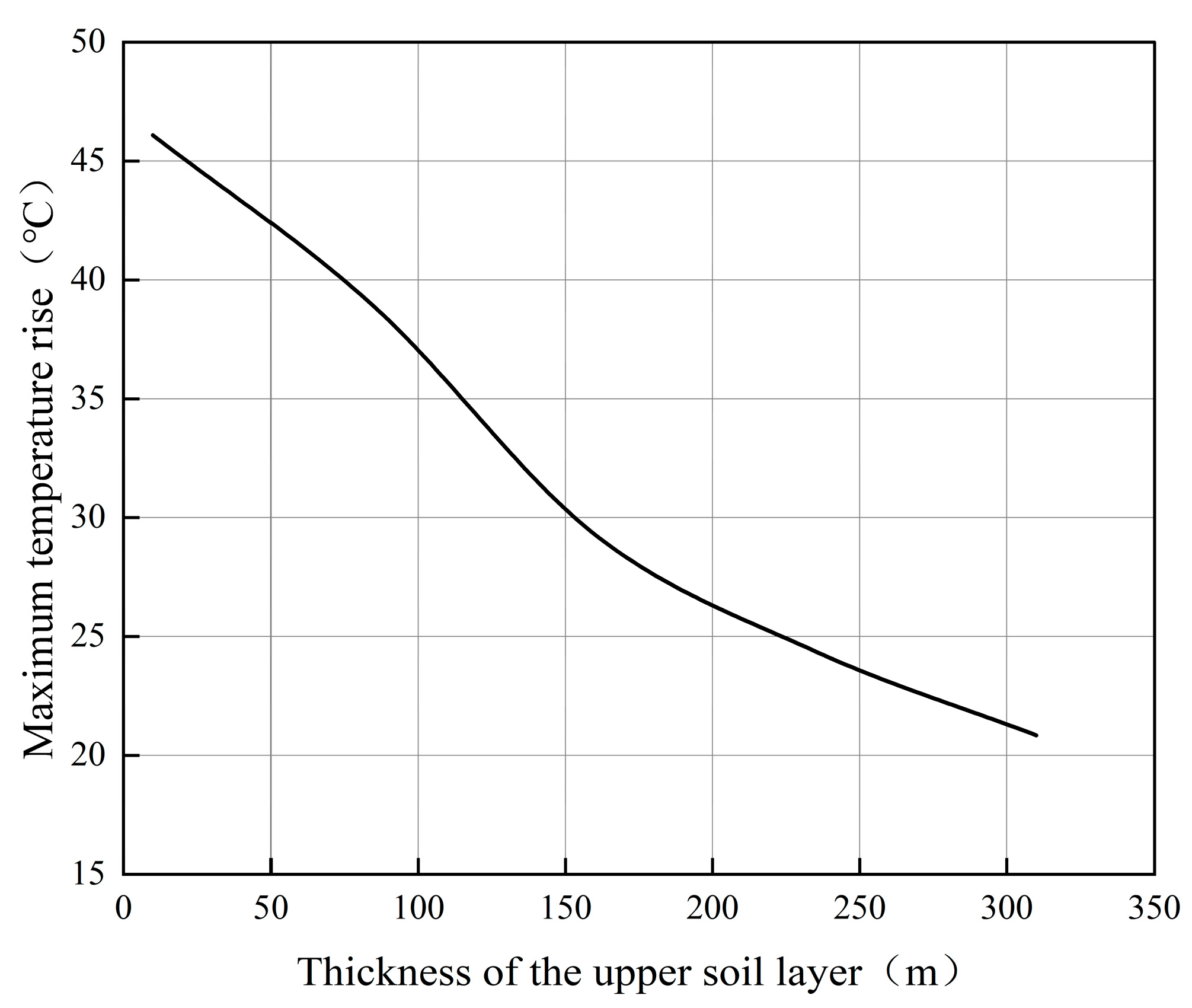
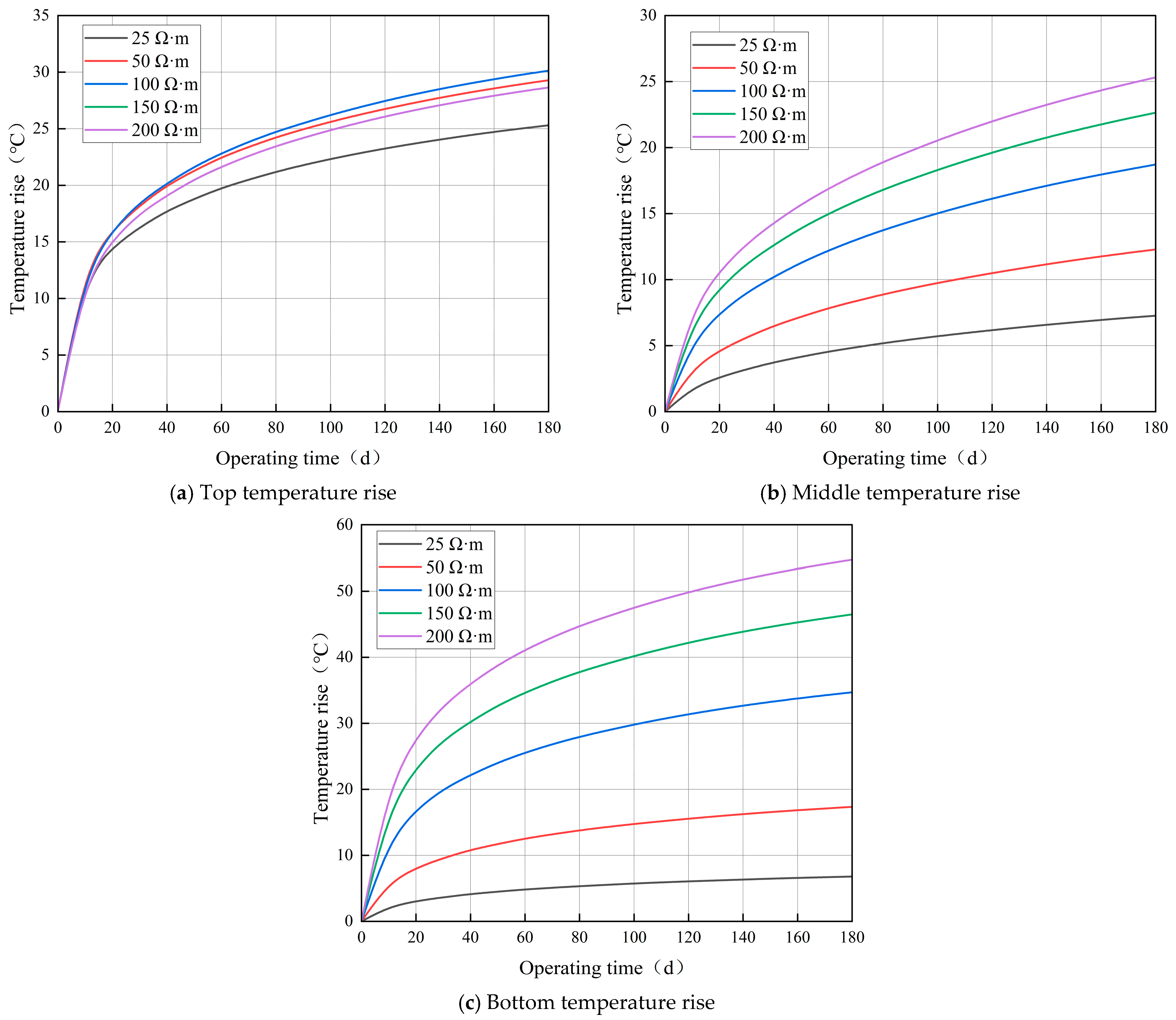
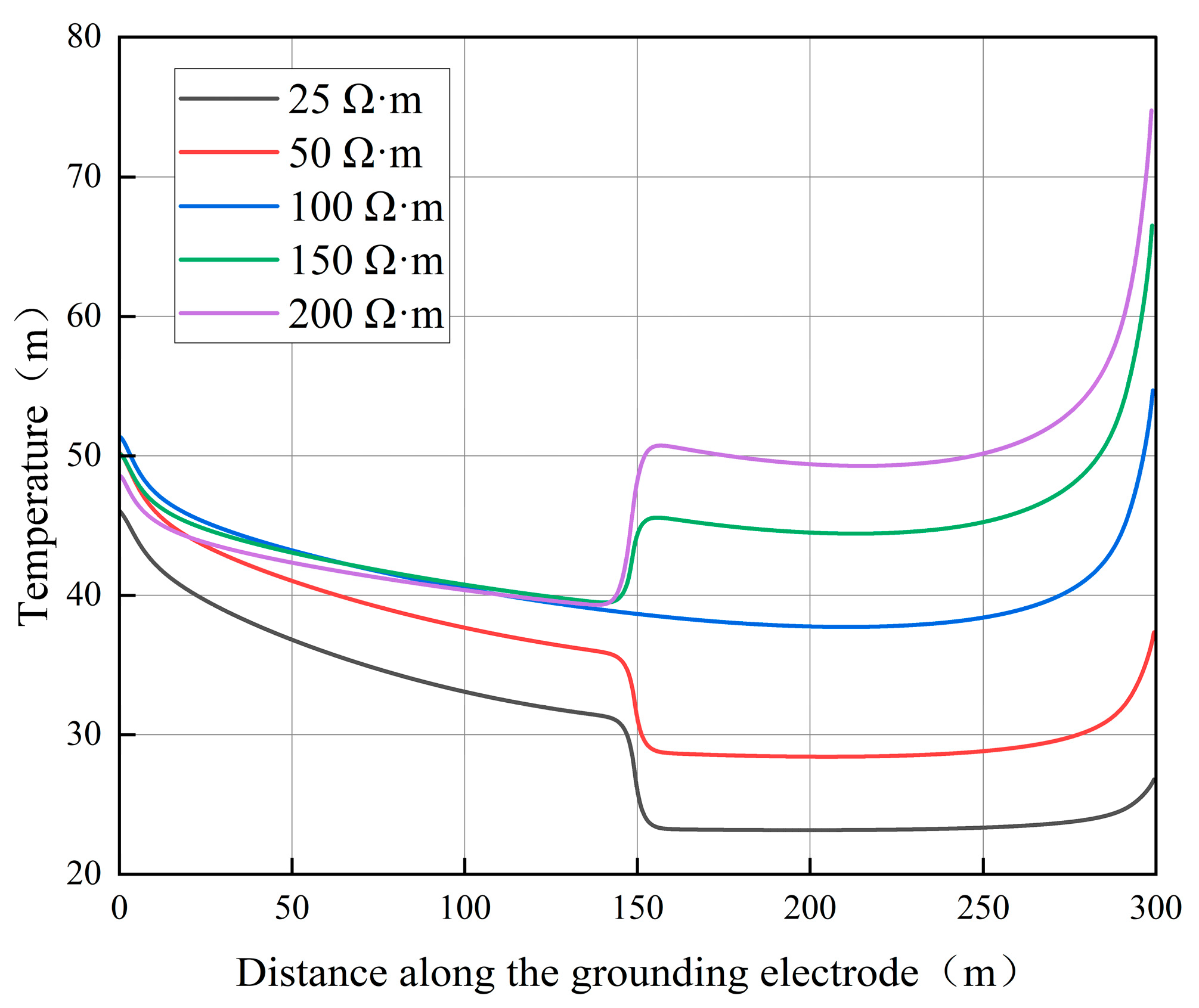
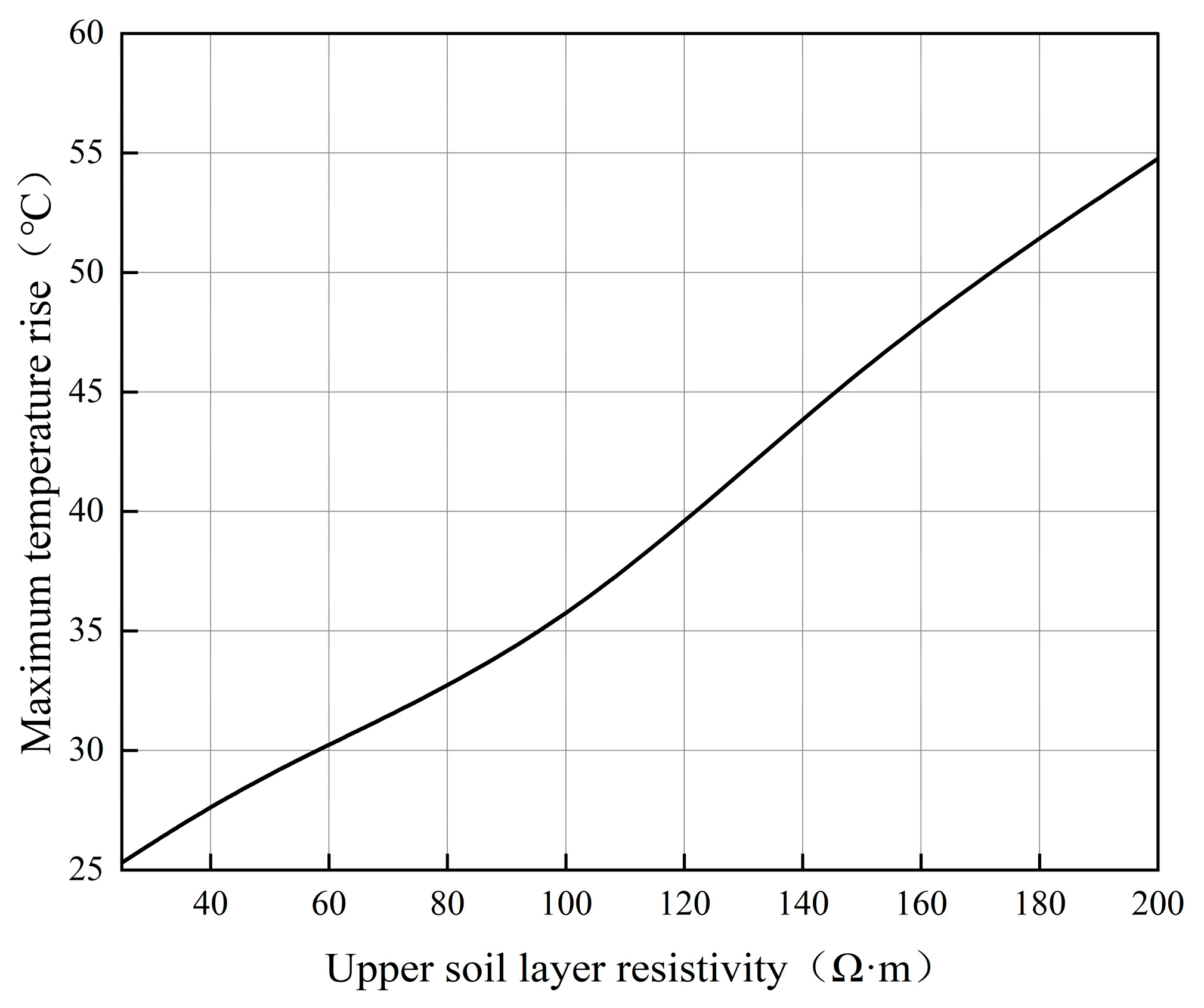
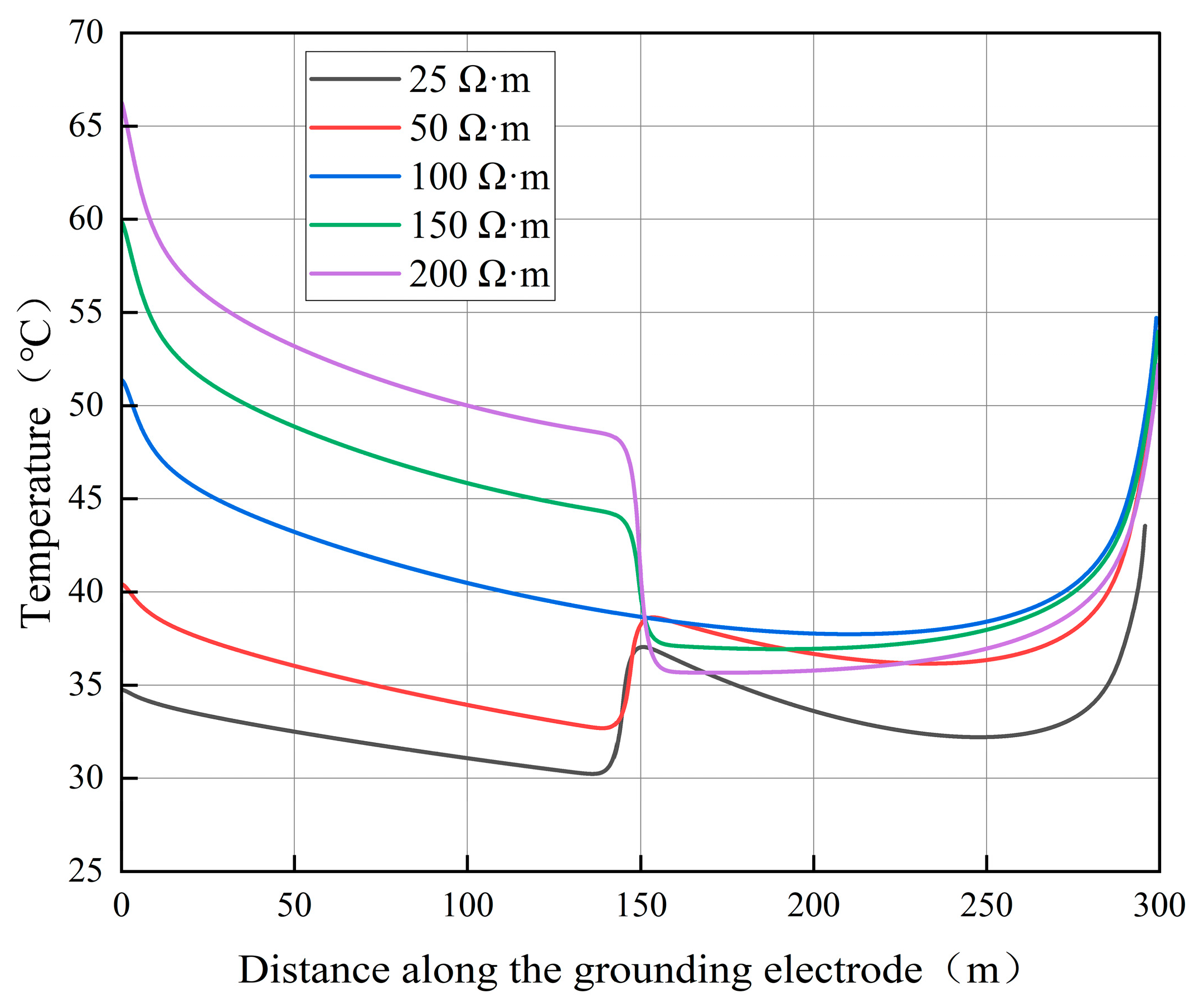
- In two-layer soil structures, the temperature along the length of the grounding electrode exhibits a distinct step-like distribution. Because the current tends to dissipate into low-resistivity soil, the current density within the low-resistivity layer is large, causing severe heat generation, whereas the temperature of the electrode in the high-resistivity soil is relatively lower. At the soil interface, a significant temperature mutation occurs because the rate of heat diffusion is far slower than the rate of electrothermal generation. When the upper soil resistivity is higher than that of the lower layer, an increase in the thickness of the upper high-resistivity layer forces the current to squeeze downward. This causes the current density at the bottom of the electrode to surge, leading to a continuous increase in the maximum temperature rise and an accelerated rate of temperature rise. Conversely, when the upper soil resistivity is lower, an increase in the thickness of the upper low-resistivity layer allows more current to dissipate through the extensive upper region, resulting in a continuous decrease in the maximum temperature rise and a decelerated rate of temperature rise. Altering the resistivity of either layer in a two-layer soil causes the maximum temperature rise point to shift, invariably appearing in the region with relatively lower resistivity: if the upper resistivity is lower, the hot spot is at the upper part of the electrode; if the lower resistivity is lower, the hot spot shifts to the bottom. Regardless of whether the upper or lower soil resistivity is changed, as long as the total equivalent grounding resistance of the system increases, the maximum temperature rise of the electrode exhibits a monotonically increasing trend. Evidently, the obstruction effect of high-resistivity soil layers on current dissipation is highly significant. Whether in the upper or lower layer, an increase in the thickness or the intrinsic value of the high-resistivity soil forces a massive amount of current to establish electric fields in localized areas. This makes the surface potential distribution more concentrated and steeper, which not only aggravates local heat generation and elevates the temperature rise but also drives an upward trend in both grounding resistance and maximum step voltage.
Author Contributions
Funding
Data Availability Statement
Conflicts of Interest
Nomenclature
| HVDC | High Voltage Direct Current |
| Electric potential | |
| Electrical conductivity | |
| Infinity boundary | |
| Ground surface boundary | |
| Electric field intensity | |
| Current density | |
| Heat source density | |
| Soil resistivity | |
| Temperature | |
| Volumetric heat capacity | |
| Soil thermal conductivity | |
| Ground surface heat transfer coefficient | |
| Step voltage | |
| Ground surface resistivity | |
| CDEGS | Current Distribution Electromagnetic Grounding and Soil Structure Analysis |
Appendix A

| Key Parameter | Variation | Impact on Maximum Temperature Rise | Impact on Electrical Performance | Core Physical Mechanism |
|---|---|---|---|---|
| Soil Resistivity | Increase | Significant Increase | Significant Increase | Amplifies local Joule heat generation |
| Thermal Conductivity | Increase | Decrease | Minor Effect | Accelerates spatial heat dissipation |
| Specific Heat Capacity | Increase | Decrease | Minor Effect | Enhances thermal energy absorption capacity |
| Coke Bed Radius | Increase | Significant Decrease | Decrease | Buffers concentrated current density |
| Layered Soil | High resistivity adjacent to low resistivity | Local overheating in low resistivity layer | Overall performance deterioration | Forces current to squeeze into lower resistivity regions |
References
- Li, Y.; Wang, F.; Teng, Y.; Cai, H.; Hu, S.; Wen, X.; Lan, L.; Liao, D.; Lu, H. Study on threshold value of gas generation current density of DC deep well grounding electrode. CSEE J. Power Energy Syst. 2025, early access. [Google Scholar] [CrossRef]
- Lu, H.; Jing, M.; Cai, H.; Hu, S.; Teng, Y.; Chen, J.; Lan, L.; Wen, X. Soil resistivity modeling for temperature rise calculating of HVDC deep-well earth electrode. Int. J. Electr. Power Energy Syst. 2021, 125, 106537. [Google Scholar] [CrossRef] [Scilit]
- Marzinotto, M.; Mazzanti, G.; Nervi, M. Ground/sea return with electrode systems for HVDC transmission. Int. J. Electr. Power Energy Syst. 2018, 100, 222–230. [Google Scholar] [CrossRef] [Scilit]
- Wang, Y.; Pan, Z.; Zha, Z.; Tan, B.; Wen, X.; Liu, Y.; Zhang, J.; Lan, L. Numerical Simulation and Field Test of the Transient Temperature Rise of HVdc Grounding Electrodes. IEEE Trans. Power Deliv. 2018, 33, 22–31. [Google Scholar] [CrossRef] [Scilit]
- Xiong, Q.; Liu, X.; Li, Y.; Xi, L.; Qiu, S. Analysis of the Influence of Complex Terrain around DC Transmission Grounding Electrodes on Step Voltage. Energies 2024, 17, 420. [Google Scholar] [CrossRef] [Scilit]
- Rao, H.; Zhang, D.; Zhao, X.; Guo, Q. Practice and analyses of UHVDC power transmission. High Volt. Eng. 2015, 41, 2481–2488. (In Chinese) [Google Scholar]
- Li, J.; Li, C.; Zhu, Z.; Liu, L.; Wang, L.; Yuan, H.; Ren, J. Finite element dynamic model of ocean grounding electrode characteristics based on circuit and electric–thermal field coupling. Electr. Eng. 2024, 106, 6533–6546. [Google Scholar] [CrossRef] [Scilit]
- Li, J.; Zhang, Z.; Cheng, X.; Li, C.; Wu, G.; Zhang, M.; He, P. Research on the temperature rise characteristics of marine grounding electrodes based on circuit and electro-thermal coupling. Electr. Eng. 2026, 108, 185. [Google Scholar] [CrossRef] [Scilit]
- Zhou, M.; Wang, J.; Cai, L.; Fan, Y.; Zheng, Z. Laboratory Investigations on Factors Affecting Soil Electrical Resistivity and the Measurement. IEEE Trans. Ind. Appl. 2015, 51, 5358–5365. [Google Scholar] [CrossRef] [Scilit]
- Teng, Y.; Wen, X.; Cai, H.; Jia, L.; Liu, G.; Hu, S.; Lu, H. Analysis on structural parameters and electrical performance of dc deep well grounding electrode. J. Eng. 2019, 2019, 2366–2370. [Google Scholar] [CrossRef] [Scilit]
- Wen, X.; Jing, M.; Cai, H.; Zhang, Y.; Hu, S.; Teng, Y.; Liu, G.; Lan, L.; Lu, H. Temperature characteristics and influence of water-saturated soil resistivity on the HVDC grounding electrode temperature rise. Int. J. Electr. Power Energy Syst. 2020, 118, 105720. [Google Scholar] [CrossRef] [Scilit]
- Theodosoglou, I.; Chatziathanasiou, V.; Papagiannakis, A.; Więcek, B.; De Mey, G. Electrothermal analysis and temperature fluctuations’ prediction of overhead power lines. Int. J. Electr. Power Energy Syst. 2017, 87, 198–210. [Google Scholar] [CrossRef] [Scilit]
- Nahman, J.; Tanaskovic, M. Calculation of the loading capacity of high voltage cables laid in close proximity to heat pipelines using iterative finite-element method. Int. J. Electr. Power Energy Syst. 2018, 103, 310–316. [Google Scholar] [CrossRef] [Scilit]
- Georges, S.; Slaoui, F. Modelling and simulation of heat dissipation due to HVDC ground electrodes using the finite element method. In Proceedings of the 2014 IEEE Innovative Smart Grid Technologies-Asia (ISGT ASIA), Kuala Lumpur, Malaysia, 20–23 May 2014; pp. 476–480. [Google Scholar]
- Asensio, G.; Faleiro, E.; Moreno, J.; García, D.; Denche, G. Joule Heating in Grounding Electrodes Under Fault Conditions: Effects on System Potentials and Electrode Efficiency. Appl. Sci. 2025, 15, 7504. [Google Scholar] [CrossRef] [Scilit]
- Chen, X.; Li, L. Study on the Interference of the HVDC Transmission Grounding Electrode to the Pipeline Cathodic Protection System. ACS Omega 2023, 8, 22088–22098. [Google Scholar] [CrossRef] [Scilit]
- Mao, H.; Tian, H.; Hu, Y.; Gao, T.; Chen, Y.; Mu, M. Study on Temperature Rise Characteristics of Tower Grounding Electrode Under Lightning Strike and Power Frequency Short-Circuit Conditions. In Proceedings of the 2023 4th International Symposium on Insulation and Discharge Computation for Power Equipment (IDCOMPU2023), Wuhan, China, 26–28 May 2023; pp. 703–711. [Google Scholar]
- Gouda, O.E.; Mohamed, A.Z.E.D.; Al-Harthi, M.M.; Omar, S.Y.; Ghoneim, S.S.M. Performance of Grounding Electrodes Under Lightning Strokes in Uniform and Two-Layer Soils Considering Soil Ionization. IEEE Access 2022, 10, 76855–76869. [Google Scholar] [CrossRef] [Scilit]
- Lu, H.; Teng, Y.; Chen, B.; Wen, X.; Cai, H.; Hu, S.; Jia, L.; Liu, G. Analysis and calculation of temperature rise of HVDC deep-well earth electrode. In Proceedings of the 2016 IEEE International Conference on High Voltage Engineering and Application (ICHVE), Chengdu, China, 19–22 September 2016; pp. 1–4. [Google Scholar]
- Wang, W.; Lu, H.; Wang, Y.; Dong, X.; Cheng, S.; Sun, Z.; Yao, Q. Research on Temperature Rise Characteristics and Calculation Methods of Vertical DC Grounding Electrodes. Smart Power 2022, 50, 7–12. (In Chinese) [Google Scholar]
- Wei, Y.; Li, G.; Liu, C. State Assessment and Maintenance Strategy Optimization for DC Grounding Electrode Systems Based on Multi-Parameter Monitoring and Analysis. In Proceedings of the 2025 2nd International Conference on DC Technologies and Systems (DCTS), Beijing, China, 29–30 November 2025; pp. 122–124. [Google Scholar]
- Lu, H.; Chen, J.; Tan, B.; Wang, J.; Chen, W.; Hu, S.; Xie, S.; Cai, H.; Li, W.; Wang, S.; et al. Measurement and Safety Criteria of Step Voltage of High Voltage Direct Current Grounding Electrode. IEEE Trans. Power Deliv. 2022, 37, 423–430. [Google Scholar] [CrossRef] [Scilit]
- Datsios, Z.G.; Mikropoulos, P.N.; Karakousis, I. Laboratory characterization and modeling of DC electrical resistivity of sandy soil with variable water resistivity and content. IEEE Trans. Dielectr. Electr. Insul. 2017, 24, 3063–3072. [Google Scholar] [CrossRef] [Scilit]
- Yan, Y.; Deng, C.; Xia, P.; Zhang, Y.; Ding, N.; Ma, H. Influence of Soil Characteristics on Transient Temperature Rise of Circular DC Grounding Electrode. J. Electr. Power 2024, 39, 160–167. (In Chinese) [Google Scholar]
- Chen, Y. Study on the Influence Factors of Grounding Electrode in Deep Well of Converter Station. Constr. Des. Proj. 2018, 100–101+104. (In Chinese) [Google Scholar] [CrossRef]
- Wang, J.; Zhang, X.; Du, L. A laboratory study of the correlation between the thermal conductivity and electrical resistivity of soil. J. Appl. Geophys. 2017, 145, 12–16. [Google Scholar] [CrossRef] [Scilit]
- Zhang, Y.; Gao, L.; Jiang, K.; Song, L.; Yuan, T.; Chang, F. Study on a coupled model of soil hydrothermal field considering the heat transfer of grounded conductor in soil freezing process. In Proceedings of the Annual Meeting of CSEE Study Committee of HVDC and Power Electronics (HVDC 2023), Nanjing, China, 22–25 October 2023; pp. 356–360. [Google Scholar]
- Zhang, B.; He, J.; Zeng, R.; Wu, J. Effect of coke bed on the electrical performance of HVDC ground electrode. In Proceedings of the 2015 IEEE 15th International Conference on Environment and Electrical Engineering (EEEIC), Rome, Italy, 10–13 June 2015; pp. 889–894. [Google Scholar]


| Parameter | Electrode | Coke | Soil |
|---|---|---|---|
| Resistivity/(Ω·m) | 1.7 × 10⁻⁷ | 0.3 | |
| Thermal conductivity/(W·m−1·°C−1) | 43.2 | 4 | |
| Relative permittivity | 1 | 2 | 16 |
| Specific heat capacity/(J·kg−1·°C−1) | 465 | 800 | |
| Density/(kg·m−3) | 7870 | 1000 | 1900 |
| Parameter | Temperature Range /°C | Expression |
|---|---|---|
| /(Ω·m) | (20–44] | |
| (44–100) | ||
| /(W·m−1·°C−1) | (9–100) | |
| /(J·kg−1·°C−1) | (9–100) |
| Grounding Electrode Length/m | Grounding Resistance/Ω | Relative Error/% | |
|---|---|---|---|
| CDEGS | COMSOL | ||
| 300 | 1.958 | 1.903 | 2.81 |
| 400 | 1.535 | 1.475 | 3.91 |
| 500 | 1.271 | 1.206 | 5.11 |
| 600 | 1.089 | 1.032 | 5.23 |
| 700 | 0.956 | 0.897 | 6.16 |
| Soil Resistivity/(Ω·m) | Grounding Resistance/Ω | Maximum Step Voltage/V | Average Current Dissipation Density/(A·m−2) |
|---|---|---|---|
| 25 | 0.091 | 0.36 | 12.02 |
| 50 | 0.180 | 0.67 | 12.02 |
| 100 | 0.347 | 1.31 | 12.02 |
| 150 | 0.510 | 1.90 | 12.02 |
| 200 | 0.680 | 2.56 | 12.02 |
| Thermal Conductivity/(W·m−1·°C−1) | Grounding Resistance/Ω | Maximum Step Voltage/V | Average Current Dissipation Density/(A·m−2) |
|---|---|---|---|
| 1 | 0.347 | 1.3107 | 12.02 |
| 1.5 | 0.347 | 1.3093 | 12.02 |
| 2 | 0.347 | 1.3085 | 12.02 |
| 2.5 | 0.347 | 1.3073 | 12.02 |
| 3 | 0.347 | 1.3062 | 12.02 |
| Specific Heat Capacity/(J·kg−1·°C−1) | Grounding Resistance/Ω | Maximum Step Voltage/V | Average Current Dissipation Density/(A·m−2) |
|---|---|---|---|
| 800 | 0.347 | 1.3091 | 12.02 |
| 1200 | 0.347 | 1.3085 | 12.02 |
| 1600 | 0.347 | 1.3079 | 12.02 |
| 2000 | 0.347 | 1.3071 | 12.02 |
| 2400 | 0.347 | 1.3063 | 12.02 |
| Coke Cross-Sectional Radius/m | Grounding Resistance/Ω | Maximum Step Voltage/V | Average Current Dissipation Density/(A·m−2) |
|---|---|---|---|
| 0.3 | 0.373 | 1.36 | 12.55 |
| 0.4 | 0.358 | 1.33 | 12.26 |
| 0.5 | 0.347 | 1.31 | 12.02 |
| 0.6 | 0.337 | 1.29 | 11.82 |
| 0.7 | 0.328 | 1.28 | 11.66 |
| Upper Soil Thickness/m | Grounding Resistance/Ω | Maximum Step Voltage/V |
|---|---|---|
| 10 | 0.182 | 0.737 |
| 85 | 0.203 | 0.775 |
| 160 | 0.232 | 0.885 |
| 235 | 0.268 | 1.028 |
| 310 | 0.328 | 1.257 |
| Upper Soil Thickness/m | Grounding Resistance/Ω | Maximum Step Voltage/V |
|---|---|---|
| 10 | 0.342 | 1.172 |
| 85 | 0.280 | 1.029 |
| 160 | 0.240 | 0.877 |
| 235 | 0.217 | 0.770 |
| 310 | 0.188 | 0.685 |
| Upper Soil Resistivity/(Ω·m) | Grounding Resistance/Ω | Maximum Step Voltage/V |
|---|---|---|
| 25 | 0.152 | 0.538 |
| 50 | 0.240 | 0.877 |
| 100 | 0.347 | 1.310 |
| 150 | 0.408 | 1.536 |
| 200 | 0.448 | 1.707 |
| Lower Soil Resistivity/(Ω·m) | Grounding Resistance/Ω | Maximum Step Voltage/V |
|---|---|---|
| 25 | 0.152 | 0.538 |
| 50 | 0.240 | 0.877 |
| 100 | 0.347 | 1.310 |
| 150 | 0.408 | 1.536 |
| 200 | 0.448 | 1.707 |
Disclaimer/Publisher’s Note: The statements, opinions and data contained in all publications are solely those of the individual author(s) and contributor(s) and not of MDPI and/or the editor(s). MDPI and/or the editor(s) disclaim responsibility for any injury to people or property resulting from any ideas, methods, instructions or products referred to in the content. |
© 2026 by the authors. Licensee MDPI, Basel, Switzerland. This article is an open access article distributed under the terms and conditions of the Creative Commons Attribution (CC BY) license.
Share and Cite
Deng, C.; Fan, Z.; Li, W. Transient Temperature Rise and Grounding Characteristics of Vertical DC Grounding Electrodes Considering Soil Electro-Thermal Coupling. Energies 2026, 19, 1863. https://doi.org/10.3390/en19081863
Deng C, Fan Z, Li W. Transient Temperature Rise and Grounding Characteristics of Vertical DC Grounding Electrodes Considering Soil Electro-Thermal Coupling. Energies. 2026; 19(8):1863. https://doi.org/10.3390/en19081863
Chicago/Turabian StyleDeng, Changzheng, Zechuan Fan, and Weiyi Li. 2026. "Transient Temperature Rise and Grounding Characteristics of Vertical DC Grounding Electrodes Considering Soil Electro-Thermal Coupling" Energies 19, no. 8: 1863. https://doi.org/10.3390/en19081863
APA StyleDeng, C., Fan, Z., & Li, W. (2026). Transient Temperature Rise and Grounding Characteristics of Vertical DC Grounding Electrodes Considering Soil Electro-Thermal Coupling. Energies, 19(8), 1863. https://doi.org/10.3390/en19081863