1. Introduction
In Latvia, to reach the European GHG emission reduction goals and to reduce fossil fuel consumption, heat and electric energy producers are actively trying to replace fossil fuels with alternative energy resources (biogas, hydrogen, etc.) or to introduce alternative energy technologies (heat pumps, solar collectors, or electric boilers) [
1,
2]. This work will focus on solar collectors, electric boilers, and thermal storage integration in an existing gas boiler plant. Most of the other works that investigate similar topics [
3,
4,
5] focus on a larger scale–city scale or even country scale. This work is instead aimed at verifying whether previously mentioned solutions can be used as a straightforward option for boiler plants that are placed in locations with limited space. The boiler plant investigated in this study services a small residential district and has a limited territory; the compactness of chosen solutions is of high importance. Since the usage of electric boilers and solar collectors has the potential to reduce local CO
2 emissions, another focus of this work will be the calculation of savings that can be acquired through sold CO
2 emission quotas. This can be useful for heat energy providers that look for additional ways to reduce heat energy production costs.
This section of work will describe the technologies that were selected for boiler plant optimization and recent articles that investigate how these technologies could be used in the district heating context.
1.1. Electrical Boilers
Electric boilers convert electricity to heat energy. The efficiency ratio of an electric boiler is close to 1; for this reason, the produced heat energy is directly proportional to consumed electricity. In most cases, electric boilers are used to cover peak heating loads; however, these devices can also be controlled by dynamic electricity prices to produce cheap heat energy during certain periods [
6,
7].
One of the biggest advantages of electric boilers is the compactness of these solutions. Electric boilers do not need any of the following elements: burner, fuel supply systems, fuel storage, or flue systems. The size and weight of the equipment are reduced compared to fossil fuel boilers, as well as the project implementation costs and operating costs. During operation, electric boilers do not produce any local flue gas emissions; however, if renewable electricity is not used, this type of heat energy production will still cause flue gas emissions at the site where electric power is being generated. The lack of local emissions can be useful in the case of CO
2 quotas, as these need to be paid by the entity that produces them [
8]. A wide range of nominal capacities is available, and partial load operation is not a problem. In cold startup conditions, these devices have a high efficiency factor of up to 99%. If smart grid electrical operation is present, the price of electricity will drop during low consumption periods—if an electric boiler is used together with a heat storage system, this can allow for shifting its operation to periods with favorable electricity prices. Disadvantages of electric boilers: the cost of heat energy production depends on electricity prices and taxes on electricity; the usage of an electric boiler might be unfeasible during peak consumption periods. If electricity is generated using a heat generation process, exergy losses must be considered. The availability of the boiler may be limited depending on the connection to the electrical grid [
6,
7,
9,
10].
There are several works that have investigated electric boiler integration in district heating systems.
This work [
3] modeled several scenarios where 100–200 electric boilers with thermal storage systems would be integrated in Finnish district heating networks. The model considered how such an addition would influence the Northern European energy system. In a scenario where 100 electric boilers were introduced, the total heat energy production amounts to 8.9% of Finland’s district heating demand (3.29 TWh). In the case of 200 electric boiler integration, total heat production costs are reduced by ~18%; however, this also increases Finland’s electricity import by ~23% and increases total flue gas emissions by 0.13%.
Article [
4] modeled a theoretical scenario of introducing 1000 MW of electric boilers in German district heating grids. It was concluded that electric boilers in the district heating context are a flexible and cost-effective form of negative secondary control power (balancing of electricity overproduction). Due to electric boilers providing negative control instead of power plants in “must run generation” mode, financial savings and CO
2 emission reduction of up to 0.85% could be reached.
1.2. Solar Collectors
Another technology that was selected for boiler plant optimization was solar collectors (further in text: SCs). These convert solar energy to heat energy that can be used for space heating or domestic hot water preparation.
The efficiency of SCs is dependent on many factors, including geographical location. Global radiation level in Latvia is approximately 1000–1100 kWh/m2 per year. This is less favorable than in other parts of the world, but still sufficient to allow efficient operation of SCs.
SCs are used together with a hydraulic system that includes circulation pumps, control and monitoring elements, and a heat storage. Currently, there are two types of SCs: flat or vacuum tube type. Flat SCs are the most used solution, while vacuum tube SCs are a more complex solution that can produce a higher temperature heat carrier. Vacuum tube SCs can be more expensive to install due to additional sun focusing equipment, which is necessary in case of concentric collectors.
SC’s system efficiency is dependent on weather, location, and season. Seasonal efficiency drop can be partially alleviated by using heat storage solutions. SC combination with the accumulation system can increase the solar energy usage proportion up to 30–50% and theoretically even up to 100%. A short-term accumulation vessel with a volume of 0.1–0.3 m
3 per 1 m
2 of SCs can satisfy ~10–25% of yearly heat energy demand [
7,
11].
1.3. Heat Energy Storage
Heat energy accumulation systems can decouple heating demand from heat production; this enables more efficient usage of heat energy that has been produced by alternative energy sources, which operate optimally under specific conditions (solar collectors, heat pumps, biomass boilers, electric boilers, etc.).
For current boiler plant optimization, a short-term heat accumulation system solution was chosen—a hot water storage tank. The main benefits of this type of system are high efficiency, low costs, and water properties (high heat capacity, high density, safety, and availability). Another strong point of a hot water storage tank is the simplicity of this solution when compared to more complex heat storage systems such as thermochemical heat storage, borehole storage, etc. Accumulation tanks of this type are usually made from steel, concrete, or glass fiber reinforced plastic, but the most common type is a steel tank with an insulation shell mounted on a concrete base. To reduce corrosion, technical water with a pH value of 9.8 is used in these tanks. For any type of heat storage system, passive heat losses must be considered.
For the previously mentioned cylindrical steel tank heat storage (at water temperature of 90 °C; outdoor air temperature of 0 °C; wind speed of 10 m/s; insulation thickness 300 mm; height/diameter ratio of 1.8), stored heat energy losses are as follows [
7,
12,
13,
14,
15,
16]:
500 m3 tank ~2.1% of total stored heat energy per week;
1000 m3 tank ~1.7% of total stored heat energy per week;
5000 m3 tank ~1.0% of total stored heat energy per week.
1.4. Other Considered Optimization Technologies
Besides the previously mentioned technologies, ground heat pumps and biomass boilers were also considered for this study. Local energy prices for natural gas, electricity, wood pellets, and wood chips were analyzed. It was found that wood chips mostly had low and stable prices; however, due to space limitations in the power plant location, it was chosen not to use this type of solution. Another reason why the biomass boiler was not chosen was due to the lowered level of plant automation; in the case of a biomass boiler, plant worker numbers would be increased, and there would be a need to manage the supply and delivery of the biofuel. Additional space would be necessary for local storage of biofuel.
The reason for not using a heat pump was the limited space of the power plant territory and the high upfront cost for this type of system.
2. Materials and Methods
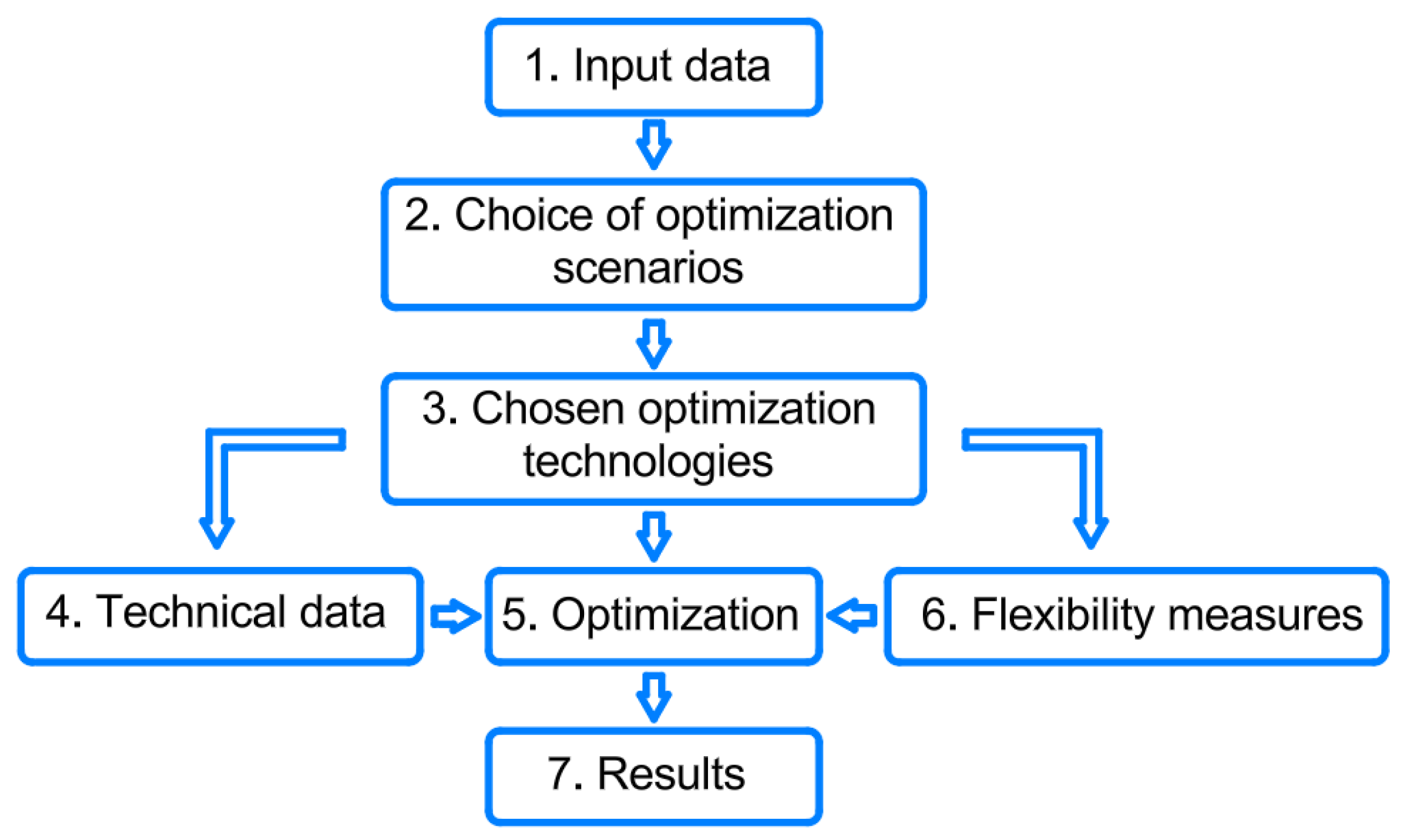
This study analyses potential optimization scenarios for the existing district heating gas boiler plant in Riga, Latvia. The optimization targets are reduced fossil fuel consumption, reduced greenhouse gas emissions, and optimized heat production costs. Based on literature analysis, three technical solutions were chosen for the current boiler plant: installing an additional electrical boiler, solar collectors, and a heat accumulation system. To evaluate the economic viability of chosen solutions, operation simulations for electric boiler and solar collectors in conjunction with the heat accumulation system were carried out. Electric boiler operation was simulated using a model that was created using Microsoft Excel (Microsoft 365). Solar collector operation scenarios were simulated using Polysun (Standard, ver. 2025.3.) software. After simulations, techno-economic calculations were performed. The diagram in
Figure 1 shows the main steps of this study.
The input data (1) of the study were as follows:
Data regarding the existing boiler plant—technical data for 3 installed water heated gas boilers, district heating system data, fossil fuel consumption data, emission data for gas boilers, and electricity and heat energy consumption of the boiler plant.
Data for residential district serviced by boiler plant—number and condition of buildings, heat energy consumption, and heat energy consumption trends for the future.
Energy resource price analysis and comparison—heat energy prices, electricity prices, natural gas prices, wood chip prices, and wood pellet prices.
Initially, several optimization scenarios (2) for the boiler plant were considered: solar energy, biomass, heat pump, district heating system optimization, and heat energy accumulation system. Due to economic considerations and current boiler plant layout, the chosen optimization technologies (3) were an electric heating boiler with a heat accumulation system and solar collectors.
The technical data that were used for optimization of chosen technologies (4) were technical characteristics of the electric heating boiler and solar collectors, electric boiler and solar collector heat energy production/demand ratio, maximum hourly heat energy production, leftover storage in heat energy accumulation tank, project investments, equipment operating life, and efficiency.
The following flexibility measures were considered when performing optimization (6): use of various energy production technologies, use of surplus thermal energy produced on demand, and heat energy production based on energy resource prices.
Optimization (5) for the electric heating boiler was carried out using operation simulation in Microsoft Excel, except for solar collectors, using Polysun (Standard, ver. 2025.3.) software. A techno–economic calculation was also performed.
The results (7) that this study aims to achieve are reduced operation time for existing water heating gas condensing boilers, reduced fossil fuel (natural gas) consumption, reduced greenhouse gas emissions, optimized heat production costs, and optimized hourly heat energy production for the boiler plant.
2.1. Object Description
The boiler plant that is the focus of this study operates 8760 h/year, to provide a residential district with space heating and domestic hot water. Currently, this heat demand is covered using three water heating gas boilers. Main parameters of the boiler plant units can be seen in the following list [
1,
17]:
One water heating gas boiler equipped with a condensing economizer (further in text gas boiler No. 1). Nominal heating power of 1.18 MW and efficiency coefficient of 98%;
Two water heating gas boilers (further in text gas boiler No. 2.1. and 2.2.) with nominal heating power of 2.6 MW and efficiency coefficient of 92%.
With previously mentioned units, the total heating power of the plant is 6.38 MW, but the maximum heat demand at outdoor air temperature of −20 °C (the average temperature of the coldest five days during heating season in Riga) is 3.9 MW. The current plant has a large heating power reserve, about 2.5 MW. The boiler plant itself consumes around 249 MWh of electricity per year (due to equipment and lightning).
The boiler plant services a district heating system that corresponds to the third generation of district heating; the supply heat carrier temperature is in the range from 65 to 105 °C, and the return temperature is in the range from 42 to 70 °C.
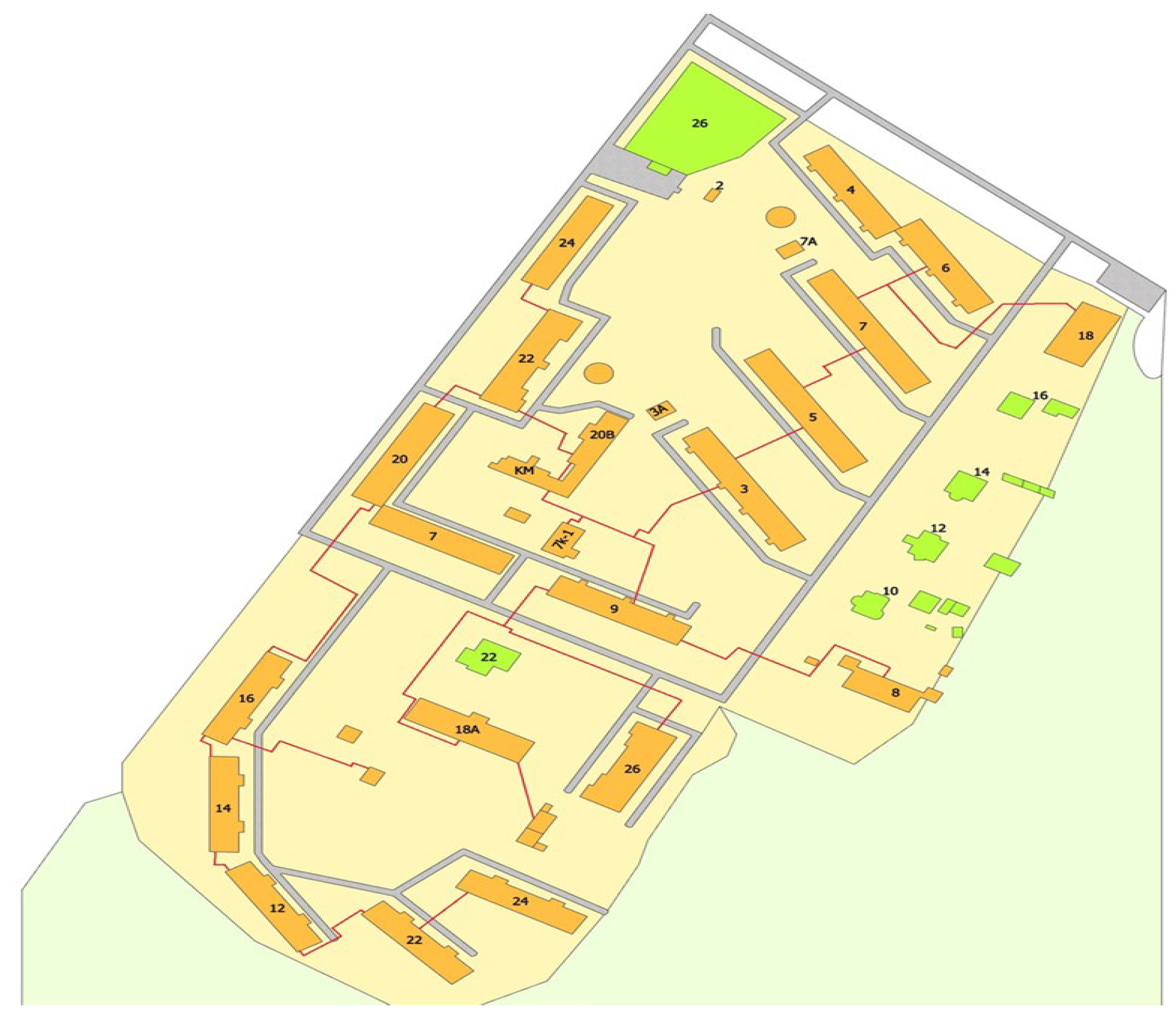
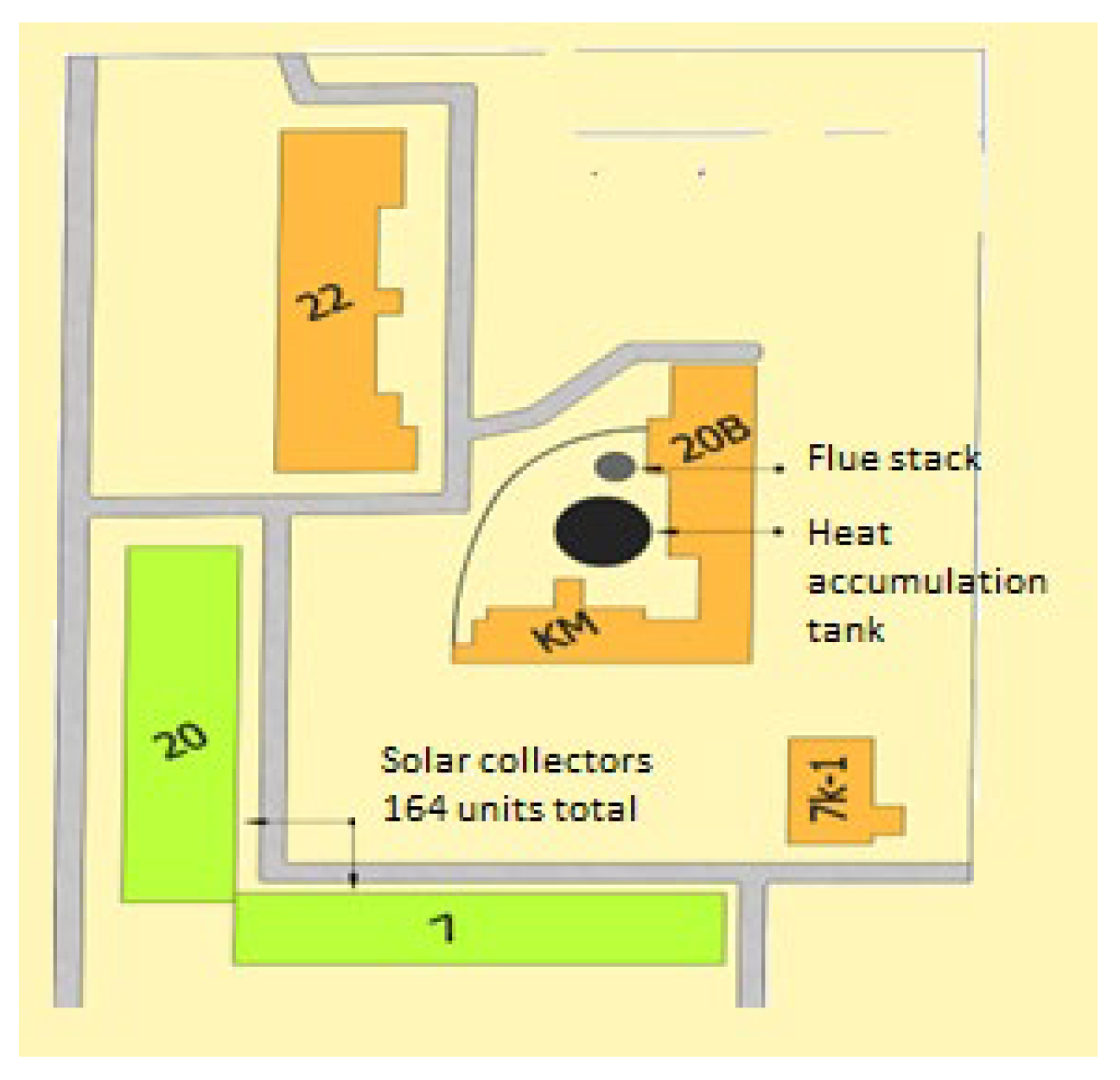
The residential district, serviced by the boiler plant, consists of 16 apartment buildings, 6 private houses, 2 kindergartens, and an office building. Most of the apartment buildings are non-renovated soviet era buildings, with only one of these being a new construction. The district layout can be seen in
Figure 2.
The buildings shown in green are not connected to the district heating network. These are 6 private houses, 1 shop, and 1 office building that each have an individual heating system.
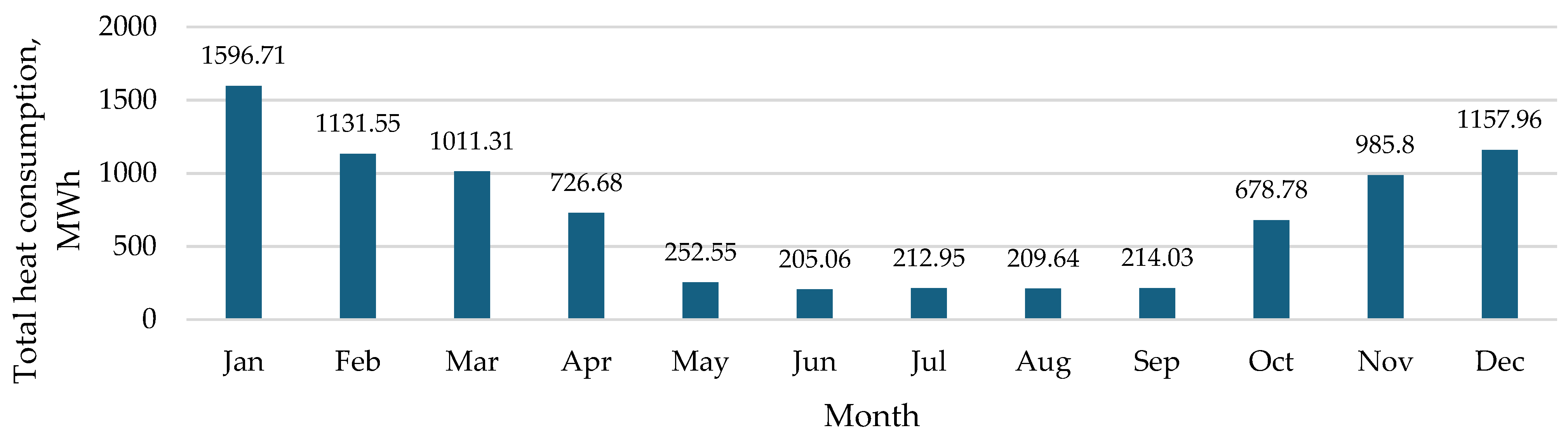
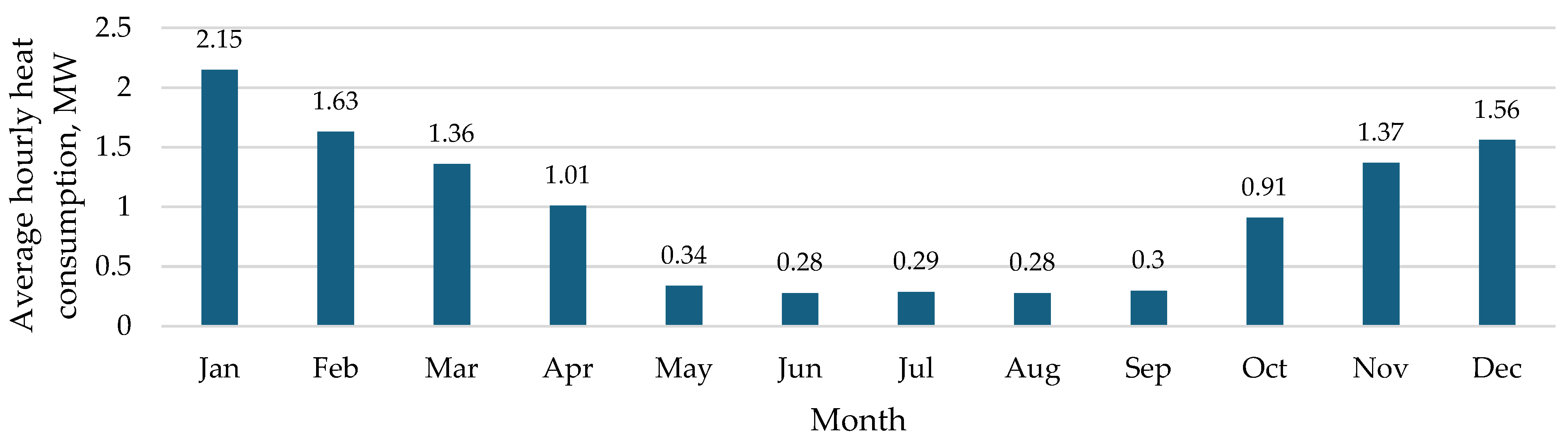
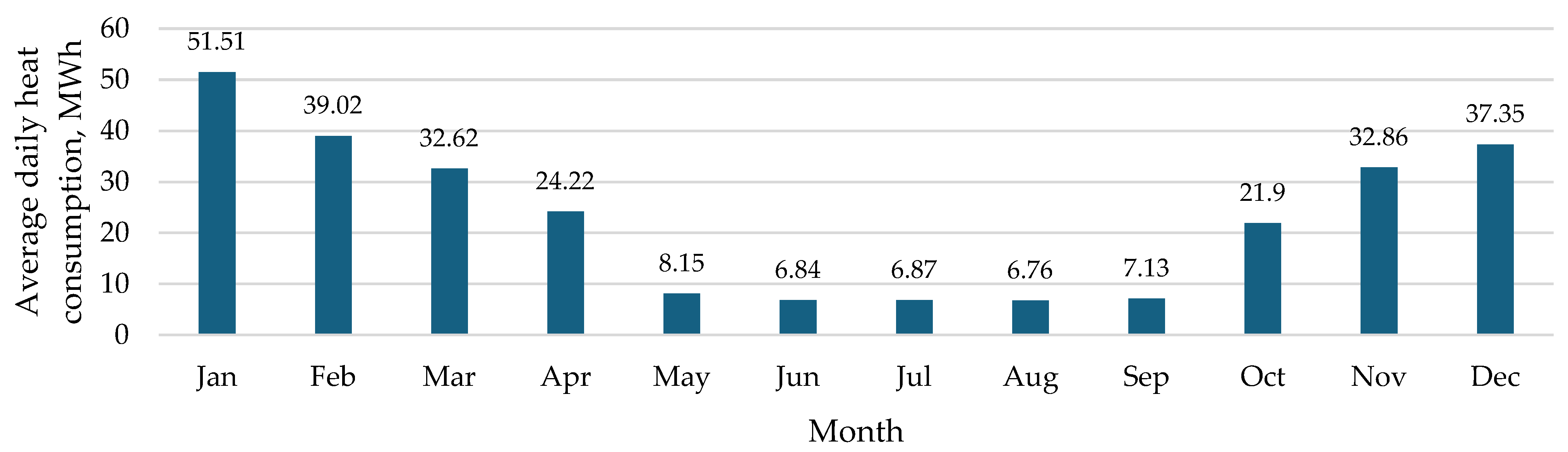
The heat consumption data (total, hourly average, and daily average) of the residential district for each month of 2024. can be seen in
Figure 3,
Figure 4 and
Figure 5.
After analyzing the previously mentioned information, it was concluded that it is necessary to reduce the annual operation time of existing gas boilers by introducing alternative energy sources. This would reduce the annual fossil fuel consumption and the amount of CO2 emissions from the boiler.
2.2. Selecting Electric Boiler Model
The electric boiler model was chosen based on average hourly heat consumption data of the residential district. Based on data from 2024 (
Figure 4), the maximum average hourly heat consumption for the residential district is reached in January, 2.15 MW. The electric boiler model is chosen considering this number and a 20% reserve. This is completed to account for additional system heat losses, and as a safety margin for increased heating loads [
19,
20]. The purpose of an electric boiler is to reduce gas consumption during periods with favorable electricity prices. The peak heating loads will still be covered using existing gas boilers.
In
Table 1, the parameters of the chosen electric boiler can be seen.
2.3. Dimensioning of the Heat Accumulation System
For the current boiler plant, a short-term heat accumulation system will be used, as this is the most economically justifiable solution for the current situation. The short-term heat accumulation system is sized using average daily heat consumption (
Figure 4). The accumulation tank is sized based on annual average daily heat consumption. The average value for daily heat consumption for the year 2024 is 22.94 MWh.
The highest average hourly heat consumption occurs during January: 2.15 MW. The time for which the heat accumulation tank can cover the heat demand during the coldest period can be calculated as follows [
21].
where
T: Heat accumulation system operation time, h;
Qtotal: Total heat capacity of heat accumulation system, MWh;
Qmax: Highest hourly heat demand of residential district, MW.
According to Equation (1), an accumulation system with 22.94 MWh heat capacity could cover heat demand at average hourly heat demand (January) for approximately 10.7 h.
The total water volume for the accumulation tank can be calculated based on the following formula [
21].
where
Qtank: heat capacity of heat accumulation system, kJ;
Cp: specific heat capacity of water, kJ/kgK (4.178 kJ/kgK);
ρ: water density, kg/m3 (995.6 kg/m3);
V: volume of heat accumulation system, m3;
ΔT: temperature difference between supply and return heat carrier (T1–T2), K (30 K).
During heating season, the temperature difference between supply and return heat carriers is around 30 K [
18]. Taking this into account, the total volume of the heat accumulation tank is 663.52 m
3. This is rounded up to 700 m
3 for the selection of the actual heat accumulation tank. In
Table 2, the parameters of the selected heat accumulation tank can be seen.
2.4. Selecting Solar Collector Model
For the current scenario, the usage of solar collectors together with a heat accumulation system could be economically feasible as it could allow to produce cheap heat energy during summer and store it. For the summer period heat demand, the heat could be accumulated for 3–4 days using a previously dimensioned tank. The usage of solar collectors could also allow for minimizing or almost completely avoiding any gas consumption during the summer months.
It was chosen to place solar collectors on the roofs of apartment buildings No. 20 and 7 (marked green in
Figure 6) that are the closest to the boiler plant (building KM/20 B). Both apartment buildings are 4 stories high. Roof areas for both buildings are approximately 680 m
2 (52.86 × 12.86 m). The placement of the solar collectors can be seen in
Figure 6.
Marked buildings were selected due to the following reasons:
Closest to the boiler plant (building KM and 20 B)—shorter pipe lengths, lower heat losses, reduced installation costs;
No shading at the location of placement.
Vacuum tube-type solar collectors were chosen instead of flat collectors, as these can produce higher heat carrier temperatures (90–110 °C) that are necessary to ensure heat output during heating season and have a higher efficiency factor. In the following
Table 3 parameters of the chosen solar collector model can be seen.
After selecting the solar collector model, the optimal inclination angle for installation was determined. After studying various sources on this topic, it was concluded that in Europe, the optimal inclination angle for installing the solar collectors ranges from 25° to 45°, and could also reach up to 60°. For example, in Denmark, the inclination angle of the collectors ranges from 30° to 40° [
5,
11,
23]. In article [
5], which investigated a solar collector system for Tallin’s district heating, the inclination angle was assumed to be 42°.
After using the European photovoltaic geographical information system [
24] to review sun irradiation data for the year 2023, for our plant location, it was found that the optimal collector inclination angle is 35–40°. The data can be seen in
Table 4.
The highest solar irradiation for building No. 7 can be achieved with a 40° inclination angle, but for building No. 20, the angle is 35°. To simplify the current scenario, the inclination angle for all collectors was assumed to be 40°. Since the difference in solar irradiance between different inclination angles is less than 1% and the current number of solar collectors is relatively small, this will not influence the following economic calculations in a meaningful way.
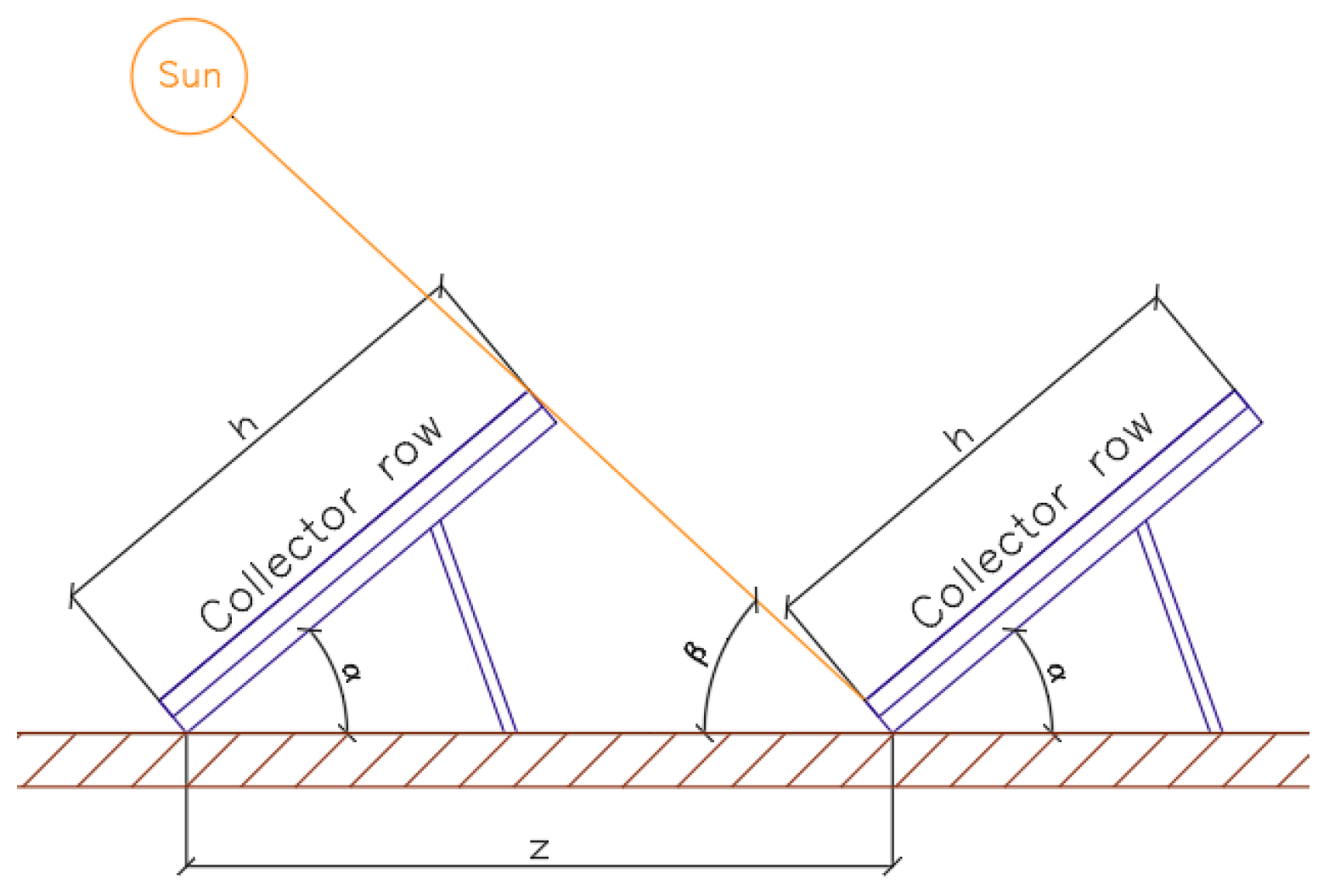
When installing rows of solar collectors one after another, a shadow zone formed by the collectors themselves must be considered. According to this, the optimal distance between two rows of solar collectors must be calculated before installing the solar collectors, to maintain the production efficiency of the solar collectors. See an example in
Figure 7.
The calculation of the minimum distance was carried out in accordance with the calculation methodology developed by the solar collector manufacturer [
22], as seen in Equation (3).
The apartment building roofs, where the solar collectors are to be installed, are located at a latitude of 57°, but the Earth’s axis of rotation relative to the Earth’s orbit is inclined at 23.5°; accordingly, the angle of solar radiation in our case is β = 90−23.5−57 = 9.5°. The minimal distance between the two collector rows is calculated after following the formula [
22].
where
z: Minimum distance between rows of solar collectors to avoid creating a shadow area, m;
h: Height of a single solar collector, mm;
α: Solar collector installation inclination angle, °;
β: Sun radiation angle, °.
Based on our input parameters (h = 2260 mm; α = 40°; β = 9.5°), the minimum distance between collector rows is 10.4 m. Based on the width of the apartment building’s roof (12.86 m), two rows of solar collectors can be placed.
The number of collectors per row can be calculated following the formula below [
5]:
where
n: Maximum number of solar collectors per row;
L: Collector placement length, m;
lcol.: Length of one solar collector, m;
lmin: Minimal distance between two collectors, m.
Based on input parameters (L = 52.86; lcol. = 1.22; lmin = 0.044), one row can have 41 solar collectors. The total number of collectors is 164 (2 rows on 2 buildings).
Total sun-absorbing area of all collectors is 267.32 m2.
2.5. Simulation of Electric Boiler Usage
To evaluate the usage of an electric boiler for plant optimization, it was necessary to simulate its operation. A Microsoft Excel simulation was created to determine working hours for an electric gas boiler based on electricity exchange prices. Boiler operation hours are found by comparing electricity exchange prices with a maximum allowed electricity price. This is completed using the COUNTIFS formula.
For an electric boiler to operate, its total heat production cost must be lower than the total heat production cost of a gas boiler.
The total cost of heat production for gas boilers No. 1 and 2 are calculated taking into account following factors: gas tariff; boiler efficiency; natural gas transport tariff; natural gas distribution tariff, constant part; natural gas distribution tariff, dynamic part; natural gas balancing service; natural gas excise tax; fixed operating costs of a gas boiler; variable operating costs of a gas boiler; electricity costs; other technical expenses. These parameters have been compiled in the following
Table 5 [
25,
26,
27].
The electric boiler operation will be economically feasible when its heat production costs are lower than those of the cheapest to run gas boiler, in this case, gas boiler No. 1: 49.16 EUR/MWh.
Electric boiler operation costs (without including the electricity tariff) can be seen in
Table 6.
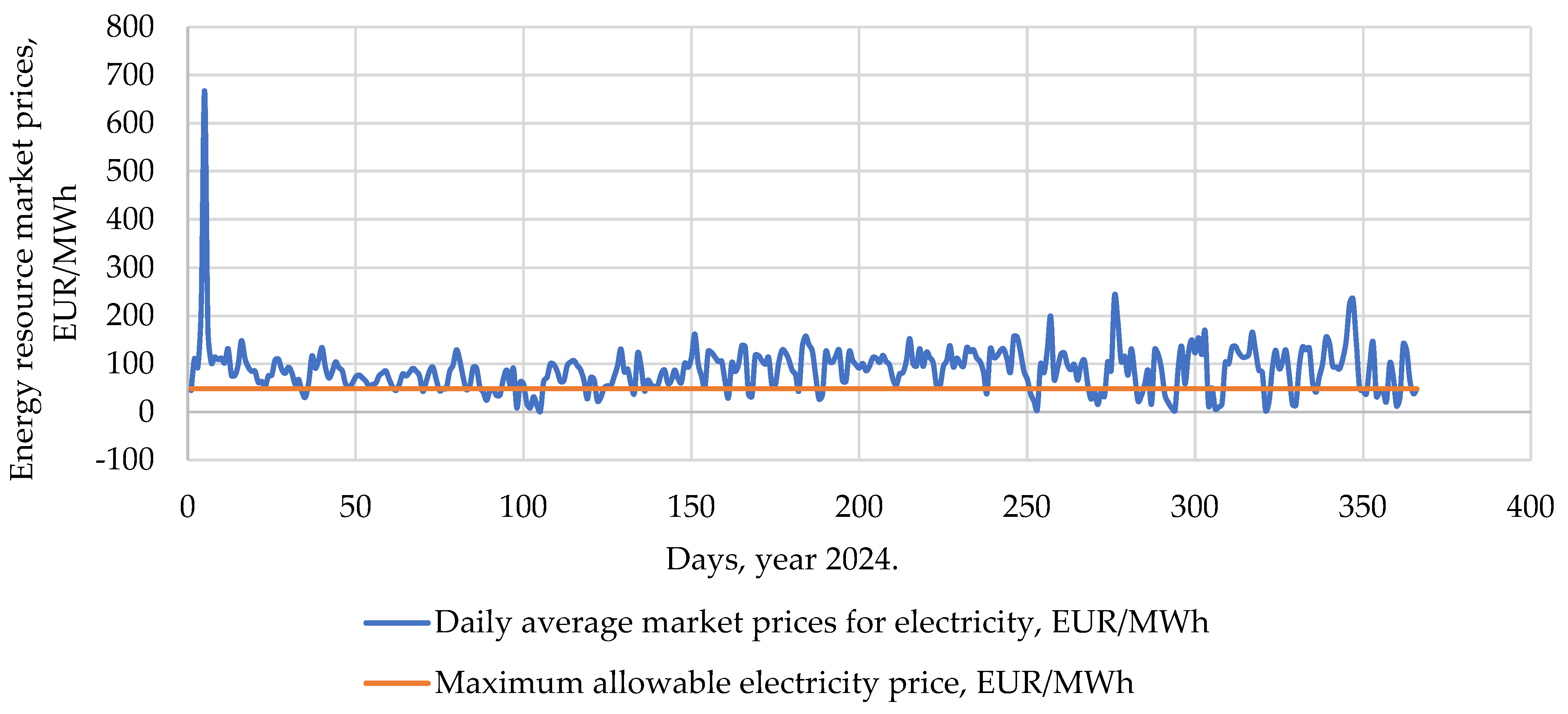
From this, it can be concluded that the maximum allowable electricity price for a gas boiler is 48.09 EUR/MWh (heat production costs for gas boiler No. 1 subtracted by heat production costs for electric boiler).
All the electricity prices from the year 2024 and calculate boundary value can be seen in the following graph (
Figure 8).
Based on data in the previous table, the total reduction in CO
2 emissions can be calculated [
29].
where
E: Reduction in CO2 emissions caused by gas boiler, tCO2/year;
E
CO2: Natural gas emission factor, 0.201 tCO
2/MWh [
30];
Qpat.: Heat energy produced by electric boiler, MWh/year.
2.6. Simulation of Solar Collectors
Based on previously calculated solar collector parameters (
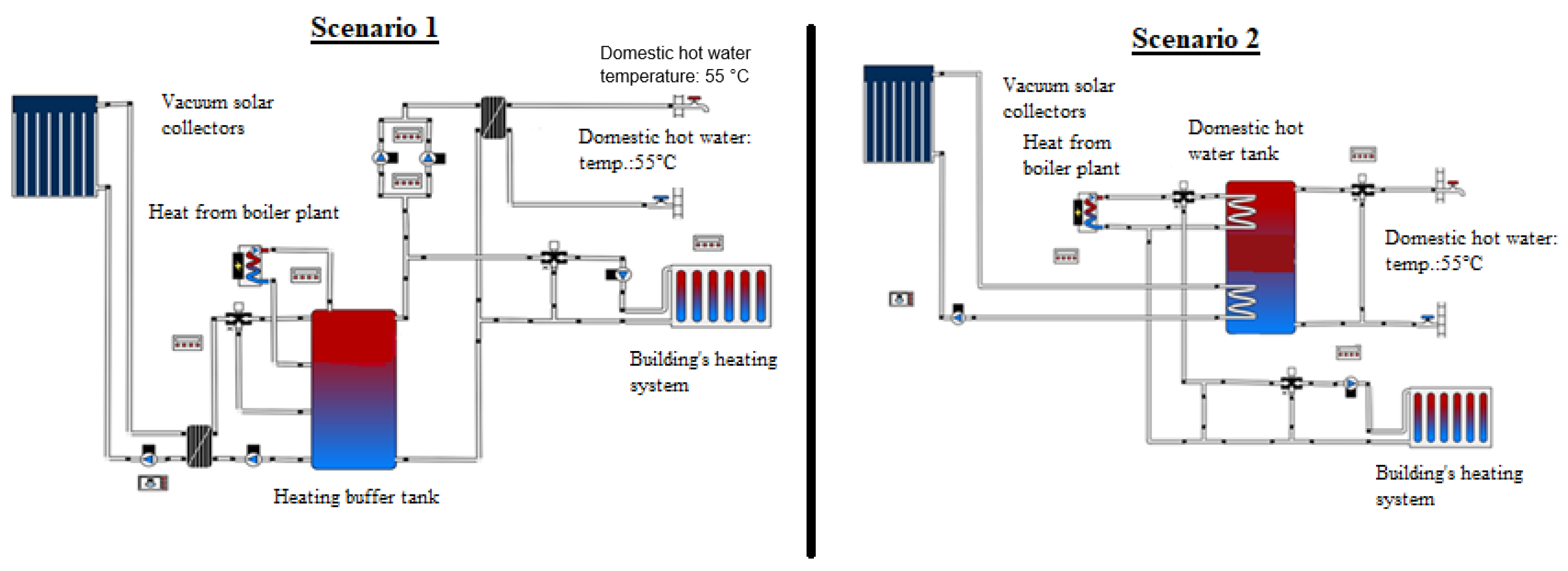
Section 2.5), a simulation was created in Polysun (Standard, ver. 2025.3.) software. Polysun standard can be used for energy simulation of solar, heat pump, CHP, and various other types of systems. Various heat sources and heat consumer types can be defined by the user to achieve the desired system optimization. Based on the created system, detailed energy resource consumption data and system performance parameters can be simulated. In the current work, two possible solar collector system scenarios were compared:
The following image (
Figure 9) shows schematics of the previously mentioned scenarios.
After simulation, based on acquired energy production data, the reduction in CO2 emissions by the usage of solar collectors can be calculated by Equation (5).
2.7. Techno-Economic Calculation
Based on previously selected plant optimization solutions (short-term accumulation tank, electric boiler, and vacuum solar collectors), and their respective operation simulations, a techno-economic calculation has been created.
Firstly, total capital expenses for the electric boiler are calculated [
6].
where
CAPEXEL boiler—total capital expenses for electric boiler, EUR;
Qk.—total heat output of electric boiler, MW;
Piz.—nominal investment per 1 MW of heat output, EUR/MW.
Based on [
6], for this type of boiler, the nominal capital investments are 140,000 EUR (110,000 EUR—equipment costs, 30,000 EUR—design/installation costs). Based on this, the capital investments for the electric boiler are 352,800 EUR.
Capital investments for the heat accumulation tank are calculated after following equation [
6].
where
CAPEXtank: Total capital expenses for heat accumulation tank, EUR;
Vtank.: Heat accumulation tank volume, m3.
Based on our tank volume (700 m3), the total expenses are 227,318 EUR.
Finally, total expenses for the vacuum solar collector system can be calculated as follows [
6]:
where
CAPEXsol. collector: Total capital expenses for solar collectors, EUR;
Piz.: General vacuum solar collector expenses per 1 m2, EUR/m2;
Pinst./des.: Vacuum solar collector installation/ design expenses per 1 m2, EUR/m2;
Acol.: Solar collector total absorption area, m2.
After studying the literature sources [
5,
6,
25], it was concluded that solar collector expenses per 1 m
2 are ~395 EUR/m
2. Installation and design expenses amount to ~15% of P
iz.. In our case, these expenses amount to 121,430.11 EUR.
Taking everything into account, the total capital expenses of the project are 701,548.11 EUR.
The payback period of the project will be calculated based on the net present value (hereinafter, NPV). The following factors must be considered for calculation: the cost of heat production, operating costs, taxes, equipment service life, discount rate, investments, subsidies, and revenues. The NPV is calculated using the following equation [
31,
32]:
where
NPV: Current net value, EUR;
MoneyFlow: The amount of money that is generated from income minus expenses during a specific period, t, EUR;
IRR: Internal rate of return (interest rate), %;
T: Cash flow specific time period, years;
InitialInvestments: Total initial investment of the project, EUR.
The following values are used in NPV calculations:
Existing heat energy tariff of JSC “RIGA HEAT”: 74.17 EUR/MWh excluding VAT [
33];
Heat energy production of electric boiler and solar collectors: 5903.04 MWh/year;
Maximum possible operating costs for solar collectors and electric boiler: 40 EUR/MWh and 49.16 EUR/MWh, respectively;
CO
2 emission quota prices: 63.80 EUR/tCO
2 [
34];
Corporate income tax in Latvia is 20% [
35].
The real financial discount rate in Latvia is 5% [
36].
3. Results
3.1. Electric Boiler Simulation Results
Based on maximum boiler heat output (2.52 MW), Nordpool electricity prices, and residential district heat consumption data for 2024 [
18], the following data were generated.
Full results can be seen in
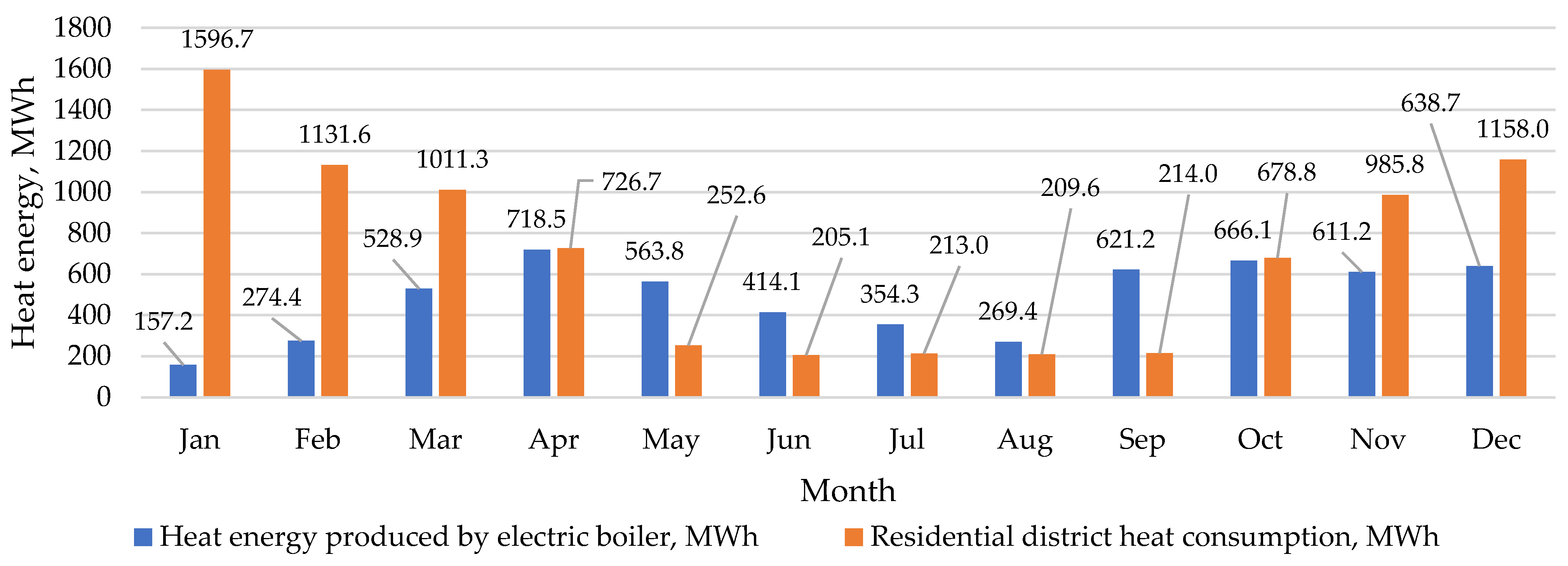
Appendix A. Electric boiler heat production and residential district heat consumption for each month can be seen in
Figure 10.
Based on calculated data, it can be concluded that the usage of an electric boiler is economically feasible. An electric boiler can cover almost all heat demand from April to October. In November and December, more than half of the heat demand can be satisfied. Worst performance for the electric boiler was in January and February, but this is mainly due to electricity prices for these months in the year of 2024. It must be noted that due to the heat accumulation solution chosen previously (hot water tank, short-term storage), it will not be possible to accumulate all the excess heat energy produced in the summer months; it will be necessary to limit the heat output of the electric boiler. A seasonal thermal storage (for instance, a ground thermal storage system) should be considered to increase heat energy storage capabilities during summer.
Based on the total energy produced in the simulated year (5817 MWh), total plant CO2 emissions can be reduced by 1169.39 tCO2/year, according to Equation (5).
3.2. Solar Collector Simulation Results
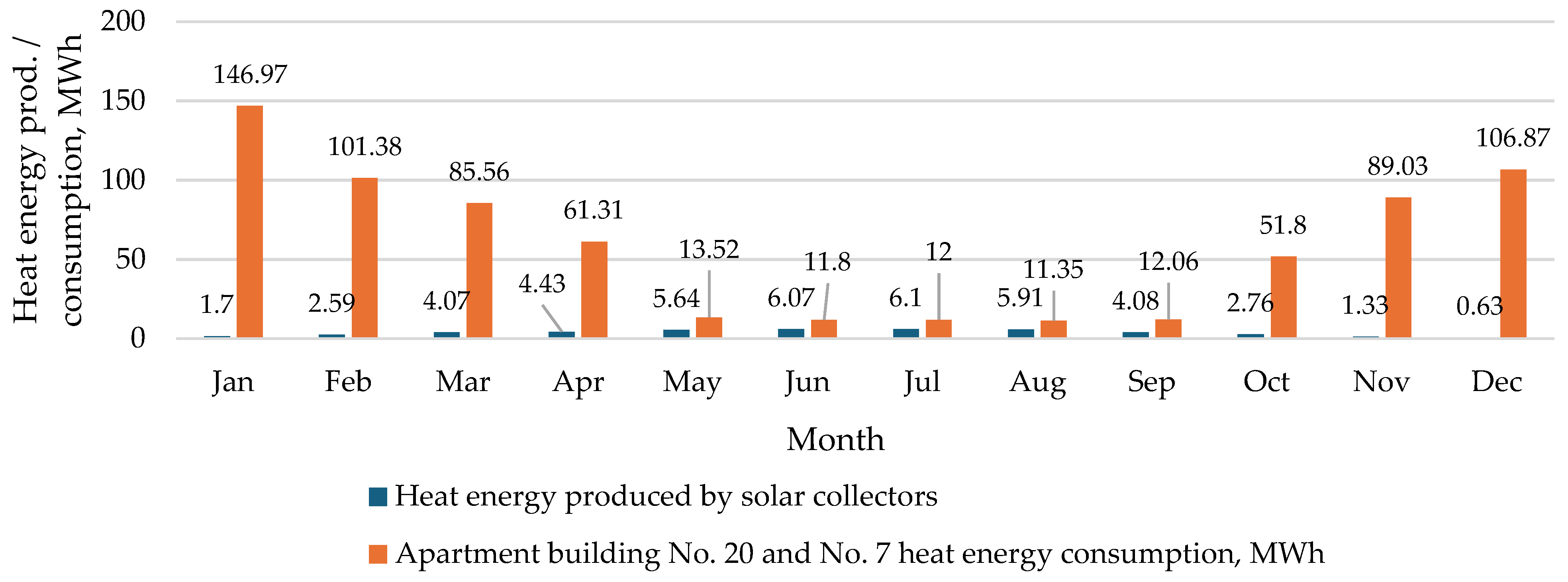
Two scenarios for the solar collector system were simulated (scenario 1: space heating and domestic hot water preparation; scenario 2: only domestic hot water preparation).
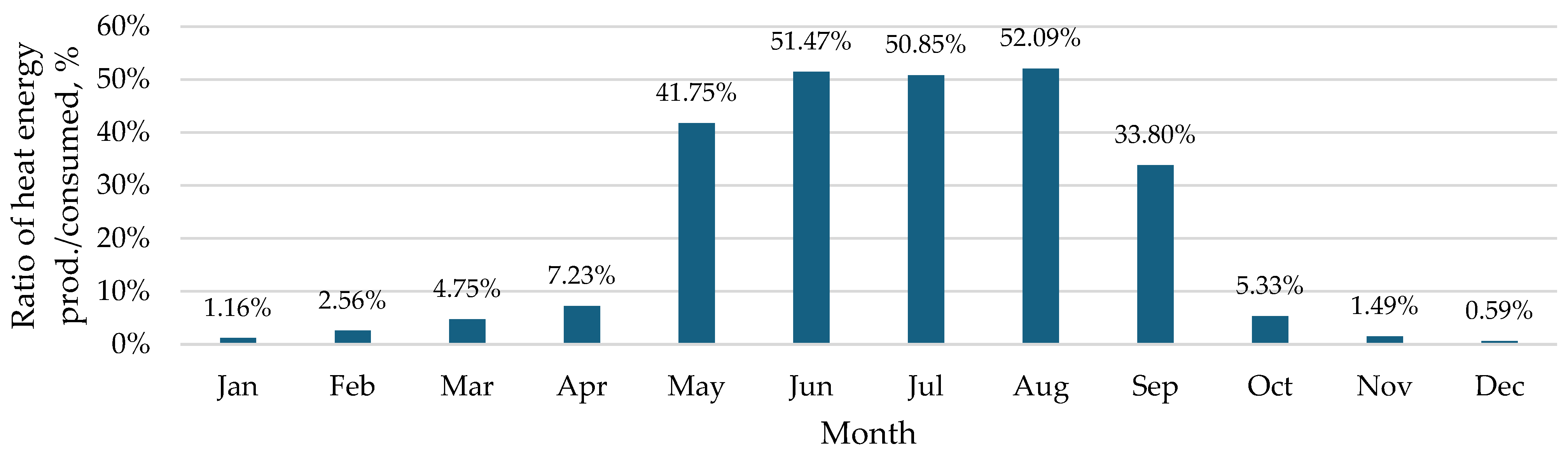
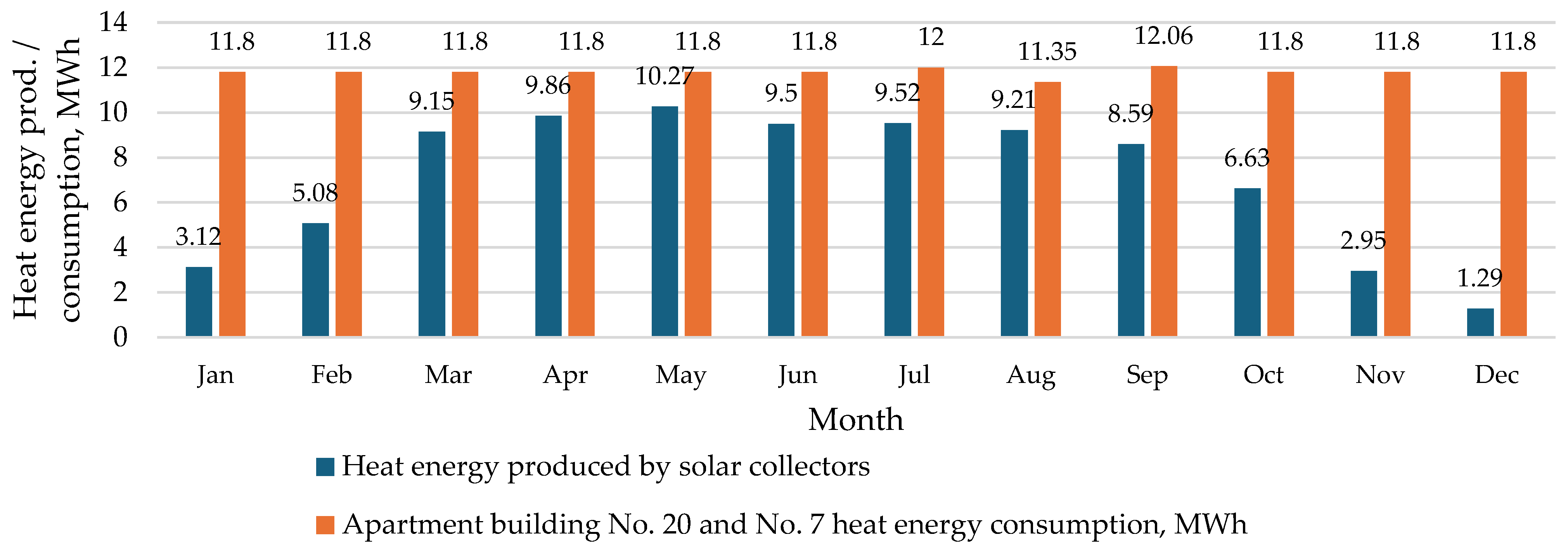
By examining the information summarized in
Figure 11 and
Figure 12, it was found that a combined solar collector system, which provides two buildings with space heating and hot water, can provide the building demand for approximately 33.80% and up to 52.09% in the summer season, but only 0.59% and up to 7.23% in the heating season. Accordingly, it was found that such a heat energy production option is not effective in our case, because the system works effectively only in the summer season, when mostly only hot water is needed. In scenario 2, an alternative heat energy production option was considered, where solar collectors would provide the two buildings with domestic hot water only, but heating would be provided exclusively by the district heating system.
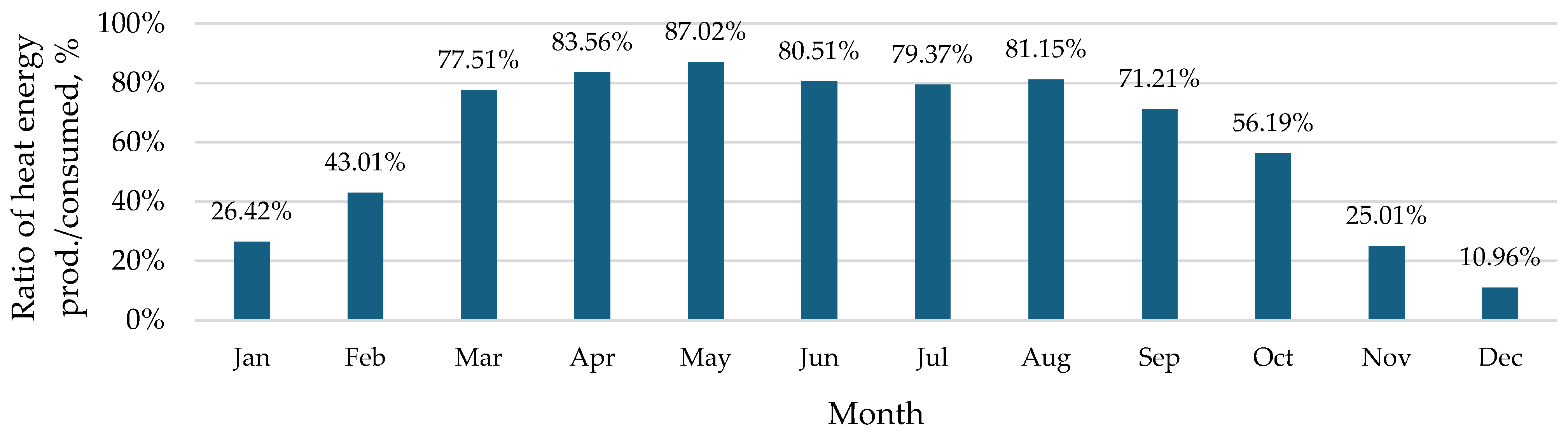
According to the information summarized in
Figure 13 and
Figure 14, it was found that the solar collector system, which provides two apartment buildings with hot water only, can provide the building’s hot water demand by approximately 79.37% and up to 87.02% in the summer season, and by 10.96% and up to 83.56% in the heating season. Accordingly, it was found that such a heat energy production option is effective in our case, since the system operates efficiently both in the summer season and in the heating season.
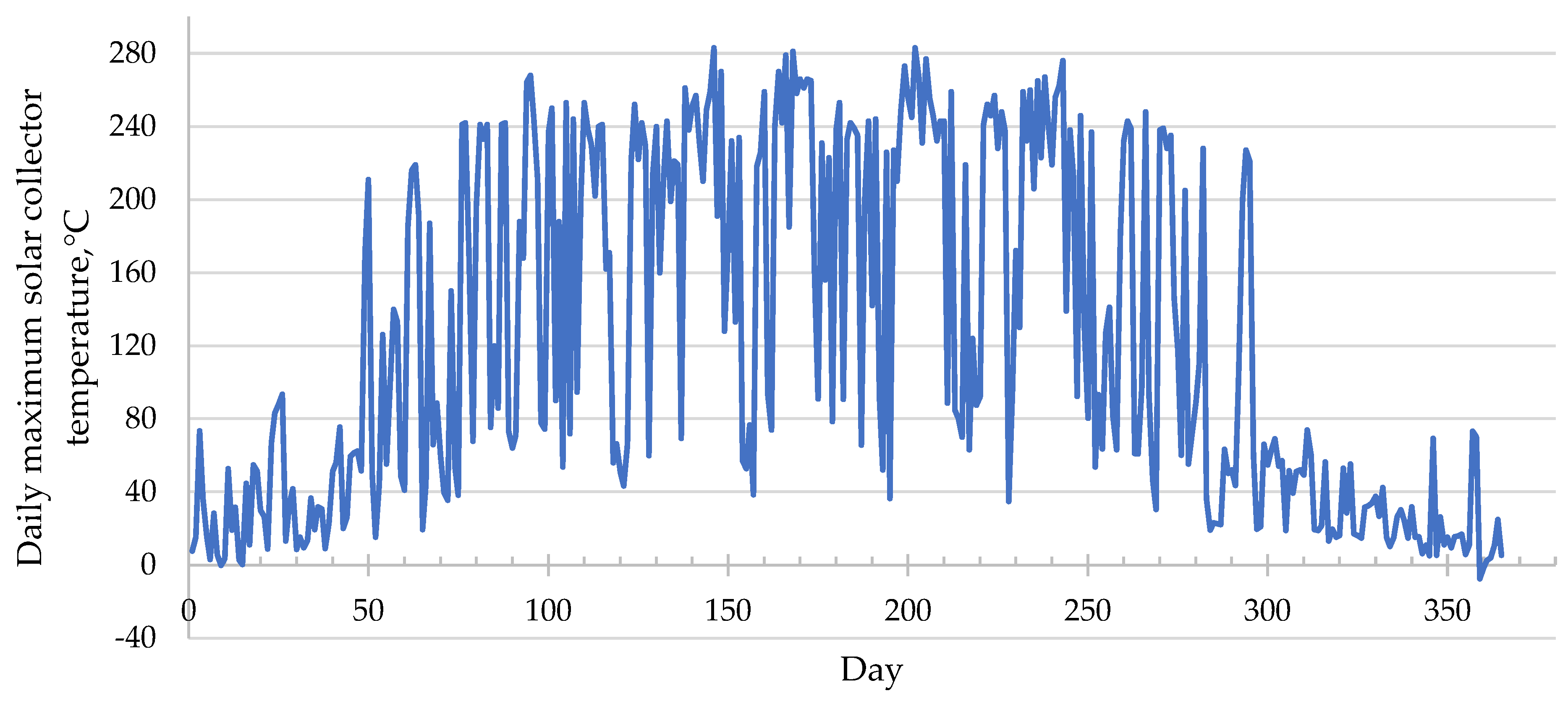
The simulated heat carrier temperatures for solar collectors throughout the year can be seen in
Figure 15.
The graph in
Figure 15 highlights that using solar collectors for space heating is not feasible in the current scenario. The apartment buildings serviced by solar collectors use a high-temperature radiator heating system (supply/return temperatures: 80/60 °C). During most of the heating season, the necessary supply heat carrier temperature cannot be reached by solar collectors. It is possible that a space heating scenario would be feasible if the high temperature radiator heating systems were replaced with low temperature systems (supply temperature 35–40 °C) that use floor heating, fan coils, or larger radiators. However, solar collector temperatures are still sufficient for domestic hot water preparation. In colder months, the temperatures are not high enough to reach the necessary domestic hot water temperature (55 °C) but are still sufficient for preheating of domestic hot water (assuming cold water inlet temperature is ~5 °C).
Heat energy production in the second scenario has increased almost twice compared to the first scenario. Such an increase in the production of heat energy was influenced by the reduction in the temperature of the heat carrier, since in this case, domestic hot water can be produced with a lower heat carrier temperature. Also, the heat losses are decreased, since the total length of the system, dimensions, technical parameters, and number of equipment are decreased in the second scenario.
According to Equation (5), the solar collector system described in the second scenario would reduce CO2 emissions by 17.12 tons/year.
3.3. Techno-Economic Calculation Summary
Complete results of techno-economic calculation can be seen in
Appendix B.
According to the results of the technical and economic calculation, it was found that the project payback period is 4.12 years and the NPV for 10 years is approximately 786,420.00 EUR. The use of an electric boiler reduces CO2 emissions by 1169.39 tCO2/year and the use of solar collectors by 17.12 tCO2/year. If the price of the CO2 quota is 63.80 EUR/tCO2, then this saves 74,607.082 EUR/year in the case of an electric boiler, and 1092.256 EUR/year in the case of the current solar collector setup. In total, the CO2 quotas sold save 12.82 EUR per MWh of heat energy. This will ultimately accelerate the project payback period. If the reduction in the cost of the CO2 emission quota is not considered in the calculation, then the project payback period will extend to 6.33 years, and the NPV for 10 years will be approximately 318,790.00 EUR.
3.4. Sensitivity Analysis
From a technical standpoint, the economic viability of the current boiler plant optimization solution is mostly tied to the electric boiler operation (due to the small scale of the solar collector solution). Boiler plant operation and the financial savings that can be achieved will be influenced by the following parameters:
Yearly electric boiler run time (h). During this time, electric boiler operation costs are ≤ than gas boiler operation costs (49.16 EUR/MWh). This is achievable if the electricity price is ≤48.09 EUR/MWh.
Average yearly electricity price (EUR/MWh) during periods when electric boiler operation costs ≤ gas boiler operation costs.
CO2 quota prices (EUR/tCO2).
In the base calculation, the average yearly electricity price was assumed equal to the maximum allowable electricity price, so the calculated NPV values were conservative. Additional income is possible due to reduced electric boiler running costs.
To investigate how the change in average yearly electricity price (for periods when ≤48.09 EUR/MWh) and CO2 quota price during different yearly electric boiler runtimes, several scenarios were created. Scenarios were created in three sets, each set assuming a different yearly electric boiler run time (hours during which the electricity price is ≤48.09 EUR/MWh):
Scenarios 1.1 to 1.3 at base yearly electric boiler runtime;
Scenarios 2.B to 2.3 at decreased yearly electric boiler run time (−20%);
Scenarios 3.B to 3.3 at increased yearly electric boiler run time (+20%).
Scenarios x.B assume base CO
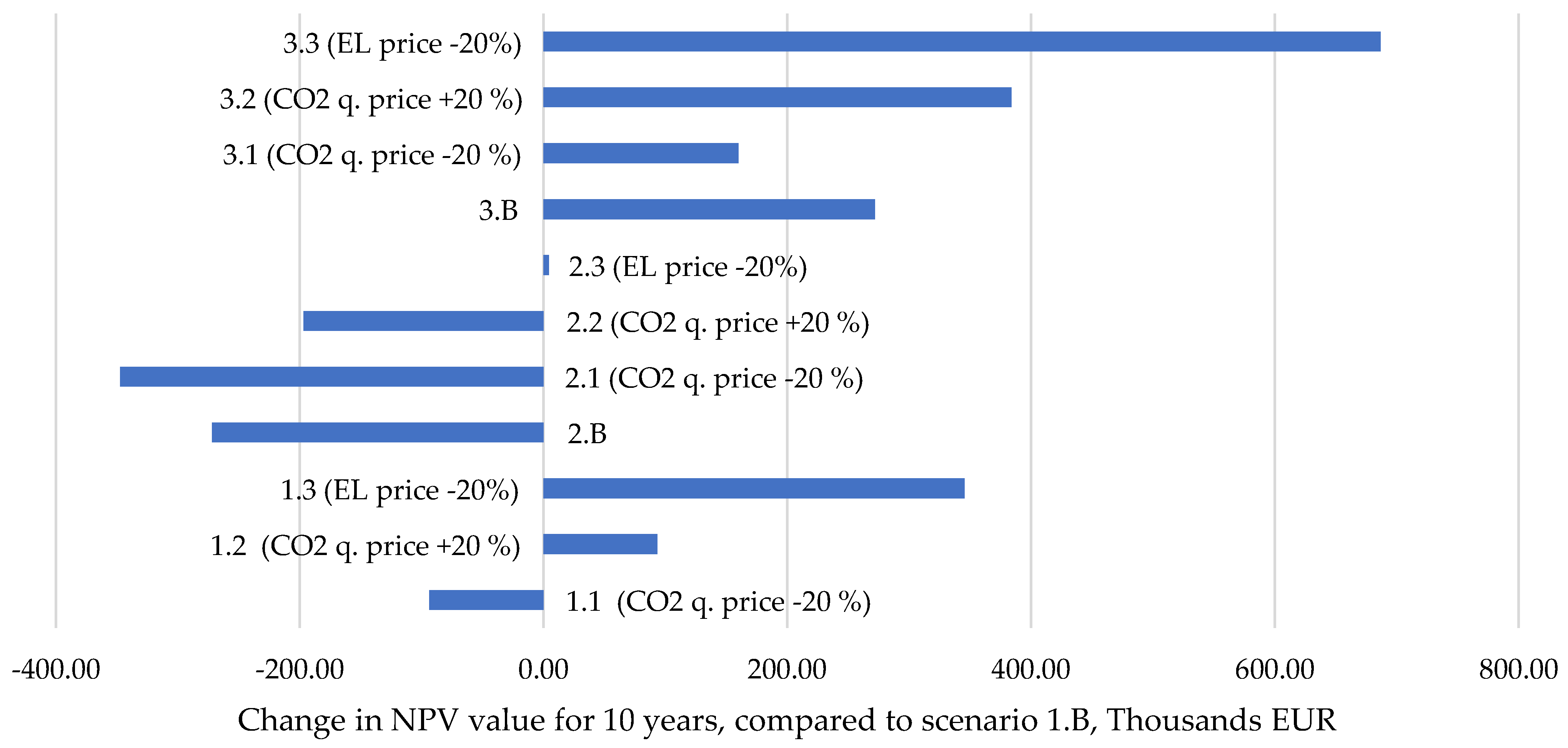
2 and base average electricity prices. Further scenarios x.1 to x.3 each change one parameter (
Figure 16, as displayed in brackets near scenario number).
The list of scenario parameters and results can be found in
Appendix C,
Table A7,
Table A8 and
Table A9.
Figure 16 displays how the NPV value for 10 years changes in comparison to the base scenario, depending on the previously mentioned parameters.
Figure 16 shows that any of the changed parameters considerably influence the project NPV value for 10 years. In scenario 1.x, increasing or decreasing CO
2 quota price by 20% will change the discounted project payback period by ~0.3 years in the appropriate direction. However, if the average electricity price during periods when electric boiler operation is profitable decreases by 20%, then the discounted project payback would be reduced by ~0.8 years.
In the second set, scenario 2.x, a drop in NPV value can be seen in all but one scenario. If total boiler operation time is reduced by 20%, then the discounted project payback would increase by 0.7 to 1.5 years based on CO2 quota prices. It can be seen that the NPV value is almost equal to the base scenario if average electricity prices are reduced by 20%.
Finally, the third set of scenarios shows that increased electric boiler operation time will boost the NPV value in all scenarios, reducing the discounted project payback period by 0.7 to 1.4 years.
4. Discussion
This study shows that introducing an electric boiler, solar collectors, and a short-term heat storage solution in an existing boiler plant with limited space can provide considerable economic benefits to the heat energy producer.
For the current situation, most savings were achieved by an electric boiler that was controlled by changes in dynamic electricity prices. Sensitivity analysis shows that achieved savings are dependent on various parameters; however, even in scenarios with more pessimistic parameters (decreased CO2 quota prices or reduced electric boiler operation time), the discounted project payback period did not exceed 6 years.
Unfortunately, it was not possible to install enough solar collector panels for the boiler plant, due to limited space. Since the boiler plant is in the middle of the serviced residential district, the only place deemed suitable for solar collector placement were roofs of residential apartment buildings closest to the plant. For this reason, the ratio of heating power provided by solar collectors is rather low (~1% of current districts’ yearly heat demand).
It was also found that, in the current situation, the only viable usage for solar collectors was domestic hot water preparation. The current residential district consists of unrenovated apartment buildings with high graph (80/60 °C) heat carrier temperatures. During most of the heating season, solar collectors cannot reliably reach the heat carrier temperatures needed. In the case of domestic hot water, solar collectors can always be used, either as a preheating method or to almost fully cover the domestic hot water demand for two apartment buildings in the residential district. If the apartment buildings in question were to be renovated and outfitted with low-temperature heating systems where the supply temperature is ~40 °C, it is possible that solar collectors could also be used for space heating; however, this would still require a significant increase in solar collector number to provide higher heating capacity [
37,
38,
39].
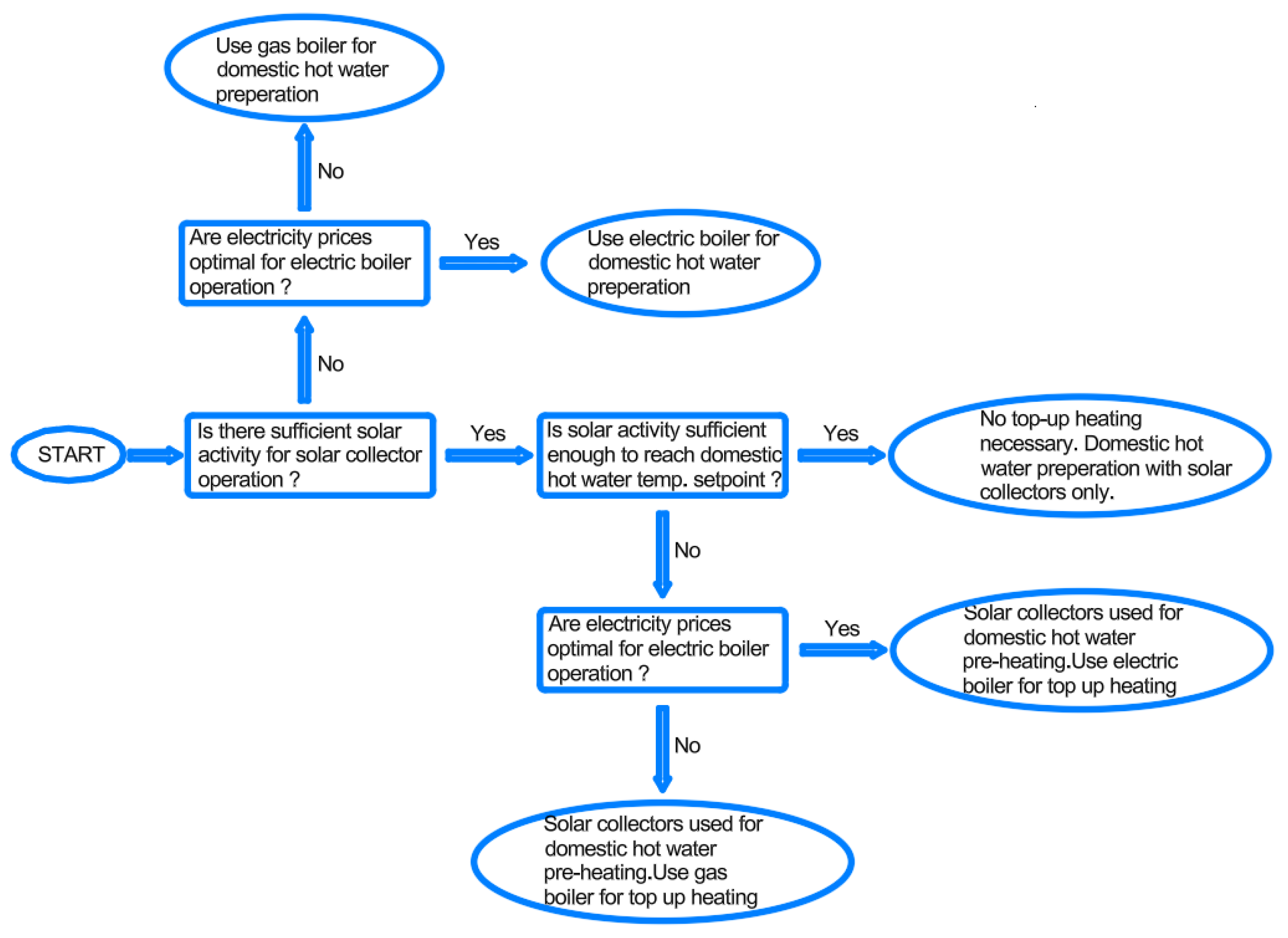
Regardless of electricity prices, solar collectors should always be prioritized to provide domestic hot water for the buildings that are connected. A possible control algorithm is shown below, in
Figure 17.
Solar collector operating costs depend on electricity, but these will always be lower per heat energy unit than those of electric boilers; because of this, solar collectors should always be used to fully cover domestic hot water demand, or to reduce electric boiler load as a preheating solution.
In any case, if the location of the boiler plant permits it, a larger ratio of solar collector heating energy should be considered for the heating plant. The ratio of this power must be chosen considering the heating demand and state of heating systems for the serviceable buildings.
5. Conclusions
This study selected alternative heat energy production technologies for a gas boiler plant servicing a residential district: an electric boiler with a heat capacity of 2.520 MW, vacuum tube solar collectors with an absorbing area of 1.63 m2, and a heat energy storage tank with a volume of 700 m3.
The operation of an electric boiler is economically justified if the electricity exchange price is 48.09 EUR/MWh or lower. Under such conditions, according to the electricity exchange prices of 2024, the boiler would be able to operate for 2332 h per year and produce 5817.87 MWh of thermal energy. CO2 emission reduction would be 1169.39 tons per year.
After simulating the solar collector system in the Polysun (Standard, ver. 2025.3.) program, it was determined that the vacuum solar collectors, used in system that produces only domestic hot water (space heating is covered by district heating system), can produce 85.17 MWh/year of thermal energy, while providing approximately 60.14% of the hot water demand of two apartment buildings and reducing CO2 emissions by 17.12 tCO2/year. A solution where solar collectors provide heat for space heating and domestic hot water production was deemed economically unfeasible.
The electric boiler, together with the thermal energy storage tank and solar collectors, can produce 5903.04 MWh/year of thermal energy, providing 70.42% of the total annual demand of the residential district. This can reduce the CO2 emissions of the existing boiler plant by at least 1186.51 tCO2 per year, which, at an emission quota price of 63.80 EUR/tCO2, allows for savings of 75,699.34 EUR per year (12.82 EUR/MWh heat energy).
The technical and economic calculation has determined that the project’s discounted payback period is 4.12 years and the NPV over a 10-year period is approximately EUR 786,420.00, considering the reduction in the cost of the CO2 emission quota. If the technical–economic calculation does not consider the CO2 emission quota savings, the project payback period will be extended to 6.33 years, and the NPV in 10 years will be approximately 318,790.00 EUR.
In sensitivity analysis, technical and economic calculation was repeated under different CO2 quotas, electricity prices, and different electric boiler yearly runtimes. It was found that when previously mentioned parameters are changed within 20% boundaries, the total discounted project payback time can increase to 5.56 years under the most pessimistic parameters or reduced to 2.73 years under more optimistic parameters.
It can be concluded that these types of systems can effectively reduce the use of fossil fuels, CO2 emissions, and the cost of heat production. Integrating such systems into similar objects is possible, but it should be noted that each object has different conditions (location, climate, energy prices, infrastructure, etc.); therefore, before integrating such systems, it is necessary to thoroughly evaluate the existing boiler plant and the situation of the district heating network, and carry out optimization projects on this basis. The chosen solutions are straightforward and are suitable for boiler plants with limited space. The financial savings that can be achieved through the use of these technologies can be beneficial to heat energy providers.