Article

A New Approach for Real-Time Coal–Rock Identification via Multi-Source Near-Bit Drilling Data

1
School of Architecture and Civil Engineering, Xi’an University of Science and Technology, Xi’an 710054, China
2
Shaanxi Shaanmei Tongchuan Mining Co., Ltd., Tongchuan 727000, China
3
Shaanxi Coal Group Shenmu Hongliulin Mining Co., Ltd., Yulin 719300, China
4
Shaanxi Coal Group Shenmu Zhangjiamao Mining Co., Ltd., Yulin 719300, China
*
Author to whom correspondence should be addressed.
Energies 2026, 19(7), 1785; https://doi.org/10.3390/en19071785
Submission received: 20 February 2026 / Revised: 25 March 2026 / Accepted: 1 April 2026 / Published: 5 April 2026
(This article belongs to the Section H: Geo-Energy)

Abstract

Real-time coal–rock identification is essential for intelligent mining, enabling hazard prevention and geological modeling. However, existing methods often suffer from unclear bit–rock interaction mechanisms, signal distortion, sensor remoteness, or delayed data acquisition, limiting their effectiveness in continuous operations. This study proposes a novel approach for real-time coal–rock identification based on multi-source near-bit drilling data. A near-bit data acquisition system was developed and positioned directly behind the drill bit, integrating sensors to capture high-fidelity parameters—including weight on bit (WOB), torque, rotational speed, rate of penetration (ROP), natural gamma ray, and borehole trajectory—thereby eliminating frictional interference from the drill string. A data-driven theoretical model was established to derive a near-bit drillability index (NDI) for rock strength and to correlate gamma ray responses with lithology. Field trials were conducted in a coal mine in northern Shaanxi, involving over 30 boreholes and systematic core validation. The results demonstrate that the method enables continuous, high-resolution identification of coal–rock interfaces and strength variations along the borehole trajectory, with interpreted results aligning well with core logs and achieving approximately 85% accuracy in strength estimation. By ensuring compatibility with conventional drilling rigs and supporting real-time data transmission and 3D geological updating, this study offers a practical and robust technical pathway for achieving geological transparency and real-time steering in underground coal mining.

1. Introduction

Real-time identification of coal–rock during mining is fundamental as it enables precise horizon control of the mining machine [1,2,3]. This directly maximizes coal recovery and quality by minimizing rock dilution. Concurrently, it forewarns operators of impending hard rock or geological anomalies, thereby preventing equipment damage and dynamic hazards such as gas outbursts. The acquired lithological knowledge ahead of the face is also crucial for designing effective roof support strategies and ensuring ground stability [4,5]. Furthermore, the real-time lithological data continuously refine the geological model, reducing uncertainty in reserve estimation and long-term planning [6,7,8].
Coal–rock identification technologies have evolved into several categories. Direct sampling (e.g., core drilling) provides definitive lithology but is discrete and lags operations [9,10]. Borehole geophysical logging offers continuous formation evaluation but is typically post-drilling, causing decision delays [11,12,13]. Indirect identification based on excavation dynamics enables real-time potential but suffers from signal noise and sensor distance [14,15]. Advanced geophysical techniques such as ground penetrating radar offer non-contact detection but face challenges in complex underground environments, including electromagnetic interference and trade-offs between depth and resolution [16,17,18,19]. Recent international studies have further demonstrated the value of borehole geophysical surveys combined with spatial modeling for identifying mineralized zones, the use of lithophysical characteristics for geological interpretation, and the analysis of petrogenesis and mineralogical features to understand rock composition [20,21,22]. These contributions highlight the importance of integrating multi-source data for subsurface characterization. Consequently, despite ongoing refinements and integration with machine learning, a persistent gap remains: no existing category fully satisfies the simultaneous requirements of real-time execution, high spatial resolution, and reliable near-source or advance detection for continuous horizon control in intelligent mining [23,24].
In recent years, measurement-while-drilling (MWD) technology has been increasingly adopted. Studies have demonstrated correlations between drilling parameters and rock strength, making MWD a valuable tool for real-time lithology characterization [25,26,27]. Recent advances in real-time lithology identification and coal-bearing strata analysis have focused on machine learning and multi-sensor fusion [8,26]. However, conventional MWD systems position sensors at the rig or along the drill string, where measured signals are distorted by borehole friction and long transmission paths [28,29]. For instance, in the same borehole, conventional machine-side data often exhibit smoothed or delayed responses to lithology changes, whereas near-bit data capture sharper, more immediate signatures of coal–rock interfaces. This distortion masks the true bit–rock interaction, leading to significant identification errors. Achieving real-time, high-resolution, near-bit coal–rock analysis therefore requires a system that captures drilling responses directly at the bit and effectively separates the influence of operational parameters.
This study proposes a novel coal–rock identification method based on multi-source near-bit drilling data. A near-bit data acquisition system was first developed to measure drilling parameters, including weight on bit (WOB), torque, rotary speed, rate of penetration (ROP), gamma, and drilling trajectory, thereby significantly enhancing signal fidelity and real-time response. Accordingly, a data-driven theoretical model was established to analyze coal–rock strength and lithological variations along the borehole trajectory. Field trials conducted at a coal mine successfully demonstrated that this method enables continuous, accurate delineation of coal–rock interfaces during drilling, confirming its efficacy and representing an advance in real-time geological steering. In addition, the proposed model cannot fully filter out the influence of certain drilling actions (bit wear, drilling regime changes), and further investigation is required.

2. Near-Bit Data Acquisition System

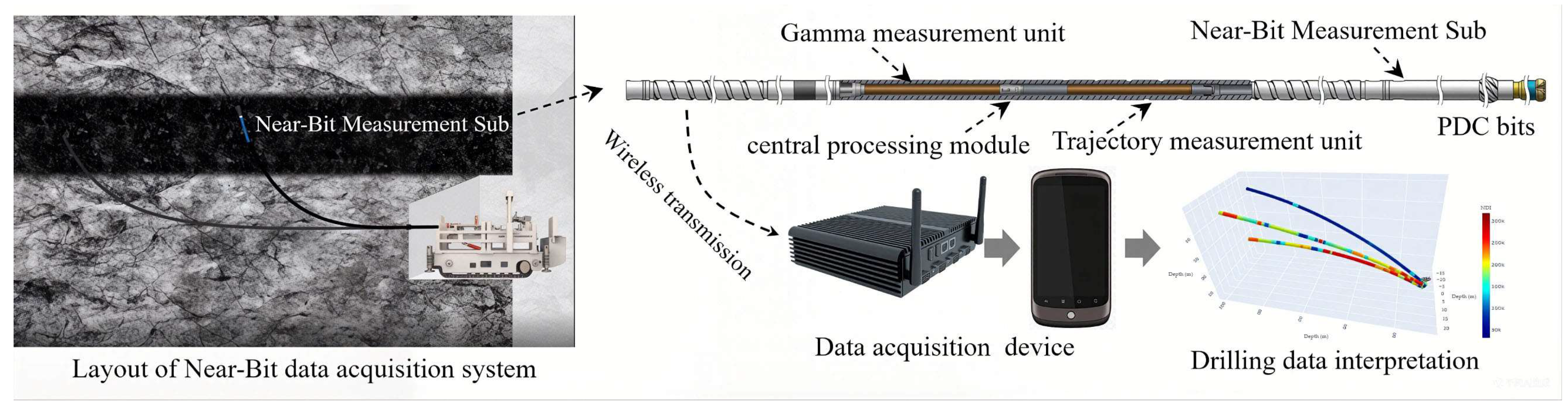
This near-bit data acquisition system integrates multi-parameter sensors—including WOB, torque, rotational speed, rate of penetration, gamma, and 3D trajectory—into a single compact sub positioned close to the bit, without disrupting the existing mine drilling process. It is designed to withstand the extreme downhole environment near the bit, characterized by high temperature, high pressure, and severe space constraints. By advancing electromagnetic wave wireless transmission technology, the system enables real-time acquisition of near-bit drilling data. According to the tool-rock interaction mechanism, it achieves quantitative identification of coal–rock strength, in situ stress, lithology, and borehole trajectory. This methodology moves beyond the conventional formation evaluation framework that relies on static, offline sampling (e.g., coring), achieving a theoretical shift from “point-wise static interpretation” to “linear-to-areal dynamic sensing.” The layout of this system is shown in Figure 1.

2.1. Near-Bit Measurement Sub

This near-bit data acquisition system comprises a near-bit measurement sub, a borehole trajectory measurement unit, a downhole gamma measurement unit, and a central processing module. It is designed to acquire near-bit rock-breaking parameters (WOB, rotational speed, and ROP), inclination, azimuth, and gamma values during the drilling process, as illustrated in Figure 1. This device has an overall length of 1.5 m and a diameter of 89 mm, retains the functionality of a standard drill pipe, and can operate continuously for 172 h with a sampling interval of 2 s and an onboard storage capacity of 50 GB. Subsequently, real-time data transmission during drilling is achieved via electromagnetic wave wireless technology, as mentioned earlier, while the Bluetooth connection is primarily used for high-speed data download post-drilling. Drilling data interpretation software is then employed for single-hole analysis, facilitating the real-time acquisition of near-bit rock-breaking parameters and gamma logs along the drilled path. Based on these data, variations in lithological strength and gamma response along the trajectory are quantitatively calculated.

2.2. Multi-Sensor Drilling Data Integration and Processing

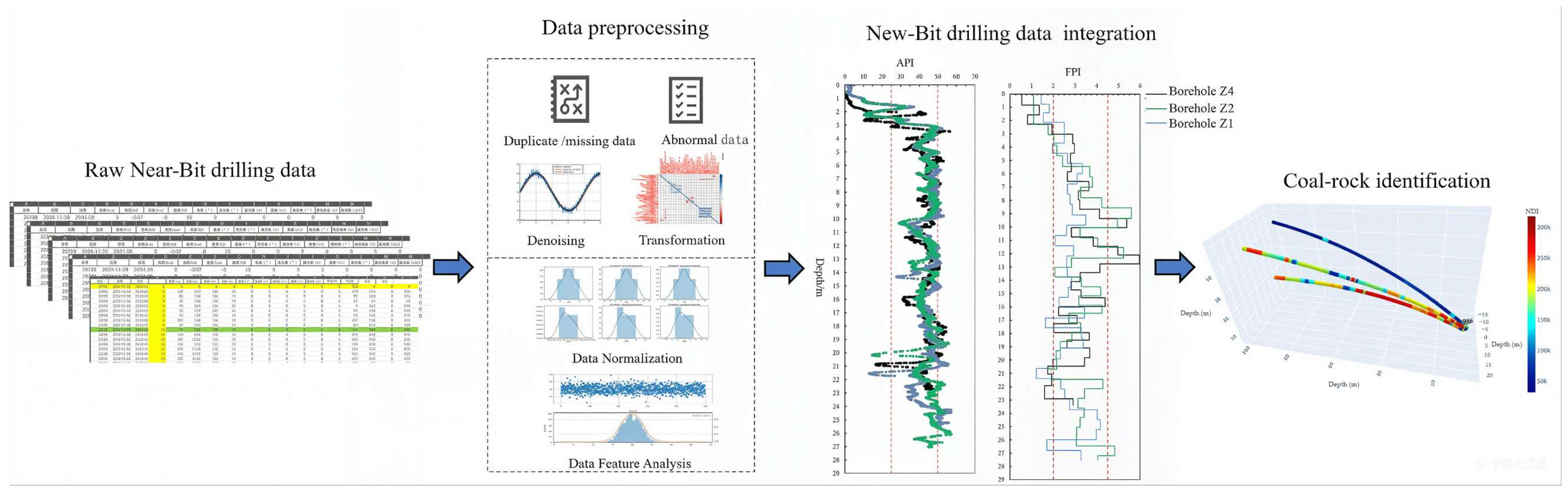
This system records data in the form of a time-series matrix of near-bit measurements, the format of which is shown in Table 1. However, the ultimate objective is to construct a data matrix indexed by drilling depth. During actual drilling operations, non-productive activities such as idling and backtracking introduce numerous invalid data points into the raw drilling parameters. Therefore, data-cleaning strategies must be applied to extract pure drilling-phase data. Simultaneously, factors such as downhole vibration contribute significant noise to the signal, necessitating smoothing and denoising procedures. Furthermore, due to a 1 m axial offset between the gamma measurement unit and the near-bit sub, a depth correction must be applied to the acquired gamma logs. Finally, the three-dimensional borehole trajectory is reconstructed from the recorded inclination and azimuth data, and the while-drilling data matrix is spatially corrected according to this trajectory. The complete data processing workflow is illustrated in Figure 2.
The device only requires connection to the drill pipe and is independent of the rig type, making it compatible with both conventional hydraulic and directional drilling rigs. In addition to coal–rock interface detection, it enables precise borehole trajectory mapping, real-time data transmission and sharing, accurate geological steering during drilling, and operational assessment of drilling efficiency and safety.

3. Methodology for Coal–Rock Identification Using Near-Bit Drilling Data

3.1. Near-Bit Drillability Index for Coal–Rock Strength Identification

Numerous scholars have proposed various drillability indicators, such as ROP and specific energy (SE), to characterize rock strength [30,31]. Empirical models linking while-drilling parameters to rock strength have also been developed [32,33]. Nevertheless, the practical application of most drillability indicators remains constrained, largely because it is difficult to effectively separate the influence of operational drilling parameters on these indicator values [34]. Based on the rock-cutting model proposed by Detournay and Defourny [35] and starting from the rock-breaking mechanism of a single PDC cutter, a drillability index for characterizing rock mass strength was derived, as below:
F n = η × d
F c = ε w d + μ F n
where Fn is the applied axial load (N), and Fc is the applied horizontal load (N). η is an indentation coefficient, depending on rock strength properties and the cutter shape and size. ε is the intrinsic specific energy for the breakage of the unit volume of the rock (J/m3), w is the width of a single cutter (m), and μ is the friction coefficient. Accordingly, the magnitude of cutting torque can be expressed in Equation (3).
T c = ε w d r + μ F n r
where r is radius of PDC bit (m), According to Feng and Wang [33], the horizontal cutting force is directly proportional to the horizontal cutting torque, with a proportionality constant of k. Thus, Equation (3) can be defined as:
k × F n = ε w d r + μ F n r
Equation (5) could also be rewritten as:
F n w d = ε r k μ r
In Equation (6), cutting width is proportional to both the penetration depth and the drill bit diameter, with the penetration depth also being proportional to the drill bit diameter, while parameters, including k, ε, μ, are solely dependent on rock intrinsic properties. Therefore, this near-bit drillability index (NDI) could be expressed as the product of drilling pressure and the square of penetration depth of per rotation, as shown in Equation (6).
N D I = F n d 2 = ε r k μ r
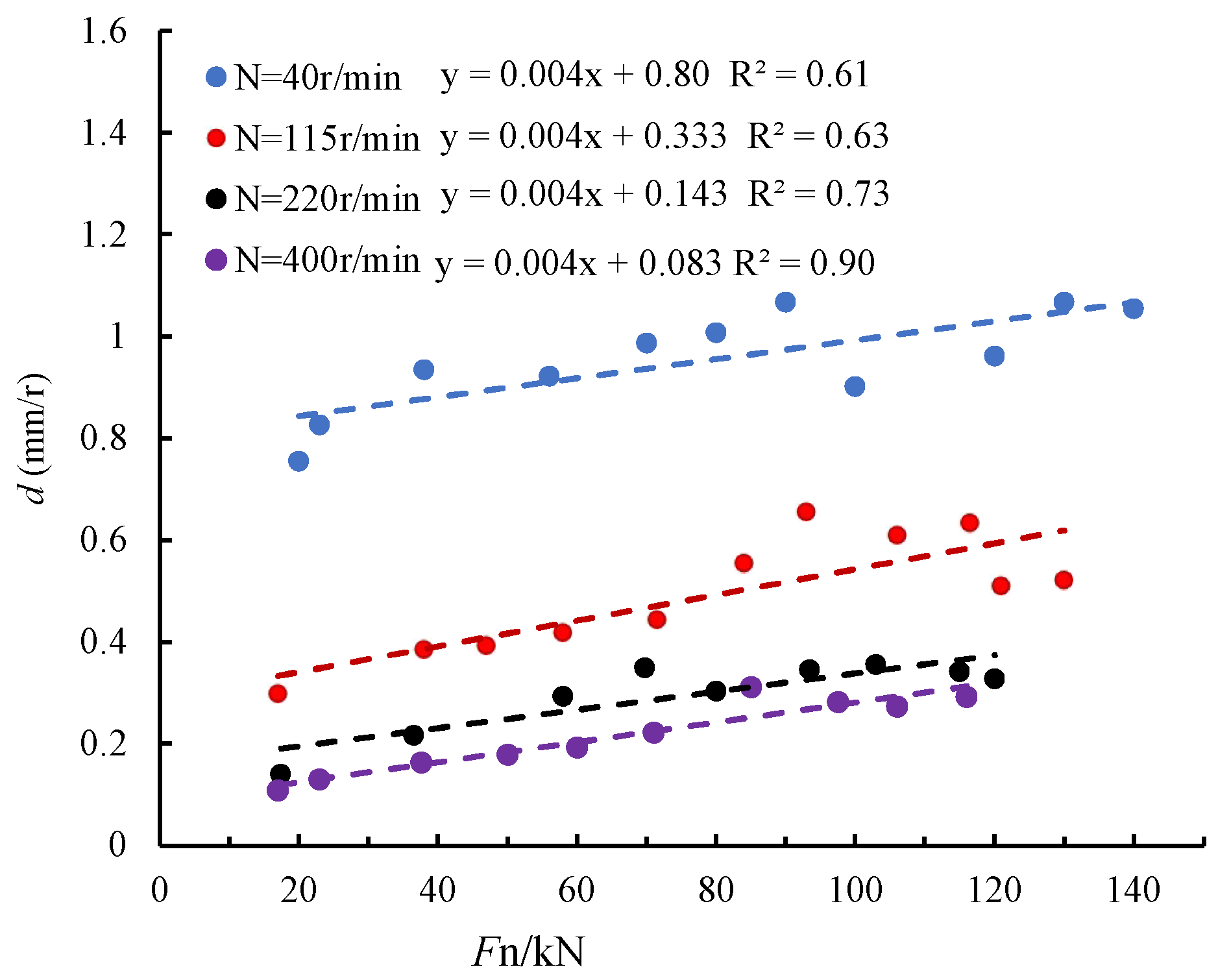
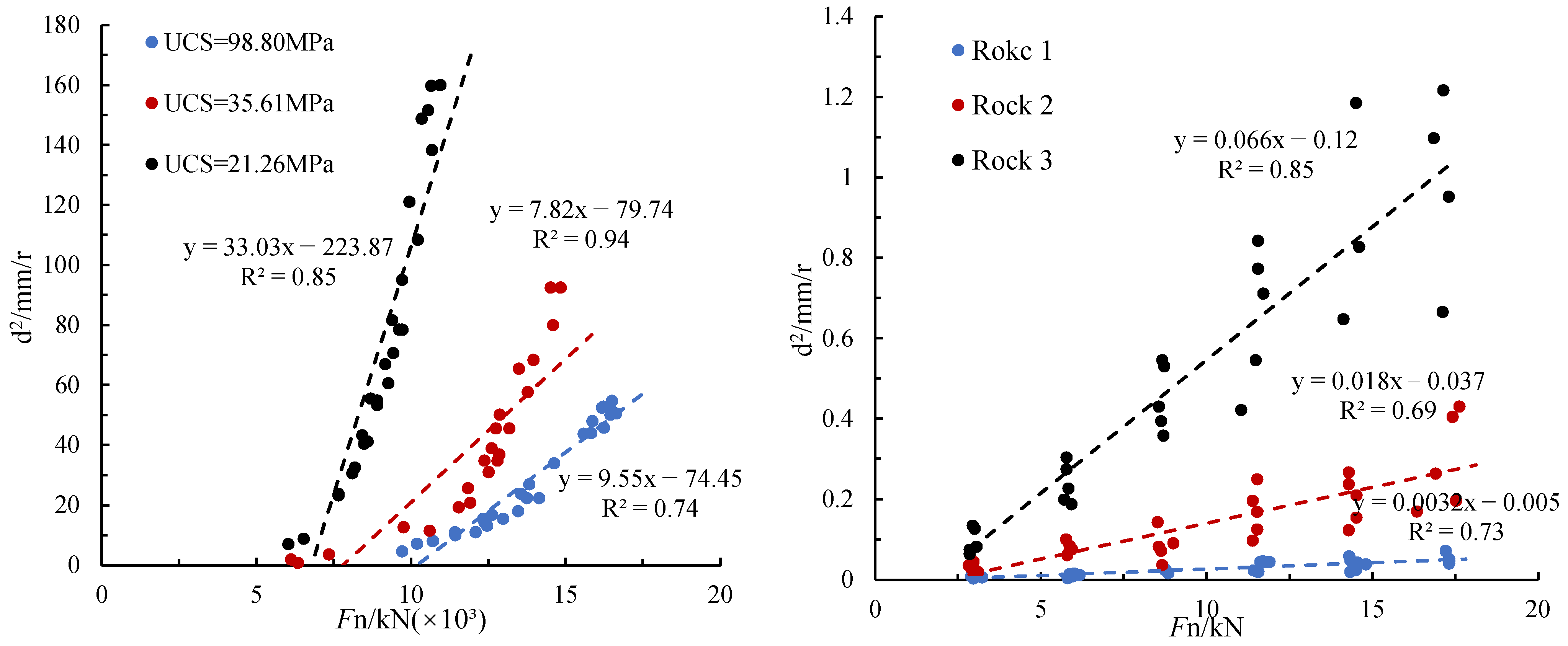
Accordingly, this index effectively filters out the influence of drilling pressure and rotational speed and is solely related to the rock intrinsic properties, as shown in Figure 3. Furthermore, Feng and Wang [36] and Sun et al. [37] have confirmed that this index can be calculated as the linear slope of the drilling pressure versus the square of the penetration depth per revolution, as illustrated in Figure 4.

3.2. Lithology Identification Based on Gamma Ray Variations

Coal and organic-rich sediments typically emit very low levels of natural gamma radiation due to the absence of radioactive minerals like clay [38]. It is important to acknowledge that certain non-coal lithologies, such as clean sandstone or limestone, can exhibit much higher gamma ray values. To mitigate this, the gamma ray interpretation is used in conjunction with the NDI-derived strength data. For instance, an interval with both low gamma response and low NDI (strength) would strongly indicate coal, whereas a much higher gamma interval with high NDI would suggest a competent, clean sandstone. This multi-source fusion approach significantly enhances the reliability of boundary identification.
Using this method in underground coal mines solves the problems of older, slower methods that relied on looking at returned rock fragments. The real-time data not only shows the exact path and position of the drill bit within the coal seam but also allows the updating of geological models by comparing the new data with old ones. This improves drilling accuracy and safety and helps build better digital maps of the mine geology. The correspondence between formation radioactivity (in API units) and lithology is shown in Table 2.

4. Case Study: Coal–Rock Identification in a Northern Shaanxi Coal Mine

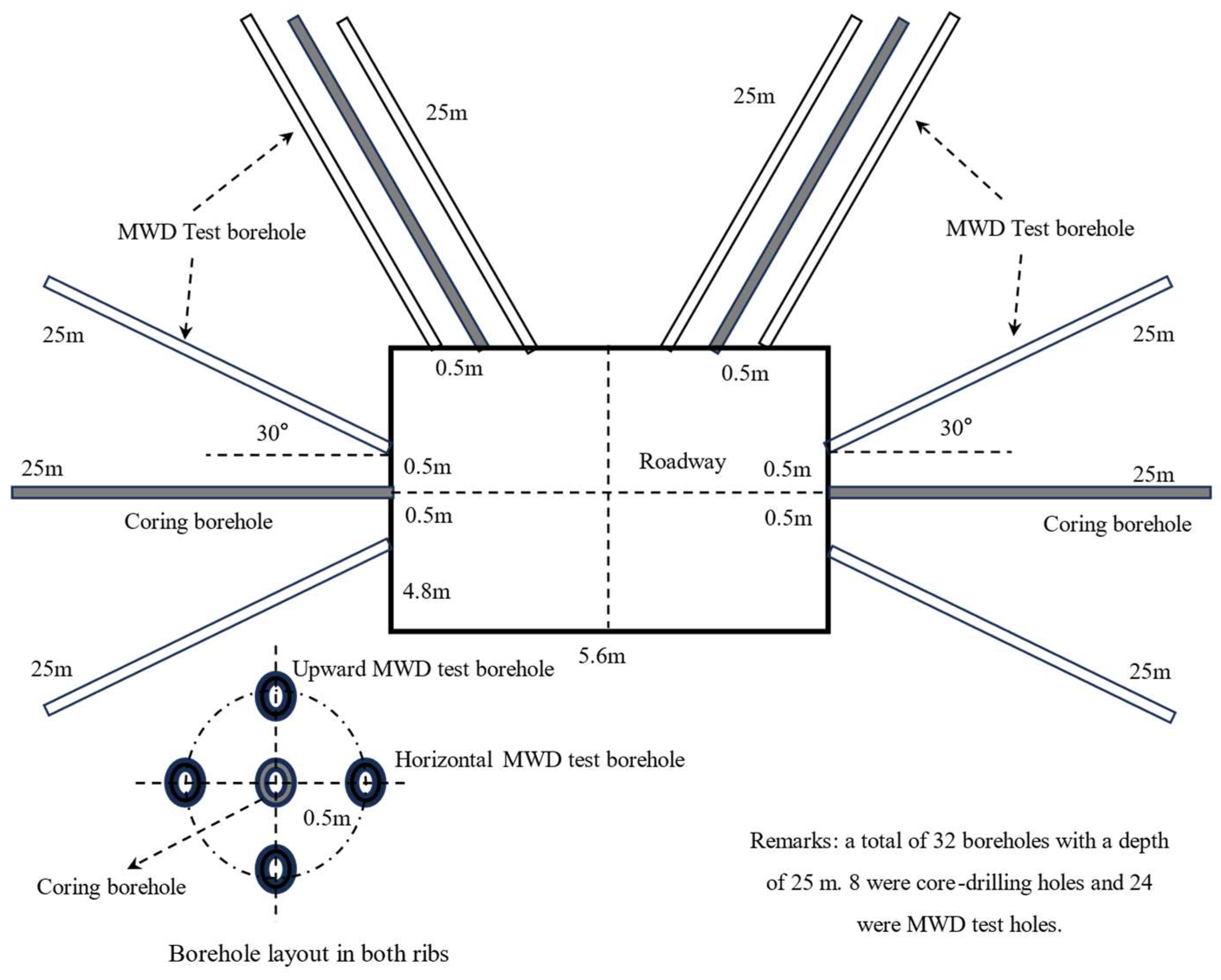
To validate the performance of the proposed device and the coal–rock identification method, field testing was conducted in a coal mine located in northern Shaanxi. The trial was carried out in two phases within a retreat roadway of a working face. In the first phase, a total of 32 boreholes with a depth of 25 m were drilled across six drilling sites. Among these, eight were core-drilling holes and 24 were test holes for while-drilling parameter acquisition, aiming to systematically collect data and establish a database correlating near-bit drilling parameters with coal–rock information (Figure 5). In the second phase, three validation boreholes, each 120 m in depth, were drilled to further reveal coal-seam structures and lithological distribution, thereby testing the effectiveness and reliability of the identification method.

4.1. Field Testing Program

The field testing was conducted in a retreat roadway of this coal mine. The roadway cross-section measures 5.6 m × 4.8 m, with a total length of 1421 m. The test boreholes’ layout is illustrated in Figure 6. Specifically, drilling sites 1 and 2 were each designed with six roof boreholes, comprising two core-sampling holes and four near-bit drilling test holes. Similarly, drilling sites 3, 4, and 5 were each designed with five boreholes, consisting of one core-sampling hole and four near-bit drilling test holes.
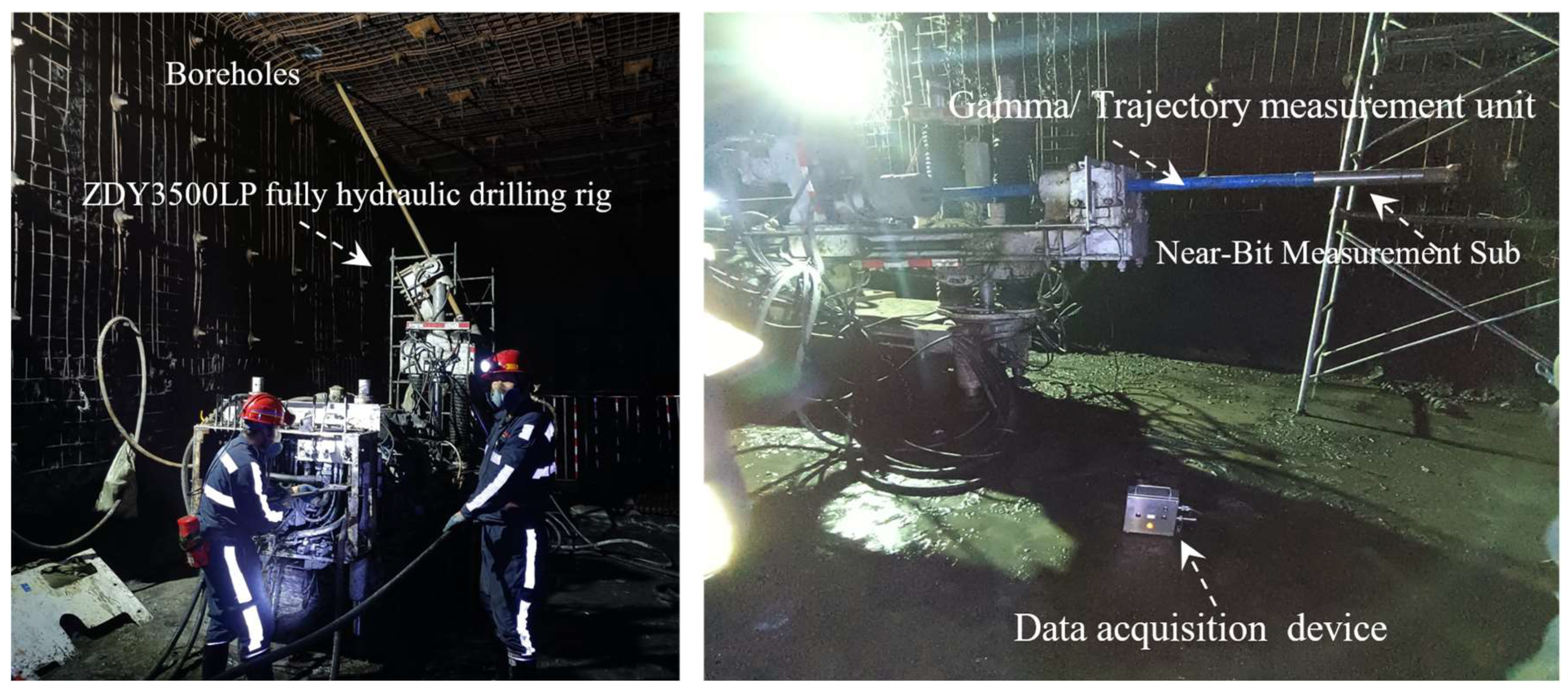
The test employed a ZDY3500LP dual-track, fully hydraulic drilling rig for coal mines (Figure 6). This rig is suitable for coal seam water infusion holes, outburst relief and pressure release holes, geological exploration boreholes, and various other engineering drilling applications. The test was conducted using a Φ94 mm drill bit, a mine-compatible near-bit while-drilling detection device, and Φ63.5 mm threaded drill pipes. The schematic layout and field operation photographs are shown below.

4.2. Coal–Rock Identification MWD Database

First, detailed geological logging of the retrieved cores provided continuous spatial distribution information of coal and rock along the borehole depth. Meanwhile, standard sampling and laboratory tests were conducted on the coal / rock samples to obtain depth-varying uniaxial compressive strength data. Subsequently, using while-drilling data processing software, continuously varying drillability indices and natural gamma values along the depth were derived. Based on these data from the 32 aforementioned boreholes, systematic statistical analysis was performed and a corresponding multi-source fusion database was established, which includes two components: (1) a lithology–gamma relationship table (Table 3) and (2) a strength–NDI relationship table (Table 4). These tables serve as reference standards for coal–rock identification.
In the validation phase, the database was applied to three validation boreholes. For each validation borehole, the real-time NDI and gamma values were compared against the established tables to infer lithology and strength, and the results were subsequently verified through coring and laboratory testing. This two-stage design ensures that the database is not merely a collection of raw data but a validated reference for real-time interpretation.
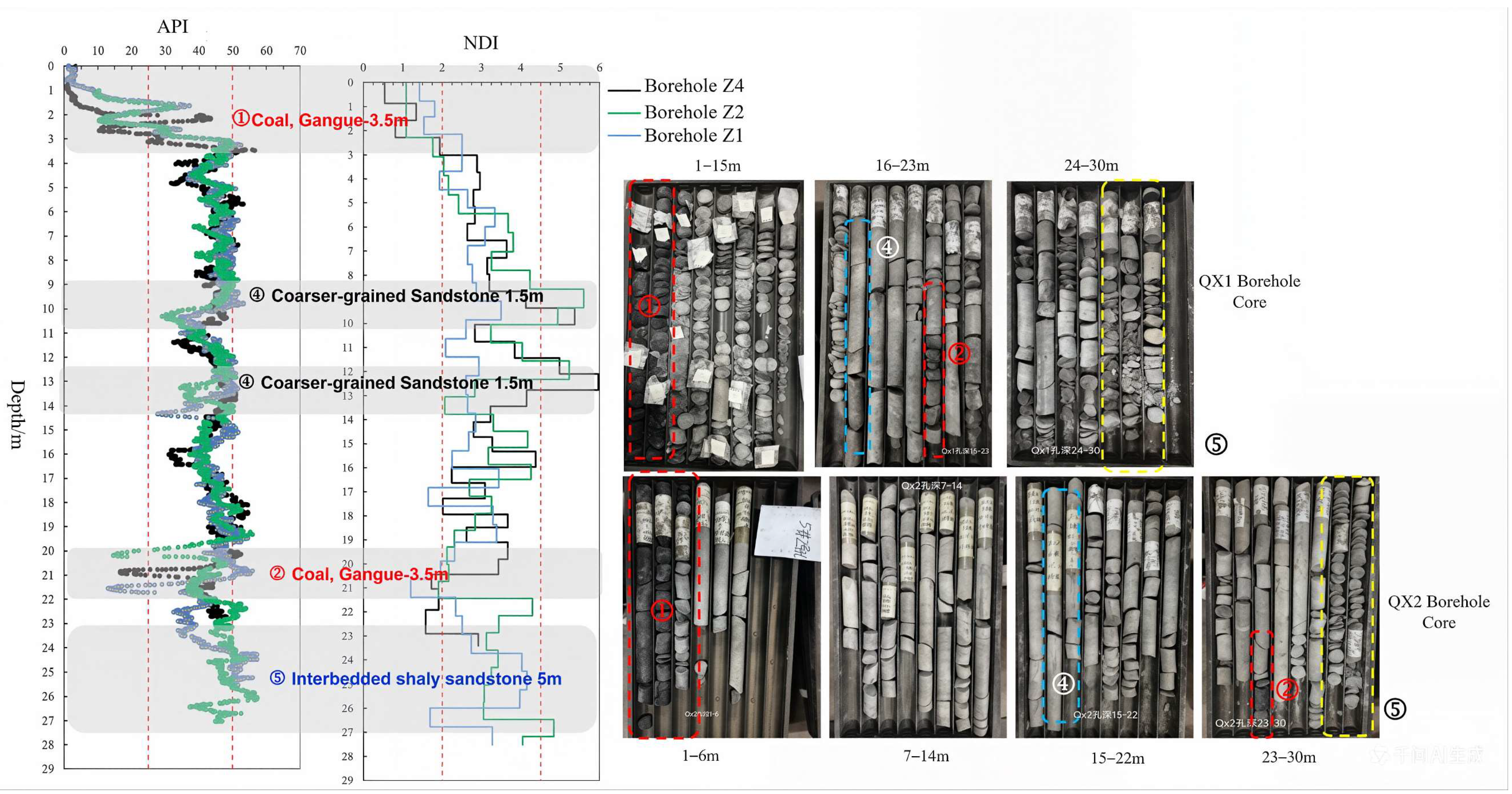
The data from borehole no. 5 are taken as an example to illustrate the effectiveness of the method, as shown in Figure 7. The interpreted geological profile indicates that the overall formation at this drilling site consists of the following layers: from the roof upward to a depth of 0–3.5 m, the lithology is coal or coal gangue with a strength around 20 MPa; between 17.3 m and 19 m, there is a 0.5 m-thick interval of coal or coal gangue, also with a strength of approximately 20 MPa; the remaining sections are predominantly composed of medium sandstone, exhibiting relatively uniform strength values ranging from 35 MPa to 60 MPa.

4.3. Result Analysis and Discussion

Field validation of the coal–rock identification method was then conducted by integrating this system with a drilling rig during operational water-prospecting and drainage operations. Six inclined boreholes were drilled into the roof to achieve both water drainage and method validation. The expected positions of coal seams in these holes were determined from the mine’s geological record.
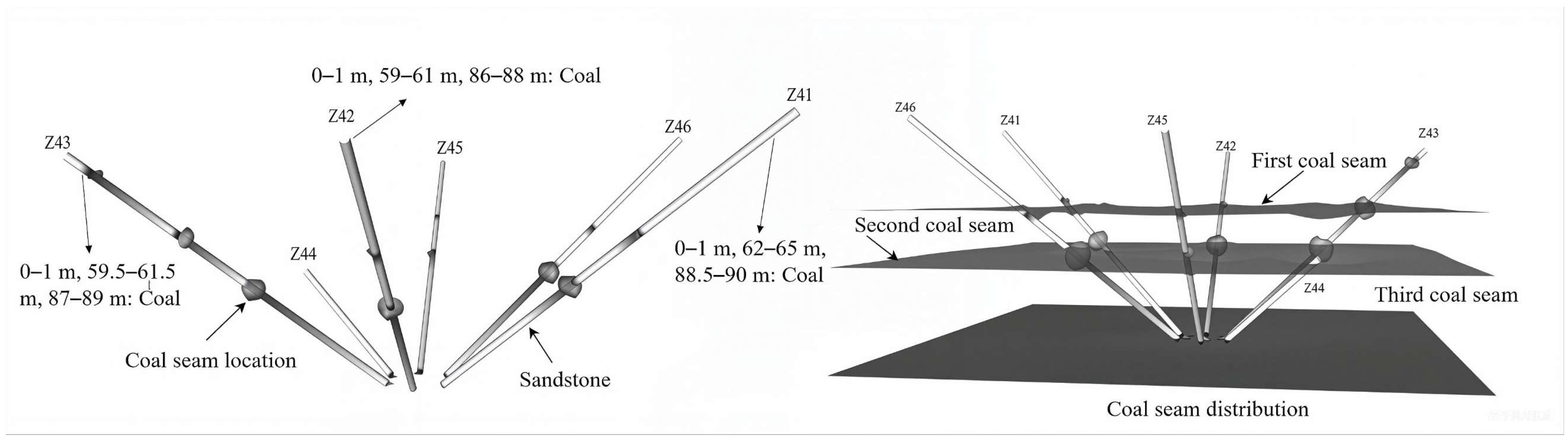
Accordingly, the coal–rock identification results are presented in Figure 8. The results indicate that three coal layers were encountered during drilling, located at a depth of 59–65 m, 86–90 m, and 118–121 m, respectively. The rock in this section is predominantly fine sandstone, with compressive strength ranging from 19.5 MPa to 37.6 MPa. The coal seams are classified as soft, with low strength; their compressive strength varies between 12.8 MPa and 25.5 MPa. The mean absolute percentage error (MAPE) was used to calculate the error between the NDI-derived strength and the laboratory-measured UCS, as shown in Equation (7). The calculated error is 15%, which corresponds to a relative accuracy of approximately 85% for the strength values themselves. However, the strength interpreted from the near-bit drilling data is generally higher than the uniaxial compressive strength obtained from laboratory tests. The main reason is that while-drilling strength represents the confined in situ rock, while lab-tested strength is measured after removing all surrounding pressure. Figure 8 also illustrates the spatial distribution and coal seams thickness of the coal layers.
M A P E = 1 n i = 1 n U C S N D I u c s × 100 %
where UCS is the actual value (laboratory-measured UCS), NDI is the predicted value (NDI-derived strength), and n is the number of samples.
It is acknowledged that the method performs well in intact coal and rock sections. However, its performance becomes limited under complex geological conditions, such as in fractured zones, and further investigation is required. The primary reason is that rock fragmentation in such zones induces bit vibration and stick-slip, introducing errors in recorded parameters and consequently affecting the accuracy of the NDI. Additionally, as bit wear progresses, the calculated NDI tends to deviate from the true value, because, with increased wear, the depth of penetration per revolution under the same weight on bit decreases, leading to an overestimation of NDI. When a bit replacement is involved, a pre-calibration of drilling parameters is required. Therefore, while the proposed method is capable of identifying rock mass strength, its application relies on the availability of a dedicated database. During data cleaning, certain drilling parameters—such as vibration and non-normal drilling conditions—are excluded to ensure the reliability of the NDI calculation.

5. Conclusions

This study addresses the challenges of poor real-time performance and low resolution in coal–rock identification. A real-time coal–rock identification method based on multi-source near-bit drilling data was proposed and implemented, with successful industrial validation at a coal mine in northern Shaanxi. The approach enables real-time and continuous acquisition of coal–rock information, providing a practical technical means for geological transparency in mining. The main conclusions are as follows:
  • A novel near-bit while-drilling detection device was developed. With a length of 1.5 m and diameter of 89 mm, it integrates sensors for WOB, torque, rotational speed, gamma ray, and borehole trajectory. It supports 172 h continuous operation with a 2 s sampling interval and 50 GB storage and is compatible with various drilling rigs.
  • A while-drilling identification method for coal–rock strength and lithology was established by analyzing near-bit rock-breaking parameters and gamma-ray data, enabling continuous high-resolution borehole geological profiling. Systematic industrial testing on 32 boreholes demonstrated strong performance in coal–rock boundary identification and achieved 85% accuracy in strength prediction compared to UCS laboratory measurements.
  • This method accurately identifies coal–rock interfaces and can generate geological profiles in real time, providing reliable guidance for safe and efficient underground drilling.

Author Contributions

Conceptualization, S.F.; methodology, J.H. (Jianfeng Hu) and Z.F.; investigation, S.F. and J.H. (Jianfeng Hu); visualization, Y.M. and J.H. (Jian Hu); resources, Y.M. and J.H. (Jian Hu); writing—original draft preparation, S.F. and J.H. (Jianfeng Hu); writing—review and editing S.F. and J.R.; supervision, J.R. All authors have read and agreed to the published version of the manuscript.

Funding

This research was supported by the National Natural Science Foundation of China (52309143), China Postdoctoral Science Foundation (2022MD723827), and the Xi’an Association for Science and Technology Youth Talent Support Program (959202413072).

Data Availability Statement

The raw data supporting the conclusions of this article will be made available by the authors on request.

Acknowledgments

This work was supported by the National Natural Science Foundation of China (52309143), China Postdoctoral Science Foundation (2022MD723827), and the Xi’an Association for Science and Technology Youth Talent Support Program (959202413072).

Conflicts of Interest

Authors Yanping Miao were employed by the company Shaanxi Coal Group Shenmu Hongliulin Mining Co., Ltd. Authors Jian Hu were employed by the company Shaanxi Coal Group Shenmu Zhangjiamao Mining Co., Ltd. Author Zhihai Fan was employed by the company Shaanxi Shaanmei Tongchuan Mining Co., Ltd. All authors declare that the research was conducted in the absence of any commercial or financial relationships that could be construed as a potential conflict of interest.

References

  1. Hu, F.; Zhou, M.; Yan, P.; Bian, K.; Dai, R. Multispectral imaging: A new solution for identification of coal and gangue. IEEE Access 2019, 7, 169697–169704. [Google Scholar] [CrossRef]
  2. Zhang, Q.; Gu, J.; Liu, J. Research on coal and rock type recognition based on mechanical vision. Shock Vib. 2021, 2021, 6617717. [Google Scholar] [CrossRef]
  3. Zhang, Y.; Tong, L.; Lai, X.; Cao, S.; Yan, B.; Yang, Y.; He, W. Research on coal-rock identification method and data augmentation algorithm of comprehensive working face based on FL-Segformer. Int. J. Coal Sci. Technol. 2024, 11, 48. [Google Scholar] [CrossRef]
  4. Miao, Z.J.; Zhao, Y.; Sun, W.; Cai, W.Y.; Luo, A.Y.; Zhao, Y.C. Identification on the type of coal rank by using geophysical well logging data. J. China Coal Soc. 2011, 36, 766–771. [Google Scholar]
  5. Wang, G.; Xu, Y.; Zhang, J.; Zhang, K.; Ma, Y.; Chen, H. New development of intelligent mining in coal mines. Coal Sci. Technol. 2021, 49, 1–10. [Google Scholar]
  6. Kaufmann, O.; Martin, T. 3D geological modelling from boreholes, cross-sections and geological maps, application over former natural gas storages in coal mines. Comput. Geosci. 2008, 34, 278–290. [Google Scholar] [CrossRef]
  7. Moore, T.A.; Friederich, M.C. Defining uncertainty: Comparing resource/reserve classification systems for coal and coal seam gas. Energies 2021, 14, 6245. [Google Scholar] [CrossRef]
  8. Liu, Y.; Si, L.; Wang, Z.; Chen, M.; Li, X.; Wei, D.; Gu, J. A novel coal-rock recognition method in coal mining face based on fusing laser point cloud and images. Int. J. Min. Sci. Technol. 2025, 35, 1057–1071. [Google Scholar] [CrossRef]
  9. Chen, L.; Ma, M.; Wang, H.; Liu, X.; Wu, M.; Hirota, K. Lithology identification of coal-bearing strata based on data-driven dual-channel relevance networks in coal mine roadway drilling process. Inf. Sci. 2025, 690, 121339. [Google Scholar] [CrossRef]
  10. Kumar, T.; Seelam, N.K.; Rao, G.S. Lithology prediction from well log data using machine learning techniques: A case study from Talcher coalfield, Eastern India. J. Appl. Geophys. 2022, 199, 104605. [Google Scholar] [CrossRef]
  11. Zhou, B.; Guo, H. Applications of geophysical logs to coal mining—Some illustrative examples. Resources 2020, 9, 11. [Google Scholar] [CrossRef]
  12. Fu, X.; Qin, Y.; Wang, G.G.; Rudolph, V. Evaluation of coal structure and permeability with the aid of geophysical logging technology. Fuel 2009, 88, 2278–2285. [Google Scholar] [CrossRef]
  13. Zhang, N.; Liu, C. Radiation characteristics of natural gamma-ray from coal and gangue for recognition in top coal caving. Sci. Rep. 2018, 8, 190. [Google Scholar] [CrossRef]
  14. Tian, L.Y.; Mao, J.; Wang, Q.M. Coal and rock identification method based on the force of idler shaft in shearer’s ranging arm. J. China Coal Soc. 2016, 41, 780–786. (In Chinese) [Google Scholar]
  15. Song, D.; Venugopal, C. A novel coal-rock cutting state identification model based on the Internet of Things. Int. J. Cogn. Comput. Eng. 2023, 4, 179–186. [Google Scholar] [CrossRef]
  16. Tang, X.; Liu, J.; Yang, F.; Qiao, X.; Fu, T.; Peng, S. Research on the penetration performance of rotary ground-penetrating radar in detecting coal-rock interfaces of roofs based on numerical simulation and actual exploration. Eng. Geol. 2025, 349, 107978. [Google Scholar] [CrossRef]
  17. Strange, A.D.; Ralston, J.C.; Chandran, V. Near-surface interface detection for coal mining applications using bispectral features and GPR. Subsurf. Sens. Technol. Appl. 2005, 6, 125–149. [Google Scholar] [CrossRef]
  18. Chen, G.; Li, Q.X.; Liu, Z.Y.; Chen, L.; Zhang, Y. Detection method of coal-rock interface and low-resistivity anomalous body based on azimuth electromagnetic wave. Appl. Geophys. 2023, 20, 157–166. [Google Scholar] [CrossRef]
  19. Chen, G.; Fan, Y.; Li, Q. A study of coalbed methane (CBM) reservoir boundary detections based on azimuth electromagnetic waves. J. Pet. Sci. Eng. 2019, 179, 432–443. [Google Scholar] [CrossRef]
  20. Issayeva, L.; Amralinova, B.; Akbarov, E.; Ablessenova, Z.; Tolybayeva, D.; Yerkimbek, Y. Identification of prospective areas at the Northern Katpar deposit based on borehole geophysical surveys and spatial modeling. Min. Miner. Depos. 2025, 19, 32–42. [Google Scholar] [CrossRef]
  21. Istekova, S.; Aidarbekov, Z.; Togizov, K.; Saurykov, Z.; Sirazhev, A.; Tolybayeva, D.; Temirkhanova, R. Lithophysical characteristics of productive strata of cupriferous sandstone within Zhezkazgan ore district in the Central Kazakhstan. Min. Miner. Depos. 2024, 18, 9–17. [Google Scholar] [CrossRef]
  22. Orynbasarova, E.; Urmanova, D.; Bekbotaeva, A.; Abdullayeva, T. Petrogenesis and mineralogical characteristics of copper-bearing rocks in the Koldar massif, Central Kazakhstan. Eng. J. Satbayev Univ. 2025, 147, 35–41. [Google Scholar] [CrossRef]
  23. Hatherly, P. Overview on the application of geophysics in coal mining. Int. J. Coal Geol. 2013, 114, 74–84. [Google Scholar] [CrossRef]
  24. Yang, J.; Chang, B.; Zhang, Y.; Luo, W.; Ge, S.; Wu, M. CNN coal and rock recognition method based on hyperspectral data. Int. J. Coal Sci. Technol. 2022, 9, 63. [Google Scholar] [CrossRef]
  25. Cao, X.; Li, X.; Yue, F.; Sun, H. Research and application of vibration measurement while drilling in the undersea coal mine. J. Coast. Res. 2020, 103, 323–327. [Google Scholar] [CrossRef]
  26. Li, K.; Ren, T.; Yao, N.; Roberts, J.; Song, H.; Li, Z.; Liang, C. Real-time lithology identification while drilling based on drilling parameters analysis with machine learning. Geomech. Geophys. Geo-Energy Geo-Resour. 2025, 11, 44. [Google Scholar] [CrossRef]
  27. Zhang, W.; Ren, J.; Zhu, F.; Feng, J. Analysis and selection of measurement indexes of MWD in rock lithology identification. Measurement 2023, 208, 112455. [Google Scholar] [CrossRef]
  28. Gao, W.; Dou, X.; Sheng, L.; Liu, Y. The comprehensive application of both near-bit and surface vibration measurement to quickly identify coalbed boundary. In Proceedings of the Offshore Technology Conference Asia, Kuala Lumpur, Malaysia, 25–28 March 2014; OTC: Houston, TX, USA, 2014; p. OTC-24755. [Google Scholar]
  29. Jia, H.; Ai, W.; Mao, W.; Peng, L.; Sheng, L.; Dou, X.; Chen, W. Development of near-bit high precision imaging measuring tool while drilling. In Proceedings of the International Petroleum and Petrochemical Technology Conference, Singapore, 2022; Springer: Singapore, 2022; pp. 1–13. [Google Scholar]
  30. Motahhari, H.R.; Hareland, G.; James, J. Improved drilling efficiency technique using integrated PDM and PDC bit parameters. J. Can. Pet. Technol. 2010, 49, 45–52. [Google Scholar] [CrossRef]
  31. He, M.; Zhang, Z.; Ren, J.; Huan, J.; Li, G.; Chen, Y.; Li, N. Deep convolutional neural network for fast determination of the rock strength parameters using drilling data. Int. J. Rock Mech. Min. Sci. 2019, 123, 104084. [Google Scholar] [CrossRef]
  32. Yasar, E.; Ranjith, P.; Viete, D. An experimental investigation into the drilling and physico-mechanical properties of a rock-like brittle material. J. Pet. Sci. Eng. 2011, 76, 185–193. [Google Scholar] [CrossRef]
  33. Wyering, L.; Villeneuve, M.; Kennedy, B.; Gravley, D.; Siratovich, P. Using drilling and geological parameters to estimate rock strength in hydrothermally altered rock—A comparison of mechanical specific energy, R/NW/D chart and Alteration Strength Index. Geothermics 2017, 69, 119–131. [Google Scholar] [CrossRef]
  34. Feng, S.; Wang, Y.; Zhang, G.; Zhao, Y.; Wang, S.; Cao, R.; Xiao, E. Estimation of optimal drilling efficiency and rock strength by using controllable drilling parameters in rotary non-percussive drilling. J. Pet. Sci. Eng. 2020, 193, 107376. [Google Scholar] [CrossRef]
  35. Detournay, E.; Richard, T.; Shepherd, M. Drilling response of drag bits: Theory and experiment. Int. J. Rock Mech. Min. Sci. 2008, 45, 1347–1360. [Google Scholar] [CrossRef]
  36. Feng, S.; Wang, S. Experimental study of rock-bit interaction mechanism for rock drillability assessment in rotary drilling. J. China Coal Soc. 2022, 47, 1395–1404. [Google Scholar]
  37. Sun, Y.; Chen, Z.; Xu, F.; Zhao, Y.; Cao, R.; Li, D. New digital drilling process monitoring: Instrumentation, validation and calibration. J. Rock Mech. Geotech. Eng. 2025, 17, 31–54. [Google Scholar] [CrossRef]
  38. Fertl, W.H.; Rieke, H.H., III. Gamma ray spectral evaluation techniques identify fractured shale reservoirs and source-rock characteristics. J. Pet. Technol. 1980, 32, 2053–2062. [Google Scholar] [CrossRef]
Figure 1. Schematic diagram of the near-bit data acquisition system.
Energies 19 01785 g001
Figure 2. Multi-sensor near-bit drilling data processing workflow.
Energies 19 01785 g002
Figure 3. Influence of drilling pressure and rotational speed on NDI.
Energies 19 01785 g003
Figure 4. Linear relationship between drilling pressure and the square of penetration depth per revolution.
Energies 19 01785 g004
Figure 5. Schematic diagram of near-bit MWD test borehole layout.
Energies 19 01785 g005
Figure 6. Field setup of the drilling rig with near-bit data acquisition system.
Energies 19 01785 g006
Figure 7. Example of roof borehole coal–rock identification using near-bit data acquisition system.
Energies 19 01785 g007
Figure 8. Coal seam spatial distribution and lithological information identified by near-bit data acquisition system.
Energies 19 01785 g008
Table 1. Near-bit while-drilling data format.
No.Time
(s)
Torque (N·m)WOB (kN)RPM
(r/min)
Temp (°C)Incl (°)Azimuth (°)Mag Int (μT)Mag Dip (°)Gamma (API)
116 November 2025/….36211.626042000020
….….12515.656042000072
Table 2. Radioactivity (API) ranges of lithologies.
No.LithologyAPI Range
1Anhydrite0–5
2Coal10–30
3Halite40–50
4Dolomite40–100
5Limestone40–110
6Sandstone40–120
7Shaly Sandstone70–300
8Sandy Shale100–220
9Shale70–320
10Deep-Sea Shale300–500
11Sylvinite370–700
Table 3. Relationship between lithology and formation gamma ray (API).
No.Lithology TypeAPI RangeDescription
1Coal10–20Typically, <20, 5–15 MPa
2GangueUnstableAPI spikes interlaced, strength anomalies
3Limestone15–70Typically, <20, >60 MPa
4Coarse Sandstone30–50Low and flat API curve. Generally well-sorted with low shale content, resulting in the lowest API values.
5Medium Sandstone40–60Low and flat API curve. The most common type, its value depends on the content of argillaceous cement.
6Fine Sandstone45–80Slightly undulating API curve. Fine grain size, usually poorer sorting and increased shale content, leading to higher API values.
7Mudstone/Shaly Sandstone>70Significantly high API values, unstable strength
Table 4. Relationship between coal/rock strength and drilling NDI in coal mines.
No.Lithology TypeNDICoal/Rock Strength (MPa)
1Coal<1.55–15 MPa, extremely weak
2Gangue1–210–30, higher than coal but related to cementation type
3Limestone>5.0>60 MPa
4Coarse Sandstone>4.555–90 MP
5Medium Sandstone2.5–550–80 MP
6Fine Sandstone2–3.540–80 MPa, medium strength, relatively homogeneous texture
7Shaly Sandstone1.5–225–40 MPa, weak, strength depends on shale content
8Mudstone1–1.810–30 MPa, weak, strength depends on shale content
Disclaimer/Publisher’s Note: The statements, opinions and data contained in all publications are solely those of the individual author(s) and contributor(s) and not of MDPI and/or the editor(s). MDPI and/or the editor(s) disclaim responsibility for any injury to people or property resulting from any ideas, methods, instructions or products referred to in the content.