1. Introduction
Increasing market competition and the transition toward low-carbon, resource-efficient production systems require automotive enterprises to combine operational flexibility with circular economy (CE) principles [
1]. Responding to dynamic customer demand must therefore align not only with productivity goals but also with indicates potential improvements in energy efficiency, waste reduction, and sustainable value creation. In this context, machine changeovers play a strategic role, as they directly affect production responsiveness, resource utilization, and energy consumption. Efficiently organized changeovers enable product flexibility while limiting downtime, material handling, and unnecessary energy use, whereas poorly managed ones increase time losses, energy intensity, and resource consumption.
From a CE perspective, optimizing changeovers contributes to waste reduction, extended equipment life, and improved use of production assets, supporting more resilient and resource-efficient manufacturing systems. However, despite the availability of improvement methods, enterprises still face technical and organizational constraints that hinder the effective integration of flexibility and sustainability. In multi-product environments with high variability, changeover time becomes a critical determinant of throughput, batch size, and overall system performance [
2]. Therefore, systematic tools for reducing and restructuring changeovers are essential.
Within the Lean Manufacturing framework, the SMED method provides a structured approach to minimizing downtime through process analysis, task reorganization, and standardization [
3,
4]. Beyond operational benefits, SMED can support CE objectives by reducing resource losses and stabilizing production processes. However, despite extensive research on SMED and Lean Manufacturing, limited attention has been given to their integration with circular economy principles, particularly in relation to energy and resource efficiency in multi-product systems. This study addresses this gap by linking SMED implementation with selected CE-related performance indicators.
This study contributes to the literature in several ways. First, it extends the application of the SMED methodology beyond traditional time- and cost-oriented analysis by linking it with selected circular economy (CE) performance indicators. Second, it incorporates resource-related aspects, including material consumption, waste generation, and indirectly assessed energy use, into the evaluation of changeover improvements. Third, it combines process optimization with production scheduling in a real multi-product industrial environment, providing practical and empirical insights into the integration of Lean and sustainability-oriented approaches.
This study is based on a case analysis of a multi-product enterprise in the electrical and electronics sector producing automotive wiring harnesses. It focuses on identifying key elements of the changeover process and evaluating the impact of SMED-based improvements on operational and selected resource-related indicators. The research includes process mapping, time measurements, and the analysis of organizational and technical factors affecting changeover performance. In addition, a production plan was reorganized to reduce changeover frequency, improve production flow, and enhance the utilization of machines, tools, and auxiliary resources.
The results demonstrate a significant reduction in changeover time, improved machine availability, and increased production efficiency. The findings also indicate potential improvements in resource utilization and energy intensity, although energy-related effects are assessed indirectly. Overall, the study shows that integrating SMED with Lean and CE principles can enhance operational performance while supporting more sustainable production systems.
To ensure clarity, the research is guided by the following questions:
RQ1: What is the impact of SMED implementation on changeover time in multi-product manufacturing systems?
RQ2: How does SMED influence resource utilization and production efficiency?
RQ3: To what extent can SMED contribute to reduced energy intensity (indirectly)?
RQ4: How does production sequencing optimization affect overall system performance?
2. Literature Review
This chapter presents a review of the literature used in the study to analyze and discuss the issue of machine changeovers in production systems, as well as the possibilities for reducing changeover times through the application of the SMED method. The chapter discusses definitions and classification methods of production changeovers, selected approaches to their analysis and evaluation, and the key assumptions of the SMED methodology in the context of the Lean Manufacturing concept and production scheduling [
5,
6]. This review provides the theoretical foundation for the subsequent part of the study, in which the SMED method will be applied under the conditions of a specific manufacturing enterprise.
In the section devoted to production planning and scheduling, attention is drawn to the growing variability of demand and the gradual shift away from mass production toward smaller batch sizes. This observed trend directly contributes to an increase in the frequency of changeovers. The problem of determining the optimal batch size occupies an important place in this context, considering the proportion of changeover time and its consequences for production plan execution, delivery timeliness, and resource utilization. The adaptation of production systems and modifications of business processes represent a response to environmental variability and evolving customer requirements. It is also essential to consider changeovers in the context of planned and unplanned modifications within production areas and their effects on the stability of production schedules and the level of disturbances in material flow [
7,
8]. A considerable body of literature focuses on the measurement and analysis of changeover times and their influence on the efficiency of technical resources. The significance of the classical Overall Equipment Effectiveness (OEE) indicator has been emphasized, alongside the introduction of additional measures related to changeover quality and the application of analytical tools such as Pareto–Lorenz analysis, the Ishikawa diagram, and the Yamazumi chart. The evolution of the SMED methodology, its historical background, and its implementation process indicate the significant potential of this tool for reducing changeover times. Effective implementation of SMED requires integration with other Lean instruments, employee involvement at multiple organizational levels, and continuous supervision to maintain established standards. Publications on Lean Manufacturing [
9,
10,
11,
12] highlight the importance of waste elimination, production cycle time reduction, and the promotion of a culture of continuous improvement. Studies addressing the analysis and optimization of production systems in the context of multi-product manufacturing also occupy an important position in the literature. The collected theoretical and empirical evidence forms the basis for conducting the SMED analysis in the examined company, including both the identification of the current share of changeovers in the production cycle and the assessment of the impact of proposed improvements on overall production flow.
Manufacturers at all levels of the operations strive to reduce material inventories, work in progress, production costs, and the duration of the production cycle in favor of Just-in-Time (JIT) production strategies [
13,
14,
15,
16]. To meet these challenges, it becomes necessary to reduce production batch sizes, which in turn leads to more frequent retooling of machines and production lines. The modern production environment requires companies to adopt new operational approaches, the essence of which lies in the ability to respond rapidly and take immediate action. The adaptation of business processes is a complex issue [
17,
18,
19,
20,
21], as it entails initiating structural and functional changes within the enterprise [
22,
23,
24]. This process is particularly challenging in manufacturing companies, where effective management of production resources requires not only efficient information processing but also the smooth flow of materials. The efficiency and quality of manufacturing processes depend on the coordination of activities at tactical, strategic, and analytical levels [
25,
26,
27,
28,
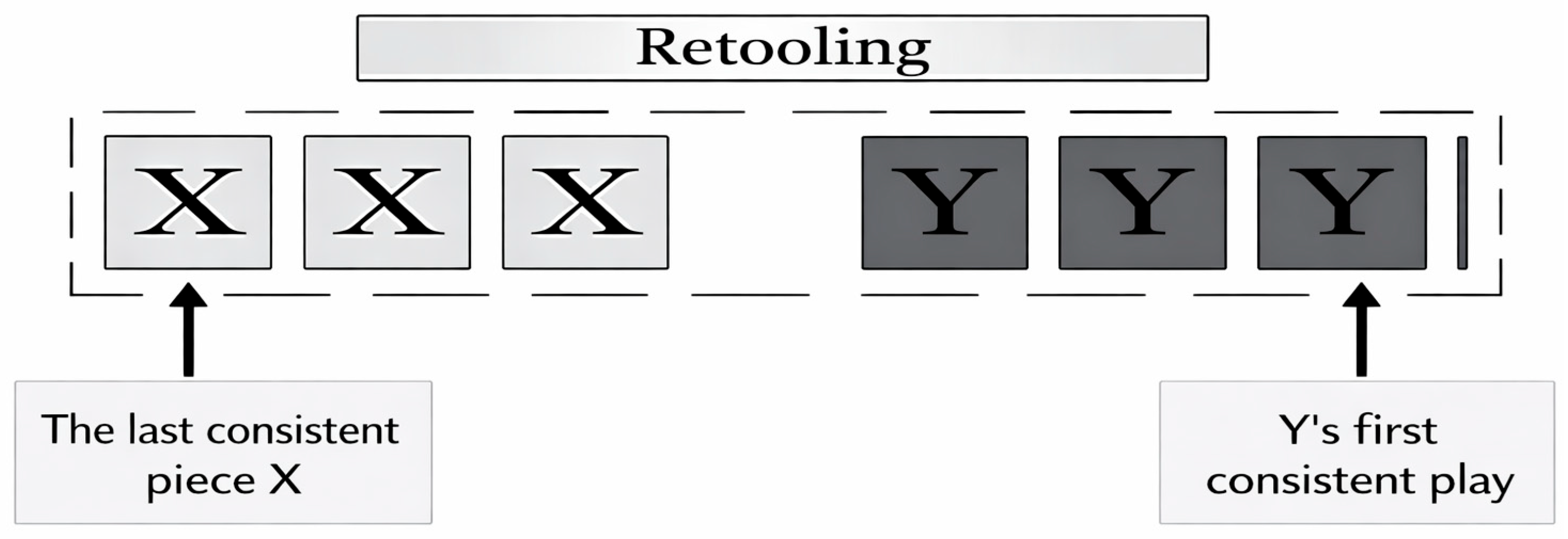
29]. The classical definition of SMED, introduced by Shigeo Shingo in 1985, describes a changeover as the time elapsed between the production of the last good piece of a given product and the first good piece of the next product (
Figure 1). According to the ISO standard, this concept refers to the reconfiguration of production resources to manufacture a different product batch or product type [
3]. Changeover operations themselves are not part of the value-adding process and do not contribute directly to the final product. Therefore, an essential aspect of optimizing the functioning of a production system lies in minimizing or shortening changeover times.
Retooling directly affects the time frame of the production process, including the start and completion dates of individual operations. Depending on the applied technology and the specific nature of the process, such activities may last from several minutes to even several days [
30,
31,
32]. Under these conditions, efficient planning and execution of changeovers have a direct impact on on-time deliveries, production costs, and the company’s ability to respond flexibly to fluctuations in orders and customer requirements [
33,
34,
35]. In the context of production planning, it is essential to establish the relationship between changeover time and production batch size. Reducing changeover duration allows for better utilization of available machine and workstation time. However, in the case of equipment characterized by a high variety of operations, excessively small production batches may result in an overly large share of changeover time in the total workload of the station or machine. This, in turn, may lead to a situation in which the planned production cannot be completed within the available working time of the equipment [
36,
37,
38,
39]. As a consequence, frequent or poorly optimized changeovers cause significant disruptions to production schedules, increase unit production costs, and negatively affect efficiency indicators as well as the enterprise’s ability to meet delivery deadlines [
40,
41,
42].
One of the key challenges associated with changeovers is their standardization and optimization. The most commonly used metrics in this context are Value-Added Time and Lead Time. The first metric refers to the time that directly contributes to the creation of value perceived by the customer. In this case, the retooling method may influence the quality of the final product. Lead Time, on the other hand, represents the total time required for a single part to pass through the entire process—from its beginning to its completion. This value is determined by measuring the product’s entry and exit times from a given process segment [
43,
44]. Retooling operations result in a temporary interruption of the operations which in turn affects the utilization of available machine working time. A common measure used to assess this parameter is the Overall Equipment Effectiveness (OEE) index, which quantifies production losses caused by unplanned events such as unplanned downtime, non-conformities, reduced quality, and variations in machine availability or performance efficiency. The OEE indicator makes it possible to evaluate production capacity, monitor and improve the performance of machines and processes, as well as identify the potential production losses resulting from quality issues, machine failures, and tool breakdowns [
45,
46]. However, the OEE metric does not allow for the identification of specific errors occurring during changeover operations—errors that influence not only the duration of the changeover itself, but also problems that may emerge in subsequent production stages. This limitation can be addressed by introducing a Changeover Quality Indicator, which takes into account factors such as [
47]:
- -
assessment of changeover execution—evaluation of individual activities in accordance with the adopted standard. This element directly reflects the quality of changeover implementation and can be supported by additional analytical tools, such as the Failure Mode and Effects Analysis (FMEA),
- -
share of activities consistent with the adopted standard—determination of the proportion of operations performed during retooling in compliance with established procedures and technological assumptions at a given stage of the process. This criterion makes it possible to assess the extent to which the changeover aligns with the intended standards,
- -
complexity level of machine setup—evaluation of task complexity, taking into account variations between simple, repetitive activities and operations requiring a higher level of skill, precision, or technical expertise. This demarcation facilitates a more accurate classification of changeovers according to their difficulty level,
- -
changeover time—inclusion of this parameter enables a more comprehensive assessment of how individual activities influence the overall effectiveness and efficiency of the retooling process.
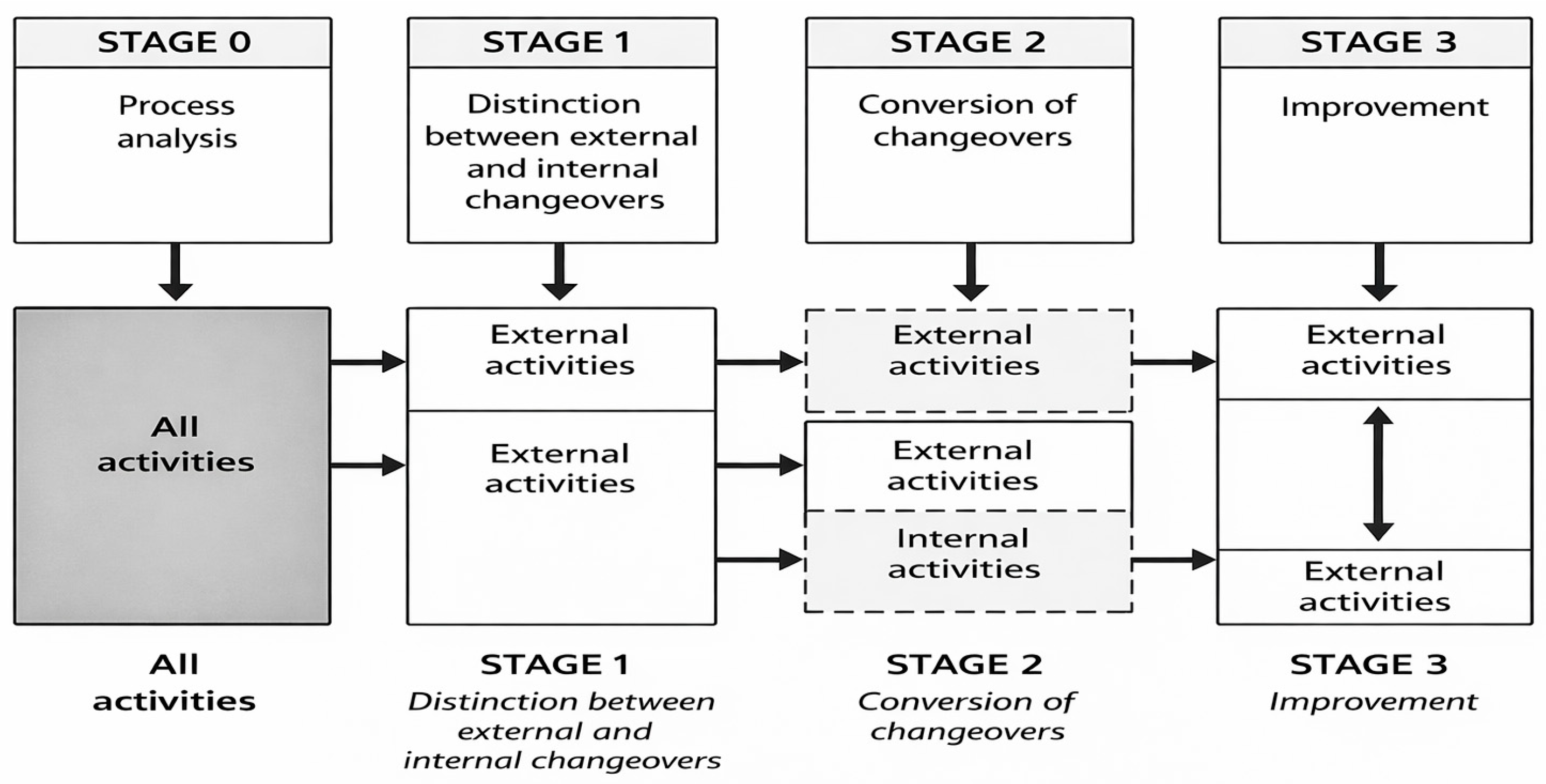
The SMED methodology consists of four stages of improving the changeover process (
Figure 2).
The SMED method is one of the most effective tools within the Lean Manufacturing philosophy, bringing both economic and organizational benefits. The implementation of Lean tools contributes to improved productivity and quality, while simultaneously reducing costs and waste. SMED is not merely a technique for shortening changeover time but also a fundamental element of the philosophy of continuous process improvement. In Lean Manufacturing, the primary function of an enterprise is to utilize available resources in the most optimal manner. The activities undertaken within this philosophy aim to eliminate waste in the form of non-value-adding actions and processes, not only in relation to the quality performance of an enterprise or institution, but also in the creation of the final product or service. This approach is characterized by reduced resource usage in the workflow compared to traditional manufacturing methods. The Lean concept does not refer solely to production itself; it encompasses the pursuit of excellence across all organizational processes. However, the implementation of the Lean Manufacturing philosophy, despite offering numerous improvements and measurable benefits, also presents certain challenges for enterprises seeking to adopt the lean management approach. The process of implementation requires significant time and financial investments, both during the preparation and the execution stages. It also entails a comprehensive analysis of the company’s organizational structure, production-related processes, and the operational models of supporting departments.
The concept of the CE refers to a systemic approach aimed at minimizing resource input, reducing waste generation, and extending the lifecycle of products, materials, and equipment. According to widely recognized frameworks, such as those proposed by the Ellen MacArthur Foundation, circular strategies can be categorized into actions such as narrowing resource loops (increasing resource efficiency), slowing loops (extending product and equipment life), and reducing system losses through improved organization and process design.
In the context of manufacturing systems, the application of Lean Manufacturing tools particularly the SMED methodology—can be directly associated with these CE principles. However, to ensure conceptual clarity, it is necessary to explicitly define how SMED activities contribute to circularity.
In this study, SMED-related improvements are interpreted through the lens of CE as follows:
Reduction in material consumption, energy use, and waste generation achieved through shorter changeover times, elimination of unnecessary movements, and improved process organization.
Increased reuse of tools and equipment, improved maintenance practices, and reduced wear resulting from standardized and more controlled changeover procedures.
Conversion of internal activities to external ones, standardization of operations, and improved workflow organization, leading to reduced downtime and more efficient utilization of production resources.
Based on this framework, selected performance indicators used in the study—such as changeover time, material consumption, waste generation, tool reuse rate, and estimated energy consumption are interpreted not only as operational metrics but also as proxies reflecting CE performance.
Recent studies emphasize the importance of integrating indicates potential improvements in energy efficiency considerations into production system analysis, highlighting both direct measurement approaches and indirect estimation methods based on process characteristics [
48].
This integrated perspective enables a more structured assessment of how SMED implementation contributes to both operational excellence and the transition toward more sustainable and resource-efficient manufacturing systems.
A review of the literature indicates that the SMED method is an effective and versatile tool for improving production processes. Its application leads to shorter changeover times, enhanced production flexibility, and more efficient utilization of resources. The literature also highlights the necessity of adapting the method to the specific characteristics of individual organizations and integrating it with other Lean tools. Furthermore, identified research gaps particularly those related to the long-term sustainability of SMED outcomes and the incorporation of digital technologies underscore the need for further empirical studies in this area.
3. Materials and Methods
The aim of this study is to develop and validate the Machine Retooling Process Improvement Model, a tool designed to enhance production efficiency using a case study from the automotive industry. The study focuses on identifying losses occurring during the changeover process and evaluating the effects of implemented improvement measures on key production performance indicators.
The research covers changeover processes of selected production machines used in serial manufacturing of automotive components. The scope includes:
- -
analysis of the current state of the changeover process,
- -
identification of factors affecting changeover duration and stability,
- -
development of a process improvement model,
- -
evaluation of implementation results under real industrial conditions.
The study was conducted in a single automotive enterprise operating under high product variety. A mixed-method approach was applied, combining qualitative and quantitative techniques, including:
Applied to conduct an in-depth analysis of the actual machine retooling process within the selected enterprise.
- 2.
Direct observation
Performed on the production floor during real changeover operations, allowing for the identification and classification of internal and external process activities.
- 3.
Analysis of production documentation
Included the examination of technological sheets, workplace instructions, production reports, and historical data related to changeover times.
- 4.
Measurement of working time
Time study techniques were employed to measure the durations of individual changeover operations both before and after the implementation of the improvement model.
- 5.
Semi-structured interviews
Conducted with machine operators, team leaders, and process engineers to identify organizational and technical issues affecting the retooling process.
The research applied an integrated methodological approach based on Lean Manufacturing principles, enabling the identification and elimination of waste within the analyzed workflow. The methods used allowed for a comprehensive assessment of the current state, diagnosis of the root causes of inefficiencies, and development of improvement actions.
Value Stream Mapping (VSM) was employed to conduct a detailed analysis of material and information flow throughout the production process. This method enabled a clear visualization of both the current state and the desired future state maps, in accordance with waste elimination principles. The VSM analysis identified process bottlenecks, unnecessary waiting times, overproduction, and areas requiring improvement in terms of workflow and work organization.
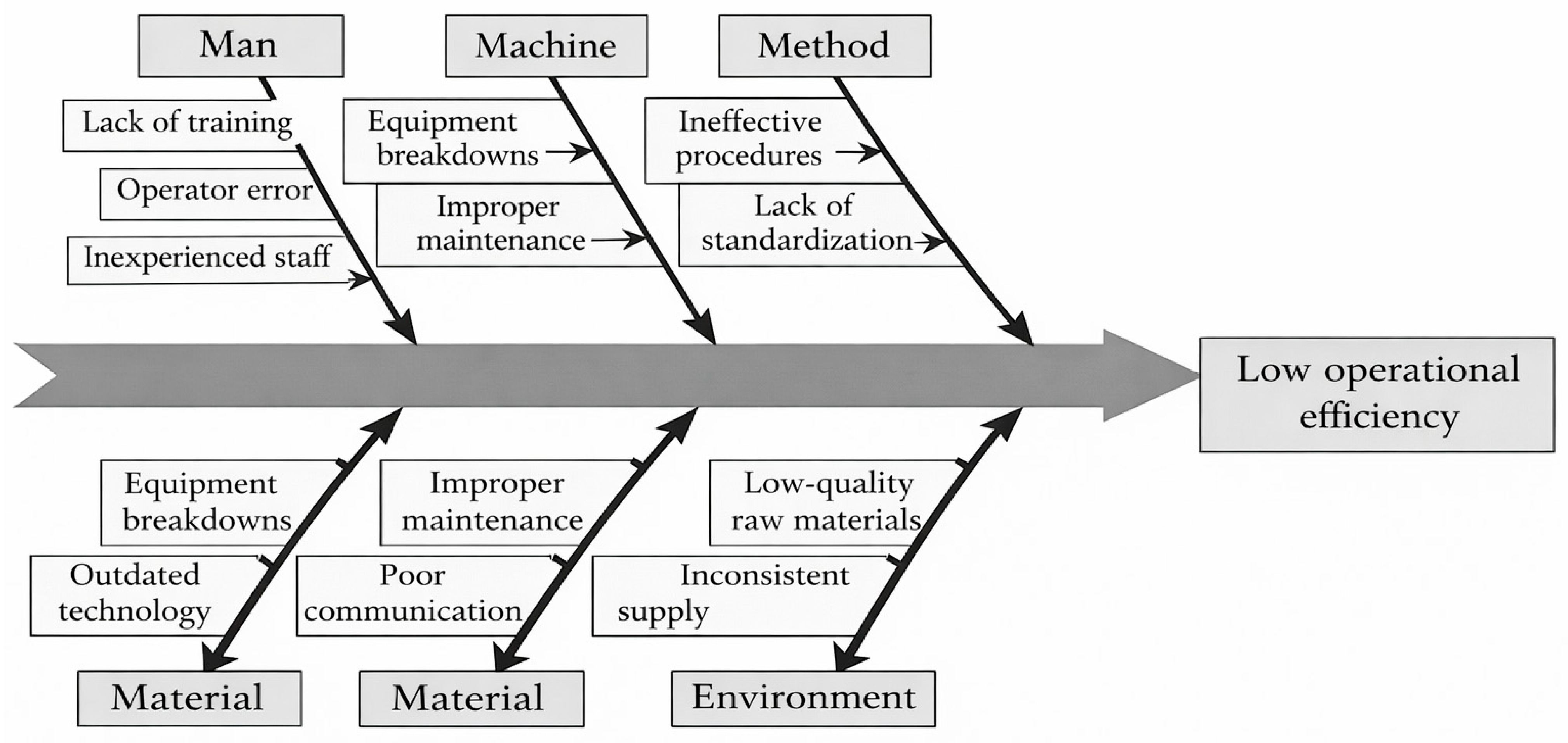
To determine potential sources of quality and process issues, a cause-and-effect analysis using the Ishikawa (fishbone) diagram was conducted. This method facilitated a systematic classification of influencing factors into six categories: Man, Machine, Method, Material, Environment, and Measurement. Through this structured approach, major risk areas and potential root causes of nonconformities were identified, providing a foundation for deeper investigation.
For critical problems identified during earlier stages of analysis, the 5 Whys method technique was applied to determine the root causes of inefficiencies. This method involves repeatedly asking the question “why?” to explore the underlying causes of a given issue [
49]. The results of this analysis supported the formulation of effective corrective and preventive actions, addressing the fundamental sources of the identified problems.
Based on the results of the analyses, standardized work procedures were developed for key production operations. The standardization process aimed to ensure task repeatability, minimize process variability, enhance operational safety, and facilitate effective supervision. The established standards also served as a baseline for continuous improvement and internal process audits.
All research and improvement activities were carried out in accordance with the Lean Manufacturing philosophy, emphasizing customer value creation, waste elimination, continuous improvement (Kaizen), and active employee involvement in problem-solving. The implementation of Lean principles contributed to overall process optimization, improved operational efficiency, and enhanced production stability.
The research process was carried out in the following stages:
Identification of the machine changeover process, classification of activities into internal and external categories, and determination of the main sources of losses.
- 2.
Designing the Retooling Process Improvement Model
Development of a model incorporating organizational, technical, and standardization changes, tailored to the specific characteristics of the studied enterprise.
- 3.
Implementation of improvement actions
Execution of the designed improvement measures in the production environment, including employee training and updates to operational documentation.
- 4.
Analysis of the future state (TO-BE)
Evaluation of the process following model implementation and comparison of results with baseline data obtained before the improvements.
The assessment of resource and energy-related aspects was based on process observation and indirect estimation methods. Energy consumption during changeover was approximated using machine operating time, operating states (active, idle, standby), and the typical energy demand of the equipment. No direct measurements of power draw (kW) or energy consumption (kWh) were conducted, as dedicated monitoring equipment was not used. Therefore, the obtained results should be interpreted as indicative rather than precise quantitative values.
Material use and waste generation were evaluated based on observed material flows and recorded losses during changeover activities, providing an approximate view of resource efficiency.
The analysis assumes that reducing changeover time shortens periods of non-productive machine operation, which are typically associated with unnecessary energy consumption.
The study followed an AS-IS to TO-BE approach. In the AS-IS phase, detailed time measurements and process observations were carried out, with activities classified into internal and external operations according to SMED principles. In the TO-BE phase, improvement actions were proposed, including the conversion of internal activities to external ones, task standardization, and organizational enhancements.
Analytical tools such as time study, process mapping, and SMED classification were integrated to identify inefficiencies, quantify improvement potential, and evaluate the effects of proposed changes. This approach enabled the linkage of operational improvements with selected resource-related indicators, interpreted in line with CE principles.
The research was conducted within a single company, which may limit the generalizability of the results. However, the applied methodology can serve as a foundation for further comparative studies in other automotive manufacturing plants.
4. Results
4.1. SMED Analysis in a Selected Enterprise
It should be noted that the improvements related to energy consumption are not based on direct measurements but are inferred from reductions in machine operating time during non-productive states, shorter changeover durations, and improved process stability. To effectively conduct a SMED analysis, it is essential first to understand the company’s operational processes—this constitutes stage 0 of the methodology. The wide range of products offered, tailored to customer requirements, and the variability of the processes performed, particularly in wire cutting and mechanical pressing operations, result in frequent machine and tool changeovers. Depending on the specific process components, machine parameter adjustments may take from several minutes to several hours. In the cutting area, each machine undergoes approximately 10 to 25 changeovers per day. The primary objective of implementing the SMED methodology is to reduce the production time of the selected project. The losses identified in this process include:
- -
lack of standardization of workstations,
- -
limited access to materials and work in progress,
- -
errors in recording the duration of the operation,
- -
errors in technical documentation and their limited availability,
- -
waiting for applicators, matrices,
- -
material shortages,
- -
excessive movement of operators,
- -
no standardized changeover cards.
Stage 1 of the analysis involved a detailed and systematic differentiation between external and internal activities within the sensor manufacturing process. The production of each sensor included several sequential operations: cutting the cable into two wires of varying lengths and insulation levels, installing the thermistor, securing the wires with heat-shrink tubing, crimping the connectors, assembling the product in its housing, and performing quality control. In the initial phase, the wires were cut and stripped to two specific lengths in accordance with the technical documentation. The insulation was then removed from the designated segments, and the exposed wire ends were tin-plated. Heat-shrink tubing was subsequently applied to the cable ends. The next stage involved assembling the thermistor by soldering the wire ends together. The opposite ends of the wires were cut and re-insulated to ensure compliance with the required parameters before attaching the connectors using a mechanical press. The completed assembly was then placed inside the sensor housing, after which functional verification and final quality control were performed. The cutting process, including preparatory operations and retooling, requires an average of 2 h and 38 min per production batch of 200 units of the specified sensor (see
Table 1). Retooling and machine preparation account for 1 h and 43 min, representing 65% of the total cycle time, of which 59% relates to potential internal retooling and 41% to external retooling activities [
50].
During the connector crimping stage, internal changeovers represent 73% of the total cycle time, indicating a significant potential for optimization through the conversion of internal activities into external ones (
Table 2).
Reduced changeover time decreases the duration of machine idling and non-productive operation, which is typically associated with unnecessary energy consumption. Therefore, the observed operational improvements can be linked to a potential reduction in energy use.
The analyzed workflow is characterized by considerable complexity and time consumption. Differentiating the activities involved in retooling and preparing workstations constitutes the foundation for streamlining the production cycle by enabling the simultaneous execution of external and internal operations.
Stage 2 of the SMED methodology focuses on further reducing total changeover time by transforming internal activities into external ones. At this stage, operations are performed in parallel and do not require stopping the machine. In the analyzed process, this can be achieved by inserting the cable into the machine before the completion of all adjustments. Additionally, cutting heat-shrink sleeves to the required lengths can be performed manually using a dedicated guillotine, thus eliminating the need for double retooling of the machine. This transformation reduces the proportion of internal operations within the process structure. The prepared heat-shrink tubing is then attached to the remaining components, which are subsequently transferred to the following stages of production.
Stage 3 of the SMED methodology emphasizes the reduction in the duration of internal activities and the elimination of waste identified during Stage 0. At this step, the analysis extends beyond the classification of activities to include the implementation of targeted improvement measures designed to permanently reduce changeover times and increase process stability and repeatability.
The first area identified for improvement was workstation organization. The production plant employed a system of individual tool kits carried by operators between work areas. This approach caused difficulties in monitoring tool wear and led to work interruptions due to the need to replace or retrieve missing equipment. The corrective measure introduced was the implementation of the 5S standard, which involved equipping each workstation with all tools necessary for assigned operations, systematizing the arrangement of elements, ensuring compliance with established standards, and applying maintenance control to monitor tool condition and wear.
Another significant source of time deviations was the occurrence of errors in recording the duration of operations. Until now, the measurement of process times at various manufacturing stages had been performed by scanning a barcode at the beginning and end of each operation. However, varying distances between workstations and the login area, as well as queues forming at the start and end of shifts, resulted in systematic inaccuracies in performance analysis and subsequent difficulties in production scheduling. The implemented improvement involved the even distribution of additional scanners and computers across work areas, enabling real-time recording of operation durations and eliminating waiting times associated with login queues.
Another factor contributing to extended changeover times was the inadequate organization of applicators and dies. Due to their large quantity and varying frequency of use, operators encountered delays in locating the appropriate tools or in waiting for their return from other areas. These issues stemmed from the dispersed storage of tools and the absence of a usage register. The introduction of a centralized applicator tracking system and the relocation of tools to standardized, clearly marked storage areas allowed for more efficient changeover planning and significantly reduced waiting periods.
Additionally, the component distribution method underwent process improvement. Previously, connectors, fittings, and housings were delivered to a common shelf from which operators individually retrieved materials. This approach complicated component identification, prolonged retrieval times, increased the risk of assembly errors, and led to unnecessary operator movement. The introduction of material delivery directly to designated boxes assigned to individual production orders (ZP), along with the organization of the work-in-progress warehouse according to the FIFO (First In, First Out) principle, eliminated material retrieval time and minimized downtime resulting from temporary component shortages.
Material shortages represented an additional barrier to production efficiency and were primarily caused by errors in recording material losses by operators. Inaccurate or incomplete reporting led to discrepancies between actual and recorded inventory levels, generating unplanned downtime. The implementation of comprehensive training programs focused on proper reporting procedures, together with the requirement to verify material availability at the end of each operation, significantly reduced the occurrence of unexpected shortages and improved workflow continuity.
Significant problems were also identified in the area of technological documentation. The operating instructions were available in a limited number of copies, often insufficient relative to the frequency of production. The need to search for the appropriate documentation or remove it from an ongoing process caused unnecessary downtime. Furthermore, the absence of a register for monitoring the location and availability of individual documents contributed to operational inefficiencies. The implementation of a documentation management system, combined with an increased number of copies adjusted to process frequency, reduced production delays and enhanced overall organizational flow.
Excessive operator movement was another key source of inefficiency. The standardization of workstations, ensuring full accessibility of components and documentation at the production order (ZP) level, together with the proper organization of the material storage area, significantly reduced production interruptions and movement-related losses.
The final improvement introduced was the implementation of changeover cards and checklists that clearly define the sequence of operations and allow verification of their completion. The previous lack of such standardization often led to the omission of crucial steps when setting machine parameters, extending changeover time due to incorrect execution order. The introduction of these control tools, combined with operator training, increased process repeatability and minimized the occurrence of errors. Incorporating calibration measurements into the standard conversion procedures further shortened the adjustment stage.
The implemented measures also extended to the area of quality control and the verification of production parameters at each stage of the manufacturing process. The unification of measurement methods through dedicated training sessions for newly employed operators, the development of detailed measurement instructions, and the preparation of standards for more complex products resulted in a significant reduction in the time required for corrections. These improvements reduced the need for manual cable trimming and insulation correction, thereby improving process repeatability and production stability.
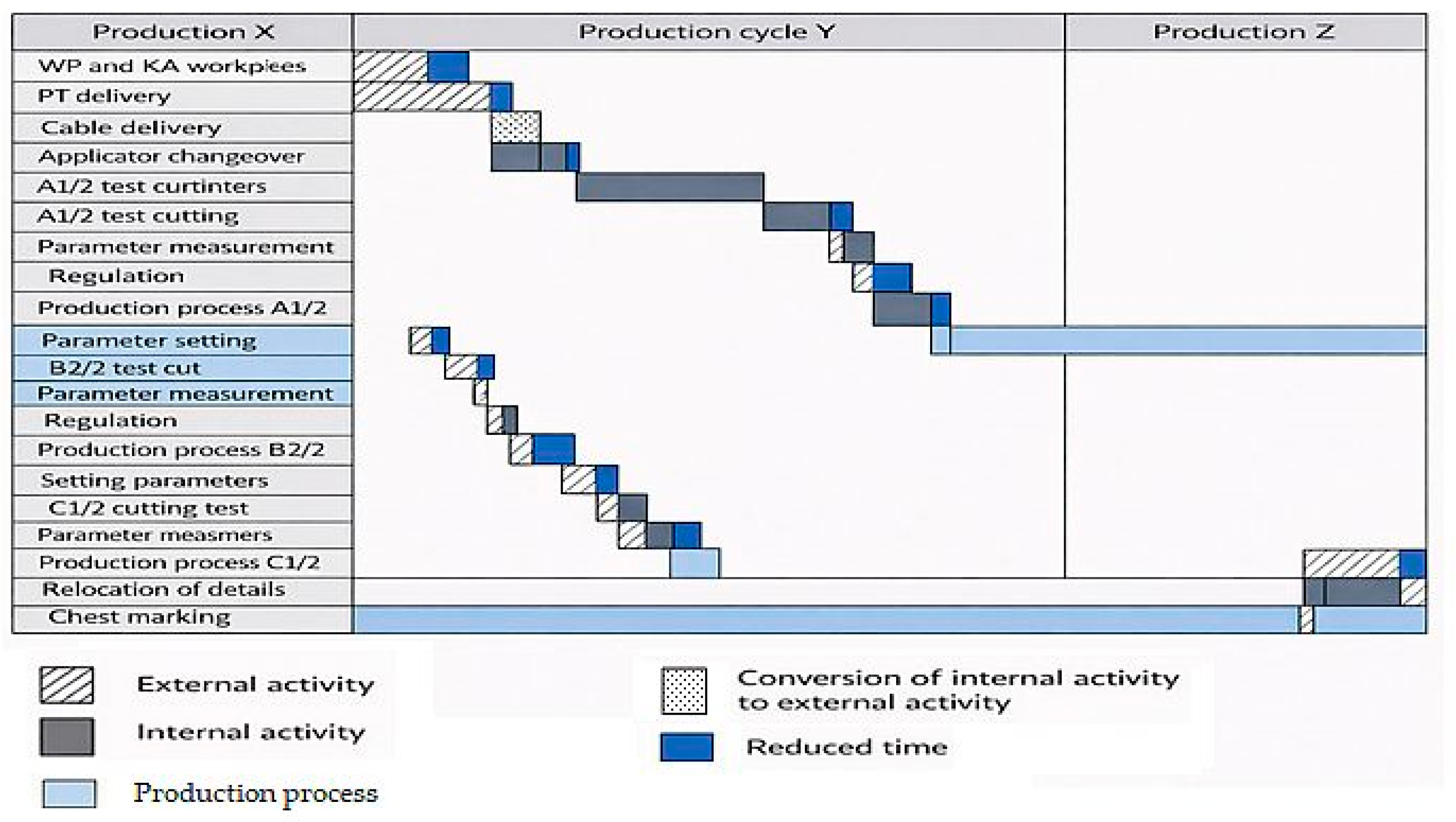
The application of the SMED methodology enabled a lasting reduction in the duration of internal operations and the elimination of numerous organizational barriers that contributed to process inefficiency. The improvements encompassed technical, logistic, and organizational domains, leading to increased process repeatability, enhanced stability, and a notable reduction in changeover time. The systematic implementation of SMED allowed for a substantial decrease in the duration of operations associated with the component cutting process. By performing internal and external activities simultaneously, the total cycle time was reduced to 86 min (
Figure 3), representing a reduction of 72 min compared to the state prior to SMED implementation.
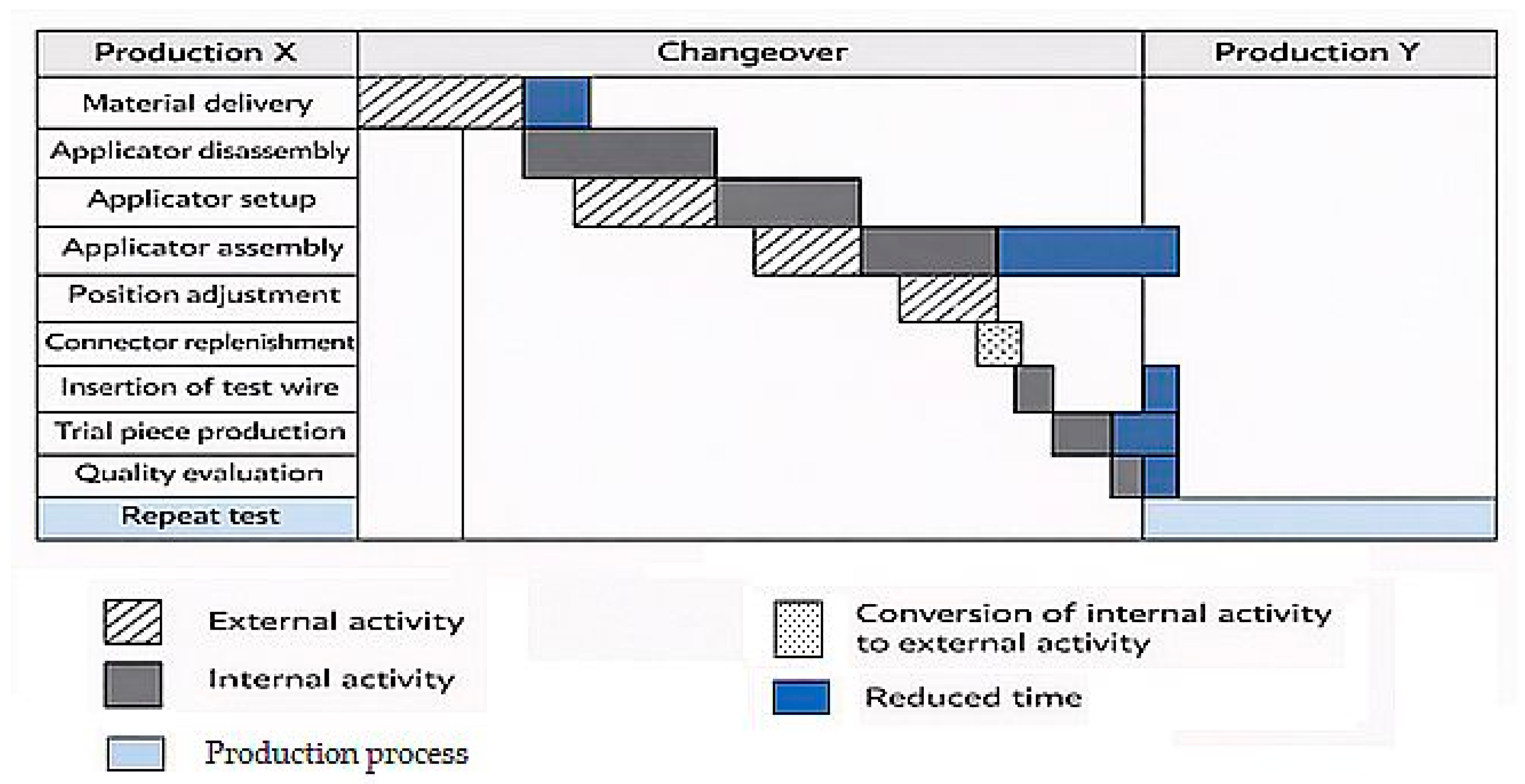
The achieved reduction clearly demonstrates the effective transfer of a substantial portion of operations to the domain of external activities, resulting in a significant improvement in the overall efficiency of the retooling process. A comparable enhancement was observed in the case of retooling the mechanical press, where the station calibration time was reduced by 11 min [
50]. At present, a single changeover cycle lasting 30 min consists of 67% internal activities, representing a 7% reduction compared to the initial condition (
Figure 4).
4.2. SWOT Analysis
To comprehensively evaluate the benefits of implementing the SMED methodology in manufacturing enterprises, a SWOT analysis was conducted (
Table 3). SWOT is used here as a complementary interpretative tool.
The SWOT analysis is based on empirical observations and results obtained from the implementation of the SMED methodology in the analyzed production process.
The SWOT analysis is a proven diagnostic and strategic management tool, widely applied across various economic sectors. It enables the identification of the strengths and weaknesses of a given process, while also determining the opportunities and threats associated with its implementation. The greatest advantages of utilizing the SMED methodology in manufacturing companies lie in its direct and measurable impact on manufacturing systems improvement. Reducing changeover time between production runs increases machine availability and minimizes losses related to downtime. As a result, production lines and workstations dedicate a greater portion of their operating time to value-adding activities rather than preparatory tasks. Shorter machine setup times also provide greater flexibility in production scheduling, allowing companies to efficiently transition from mass production to smaller, more diversified production batches. This flexibility enhances the company’s ability to respond to changing customer needs and strengthens its competitive market position. Reducing batch sizes further contributes to lower inventory levels and a decrease in work-in-progress (WIP). The reduced necessity to maintain large buffers of components for mass production minimizes storage requirements and facilitates a smoother flow of materials throughout the operations. Additionally, workspace standardization combined with the application of other Lean tools enhances workplace safety by organizing workstations and eliminating unnecessary items. A well-organized workstation allows operators to locate tools and spare parts quickly, reducing assembly or adjustment errors and improving operational efficiency. The implementation of SMED requires cooperation and active engagement from employees across different departments, thereby fostering a company culture based on teamwork, collaboration, and continuous improvement.
However, the process also entails significant initial costs during the early stages of implementation. Expenses related to employing or appointing experts, providing training, conducting measurements, redesigning workstations, and purchasing auxiliary equipment represent a considerable investment for the organization. Furthermore, organizational changes based on standardization and workflow modification often encounter resistance from employees, particularly from those directly involved in workflow. The implementation of SMED is complex, requiring detailed analysis, measurement, observation, and systematic recording of activities. Proper process standardization depends on the accurate classification of setup activities into external and internal operations. Importantly, SMED is not a one-time initiative—it demands ongoing supervision, evaluation, and continuous improvement to maintain its effectiveness.
SMED remains one of the most effective tools within the Lean Manufacturing framework, offering both economic and organizational benefits. Its application contributes to increased productivity, improved product quality, cost reduction, and the elimination of waste. SMED should be understood not merely as a technique for reducing changeover time but as a fundamental element of the broader philosophy of continuous process improvement. The implementation of the Lean Manufacturing concept, despite bringing numerous operational improvements and organizational advantages, may also pose certain challenges and drawbacks for enterprises seeking to fully integrate lean management principles into their operations (
Table 4).
The process of implementing the Lean Manufacturing concept involves substantial time and financial investment, both during the planning and execution stages. Successful implementation requires an in-depth analysis of the company’s organizational structure, production-related processes, and operational patterns within supporting departments. To ensure effective deployment of Lean initiatives, it is essential to employ a dedicated team of Lean Manufacturing specialists or appoint qualified personnel from within the existing organizational structure.
In many cases, the introduced changes face resistance from employees, which can directly affect the efficiency and overall success of the implementation process. Additionally, significant cost reduction efforts may limit the company’s flexibility in responding to dynamic market conditions. Waste elimination initiatives may also entail workforce optimization, which can influence employment levels. Despite these challenges, Lean Management fundamentally focuses on waste elimination, quality improvement, and process optimization factors that enhance the competitiveness of manufacturing enterprises. Minimizing losses and unnecessary costs translates into savings in time, labor, and production resources, directly improving the organization’s operational flexibility. Moreover, employee involvement in innovation and improvement activities fosters a culture of collaboration and partnership, strengthening morale and organizational commitment.
Enterprises managed according to the principles of Lean Manufacturing are characterized by high flexibility, process integration, and strong orientation toward value creation. Dominant features include short production cycles and smaller production batches, made possible by the reduction in changeover times through Lean tools such as SMED. Technological processes are continuously optimized, and material supply chains are based on long-term cooperation with a limited number of carefully selected suppliers, verified through regular audits. Raw materials are delivered on a Just-in-Time (JIT) basis, which allows components to be transferred directly to production or stored for minimal periods, resulting in significantly reduced inventory holding costs. Furthermore, customer and supplier participation in the improvement and innovation process strengthens relationships throughout the value chain.
Organizations operating under the Lean philosophy typically have a flat organizational structure characterized by reduced hierarchy, minimal formality, and decentralized decision-making. Management emphasizes support, cooperation, and teamwork. Rotation across positions and departments, along with continuous employee skills development, are common features that contribute to organizational adaptability. In contrast, traditionally managed enterprises tend to focus on stability and control of operations. The Lean Manufacturing philosophy, however, prioritizes flexibility and the maximization of added value while systematically eliminating waste. As a result, Lean Management enables companies to dynamically and effectively respond to evolving market demands.
4.3. Lean Manufacturing Tools to Eliminate Waste
The 5 Whys method was applied as a structured root cause analysis tool to identify the key factors affecting excessive machine retooling time in an automotive manufacturing enterprise. The method is based on systematically asking the question “Why?” to trace operational problems back to their fundamental causes, allowing targeted and effective corrective actions to be defined.
Step 1—Problem Definition (the first why)
Problem:
Machine retooling time is excessively long, reducing production availability and overall equipment effectiveness (OEE).
Why?
Because retooling activities frequently exceed the planned time standards and cause unplanned downtime.
Step 2—Identification of Direct Causes (the second why)
Why do retooling activities exceed planned time?
Because operators spend additional time on manual adjustments, tool alignment, and searching for the correct tools and documentation.
Identified direct causes:
- -
manual and non-standardized adjustment procedures,
- -
poor accessibility of tooling and fixtures,
- -
incomplete or unclear retooling instructions.
Step 3—Identification of Process-Level Causes (the third why)
Why are adjustments manual and procedures non-standardized?
Because retooling procedures differ between shifts and machines, and best practices are not formally documented.
Process-level causes:
- -
lack of standardized work instructions for retooling,
- -
high dependence on operator experience,
- -
absence of visual aids and setup checklists.
Step 4—Identification of System-Level Causes (the fourth why)
Why are standardized instructions and visual aids not available?
Because retooling process improvement has not been systematically addressed within the production management system.
System-level causes:
- -
no formal SMED or retooling optimization program,
- -
insufficient cross-functional involvement (production, maintenance, engineering),
- -
limited monitoring of retooling performance indicators.
Step 5—Identification of Root Causes (the fifth why)
Why has retooling optimization not been systematically implemented?
Because retooling was not previously recognized as a strategic factor influencing production efficiency and competitiveness.
Root causes:
- -
management focus primarily on production output rather than changeover efficiency,
- -
lack of KPI linkage between retooling time and overall production performance,
- -
insufficient training in continuous improvement tools.
Value Stream Mapping (VSM) was applied as a practical lean management tool to analyze, visualize, and improve the machine retooling process in an automotive manufacturing enterprise. The primary objective of using VSM was to identify non-value-added activities occurring during machine changeovers and to design an improved future-state process that reduces retooling time and increases production efficiency.
The VSM analysis focused on a selected production line characterized by frequent product changeovers and a significant impact of retooling time on overall equipment availability. The scope of the analysis included all activities performed from the completion of the last good product of the previous batch to the start of stable production of the next batch. Key elements analyzed:
- -
machine shutdown and preparation activities,
- -
tooling removal and installation,
- -
adjustments and test runs,
- -
documentation and approval activities.
A current-state value stream map was developed based on direct observations, time measurements, and interviews with operators, maintenance staff, and production engineers. The map captured both material and information flows related to the retooling process. The following parameters were recorded:
- -
total retooling time,
- -
internal and external changeover activities,
- -
waiting times and delays,
- -
number of operators involved,
- -
frequency of interruptions and rework.
The analysis revealed that a significant portion of retooling time consisted of non-value-added activities such as waiting for tools, searching for documentation, and repeated manual adjustments.
Using the VSM framework, waste (muda) occurring during retooling was systematically identified and categorized, including:
- -
waiting time caused by unavailable tools or maintenance support,
- -
unnecessary motion and transport of tools and fixtures,
- -
over-processing due to repeated trial adjustments,
- -
defects requiring re-adjustment or re-approval.
This step provided a clear, visual representation of bottlenecks and inefficiencies in the retooling process.
Based on the current-state analysis, a future-state VSM was developed to represent an optimized retooling process. Improvement actions were designed to eliminate or reduce identified waste. Key improvements included:
- -
separation of internal and external retooling activities in line with SMED principles,
- -
standardization of retooling procedures and setup parameters,
- -
implementation of visual instructions and tool organization systems,
- -
improved information flow and clearer responsibility assignment.
The future-state map demonstrated a significantly reduced retooling time and smoother process flow.
The improvement actions defined in the future-state VSM were gradually implemented on the selected production line. Retooling performance was monitored using key indicators such as:
- -
average retooling time,
- -
machine availability,
- -
production output per shift,
- -
overall equipment effectiveness (OEE).
Comparative analysis of the current and future states confirmed a measurable reduction in retooling time and an increase in production efficiency.
The Ishikawa diagram, also known as the Fishbone diagram, was applied as a structured tool to identify and categorize the potential causes of excessive machine retooling time in an automotive manufacturing enterprise. This method allows for a clear visualization of factors contributing to the problem and provides a systematic approach to designing targeted improvement actions.
Figure 5 presents the Ishikawa (fishbone) diagram used for root cause analysis.
The Ishikawa diagram provided a structured overview of root causes and their relationships, which complemented other tools such as the 5 Whys method and VSM. By combining these methods, the enterprise was able to reduce retooling time, increase machine availability, and enhance overall production efficiency.
4.4. Reorganization of the Production Plan
To improve the clarity of the production plan reorganization, the key scheduling changes introduced in the analyzed process are summarized below. The primary objective of the reorganization was to align production planning with SMED principles by minimizing the frequency and complexity of changeovers. This was achieved through several coordinated actions:
Production orders requiring the same or similar tooling, machine settings, or material types were grouped together. This reduced the need for repeated setup adjustments between consecutive jobs.
The production sequence was reorganized to ensure smoother transitions between operations, prioritizing jobs with minimal setup differences. This approach reduced unnecessary changeover activities and improved workflow continuity.
The scheduling of operations in different production areas was better aligned to avoid bottlenecks and idle times, contributing to more stable process flow.
By standardizing the sequence of operations and limiting abrupt changes in process parameters, the variability and duration of changeovers were significantly reduced.
These changes directly support SMED implementation by reducing both the number and duration of changeovers, which contributes to improved machine availability, smoother production flow, and the potential for reduced energy consumption due to shorter non-productive operating periods.
The implementation of the SMED methodology within the company—beyond improving the effectiveness of parameter adjustments and tooling changes—contributed to a general enhancement of operational efficiency. The previously discussed improvements in retooling processes within the cutting area and mechanical press represent only one component in the overall reduction in the manufacturing cycle time. The introduction of changes aimed at eliminating waste further shortened the production cycle across the entire assembly stage.
The introduction of universal workstations, where tools were organized in shared areas instead of individual operator sets, combined with the implementation of the 5S standard, enabled the replacement of outdated tools with limited precision and usability. These measures improved operations in Stage 32—the paper-cutting process—increasing productivity by 14% (
Table 5). Furthermore, the replacement of tools and the introduction of standardized measurement templates, both in the cutting area and in subsequent stages of the manufacturing process, as well as new product measurement standards, substantially reduced the need for wire re-cutting and paper trimming in stages 40 and 41. The efficiency of these operations increased by 25% (
Table 6). This standardization has proven to be particularly critical. Before its implementation, many cable harnesses required length adjustments after thermistor soldering, which prolonged the process and increased the risk of quality defects. The unification of measurement practices, together with systematic operator training, ensured dimensional accuracy in earlier process stages, thereby reducing the number of required corrections. Addressing the issue of extended operation-time reporting also led to measurable improvements. Reducing employee waiting times during data registration eliminated delays associated with operation reporting (e.g., wire tinning and soldering). Enhanced accessibility of scanners and reporting points shortened operation registration time by 15–20%, directly increasing the actual availability of machines for production work [
50]. The optimization of material transport between process stages was achieved by guaranteeing full material availability throughout the production cycle and improving the monitoring of actual inventory levels and work-in-progress. Consequently, the need for operators to search for components during operations was eliminated. These changes reduced downtime, increased material flow smoothness, and improved coordination between workstations. As a result of all implemented measures, the total sensor manufacturing cycle time was reduced by approximately 12–15%. The most significant improvements resulted from the reduction in changeover times and the enhancement of parameter control and assembly operations. Overall, the total efficiency of the process increased by 18–22%, confirming the effectiveness of comprehensive SMED and Lean Manufacturing implementation in a multi-product production environment [
50]. The integration of SMED principles with organizational process optimization not only shortened preparatory operations but also enabled the development of a stable, flexible, and efficient production system.
To improve the clarity of the results and distinguish between the effects of core SMED actions and supporting Lean and organizational interventions,
Table 6 presents an integrated overview linking each intervention to the specific performance indicators it influenced, including both operational and selected resource-related metrics.
As shown in
Table 6, the most significant reductions in changeover time are directly associated with core SMED actions, such as the conversion of internal to external operations and process standardization. In contrast, supporting interventions, including 5S, documentation improvements, and training, contribute to enhanced process stability, reduced variability, and lower resource intensity. It should be noted that resource-related indicators are partly estimated and reflect the combined effect of multiple improvements.
In manufacturing companies characterized by a high degree of product range variability, one of the key challenges lies in developing a production schedule that ensures a smooth material flow and minimizes downtime associated with frequent changeovers.
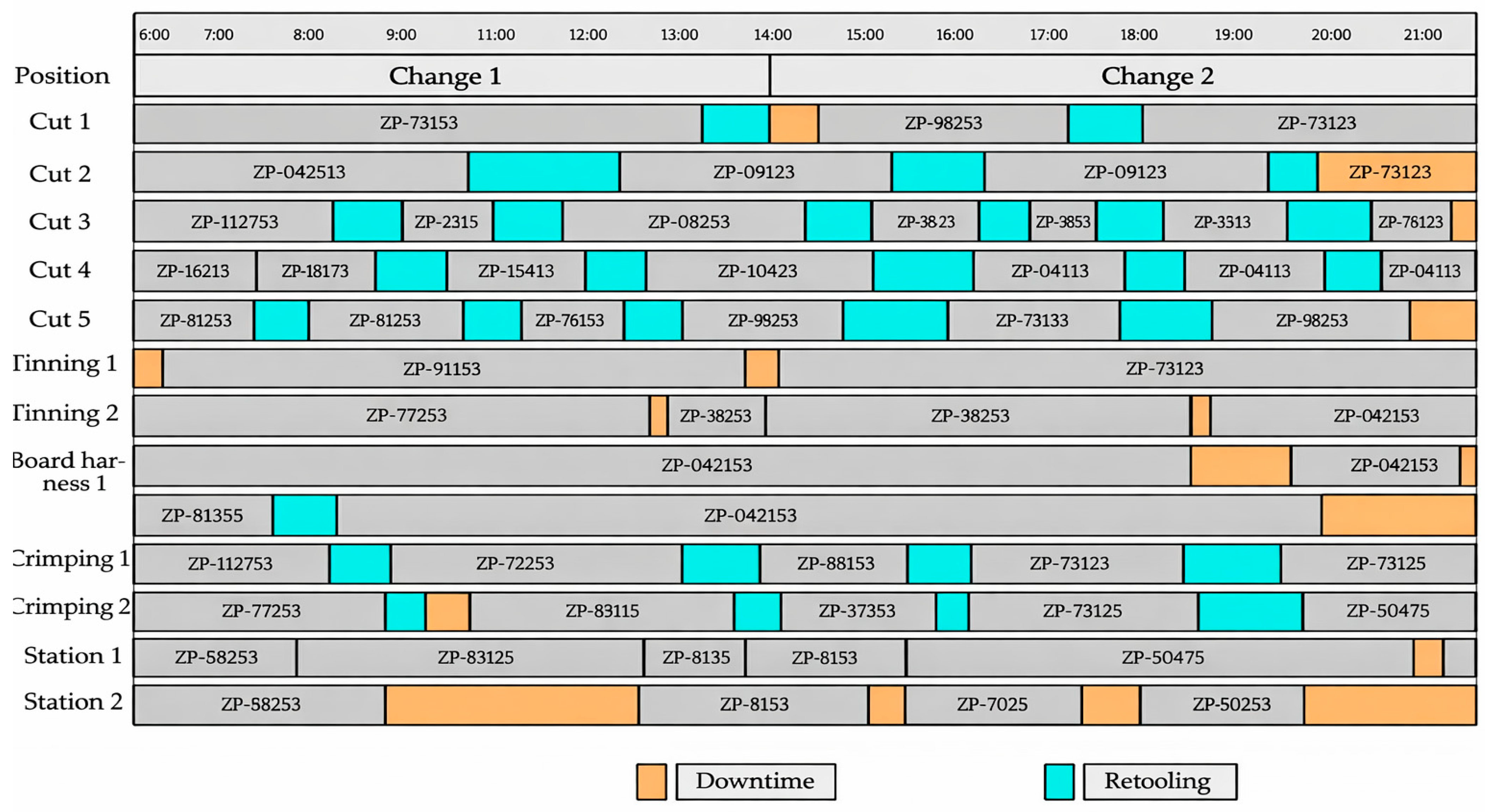
The second practical component of this study involved the reorganization of a multi-assembly production plan within the company following the implementation of the SMED methodology and the introduction of the ZP scheduling system. The effects of these improvements were analyzed by comparing two production schedules. The first represents the initial arrangement, illustrating the ZP system prior to the reduction in changeover times, process streamlining, and production grouping. The second schedule reflects the optimized system that resulted from applying SMED principles and improved production sequencing. The initial production schedule exemplifies an unstructured planning system, in which orders requiring identical machine setups were not grouped, and production batches involving different cable lengths were not organized in sequences that would minimize parameter adjustment time. This ineffective scheduling approach led to substantial time losses in the cutting area. In the analyzed case, changeover activities accounted for 22% of total machine operating time, while effective production represented 72%. The remaining 6% corresponded to idle periods resulting from insufficient time before the end of the shift to initiate another operation. These results indicate that a significant portion of available production time was lost due to inefficient task allocation and the absence of order grouping. Over the course of two production shifts, a total of 27 production orders (ZP) were completed.
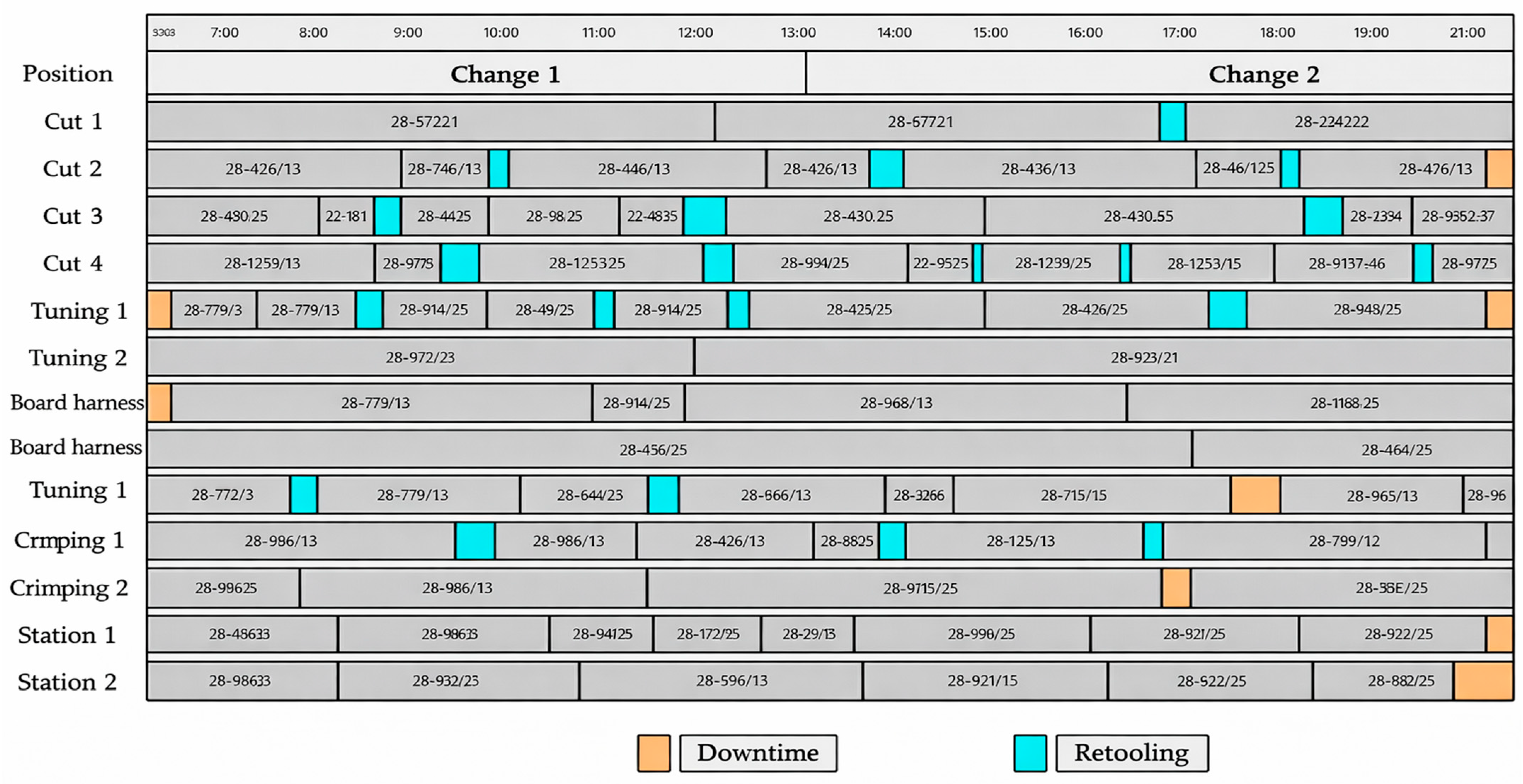
In the second production plan, a significant improvement in machine workload distribution was achieved. Production orders requiring identical processing parameters were grouped to minimize the number of machine changeovers, and the sequence of cutting operations within multi-operation orders was reorganized to reduce adjustment times. As a result of these improvements, the proportion of setup time decreased to 6%, while machine operating time increased to 93%, with only a negligible level of idleness observed. In total, 40 production orders (ZPs) were completed—an increase of 13 orders compared to the initial schedule—demonstrating the efficiency gains achieved through the integration of SMED principles and optimized production scheduling.
In the tinning area, process improvements achieved through the introduction of standardized measurements and control procedures, combined with enhancements in internal logistics and material flow, enabled secondary operations to begin immediately after the completion of wire cutting. In the initial production schedule, the duration of this operation and delays in material transport resulted in downtime and the incomplete execution of production orders ZP-5731/25 and ZP-560/25. By reorganizing the sequence of wire cutting for panel harness production and grouping two ZPs with identical process parameters, it was possible to commence the assembly of both orders within the same day, whereas in the previous plan only ZP-6241/25 had been initiated. In contrast, the lack of wire cutting for ZP-334/25 in the initial plan caused production downtime while awaiting the completion of preceding operations.
The revised schedule also optimized press operation times. The plan included seven mechanical press changeovers, with a total duration of 126 min. The overall share of these operations accounted for only 7% of total machine operating time, meaning that presses were actively engaged in production processes 93% of the time. In comparison, the original schedule required ten changeovers, representing 21% of machine time utilization, with actual production activity reaching only 77%. Prior to the implementation of the SMED methodology—intended to improve the workflow and reduce changeover time—the production schedule was characterized by a substantial share of non-productive operations. In the pre-reorganization plan (
Figure 6 and
Figure 7), changeover activities accounted for 12% of the total working time, while the actual product manufacturing cycle constituted 80%. The remaining 8% represented idle periods caused by inefficient task sequencing and the unavailability of required components.
Following the introduction of shorter changeovers, the elimination of identified forms of waste, and the grouping of production orders (ZP), measurable performance improvements were observed. The share of changeover time decreased by 9%, while the proportion of productive time increased by 15%. This improvement confirms the effectiveness of integrating the SMED methodology with optimized production scheduling [
50]. The combined approach directly contributed to enhanced resource utilization efficiency and a significant reduction in total order completion time.
To improve the clarity and consistency of the reported results, a summary of all key indicators, including baseline values, final values, units, and measurement basis, is presented in
Table 7.
As shown in
Table 7, the reported percentage changes are directly linked to their corresponding baseline values, units, and measurement context, which facilitates a more transparent and consistent interpretation of the results.
To ensure an appropriate interpretation of the findings, it should be emphasized that the results of this study are based on a single case study conducted in a specific production environment characterized by high product variability, serial production, and a particular organizational structure. While the observed improvements in changeover time, machine availability, and resource utilization demonstrate the effectiveness of the SMED methodology, their magnitude is influenced by the specific layout of the production system, the type of products manufactured (electrical harnesses), and the existing level of process standardization.
The improvements related to time reduction, production flow stability, and workstation organization can be considered broadly transferable to other multi-product manufacturing environments applying Lean principles. In contrast, the exact scale of energy savings, material efficiency gains, and tool utilization improvements may vary depending on plant-specific factors such as equipment configuration, workforce skills, and internal logistics organization.
5. Discussion
The results obtained in this study confirm that the implementation of the SMED methodology, supported by production sequencing optimization, leads to significant improvements in operational performance in multi-product manufacturing environments. The observed reduction in changeover time, increased machine availability, and improved production flow stability are consistent with the principles of Lean Manufacturing and findings reported in previous studies [
4,
9,
27,
36].
The magnitude of improvement identified in this research—particularly the substantial reduction in setup time and the increase in system efficiency—is aligned with earlier empirical evidence demonstrating that SMED implementation can significantly enhance Overall Equipment Effectiveness (OEE) and reduce non-value-added activities [
36,
37,
38]. However, in contrast to many prior studies that focus primarily on time and cost efficiency, this study extends the analytical perspective by incorporating selected resource-related indicators, including material consumption, waste generation, and estimated energy use.
A key contribution of this research lies in linking SMED methodology with circular economy (CE) principles. The findings indicate that process optimization aimed at reducing changeover time can simultaneously contribute to improved resource efficiency by minimizing material losses, reducing unnecessary handling, and stabilizing production processes. From a CE perspective, these improvements can be interpreted as actions supporting the narrowing of resource loops through increased efficiency, as well as reducing system losses through better process organization.
Importantly, the study also suggests a relationship between operational improvements and indicates potential improvements in energy efficiency. The reduction in changeover time leads to shorter periods of machine idling and non-productive operation, which are typically associated with unnecessary energy consumption. Although energy-related results in this study are based on indirect estimation rather than direct measurement, the observed trends are consistent with research indicating that process stability and reduced downtime contribute to improved energy performance in manufacturing systems [
48]. Therefore, the results should be interpreted as indicative of potential energy savings rather than precise quantitative values.
Despite these contributions, several limitations of the study should be acknowledged. First, the research is based on a single case study conducted in a specific automotive manufacturing environment, which may limit the generalizability of the findings. The scale of observed improvements depends on contextual factors such as production layout, product complexity, and the initial level of process standardization. Second, the assessment of energy consumption and selected resource-related indicators is based on indirect estimation methods, which introduces a degree of uncertainty in the quantitative evaluation. Energy-related results should be interpreted as indicative due to indirect estimation based on process time and operational parameters. Third, the implementation of SMED and supporting Lean tools requires organizational commitment, employee engagement, and continuous monitoring, which may vary across industrial settings.
These limitations indicate several directions for future research. Further studies should focus on validating the relationship between SMED implementation and indicates potential improvements in energy efficiency using direct measurement methods, such as real-time monitoring of power consumption. Comparative analyses across multiple industrial cases would also be valuable to assess the transferability and scalability of the proposed approach. Additionally, future research could explore the integration of digital technologies, such as Industry 4.0 tools, to enhance the monitoring, control, and optimization of changeover processes in real time.
Overall, the findings demonstrate that the integration of SMED with Lean Manufacturing and circular economy principles provides a promising framework for improving both operational and environmental performance in manufacturing systems. This integrated approach supports not only efficiency gains but also the transition toward more sustainable and resource-efficient industrial practices.
6. Conclusions
This study addresses the research questions by analyzing the impact of SMED implementation combined with optimized production sequencing in a multi-product manufacturing environment. The results demonstrate a significant reduction in changeover time from 120 to 75 min, an increase in machine availability from 65% to 80%, and improved production flow stability. The conversion of internal operations into external ones contributed to more efficient process organization.
The implementation of SMED and Lean Manufacturing tools resulted in a 12–15% reduction in total production cycle time and an 18–22% increase in overall efficiency. Production schedule optimization reduced the share of changeover time from 22% to 6% in the cutting area and from 21% to 7% in the mechanical press area, while machine operating time increased to 93%. The number of completed orders rose from 27 to 40, confirming improved capacity utilization.
The study identified key organizational and logistical inefficiencies, including insufficient standardization, limited access to technical documentation, and material flow issues, the elimination of which enhanced process consistency. Improvements in resource efficiency were also observed, including reduced material consumption and waste generation, along with a potential decrease in energy use due to shorter machine idle times.
The novelty of this research lies in integrating the SMED methodology with circular economy principles by linking operational improvements with resource- and energy-related performance indicators. In addition, the study combines process optimization with production scheduling, providing a more comprehensive approach to improving manufacturing efficiency in multi-product systems.
The results indicate that SMED, when combined with effective production planning, can support the development of more resource-efficient and flexible production systems.
Future research should include direct energy measurements and comparative analyses across multiple industrial settings to validate the relationship between process optimization and actual energy savings and to further assess its contribution to circular economy performance.
Limitations of the Study
Despite the contributions of this study, several limitations should be acknowledged. First, the research is based on a single case study conducted in a specific industrial context—automotive wire harness production, which may limit the generalizability of the results. Second, the study focuses on a particular type of manufacturing system, which may restrict its applicability to manufacturing environments with different levels of automation, product variability, or process complexity. Third, although the implementation of SMED resulted in measurable improvements, their long-term sustainability depends on adherence to standardized procedures, ongoing training, and organizational support. Finally, energy-related aspects were not directly measured; therefore, conclusions regarding indicates potential improvements in energy efficiency are based on indirect estimation and should be interpreted as indicative.




 ,
,