2.1. Scenario Description
The economic assessment in this study is conducted using the cost model developed within the INNWIND.eu framework [
1]. This model, designed by the INNWIND.EU consortium, is a widely recognized analytical tool that provides a comprehensive approach for evaluating the financial aspects of wind energy projects and has been extensively adopted in the wind energy research community.
The INNWIND.eu cost model estimates key economic indicators, including capital expenditure (CAPEX) and the levelized cost of energy (LCOE), which are widely regarded as essential metrics for assessing the economic viability of renewable energy installations. In this analysis, LCOE is selected as the primary evaluation indicator, as it effectively captures and compares the overall cost efficiency of different power generation technologies over their operational lifetime.
The cost model incorporates a wide range of input parameters. Turbine-related input parameters include rated power (kW), rotor diameter (m), maximum tip speed (m/s), hub height (m), rated wind speed (m/s), design wind speed (m/s), blade model, drivetrain model, tower model, offshore support structure type, and a reliability surcharge (%). In addition, wind farm-level parameters are considered, including total installed capacity (MW), wake losses (%), and electrical losses (%).
Within the model structure, total project costs are categorized into two main components: turbine-related (topside) costs and substructure and construction costs. The topside cost component is primarily derived from the wind turbine (WT) price, reflecting investments associated with turbine manufacturing and assembly. In contrast, substructure and construction costs are estimated based on the balance of plant (BoP) price, which includes expenditures related to foundations, electrical infrastructure, and installation processes.
Although the original cost model was initially developed based on cost data from 2002, updating was necessary to maintain relevance and accuracy under current market conditions. Accordingly, this study refines the model using the most recent available data from 2025, ensuring consistency with contemporary industry standards, material costs, and technological advancements. This update enables a more realistic and up-to-date economic evaluation of offshore wind energy projects.
The cost model analysis is performed using benchmark parameters derived from recent academic studies on floating offshore wind turbines. This approach ensures that the assessment is grounded in state-of-the-art methodologies and reflects the latest technological developments in floating offshore wind energy.
The foundation of the present analysis is informed by a comprehensive case study of a floating offshore wind energy system located in the Celtic Sea, as presented in [
15]. This study provides valuable insights into the practical and economic considerations associated with the deployment of next-generation floating offshore wind farms.
Although a substantial portion of the required numerical inputs could be directly specified and implemented within the INNWIND.eu cost model, several parameters required for a fully site-specific assessment could not be explicitly quantified at FEED level. While the present study considers a Korean floating offshore wind scenario, specifically offshore Ulsan, it does not aim to reconstruct a fully localized project-development or execution-phase cost model for that site.
Instead, the present study adopts a harmonized benchmark framework in which the key technology concepts under investigation—namely the 25 MW low-induction rotor (LIR) turbine and the hybrid floating substructure—are considered under Ulsan-oriented design conditions, while a common benchmark cost structure is retained for categories that cannot yet be robustly localized. In this sense, the Celtic Sea reference is not used as a one-to-one regional substitute for offshore Ulsan, but as a consistent techno-economic basis for comparative assessment.
In particular, the hybrid floater considered in this study is not a direct replication of the Celtic Sea reference floater. Rather, it is defined as a separate 25 MW hybrid semi-spar concept combining a steel hull, steel legs, and a concrete counterweight, reflecting the intended structural concept and installation philosophy of the Ulsan scenario. Where local estimation was possible, floater material quantities and manufacturing-related costs were estimated using the 2025 Korean standard construction cost basis.
By contrast, selected project-level and installation-related unit costs—such as common BoP, offshore logistics, and other execution-sensitive categories—were referenced from the Celtic Sea case study and adjusted where necessary to reflect the 1 GW, 40-turbine project configuration considered here. This hybrid use of localized and benchmarked inputs was adopted to preserve internal consistency across the four comparative cases. Therefore, the reported CAPEX and LCOE values should be interpreted as first-order comparative estimates under a common modeling basis, rather than as fully localized project quotations for offshore Ulsan.
Overall, the analytical framework employed in this study is based on the methodology of [
15] with necessary modifications introduced to reflect the unique context of a 25 MW hybrid offshore wind turbine. These adjustments are essential to accurately model the performance characteristics and cost structure associated with larger and more advanced turbine designs.
Table 1 reports the validation case study model inputs in Celtic Sea,
Table 2 reports the comparison between Celtic Sea and Ulsan, and
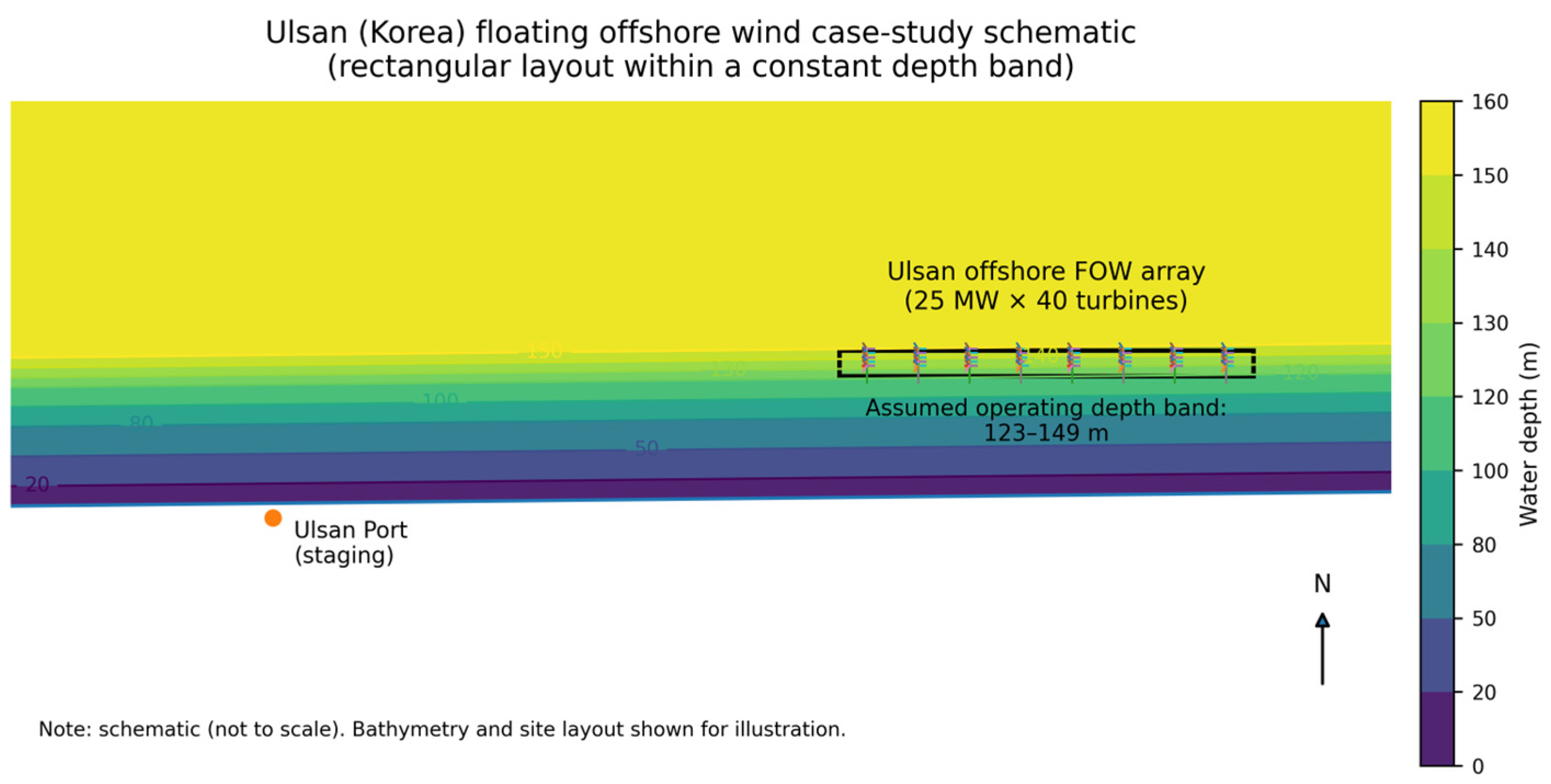
Figure 1 reports the Ulsan floating offshore wind case-study schematic.
2.2. LIR Rotor Model & Hybrid Floater Model Case Study with INNWIND Cost Model Input Parameter Setting
Economic performance in this study is evaluated using the INNWIND.eu (INNU) mass-and-cost model, which provides a consistent component-level framework to translate turbine and project input parameters into capital expenditure (CAPEX) and levelized cost of energy (LCOE) metrics [
9,
16]. The INNWIND cost model is implemented as an Excel-based tool that combines (i) generalized mass-scaling relations for major turbine subcomponents and (ii) cost formulations that convert mass and key design descriptors into component and total costs [
17]. In particular, the model supports upscaling by applying power-based scaling laws with technology-dependent exponents, while cost normalization across years is handled using a Producer Price Index (PPI) approach organized by NAICS categories—leveraging established parametric cost-scaling methodologies originally developed and validated in the NREL WindPACT/NREL cost and scaling model lineage (Chaviaropoulos et al., 2014; Fingersh et al., 2006) [
16,
18]. The model therefore enables transparent decomposition of cost drivers across rotor–nacelle–tower and other major contributors, and propagates these costs to an LCOE calculation under a consistent set of assumptions.
Importantly, INNWIND’s balance-of-plant (BoP) and OPEX treatments are intentionally simplified; accordingly, the framework is primarily intended for comparative assessment and “delta” (marginal) quantification of technology impacts, rather than for bankable absolute LCOE estimates [
19]. This positioning is consistent with how the model has been used in the literature, including system-level turbine redesign and multidisciplinary design studies that compute CoE/LCOE using the INNWIND cost model [
20], as well as offshore wind-farm design optimization studies where the capital cost formulation is explicitly adopted from the INNWIND cost model [
21]. In the present work, we adopt the INNWIND cost model as a unified reference framework to parameterize inputs and extract CAPEX and LCOE outputs, enabling a controlled comparison of (i) the LIR rotor parameterization, (ii) the steel–concrete hybrid floating substructure, and (iii) their combined effect.
Based on the configuration summarized in
Table 3, a total of four cases are analyzed in this study. The primary comparison focuses on Case 4 and Case 1, which correspond to the newly developed LIR rotor model combined with the hybrid floater design and the baseline configuration, respectively.
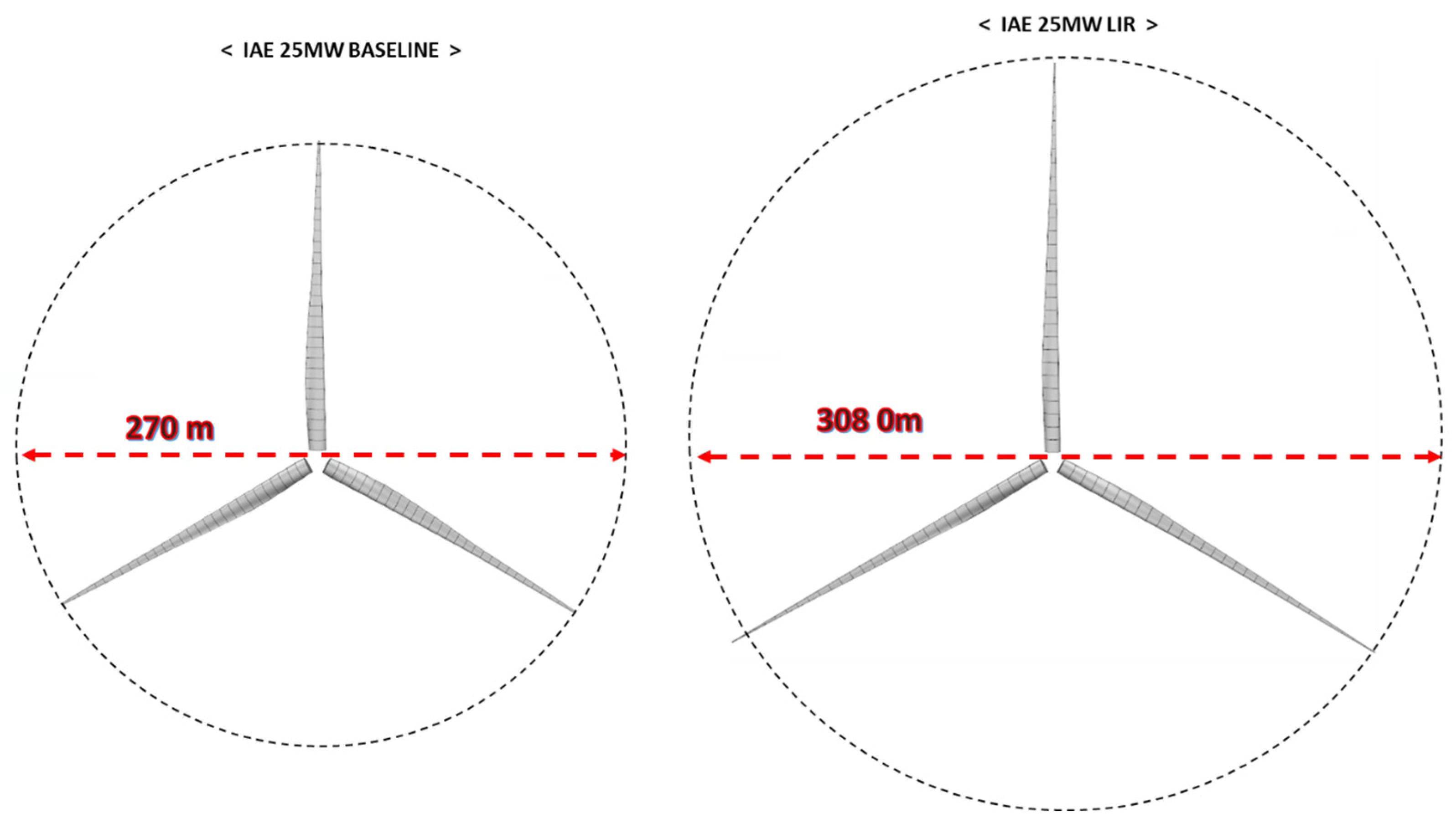
Figure 2 shows the designed Baseline and LIR rotors for 25 MW offshore wind turbines.
To minimize potential extrapolation errors in calculating the mass and cost of the 25 MW wind turbine, the IEA 15 MW RWT data was established as the baseline. For the capacity upscaling (from 15 MW to 25 MW), the component mass-cost relationships followed the cost-scaling methodology of NREL WISDEM, which shares the design philosophy of the INNWIND.eu model. Specifically, since the mass of key structural components like rotor blades and towers increase non-linearly, the built-in power-law scaling exponents were applied to derive an optimized design mass that satisfies dynamic behavior and structural load limits. This optimized mass was then used to estimate the final cost. The input parameters associated with the low-induction rotor are specified as follows in
Table 4.
To explicitly quantify the farm-level wake reduction benefits of the LIR technology, a wake superposition analysis was conducted prior to the economic evaluation using the NREL FLORIS open-source tool with the Gauss–Curl Hybrid model. A representative 5 × 5 square layout (25 turbines) was simulated. To ensure a fair comparison, the absolute distance between turbines was kept constant at 1890 m for both models. Consequently, the 270 m baseline rotor operated at a 7D spacing, while the 308 m LIR rotor operated at a relatively tighter 6.136D spacing.
Table 5 reports the quantified farm-level wake reduction benefits of the LIR technology. Despite this reduced relative spacing, the FLORIS simulation demonstrated that the LIR wind farm achieved an approximate 9.049% increase in Annual Energy Production (AEP) (Baseline: 2095.97 GWh > LIR: 2285.64 GWh). To account for uncertainties when scaling up to the target 40-turbine layout, a conservative 8% wake loss reduction (from a baseline of 18% to 10%) was adopted as the input parameter for the subsequent INNWIND economic evaluation.
In the original INNWIND (INNU) model, the substructure configuration is based on a 10 MW turbine design, and a direct cost-scaling pathway for a 25 MW floating system is not explicitly provided. In the present study, this gap is addressed by combining benchmark-derived common cost assumptions with an independently defined 25 MW hybrid floater concept. Specifically, floater material and manufacturing-related costs are localized using Korean standard construction cost data where possible, whereas selected shared installation and project-level categories are retained within the benchmark framework to ensure consistency across the compared cases.
With respect to the substructure, the baseline model employs a pure steel design, whereas the model developed in this study incorporates concrete components, which is expected to reduce the levelized cost of energy (LCOE).
To enable a consistent comparison between the baseline, LIR, hybrid, and combined cases, turbine, substructure, and construction-related costs are evaluated within the same accounting structure and techno-economic framework. This does not imply that the baseline case represents a literal Celtic Sea project or that the hybrid case represents a fully localized Korean FEED estimate; rather, all four cases are assessed as Ulsan-oriented comparative scenarios under harmonized benchmark assumptions.
The benchmark reference is used primarily to structure common installation, logistics, and BoP-type cost categories for which sufficiently reliable Korean project-level input data are not yet available. By contrast, the hybrid floater concept and its main material/manufacturing cost components are independently specified for the present 25 MW system. The final LCOE calculation therefore follows the updated INNWIND.eu-based framework used in this study, while the Celtic Sea case serves only as a consistent benchmark reference for selected shared cost categories.
The data presented in
Table 6 compare the cost structures of the baseline and LIR models, with particular emphasis on key differences in turbine supply and substructure material costs. The baseline configuration adopts a conventional steel-based substructure, whereas the hybrid model introduces a combined concrete–steel design aimed at achieving cost reductions.
Assuming that the turbine capacity is identical and that the layout within the wind farm remains unchanged, the manufacturing and installation costs of power cables, mooring systems, and substations are considered to be the same. However, due to the change in substructure, the displacement differs between the baseline and hybrid cases, with values of 29,695 tons and 31,213 tons, respectively—a difference of only 4.86%. Even when accounting for differences in substructure geometry, this marginal variation in displacement is not significant enough to require changes in the specifications of transport vessels. Therefore, the transportation and installation costs for the systems under comparison are also assumed to be identical.
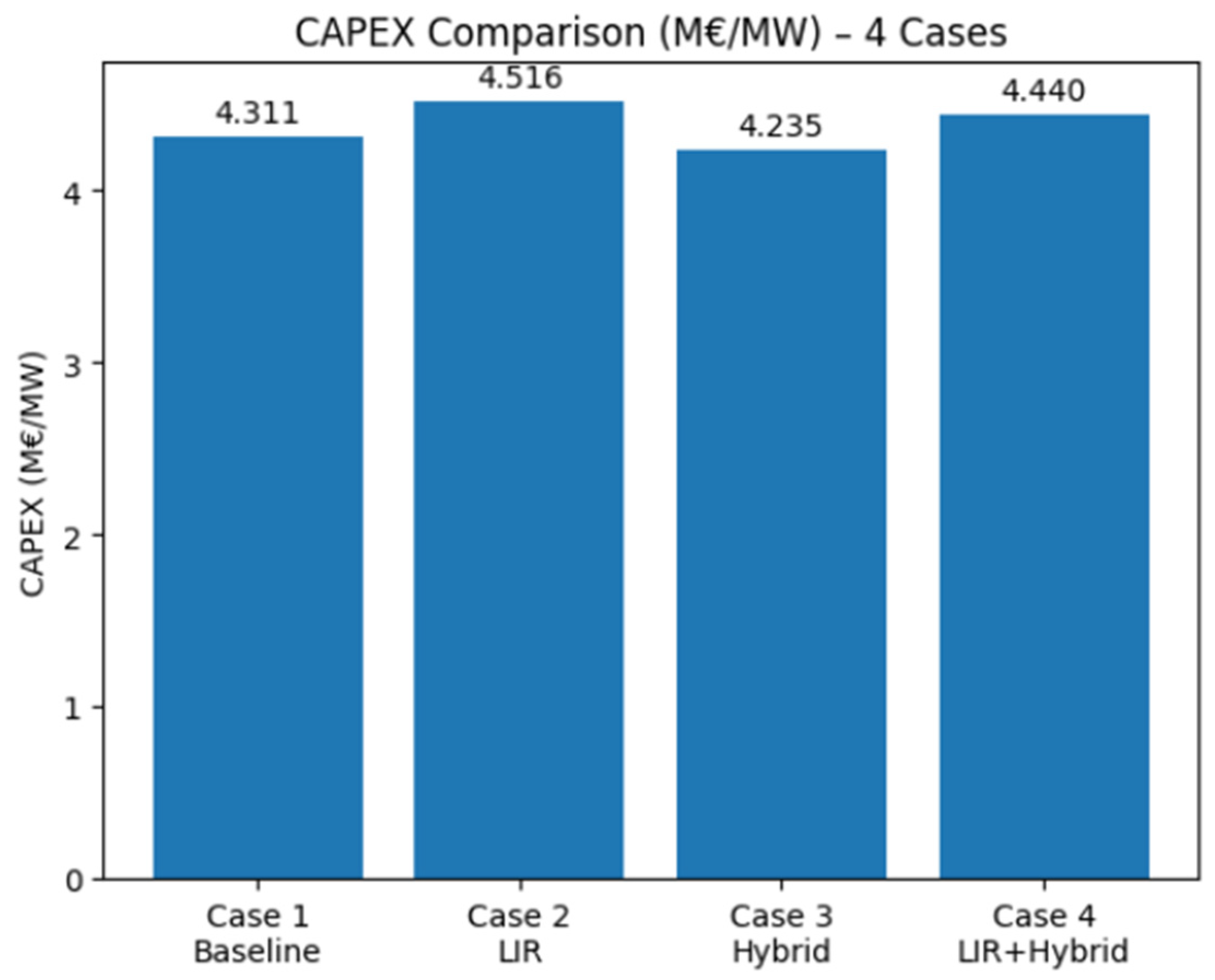
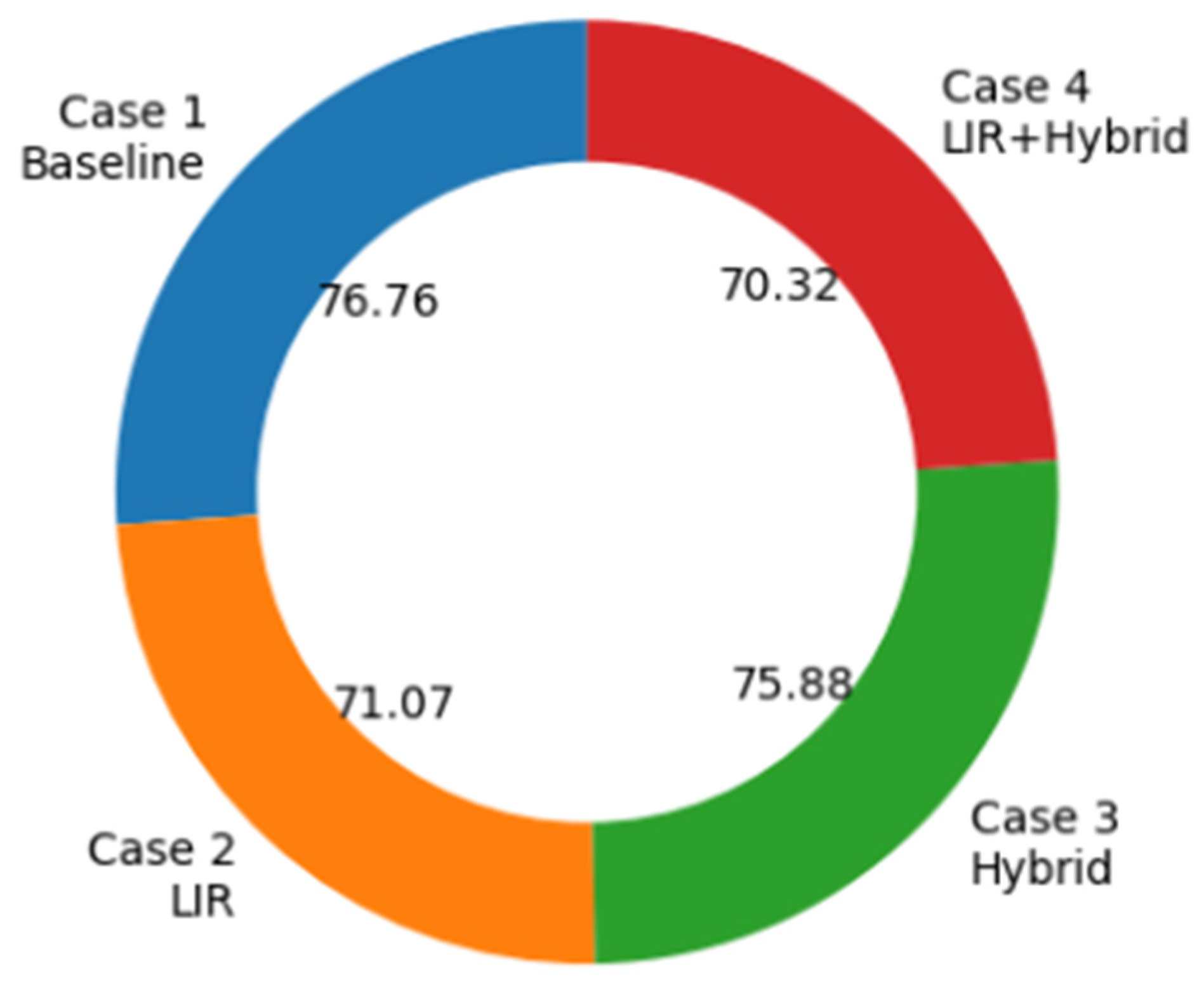
Table 7 reports the results of LIR model and Hybrid case in our 25MW LIR-Hybrid System using INNU cost model input parameters compared to those of Celtic Sea setting with baseline model (Plat-form-side).
2.3. CAPEX and LCOE Calculation from INNU Cost Model Method
Techno-economic performance in this study is evaluated using the INNWIND.eu (INNU) mass-and-cost model and its associated LCOE calculator. The framework provides a consistent, component-level decomposition of turbine supply costs and balance-of-plant (BoP) costs, and computes LCOE using annualized investment and annual operating costs normalized by annual energy production, following the INNWIND project methodology and consistent with parametric wind-turbine cost-scaling approaches.
Capital expenditure (CAPEX). The unit CAPEX (€/kW) is defined as the sum of turbine supply cost and BoP cost [
3], and the total project CAPEX scales with installed plant capacity:
Annual energy production (AEP). Annual energy production is computed from installed capacity, net capacity factor, and hours per year:
LCOE is calculated as the sum of an annualized investment term and an annual operating cost term, divided by AEP, consistent with the INNWIND LCOE calculator [
1] and the NREL cost-scaling model lineage [
4]. Annualization uses a capital recovery factor (CRF) based on the real discount rate d and project lifetime N:
where:
C_CAPEX: unit CAPEX (€/kW), equal to turbine supply cost plus BoP cost
C_Turb: turbine supply cost (€/kW)
C_BoP: balance-of-plant cost (€/kW), including installation and electrical infrastructure categories represented in the INNWIND model
P_plant: total installed plant capacity (MW)
CF_net: net capacity factor after wake, electrical, and availability losses (-)
CF_gross: gross (turbine) capacity factor before the above losses (-)
L_wake, L_elec, L_avail: fractional wake, electrical, and availability losses (-)
d: real discount rate (-)
N: project lifetime (years)
OPEX_annual: annual operating expenditure (€/yr) used in the INNWIND LCOE calculator
All monetary quantities should be expressed in a consistent currency basis and reference year, following the index-based cost normalization approach adopted in INNWIND and related parametric cost-scaling models.




 ,
,