2. Materials and Methods
2.1. Data Sources
The analysis adopts a critical, data-driven and empirical approach, based on secondary data from official national and international sources. Coal production, electricity generation data and the RES share in power generation were collected from the International Energy Agency, on an annual basis [
33,
34]. Natural gas data, regarding imports (via pipelines and Liquefied Natural Gas), exports, domestic consumption and entry routes were collected from DESFA, i.e., the Operator of the Greek National Natural Gas System, on an annual basis [
35,
36,
37,
38,
39,
40]. Carbon emissions intensity and power-sector emissions were obtained from EMBER on an annual basis [
11]. Wholesale electricity prices were obtained from IPTO, i.e., the Greek Independent Power Transmission Operator [
41], on a monthly basis, using the “Weighted Average Market Price” (WAMP) indicator, which reflects the volume-weighted average of cleared prices in the Greek Day-Ahead electricity market in Greece. Wholesale natural gas prices were approached via the “Weighted Average Import Price” (WAIP) indicator of natural gas, as published by the Regulatory Authority for Energy, Waste and Water (RAAEY) on a monthly basis [
42], used in the present study as a representative proxy indicator of the wholesale natural gas market. The WAIP indicator reflects the aggregate cost of both pipeline and Liquefied Natural Gas (LNG) imports into Greece. Retail electricity and gas prices were sourced from Eurostat on a bi-annual basis (Semester 1) [
43]. The energy dependency indicator was calculated in accordance with the Eurostat definition of the energy dependency rate, on an annual basis [
44], as defined in
Section 2.2.
Data analysis is conducted across different time horizons, depending on data availability. While the temporal coverage of individual variables varies—with selected indicators, such as lignite production, electricity generation by source and the RES share, being examined over long historical periods of up to three decades—the core analytical focus of this study is placed on the critical period of 2019–2025. This specific timeframe ensures that all variables are concurrently analyzed to capture both the pre-war energy transition phase and the post-2022 period of geopolitical and market disruption. For an overall picture, the exact time periods, sources and units of measurement for all variables examined are provided in
Appendix A (
Table A1). No interpolation or additional temporal aggregation was applied; all datasets were used in the form in which they were retrieved from the original sources.
All monetary values were converted to real terms (constant 2025 euros) to ensure comparability across the study period. The deflation was performed using the Harmonized Index of Consumer Prices (HICP) for Greece, sourced from Eurostat [
45]. Specifically, the adjustment followed a 2020-based index series (2020 = 100) and nominal values (P
nominal, t) were converted to real 2025 prices (P
real, t) according to the following formula:
where HICP
2025 represents the annual average index for 2025 and HICP
t is the corresponding index for each year t of the observation.
2.2. Measurement of the Energy Import Dependency Indicator
Energy dependency is assessed through an “energy import dependency” indicator at the level of the overall energy system, adopting the Eurostat definition of the energy import dependency rate, i.e., net energy imports divided by gross available energy [
44]. This indicator captures the extent to which the national energy system relies on external energy inputs to fulfill its energy needs.
This metric serves as a structural measure of Greece’s reliance on imported energy and provides a broader framework for the subsequent fuel-specific analysis of natural gas flows and supply-route dynamics.
2.3. Analysis of Natural Gas Flows and Supply Routes
To evaluate the role of natural gas within the Greek decarbonization pathway, an extensive analysis of natural gas flows is conducted. The analysis focuses on the 2019–2025 period, encompassing the years before and after the 2022 war crisis and the broader transformation of the country’s energy system, which has been characterized by drastic changes in supply patterns. Natural gas imports refer to imports entering the Greek natural gas transmission system by entry point, as published by DESFA [
35,
36,
37,
38,
39,
40]. Imports are analyzed by type (via pipelines and LNG) and by gas routes (proxies for Russian and non-Russian routes).
According to DESFA, the entry points via pipelines in Greece are distinguished into:
The interconnection point at Sidirokastro has historically been the main Greek entry point for Russian natural gas.
The interconnection point at Nea Mesimvria is the Greek interconnection point between the Greek gas transmission system and the Trans Adriatic Pipeline (TAP), which transports natural gas from Azerbaijan via Georgia and Turkey, through Greece, Albania and the Adriatic Sea to Italy, constituting the final section of the Southern Gas Corridor. Nea Mesimvria entered commercial operation on 31 December 2020 and represents a geopolitically important non-Russian supply corridor for Greece.
The interconnection point at Kipi is the Greek entry point of the Trans Adriatic Pipeline and represents pipeline imports from Turkey, mainly associated with Azerbaijani gas from the Southern Gas Corridor but may also include gas transiting the Turkish system from other sources.
In the above context, the Sidirokastro entry point is used as a proxy to identify Russian-route pipeline imports, while the entry points of Nea Mesimvria and Kipi are used to identify non-Russian pipeline imports. It should be noted, however, that after the 2022 energy crisis, the Sidirokastro entry point/Russian-route proxy examined in the present paper does not necessarily constitute a representative proxy for Russian gas supply. More specifically, from 2022 onwards, regional gas market flexibility has been enhanced by the commissioning of the Greece–Bulgaria Interconnector (IGB) and the broader operation of interconnected pipeline routes within Southeast Europe, collectively referred to as the Vertical Gas Corridor. This flexibility has enabled gas volumes to be redirected to Greece via the Bulgarian system (Sidirokastro entry point). Hence, gas volumes entering through Sidirokastro may correspond either to Russian gas or to re-routed non-Russian gas from northern interconnections.
According to DESFA, LNG terminals in Greece are distinguished into:
Revithoussa (Agia Triada, Attica)
Amfitriti (Alexandroupolis FSRU, Northern Greece; operational from 2024 onwards)
Imports via pipelines are calculated as the sum of all pipeline entry points, while LNG imports are calculated as the sum of all LNG entry points, as defined by DESFA. Total natural gas imports are calculated as the sum of pipeline and LNG imports.
2.4. Analytical Approach
The analytical approach combines system-level and fuel-specific evidence to examine how decarbonization reshaped Greece’s dependency on external energy sources. At the system level, the analysis employs an energy import dependency indicator to capture the structural reliance of the Greek energy system on net imports. At the fuel-specific level, it examines natural gas flows, supply routes and the evolving balance between imports, exports, and domestic consumption to identify the channels through which lignite phase-out, gas market integration and post-2022 geopolitical disruptions affected the country’s energy exposure. These dimensions are further linked to wholesale and retail price dynamics to evaluate their impact on affordability, as well as their broader socio-economic implications. Finally, the analysis explores system flexibility and technical constraints, focusing on infrastructure adequacy, storage capacity and the role of RES curtailments as key determinants of the power system’s resilience during the transition.
3. Results and Discussion
3.1. The Greek Lignite Phase-Out
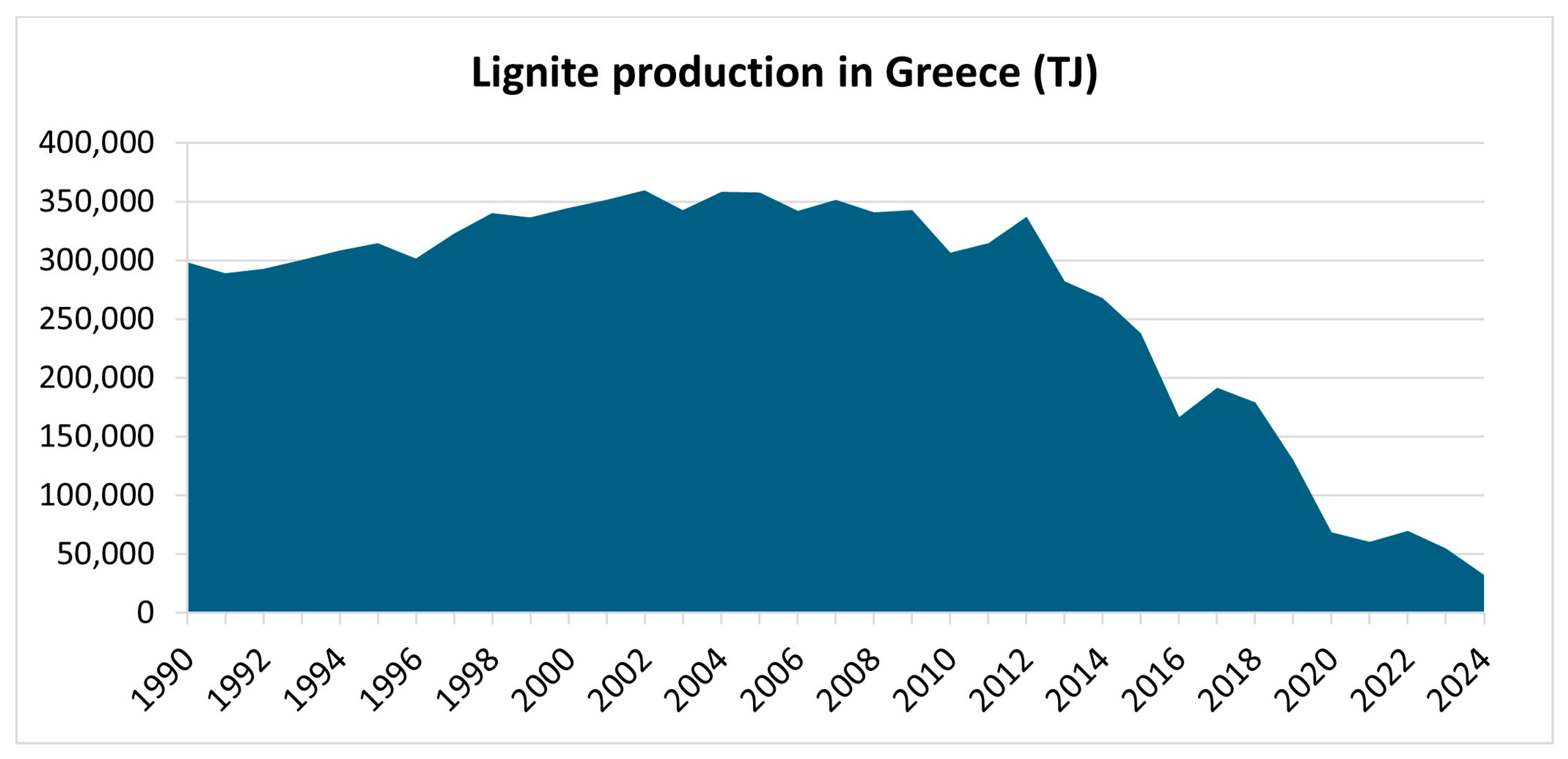
Historically, domestic lignite formed the backbone of electricity generation in Greece for several decades and was used almost exclusively in the power sector. As shown in
Figure 1, lignite production remained at persistently high levels from the early 1990s until 2012, despite year-to-year fluctuations. After this prolonged period of high lignite production levels, a sharp and persistent downward trend is observed up to 2024, and even more markedly after 2018, consistent with the Greek government’s policy for lignite phase-out. Overall, lignite production fell by 81% between 1990 and 2024, reaching its historical minimum at the end of the period.
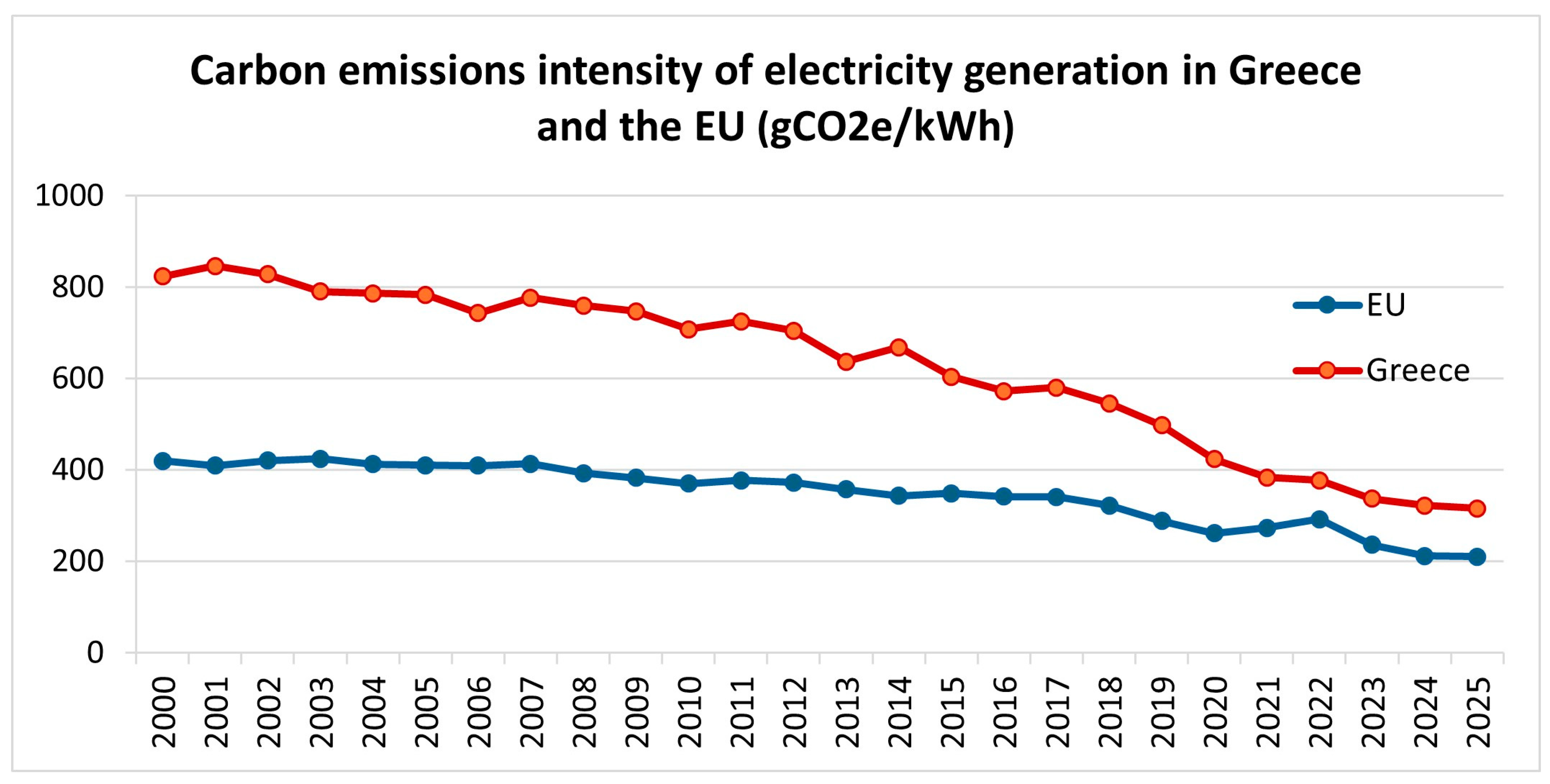
The environmental dimension of this transition is further illustrated in
Figure 2, which presents the carbon emissions intensity of electricity generation in Greece compared with the EU average over the past 25 years. Throughout the whole period, the Greek electricity system remained significantly more carbon-intensive than the EU average. This pattern is consistent with the historically dominant role of lignite in the Greek power mix, the low calorific value of Greek lignite [
11,
12], and the operation of aging lignite-fired units. At the same time, a gradual but significant decline of carbon emissions intensity over time has been observed in Greece, reflecting the combined effect of gradual lignite withdrawal, the increasing penetration of RES generation (notably after 2007) and the growing cost pressure imposed on carbon-intensive generation by the EU ETS. Although the EU ETS has been applied since 2005, its effect became progressively stronger as carbon prices rose, particularly in the late 2010s, thereby further weakening the economic viability of lignite-based electricity generation. As a result, the PPC started incurring substantial financial losses, ultimately making the lignite-heavy model commercially unviable [
15].
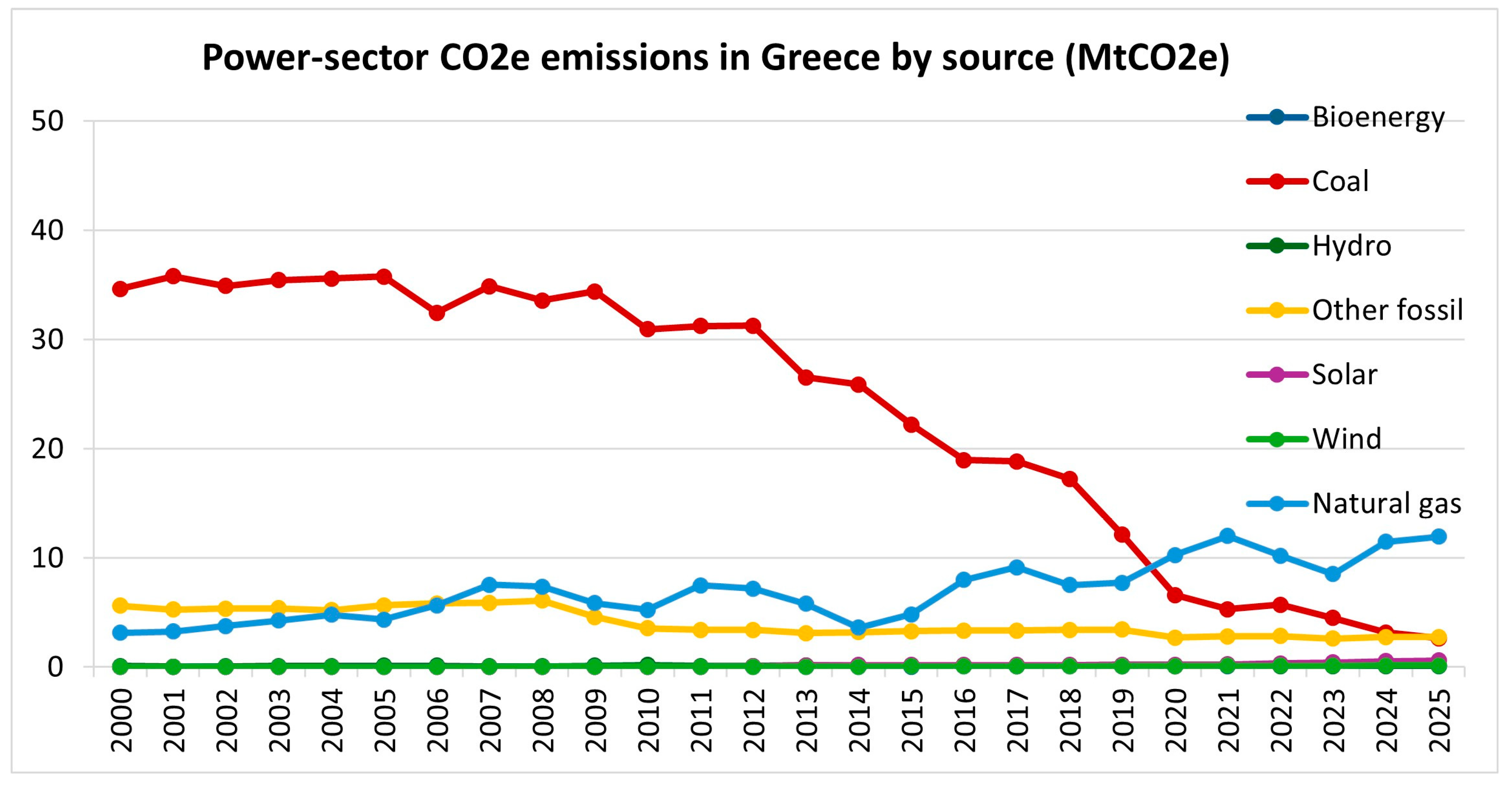
Figure 3 complements the above picture by presenting power-sector CO
2e emissions in Greece by source over the past 25 years. The figure shows a substantial reduction in coal-related emissions after 2012, especially after 2019, which aligned with the Greek government’s policy for lignite phase-out. This provides direct quantitative evidence that the accelerated phase-out of lignite contributed substantially to the decarbonization of the electricity sector. At the same time, emissions from natural gas remain significant and have followed a growing trend since 2014, indicating that the transition away from lignite did not imply a complete exit from fossil-fuel-based electricity generation, but rather a reconfiguration of the fossil-fuel component of the power mix.
Based on the above evidence, Greece’s lignite phase-out was associated with a substantial reduction in the carbon intensity and emissions of the electricity sector. However, these developments did not translate into a parallel reduction in external energy dependency. On the contrary, as the following sections show, the weakening of domestic lignite generation was accompanied by a rising reliance on imported natural gas and increased vulnerability to external market conditions.
3.2. Εlectricity Generation Mix
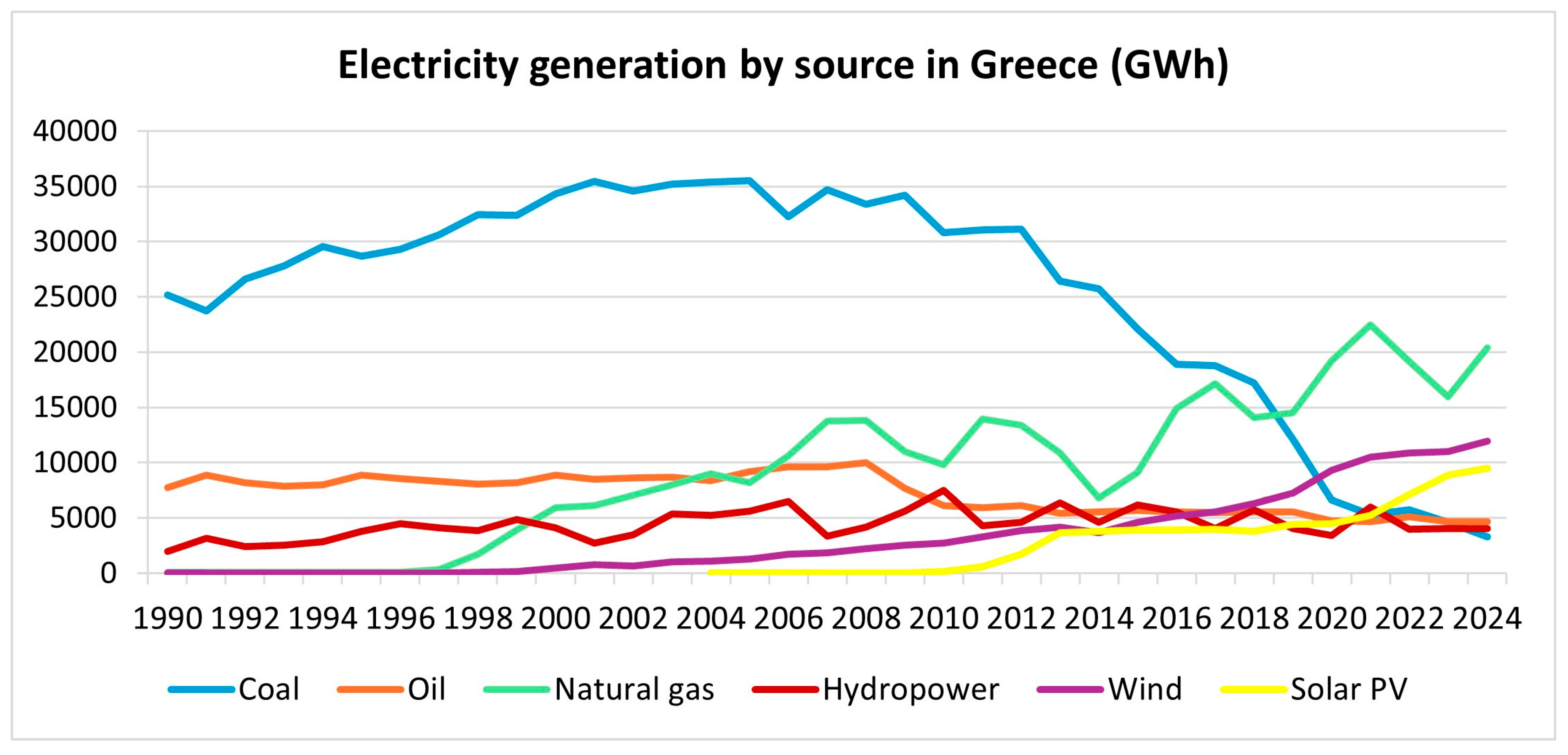
From a broader perspective,
Figure 4 depicts the electricity generation mix in Greece over the last 35 years. Lignite dominated during the 1990s and 2000s—typically supplying around 60–70% of generation—but its share dropped to single digits after 2023. Between 1990 and 2024, electricity generation from lignite and oil decreased by 87% and 40%, respectively, whereas gas-fired generation increased by 220% over the same period.
Notably, electricity generation from natural gas reached its highest values after 2019, following the gradual retirement of lignite units. Specifically, “Kardia I & II” lignite units ceased operation in June 2019, while “Amyntaio I & II” units continued operating until May 2020. The remaining lignite units were gradually phased out between 2021 and 2023, with the final retirement of lignite in the “Ptolemaida V” plant being scheduled for 2026. Specifically, the “Ptolemaida V” plant is planned to be converted to a natural gas unit, following the end of lignite operations.
Meanwhile, electricity generation from non-combustible RES experienced substantial growth during the period of 1990–2024: hydropower increased by 101%, while wind and solar PV grew from near-zero to substantial generation levels, together accounting for 39% of total electricity generation at present.
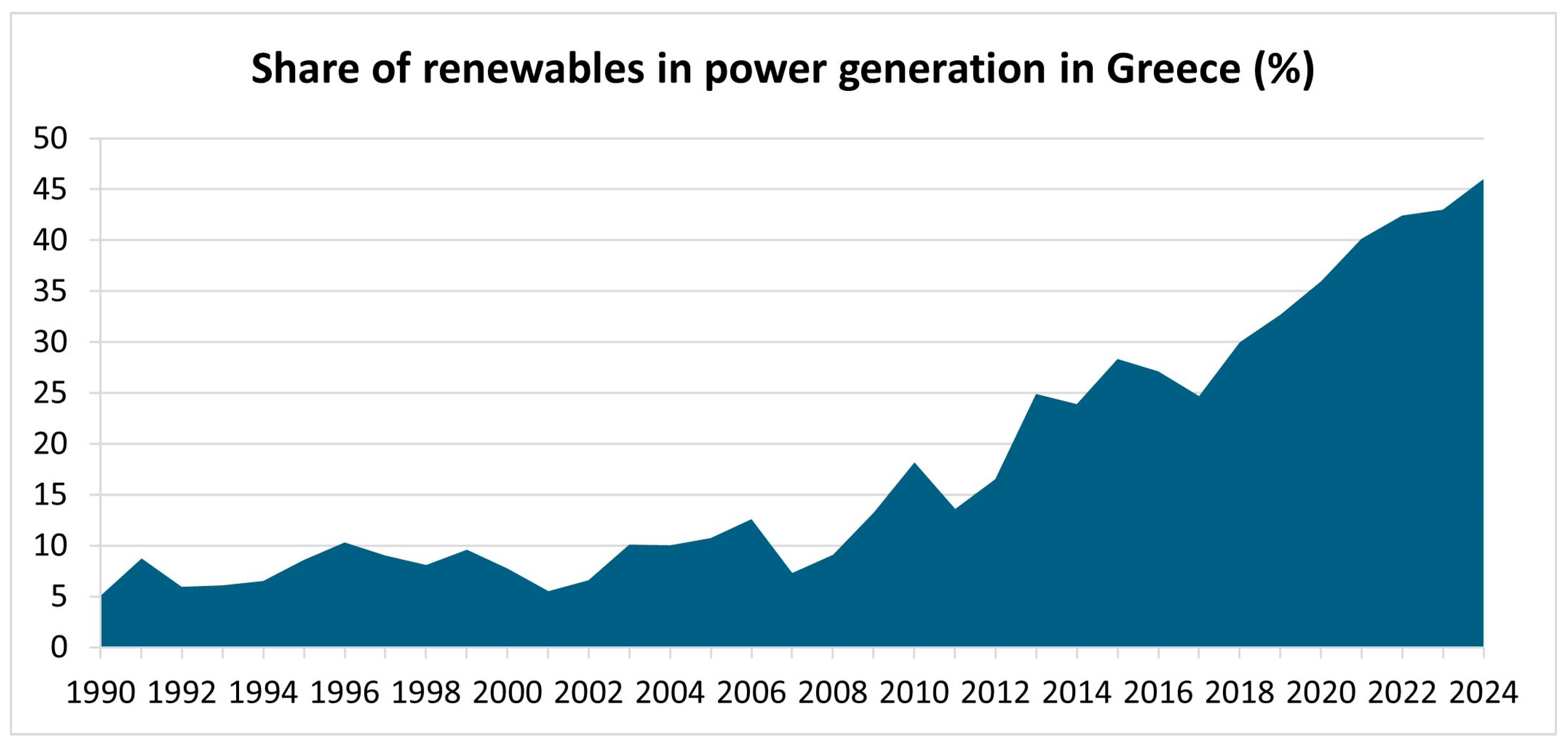
Considering all RES combined, the total RES share in electricity generation rose from 5% in 1990 to 46% in 2024, as shown in
Figure 5. This long-term increase indicates a substantial transformation of the Greek power mix and confirms the growing role of RES in the country’s decarbonization pathway. The upward trend became particularly pronounced after 2017, with the RES share increasing at an accelerating rate, marking an 86% relative increase over a seven-year period (2017–2024) and emerging as the dominant component of the domestic electricity mix in 2024.
This development is consistent with both the broader EU energy transition framework and the Greek strategic policy for lignite phase-out. However, while rapid RES penetration has been a key driver in reconfiguring the Greek electricity mix, it did not automatically translate into reduced external dependency. During this transition, domestic lignite was not replaced only by RES but also by imported natural gas, a shift further discussed in
Section 3.4.
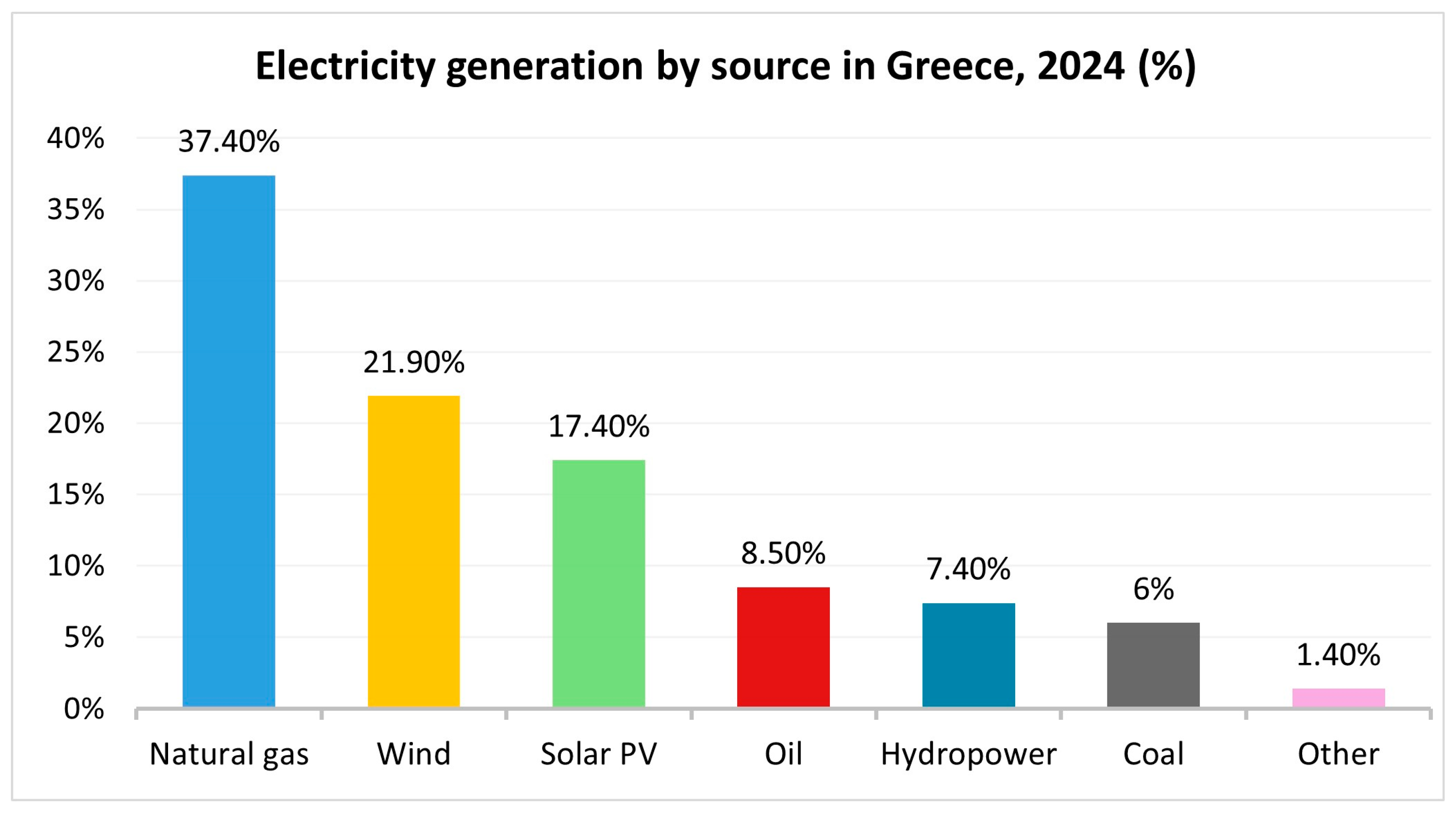
The latest snapshot of the Greek energy mix is illustrated in
Figure 6, which presents the shares of electricity generation by source at the national level for 2024. Natural gas provided the largest share of electricity generation (37%), followed by wind (22%) and solar PV (17%). RES as a whole accounted for 46% of electricity generation—the highest RES share recorded in Greece to date—revealing their substantial penetration into the power mix.
This national-level representation should be interpreted in light of the particular structure of the Greek electricity system, which comprises both the Interconnected System and islands that have historically remained outside the main grid. In these non-interconnected or gradually interconnected island systems, electricity has traditionally been produced by local oil-fired units (diesel or mazut), alongside local RES generation. Accordingly, the oil-based generation shown in
Figure 6 is primarily attributed to these island systems rather than reflecting the generation profile of the mainland interconnected grid.
3.3. Energy Import Dependency
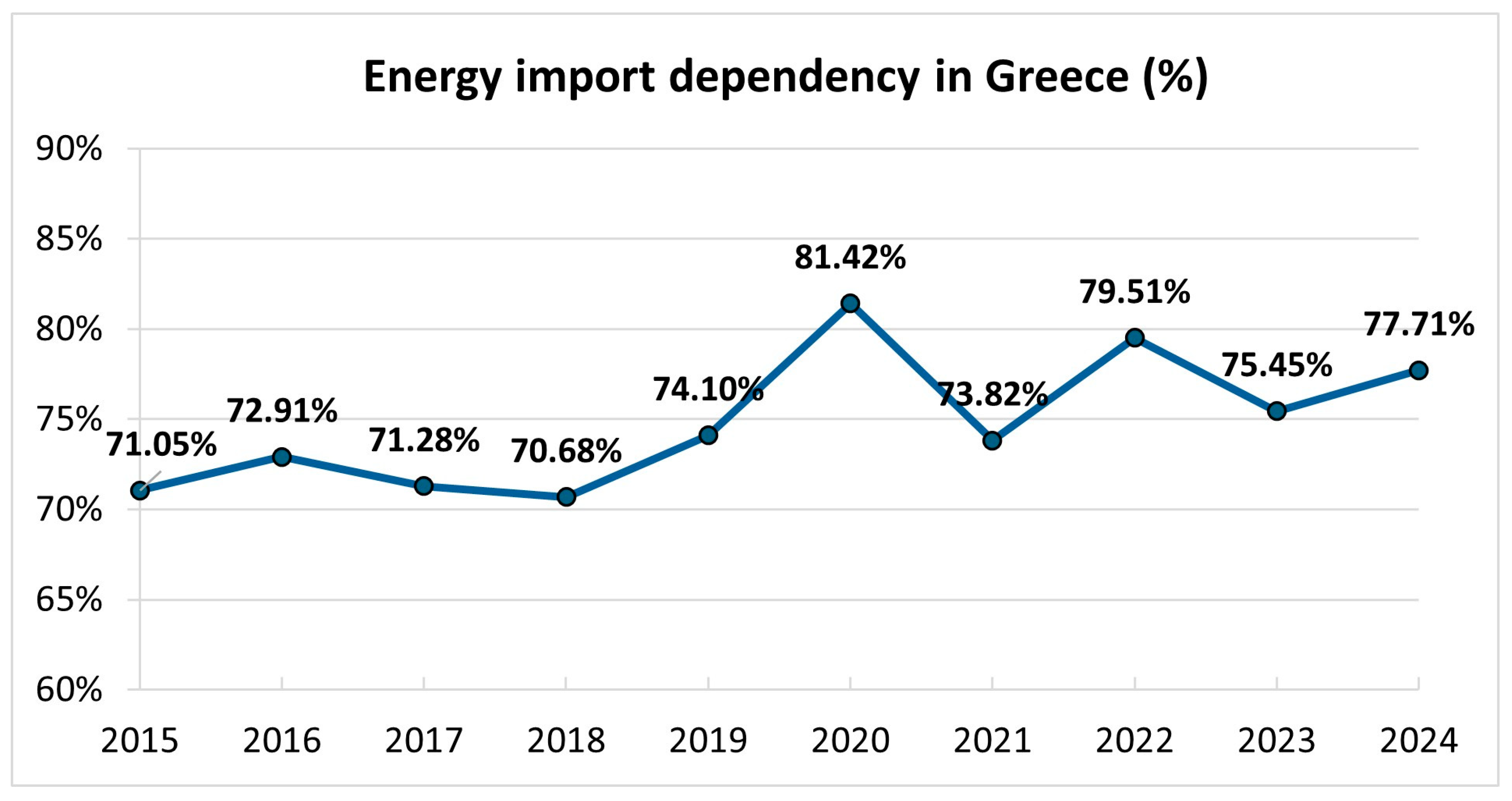
Figure 7 presents the annual energy import dependency rate of Greece for the period 2015–2024. The indicator shows that Greece remained structurally dependent on external energy inputs throughout the entire period, with rates consistently above 70%. More specifically, the dependency rate ranged from 70.68% to 81.42%, indicating a persistently high level of reliance on net energy imports at the level of the overall energy system. This dependency became even more pronounced during the last five years, with particularly high values recorded in 2020 and 2022 (81.42% and 79.51%, respectively). The first peak reflects the accelerated phase-out of domestic lignite (see also
Figure 1), which necessitated increased imports—primarily of natural gas—to maintain system adequacy, even amidst the reduced energy demand caused by the COVID-19 pandemic. The subsequent peak in 2022 aligns with the geopolitical volatility following the Russian invasion of Ukraine, a period characterized by high market uncertainty. Overall, despite annual fluctuations, energy import dependency has remained consistently higher over the last five years compared to pre-2020 levels.
These findings suggest that the gradual reduction in domestic lignite use did not automatically translate into lower dependency on external energy sources at the system level; on the contrary, the data reflect a continued and, in comparative terms, stronger reliance on imported energy over time. This system-level picture provides the broader context for the more detailed analysis of natural gas dynamics presented below, as natural gas constitutes the critical transitional fuel for ensuring system stability during the decarbonization process.
3.4. Natural Gas Flows, Supply Routes and Regional System Dynamics
The progressive phase-out of lignite, combined with the rapid expansion of RES, has substantially altered the role of natural gas in the Greek power system. Within the national decarbonization pathway, natural gas has served as a transitional fuel, largely supporting system adequacy and flexibility.
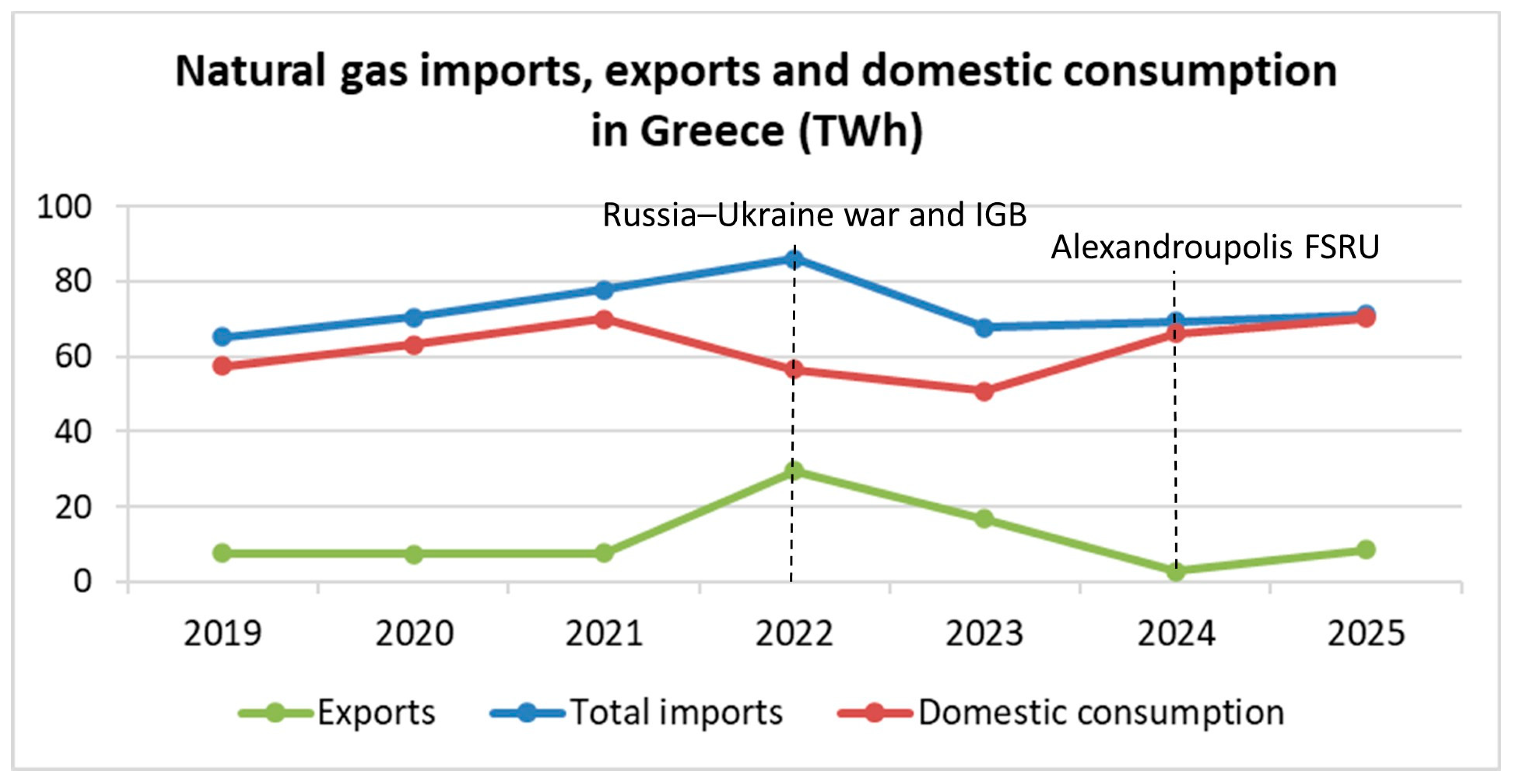
Figure 8 illustrates the volumes of natural gas imports, exports and domestic consumption over the period of 2019–2025, capturing the critical years associated with both the country’s decarbonization strategy and geopolitical disruptions following the Russia–Ukraine war.
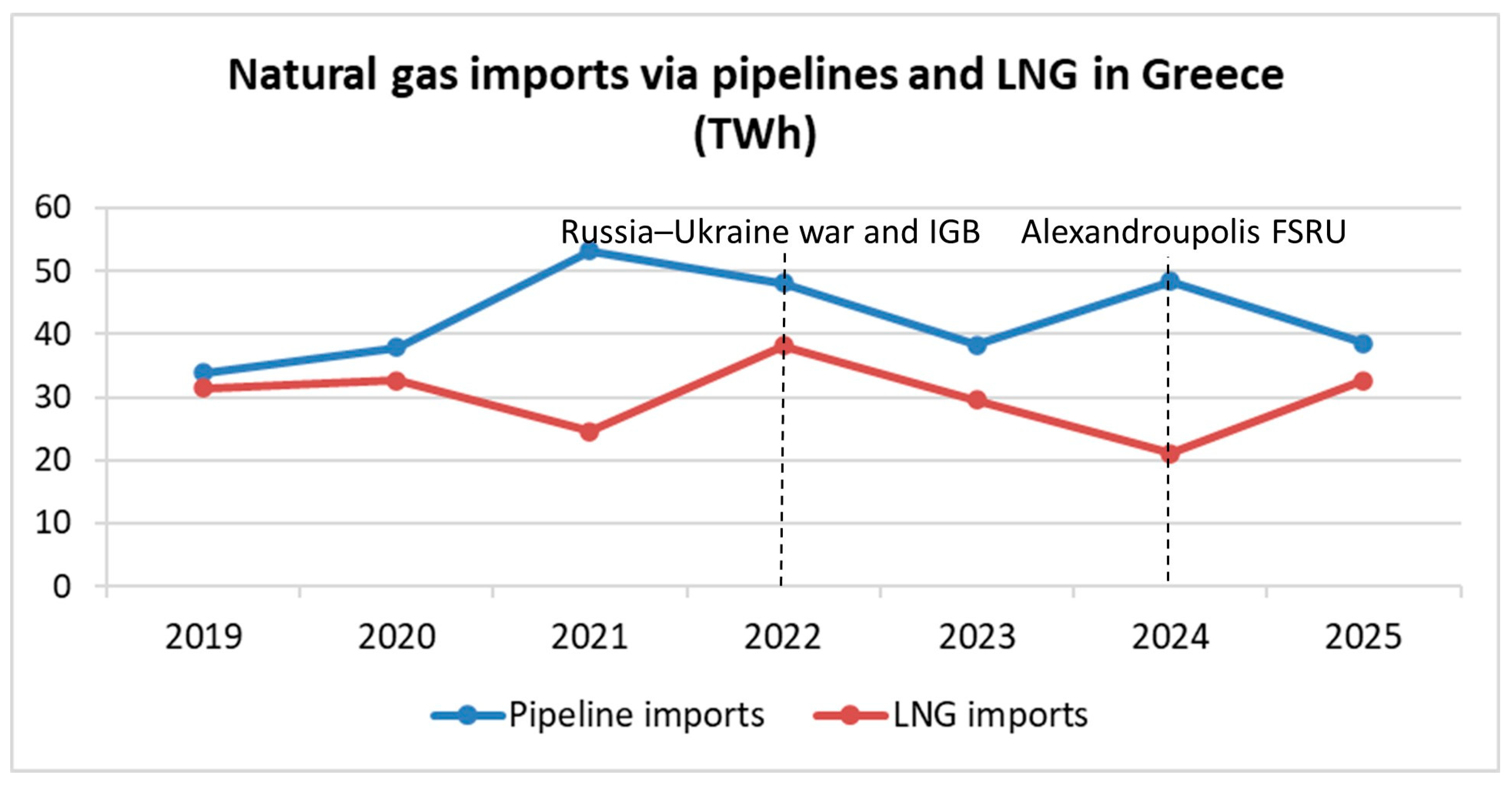
Figure 9 distinguishes imports via pipelines and via LNG in Greece over the same period.
As shown in
Figure 8, total imports (via pipelines and LNG combined) show moderate variation over time. In 2022, imports increased by 11% compared with 2021, reaching 86 TWh; this rise coincided with the onset of the Russia–Ukraine war and the subsequent disruption of gas supply patterns across Europe. At the same time, the rise in total imports in 2022 was accompanied by an even sharper increase in exports, which jumped from around 7–8 TWh in the preceding years to nearly 30 TWh in 2022 (a 289% increase), while domestic consumption declined by 19% between 2021 and 2022. This combination indicates that a substantial share of the additional gas entering Greece in 2022 was not absorbed by domestic demand but was instead redirected to external markets.
In practical terms, Greece moved from being primarily a domestic consumption market before the war to functioning as an “emergency transit hub” during the peak of the supply shock. This shift is explained by the situation in Southeast Europe during this period: several Southeast European countries, particularly those historically dependent on Russian pipeline gas, faced acute supply constraints and urgently needed alternative supply routes. Greece was able to support this regional adjustment, as it combined access to global LNG markets through its LNG terminals with pipeline interconnections that enabled northward flows. Practically, Greece could receive LNG cargoes and deliver natural gas into the regional pipeline network, supporting neighboring markets, i.e., Bulgaria and the wider Southeast European region, through the Greece–Bulgaria Interconnector pipeline (IGB) commissioned in 2022. As a result, the main adjustment took place in the allocation of gas flows rather than in the overall volume of gas entering Greece.
After the 2022 peak linked to the war crisis, total imports moderated over 2023–2025, reflecting a transition from an emergency-driven situation to a more normalized post-crisis pattern. Over the same period, as regional supply conditions gradually stabilized, domestic consumption recovered to around 60–70 TWh, while exports declined, particularly in 2024. This coincided with key infrastructure developments: the Greece–Bulgaria Interconnector (IGB) was already operating from 2022 and the Alexandroupolis FSRU (new LNG terminal) entered commercial operation in 2024. Together, these changes mark a transition from the emergency phase (2022–2023) to a more stable configuration of regional gas flows, as alternative routes became available. Exports also picked up again in 2025, increasing by 196% compared to 2024, suggesting that Greece retained an enhanced regional role, but no longer under the emergency conditions of 2022.
The differentiation between the two main import channels is illustrated in detail in
Figure 9. Historically, natural gas in Greece was mainly supplied via pipelines. However, since the late 2010s, LNG has steadily gained importance and now represents an equally significant import route. The recent energy crisis following Russia’s invasion of Ukraine in 2022 has forced Greece, on the one hand, to seek alternative natural gas suppliers via pipelines (other than Russia) and, on the other hand, to increase imports of LNG from the USA, Algeria, Qatar and other suppliers, in order to ensure national energy security. Specifically, in 2024, the United States was the dominant LNG supplier (74% of the country’s LNG imports), followed by Russia, Algeria and Norway [
40]. As shown in
Figure 9, the increase in total imports in 2022 was mainly driven by a sharp rise in LNG imports (a 55% increase between 2021 and 2022), while pipeline imports declined by 10% over the same period. Both import channels declined thereafter, with pipeline imports rising again in 2024, consistent with the enhanced regional interconnections since 2022 (notably the IGB). The commercial operation of the Alexandroupolis FSRU (new LNG terminal) in 2024 enabled higher LNG inflows, with LNG imports rising again in 2025 (55% increase compared to 2024), accompanied by a decrease in pipeline imports in the same year (12% decrease compared to 2024).
Having outlined the overall gas balance (imports, exports and domestic use), an equally important issue concerns the origin of these volumes.
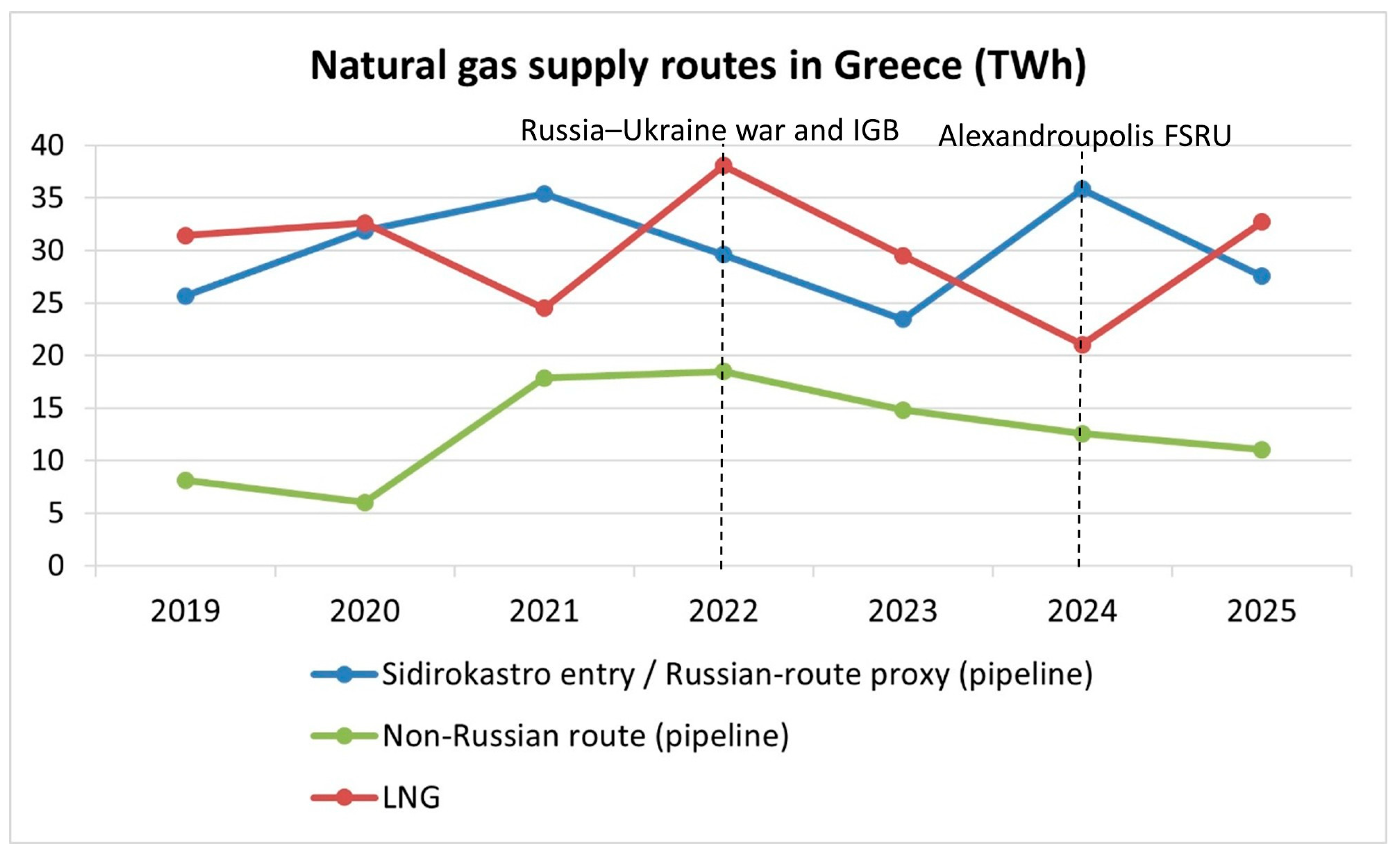
Figure 10 displays the main supply routes, distinguishing between the Sidirokastro entry point/Russian-route proxy (pipelines), the non-Russian route (pipelines) and LNG. For readability, the category “Sidirokastro entry point/Russian-route proxy (pipelines)” is referred to below as the “Sidirokastro route”.
During 2019–2021, LNG and the Sidirokastro route were the two main supply channels, each ranging roughly between 25 and 35 TWh. Non-Russian pipeline flows were smaller overall but increased noticeably in 2021. In 2022, LNG increased sharply to 38 TWh, becoming the largest single channel, while imports via the Sidirokastro route declined by around 16% compared with the previous year. Practically, LNG offered immediate flexibility after the war shock, as cargoes could be sourced from multiple suppliers, while non-Russian pipeline volumes also helped reduce dependency on a single route. During 2023–2025, LNG and imports via the Sidirokastro route exhibited significant year-to-year variability, while non-Russian pipeline imports remained stable but gradually declined after peaking in 2022.
It should be noted that the 2024 peak in imports via the Sidirokastro route should not be interpreted as a renewed dependency on Russian gas. Instead, it largely reflects short-term use of northern interconnections and regional re-routing for system balancing. As discussed in the Methodology section, following the 2022 energy crisis, gas flows in Southeast Europe became more flexible, allowing gas volumes from different origins—including LNG imported into neighboring countries—to be redirected to Greece via the Bulgarian system. Under these conditions, the Sidirokastro route has functioned more as a balancing entry point since 2022, rather than a reliable proxy for Russian supply.
Overall, what changed mostly is that the country’s dependency became less concentrated on one geopolitical corridor and more distributed across multiple routes, including LNG, the Southern Gas Corridor (TAP) and other southern pipeline entry points.
Moreover, under the REPowerEU strategy adopted by the European Union, the EU aims to fully phase out imports of Russian natural gas—both LNG and pipelines—by the end of 2027 [
47]. In this context, the alternative routes presented in
Figure 10 are not temporary substitutes but are expected to remain strategically important for Greece, as part of a more resilient and diversified gas system.
3.5. Wholesale and Retail Price Dynamics
While the preceding analysis highlights how gas flows and supply routes were reconfigured between 2019 and 2025, another important aspect is how the above structural changes were reflected in energy prices within the country.
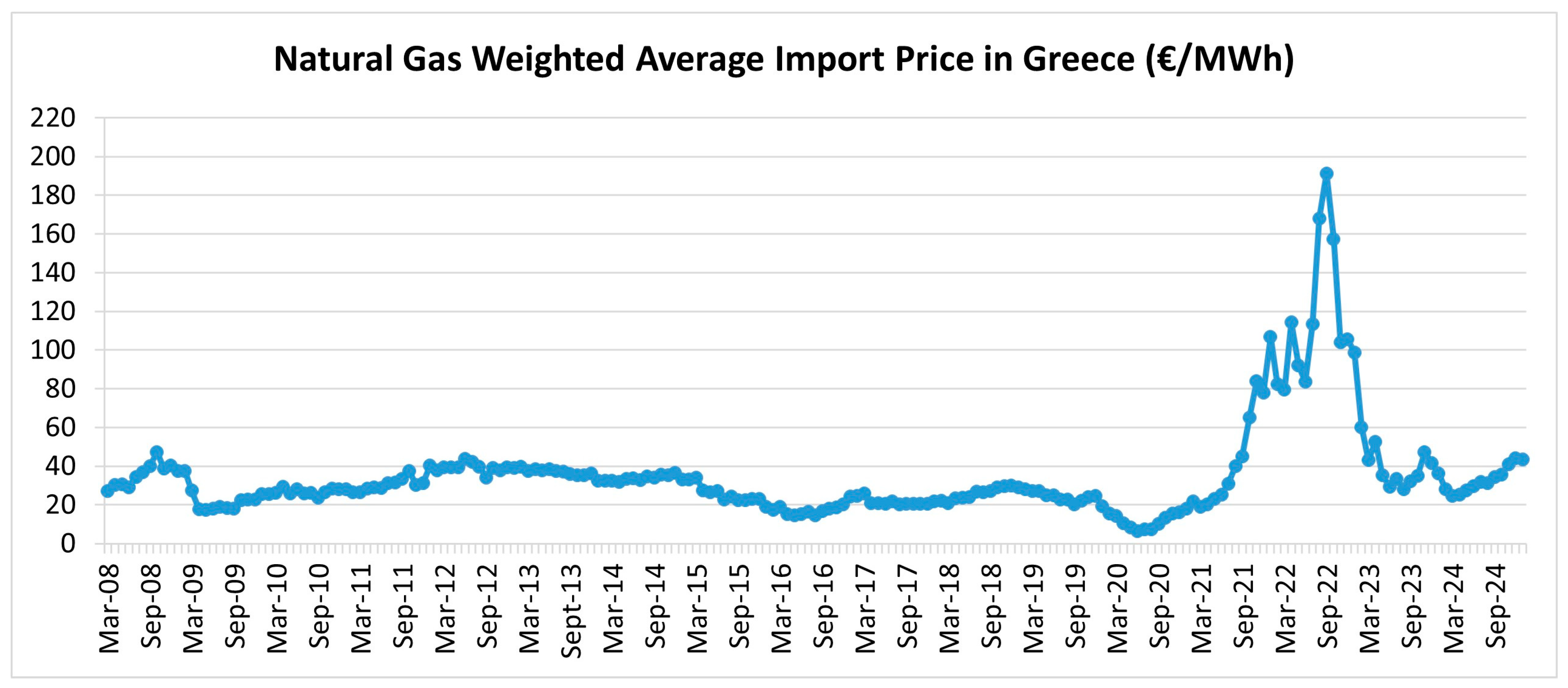
Figure 11 illustrates the evolution of the Weighted Average Import Price (WAIP) of natural gas in Greece, which is used as a proxy indicator of wholesale natural gas price conditions in the Greek market. The WAIP remains relatively low and stable up to 2020 (mostly around 20–35 €/MWh) but increases sharply from mid-2021 and peaks in 2022, capturing the war-related gas supply shock. Similarly,
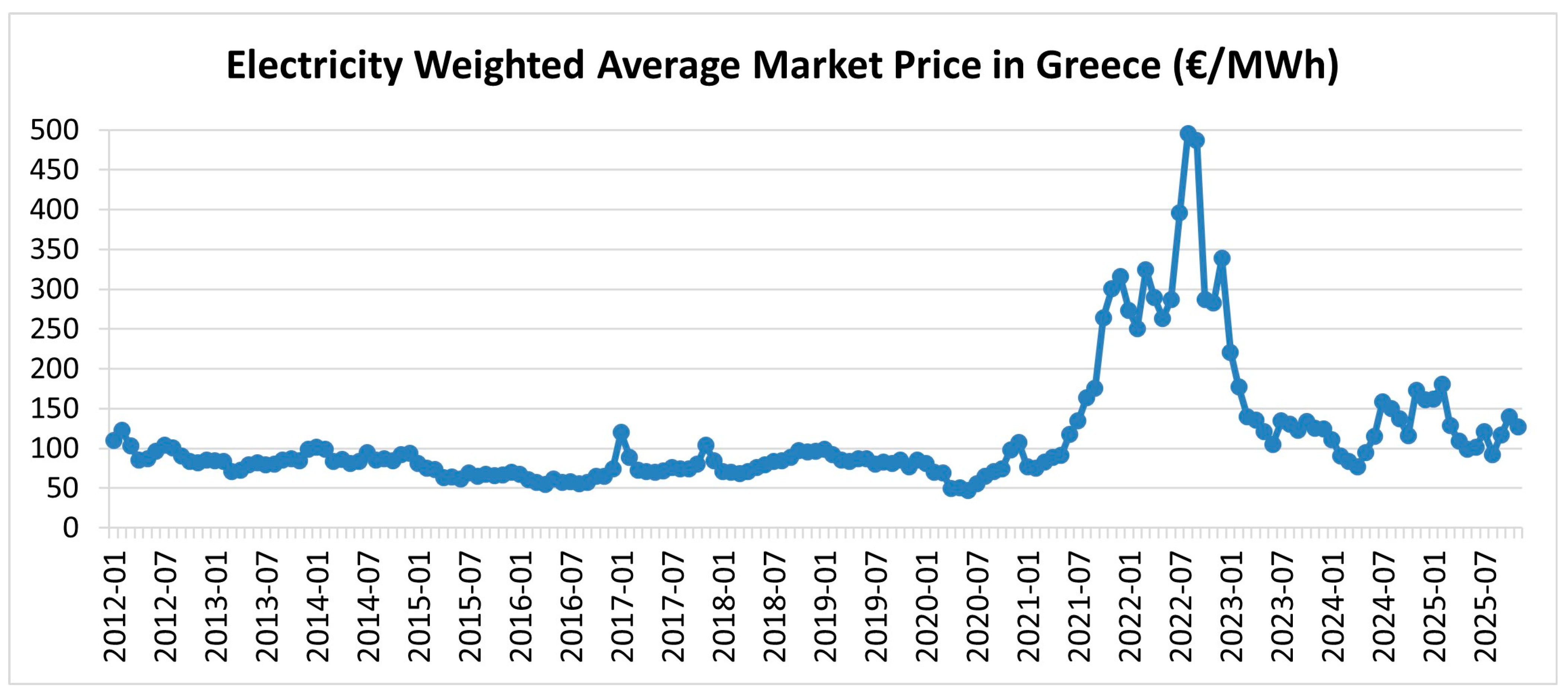
Figure 12 illustrates the evolution of the Weighted Average Market Price (WAMP) of electricity in Greece, which serves as an indicator of wholesale electricity prices in Greece. As shown, wholesale electricity prices were relatively stable during 2012–2020 (mostly around 70–100 €/MWh), reflecting a period of moderate fuel costs and relatively balanced market conditions. From mid-2021 onward, prices started to rise sharply, reaching a peak in 2022 and exceeding 400 €/MWh in some months. Taken together, the two indicators follow similar trends, highlighting how strongly the Greek power system depends on natural gas and, by extension, how the European gas shock was transmitted into the electricity market. After the initial shock, prices dropped markedly in 2023 for both wholesale natural gas and electricity prices, as emergency LNG imports and improving regional conditions eased pressure on the market. Still, wholesale prices in 2024–2025 remained higher and more volatile compared to pre-2021 levels for both natural gas and electricity—especially for electricity—suggesting that the market has not fully returned to its earlier, low-price environment.
A quantitative comparison of the two wholesale market indicators (WAIP and WAMP) reveals remarkably similar trends. Specifically, a Pearson correlation analysis for the common monthly sample over 2012–2024 yields a very strong positive correlation (r = 0.93, n = 156, p < 0.001). Since both series were affected by the major common shock of 2021–2022, the same relationship was also examined for the pre-crisis sub-period 2012–2020. The correlation remains positive and statistically significant in that period as well (r = 0.61, n = 108, p < 0.001), although weaker than in the full sample. This suggests that the association between wholesale natural gas and electricity prices in Greece is not solely crisis-driven. However, the subsequent increase to r = 0.93 for the full 2012–2024 period reflects both the magnitude of the crisis’s supply shock, along with the high price-responsiveness of the Greek wholesale electricity market under the Target Model framework (operational since late 2020).
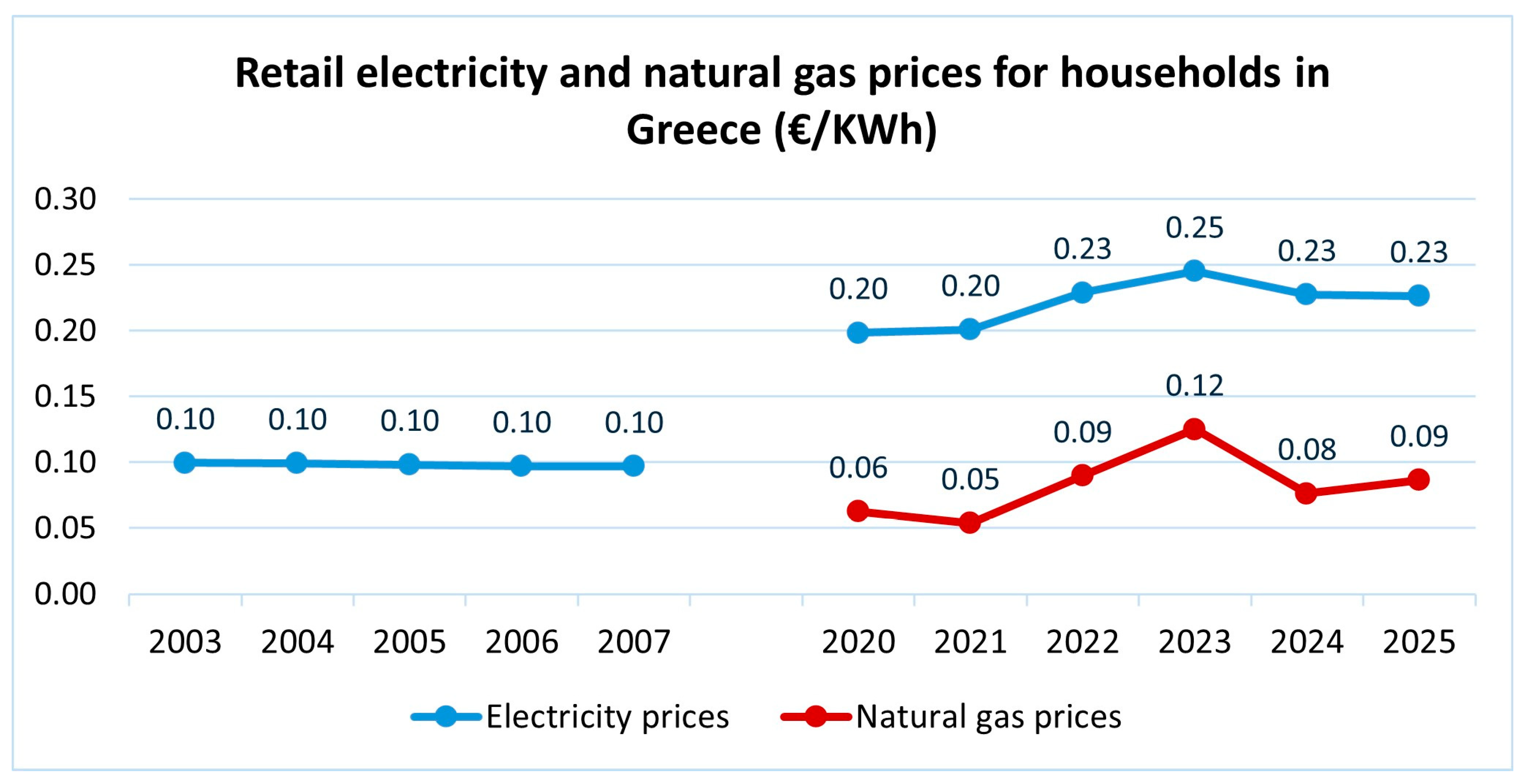
While wholesale prices capture market-level dynamics, what ultimately matters for households is how—and to what extent—these shocks are transmitted to final consumer prices. In this context,
Figure 13 shows the evolution of household retail electricity and natural gas prices in Greece, based on the available data [
43].
During the early 2000s (2003–2007), retail electricity prices were remarkably stable at 0.10 €/kWh, reflecting relatively stable energy conditions and a system largely insulated from international price shocks. A clear shift is evident from 2020 onward, with retail electricity prices experiencing an accelerated increase, generally ranging between 0.20 €/kWh and 0.23 €/kWh, while peaking at 0.25 €/kWh in 2023. This represents a 150% increase compared to the pre-2020 period, reflecting a substantial and sustained shift in domestic price levels. Retail natural gas prices display an even more pronounced response to the crisis. After remaining relatively low in 2020–2021 (0.05–0.06 €/kWh), they presented a sharp increase in 2022–2023 and peaked at 0.12 €/kWh in 2023. This represented a twofold increase within a two-year window, before prices partially declined to approximately 0.08–0.09 €/kWh in 2024–2025.
These trends reflect the strong pass-through of the European gas price shock to household energy bills. Quantitatively, despite the subsequent partial stabilization, retail electricity and gas prices in 2024–2025 remained 150% and 50% higher, respectively, than their 2020 levels. This suggests that the reshaping of gas supply routes and the related market stress resulted in a lasting increase in household energy costs, establishing a new, elevated “normal reality” for the Greek retail market.
This lasting increase in energy costs carries significant social implications, particularly regarding energy poverty and distributional equity. Specifically, under circumstances of elevated energy prices, households spend a larger share of their disposable income on essential energy services. Lower-income households are even more vulnerable, possessing limited capacity to absorb sustained price increases. In the Greek case, the literature has consistently identified high energy costs as a major driver of energy poverty, with adverse effects on thermal comfort, bill payment capacity and broader living conditions [
48,
49,
50]. These effects are more intense among vulnerable consumers, who are less able to respond through fuel switching, dwelling upgrades, or private investment in energy-saving technologies [
51,
52]. These concerns are also reflected in available quantitative indicators of energy poverty in Greece. According to recent Eurostat data, 19.0% of people in Greece were unable to keep their home adequately warm in 2024 (compared to a 9.2% European average) [
53], while broader EU evidence also indicates a particularly high incidence of arrears on utility bills (32% in Greece vs. 6.9% for the European average) [
54].
From a policy perspective, this condition underlines the need not only for short-term subsidies but also for more structural mitigation measures. These include special tariffs targeted to households vulnerable to energy poverty (extending beyond the narrowly defined income-poor), energy efficiency upgrades in the residential sector and, at the system level, a refined market design that reduces the system’s exposure to gas-driven price volatility over the longer term.
3.6. System Constraints, Flexibility and Infrastructure
The persistence of elevated electricity and gas prices after the crisis highlights that vulnerability is not only a matter of fuel supply but also a matter of adequate system capacity. In this context, the role of networks and storage facilities becomes critical.
A critical, and often underestimated constraint concerns the condition of transmission and distribution infrastructure. In Greece, the aging of transmission assets reduces system resilience to extreme weather events and load variability, increases maintenance requirements and limits the absorption of RES generation. More specifically, rising volumes of wind and solar generation cannot always be fully transmitted or absorbed by the existing constrained grid, leading to RES curtailments and greater reliance on gas-fired units [
55,
56]. This, in turn, raises overall system costs and, ultimately, consumer prices. In quantitative terms, RES curtailments escalated from 228 GWh in 2023 to 860 GWh in 2024 [
57,
58]. This almost fourfold increase highlights the structural gap between rapid RES deployment and lagging grid/storage infrastructure.
In this context, the lack of large-scale energy storage facilities further intensifies the problem. In the absence of sufficient storage capacity, surplus renewable electricity cannot be shifted from periods of high production to periods of high demand. As a result, gas-fired power plants continue to play a central balancing role, particularly during evening peaks and periods of low RES generation. Given also that the Greek electricity market operates under the marginal pricing mechanism, gas units most often set the wholesale price, thereby transmitting high fuel costs into both wholesale and retail electricity prices.
More specifically, according to the Revised National Energy and Climate Plan, sourced from the Ministry of Environment and Energy [
59], a storage target of approximately 6.2 GW is deemed necessary by 2030 to ensure system stability and effective RES integration. This overall requirement is strategically divided into 4.3 GW of Battery Energy Storage Systems (BESS), intended for rapid daily balancing, and a total of 1.9 GW of pumped hydro storage for large-scale, long-duration capacity. In complete contrast, the current operational capacity is limited to 700 MW of legacy pumped hydro units, with large-scale BESS deployment still in its nascent stages [
59]. This substantial disparity between current assets and the 6.2 GW requirement directly explains the recent escalation in RES curtailments reported above. In the absence of sufficient and modern storage facilities, gas-fired units continue to provide indispensable balancing services, thereby maintaining their influence on marginal price formation. The expansion of storage capacity would allow low-cost RES to replace gas-fired units at critical hours, at least to a degree, reducing price volatility and lowering overall system costs.
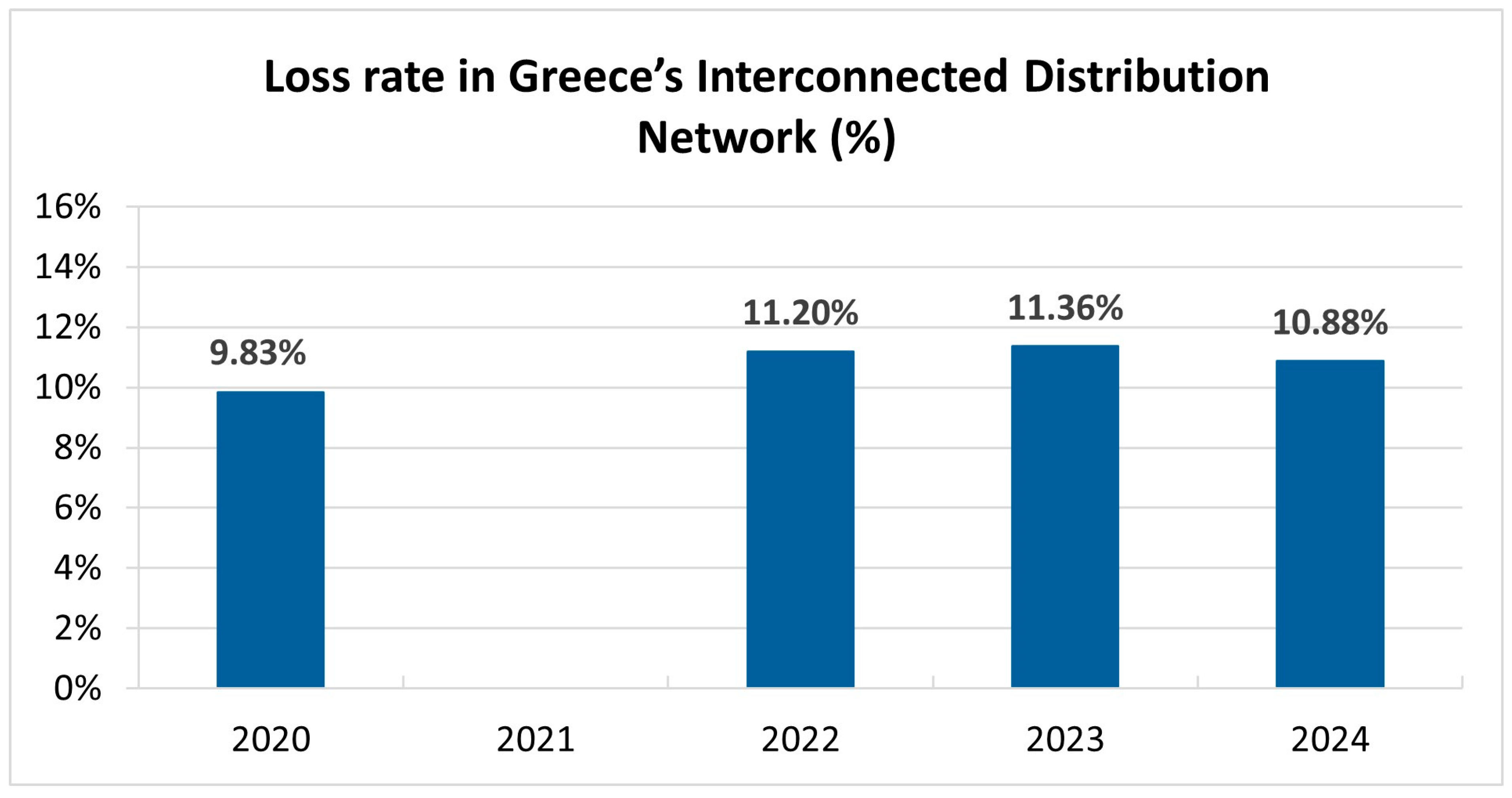
Network losses represent an additional, largely invisible cost. In Greece, distribution losses—technical and not-technical—have remained significantly high, reaching 10.88% in 2024 according to official data from RAAEY and HEDNO [
60,
61]. By comparison, the respective losses in most EU countries ranged between 2.5% and 9% for the latest year available (2022), according to the most recent CEER report [
62].
Figure 14 presents the evolution of total losses in the Greek Interconnected Distribution Network as a share of total incoming energy.
This is mainly attributed to the fact that the costs of distribution losses were not embedded in the allowed revenue of the Greek Distribution System Operator, namely, HEDNO, until recently, limiting HEDNO’s financial incentives to invest in efficient grids to reduce losses, thus transmitting the relevant costs to consumers.
However, this regulatory approach is currently changing. According to RAEEY’s Decision 1432/2020 [
64], an incentive mechanism is introduced from the 2nd Regulatory Distribution Period (2025–2028) onwards, through which the cost of electricity losses is partially internalized in the operator’s allowed revenue. Under this mechanism, reductions in losses increase HEDNO’s recoverable revenue, whereas higher losses lead to revenue penalties. This framework is designed to encourage HEDNO to invest in loss-reduction measures, where these are economically justified, with the ultimate objective of delivering long-term benefits to network users.
4. Conclusions
The paper provides an integrated, critical, data-driven analysis of how decarbonization and geopolitical shocks reshaped the energy profile of Greece and affected the country’s energy dependency. Its original contribution lies in approaching energy dependency through the lens of a comprehensive perspective, by jointly evaluating factors often treated in isolation in the literature, such as market reconfiguration (changes in the energy mix, imports, exports, consumption and external market conditions) throughout the decarbonization path, alongside carbon emissions, price dynamics, system constraints, flexibility and infrastructure adequacy. In light of the new climate objectives, domestic lignite, i.e., the fuel that historically formed the basis of the electricity sector in Greece, was gradually phased out and progressively replaced by natural gas and RES.
The analysis shows an increasing share of natural gas and RES in the country’s energy mix. Currently, the largest share of electricity generation comes from natural gas (37%), followed by wind and solar PV, while total RES (including large hydro) accounted for 46% of electricity generation in 2024, representing the highest RES share in Greece to date. The energy import dependency indicator further showed that Greece remained structurally dependent on imported energy throughout the transition period. With values consistently exceeding 0.70, the data demonstrated that decarbonization, although successful in reducing reliance on domestic lignite, did not automatically translate into lower external energy dependency at the system level. Instead, this structural transformation primarily reshaped the form of dependency.
The analysis of gas flows shows a clear reconfiguration of supply patterns after 2022, following the Russia–Ukraine war. Specifically, a substantial share of imported gas was not absorbed by domestic demand but was instead redirected to external markets. In other words, during the peak of the supply shock, Greece temporarily acted as an “emergency transit hub” for Southeast Europe, with the IGB supporting this role by enabling larger northbound flows.
The breakdown by entry points highlights the increased role of LNG (Revithoussa and, later, Alexandroupolis FSRU), which offered immediate flexibility after the war shock, as well as non-Russian pipeline routes (notably TAP via Nea Mesimvria). By contrast, imports via the Sidirokastro route (historically associated with Russian natural gas) showed weakening and more volatile behavior. Practically, while Northern and Central European countries largely replaced Russian pipeline gas with higher imports from Norway, Greece and Southeast Europe followed a different diversification pathway, based primarily on LNG and the Southern Gas Corridor (TAP). Overall, the key change is that dependency became less concentrated on one single geopolitical corridor and more distributed across multiple routes, i.e., LNG, the Southern Gas Corridor (TAP), and other southern pipeline entries.
Moreover, price indicators demonstrate that gas-market disruptions were rapidly transmitted to household bills. Wholesale and retail prices for both natural gas and electricity rose sharply after 2021 and have since remained well above pre-crisis levels, particularly in the case of electricity. Indicatively, retail electricity and gas prices in 2024–2025 remained 150% and 50% higher, respectively, than their 2020 levels. This suggests that the post-2021 market stress and the restructured gas market have resulted in persistently higher energy costs for households, with subsequent social implications, particularly regarding energy poverty and distributional equity. Therefore, addressing these challenges requires a strategic shift from temporary subsidies toward structural market reforms and targeted energy efficiency interventions.
The role of networks and storage facilities is also highlighted, given that the existing transmission and distribution grid is aged and often constrained, leading to RES (wind and solar) curtailments and, hence, to an even greater reliance on gas-fired units. In addition, the absence of large-scale energy storage facilities further intensifies the problem, as surplus renewable electricity cannot be shifted from periods of high production to periods of high demand. In this context, accelerated RES integration requires greater system flexibility, including storage deployment, grid reinforcement and efficiency improvements, such as loss reduction.
As regards the limitations of the study, the selection of natural gas routes is based on physical entry points (as defined by DESFA), used as practical proxies for supply corridors. In some cases, however, certain routes may reflect mixed sources. For instance, gas volumes recorded at the Sidirokastro entry point—historically associated with Russian pipeline imports—after 2022 may correspond not only to Russian gas, but also to re-routed non-Russian gas from northern interconnections, given the increased flexibility of the regional gas market in the post-crisis period. Moreover, although the empirical evidence presented here is valuable for understanding how the Greek energy system has adjusted to decarbonization targets and to a reconfigured gas market, the post-war observation window remains relatively short. Future research could extend the analysis over a longer horizon to better assess the longer-term impacts of the energy transition.
Overall, under an increasingly uncertain geopolitical environment, the Greek case illustrates that, in line with the new climate objectives and amid geopolitical disruptions, Greece has strengthened its strategic position after 2022, yet it remains structurally dependent on imported natural gas. In this context, strengthening system flexibility through grid and infrastructure reinforcement, storage deployment and loss reduction emerges as a key priority. These measures are essential to fully unlock the potential benefits of growing RES generation and to reduce exposure to external market volatility.