Study on the Thermal Deformation of Finger Seals Based on Local Thermal Non-Equilibrium in Porous Media

 ,
,  ,
,
Abstract
1. Introduction
1.1. Research Gap and Objectives
1.2. Contributions to This Study
- A porous-media model for finger seals based on the Local Thermal Non-Equilibrium (LTNE) model is developed, and its accuracy in predicting the temperature and flow fields is validated through a comparative analysis with experimental results, thus establishing a reliable foundation for subsequent work.
- Based on the numerical results obtained from the LTNE model, pressure and temperature loads within the finger-seal region are extracted and incorporated as boundary conditions into the thermal deformation analysis model. This Multiphysics coupling approach enables a more realistic representation of the finger seal’s actual operating conditions.
- Considering the practical operating condition of rotor eccentric whirling in aeroengines, a comparative study of finger-seal thermal deformation under both the Local Thermal Equilibrium (LTE) model and the LTNE model is conducted. The analysis focuses on the effects of pressure differential and interference-fit magnitude on the radial, circumferential, and axial deformation characteristics of the finger seal, as well as the distribution patterns of contact pressure. The goal of this study is to provide a reliable theoretical basis and feasible technical approach for the structural optimization and performance enhancement of finger seals.
2. Physical Model and Numerical Method
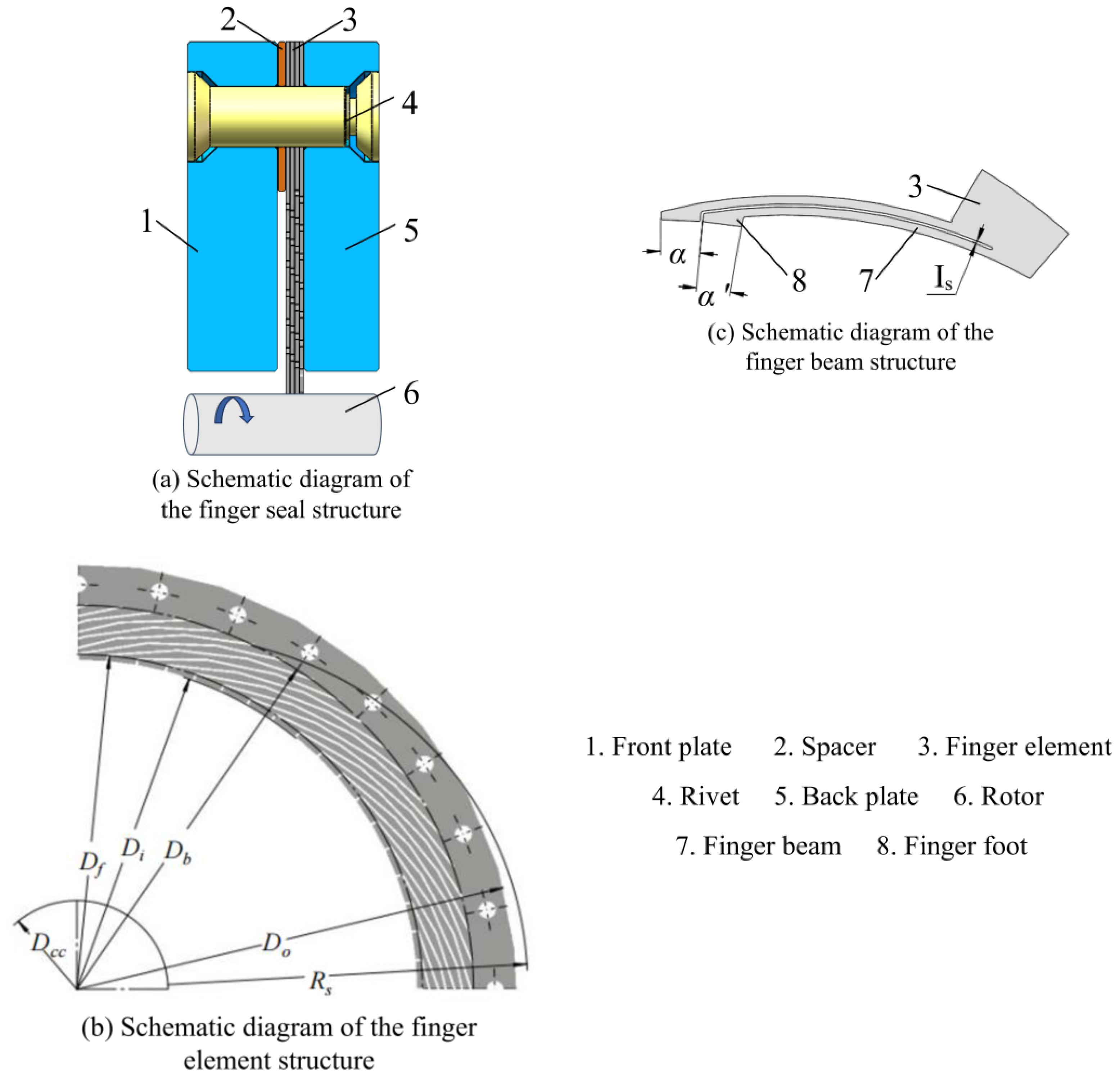
2.1. Physical Model of the Finger Seal
2.2. Governing Equations for the Porous-Media Model of the Finger Seal
2.2.1. Flow-Control Equations for the Porous-Media Region of the Finger Seal
- Neglecting the structural deformation of the finger beam and finger boot caused by aerodynamic forces, it is considered that the porosity in the porous medium regions of the finger beam and finger boot is a constant value.
- Ignoring the variation in material physical property parameters with pressure and temperature, the physical property parameters under standard temperature and pressure conditions are used for the calculation.
- Given the significant pressure difference between the upstream and downstream sides of the sealing structure during operation, the density of the fluid flowing through the finger seal region will undergo significant changes. Therefore, the leaking fluid is assumed to be compressible ideal air, and the steady-state governing equations are adopted for the porous media region.
2.2.2. Porosity and Wetted Surface Area of the Finger-Seal Porous Medium
2.3. Local Thermal Non-Equilibrium Model and Local Thermal-Equilibrium Model for Porous Media
- 1.
- When there is no flow or only slow flow within the porous medium, and when the temperature difference between the fluid and solid phases is negligible or small, it is assumed that the fluid and solid are at approximately the same temperature, i.e., . Here, and denote the temperatures of the fluid and solid phases within the porous region, respectively [31]. Under this condition, the LTE model is adopted, and the energy equation of the porous medium can be expressed using an effective thermal conductivity as follows.
- 2.
- When strong flow occurs within the porous medium and a significant temperature difference exists between the fluid and solid phases, i.e., , forced convective heat transfer must be considered [32]. Under such conditions, the LTNE model is employed, and separate energy equations for the fluid and solid phase are formulated to characterize heat transfer within the porous medium.
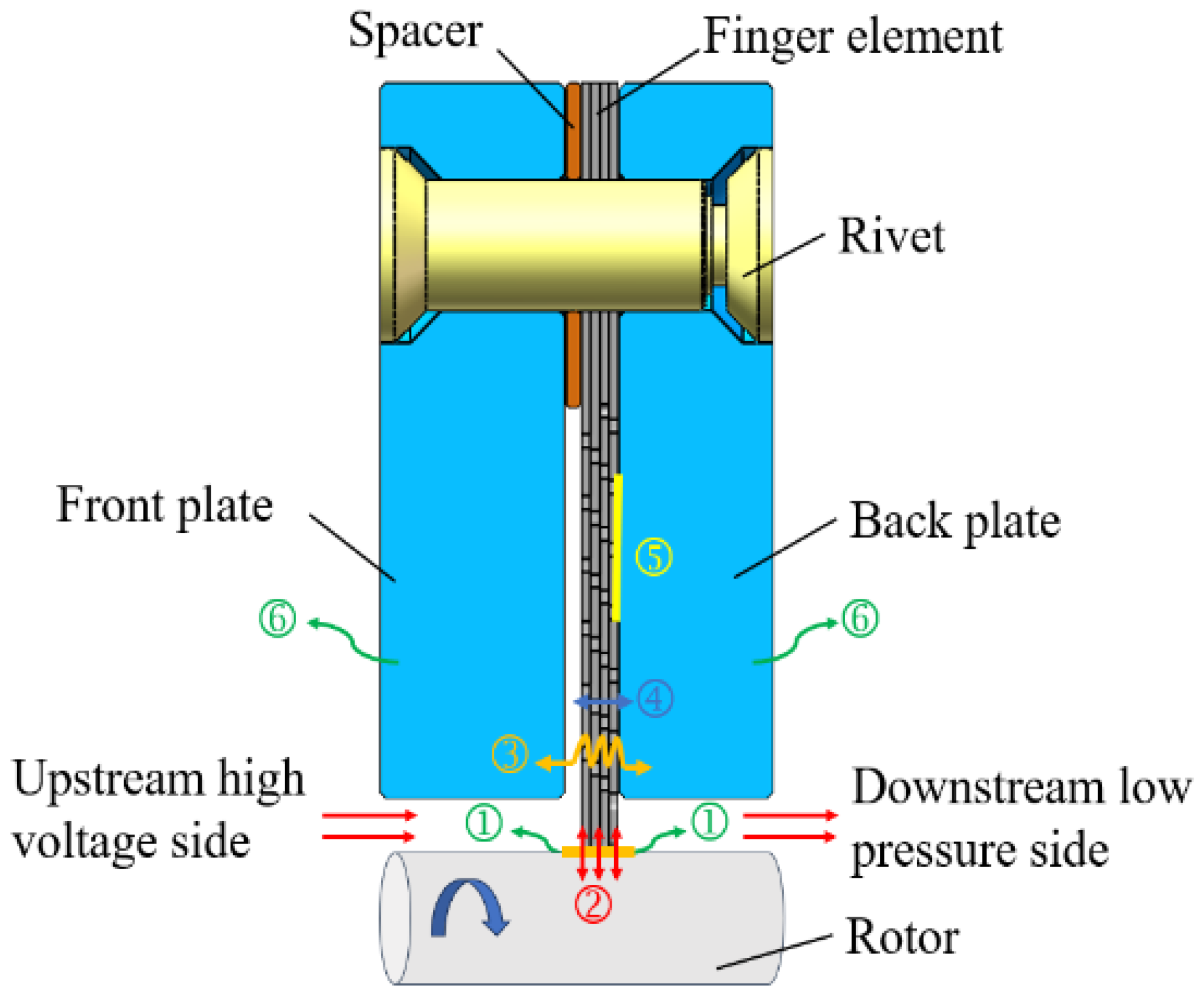
2.4. Frictional Heat-Generation Model for the Finger Seal
2.5. Local Thermal Non-Equilibrium Model for the Finger-Seal Porous Medium
3. Thermal-Deformation Coupling Method and Data Transfer
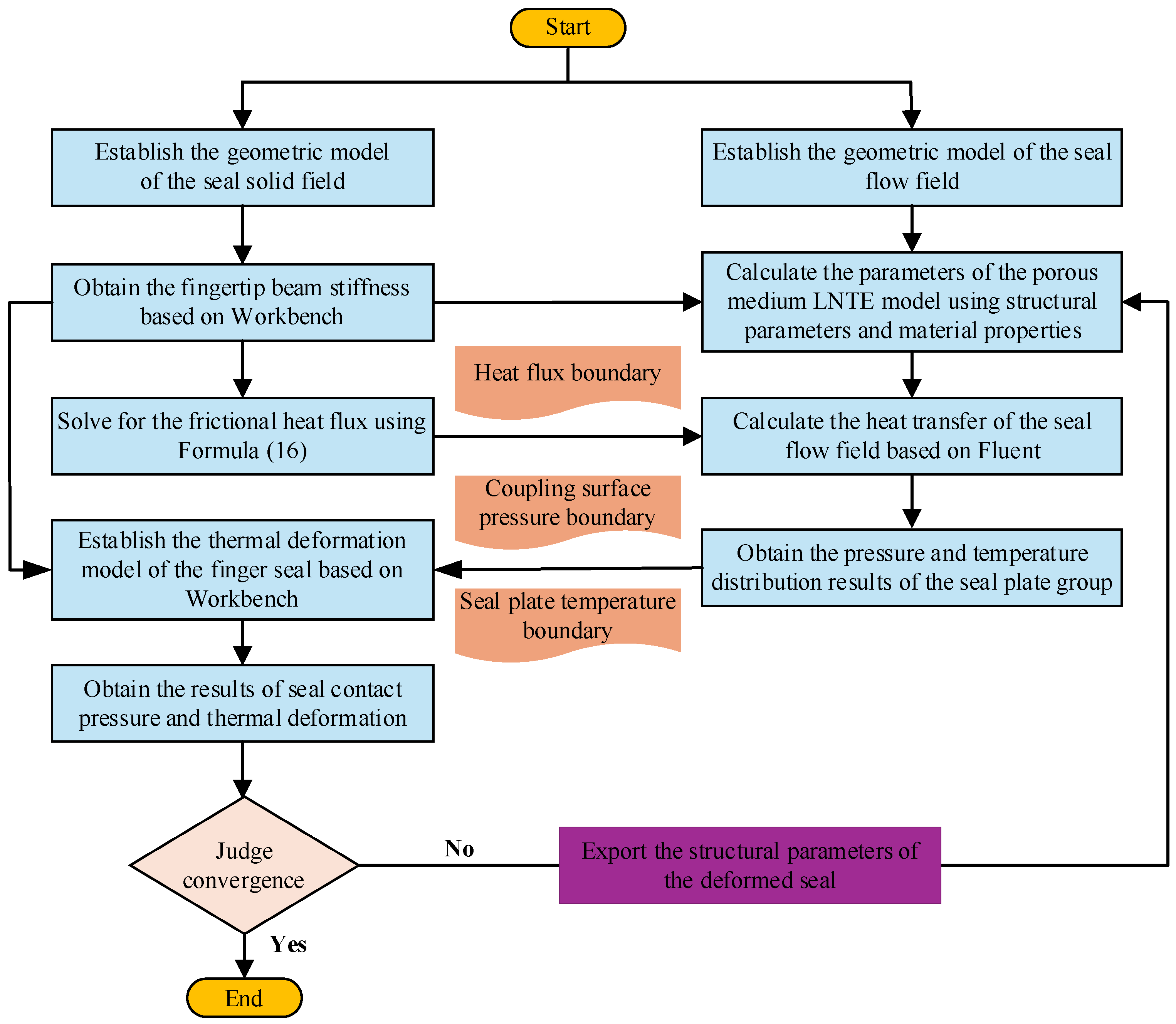
- The radial stiffness of a single finger beam is obtained through finite element analysis and substituted into Equation (16) to compute the frictional heat flux density between the seal and the rotor.
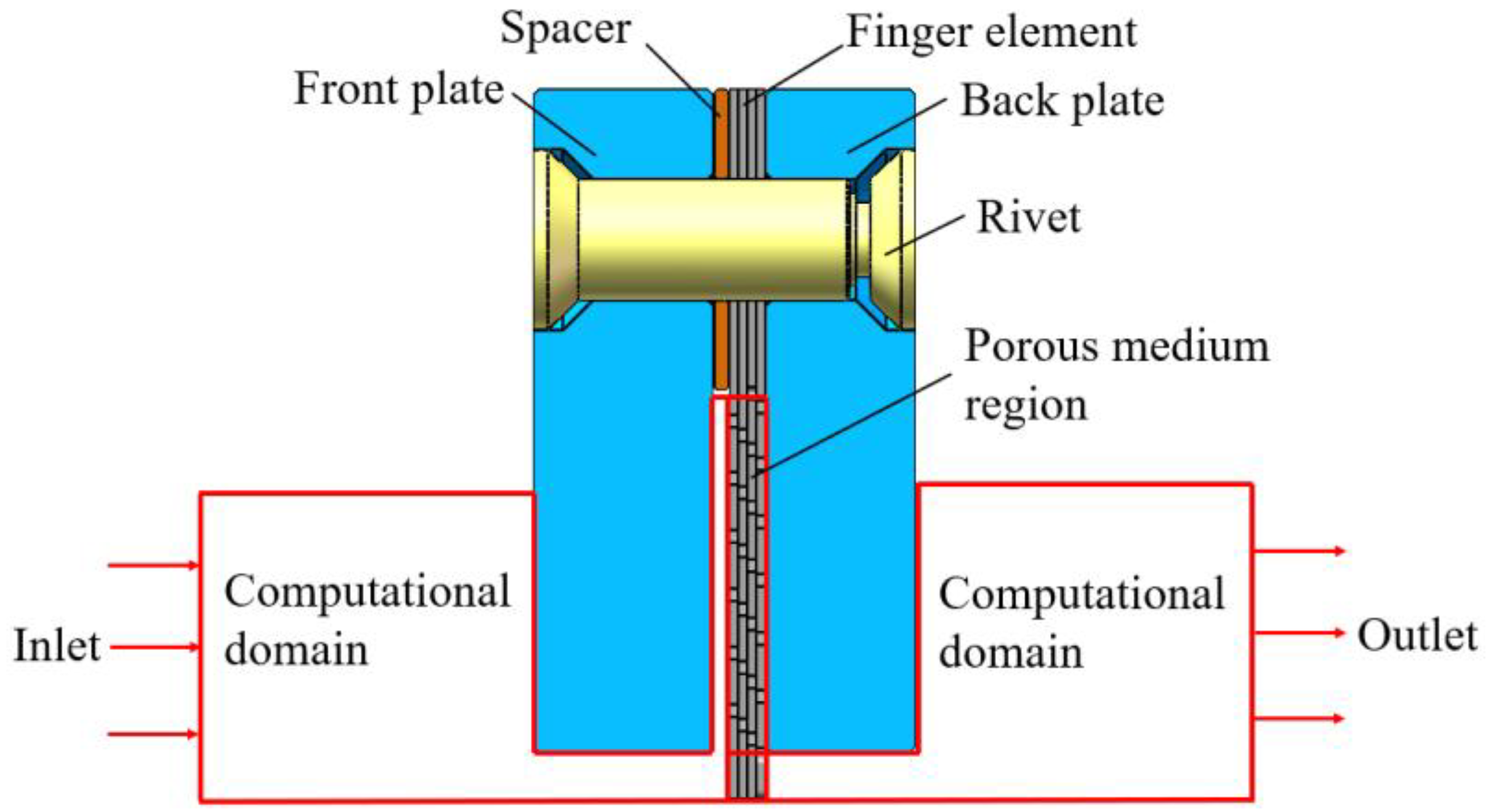
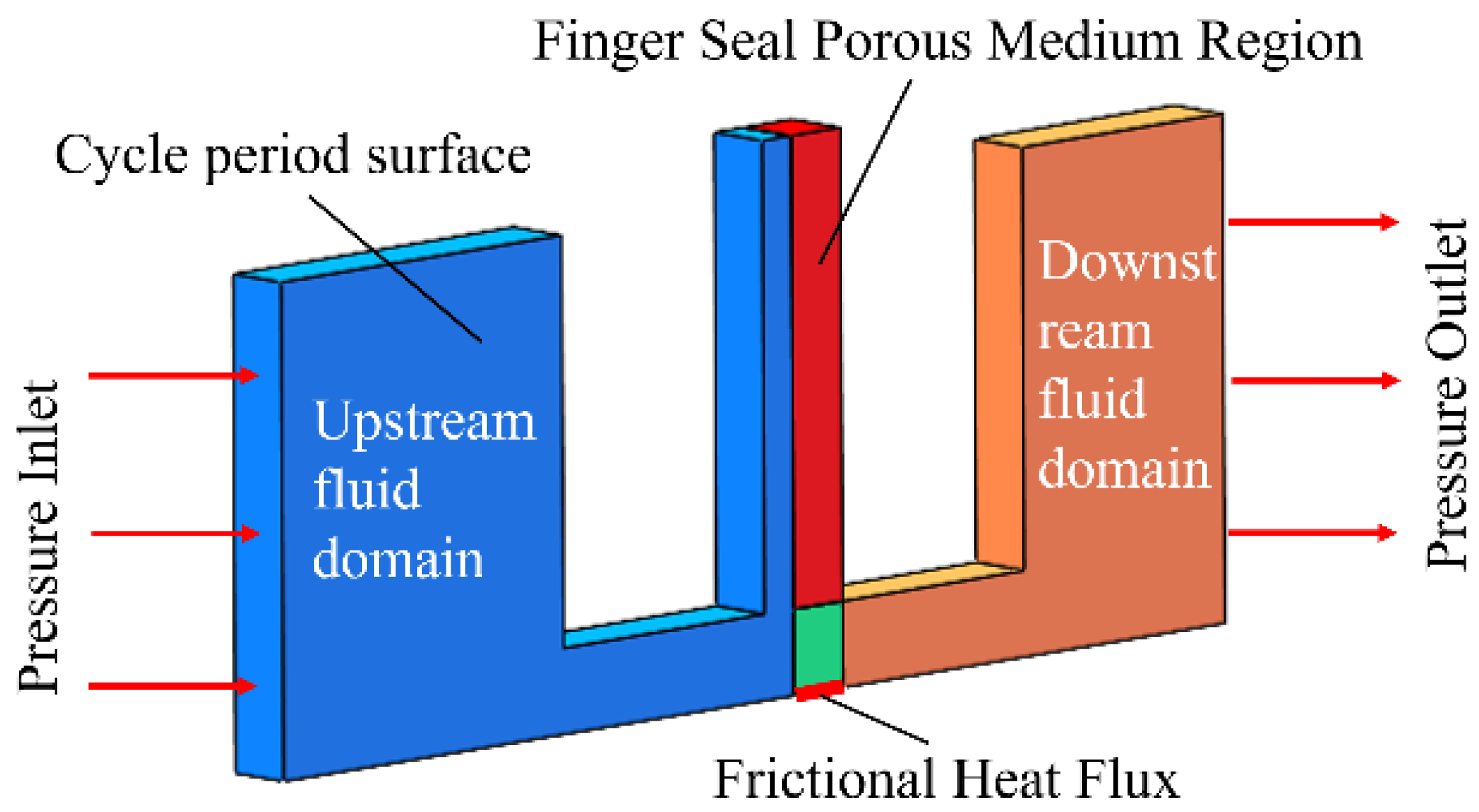
- The flow and heat transfer computational model of the finger seal, namely the porous-media model, is established based on the seal’s original geometric parameters. Parameters required for the LTNE porous-media model are computed according to the operating conditions and the physical properties of the finger-blade material. The frictional heat flux density is applied as a boundary condition, and Fluent is used to solve the governing equations for flow and heat transfer (Equations (1), (2), (4), (17), and (18)), yielding the flow field, temperature field, and other relevant results for the finger seal.
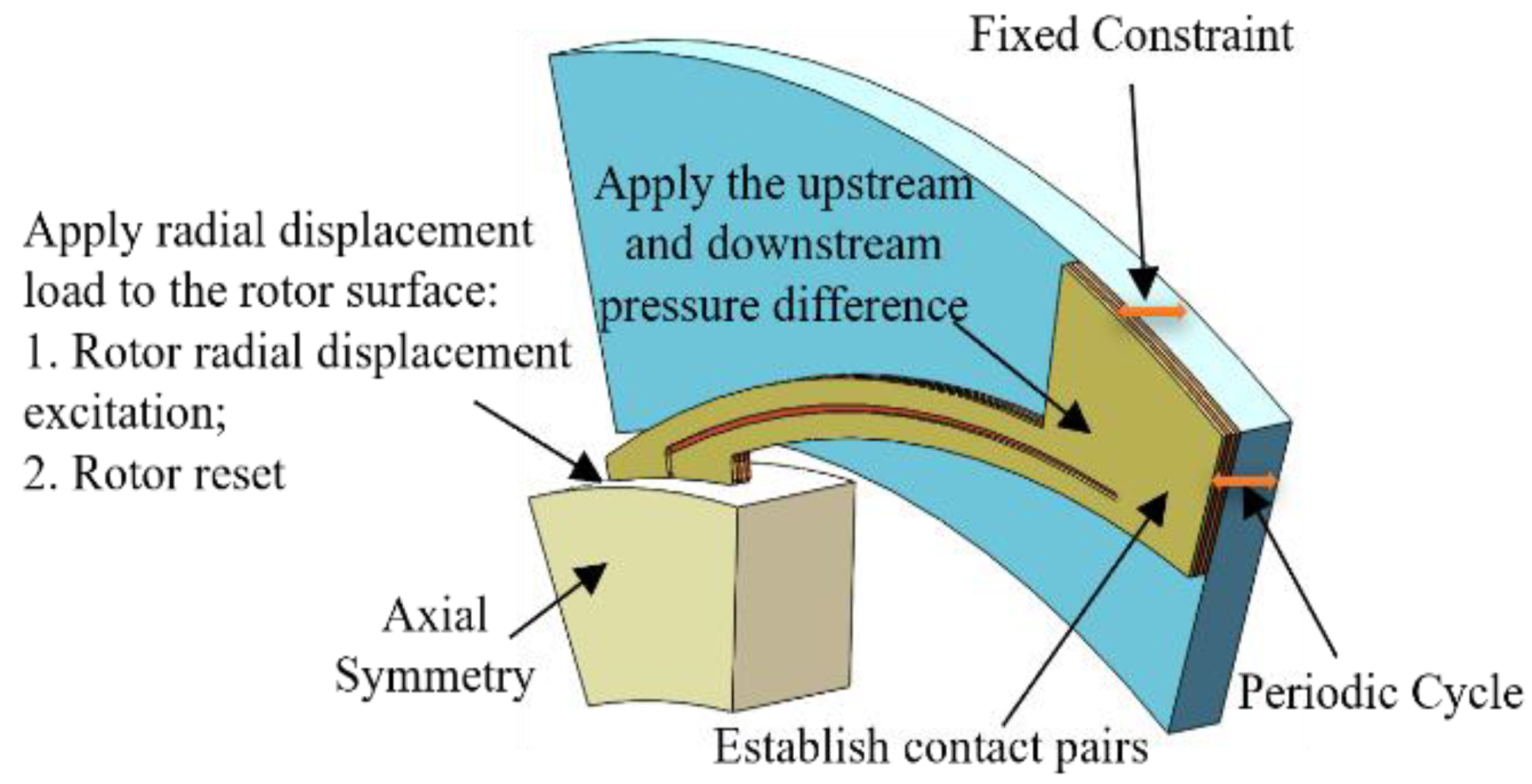
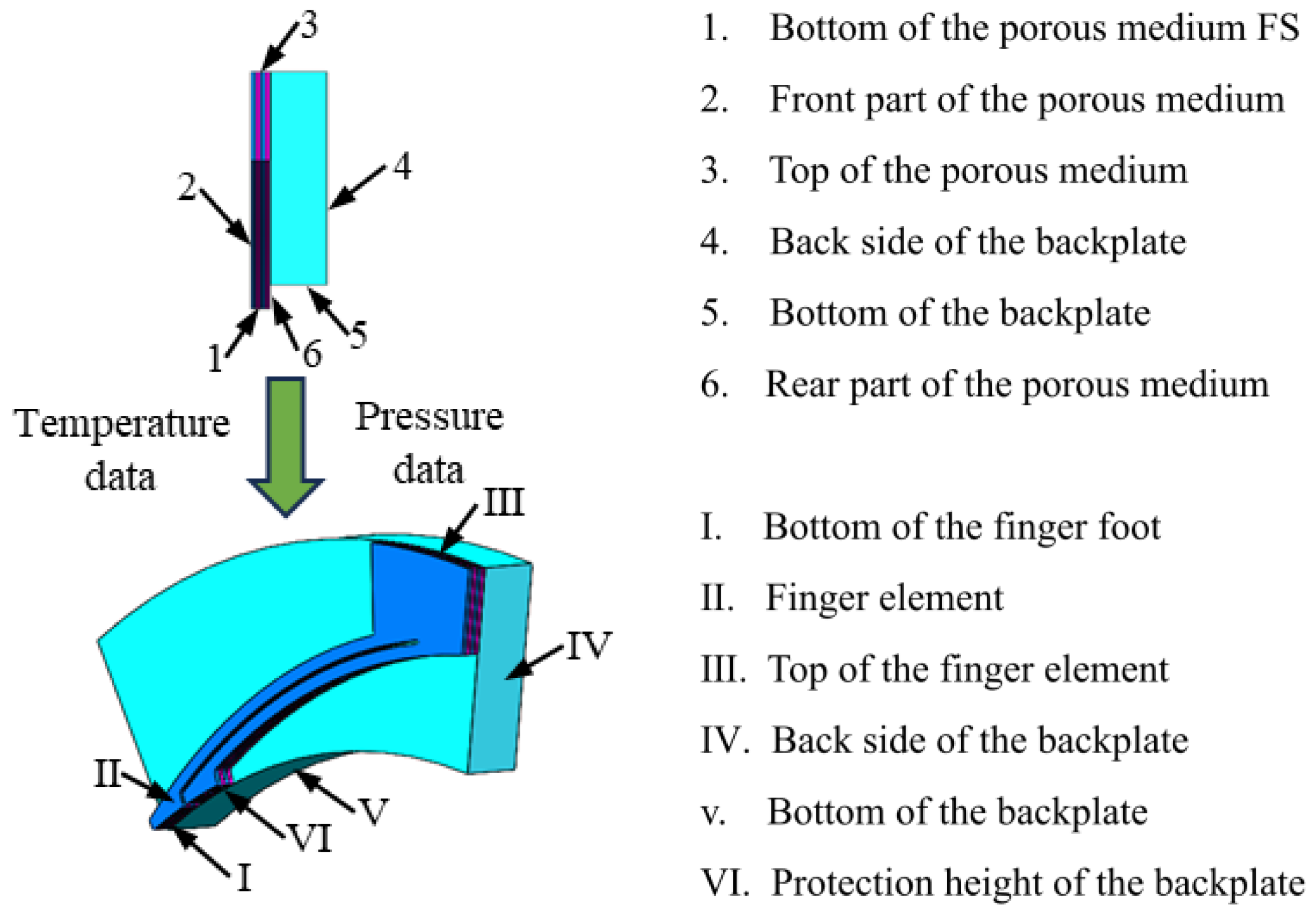
- The deformation analysis model for the finger seal is developed based on its structural characteristics. Using the Static Structure module in the Workbench platform, the pressure and temperature distributions of the seal-blade assembly obtained in step (2) are applied as boundary conditions to compute the contact pressure and thermal deformation of the seal blades under thermal stresses.
- Steps 2–3 are repeated iteratively until the results meet the convergence criteria.
4. Computational Model and Boundary Conditions
4.1. LTNE Porous-Media Computational Model and Boundary Conditions for the Finger Seal
4.2. Deformation Calculation Model and Boundary Conditions for the Finger Seal
4.3. Data Transfer in the Weakly Coupled Calculation
4.4. Mesh Generation and Model Validation
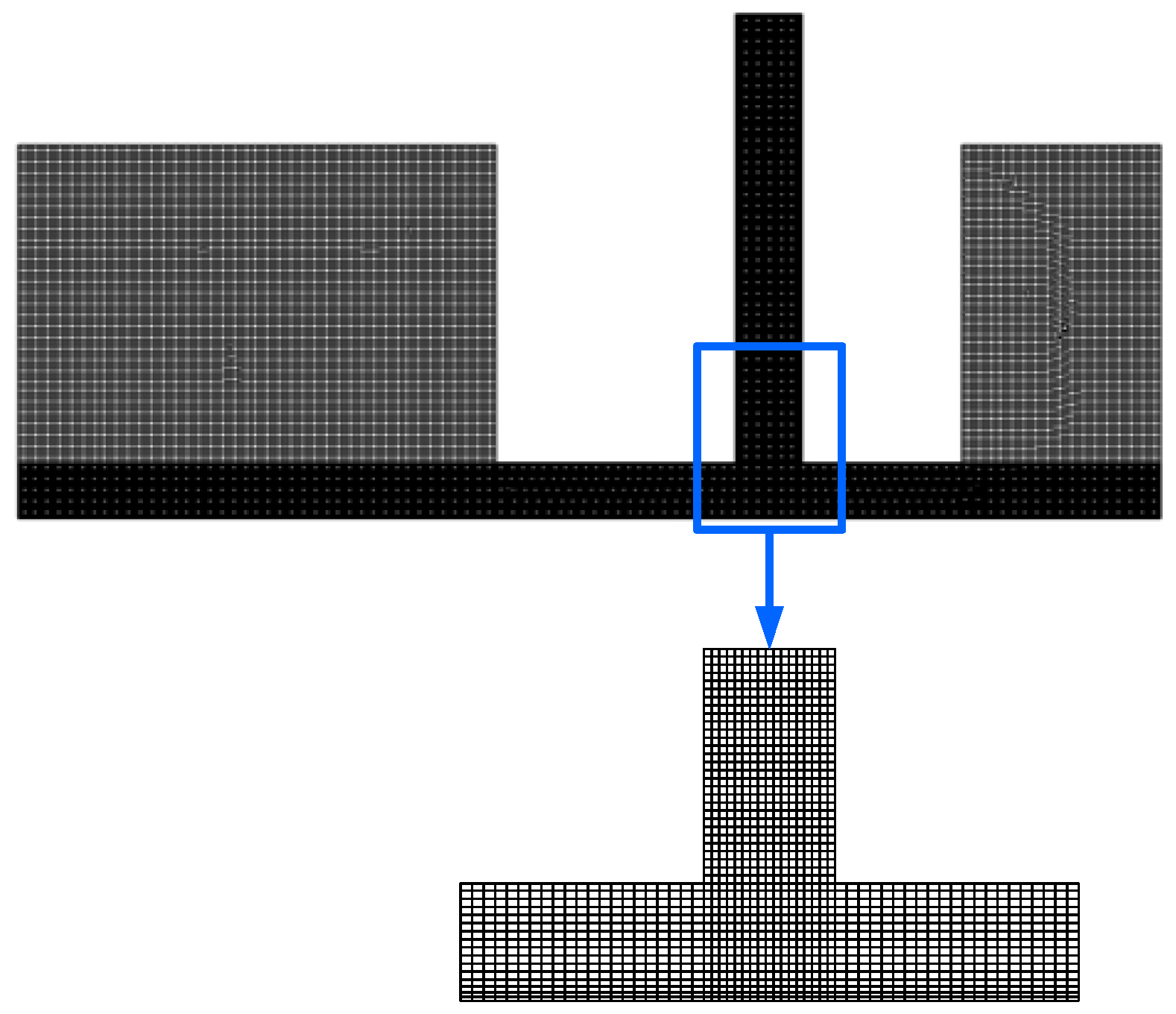
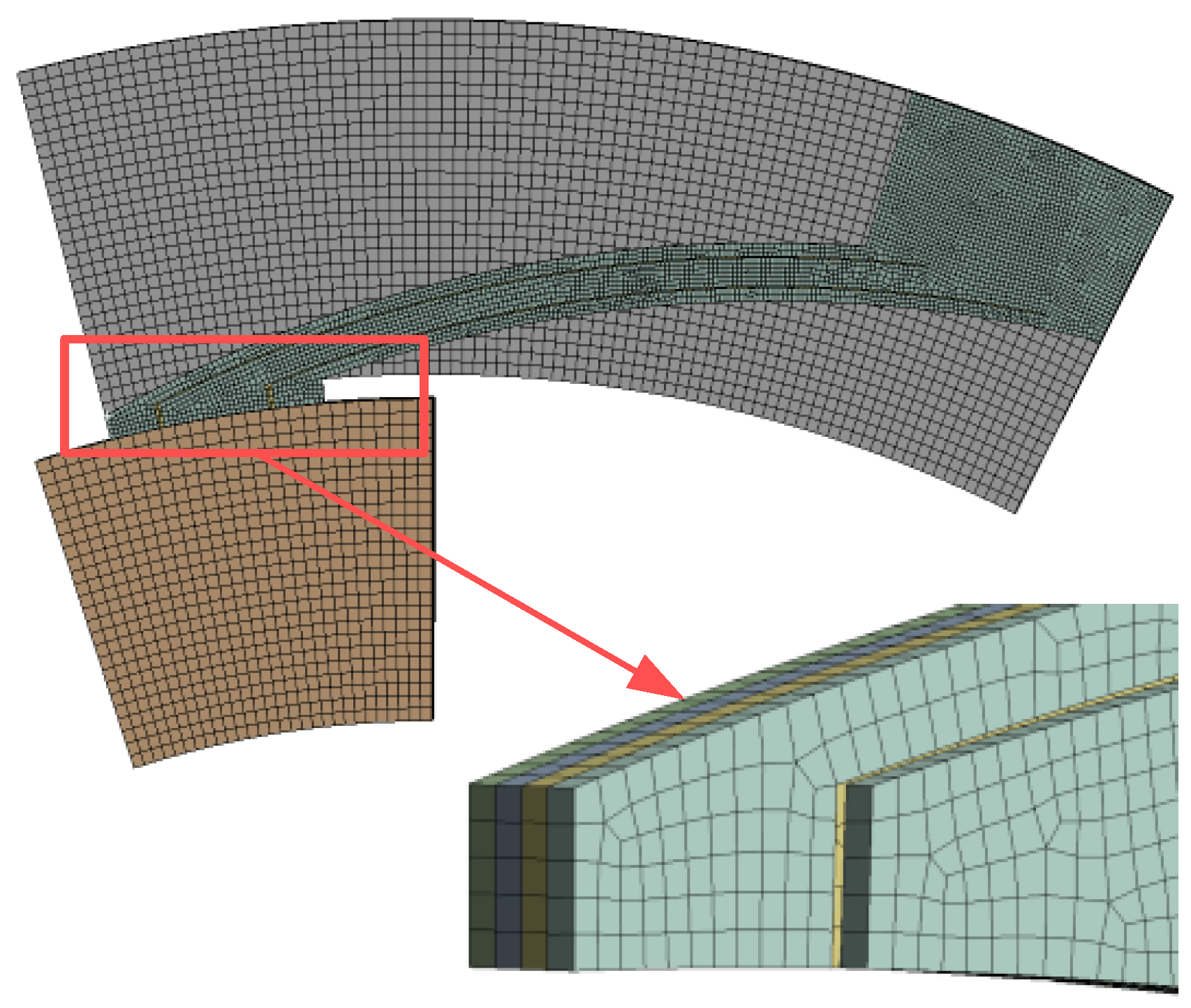
4.4.1. Mesh Generation
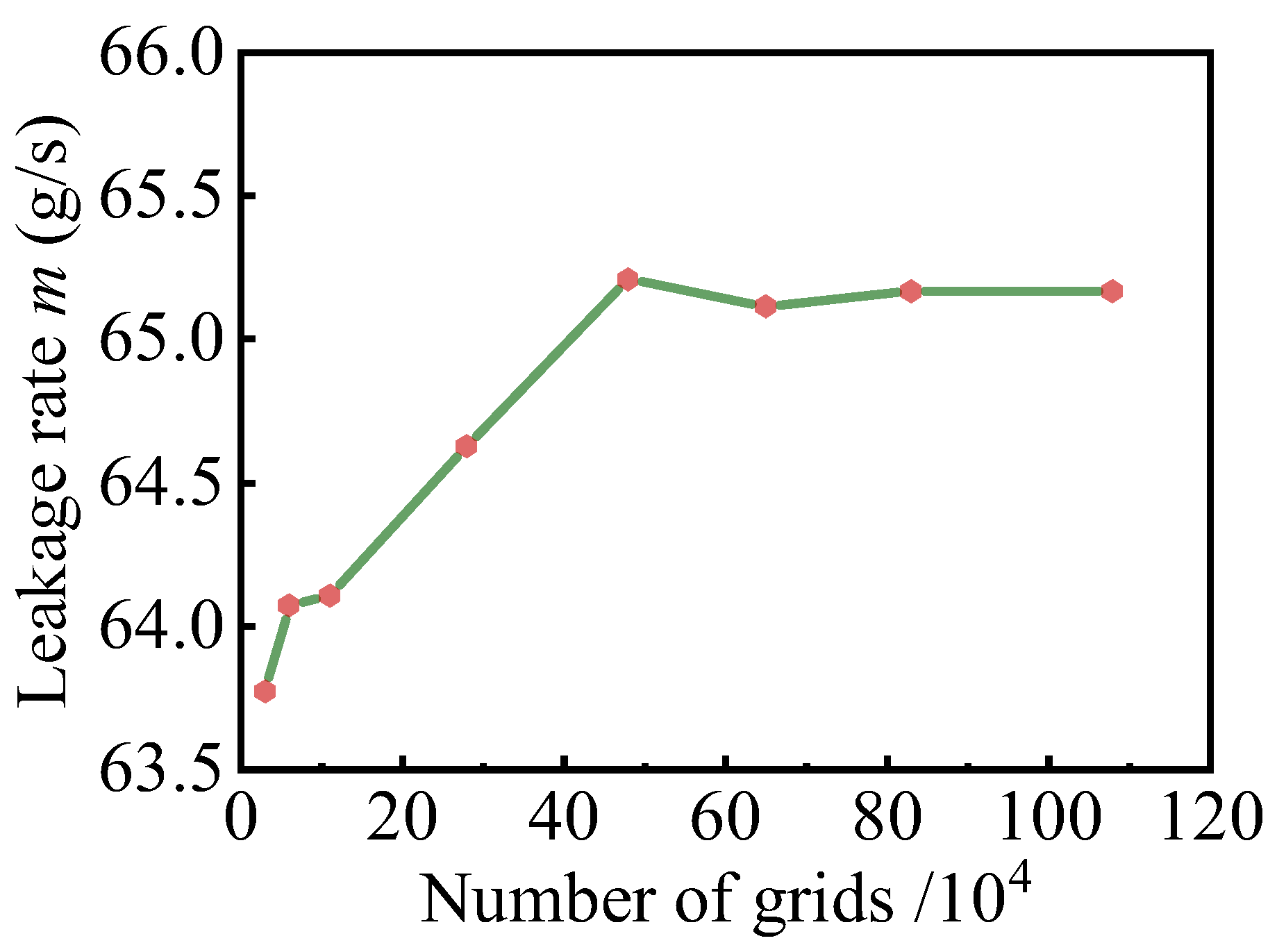
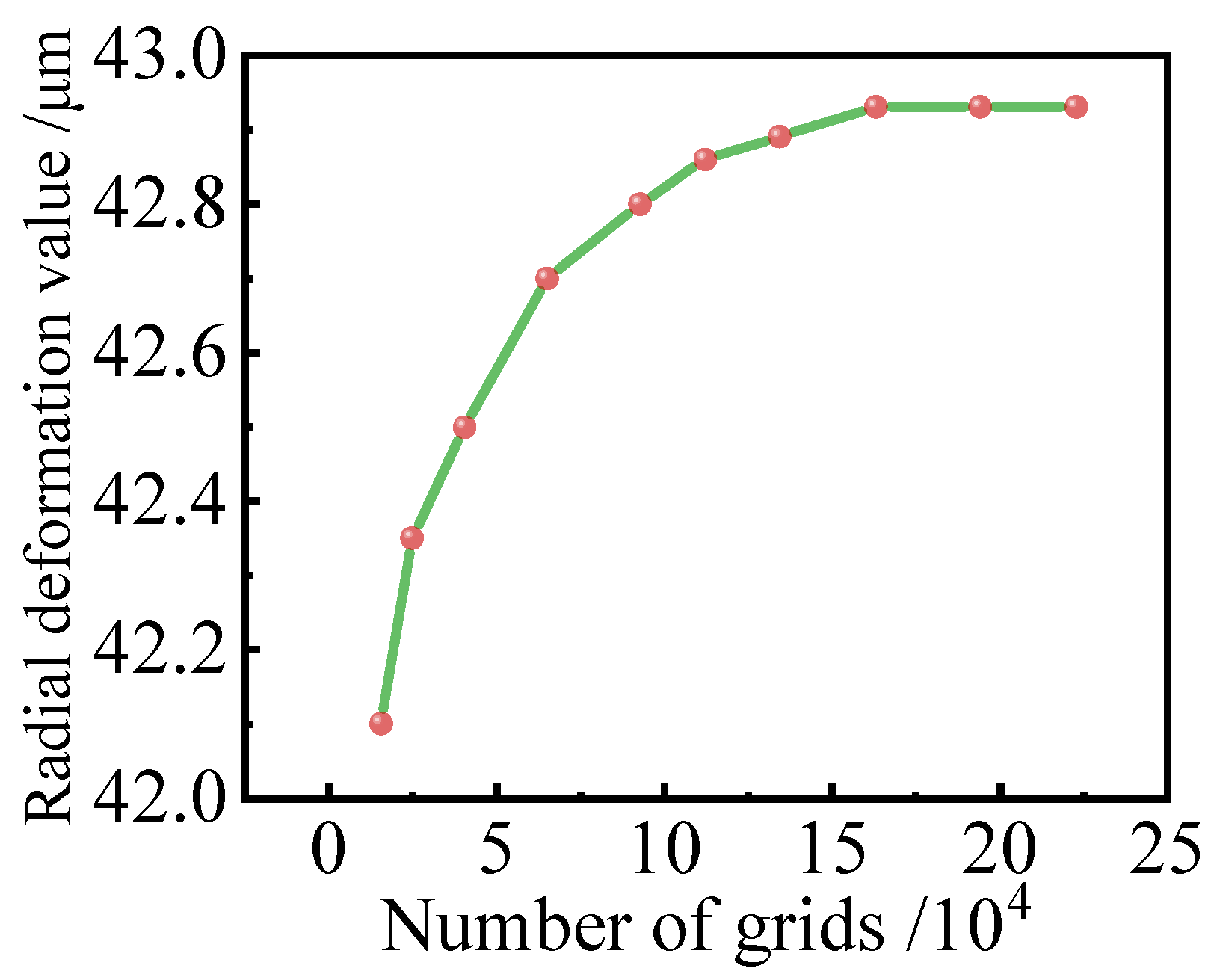
4.4.2. Mesh Independence Verification
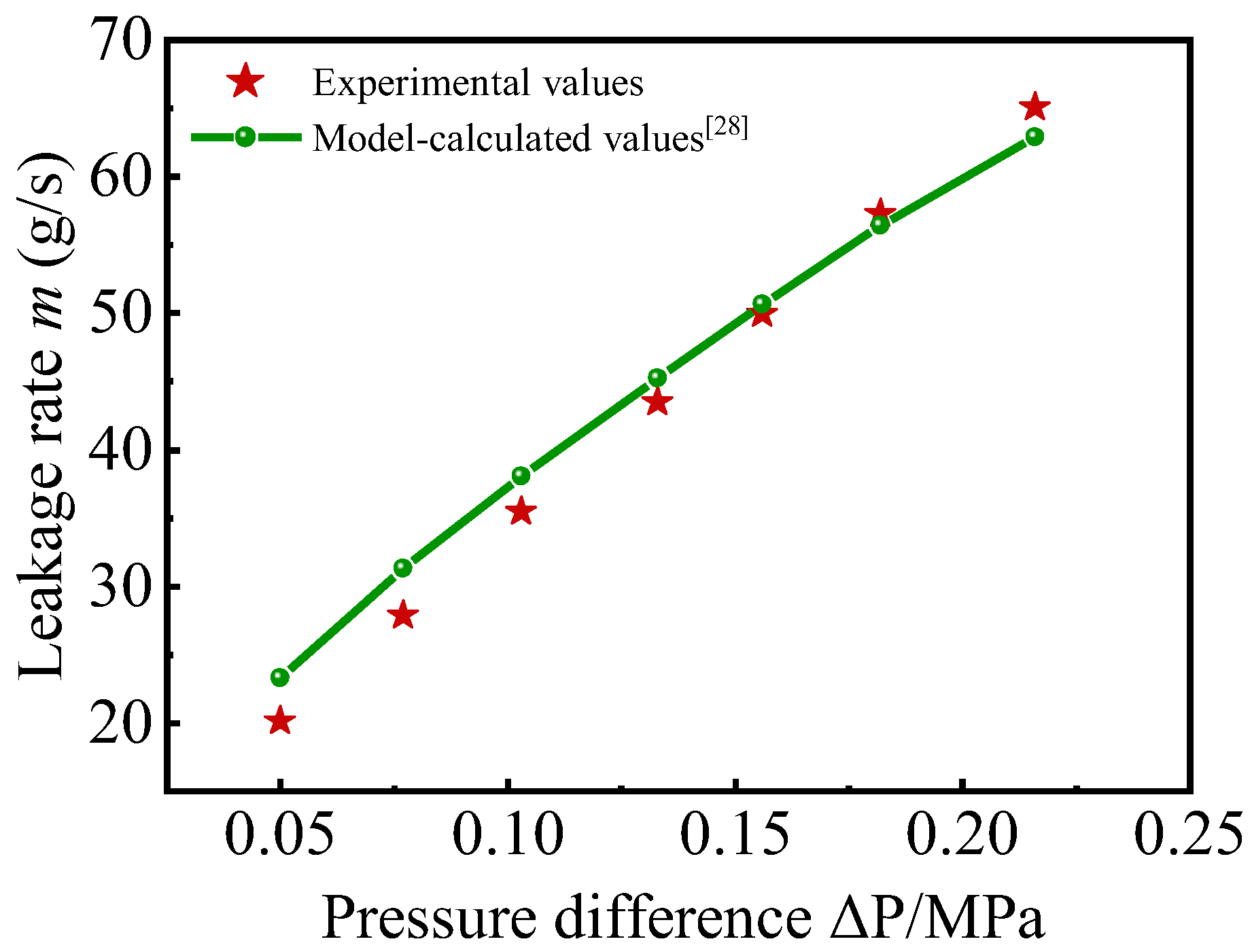
4.4.3. Validation of Computational Accuracy
5. Results and Discussion
5.1. Analysis of Maximum Temperature and Leakage Characteristics of the Finger Seal Under the LTNE Model
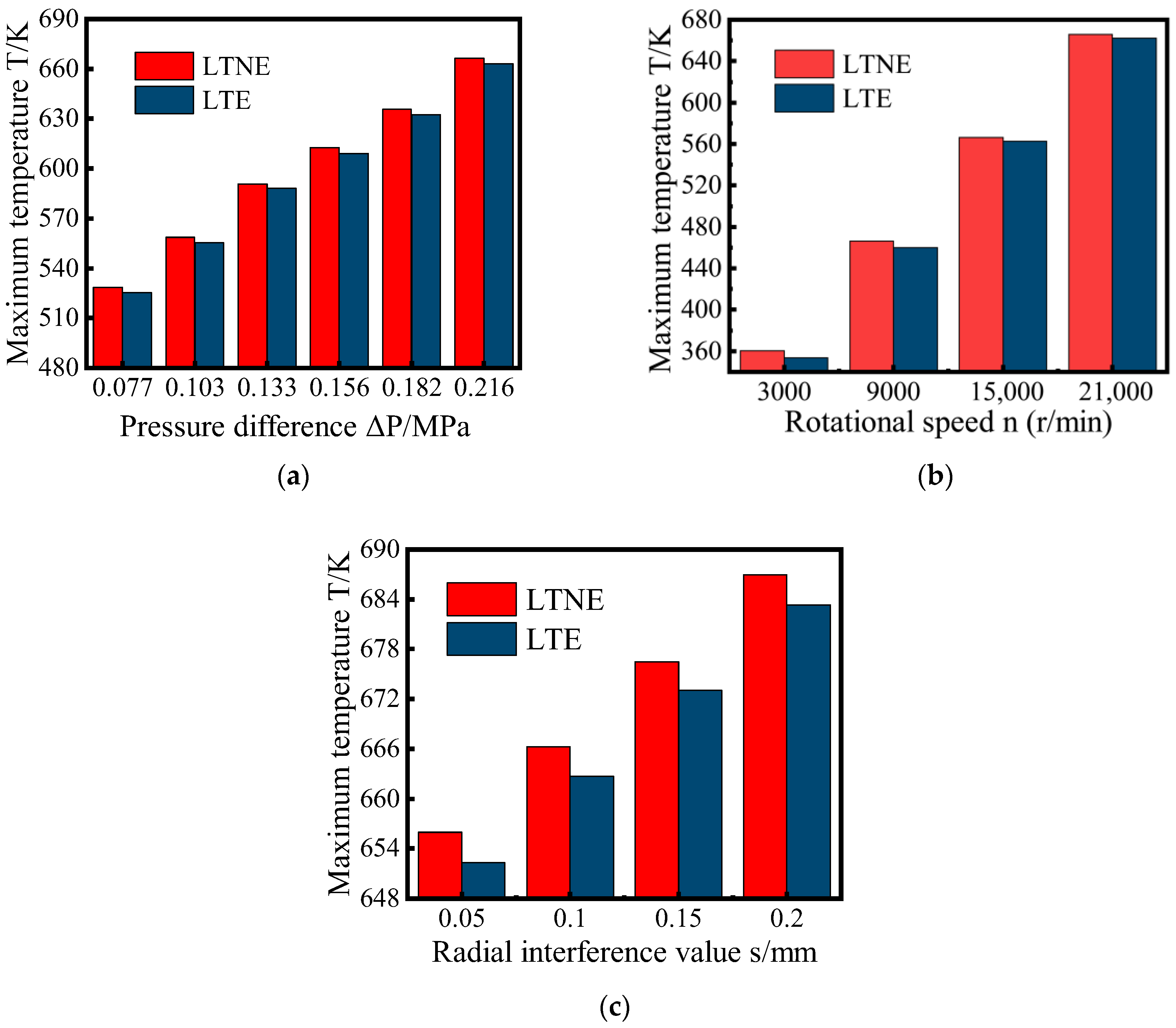
5.1.1. Comparative Analysis of the Influence of Operating Parameters on Maximum Temperature Characteristics of Finger Seals
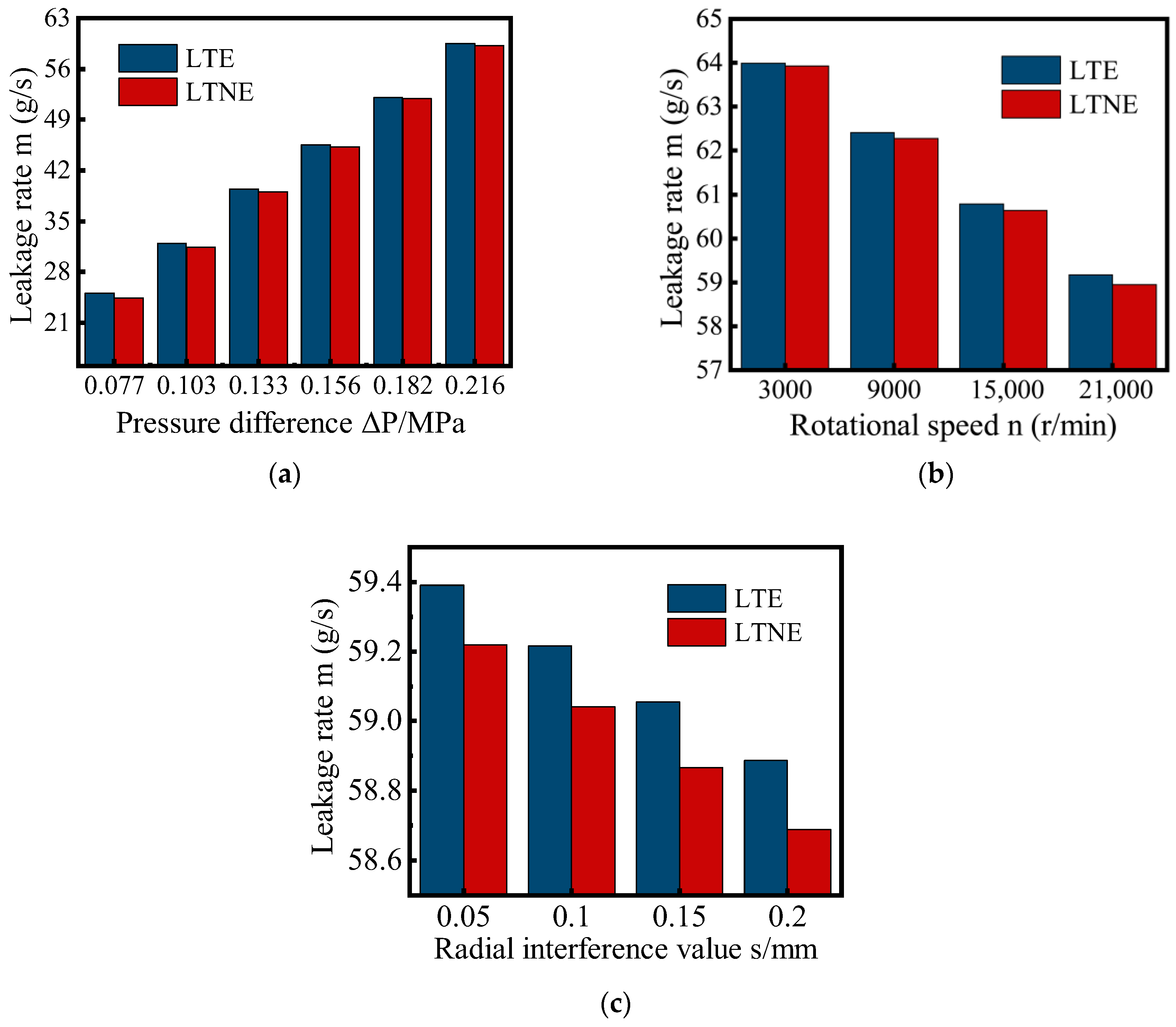
5.1.2. Comparative Analysis of the Influence of Operating Parameters on Leakage Performance of Finger Seals
5.2. Thermal-Deformation Analysis of the Finger Seal
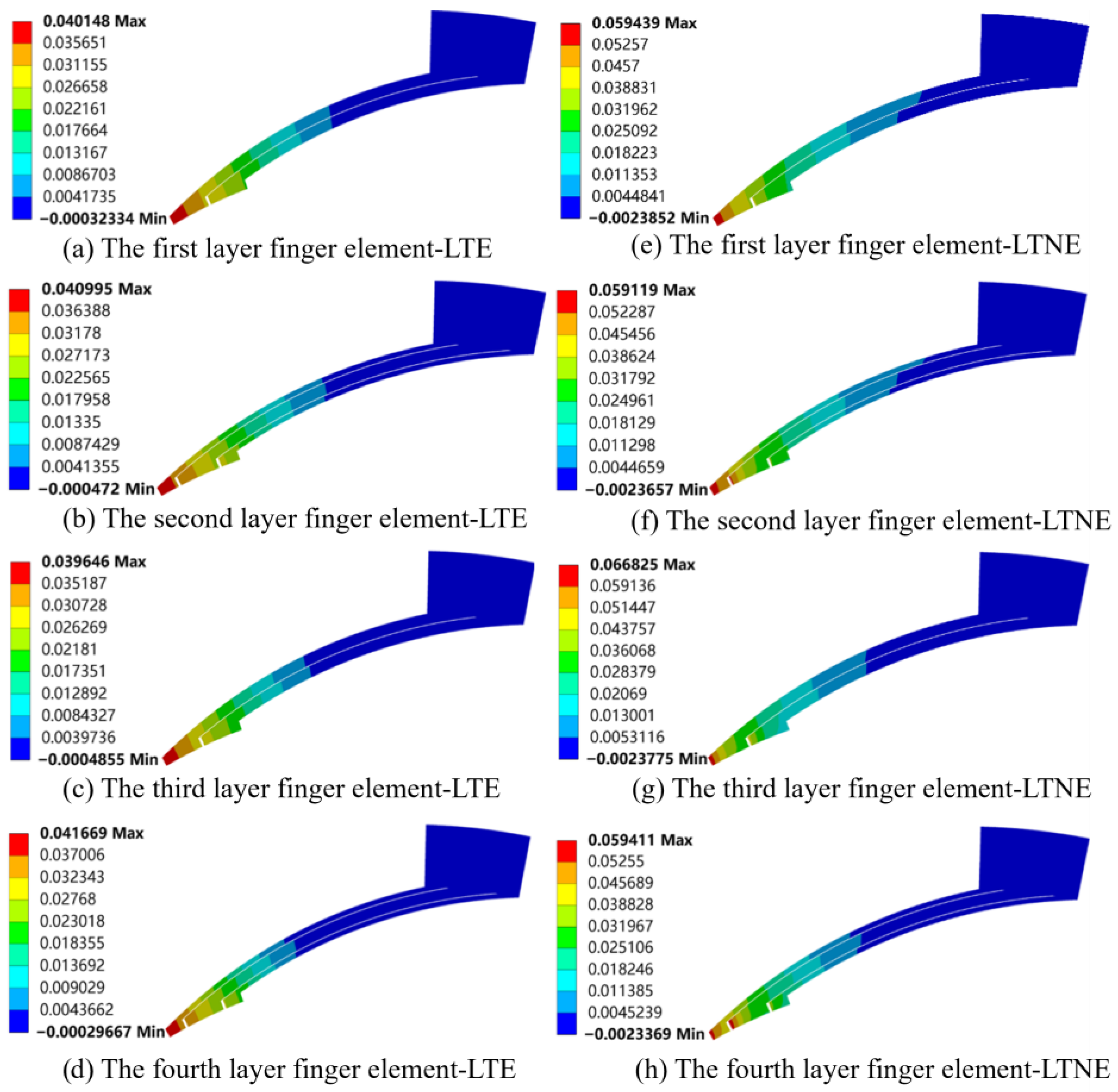
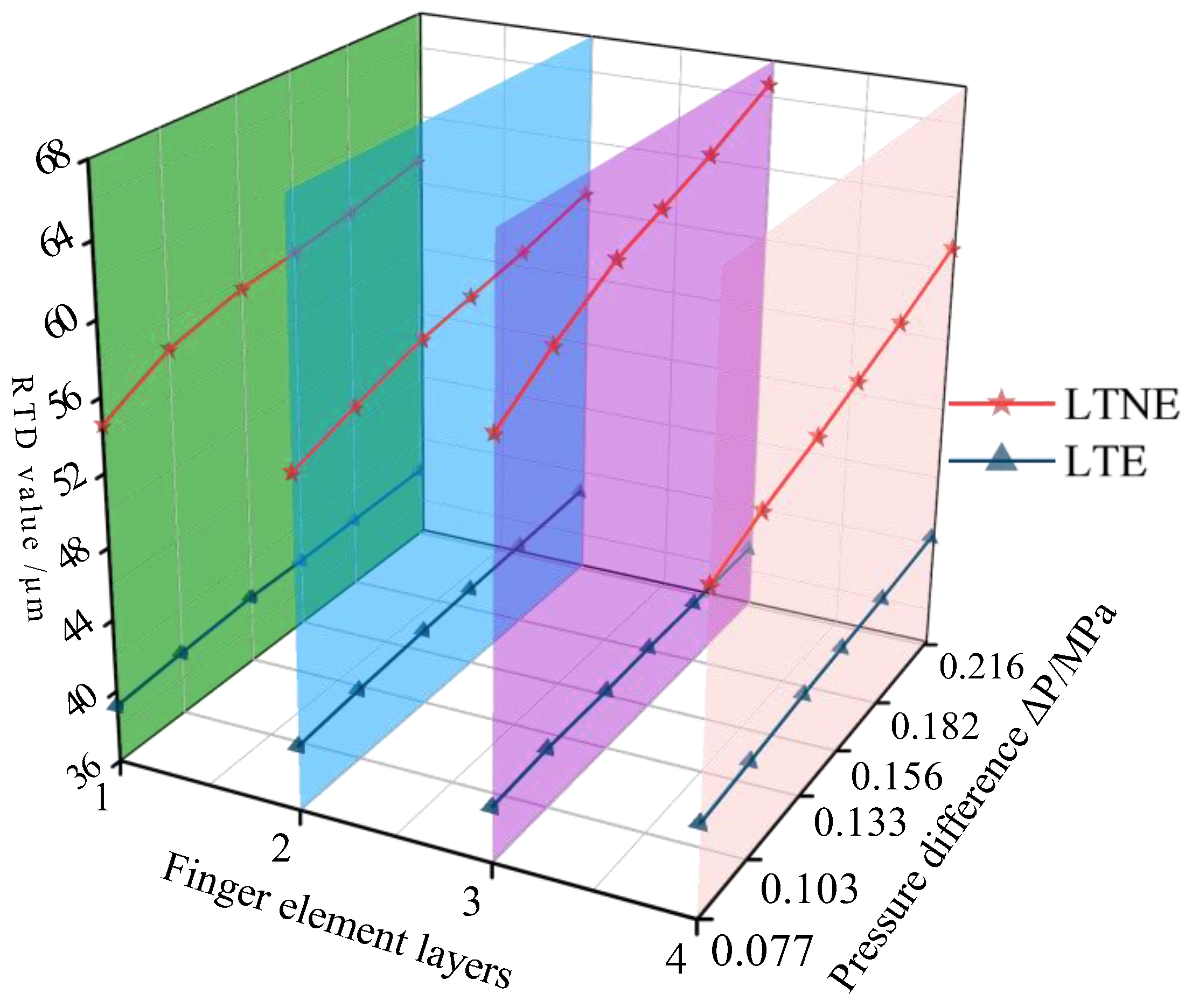
5.2.1. Comparative Analysis of Thermal Deformation of Each Seal-Element Layer Under the LTE and LTNE Models
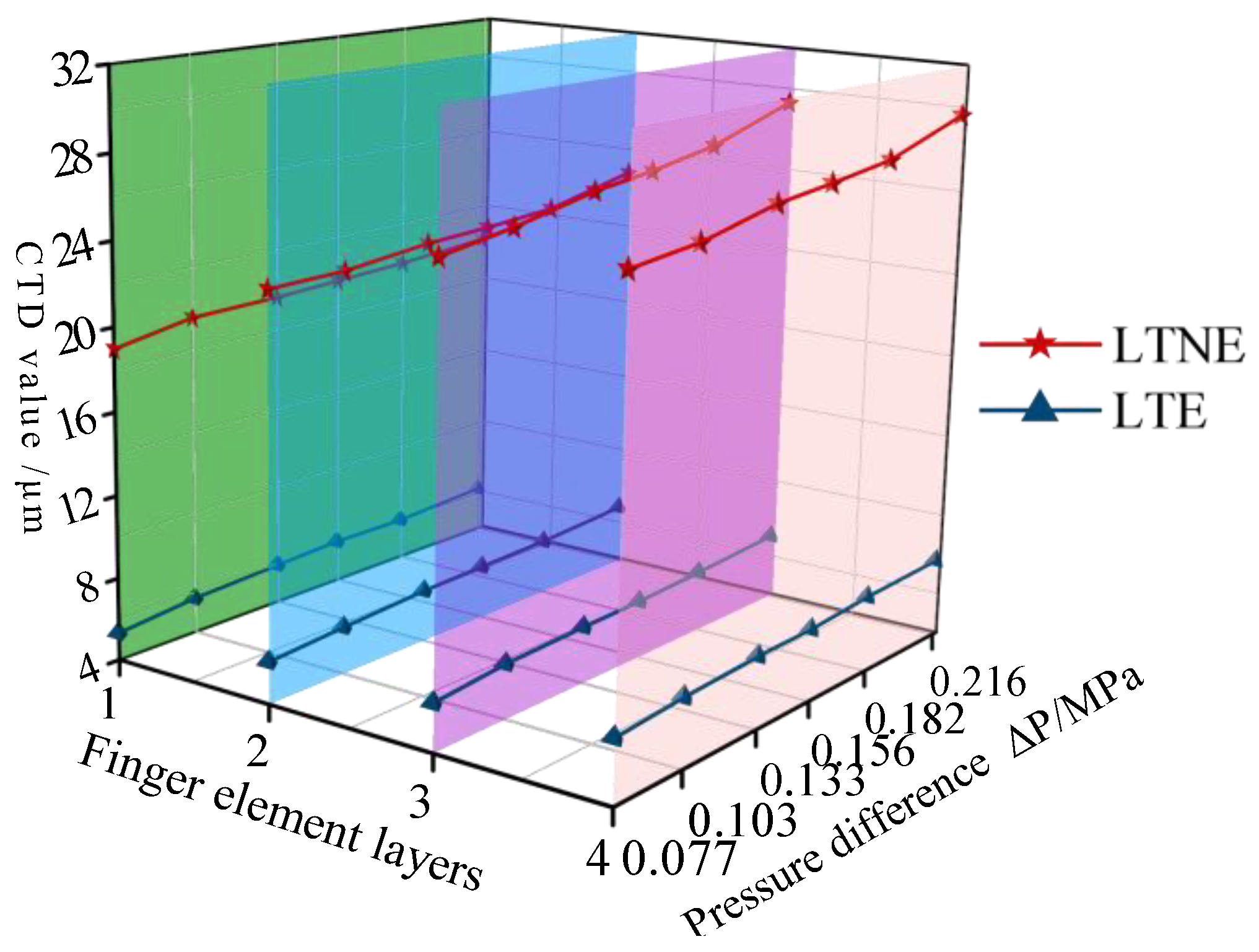
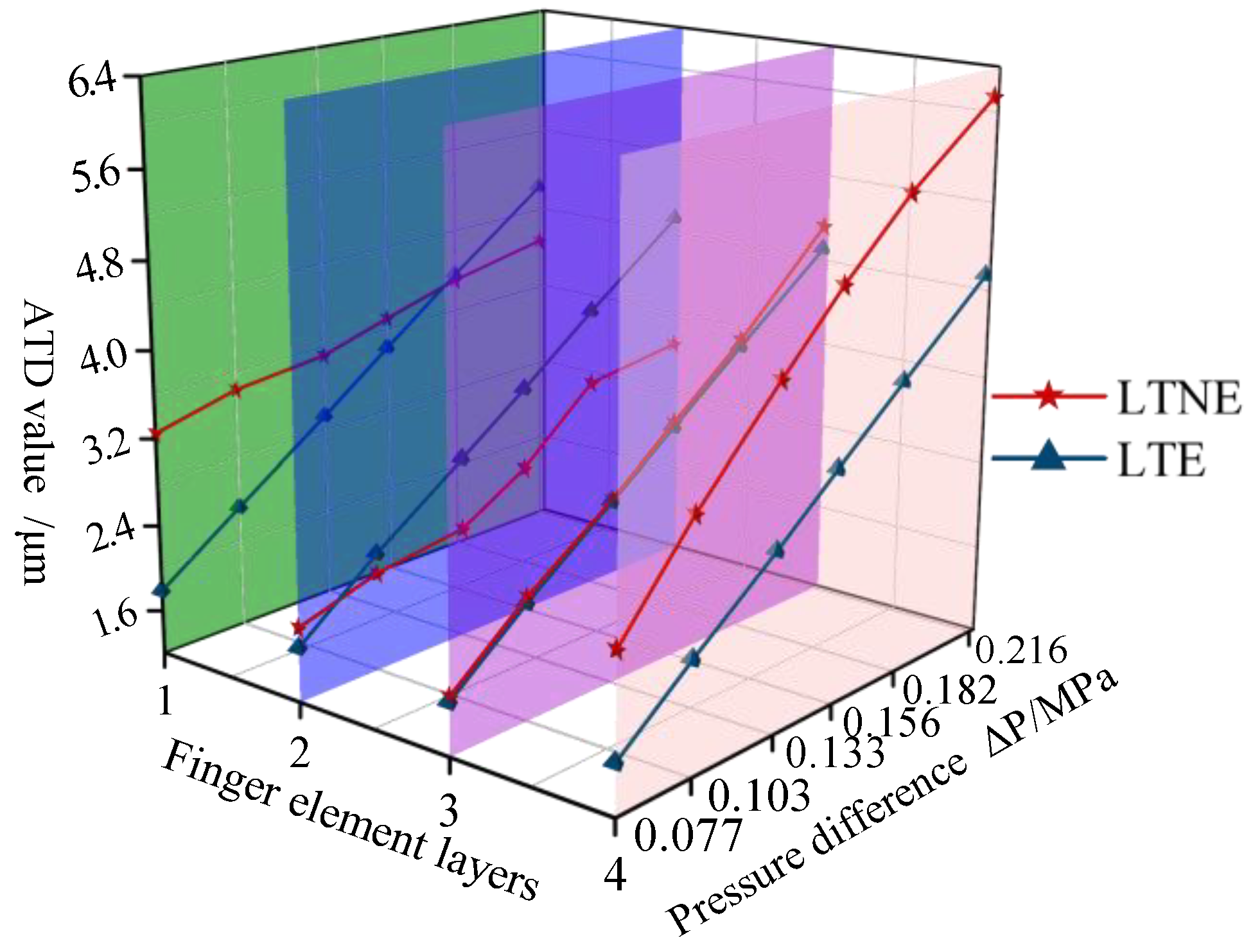
5.2.2. Influence of Pressure Differential on the Thermal Deformation of the Finger Seal
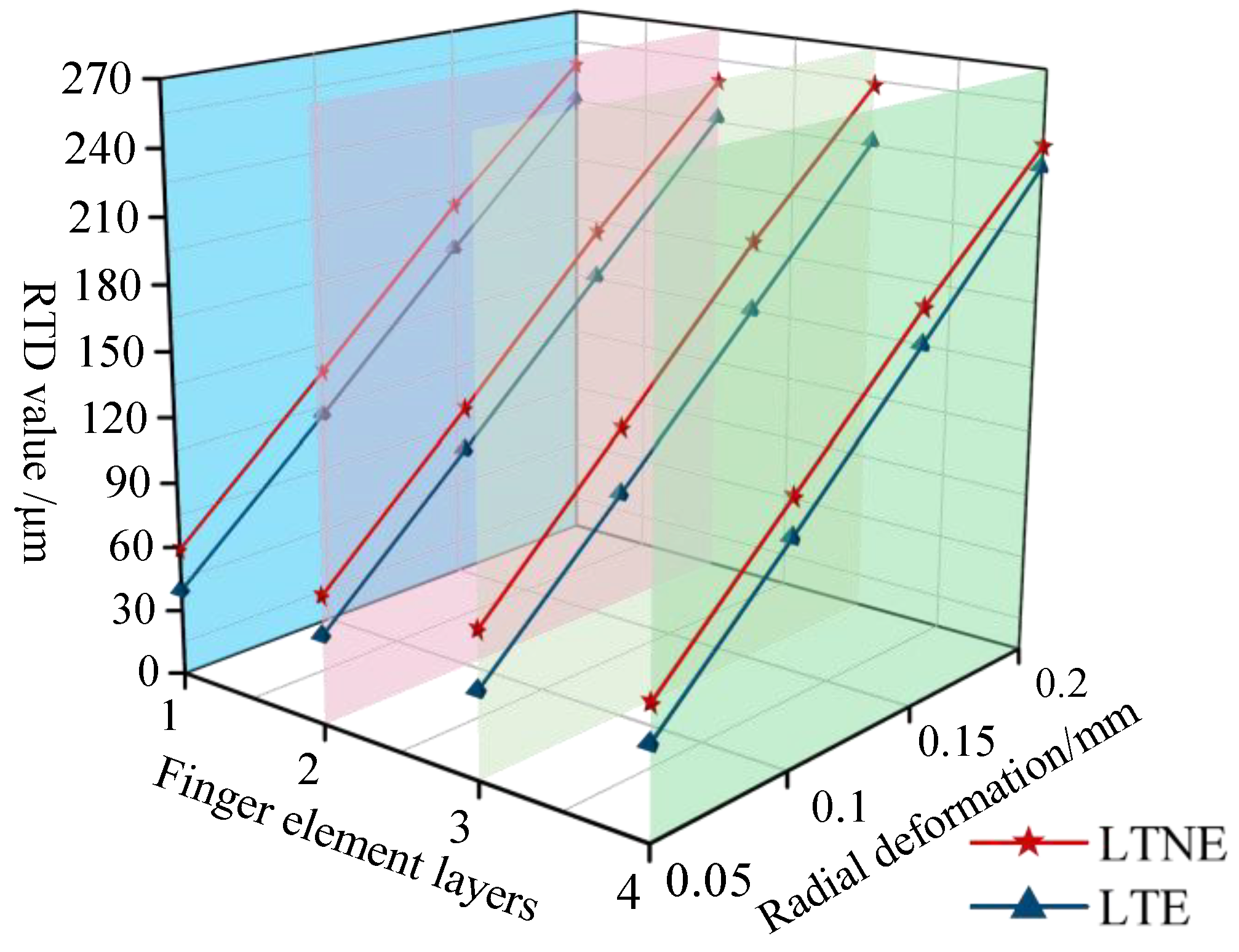
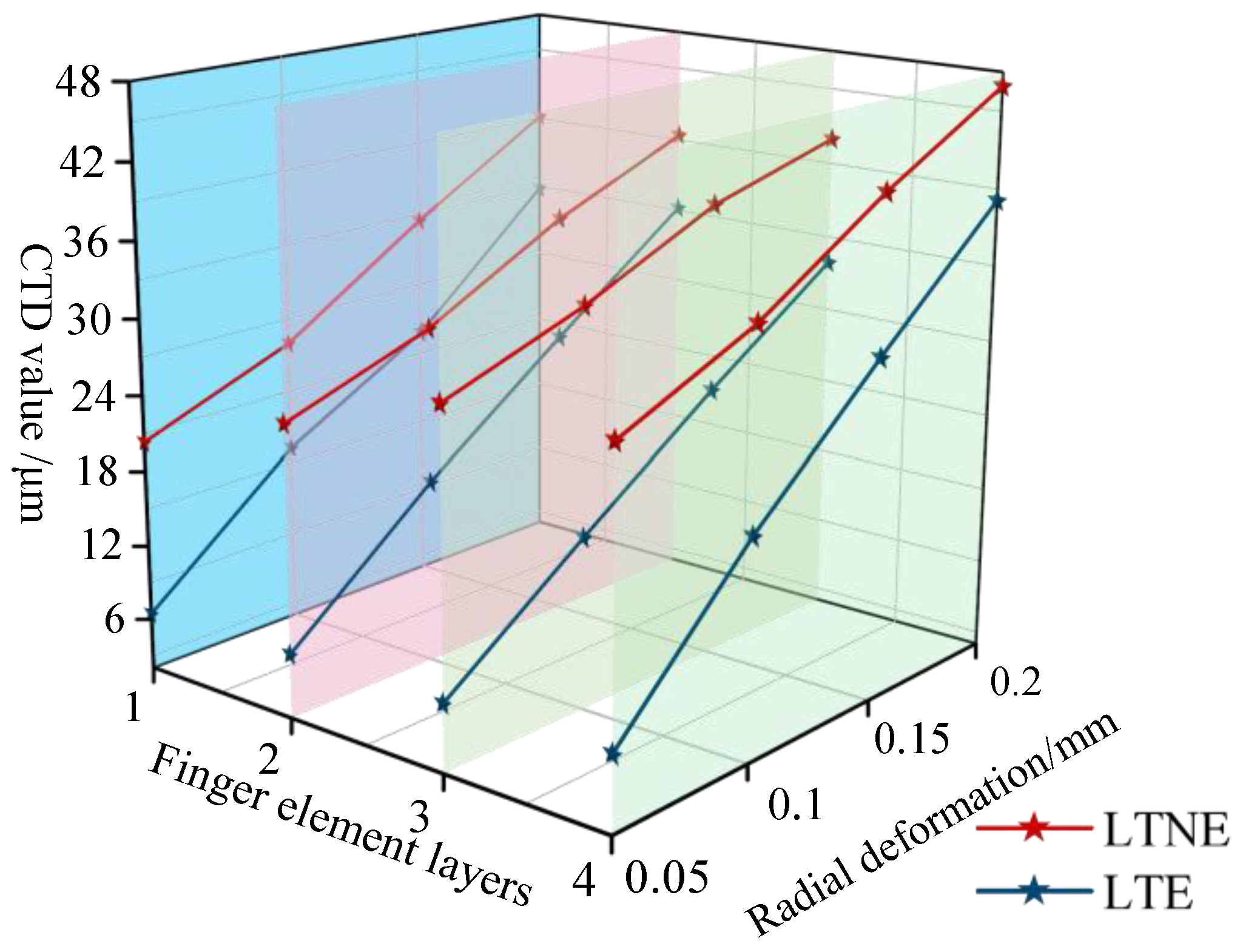
5.2.3. Influence of Interference on the Thermal Deformation of the Finger Seal
5.3. Analysis of Average Contact Pressure Under the LNTE Model for Finger Seals
5.3.1. Influence of Pressure Differential on the Average Contact Pressure of the Finger Seal
5.3.2. Influence of Interference on the Average Contact Pressure of the Finger Seal
6. Conclusions
- Due to the inclusion of convective heat transfer between the fluid and the finger-seal elements, the maximum temperature by the LTNE model is higher than that of the LTE model. Moreover, among the operating parameters, rotational speed has the most significant effect on the maximum temperature of the finger seal, with an increase of 84.8% observed in the LTNE model. Furthermore, convective heat exchange causes the blade temperature to exceed the fluid temperature, resulting in reduced fluid temperature, increased viscosity, and greater flow resistance. Consequently, the LTNE model yields a lower leakage rate than the LTE model.
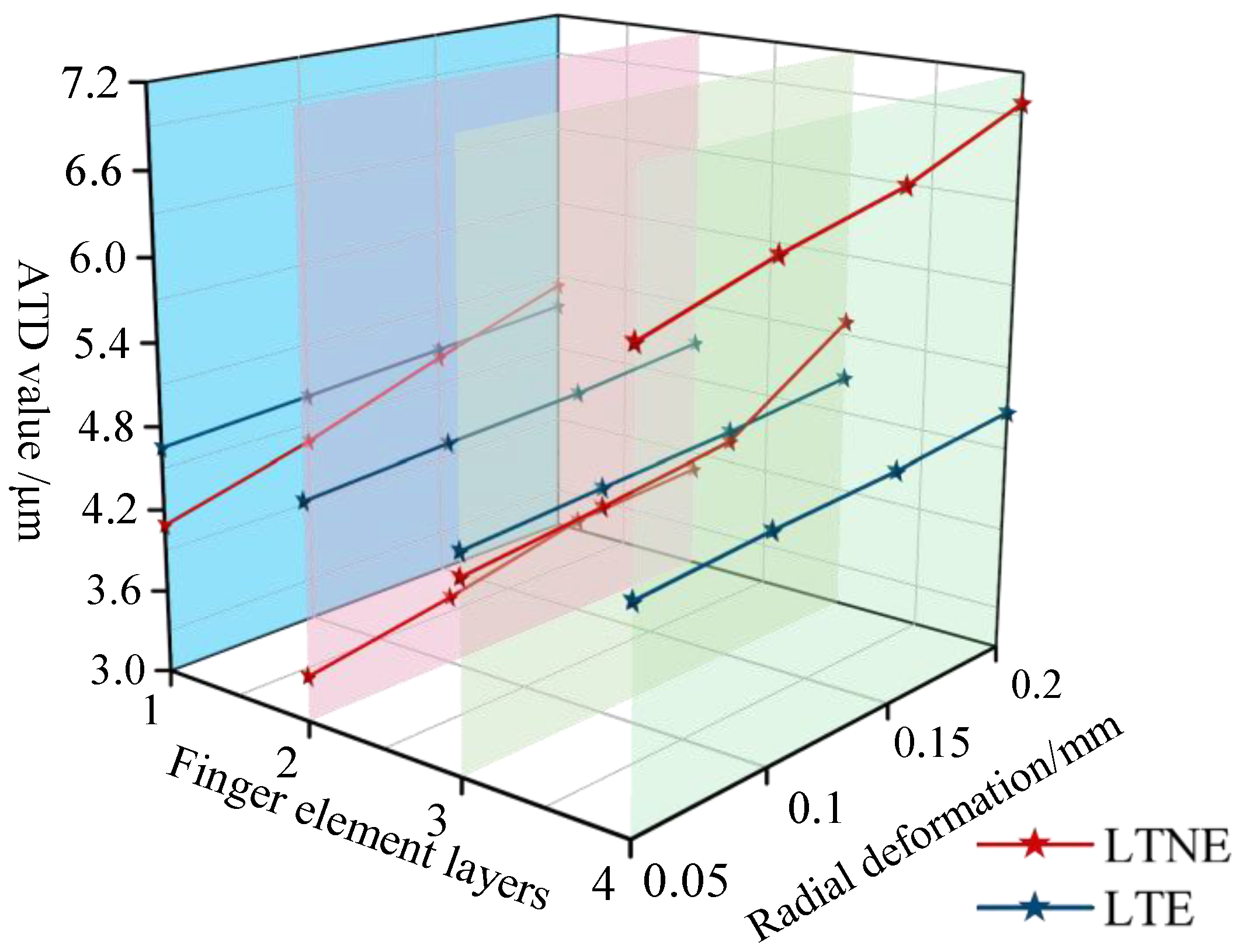
- Under both models, the deformation of each blade layer increases with increasing pressure differential and radial interference. The LTNE model consistently calculated greater overall deformation than the LTE model, indicating that thermal effects have a significant impact on the sealing performance of finger seals.
- The influences of pressure differential and radial interference on thermal deformation exhibit similar trends: radial deformation is most strongly affected, followed by circumferential deformation, with axial deformation being least sensitive. Within the pressure difference range, the radial deformation of the third seal element in the LTNE model increases by 14.55%. As the radial interference of the rotor increases from 0.05 mm to 0.2 mm, the radial deformation of each seal element in the LTNE model increases by 0.18 mm.
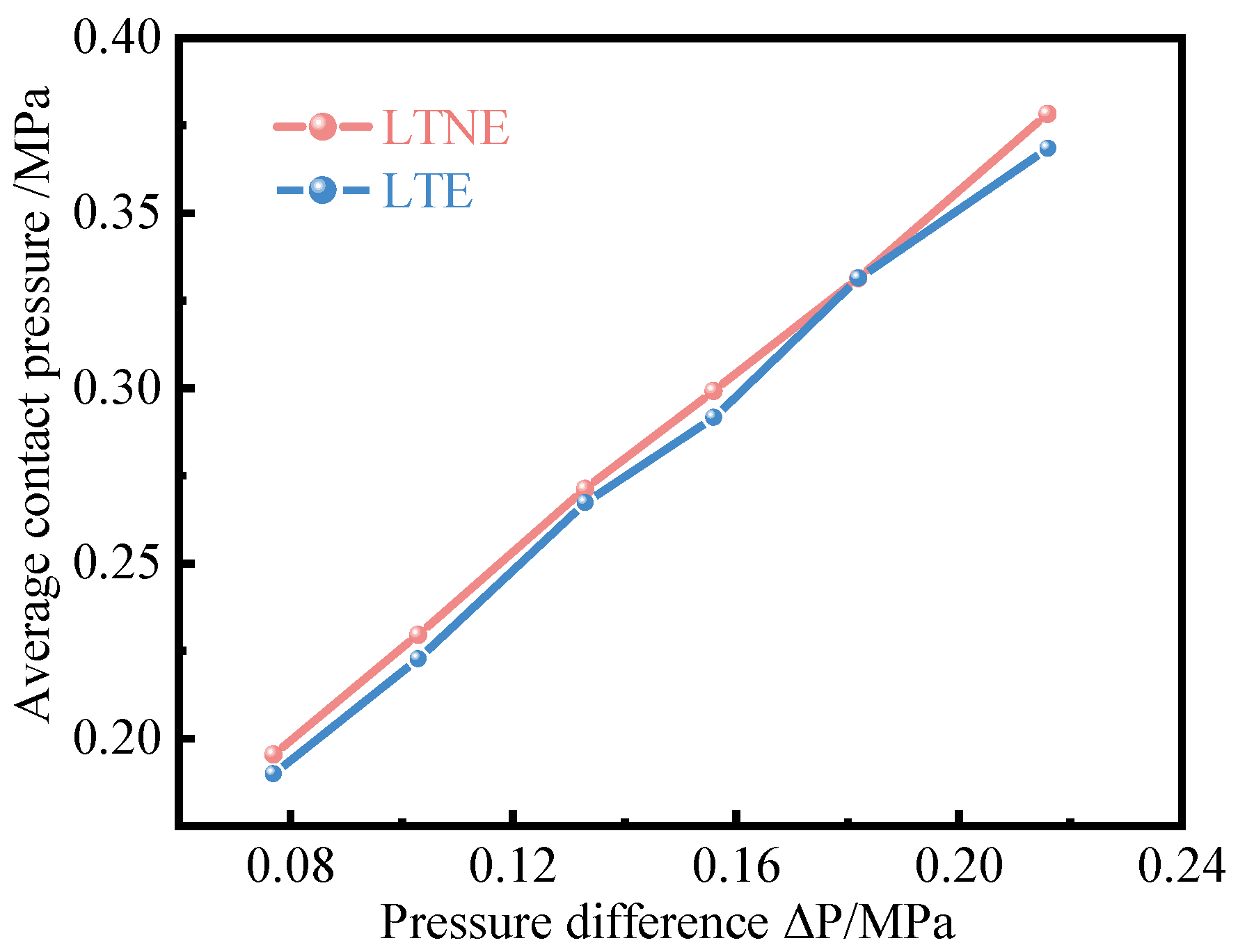
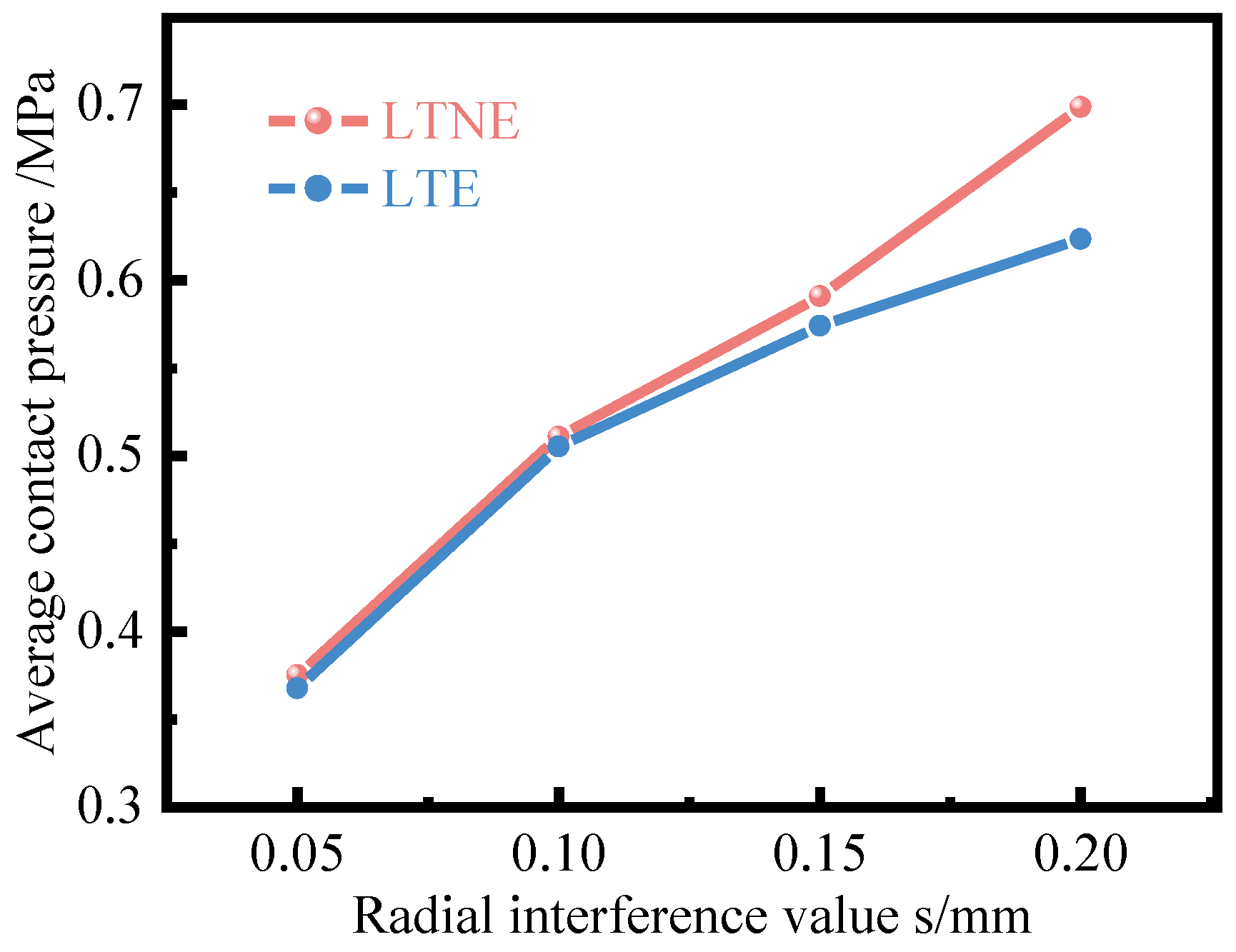
- The average contact pressure increases with both pressure differential and interference in both models. At the same pressure differential, the LTNE model yields higher contact pressure than the LTE model. While the difference between models is minor at low radial interference levels, it reaches 0.08 MPa when the radial interference is at its highest value.
Author Contributions
Funding
Data Availability Statement
Acknowledgments
Conflicts of Interest
Nomenclature and Abbreviations
| The outer diameter of the finger seal (mm) | |
| The diameter of the finger base (mm) | |
| The diameter of the finger foot upper (mm) | |
| The inner diameter of the finger seal (mm) | |
| The diameter of the finger beam arcs’ centers (mm) | |
| The arc radius of finger beam (mm) | |
| The width of the gap between fingers (mm) | |
| The thickness of the laminate (mm) | |
| R | Ideal gas constant (J/mol·K) |
| Temperature (K) | |
| u | Velocity in the X-directions (m/s) |
| Specific heat capacity (J/kg·K) | |
| Pressure of the fluid (MPa) | |
| Si | Additional momentum-loss source term in porous media (kg/m2·s2) |
| viscous loss coefficient (m−2) | |
| C2 | Inertial loss coefficient (m−1) |
| s | Wetted surface area (m−1) |
| Length of the finger beam (mm) | |
| Temperature of the fluid (K) | |
| Temperature of the solid (K) | |
| As | Specific wetted surface area of the porous medium (mm2) |
| Convective heat-transfer coefficient between the solid and fluid phases (-) | |
| Q | Frictional heating (W) |
| keff | Effective thermal conductivity (W/m·K) |
| f | Friction coefficient (-) |
| q | Heat flux density (W/m2) |
| Radial stiffness of a single finger beam (N/mm) | |
| Contact area between a single finger shoe and the rotor surface (mm2) | |
| Radial interference value (mm) | |
| V | Linear surface velocity of the rotor (m/s) |
| Surface convective heat-transfer coefficient (-) | |
| k | Thermal conductivity (W/m·K) |
| Interface area density (m−1) | |
| Characteristic length of the finger seal (mm) | |
| Differential pressure (MPa) | |
| Pr | Prandtl number (-) |
| Re | Reynolds number (-) |
| n | Rotational speed (r/min) |
| Thermal conductivity of the fluid (W/(m·K) | |
| Thermal conductivity of the finger beam (W/(m·K) | |
| E | Elastic modulus (GPa) |
| The finger foot repeat angle (°) | |
| a | The finger repeat angle (°) |
| μ | Dynamic viscosity (Pa·s) |
| Fluid viscosity factor (-) | |
| Friction-heat correction coefficient (-) | |
| ε | Porosity (-) |
| Poisson’s ratio (-) | |
| η | Kinematic viscosity of the fluid (Pa·s) |
| ρ | Density (kg/m3) |
| β | Thermal expansion coefficient (K−1) |
| LTNE | Local thermal non-equilibrium |
| LTE | Local thermal equilibrium |
| FS | Finger seal |
References
- Zhang, S.; Xu, Y.; Zhao, R.; Jiao, Y.; Chen, Z. Dynamic Analysis and Independent High-Order Nonlinear Dynamics of a Rotor-Bearing-Finger Seal System. Int. J. Appl. Mech. 2023, 15, 238–252. [Google Scholar] [CrossRef]
- Chupp, R.E.; Hendricks, R.C.; Lattime, S.B.; Steinetz, B.M. Sealing in turbomachinery. J. Propuls. Power. 2006, 22, 313–349. [Google Scholar] [CrossRef]
- Braun, M.J.; Pierson, H.M.; Kudryavtsev, V.V. Finger seal solid modeling design and some solid/fluid interaction considerations. Tribol. Trans. 2003, 46, 566–575. [Google Scholar] [CrossRef]
- Braun, M.J.; Kudryavtsev, V.V.; Steinetz, B.M.; Proctor, M.P. Two and Three-Dimensional Numerical Experiments Representing Two Limiting Cases of an in-Line Pair of Finger Seal Components. In Proceedings of the 9th International Symposium on Transport Phenomena and Dynamics of Rotating Machinery, Honolulu, HI, USA, 10–14 February 2002. [Google Scholar]
- Marie, H. Dynamic simulation of finger seal-rotor interaction using variable dynamic coefficients. In Proceedings of the 42nd AIAA/ASME/SAE/ASEE Joint Propulsion Conference & Exhibit, Sacramento, CA, USA, 9–12 July 2006. [Google Scholar]
- Song, D.L.; Wang, Y.H.; Hua, K.Y.; Du, C.H.; Zhang, Y.C.; Jing, Y.J. Multi-scale study of radial stiffness characteristics of plain C/C composite finger seals. Acta Aeronaut. Astronaut. Sin. 2025, 46, 43087. [Google Scholar]
- Wang, Q.; Ji, H.H.; Hu, Y.P.; Du, C.H. Transient Leakage Characteristics Analysis of Finger Seal Considering Wear Effects. J. Propuls. Technol. 2020, 41, 2815–2826. [Google Scholar]
- Du, C.H.; Ji, H.H.; Hu, Y.P.; Luo, J.; Ma, D.; Tang, L.P.; Liao, K. Experiment of wearing characteristics and its effect on leakage of finger seal. J. Aerosp. Power 2017, 32, 53–59. [Google Scholar]
- Chen, G.D.; Xu, H.; Yu, L.; Su, H. Analysis of hysteresis characteristics of finger seal. Chin. J. Mech. Eng. 2003, 16, 121–124. [Google Scholar] [CrossRef]
- Chen, G.D.; Xu, H.; Xiao, Y.X.; Zhou, L.J.; Wu, H.T. Analysis on the influence of axial dimension on finger seal performance. Gas Turbine Exp. Res. 2003, 16, 14–17. [Google Scholar]
- Chen, G.D.; Xu, H.; Zhang, Y.H. Research on variable-scale structure of axial layout for finger seal. J. Aerosp. Power 2003, 18, 488–491. [Google Scholar]
- Bai, H.L. Experimental and Numerical Study on Leakage Characteristics of Finger Seal. Ph.D. Thesis, Nanjing University of Aeronautics and Astronautics the Graduate School, Nanjing, China, 2008. [Google Scholar]
- Wang, Q.; Hu, Y.P.; Ji, H.H. An anisotropic porous media model for leakage analysis of finger seal. Proc. Inst. Mech. Eng. Part G J. Aerosp. Eng. 2020, 234, 280–292. [Google Scholar] [CrossRef]
- Hu, T.X.; Zhou, K.; Li, N.; Pan, J. Numerical Calculation and Experimental Study on Leakage Characteristic of Finger Seal. J. Propuls. Technol. 2020, 41, 1089–1096. [Google Scholar]
- Zhao, H.L.; Chen, G.D.; Su, H. Analysis of Total Leakage Performance of Finger Seal Considering the Rough Seepage Effect. J. Mech. Eng. 2020, 56, 152–161. [Google Scholar]
- Wang, F.; Chen, G.D.; Yu, C.T. Thermal analysis of finger seal based on rough contact. J. Mech. Sci. Technol. Aerosp. Eng. 2007, 26, 893–896. [Google Scholar]
- Zhang, Y.C.; Jiao, D.D.; Wu, L.J.; Zhao, R.; Cui, Y.H.; Ran, B.C.; Wang, W. Contact strength analysis of finger seal considering thermal effect. J. Mech. Strength 2019, 41, 413–418. [Google Scholar]
- Chang, C.; Su, H. Analysis on Thermal-fluid-solid interaction of straight pad finger seal performance. Appl. Mech. Mater. Trans Tech Publ. 2013, 249, 498–504. [Google Scholar] [CrossRef]
- Zhu, X.D.; Wang, W. Analysis on influence of steam viscosity on thermal deformation of dynamic pressure shoe for non-contact finger seal. J. Chin. Soc. Power Eng. 2017, 37, 622–628. [Google Scholar]
- Zhu, X.D. Research on leakage characteristics of non-contact finger seal and influence of high-temperature thermal deformation on it. Ph.D. Thesis, Shanghai Jiao Tong University, Shanghai, China, 2017. [Google Scholar]
- Su, H.; Chen, G.D. Temperature field and thermal-structural coupling analysis of finger seal. J. Aerosp. Power 2009, 24, 196–203. [Google Scholar]
- Wang, Q.; Hu, Y.P.; Ji, H.H. Leakage, heat transfer and thermal deformation analysis method for contacting finger seals based on coupled porous media and real structure models. Proc. Inst. Mech. Eng. Part C J. Mech. Eng. Sci. 2020, 234, 2077–2093. [Google Scholar] [CrossRef]
- Hu, X.F.; Wang, J.; Liu, M.H.; Song, X.L. Research of anisotropic flow heat transfer and thermal deformation of finger seals. J. Ordnance Equip. Eng. 2024, 45, 248–258. [Google Scholar]
- Du, C.H.; Wang, Y.; Zhang, Y.C.; Song, D.L.; Ji, H.H. An mathematical calculation method for radial limit deformation of arc-shaped finger seal. J. Propuls. Technol. 2024, 45, 219–226. [Google Scholar]
- Wang, J.; Liu, M.H.; Zhu, S.X.; Chen, W.B.; Li, Y.X.; Sun, J.F. Multi-objective hybrid teaching-learning-based optimization method for structural parameters of finger seal. Chin. J. Mech. Eng. 2023, 59, 157–170. [Google Scholar]
- Zhao, H.L.; Chen, G.D.; Wang, L.N.; Su, H. Dynamic analysis of finger seal in the complex working state. Proc. Inst. Mech. Eng. Part G J. Aerosp. Eng. 2019, 233, 125–137. [Google Scholar] [CrossRef]
- Wang, Q.; Hu, Y.P.; Ji, H.H. Anisotropic heat transfer model of finger seal based on porous media. J. Aerosp. Power 2017, 32, 2585–2595. [Google Scholar]
- Bai, H.L.; Wang, W.; Zhang, Z.S.; Hu, G.Y. Analysis of leakage flow through finger seal based on porous medium. J. Aerosp. Power 2016, 6, 1303–1308. [Google Scholar]
- Liu, W.; Fan, A.W.; Huang, X.M. Theory and Application of Heat and Mass Transfer in Porous Media; Science Press: Beijing, China, 2006; pp. 72–80. [Google Scholar]
- Johnson, M.C.; Medlin, E.G. Laminated Finger Seal with Logarithmic Curvature. US Patent US05108116A, 28 April 1992. [Google Scholar]
- Qiu, B.; Li, J. Coupled heat transfer characteristics of brush seal based on porous media local thermal non-equilibrium method. J. Aerosp. Power 2015, 30, 1067–1075. [Google Scholar]
- Lu, L.; Xin, C.Y.; Liu, Z.X. A review of research on local thermal non-equilibrium model for porous media. J. Eng. Therm. Energy Power 2019, 34, 1–8. [Google Scholar]
- Bayats, A.C. Thermal Non-Equilibrium Natural Convection in a Square Enclosure Filled with a Heat-Generating Solid Phase, Non-Darcy Porous Medium. Int. J. Energy Res. 2003, 27, 975–988. [Google Scholar]
- Yang, S.M.; Tao, W.Q. Heat Transfer, 5th ed.; Higher Education Press: Beijing, China, 2019; pp. 45–60. [Google Scholar]
- Bergman, T.L.; Lavine, S.; Incropera, F.P. Introduction to Heat Transfer, 6th ed.; John Wiley & Sons: Hoboken, NJ, USA, 2011; pp. 89–110. [Google Scholar]
- Cui, X.C.; Hu, Y.P.; Li, P.F.; Li, H.; Ji, H.H. Three dimensional and two-way coupling simulation on flow and displacement of finger seals. Lubr. Eng. 2023, 48, 86–94. [Google Scholar]
- Hou, Y.H.; Hu, Y.P.; Jin, F.; Li, P.F.; Cui, X.C. Two-way Coupling Numerical Simulation of Flow, Heat Transfer and Deformation of Finger Seals. Lubr. Eng. 2025. online first. Available online: https://kns.cnki.net/kcms2/article/abstract?v=ZBmzy5eCHcZG2mWX7W8w4xJS7Gtlgpgwd2QhYZpitGoF5AgcuL7M7IUC26Hxqfqmn6-4xu--DYyt62SMzcZ_w7LB89WDsPQHnPb3y5joZ1lqRJ9mE-bt0k3AZAu4eDLncHHLfo0N8krFWSZ3fd3Veko0rSwUaxl7xBW8UDD26ak=&uniplatform=NZKPT&language=CHS (accessed on 11 March 2026).
- Su, H.; Huang, Y.H.; Wu, C. Numerical analysis of a double interlocking padded finger seal performance based on thermo-fluid-structure coupling method. Propuls. Power Res. 2023, 12, 238–252. [Google Scholar] [CrossRef]
- China Aeronautical Materials Handbook Redaction Committee. China Aeronautical Materials Handbook, High-Temperature Deformation Alloy and High-Temperature Casting Alloy; Standards Press of China: Beijing, China, 2002; Volume 2. [Google Scholar]



| Main Structural Parameters of Finger Seal | Value |
|---|---|
| The outer diameter of the finger seal (mm) | 207 |
| The diameter of the finger base (mm) | 187 |
| The diameter of the finger foot upper (mm) | 163 |
| The inner diameter of the finger seal (mm) | 160 |
| The diameter of the finger beam arcs’ centers (mm) | 43 |
| The arc radius of finger beam (mm) | 85 |
| The finger foot repeat angle (°) | 4.7 |
| The finger repeat angle (°) | 5 |
| The width of the gap between fingers (mm) | 0.4 |
| The thickness of the laminate (mm) | 0.3 |
| Boundary Name | Values | Work Unit |
|---|---|---|
| Pressure differential | 0.077~0.216 | MPa |
| Rotational speed | 9000~21,000 | r/min |
| Radial interference value | 0.05~0.2 | mm |
| Outlet pressure | 0.1 | MPa |
| Total inlet/outlet temperature | 300 | K |
| Physical Property | Fluid | Finger Seal | Rotor/Plate |
|---|---|---|---|
| Density (kg/m3) | Air ideal gas | 9130 | 7950 |
| (J/kg·K) | 0.132 T + 973 | 377 | 0.262 T + 350.1 |
| Thermal conductivity (W/m·K) | 6.03 × 10⁻⁵ T + 9.67 × 10⁻³ | 0.0203 T + 3.46 | 0.0215 T + 4.49 |
| Viscosity (Pa·s) | 3.42 × 10⁻⁸ T + 9.14 × 10⁻⁶ | — | — |
| Thermal expansion coefficient (K−1) | — | 1.38 × 10⁻⁵ | 1.33 × 10⁻⁵ |
| Elastic modulus (GPa) | — | −0.0848 T + 258.4 | −0.0841 T + 220.6 |
| Poisson’s ratio | — | 4.52 × 10⁻⁵ T + 0.27 | 0.28 |
Disclaimer/Publisher’s Note: The statements, opinions and data contained in all publications are solely those of the individual author(s) and contributor(s) and not of MDPI and/or the editor(s). MDPI and/or the editor(s) disclaim responsibility for any injury to people or property resulting from any ideas, methods, instructions or products referred to in the content. |
© 2026 by the authors. Licensee MDPI, Basel, Switzerland. This article is an open access article distributed under the terms and conditions of the Creative Commons Attribution (CC BY) license.
Share and Cite
Wang, J.; Ahmed, A.A.M.; Liu, M.; Zhu, S.; Zhang, T. Study on the Thermal Deformation of Finger Seals Based on Local Thermal Non-Equilibrium in Porous Media. Energies 2026, 19, 1639. https://doi.org/10.3390/en19071639
Wang J, Ahmed AAM, Liu M, Zhu S, Zhang T. Study on the Thermal Deformation of Finger Seals Based on Local Thermal Non-Equilibrium in Porous Media. Energies. 2026; 19(7):1639. https://doi.org/10.3390/en19071639
Chicago/Turabian StyleWang, Juan, Altyib Abdallah Mahmoud Ahmed, Meihong Liu, Shixing Zhu, and Tingjun Zhang. 2026. "Study on the Thermal Deformation of Finger Seals Based on Local Thermal Non-Equilibrium in Porous Media" Energies 19, no. 7: 1639. https://doi.org/10.3390/en19071639
APA StyleWang, J., Ahmed, A. A. M., Liu, M., Zhu, S., & Zhang, T. (2026). Study on the Thermal Deformation of Finger Seals Based on Local Thermal Non-Equilibrium in Porous Media. Energies, 19(7), 1639. https://doi.org/10.3390/en19071639