Article

Feasibility Study on Direct Co-Firing of Typical Biomass Types in Coal-Fired Circulating Fluidized Bed Boilers


State Key Laboratory of Clean Energy Utilization, Zhejiang University, Hangzhou 310058, China
*
Authors to whom correspondence should be addressed.
Energies 2026, 19(6), 1492; https://doi.org/10.3390/en19061492
Submission received: 14 February 2026 / Revised: 11 March 2026 / Accepted: 15 March 2026 / Published: 17 March 2026
(This article belongs to the Section A4: Bio-Energy)

Abstract

This study experimentally investigated the movement, combustion, and potassium (K) and chlorine (Cl) migration behaviors of three biomass types: densified wood pellets (heavy), corn straw (lightweight), and wheat straw (lightweight, friable). The experiments were conducted under conditions representative of industrial coal-fired circulating fluidized bed (CFB) boilers, with a temperature range of 850–950 °C and a fluidization velocity of 6–8 m/s. Results show that densified wood pellets sink into the dense-phase zone and release volatiles slowly, in about 50 s. As the volatiles are nearly fully released, the pellets fracture multiple times along their length, eventually forming nearly spherical particles. Their movement and combustion processes closely resemble those of coal, making them suitable for direct co-firing in coal-fired CFB boilers. Conversely, corn straw and wheat straw exhibit low density, high volatile release rates (2 and 10 times that of wood pellets, respectively), rapid char fragmentation and abrasion, and high inherent K and Cl content (with >50% of K and >90% of Cl released). These properties lead to particle segregation, shortened gas-phase combustion time, an upward shift in heat release distribution, and potential risks such as high-temperature KCl corrosion, HCl dew point corrosion, ash slagging, and bed agglomeration. Therefore, untreated corn straw and wheat straw are unsuitable for co-firing in conventional coal-fired CFB boilers. This study provides essential data and engineering guidance: strict quality control is necessary for wood pellets to prevent Cl contamination, while pretreatment is mandatory for straw fuels. These findings offer practical insights for implementing diverse biomass co-firing strategies in coal-fired CFB boilers.

1. Introduction

Coal-fired power plants in China are major carbon emitters requiring low-carbon transition [1]. Co-firing biomass presents an ideal pathway, capable of cutting fossil carbon emissions while utilizing existing high-efficiency units [2]. This approach is cost-effective, allows flexible blending, reduces pollutants, and enhances the utilization of agricultural and forestry waste [3].
Circulating Fluidized Bed (CFB) boilers, known for their strong fuel adaptability, hold significant potential for co-firing with biomass fuels [4]. Internationally, there have been numerous successful cases of coal-fired CFB boilers co-firing with a variety of biomass fuels, including densified wood pellets [5], refuse-derived fuel (RDF) pellets [6], sludge pellets [7], and locally available biomass such as olive pits [8], bark [9], pine wood [10], and pine processing residues [11]. Each type has its own economically viable transportation radius [12]. When local biomass resources are scarce, densified pellet forms are often preferred to increase energy density per volume and improve transportation economy [13].
China’s biomass resource structure is characterized by a predominance of herbaceous straws such as corn straw, wheat straw, and rice straw [14,15]. In China, forestry waste is commonly utilized for resource recovery, such as in the production of plywood, while municipal solid waste is typically directly supplied to local biomass power plants. Therefore, the biomass resources available for use in coal-fired circulating fluidized bed boilers in China mainly fall into three categories: economically transportable dense biomass (usually in the form of compressed wood pellets made from recycled wood products), locally available lightweight biomass (represented by corn straw), and locally available lightweight, friable biomass (represented by wheat and rice straw). The specific biomass fuel chosen by an enterprise will require a comprehensive consideration of both economic costs and combustion technical challenges.
However, the movement and combustion behavior of coal and biomass differ significantly in CFB furnaces [16,17]. For example, density differences between biomass and coal could lead to fuel segregation, altering the axial heat load distribution within the furnace [18,19]. Biomass fuels high in potassium and chlorine content may exacerbate the risks of heating surface corrosion and slagging [20,21]. The high volatile content of biomass may disrupt the synergy between gas and solid combustion, leading to incomplete gas combustion and reduced carbon conversion efficiency, and ultimately affecting boiler thermal efficiency [22,23]. To ensure stable and continuous co-firing, most studies therefore use coal as the primary fuel and adjust boiler parameters. For instance, lowering fluidization velocity specifically to accommodate biomass fuels. Nevertheless, industrial coal-fired CFB boilers are designed with coal as the intended fuel, and key operating parameters such as the heat absorption ratio of heating surfaces, fluidization velocity, and combustion temperature are related to inherent boiler characteristics. The capability of industrial coal-fired CFB boilers to adjust operating parameters to adapt to biomass fuels is very limited [5]. As a result, the findings that typically use coal as the main fuel and adjust parameters specifically for biomass co-firing have limited guidance value for real industrial coal-fired CFB boilers. Therefore, conducting experimental research on various types of biomass fuels under typical combustion conditions of industrial coal-fired CFB boilers is of great significance for practical retrofit projects aimed at co-firing biomass in existing coal-fired fluidized bed boilers.
To achieve continuous co-firing of coal and biomass, it is often necessary to adjust operating parameters or modify biomass characteristics such as size or density, which deviates from actual industrial coal-fired CFB boiler conditions. This issue can be addressed by the approaches of single-particle or single-feed biomass under realistic coal-fired CFB boiler conditions. However, conventional research on single-particle or single-feed combustion typically employs quartz sand as bed material and low-velocity air as primary air in bubbling fluidized bed setups [24,25,26]. Such configurations fail to replicate critical combustion conditions in an industrial coal-fired CFB boiler, including char concentration, combustion atmosphere, temperature distribution, and fluidization state. Only coal-fired CFB experimental setups can adequately simulate these combustion conditions. But conventional coal-fired CFB facilities are generally large-scale, complex to operate, and not well-suited for flexible single-particle experimental investigations. For instance, the furnace, typically made of metal and fully enclosed, prevents visual observation of biomass particle movement. Moreover, the hot furnace contains a large inventory of bed material and char particles and significant thermal inertia, making it impossible to quickly locate and quench an individual biomass sample. Consequently, even when adopting a single-particle approach and using coal-fired CFB experimental equipment to replicate industrial combustion conditions, it remains highly challenging to obtain information on the movement and combustion behavior of individual biomass particles inside the furnace. Therefore, this study utilizes a specially designed emergency-stop sampling method to directly obtain single biomass particle samples at different combustion stages, enhancing the engineering guidance value of the results by analyzing the movement and combustion processes of single biomass particles in a coal-fired CFB boiler furnace.
Additionally, biomass is typically rich in potassium (K) and chlorine (Cl). During combustion, the release of K and Cl may trigger alkali metal-related issues such as heating surface corrosion, slagging, and fouling [27]. Current studies on the release mechanisms of K and Cl are mostly conducted using fixed-bed or bubbling fluidized bed reactors [28,29,30]. Although such setups can provide detailed mechanistic insights, their combustion conditions differ considerably from those in industrial coal-fired CFB boilers. Moreover, due to the difficulty of sampling during combustion in hot coal-fired CFB experimental equipment, investigations in such facilities usually rely on indirect analyses of final products such as fly ash, flue gas, bottom ash, and deposits on heating surfaces [31,32,33]. However, after being released from biomass, K/Cl undergo complex gas- and solid-phase reactions, which are highly dependent on coal type, boiler configuration, and combustion conditions. Therefore, this study employs the emergency-stop sampling method to obtain more fundamental mechanistic information on K and Cl release from biomass by analyzing the biomass samples obtained at different combustion stages.
Given that the biomass fuels available for co-firing in coal-fired CFB boilers in China mainly consist of economically transportable heavy biomass (typically compressed wood pellets made from recycled wood products), locally available lightweight biomass (represented by corn straw), and locally available lightweight, friable biomass (represented by wheat and rice straw), and considering the limitations of existing research in offering practical engineering guidance, this study selected three typical biomass fuels: densified wood pellets, corn straw, and wheat straw. Single-particle combustion experiments were carried out in a coal-fired CFB boiler. The research systematically investigated the movement, combustion, and K/Cl migration characteristics of these biomass fuels under coal-fired CFB conditions. The results provide valuable data, engineering guidance, and recommendations to support the implementation of biomass co-firing in coal-fired CFB boilers.

2. Experimental Section

2.1. Experimental Materials

The experimental materials used in this study were typical bituminous coal, along with three types of biomass selected to represent the main categories available for co-firing in coal-fired CFB boilers in China: densified wood pellets (as an economically transportable, heavy biomass), corn straw (representing locally available lightweight biomass), and wheat straw (representing locally available lightweight, friable biomass). The coal was sourced from Deqing in Zhejiang Province, China, while the biomass fuels were obtained from Huainan in Anhui Province, China. Fuel properties of experimental materials are shown in Table 1.
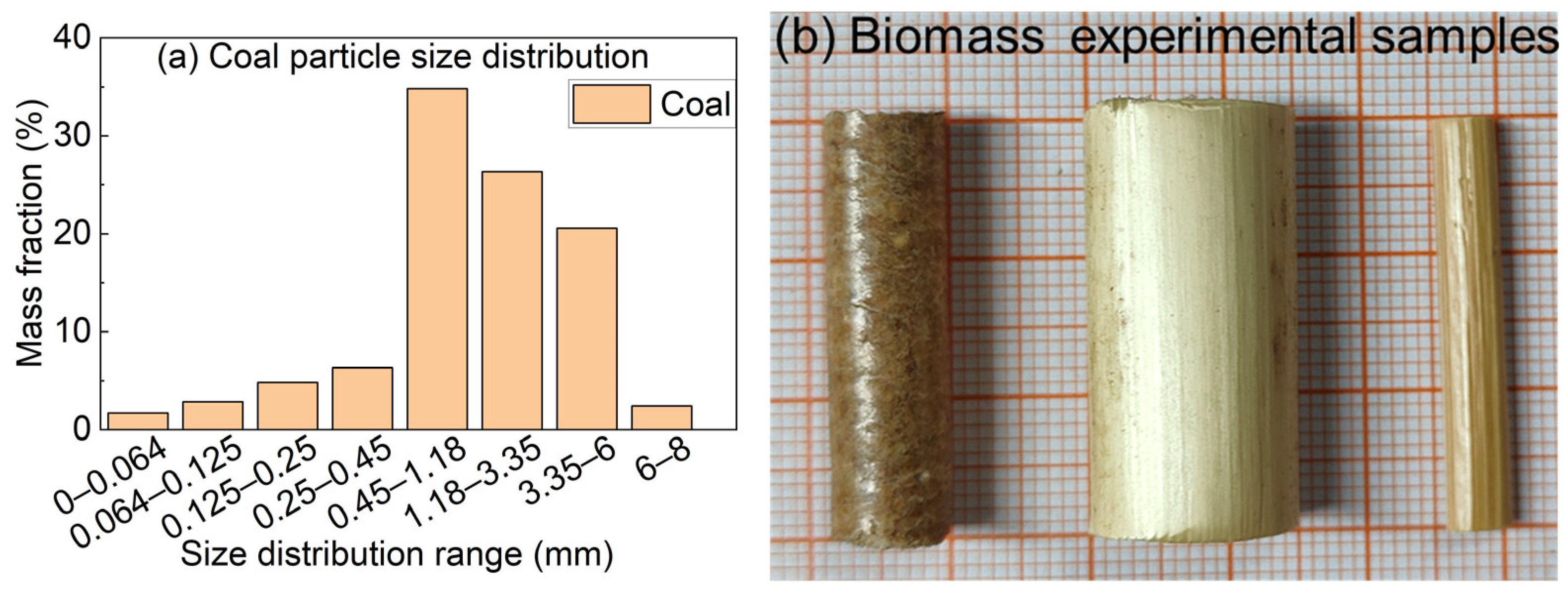
The particle size distribution of the coal employed in the experiments is presented in Figure 1a. Figure 1b provides a schematic illustration of the biomass samples used, which included 30 × 8 mm densified wood pellets, 30 × 15 mm corn straw segments, and 30 × 5 mm wheat straw segments. To reduce experimental variability, the study selected the most representative raw materials with relatively consistent diameters. All particles were cut to the same length before testing, and each was individually weighed and measured prior to experimentation.

2.2. Experimental Systems and Methods

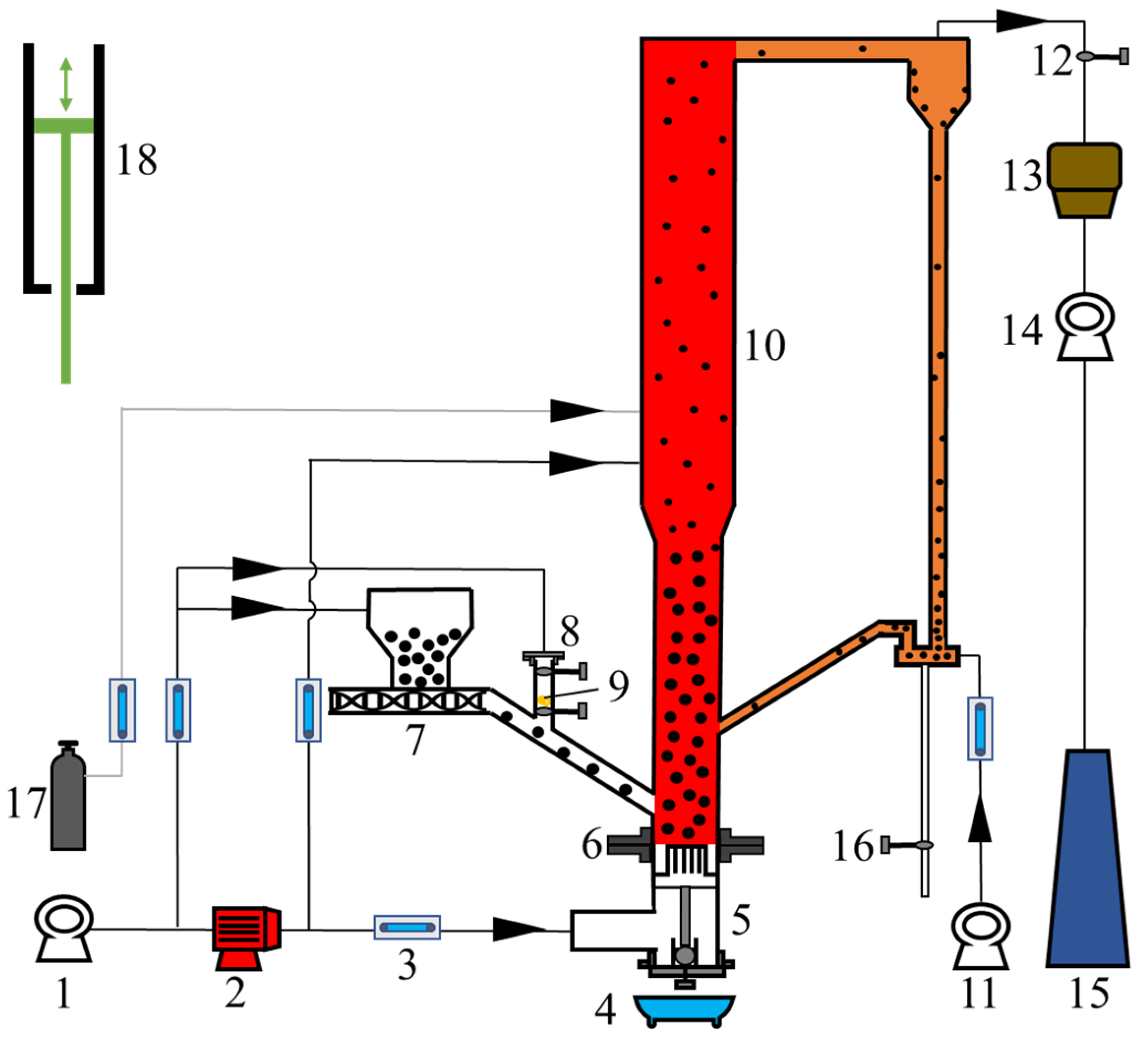
All experiments were conducted using a CFB incinerator experimental system, as shown in Figure 2. The CFB incinerator consisted of a dense-phase zone with a height of 0.8 m and a diameter of 54 mm and a dilute-phase zone with a height of 4 m and a diameter of 80 mm. The emergency-stop sampling device used a bolt compression and quick-detachment mechanism. This design ensures the sealing of the primary air chamber and allows for the air distributor plate to be pulled out within 0.5 s. The piston sampling device comprised a sampling cylinder, designed to match the inner diameter of the furnace’s dense-phase zone, and a movable piston with a rod. It enabled the in situ and intact transfer of the entire cold static bed into the sampling cylinder via the piston’s movement.
All experiments were performed under typical coal-fired operating conditions. In each experiment, a single biomass particle was introduced into the furnace at a time. Biomass samples at different residence times were collected using either hot-state instantaneous sampling or cold-state static bed sampling to track the progression of biomass movement and combustion.
The hot-state instantaneous sampling method involved stopping the air supply and pulling out the movable air distribution plate simultaneously during hot operation, causing all hot material inside the furnace to fall rapidly into a liquid nitrogen basin for quenching and cooling. Through the recording and subsequent analysis of biomass samples at different residence times, the combustion and K/Cl migration behaviors of biomass fuel under co-firing conditions in a coal-fired CFB boiler were obtained.
The cold-state static bed sampling method was performed after shutting down the furnace and introducing nitrogen gas. Once the system had cooled, the static bed was sampled in situ using the piston sampling device. By identifying the vertical position of biomass particles within the static bed at different residence times, the movement behavior of biomass fuels was determined under co-firing conditions in a coal-fired CFB boiler.

2.3. Experimental Procedure and Background Conditions

Prior to each experiment, a stable coal-fired CFB combustion condition was established, with key operating parameters consistent with industrial coal-fired CFB boiler practice, as summarized in Table 2.
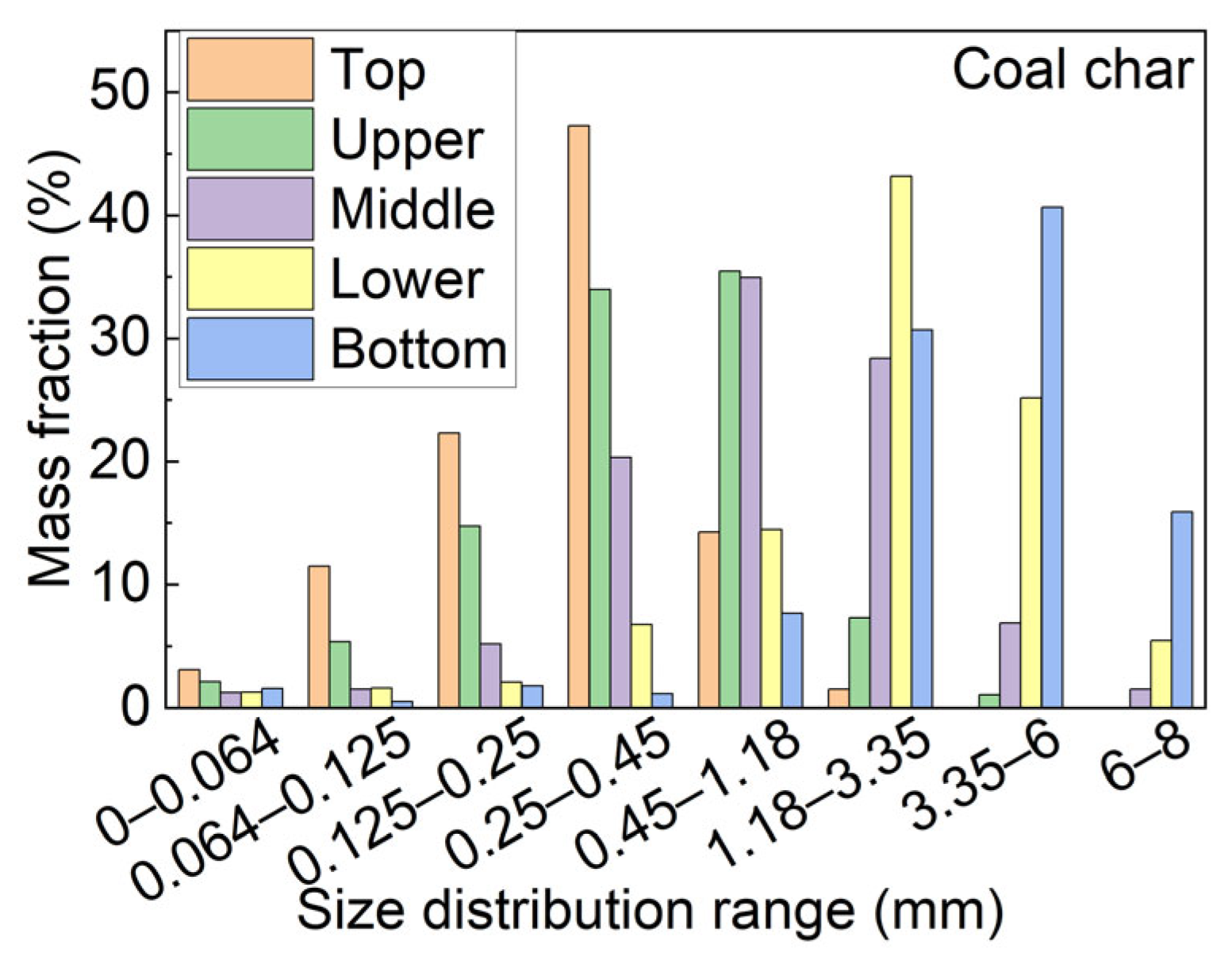
The particle size distribution of the coal char in the static bed after shutdown and cooling (Figure 3) exhibited a gradual decrease from the bottom to the top. The static bed height in all experiments ranged from 45 to 60 cm. The bed was divided equally into five vertical layers: Bottom (dense-phase zone), Lower (near dense-phase zone), Middle (transition zone), Upper (near dilute-phase zone), and Top (dilute-phase zone).
In the hot-state instantaneous sampling experiments, timing began upon opening the single-particle feed valve. Once the predetermined residence time was reached, both the blower and the induced draft fan were shut down, and the movable air distribution plate was pulled out simultaneously. All furnace materials fell into a liquid nitrogen basin within 0.5 s. Materials in the bottom bed were quenched by direct contact with liquid nitrogen, while those in the upper bed were cooled by nitrogen vapor. After returning to room temperature, individual biomass particles were manually separated from the coal char. Following initial documentation, samples were categorized and stored according to residence time for further analysis. To ensure statistical reliability and meet the mass requirements for subsequent instrumental analysis, each biomass fuel was tested at least 20 times per residence time.
In the cold static bed sampling experiments, timing also started when the single-particle feed valve was opened. At the target residence time, both the blower and the induced draft fan were shut down while nitrogen was purged into the furnace, and the flue flange was sealed. After the furnace cooled, the bottom flange was removed to install the piston sampling device. The cold static bed was transferred intact and in situ into a sampling cylinder via piston movement. Biomass particles were then retrieved layer by layer, with their vertical positions recorded. Each biomass fuel at a given residence time was tested 10 times to ensure statistical consistency.
In all experiments, the particle residence time excluded the transit duration from the single-particle feed valve to the furnace, which was 0.6 s for densified wood pellets, 1 s for corn straw segments, and 1.7 s for wheat straw segments. Sampling intervals were set at 5 ± 0.5 s for densified wood pellets and corn straw segments and 1.5 ± 0.5 s for wheat straw segments. During early and mid-stages of combustion, biomass particles remained visually distinguishable from coal char due to their larger size. As combustion approached the burnout stage, however, biomass and coal char became similar in appearance. So, when biomass particles could no longer be visually identified in the furnace material, the return leg discharge valve was opened to further identify biomass particles from finer carbon particles. Residence times were progressively extended until biomass particles became unrecognizable in both the furnace material and the return leg material, at which point the experiment was concluded.

2.4. Analysis and Test Methods

In the hot-state instantaneous sampling experiments, various parameters were documented after each biomass sample was collected, including changes in shape, fragmentation and abrasion behavior and probabilities, size reduction ratios, and residual weight ratios. When fragmentation occurred, the size of the largest fragment was recorded. Axial and radial dimensions were measured using coordinate paper in combination with optical microscopy. In cases where length or diameter measurements were inconsistent, average values were estimated. The weight reflected the total mass of all identifiable and collectible fragments. The burnout ratio was calculated using Equation (1) [34,35], where φ is the burnout ratio, %; A0 is the ash content of the raw material, %; and Af is the ash content of the obtained sample, %.
φ = 1 A 0 100 A f / A f 100 A 0
In the cold static bed sampling experiments, for each residence time, the number of times samples appeared in each bed layer was recorded across 10 repeated trials. If fragmentation occurred and particles were detected at multiple layers, the count for each corresponding layer was incremented by one during statistical analysis.
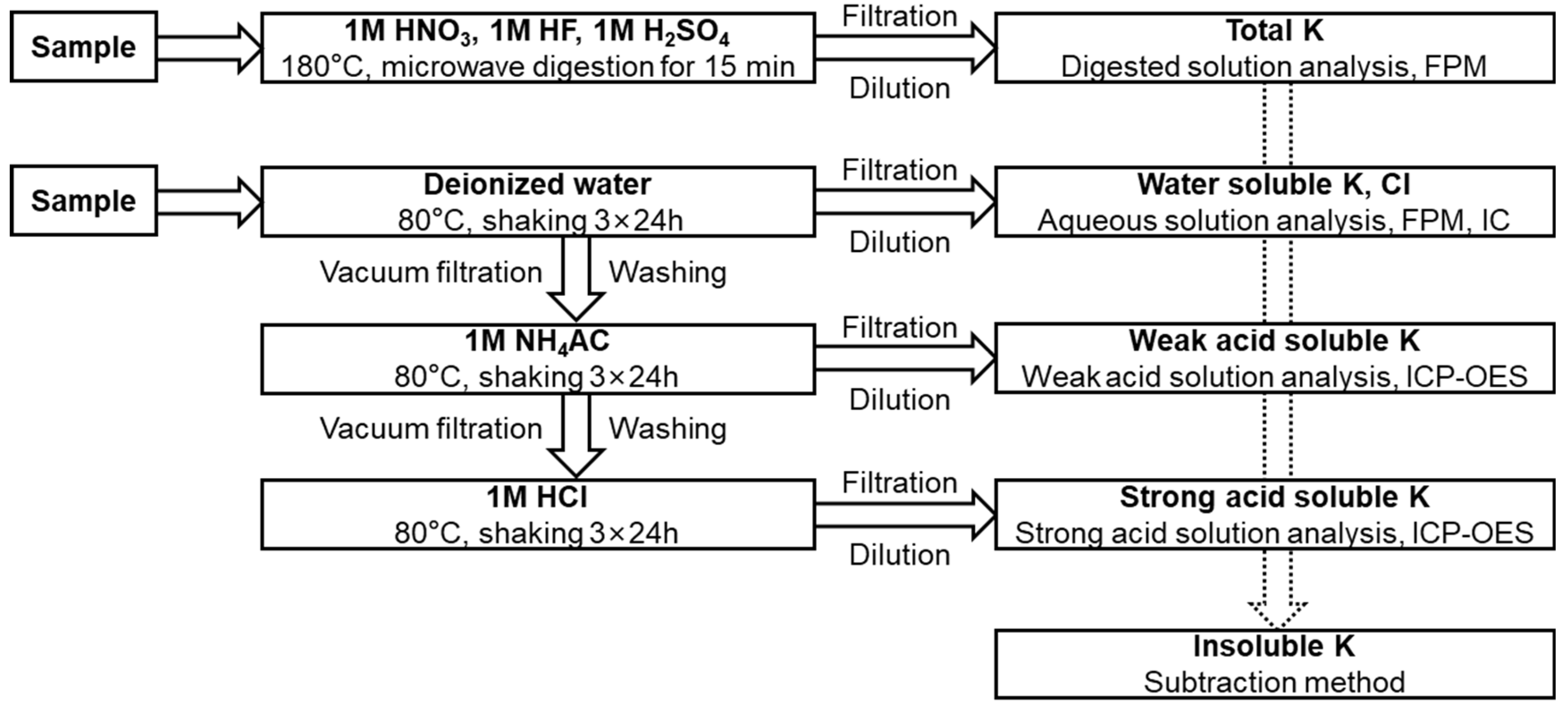
Both the raw materials and the samples obtained from the hot-state instantaneous sampling experiments were ground and subjected to proximate analysis, characterization via XRD and SEM-EDS, as well as analysis for K and Cl. Figure 4 illustrates the leaching treatment and detection methods applied for different forms of K and water-soluble Cl. The absolute mass fractions of K, Cl, and proximate analysis components (moisture, volatile matter, fixed carbon, ash) were determined by multiplying the relative mass fractions from sample testing by the corresponding residual weight ratio of each sample.

3. Results and Discussion

3.1. Movement and Combustion Characteristics

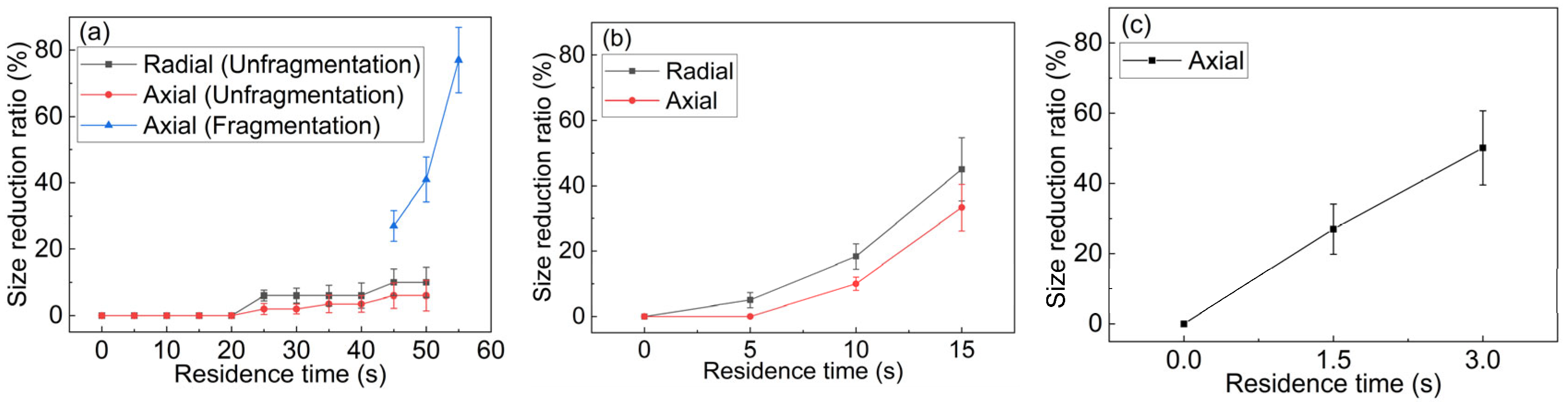
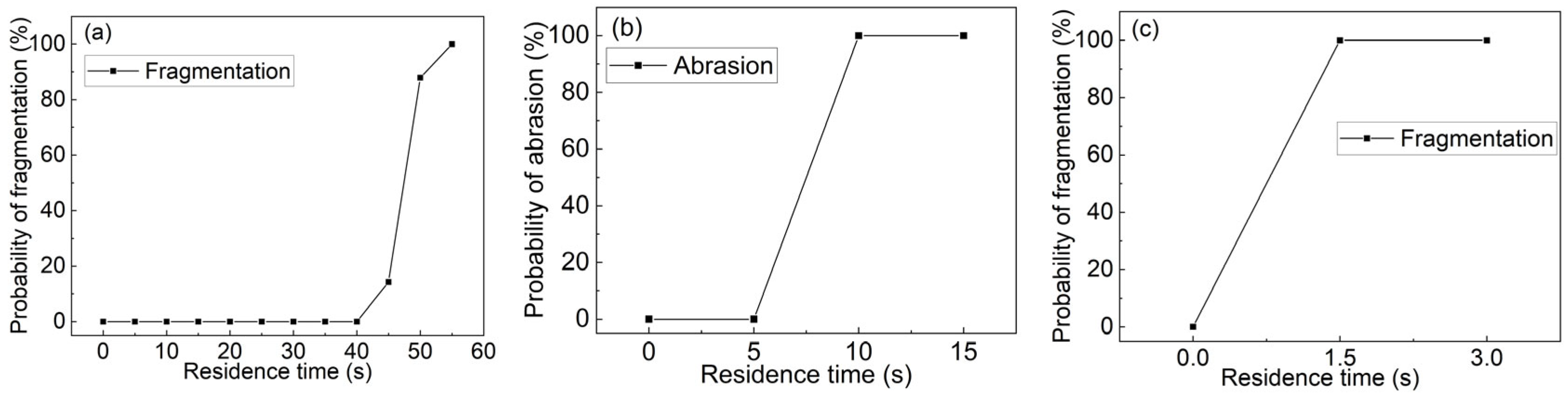
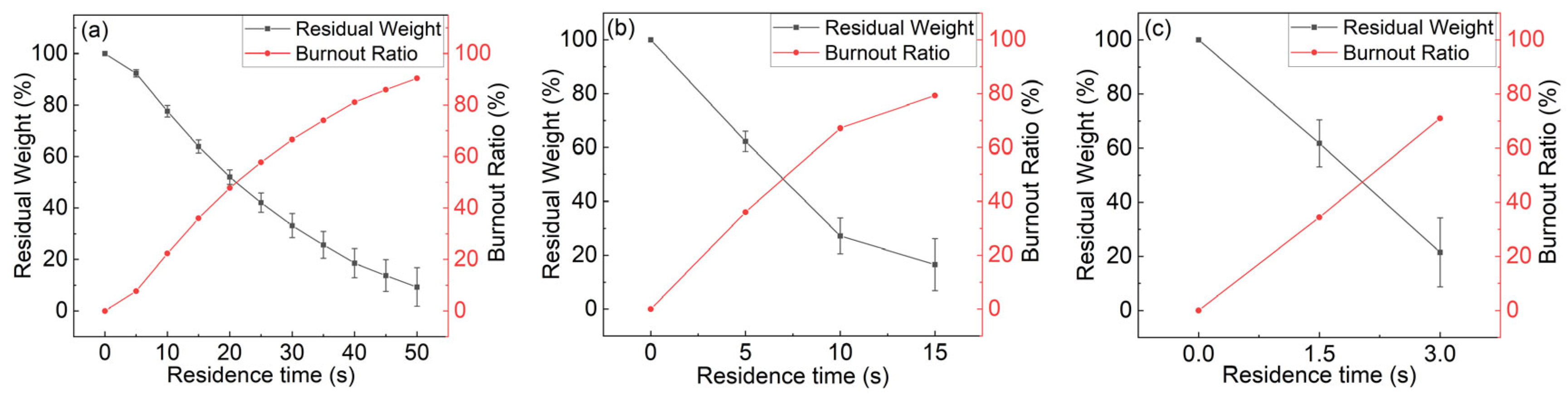
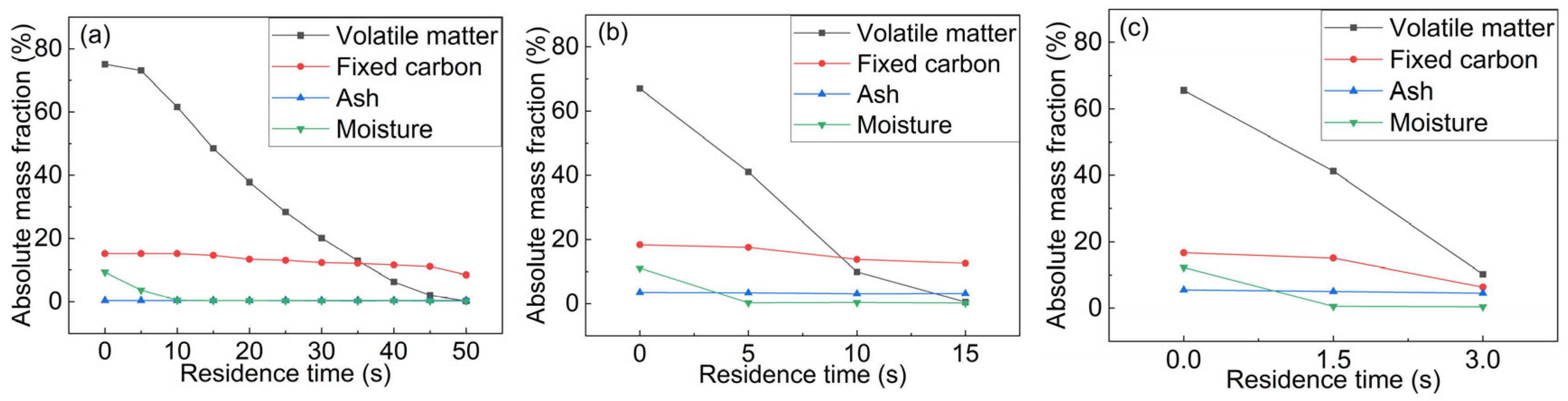
The experimental results concerning the movement and combustion characteristics of densified wood pellets, corn straw, and wheat straw segments are comprehensively illustrated in Figure 5, Figure 6, Figure 7, Figure 8, Figure 9 and Figure 10. Figure 5 depicts the positional changes in the fuels within the static bed, from which the variation in residence height during combustion can be inferred, aiding in the analysis of fuel segregation tendencies for coal and biomass. Figure 6, Figure 7, and Figure 8 illustrate the typical shape transformations, particle size reduction ratios, and the probabilities of fragmentation or abrasion, respectively, offering direct insight into the morphological changes, size evolution, and the extent and likelihood of particle breakage under the conditions of a coal-fired CFB boiler. Furthermore, Figure 9 shows the residual weight and burnout ratios, and Figure 10 provides the results of the proximate analysis at different combustion stages, thereby revealing the weight loss during combustion and the consumption process of combustible components. In the following sections, a comprehensive analysis will be conducted, focusing on the two key aspects of biomass fuel behavior: movement and combustion characteristics.
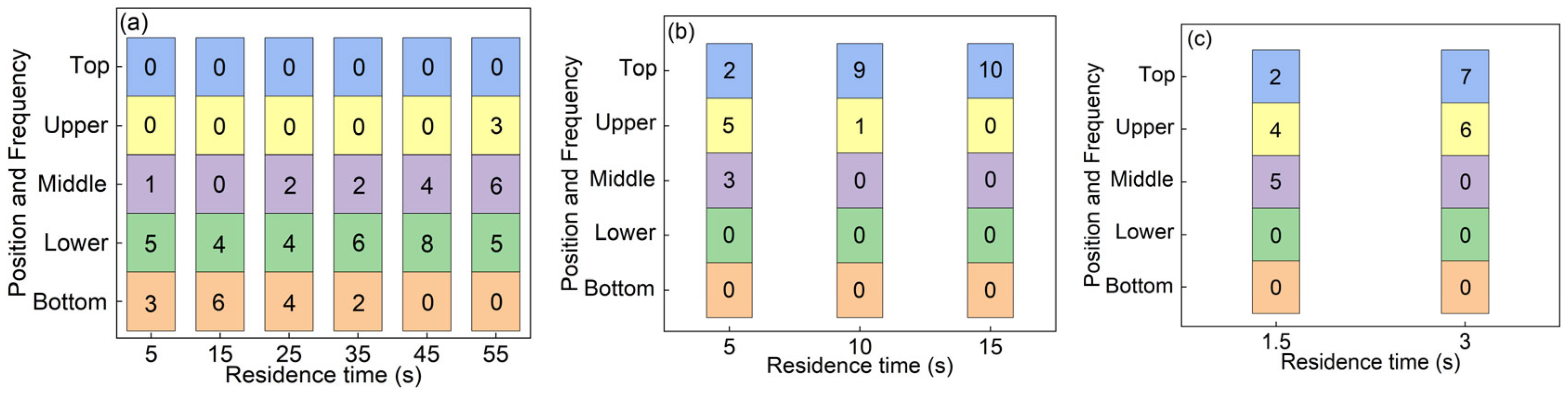
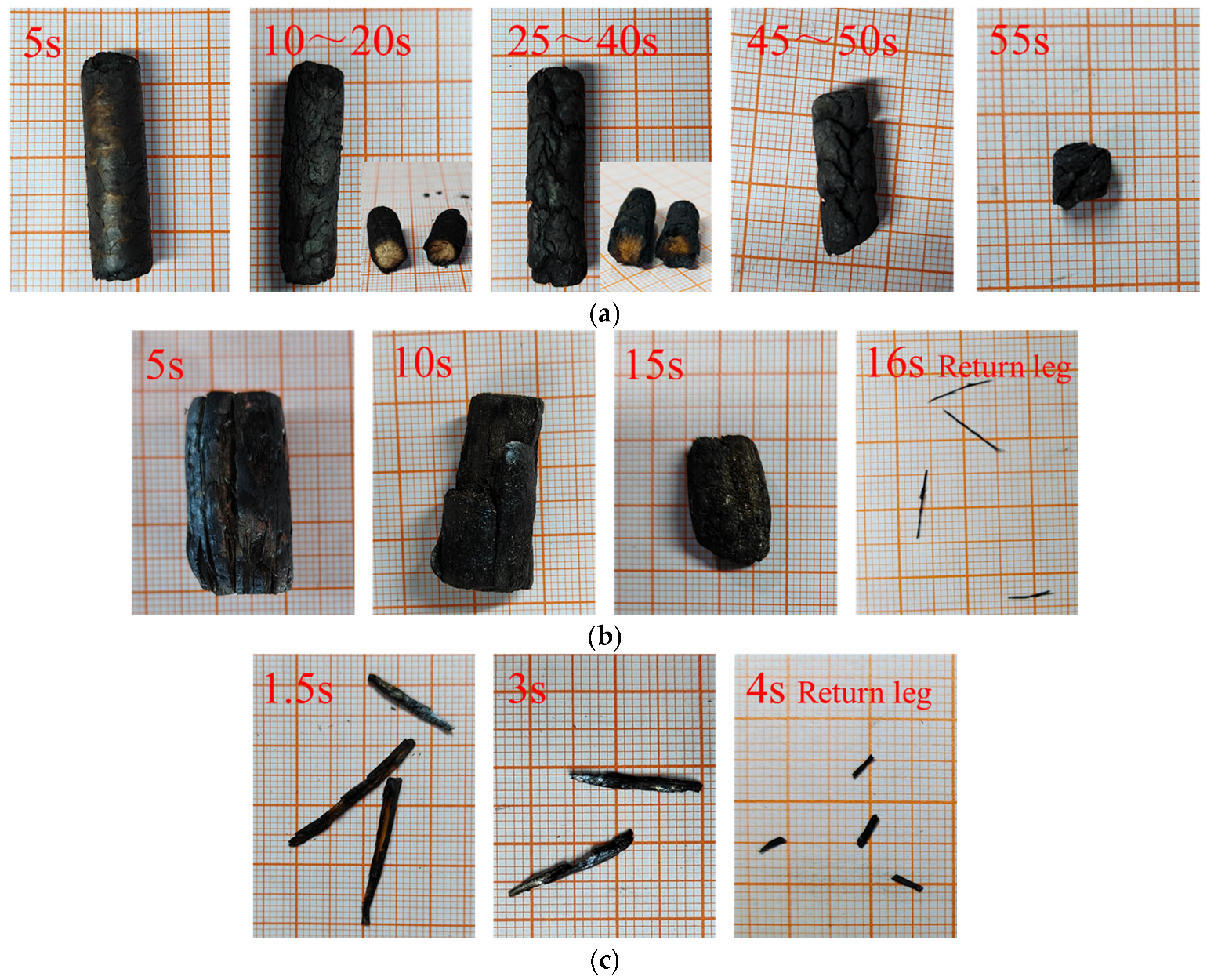
First, the movement characteristics of the three types of biomass fuels differ significantly under coal-fired circulating fluidized bed (CFB) boiler conditions. Densified wood pellets exhibit an extremely low segregation risk. According to their positional variation in the cold static bed (Figure 5a), they were primarily distributed in the middle and lower bed regions throughout the experiment. This is attributed to their high density (true density of 1.2 g/cm3, close to coal’s 1.3 g/cm3) and high structural strength resulting from the compression and pelletization process. The thermochemical modification and physical compression during pelletization enhance the raw material’s density and structural strength through interfacial adhesion and binding of cellulose and hemicellulose. The typical shape evolution, size variation, and fragmentation/abrasion probabilities (Figure 6b,c, Figure 7b,c and Figure 8b,c) more intuitively demonstrate the ability of densified wood pellets to maintain high structural integrity while resisting impacts from coal char particles in the furnace. Even when a fracture occurred during the late combustion stage, the densified wood pellets largely retained their original cylindrical form. Furthermore, even if fragmentation occurred during char combustion stages, the resulting fragments remained in the transition zone without entering the dilute phase. Previous research [36] suggested that densified biomass particles gradually rise and eventually float on the bed surface for combustion. This discrepancy may arise because, firstly, the true density of the densified biomass particles in those studies is unknown, whereas the true density of the densified wood pellets in this study is close to that of coal. Secondly, previous single-particle studies typically used bubbling bed reactors with lower fluidization velocities and lacked larger, heavier coal char particles that could retard the ascent of biomass particles. The temporary retention of coal char particles in the dense phase hinders the rise in densified wood pellets. Based on the results of this study, densified wood pellet char, once fragmented, remains in the dense and transition zones until it breaks down into sufficiently fine particles.
In stark contrast, corn straw segments were in the transition zone at 5 s but reached the dilute phase by 10 s. Wheat straw segments rose even faster, primarily distributing in the dilute phase by 3 s. The furnace feed inlet in this study is located very low, in the middle-lower part of the dense phase. This indicates that corn and wheat straw segments have a strong tendency to rise upon entering the furnace, resulting from their low density. Moreover, under this strong upward tendency, the coal char particles in the dense phase can only delay segregation but not completely prevent it. Combining the typical shape changes, size variation, and fragmentation or abrasion probabilities during combustion for corn and wheat straws (Figure 6b,c, Figure 7b,c and Figure 8b,c) further clarifies that as combustion proceeds, the structural strength of corn straw decreases, making it gradually susceptible to abrasion by coal char particles. Wheat straw, due to its inherently poor structural strength, fragments almost immediately upon entry. It can thus be inferred that the fine biomass particles carrying volatiles, generated from the fragmentation or abrasion of corn and wheat straws, will be more prone to ascend into the dilute phase than the parent particles. Additionally, slender fibers from corn straw and thin, narrow flakes from wheat straw were found in the return leg at 17 s and 4 s, respectively. This indicates that under coal-fired CFB conditions, corn and wheat straw char do not need to be reduced to the size of pulverized coal in the return leg (<1 mm) to enter the external circulation. This is because, compared to coal char, corn and wheat straw chars are more porous and have lower ash content, resulting in lower apparent density.
Nevertheless, it must be noted that the experimental system employed in this study, while replicating industrially relevant superficial gas velocities and temperatures, remains at the laboratory scale in terms of reactor dimensions (54 mm in the dense phase and 80 mm in the dilute phase). In small-diameter risers, wall effects significantly influence solids circulation patterns, cluster formation, and core-annulus structures [37]. The segregation tendency of biomass particles is strongly dependent on Archimedes and Reynolds numbers, which in turn are influenced by particle diameter, density difference, and gas properties. Therefore, although the observed qualitative trends, i.e., that densified wood pellets tend to remain in the dense phase owing to their high density and mechanical strength, while corn and wheat straw rapidly ascend into the dilute phase due to their low density and low strength, are reliable and provide valuable engineering insights, the quantitative distributions (e.g., segregation heights and transition zone locations) may not scale linearly to full-scale industrial CFB risers. Nevertheless, the qualitative findings of this study carry important practical implications. In an industrial-scale coal-fired CFB boiler, densified wood pellets present a minimal segregation risk; their char is likely to stay in the dense or transition zone until sufficiently fragmented, thereby prolonging residence time and improving combustion efficiency. In contrast, corn and wheat straw exhibit a high segregation propensity. Although in larger furnaces a portion of the entrained straw particles may be recaptured by core-annulus back-mixing and returned to the dense bed, thereby increasing solids circulation and residence time, the segregation risk escalates with rising co-firing ratios. Beyond a critical threshold, a substantial fraction of incompletely burned biomass may rapidly ascend into the dilute region, leading to an increased risk of elevated dilute-phase heat release, localized overheating, severe post-combustion, and incomplete gas-phase combustion. These phenomena must be carefully considered when co-firing such biomass in industrial coal-fired CFB boilers.
Secondly, the combustion characteristics of the three biomass fuels further highlight their differences in feasibility for co-firing in an industrial coal-fired CFB boiler. Integrating the movement behavior of densified wood pellets with their burnout profiles (Figure 9a) and proximate analysis results (Figure 10a), both moisture and volatile release were completed within the dense phase. Even after char fragmentation, the smaller sub-particles still did not reach the dilute phase. The relatively slow volatile release rate and strong structural strength result in movement and combustion processes remarkably similar to those of coal.
In contrast, corn and wheat straw segments, due to their excessively rapid ascent, very poor structural strength, and faster volatile release rates, exhibit significant differences from coal in both movement and combustion behavior. Based on their movement characteristics, burnout profiles (Figure 9b,c), and proximate analysis results (Figure 10b,c), volatiles were not fully released before these straws entered the dilute phase. Furthermore, premature abrasion and fragmentation generate finer particles that have not yet fully released their volatiles, which ascend even faster. This combustion characteristic leads to an upward shift in the heat release fraction of combustion in the furnace and may pose a risk of incomplete gas-phase combustion due to insufficient gas mixing and short residence time. In industrial boilers, such a situation typically manifests as an increased flow of desuperheating water for the high-temperature superheater, accompanied by a simultaneous rise in O2 and CO content in the flue gas.
Finally, the experimental results under coal-fired CFB conditions reveal further details regarding movement and combustion. Firstly, given the extremely fine size of coal particles in the return leg, any densified wood pellet char larger than 1 mm would be visually distinguishable if present. It can therefore be inferred that the char remains within the furnace, continuously fragmenting until it reaches a size comparable to the return leg coal particles. Secondly, while no distinct sub-particles from corn straw fragmentation were identified in any experiment, visual abrasion was very pronounced. Consequently, the statistical classification was changed from fragmentation to abrasion. Observation showed that as abrasion occurred, the cylindrical corn straw segments gradually became more elliptical. In contrast, for densified wood pellets, their structural integrity and the presence of regular surface cracks made visual observation of abrasion difficult. However, based on proximate analysis results, the absolute fixed carbon content decreased by 4.1% from 15 s to 45 s of residence time, indicating that abrasion was indeed occurring. Finally, during the combustion of densified wood pellets, obvious and regular cracks appeared on the circumferential surface, progressively deepening and widening as combustion proceeded. These cracks are associated with the release of moisture and volatiles and the pre-pelletization crushing of the raw material [38]. The release of moisture and volatiles alters the internal physical (e.g., carbon skeleton collapse) and chemical (e.g., polymer depolymerization) structures, leading to macroscopic particle shrinkage. The compression pelletization process, involving raw material crushing before pelletizing, means densified wood pellets are essentially aggregates of individual fine particles bonded together under thermochemical modification and physical compression at high temperature and pressure [39,40]. During moisture and volatile release, these originally discrete particles shrink individually, generating inter-particle cracks. These cracks further deepen and widen under oxidizing conditions during the char combustion stage. By 45–50 s, the deepest cracks on some particles visually extended to the center of the cylinder. Consequently, the fragmentation mode of densified wood pellets consistently took the form of axial cracking along these pre-existing cracks. This cracking evolution aligns well with the development of thermo-mechanical stresses. During devolatilization, differential shrinkage between the particle surface and core, arising from temperature gradients, induces initial surface cracks. Simultaneously, the internal tensile stresses propagating along the compression axis, introduced during the pelletization process, further promote crack propagation in the radial direction. As fixed carbon oxidation proceeds, these deeply penetrating cracks reach a critical structural integrity threshold, rendering the particles susceptible to brittle fracture at these crack sites upon impact from coal char particles.

3.2. Movement and Combustion Process

Based on the experimental results, the movement and combustion processes of the three biomass fuels in coal-fired CFB boilers can be quantitatively analyzed as follows.
For densified wood pellets, the combustion process initiates with their descent into the dense-phase zone (0–10 s), driven by a density (1.2 g/cm3) comparable to coal (1.3 g/cm3). During this stage, the pellets heat up and release all moisture (9.35 wt%) and a small fraction of volatiles (13.50 wt%). Subsequently, between 10 and 40 s, they remain in the dense-phase zone, where most volatiles (55.29 wt%) are released at a slow rate of 18.43 mg/(g·s) due to limited internal mass transfer, while structural integrity is largely maintained with only minor surface abrasion and crack formation. Fixed carbon consumption is minimal (3.59 wt%), and fine carbon generation via abrasion and combustion proceeds at a relatively low rate of 1.20 mg/(g·s). Between 40 and 50 s, the remaining volatiles (6.29 wt%) are released, fixed carbon consumption continues (3.15 wt%), and structural strength declines markedly, leading to a rapid increase in fragmentation probability (from 0% to 89%) characterized by axial cracking and length reduction. The total duration for complete volatile release observed here (approximately 50 s) aligns with findings by Zhang et al. [41], who reported that increasing the diameter of compressed wood pellets from 0.2 mm to 9.6 mm extended the volatile release time from 1.5 s to 40 s. This indicates that larger particle sizes reduce the volatile release rate per unit mass. Beyond 50 s, the particles move into the transition zone and undergo further size reduction in a shrinking-sphere mode under continuous oxidative and mechanical action. This process continues until they are fully converted into fine carbon particles with sizes comparable to the coal char in the return leg, thereby entering the external circulation.
In the case of corn straws, the low density (0.105 g/cm3) causes rapid ascent to the transition zone immediately after feeding (0–5 s), during which all moisture (11.09 wt%), a portion of volatiles (25.99 wt%), and a small amount of fixed carbon (0.82 wt%) are released without significant shape change or fragmentation. Between 5 and 15 s, the straws enter the dilute-phase zone, where structural strength decreases significantly, leading to abrasion into elliptical shapes by coal char particles. The remaining volatiles (41.04 wt%) are released at a high rate of 41.04 mg/(g·s), accompanied by the consumption of fixed carbon (4.96 wt%) at 4.96 mg/(g·s) through its rapid conversion to fine carbon via abrasion and combustion. After 15 s, continued thermo-mechanical effects cause fragmentation into slender fibrous particles, which subsequently enter external circulation.
Wheat straws exhibit the most rapid transformation due to very low density (0.237 g/cm3) and poor structural strength. Within 0–1.5 s, they ascend quickly to the transition zone, releasing all moisture (12.27 wt%), partial volatiles (24.36 wt%), and a small amount of fixed carbon (1.63 wt%), while fragmenting into flake-like particles. Between 1.5 and 3 s, further fragmentation occurs in the dilute-phase zone, accompanied by the release of additional volatiles (30.97 wt%) at 206.47 mg/(g·s) and the consumption of fixed carbon (8.72 wt%) at 58.13 mg/(g·s) via fragmentation and combustion. Beyond 3 s, advanced fragmentation produces finer flakes that enter external circulation.
Notably, pronounced differences in volatile release rates were observed among the three biomass types. Wheat straw exhibits extremely rapid volatile liberation, corn straw shows intermediate behavior, and densified wood pellets display significantly slower devolatilization. While density and structural strength are contributing factors, the underlying mechanism is more fundamentally governed by internal heat transfer and characteristic length scales. Within the Biot number framework, wheat straw, characterized by its thin-walled hollow structure, exhibits internal heat conduction resistance much smaller than the surface heat transfer resistance. This rapid internal temperature equilibration leads to prompt volatile generation and internal pressure build-up, resulting in immediate fragmentation. Corn straw, possessing thicker structural walls in the circumferential direction, experiences transient internal temperature gradients during the early combustion stage. The observation of cubic KCl crystallization prior to melting during this period (see Section 3.3.2) provides supporting evidence for such transient thermal behavior. In contrast, densified wood pellets, being compressed aggregates of fine particles, exhibit internal heat conduction resistance that substantially exceeds the surface heat transfer resistance. Coupled with their compacted structure limiting internal mass transfer, this results in slower volatile release rates.
In summary, densified wood pellets are well-suited for co-firing in coal-fired CFB boilers due to their density, structural strength, and combustion and movement characteristics (such as the release of moisture and volatiles in furnace zones similar to those of coal), all of which minimize segregation risk. In contrast, corn and wheat straws exhibit pronounced segregation owing to their low density. Although coal char particles in the bed hinder the upward movement of these lightweight straw materials, the obstruction is insufficient to retain them in the dense-phase zone long enough for complete volatile release. As a result, the combustion time for gaseous components is shortened, and heat release shifts upward. Furthermore, their high volatile release rates, coupled with the rapid generation of fine particles through abrasion and fragmentation, exacerbate the heat release, which shifts upward. Therefore, unprocessed corn and wheat straws are not suitable for co-firing in conventional coal-fired CFB boilers.

3.3. K and Cl Migration

3.3.1. K and Cl in Biomass Fuels

The contents of K and Cl in three biomass fuels are shown in Table 3. The total K content in densified wood pellets was measured at 0.17%, which lies within the typical range. In contrast, the water-soluble Cl content reached 1.39%, significantly exceeding normal levels [42,43,44]. This anomaly may be attributed to the possible adulteration of commercially sourced wood pellets with recycled wood products, such as waste furniture or construction formwork, introducing extraneous chlorine-containing compounds. Both corn straw and wheat straw exhibited high levels of K and Cl contents. If these K and Cl are released in large quantities during co-firing, it may cause serious alkali metal problems.
In biomass, K is present in four distinct forms: water-soluble, weakly acid-soluble, strongly acid-soluble, and insoluble, while Cl exists predominantly as water-soluble (e.g., KCl and NaCl) [45], with only trace amounts in water-insoluble forms (such as the growth hormone 4-chloroindole-3-acetic acid) [46]. As indicated in Table 3, K in biomass fuels consists mainly of water-soluble and acid-soluble fractions. In densified wood pellets, water-soluble and acid-soluble K account for approximately 80% and 15% of the total K, respectively. The corresponding proportions are 56% and 36% for corn straw, and 79% and 16% for wheat straw. Water-soluble K primarily occurs as soluble salts (e.g., KCl, K2CO3, K2SO4, KNO3, KH2PO4) within the biomass pore structure, typically in ionic form. Weakly acid-soluble K is generally present as exchangeable ions, often adsorbed onto carboxyl or other functional groups, or associated with organic matter. Strongly acid-soluble K is mainly bound in silicate structures, while insoluble K predominantly exists in aluminosilicate or other mineral forms. Except for the abnormally high Cl content in densified wood pellets, the concentration ranges of the various K and Cl species align with those typical for each biomass type [47,48].

3.3.2. K and Cl Migration Process

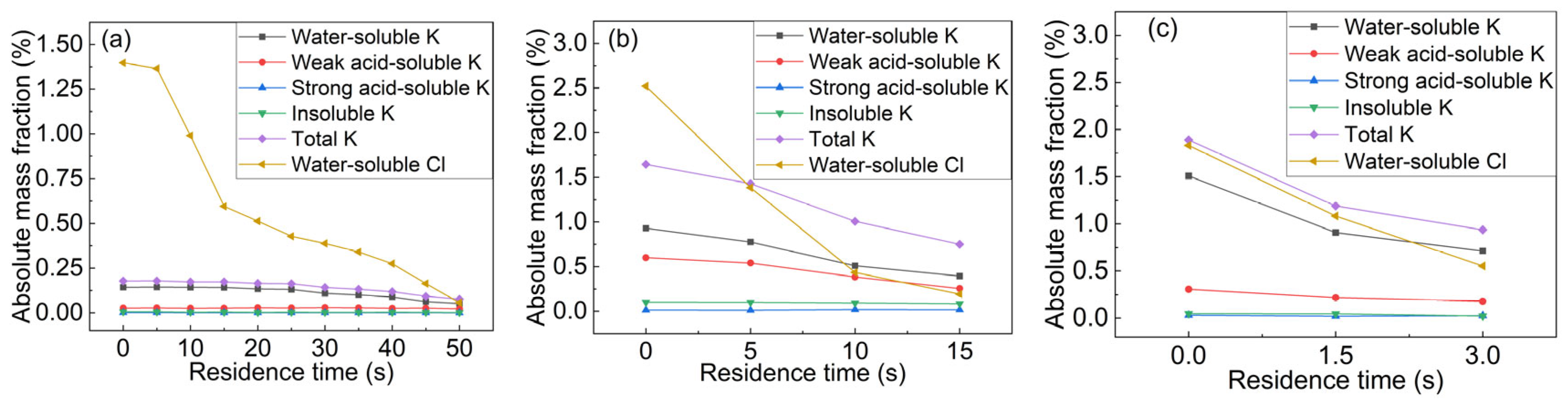
The changes in the absolute contents of K and Cl during the combustion of the three biomass fuels are shown in Figure 11. A continuous decrease was observed in water-soluble K, water-soluble Cl, and weak acid-soluble K throughout the process. The contents of strong acid-soluble K and insoluble K remained minimal and stable. This indicates that the release of K and Cl was predominantly from the water-soluble K, water-soluble Cl, and weak acid-soluble K fractions for the three biomass fuels.
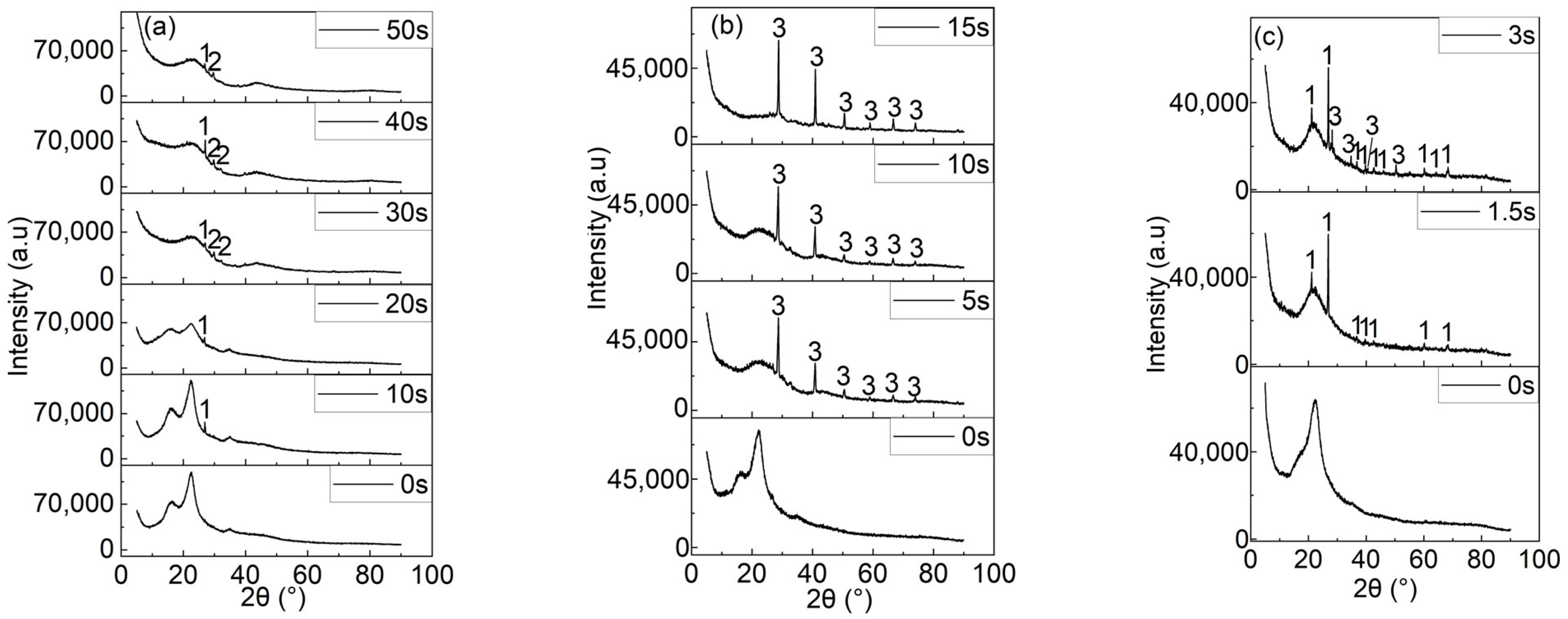
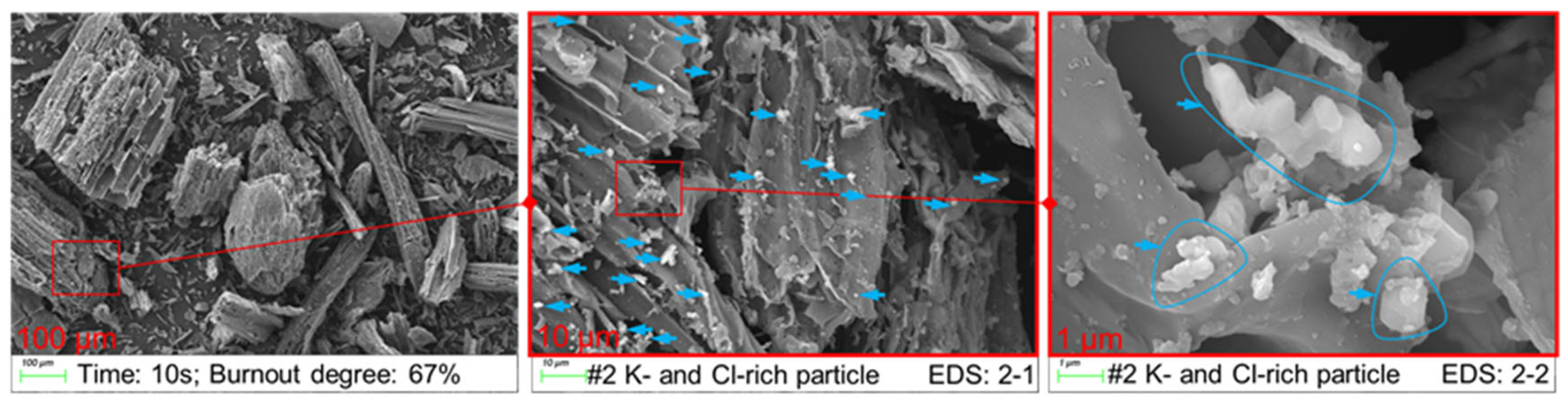
To further investigate the release mechanisms, XRD (Figure 12) and SEM-EDS analyses were conducted. For densified wood pellets, no crystalline phases containing K or Cl were detected by XRD, and no K/Cl-rich particles were found via SEM-EDS throughout the combustion process. In contrast, for both corn straw segments (at 5–15 s) and wheat straw segments (at 3 s), the presence of distinct KCl crystal diffraction peaks (XRD) along with a significant quantity of condensed KCl particles (SEM-EDS) preliminarily indicates that KCl vaporization is one of the primary release forms for K and Cl in these straws under coal-fired CFB combustion conditions. This finding is consistent with the results of numerous other studies [49,50].
The densified wood pellets had very low K content but a high water-soluble Cl content (1.4%). The inability to detect Cl-rich particles, despite multiple scans and sample replacements, is attributed to the highly uneven distribution of Cl and the small mass analyzed per EDS scan (on the order of 10−6 g). First, despite numerous EDS scans, no Cl-rich particles were found, as all analyzed particle surfaces showed less than 0.3% K or Cl. These findings further indicate that the Cl originates from external sources like paint in recycled wood and indicate that the intrinsic Cl and K levels in the wood are very low. Moreover, the consistent absence of Cl-rich particles in the combustion samples suggests that chlorine is primarily released as gases like HCl and Cl2, which aligns with findings that low-K biomass favors HCl release [51]. Finally, since the Cl in these densified wood pellets originates not from intrinsic biomass but from external contaminants in recycled wood products (e.g., paint), its combustion may also lead to the formation of hazardous organochlorine compounds, such as dioxins. Consequently, whether inorganic (Cl2, HCl) or organic, they pose potential risks to boiler operation, including acid dew point corrosion on low-temperature heat exchange surfaces and emissions of toxic pollutants like dioxins.
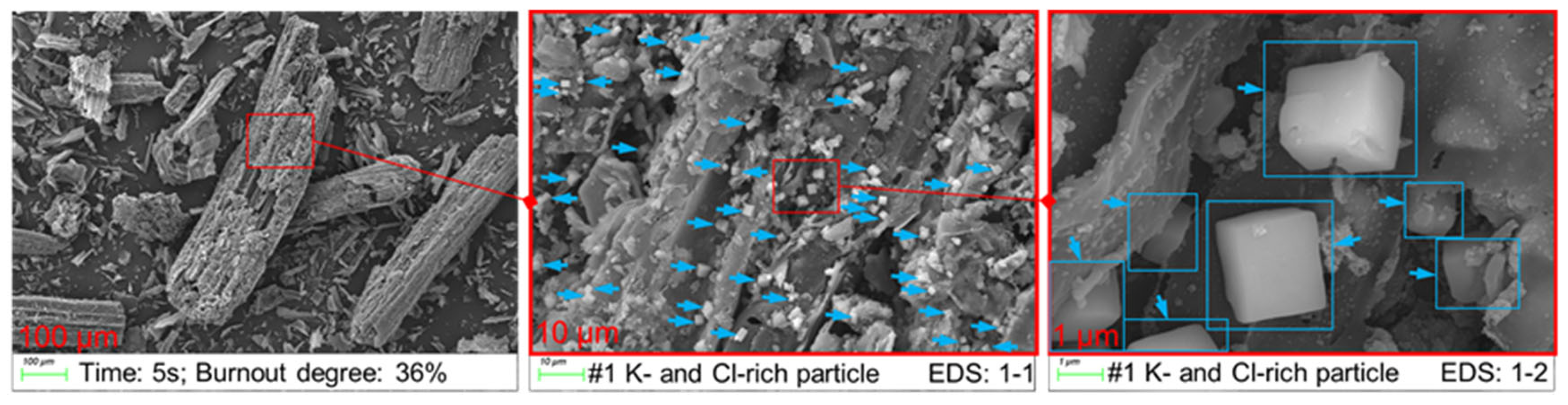
In contrast, a significant quantity of KCl particles was detected during the combustion of corn and wheat straw. In the raw samples, K and Cl were mainly distributed within carbon-rich particles, often coexisting with elements such as Mg, Ca, Na, and Al, possibly in the form of KCl, K2CO3, or organically bound K. In corn straw samples combusted for 5 s, in addition to carbon-coated K/Cl-rich particles, a large number of perfectly cubic KCl crystals were observed, as shown in Figure 13. This phenomenon is related to the high internal heat transfer resistance and temperature gradients within corn straw particles, which allow KCl to crystallize internally before reaching its melting point (770 °C). As the residence time extended to 10 s, the KCl particles lost their perfect cubic morphology due to melting and recrystallization, as shown in Figure 14. In wheat straw, which has a thin-walled and hollow structure enabling rapid heating, the KCl particles observed at 3 s already exhibited a melted and recrystallized form. Therefore, under coal-fired CFB boiler conditions, gaseous KCl is the primary and persistent form of K and Cl release during the combustion of corn and wheat straw. This observation is consistent with multiple studies indicating that when biomass has high chlorine content, gaseous KCl is the dominant form of K and Cl release [52,53,54].
In summary, although the samples were not fully combusted by the final sampling time, a small fraction of K and Cl may have remained unreleased. At the point when the burnout ratios reached 91% for densified wood pellets, 86% for corn straw, and 75% for wheat straw, the corresponding release ratios of water-soluble Cl had reached 95%, 92%, and 68%, and those of total K had reached 56%, 57%, and 50%, respectively.
In densified wood pellets, Cl mainly originates from external sources introduced during the recycling of wood products (e.g., paint) and is highly heterogeneously distributed within the particles. During combustion, this chlorine is likely released in gaseous forms such as HCl, Cl2, and potentially organochlorine compounds, including dioxins. Therefore, when such compressed wood pellets are co-fired in industrial coal-fired CFB boilers, risks include hydrochloric acid dew point corrosion on low-temperature heat exchangers and emissions of hazardous pollutants. However, since the intrinsic K and Cl content of raw wood material is extremely low, stringent control of K and Cl levels in incoming biomass fuels during industrial application can effectively mitigate K- and Cl-related risks associated with co-firing densified wood pellets.
As for wheat and corn straw, their intrinsic K and Cl contents are relatively high, and release occurs mainly in the form of gaseous KCl. Molten particles containing KCl, as well as other Si- or Ca-containing molten particles, were also observed in the combustion samples. Both molten KCl solids and volatilized KCl vapor can adhere to high-temperature heating surfaces and condense, forming crystalline KCl deposits. Such deposits not only reduce heat transfer efficiency but also pose significant risks of high-temperature KCl corrosion. Therefore, in industrial applications, measures must be taken to mitigate alkali metal-related risks when using wheat and corn straw, even if pretreatments such as densification are applied to alleviate problems like segregation, rapid volatile release, and excessive fragmentation. Although it must be acknowledged that in real co-firing systems, silica and aluminosilicates in coal ash may capture potassium to form stable potassium-aluminum-silicate compounds [47], while sulfur may promote the formation of K2SO4 [55]. These interactions could reduce the effective alkali availability for corrosion processes, thereby potentially mitigating the risks of high-temperature KCl corrosion and low-melting-point mineral fusion. However, this mitigating effect may diminish as the co-firing ratio increases. Therefore, where necessary, countermeasures adopted in dedicated biomass-fired industrial boilers can be referenced, such as adding inhibitors (e.g., kaolin), periodically replacing heat exchange tubes, and applying specialized coatings.

4. Conclusions

The movement, combustion, and K/Cl migration behaviors of densified wood pellets (as an economically transportable, heavy biomass), corn straw (as a lightweight, local biomass), and wheat straw (as a lightweight, friable local biomass) have been thoroughly elucidated.
  • Densified wood pellets release all volatiles and break down into char particles similar in size to coal char within approximately 50 s, primarily in the dense phase and transition zones. Their movement patterns, structural strength, and volatile release rates closely resemble those of coal particles, indicating that densified wood pellets pose a minimal segregation risk in industrial coal-fired CFB boilers and warrant further industrial application.
  • Due to their low density, corn straw undergoes significant segregation. They reach the dilute-phase zone within about 10 s of entering the furnace, even before complete devolatilization. Moreover, their volatile release rate is twice that of densified wood pellets. Wheat straw, on the other hand, suffers from poor mechanical strength, causing it to break into fragments immediately within about 1.5 s and ascend rapidly, with a volatile release rate ten times that of densified wood pellets. These movement and combustion characteristics indicate that corn and wheat straw exhibit a high segregation risk when co-fired in industrial coal-fired CFB boilers. In industrial practice, at low blending ratios (e.g., 5% on a thermal basis), such challenges may remain operationally manageable. However, at elevated co-firing ratios, compression treatment becomes necessary to enhance their structural integrity and density in order to mitigate segregation risk.
  • Strict quality control is essential when co-firing densified wood pellets. Although their inherent potassium and chlorine contents are low, precautions must be taken to avoid chlorine contamination from sources such as recycled wood products so as to reduce the risk of low-temperature acid dew point corrosion and toxic gas emissions resulting from chlorine release. In contrast, at elevated co-firing ratios involving corn straw and wheat straw, proactive measures must be implemented to address the risks of high-temperature KCl corrosion, HCl dew point corrosion, ash deposition and slagging, as well as bed material agglomeration.
  • Future research should further investigate the relationship between the densification process (compression level and energy consumption) and the co-firing feasibility (key indicators such as mechanical strength, density, thermal conductivity, and internal mass transport characteristics) in industrial coal-fired CFB boilers. This would help maximize the economic feasibility of the co-firing process while ensuring its practical applicability. Such efforts will also contribute to the large-scale utilization of light straw-type biomass resources in industrial coal-fired CFB boilers.

Author Contributions

Writing—original draft preparation, visualization, validation, investigation, H.Z.; investigation, L.Y.; writing—review and editing, B.J.; investigation, C.Q.; investigation, S.J.; writing—review and editing, conceptualization, supervision, funding acquisition, resources, C.Y. All authors have read and agreed to the published version of the manuscript.

Funding

This work is supported by the National Key Technologies Research and Development Program of China [Grant No. 2022YFB4202002].

Data Availability Statement

Dataset available on request from the authors. The raw data supporting the conclusions of this article will be made available by the authors on request.

Conflicts of Interest

The authors declare no conflicts of interest. The funders had no role in the design of the study; in the collection, analyses, or interpretation of the data; in the writing of the manuscript; or in the decision to publish the results.

Abbreviations

The following abbreviations are used in this manuscript:
CFBCirculating Fluidized Bed
XRDX-ray Diffraction
SEM-DESScanning Electron Microscopy with Energy Dispersive X-ray Spectroscopy Detector

References

  1. Huang, J.; Liao, Y.; Lin, J.; Dou, C.; Huang, Z.; Yu, X.; Yu, Z.; Chen, C.; Ma, X. Numerical simulation of the co-firing of pulverized coal and eucalyptus wood in a 1000MWth opposed wall-fired boiler. Energy 2024, 298, 131306. [Google Scholar] [CrossRef]
  2. Zhang, R.; Cao, J.; Lei, L.; Cao, Y.; Liu, D. Pilot-tests of the coal-fired power plant indirect coupling with multi-source organic solid waste incineration technology. Fuel 2024, 369, 131740. [Google Scholar] [CrossRef]
  3. Chen, T.; Zhao, Y.; Huang, S.; Jin, Y.; Wang, M.; Feng, H.; Yin, J. Influence of papermaking biomass co-firing on operation energy efficiency and gas emission stability of a coal-fired thermal power plant: A case study. Energy 2025, 327, 136484. [Google Scholar] [CrossRef]
  4. Ke, X.; Zhang, Y.; Liu, X.; Wu, Y.; Huang, Z.; Zhang, M.; Lyu, J.; Zhou, T. Development of biomass-fired circulating fluidized bed boiler with high steam parameters based on theoretical analysis and industrial practices. J. Energy Inst. 2022, 105, 415–423. [Google Scholar] [CrossRef]
  5. Zhang, H.; Yu, C. Experimental study on co-firing of coal and biomass in industrial-scale circulating fluidized bed boilers. Energies 2025, 18, 3832. [Google Scholar] [CrossRef]
  6. Wan, H.-P.; Chang, Y.-H.; Chien, W.-C.; Lee, H.-T.; Huang, C.C. Emissions during co-firing of RDF-5 with bituminous coal, paper sludge and waste tires in a commercial circulating fluidized bed co-generation boiler. Fuel 2008, 87, 761–767. [Google Scholar] [CrossRef]
  7. Liu, X.; Teng, Y.; Zhang, K. Migration behaviors of As, Se and Pb in ultra-low-emission coal-fired units and effect of co-firing sewage sludge in CFB boilers. Energies 2022, 15, 1544. [Google Scholar] [CrossRef]
  8. Topal, H.; Taner, T.; Naqvi, S.A.H.; Altınsoy, Y.; Amirabedin, E.; Ozkaymak, M. Exergy analysis of a circulating fluidized bed power plant co-firing with olive pits: A case study of power plant in Turkey. Energy 2017, 140, 40–46. [Google Scholar] [CrossRef]
  9. Cahyo, N.; Sulistiyowati, D.; Rahmanta, M.A.; Felani, M.I.; Soleh, M.; Paryanto, P.; Prismantoko, A.; Hariana, H. A techno-economic and environmental analysis of co-firing implementation using coal and wood bark blend at circulating fluidized bed boiler. Int. J. Renew. Energy Dev. 2024, 13, 726–735. [Google Scholar] [CrossRef]
  10. Bhoi, P.R.; Sarkar, S. The co-firing of pine biomass and waste coal in 100 and 600 MW power plants: A sustainable approach to reduce GHG emissions. Sustainability 2025, 17, 4473. [Google Scholar] [CrossRef]
  11. Atimtay, A.T.; Kayahan, U.; Unlu, A.; Engin, B.; Varol, M.; Olgun, H.; Atakul, H. Co-firing of pine chips with Turkish lignites in 750kWth circulating fluidized bed combustion system. Bioresour. Technol. 2017, 224, 601–610. [Google Scholar] [CrossRef]
  12. Fang, Y.R.; Shi, W.; Xie, G.H. Implications of wheat straw logistic systems for bioenergy sustainable development in China: Costs, energy consumption, and GHG emissions. Sci. Total Environ. 2022, 837, 155633. [Google Scholar] [CrossRef]
  13. Li, J.; Wang, R.; Li, H.; Nie, Y.; Song, X.; Li, M.; Shi, M.; Zheng, X.; Cai, W.; Wang, C. Unit-level cost-benefit analysis for coal power plants retrofitted with biomass co-firing at a national level by combined GIS and life cycle assessment. Appl. Energy 2021, 285, 116494. [Google Scholar] [CrossRef]
  14. Koul, B.; Yakoob, M.; Shah, M.P. Agricultural waste management strategies for environmental sustainability. Environ. Res. 2022, 206, 112285. [Google Scholar] [CrossRef]
  15. Shi, W.; Fang, Y.R.; Chang, Y.; Xie, G.H. Toward sustainable utilization of crop straw: Greenhouse gas emissions and their reduction potential from 1950 to 2021 in China. Resour. Conserv. Recycl. 2023, 190, 106824. [Google Scholar] [CrossRef]
  16. Li, W.; Liu, D.; Li, S.; Kong, R. Combustion performance and ash compositions during biomass/semi-coke blended fuel oxy-fuel circulating fluidized bed combustion. Energy Fuels 2020, 34, 3522–3531. [Google Scholar] [CrossRef]
  17. Sun, P.; Hui, S.E.; Gao, Z.; Zhou, Q.; Tan, H.; Zhao, Q.; Xu, T. Experimental investigation on the combustion and heat transfer characteristics of wide size biomass co-firing in 0.2 MW circulating fluidized bed. Appl. Therm. Eng. 2013, 52, 284–292. [Google Scholar] [CrossRef]
  18. Iannello, S.; Bond, Z.; Sebastiani, A.; Errigo, M.; Materazzi, M. Axial segregation behaviour of a reacting biomass particle in fluidized bed reactors: Experimental results and model validation. Fuel 2023, 338, 127234. [Google Scholar] [CrossRef]
  19. Salatino, P.; Solimene, R. Mixing and segregation in fluidized bed thermochemical conversion of biomass. Powder Technol. 2017, 316, 29–40. [Google Scholar] [CrossRef]
  20. Wang, X.; Hu, Z.; Wang, G.; Luo, X.; Ruan, R.; Jin, Q.; Tan, H. Influence of coal co-firing on the particulate matter formation during pulverized biomass combustion. J. Energy Inst. 2019, 92, 450–458. [Google Scholar] [CrossRef]
  21. Hariana; Ghazidin, H.; Putra, H.P.; Darmawan, A.; Prabowo; Hilmawan, E.; Aziz, M. The effects of additives on deposit formation during co-firing of high-sodium coal with high-potassium and -chlorine biomass. Energy 2023, 271, 127096. [Google Scholar] [CrossRef]
  22. Gao, L.; Volpe, M.; Lucian, M.; Fiori, L.; Goldfarb, J.L. Does hydrothermal carbonization as a biomass pretreatment reduce fuel segregation of coal-biomass blends during oxidation? Energy Convers. Manag. 2019, 181, 93–104. [Google Scholar] [CrossRef]
  23. Haykiri-Acma, H.; Yaman, S.; Kucukbayrak, S. Does carbonization avoid segregation of biomass and lignite during co-firing? Thermal analysis study. Fuel Process. Technol. 2015, 137, 312–319. [Google Scholar] [CrossRef]
  24. Kwong, K.Y.; Marek, E.J. Combustion of biomass in fluidized beds: A review of key phenomena and future perspectives. Energy Fuels 2021, 35, 16303–16334. [Google Scholar] [CrossRef]
  25. Wu, S.; Wang, S.; Li, Z. Evaluation of biomass char combustion kinetics using a micro-fluidized bed with thermogravimetry–mass spectrometry. Energy Fuels 2023, 37, 14021–14032. [Google Scholar] [CrossRef]
  26. Yang, Y.B.; Sharifi, V.N.; Swithenbank, J.; Ma, L.; Darvell, L.I.; Jones, J.M.; Pourkashanian, M.; Williams, A. Combustion of a single particle of biomass. Energy Fuels 2008, 22, 306–316. [Google Scholar] [CrossRef]
  27. Unchaisri, T.; Fukuda, S. Investigation of ash formation and deposit characteristics in CFB co-combustion of coal with various biomass fuels. J. Energy Inst. 2022, 105, 42–52. [Google Scholar] [CrossRef]
  28. Liu, Y.; Wang, Z.; Xia, J.; Vervisch, L.; Wan, K.; He, Y.; Whiddon, R.; Bahai, H.; Cen, K. Measurement and kinetics of elemental and atomic potassium release from a burning biomass pellet. Proc. Combust. Inst. 2019, 37, 2681–2688. [Google Scholar] [CrossRef]
  29. Thorin, E.; Schmidt, F.M. Wide-field imaging of gas-phase K species in biomass combustion using photofragmentation laser absorption imaging. Fuel 2025, 381, 133429. [Google Scholar] [CrossRef]
  30. Huang, Y.; Liu, H.; Yuan, H.; Zhuang, X.; Yuan, S.; Yin, X.; Wu, C. Release and transformation pathways of various K species during thermal conversion of agricultural straw. Part 1: Devolatilization stage. Energy Fuels 2018, 32, 9605–9613. [Google Scholar] [CrossRef]
  31. Zhang, Z.; Liu, J.; Shen, F.; Dong, Y. Insights into the effects of atmosphere and chlorine on potassium release during biomass combustion: Temporal measurement and kinetic studies. Energy Fuels 2018, 32, 12523–12531. [Google Scholar] [CrossRef]
  32. Wolf, C.; Leino, T.J.; Stephan, A.R.; Aho, M.J.; Spliethoff, H. Online corrosion measurements in combination with deposit and aerosol analysis during the co-firing of straw with coal in electrically heated, small-ccale pulverized fuel and circulating fluidized bed systems. Energy Fuels 2018, 32, 2506–2516. [Google Scholar] [CrossRef]
  33. Balan, G.; Losurdo, M.; Spliethoff, H. Experimental study of high-temperature chlorine-induced corrosion in dependence of gas velocity. Energy Fuels 2013, 27, 5628–5639. [Google Scholar] [CrossRef]
  34. Dhote, L.; Pandey, R.A.; Middey, A.; Mandal, N.; Kumar, S. Co-combustion of distillery sludge and coal for application in boiler and subsequent utilization of the generated bottom ash. Environ. Sci. Pollut. Res. 2021, 28, 36742–36752. [Google Scholar] [CrossRef]
  35. Zhang, H.; Yu, L.; Qin, C.; Jiang, S.; Yu, C. Feasibility of direct co-firing centimeter-scale straw in pulverized coal boilers: Experimental and modeling study. Chem. Eng. J. 2026, 530, 173617. [Google Scholar] [CrossRef]
  36. Yang, Z.; Duan, L.; Li, L.; Liu, D.; Zhao, C. Movement and mixing behavior of a single biomass particle during combustion in a hot fluidized bed combustor. Powder Technol. 2020, 370, 88–95. [Google Scholar] [CrossRef]
  37. Wang, X.; Fan, B.; Lei, J.; Lei, F.; Xiao, Y. Hydrodynamic investigation on gas–solid two-phase flow character in a circulating fluidized bed. Asia-Pac. J. Chem. Eng. 2014, 9, 519–526. [Google Scholar] [CrossRef]
  38. Yunusa, S.U.; Mensah, E.; Preko, K.; Narra, S.; Saleh, A.; Sanfo, S. A comprehensive review on the technical aspects of biomass briquetting. Biomass Convers. Biorefinery 2024, 14, 21619–21644. [Google Scholar] [CrossRef]
  39. Lang, S.; Zhang, S.; Zhou, Y.; Yang, J.; Liu, S.; Zhang, X.; Chen, X.; Lyu, B.; Liang, N. Research on the hot densification mechanism of biomass wastes based on molecular dynamics simulation and components adjustment method. Energy 2024, 294, 130902. [Google Scholar] [CrossRef]
  40. Castellano, J.M.; Gómez, M.; Fernández, M.; Esteban, L.S.; Carrasco, J.E. Study on the effects of raw materials composition and pelletization conditions on the quality and properties of pellets obtained from different woody and non woody biomasses. Fuel 2015, 139, 629–636. [Google Scholar] [CrossRef]
  41. Zhang, J.; Wang, Z.; Dai, G.; Heberlein, S.; Chan, W.P.; Wang, X.; Tan, H.; Lisak, G. Assessing the effect of size and shape factors on the devolatilization of biomass particles by coupling a rapid-solving thermal-thick model. J. Anal. Appl. Pyrolysis 2024, 183, 106835. [Google Scholar] [CrossRef]
  42. Pollex, A.; Zeng, T.; Khalsa, J.; Erler, U.; Schmersahl, R.; Schön, C.; Kuptz, D.; Lenz, V.; Nelles, M. Content of potassium and other aerosol forming elements in commercially available wood pellet batches. Fuel 2018, 232, 384–394. [Google Scholar] [CrossRef]
  43. Cândido, W.L.; Carneiro, A.d.C.O.; Vital, B.R.; Demuner, I.F.; Almeida, Ê.W.d.; Silva, C.M.S.d.; Peres, L.C. Chloride leaching of eucalyptus wood particles by water for pellets production. Fuel 2024, 367, 131548. [Google Scholar] [CrossRef]
  44. Paneru, M.; Babat, S.; Maier, J.; Scheffknecht, G. Role of potassium in deposit formation during wood pellets combustion. Fuel Process. Technol. 2016, 141, 266–275. [Google Scholar] [CrossRef]
  45. Rahim, M.U.; Gao, X.; Garcia-Perez, M.; Li, Y.; Wu, H. Release of chlorine during mallee bark pyrolysis. Energy Fuels 2013, 27, 310–317. [Google Scholar] [CrossRef]
  46. Liu, W.-J.; Li, W.-W.; Jiang, H.; Yu, H.-Q. Fates of chemical elements in biomass during Its pyrolysis. Chem. Rev. 2017, 117, 6367–6398. [Google Scholar] [CrossRef]
  47. Fagerström, J.; Steinvall, E.; Boström, D.; Boman, C. Alkali transformation during single pellet combustion of soft wood and wheat straw. Fuel Process. Technol. 2016, 143, 204–212. [Google Scholar] [CrossRef]
  48. Johansen, J.M.; Jakobsen, J.G.; Frandsen, F.J.; Glarborg, P. Release of K, Cl, and S during pyrolysis and combustion of high-chlorine biomass. Energy Fuels 2011, 25, 4961–4971. [Google Scholar] [CrossRef]
  49. Cheng, Z.; Jia, X.; Yun, F.; Zhang, J.; Liu, A.; Song, C. Effect of Coal Gangue Addition on the Migration and Transformation Pattern of K and Cl During Rice Straw Combustion. Combust. Sci. Technol. 2026, 198, 1318–1331. [Google Scholar] [CrossRef]
  50. Liu, L.; Ren, S.; Yang, J.; Jiang, D.; Guo, J.; Pu, Y.; Meng, X. Experimental study on K migration, ash fouling/slagging behaviors and CO2 emission during co-combustion of rice straw and coal gangue. Energy 2022, 251, 123950. [Google Scholar] [CrossRef]
  51. Ren, X.; Sun, R.; Chi, H.-H.; Meng, X.; Li, Y.; Levendis, Y.A. Hydrogen chloride emissions from combustion of raw and torrefied biomass. Fuel 2017, 200, 37–46. [Google Scholar] [CrossRef]
  52. Fatehi, H.; Costa, M.; Bai, X.-S. Numerical study on K/S/Cl release during devolatilization of pulverized biomass at high temperature. Proc. Combust. Inst. 2021, 38, 3909–3917. [Google Scholar] [CrossRef]
  53. Li, J.; Zhou, Y.; Zhao, G.; Yuan, Q. Dynamic migration characteristics of potassium during agricultural waste combustion and the mechanism of combined chlorine–sulfur action. Molecules 2025, 30, 2495. [Google Scholar] [CrossRef]
  54. Wang, Y.; Qin, Y.; Vassilev, S.V.; He, C.; Vassileva, C.G.; Wei, Y. Migration behavior of chlorine and sulfur during gasification and combustion of biomass and coal. Biomass Bioenergy 2024, 182, 107080. [Google Scholar] [CrossRef]
  55. Zhang, B.; Zhong, Z.; Xue, Z.; Xue, J.; Xu, Y. Release and transformation of potassium in co-combustion of coal and wheat straw in a BFB reactor. Appl. Therm. Eng. 2018, 144, 1010–1016. [Google Scholar] [CrossRef]
Figure 1. Coal particle size distribution and schematic diagram of biomass single-particle experimental samples.
Energies 19 01492 g001
Figure 2. Experimental system schematic diagram. (1. Blower; 2. Air preheater; 3. Flowmeter; 4. Liquid nitrogen basin; 5. Emergency-stop sampling device; 6. Furnace bottom flange; 7. Continuous coal feeding system; 8. Single-particle feeding device; 9. Single biomass particle; 10. CFB incinerator; 11. Return air fan; 12. Flue flange; 13. Baghouse dust collector; 14. Induced draft fan; 15. Chimney; 16. Return leg discharge valve; 17. Nitrogen cylinder; 18. Piston sampling device).
Energies 19 01492 g002
Figure 3. Particle size distribution of coal char after shutdown.
Energies 19 01492 g003
Figure 4. Pretreatment and detection procedures for K and Cl. (solid arrows: steps; dashed arrows: subtraction method).
Energies 19 01492 g004
Figure 5. Position changes in static bed during biomass fuel combustion: (a) densified wood pellets, (b) corn straw segments, and (c) wheat straw segments.
Energies 19 01492 g005
Figure 6. Typical shape changes during biomass fuel combustion. (a) Densified wood pellets; (b) Raw corn straw segments; (c) Raw wheat straw segments.
Energies 19 01492 g006
Figure 7. Particle size reduction ratios during biomass fuel combustion: (a) densified wood pellets, (b) corn straw segments, and (c) wheat straw segments. Data are presented as mean ± standard deviation (n > 20).
Energies 19 01492 g007
Figure 8. Probabilities of fragmentation or abrasion during biomass fuel combustion: (a) densified wood pellets, (b) corn straw segments, and (c) wheat straw segments.
Energies 19 01492 g008
Figure 9. Residual weight and burnout ratios during biomass fuel combustion: (a) densified wood pellets, (b) corn straw segments, and (c) wheat straw segments. Data are presented as mean ± standard deviation (n > 20).
Energies 19 01492 g009
Figure 10. Proximate analysis during biomass fuel combustion: (a) densified wood pellets, (b) corn straw segments, and (c) wheat straw segments.
Energies 19 01492 g010
Figure 11. Release process of K and Cl during biomass fuel combustion: (a) densified wood pellets, (b) corn straw segments, and (c) wheat straw segments.
Energies 19 01492 g011
Figure 12. XRD results during biomass fuel combustion: (a) densified wood pellets, (b) corn straw segments, and (c) wheat straw segments. (1. SiO2, 2. CaCO3, and 3. KCl).
Energies 19 01492 g012
Figure 13. Perfectly cubic KCl crystals. (blue arrows: KCl particles).
Energies 19 01492 g013
Figure 14. Melting and recrystallization of KCl crystals. (blue arrows: KCl particles).
Energies 19 01492 g014
Table 1. Proximate analysis, ultimate analysis, and heating value of experimental materials (ar: as received basis).
Car
(%)
Har
(%)
Oar
(%)
Nar
(%)
Sar
(%)
Mar
(%)
Aar
(%)
Var
(%)
FCar
(%)
Qnet,ar
(J/g)
Coal56.953.6210.850.920.536.1520.9828.0444.8323,179
Densified wood pellets45.155.2439.050.140.699.350.3875.0815.1917,776
Corn straw41.194.6638.520.320.7311.093.5067.0318.3816,476
Wheat straw40.514.7335.440.720.8612.275.4765.5716.6914,115
Table 2. Key operating parameters of coal-fired background conditions.
Parameter NameUnitOperating Range
Bed temperature°C850 ± 15
Furnace mid and upper zone temperature°C800–880
Furnace outlet pressurePa−100 ± 50
O2 concentration at tail flue%3–3.5
Coal feed ratekg/h3.5–4
Primary air flowm3/h14–15.5
Primary air temperature°C300
Fuel feeding air flowm3/h2.5
Secondary air flowm3/h7.5–12
Return air flowL/min4
Bed pressure dropPa1650–2400
Dense-phase fluidization velocitym/s6.4–7.0
Dilute-phase superficial velocitym/s5.0–6.2
Table 3. The speciation and contents of K and Cl in biomass fuels.
Kwater
(%)
Kweak acid
(%)
Kstrong acid
(%)
Kinsoluble
(%)
Ktotal
(%)
Clwater
(%)
Densified wood pellets0.1420.0270.0010.0060.1771.397
Corn straw0.9300.6010.0140.1011.6452.520
Wheat straw1.5080.3070.030.0461.8911.832
Disclaimer/Publisher’s Note: The statements, opinions and data contained in all publications are solely those of the individual author(s) and contributor(s) and not of MDPI and/or the editor(s). MDPI and/or the editor(s) disclaim responsibility for any injury to people or property resulting from any ideas, methods, instructions or products referred to in the content.