Article

Chaotic Optimization of BP Neural Networks for Oil-Paper Insulated Transformer Life Prediction Based on Health Index Models

School of Electrical Engineering and Automation, Wuhan University, Wuhan 430072, China
*
Author to whom correspondence should be addressed.
Energies 2026, 19(6), 1469; https://doi.org/10.3390/en19061469
Submission received: 23 January 2026 / Revised: 11 March 2026 / Accepted: 13 March 2026 / Published: 14 March 2026

Abstract

The aging of oil-paper insulated transformer components significantly impacts their service life. Accurate health assessment is crucial for predicting failure rates and residual life, which is vital for ensuring operational safety. This paper employs the bathtub curve concept and Weibull distribution to fit collected oil-paper insulated transformer failure rate data, obtaining the failure rate curve. Considering operational environment and load factors, a health index model is established for residual life prediction. By optimizing the weight and bias parameters of the backpropagation (BP) neural network using an adaptive chaotic sequence strategy, a multi-parameter correlated transformer life prediction model is constructed. A cross-validation mechanism is introduced to enhance the model’s generalization ability. Experimental results from training and testing demonstrate that the proposed method achieves higher prediction accuracy, with average errors of 5.36% for annual failure rate and 3.32% for residual life, confirming its effectiveness and applicability in transformer life prediction.

1. Introduction

Large-capacity oil-paper insulated transformers are typically equipped with online monitoring systems, and power production management systems must collect basic transformer information, operational status, maintenance records, test data, and defect records to establish comprehensive transformer archives [1]. Fully utilizing this information to evaluate the operational status of oil-paper insulated transformers and develop precise methods for predicting transformer operational lifespan is crucial for ensuring their healthy operation [2].
Current oil-paper insulated transformer condition assessment primarily involves: electrical test data, transformer oil characteristics, dissolved gas analysis (DGA), and environmental/load factors [3]. Characteristic gases CO and CO2 generated during insulation paper aging dissolve in oil, and their concentrations increase significantly with rising temperature [4,5]. Thus, dissolved gas content in oil serves as a direct indicator for evaluating transformer paper insulation aging.
BP neural networks are currently a widely used method for oil-paper insulated transformer life assessment [6]. Based on data sources such as DGA and environmental load factors, they can effectively evaluate the complex, multi-factor aging of transformers, thereby establishing deep correlations between aging characteristics and service life [6,7]. Chaotic sequences can quantify the intrinsic randomness and sensitivity of initial value in the evolution of transformer aging processes [8,9], making them suitable for optimizing backpropagation neural networks [10].
This paper integrates external operating conditions with bathtub curve and health index theories, employing deep data mining based on a BP neural network to establish a multi-input, multi-output transformer lifespan prediction model. Chaotic sequences optimize BP neural network parameters, while cross-validation enhances the network’s generalization capability. Test results demonstrate the proposed approach effectively achieves precise transformer lifespan prediction.

2. Failure Rate and Life Prediction Model

2.1. Failure Rate Model and Weibull Fit

The Weibull distribution, based on the weakest link model or series model, effectively reflects the impact of material defects and cumulative failures in components such as transformer cores and bushings on the lifespan of power transformers [11]. Let us consider there exists a time-ordered dataset of failure rates for n groups of substation equipment. The failure rate function of the two-parameter Weibull distribution is expressed as Formula (1) [11,12]:
r ( t ) = β η t η β 1
where β is the shape parameter and η is the scale parameter. When β > 1, r(t) increases, indicating the equipment has entered the wear-out failure period; when 0 < β < 1, r(t) decreases, corresponding to the early failure period.
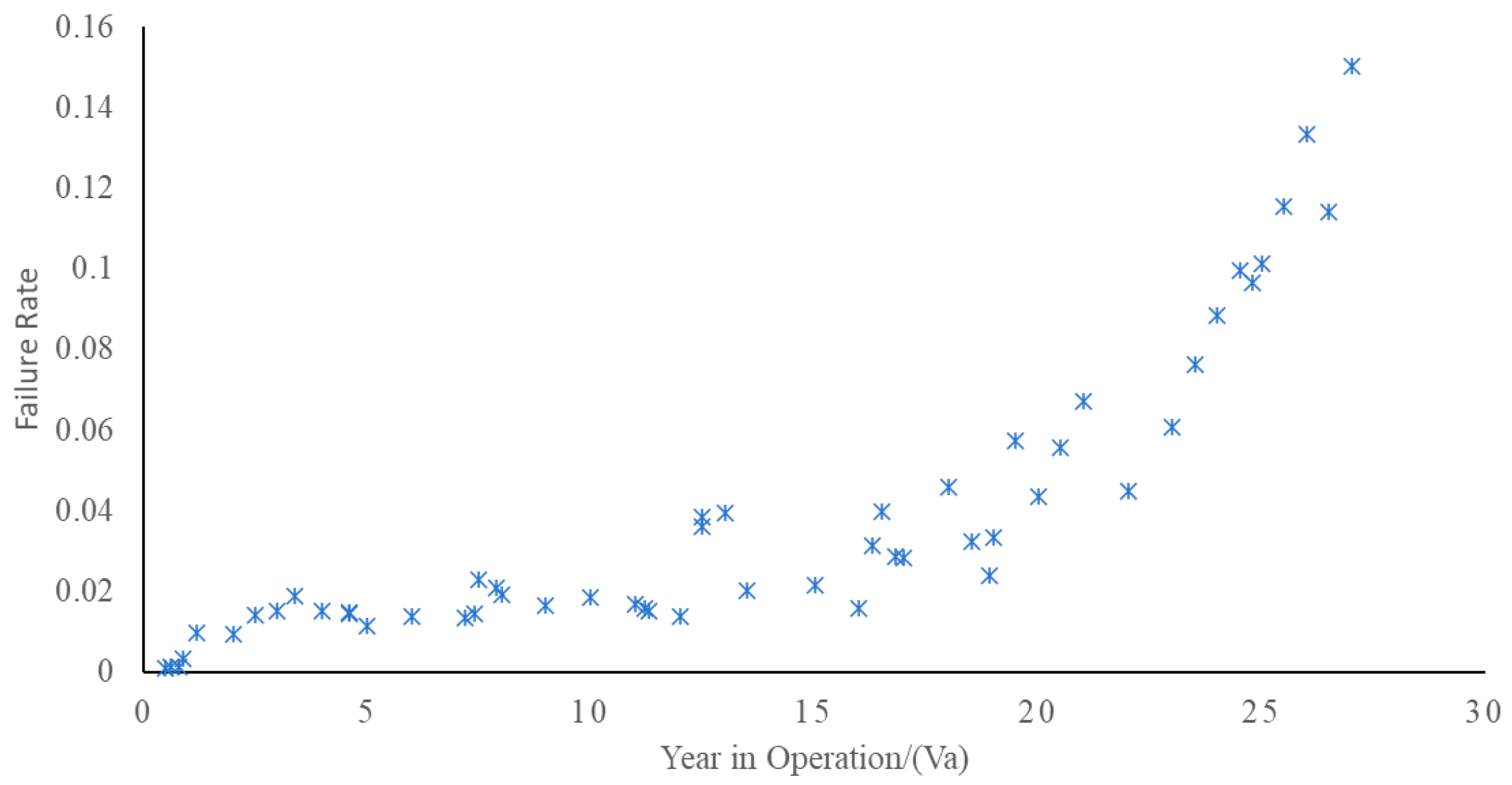
The relationship between transformer operating years and failure rate, obtained by fitting transformer annual failure rate data [13] to a Weibull distribution using the LSE method, is shown in Figure 1.
The bath curve is a typical three-stage model describing the failure rate of electrical insulation systems over time, comprising an initial high-failure-rate phase, a stable low-failure-rate phase, and a phase of increasing failure rates due to aging [14]. As shown in Figure 1, the failure rate remains low and increases gradually when the operating period is less than 15 years. After exceeding 15 years of operation, the failure rate rises significantly, aligning with the characteristics of the stable failure period and the wear-out failure period in the bathtub curve [14]. Prior to defect formation, the transformer failure rate increases gradually with accumulated faults [2]. After defect formation, the failure rate rises sharply. To determine the phase boundary years, time points of 14, 15, and 16 years were selected to list the estimated Weibull distribution parameters and the mean square error of the fit, with results shown in Table 1:
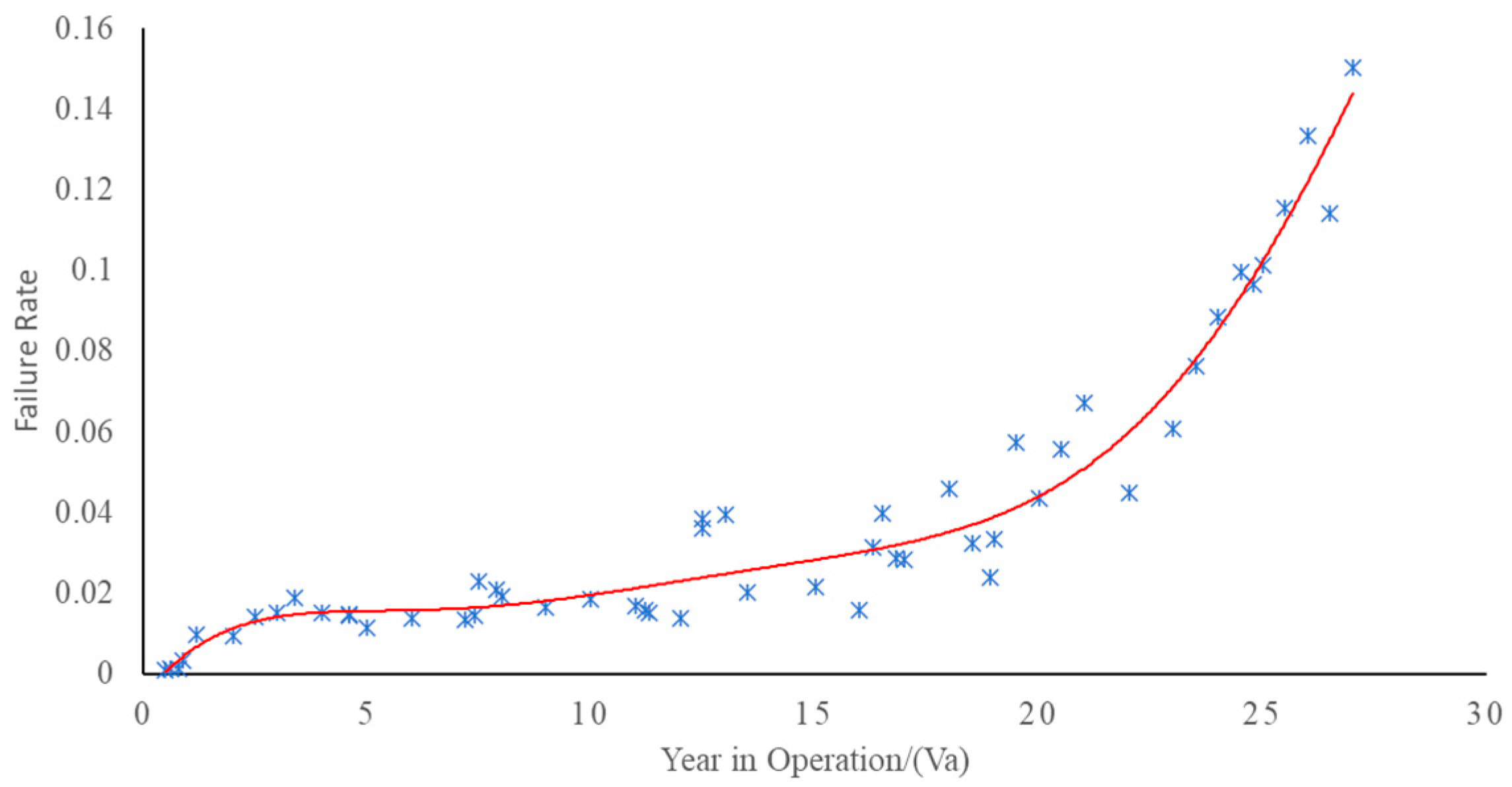
As shown in Table 1, when using 15 years as the classification interval, the Weibull distribution yields the smallest mean square error (0.0088). Therefore, the 15th year is selected as the boundary point between the stable failure period and the wear-out failure period. Based on this, the annual failure rate fitting curve is plotted as shown in Figure 2.
The annual failure rate fitting function obtained from the corresponding parameters is expressed as Formula (2):
r ( x ) = 1.40 39.75 ( x 39.75 ) 0.40 , 0 x 15 4.58 28.29 ( x 28.29 ) 4.58 , x > 15

2.2. Establishment of a Residual Life Prediction Model

2.2.1. Life Expectancy Prediction Based on Health Indices

This paper employs a health index formula to evaluate transformer health status and predict residual service life. The formula is based on equipment aging principles, which reflects the temporal evolution of equipment health levels. The corresponding expression is shown in Equation (3) [15]:
H I = H I 0 × e B × ( T 2 T 1 )
where H I 0 represents the initial health index of the equipment, H I represents the final health level index of the equipment, B represents the aging coefficient, T 1 represents the year corresponding to H I 0 for brand-new equipment, and T 2 represents the year corresponding to the H I being calculated.
The HI value ranges from 0 to 10, with lower values indicating better device status.
The initial health index HI0 of a transformer is typically its health index at commissioning, generally set to 0.5. After operating for Texp years, the transformer’s health state deteriorates significantly, reaching the end of its service life. The health index at the end of the transformer’s life is set to seven [15]. The aging coefficient can then be calculated using the following Formula (4) [15]:
B = ln 7 ln 0 . 5 T 2 T 1 = ln 7 / 0.5 T e x p
where T e x p denotes the expected service life of the transformer.

2.2.2. Impact of Load and Operating Environment on Service Life

Excessive transformer load factors increase the risk of overload and shorten service life. The ideal load factor range is from 50% to 65% [16]. Operating conditions such as humidity, environmental pollution levels, annual average temperature, and pollution degree also significantly impact transformer safety and lifespan [17].
When determining the expected service life T e x p of a transformer, due to the influence of load conditions and environmental factors, an initial expected service life T e x p should be established based on the equipment manufacturer and model specifications [15,16,17]. This initial value is then adjusted using the load factor f L and environmental factor f E . The adjusted result can be expressed by Formula (5):
T e x p = T e x p f L × f E
The relationship between f L and the load factor, and between f E and the operating environment, is shown in Table 2 [15,16,17].
Load factor accelerates insulation aging by influencing winding hotspot temperature. According to Arrhenius’ law, when the load factor exceeds 65%, the insulation aging rate doubles for every 6 °C increase in hotspot temperature. Therefore, the load factor f L essentially serves as a normalization factor for hotspot temperature relative to aging rate [11]. f L > 1 indicates overload operation with accelerated aging; f L = 1 represents rated load with normal aging.

2.2.3. Relationship Between Carbon and Oxygen Gas Content and Aging Level

During thermal aging of cellulose, decomposition primarily generates CO and CO2 gases. In DGA, CO and CO2 are regarded as critical parameters for evaluating insulation system aging [18]. Correlation analysis of field operational data indicates that operational duration (representing aging level) exhibits a significant positive correlation with CO2 content and the total sum of (CO + CO2), while showing no significant correlation with other gases [3,4,18].

3. Chaos Sequence Optimization of BP Neural Networks

3.1. BP Neural Network Model Structure and Parameters

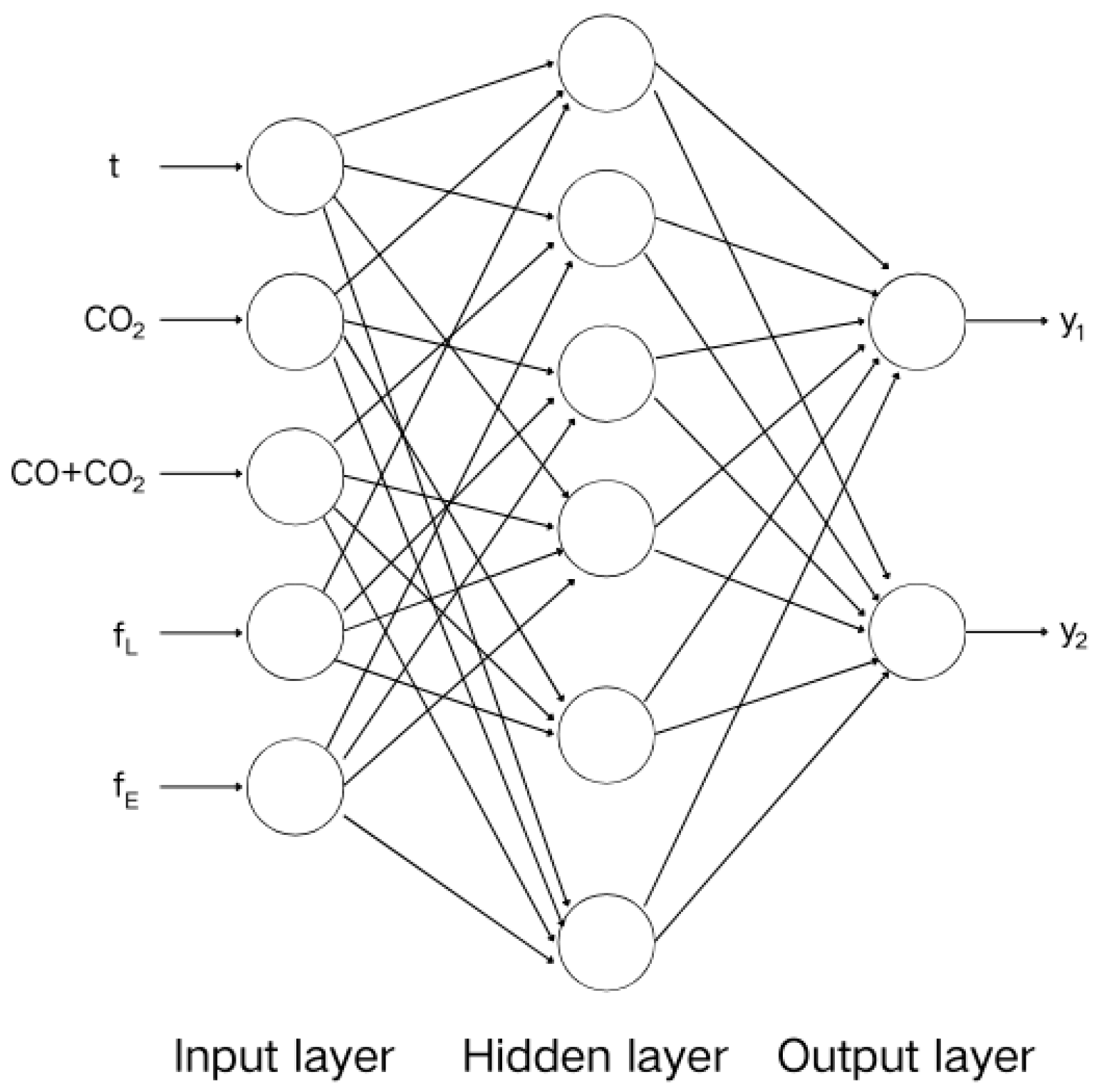
Based on the analysis in Section 2, it is evident that the transformer’s service life, load and operating environmental conditions, as well as carbon dioxide and carbon monoxide gas concentrations, significantly influence both the annual failure rate and residual lifespan of the transformer. Therefore, these factors can be utilized as input variables to construct a BP neural network for transformer lifespan prediction. This network adopts a five-input, two-dimensional output structure. The five-input variables are: service life t, carbon dioxide content CO2, total carbon monoxide and carbon dioxide content CO + CO2, load factor f L , and environmental factor f E . The output is a two-dimensional vector comprising the annual failure rate y1 and the residual life y2. The structural diagram of the constructed BP neural network is shown in Figure 3.
As shown in Figure 3, the BP neural network established in this paper is a five-input, two-output neural network. The number of neurons in its hidden layer is determined based on an empirical formula [19]:
M = n + m + a
M denotes the number of neurons in the hidden layer, m and n denote the number of neurons in the output layer and input layer respectively, and a is a constant between 0 and 10.
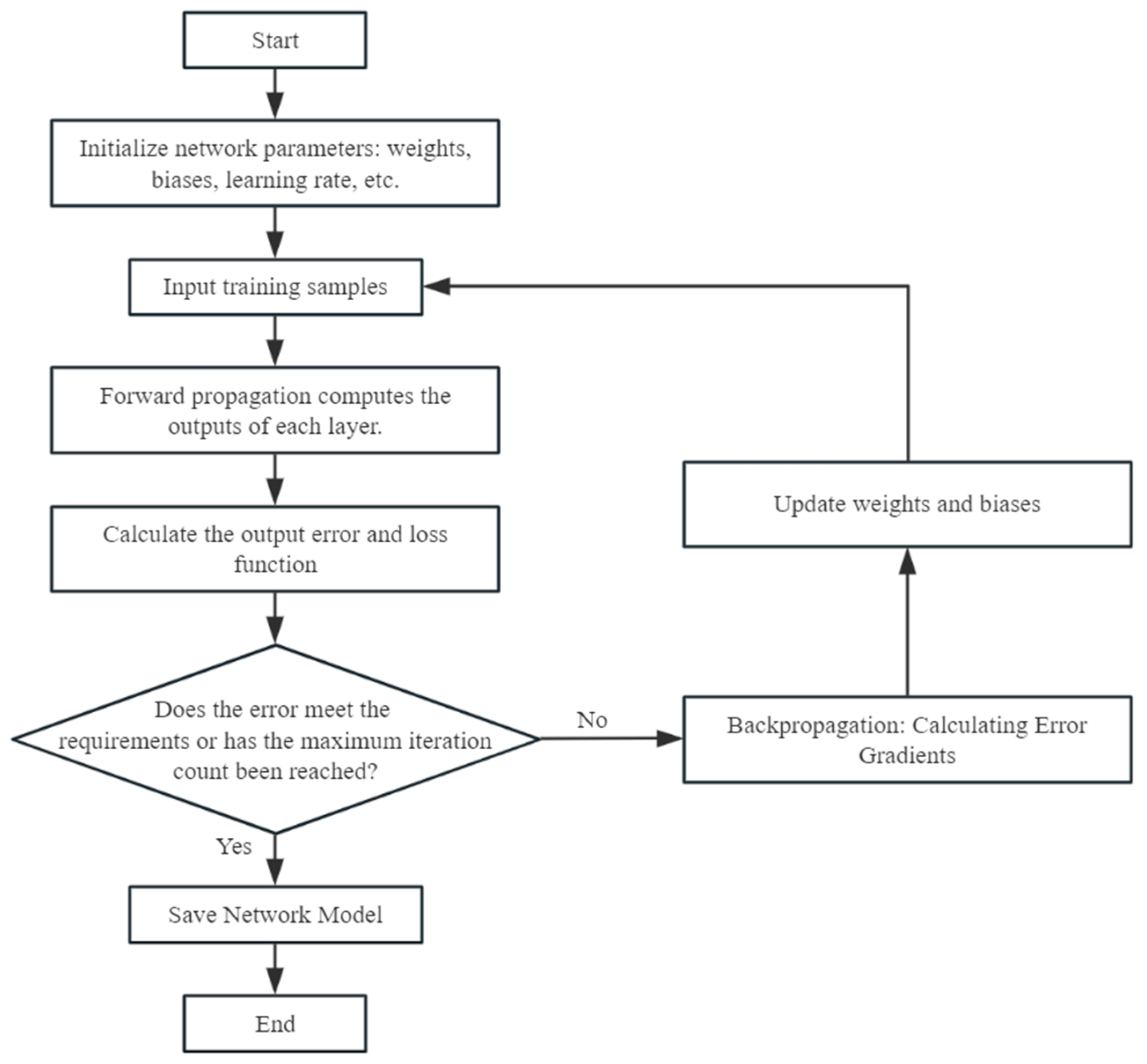
The BP neural network algorithm flow is shown in Figure 4 [19].

3.2. Chaotic Sequences and Their Applications

Chaotic optimization leverages the traversal and periodic characteristics of chaotic sequences, employing chaotic variables to search within a defined range. This approach enables the chaotic variables to escape local optima during the search process, ultimately achieving global optimization [8]. This paper primarily employs chaotic algorithms to generate multi-track chaotic sequences. Information sharing occurs across each track. Based on this principle of information sharing, subsequent iterations are influenced not only by inertial weights but also by the historical information of the current track and the global historical information of the other tracks, thereby adjusting the tracks. The introduction of chaotic sequences enables thorough exploration of the global feasible solution space, significantly enhancing the global optimization capability of the search method [9].
This paper employs the logistic pest population model to generate chaotic sequences, expressed as Equation (7) [20]:
x ( n + 1 ) = μ x ( n ) ( 1 x ( n ) )
In the equation, μ is the control variable. When μ = 4, the system enters a fully chaotic state, and the sequence generated by Equation (7) is a chaotic sequence.

3.3. Cross-Validation and Its Applications

When predicting problems, the primary focus is on a model’s ability to forecast non-sample data, yet during training, models often receive only limited sample data inputs. To address this issue, this paper employs cross-validation to enhance the network’s generalization capabilities [21].
The application of cross-validation enhances the training of BP neural networks in the following ways [22]: it enables the extraction of maximum information from limited samples; it facilitates training from multiple perspectives, effectively preventing the network from getting stuck in local minima; and it mitigates the issue of overfitting in the network.
In cross-validation, the known dataset is typically divided into the following three parts: the training set, the validation set, and the test set. The training set and validation set together form the learning dataset, while the test set is used to evaluate the model’s learning outcomes [21]. To achieve better training results and ensure full utilization of the learning dataset, this paper employs 10-fold cross-validation. The learning dataset is divided into ten parts, with nine parts serving as the training set and one part as the validation set for cross-validation.

3.4. Training Method and Steps for Optimizing BP Neural Networks Using Chaotic Sequences

This paper defines the weights and biases of the BP neural network from the input layer to the hidden layer and from the hidden layer to the output layer as optimization variables. It employs a multi-track chaotic sequence information sharing method for optimization, followed by cross-validation for parameter screening. This approach identifies a set of suitable performance parameters for the BP network, enabling it to demonstrate high performance in subsequent life prediction tasks.
Optimization algorithms are decision problems where the objective function represents the magnitude of network output error [10]. This paper defines the objective function as the mean squared error of outputs across the training set:
f = i = 1 v j = 1 d ( y j i c j i ) 2 d × v
In Equation (8), y j i denotes the jth output dimension value of the ith training sample, c j i represents the target value, d indicates the number of output neurons, and v signifies the number of training samples.
The basic steps of the algorithm are:
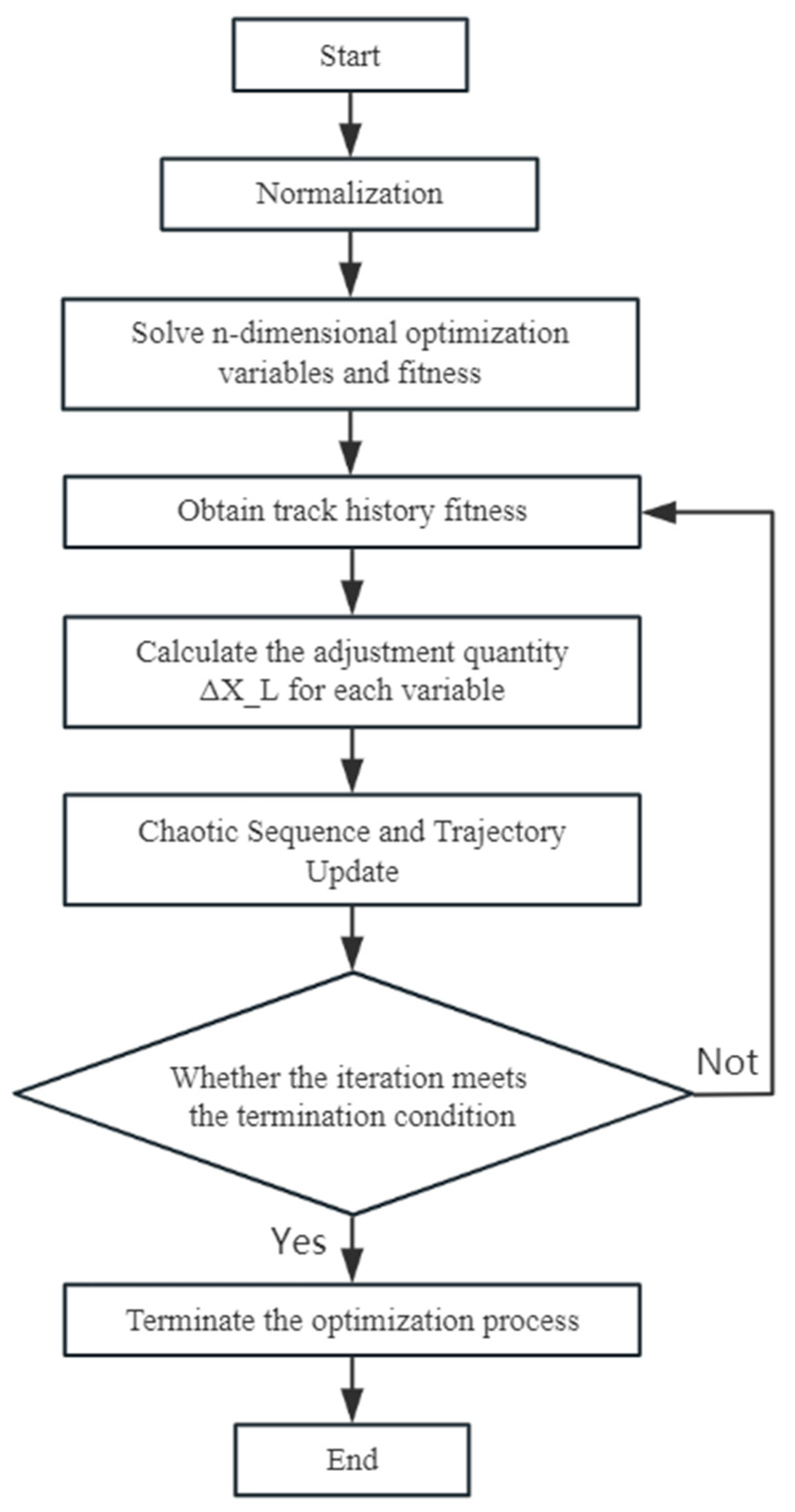
Step 1: Normalization. Normalize the data and initialize constants: the number of trajectories L, the variable dimension n, the iteration accuracy ε, and the maximum iteration count T m a x .
Step 2: Solve n-dimensional optimization variables and fitness. Randomly generate n-dimensional optimization variables X L k = x L , 1 k , x L , 2 k , , x L , n k for L trajectories, and compute the fitness F ( X L k ) for each trajectory using Equation (8).
Step 3: Obtain track history fitness. Determine and update the minimum historical fitness values for each track: F f min ( X 1 ) , f min ( X 2 ) , , f min ( X L ) m i n , record the corresponding X i for each f min ( X i ) , and form X X 1 , X 2 , , X L L m i n . Determine and update the global minimum historical fitness value F g = min [ f min ( X i ) ] and the sequence X g = X i corresponding to F g .
Step 4: Calculate the adjustment quantity Δ X L for each variable. Δ X L consists of the following three components: the first component Δ X 1 represents the inertia component of the sequence; the second component Δ X 2 is the vector difference between each track’s value and the current track’s historical optimum value: Δ X 2 = X i k X i . The third component Δ X 3 is the vector difference between each track’s value and the overall historical optimum value: Δ X 3 = X i k X g . The final adjustment quantity for the optimization variable is obtained as Equation (9):
Δ X L = λ 1 Δ X 1 + λ 2 Δ X 2 + λ 3 Δ X 3
In Equation (9): λ1, λ2, and λ3 represent the weights for the three components, respectively. During the early stages of iteration, λ1 is set to a larger value to ensure diversity among tracks. In the later stages, λ3 is set to a larger value to ensure fusion of information across tracks. The three weight variables are defined as follows:
λ 1 = e k t 2 ,   λ 2 = λ 1 1 λ 1 ,   λ 3 = ( 1 λ 1 ) ( 1 λ 1 )
Step 5: Chaotic sequence and trajectory update. Update the L chaotic sequences using Equation (7), map them to the variable value space, and calculate their fitness using Equation (8). If the fitness of a chaotic sequence on a certain trajectory is superior to that of the iterated sequence, perform trajectory update.
Step 6: Result verification. Determine whether the iteration meets the termination condition. If satisfied, terminate the optimization process; otherwise, return to Step 3 to continue iteration.
Figure 5 illustrates the training steps of the chaotic optimization BP neural network.

4. Chaos Sequence Optimization of BP Neural Networks for Lifespan Prediction

The prediction of oil-immersed transformer lifespan primarily relies on the carbon oxide (CO, CO2) content in transformer oil [3,4]. This paper considers the influence of aging factors by introducing environmental factor ( f E ) and load factor ( f L ). Through chaotic sequence-based network parameter optimization, a lifespan prediction network model is developed.

4.1. Establishment and Training Results of Neural Networks

Collected 50 sets of transformer operational data, with 40 sets designated as the training set (for modeling and cross-validation) and 10 sets as the test set. The constructed BP neural network parameters are as follows: six input neurons, two output neurons, six hidden layer neurons (using the Sigmoid transfer function), and a linear transfer function for the output layer. Chaos sequence parameters include: 30 orbits, 56 variable dimensions, maximum iterations of 1000, and minimum error of 10−3; cross-validation employed a 10-fold validation method.
The maximum absolute error, maximum relative error, standard deviation of relative error, mean relative error and signed relative error 95% confidence interval of the model output are shown in Table 3.
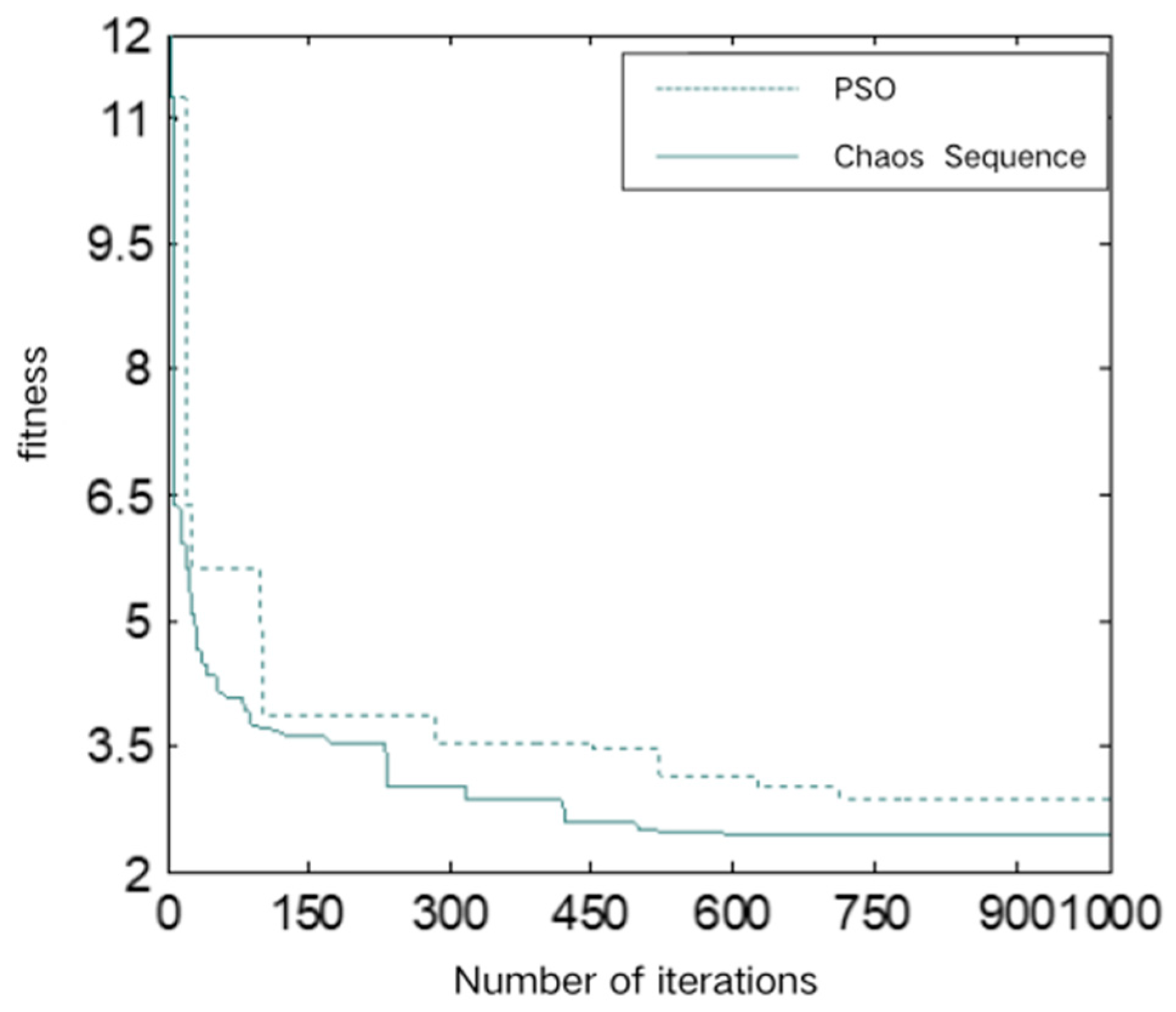
To investigate the efficacy of chaotic sequences in BP neural network optimization, this paper compares its algorithm with particle swarm optimization-based BP neural networks (PSO-BP). Particle swarm optimization (PSO) is a swarm intelligence optimization algorithm that simulates the foraging behavior of bird flocks. It guides particles to iteratively update their velocity and position within the solution space based on individual and global extrema, thereby achieving the search for a global optimal solution. The PSO-BP algorithm leverages PSO’s global optimization capability to optimize the initial weights and thresholds of the BP neural network, effectively overcoming the traditional BP algorithm’s tendency to get stuck in local minima and converge slowly [23]. The relationship between the number of iterations and error for both methods is shown in Figure 6.
As shown in Figure 6, the fitness values of both methods decrease with increasing iterations during training. However, the proposed training method converges faster, stabilizing at 500 iterations with a fitness of 2.427. In contrast, PSO-BP method requires nearly 700 iterations to stabilize, converging to a fitness of 2.852. This demonstrates that the proposed algorithm requires significantly fewer iterations, substantially reduces training time, and achieves higher computational accuracy.

4.2. Test Sample Output Analysis

The trained network was tested on the test dataset, yielding the output values shown in Table 4.
As shown in Table 4, the training set data exhibit a relatively high prediction accuracy, with a relative error in annual failure rate below 11% and a relative error in residual lifespan below 8%. Based on cross-validation theory [21], the error distribution of this model’s outputs shows no extreme outliers, indicating that the model possesses strong generalization capabilities.
The error comparison between the traditional BP method, PSO-BP method, and the optimization algorithm proposed in this paper for this dataset is shown in Table 5.
As shown in Table 5, the chaotic optimization BP neural network employed in this study demonstrates significant improvements in annual failure rate error, residual life error, and mean error.
Test Sample Case Analysis:
Case 1: A 110 kV main transformer (Model SZ9-Z-K-31500/110), commissioned in 1998 with a design life of 30 years. Operates in a favorable environment with an average annual load factor of 65%. Inspection data from 2010 are as follows: CO 21 μL/L, CO2 413 μL/L. The network prediction outputs an annual failure rate of 0.01999 and a residual lifespan of 12.5 years, with the annual failure rate falling within the 95% confidence interval (−13.73, 4.61). This indicates good equipment health with early normal aging. Actual status: the transformer operated normally through May 2018, consistent with prediction results.
Case 2: A 220 kV main transformer (Model SFPSZB-120000/220), commissioned in 1985 with a design life of 30 years, operating in a favorable environment with an average annual load factor of 70%. Test data after 28 years of operation: CO 1985 μL/L, CO2 20,686 μL/L. The network prediction output gives an annual failure rate of 0.17 and a residual life of 8.5 years. This indicates the transformer is in the late stage of aging but still in acceptable operating condition, with an expected lifespan exceeding the design years. Actual status: the equipment was operating well in 2015, consistent with the prediction.

5. Conclusions and Prospects

This paper integrates bathtub curve theory with health index theory to construct a transformer failure rate function. By employing a BP neural network, it deeply explores the complex relationships among multiple parameters—including CO/CO2 volume fractions, operating environments, and load factors—establishing a comprehensive transformer lifespan prediction model that more accurately reflects the aging state of solid insulation.
This study employs chaotic sequences to optimize BP network parameters, effectively enhancing the convergence speed and accuracy of the training process while helping the algorithm escape local optima. Combined with a cross-validation mechanism, this approach significantly improves the model’s generalization capability and prediction stability.
Test sample validation demonstrates that the proposed model accurately assesses transformer failure rates and predicts residual life. Prediction results align well with actual operational conditions, providing scientific basis and theoretical support for maintenance decision-making in power operation management departments.

Author Contributions

Conceptualization, M.W. and B.S.; methodology, B.S.; software, M.W.; validation, M.W.; resources, M.W.; data curation, M.W.; supervision, B.S.; writing—original draft preparation, M.W.; writing—review and editing, M.W. and B.S.; visualization, M.W. All authors have read and agreed to the published version of the manuscript.

Funding

This research received no external funding.

Data Availability Statement

The original contributions presented in this study are included in the article. Further inquiries can be directed to the corresponding author.

Conflicts of Interest

The authors declare no conflicts of interest.

References

  1. Li, J.H.; Wang, J.S. Intelligent Archive Management Based on Deep Learning Technology Driven by Artificial Intelligence. IEEE Access 2025, 13, 42377–42387. [Google Scholar] [CrossRef]
  2. Zhang, Z.; Song, W.; Li, Q. Dual-Aspect Self-Attention Based on Transformer for Remaining Useful Life Prediction. IEEE Trans. Instrum. Meas. 2022, 71, 2505711. [Google Scholar] [CrossRef]
  3. Tian, Y.; Li, Z.W.; Wang, S.T.; Zhu, G.; Shi, H.; Wang, Y.; Niu, B.; Zhu, Y.; Huang, X. Research on Infrared Spectroscopy Detection of Furfural Content in Transformer Oil Based on Acetonitrile Extraction. Meas. Sci. Technol. 2024, 35, 095004. [Google Scholar] [CrossRef]
  4. Liu, J.F.; Song, B.S.; Zhang, E.Z.; Zhang, H.; Zhang, Y.; Goh, H.H. Two-Stage Residual Lifespan Prediction Model for Oil-Paper Insulation Based on Analysis of Furfural and Methanol in Oil. IEEE Trans. Power Deliv. 2023, 38, 432–441. [Google Scholar] [CrossRef]
  5. Zhang, J.; Wang, F.P.; Li, J.; Li, X.; Zhou, Q. Ageing Characterization of Oil Impregnated Paper Insulation Based on Dispersion Staining Colors. IEEE Trans. Dielectr. Electr. Insul. 2018, 25, 1587–1597. [Google Scholar] [CrossRef]
  6. Jin, Y.S.; Wu, H.; Zheng, J.F.; Zhang, J.; Liu, Z. Power Transformer Fault Diagnosis Based on Improved BP Neural Network. Electronics 2023, 12, 3526. [Google Scholar] [CrossRef]
  7. Xu, J.; Pan, L.; Sun, Y.; Yuan, T. Short-term load forecasting of power system based on genetic algorithm improved BP neural network algorithm. In Proceedings of the IEEE International Conference on Advances in Electrical Engineering and Computer Applications, Dalian, China, 20–21 August 2022; pp. 1353–1356. [Google Scholar]
  8. Wang, W.; Liu, F.; Wang, W.; Cheng, M. The chaotic time series prediction method based on sparrow search algorithm optimization. In Proceedings of the 2021 2nd International Conference on Intelligent Computing and Human-Computer Interaction, Shenyang, China, 17–19 November 2021; pp. 104–107. [Google Scholar]
  9. Yang, F.F.; Mou, J.; Sun, K.H.; Chu, R. Lossless Image Compression-Encryption Algorithm Based on BP Neural Network and Chaotic System. Multimed. Tools Appl. 2020, 79, 19963–19992. [Google Scholar] [CrossRef]
  10. Zhou, S.; Wang, S.Y.; Iu, H.H.C.; Zhang, Y.; Zhang, H. Machine Learning-Based Estimation of Correlation Dimension from Short Chaotic Time Series. Phys. D Nonlinear Phenom. 2025, 482, 134869. [Google Scholar] [CrossRef]
  11. Soleimani, M.; Kezunovic, M.; Butenko, S. Linear Arrhenius-Weibull Model for Power Transformer Thermal Stress Assessment. IEEE Access 2022, 10, 19013–19021. [Google Scholar] [CrossRef]
  12. Wei, X.C.; Wang, Z.M.; Guo, J.F. Reliability Assessment of Transformer Insulating Oil Using Accelerated Life Testing. Sci. Rep. 2022, 12, 21669. [Google Scholar] [CrossRef] [PubMed]
  13. Sun, P.; Chen, S.; Zhang, C. Assessment of failure rates for substation equipment life cycle based on Marquardt parameter estimation method. Prot. Control Electr. Syst. 2012, 40, 85–90. [Google Scholar]
  14. Montanari, G.C.; Ghosh, R.; Seri, P.; Bononi, S.F.; Albertini, M. Testing Cable System Reliability after Commissioning and during Operation Life: In Medio Stat Virtus. High Volt. 2021, 6, 34–41. [Google Scholar] [CrossRef]
  15. Zhou, X.; Zhang, Q.P.; Tian, T.; Li, X.G.; He, N.H.; Ma, Y.L.; Luo, Y.; Li, L.; Yi, K. Evaluation method of power transformer operation state and its field application. In Proceedings of the 2021 6th IEEE Asia Conference on Power and Electrical Engineering, Chongqing, China, 8–11 April 2021; pp. 1504–1510. [Google Scholar]
  16. Dou, W.L.; Li, Z.J.; Song, Z.R.; Tong, Y.; Zhu, H.; Lu, S. Load prediction and optimization of main transformer based on EEMD-BP neural network. Discov. Comput. 2025, 28, 57. [Google Scholar] [CrossRef]
  17. Jia, Y.J.; Zhang, J.C.; Jiang, J.J.; Jin, Z.J. Study on diaphragm pump fault diagnosis and data correction techniques in online oil chromatography based on multilayer perceptrons. Meas. Sci. Technol. 2025, 36, 035010. [Google Scholar] [CrossRef]
  18. Ngwenyama, M.K.; Gitau, M.N. Application of back propagation neural network in complex diagnostics and forecasting loss of life of cellulose paper insulation in oil-immersed transformers. Sci. Rep. 2024, 14, 6080. [Google Scholar] [CrossRef] [PubMed]
  19. Chen, H.; Zhang, J.; Zhang, C.; Qiao, N.; Zhang, J.; Li, Q. Research on short-term electricity price prediction in power market based on BP neural network. In Proceedings of the IEEE International Forum on Electrical Engineering and Automation, Zhuhai, China, 4–6 November 2022; pp. 1198–1201. [Google Scholar]
  20. Pushpa, B.R.; Shivhare, H.; Raj, A.; Sambhaw, A.; Verma, A. Design And Development of Deep Learning Model of Chaotic Signal Processing for Efficient Data Encryption. In Proceedings of the IEEE International Conference on Recent Innovation in Smart and Sustainable Technology, Bengaluru, India, 15–16 March 2024; pp. 1–6. [Google Scholar]
  21. Wang, J.H.; Zhang, Q.X.; Li, S.S.; Pan, X.; Chen, K.; Zhang, C.; Wang, Z.; Jia, M. Short-term power forecasting of fishing-solar complementary photovoltaic power station based on a data-driven model. Energy Rep. 2023, 10, 1851–1863. [Google Scholar] [CrossRef]
  22. Liu, H.B.; Zhou, Q.; Leng, M.R.; Liu, X.; Huang, J.; Chen, C.; Chen, Z. Theoretical line loss rate calculation method considering power quality factors. Electr. Power Syst. Res. 2025, 249, 111994. [Google Scholar] [CrossRef]
  23. Chu, R.; Zhang, S.F. A color image encryption based on chaotic system and PSO-BP neural network and DNA mutation. Phys. Scr. 2022, 97, 125216. [Google Scholar] [CrossRef]
Figure 1. Scatter plot of transformer annual failure rate.
Energies 19 01469 g001
Figure 2. Fitting curve of transformer annual fault rate.
Energies 19 01469 g002
Figure 3. Structural chart of BP neural network.
Energies 19 01469 g003
Figure 4. BP neural network algorithm flow.
Energies 19 01469 g004
Figure 5. Training steps for optimizing BP neural networks using chaotic sequences.
Energies 19 01469 g005
Figure 6. Relation diagram of iteration number and error of different algorithms.
Energies 19 01469 g006
Table 1. Peak frequency parameters at different measurement temperatures.
Time Point n (Va)141516
Scale parameter η ( 0 x n )39.4039.7541.50
Shape parameter β ( 0 x n )1.391.401.38
Scale parameter η ( x > n )28.2628.2928.27
Shape parameter β ( x > n )4.554.584.53
Standard deviation σ0.00910.00880.0091
Table 2. Load and operating environment coefficient.
Load Factor (%) f L Environmental Hardship Level f E
0–50101
50–651.0511
65–701.1521.10
70–801.3031.20
80–1501.6541.35
Table 3. Maximum error in model training.
Model OutputMaximum Absolute ErrorMaximum Relative Error/%Standard Deviation of Relative Error/%Mean Relative Error/%Confidence Interval
Annual failure rate of transformers y10.00210.503.615.36(−13.73, 4.61)
Transformer residual life y21.577.404.533.32(−9.03, 8.73)
Table 4. Output results of 10 groups of test samples based on BP neural network.
Serial NumberInput VectorOutput ValueActual ValueRelative Error/%
tCO2CO + CO2fLfEy1y2y1y2y1y2
115230724201.051.200.02116.080.02215.724.52.3
216685073911.051.100.02614.90.02514.24.04.9
311920410,0421.051.100.02222.870.02221.30.07.4
47364841171.051.100.01726.40.01826.55.60.4
5144174321.051.100.02212.870.02413.688.35.9
610378148591.051.200.01618.240.01719.015.94.1
76194820431.051.100.01715.670.01915.610.50.4
811553364261.051.200.01815.70.0216.8810.07.0
94116714331.051.100.01422.710.01422.610.00.4
1012194324421.051.200.0216.310.02116.254.80.4
Table 5. Comparison of three algorithms.
AlgorithmBP Neural NetworkPSO-BP Neural NetworkChaos-Optimized BP Neural Network
Annual Failure Rate Error/%10.228.035.36
Residual Life Error/%9.165.113.32
Average Error/%9.696.574.34
Disclaimer/Publisher’s Note: The statements, opinions and data contained in all publications are solely those of the individual author(s) and contributor(s) and not of MDPI and/or the editor(s). MDPI and/or the editor(s) disclaim responsibility for any injury to people or property resulting from any ideas, methods, instructions or products referred to in the content.