1. Introduction
High-voltage (HV) equipment constitutes the heart of almost every power system [
1]. In practice, HV apparatuses are exposed to several stresses—thermal cycles, electrical surges, moisture, and vibration—and these factors slowly wear down the insulation [
2]. The long-term reliability of the entire network depends on how well these apparatuses withstand daily operating stress. Once the insulation begins to age or weaken, the likelihood of premature failure increases dramatically, which is why insulation deterioration is often cited as the primary cause of unexpected breakdowns [
3].
One of the earliest and most reported signs of insulation problems is partial discharge (PD) [
4]. A PD event is essentially a localized breakdown that occurs in a weak spot within the insulation rather than across the entire gap. These weak spots might be voids, interfaces, regions contaminated during manufacturing, or areas that have aged over time. When PD occurs in a transformer or another HV device, it produces small transient pulses, and, depending on the situation, this transient pulse or its outcomes can be detected electrically, acoustically, thermally, optically, or even through chemical by-products [
5].
For many years, the IEC 60270 method has been considered the standard for PD measurements [
6]. It works very well in controlled environments and some field cases, because it directly captures high-frequency pulses and expresses the PD magnitude in picocoulombs. But since the technique requires electrical contact, it is not always practical for online monitoring in energized substations. Additionally, there are chemical methods, like dissolved gas analysis (DGA) [
7], which measure the dissolved gases produced by PD in order to identify long-term PD activity. Real-time monitoring by DGA is not possible since it is an offline procedure. Other electrical sensors, including high-frequency current transformers (HFCTs) [
8] and transient earth voltage (TEV) sensors [
9], are easier to install, but they are susceptible to interference from corona, ambient electromagnetic noise, and switching transients in actual substation settings. Due to these constraints, researchers have begun investigating contactless or less invasive techniques for PD [
10]. Many sensing technologies, such as ultra-high frequency (UHF) antennas [
11], optical approaches [
12], and acoustic detection [
13], have been studied.
Using UHF antennas [
11] for PD detection has the advantage of UHF/RF sensors detecting weak radiated signals generated by PD coming from electrical equipment installations that are far away. The limitation of the method is that the interference caused by widespread radio-frequency noise from electrical and communication equipment at substations may be confused with the PD signal and result in false positives. Optical sensors are generally immune to electromagnetic interference and can be placed near high-voltage equipment without requiring additional shielding; therefore, optical sensing is becoming increasingly popular [
12]. But the practical applicability of these sensors is limited due to the restricted sensitivity caused by the non-transparent optical path from the PD source to the sensor, resulting from the complex architecture of the HV apparatus. Acoustic sensing utilizing piezoelectric transducers is also frequently utilized and extensively explored [
13]. Internal acoustic measurements are used to give the most reliable results, but piezoelectric sensors need amplifiers and shielding for installation near HV components, which makes them susceptible to electromagnetic noise. Additionally, PD-generated ultrasonic signals are very weak and become heavily attenuated during propagation through insulation, making detection difficult unless the sensor is placed close to the defect. These issues limit their real-world use. Capacitive micromachined ultrasonic transducers (CMUTs) and Micro-Electro-Mechanical Systems (MEMSs)-based ultrasonic microphones [
14] provide a compact size and broad bandwidth, yet they often suffer from high noise floors and reduced sensitivity in the higher ultrasonic range. Surface acoustic wave (SAW) sensors [
15] convert acoustic strain into frequency shifts on a piezoelectric substrate but require precise lithographic fabrication and robust temperature compensation. Electret condenser microphones (ECMs) [
16] are inexpensive and practical for airborne ultrasonic detection; however, they are susceptible to environmental acoustic noise and are unsuitable for enclosed insulation spaces. Whispering-gallery-mode (WGM) optical microresonators offer extremely high sensitivity but are very temperature-dependent and mechanically fragile. Laser Doppler vibrometers (LDVs) [
17] enable a fully non-contact vibration measurement but require optical line of sight and cannot be integrated inside a sealed HV apparatus.
In this circumstance, optical fiber acoustic sensors have emerged as a strong alternative, because the fibers are lightweight, dielectric, immune to electromagnetic interference (EMI), and safe to install in HV zones [
18]. Even so, no single optical fiber sensing method is best suited for every situation. Interferometric sensors are highly sensitive and can detect very minute phase shifts induced by acoustic pressure. This is especially true for the Mach–Zehnder, Michelson, and Sagnac designs [
19]. Nevertheless, these sensors require a long and steady optical connection, as well as a constant interferometric balance. Such sensors are challenging to deploy in the field due to interference pattern disturbances caused by temperature fluctuations, mechanical drift, and polarization shifts. High resolution is achieved in Fabry–Pérot cavity sensors [
20] by converting acoustic pressure into variations in the reflected intensity or phase through a tiny cavity spacing. Still, those spaces need accurate microfabrication, high-quality mirrors, and robust bonding—all of which degrade with time. Bending attenuation is used by microbend sensors [
21] to detect vibration, although they are vulnerable to background mechanical noise and cable movement. Their low signal selectivity limits their use in electric applications. Intensity-modulated optical sensors [
22], though cost-effective and simple in structure, are not preferred, as these sensors rely on the stability of the light source. Any variation in source output, bending loss, or connection cleanliness might be falsely identified as acoustic activity. Despite utilizing stress-induced birefringence processes, polarization-based sensors are challenging to integrate with real equipment due to the need for accurate alignment and polarization-maintaining fibers. DAS (Distributed Acoustic Sensing) [
23], which utilizes Rayleigh backscattering to detect dynamic events over kilometers of fiber, enables large-scale PD monitoring in cable tunnels or lengthy power corridors. However, in order to differentiate PD signals from background disturbances, DAS systems require expensive interrogators, generate large datasets, and demand substantial post-processing.
Fiber Bragg gratings (FBGs) [
24,
25,
26,
27,
28,
29] remain one of the most practical optical sensing options for PD detection, because they are compact, mechanically stable, and convert dynamic strain into measurable wavelength shifts. They tolerate harsh electrical environments well and can be installed close to energized components without additional insulation. However, the acoustic sensitivity of a bare FBG is often limited, especially when dealing with the very weak ultrasonic emissions produced by early-stage PD [
30]. For this reason, some form of mechanical amplification or acoustic coupling structure is usually necessary to enhance the grating’s response. In this study, a sensor module consisting of an exponential horn and FBG is proposed that can assimilate the advantages of fiber optic sensors and overcome the limitations of conventional FBG, which is less sensitive. This sensor module can provide noninvasive yet sensitive detection of PD-generated acoustic waves, which is helpful for PD detection in substations. The salient contributions of the proposed study are listed below.
Optimize the design of the exponential horn as an acoustic concentrator, thus enhancing the sensitivity of the traditional FBG.
Fabrication of the exponential horn with proper material and placing the FBG at its focal point precisely to develop the sensor module.
Establishing the sensitivity enhancement of the proposed sensor while keeping the standard IEC 60270-based method as a reference.
The ensuing portions of the paper are structured as follows:
Section 2 delineates the essential operational principle of the FBG.
Section 3 addresses the modeling and development of the exponential horn-assisted sensor module for detecting partial discharges through acoustic means.
Section 4 delineates the experimental technique.
Section 5 presents a comparative analysis of detection capabilities between the proposed and standard detection systems, thereby evaluating the performance of the proposed sensor module.
Section 6 summarizes the study and examines opportunities for further research.
2. Underlying Sensing Mechanism of the FBG-Based Sensor Module
When an acoustic plane wave, having angular frequency (
) and sound pressure
, propagates into an insulating medium at a velocity of c, the sound pressure at a specific point
can be expressed as follows [
24], where
is the wave number
:
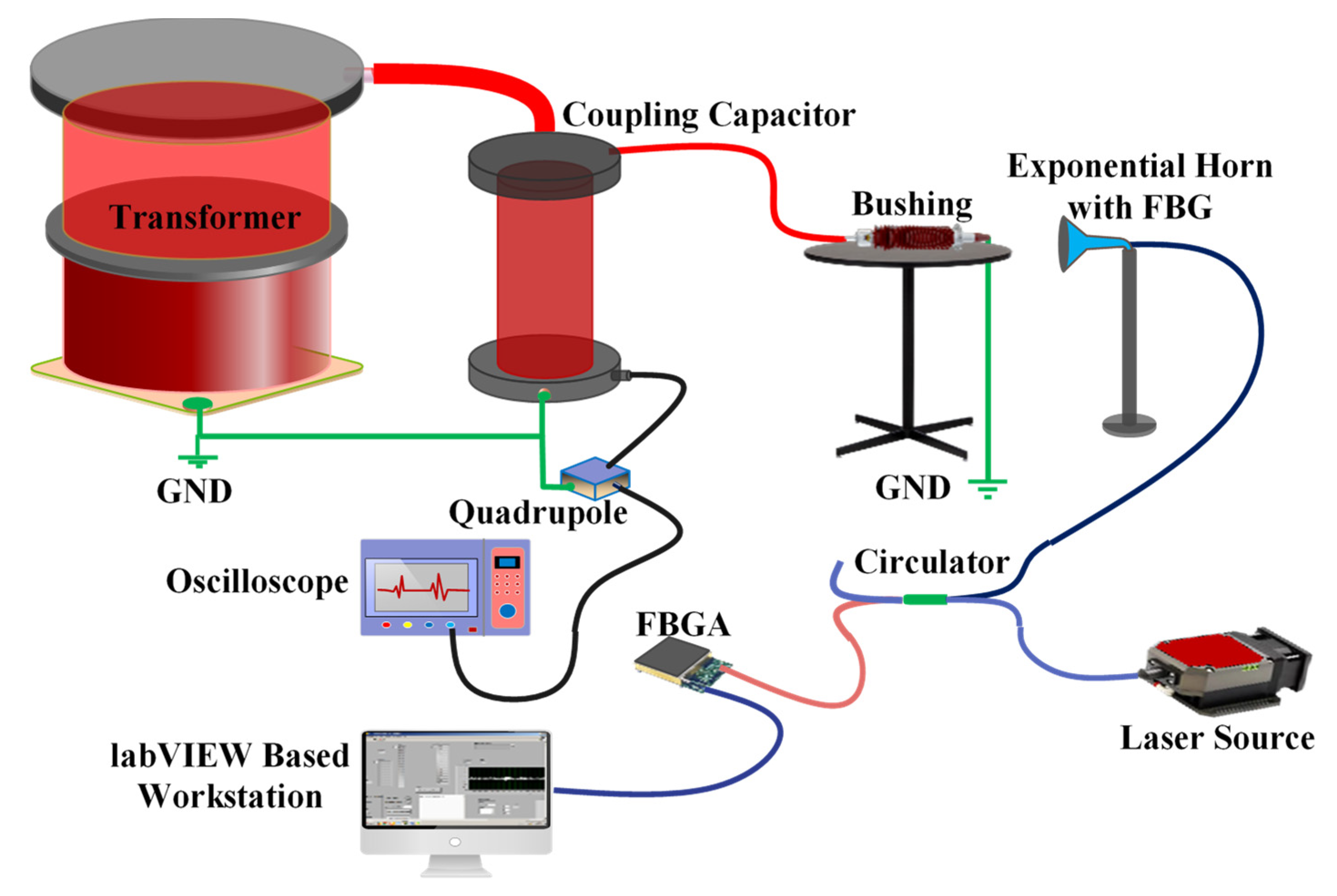
Similarly, when the PD-generated acoustic waves propagating through the medium are collected and concentrated by the exponential acoustic horn and focused on the FBG mounted at the throat, as shown in
Figure 1, it results in acoustic pressure-induced strain in the grating, which modulates the reflected Bragg wavelength. The relationship of the relative change in the Bragg wavelength
with the change in pressure (Δ
) and temperature (∆T) on the FBG is represented in Equation (2) [
24]:
where Λ is the grating period, and
is the effective refractive index. In this study, the wavelength modulation due to temperature is neglected, as PD detection is performed under ambient conditions using a far-field acoustic sensing configuration. The FBG sensor is physically isolated from heat-generating, high-voltage components, making abrupt thermal transients at the sensor location unlikely. While ambient temperature variations may cause slow baseline drift in the Bragg wavelength, PD-induced acoustic signals produce rapid, high-frequency wavelength modulations at ultrasonic time scales. This inherent separation in temporal and spectral characteristics enables reliable discrimination between PD signals and thermal effects. Consequently, temperature variations do not affect PD detection accuracy under the present operating conditions, and established FBG temperature compensation methods may be incorporated for field deployment if required. Hence, in the proposed methodology, the change in the Bragg wavelength is entirely due to pressure induced by the PD-generated acoustic waves, which can be interrogated by a suitable fiber Bragg grating analyzer or optical spectrum analyzer, along with a LabVIEW-based data processing unit.
3. Modeling and Development of the Exponential Horn-Aided FBG-Based Sensor Module
The proposed sensor module consists of two key components: a fixed resonating structure that supports the FBG and an exponential acoustic horn that positions the FBG-mounted structure at its throat.
3.1. Development of the Exponential Horn
Ultrasonic waves lose energy quickly as they travel through air, especially at higher frequencies where attenuation is severe, and the sound field disperses widely without any guiding structure. In free space, the acoustic energy radiates in all directions, resulting in a small fraction reaching the sensor. The signal-to-noise ratio (SNR) is influenced by this scattering characteristic, which also makes weak signal identification more challenging. This problem is addressed by the introduction of an acoustic waveguide, which efficiently guides the acoustic energy toward the detector, bounds the propagation channel, maintains coherence, and reduces geometric spreading losses. Another benefit associated with this is the sensing ability to detect the acoustic emissions produced by partial discharge (PD) activity, even when it is positioned safely away [
31] from high-voltage equipment.
For this work, an exponential horn waveguide was selected because of its ability to match acoustic impedance. The horn’s continuously flaring profile provides a smooth transition in the cross-sectional area, which helps to minimize abrupt impedance changes that reduce reflections or standing waves. This geometry enables the forward transmission of energy and maintains the integrity of weak ultrasonic signals associated with PD events. At the throat of the horn, acoustic pressure is naturally concentrated, acting as a passive amplifier that boosts detection sensitivity without the need for electronic gain. In addition, the horn’s directional characteristics filter out random noise from other axes, which helps to improve the directional sensitivity of the proposed sensor. Altogether, these features ensure more reliable and higher-resolution monitoring of PD-induced ultrasonic emissions.
The exponential horn follows the flare law as follows [
31], where
is the throat radius, and
is the flare constant:
The rate at which the horn expands from the narrow throat to a wider mouth is expressed by the flare constant, as presented by Equation (4) [
32]. Here,
is the total length, and
is the mouth radius of the horn.
The acoustic impedance, as experienced by the PD-generated acoustic wave during propagation, is expressed in Equation (5) [
32], where
is the air density,
is the speed of sound in the air medium, and
presents the cross-sectional area at position
:
For constant acoustic power, the sound pressure,
is inversely related to the square root of the area, as expressed below.
Hence, the passive pressure amplification ratio, as offered by the horn, is presented as follows [
32].
Corresponding mechanical gain (
) provided by the horn is represented in Equation (8) [
32].
Finally, the operational bandwidth of the horn governed by its cut-off frequency, as suggested by the Webster horn formulation, is expressed below [
31].
For a reasonably good PD sensor, the sensor’s sensitivity should be high within the desirable bandwidth of the PD acoustic emission. To maintain the compromise between sensitivity and bandwidth, the multi-objective optimization of
,
, and
, enabling a design that provides sufficient gain within the 20–80 kHz PD detection window, is stated as follows.
Here, is a normalized geometric gain, is the spectral weighting function, is the central frequency of PD emission, is the standard deviation of the weighting curve, and are the weights applied to the gain and bandwidth term, respectively, and is the penalty factor that ensures that is less than the maximum allowed radius ratio () maintaining fabrication restrictions.
Multi-objective optimization has been carried out using particle swarm optimization techniques, and the horn structure is developed based on the optimization outcomes. As the sensor is designed for the condition monitoring of high-voltage assets, material selection remains critical. Although aluminum horns provide higher stiffness and lower acoustic loss, their electrical conductivity creates safety and electromagnetic interference concerns in HV environments. Therefore, polymeric materials were preferred. Based on the outcomes of the design optimization and fabrication feasibility, polyethylene terephthalate glycol (PETG) was selected for the horn. PETG is an electrically insulating, 3D-printable polymer with moderate stiffness (Young’s modulus: 2.0–2.4 GPa) and low density (1.25–1.30 g cm−3), providing stable acoustic transmission and reduced resonance effects in the PD frequency range.
After fabrication of the designed exponential horn waveguide, an FBG mounted on a fixed resonating structure with a Bragg wavelength of 1548.345 nm is placed at the focal region of the horn to build the sensor module.
3.2. Design of the Resonating Structure for FBG
The FBG is attached to a fixed resonating structure and positioned at the throat of the horn around the maximum pressure locus. In this work, the fixed structure is designed to resonate significantly in sync with the incoming PD-generated acoustic waves. To design the fixed structure that will function as a mechanical bandpass filter for the incoming PD-generated acoustic waves, a generalized spring mass damper model has been carried out, as shown in Equation (11) [
22]:
where
expresses the mass of the structure determined by its length (
), thickness (
), width (
), and density (
).
is the damping on the structure governed by medium viscosity (
) and medium depth (
). The elasticity (
) of the structure is constituted by Young’s modulus (
) and Poisson’s ratio (
) of the structural built material and prestressing (
) on the structure.
To determine the dynamic characteristics of the structure, the damped oscillation frequency (
) and deformation of the structure (
) under the influence of the acoustic waves are expressed in terms of the model parameters shown below [
22].
It is evident from Equation (12) that the oscillating frequency and deformation are inversely related with respect to the model’s parameters. Hence, to achieve an optimized model with a fixed structure, a combined objective fitness function that associates the oscillating frequency and deformation has been formulated, as shown below.
Here, and are the weighting factors. Later, the optimization yielded the base values for the model parameters, which served as the basis for the simulation study.
4. Experimental Methodology
4.1. Simulation Study
Based on the optimization outcomes, the exponential horn, as well as the fixed resonating structure, are modeled in ANSYS software (ANSYS 2023 R1, ANSYS, Inc., Canonsburg, PA, USA) to evaluate their performance. As suggested by the optimization, a horn length of 15 cm with a mouth radius of 5.5 cm and a throat radius of 0.75 cm is selected, yielding the theoretical pressure amplification of 8 times, corresponding to a gain of about 17.5 dB, with resulting cut-off frequency of ~4.2 kHz, ensuring effective operation across the PD-relevant ultrasonic band (20–80 kHz). Thereafter, SpaceClaim creates the structure of the horn in the geometry section of the Modal solver. Meshing has been performed while maintaining a higher resolution near the throat of the horn in the model section. Natural modes of oscillation of the horns are identified in the Modal solver. Subsequently, a pressure boundary condition is applied to the mouth of the horn to resemble the PD-generated acoustic waves. The Transient Structural and Harmonic Response solvers explore the performance of the horn in terms of concentrating and amplifying acoustic pressure.
Similarly, for the fixed resonating structure, the resonating architecture is designed in the geometry section, followed by meshing, analysis settings, and exploring different inherent modes of vibration in the model section of the Modal solver. Thereafter, in the Transient Structural solver, the dynamic response is explored, and in the Harmonic Response solver, the frequency response, correlating gain versus bandwidth, is examined. According to the outcomes of the simulation study, a fixed resonating structure has been developed with appropriate dimensions and made of materials with a high strength-to-weight ratio. A precision longitudinal groove is machined on the resonating structure to align the FBG along the principal strain direction. Thereafter, the FBG is placed within the groove over a 10 mm length and bonded using EPO-TEK® 353ND (Epoxy Technology, Inc., Woburn, MA, USA), a high-modulus epoxy adhesive used in fiber optic packaging for efficient and uniform strain transfer. This grooved bonding ensures a stable mechanical boundary condition with controlled resonant behavior and high sensitivity, as well as suppresses parasitic bending.
Finally, the combined behavior of the resonating structure integrated with the horn is evaluated through the same simulation workflow to characterize the overall frequency response of the assembled sensing module.
4.2. Frequency Response Characterization of the Developed Sensor Assembly
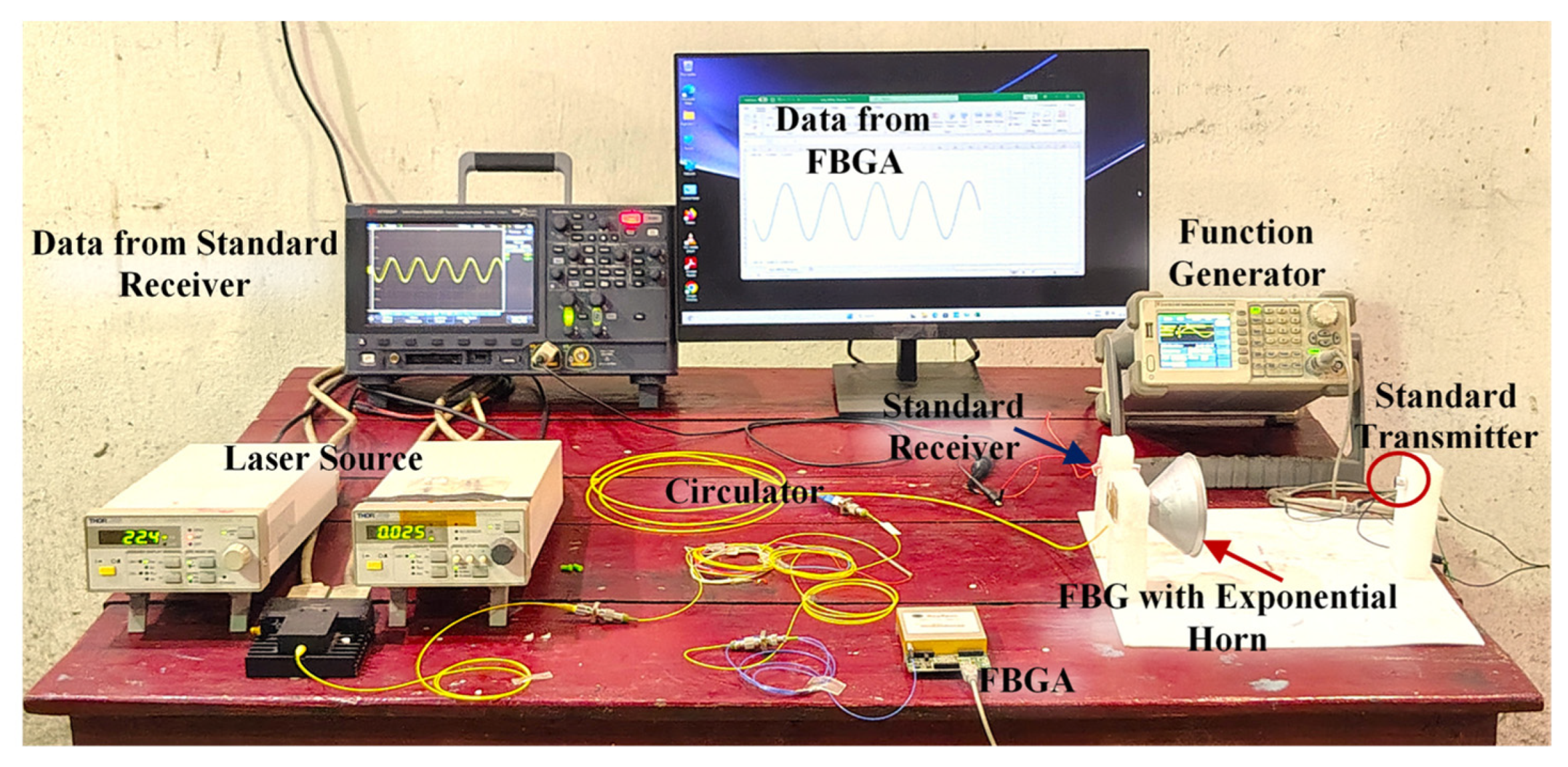
To confirm the frequency response and sensitivity of the developed wavelength-modulated FBG-based sensor module, a test platform, as shown in
Figure 2, has been constructed. Calibrated ultrasonic transmitters (i.e., muRata, MA40S4S, Murata Manufacturing Co., Ltd., Kyoto, Japan) of different frequencies are excited by a function generator to generate sinusoidal and impulsive acoustic waves. The sensor module, along with an identically placed calibrated reference receiver (i.e., muRata MA40S4R, Murata Manufacturing Co., Ltd., Kyoto, Japan), is kept at a fixed distance (0.5 m to 2.5 m) from the transmitter during the test, and the function generator drive level remains fixed throughout testing, allowing for a valid comparison across the frequency sweep when applying different frequency transmitters. The acoustic signal generated by the reference transmitter was simultaneously received by the identically placed proposed sensor assembly and a calibrated reference receiver. The calibrated acoustic receiver with known sensitivity manifests the actual pressure value (
) at the proposed sensor location. This pressure caused variations in the reflected spectrum from the FBG in the proposed sensor assembly, which is captured using an optical spectrum analyzer, and the maximum wavelength shift (
) corresponding to each individual frequency is recorded and stored. The experimental responsivity of the sensor was then computed as
=
/
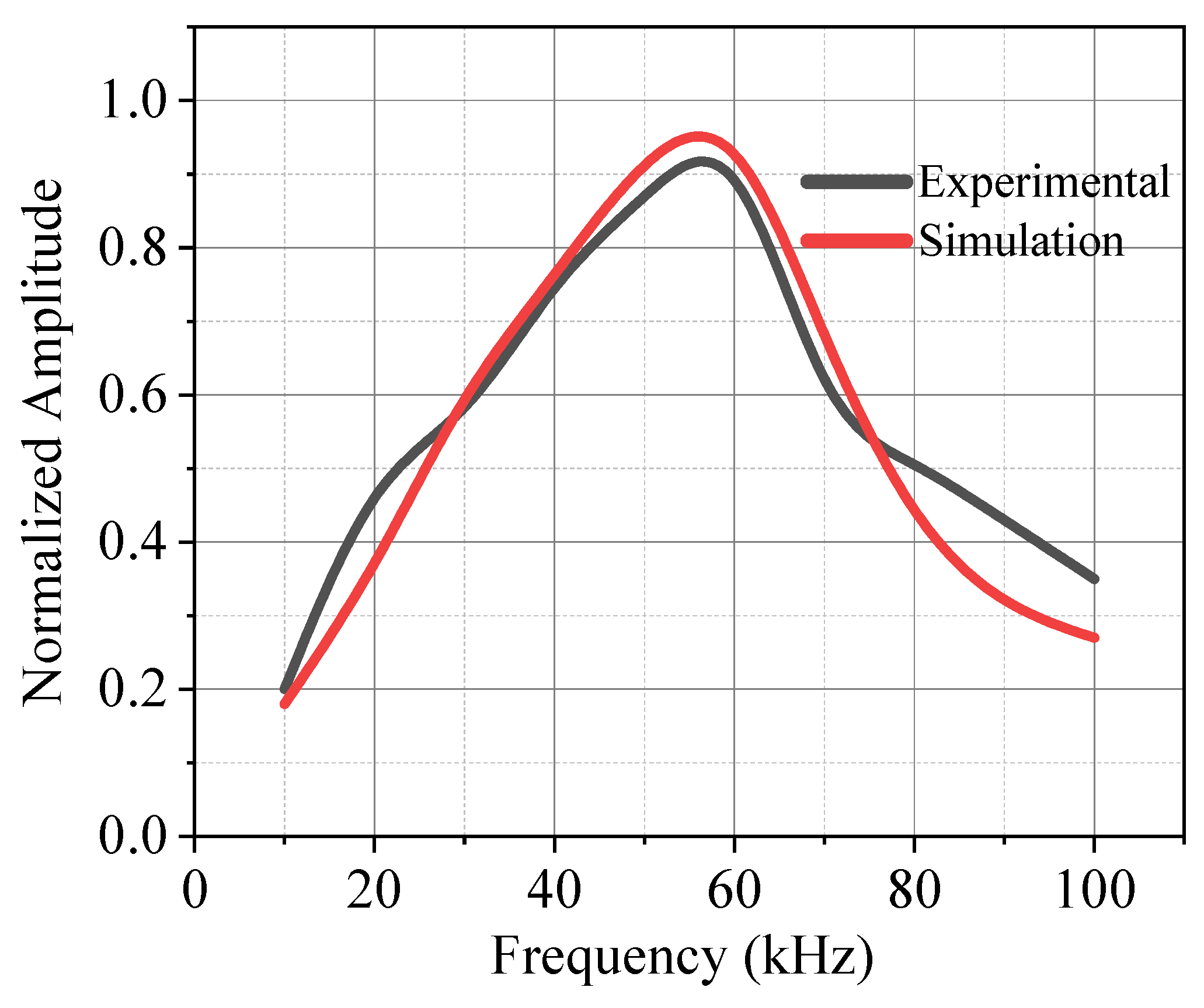
, offering wavelength-based description of its acoustic transfer characteristics. For a clear comparison with simulations, both the measured and simulated responses across the test frequencies were normalized to their respective maxima, producing standardized gain–frequency plots.
To study the variation in sensitivity with distance and acceptance angle, an experiment has been carried out using the same setup shown in
Figure 2. The distance between the standard transmitter and the FBG-based sensor with exponential horn was varied from 0.5 m to 2 m, and at each distance step, the sensor sensitivity was experimentally evaluated relative to the reference acoustic transmitter–receiver system at a selected operating frequency. The minimum detectable pressure was also identified with varying distance by progressively raising the excitation amplitude until the measured signal exceeded three times the standard deviation of the background noise.
4.3. Laboratory Testing on the Proposed Sensor for Emulated PD Sources
After fabrication of the sensor module, its performance is verified in the laboratory against different emulated PD sources. Corona discharge from bushings or HV leads entering the high-voltage terminal is a common phenomenon in substations; hence, a similar experimental arrangement has been developed in the laboratory, where a bushing is excited with high voltage, and corona discharge is emulated. For the subsequent emulation of a surface discharge, an insulator with water droplets is taken as a test object. To compare and establish the performance of the proposed sensor during testing, all emulated PD activities are monitored simultaneously using both the proposed and standard electrical detection methods.
For partial discharge monitoring with the traditional electrical detection method, the test specimens are energized with a 300 kV, 0.5 A HV test transformer beside a 300 kV, 100 pF coupling capacitor. The test objects are maintained in parallel with the high-voltage source throughout the experimental procedure. The obtained PD pulses are transmitted over the coupling capacitor and transformed into a corresponding voltage signal using an appropriate impedance matching device. This signal is processed through a filter amplifier unit afterwards and observed on an oscilloscope. During the experiment, the supply voltage information was also stored. Before the experiment, the electrical detection setup was calibrated by a standard calibrator, which revealed initial partial discharge activity of 5 pC for the entire test setup.
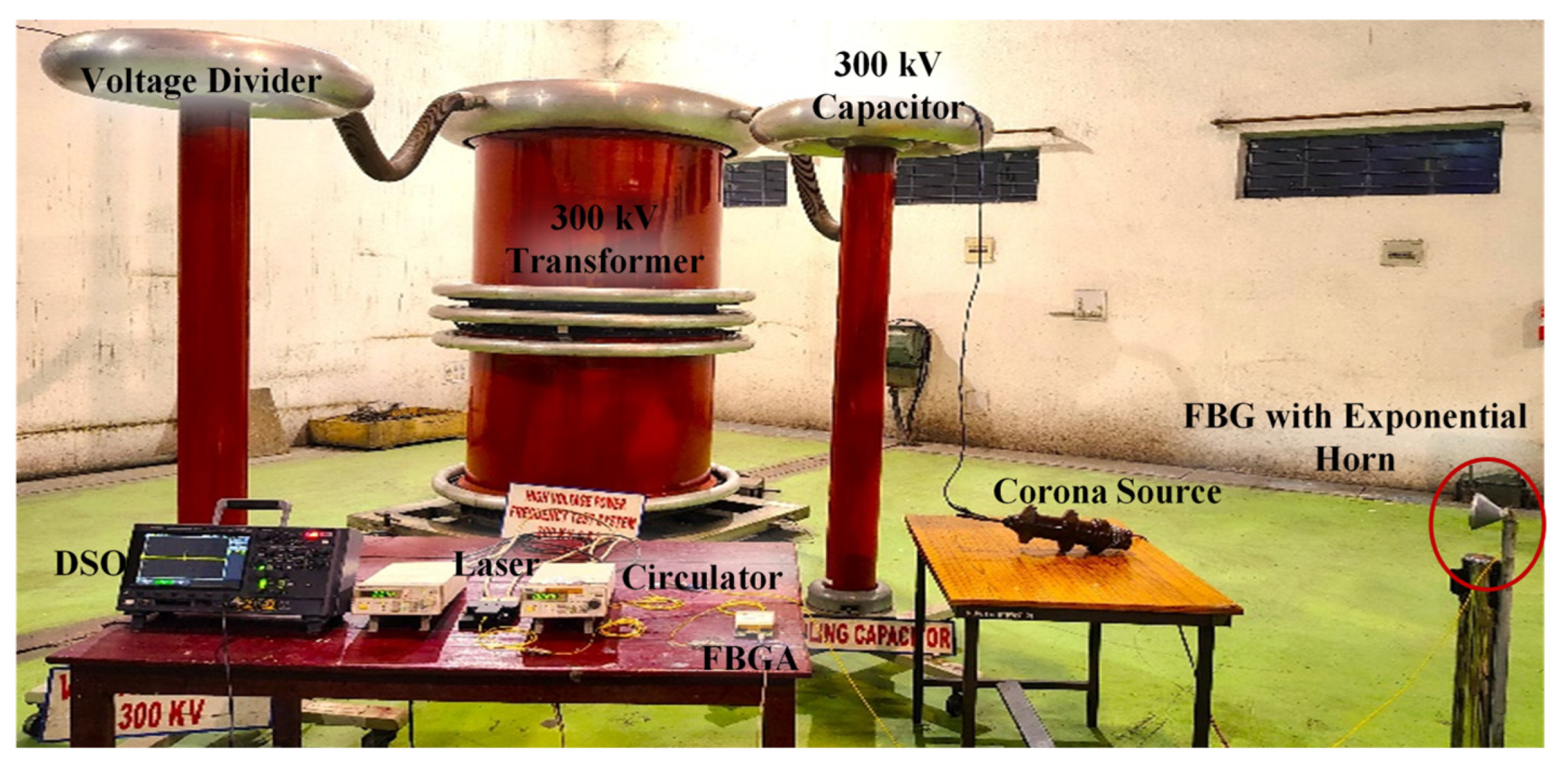
During detection by the proposed method, the design sensor assembly is placed in the vicinity of the test object to acquire the PD-generated acoustic waves. The FBG sensor with the exponential horn was placed at a fixed distance of 1 m from the corona source for far-field detection, as shown in
Figure 3, and operated within an acceptance angle of ±30°. The sensor geometry and placement were kept constant during subsequent testing to ensure repeatability. Thereafter, the FBG in the sensor module is excited using a laser source (LPS-1550-FC, Thorlabs Inc., Newton, NJ, USA) with a center wavelength of 1550 nm, through an optical circulator. The reflected wavelength from the FBG was passed through the same circulator and interrogated using a fiber Bragg grating analyzer (BaySpec’s WaveCapture
®, F1360550, BaySpec Inc., San Jose, CA, USA), with a bandwidth of 1517 nm to 1571 nm and an optical spectrum analyzer (YOKOGAWA, AQ6370D, Yokogawa Test & Measurement Corporation, Tokyo, Japan). The interrogated wavelength information was stored in a LabVIEW-based workstation for further analysis, as shown in
Figure 3.
Thereafter, to make a valid comparison, the recorded signals of the standard method and the proposed method are plotted against the supply power cycle. To assess the bandwidth of the design sensor module, individual PD pulses are isolated from the recorded data and evaluated utilizing Fast Fourier Transform in MATLAB software (MATLAB R2023a).
5. Results and Discussion
For fabrication of the fixed resonating structure ensuring reliable strain transfer to the attached FBG, several electrically passive materials having high strength-to-weight ratios were investigated, rendering reliable acousto-mechanical coupling in the PD–acoustic frequency band. Based on the optimization results discussed in
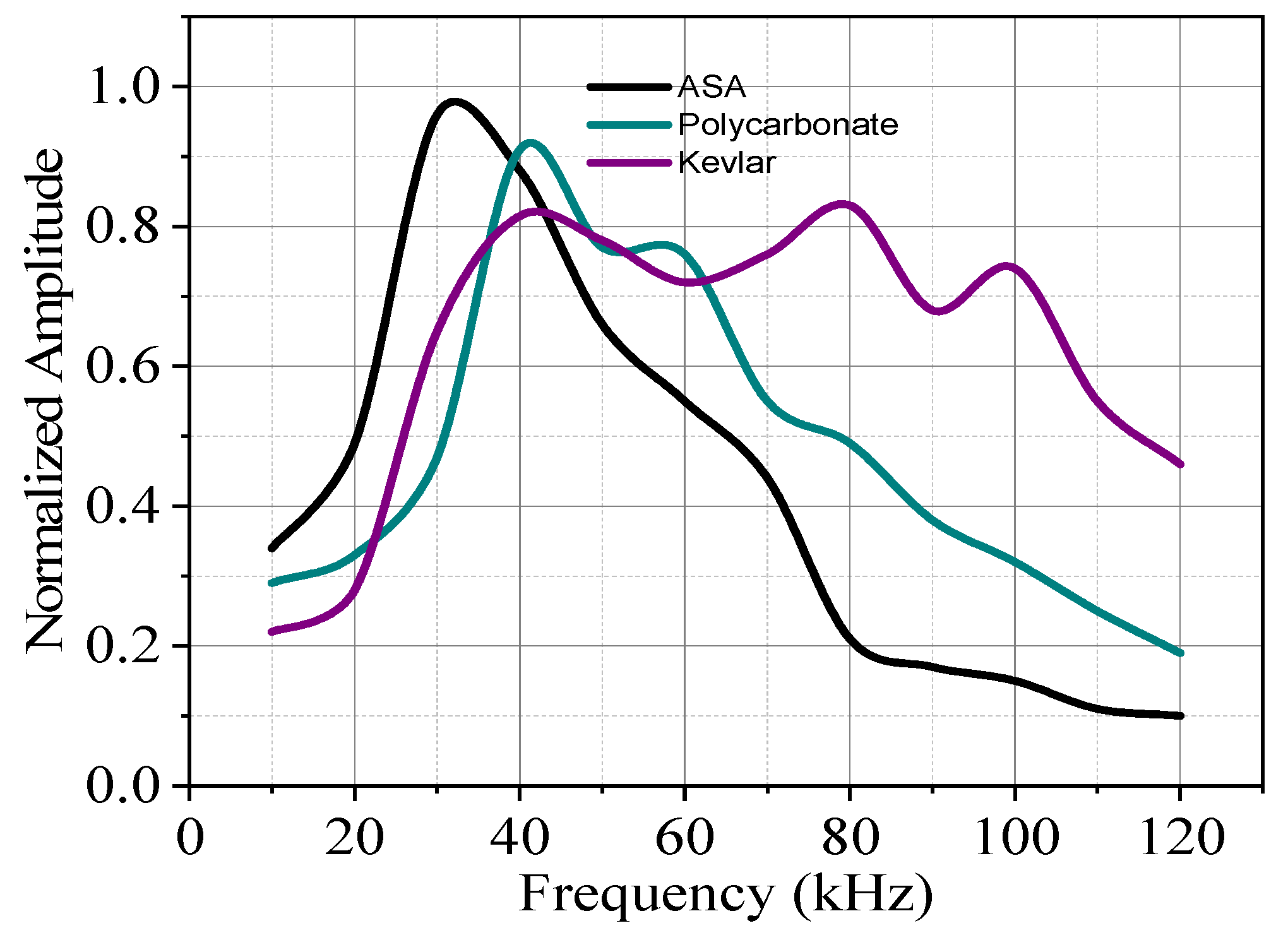
Section 3.2, three candidate materials were selected: Kevlar fiber-reinforced nylon (PA-Kevlar), polycarbonate (PC), and acrylonitrile styrene acrylate (ASA). Simulation results, as shown in
Figure 4, indicate that PA-Kevlar provides superior performance, having balanced sensitivity bandwidth-based dynamics. Owing to its higher specific stiffness compared to PC and ASA, with an effective Young’s modulus of approximately 6–10 GPa and a low density of 1.3–1.4 g cm
−3, PA-Kevlar enables efficient strain transfer to the FBG while being electrically passive and ensuring a stable broadband ultrasonic response.
Primarily, the overall shapes of the simulated and measured gain–frequency curves for the sensor module agree closely, particularly around the principal resonance region, where the sensor exhibits a significant sensitivity of approximately 2.2 pm/Pa. Minor deviations at higher frequencies are attributed to practical factors such as acoustic attenuation, small alignment tolerances, and the finite bandwidth of the driving transducer. The close agreement between the normalized amplitude–frequency plot, as shown in
Figure 5, demonstrates that the resonant behavior of the fixed structure embedded in the horn and the resulting strain-to-wavelength conversion in the FBG are faithfully reproduced in practice.
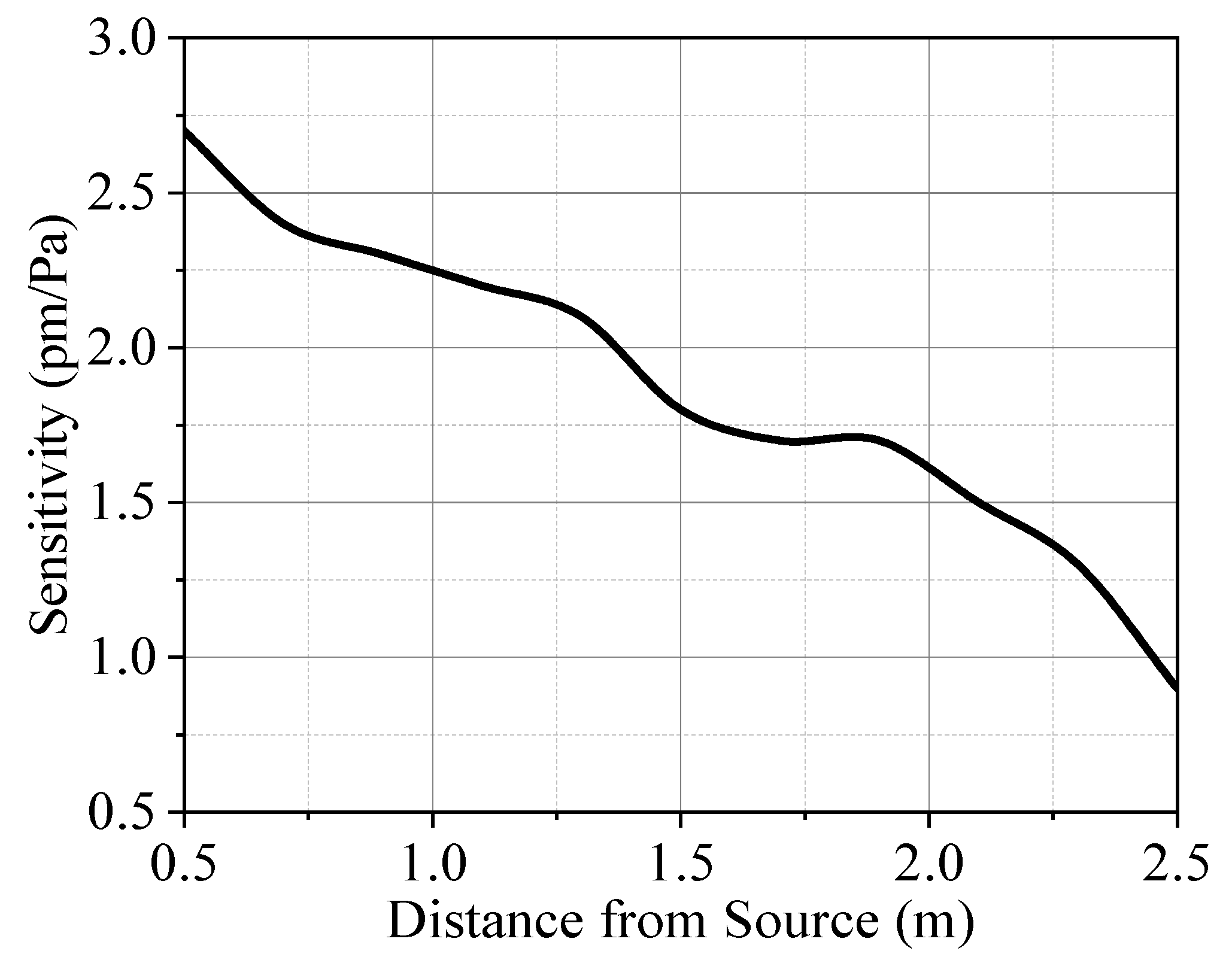
The investigation to observe the variations in sensitivity with distance from the discharge source and acceptance angle, as discussed in
Section 4.2, reveals a decrement in sensitivity from 2.9 pm/Pa at 0.5 m to 2.2 pm/Pa at 1 m and 1.5 pm/Pa at 2 m, as shown in
Figure 6, indicating reliable discharge detection up to 2 m. Using the same setup, the angular response was evaluated, revealing an acceptance angle of approximately ±30°, with only a slight reduction in sensitivity. During the experiment, the minimum detectable pressure at a distance of 1 m is observed to be ≈ 0.37 Pa, corresponding to an acquisition resolution of approximately 1 pm.
It is evident from
Figure 7 and
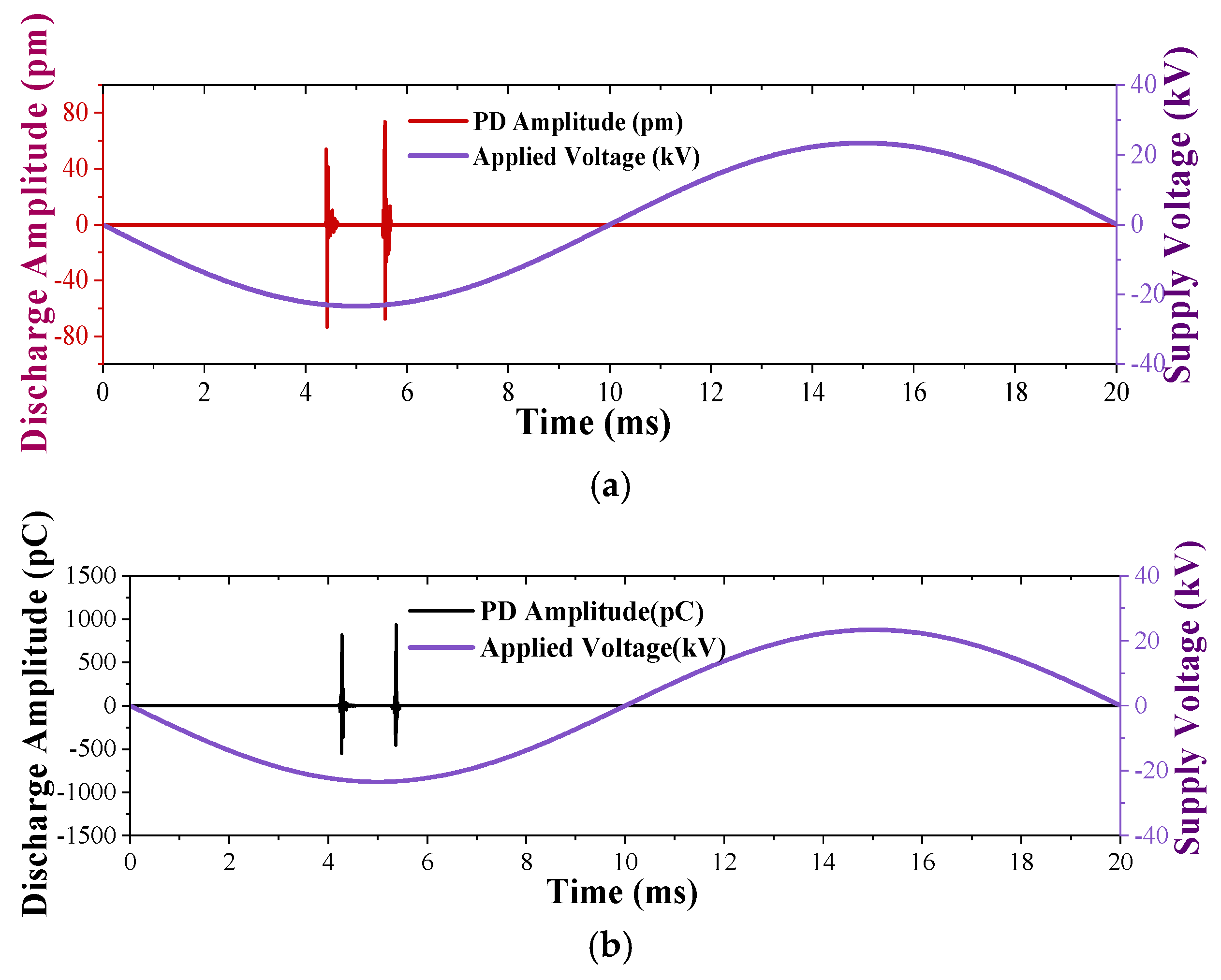
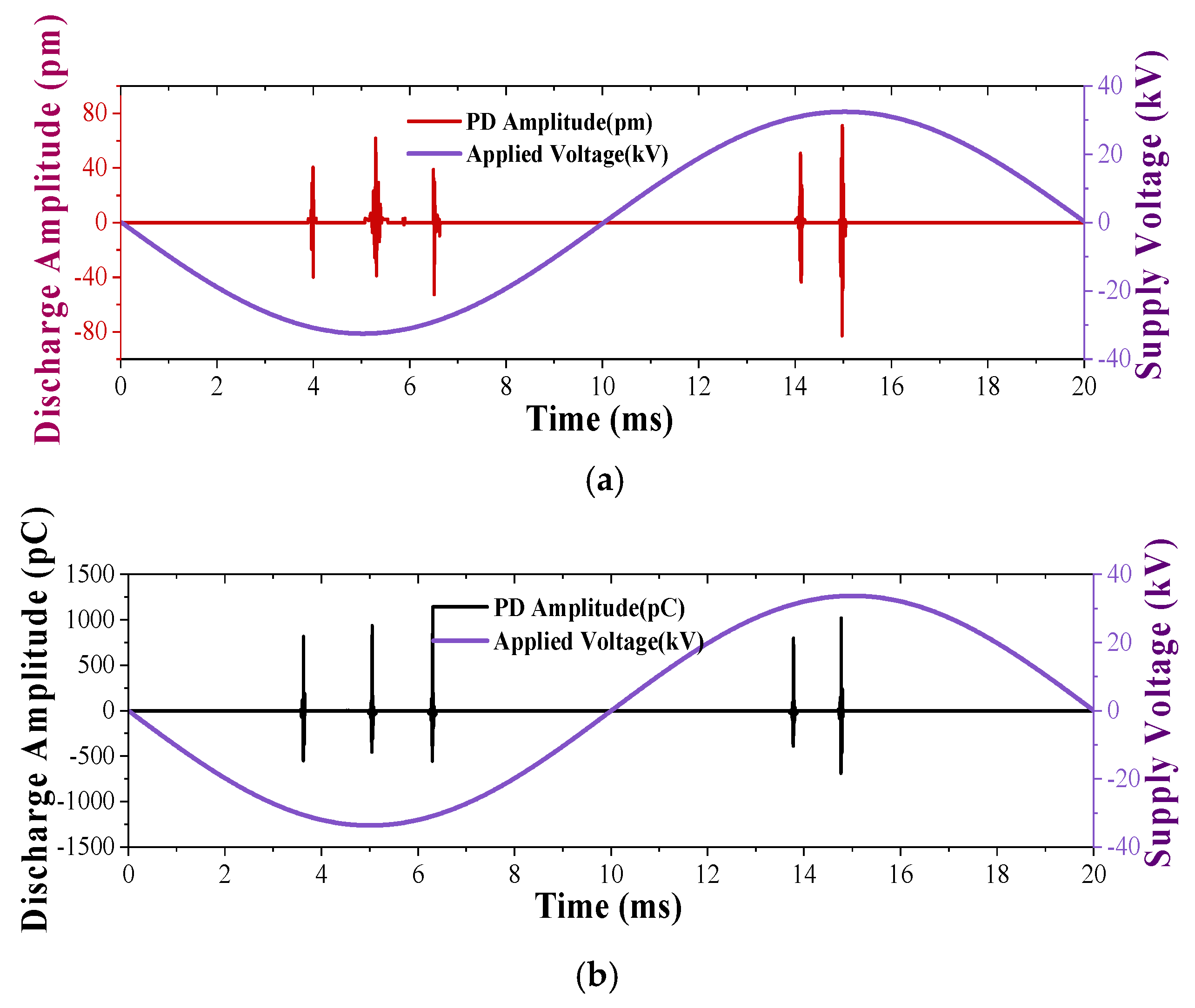
Figure 8 that the proposed method detects PD events with a significant signal-to-noise ratio (SNR), which is calculated to be 20.8 dB. From the time-domain responses in the figures mentioned above, it is clear that the proposed methodology responds similarly to the standard detection method during various discharge activities. Though there exists a considerable time delay between the signal interception time of the proposed and standard methods, which is consistent with the prevailing sensing mechanism, still, no disharmony is observed in the recorded pulses by both methods with respect to the PD magnitude or PD pulse repetition rate, which establishes the credibility of the proposed methodology.
It is also evident from
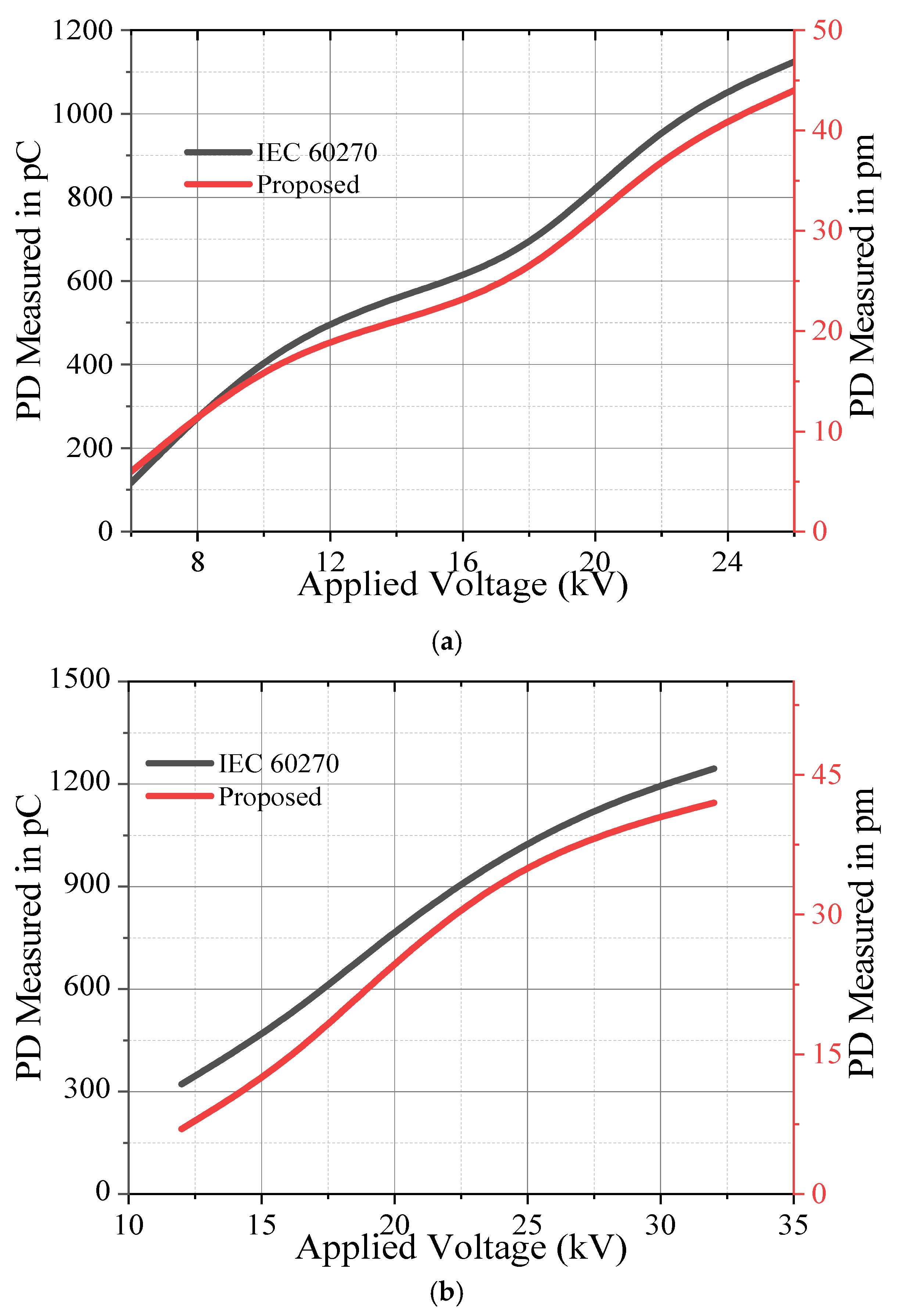
Figure 9 that the proposed method operates synchronously with the standard detection technique not only for different types of PD activities but also for a wider range of supply voltages, which establishes the linear consistency in the measurement of the proposed method. Although the two detection techniques for corona discharge detection are based on distinct measurement principles, they exhibit similar patterns in magnitude with increasing voltage, indicating that both systems possess a strong sensitivity to weak ionization activity. A similar pattern is observed for surface discharge, where both methods exhibit a steeper increase in PD events with increasing voltage. This suggests that the proposed method can identify various PD event types with a detection capability comparable to that of the standard method.
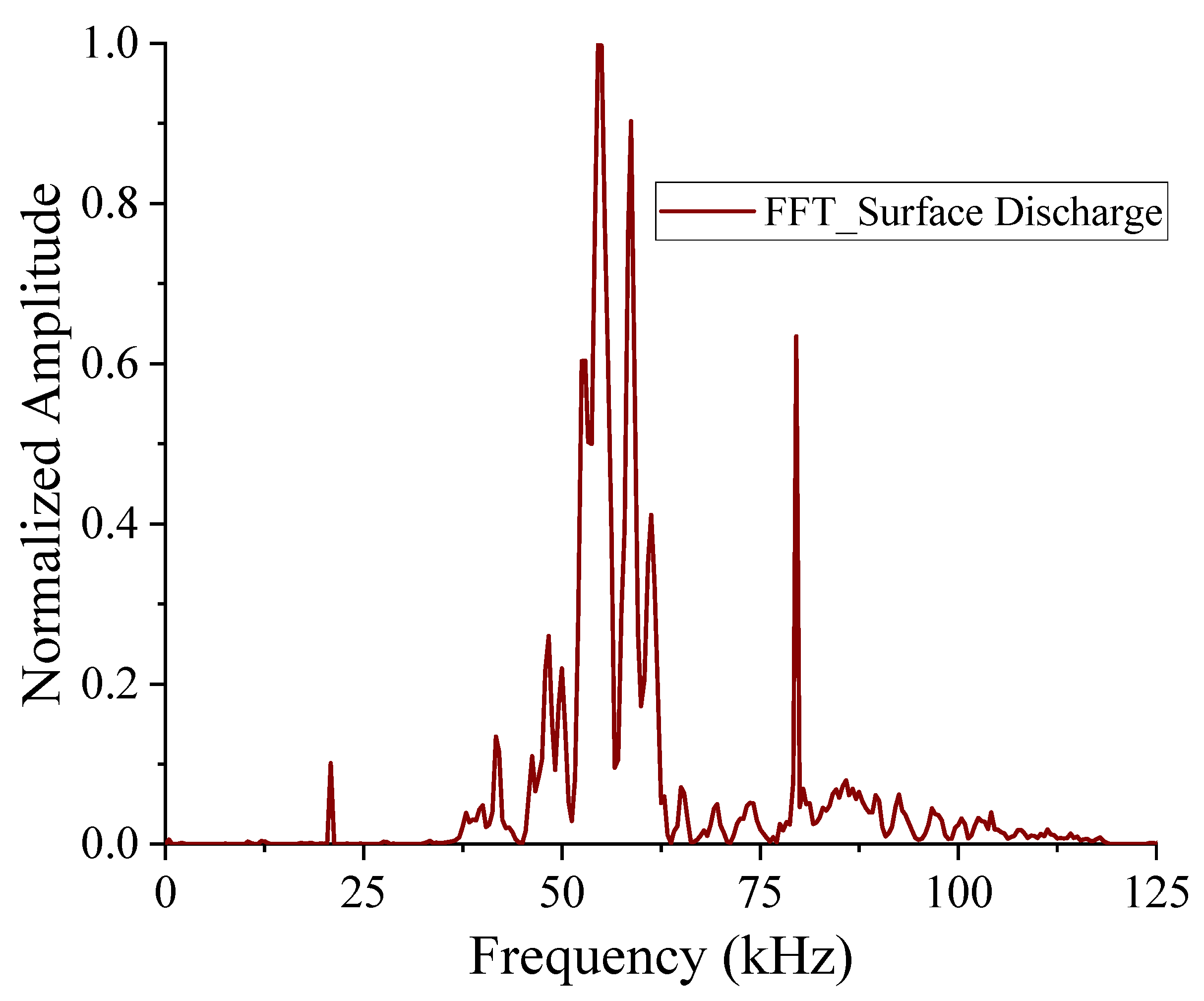
The frequency spectrum of the single PD pulse, as detected by the proposed method during surface discharge, exhibits several high-energy peaks distributed along the desired frequency band of operation, establishing the broadband nature of the proposed method, as shown in
Figure 10. Altogether, it is established that the proposed sensor can attain significant detection sensitivity comparable to that of the standard detection technique within the desired frequency band of PD acoustic detection.
6. Conclusions and Future Scope of Work
In this study, the design and development of an exponential horn-assisted FBG-based sensor is proposed for the highly sensitive broadband detection of PD. Primarily, the basic modeling of the horn is achieved through fundamental governing equations and optimized using particle swarm optimization. Subsequently, the horn is developed based on the optimization results. An FBG with a Bragg wavelength of 1548.345 nm is precisely attached to the focal region of the developed horn to form the sensor module. The detection sensitivity of the proposed sensor module is verified against laboratory-based emulated PD sources, keeping the standard IEC 60270-based electrical detection method as a reference. The results demonstrated that, although the proposed method is noninvasive, it effectively identifies a range of PD activities with a sufficient signal-to-noise ratio across an expanded frequency spectrum. It exhibits a detection sensitivity equivalent to that of the conventional approach, enabling simple and interference-free deployment for monitoring PD in high-voltage applications.
A comparative study between the proposed sensor and other state-of-the-art optical PD sensors is presented in
Table 1. It is evident that existing FBG-based pressure sensors are mostly designed for static or quasi-static MPa-level measurements and operate in the low-frequency range, while interferometric and laser-based fiber sensors, although sensitive, require complex optical configurations and stability control. In contrast, the proposed sensor introduces a mechanically coupled FBG integrated with a fixed resonating structure and an exponential acoustic horn specifically designed for airborne PD detection. This architecture enables a calibrated sensitivity of 2.2 pm/Pa at a distance of 1 m over a broad ultrasonic bandwidth (≈20–80 kHz) with low fabrication complexity and achieves a minimum detectable pressure of 0.37 Pa, establishing its suitability for the practical far-field PD monitoring of high-voltage assets. Overall, this sensor represents an advancement in real-time partial discharge monitoring for high-voltage equipment. Looking ahead, the study could explore different waveguide designs that improve sensitivity without sacrificing bandwidth, as well as assess the performance of the sensor under actual substation operating conditions. Additionally, the proposed FBG-based methodology is compatible with quasi-distributed sensing, enabling multiple sensors to be multiplexed along a single optical fiber. Future work may focus on extending the present design to multi-sensor arrays for the spatial localization of partial discharge sources using time- and frequency-domain analysis. Such configurations can enable the EMI-immune, scalable condition monitoring of high-voltage assets over large installations.




 ,
,