Article

Characteristics of Fractured Lacustrine Carbonate Reservoirs in the Zhongshi Area, Jianghan Basin, China

1
SINOPEC Jianghan Oilfield Company, Wuhan 430223, China
2
School of Earth Resources, China University of Geosciences, Wuhan 430074, China
*
Author to whom correspondence should be addressed.
Energies 2026, 19(6), 1402; https://doi.org/10.3390/en19061402
Submission received: 3 January 2026 / Revised: 25 January 2026 / Accepted: 2 February 2026 / Published: 11 March 2026
(This article belongs to the Section H1: Petroleum Engineering)

Abstract

The fractured lacustrine carbonate oil reservoir in the Lower submember of Member 4 (Qian-4) of the Qianjiang Formation in the Zhongshi area, Jianghan Basin, represents an important target for hydrocarbon exploration and exhibits substantial exploration and development potential. To clarify the mechanisms by which fractures control reservoir effectiveness, this study integrates core description, thin-section petrography, petrophysical measurements, and geophysical interpretation to systematically characterize matrix properties and fracture development. Results show that the reservoir matrix is dominated by micritic carbonate rocks and grain-dominated carbonate rocks, and overall exhibits low-porosity and ultra-low-permeability characteristics, with an average porosity of 5.19% and permeability generally below 5 mD. Fractures are well developed within the matrix, mainly comprising non-tectonic bedding-parallel fractures and tectonic high-angle fractures. Fracture-related porosity averages 8.42%, and permeability can reach 10–100 mD or higher. The fracture attributes and their spatial distribution are the key controls on hydrocarbon enrichment and deliverability; the occurrence of different fracture types across lithologies and sublayers can significantly enhance reservoir flow capacity. Moreover, natural-fracture characteristics provide critical geological constraints for hydraulic fracturing design and implementation. These findings offer a theoretical basis for fine-scale exploration and development of fractured lacustrine carbonate reservoirs.

1. Introduction

Recent exploration of lacustrine carbonate rocks in the Jianghan Basin has achieved notable breakthroughs, mainly concentrated in the Tankou and Zhongshi areas of the Qianjiang Sag. These advances have been driven by updated geological understanding, innovations in hydrocarbon accumulation models, and integrated progress in engineering technologies, collectively providing new directions for reserve growth and production enhancement in mature fields [1]. Lacustrine carbonates refer to carbonate sediments deposited in inland lacustrine basins. Depending on water salinity, they can be classified into three major types: freshwater-lake basin, brackish-to-saline lake basin, and salt-lake basin types [2]. As a distinctive class of sedimentary rocks formed in inland lacustrine settings, lacustrine carbonates constitute an important domain of global hydrocarbon exploration and development. The uniqueness of their depositional environments, together with the complexity of diagenetic evolution, jointly controls the strong heterogeneity of their storage space (pore-fracture systems). These rocks have two key implications. On the one hand, they record the evolutionary trajectory of paleolake salinity—from freshwater to saline and ultimately to salt-lake conditions. On the other hand, they commonly exhibit both source-rock and reservoir attributes, enabling “self-generation and self-storage” of hydrocarbons [3]. Worldwide, numerous basins have demonstrated the exploration value of lacustrine carbonate plays, such as the Congo Rift Basin in Africa, the Campos Basin in Brazil, and the Uinta Basin in the United States [4,5,6,7]. Recent integrated geophysical studies continue to highlight the critical role of fracture and porosity characterization in carbonate reservoir assessment [8]. In China, discoveries in the Huanghua Depression, Jiyang Depression, the Bohai Bay Basin, and the Subei Basin, among others, have elevated lacustrine carbonate reservoirs to a prominent strategic position within domestic hydrocarbon resources [9,10,11,12,13,14]. Exploration practices and research outcomes from these representative basins provide important references for better understanding of the sedimentary architecture and reservoir characteristics of lacustrine carbonates. Industrial-scale production breakthroughs have been achieved, making lacustrine carbonates a frontier direction in international petroleum exploration [15,16,17]. In China, lacustrine carbonate hydrocarbon resources are estimated at 4.5 × 10⁹ t, yet the average proved ratio is only about 11%. This contrast indicates that the exploration potential of lacustrine carbonates remains far from fully realized and urgently requires further development [18,19,20,21,22].
Compared with the representative basins discussed above, the Zhongshi area of the Jianghan Basin investigated in this study is a salt-lake basin with distinctive tectonic and depositional conditions which result in stronger reservoir heterogeneity and more complex fracture development. Previous studies indicate that the spatial distribution of lacustrine carbonates is jointly controlled by three factors: tectonic setting, paleoclimatic conditions, and provenance supply [18]. However, key issues—such as the fracture development patterns under salt-lake settings and the lithofacies-stress coupled mechanisms controlling reservoir quality—remain insufficiently studied, leaving notable research gaps [17]. The discovery of a fractured lacustrine carbonate oil reservoir in the Lower submember of Member 4 (Qian-4) in the Zhongshi area therefore provides an important avenue for clarifying the specific characteristics of such reservoirs in salt-lake environments.
However, key issues—such as the quantitative fracture development patterns under salt-lake settings and the lithofacies-stress coupled mechanisms controlling reservoir quality—remain insufficiently studied, leaving notable research gaps [16]. Beyond existing descriptive works, this study provides fundamental advancements in three key aspects: (1) It introduces a quantitative framework for fracture characterization, linking core-scale fracture attributes (density, aperture, orientation) directly to reservoir permeability enhancement and oil-bearing potential. (2) It establishes and validates novel petrophysical relationships (e.g., between fracture density and AC/PEF logs) specifically for saline-lacustrine carbonates, offering a more reliable well-log-based fracture identification method for similar settings. (3) For the first time in this basin, it develops and tests a seismic-attribute-driven predictive model for fracture distribution at the sublayer scale, calibrated with core and image-log data, which significantly enhances the ability to delineate high-productivity belts beyond well control. The discovery of a fractured lacustrine carbonate oil reservoir in the Lower submember of Member 4 (Qian-4) in the Zhongshi area therefore provides an important case for applying this integrated quantitative approach to clarify the specific characteristics and controls of such reservoirs in salt-lake environments.

2. Geological Setting of the Study Area

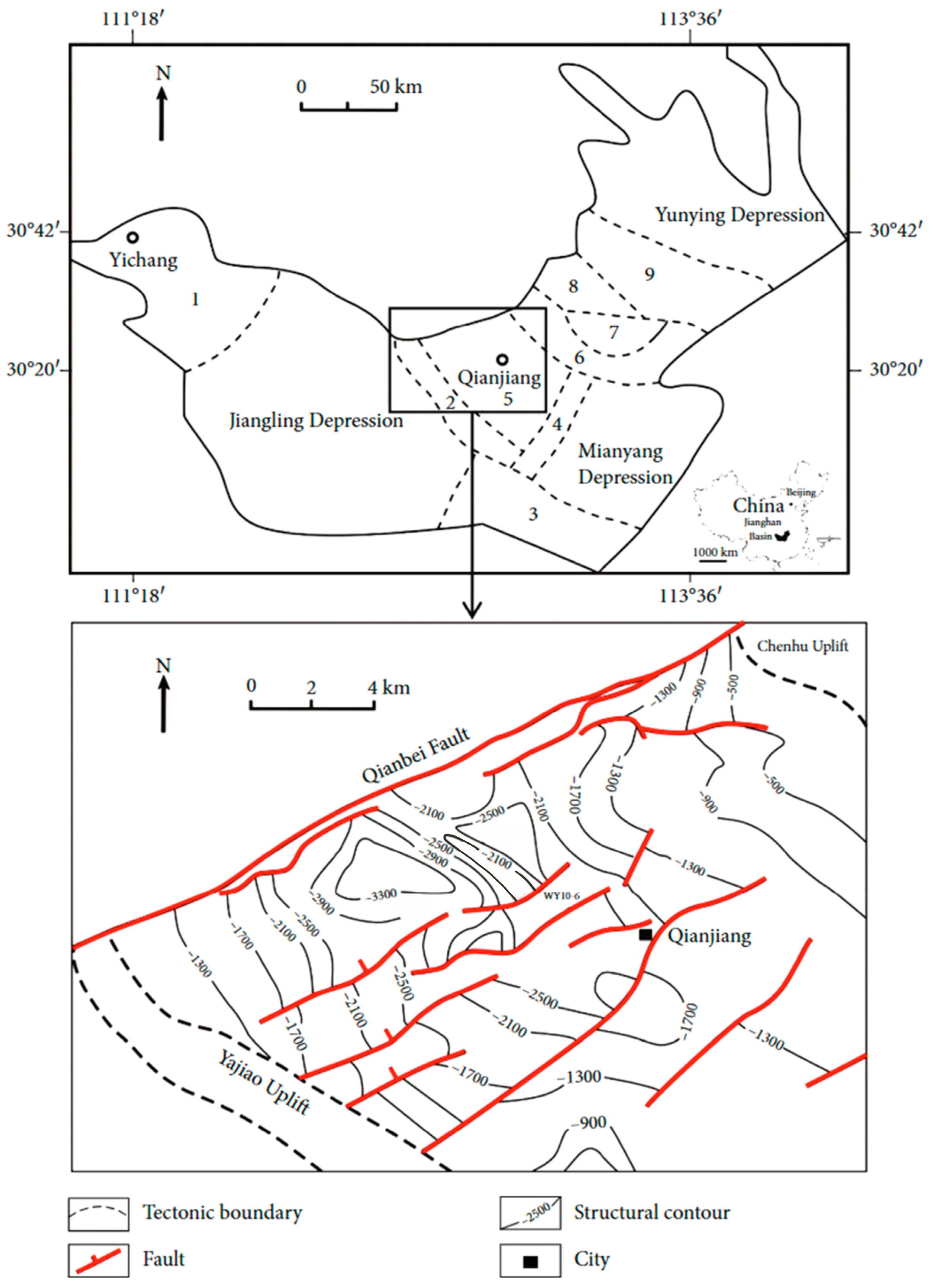
The Zhongshi area is located in the central-western part of the Qianbei fault belt in the Qianjiang Sag. It is bordered by the Xijiakou monocline to the west, the Tankou uplift to the east, the Banghu syncline to the south, and is bound to the north by the Qianbei Fault. The exploration area covers approximately 80 km2. Previous studies have extensively investigated the structural attributes and evolution of the Qianbei fault system and the Zhongshi fault nose (Figure 1), suggesting that the Qianbei fault system is a fault-step zone composed of a series of synthetic faults, and that the Zhongshi fault nose developed by the end of deposition of Member 2 of the Qianjiang Formation and has undergone continuous inherited uplift from Member 1 to the present [18].
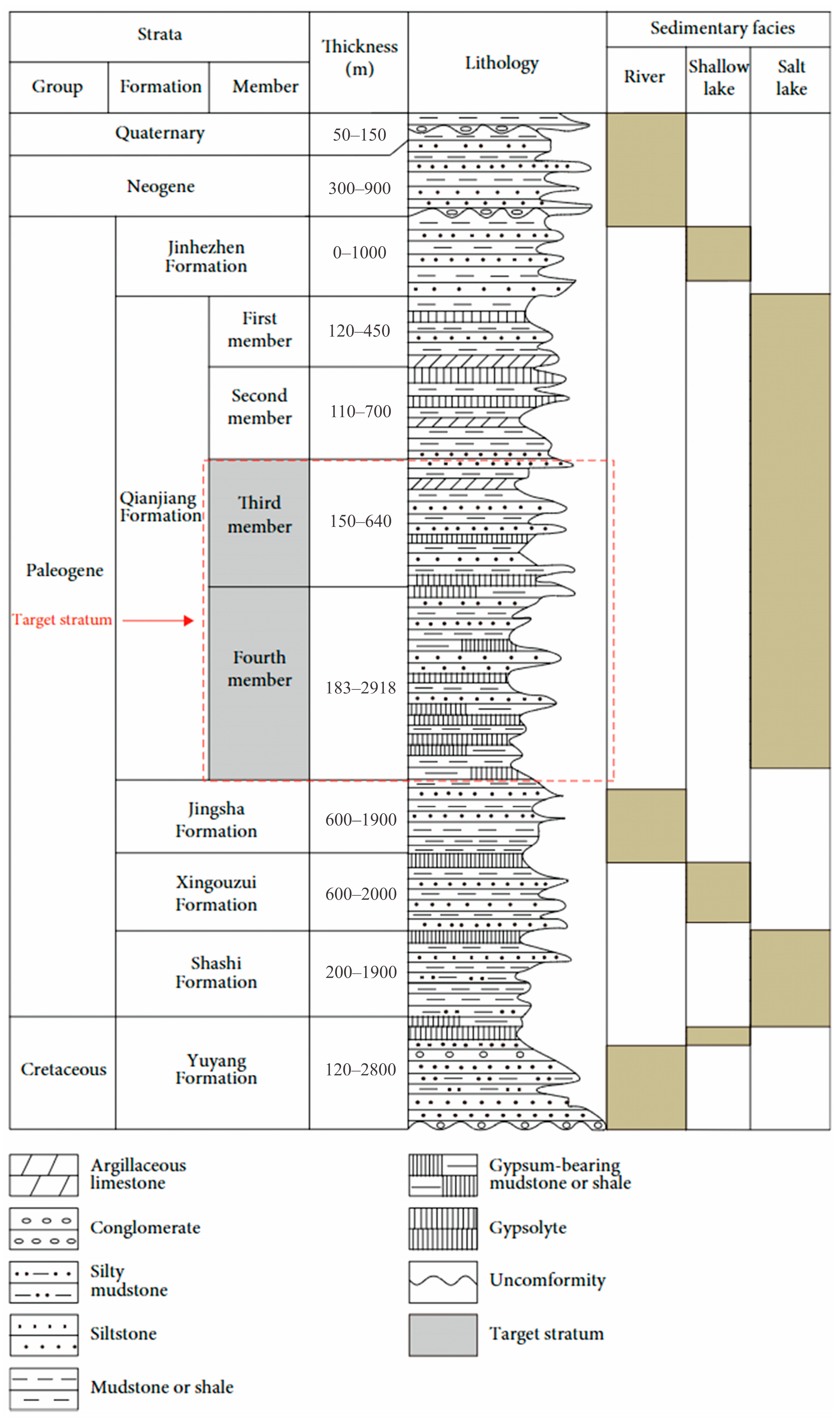
Drilling data reveal that, from bottom to top, the Zhongshi area is mainly underlain by the Lower Paleogene Qianjiang Formation and Jinghezhen Formation, the Neogene Guanghuasi Formation, and the Quaternary Pingyuan Formation. The Qianjiang Formation is subdivided (from top to bottom) into Member 1, Member 2, Member 3, Member 4, and the Lower Submember of Member 4, and is lithologically complex, comprising carbonates, gypsiferous mudstones, clastic rocks, and mudstones (Figure 2). The principal oil-bearing carbonate interval within the Qianjiang Formation occurs in the Lower Submember of Member 4. The I oil unit of the Lower Qian-4 submember is further divided into six sublayers, whereas the II oil unit is divided into three sublayers (Table 1). In this study, the target interval is Lower Qian-4 submember, specifically I-2, I-3, I-4, I-5, I-6, II-1, and II-2 sublayers.
The Qianjiang Formation in the Qianjiang Sag as a whole developed a typical delta-salt-lake depositional system. Under a north-derived, unidirectional provenance supply, a series of depositional facies belts were formed from the basin margin toward the sag (depression) belt, transitioning successively from sandstone–mudstone, to carbonate rocks, and then to evaporites (salt rocks). The carbonate facies are distributed in a circumferential, ring-like belt along the margin of the sag and, together with the central evaporite facies and the outer clastic facies, constitutes a complete salt-lake depositional succession. The carbonate facies cover an aerial extent of approximately 500 km2 and provide the principal material basis for lacustrine carbonate oil reservoirs in this area.
Development of the fractured lacustrine carbonate reservoirs in the Zhongshi area of the Jianghan Basin underwent a prolonged stage of exploration and evaluation in the early period. In 2022, after stimulation, Well Huang20X-4 produced an oil flow of 26.22 m3/d, representing a major breakthrough in carbonate-reservoir exploration in the salt-lake setting of the Qianjiang Sag and marking the start of a new phase of carbonate development in this area. Subsequently, exploration activities in the Zhongshi area were advanced following the strategy of “expanding Tankou, exploring Zhongshi, and concurrently targeting multiple stratigraphic intervals and play types.” In 2024, Well Z99X, deployed in this area, successfully conducted a production test on a 17.4 m-thick carbonate oil interval in the Qian-4 submember. Under controlled flow through a 4 mm choke, the well achieved a daily oil rate of 137.6 m3/d, with cumulative oil production of 427.56 m3 and a flowback ratio of 6%. This result indicates that carbonate exploration in the Jianghan Basin has expanded beyond the Member 3 (Qian-3) play in the Tankou area and has successfully opened up the Lower Qian-4 interval in the Zhongshi area as a new front for reserve growth. To date, 19 wells in the Jianghan oilfield area have been re-evaluated and/or tested (including both old wells and dedicated exploratory wells) for carbonate targets; 17 wells have obtained commercial oil flow, with cumulative production exceeding 17,000 t, fully demonstrating the substantial development potential of fractured lacustrine carbonates in the Zhongshi area.

3. Materials and Methods

The lacustrine carbonate reservoir of Qian-4 submember in Zhongshi Area is a new breakthrough. This study is based on 266 m of cores from the Well Z99X and the Z9901X, together with petrographic descriptions of 288 epoxy-impregnated thin sections, supplemented by fluorescent thin-section analysis, also with the conventional Well logs, FMI image logs, and seismic interpretation data. The dataset is representative, covering key wells from different structural positions (crest, flank) within the 80 km2 study area. Core and image-log data from the central Well Z99X provide a continuous, high-resolution calibration benchmark. We also have incorporated quantitative relationship analysis methods from previous works [24,25,26].
To ensure consistency between core-derived and image-log-derived fracture statistics, a rigorous calibration workflow was applied: (1) Depth-matching core fractures to image-log features. (2) Defining consistent fracture classification criteria (open, filled, bedding) for both datasets. (3) Comparing fracture dip/azimuth from oriented core and image logs. This calibration confirmed a strong correlation (R2 > 0.75) for fracture density in intervals with good borehole conditions, validating the use of image logs to extend fracture analysis beyond cored sections.

4. Results

4.1. Reservoir Matrix Composition and Characteristics of Petrophysical Properties and Oil-Bearing Potential

4.1.1. Lithology and Lithofacies

The reservoir lithologies in the Zhongshi area are dominated by carbonate rocks, mainly micritic carbonate rocks and grain-dominated carbonate rocks, with subordinate sandstone and other lithologies. Core observations and thin-section petrography confirm that fractures occur in both carbonate types, but the degree of fracture development differs markedly between them.
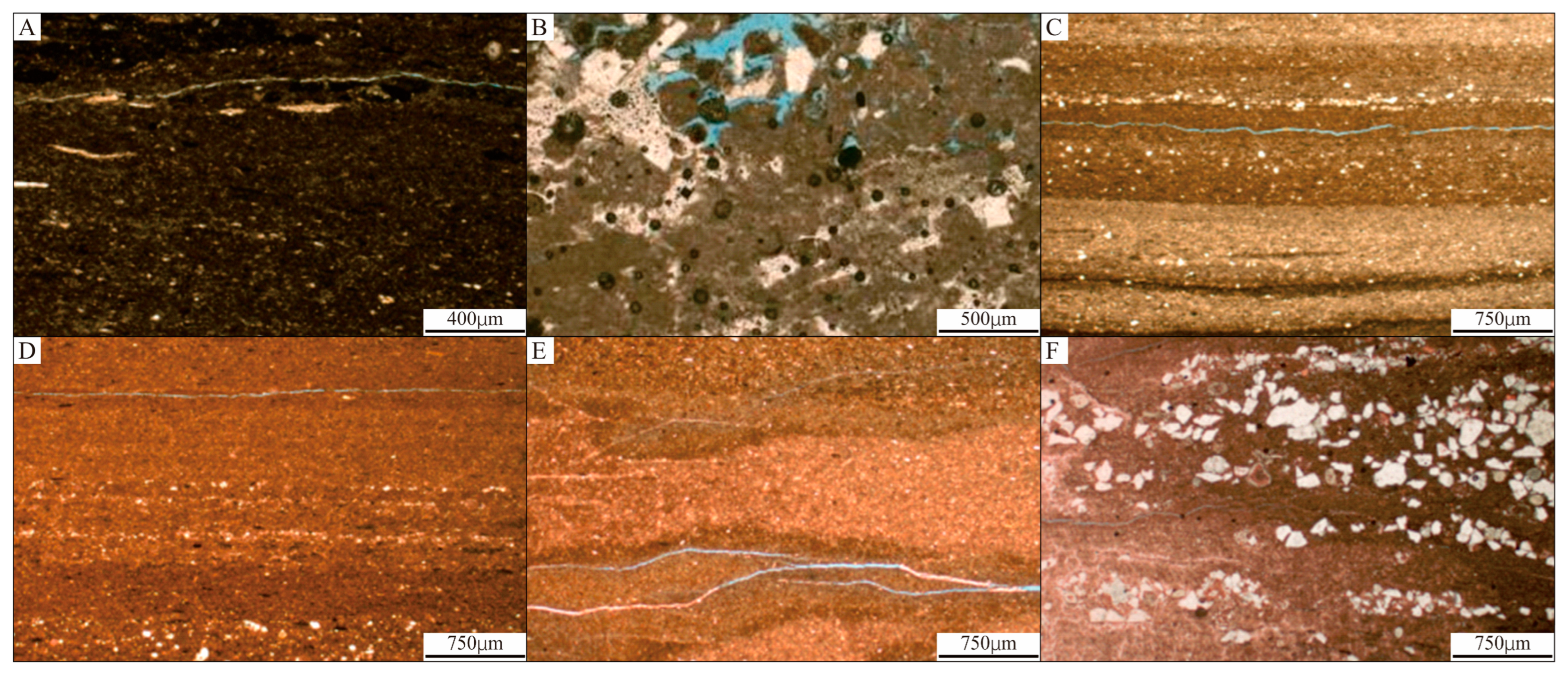
Micritic carbonate rocks are widely distributed across the study area. Their rock types include micritic carbonate rock, micritic limestone, micritic dolostone, and transitional lithologies such as micritic dolomitic limestone and micritic argillaceous carbonate rock. Mineralogically, these rocks are dominated by calcite and dolomite, with pronounced variations in their relative abundances. For example, calcite content in micritic limestone samples can reach 50–90%, whereas dolomite content in micritic dolostone typically exceeds 50%. These rocks are mainly composed of micrite with grain sizes < 0.03 mm and are characterized by a dense and relatively homogeneous fabric. Reservoir space is chiefly provided by pores and fractures, while the contents of bioclasts and detrital grains are generally below 10% (Figure 3).
Grain-dominated carbonate rocks also occur in the study area, and the principal rock types include grain-bearing micritic carbonate rock, grain-bearing micritic limestone, and grain-bearing micritic dolostone. Their allochem assemblages are diverse, comprising (i) intraclasts with irregular to elliptical or elongate morphologies, some of which are carbonaceous; (ii) bioclasts derived from multiple fossil groups, including bivalves, ostracods, and algae; and (iii) ooids as well as sand-sized terrigenous grains (0.07–0.54 mm) with moderate sorting and roundness. Intergranular cements are dominated by micrite and sparry calcite, and a variety of cementation styles are observed.

4.1.2. Petrophysical Characteristics

The storage space of the fractured lacustrine carbonate reservoirs in the Qian-4 submember in the Zhongshi area, Jianghan Basin, can be broadly divided into pores and fractures. Among them, fractures constitute the primary storage space and the main pathways for fluid flow, whereas pores play a secondary, supportive role.
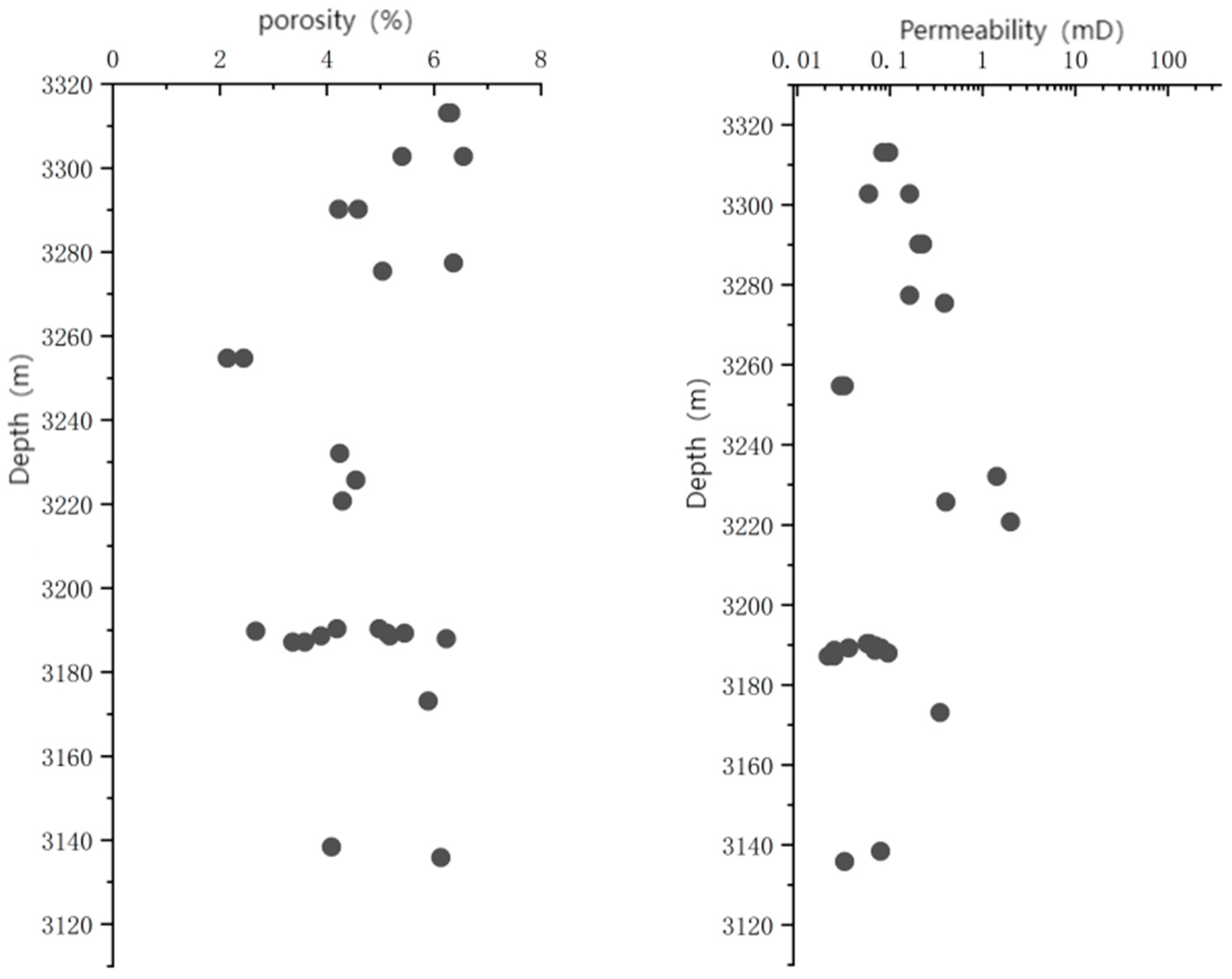
Pore space is dominated by matrix porosity, including primary intergranular pores and dissolution pores, which mainly occur in micritic and grain-dominated carbonates. However, their overall proportion is low and their petrophysical quality is poor. Statistics show that the average matrix porosity is only 5.19%; 46.33% of the samples have porosities in the range of 1.0–5.0%, and permeability is generally <5 mD (Figure 4), indicating a typical low-porosity, ultra-low-permeability reservoir with limited storage capacity and weak flow capability.
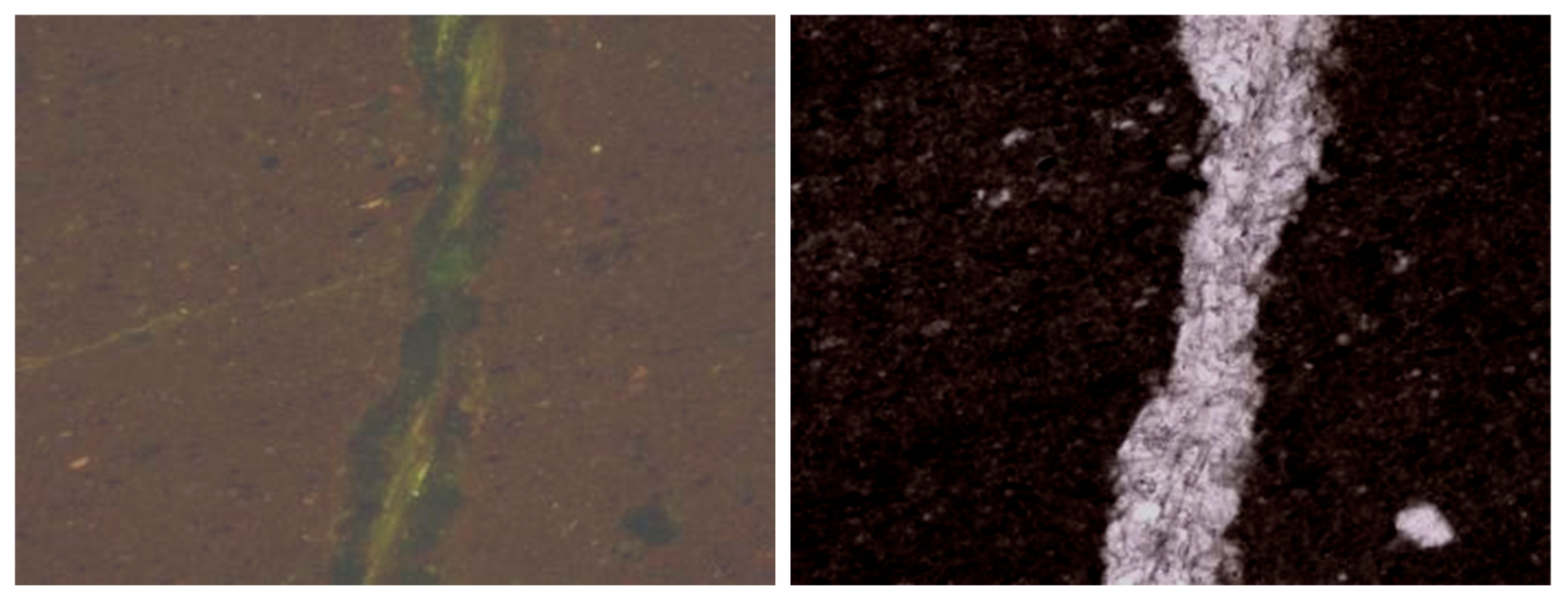
The matrix pores exhibit no obvious oil staining, and only minor oil indications—appearing as yellowish, dull fluorescence—occur along fractures, suggesting poor oil-bearing potential of the matrix pore system (Figure 5).

4.2. Characteristics of Fracture Development in the Reservoir

Core-based fracture observations and related laboratory tests were carried out for key wells in the study area. Core observations were conducted for two wells, with a cumulative core length of 153.78 m examined and 2837 fractures documented. On this basis, the fracture attributes—including type, attitude (orientation and dip), aperture, length, linear density, and filling characteristics—were systematically investigated.

4.2.1. Fracture Types

Based on core observations and thin-section petrography, combined with drilling geology and well-log interpretation, fractures in the target layers in the study area are diverse. In terms of genesis, fractures can be classified into non-tectonic fractures and tectonic fractures [18]. The study area is dominated by non-tectonic fractures (bedding fractures), with tectonic fractures being subordinate. From the perspective of attitude, tectonic fractures can be further divided into high-angle fractures and low-angle fractures (Table 2).
Fracture development varies markedly among different lithologic assemblages, depositional microfacies, and structural positions. Non-tectonic (bedding) fractures are mainly developed in the I-6 and I-3 sublayers, are moderately developed in the I-4 sublayer, and are relatively weak in the I-3 sublayer. Tectonic fractures are mainly developed in the I-3 sublayer, are secondary in the I-5 and I-6 sublayers, and are relatively weak in the I-3 sublayer. The pronounced differences in fracture intensity indicate that fracture development is strongly controlled by depositional microfacies type, lithologic tightness/compactness, and the magnitude of tectonic stress.

4.2.2. Fracture Dips

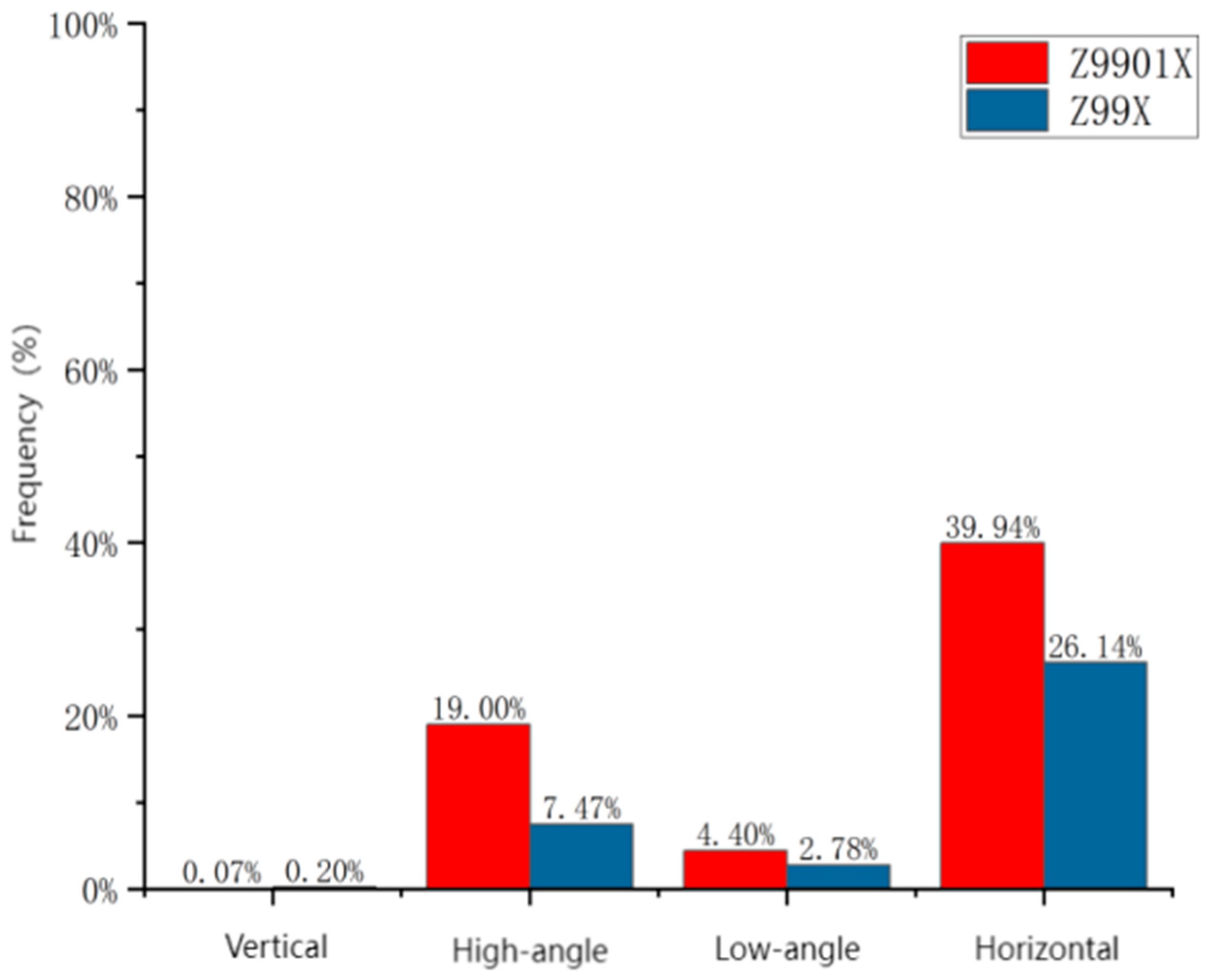
Fractures can be classified into four categories based on dip angle: horizontal fractures with dip angles < 5°, low-angle fractures with dip angles > 5° and <45°, and high-angle fractures with dip angles > 45° and <90° [21]. Horizontal fractures are the most prevalent in the study area, with a total of 1874 fractures, accounting for 66.06% of all fractures. High-angle fractures are the second most common, with 759 fractures (26.75%). Low-angle fractures total 204 (7.19%) (Table 3, Figure 6).
Fracture length and aperture were measured and statistically analyzed based on core observations. A total of 1687 complete fractures were identified in core, with lengths of approximately 0.10–0.18 m, mainly concentrated in the range of 0.10–0.15 m, which accounts for 60.5% of the total fractures.
In terms of fracture width, fractures can be divided into large fractures, medium-small fractures, and microfractures [22], defined here as length > 1000 mm for large fractures, 100–1000 mm for medium-small fractures, and 10–100 mm for microfractures. Medium-small fractures are the most developed, with 1491 fractures (52.56%), followed by microfractures with 1114 fractures (39.27%). Large fractures are the least common, totaling 232 (8.17%). Overall, tectonic fractures in the study area are dominated by horizontal fractures and medium-small fractures (Table 4).

4.2.3. Fracture Density

Fracture linear density is a key metric for quantifying the degree of fracture development. Based on core-statistical data from Well Z99X and Z9901X, fractures were classified and counted by type (tectonic fractures vs. non-tectonic fractures) to clarify differences in fracture development among sublayers and between wells.
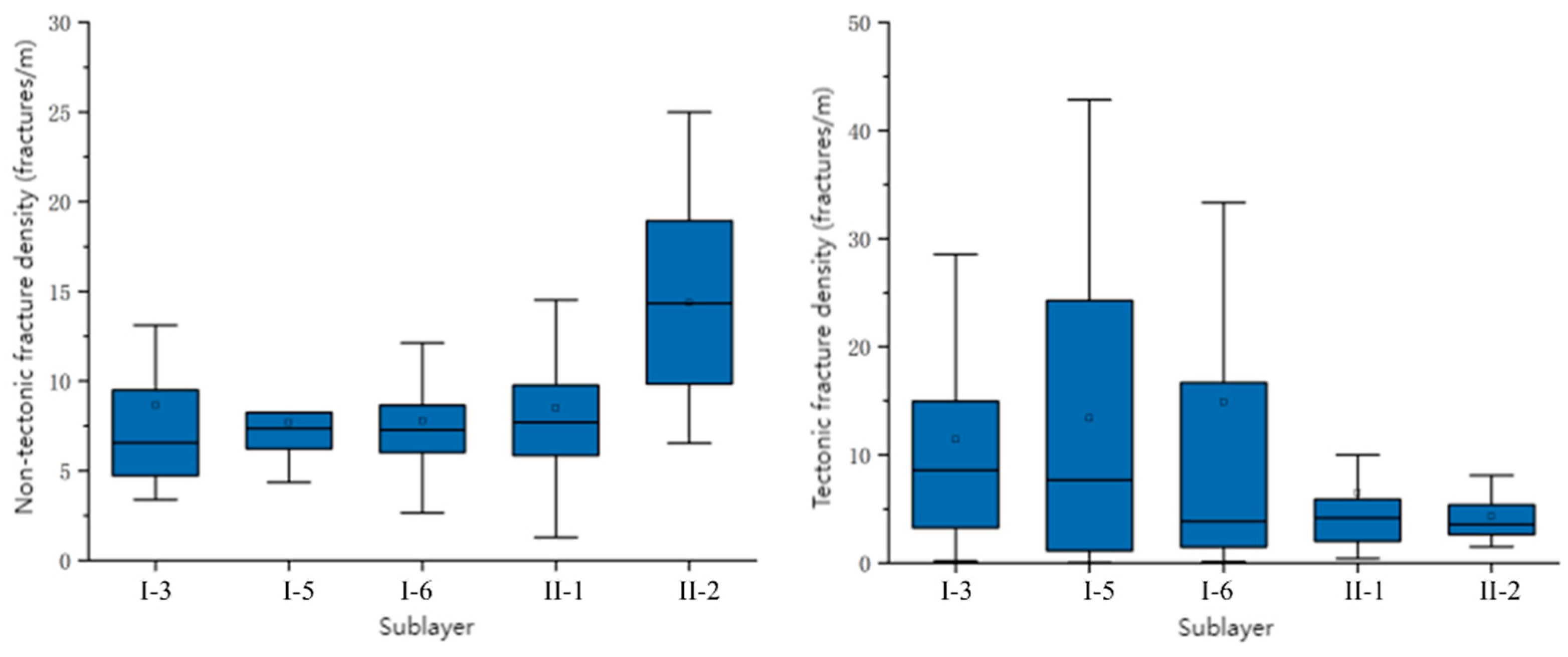
In Well Z99X, the linear density of non-tectonic fractures is overall higher in the II oil unit than in the I oil unit. The II-2 sublayer exhibits the best development, with a linear density of 14.36 fractures/m. Within the I oil unit, the linear densities of the I-3, I-5, and I-6 sublayers are relatively comparable, at 8.64 fractures/m, 7.68 fractures/m, and 7.78 fractures/m, respectively. In contrast, the linear density of tectonic fractures is overall higher in the I oil unit than in the II oil unit. The I-6 sublayer shows the highest tectonic fracture density (14.89 fractures/m), whereas the II-2 sublayer displays the lowest density (4.31 fractures/m). The tectonic fracture linear densities of the I-3, I-5, and II-1 sublayers are 11.41 fractures/m, 13.36 fractures/m, and 6.49 fractures/m, respectively (Figure 7).
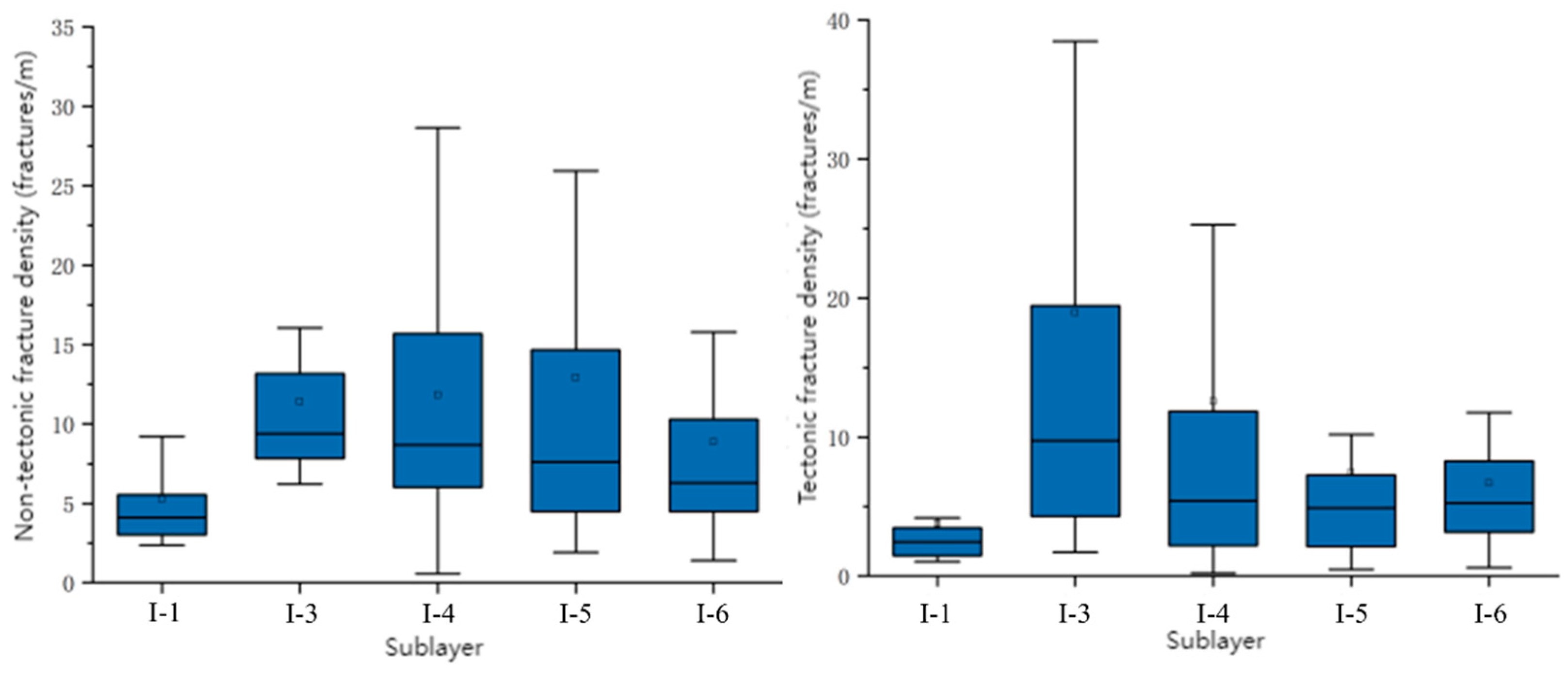
In well Z9901X, the linear density of non-tectonic fractures shows a pronounced high-value zone centered on the I-5 sublayer, reaching 12.91 fractures/m. The I-1 sublayer exhibits the poorest development, with a linear density of only 5.28 fractures/m. The non-tectonic fracture linear densities of the I-1, I-3, I-4, and I-6 sublayers are 5.28 fractures/m, 11.41 fractures/m, 11.83 fractures/m, and 8.87 fractures/m, respectively.
For tectonic fractures, the I-3 sublayer displays the highest linear density, reaching 18.94 fractures/m. The tectonic fracture linear densities of the I-1, I-4, I-5, and I-6 sublayers are 3.78 fractures/m, 12.57 fractures/m, 7.45 fractures/m, and 6.68 fractures/m, respectively (Figure 8).

4.2.4. Quantitative Impact of Fractures on Porosity and Permeability

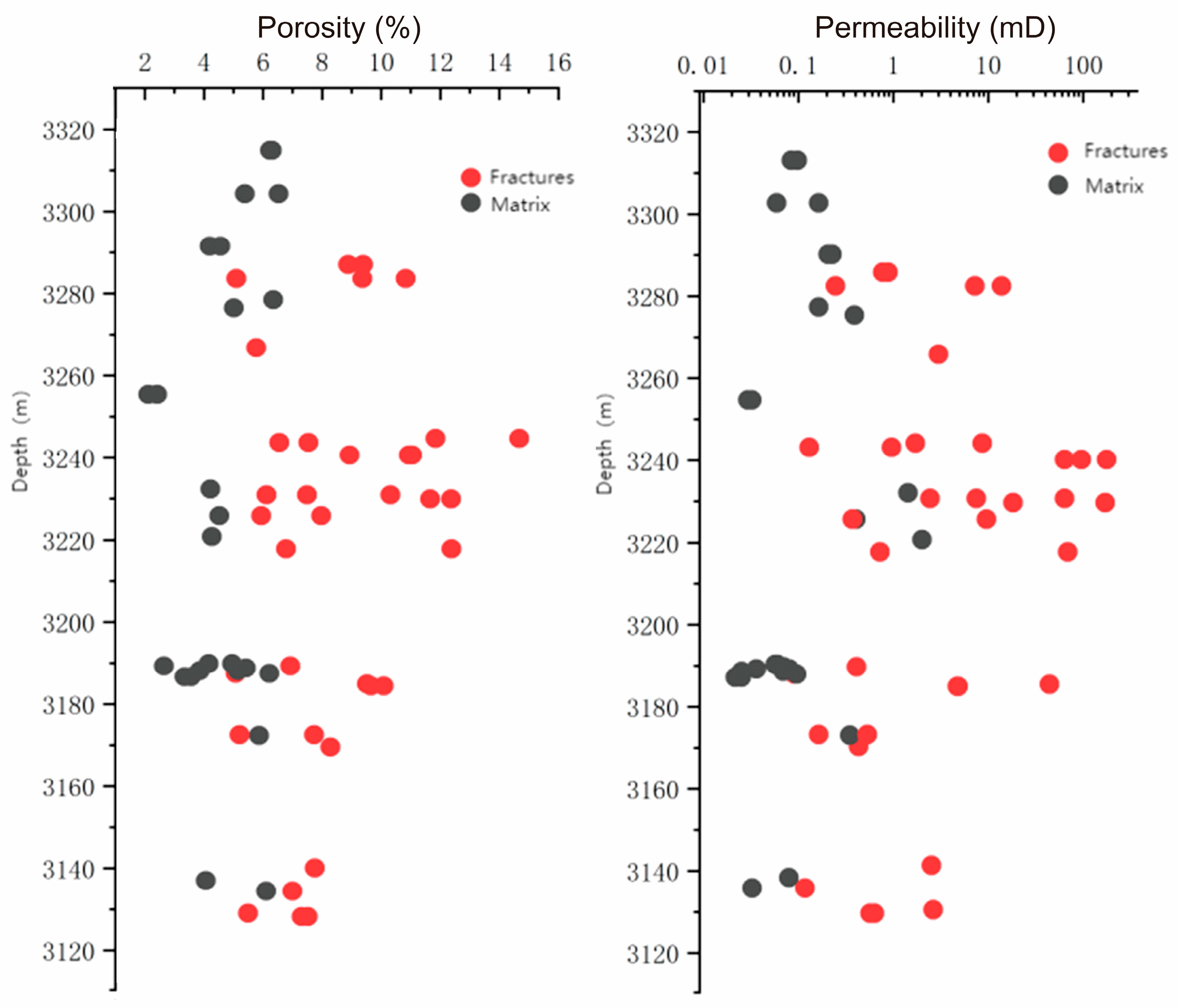
The fracture system significantly enhances reservoir flow capacity. Laboratory core-porosity and permeability measurements indicate that unfilled or partially filled fractures can yield permeabilities of 10–100 mD or higher, far exceeding matrix permeability (<5 mD). For example, in the Well Z9901X, fractured samples show permeability increases of one to two orders of magnitude relative to adjacent matrix samples. In full-diameter core tests, the permeability of open fractures can exceed 100 mD (Figure 9).
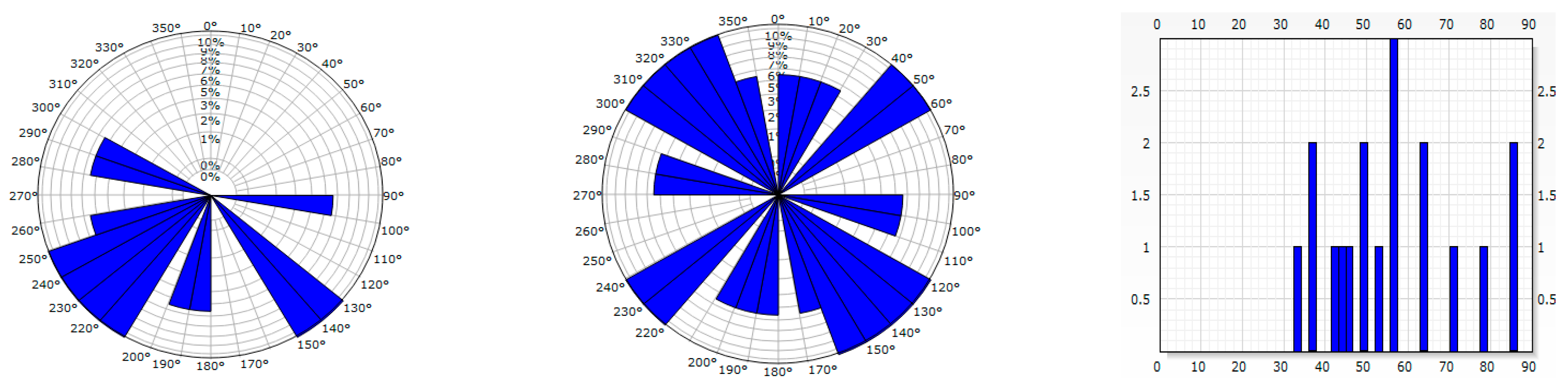
The fracture system profoundly enhances reservoir flow capacity. Laboratory measurements reveal that fracture porosity contributes an average of 8.42% to the total porosity, compared to the matrix average of 5.19%. More significantly, permeability exhibits a strong power-law correlation with fracture linear density measured from core: (R2 = 0.78, n = 45). Unfilled or partially filled fractures elevate permeability by 1–2 orders of magnitude. For instance, in Well Z9901X, samples with fracture density > 10 m−1 show permeabilities ranging from 15 to 105 mD, whereas adjacent matrix samples with fracture density < 2 m−1 have permeabilities consistently below 1 mD (Figure 9). Full-diameter core tests confirm that interconnected open fractures can provide effective permeabilities exceeding 100 mD. The flow behavior is likely anisotropic. The dominant NNE-SSW and NNW-SSE fracture orientations (Figure 13) create preferred permeability pathways along these directions. Fracture aperture, more than length in this system, controls the flow capacity of individual conduits. The coexistence of widely opened (aperture > 100 μm) tectonic fractures and narrower, more numerous bedding fractures results in a dual-permeability system where the former dominates bulk flow directionality and the latter enhance connectivity.

4.2.5. Quantitative Relationship Between Fractures and Hydrocarbon Occurrence

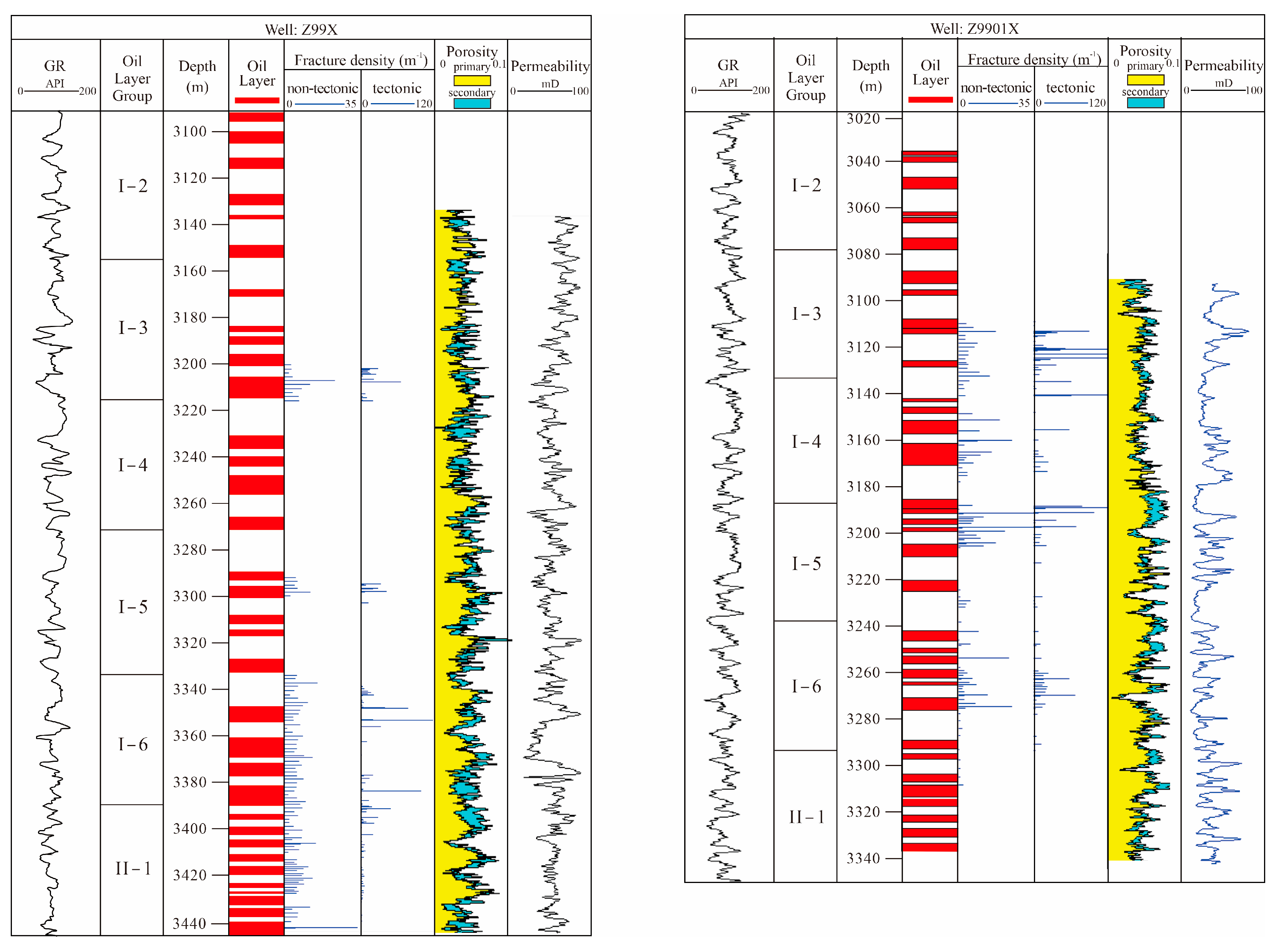
The fracture density shows a pronounced positive correlation with oil-bearing potential. High-fracture-density belts commonly coincide with favorable zones of hydrocarbon accumulation (oil-bearing intervals are marked in red): oil-bearing sections generally contain dense fractures, with linear densities reaching up to 17.9 fractures/m (see Figure 10).
Comparative analysis indicates that oil-bearing intervals are characterized by dominance of non-tectonic fractures and subordinate, locally conductive tectonic fractures. These intervals not only exhibit higher fracture densities, but also the largest fluctuations in rock hardness, with values up to 714 HV. This suggests degradation of rock fabric integrity. The high hardness values (up to 714 HV) indicate a highly brittle mechanical behavior of the micritic and grain-dominated carbonates. Such high brittleness is a key prerequisite for the development of dense fracture networks under tectonic stress. The large fluctuations in hardness within oil-bearing intervals likely represent strong mechanical contrasts between different lithological laminae or between rock matrix and early diagenetic cements. These contrasts promote stress concentration and heterogeneous failure, leading to the complex fracture networks that facilitate fluid migration and storage.
A robust positive correlation exists between fracture density and hydrocarbon enrichment. Quantitative analysis shows that normalized oil fluorescence intensity (from thin sections) and tested oil productivity (m3/d) both increase linearly with fracture density in the pay zones (R2 = 0.71 and 0.65, respectively). High-productivity intervals (>50 m3/d)) are exclusively associated with fracture densities exceeding 12 fractures/m (Figure 10). Furthermore, these intervals exhibit the highest contrasts in rock hardness (up to 714 HV), indicating brittle behaviour favorable for fracturing. The quantitative relationship can be expressed as a risk factor for hydrocarbon occurrence: intervals with greater fracture density (>10 fractures/m) and high hardness variability (Delta HV > 200) have a >80% probability of being productive, based on our dataset.

5. Discussion

5.1. Characterization of the Fractures in Reservoir

5.1.1. Relative Timing of Fracture Development

The relative timing of fracture formation can be inferred from cross-cutting relationships and cement fill characteristics observed in cores and thin sections. The predominant non-tectonic (bedding-parallel) fractures are often the earliest formed, frequently associated with syn-sedimentary or early diagenetic processes. These fractures are commonly partially or fully filled with micrite or early-stage calcite cements (Figure 3C,D). Later tectonic fractures, primarily high-angle fractures, cross-cut these early bedding fractures and associated cements. Two major sets of tectonic fractures are identified: an earlier set (NNW-SSE trend) and a later set (NNE-SSW trend), with the latter occasionally offsetting the former. The latest-stage fractures, often with minimal fill or lined with bitumen, show clear associations with dissolution events. Dissolution pores and vugs are frequently concentrated along fracture walls or at fracture intersections (e.g., Figure 3B,F), indicating that fracturing, particularly the late-stage tectonic events, created preferential pathways for corrosive fluids, significantly enhancing secondary porosity. This paragenetic sequence indicates that the fracture system evolved through multiple phases: initial compaction-related bedding fracture formation, followed by tectonic fracturing associated with the Qianbei Fault activity, and subsequent diagenetic modification involving cementation and dissolution.

5.1.2. Controlling Factors of Fracture Development

Lithology is the fundamental intrinsic factor governing fracture development. Rocks with higher hardness and brittleness (e.g., grain-dominated carbonates with HV often >600) are more prone to brittle failure under stress, leading to higher fracture density, especially of tectonic fractures. Strata with higher clay contents tend to inhibit fracture formation and exhibit lower fracture densities. Combined with the systematic analysis of fractures and rock mechanical properties presented above, fracture development in the study area is evidently lithology-controlled.
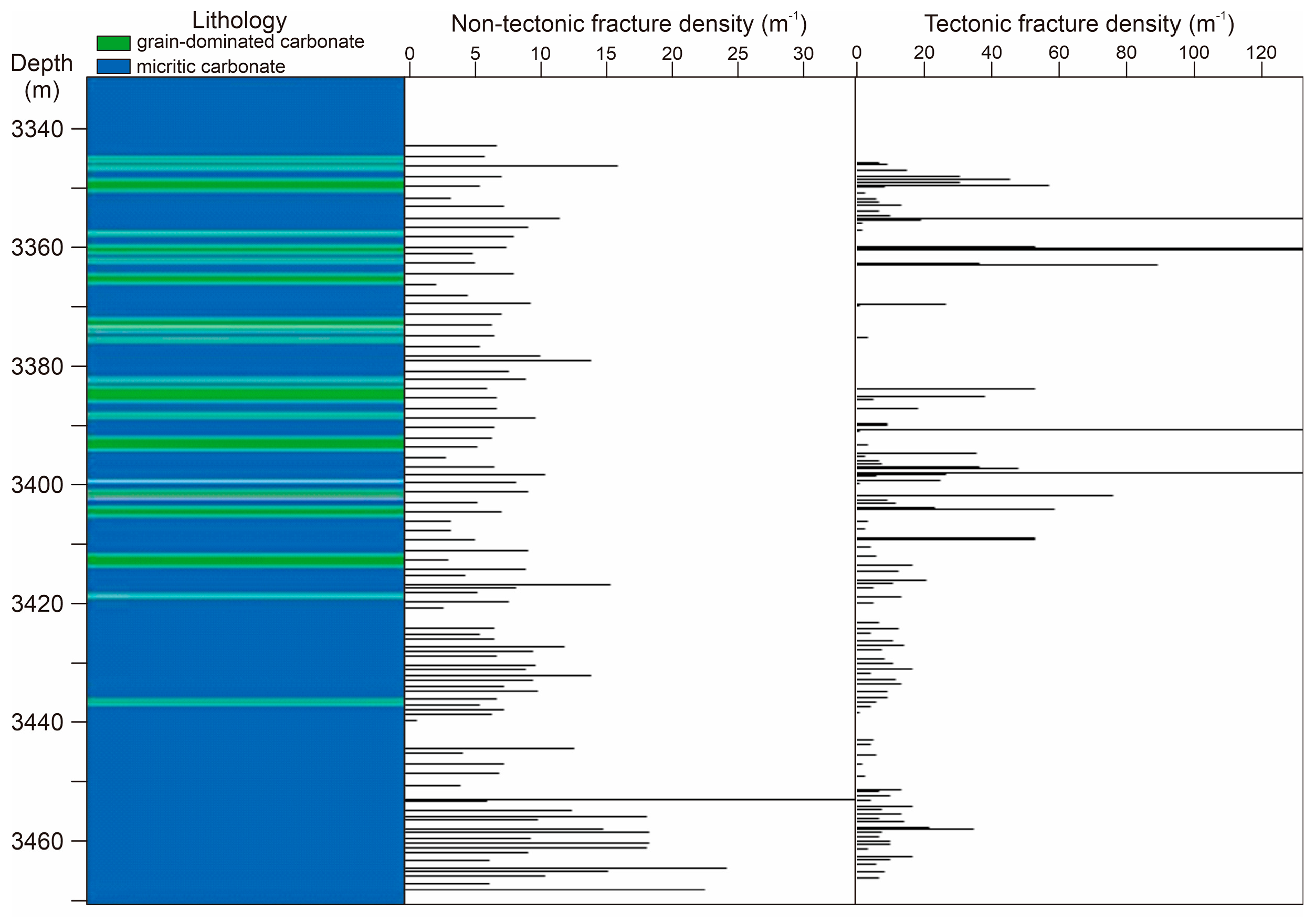
Non-tectonic fractures mainly occur in micritic carbonate rocks, with an average density of approximately 9.09 fractures/m, higher than that of grain-dominated carbonates (8.36 fractures/m). They are characterized by the coexistence of dense fracture networks and dissolution-related microporosity. In contrast, tectonic fractures are concentrated in grain-dominated carbonate rocks, with an average density of about 15.05 fractures/m, significantly higher than that in micritic intervals (8.63 fractures/m). These fractures commonly extend along bedding planes or grain-contact surfaces. The two fracture sets show a complementary vertical distribution and together constitute the primary framework of the fracture system in this interval (Figure 11). Overall, grain-dominated carbonates preferentially develop high-density tectonic fractures. The orientation of these fractures (NNW-SSE and NNE-SSW sets) correlates strongly with the regional stress field evolution of the Jianghan Basin. The NNW-SSE set likely relates to an earlier NE-SW extensional phase during the Paleogene, while the dominant NNE-SSW set aligns with the later, long-lasting N-S to NW-SE extensional regime associated with the Qianbei Fault system, indicating a strong tectonic control.

5.2. Fracture Interpretation from Well Logs and Borehole Image Analysis

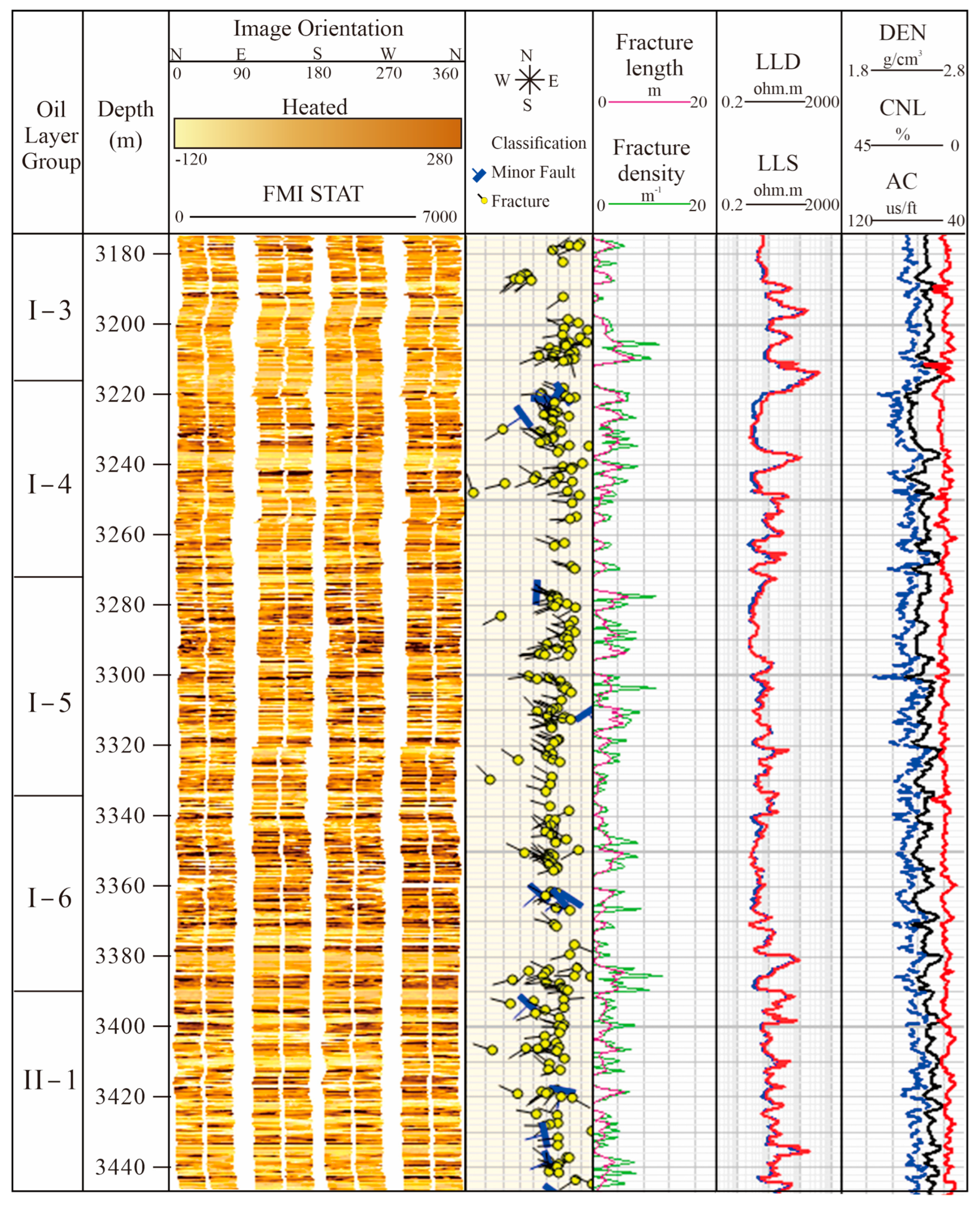
In this study, borehole image logs were used to identify and interpret fractures and fracture types, and attitude parameters (e.g., strike and dip) were extracted for comparison and validation against core-based observations. Fractures are generally well developed in the target interval. Image log interpretation indicates that high-resistivity fractures are dominant, with microfault features locally observed. Bedding interfaces are widely recognizable throughout the logged interval, and the intensity of high-resistivity fractures varies markedly along the borehole, indicating pronounced vertical heterogeneity in fracture development (Figure 12).
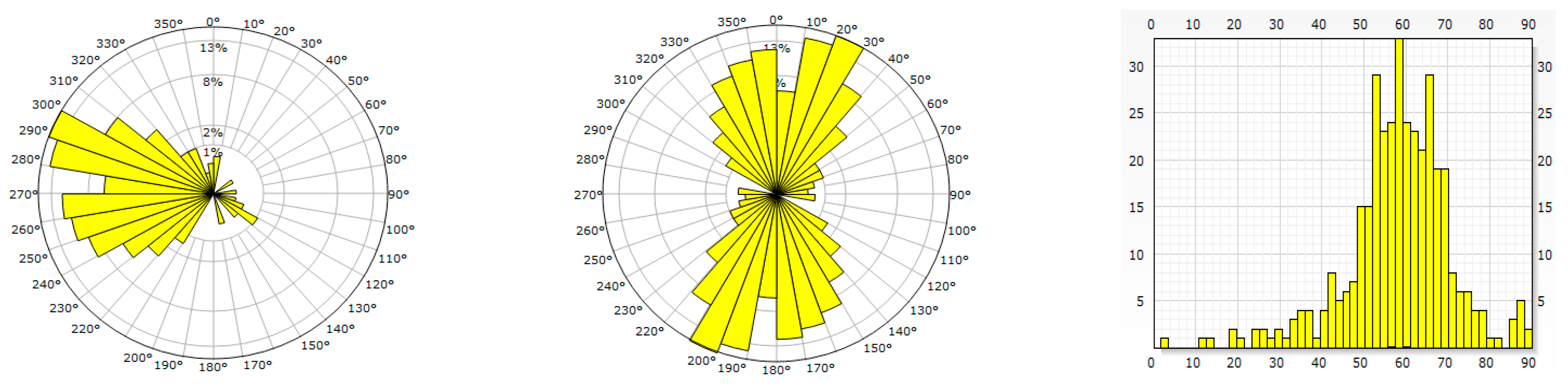
Statistical analysis of fracture attitudes shows that the strike of high-resistivity fractures is relatively clustered, with two principal sets trending NNW-SSE and NNE-SSW (Figure 13). Dips are mainly moderate to high, suggesting a strongly directional fracture system (Figure 14). Vertically, intervals with microfault development correspond to zones with dense high-resistivity fractures to some extent, implying that both may be governed by a similar tectonic-stress regime. Comparison using the integrated log column indicates that bedding is overall well developed, whereas high-resistivity fractures exhibit a segmented pattern of enhanced development. This suggests that, in addition to regional stress, fracture formation and distribution may be jointly influenced by lithologic assemblages, interbedded interfaces, and variations in local structural deformation. These observations provide borehole-scale constraints for subsequent analyses of fracture–oil–bearing relationships and for optimizing seismic/log-based parameters for fracture prediction. The strong AC/PEF correlations are likely specific to the mineralogical composition and pore structure of these saline-lacustrine carbonates, where fractures significantly alter sonic transit time and photoelectric absorption. While the exact coefficients may vary, the underlying physical principle suggests that similar relationships could be sought in other lacustrine carbonate reservoirs with low primary porosity and contrasting matrix/fracture properties.

5.3. Fracture Distribution Prediction from Seismic Attribute Analysis and Sublayer Characteristics

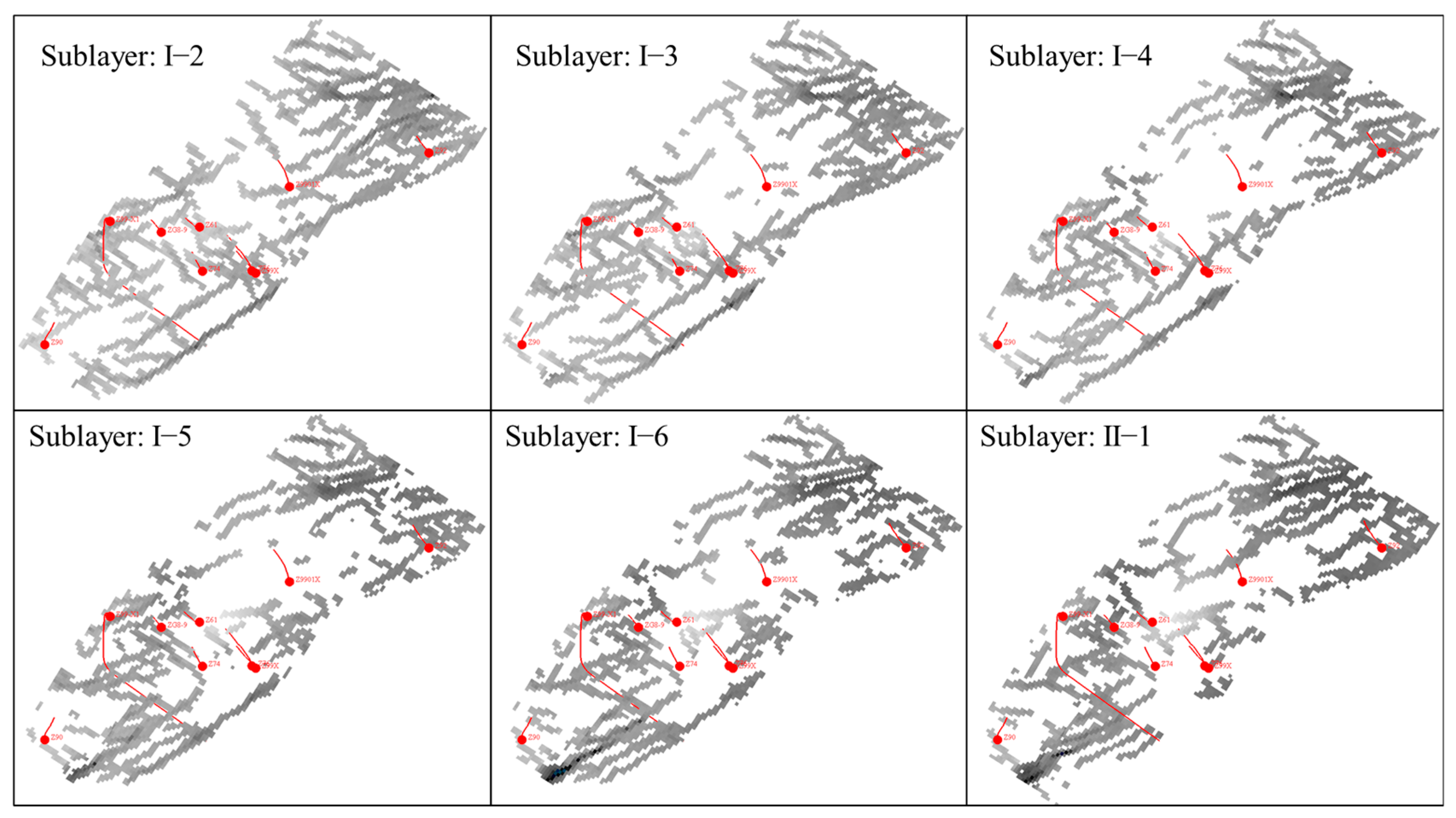
At the seismic scale, fracture-sensitive attributes (coherence, curvature, ant-tracking) were used to predict fracture density and generate distribution maps for each sublayer (Figure 15). Validation via blind-well tests confirmed model robustness. The predicted patterns exhibit systematic variation controlled by lithology and structure (Table 5). In summary, the dense belt is aligned with the derived stress field orientation associated with the Qianbei Fault. The strong spatial correlation between high-density tectonic fracture belts and the fault-derived stress concentration zones (e.g., in I-3 and I-6) underscores a robust, predictable association between specific tectonic phases (later extension) and fracture development in competent lithologies., making them the most favorable exploration targets. The micrite-dominated sublayers (I-2, I-4, I-5, II-1) are characterized by lower-density and network- or patch-like distributions of non-tectonic fractures, with local “sweet spots” associated with paleo-topographic highs or grain-rich interbeds.
Uncertainty and Limitations of the Upscaling Method: The primary uncertainty in upscaling from core/log to seismic scale stems from the non-unique relationship between seismic attributes and fracture intensity. We limited this by (1) using multi-attribute analysis (coherence, curvature, ant) to reduce noise, and (2) calibrating the seismic attribute blends directly to the well-based fracture density using a neural network approach at well locations. The main limitations are as follows: (a) The seismic resolution (~20 m) prevents detection of fractures below a certain size and spacing, causing an underestimation of total fracture density in intensely fractured zones. (b) The method assumes a consistent lithological framework; abrupt lateral facies changes not captured by the seismic inversion could lead to prediction errors. (c) The predictive power decreases with distance from calibration wells, as indicated by the increasing uncertainty in the blind-well tests for the most distal areas.

6. Conclusions

(1)
The reservoirs in the study area constitute a typical fracture-pore dual-porosity/dual-permeability system. The reservoir matrix is characterized by low porosity and ultra-low permeability, with an average porosity of 5.19% and permeability generally <5 mD. In contrast, an effective fracture network markedly enhances flow capacity: the equivalent permeability of unfilled or partially filled fractures can increase by 1–2 orders of magnitude, locally reaching > 10–100 mD. Fractures are therefore the primary factor controlling seepage efficiency and production variability.
(2)
The dominant fracture types are non-tectonic (bedding-parallel) fractures and high-angle tectonic fractures, whose development is jointly governed by lithology, tectonic setting, and diagenetic filling. Micrite-dominated intervals are characterized by densely distributed bedding fractures, whereas grain-dominated carbonate intervals preferentially develop high-density tectonic fractures. Fracture filling intensity increases markedly along interlayer interfaces and within structural core zones, directly influencing fracture conductivity and spatial connectivity.
(3)
Fracture development exhibits pronounced inter-sublayer differences and plan-view zonation. The grain-dominated I-3 and I-6 sublayers form NE-trending, continuous belt-like high-density fracture zones, consistent with the orientation of the derived stress field associated with the Qianbei Fault. In contrast, the micrite-dominated I-2, I-4, I-5, and II-1 sublayers are dominated by network- or patch-like non-tectonic fractures with lower overall densities, although localized “sweet spots” with reservoir potential still occur.
(4)
Geophysical responses indicate strong monotonic relationships between fracture density and AC and PEF logs… providing a basis for subsequent integrated well-seismic modeling. These relationships, while particularly robust in this formation, highlight the potential of using integrated log analysis for fracture detection in analogous low-porosity carbonate settings.
(5)
A fracture-prediction model based on seismic attributes is effective at the sublayer scale. High-fracture-density belts are mainly distributed along zones of positive-curvature anomalies and in areas proximal to faults. Blind-well tests and offset-well comparisons validate the reliability of the prediction model, showing a mean absolute error of ~2.1 fractures/m within a 500 m radius of calibration wells. This provides a confidence level sufficient for guiding well placement in high-priority areas, though with increasing uncertainty in undrilled, structurally complex zones.
(6)
This study advances beyond traditional descriptive models by establishing a quantitative, multi-scale predictive framework. It quantitatively links fracture attributes to permeability enhancement and productivity, provides calibrated well-log proxies (AC, PEF) for fracture density specific to saline-lacustrine carbonates, and delivers a seismically derived predictive model validated at the sublayer scale. In future exploration and development, priority should be given to belt zones such as I-3 and I-6, where fractures are more continuous and fracture filling is low. Localized sweet spots within micrite-dominated intervals that show relatively high fracture density and low-to-moderate filling should also be targeted.

Author Contributions

Conceptualization, C.C., X.L. and X.W.; methodology, H.W. and L.Z.; software, Y.J. and J.W.; validation, L.Z., M.Z. and J.W.; formal analysis, C.C., L.Z., J.W. and C.G.; investigation, M.Z.; resources, C.C. and H.W.; data curation, X.W.; writing—original draft preparation, J.W.; writing—review and editing, C.G. and X.W.; visualization, Y.J.; supervision, X.L.; project administration, X.L. and H.W.; funding acquisition, X.L. All authors have read and agreed to the published version of the manuscript.

Funding

This research was funded by SINOPEC, grant number P24053.

Data Availability Statement

Experimental data are listed in the paper, no further new data.

Acknowledgments

During the preparation of this manuscript/study, the authors used DeepSeek V3.2 for the purposes of language checking and editing. The authors have reviewed and edited the output and take full responsibility for the content of this publication.

Conflicts of Interest

Author Chenguang Cao, Xiaobo Liu, Hua Wu, Liang Zhang, Yanjie Jia, Manting Zhang were employed by the SINOPEC Jianghan Oilfield Company. The remaining authors declare that the research was conducted in the absence of any commercial or financial relationships that could be construed as a potential conflict of interest.

References

  1. Wang, B.J.; Bao, H.Y.; Wu, S.Q.; Liu, A.; Guo, L.; Yu, Y.; Xu, Y.; Zhao, W. Exploration breakthrough and implications of saline-lacustrine carbonate oil reservoirs in the Qianjiang Depression, Jianghan Basin. China Pet. Explor. 2025, 30, 68–72. (In Chinese) [Google Scholar]
  2. Zhao, C.L.; Zhu, X.M. Sedimentary Petrology; Petroleum Industry Press: Beijing, China, 2001; pp. 346–353. (In Chinese) [Google Scholar]
  3. Xia, Q.S.; Tian, J.C.; Ni, X.F. Research status and significance of lacustrine carbonate rocks. Sediment. Geol. Tethyan Geol. 2003, 23, 105–112. (In Chinese) [Google Scholar]
  4. Cohen, A.S.; Thouin, C. Nearshore carbonate deposits in Lake Tanganyika. Geology 1987, 15, 414–418. [Google Scholar] [CrossRef]
  5. Benson, L. Factors affecting 14C ages of lacustrine carbonates: Timing and duration of the last highstand lake in the Lahontan Basin. Quat. Res. 1993, 39, 163–174. [Google Scholar] [CrossRef]
  6. Bustillo, M.A.; Arribas, M.E.; Bustillo, M. Dolomitization and silicification in low-energy lacustrine carbonates (Paleogene, Madrid Basin, Spain). Sediment. Geol. 2002, 151, 107–126. [Google Scholar] [CrossRef]
  7. Tucker, M.E.; Wright, V.P.; Dickson, J.A.D. Carbonate Sedimentology; Wiley: Hoboken, NJ, USA, 2009. [Google Scholar]
  8. Zhou, Z.L.; Du, Y.H. Relationship between sedimentary facies of lacustrine carbonate rocks and hydrocarbon distribution. Pet. Geol. Exp. 1986, 8, 123–132. (In Chinese) [Google Scholar]
  9. Kamel, H.M.; Mabrouk, W.M.; Metwally, A.M. Integrated geophysical assessment of the Abu Roash C member for hydrocarbon prospectivity in the Sitra Field Abu El Gharadig Basin, Egypt. Sci. Rep. 2025, 15, 27014. [Google Scholar] [CrossRef]
  10. Pu, X.G.; Zhou, L.H.; Xiao, D.Q.; Hua, S.; Chen, C.; Yuan, X.; Han, G.; Zhang, W. Geological characteristics of lacustrine carbonate rocks on the southwestern margin of the Qikou Sag, Huanghua Depression. Pet. Explor. Dev. 2011, 38, 136–144. (In Chinese) [Google Scholar] [CrossRef]
  11. Wang, Q.W.; Liang, B.; Kan, Z.Z. Carbon and oxygen isotope characteristics of lacustrine carbonate rocks in the Lower Jurassic Ziliujing Formation, Sichuan Basin, and their paleolimnological significance. Mineral. Petrol. 2006, 26, 87–91. (In Chinese) [Google Scholar]
  12. Yang, S.C.; Qiu, L.W.; Liu, K.Y.; Han, X.; Jiang, J.; Shan, B.; Liu, L. Reservoir characteristics and classification evaluation of lacustrine carbonate rocks in the fourth member of the Shahejie Formation, Shaojiawa Sag, Jiyang Depression, Bohai Bay Basin. Nat. Gas Geosci. 2019, 27, 628–638. (In Chinese) [Google Scholar]
  13. Wang, C.F.; Wang, L.J.; Shao, X.J.; Xu, H.; Sun, Y.; Liu, Y. Production characteristics of oil wells in lacustrine carbonate reservoirs in the Subei Basin and development technology strategies. Oil Gas Geol. Recovery Effic. 2015, 20, 100–103. (In Chinese) [Google Scholar]
  14. Guan, S.R.; Bai, G.Y.; Di, M.X. Sedimentary characteristics and depositional environment of carbonate rocks in the middle member of the Guanzhuang Formation (Lower Tertiary), Pingyi Basin, Shandong. J. East China Pet. Inst. (Nat. Sci. Ed.) 1985, 3, 9–20. (In Chinese) [Google Scholar]
  15. Huang, C.G.; Yuan, J.Y.; Tian, G.R.; Wu, L.; Pan, X.; Hui, Y. Geochemical characteristics and formation mechanism of Eocene lacustrine dolomite reservoirs in the Chaixi area. Earth Sci. Front. 2016, 23, 230–242. (In Chinese) [Google Scholar]
  16. Li, X.; Wang, J.G.; Zhang, P.; Li, L.; Huang, C.; Wu, K.; Zhang, Q.; Long, W. Fracture genesis mechanism and geological significance of E32 in the Yingxi area, Qaidam Basin. Lithol. Reserv. 2018, 30, 45–54. (In Chinese) [Google Scholar]
  17. Liu, S.Q. Sedimentary Characteristics of Lacustrine Carbonate Rocks in the Upper Submember of Member 4 of the Shahejie Formation, Western Dongying Sag. Ph.D. Dissertation, China University of Geosciences, Beijing, China, 2018. (In Chinese) [Google Scholar]
  18. Wen, H. Structural characteristics of the Zhongshi area in the Qianjiang Depression and analysis of exploration targets. J. Jianghan Pet. Univ. Staff. Work. 2022, 35, 1–4. (In Chinese) [Google Scholar]
  19. Wang, K.; Wang, G.W.; Xu, B.; Wang, D.; Ran, Z. Fracture classification and stages of tectonic fractures in the Keshen 2 well block. Prog. Geophys. 2015, 30, 1251–1256. (In Chinese) [Google Scholar]
  20. Wu, S.Q.; Guo, L.B.; Xu, S.; Xu, S.; Man, H.; Luo, S.; Li, X.; Zhao, W.; Kong, J. Lithofacies types and reservoir characteristics of lacustrine carbonate rocks in the third member of the Qianjiang Formation, Qianjiang Depression. China Pet. Explor. 2025, 30, 42. (In Chinese) [Google Scholar]
  21. Shao, X.Z.; Wang, M.M.; Hui, X.; Wang, S.; Zhang, X.; Qi, Y. Fracture characteristics, formation stages, and development patterns in the Yanchi area, Ordos Basin. Nat. Gas Geosci. 2021, 32, 1501–1513. (In Chinese) [Google Scholar]
  22. Zhou, Y.S.; Zhang, L. Statistical analysis of core fractures in fractured reservoirs. World Geol. 2000, 2, 117–124. (In Chinese) [Google Scholar]
  23. Zeng, L.; Shu, Z.; Lyu, W.; Zhang, M.; Bao, H.; Dong, S.; Chen, S.; Xu, X. Lamellation Fractures in the Paleogene Continental Shale Oil Reservoirs in the Qianjiang Depression, Jianghan Basin, China. Geofluids 2021, 2021, 6653299. [Google Scholar] [CrossRef]
  24. He, J.; Okere, C.J.; Su, G.; Hu, P.; Zhang, L.; Xiong, W.; Li, Z. Formation damage mitigation mechanism for coalbed methane wells via refracturing with fuzzy-ball fluid as temporary blocking agents. J. Nat. Gas Sci. Eng. 2021, 90, 103956. [Google Scholar] [CrossRef]
  25. Zhao, X.; Wang, G.; Li, D.; Wang, S.; Sun, Q.; Lai, J.; Han, Z.; Li, Y.; Shen, Y.; Wu, K. Characteristics and Controlling Factors of Natural Fractures in Lacustrine Mixed Shale Oil Reservoirs: The Upper Member of the Lower Ganchaigou Formation in the Ganchaigou Area, Qaidam Basin, Western China. Energies 2024, 17, 5996. [Google Scholar] [CrossRef]
  26. Luo, X.; Chen, S.; Liu, J.; Li, F.; Feng, L.; Li, S.; Wu, Y.; Wu, G.; Luo, B. The Fractured Permian Reservoir and Its Significance in the Gas Exploitation in the Sichuan Basin, China. Energies 2023, 16, 1968. [Google Scholar] [CrossRef]
Figure 1. The structure of the Qianjiang Depression in the Jianghan Basin (modified from [23]). 1: Zhijiang Depression; 2: Yajiao Uplift; 3: Chentuokou Depression; 4: Tonghaikou Uplift; 5: Qianjiang Depression; 6: Chenhu Uplift; 7: Xiaoban Depression; 8: Tianmen Uplift; 9: Longsaihu Uplift.
Energies 19 01402 g001
Figure 2. Stratigraphic column in the Qianjiang Depression (modified from [23]).
Energies 19 01402 g002
Figure 3. Petrographic characteristics of micritic carbonate rocks in the study area: (A) Micritic carbonate rock; (B) Micritic dolostone; (C) Micritic dolomitic limestone; (D) Micritic limestone; (E) Micritic argillaceous carbonate rock; (F) Micritic terrigenous quartz-bearing carbonate rock.
Energies 19 01402 g003
Figure 4. Matrix porosity-permeability distribution of the reservoir in Well Z9901X.
Energies 19 01402 g004
Figure 5. Fluorescence thin-section identification of Well Z99X core sample.
Energies 19 01402 g005
Figure 6. Frequency distribution of fracture dip angles in Well Z9901X and Z99X.
Energies 19 01402 g006
Figure 7. Fracture linear density distribution of each sublayer in Well Z99X.
Energies 19 01402 g007
Figure 8. Fracture linear-density distribution of each sublayer in Well Z9901X.
Energies 19 01402 g008
Figure 9. Fracture porosity-permeability distribution map of Well Z9901X.
Energies 19 01402 g009
Figure 10. Relationship between fracture density and hydrocarbon shows in Wells Z99X and Z9901X.
Energies 19 01402 g010
Figure 11. Correspondence diagram of lithology and fracture density in Well Z99X.
Energies 19 01402 g011
Figure 12. Integrated borehole image-log interpretation column for Well Z99X.
Energies 19 01402 g012
Figure 13. Rose diagram of fracture strike (azimuth) and dip-angle distribution identified from borehole image-logging of microfaults in Well Z99X.
Energies 19 01402 g013
Figure 14. Rose diagram of fracture strike and dip-direction distribution and dip-angle distribution identified from borehole image logging of microfaults in Well Z99X.
Energies 19 01402 g014
Figure 15. The plane distribution of natural fractures in each sub-layer of study area. (Grey scale color indicates the intensity of the fractures, the darker the higher intensity; red lines are well paths).
Energies 19 01402 g015
Table 1. Simplified stratigraphic column of the study area.
SystemSeriesFormationMemberOil Layer Group
QuaternaryPleistocenePingyuan Formation
NeogeneMiddle MioceneGuanghuasi Formation
PaleogeneEogeneQianhe Town Formation
Qianjiang FormationFirst MemberQian11, Qian12, Qian13
Upper EoceneSecond MemberQian21, Qian22, Qian23
Third MemberQian31, Qian32, Qian33, Qian34
Upper Fourth MemberQian40, Qian41, Qian42, Qian43
Lower Fourth Member
(Qian-4)
I unit: I-1, I-2, I-3, I-4, I-5, I-6,
II unit: II-1, II-2, II-3, II-4
Middle EoceneJinsha Formation
Table 2. Fracture description table.
TypeDescriptionLayerCore PhotoFracture Density
(m−1)
Non-tectonic fractures (bedding-parallel fractures)UnfilledBedding-parallel, distributed concordantly with stratification on core surfaces, showing morphologies such as bending, discontinuity, branching, etc.I-4Energies 19 01402 i00110.9–14.7
FilledCalcite, quartz, argillaceous, or gypsum fillings are locally observed in some bedding fractures. Clear boundaries between filled and unfilled segments can be identified.I-3Energies 19 01402 i0025.8–8.9
With dissolution vugsSome bedding fractures are affected by dissolution, forming vugs and pores that are commonly elliptical in shape.I-3Energies 19 01402 i0033.4–5.6
Tectonic fracturesUnfilledThe angle between the fracture plane and the plane perpendicular to the wellbore axis is 45–90°.I-3Energies 19 01402 i00410.9–14.7
FilledCalcite, quartz, argillaceous, or gypsum fillings are locally observed in some tectonic fractures.I-4Energies 19 01402 i0055.8–8.9
With dissolution vugsDissolution vugs occur within tectonic fractures in a variety of forms, commonly including circular, elliptical, and irregular honeycomb-like shapes.I-4Energies 19 01402 i0063.4–5.6
Table 3. Statistical analysis of fracture inclination in core drilling wells.
WellFracture Dip Angle
High AngleLow AngleHorizontal
per%per%per%
Z9901X54119.061254.41113339.94
Z99X2187.68792.7874126.12
Total75926.752047.19187466.06
Table 4. Statistical analysis of fracture width in core drilling wells.
WellFracture Width
Big (>10 mm)Small and Medium (1~10 mm)Tiny (<1 mm)
per%per%per%
Z9901X1371.148937.467696.42
Z99X950.795984.993452.88
Total2328.17149152.56111439.27
Table 5. Summary of predicted fracture characteristics by sublayer.
SublayerDominant LithologyFracture PatternDominant TypeDensity Range (m−1)Main Control
I-2micritic carbonatenetwork-likenon-tectonic<8depositional fabric
I-3grain-dominatedcontinuous belttectonic (high-angle)15–18.9fault-proximal stress
I-4micritic (minor grain-rich)sparse networknon-tectonic5.8–8.9dissolution associated
I-5micritic carbonatescattered clustersnon-tectonic5–12.9shallow-water microfacies
I-6grain-dominatedcontinuous belttectonic (high-angle)14.9–16fault-derived stress field
II-1micritic & salt-gypsumdiscontinuous belttectonic (segmented)6.5–9.4interbedded interfaces
Disclaimer/Publisher’s Note: The statements, opinions and data contained in all publications are solely those of the individual author(s) and contributor(s) and not of MDPI and/or the editor(s). MDPI and/or the editor(s) disclaim responsibility for any injury to people or property resulting from any ideas, methods, instructions or products referred to in the content.