1. Introduction
Offshore oil and gas production holds paramount significance in addressing the escalating global demand for energy. Since the turn of the century, offshore facilities have contributed a substantial 30% to global oil production and 27% to gas production, thus playing a pivotal role in satisfying the world’s energy requirements [
1]. Conventionally, offshore oil and gas facilities have relied on gas turbines installed on platforms, powered by the combustion of natural gas [
2], which is considered a wasteful and environmentally unfriendly approach. Given the urgency of global climate goals, particularly the emission reduction targets outlined in the Paris Agreement, reducing greenhouse gas emissions from high-emission industries such as offshore oil and gas extraction has become a critical step in mitigating climate change. The global demand to reduce methane emissions—as methane has a far higher greenhouse effect than carbon dioxide—has prompted nations to take urgent action [
3]. In this context, the offshore oil and gas industry’s role in methane leaks and carbon dioxide emissions is increasingly under scrutiny. As countries and regions accelerate their transition to low-carbon and green energy, the environmental sustainability of offshore oil and gas fields (OOGFs) has become essential [
4].
A green offshore oil and gas field extraction plant is a plant that minimizes the adverse environmental impacts of OOGF extraction in terms of production, design and operation; improves the efficiency of oil and gas resource utilization; and promotes energy decarbonization and sustainable economic development. An offshore oil and gas field green plant (OOGFGP) aims to realize a win–win situation for both production and environmental protection by adopting clean production technologies, circular economy models and energy-saving and environmental protection measures. The evaluation of OOGFGP is of great significance for implementing green manufacturing, accelerating green transformation and the development of manufacturing industry, and promoting stable growth of the industry. Therefore, more attention needs to be paid to the evaluation of OOGFGP. Evaluating the greenness of OOGFGP is not only crucial for advancing green manufacturing, but also helps align the industry with global decarbonization goals, including reductions in methane and carbon dioxide emissions.
Evaluating OOGFGP requires a combination of multiple criteria. Therefore, evaluating OOGFGP falls within the realm of research on multi-attribute decision making (MCDM) [
5]. Many scholars have studied the sustainability of the OOGF industry and the offshore manufacturing industry, as shown in
Table 1. By summarizing the literature, we find that studies on the sustainability of the OOGF industry mainly focus on the decommissioning of OOGF facilities, and studies on the sustainability of offshore manufacturing mainly focus on the siting of offshore wind farms. Green evaluation of OOGF extraction projects is lacking in the OOGF and offshore manufacturing industries. Therefore, considering the importance of energy sustainability and green development in OOGF extraction projects, this paper proposes a hybrid decision-making framework for evaluating the greenness of extraction projects in OOGFs. The proposed framework encompasses three distinct components: the articulation of experts’ ambiguous evaluation information, the computation of criteria weights, and the prioritization of alternatives [
6].
In practical evaluation problems, there is always a certain degree of ambiguity, information incompleteness and uncertainty, and determining the important criteria and optimal programs affecting the green plants in OOGFs is no exception. In addition, experts may have different levels of science, experience, and perspectives when assessing criteria and programs affecting green plants in offshore oil and gas fields. Furthermore, experts may have incomplete data for reasons of confidentiality or their opinions may be characterized by ambiguity and uncertainty. In such cases, the use of fuzzy sets is required [
20].
There are such fuzzy sets, and these include classical fuzzy sets [
21], intuitionistic fuzzy numbers (INFNs) [
22], Pythagorean fuzzy sets (PFS) [
23], etc. Classical fuzzy sets have been criticized because their membership grades are deterministic and do not show skepticism and non-membership degrees. INFNs have grades of non-membership, membership, and skepticism, but INFNs cannot fully show uncertainty in real-life situations. The main difference between PFS and INFNs is the solution space, PFS provide decision makers (DMs) with greater degrees of freedom than INFNs [
24,
25]. However, unlike INFNs and PFS, in spherical fuzzy (SF) sets, the degrees of membership, non-membership, and hesitation are defined independently (with values between 0 and 1) [
26]. SF sets allow the DMs to define the affiliation function within a spherical region and to assign degrees of membership independently with a larger domain available to express the DM’s preferences. Consequently, this paper utilizes SF sets to handle the uncertainty information pertaining to the evaluation of OOGFGP.
The next step is to address the problem of conflicting and interacting evaluation criteria. In multi-attribute decision making, common methods for calculating weights are the analytic hierarchy process (AHP), data envelopment analysis (DEA), grey relational analysis (GRA), etc. The AHP method constructs the hierarchical structure of the decision problem and fills in the judgment matrix based on the subjective judgment of the DM. The DEA method calculates the efficiency score through a linear programming model, which may underestimate or overestimate the influence of criteria to the evaluation results. The GRA method evaluates the importance of criteria by calculating the gray correlation, but the method requires sufficient sample data and is limited when dealing with complex decision problems. The decision evaluation and measurement by trial and error (DEMATEL) method not only determines attribute weights but also maps causal relationships among attributes, identifying the most critical ones. Consequently, it has garnered significant attention in evaluation research [
27,
28]. Gül [
29] proposed an SF sets extension of DEMATEL. There exist many studies combining SF sets and DEMATEL methods to make decisions. Zhu et al. [
30] used SF–DEMATEL to identify important maintenance items for machine tools. Büyüközkan et al. [
31] utilized SF–DEMATEL to select renewable energy in Turkey. Erdoğan et al. [
32] adopted SF–DEMATEL to evaluate autonomous vehicle driving systems. According to these studies, we found that SF–DEMATEL method can deal with the uncertainty of information more accurately and express the interrelationships between the criteria and assign weights. Therefore, in this paper, SF–DEMATEL is adopted to calculate the weights of criteria affecting OOGFGP.
The proposed framework’s final step is to rank the alternatives. There exist a host of MCDM methods like AHP (Analytic Hierarchy Process), TOPSIS (Technique for Order Preference by Similarity to an Ideal Solution), ELimination Et Choix Traduisant la Realitéwas (ELECTRE), etc. AHP is well-suited for scenarios that the number of criteria is limited. TOPSIS is more appropriate in cases where sufficient raw data is available for quantitative analysis. The ELECTRE method can take into account the interplay between multiple decision criteria and weights. But the ELECTRE method requires a large number of calculations and may be subjective during the decision-making process. The Multi-Attribute Ideal-Real Comparative Analysis (MAIRCA) approach, introduced by Pamucar et al. [
33], exhibits greater stability compared to other MCDM techniques such as TOPSIS or ELECTRE. The MAIRCA method relies on a straightforward mathematical algorithm and can be seamlessly integrated with other methodologies, rendering it a promising approach deserving of further research and development efforts [
34]. Haq et al. [
35] reviewed the MAIRCA method and showed that the existing research on the MAIRCA methodology considered fuzzy environments. However, the SF set expresses the decision maker’s preferences better than other fuzzy sets, and there are few studies on the SF–MAIRCA combination. Dınçer et al. [
36] firstly proposed a method combining interval-valued SF–MAIRCA with a complex decision-making process. However, few studies have been conducted on the combination of SF and MAIRCA. Therefore, SF–MAIRCA is proposed to rank alternatives in the evaluation of OOGFGP.
In this paper, a green evaluation model is innovatively proposed for the evaluation of OOGFGP to promote the sustainable development of offshore manufacturing industry and accelerate the construction of a green manufacturing and service system. In this model, we use SF–DEMATEL to determine the weights of OOGFGP criteria, and SF–MAIRCA is proposed to rank the candidate OOGF green extraction projects in China. As a result, through sensitivity analysis and comparative analysis, the proposed model is verified to have good stability and applicability. The main contributions of this work are as follows:
This study innovatively develops a comprehensive evaluation criteria system specifically tailored for OOGFGPs. By incorporating multiple interacting dimensions such as green energy utilization, green performance, environment, safety, and society, the system accurately captures the uniqueness of offshore extraction.
To address the highly interwoven nature of offshore evaluation criteria, the SF–DEMATEL method is applied to OOGFGPs for standard weighting. This application surpasses traditional weighting methods by not only directly showcasing the causal relationships between multiple criteria but also precisely expressing the DMs’ preferences and accommodating their hesitancy.
The SF–MAIRCA method is integrated to assess and rank the greenness of OOGF extraction projects. By calculating the gap between the theoretical ideal state and empirical realities, this method enables decision-makers to make mathematically stable and rational decisions in a highly subjective evaluation environment.
The rest of paper is structured as follows. In
Section 2, we establish a comprehensive evaluation criteria system of OOGFGP.
Section 3 introduces the SF-set-based decision-making framework, which integrates the DEMATEL and MAIRCA methods. In
Section 4, we apply the methodology proposed in this paper to the evaluation of green factories in China’s OOGFs and verify the effectiveness of the proposed methodology through sensitivity and comparative analyses. The last part summarizes the whole paper.
2. Evaluation Criteria System of OOGFGP
Determination of the evaluation criteria system of green factories in OOGFs has a crucial role in the low-carbon transformation of OOGFs and to their development in a green manner. The existing sustainable development of OOGFs in various countries focuses mainly on the decommissioning research of OOGF facilities. Additionally, most of the research on the sustainable development of the offshore manufacturing industry is on the siting of offshore wind farms. Green evaluation of OOGF extraction projects is lacking in the OOGF industry and the offshore manufacturing industry. China’s Ministry of Industry and Information Technology (MIIT) has released the General Rules for Green Factory Evaluation (GB/T 36132-2018) [
37], which provides a technical standard to be referred to for the creation and evaluation of green factories for offshore mining, and also provides a general technical framework for each industry to develop green factory evaluation standards or specific requirements [
37].
In this study, OOGFGP refers to all green facilities or platforms involved in offshore oil and gas field extraction projects. Specifically, it includes all facilities and systems directly involved in reducing environmental impacts, improving resource efficiency, and promoting sustainability, such as oil and gas extraction platforms, energy production systems, and pollution control equipment. The system boundaries used in this study encompass the entire offshore oil and gas extraction process, from production and design to the operational phase. These boundaries include assessments of green energy utilization, environmental performance, energy efficiency, pollution emissions, and socio-economic impacts. Our focus is on evaluating the greenness of the entire offshore oil and gas field development project, rather than the greenness of a single facility or platform.
Several scholars have studied the criteria that affect the sustainable development of OOGFs. Iaiani et al. [
38] analyzed the importance of security attacks on offshore oil and gas facilities and related activities, but did not consider energy, economic and environmental factors on the security of OOGF facilities. Almedallah and Walsh [
39] take into account the existence of existing infrastructure and the cost of installing new surface facilities for field developments, but do not incorporate the environmental, social, and safety risks and the sustainable energy use of OOGFs into the economic impacts on field development. D’Antoine et al. [
40] studied the mental health hazards of workers in the offshore oil and gas industry, but did not take into account the interplay of governmental attitudes, local residents, and other factors. Socolofsky et al. [
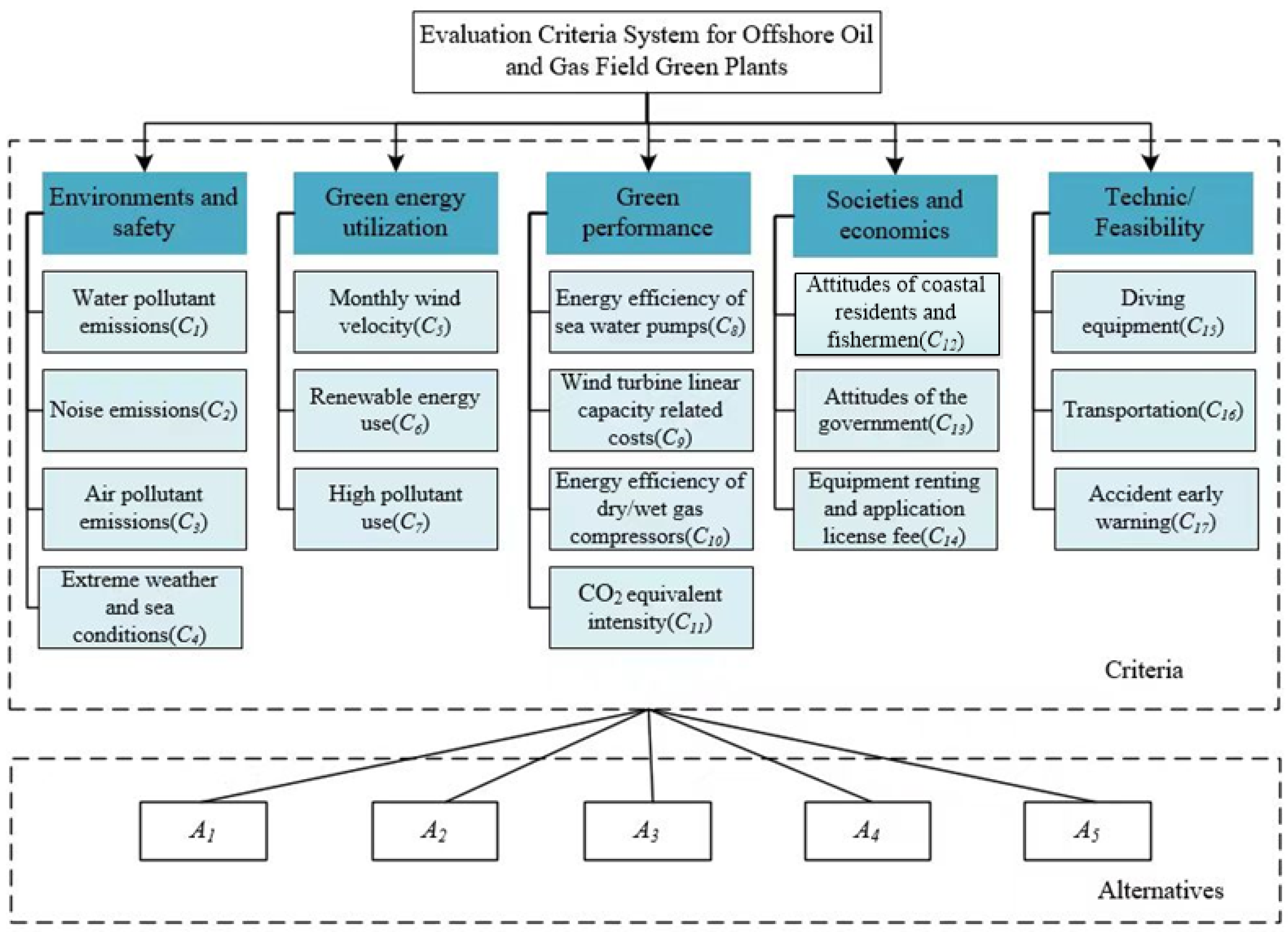
41] analytically quantified the mass fraction of oil and gas at the surface and benzene, but did not consider the impact of other carbon dioxide equivalents and pollutant emissions on the transport to the sea surface. By analyzing the existing studies on the environmental development of OOGF projects and the GB/T 36132-2018 standard, we established a comprehensive evaluation criteria system for OOGFGP, as shown in
Figure 1.
2.1. Environments and Safety
Environmental and security attacks against OOGF facilities can capitalize on the inherent hazards posed by large quantities of hazardous substances, with serious impacts on people, the environment and assets [
42]. Therefore, contamination ranging from solids, liquids to gases, and the effects of extreme weather are all factors that should be considered when determining the OOGFGP.
- (1)
Water pollutant emissions (
C1) [
43]
Offshore oil and gas extraction projects generate large quantities of wastewater. Inadequate treatment of wastewater discharges can directly lead to a decline in seawater quality, affecting the survival and reproduction of marine life.
- (2)
Noise emissions (
C2) [
44]
Offshore oil and gas extraction projects operate at a constant level of loud decibel noise, which can adversely affect marine life as well as fishermen and residents in the vicinity.
- (3)
Air pollutant emissions (
C3) [
45,
46]
Offshore oil and gas extraction projects emit large quantities of exhaust gases containing volatile organic compounds, as well as greenhouse gases such as carbon dioxide, nitrogen oxides and acid gases. These emissions can cause air pollution and affect human health and agricultural production.
- (4)
Extreme weather and sea conditions (
C4) [
47,
48]
In the process of OOGF development, extreme weather conditions such as typhoons and tsunamis lead to high extraction costs for OOGF extraction operations, as well as safety problems for offshore operators and equipment. In addition, extreme weather can affect marine biodiversity, which also has a significant impact on local revenues.
2.2. Green Energy Utilization
Low-carbon energy efficiency in manufacturing is related to the evolution of industrialization and the construction of industrial systems with significant national differences. Low-carbon energy efficiency plays a key role in green factory performance assessment with a green trend. The specialized equipment used in factories should comply with industry access requirements, reduce energy and resource consumption, and reduce pollutant emissions.
- (1)
Monthly wind velocity (
C5) [
49,
50]
At present, Chinese offshore oilfields mainly use fossil energy to supply electricity, and wind power provides a cleaner and low-carbon new idea for deep-sea oilfields to use electricity. At the same time, the uncertainty of wind size also puts higher requirements on the stability of the oilfield group grid, so the monthly average wind speed is also used as one of the considerations for determining the OOGFGP.
- (2)
Renewable energy use (
C6) [
51,
52]
In the context of the “dual-carbon strategy”, the active development of renewable energy and the promotion of the synergistic development of offshore wind power, onshore photovoltaic and green hydrogen energy industries are very important [
53]. Therefore, renewable energy use is the key to the green development of OOGF projects.
- (3)
High pollutant use (
C7) [
54]
The augmentation of oil and gas reserves and production in OOGFs has resulted in a notable surge in carbon emission intensity. As the exploitation duration of producing OOGF elongates, the challenges associated with stabilizing oil and controlling water growth, contributing to a gradual escalation in energy consumption and a yearly increase in carbon emissions within the oilfields. Consequently, the utilization of high pollutants has a significant impact on the pursuit of low-carbon development in OOGF projects. This criterion specifically addresses the intensity of carbon emissions and the rise in pollutant use as extraction duration increases, distinct from other emissions standards that focus on specific pollutants like CO2 or VOCs.
2.3. Green Performance
The performance of green factories mainly refers to the completion of production within the specified range, the statistics of production and output value, and the calculation of relevant performance emissions. The performance of a green factory is the result, and the accounting of performance indicators depends on the organization of the company, and several performance criteria will affect the final greenness assessment of the mining project.
- (1)
Energy efficiency of sea water pumps (
C8) [
55,
56]
The energy consumption of major energy-consuming equipment, such as seawater pumps, oil transfer pumps, and gas turbines, has been increasing year by year as a percentage of oil and gas operating costs. The analysis of the energy efficiency of seawater pumps holds a pivotal role in controlling the rise of the energy consumption of offshore crude oil production, reducing the cost of crude oil production and realizing the greening of OOGF production.
- (2)
Wind turbine linear capacity related costs (
C9) [
40,
49]
Offshore wind turbines are taller and heavier than onshore wind turbines. Large wind turbines require large amounts of energy to operate, and wind farms must use electricity from the grid, which comes from coal, natural gas, or nuclear power. Although turbines can generate electricity, they are dependent on external power sources for their own proper operation. Therefore, the costs associated with the linear capacity of wind turbines can impact the operation of an OOGF project.
- (3)
Energy efficiency of dry/wet gas compressors (
C10) [
56]
The compressor is the core equipment of offshore oil extraction, and will directly affect the economy of production and final revenue. Oil platforms are required to strengthen the analysis and research on the application effect of compressors and select the type of compressor suitable for the current working conditions, which in turn is conducive to the design of oilfield gas extraction and energy saving and emission reduction. Therefore, the energy efficiency of wet and dry gas compressors affects the sustainable development of OOGFs.
- (4)
CO
2 equivalent intensity (
C11) [
57]
CO
2 equivalent serves as the unit of measurement that is essential for comparing various greenhouse gas emissions, thereby facilitating the harmonization of results pertaining to the overall greenhouse effect [
58]. Offshore oil and gas fields are relatively independent and are subject to platform space constraints that make it difficult to achieve full recovery and utilization of offshore associated gas, therefore leading to the production of flaring emissions. These emissions are expressed in terms of CO
2 equivalent intensity and have a significant impact on OOGF projects.
C11 is specifically focused on CO
2 emissions from flaring, distinguishing it from other emissions criteria that address broader atmospheric pollutants.
2.4. Societies and Economics
In OOGF sustainable development, the societies and economics of OOGFGP are critical. It is important to consider the government’s attitude as well as potential costs such as manpower and material resources when determining the OOGFGP.
- (1)
Attitudes of coastal residents and fishermen (
C12) [
59,
60]
The OOGF industry concurrently presents substantial hazards to offshore environmental pollution and biodiversity [
61]. The impact of OOGF extraction on coastal residents and fishermen is complex. On the one hand, various types of pollution are not conducive to the lives of residents, while the impact on marine biodiversity may cause income problems for fishermen. Accelerating the utilization of renewable energy, forming a green mining transformation, and minimizing pollution can help to gain support from surrounding residents and fishermen [
62].
- (2)
Attitudes of government (
C13) [
61]
OOGF extraction is hugely profitable for society, providing employment for millions of people and generating significant tax revenues for governments [
62,
63,
64]. The government needs to consider both the considerable benefits of OOGF extraction and its adverse impacts on the marine environment and biodiversity in an integrated manner.
- (3)
Equipment renting and application license fee (
C14) [
65,
66]
For oil companies, purchasing various equipment and applying for license fees require huge capital investment. However, equipment leasing can reduce the investment cost and use the money for other important aspects, such as research and development, carbon reduction, etc. Therefore, equipment leasing and license fee application have a greater impact on the green exploitation evaluation of OOGF projects.
2.5. Technic/Feasibility
In OOGF sustainable development, OOGFGP develops facilities and technical risks that determine the proper functioning of subsea operations in deep water environments. Transportation capabilities and accident warning capabilities determine the sustainability of the project in the mid and late stages of the OOGFGP development process. These factors are critical and interact with each other.
- (1)
Diving equipment (
C15) [
9,
66]
The importance of diving equipment such as underwater robots is self-evident due to the harsh environment of deep water and the limited diving depth of humans. In practical application, each drilling platform will be equipped with different levels of underwater robots according to the water depth capacity. Therefore, diving equipment has an impact on the sustainable development of OOGF projects.
- (2)
Transportation (
C16) [
65,
66]
On offshore platforms, oil is lifted from the seabed and extracted to the surface for crude processing only, with the target product being crude oil with less than 1 per cent water content, which is then transported to land terminals for further processing. The transportation process can have an impact on the surrounding environment and it is therefore important to consider transportation factors.
- (3)
Accident early warning (
C17) [
1]
An oil drilling project is a complex engineering system, one which contains a variety of equipment and processes. Offshore oil extraction is even more complex and difficult, accidents may occur, including but not limited to wellhead collapse, oil field gas leakage, etc. These accidents, once they have occurred, will cause large losses and could even jeopardize the safety of personnel, so the application of early warning technology has become particularly important.
To present each evaluation criterion’s information more clearly, we have consolidated the information from
C1 to
C17 into
Table 2.
3. Methodology
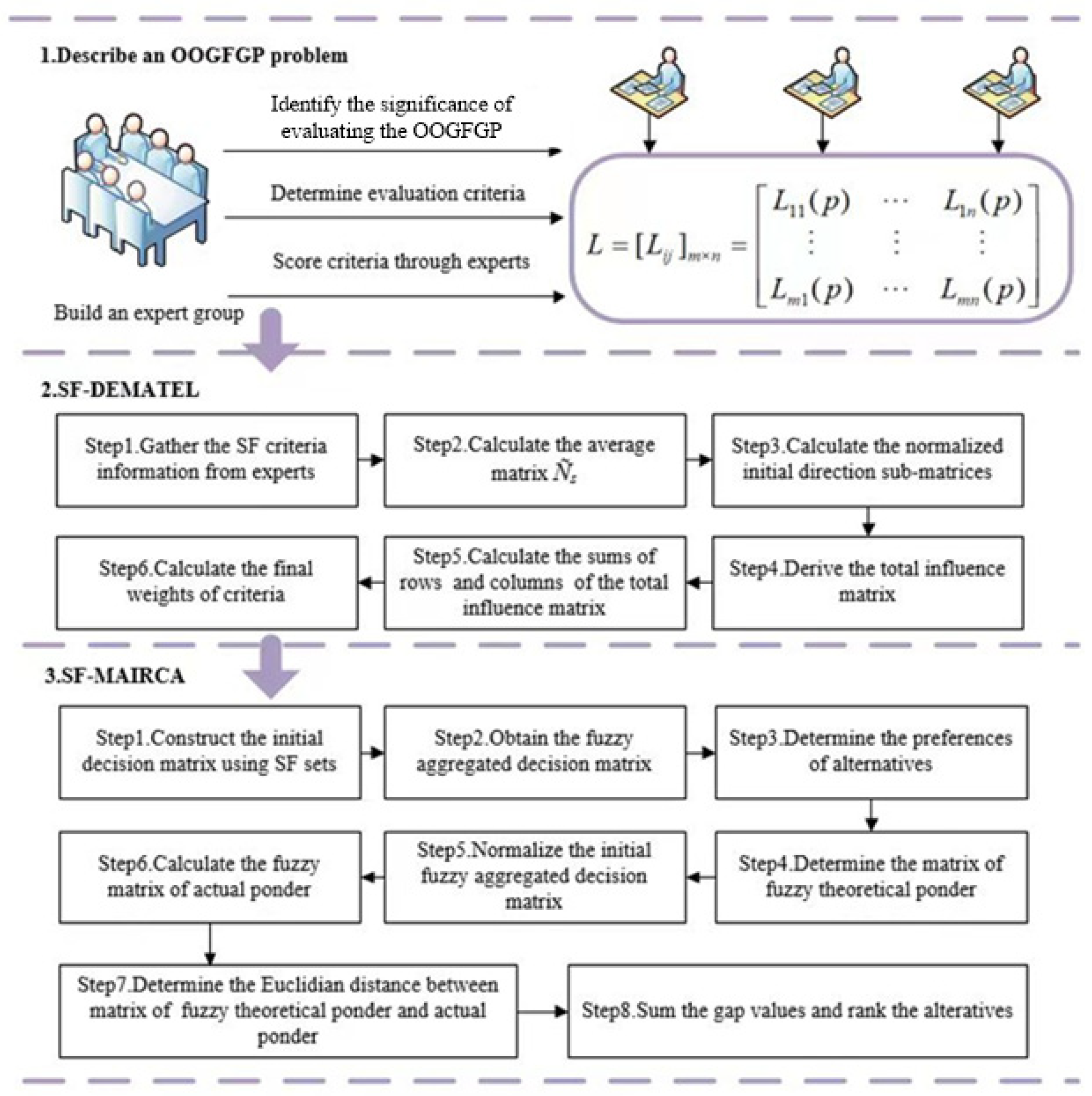
To facilitate a scientific evaluation of the OOGFGP, a comprehensive multi-attribute decision-making framework has been devised and is presented in
Figure 2. In this paper, the modified DEMATEL and MAIRCA are used to solve the MCDM problem in the evaluation of OOGFGP. The specific process is described in this section.
3.1. Preliminaries of SF Sets
SF sets represent a novel extension of fuzzy sets, and are characterized by three-dimensional membership functions that enable a more nuanced linguistic assessment by experts. Definitions 1–5 outline the fundamental concepts of SF sets, while the notations and their corresponding meanings are enumerated in
Table 3.
Definition 1
([
26])
. Defining X as the universe of discourse, the SF set on X is defined as follows: where
,
, and
are the degrees of membership, non-membership, and hesitancy of
x to
, and
.
and
,
are the degrees of refusal of
x to
.
Definition 2
([
26])
. and are two SF sets with operations defined as follows: Addition ():
Multiplication ():
Multiplication by a positive value ():
Exponent of ():
Definition 3
([
26])
. SF sets exist, with the following operational properties under :
Definition 4
([
26])
. The spherical weighted arithmetic mean (SWAM) and geometric mean (SWGM) are defined as follows: where
.
SWAM and SWGM can be adopted to synthesize judgments of OOGFGP from DMs. The parameters K and ri represent the number of experts and their equivalent weights when applying the evaluation problems, respectively.
Definition 5
([
26])
. and
are defined as two SF sets. The score (SC) and accuracy (AC) functions for sorting SF sets are defined as follows: If then
If and then
If and then
3.2. Evaluating Criteria Weights Using SF–DEMATEL
The vector is the set of criteria and consists of experts. In the initial phase, the SF–DEMATEL method is employed to assess the weights of the n criteria, as outlined below.
Step 1. Utilize a questionnaire containing the linguistic terms enumerated in
Table 4 to collect information regarding the SF criteria.
Step 2. Determine the average matrix .
In this step, groups consisting of
N criteria and
K experts are employed. Each expert is requested to evaluate the degree of causality among multiple criteria that impact the OOGFGP. The degree of influence of criterion
i on criterion
j is denoted as
and the expressions for
are defined utilizing the linguistic terms in
Table 4. The degree of influence is essentially a quantitative parameter measuring the degree of causal relationships between criteria. An evaluation matrix is utilized to quantify the degree of influence for each individual expert. Subsequently, the SWAM algorithm is applied across all
K experts to compute the average matrix, yielding the final matrix
, as outlined below:
where
is the matrix expressing the degree to which criterion
i affects criterion
j according to the
K experts.
Step 3. Calculate the normalized initial direct relation matrix .
Due to the presence of three-dimensional membership functions, the average assessment matrix
is partitioned into three distinct submatrices [
29]. These submatrices
, and
are then normalized. The calculation of
is defined as follows:
The matrices and can also be determined using the equations above.
Step 4. Determine the total influence matrix .
The total influence submatrix
is determined by the following [
67]:
where
I indicates the identification matrix. The total influences of submatrices
and
can also be calculated using
and
, respectively.
The total influence matrix encompassing
N criteria within the SF sets framework can be derived by amalgamating matrices
and
as follows:
Step 5. Compute the sums of both rows and columns within the total influence matrix, expressed utilizing SF numbers.
The sums of the rows and columns of the SF matrix are denoted by the SF sets
and
, respectively, and can be acquired in Equation (2), as follows:
i, j = 1, 2…, N
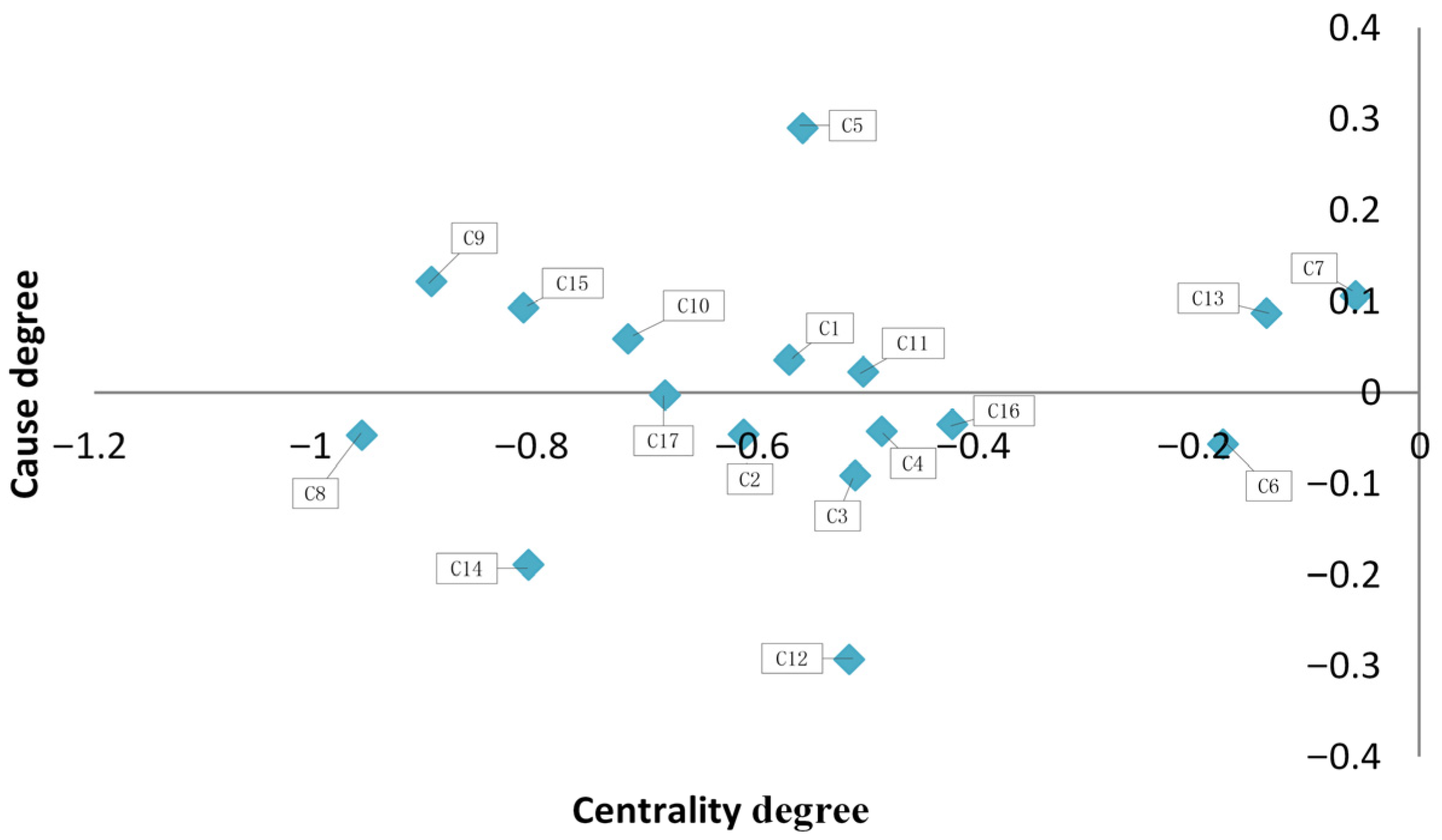
where N indicates the number of criteria used. can also be obtained by Equation (22). According to the calculation results of the rows and columns, the degrees of criterion ci being influenced by others and degree of ci influencing others are specified as and , respectively.
3.3. Evaluating Alternatives Using SF–MAIRCA
Upon determining the weights of the multiple criteria that impact the OOGFGP, the SF–MAIRCA approach was employed to ascertain the optimal alternatives, utilizing five OOGF extraction projects as illustrative cases.
The basic principle of MAIRCA is to calculate the distance between the ideal and actual values of the alternatives, with smaller distances indicating better alternatives. Dınçer et al. [
36] first proposed a method combining interval-valued SF–MAIRCA. However, few studies have been conducted with regard to the combination of SF and MAIRCA. MAIRCA stands out due to its unique linear normalization algorithm, which enables the generation of highly reliable results. In contrast to other sorting methods that focus on distances from ideal positive to ideal negative values, MAIRCA calculates the selection probability, making it a more advantageous approach. This methodology aims to pinpoint the most optimal alternative by measuring the distance between the theoretical and actual evaluation matrices. Given that the evaluation criteria for OOGF projects and the values of alternatives are sometimes vague, the SF–MAIRCA method was proposed in steps 6 to 13.
Step 6. Construct the initial decision matrix using SF sets.
In practical decision-making scenarios,
m alternatives must be discerned based on the
n criteria. Leveraging the evaluative insights provided by
K experts, an initial decision matrix
is formulated utilizing SF sets.
Here,
represents all of the criteria values of the
i th OOGF project alternative. The element
denotes the values of the
i th OOGF project alternative for the
j th criterion affecting the OOGF project (
i = 1, 2, …,
m;
j = 1, 2, …,
n).
Here,
denotes the
values evaluated from the
k th expert. As shown in
Table 5, the significance assessment values for the alternatives for the OOGF extraction projects were derived by the expert panel using linguistic SF numbers.
Step 7. The preference possibilities (
PAi) represent the likelihood of selecting each alternative and are computed using Equation (24).
Step 8. The theoretical evaluation matrix (TPA) is derived by multiplying the (
PAi) value with the weights ascertained through SF–DEMATEL, as outlined in Equation (25).
Step 9. The score function of the matrix is calculated as in Equation (14).
Step 10. The score values in the decision matrix for each criterion are normalized with Equations (26) and (27).
Step 11. Based on Equations (25) and (26), the actual evaluation matrix (
Kr) of OOGF project alternatives is calculated. The normalized decision matrix is multiplied by the TPA.
Step 12. The total void matrix (
G) is calculated by Equation (30). The gap between the theoretical and actual evaluations of OOGF project alternatives were determined based on each criterion affecting the OOGFGP.
Step 13. Rank alternatives.
The final value (
Q) of multiple criteria affecting the OOGFGP is calculated by Equation (31). Utilizing the values derived from the criterion function for the OOGF project alternatives, the alternatives are enumerated and the optimal choice is subsequently determined. Notably, the alternative exhibiting the smallest clearance distance is designated as the preferred option, whereas the alternative with the largest clearance distance is alternatively considered as the best alternative.
5. Discussion
5.1. Interpretation of the Ranking: Project Characteristics and Environmental Performance
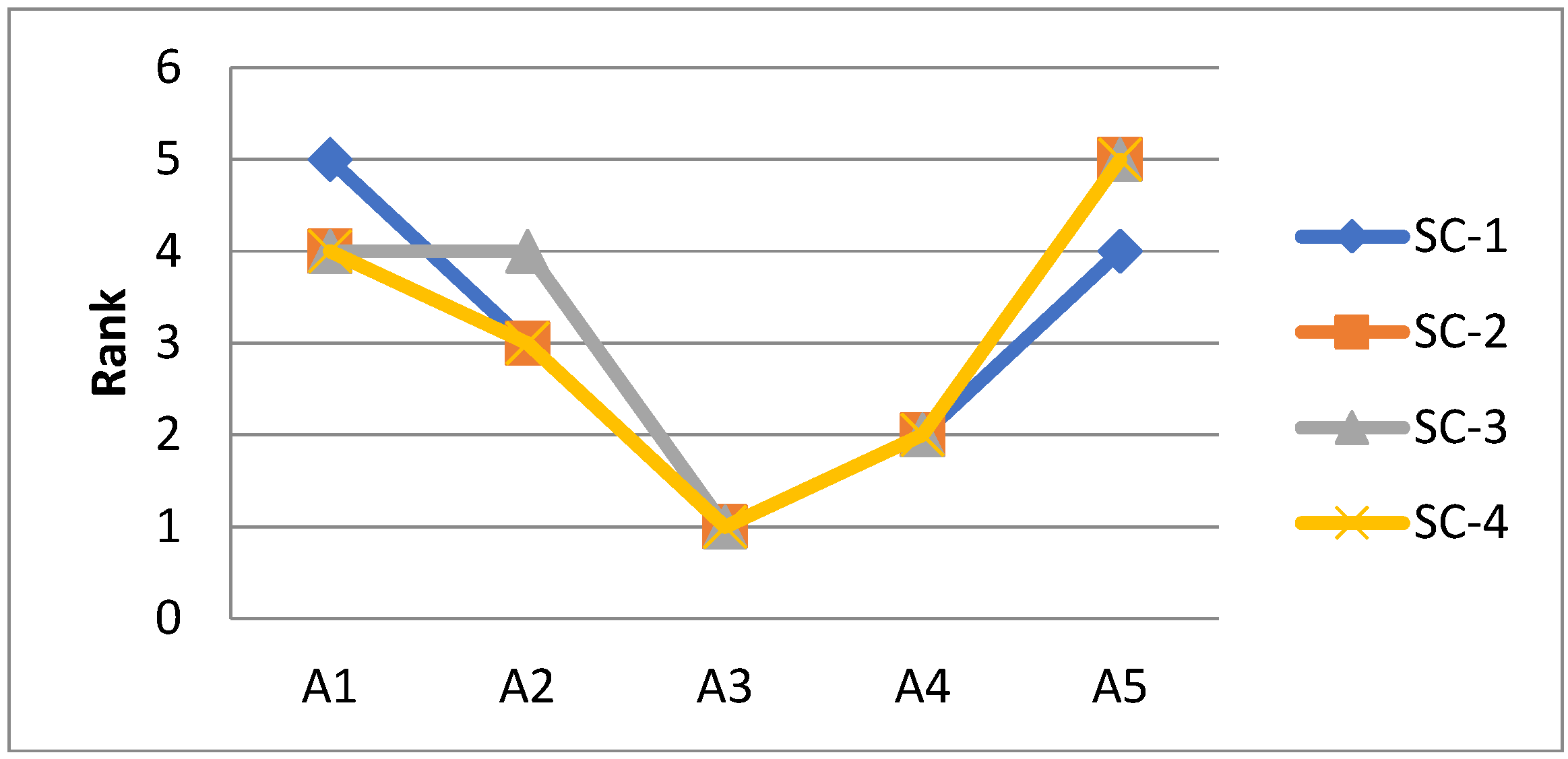
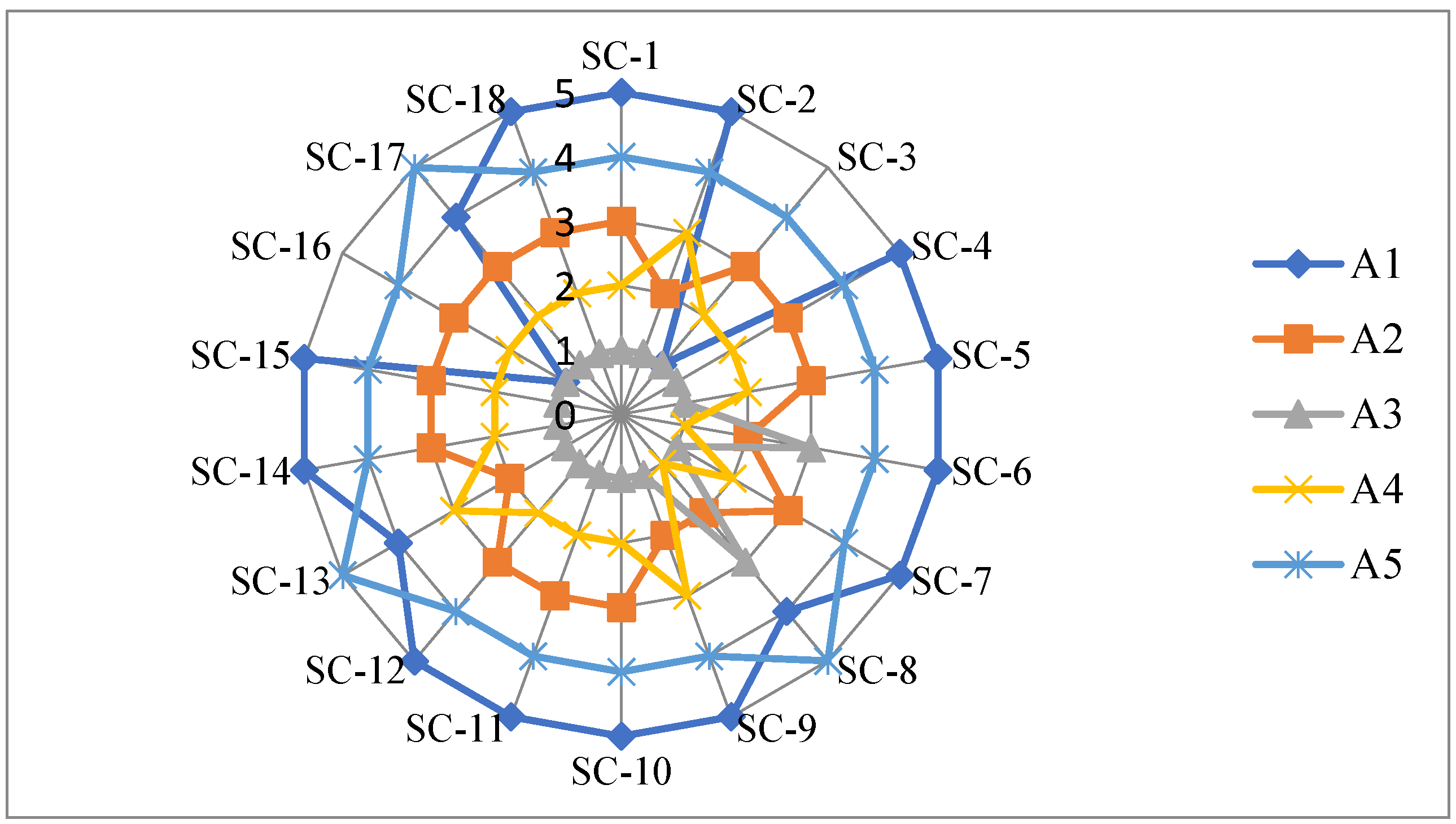
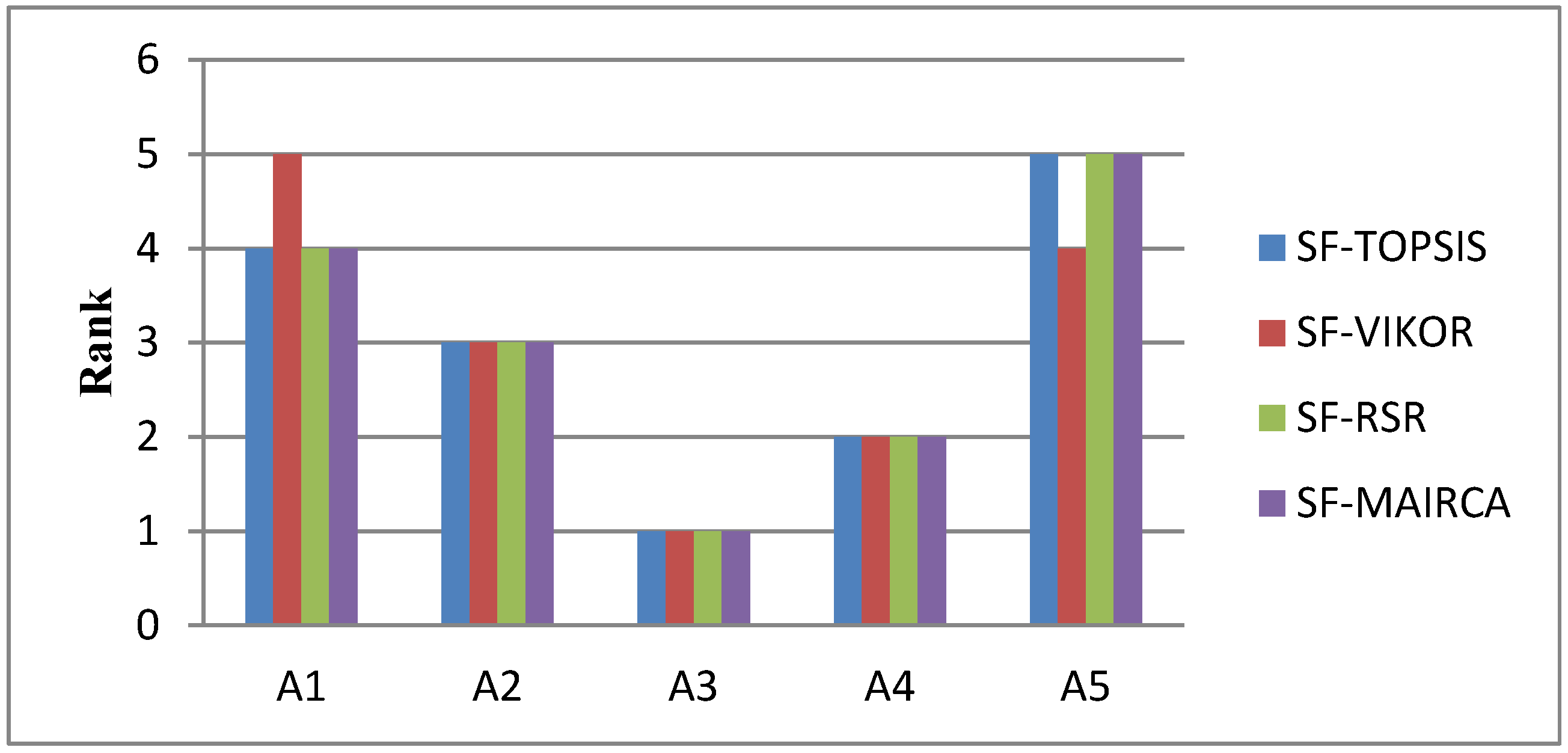
The ranking hierarchy (A3 > A4 > A2 > A1 > A5) reflects fundamental differences in project type, development phase, and operational configuration, which collectively determine environmental outcomes.
A3 (Lufeng 12-3) emerged as the top performer, consistent with its characterization as a new development project. New builds benefit from technological lock-in advantages: they can incorporate best-available energy-efficient equipment (C8, C10), integrate renewable energy sources (C6) more readily than brownfield projects, and are designed to meet contemporary emission standards from inception. In the Bohai Bay context, where stringent environmental regulations apply uniformly, newer projects face lower retrofitting costs and compliance burdens, explaining their superior environmental profile.
A4 (Kenli 10-1), classified as a research project, ranked second. While still in the planning phase, its position reflects the inherent environmental advantage of “design flexibility.” Research-phase projects can incorporate emerging low-carbon technologies, optimize facility layouts to minimize transportation emissions (C16), and conduct comprehensive environmental impact assessments before construction commences. This finding underscores the critical importance of integrating environmental considerations early in the project lifecycle—a principle increasingly emphasized in offshore oil and gas environmental management frameworks.
A2 (Bozhong 28-2 South), a secondary adjustment project, occupied the middle position. Secondary recovery operations typically involve increased water handling and enhanced compression requirements, which elevate energy consumption and associated emissions. However, as an adjustment of existing infrastructure, A2 retains some mitigation potential through equipment upgrades, placing it ahead of fully operational fields with limited modification scope. This result highlights the environmental trade-offs inherent in extending field life: while secondary recovery improves resource utilization efficiency, it inevitably increases operational environmental intensity.
A1 (Huangyan 14-1), a gas field development, ranked fourth—a finding that merits careful interpretation. While natural gas combustion produces lower local air pollutants (C3) than oil, gas fields present distinct environmental challenges, particularly regarding methane fugitive emissions. Methane’s global warming potential is approximately 28–34 times that of CO2 over a 100-year period, meaning that even small leakage rates can substantially increase a project’s climate impact. The expert ranking appropriately captures this nuance: despite cleaner combustion characteristics, A1’s potential methane leakage from wet gas compressors (C10) and processing facilities likely elevates its overall greenhouse gas intensity (C11), justifying its position below A2 and A4. This finding aligns with growing scientific consensus that natural gas infrastructure requires rigorous leak detection and repair programs to realize its climate benefits.
A5 (Kenli 3-2 Cluster) ranked lowest, consistent with the environmental penalties associated with cluster development configurations. Cluster developments typically involve multiple small platforms tied back to central processing facilities, necessitating frequent transportation (C16) between sites, increased diesel generator usage for remote platforms (C7), and greater spatial footprint within sensitive marine ecosystems. In the Bohai Bay context—a semi-enclosed sea with limited water exchange and high cumulative pollution loads—cluster developments exacerbate environmental stress through distributed emissions and intensified logistical activity. The low ranking also reflects anticipated stakeholder opposition (C12, C13) from coastal communities and fisheries, which are particularly sensitive to cumulative impacts in densely developed marine areas.
5.2. Policy Scenario Testing: Implications for Energy Transition Pathways
The electrification scenario analysis provides critical insights into how ongoing energy transition policies may reshape project-level environmental competitiveness. Under the Bohai Bay shore power initiative—which aims to replace platform-based power generation with grid-supplied electricity—all projects demonstrated improved environmental scores, confirming the policy’s intended effectiveness. However, the magnitude of improvement varied systematically across projects, with A3 and A4 showing the largest gains (+4.2%) and A5 the smallest (+2.1%).
This differential responsiveness carries important implications for environmental management and investment planning:
First, the results suggest that newer and research-phase projects are better positioned to benefit from grid decarbonization. As the North China Grid gradually reduces its carbon intensity through renewable energy integration, projects with shore power connectivity and modern electrical infrastructure will experience compounding environmental benefits. This “green dividend” of new builds reinforces the economic case for early-stage environmental investments.
Second, the relatively modest improvement for A5 under electrification (+2.1%) reflects the structural constraints of cluster developments. Remote satellite platforms may lack feasible shore power connections due to distance from main grids or high transmission losses, potentially requiring continued reliance on diesel generation. This finding suggests that policy interventions may need to be tailored to project configurations, with cluster developments requiring alternative decarbonization pathways such as localized renewable microgrids or advanced energy storage.
Third, the stability of the ranking across scenarios (no positional changes) indicates that current environmental performance is a robust predictor of future policy compatibility. Projects that rank higher under baseline conditions are also better positioned to adapt to tightening environmental regulations—a property we term “policy resilience”. This resilience has practical implications for investment decisions, regulatory approvals, and environmental due diligence in the offshore oil and gas sector.
6. Conclusions
In the context of carbon neutrality and carbon peaking, it has become a great challenge to build and develop sustainable offshore oil and gas fields in a green way. The OOGFGP aims to realize a win–win situation between production and environmental protection by adopting cleaner production technologies, circular economy models and energy-saving and environmental protection measures. Evaluating OOGFGP is of great significance for implementing green manufacturing, accelerating the green transformation and development of the manufacturing industry, and promoting the stable growth of the industry. Evaluation of the OOGFGP requires multiple interacting criteria. Therefore, evaluating OOGFGP also falls within the scope of research on MCDM. Considering the importance of energy sustainability and green development in OOGF extraction projects, this paper proposes an OOGFGP evaluation model based on SF–DEMATEL–MAIRCA. The most important contributions can be counted as follows: (1) In this paper, a comprehensive evaluation criteria system is constructed for the OOGFGP. (2) The paper proposes the DEMATEL–MAIRCA method under SF sets to evaluate the OOGFGP. This method takes into account the judgment and preference information of decision makers in a comprehensive manner, thereby facilitating rational evaluation and modeling of decision-making problems.
The limitation of this study is the use of fuzzy sets to deal with the information uncertainty of expert evaluation, which does not take into account the experts’ preference. In addition, this study only investigated the evaluation of green factories in offshore oil and gas fields and did not investigate the impact projects such as renewable energy utilization. Moreover, while this study primarily concentrates on green factory evaluation, several key offshore issues were not included in the evaluation framework.
Therefore, the following studies can be carried out in future research: (i) Consider the introduction of regret theory for the assessment of green factories in OOGFs; (ii) investigate the projects in conjunction with objective data for further assessment and calculation; and (iii) consider incorporating key issues such as methane emissions, flaring/venting, produced water impacts, spill preparedness, and decommissioning into the evaluation framework for a more comprehensive assessment.