1. Introduction
In recent years, the dynamic growth of electric vehicles in the global share of vehicles with various drive systems has been clearly visible. Sales of electric vehicles increased by up to several dozen percent in European countries in recent time. The increasing share of electric and plug-in hybrid (PHEV) drivetrains is a consequence of developing climate policies aimed at eliminating vehicles that emit greenhouse gases into the atmosphere. Legislative work in recent years has led to the adoption of new targets for reducing CO
2 emissions from transport. These programs assume a 50% reduction in emissions by 2030 [
1,
2,
3]. The method of implementing changes in the market structure is controversial and raises concerns in society; however, considering the effects of human activity and their impact on changes in the natural environment, introducing new regulations seems justified. The development of eco-friendly mobility has given consumers a variety of options, consisting not only of public transport, electric bikes, and car-sharing services, but also in the variety of electrified cars. Nowadays, almost every car manufacturer offers models with electrified drive (MHEV, HEV, PHEV or EREV) and battery electric vehicles (BEVs). The potential impact of the growing share of electric vehicles has also been examined in the literature. It is estimated that an increasing share of electric cars will lead to reductions in healthcare-related costs in many countries in the future, resulting from improvements in air quality. A positive effect is also observed regarding energy demand and the associated expenditure required to meet the transport needs of the population [
4]. The wide range of electric vehicles available on the market encourages the verification and comparison of these vehicles with other vehicles in the same segment equipped with internal combustion engines (ICEs) [
5,
6,
7,
8,
9,
10]. Comparing gas emissions of vehicles, it is obvious that BEVs cannot be considered as fully zero-emission. Emissions are related to, among other things, the production process of the vehicle, the energy storage, and the generation of the electricity required for propulsion. It is an indisputable fact that operating a vehicle with stored electric energy does not result in exhaust gas emissions, but its movement generates dust particles from the braking system and tires, which also prevents this group of vehicles from being considered zero-emission [
11]. Research shows that the tire-wear particle-share in the total particulate matter emission from transportation means is consequently growing together with the popularity of electric vehicles [
12]. One of the key factors affecting vehicle components is driving and braking torque [
13,
14,
15]. The vehicle’s torque curve can have a significant impact on—for example—generation of tire-wear products. Key aspects related to the environmentally friendly and energy-efficient operation of electric vehicles are also widely described in the literature. It is noted that a smooth driving style, avoiding rapid accelerations and decelerations, not only has a positive effect on the vehicle’s energy demand but also contributes to reducing emissions [
16,
17,
18]. A separate study will be devoted to the issue of braking torque in electric vehicles. In the literature there are also discussions about conversions of ICE vehicles to electric vehicles [
19,
20]. The basis for implementing such projects is a knowledge of the external characteristics of the internal combustion engine and the characteristics of the electric motor. In all of the presented literature these characteristics were not considered. The development of electric motors [
21,
22,
23,
24] and their control systems is also significant. It can be observed that the issue of combining different versions of the electric motor and controllers provides a solid foundation for energy savings and increasing the range of an EV.
However, for these solutions the power and torque characteristics of a real electric vehicle along with its dynamic conditions, such as acceleration, starting, etc., were again not taken into account. The purpose of this study is to present and comparatively analyze the dynamic characteristics of BEVs and ICE vehicles from comparable categories and segments. A literature review of electric vehicle drive systems reveals that they present theoretical power and torque curves for the vehicle’s drive motor. It should be noted that these characteristics may vary depending on the state of charge (SoC) of the traction battery. The final torque and power achieved by the vehicle are also influenced by electronic systems, whose control algorithms consider weather conditions. Under certain conditions, the electric vehicle’s power is reduced to limit the critical temperature of the electric motor or energy storage modules. Exceeding the temperature limit can result in a safety risk. Another key task of controllers, including the VCU, is to protect the drive system. To this end, the VCU limits the maximum performance of the drive unit within certain vehicle speed ranges. An example of such controller intervention is visible when setting the vehicle in motion to avoid momentary overloads of homokinetic joints, bearings or gears in the transmission, which may lead to failure in the long-term operation of the vehicle due to fatigue processes caused by frequent overloading of the structure [
25,
26,
27]. A side effect of such actions is also an increase in driving comfort by reducing the rate of torque increase.
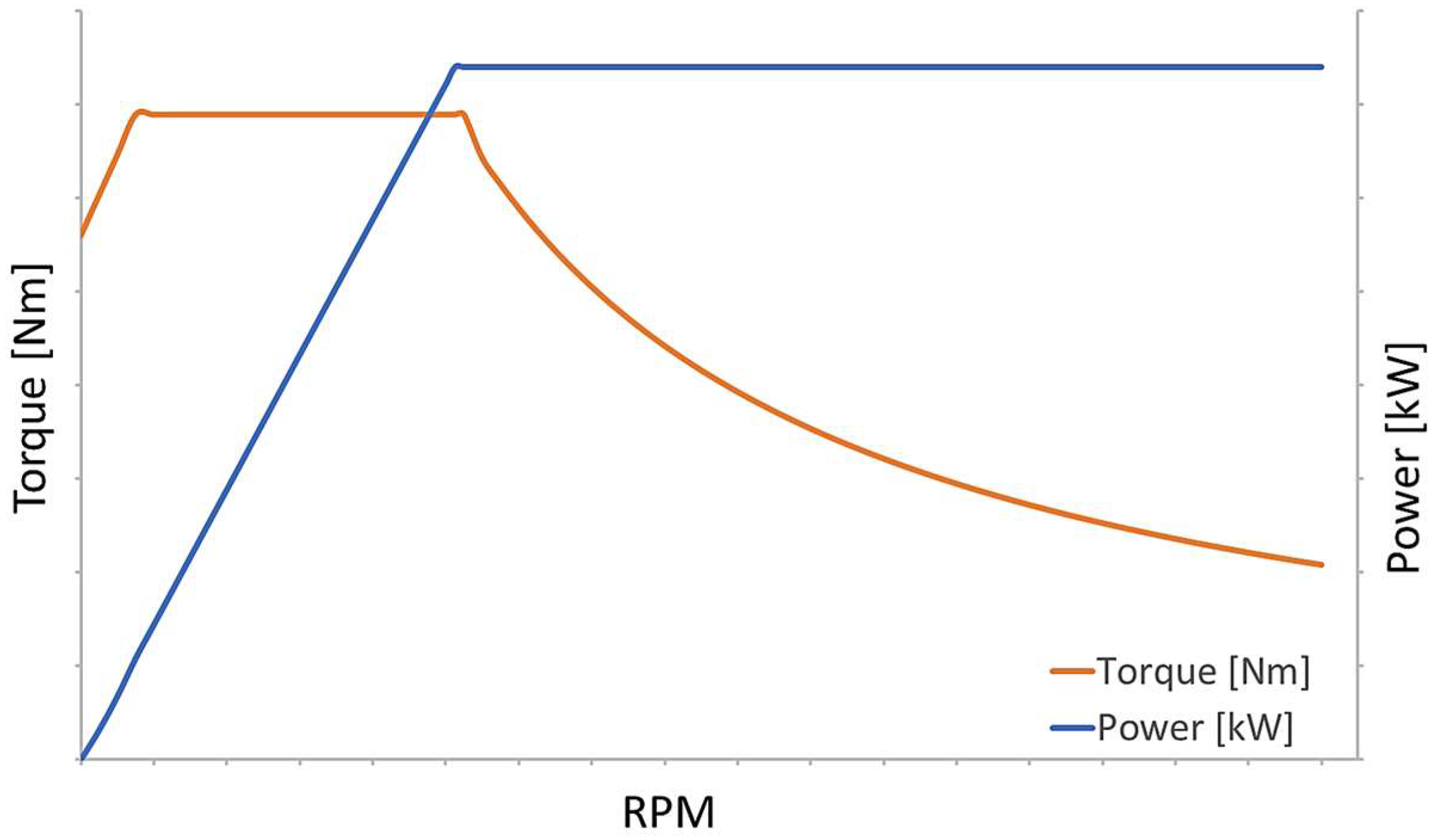
Vehicle manufacturers and research centers frequently relate to the maximum peak power value of the electric motors in vehicles—especially in the case of heavy-duty vehicles and busses—what is a noticeable issue. This characteristic usually refers to the theoretical characteristic of an electric motor (
Figure 1). This graph presents the maximum torque curve as a constant value until maximum power is reached, and then steadily decreases until the motor reaches its maximum rotational speed. Referring solely to this ideal power and torque characteristic allows for a more favorable presentation of the vehicle from the manufacturer’s perspective. Achieving peak power values is time-limited by the VCU and is subject to numerous necessary conditions. The time period over which this power is achieved cannot be clearly defined.
Tests conducted using a chassis dynamometer allow us to consider key aspects such as outside temperature, battery cell charge status, battery temperature, and drive unit temperature which are operating conditions a real-world vehicle can be exposed to. The test results allow for comparison of real-world vehicle data.
2. Experimental Set-Up and Methods
2.1. Test Stand and Methodology
This study attempts to compare traction and dynamic performance indicators obtained for conventional internal combustion engines (ICEs) and electric vehicles (BEVs). Most research is based on theoretical peak power characteristics of the EV drive unit. The study focuses on the actual characteristics of an electric vehicle, as used by the user during everyday operation. The literature typically states that electric vehicles have significantly more favorable dynamic parameters than conventional vehicles. However, it should be noted that these conclusions are usually based on theoretical characteristics of electric motors. The aim of this study is to compare an electric vehicle with an engine operating on a continuous characteristic with a vehicle with a modern combustion engine.
The comparison of traction and dynamic performance indicators for motor vehicles is performed using indicators expressing specific values of power, force, or mass in relation to other related vehicle parameters. Among the currently known indicators, flexibility is universal, defined as the range of maximum power and torque values across the external characteristics of the drive system. This indicator determines the vehicle’s ability to increase its dynamic performance. This indicator was originally developed for internal combustion engines (ICEs), but the similarity in external characteristics prompted the authors to verify the applicability of the indicator to electric drives.
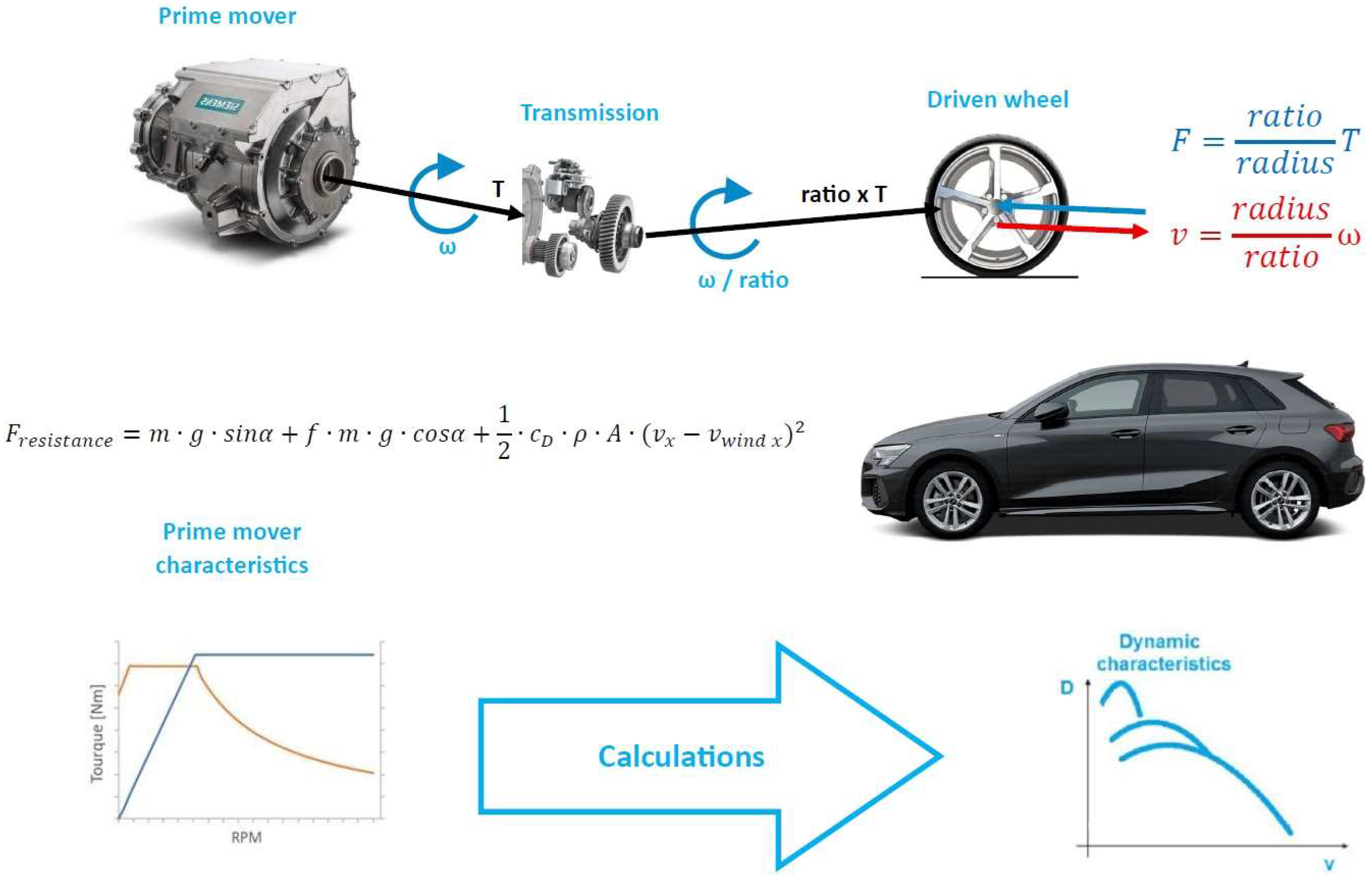
Figure 2 presents a scheme of the calculations performed in this study.
Flexibility was calculated based on the following equation:
Obtaining basic data such as power and torque was possible using a chassis dynamometer. Testing was conducted using a MAHA MSR500 chassis dynamometer (MAHA SE & Co. KG, Haldenwang, Germany). The chassis dynamometer allows for testing vehicles with various drive systems with a maximum power output of up to 500 kW. The test stand software allows us to record selected engine performance indicators, such as power and torque, as well as values related to rolling resistance and selected engine operating parameters (fluid temperature or intake manifold pressure). The vehicle’s engine power is determined by converting the measured torque based on applicable European standards. Conducting the test according to the selected standard allows for the standardization of results by correcting them for the ambient conditions in which the measurement is performed.
Using a chassis dynamometer to conduct research requires making few assumptions. To avoid discrepancies in results that may result from measurement errors within the device and changes in the stability of the drive units, each measurement was performed three times. The obtained test results were averaged. After collecting the data stored on the measurement devices and conducting preliminary analyses, power and torque graphs were generated for the vehicles.
The electric vehicle selected for testing featured on-board adjustments to the drive system’s characteristics. The vehicle manufacturer introduced three settings: ECO, COMFORT, and SPORT. These settings primarily differentiate the vehicle’s acceleration ability and, indirectly, vary energy consumption. For the purposes of this study, the ability to change vehicle dynamics should have implications for the engine’s torque and power curves. As part of the adopted testing program, it was verified whether changing the settings affected power and torque, and in-depth analyses of the obtained vehicle traction characteristics were conducted.
The test bench software enables connection to the on-board diagnostic system (OBD). Communication between the measurement system and the vehicle allows for increased accuracy in engine performance measurements and eliminates any potential horizontal shift in the vehicle performance graph resulting from imprecise calibration of the device (synchronization of the tachometer and dynamometer readings). All measurements were conducted by a fully open throttle.
In the case of a vehicle with an internal combustion engine, the dynamometer can record power and torque measurement results as a function of engine speed or linear velocity. Measurements performed for an electric vehicle enable the recording of parameters as a function of the rotational speed of the device’s measuring roller. It was necessary to convert the roller’s rotational speed to the vehicle’s linear velocity. This conversion was performed using Equation (2).
It is important to emphasize that the tests were performed at full engine load, defined as maximum accelerator pedal deflection. This allowed us to determine the maximum continuous power generated by the electric drive motor of the electric vehicle, and consequently, the dynamic parameters of this vehicle in real-world driving conditions. After collecting data from the vehicles on a chassis dynamometer, comparative parameters were determined for the vehicles. In addition to the previously mentioned flexibility parameter (1), power and torque gains were also determined in the 50–100 km/h speed range using the established Formulas (3) and (4).
Determining the derivatives R of the torque allowed determining the rate of torque increase as a function of vehicle speed and was calculated according to Formula (5).
By using torque derivatives for each of the available driving modes of the electric vehicle, it was possible to determine the impact of the driving modes implemented in the vehicle’s software on performance. However, it should be noted that the analyzed derivatives refer to torque values for full throttle deflection.
2.2. Research Objects
Vehicles selected for the research are placed in the C segment of the Euro Car Segment classification. Both test vehicles have different drive motors, it was also assumed that the test vehicles should have similar weight-to-power and weight-to-torque ratios. This allows for the comparison of vehicles with similar performance, taking into account the greater weight of the electric vehicle due to the traction battery. The tests were conducted on a Mercedes-Benz EQA and an Audi A3. Basic technical data for the vehicle drive systems are provided in
Table 1.
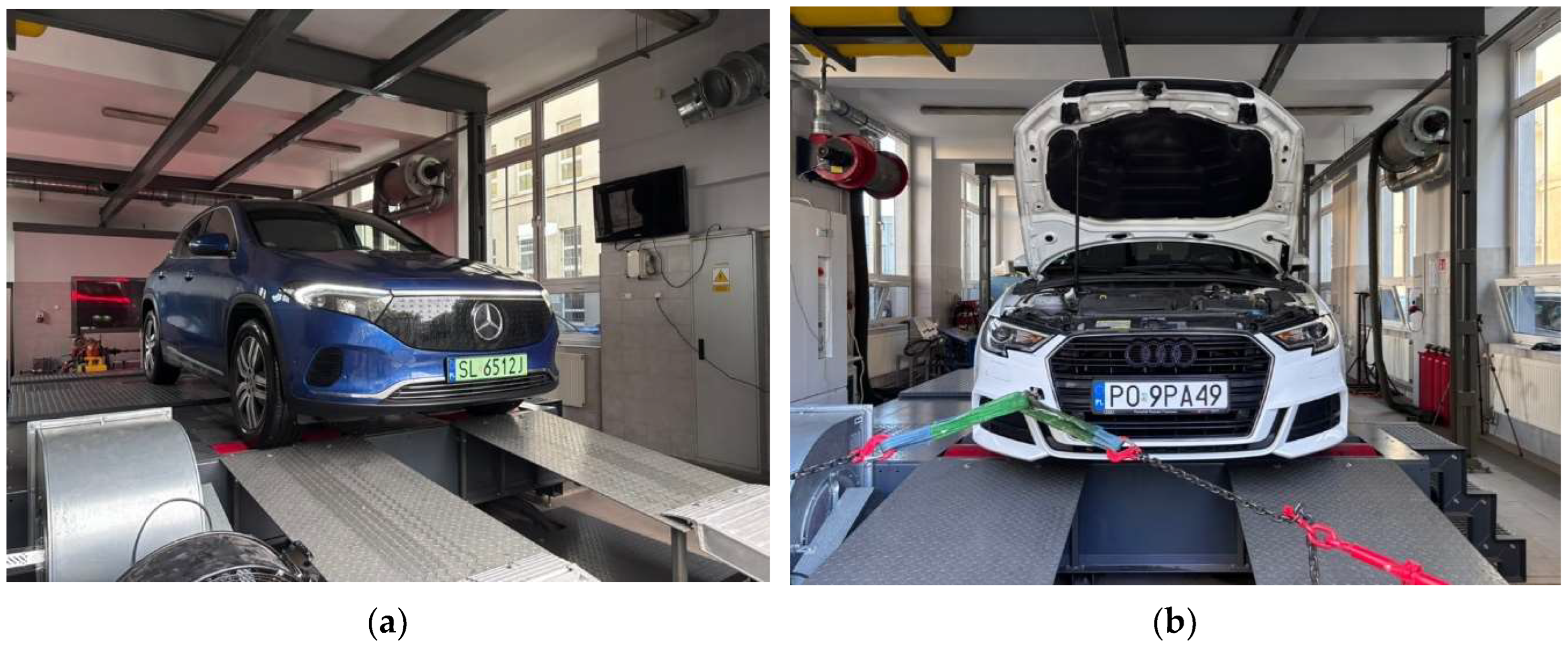
The first research object—Mercedes-Benz EQA (
Figure 3a)—is an electric vehicle equipped with a usable traction battery capacity of 70 kWh and a ZF EM0026 drive unit (ZF Friedrichshafen AG, Friedrichshafen, Germany). This is an AC electric motor with permanent magnets. Power is transmitted to the vehicle’s front axle via a single-stage gearbox, which, together with the electric motor, forms an integrated drive module.
The second research object was an Audi A3 (
Figure 3b) vehicle powered by a spark-ignition (SI) internal combustion engine (ICE). For the purposes of the study, the fuel supplying the engine was compliant with the reference fuel commonly used in emissions and performance tests for new vehicles since 2016. The fuel had an octane rating of 95 and contained up to 10% bioethanol by volume. The drive system of the vehicle meets the EURO 6 DG emissions standards. The turbocharged engine with a displacement of 1498 cm
3 was equipped with a direct injection fuel system, a turbocharger, and a liquid-cooled intercooler.
3. Results and Discussion
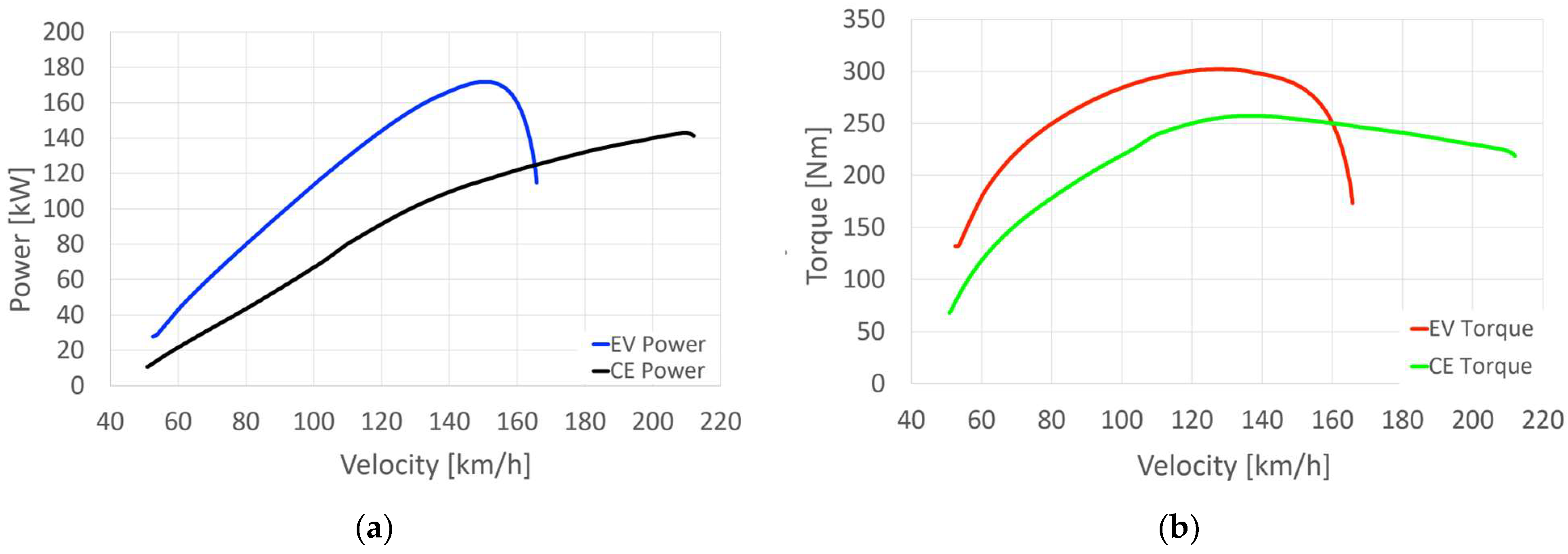
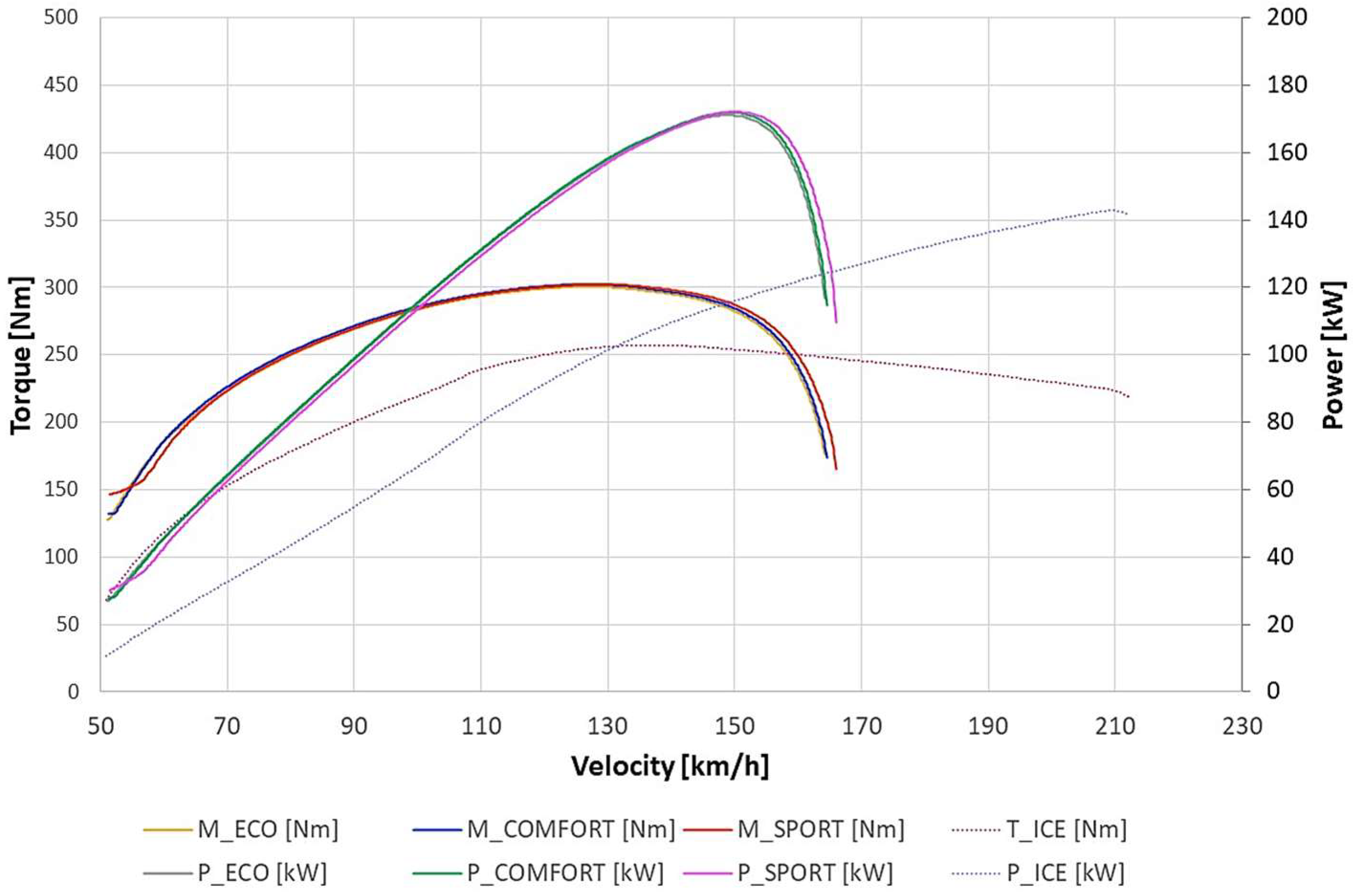
Based on the results collected during the study, power and torque graphs for the vehicle engines were prepared. It should be noted that the electric motor has higher torque values than those of a conventional vehicle. However, it is worth noting that the maximum torque of the electric motor is lower than the maximum torque specified by the vehicle manufacturer. In the case of a vehicle with an ICE, the situation is reversed. The ICE is actually capable of developing a torque value 18% higher than defined by the vehicle manufacturer. Both cases are characterized by a common source of variability in the results, arising from the way manufacturers present their data. Technical specifications include technical data relating to vehicle engines. The study was conducted for complete drive systems of these vehicles. Looking at graph (
Figure 4), it can be seen that the course of the vehicle’s power and torque characteristics differs from that presented in the literature [
28,
29,
30,
31]. The fundamental differences in the power and torque curves are shown in
Figure 4.
It is obvious that the peak power and torque values of an electric vehicle are higher than the maximum values for a combustion engine. However, the graphs clearly indicate different curves for intermediate values, particularly for torque. While the power curves of combustion and electric engines are very similar, the torque curve clearly indicates higher values of this parameter at lower driving speeds (50–120 km/h). The torque value of an electric vehicle increases much faster (with a higher gradient). In order to perform a more in-depth analysis of this range, differential quotients of the torque curves were calculated.
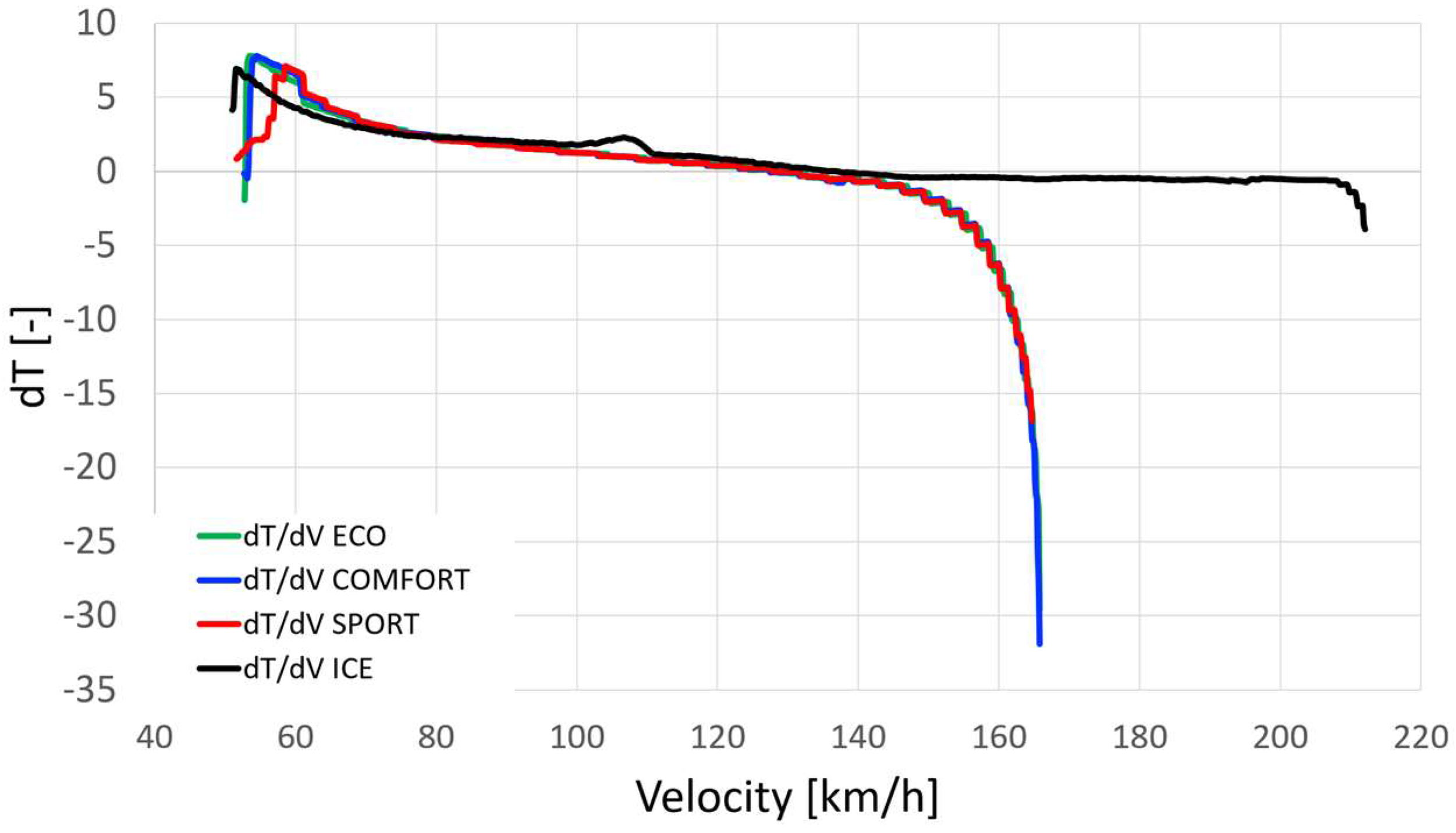
The derivative of the torque curve was determined for three driving mode settings of the electric vehicle: ECO, COMFORT, and SPORT (
Figure 5).
According to the manufacturer’s statement, these driving modes are intended to modify the vehicle’s driving dynamics, and therefore they should affect the shape and/or value of the torque curve. To calculate the derivative R, Equation (5) was used.
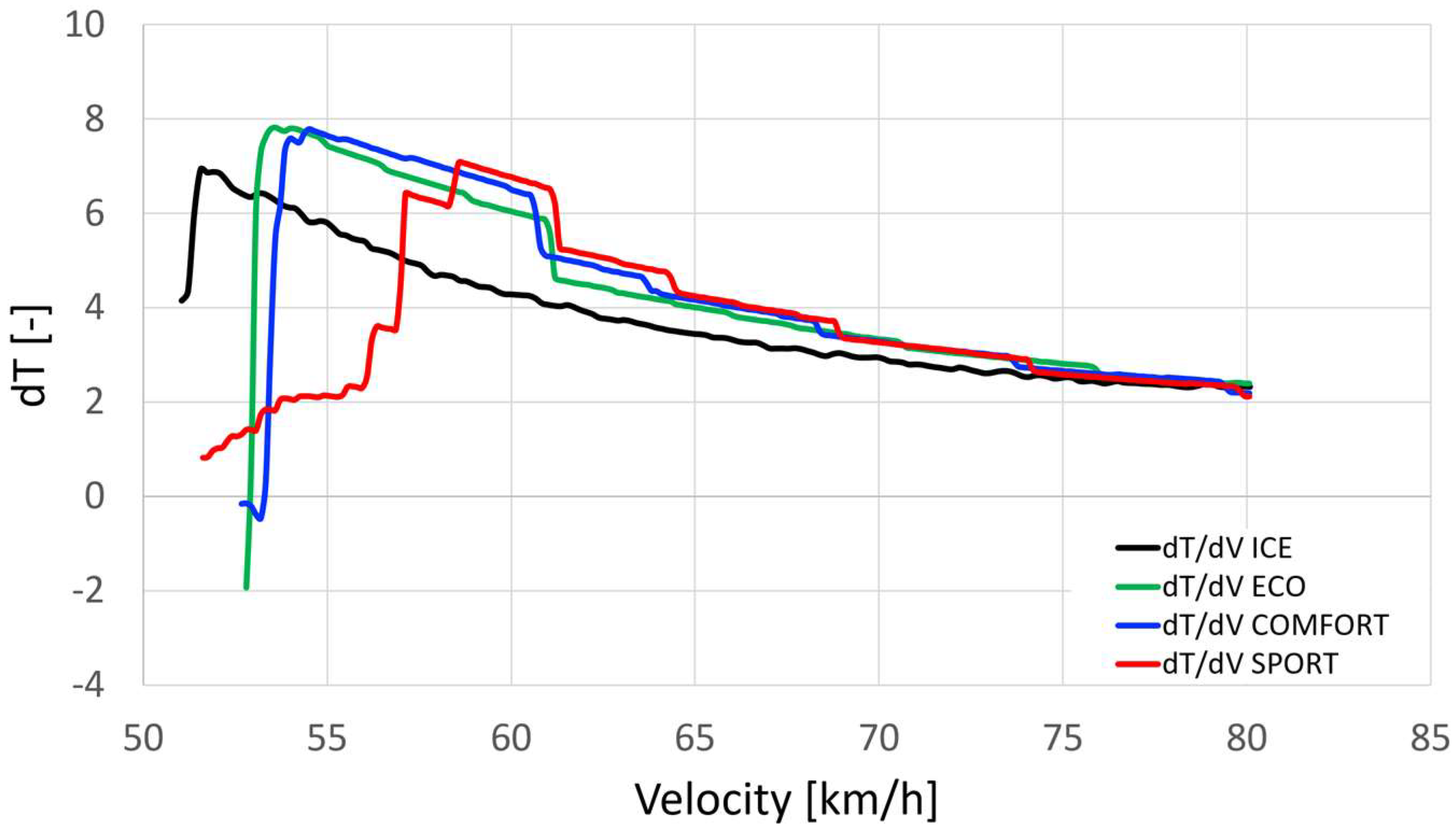
The largest variations in the value of R—defined as the derivative of the torque with respect to vehicle speed—occur in the interval from 50 to 80 km/h.
Figure 6 presents a fragment of the function R(v)over the observed interval.
From the chart (
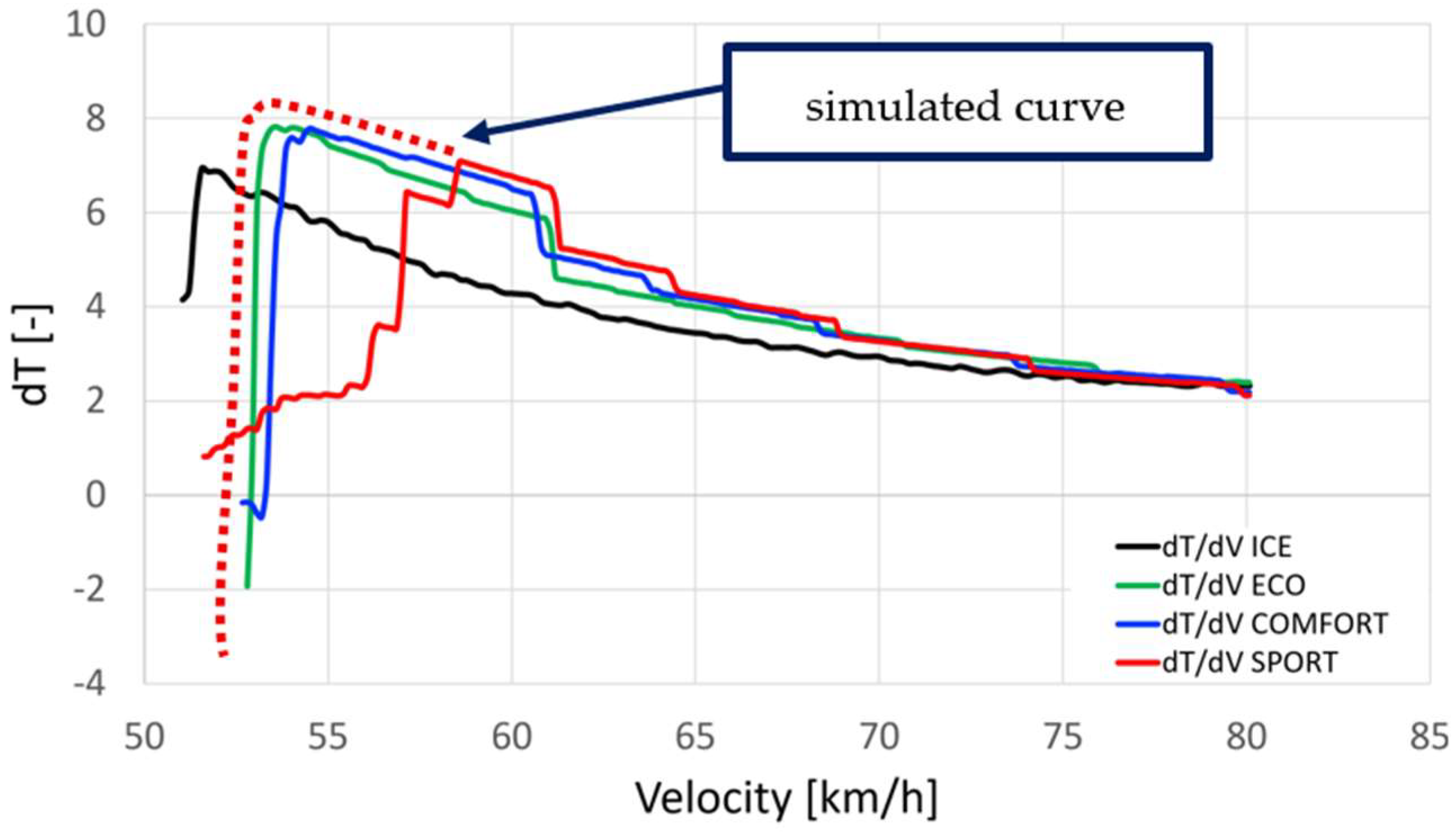
Figure 7), it follows that the highest rate of increase in torque is exhibited in the COMFORT driving mode of the electric vehicle. In the case of the SPORT mode, it is highly probable that the traction control system (ASR) intervened, which resulted in a reduction in the parameter value within the speed range of 50–57 km/h. However, when examining the behavior of the derivative R in SPORT mode, one may infer that, in the absence of ASR intervention, this curve would have been the uppermost among those presented on the chart (
Figure 8).
Figure 7 and
Figure 8 demonstrate that the selection of driving modes is reflected in the characteristics of the electric motor torque differential curves. The SPORT mode yields the highest torque increase rate, while the maximum torque is sustained over a broader range of vehicle speeds. In contrast, the ECO mode exhibits a reduced torque increase and a more gradual decline in torque values. Nevertheless, the differences between the driving modes remain relatively small, which may result from the VCU software being designed to protect the drivetrain components from excessive overload. There might be a second reason for the small differences observed between driving modes. Tests were conducted with the engine at full load what can be the cause of almost imperceptible differences. In case of partial throttle deflections, it may turn out that larger differences will be visible. This will be the subject of further research in the near future.
Further analysis of the vehicles’ dynamic parameters made it possible to determine the increments in engine power within the speed range of approximately 50 km/h to 100 km/h. For the electric vehicle, the analysis was further for the SPORT mode which enables us to use the full potential of the engine. This allows for a more reliable comparison with a vehicle not equipped with driving modes. The limit of 100 km/h was selected because these vehicles are primarily designed for operation in urban and suburban environments (including roads with elevated speed limits), where speed restrictions typically fall within the range of 80–100 km/h.
Table 2 presents the power and torque increments determined for both tested vehicles and the flexibility values of the engines of the tested vehicles which were calculated based on Equation (1) [
32,
33,
34].
The electric vehicle exhibits lower power increase values—specifically 77.29 kW, corresponding to 212.82% of the initial power output of the electric drivetrain, and 54.18 kW, corresponding to 429.53% of the initial value—for the vehicle equipped with an ICE. In the case of torque increase, the difference between the vehicles is smaller. The electric vehicle demonstrates a torque rise of 152.11 Nm relative to its initial value, whereas the torque of the ICE-powered vehicle increased by 140.56 Nm.
The internal combustion engine exhibits a higher total flexibility of 2.75, which is considered as a high value. Sources in the literature indicate that the total flexibility of combustion engines typically ranges between 1.2 and 1.5. The high flexibility of the conventional engine results from the significant advancements made over the years in ICE design, including engine turbocharging and the reduction in the distance between the turbocharger and the cylinder head with its exhaust ports. This enables the turbine blades to accelerate more rapidly, thereby reducing the delay in compressing the intake air supplied to the engine.
The results are somewhat surprising, as the literature states that electric motors generally exhibit higher flexibility than combustion engines. This statement is true, especially when considering typical flexibility values for combustion engines reported in many sources in the literature. However, the significant development of combustion engines over the years should be taken into account. The study found that the flexibility of a modern combustion engine is significantly higher than that of an electric motor operating according to a continuous power and torque characteristic and at full throttle deflection. Electric motors can demonstrate higher overall flexibility, however, when operating according to an ideal peak power characteristic maintained for a short and not precisely defined period of time. The present study examines the continuous power and torque output characteristics, which differ from the aforementioned peak characteristics. The low elasticity value, as well as the smaller increments, result from the operation of the motor controller, which intentionally limits power in certain rotational speed ranges to prevent loss of traction of the driven wheels.
4. Conclusions
Electric vehicles offer numerous advantages, including zero exhaust emissions, low operating noise, and rapid response to the accelerator pedal. They are frequently portrayed as optimal solutions in terms of powertrain characteristics. Nevertheless, the conducted tests and analyses demonstrate that under real operating conditions—namely when the motor functions according to its continuous power characteristic—the resulting power and torque curves deviate from the idealized profile. The external characteristic plot reveals distinct regions in which the motor’s performance is constrained by the vehicle’s VCU controller. Based on the experimental results of the tests conducted on the two vehicles mentioned, the following conclusions can be drawn:
An electric motor operating under a continuous power characteristic exhibits lower total elasticity (e = 1.69) than the internal combustion engine (e = 2.75).
The power and torque increments of a modern, turbocharged spark-ignition engine exceed those observed in the electric vehicle operating under a continuous power characteristic.
The control software of the tested electric vehicle prevents overloading the vehicle’s drivetrain with the maximum torque at low vehicle speeds, releasing the motor’s full potential only at speeds exceeding 100 km/h.
Advances in internal combustion engine technology have contributed to significant improvements in their dynamic performance.
Furthermore, the findings indicate that the introduction of new emission standards requiring manufacturers to enhance the energy efficiency of their vehicles has an additional effect in the form of an improved performance of conventional engines. Higher output levels of ICE-based powertrains, combined with modern transmissions capable of rapid gear changes (e.g., dual clutch systems), enable conventional vehicles to remain competitive with electric vehicles in terms of overall performance. However, it should be noted that electric vehicles still offer more favorable conditions for reducing the energy consumption of road transport due to its the higher effectiveness and general efficiency of electric vehicles. Consequently, they also exert a positive influence on the natural environment as well as on national economies, being considered as more eco-friendly vehicles especially when powered by sustainable and renewable energy sources. Future research will be conducted on other vehicles, for various throttle opening degrees and including the change in torque in function of the battery SOC.