


Abstract
The Philippines, which is rich in natural resources, has significant biomass potential. Among the country’s renewable energy sources, biomass is currently the slowest-growing in terms of power generation. Various types of biomass resources with full or partial use in Laguna Province include bagasse, sweet sorghum, coconut, rice husk, corn cobs, and municipal solid waste. Additionally, the adoption and implementation of HRESs (hybrid renewable energy systems) are mainly achieved through large-scale projects. This paper intentionally showcases highly optimized hybrid configurations for off-grid microgrids to promote rural electrification in Laguna, with a focus on various technoeconomic parameters, specifically the minimization of net present costs and the levelized cost of electricity across all simulations. Each off-grid scenario was compared with scenarios featuring hybrid renewable energy systems incorporating a biomass generator. Laguna, one of the few provinces in the Philippines with all forms of renewable energy systems present, each with high renewable energy potential and renewable fraction values, was selected as the primary study site in this paper. After optimizing and analyzing technoeconomic parameters such as the net present cost and the levelized cost of electricity, a hybrid biomass-solar-wind energy system is proposed to power off-grid areas in Laguna, thereby supporting rural electrification and decarbonization goals. Scenario simulations and comparisons using hybrid optimization demonstrate that adding battery backup systems improves both economic and environmental performance. This paper highlights two key benefits of including a biomass generator: (1) a 17.0% reduction in long-term carbon emissions for the entire system and (2) approximately 9.4% savings in operation and maintenance costs after seven years. The optimization results support the goal of providing Laguna with power through off-grid, decentralized, community-based hybrid renewable energy systems.
1. Introduction
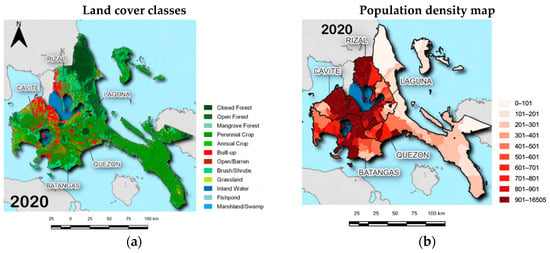
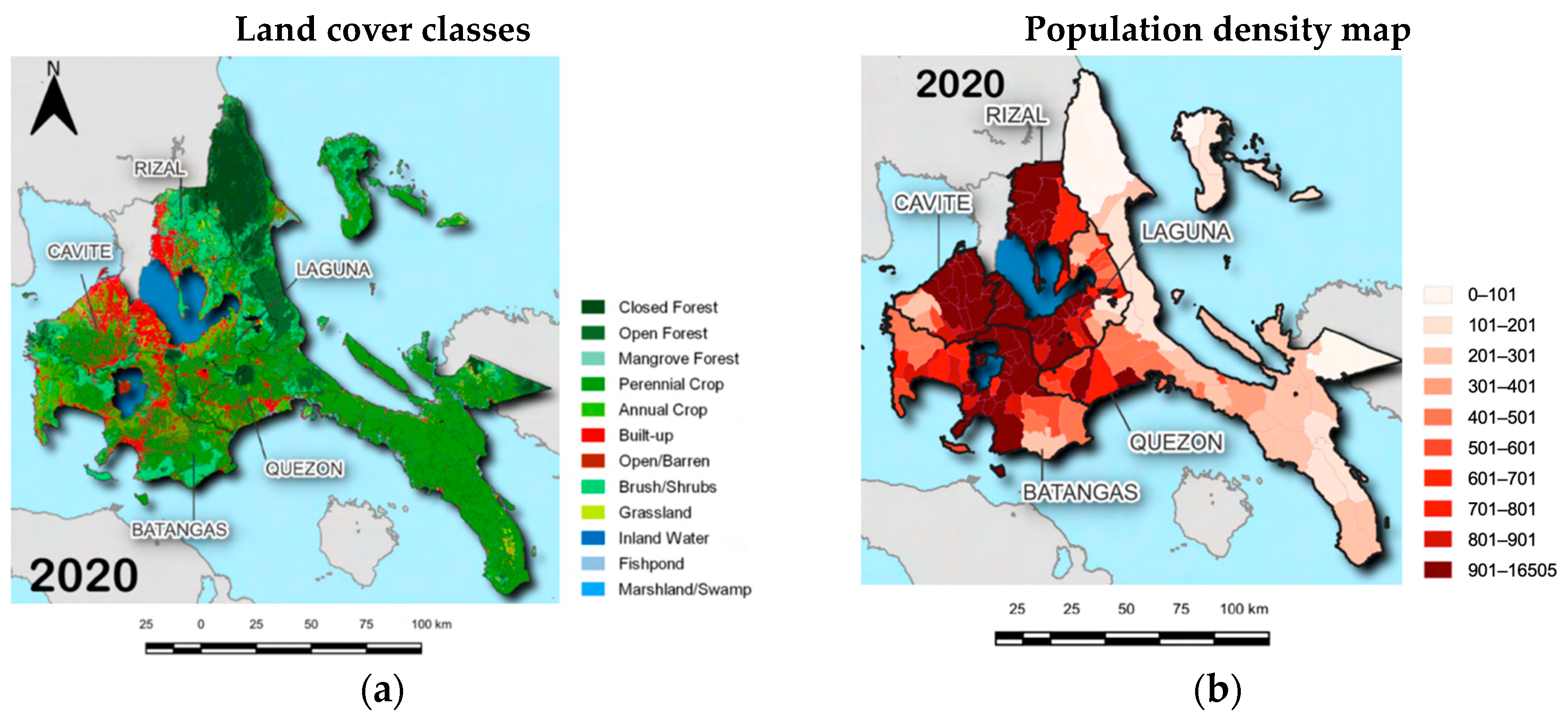
The Philippines, which is rich in natural resources, has significant biomass potential for energy production [1,2,3]. However, the country is considered to have some of the highest electricity rates in Asia. Recently, hybrid renewable energy systems (HRES) have proven to be among the most effective and low-carbon solutions for various energy needs worldwide [4]. Most projects managed by the Department of Energy (DOE) of the Philippines focus on large-scale on-grid power plants. Since a portion of the Filipino population still lacks access to stable, consistent, and reliable electricity, the demand for HRESs as site-specific solutions has grown increasingly important in recent years [5]. Among renewable sources in the Philippines, biomass use has the slowest growth in terms of power generation. According to the 2020 census conducted by the Philippine Statistics Authority, the Province of Laguna covers approximately 1917.85 square kilometers and has a population of 3,382,193 [6]. Figure 1 depicts the population density and built-up land cover in Laguna. Since the province is part of Region 4A (CALABARZON, Cavite-Laguna-Batangas-Quezon), it is also worth noting that the total installed capacity and dependable capacity of existing off-grid power plants in Region 4A are reported at 8.32 MW and 6.96 MW, respectively, as determined by the DOE based on data from 2021 [7]. In 2019, the number of grid-connected households in Laguna served by distribution utilities was 913,067, which corresponds to a 100% household electrification rate. Data on unserved and off-grid households [8], however, remain unavailable, despite the enactment of Republic Act (RA) No. 11646, which is also known as the Microgrid Systems Act of 2022. This legislation mandates the implementation of the Local Total Electrification Roadmap (LTER), which aims to coordinate efforts among various electric cooperatives (ECs) to electrify households with limited or no access to electricity.
Figure 1.
Population density map (a) and land cover classes (b) in Region 4A, Philippines, modified from maps in the Regional Development Plan (2023–2028) [7].
Currently, various biomass resources with full or partial utilization in Laguna include bagasse, sweet sorghum, coconut, rice husk, and corn cobs, as well as municipal solid waste [9]. These resources are also shown on the biomass potential maps for Laguna in the Philippine Renewable Energy Atlas. As mentioned earlier, they can play a key role in ensuring energy security and stability not only within the province but also across the country. According to a 2018 World Bank report, the Philippines lost 9.4% of its electricity generation capacity due to transmission and distribution losses in 2014 [10].
The primary goal of this study is to identify the most effective scenarios for off-grid rural electrification in Laguna via hybrid optimization of various technoeconomic factors. Currently, detailed and specific energy demand data for Laguna are limited, so regional and national data [11] are used instead to infer trends in the area. The daily electricity demand profile in the Philippines generally follows typical diurnal patterns, with peaks observed in the morning (around 8 to 10 AM) and evening (6 to 8 PM). This pattern reflects the behavior of most people as they begin various domestic activities and return home. Additionally, the daily profile shows low activity during midday and lower demand at night. Annual electricity demand mainly peaks during the dry season, from March to May, primarily due to increased air conditioning use in the hotter climate, while the demand decreases during the cooler months and the rainy season, which occur from June to October.
Overall, the energy demand nationwide is rising quickly, with an estimated annual growth of 6% until 2040. The largest portion of the energy mix comes from the residential sector, followed by the commercial and industrial sectors. Since specific data on Laguna is not readily available from secondary sources or the public domain, we assume that the provincial energy demand matches the national profile reported by the Philippine Department of Energy’s 2020 Power Statistics [12], as Laguna is considered to have a mix of urban and rural areas with significant residential, commercial, and industrial activity.
Several papers on off-grid HRES applications in the Philippines focus on combining solar and wind energy technologies. For instance, previous research [13,14,15] indicates that shifting from non-renewable resources to hybrid systems in off-grid areas can significantly lower generation costs and increase the proportion of renewable energy use. This also leads to reduced electricity utility rates and increased rooftop solar PV system prioritization. In a 2022 study by Tarife et al. [16], the authors emphasize the importance of integrating renewables to optimize component sizing and minimize LCOE in hybrid microgrids serving rural agricultural communities in Southern Philippines. Their findings demonstrate that high reliability in solar–diesel–battery systems is achievable, thus resulting in lower LCOE and reduced CO2 emissions.
Although the Philippines has a geographic advantage for solar PV systems, it is crucial to identify, adopt, and deploy a reliable, integrated hybrid system with PV modules to ensure that the project can withstand simulated scenarios [17]. Moreover, when load demand under adverse weather conditions requires a backup system like a diesel generator or a battery energy storage system, integrating an energy management system (EMS) with the power plant is ideal for maintaining adequate power flow and managing dynamic behavior in off-grid microgrids. Phan et al. in 2022 [18] used a Deep Q-Network (DQN), a type of deep reinforcement learning, to optimize power dispatch for an isolated microgrid on an island in the Philippines. They also utilized the HOMER software [19] to calculate each component’s optimal capacity (solar PV, wind, diesel generator, and battery), and when combined with the DQN, off-grid hybrid microgrids can handle continuous changes in load, demand, fuel consumption, and power intermittence. Their other paper from 2019 [20] highlights the importance of combining multiple renewable sources with intelligent energy control systems and power adaptability, such as AI-driven approaches in smart microgrids.
In a 2020 paper by Agua et al. [13], a comparative study of decentralized and clustered hybrid renewable energy system microgrids in the Polillo islands, Philippines, was conducted using HOMER Pro. Regarding hybrid systems, Reaño et al. in their 2021 study [21] evaluated electricity generation from rice straw using biomass gasification and an internal combustion engine. In this paper, it is important to consider the environmental trade-offs identified by Chontanawat in 2020 [22] while assuming a constant trajectory of agricultural growth to ensure a steady biomass supply in Laguna. In the context of the Philippines, Chontanawat established a causal link: economic expansion drives CO2 emissions in the short term, which evolves into a bidirectional relationship in the long term.
2. Materials and Methods
Using a technoeconomic-based hybrid design optimization tool, site-specific microgrid research can provide the best standalone off-grid solutions for rural electrification in Laguna. For example, using a solar PV system combined with a micro-hydroelectric generator dictates appropriate sizing and shading constraints. This chapter lays down this paper’s methodologies, research approach, and employed techniques.
2.1. General Objectives
The main aim of this study is to apply hybrid optimization techniques to identify the most suitable configurations for off-grid rural electrification in Laguna. This paper utilizes a hybrid optimization software (HOMER Pro, version 3.18.4; a popular tool for simulating, optimizing, and performing sensitivity analyses of microgrids and HRESs). It primarily provides technoeconomic data to support project planning and resource evaluation [23]. This study intentionally showcases highly optimized hybrid configurations for off-grid microgrids to promote rural electrification in Laguna. The analysis considers various technoeconomic parameters, with a focus on minimizing the net present cost and the levelized cost of electricity across all simulations.
Each off-grid scenario is compared with scenarios involving hybrid renewable energy systems that include a biomass generator. The significance of this research lies in the fact that Laguna is one of the few provinces in the Philippines where all types of renewable energy systems with high renewable energy potential and renewable fraction values exist, justifying its use as the primary site for this study. This study aims to compare different scenarios through sensitivity analysis, which involves adjusting key variables to determine their influence on the performance of hybrid system scenarios. Variables such as wind speed, gasoline prices, and interest rates are often uncertain in real-world conditions.
By leveraging the software’s sensitivity analysis features, researchers and energy providers can input a range of values to determine the variables most affected according to the model’s output. This method helps researchers design systems for locations with slight differences in environmental parameters, such as those with variations in wind speeds. Several studies [24,25,26] using HOMER demonstrate the software’s usefulness for evaluating energy performance by identifying the most critical variables, as sensitivity analysis can be performed with different average wind speeds for wind turbine generators.
2.2. Objective Functions
The main goal of hybrid optimization is to minimize the following objective functions: the net present cost (NPC) and the levelized cost of electricity (LCOE) of the simulated hybrid system. The hybrid optimization software allows us to calculate the NPC and LCOE using Equations (1) and (2).
The total NPC of the simulated HRES is the total cost of the system (components, technologies, etc.) over the entire project lifetime minus the present value of all revenue the HRES earns during that period, which can be expressed using Equation (1).
C0,i is the CAPEX of the HRES component i at year 0; Cn,i is the total annualized cost, which includes operation and maintenance (O&M) costs, replacement costs, and the buyback cost of electricity minus all revenue from the HRES; r is the discount rate; and t is the total number of components. Regarding the LCOE (Equation (2)), it is defined as the average cost per kWh of usable energy produced by the HRES, where C is the sum of capital expenditures (CAPEX) and operational costs, both of which are expressed in US dollars per kilowatt-hour ($/kWh), and Eserved denotes the total electric load served by the HRES.
For a specified HRES with a biomass generator, we update Equation (2) by including the boiler marginal cost (cboiler, in $/kWh) and the total thermal load served (Hserved, in kWh/yr), then subtract their product from the total annualized cost to calculate the LCOE of the HRES (Equation (3)).
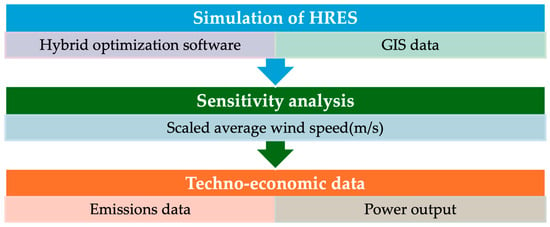
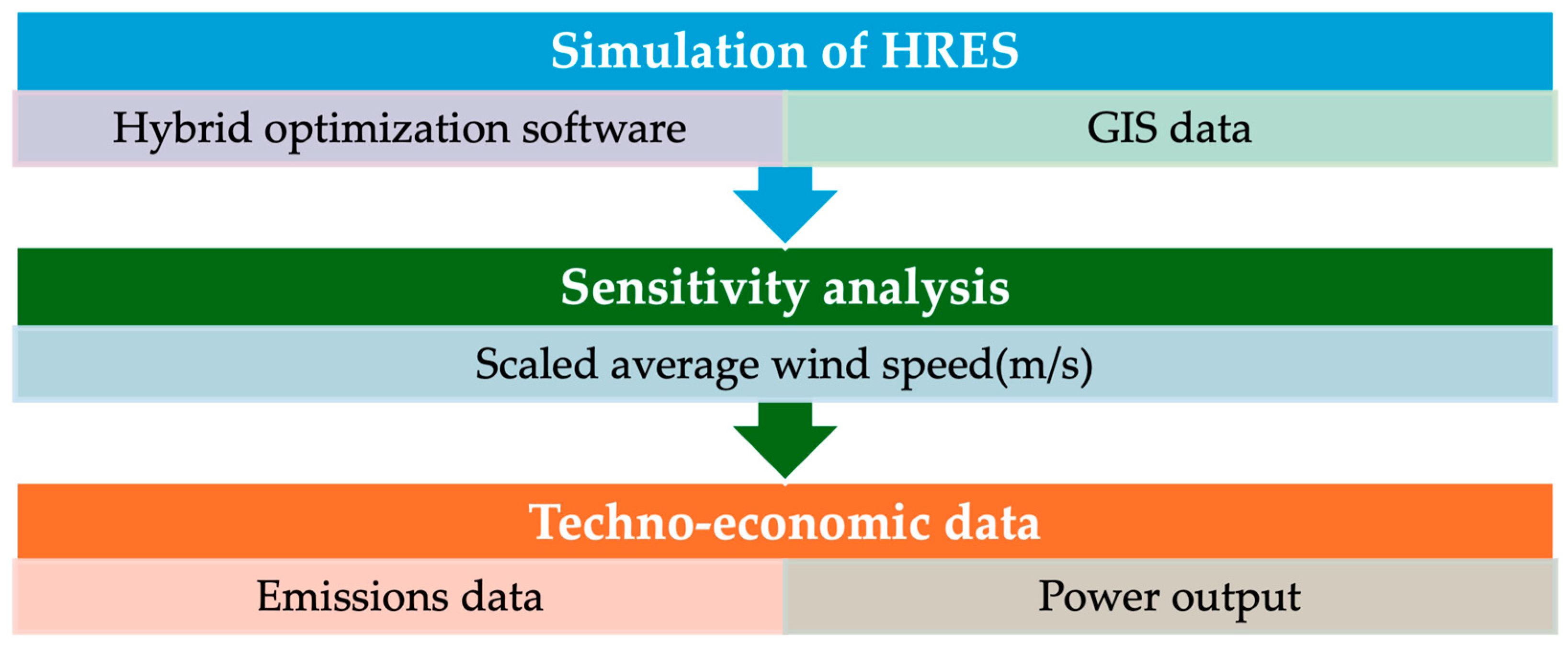
Figure 2 illustrates the methodological framework of this study, emphasizing the use of optimization and sensitivity analysis software. Relevant GIS data were obtained from the US NREL (National Renewable Energy Laboratory, via its RE Data Explorer [27] platform) and the Department of Energy of the Philippines, specifically data from the Philippine Renewable Energy Resources Mapping (REMaps) under Phil-LiDAR 2: Nationwide Detailed Resources Assessment Using LiDAR [28].
Figure 2.
Methodological framework of this paper.
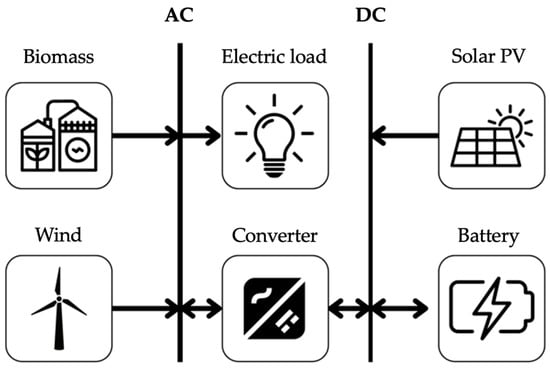
Many studies and publications that examine 100% renewable energy systems—excluding non-renewable or fossil fuels—use HOMER Pro simulation models, as shown in the schematic diagram of the simulated HRES in this study (Figure 3). Another goal of this research is to assess the feasibility of adding biomass energy to a theoretical HRES for a rural community on the east side of Laguna and to identify its specific long-term technoeconomic advantages; the results are expected to provide a basis for off-grid solutions for rural electrification. This objective aligns with the conclusion of Jara et al. [29], who note that energy-intensive industries benefit significantly from the hybrid integration of rooftop solar PV, leading to increased savings, better investment quality, and reduced CO2 emissions. Their study also emphasizes that some industrial power plants can operate in off-grid hybrid systems, and the success of site-specific configurations will depend on the electric load profile of the hybrid system, as well as on (rooftop) solar PV potential. Hybrid optimization will help determine the optimal installed capacities, economic parameters, and investment efficiencies of the HRES scenarios, but all Laguna scenarios will largely depend on the current prices of solar PV panels and battery storage options (lithium-ion, sodium-ion, LFP, etc.).
Figure 3.
Schematic diagram of the simulated hybrid renewable energy system.
Generally, a simulation involves the precise analysis of time-varying electric loads and technologies that require hourly, monthly, and yearly assessments. Hybrid optimization determines the most cost-effective combination and scenario based on the NPC. Additionally, conducting HRES sensitivity analysis depends on varying levels of wind speed, fuel cost, and other relevant technoeconomic parameters. Unlike the approach used by Torrefranca et al. (2022) [30], the main contribution of this research is a set of optimal scenarios for off-grid hybrid microgrids. These scenarios incorporate spatial distribution, power capacities, and sensitivity analyses to help resource managers and potential energy developers involved in rural electrification during early resource assessment, especially in hydropower exploration.
2.3. System Constraints in Simulated Hybrid Microgrids
For this study, an HRES consisting of biomass, solar, and wind power was selected. Biomass generators and lithium-ion battery energy storage systems were included in all simulations to evaluate the feasibility of combining these technologies while considering economics, their environmental impacts, and other factors. Constraints for biomass were based on areas designated by the DOE’s Competitive Renewable Energy Zones (CREZs [31]), along with the solar and wind energy constraints outlined in Table 1.
Table 1.
Constraint categories for biomass, solar, and wind energy technologies.
2.4. Meteorological Profile of Laguna
Laguna, like most provinces in the Philippine archipelago, experiences two seasonal wind patterns: (1) the northeast monsoon, locally called Amihan, and (2) the southwest monsoon, which is known as Habagat. Amihan occurs from November to April, bringing predominantly northeast winds that carry cooler, drier air. Wind speeds are usually moderate, averaging 10–20 km per hour. In contrast, Habagat occurs from May to October, with prevailing southwest winds that bring warmer, more humid air and heavy rain. During typhoons, wind speeds can increase to around 30–40 km per hour. Table 2 displays the monthly wind variations for each quarter of the year in Laguna.
Table 2.
Monthly wind averages for Laguna, Philippines [32].
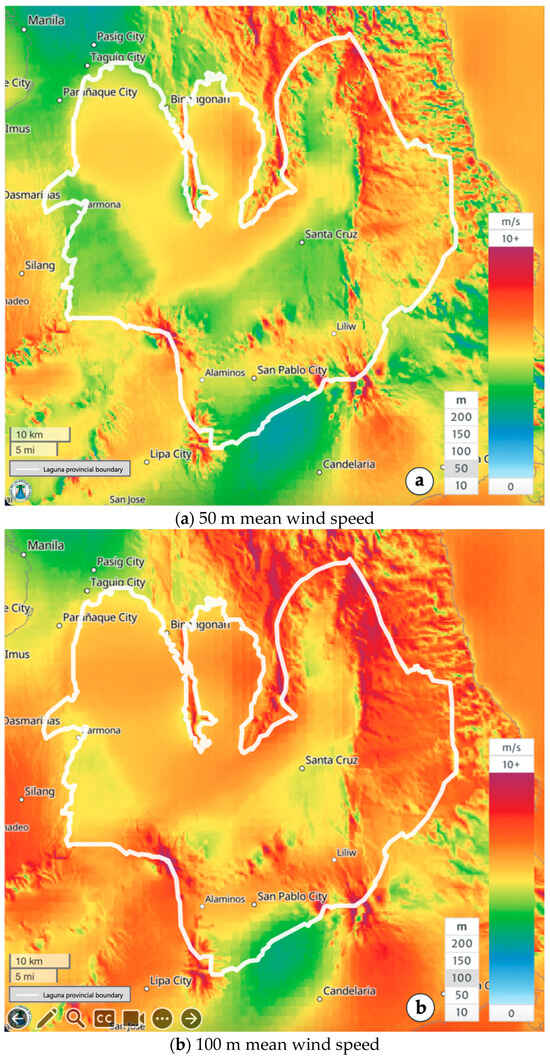
For Laguna, the hourly wind fluctuations during the day are usually more significant in the afternoon due to thermal heating, which can create local breezes within the province. Conversely, the wind profile at night tends to be calm but may still be influenced by larger weather systems, such as the northeast/southwest monsoons or subsystems from tropical cyclones and typhoons [32]. After assessing wind energy potential, Laguna was determined to possess the highest potential for wind power, with average wind speeds at 50 m and 100 m in the northeastern part of the province, as shown in Figure 4.
Figure 4.
Mean wind speed at 50 m (a) and 100 m (b) in Laguna, Philippines [9].
Based on their analysis, Lucas et al. [33] indicate that natural reductions in wind speed during land–sea breeze transitions often coincide with periods of severe electricity undersupply in the morning. This phenomenon presents a specific challenge for the Philippine power grid, especially in coastal areas with complex terrain, such as the eastern side of Laguna. In the future, dependence on Laguna’s power grid may become less stable and more vulnerable to these variability patterns as wind energy capacity increases in the province. Therefore, the findings of past studies are crucial for promoting sustainability in current on-grid and off-grid energy systems in Laguna and for reducing risks when planning future wind-dependent power systems.
The importance of load forecasting and renewable sizing using meteorological and historical data is emphasized in any HRES research. Rivadulla [34], in their 2023 paper, developed an algorithm for forecasting electric load demand based on historical weather data and for determining the optimal size of each renewable energy resource. Their results consider readily available meteorological data in the Province of Quezon, specifically solar radiation data, to estimate solar PV output levels for a proposed hybrid microgrid by a distribution utility in the province. Additionally, based on existing datasets, the solar energy potential in Laguna and Quezon is virtually the same.
2.5. Significant Values and Simulation Parameters
The parameters used for each technology and/or component in simulations, along with the updated parameters for this study, are summarized in Table 3. The simulated components represent the optimal case for a hybrid biomass–solar–wind energy system to supply power to potential off-grid rural areas in Laguna.
Table 3.
Input values of HRES components for hybrid optimization in this study.
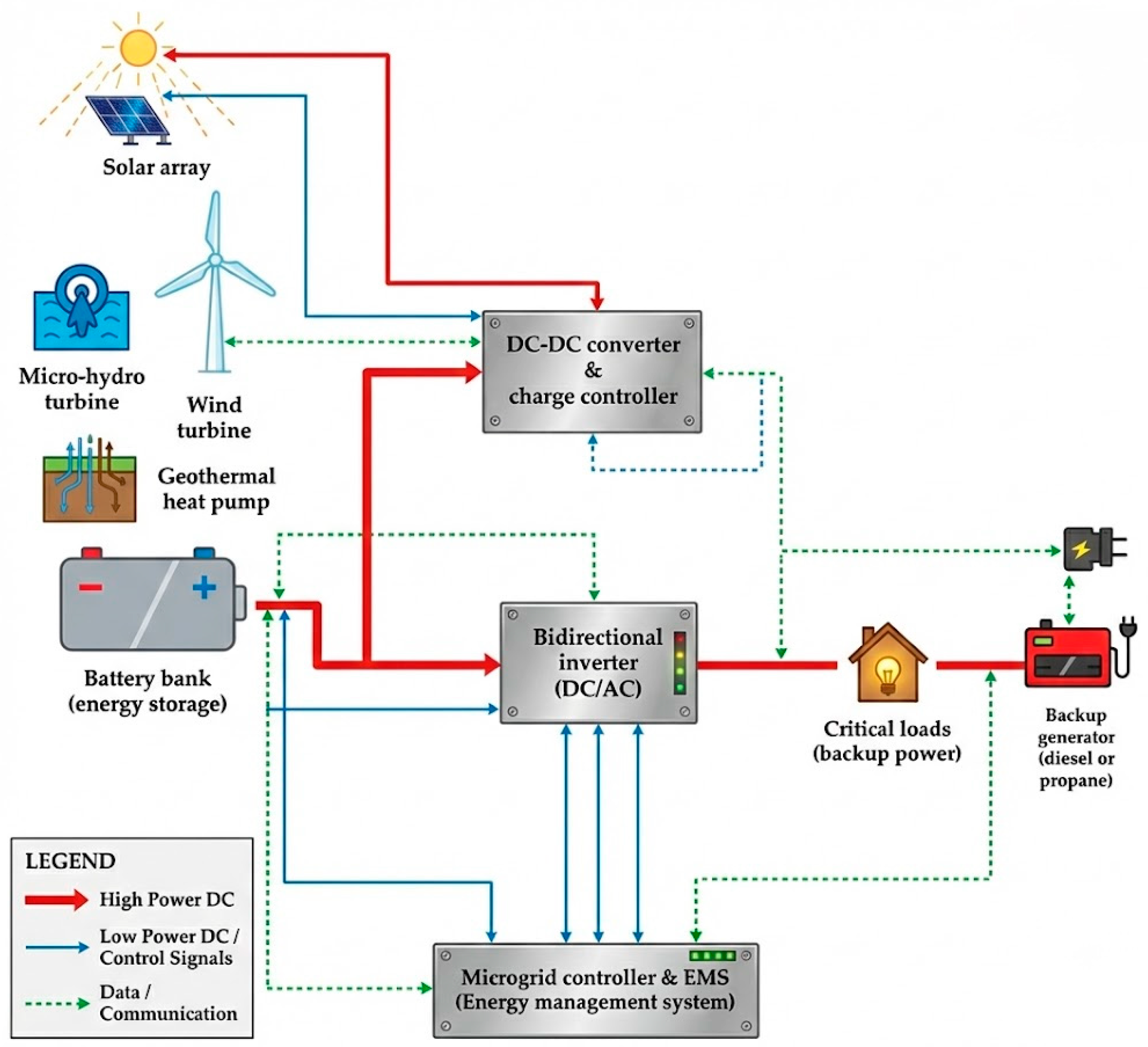
Before simulating the power system, the hybrid optimization software calculates the emission factor—a measure of pollutant emitted per unit of fuel consumed (kg/L)—for each pollutant. After the simulation, the annual emissions from that pollutant are determined by multiplying the emission factor by the total yearly fuel consumption. It should be noted that the emission factors include all amounts released per kilowatt-hour (kWh) of grid power used by the HRES and are expressed in grams per kilowatt-hour (g/kWh). The software uses these emission factors in its calculations to determine the emissions for each pollutant type. In this context, Rabuya et al. [14] mentioned that achieving universal electrification, such as on small off-grid islands, from the macro level to the ground level slows down the low-carbon transition in unelectrified or under-electrified areas. Moreover, in economic terms, Moon et al. (2023) [35] found that implementing battery storage in the off-grid energy mix results in a lower LCOE (0.064–0.092 $/kWh) than a diesel-only base case (0.635–1.26 $/kWh). Their findings also show that the Philippines is the most economically feasible market for solar–battery microgrids compared to Indonesia and Vietnam. Figure 5 shows an example schematic diagram of an off-grid microgrid HRES with multiple renewable energy sources.
Figure 5.
Schematic diagram of an off-grid hybrid renewable microgrid.
Most adopted and implemented HRESs in the Philippines are implemented through large-scale, on-grid applications [36], rather than off-grid mini- and microgrid systems. Theorizing a hybrid biomass–solar–wind energy system to power off-grid areas in Laguna supports rural electrification, decarbonization goals, and equitable access to renewable energy. Like Pearson et al.’s approach [37], HOMER has limitations in incorporating transportation costs into its hybrid optimization and sensitivity analysis; thus, all considerations for transporting agricultural biomass and postharvest byproducts in Laguna are omitted. This simplification is also justified according to the 2011 Household Energy Consumption Survey (HECS) of the DOE in cooperation with the Philippine Statistics Authority (PSA) (Appendix Table 9) [38]. The 2023 HECS is the latest version of special survey that collects information on Philippine households’ fuel use, supply systems, and energy-use patterns, among other variables, thus providing total renewable energy use in Philippine households (this assumption is part of this paper’s system dynamics), so its results can be used to generalize the current energy profiles of rural households and communities in Laguna. The corresponding results presented in this paper should be regarded as projections based on economic data derived from simulations. Data on biomass residues from the 2011 HECS report include purchased, self-collected (or gathered), and combined percentages for households. In the context of rural electrification, this paper assumes that biomass generators used for off-grid applications in Laguna will rely solely on these sources, aside from the abundant agricultural feedstocks in the province, as the HECS lists renewables as firewood, charcoal, biomass residue, biogas, and mainstream sources such as solar, hydroelectric, and wind (integrating the CREZ of the DOE).
HECS 2023 data also report that 75.9% of households have a monthly income of PHP 12,500 (equivalent to USD 211.59 as of December 2025) or below and use renewables as their primary energy source, the highest among all income brackets [38] These average consumption data for biomass residues assume that the acquisition mode includes transportation costs. In this paper, the collection of biomass feedstocks, as well as their transportation to generators or power plants, is assumed to stay the same as in 2025. Another main target of this study is to assess the feasibility of integrating biomass energy into a theoretical HRES for a rural community on the eastern side of Laguna and to identify its specific long-term technoeconomic advantages; the results are expected to serve as a foundation for recommendations on off-grid solutions for rural electrification.
3. Results and Discussion
3.1. Technoeconomic Parameters
Several simulations and feasibility studies provided sufficient data to compare the cost-effectiveness of various multi-scenario configurations for different HRESs and potential energy solutions in a hypothetical rural community in eastern Laguna Province. For this study, all simulated scenarios included an autosize biomass generator set at 140 kW, along with RE generators in various configurations. Table 4 summarizes each configuration tested in the simulation and sensitivity analysis. The autosize biomass generator used 100% biogas to supply AC power, and a XANT M-21 wind turbine with a 100 kW rating was employed.
Table 4.
Summary of system architecture and techno-economics in each scenario.
All sensitivity analyses were conducted at an average wind speed of 3 m/s. Table 5 displays each technoeconomic metric for biomass, solar PV, wind, batteries, and selected converters. The simulation results indicate that the battery-assisted HRES is the most economical and ideal option.
Table 5.
System architecture and technoeconomic results at a 3 m/s wind speed, scaled to the average for the selected HRES components: biomass, solar, wind, and battery storage.
In the methodologies presented in the 2022 paper by Supapo et al. [39] on selecting the configuration for three off-grid islands in Palawan, Philippines, all solar–diesel–PV–battery scenarios were based on the MTS (minimum transition scenario), with the aim of using 100% renewables by 2040. In this paper’s results, a similar strategic approach is adopted in addressing the energy trilemma: improving energy security in Laguna through suitable technologies and resources for off-grid rural electrification, reducing costs and ensuring affordability, and promoting environmental sustainability with near-zero CO2 emissions.
3.2. Hybrid Optimization
Using the target hybrid optimization techniques, the scenarios with the best NPC, LCOE, and emissions defined the sensitivity analysis that followed. Biomass feedstock prices are set at USD 0.00, provided that agricultural feedstock in Laguna is readily available after harvest and regardless of the acquisition mode (based on the 2011 and 2023 HECSs by the DOE). The considerations for transportation, processing, disposal, and fuel costs (see Table 5) are assumed to be negligible for the purposes of this discussion. This assumption is based on the hypothesis that the biomass generator modeled will primarily utilize residential biomass residues and surplus. Additionally, the hypothesis that biomass generates fewer emissions compared to diesel generators is emphasized within this research framework.
3.3. Microgrid Output Analysis and Multiscenario Comparison
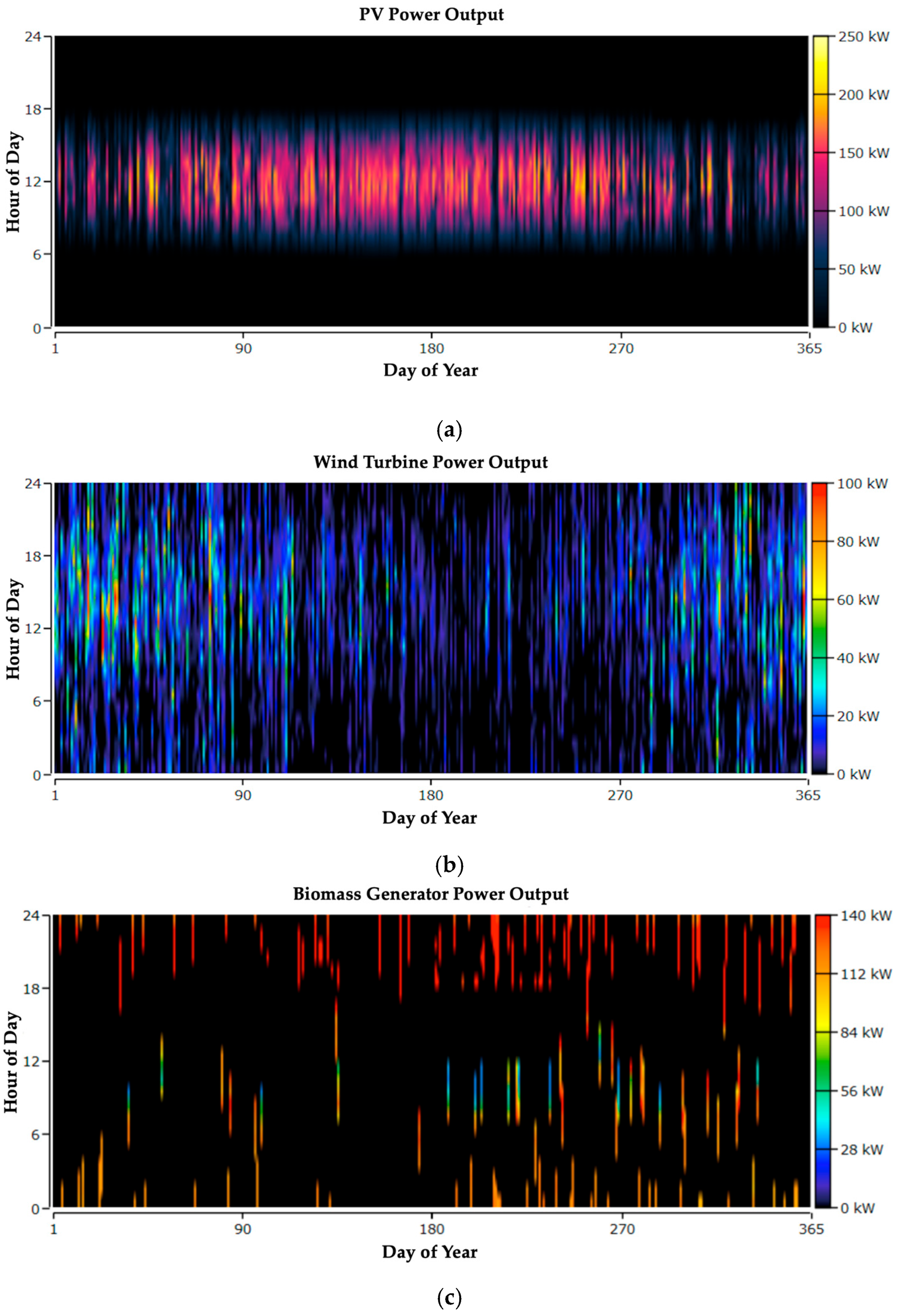
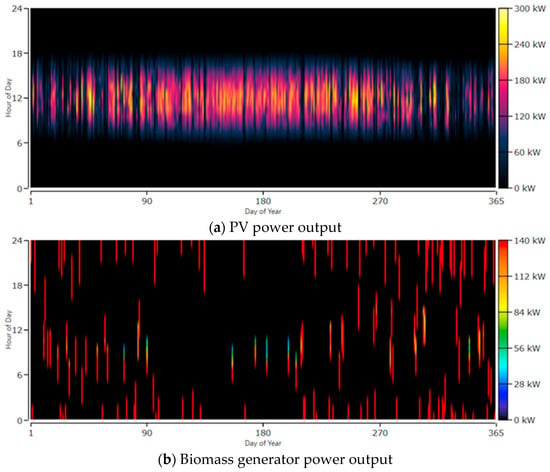
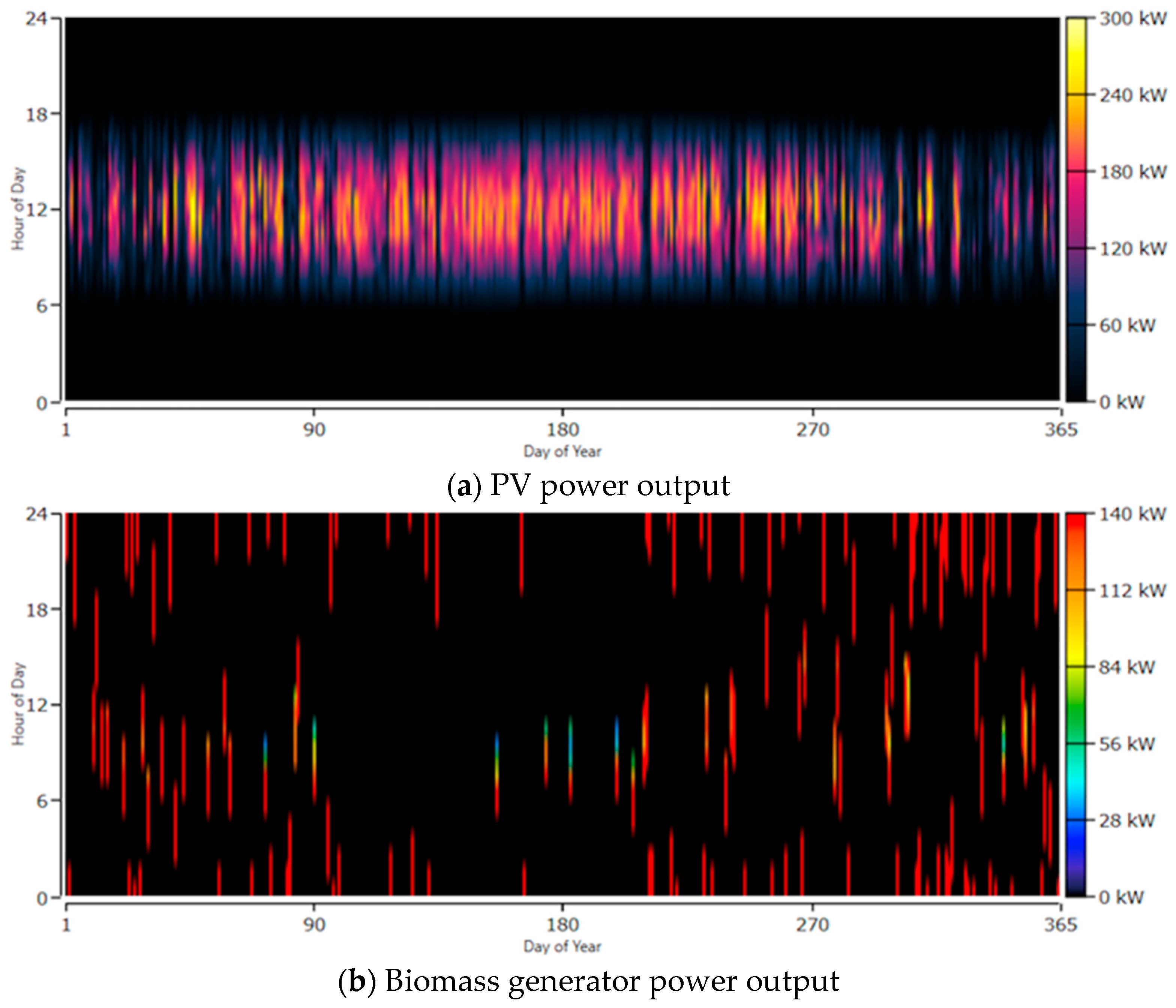
Adding battery energy storage systems highlights two main benefits of incorporating a biomass generator: (1) a 17.0% reduction in long-term carbon emissions for the entire system and (2) approximately 9.4% savings from lower operation and maintenance costs of the hybrid system after seven years. These percentages can be derived from HOMER Pro through the ‘Compare Economics’ and ‘Emissions’ simulation result panes. Optimization and simulation results support the goal of supplying electricity from off-grid, decentralized, and community-based HRESs, as which is confirmed by the simulated power output from integrated biomass generators shown in Figure 6, Figure 7, Figure 8 and Figure 9.
Figure 6.
Power output graphs in an HRES combining solar (a), wind (b), and biomass (c) (Scenario #1).
Figure 7.
Power output graphs for Scenario #2 (solar–biomass HRES).
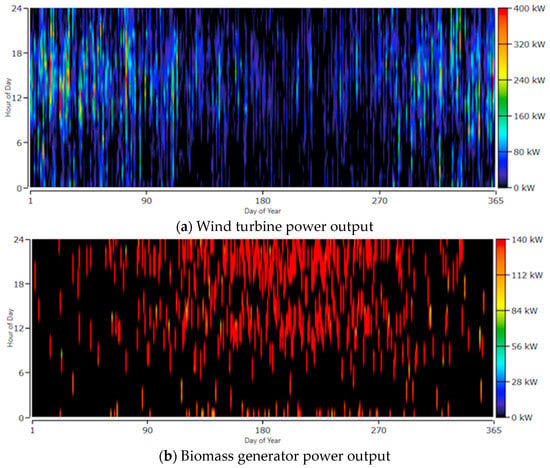
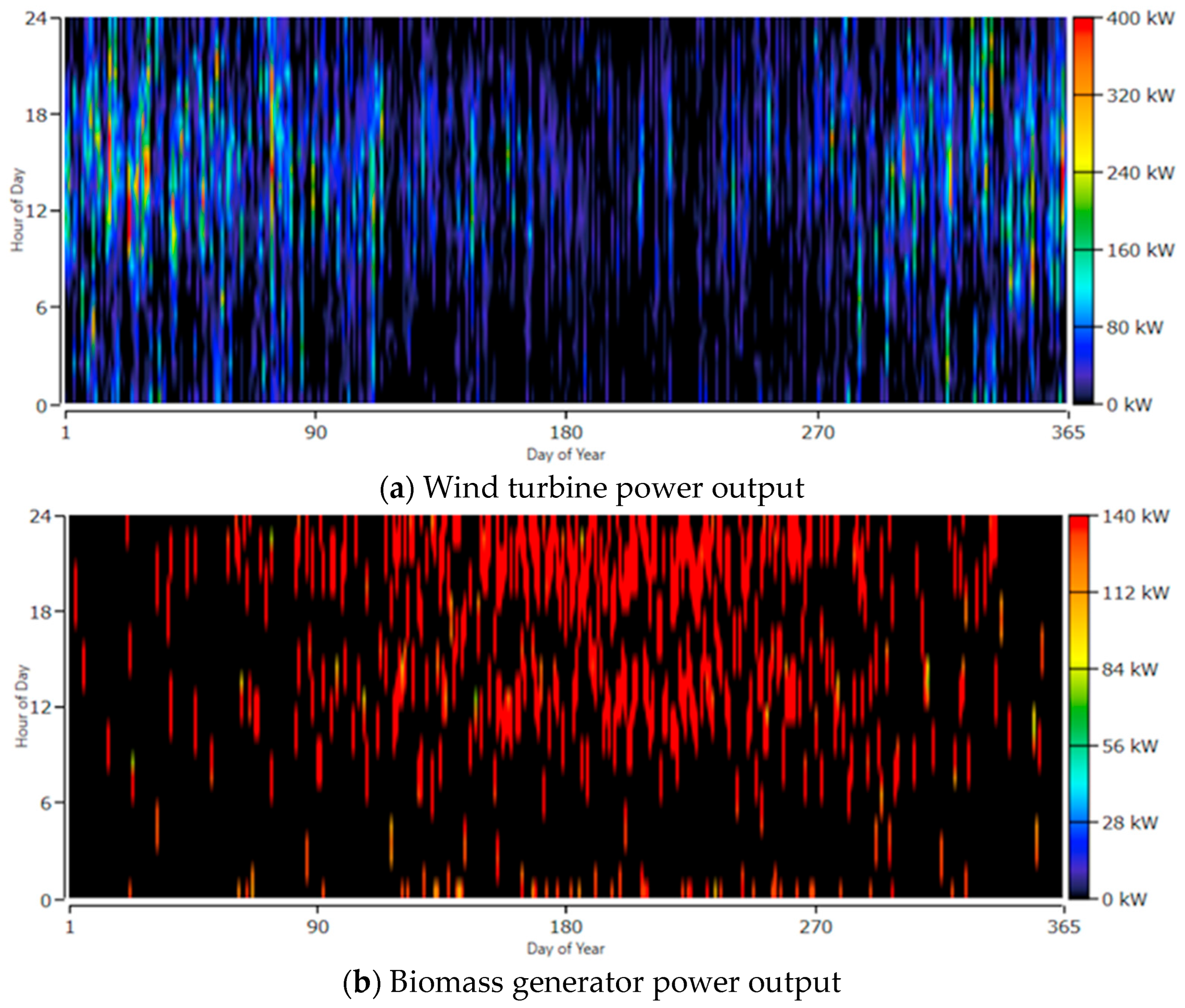
Figure 8.
Power output graphs for Scenario #3 (wind–biomass HRES).
Figure 9.
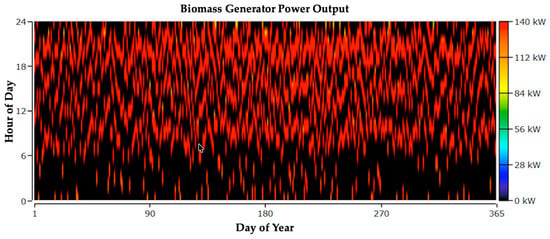
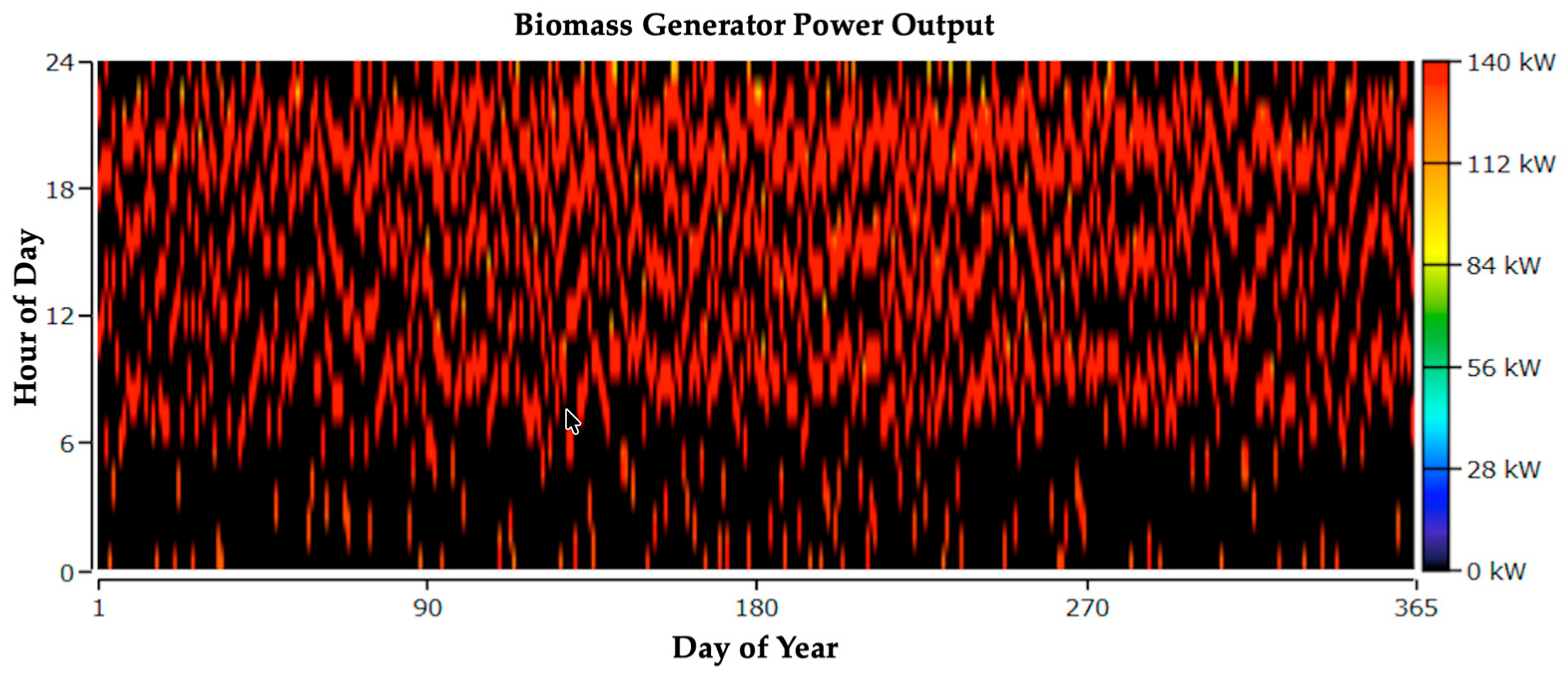
Power output graph for Scenario #4 (biomass-only HRES).
Each renewable energy resource (solar PV, wind turbines, and biomass) and its corresponding power output graphs for hourly, daily, and yearly periods were combined and compared to assess consistency and reliability. In Scenarios #1 to #4, with zero fuel cost from biomass feedstock, all scenarios can supply power to the hypothetical rural community in Laguna during nighttime hours from 6 PM to 6 AM annually, as shown in the output sources. Among all the simulated scenarios, an HRES integrating all simulated renewable energy types yields the most favorable technoeconomic results (Figure 6), especially when coupled with a battery energy storage system in the selected community. A comparison of the NPC and LCOE for Scenarios #1 and #2 indicates that an HRES combining solar PV and a biomass generator (Figure 7) is a viable option, particularly in regions where wind turbines may face logistical, societal, and other challenges during installation and decommissioning in the rural areas of the Laguna Province.
Scenario #1 also assumes similar parametric considerations for floatovoltaics and agrivoltaics: Floatovoltaics are solar panels installed on water bodies, such as lakes or reservoirs, to generate energy while conserving land and reducing water evaporation. Agrivoltaics involve using land for both agriculture and solar energy production, with crops growing under or around solar panels to maximize land use and boost crop yields. Although real-world economic projections of the net present cost and LCOE for these solar technologies in microgrid applications may vary considerably, further investigation is needed beyond what the hybrid optimization software can provide. The simulations also indicate that battery energy storage can enhance stability and efficiency in an HRES energy mix when combined with solar PV and wind turbines by providing the necessary power during peak loads and increased energy demands. Conversely, an HRES combining wind and biomass (Figure 8) will not be as cost-effective as those in Scenarios #1 and #2 but remains economically feasible, especially in remote rural areas of Laguna with limited space for solar PVs. In this scenario, the XANT M-21 wind turbine model was selected for the simulations and sensitivity analysis because it aligns well with Laguna’s wind energy potential. However, other 100 kW wind turbine types and configurations are available for further HRES optimization and project development. Choosing a biomass-only energy system (Figure 9) results in the lowest CAPEX in the energy mix; however, it yields a higher net present cost and LCOE than the first three scenarios. This result is based on the simulated operation of three lithium-ion battery energy storage units in the schematic diagram for Scenario #4. Removing the battery from the HRES further lowers the CAPEX but results in a significantly higher net present cost and LCOE.
After analyzing the simulation emissions data, the best option for rural electrification projects that support decarbonization and reduce pollution from particulate matter (PM) and unburned hydrocarbons (UHCs) is Scenario #1, as shown in Table 6. Interestingly, for carbon monoxide and carbon dioxide levels, Scenario #2 also offers cleaner and more environmentally friendly energy systems, supporting the idea that combining different renewable energy sources [40] to create a multi-source HRES in the province lowers emissions by 17.0% over time.
Table 6.
Multi-scenario emissions results.
Notably, when comparing Scenario #5 to other configurations, emissions increase significantly after removing the battery energy storage and system converter (assuming all components are connected on a single electrical bus using either AC or DC).
3.4. Analysis of Economics and Biomass Potential
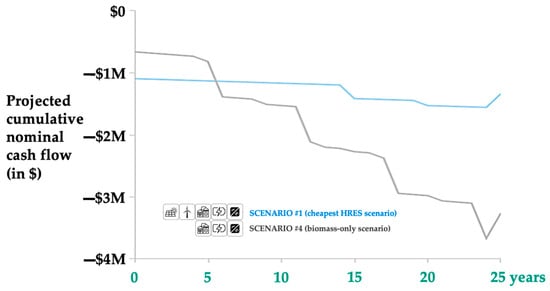
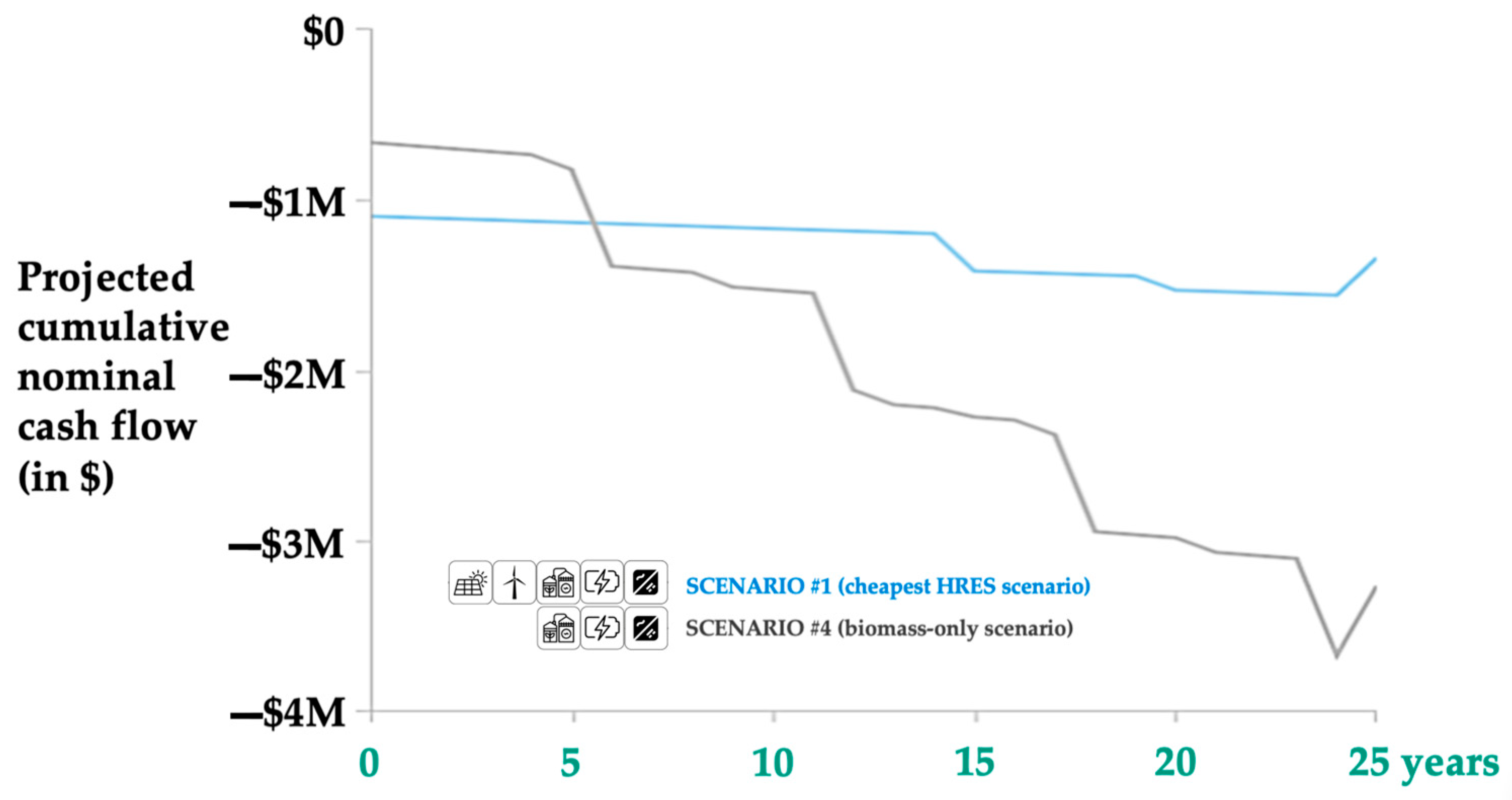
After evaluating the five scenarios based on energy policy, development, and/or implementation recommendations, if the configuration and system conditions of Scenario #1 are chosen for a hypothetical rural community in Laguna for off-grid electrification, the estimated savings and cost reductions in NPC and LCOE are approximately 9.40% for both metrics. This results in significant savings from lower operation and maintenance costs of the HRES after five to ten years, as shown in Figure 10.
Figure 10.
Projected cash flow vs. time graph for the lowest-cost HRES (solar–wind–biomass, Scenario #1 in blue) and the base case (biomass-only, Scenario #4 in gray).
By selecting the lowest-cost system and best-case architecture (Scenario #1) from all multiscenario simulations and analyses, future modifications can consider the average price, carbon content, gasification ratio, and LHV of the desired biogas for the HRES. This method can help identify specific biomass feedstock preferences for the HRES, especially when transportation restrictions or seasonal availability are factors. A key assumption for this study’s biomass generator simulations is that the feedstock is directly fed into the gasifier, which produces biogas using 100% biogas (LHV also considered). It is also recommended to use a cofired generator in future studies when evaluating existing biomass cofired generators for HRES integration in other provinces of the Philippines.
By interpreting the projected cash flow vs. time graph in Figure 10, the financial comparison of the two scenarios (1 and 4) over a 25-year period indicates the cumulative cost (investment and operational expenses) for Scenario 1 (combining solar, wind, and biomass is the cheapest).
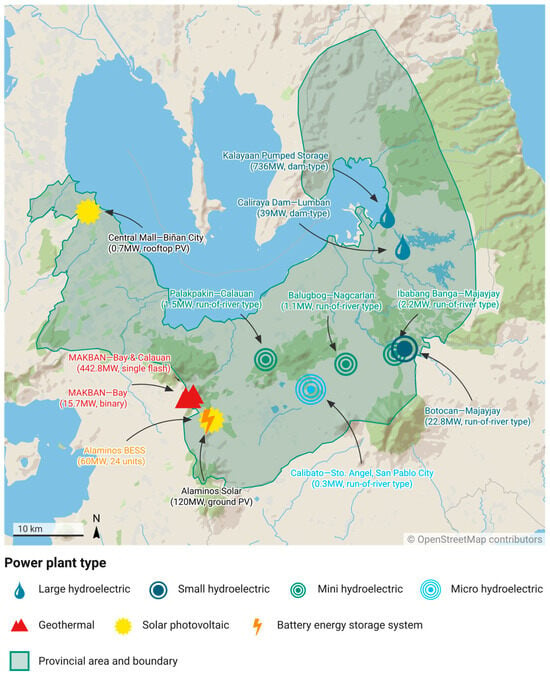
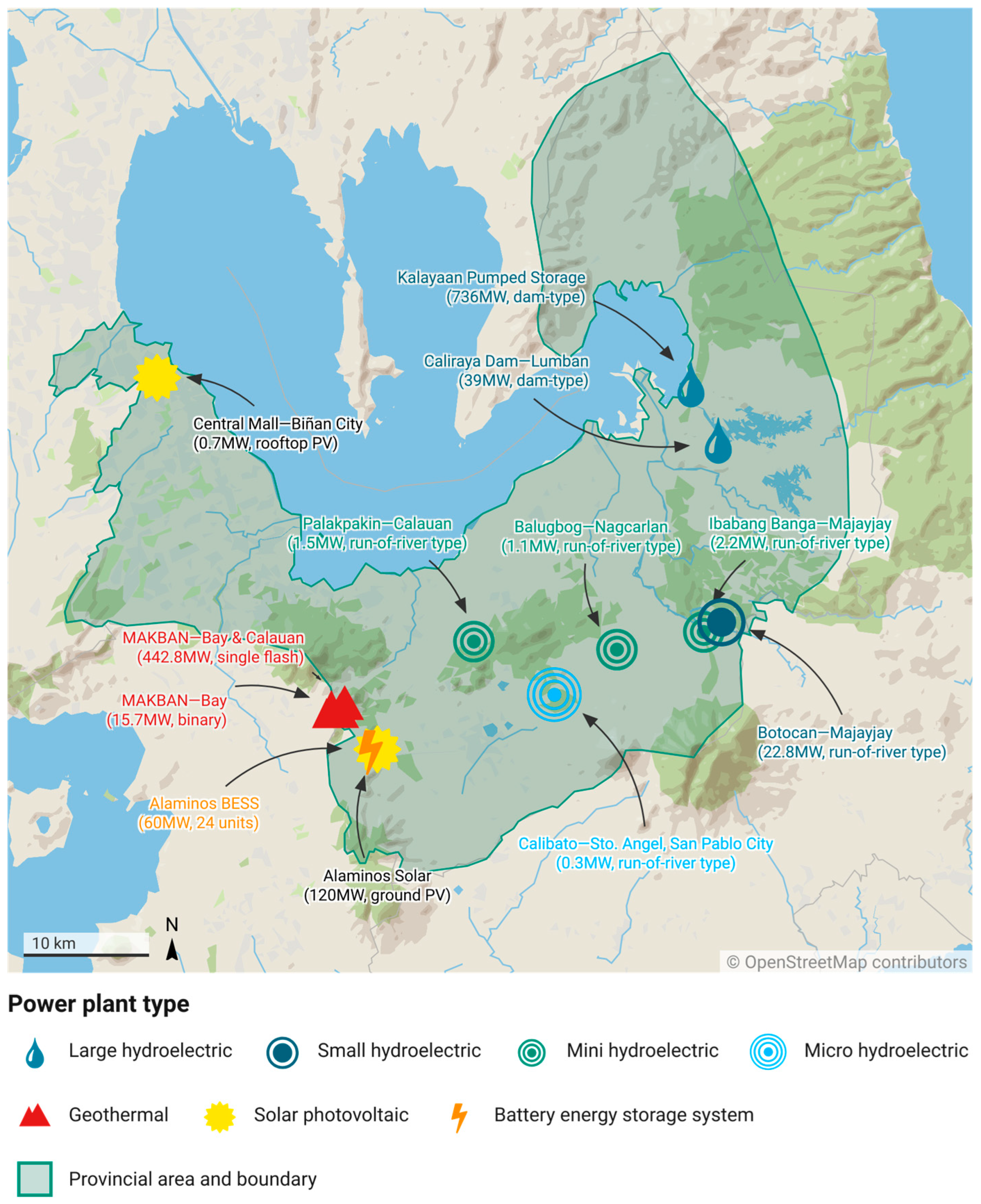
The data in this paper support the recent increase in the capacity of various renewable energy sources in Laguna Province. Future studies could investigate other renewable resources in Laguna, as existing power plants already provide a reliable electricity supply (Figure 11).
Figure 11.
Map of existing grid-connected renewable energy power plants in Laguna, Philippines, as of June 2023, registered with data from DOE [41].
4. Conclusions
The established method for assessing HRES viability in the hypothetical rural community in Laguna Province highlights two major points: (1) when combining a biomass generator to other renewable energy sources for an off-grid HRES, a 17.0% reduction in CO2 emissions is possible, and (2) integrating and maintaining a battery energy storage system with a biomass generator decreases both initial and long-term costs in terms of the NPC and the LCOE. Laguna has strong potential as a stable and reliable biomass energy resource, which could support hybrid systems that include solar and/or wind power. Future research directions include (1) integrating waste-to-energy (WTE) facilities into the HRES; (2) building capacity among HRES stakeholders to promote energy justice and economic development to meet current and future energy needs; and (3) decentralizing energy systems into microgrid units, not only to supply power in Laguna but also to nearby rural and urban areas.
This paper’s results underscore the importance of community-owned systems with feed-in tariffs that empower households through energy justice, especially in remote areas lacking access to current or future grids. Additionally, the hybrid optimization software used proves to be an effective tool for simulating the technoeconomic aspects of HRESs. Future efforts should involve field validation and ground-truthing of various biogeophysical parameters to help authorities and stakeholders make informed decisions about HRESs. This study can be expanded by modeling site-specific off-grid energy systems that enable communities to prepare for future human- and nature-caused power disruptions, thereby reducing casualties and loss of life, and improving the quality of life of rural communities with abundant biomass resources.
In the context of hybrid renewable energy systems, future research, including projects and feasibility studies, must encompass and integrate all phases of an HRES project timeline, assessment, preliminary design, final design, procurement, and construction, along with economic analysis and cash flow considerations. Researchers or consultants can reduce uncertainty and risk by applying hybrid optimization as a basis for developing suitable and sustainable designs. Uncertainties related to the electric load profile, energy system design approach, construction costs, and long-term goals for the off-grid microgrid system will influence the type of financial support received from local and national governments, including project budget allocations and maintenance costs.
Author Contributions
J.M.L. and T.F. conceptualized the study and methodology. T.F. provided the software, J.M.L. conducted the data acquisition, hybrid optimization, and scenario validation processes, as well as the writing of the original draft. T.F. carried out the validation, review, editing, and supervision of the paper. All authors have read and agreed to the published version of the manuscript.
Funding
This research’s outputs are possible through the full financial support of the MEXT International Design for Environment Program and the SPRING Program of the Japan Science and Technology Agency (JST) under the Ministry of Education, Culture, Sports, Science and Technology (MEXT) of the Government of Japan.
Data Availability Statement
Secondary data used in this study are available online through the public domain. Simulation data and defined parameters in this study may be replicated through the HOMER Pro software.
Acknowledgments
During the preparation of this paper, the authors used Grammarly Premium version 1.150.0.0 for scientific grammar and plagiarism detection. The authors have reviewed and edited the output and take full responsibility for the content of this publication.
Conflicts of Interest
The authors declare no conflicts of interest.
Abbreviations
The following abbreviations are used in this manuscript:
| AC | Alternating current |
| BESS | Battery energy storage system |
| CALABARZON | Cavite Laguna Batangas Rizal Quezon (Region 4A) |
| CAPEX | Capital expenditure |
| CO | Carbon monoxide |
| CO2 | Carbon dioxide |
| CREZs | Competitive Renewable Energy Zones (DOE) |
| DC | Direct current |
| DOE | Department of Energy (Philippines) |
| HOMER | Hybrid Optimization of Multiple Energy Resources |
| HRES | Hybrid renewable energy system |
| LCOE | Levelized cost of electricity |
| LFP | Lithium iron phosphate (LiFePO4) |
| LHV | Lower heating value |
| LiDAR | Light detection and ranging |
| NOx | Nitrogen oxides |
| NREL | National Renewable Energy Laboratory |
| NPC | Net present cost |
| O&M | Operation and maintenance |
| PM | Particulate matter |
| PV | Photovoltaic |
| RE | Renewable energy |
| SO2 | Sulfur dioxide |
| UHCs | Unburned hydrocarbons |
References
- Blanco, A.; Tamondong, A.; Perez, A.M.; Ang, R.; Paringit, E.C. The Phil-LiDAR 2 Program: National Resource Inventory of the Philippines Using LiDAR and Other Remotely Sensed Data. Int. Arch. Photogramm. Remote Sens. Spat. Inf. Sci. 2015, XL-7/W3, 1123–1127. [Google Scholar] [CrossRef] [Scilit]
- Romallosa, A.; Kraft, E. Feasibility of Biomass Briquette Production from Municipal Waste Streams by Integrating the Informal Sector in the Philippines. Resources 2017, 6, 12. [Google Scholar] [CrossRef] [Scilit]
- Reyes, L.; Calderon, A. Compliance, Coordination, and Conflict: Examining Renewable Energy Policy Mechanisms in the Philippine Energy Plan. Energies 2025, 18, 4683. [Google Scholar] [CrossRef] [Scilit]
- Khan, A.; Minai, A.; Pachauri, R.; Malik, H. Optimal Sizing, Control, and Management Strategies for Hybrid Renewable Energy Systems: A Comprehensive Review. Energies 2022, 15, 6249. [Google Scholar] [CrossRef] [Scilit]
- Castro, M.; Pascasio, J.; Delina, L.; Balite, P.; Ocon, J. Techno-economic and financial analyses of hybrid renewable energy system microgrids in 634 Philippine off-grid islands: Policy implications on public subsidies and private investments. Energy 2022, 257, 124599. [Google Scholar] [CrossRef] [Scilit]
- Philippine Statistics Authority. Philippine Standard Geographic Code (PSGC)-Province of Laguna – Census of Population; Philippine Statistics Authority: Quezon City, Philippines, 2020.
- Regional Development Council CALABARZON. CALABARZON Regional Development Plan 2023–2028. 2022; pp. 21–23. Available online: https://pdp.depdev.gov.ph/wp-content/uploads/2023/07/CALABARZON-RDP-2023-2028.pdf (accessed on 21 October 2023).
- Weinand, J.; Hoffmann, M.; Göpfert, J.; Terlouw, T.; Schönau, J.; Kuckertz, P.; McKenna, R.; Kotzur, L.; Linßen, J.; Stolten, D. Global LCOEs of decentralized off-grid renewable energy systems. Renew. Sustain. Energy Rev. 2023, 183, 113478. [Google Scholar] [CrossRef] [Scilit]
- Department of Energy (Philippines). Philippine Renewable Energy Atlas. 2018; pp. 288–291. Available online: https://prod-cms.doe.gov.ph/documents/d/remb/philippine-re-atlas-part2_c-pdf (accessed on 8 August 2023).
- Rudnick, H.; Velasquez, C. Learning from Developing Country Power Market Experiences: The Case of the Philippines; 2018 Policy Research Working Paper 8721; World Bank Group: Washington, DC, USA, 2019. [Google Scholar] [CrossRef] [Scilit]
- USAID. Greening the Grid: Solar and Wind Grid Integration Study for the Luzon-Visayas System of the Philippines, A Collaboration Between USAID and the Philippines’ Department of Energy, 2018; Report for review by USAID and US NREL; USAID: Washington, DC, USA, 2018. Available online: https://docs.nrel.gov/docs/fy18osti/68594.pdf (accessed on 3 December 2025).
- Department of Energy (Philippines). Power Statistics; Department of Energy: Taguig, Philippines, 2020. Available online: https://prod-cms.doe.gov.ph/documents/d/epimb/2020_power-situation-report_as_of_09-september-2021 (accessed on 15 August 2023).
- Agua, O.; Basilio, R.; Pabillan, M.; Castro, M.; Blechinger, P.; Ocon, J. Decentralized versus Clustered Microgrids: An Energy Systems Study for Reliable Off-Grid Electrification of Small Islands. Energies 2020, 13, 4454. [Google Scholar] [CrossRef] [Scilit]
- Rabuya, I.; Libres, M.; Abundo, M.; Taboada, E. Moving up the Electrification Ladder in Off-Grid Settlements with Rooftop Solar Microgrids. Energies 2021, 14, 3467. [Google Scholar] [CrossRef] [Scilit]
- Rituraj, G.; Mouli, G.; Bauer, P. A Comprehensive Review on Off-Grid and Hybrid Charging Systems for Electric Vehicles. IEEE Open J. Ind. Electron. Soc. 2022, 3, 203–222. [Google Scholar] [CrossRef] [Scilit]
- Tarife, R.; Nakanishi, Y.; Chen, Y.; Zhou, Y.; Estoperez, N.; Tahud, A. Optimization of Hybrid Renewable Energy Microgrid for Rural Agricultural Area in Southern Philippines. Energies 2022, 12, 2251. [Google Scholar] [CrossRef] [Scilit]
- Tsai, C.; Beza, T.; Wu, W.; Kuo, C. Optimal Configuration with Capacity Analysis of a Hybrid Renewable Energy and Storage System for an Island Application. Energies 2020, 13, 8. [Google Scholar] [CrossRef] [Scilit]
- Phan, B.; Lee, M.; Lai, Y. Intelligent Deep-Q-Network-Based Energy Management for an Isolated Microgrid. Appl. Sci. 2022, 12, 8721. [Google Scholar] [CrossRef] [Scilit]
- HOMER Pro 3.11. Homer Energy Software Support. Available online: www.homerenergy.com/products/pro/docs/3.11/index.html (accessed on 20 October 2023).
- Phan, B.; Lai, Y. Control Strategy of a Hybrid Renewable Energy System Based on Reinforcement Learning Approach for an Isolated Microgrid. Appl. Sci. 2019, 9, 4001. [Google Scholar] [CrossRef] [Scilit]
- Reaño, R.; de Padua, V.; Halog, A. Energy Efficiency and Life Cycle Assessment with System Dynamics of Electricity Production from Rice Straw Using a Combined Gasification and Internal Combustion Engine. Energies 2021, 14, 4942. [Google Scholar] [CrossRef] [Scilit]
- Chontanawat, J. Dynamic Modelling of Causal Relationship between Energy Consumption, CO2 Emission, and Economic Growth in SE Asian Countries. Energies 2020, 13, 6664. [Google Scholar] [CrossRef] [Scilit]
- Rahmat, M.A.A.; Abd Hamid, A.S.; Lu, Y.; Ishak, M.A.A.; Suheel, S.Z.; Fazlizan, A.; Ibrahim, A. An Analysis of Renewable Energy Technology Integration Investments in Malaysia Using HOMER Pro. Sustainability 2022, 14, 13684. [Google Scholar] [CrossRef] [Scilit]
- Rombaoa, A. 100 kW grid-connected renewable energy system design for an educational campus in Tarlac: A step towards green energy campus development. IOP Conf. Ser. Mater. Sci. Eng. 2021, 1109, 012039. [Google Scholar] [CrossRef] [Scilit]
- Salac, A.C.; Somera, J.D.C.; Castro, M.T.; Divinagracia-Luzadas, M.F.; Danao, L.A.M.; Ocon, J.D. Off-Grid Electrification Using Renewable Energy in the Philippines: A Comprehensive Review. Smart Cities 2024, 7, 1007–1043. [Google Scholar] [CrossRef] [Scilit]
- Natividad, L.E.; Benalcazar, P. Hybrid Renewable Energy Systems for Sustainable Rural Development: Perspectives and Challenges in Energy Systems Modeling. Energies 2023, 16, 1328. [Google Scholar] [CrossRef] [Scilit]
- RE Data Explorer by the United States National Renewable Energy Laboratory (US NREL). Available online: www.re-explorer.org/about.html (accessed on 10 October 2023).
- Department of Energy (Philippines). Philippine Renewable Energy Resources Mapping (REMaps). Available online: https://doe.gov.ph/site/remb/articles/1316204--project-5-philippine-re-resource-mapping- (accessed on 4 September 2023).
- Jara, P.; Castro, M.; Esparcia, E.; Ocon, J. Quantifying the Techno-Economic Potential of Grid-Tied Rooftop Solar Photovoltaics in the Philippine Industrial Sector. Energies 2020, 13, 5070. [Google Scholar] [CrossRef] [Scilit]
- Torrefranca, I.; Otadoy, R.; Tongco, A. Incorporating Landscape Dynamics in Small-Scale Hydropower Site Location Using a GIS and Spatial Analysis Tool: The Case of Bohol, Central Philippines. Energies 2022, 15, 1130. [Google Scholar] [CrossRef] [Scilit]
- US NREL; USAID. Ready for Renewables: Grid Planning and Competitive Renewable Energy Zones (CREZ) in the Philippines; US NREL: Golden, CO, USA; USAID: Washington, DC, USA, 2020. [CrossRef] [Scilit]
- Philippine Atmospheric, Geophysical and Astronomical Services Administration. Seasonal Forecast (Province of Laguna). Available online: www.pagasa.dost.gov.ph/climate/climate-prediction/seasonal-forecast (accessed on 8 November 2023).
- Lucas, K.; Sato, T.; Ohba, M. Hourly Variation of Wind Speeds in the Philippines and Its Potential Impact on the Stability of the Power System. Energies 2021, 14, 2310. [Google Scholar] [CrossRef] [Scilit]
- Rivadulla, G.; Apolinario, G.; Pacis, M. Optimizing Hybrid Microgrid Power Systems for Local Power Distribution: A Study on Combined Photovoltaic and Fuel Cell Systems in the Philippines. Energies 2023, 16, 5906. [Google Scholar] [CrossRef] [Scilit]
- Moon, H.; Ha, Y.; Kim, K. Comparative Economic Analysis of Solar PV and Reused EV Batteries in the Residential Sector of Three Emerging Countries—The Philippines, Indonesia, and Vietnam. Energies 2023, 16, 311. [Google Scholar] [CrossRef] [Scilit]
- Department of Energy (Philippines). List of Existing Grid-Connected Power Plants in the Philippines. Available online: https://doe.gov.ph/articles/3265472--list-of-existing-power-plants-grid-connected-as-of-november-2025 (accessed on 4 September 2023).
- Pearson, J.; Wagner, T.; Delorit, J.; Schuldt, S. Cost Analysis of Optimized Islanded Energy Systems in a Dispersed Air Base Conflict. Energies 2020, 13, 4677. [Google Scholar] [CrossRef] [Scilit]
- Department of Energy (Philippines). Survey Implementation of 2023 Household Energy Consumption Survey (HECS). Available online: https://iea.blob.core.windows.net/assets/f0dca78d-a348-49e2-af4a-8213a41eef13/20250610_Philippines_IEAPresentationHECS_IEAWorkshop_final.pdf (accessed on 12 December 2025).
- Supapo, K.; Lozano, L.; Tabañag, I.; Querikiol, E. A Backcasting Analysis toward a 100% Renewable Energy Transition by 2040 for Off-Grid Islands. Energies 2022, 15, 4794. [Google Scholar] [CrossRef] [Scilit]
- Lei, X.; Zhong, J.; Chen, Y.; Shao, Z.; Jian, L. Grid Integration of Electric Vehicles within Electricity and Carbon Markets: A Comprehensive Overview. eTransportation 2025, 25, 100435. [Google Scholar] [CrossRef] [Scilit]
- Department of Energy (Philippines). List of Existing Renewable Energy Power Plants in the Philippines. Available online: https://doe.gov.ph/articles/3265472--list-of-existing-power-plants-grid-connected-as-of-november-2025 (accessed on 30 August 2023).



Disclaimer/Publisher’s Note: The statements, opinions and data contained in all publications are solely those of the individual author(s) and contributor(s) and not of MDPI and/or the editor(s). MDPI and/or the editor(s) disclaim responsibility for any injury to people or property resulting from any ideas, methods, instructions or products referred to in the content. |
© 2026 by the authors. Licensee MDPI, Basel, Switzerland. This article is an open access article distributed under the terms and conditions of the Creative Commons Attribution (CC BY) license.