Article

Influence of Electrode Distribution in a Multi-Electrode Electromagnetic Flow Measurement System on the Measurement of Velocity Field in Asymmetric Flow Sections


1
Research Institute of Highway, Ministry of Transport, Beijing 100088, China
2
RIOH Automobile Testing Technology Co., Ltd., Beijing 101103, China
3
RIOH High Science and Technology Group, Beijing 100088, China
4
China Waterborne Transport Research Institute, Beijing 100088, China
*
Authors to whom correspondence should be addressed.
Energies 2026, 19(4), 928; https://doi.org/10.3390/en19040928
Submission received: 26 December 2025 / Revised: 23 January 2026 / Accepted: 6 February 2026 / Published: 10 February 2026

Abstract

This paper mainly conducts research on the electrode distribution of the multi-electrode electromagnetic flow measurement system. Through simulation work, the weight function of the area to which the electrodes on the pipeline cross-section belong with respect to the potential difference is roughly obtained. Moreover, by comparing the simulation data with the actual experimental data, the correctness of the simulation work is verified. Tikhonov regularization is utilized to inversely solve the average velocity of the electrode area, and the TR-CNN algorithm is established to refine the velocity field of the pipeline cross-section in question. It mainly introduces the influence of different electrode placement methods on the potential difference. The results show that it has a relatively small impact on the velocity distribution of the fluid cross-section before flowing through the elbow, and the potential difference is highly sensitive to the velocity in the area where the magnetic induction coil and the electrodes are relatively close. The Pitot tube is used to conduct verification measurements on the fluid velocity field in the pipeline. The results indicate that as the measurement points are farther away from the elbow, the “skewing” phenomenon of the fluid flow velocity gradually weakens. In terms of prediction performance, the mean square error (MSE) of the cross-section error is approximately 0.015, and the mean absolute error (MAE) is about 0.095. These error indicators jointly demonstrate that the system has a relatively high measurement accuracy in practical applications.

1. Introduction

The research and application of multi-electrode electromagnetic flowmeters are of crucial importance in the field of industrial measurement. Especially in accurately obtaining the velocity field of pipeline cross-sections, they play a central role in optimizing the design and improving measurement accuracy. Actual measurement scenarios are not limited to symmetric flows but also cover the measurement of asymmetric flow fields. All along, researchers have been actively exploring the performance of flowmeters under complex flow conditions [1,2]. Particularly in areas such as pipeline elbows, the non-uniformity of flow velocity distribution has a significant impact on measurement accuracy. The multi-electrode electromagnetic flowmeter is a flow measurement instrument based on Faraday’s law of electromagnetic induction. It measures the volumetric flow rate of fluid by utilizing the induced electromotive force [3,4] generated when the conductive fluid moves in a magnetic field. It has the advantages of simple structure, no flow-impeding components, and high measurement accuracy, and is an important research direction for measuring the velocity field of pipeline cross-sections in the future [5].
Multi-electrode electromagnetic flowmeters can simultaneously collect fluid signals at different positions in the pipeline, thus being able to capture the subtle changes in flow velocity distribution more comprehensively [6,7]. Compared with the traditional single-point or a small number of points collection methods, this multi-point collection approach can undoubtedly reflect the real flow state of the fluid more accurately, especially when there is non-uniformity in fluid flow. In practical applications, the non-uniformity of fluid flow is a common problem. For example, at the bends of the pipeline [8], near the fluid inlet or outlet, and in places where there are obstacles or changes in fluid properties, the flow velocity distribution often shows complexity and non-uniformity [9]. At this time, traditional single-point flowmeters may not be able to accurately capture these changes, resulting in increased measurement errors. However, multi-electrode electromagnetic flowmeters can rely on the advantages of their multi-point [10,11,12] collection to capture these changes in flow velocity distribution more accurately and thus provide more precise measurement results [13,14].
For this reason, many scholars have carried out active research on velocity distribution and asymmetric flow measurement. O’sullivan [15] conducted a study on a 20 mm diameter medical flowmeter with six electrodes. It was found that the measurement accuracy and sensitivity are largely determined by the uniformity of the magnetic field generated by the short length of the magnet and are independent of the electrode structure. By reducing the magnetic field intensity in the electrode area, the measurement error in asymmetric flow can be reduced. Horner [16] conducted more in-depth research on the use of multi-electrode electromagnetic flowmeters for flow measurement of non-axisymmetric flows and derived the calculation formula for the average flow velocity. Leeungculsatien [17] designed a new type of multi-electrode electromagnetic flowmeter to measure the velocity distribution of multiphase flows using the system [18]. Zhao [19] carried out research on the non-axisymmetric flow measurement of multi-electrode electromagnetic flowmeters and proved the reliability of multi-electrode electromagnetic flowmeters. Beck [20] optimized the weight function of the electromagnetic flowmeter and measured its performance downstream of a 90° elbow and a gate valve with 50% opening. The performance of the optimized six-electrode and single-point electrode flowmeters was compared, demonstrating their excellent accuracy.
To address the challenge of measuring asymmetric flow velocity fields, the core contributions of this study are as follows: (1) Systematically clarified the coupling law between electrode distribution and potential difference, revealing that the fluid velocity distribution before the pipe bend is weakly affected by electrode arrangement, while the potential difference is highly sensitive to velocity changes in regions adjacent to the magnetic induction coils; (2) proposed the hybrid TR-CNN algorithm, integrating Tikhonov regularization and a convolutional neural network (CNN), which breaks through the accuracy limitations of traditional methods; (3) verified the system’s reliability through multi-condition experiments (nine measurement positions, five flow rates) and Pitot tube validation, with measured error metrics of MSE = 0.015, MAE = 0.095, and RMSE = 0.123, and the “skewing” phenomenon of fluid velocity gradually attenuates as the measurement points move away from the pipe bend.

2. Theoretical Model Under Non-Uniform Magnetic Field

In an ideal state, the excitation coil of the electromagnetic flowmeter generates a uniform magnetic field, which requires the excitation coil to be expanded infinitely. However, in the actual measurement process, the magnetic field is usually non-uniform, and the results need to be corrected by certain correction coefficients. The model of the electromagnetic flowmeter under non-uniform magnetic field is shown in Figure 1.
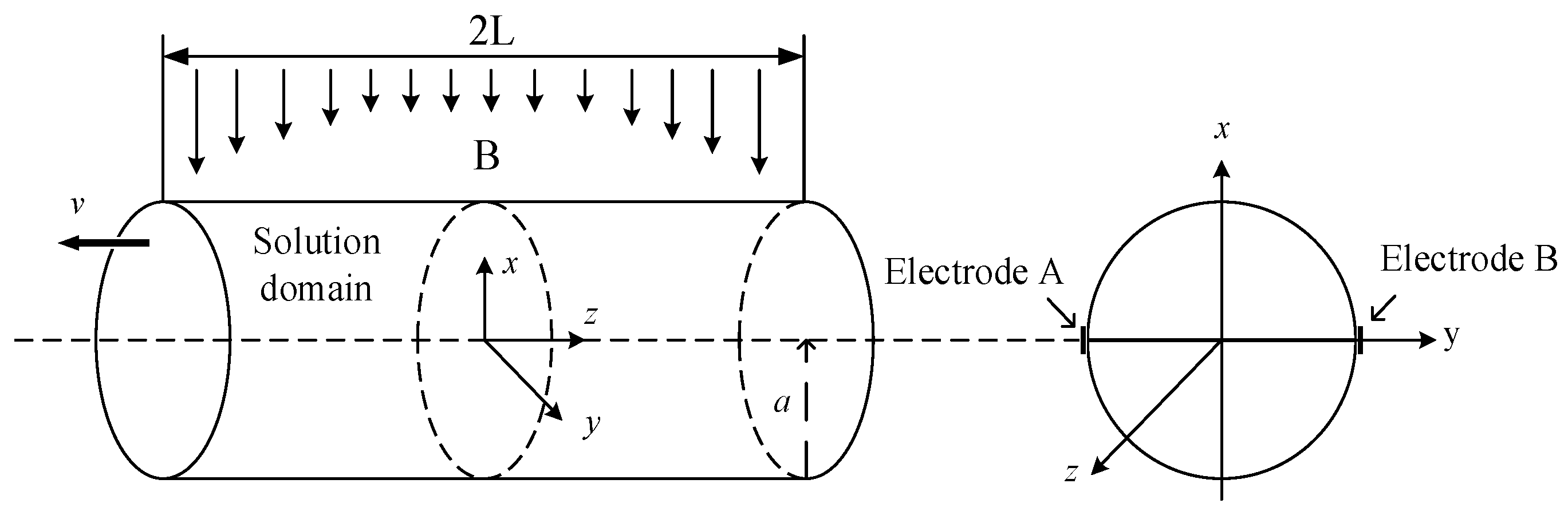
To derive the weight function of an electromagnetic flowmeter, the core lies in establishing the inherent correlation between the fluid velocity, magnetic field strength, and the induced electromotive force. In the physical modeling of such flowmeters, the idealized infinite pipeline length is simplified to a finite dimension. This simplification enables the conversion of weight analysis from a complex three-dimensional framework to a more manageable two-dimensional model, as illustrated in Figure 2. The simplified model features a diameter of 2a and an axial length of 2 L.
When calculating the weights of the non-uniform magnetic field, it is usually assumed that v x = v y = 0 , v = v z , W x is much smaller than W y , B y is much smaller than B x , W x B y 0 .
U A B = V W y B x v z d V
where U A B is the potential difference generated between electrode A and electrode B, W x , W y , B y , B x , v y and v x are respectively the components of the weight function W , the magnetic induction intensity B generated by the excitation coil inside the measuring tube, and the flow velocity v of the conductive fluid in the directions of the axis O x between the mutually perpendicular excitation coils and the axis O y along the connection between the electrodes.
In a multi-electrode electromagnetic flow measurement system, the contribution ability of different “partitioned regions” to the potential difference on the electrodes is independent of the fluid velocity within the regions, and is only related to the magnetic induction intensity and the distance from the electrodes. Therefore, this characteristic can be utilized to perform inverse calculation based on the obtained potential difference, and finally obtain the fluid velocity distribution in different regions [21,22].

3. The Construction of the TR-CNN Model

This subsection mainly describes the process of building a nonlinear model. The first part is to use simulation to inversely solve the average velocity within the area to which the electrode pairs belong, and the second part is to build a nonlinear model of the relationship between the regional average velocity and the velocity distribution of the overall cross-section. Eventually, the fluid velocity field of the pipeline cross-section is reconstructed by using the actually measured potential difference.

3.1. The Numerical Simulation Process of Multi-Electrode Electromagnetic Flowmeters

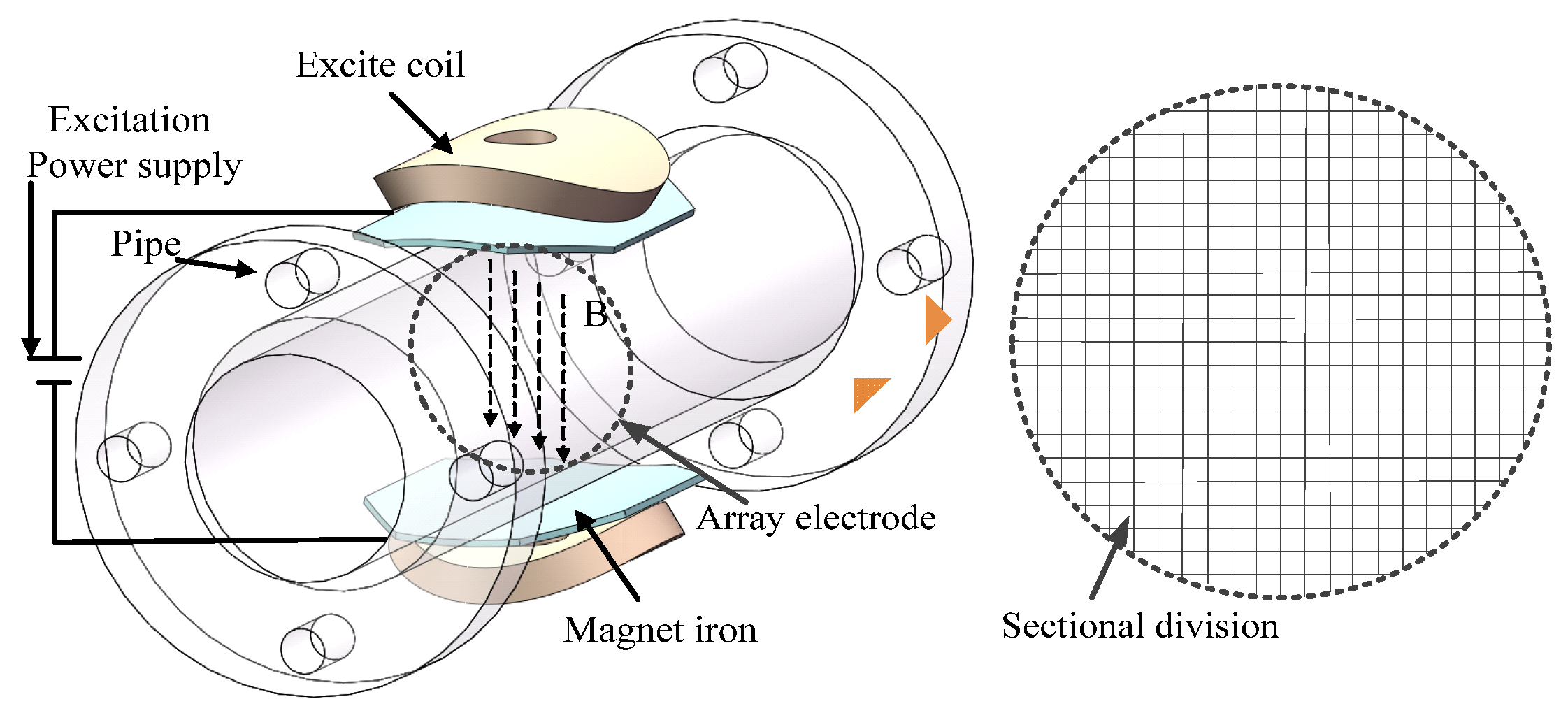
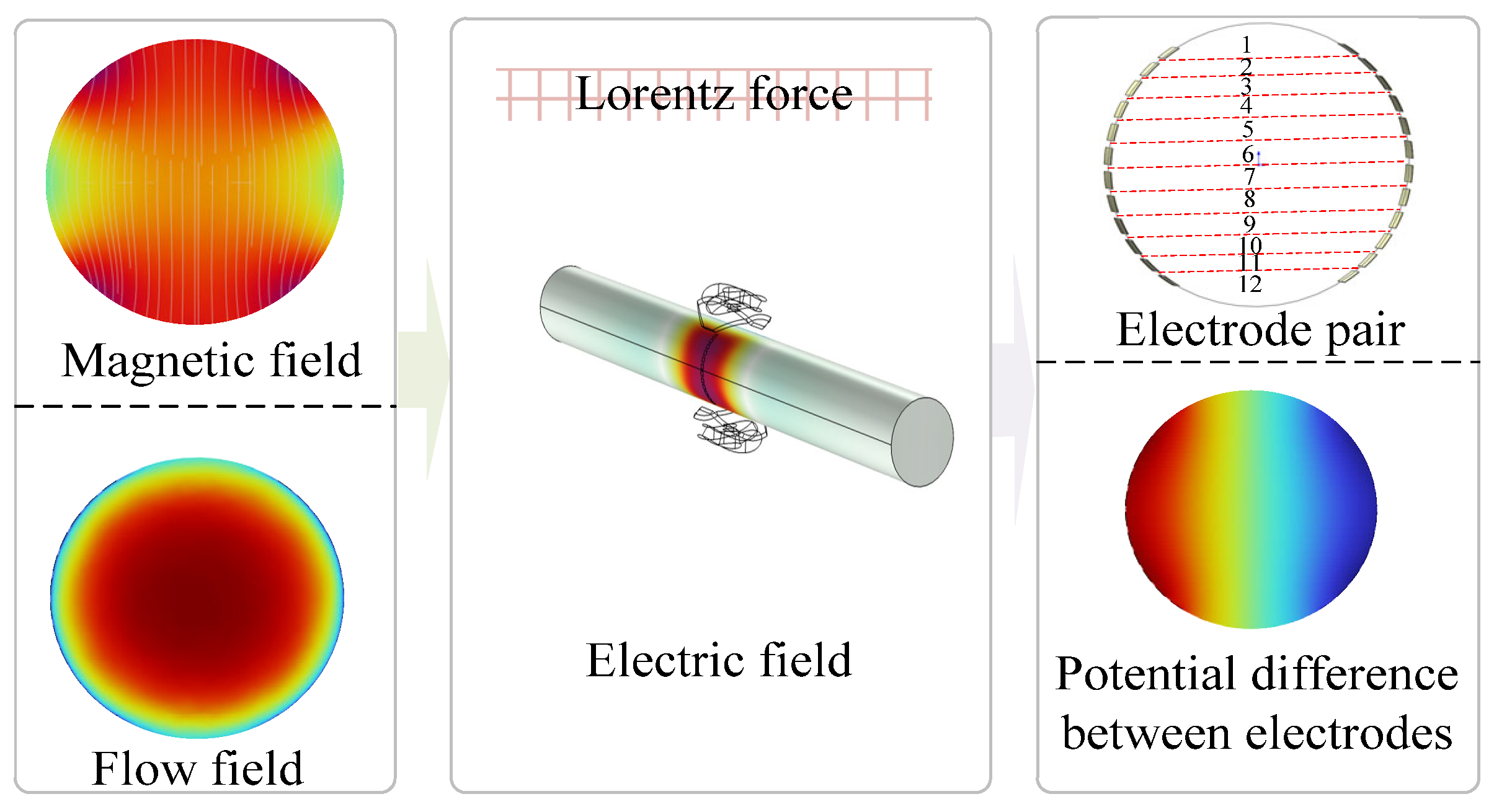
Model construction among multiple physical fields: The simulation of the actual distributed multi-electrode electromagnetic flowmeter is a process of coupling multiple physical fields with the fluid in the pipeline as the carrier. In this process, the magnetic field is excited by the coil first. Then, through the Faraday effect of the magnetic field and the flow field, the pipeline is filled with electromotive force, and this electromotive force is conducted to the electrodes.
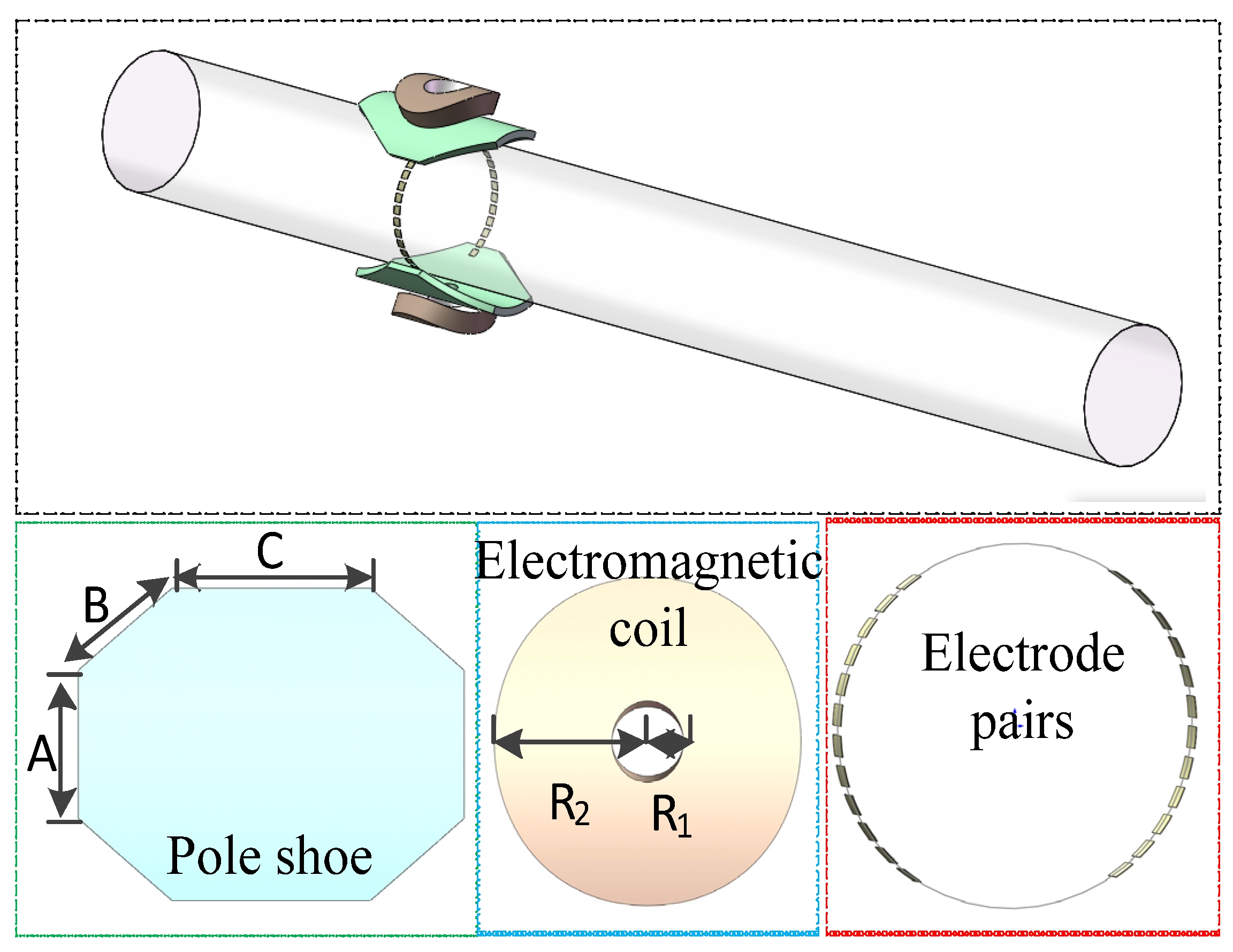
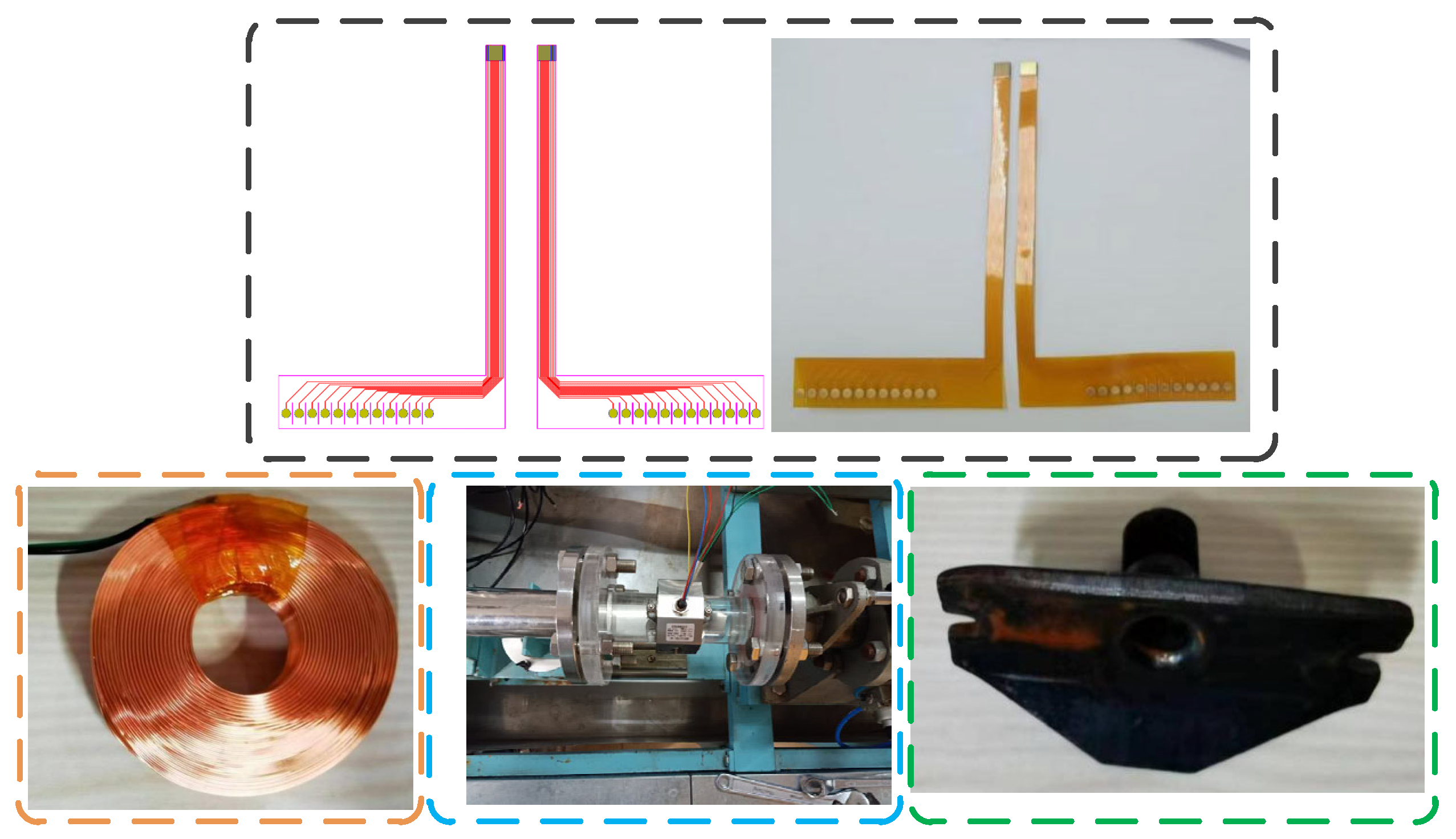
As shown in Figure 3 and Table 1, this is the simulation prototype of the multi-electrode electromagnetic flowmeter, which includes the dimensions of the hexagonal magnet iron, excite coil, as well as the positions and angles. Table 2 presents the partial dimensions of the electrodes and pipe diameter. The simulation work was implemented using COMSOL Multiphysics® 6.0 software, and its validity was verified by comparing the simulation results with the experimental data.
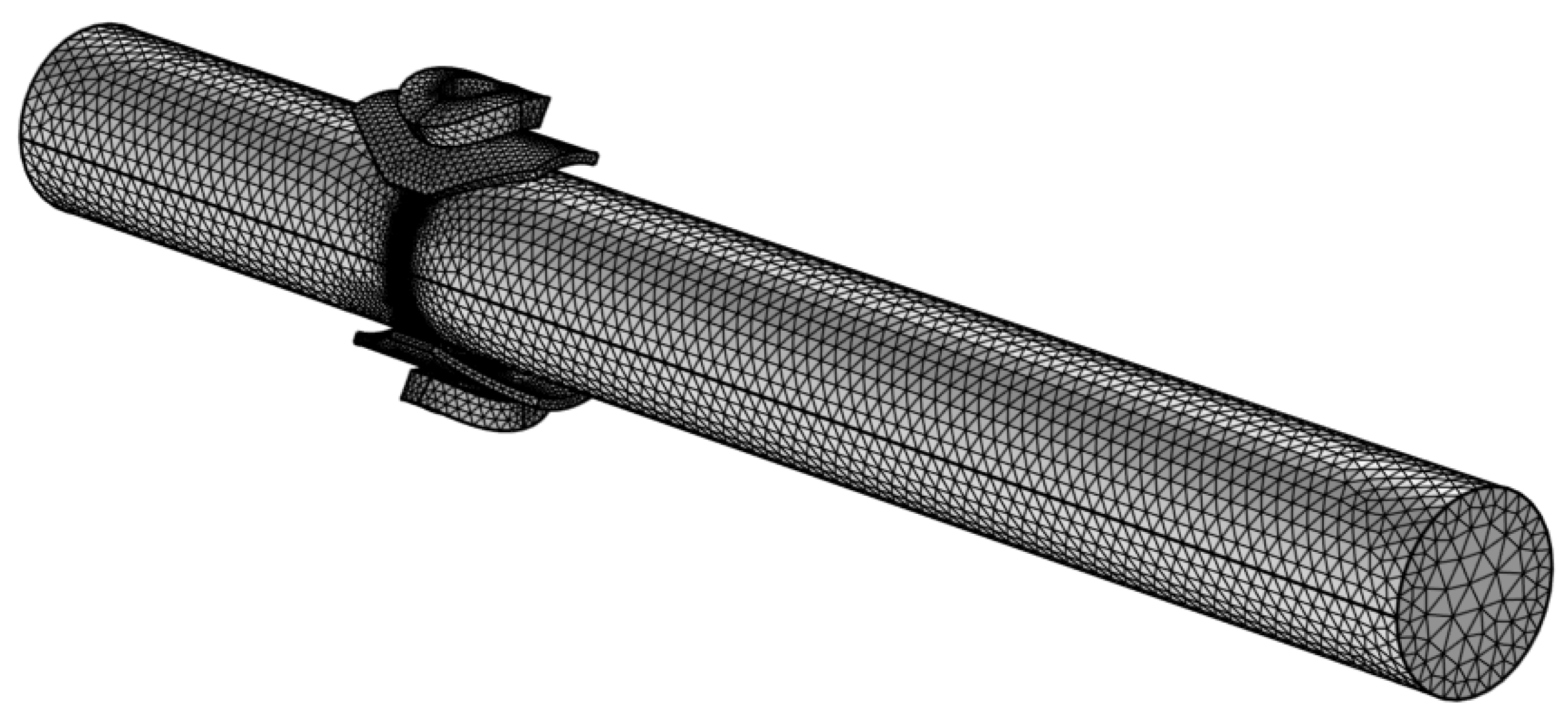
The meshing of the electrode part is relatively refined. First, the electrodes are meshed with hexahedral elements selected as the meshing type, while tetrahedral elements are adopted for other parts. The meshing result is shown in Figure 4.
In the simulation of electromagnetic flowmeters, under the action of the Lorentz force, turbulence and the magnetic field cause a potential difference to form between the electrodes at both ends. Firstly, the materials need to be designed in the simulation, including copper, water, pig iron and air. Among them, copper is used for the coils and electrodes, water is used for the fluid, pig iron is used for the pole shoes, and the other domains are air. The electromagnetic coil operates on a direct current of 250 mA, while the inlet velocity of the fluid flowing into the pipeline is 1 m per second. The simulation process can refer to the relevant literature [23]. As shown in Figure 5, it is the construction of the multi-physical field simulation of the electromagnetic flowmeter.
Figure 6 shows the main structure of the experimental system, which includes FPC array electrodes, excitation coils, pole shoes, and other components. This figure also depicts the experimental process of the standard water test conducted in the straight pipe section, which is primarily designed to verify the validity of the simulation and provide experimental evidence for the subsequent calculation of the weight function.
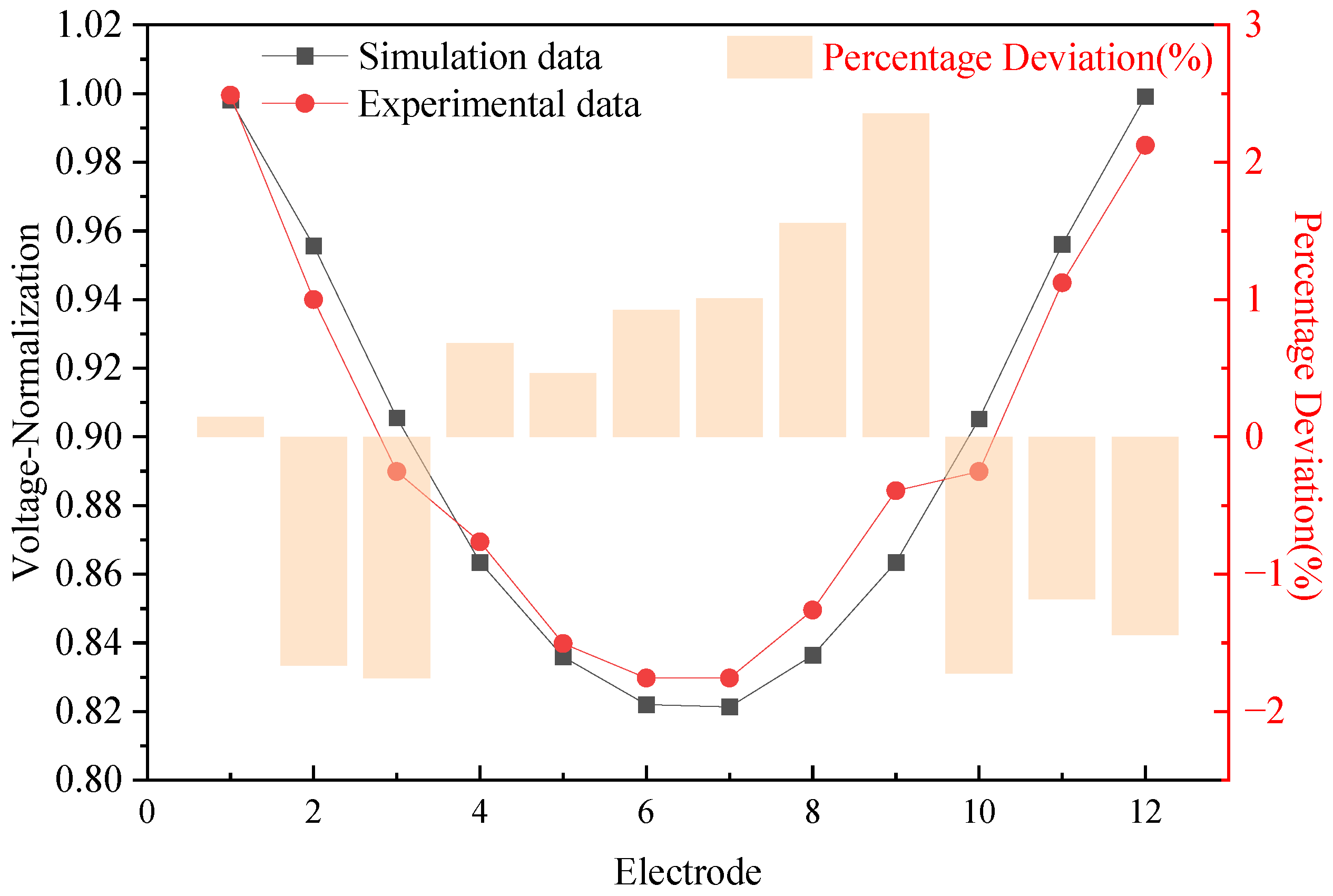
Based on the simulation model, a real flow platform for the straight pipe section was built to verify the correctness of the simulation. Figure 7 shows the results after the normalization processing of the potential difference obtained from the simulation and that obtained from the experiment. As depicted in the diagram, the variation trends of the potential difference observed in the simulation results and experimental measurements align closely with each other—a finding that validates the reliability of the simulation model. Through the comparison of percentage deviation, it is found that the maximum error is approximately 2%.

3.2. The Solution Process of the Cross-Sectional Velocity Field

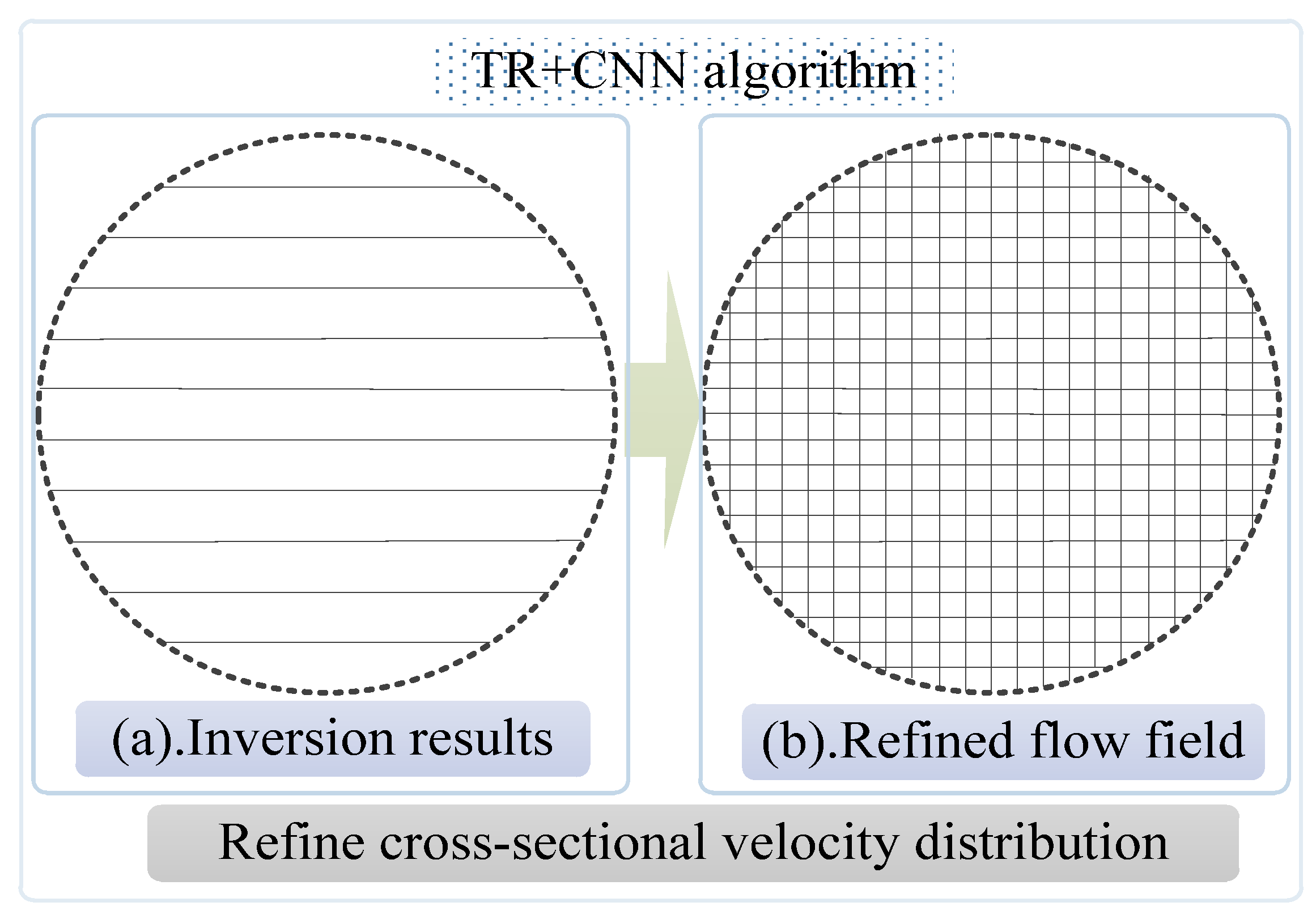
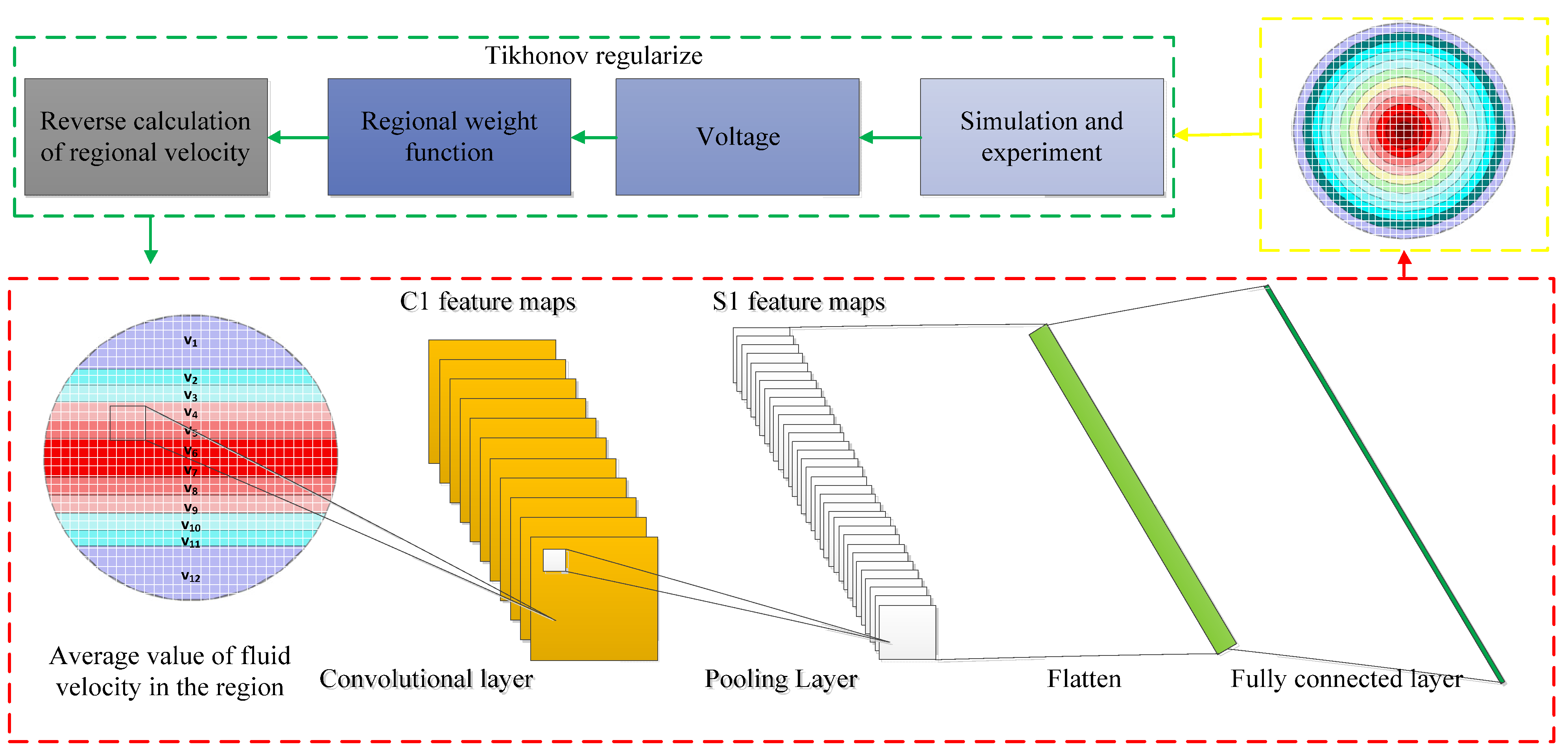
In this paper, the Tikhonov regularization algorithm [24,25,26] and the convolutional neural network (CNN) algorithm [27,28,29] are combined to form a new algorithm, which realizes the reconstruction of the velocity distribution of the pipeline cross-section using the electrode potential difference. This procedure falls into two sequential steps. The first step involves applying the Tikhonov algorithm to perform the inversion of the cross-sectional velocity field, though with somewhat limited precision. The second step leverages the CNN algorithm to refine the distribution profile of the cross-sectional velocity. The region in Figure 8a represents the average flow velocity calculated via the inverse operation, while Figure 8b displays the refined sub-regions (41 × 41). Using the CNN, a mapping relationship between these two types of regions is established. The Tikhonov regularization can only obtain the average velocity of the area to which the corresponding electrode pairs belong, and the CNN can be used to refine the solved cross-sectional velocity distribution, as shown in Figure 8.
The construction process of the TR-CNN is shown in Figure 9.
As shown in Figure 9, both the experiment and the simulation can obtain the flow velocity distribution inside the pipeline. When the conductive fluid flows through the magnetic field region and cuts the magnetic induction lines, under the action of the Lorentz force, a potential difference is generated on the electrode plates. The potential difference reflects the flow velocity distribution inside the pipeline. According to the relationship between the potential difference and the flow rate, the Tikhonov regularization approach serves to inversely compute the average velocity of various small sub-regions within the pipeline. We construct a CNN-based neural network model by integrating the average velocity of these small sub-regions with the velocity distribution across the pipeline’s cross-section. In this way, a neural network for the relationship between the potential difference and the velocity distribution of the pipeline cross-section can be built. Eventually, the velocity distribution of the cross-section inside the pipeline can be inversely calculated through the potential difference between the electrodes.
This study designed and implemented a convolutional neural network model aimed at predicting the velocity magnitude matrix processed by Tikhonov regularization. The core of this model is a convolutional layer, which is used to identify the local structural features in the velocity field. For two-dimensional data, the convolution operation can be expressed as
( X K ) ( i , j ) = m n X ( i m , j n ) K ( m , n )
Here, i and j denote the position indices of the output feature map, while m and n represent the indices of the convolution kernel. At each position, the convolution kernel is slid across the entire input matrix to generate the output feature map.
The model employs the ReLU function as its activation function, and its definition is given as follows:
f ( x ) = max ( 0 , x )
The advantage of the ReLU activation function lies in its simplicity and computational efficiency, which endows the model with nonlinear capability.
In addition, the model also includes a pooling layer to reduce the size and number of feature maps and enhance the generalization ability of the model; a flatten layer to convert the convolved feature maps into one-dimensional feature vectors; and a fully connected layer to map the extracted features to the predicted velocity and size. If the input to the fully connected layer is flattened into a one-dimensional vector x and the output is y, then the fully connected layer can be expressed as
y = W x + b
Here, W and b denote the weights and biases of each layer, respectively, which learns to map the input vector to the correct predicted output.
During the iterative training process, the model continuously optimizes its internal weight parameters, with the goal of minimizing the mean squared error between the predicted output and the actual velocity matrix.
The model uses approximately 1000 samples, which are derived from the numerically simulated velocity field of the pipe cross-section. A comparison between the actual simulation data and the data generated by the model yields the following results: the MSE is 0.015, MAE is 0.097, and RMSE is 0.121.

4. The Impact of Electrode Distribution on the Measurement System

The velocity distribution of the fluid within the pipeline exerts a significant influence on the electrode potential difference. This subsection focuses on exploring the correlation between the potential difference across electrode pairs and the distribution of flow velocity.

4.1. Introduction to the Experimental Apparatus

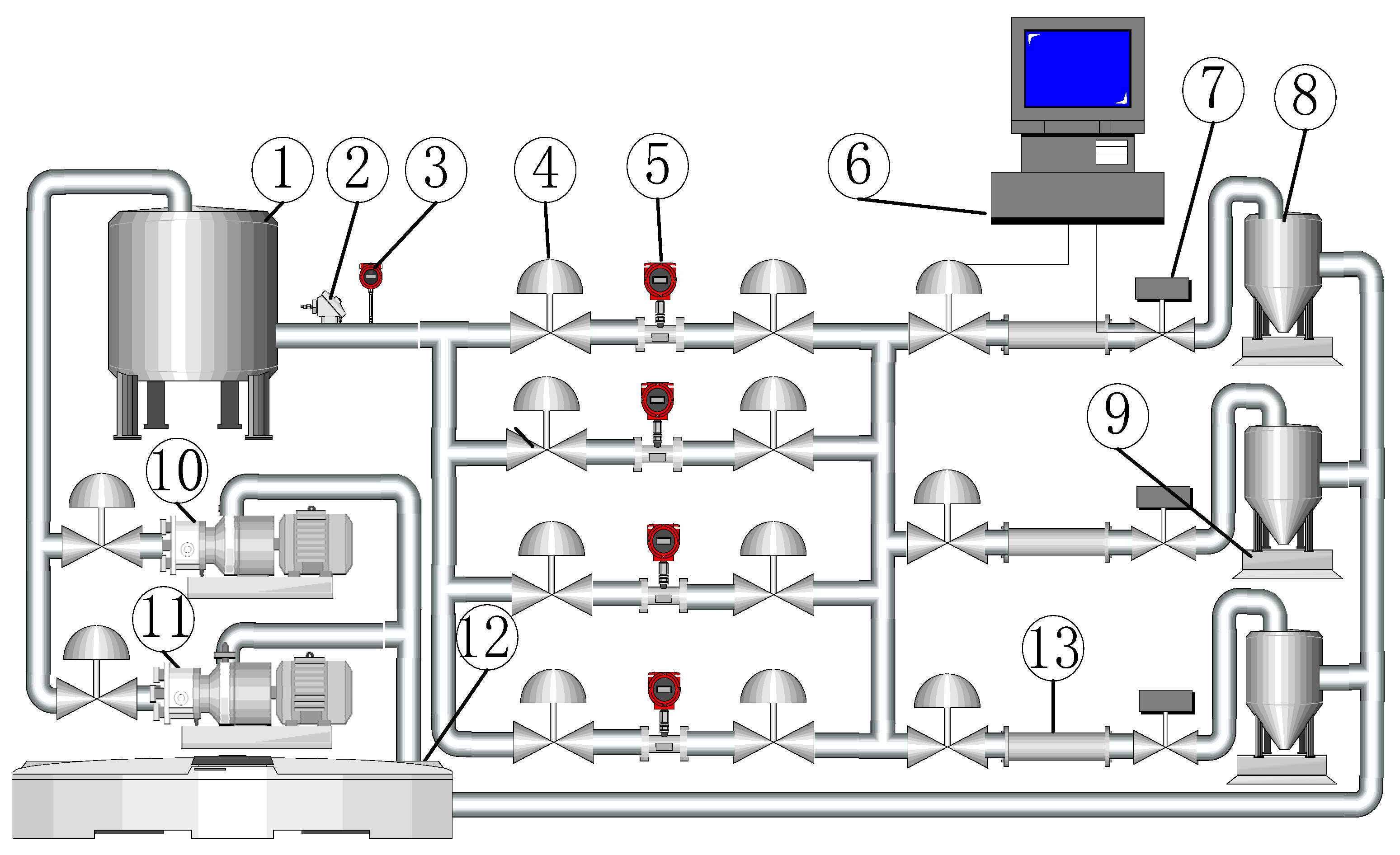
In this study, full-pipe experiments were carried out for the situation where the fluid velocity distribution was asymmetric. The experiments were conducted on the standard water flow rate device at Hebei University. This device is designed to generate standard water flow rates and meets relevant standard requirements at the same time. As shown in Figure 10, this device adopts two dual water pumps, which are driven by motors with a rated power of 7.5 kW and 15 kW. These pumps propel the liquid into four standard flow metering pipe sections for flow rate measurement. Afterwards, the liquid flows into three test pipe sections, with diameters of 100 mm, 50 mm, and 25 mm. Through the control of switch valves, the flow direction of the liquid goes through the liquid return pipe sections composed of a precision weighing system and finally returns to the water tank. These pipe sections can be used for the gravimetric test of the flow meters to be tested.

4.2. Introduction of Electrode Distribution

To investigate how electrode arrangement affects the measurement of the fluid velocity field across the pipeline’s cross-section, this study designed several experimental groups to perform inversion analysis on the velocity distribution of the fluid across the pipeline’s cross-section, aiming to confirm the validity of the multi-electrode electromagnetic flowmeter. For the purpose of experimental validation, the test pipe segments were fabricated from PVC material—this choice helps rule out measurement errors induced by interference factors associated with conductive pipelines.
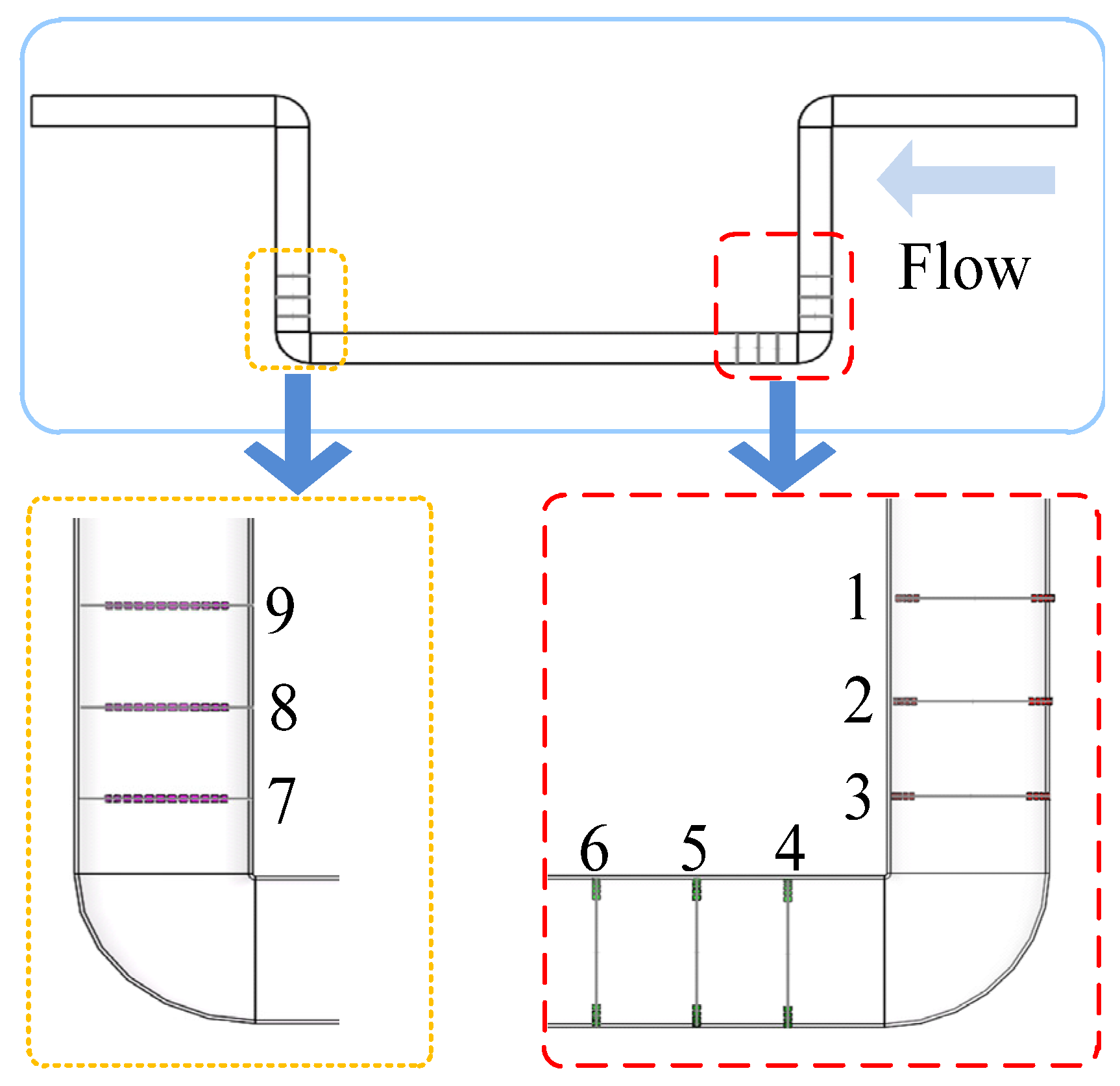
In order to study the imaging interference terms of the multi-electrode electromagnetic flowmeter under the asymmetric flow state, experiments were carried out on the multi-electrode electromagnetic flowmeter to measure the flow velocity distribution at the elbow. As shown in Figure 11, there are a total of nine measurement positions for the elbow. Positions 1–3 are located before the fluid flows into the elbow, and here it is to observe the response changes of the voltage generated by the electrodes when the fluid has not yet flowed into the elbow. Positions 4–6 are for observing the flow velocity changes after flowing through one elbow, and the theoretical flow state of positions 7–9 is consistent with that of positions 4–6. The difference between positions 4–6 and 7–9 lies in the different directions of the electrode installation positions. At this time, what is studied is the impact of different electrode installation directions on the imaging effect.
As shown in Table 3, the experimental verification was carried out on the standard water device. There are nine measurement points, and each measurement point conducted experiments on five flow rate points such as 1.12, 3.36, 5.6, 7.84 and 10.08 m3/h. The obtained results were used for imaging. For the convenience of practical application scenarios, a 4–20 mA signal output interface was designed on the circuit, and the flow rate size at the cross-section was inversely calculated according to the collected current signals.

4.3. Analysis of Measurement Results

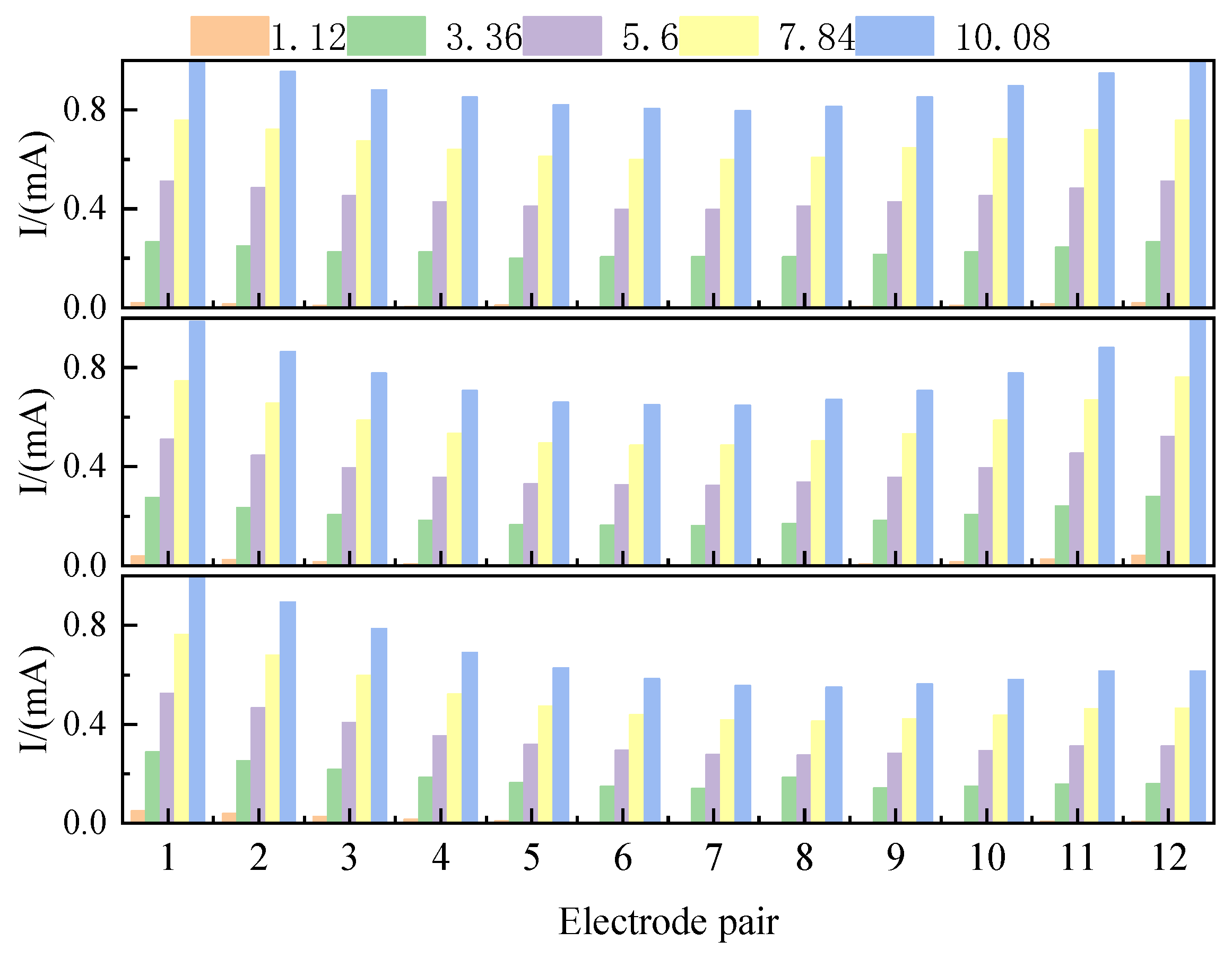
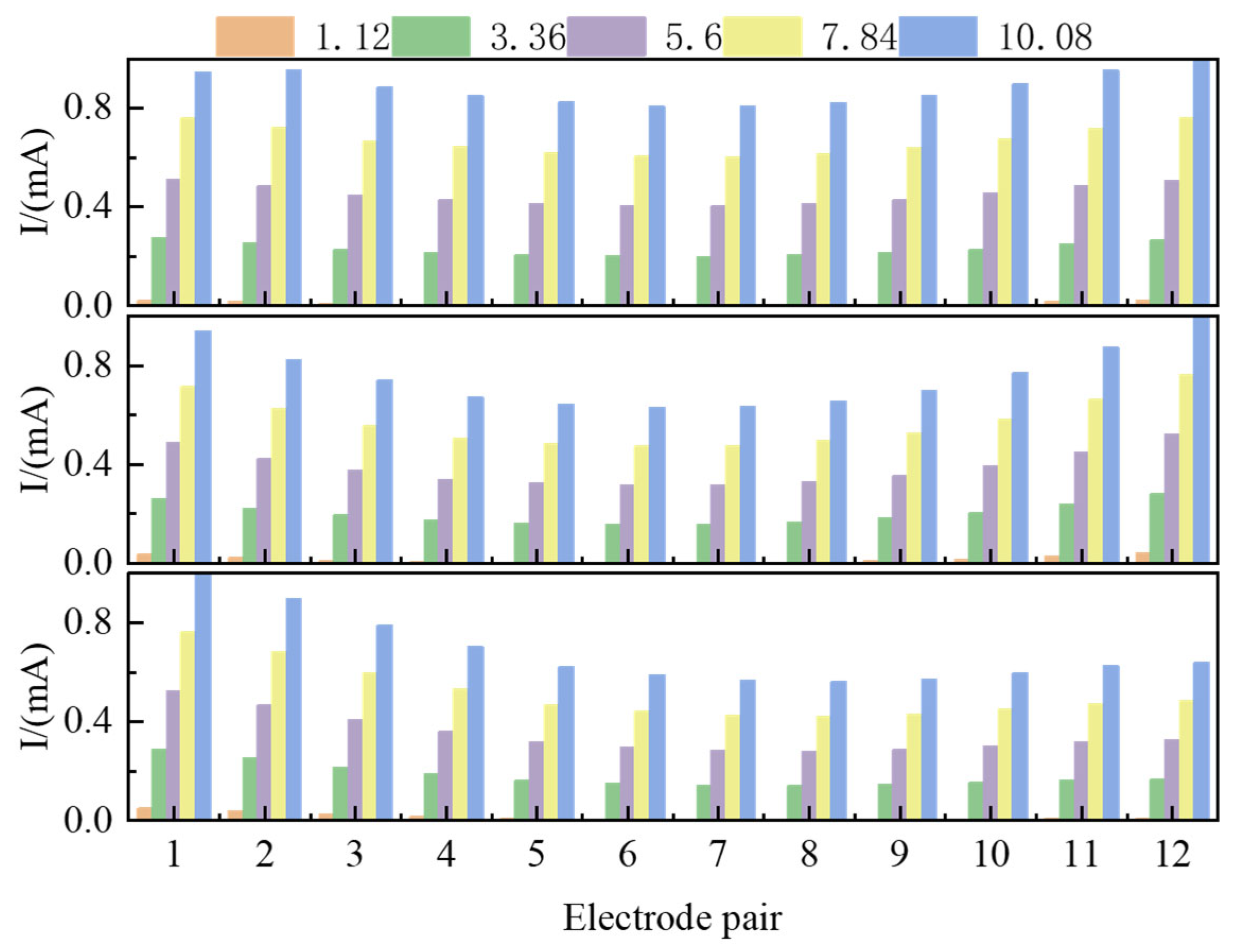
As shown in Figure 12, in the front part of the elbow, the current signals collected by the electrodes are distributed symmetrically and, to some extent, increase linearly with the increase in flow rate. The flow velocity distribution before the elbow is relatively uniform in itself, resulting in the signals collected by the electrodes also showing a symmetrical distribution. The results indirectly illustrate the stability of the system during the measurement process.
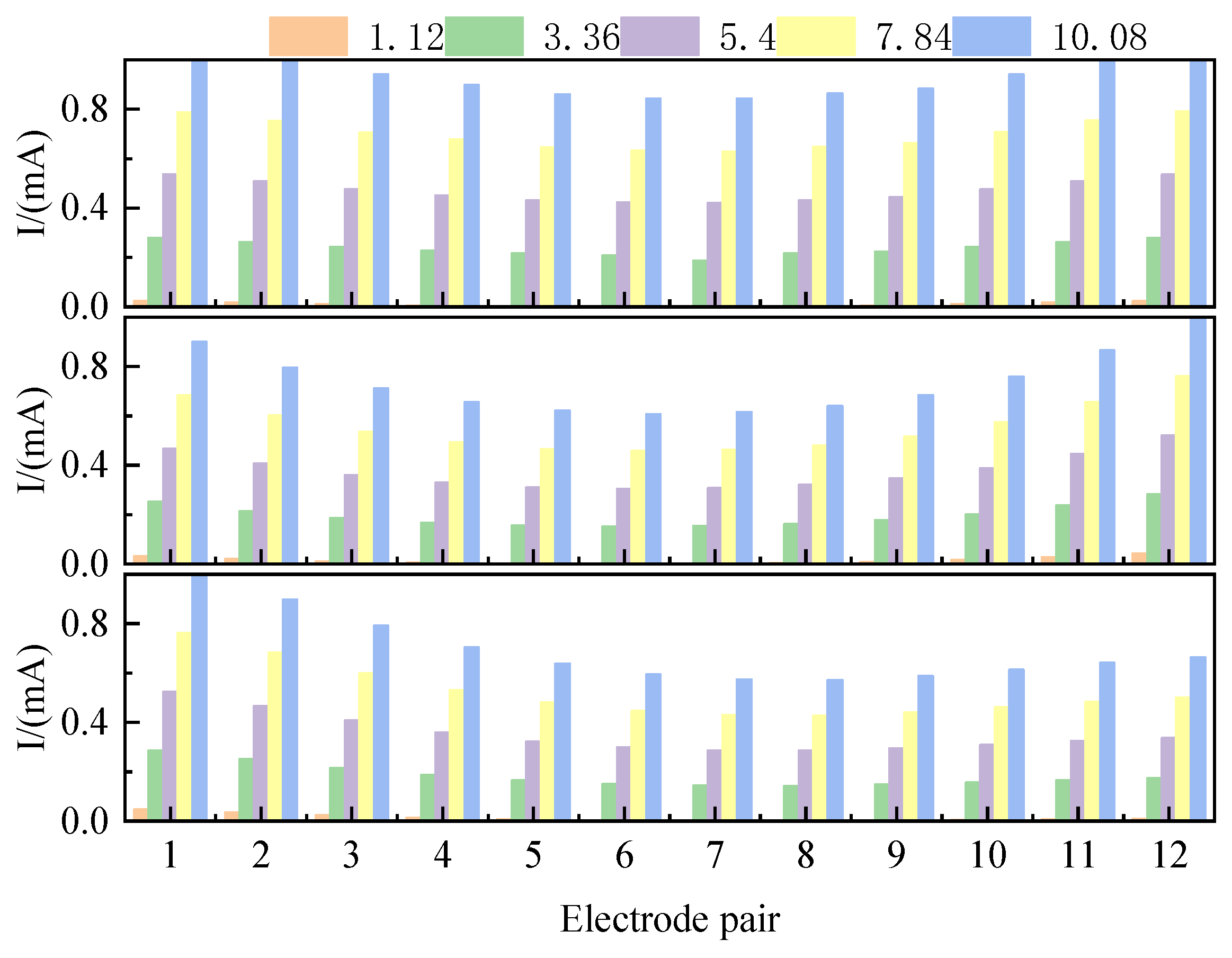
As shown in Figure 13, it presents the magnitudes of the current output values after passing through the elbow. The magnitudes of the current values at three different positions are relatively close. Compared with Figure 12, at this time, the change in the current value output by the electrode pairs close to the center is relatively small. After the fluid passes through the elbow, its velocity distribution changes, resulting in asymmetrical flow. The change in the current values output by the electrode pairs at both ends is relatively large, indicating that the electrode pairs at both ends are more “sensitive” to the change in the fluid velocity. However, after the fluid distribution changes, the signals collected by the electrodes still show a symmetrical distribution, and the symmetrical distribution of potential differences will lead to calculation errors during reverse operations.
As shown in Figure 14, at this time, the electrode pairs are placed in the vertical direction, and their positions at 7–9 are the same as those at 4–6. All of these locations are situated downstream of the elbow, and the flow velocity distribution status is consistent across these spots. Once the fluid flows past the elbow, its velocity distribution will shift toward one side, which leads to a higher flow velocity on that particular side. However, the electrode pairs are distributed vertically, and different electrode pairs will reflect the differences in the flow velocity distribution.
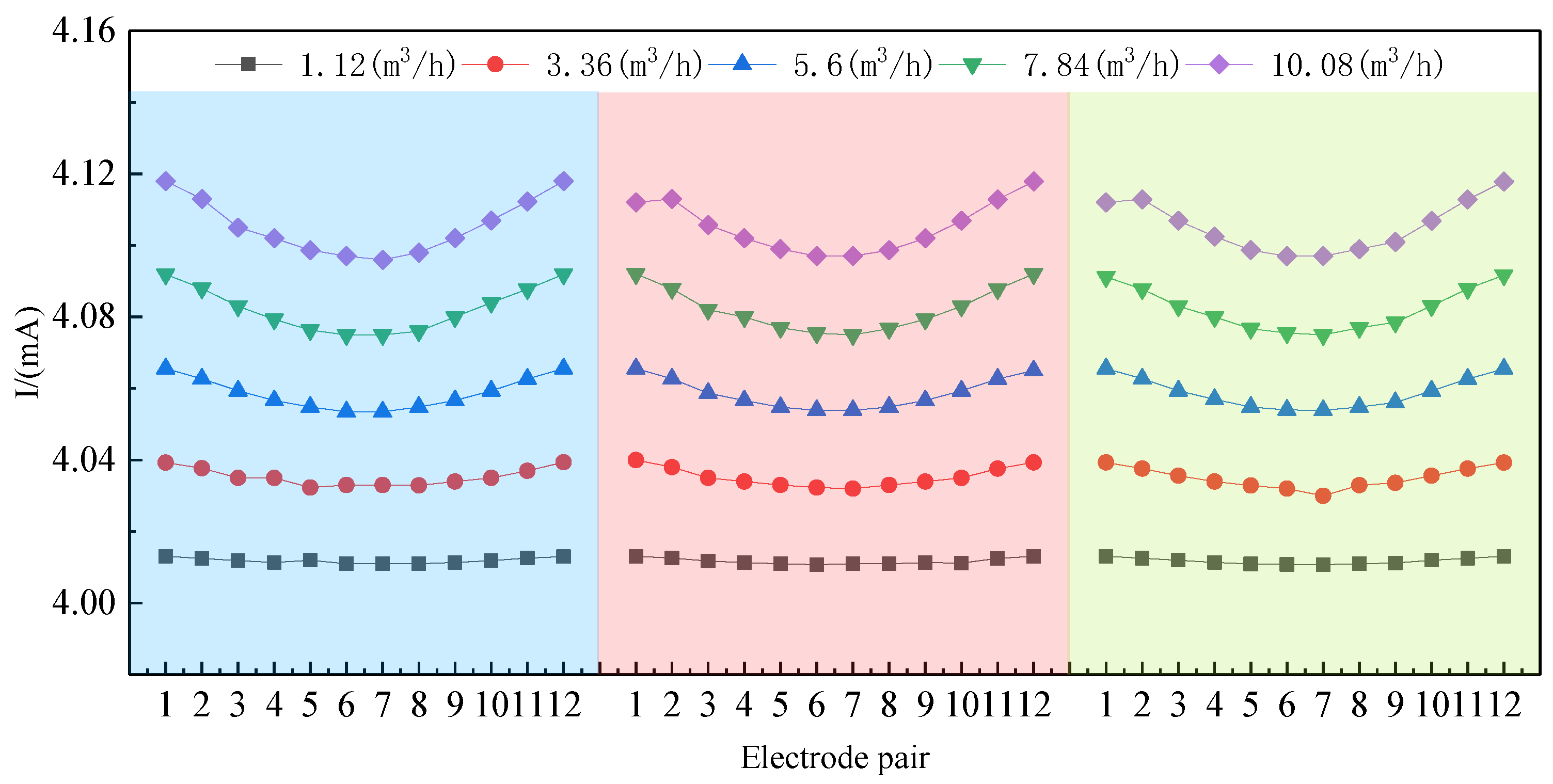
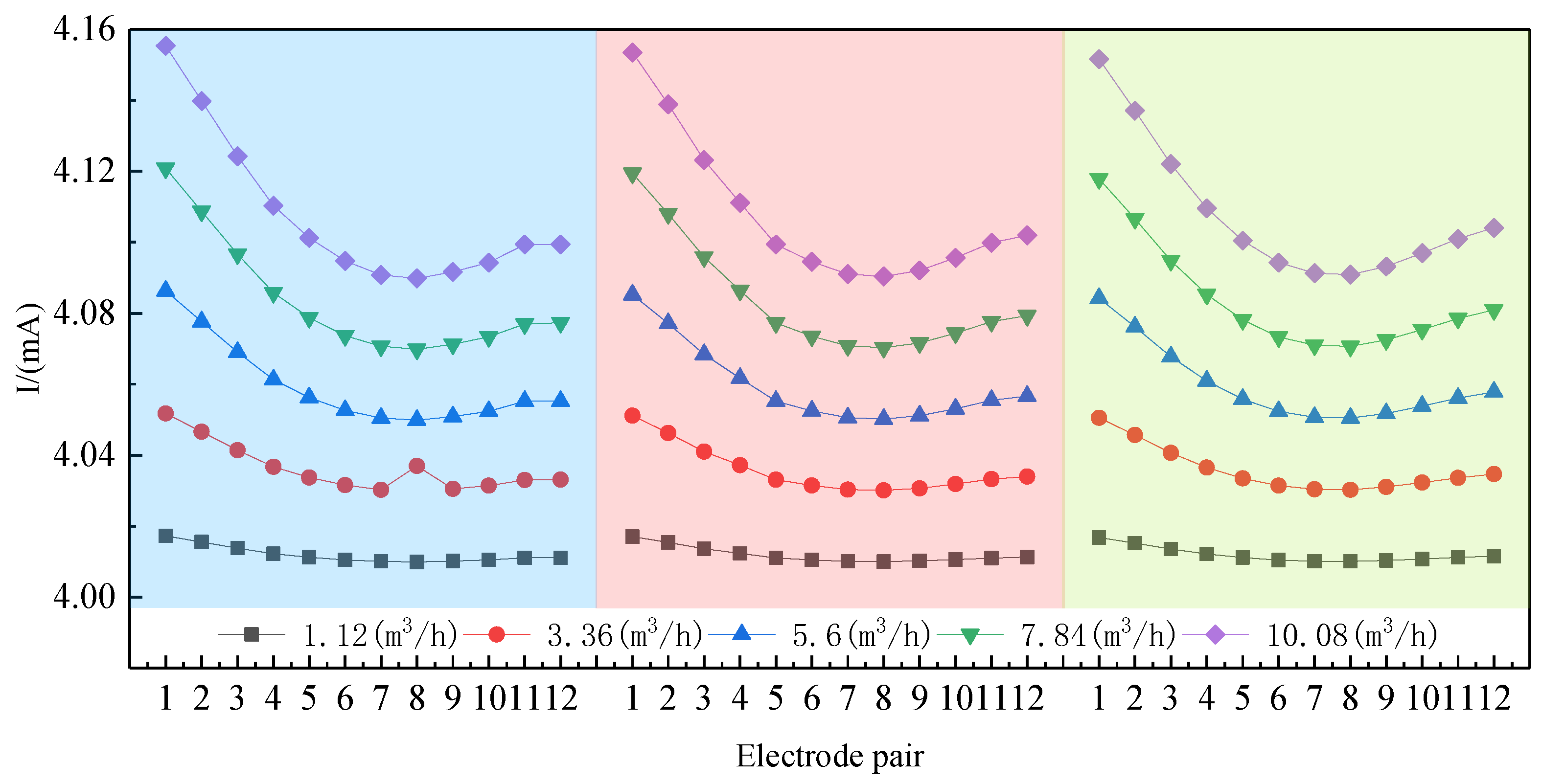
In order to observe the change of potential difference more clearly, a comparative analysis was conducted on the potential differences at positions 1–3. At these three positions, the fluid had not passed through the elbow yet, and the influence of eccentric flow was not obvious. As the flow rate increased, the current showed an upward trend. The curves in each chart represent the current responses under different flow rates, indicating that as the fluid flow rate increased, the current passing through the flowmeter also increased, which was in line with the characteristics of the electromagnetic flowmeter. Based on the analysis of the results in Figure 15, there was no obvious phenomenon that the potential difference of the middle electrode pairs became smaller while that of the two ends became larger at positions 1–3, which could illustrate that the flow velocity distribution of the fluid did not change much before passing through the elbow.
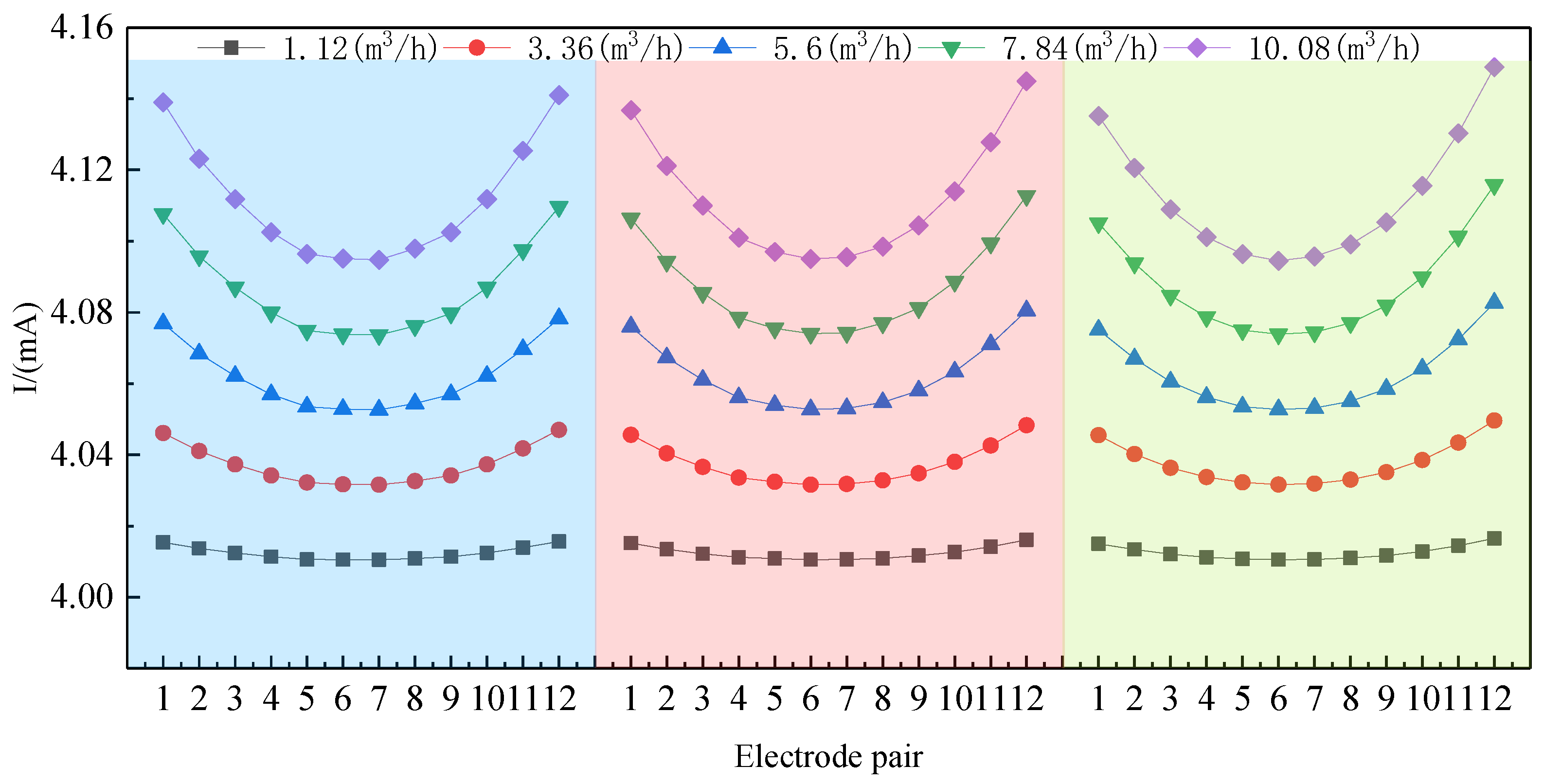
Figure 16 shows the situation of the current output values collected at the three positions of 4–6. The three positions from 4–6 are gradually moving away from the elbow. Compared with Figure 15, the potential difference at this time also presents a vertically symmetrical state, but it is different in value, with the potential difference of the middle electrode pairs being smaller and that of the two ends being larger. However, as the positions gradually move away from the elbow, the trend of being lower in the middle and higher at the two ends gradually becomes flatter (the difference between electrode pairs 4–9 in positions 4 and 6 can be compared). This phenomenon occurs because the fluid’s flow velocity distribution undergoes alterations after flowing past the elbow, and as it moves away from the elbow, the flow velocity distribution develops towards symmetry again.
Figure 17 shows the variation of current output at the three positions of 7–9. Compared with Figure 15 and Figure 16, the difference in the results is that the positions of 7–9 do not present a symmetrical state, and the subsequent flow velocity distribution also shows a biased state. However, since the electrodes are distributed vertically and the deflection of the elbow is a lateral deflection, the electrode pairs can easily capture the changes in the potential difference caused by the deflection. Moreover, as the positions gradually move away from the elbow, the asymmetrical state among the electrode pairs gradually disappears, indicating that the asymmetrical distribution of the fluid behind the elbow is also gradually diminishing.
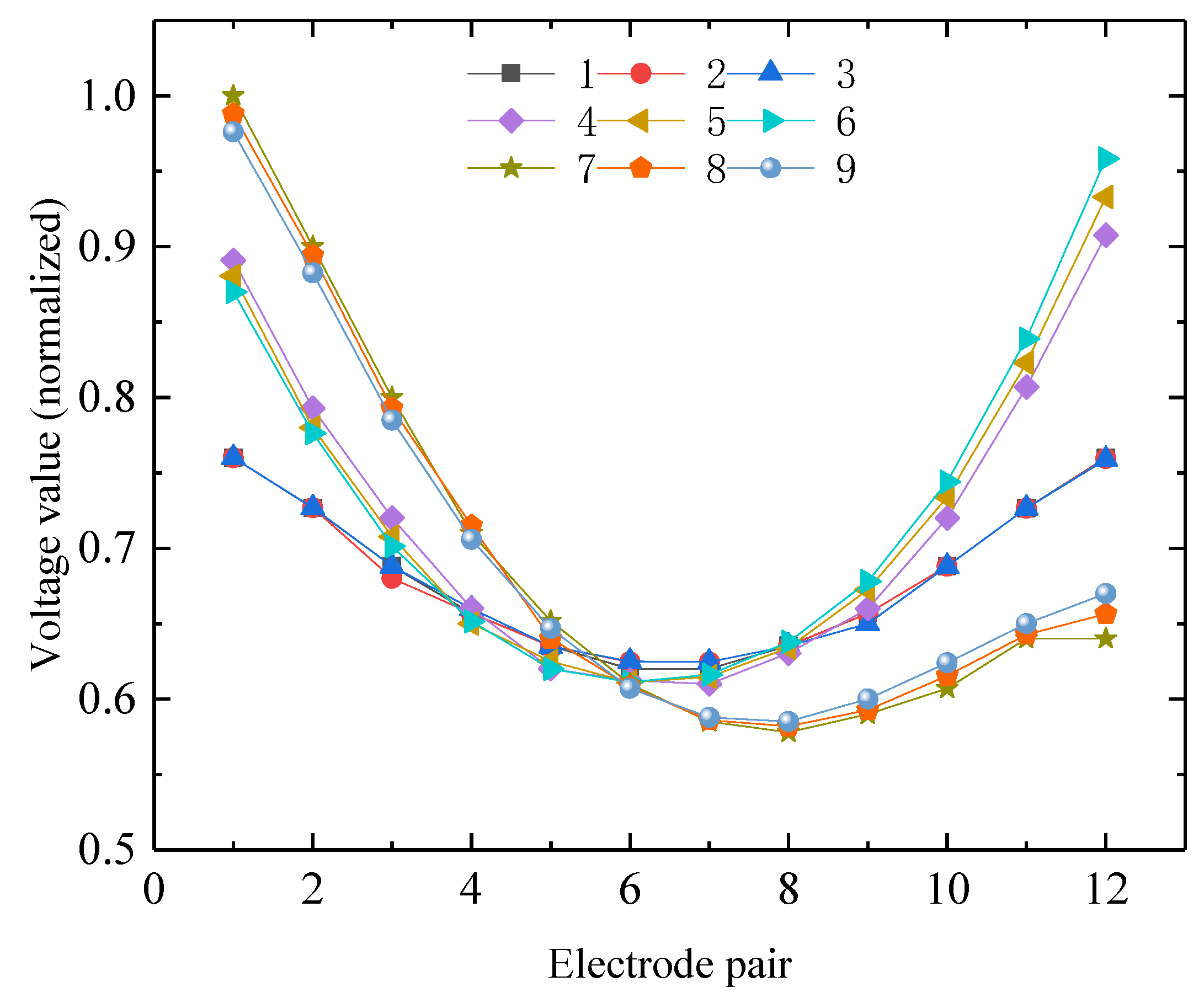
Figure 18 shows the distribution information of the voltage values at nine different positions after normalization processing (output current conversion) under a flow rate of 5.6 m3/h. It can be seen from the figure that the measurement results before the elbow (positions 1–3) are basically symmetrical and have a relatively high degree of consistency, indicating that the fluid flow at these positions is relatively stable. In contrast, the distribution of voltage values after the elbow (especially positions 7–9) is asymmetrical, which may be due to the influence of the direction in which the electrodes are placed. Compared with positions 4–6, the positions before the elbow show a more gentle fluctuation of voltage. This may indicate that the flow velocity peak of the fluid before the elbow is closer to the center of the pipeline, while the flow velocity peak shifts after the fluid flows through the elbow. The signals collected at the positions before the elbow (1–3) are relatively uniform, while the signals after the elbow (especially 7–9) show position dependence. Even though the flow rate point is fixed, different electromotive forces are generated at different positions. This may be because the elbow has changed the position of the flow velocity peak of the fluid in the pipeline, causing the peak to move towards the edge of the pipeline, thus generating a stronger electromotive force near the elbow. Near the elbow, the magnetic field may cause significant differences in the electromotive forces measured by the electrodes due to changes in the fluid flow.

5. Experimental Verification of the Fluid Cross-Sectional Velocity Field

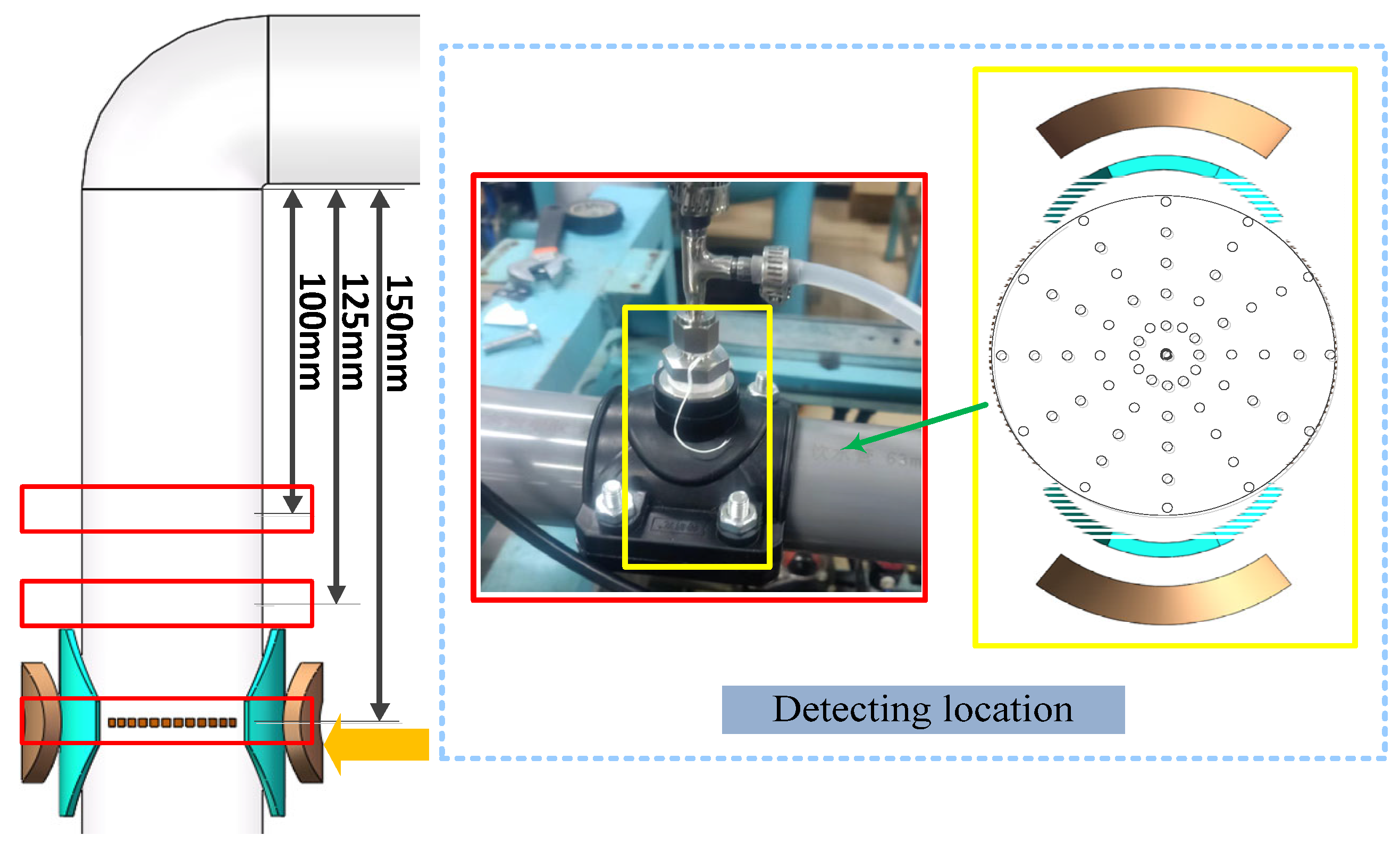
Within the experimental setup for the multi-electrode electromagnetic flowmeter, practical measurements were conducted targeting the asymmetric flow velocity distribution condition. For this study, a static Pitot tube was employed to gauge the axial velocity distribution across the cross-section. The specific measurement locations and sampling points are illustrated in Figure 19, and these measured data were compared against the velocity distribution results reconstructed from the flowmeter.
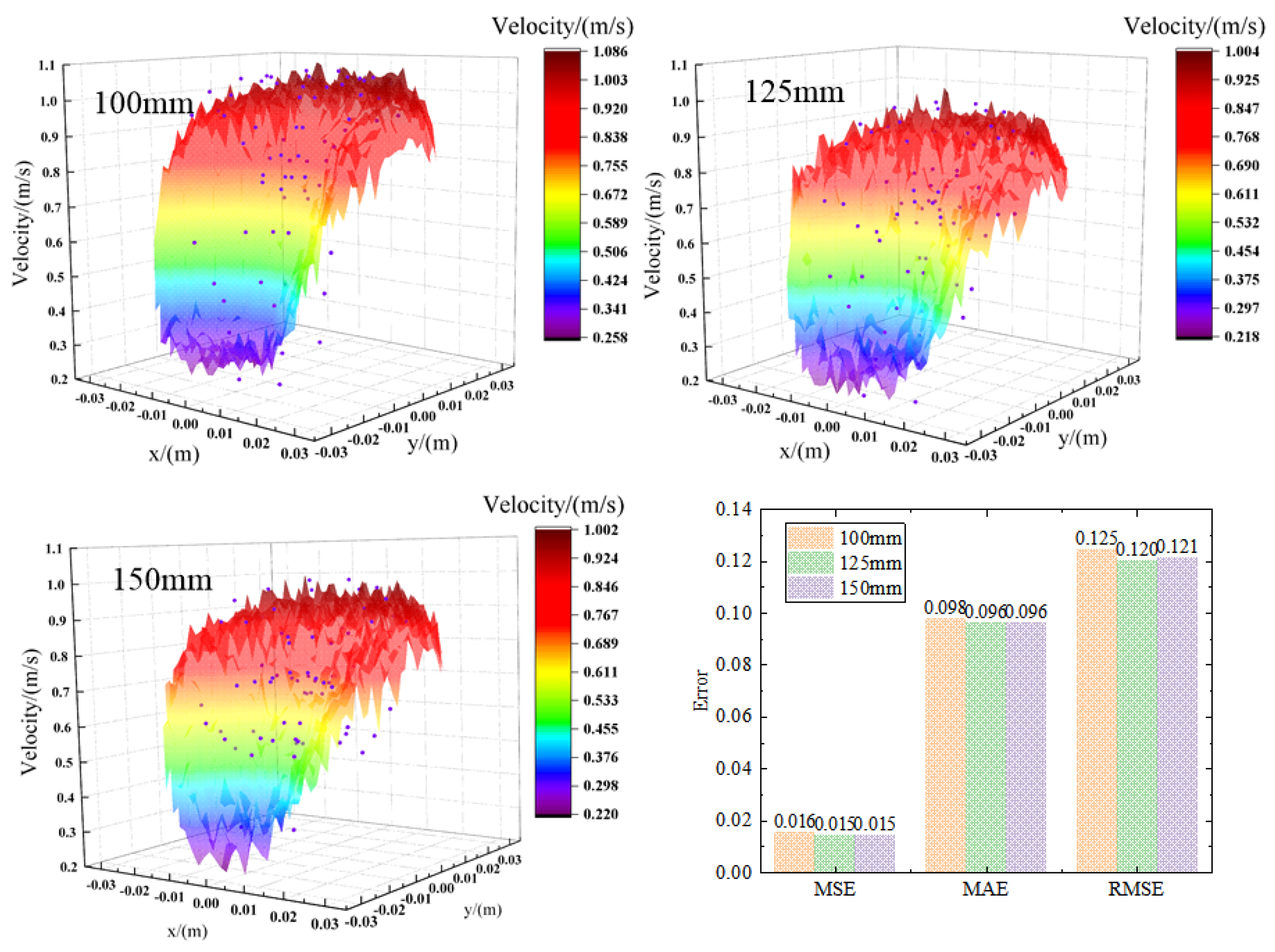
Figure 20 presents a comparison between the actual flow velocity data measured via the Pitot tube and the velocity field outcomes derived from the potential difference data collected at positions 7–9. It can be observed from the figure that the general variation tendencies of the two datasets are highly consistent, which aligns well with the inherent flow principles of fluids within pipelines. Within this figure, the measured positions correspond to distances of 100 mm, 125 mm, and 150 mm from the elbow’s turning point. The figure distinctly demonstrates that as the distance from the turning point grows, the level of “eccentricity” in the fluid’s flow velocity diminishes steadily. Additionally, when benchmarked against the Pitot tube measurements, the predicted cross-sectional velocity field yields error metrics of approximately 0.015 for MSE, 0.095 for MAE, and 0.123 for RMSE—these values validate the practical prediction precision of the proposed system.
The multi-electrode electromagnetic flow measurement system is applicable to the measurement of the cross-sectional velocity field in many harsh measurement environments. However, the measurement system is not without shortcomings. As analyzed in Section 4, it has a good effect on the measurement of the cross-sectional velocity distribution. But when the “velocity peak” of the fluid cross-sectional velocity field happens to be on the vertical line of the electrode pairs, it is difficult for the multi-electrodes to identify the direction of the peak, resulting in the failure of the final calculation. Therefore, this kind of phenomenon should be avoided as much as possible during the measurement process.
As shown in Table 4, the experimental results of electrode electromagnetic flowmeters reported in three previous studies are compared. No comparison of accuracy was performed due to the differences in measuring media and application methods. The method adopted in this study divides the entire cross-section into multiple sub-regions, where the number of partitioned sub-regions is controllable. Theoretically, the sub-regions can be refined infinitely, while a grid of 41 × 41 sub-regions was employed in the present study.

6. Conclusions

In this paper, the verified simulation data and the TR-CNN algorithm are utilized to construct a multi-electrode electromagnetic flow measurement system. Through actual flow experiments, the relationship between the placement positions of electrode pairs and potential differences is studied, and the following conclusions are obtained:
  • Through the comparison of potential differences obtained when the fluid passes through the elbow, it is found that the fluid velocity distribution before the elbow is less affected by the elbow, and the change in potential difference before the elbow is not obvious.
  • Through the comparison of a total of nine groups of methods with different positions and built-in electrodes, the more parallel the electrode pairs are to the central line of the flow velocity peak, the more symmetrical the potential differences of different electrode pairs will be. Meanwhile, this increases the difficulty of reverse calculation of the cross-sectional velocity distribution.
  • By comparing the fluid velocity measured by the static Pitot tube with the cross-sectional velocity distribution obtained by the multi-electrode electromagnetic flow measurement system, the MSE is 0.015, the MAE is 0.095, and the RMSE remains at around 0.123. This indicates the reliability of this electrode placement method and also reflects that the “skewing” phenomenon of the fluid flow velocity gradually weakens as the measurement points are farther away from the elbow.
The analysis results provide a theoretical foundation for the application and development of multi-electrode electromagnetic flow measurement systems, and offer a new perspective for researching the velocity distribution measurement across pipeline cross-sections using multi-sensor systems.

Author Contributions

Conceptualization, X.L.; software, Y.J. and J.C.; validation, L.L.; formal analysis, J.C.; investigation, B.H.; data curation, Y.J.; writing—original draft preparation, Z.S. and B.H.; writing—review and editing, G.J.; visualization, B.Z.; supervision, Z.S.; project administration, L.L.; funding acquisition, G.J. All authors have read and agreed to the published version of the manuscript.

Funding

This work is supported by National Natural Science Foundation of China (62371212).

Data Availability Statement

The original contributions presented in this study are included in the article. Further inquiries can be directed to the corresponding author(s).

Conflicts of Interest

Authors Yuntong Jia and Zeqiang Shi were employed by the company RIOH Automobile Testing Technology Co., Ltd. And author Bing Zhang was employed by the company RlOH High Science and Technology Co., Ltd. The remaining authors declare that the research was conducted in the absence of any commercial or financial relationships that could be construed as a potential conflict of interest.

References

  1. Fox, C.; Morrison, M.E.K. On the Spatial Response of Electromagnetic Flowmeters. Appl. Sci. 2023, 13, 6531. [Google Scholar] [CrossRef]
  2. Zou, Y.T.; Tu, C.X.; Chen, W.J.; Li, X.F.; Gao, W.K.; Jiang, X.Z.; Bao, F.B. On the effect of the electrode shape and contraction section on the right-angled electromagnetic flowmeter. Flow Meas. Instrum. 2023, 92, 102400. [Google Scholar] [CrossRef]
  3. Jin, N.D.; Yu, C.; Han, Y.F.; Yang, Q.Y.; Ren, Y.Y.; Zhai, L.S. The Performance Characteristics of Electromagnetic Flowmeter in Vertical Low-Velocity Oil-Water Two-Phase Flow. IEEE Sens. J. 2021, 21, 464–475. [Google Scholar] [CrossRef]
  4. Li, B.; Xu, J.F.; Chen, J.; Zhao, W.C. Study on the Static and Dynamic Characteristics of Vortex Electric Field in Electromagnetic Flowmeter and its Role in Attenuating Slurry Noise. IEEE Sens. J. 2023, 23, 8192–8205. [Google Scholar] [CrossRef]
  5. Ge, L.; Wang, S.J.; Li, L.; Chen, J.X.; Ji, Z.L.; Liu, Z.; Wei, G.H.; Xiao, X.T. Optimization of electromagnetic flow measurement system based on a new mesh electrode. Measurement 2023, 217, 113012. [Google Scholar] [CrossRef]
  6. Yang, Q.Y.; Jin, N.D.; Zhai, L.S.; Ren, Y.Y.; Yu, C.; Wei, J.D. Measurement of Water Velocity in Gas-Water Two-Phase Flow With the Combination of Electromagnetic Flowmeter and Conductance Sensor. Sensors 2020, 20, 3122. [Google Scholar] [CrossRef]
  7. Jiang, Y.L. Study on Weight Function Distribution of Hybrid Gas-Liquid Two-Phase Flow Electromagnetic Flowmeter. Sensors 2020, 20, 1431. [Google Scholar] [CrossRef]
  8. Justensen, J.; Barfuss, S.; Johnson, M.; Meacham, T. Effect of Meter Orientation Downstream of a Short Radius Elbow on Electromagnetic Flow Meters. J. Irrig. Drain. Eng. 2019, 145, 1–7. [Google Scholar] [CrossRef]
  9. Wang, Y.M.; Jia, H.; Li, W.T.; Liu, M.; Zhou, S. Influence study of pipelines on electromagnetic flow meter sensitive field. Instrum. Tech. Sens. 2017, 22, 29–31. [Google Scholar]
  10. Xu, L.J.; Wang, Y.; Qiao, X.T.; Xu, L.G. Design of electrode array of multi-electrode electromagnetic flowmeter. Chin. J. Sci. Instrum. 2003, 24, 335–339. [Google Scholar]
  11. Webilor, R.; Lucas, G.; Agolom, M. Fast imaging of the velocity profile of the conducting continuous phase in multiphase flows using an electromagnetic flowmeter. Flow Meas. Instrum. 2018, 64, 180–189. [Google Scholar] [CrossRef]
  12. Li, X.J. Research on a Reconstruction Method of Conductive Continuous Phase Velocity. Chinese J. Sens. Actuators 2020, 33, 1327–1332. [Google Scholar]
  13. Jiang, Y.L.; Jiang, W.Z.; Zhang, C. Simulation Research on Optimal Installation Position of partially-filled pipe Electromagnetic Flowmeter sensor. J. Phys. Conf. Ser. 2020, 1453, 012074. [Google Scholar] [CrossRef]
  14. Kade, J.B.; Steven, L.B.; Zachary, B.S.; Michael, C.J.; Todd, K.M.; Som, D. The effect of high-fidelity flow models on electromagnetic flowmeter analysis. AWWA Water Sci. 2022, 4, e1279. [Google Scholar]
  15. O’sullivan, V.T. Performance of an electromagnetic flowmeter with six point electrodes. J. Phys. E Sci. Instrum. 1983, 16, 1183–1188. [Google Scholar] [CrossRef] [PubMed]
  16. Horner, B.; Mesch, F.; Trächtler, A. A multi-sensor induction flowmeter reducing errors due to non-axisymmetric flow profiles. Meas. Sci. Technol. 1996, 7, 354–360. [Google Scholar] [CrossRef]
  17. Leeungculsatien, T.; Lucas, G.P. Continuous phase velocity profile measurement in multiphase flow using a non-invasive multi-electrode electromagnetic flow meter. AIP Conf. Proc. 2012, 1428, 243–250. [Google Scholar]
  18. Leeungculsatien, T.; Lucas, G.P. Measurement of velocity profiles in multiphase flow using a multi-electrode electromagnetic flow meter. Flow Meas. Instrum. 2013, 31, 86–95. [Google Scholar] [CrossRef]
  19. Zhao, Y.Y.; Lucas, G.; Leeungculsatien, T. Non-axisymmetric flow measurement study by multielectrode electromagnetic flow meter. AIP Conf. Proc. 2014, 1592, 63–70. [Google Scholar] [CrossRef]
  20. Beck, K.J.; Barfuss, S.L.; Moon, T.K. The superior accuracy of the arc electrode magnetic flowmeter: A numerical study. AWWA Water Sci. 2021, 3, e1220. [Google Scholar] [CrossRef]
  21. Cai, W.C.; Ma, Z.Y.; Zhai, G.F. Electromagnetic Flowmeters; China Petrochemical Press: Shanghai, China, 2004; Volume 3. [Google Scholar]
  22. Zhao, Y.Y. Study on Velocity Distribution Measurement of Single-Phase Flow and Solid-Liquid Two-Phase Flow Using Multi-Electrode Imaging Electromagnetic Flowmeter. Ph.D. Thesis, Tianjin University, Tianjin, China, 2011. [Google Scholar]
  23. Lu, B.; Xu, L.W.; Zhang, X.Z. Three-dimensional MHD simulations of the electromagnetic flowmeter for laminar and turbulent flows. Flow Meas. Instrum. 2013, 33, 239–243. [Google Scholar] [CrossRef]
  24. Jin, Q.N. On saturation of the discrepancy principle for nonlinear Tikhonov regularization in Hilbert spaces. Appl. Math. Lett. 2024, 156, 109150. [Google Scholar] [CrossRef]
  25. Bouzeffour, F. Inversion formulas for space-fractional Bessel heat diffusion through Tikhonov regularization. AIMS Math. 2024, 9, 20826–20842. [Google Scholar] [CrossRef]
  26. Zhang, J.C.; Liu, C.Y.; Zhao, Y.L. Inversion method of submarine steady electric field using point-type current source and Tikhonov regularization. J. Natl. Univ. Def. Technol. 2024, 46, 212–221. [Google Scholar]
  27. Diannata, R.Y.; Pan, M.C.; Hsu, Y.F. Sensor-to-Image Based Neural Networks: A Reliable Reconstruction Method for Diffuse Optical Imaging of High-Scattering Media. Sensors 2022, 22, 9096. [Google Scholar]
  28. Chen, H.J.; Kevin, L.; Joost, B.; Ellen, R.; Tom, V.; Bram, V. A Novel Physical Human Robot Interface with Pressure Distribution Measurement Based on Electrical Impedance Tomography. IEEE Sens. J. 2023, 23, 21914–21923. [Google Scholar] [CrossRef]
  29. Sofos, F.; Drikakis, D.; Kokkinakis, I.W.; Spottswood, S.M. Convolutional neural networks for compressible turbulent flow reconstruction. Phys. Fluids 2023, 35, 116120. [Google Scholar] [CrossRef]
  30. Gao, X.; Yue, S.; Cui, Z.; Ding, M.; Li, Q.; Wang, H. Optimal measurements of electromagnetic flowmeter. In Proceedings of the Conference Record—IEEE Instrumentation and Measurement Technology Conference, Aukland, New Zealand, 20–23 May 2019. [Google Scholar]
  31. Yao, L.; Liu, R.T.; Li, X.B.; Zhang, H.N.; Li, F.C. A novel Halbach array permanent magnet flowmeter for liquid metal flow measurement. Part II: Impact of velocity distribution on measurement signals and optimization design for electrodes. Nucl. Eng. Des. 2024, 426, 113397. [Google Scholar] [CrossRef]
Figure 1. Electromagnetic flowmeter model under non-uniform magnetic field.
Energies 19 00928 g001
Figure 2. Measurement model of long cylindrical electromagnetic flowmeter.
Energies 19 00928 g002
Figure 3. Assembly schematic.
Energies 19 00928 g003
Figure 4. Mesh division results.
Energies 19 00928 g004
Figure 5. Construction of multiple physical fields.
Energies 19 00928 g005
Figure 6. Main components of the multi-electrode electromagnetic flowmeter.
Energies 19 00928 g006
Figure 7. Distribution of the potential difference between the experiment and the simulation after normalization on the electrode pairs.
Energies 19 00928 g007
Figure 8. The refinement process of the velocity distribution on the pipeline cross-section.
Energies 19 00928 g008
Figure 9. Construction of the TR + CNN.
Energies 19 00928 g009
Figure 10. Water flow standard device. 1. Pressure stabilizing tank. 2. Thermometer. 3. Pressure gauge. 4. On/off valve. 5. Standard table. 6. CNC system. 7. Control valve. 8. Standard containers. 9. Precision quality scale. 10. 15 kw water pump. 11. 7.5 kw water pump. 12. Sink. 13. Test the pipeline section.
Energies 19 00928 g010
Figure 11. Distribution map of elbow positions.
Energies 19 00928 g011
Figure 12. Data distribution situation when the electrode pairs at positions 1–3 are horizontal (normalization processing).
Energies 19 00928 g012
Figure 13. Data distribution when the electrode pairs at positions 4–6 are horizontal (normalization processing).
Energies 19 00928 g013
Figure 14. Data distribution when the electrode pairs at positions 7–9 are horizontal (normalization processing).
Energies 19 00928 g014
Figure 15. Outflow values of the current at the three positions of 1–3.
Energies 19 00928 g015
Figure 16. Outflow values of the current at the three positions of 4–6.
Energies 19 00928 g016
Figure 17. Outflow values of the current at the three positions of 7–9.
Energies 19 00928 g017
Figure 18. Normalized voltage values at a flow rate of 5.6 m3/h under different positions.
Energies 19 00928 g018
Figure 19. Distribution of measurement positions.
Energies 19 00928 g019
Figure 20. Comparison between system prediction and Pitot tube velocity distribution.
Energies 19 00928 g020
Table 1. Dimensions of each component of the multi-electrode electromagnetic flowmeter.
Hexagonal Magnet IronExcite CoilPosition and Angle
Structural parametersA
(mm)
B
(mm)
C
(mm)
H1
(mm)
R1
(mm)
R2
(mm)
H2
(mm)
θ1
(°)
θ2
(°)
h1
(mm)
h2
(mm)
Initial size2035172.58307.5545455915.5
Table 2. Partial dimensions of the electrodes and pipe diameter.
Pipe DiameterPipe LengthElectrode SizeDistance Between Two Electrodes
Size (mm)5020042.3
Table 3. Positions of elbows and inlet volumetric flux.
Positions (mm)Electrode DirectionVolumetric Flux (m3/h)
Before the elbow 100Horizontal1.12, 3.36, 5.6, 7.84, 10.08
Before the elbow 125Horizontal1.12, 3.36, 5.6, 7.84, 10.08
Before the elbow 150Horizontal1.12, 3.36, 5.6, 7.84, 10.08
After the elbow 100Horizontal1.12, 3.36, 5.6, 7.84, 10.08
After the elbow 125Horizontal1.12, 3.36, 5.6, 7.84, 10.08
After the elbow 150Horizontal1.12, 3.36, 5.6, 7.84, 10.08
After the elbow 100Vertical1.12, 3.36, 5.6, 7.84, 10.08
After the elbow 125Vertical1.12, 3.36, 5.6, 7.84, 10.08
After the elbow 150Vertical1.12, 3.36, 5.6, 7.84, 10.08
Table 4. Comparison with other schemes.
Xiaofeng Gao [30]Liang Yao [31]Yuyang Zhao [22]The Present Study
Number of Regions16×1512741×41
Fluid mediumGas–LiquidLiquid MetalWaterWater
MethodCooperative Game TheoryChord Velocity MethodTikhonov
Regularization
TR-CNN
Disclaimer/Publisher’s Note: The statements, opinions and data contained in all publications are solely those of the individual author(s) and contributor(s) and not of MDPI and/or the editor(s). MDPI and/or the editor(s) disclaim responsibility for any injury to people or property resulting from any ideas, methods, instructions or products referred to in the content.