Article

Biochemical Methane Yield and Process Performance in Thermophilic Anaerobic Digestion of Abandoned Organic Solid Wastes

1
Rouyn-Noranda Campus, University of Quebec in Abitibi-Témiscamingue (UQAT), 445 Boul. de l’Université, Rouyn-Noranda, QC J9X 5E4, Canada
2
Environmental and Biotechnology Research Group (GREB), Cégep de Rivière-du-Loup, 80 Rue Frontenac, Rivière Du Loup, QC G5R 1R1, Canada
3
Investissement Québec, 333 Franquet Street, Québec, QC G1P 4C7, Canada
*
Authors to whom correspondence should be addressed.
Energies 2026, 19(4), 921; https://doi.org/10.3390/en19040921
Submission received: 19 December 2025 / Revised: 3 February 2026 / Accepted: 5 February 2026 / Published: 10 February 2026
(This article belongs to the Special Issue Wood-Based Bioenergy: 2nd Edition)

Abstract

In the context of the global energy transition, renewable and sustainable resources are increasingly being explored as an alternative to fossil fuels. Lignocellulosic and organic waste biomass is abundant, low-cost, and represents a promising feedstock for bioenergy production. However, the valorization of abandoned or underutilized residues remains largely unexplored. This study evaluated the bioenergy potential of eight solid organic waste materials collected from abandoned sites, including: (1) landfilled woodwaste, (2) softwood and (3) hardwood sawdust, (4) fresh pine bark (5) decomposed pine bark, (6) decomposed leaf and yard waste, (7) decomposed organic food waste (8) and aged barn dust. Physicochemical characterization revealed their high organic matter content across all substrates, with volatile solids (VS) ranging from 40% to 95%, whereas the C/N ratio varied widely from 10 to 1297. To optimize conditions, co-digesting was performed at a fixed substrate-to-inoculum ratio (SIR) at 1, which effectively balanced the high carbon content and enhanced process stability. Under thermophilic anaerobic digestion, organic matter degradation ranged from 16% to 71%. The highest specific methane potential reached 89.9 ± 7.7 L CH4·kg VS added−1 for fresh pine bark, while the lowest was 25.2 ± 6.8 L CH4·kg VS added−1 for decomposed organic food waste. The resulting digestates were rich in nutrients, demonstrating high agronomic value. Anaerobic digestion of abandoned lignocellulosic and organic residues presents a dual benefit: it reduces pollution while producing renewable energy in the form of methane and valuable by-products that can be used as fertilizers, thereby ensuring a circular economy. This study demonstrates the significant potential of utilizing overlooked waste streams as valuable resources in sustainable bioenergy generation.

1. Introduction

The discharge and accumulation of excessive amounts of organic solid waste (OSW) into the environment represent a significant global challenge [1]. Effective waste management systems are therefore essential to ensure environmental sustainability, minimize ecological damage, reduce public health risks and generate substantial economic benefits [2]. Common types of OSW such as forest residues, yard waste, paper and food waste are often managed through conventional methods like landfilling. However, these practices lead to the emission of methane, a potent greenhouse gas that, in the absence of regulatory controls, can be released directly into the atmosphere. Additionally, the decomposition of OSW produces leachate, a liquid effluent containing toxic pollutants and high levels of ammonia, which contributes to the generation of foul odors [3]. These contaminants can infiltrate and pollute both soil and water resources, including groundwater and surface water bodies [1]. Another widely used method for managing OSW is incineration, which aims to recover energy from waste. Despite its potential for energy production, incineration release significant quantities of greenhouse gases and other air pollutants, contributing to air quality degradation, climate change and broader environmental concerns [4].
Alternative technologies have been developed for the treatment of OSW with the aim of for energy recovery, including gasification, which produces syngas with a higher energy content, and pyrolysis, which thermally decomposes organic waste into bio-oil, biochar suitable for applications as sorbents [5,6]. However, the widespread application of these thermochemical processes is limited by their cost-effectiveness and the experiments’ high cost due to the requirement of higher temperature [7]. In contrast, anaerobic digestion (AD) has emerged as a promising biochemical alternative, offering several advantages such as lower operating temperatures, higher product selectivity, and reduced greenhouse gas emissions compared to thermochemical methods [8]. AD is a complex, multi-stage microbial process comprising four key biochemical phases: hydrolysis, acidogenesis, acetogenesis and methanogenesis [8]. During this process, biodegradable organic matters are broken down by microbial consortia in an oxygen-free environment. The conversion of OSW into biogas not only enables renewable energy production but also allows for the valorization of digestate as a biofertilizer, thereby closing nutrient loops and supporting circular economy principles [9]. As such, AD represents a natural recycling system capable of processing a wide variety of organic feedstocks. Biogas, the primary output of AD, has a wide range of applications across the energy sector. It can be directly used as a source of energy for thermal requirements and power generation, replacing fossil fuels [5]. Furthermore, biogas serves as a valuable source for the production of sustainable chemicals, including hydrogen, carbon dioxide and advanced biofuels [10]. The composition of raw biogas typically consists of 50–70% methane (CH4), 30–50% carbon dioxide (CO2), and traces of other gases such as hydrogen sulfide (H2S), oxygen (O2), ammonia (NH3), nitrogen (N2), hydrogen (H2), and carbon monoxide (CO) [11]. The composition of biogas varies depending on the nature of feedstock and the operational conditions of the digestion process [12]. To enhance its energy content and usability, biogas must undergo and upgrading process to remove CO2, H2S and other impurities. This purification yields a high quality biomethane renewable gas that can be efficiently used as green energy [13].
A wide range of organic waste materials and residues can serve as feedstock for biogas production, with lignocellulosic biomass being particularly attractive due to its abundance and low cost. Derived from agriculture residues, forestry by-product, wood processing waste, and grass, lignocellulosic materials represent a sustainable and widely available resource for bioenergy production [14]. Their bioconversion not only contributes to waste valorization but also supports the transition toward a more resilient and low carbon energy system. AD offers a reliable way of recycling organic waste, reducing environmental pollution and generating a renewable energy source, thereby ensuring a circular economy. Indeed, the uncontrolled disposal of organic waste and lignocellulosic residues in landfills or at abandoned outdoor sites poses a significant environmental pollution threat, primarily through the production of toxic leachate [15]. Leachate is a complex aqueous effluent characterized by a high load of both organic and inorganic pollutants, including heavy metals, ammonia, nitrogen compounds, and a variety of dissolved and suspended contaminants [16]. Studies have shown that improperly managed wood residues can be a major source of such pollution. Rex et al. in 2016 reported that all tested wood chip types produced a toxic leachate capable of contaminating nearby streams when processing sites are hydrologically connected to waterways [17]. Similarly, Kannepalli et al. [18] demonstrated that leachate from logs and wood waste is often acidic, nutrient-deficient, and exhibits a very high biochemical oxygen demand, which can severely deplete oxygens levels in aquatic ecosystems. Furthermore, Kamal et al. [19] highlighted that phenolic compounds leached from wood residues can be toxic to the organisms even at low concentrations.
In Québec, the wood-processing industry generates substantial quantities of wood residues such as bark and sawdust, that are frequently stored outdoors, increasing the risk of leachate formation and environmental contamination. In response, Québec municipalities have established regulatory limits for phenolic compounds in municipal wastewater, setting the permissible concentration at 0.5 mg/L after treatment at wastewater treatment plants [15]. This underscores the urgent need for improved management strategies to mitigate pollution risks and ensure environmental compliance. Given these challenges, the proper handling and valorization of such biowaste residues are crucial for achieving a sustainable future.
Thus, the present study was conducted to evaluate the potential for energy recovery from a diverse range of OSW and lignocellulosic biomass collected from various abandoned sites and wood storage deposits. We performed a detailed physicochemical characterization of these residues to determine their composition and suitability as substrates for bioenergy production. The energy production assessment was carried out using AD with a microbial consortium composed of hydrolytic and methanogenic bacteria. This approach aimed to determine the efficiency of these microbial communities in the degradation of recalcitrant lignocellulosic structures and their conversion into methane-rich biogas. This investigation had a dual objective: (1) to identify suitable, underutilized, or unmanaged waste streams for energy recovery via AD, and (2) to contribute to a viable environmental solution by reducing the pollution associated with the storage and abandonment of these lignocellulosic and organic waste biomass.

2. Materials and Methods

2.1. Biomass Sampling

A diverse range of lignocellulosic and organic waste materials was gathered from distinct abandoned sites and wood storage deposits. Site selection was based on accessibility and the presence of representative organic residues. For each site, samples consisted of multiple subsamples collected from the same location and thoroughly homogenized to form a representative composite sample. The composite samples were stored in sealed containers at 4 °C to minimize oxygen exposure and limit microbial activity until further processing. The storage period prior to drying and grinding was restricted to limited days (maximum 7 days). Under these conditions, no significant biological changes were expected, and the BMP results were therefore unlikely to have been affected.
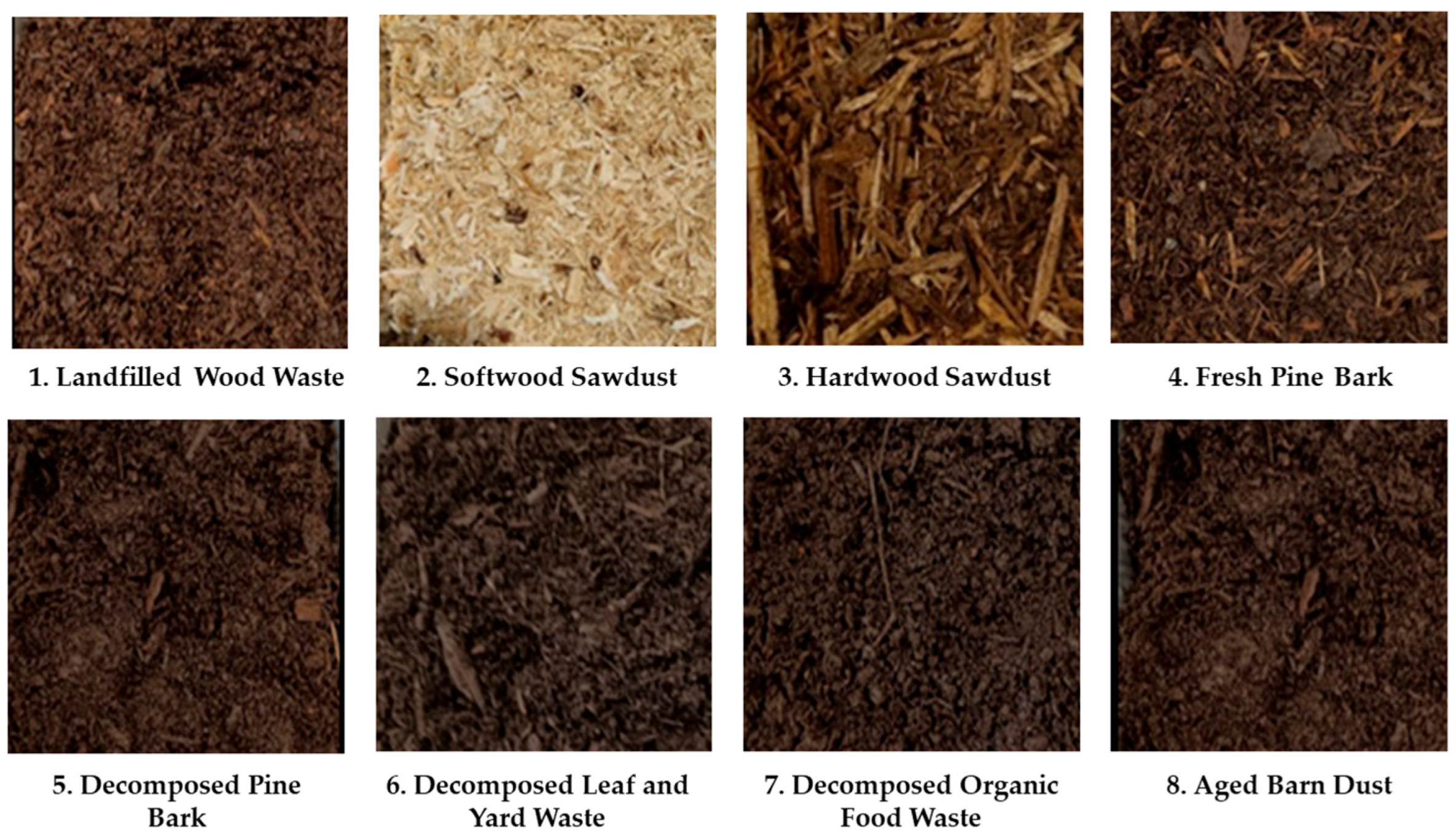
The eight samples, representing a broad spectrum of feedstock complexity and decomposition levels, included (1) landfilled wood waste, (2) softwood sawdust, (3) hardwood, (4) fresh pine bark, (5) decomposed pine bark, (6) decomposed leaf and yard waste, (7) decomposed organic food waste and (8) aged barn dust (as visually represented in Figure 1).
The collected samples were subsequently dried at 65 °C for 20 h to reduce moisture content and ensure optimal preservation. The dried materials were then mechanically ground to a particle size of 0.5 mm using a Thomas Wiley Laboratory Mill (Model 4, Thomas Scientific, Swedesboro, NJ, USA) prior to physicochemical characterization. Mechanical grinding was applied as a preliminary physical pretreatment to reduce the particle size of the solid waste and partially disrupt its complex lignocellulosic structure, thereby increasing its specific surface area and enhancing microbial and enzymatic accessibility. Improved substrate accessibility is commonly associated with increased biogas and methane yields, as it accelerates microbial degradation and hydrolytic enzyme activity during anaerobic digestion. The beneficial effects of mechanical size reduction on anaerobic digestion and sugar solubilization have been extensively reported in the literature [20,21]. The prepared samples underwent a comprehensive physicochemical analysis (see Table 1). Dry matter (DM) and volatile solids (VS) were assessed according to Eaton et al. [22]. Total Kjeldahl nitrogen content (TKN) was measured following Hach method [23]. The carbon to nitrogen ratio (C/N) was calculated by dividing the volatile solids (VS) content (used as a proxy for organic carbon in biomass studies) by 2 and then dividing the result by the TKN content [24]. To assess intrinsic fertilizing potential, the total content of Nitrogen (N), Phosphorus (P), and Potassium (K) was quantified. This involved a total acid digestion step followed by colorimetric analysis and plasma spectrophotometry (MP-AES, Agilent technology, Santa Clara, CA, USA), in accordance with method no. CPVQ-MI-1-NPK [25]. Finally, the biochemical methane potential (BMP) of each sample was assessed to determine its maximal inherent bioenergy yield via anaerobic digestion.

2.2. Inoculum Sampling

The inoculum (I) used as the negative control (C−) in this study was obtained from the municipal solid waste treatment plant, SEMER, located in Rivière-du-Loup, Québec, Canada. To ensure an optimal and balanced microbial community. The inoculum was prepared by combining two distinct microbial consortia. The inoculum was prepared by combining two distinct microbial consortia in defined volumetric proportions (v/v). The hydrolytic microbial community was sourced from a thermophilic hydrolysis reactor operating at 55 °C. This reactor is specifically designed to enrich microorganisms capable of efficiently breaking down complex organic matter, particularly the recalcitrant lignocellulosic structures present in the studied feedstocks. Meanwhile, the methanogenic consortium was derived from a thermophilic anaerobic digester also maintained at 55 °C, which is actively responsible for biogas production. The inoculum mixture was characterized by an initial pH of 8.51, total solids (TS) content of 2.66%, and volatile solids (VS) content of 1.58%. The volatile fatty acid (VFA) concentration was 1725 mg/L, while the alkalinity reached 7672.24 mg/L, resulting in a VFA/alkalinity ratio of approximately 0.22. This ratio is widely regarded as indicative of stable and well-buffered system suitable for anaerobic digestion (Table 2 and Table 3). This resulting inoculum composition was specifically selected to ensure a balanced microbial community with high hydrolytic activity (to maximize organic matter solubilization) and robust methane production potential (to maximize energy yield) under thermophilic conditions. This strategy provided a synergistic microbial community capable of handling the complex and varied nature of abandoned waste streams.

2.3. Biotransformation Process

2.3.1. Experimental Set up for Batch AD System

The BMP tests were conducted using two systems from Nautilus Anaero Technology. Each system comprised 15 automated 1 L reactors with a working volume of 900 mL. The substrate-inoculum ratio (SIR) was set at 1:1 based on volatile solids content. The selection of SIR = 1 was based on preliminary optimization trials where ratios ranging from 0.5 to 2 were tested. An SIR of 1 was found to be the optimal ratio, providing process stability and preventing VFA accumulation without excessive dilution of the substrate. Moreover, a SIR of 1 is widely adopted in the literature for the anaerobic digestion of plant residues of similar complexity, as it ensures an adequate balance between microbial activity and substrate concentration [26]. Each reactor was filled with the corresponding S: I mixture, while negative controls (C−) received inoculum only, without substrate, to quantify endogenous biogas production. All BMP assays were carried out in triplicate. Reactors were randomly assigned to treatments to minimize unit-to-unit variability among Nautilus systems, and any residual variability was further reduced by maintained identical operating conditions across all reactors. Before the start of the assay, the gas tightness of all bioreactors was rigorously tested by applying a slight overpressure to detect any pressure drop. Seals, including septa, caps, and connectors, were systematically examined for moisture or leakage [27]. All reactors were incubated at 55 °C under continuous stirring for 25 days under continuous mechanical stirring at 100 rpm. Biogas production was collected in individual bags placed on each reactor and monitored daily using an automated gas flow meter system.

2.3.2. Operational and Analytical Conditions

At the beginning of the experiment, 200 mL aliquot of each substrate/inoculum mixture was sampled for initial physicochemical characterization, including dry matter (DM), volatile solids (VS) and total nitrogen (TNK). Throughout the assay, key stability parameters, ammonium nitrogen (N–NH4+) and volatile fatty acids (VFA), were evaluated using established Hach methods [23]. Alkalinity (Alk) was determined using an automatic titration method [28]. The analyses were carried out using the Hach Lange AB DR 3900™ (Düsseldorf, Germany) spectrophotometer procedure. The quantity of biogas generated was measured continuously using an automated gas flow meter. This system was meticulously calibrated prior to each test series in compliance with technical guideline developed by the Association of German Engineers (VDI 4630 [29]). The volumes were then rigorously adjusted to conform to standard temperature and pressure conditions (dry gas, 1 atm, 0 °C). The gas volume generated by the inoculum-only blank control (C−) was subtracted from the total volume to determine the net volume of biogas production. The biogas composition was indeed monitored throughout the duration of the experiments using a Micro-GC gas chromatograph. The values reported in the manuscript represent the average composition based on the total volume produced. The specific biochemical methane potential was then determined by measuring the amount of net methane produced per gram of volatile solids (L CH4·kg VS added−1). The test period was established by ensuring that the daily methane production was less than 1% of the cumulative volume for three consecutive days [29]. This criterion confirms the termination of significant biological activity.
After the AD steps were concluded, the fertilizing potential of the digestate was evaluated based on nutrient content. DM and VS removal efficiencies were calculated according to Equations (1) and (2), respectively, while the increase in ammonium concentration was determined using Equation (3).
DM reduction (%) = (DM (initial) − DM (final))/DM (initial) × 100
VS removal (%) = (VS (initial) − VS (final))/VS (initial) × 100
N–NH4 increase (%) = (N–NH4 (final) − N–NH4 (initial))/N–NH4 (final) × 100

2.3.3. Biogas Production Kinetics and Simulation

A modified Gompertz model (Equation (4)) was used for nonlinear regression analysis to evaluate biogas accumulation and AD performance, enabling the generation of representative simulations and kinetic predictions.
Modified   Gompertz   model :   P = P 0   ×   exp   { ( exp   [ R m × e P b   ( ( L t ) + 1 ) ] ) }
where P represents the cumulative biogas production (mL) at time t (days), P0 is the maximum biogas production potential (mL), Rm is the maximum biogas production rate (mL/day), and L is the lag phase duration (days). The parameter e is an exponential function and corresponds to Euler’s number (2.7182) [30].
The modified Gompertz model effectively describes the characteristic sigmoidal biogas production curve, and the kinetic parameters P0, Rm, and L were estimated by fitting the model to experimental data. Nonlinear regression analyses were performed using the IBM SPSS Statistics v30.

2.4. Statistical Analysis

Data visualization and statistical analysis were performed using GraphPad Prism software (version 10.2.2). A significant level of p < 0.05 was applied throughout. To identify significant variations between the different experimental groups, One-way ANOVA was employed. When a significant effect was detected, Tukey’s multiple comparisons tests were performed on the data to identify specific variations among the means at a 95% confidence level.

3. Results and Discussion

3.1. The Physicochemical Characterization of Raw Sample

The physicochemical characteristics of the eight collected samples are summarized in Table 1. These parameters were essential for assessing the intrinsic bioenergy potential and designing the optimal co-digestion strategy.
Dry matter content was consistently high, ranging from 85.05% (sample 4: fresh pine bark) to 98.51% (sample 8: aged barn dust) Since all samples were preliminarily dried at 65 °C for 20 h prior to characterization (as detailed in Section 2.1), the observed high DM values confirm the solid nature of the residues and their suitability for efficient storage and handling with minimal moisture interference.
The Volatile Solids (VS) content, which directly indicates the fraction of readily degradable organic matter, varied widely from 40.27% (Sample 7: decomposed organic food waste) to 95.0% (Sample 2: softwood sawdust). This substantial organic load, ranging from moderate to very high, underscores the excellent potential of all substrates for AD processes. Total nitrogen content exhibited wide range of variability, from 0.6 g/kg (sample 1: landfilled wood waste) to 18.47 g/kg (sample 7: decomposed organic food waste), resulting in C/N ratios spanning from 10.9 to 837.2. Samples 1, 3, 4, and 5 exhibit extremely high C/N ratios (>100), indicating nitrogen limitation, which is a critical factor known to slow microbial activity and potentially reduce methane production. In contrast, Sample 7 (decomposed organic food waste) showed a low C/N ratio (10.9), containing high nitrogen and relatively lower carbon content (consistent with its higher TKN value). These results are consistent with typical lignocellulosic substrates, which generally exhibit high total solids content and elevated C/N ratios [31].
The structural complexity of such biomass arising from the cross-linking network of cellulose, hemicellulose and lignin confers significant recalcitrance to microbial degradation [32]. As a result, the anaerobic biodegradability of organic matter is highly dependent on the chemical nature of the compounds and structural accessibility of its constituents [33]. In this context, Fernández-Dominguez et al. [34] defined organic matter quality during AD by two key factors: accessibility, referring to the availability of substrates for intra- or extracellular microbial degradation, and molecular complexity, describing the structural intricacy of organic compounds. For recalcitrant feedstocks like forest residues, these properties often limit hydrolysis efficiency, which is the rate-limiting step in AD. Consequently, co-digestion with nitrogen-rich waste and bioaugmentation with hydrolytic bacteria (as employed in this study) are critical strategies required to enhance biodegradability and overall methane yield [32].

3.2. Monitoring the Variations in Physicochemical Properties During AD

Variations in the physicochemical properties of the inoculum-substrate mixture during anaerobic digestion are presented in Table 2. The initial pH across all AD mixtures was slightly alkaline, ranging from 8.41 to 8.58, decreasing slightly after digestion to a narrow between 8.10 and 8.29. Alkalinity increased across all samples following AD, confirming the ongoing production of buffer compounds (primarily bicarbonate and ammonium) due to the degradation of Volatile Solids (VS). Initial Alkalinity ranged from 7101.78 to 8962.29 mg/L and rose to 8623.88–9105.10 mg/L, at the end of the process. Most importantly, initial volatile fatty acids (VFA) concentrations, the primary indicators of process health, varied between 1502.5 and 1725.00 mg/L, and decreased significantly after AD, reaching final values of 306.75–740.25 mg/L. This represents a VFA reduction ranging from 55.1% to 80.8%.
These findings indicate a stable and efficient AD process that maintains a highly buffered system despite increasing alkalinity. The significant VFA removal and controlled pH profile demonstrate minimal risk of acidification or process instability [35,36]. Notably, Sample 7 (decomposed organic food waste), which has the lowest C/N ratio, exhibited the highest final VFA concentration (740.25/L) and the lowest VFA reduction (55.1%). This residual VFA could be attributed to the presence of a higher proportion of easily hydrolysable carbon compounds in Sample 7, leading to a faster initial VFA production rate than the methanogenic conversion rate. In fact, the anaerobic digestion can be hindered by the excessive accumulation of VFAs leading to a pH drop and strong inhibitory effects on methanogenesis [37]. A previous study of anaerobic digestion (AD) of solid organic waste revealed disruption to metabolic pathways and important microbial interactions involved in hydrogenotrophic and acetoclastic methanogenesis. The dominance of acid-tolerant fermentative bacteria is facilitated by the accumulation of volatile fatty acids (VFAs), which exacerbates competition among methanogenic populations. Consequently, the stability of the overall process is significantly compromised, resulting in reduced methane production [38].
While the optimum pH range for conventional AD is typically 6.8–7.2, the process tolerates values between 6.5 and 8 [9]. In the present study, the microbial consortium used was adapted to slightly alkaline thermophilic conditions evidenced by the stable pH in the control containing only the inoculum at 8.51. Indeed, the maximum stable operating pH can vary depending on the feedstock composition and microbial acclimatization [39]. Elevated pH has been shown to enhance hydrolytic bacterial activity [40], and operating under such alkalinity and highly buffered conditions offers considerable benefits, including the potential for in situ upgrading of biogas by promoting the dissolution of CO2 to into the liquid phase [36].

3.3. Degradation of Dry and Organic Matter, C/N Ratio Dynamics, and Ammonium Release

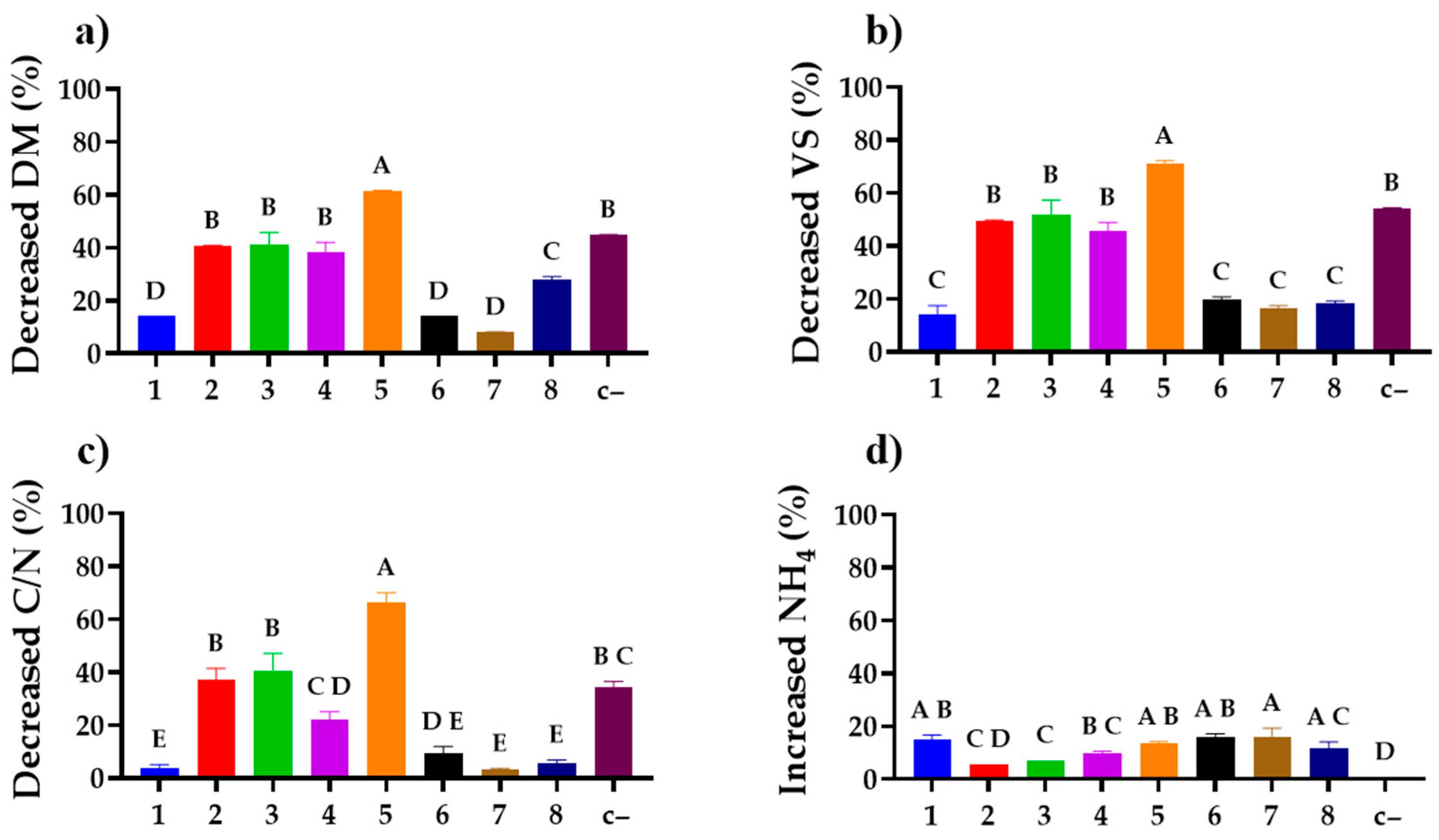
The initial dry matter content of the substrate-inoculum mixtures prior to AD ranged from 3.8% to 4.6%, compared to approximately 2.7% for the inoculum alone (Table 3). Following AD, a significant reduction in DM was observed across all samples, with decreases ranging from 5% to 61%. The greatest reductions (between 41% and 61%) were recorded for samples 2, 3, 4 and 5 (sawdust and pine bark), indicating high biodegradability and efficient microbial degradation (Figure 2a). In contrast, samples 1, 6, 7, and 8 exhibited lower DM loss (5–20%), suggesting limited accessibility due to structural recalcitrance (wood waste) or prior decomposition (decomposed food and yard waste).
Similarly, volatile solids removal ranged from 14% to 71%, with the most substantial degradation observed in samples 2, 3, 4 and 5 (46–72%). These high VS removal efficiencies are consistent with the readily available organic carbon in these specific lignocellulosic substrates, favoring rapid hydrolysis and methanogenesis. Samples 1, 6, 7 and 8 showed lower VS removal (14–26%), reflecting their more complex or partially degraded nature (Figure 2b). The strong correlation between initial substrate composition and organic matter degradation underscores the importance of feedstock selection in optimizing AD performance [41]. Compared to other studies that applied wet anaerobic digestion to high-solid organic wastes, which reported around 48% of total solids (TS) degradation and 78.6% of volatile solids degradation in a mixture containing 5% TS [42]. Another study revealed that approximately 47.5% of TS degradation and 55% of VS degradation occurred during the wet digestion of organic solids [43].
The C/N ratio of the mixtures before AD ranged from 3.0 to 5.75 (Table 3), reflecting a balanced nutrient profile achieved by the fixed substrate to inoculum ratio SIR = 1. Following AD, the C/N ratio decreased by 2–66%, with the largest reductions observed in samples 2, 3, and 5 (37–66%), and minimal changes in samples 1, 4, 6, 7 and 8 (2–22%) (Figure 2c). This decrease is attributed to the preferential mineralization of carbon over nitrogen during microbial metabolism, particularly in highly degradable substrates. The low initial C/N ratios (<6) indicate that nitrogen was not limiting, supporting optimal methanogenic activity. This efficiency could be explained by the presence of ammoniacal nitrogen-acclimated bacteria, capable of resisting potential ammonia inhibition while maintaining significant amount of biogas [44].
Ammonium nitrogen concentrations increased significantly after AD in all samples, rising by 6–16% (Figure 2d). Initial ammonium nitrogen levels ranged from 1397.25 to 1518.75 mg/L, with post-digestion values reaching 1687.50 mg/L (Table 3). Despite this increase, all final concentrations remained significantly below the reported inhibitory threshold of 3000 mg/L, confirming no risk of ammonia toxicity [45]. The rise in ammonium is consistent with protein hydrolysis and the release of nitrogen compounds during organic matter breakdown, particularly in nitrogen-rich substrates such as decomposed food waste (sample 7) and aged barn dust (sample 8).
Statistical analysis revealed significant differences among samples in DM and VS removal (p < 0.05), with samples 2, 3, 4, and 5 showing the highest degradation efficiency (Figure 2a,b). Similarly, C/N ratio reduction and NH4+ increase varied significantly, with sample 5 exhibiting the greatest C/N decline (66%) and sample 7 showing the highest NH4+ increase (Figure 2c,d). These findings confirm the influence of substrate composition on process dynamics and highlight the potential of solid organic wastes to serve as appropriate feedstocks for thermophilic AD.

3.4. Cumulative Biogas Production

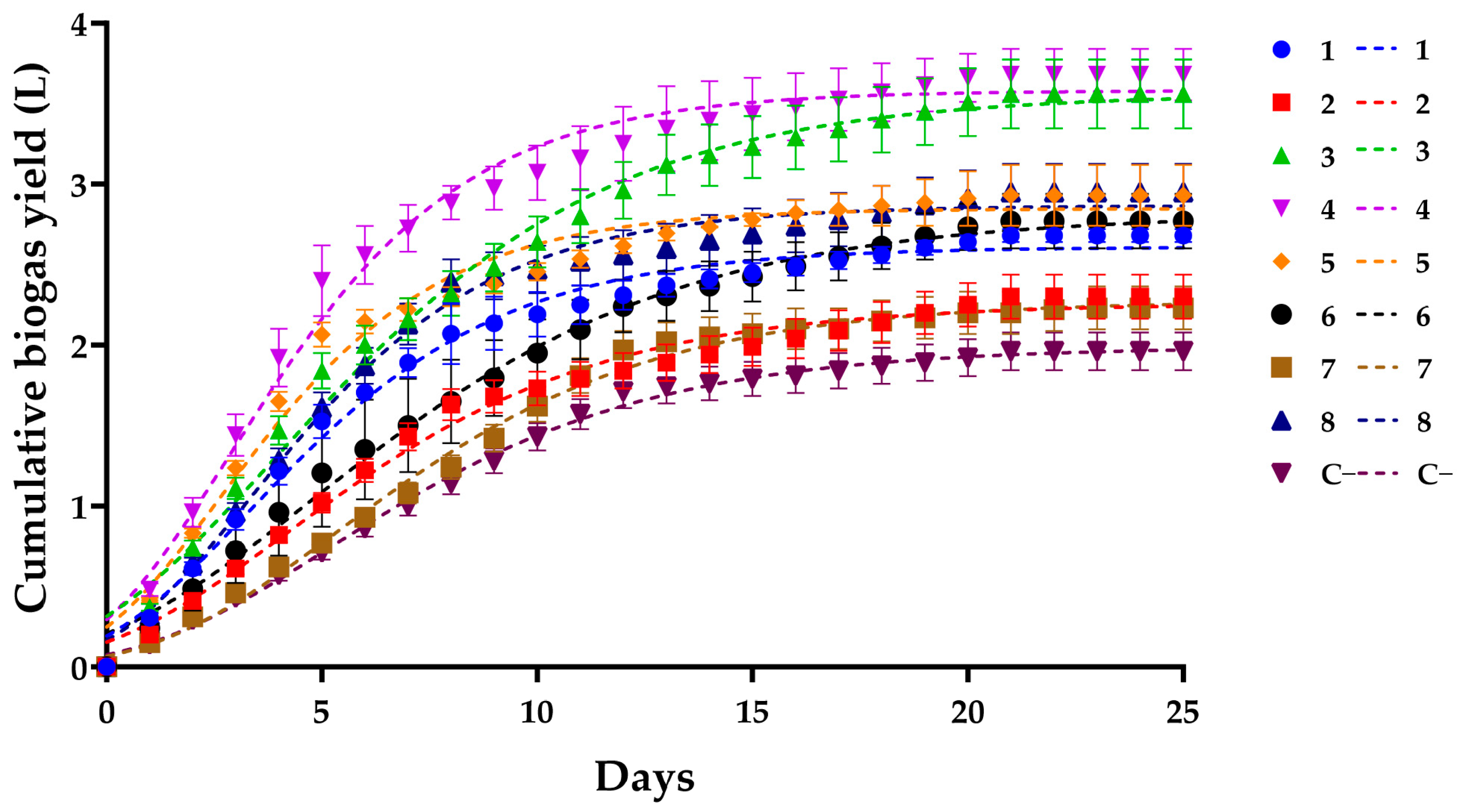
Biogas production increased consistently and gradually over the 25-day AD period, as reflected by the cumulative biogas yield curves (Figure 3). The sustained daily increase throughout the process confirms that the bacterial consortium remained active and efficient in decomposing the organic matter [46]. The highest cumulative biogas production was registered with sample 4 (fresh fine bark) at 3.68 ± 0.16 L, while the lowest was recorded with sample 7 (decomposed organic food waste) at 2.51 ± 0.12 L. Samples 2 (softwood sawdust), 3 (hardwood residues), and 5 (decomposed pine bark) also showed high biogas yields, indicating strong biodegradability under thermophilic conditions.
The cumulative biogas production curves’ shape reflects a progressive biogas production and closely corresponds to the cumulative biogas profiles predicted by the modified Gompertz model (Figure 3). The lag phase (L) ranged from 0.09 days for sample 6 to 1.2 days for sample 7, indicating variability in the initial delay prior to biogas production onset while maintaining consistently rapid production rates across all substrates (Table 4). This could be attributed to the fine particle size of the solid organic residues, which enhances microbial accessibility and accelerates the initiation of anaerobic digestion. Smaller particles provide a larger specific surface area, facilitating more efficient interactions among the substrate, microorganisms, and enzymes. Consequently, mass transfer is improved, and substrate biodegradability is enhanced during anaerobic digestion [47]. The modified Gompertz model exhibited an excellent fit to the experimental data, as indicated by the coefficient of determination (R2) ranging from 0.974 to 0.996 (Table 4). These high R2 values confirm the model’s accuracy in describing the anaerobic digestion kinetics, demonstrating strong agreement between the theoretically predicted biogas production and experimentally measured cumulative biogas production.
Table 4. Kinetics parameters of the modified Gompertz model for various assays.
ParameterP0 (mL)Rm (mL/Jour)L (Jour)R2
1Estimation2585.98313.930.490.985
SE32.7720.400.28
2Estimation2244.24205.090.240.985
SE35.4012.390.34
3Estimation3523.39321.870.160.984
SE58.3220.520.35
4Estimation3556.57464.900.240.981
SE46.6433.990.30
5Estimation2829.13394.140.150.974
SE40.6833.580.33
6Estimation2797.48217.000.090.991
SE42.0210.120.29
7Estimation2270.39200.491.200.995
SE23.687.160.20
8Estimation2852.38350.770.470.988
SE31.8520.360.25
C−Estimation1981.06174.221.000.996
SE19.125.800.19
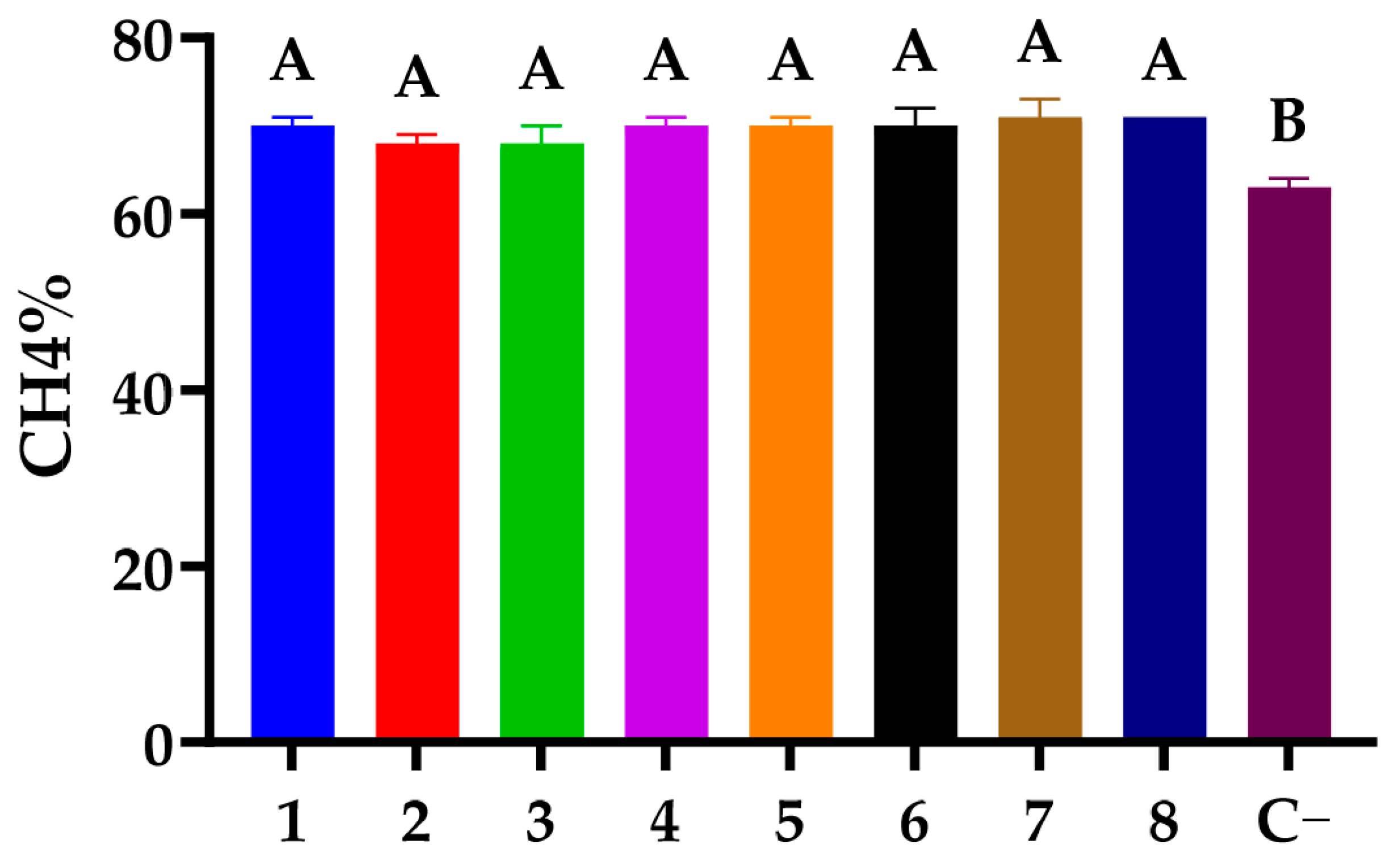
Legend: 1: landfilled wood waste, 2: softwood sawdust, 3: hardwood Sawdust, 4: fresh pine bark, 5: decomposed pine bark, 6: decomposed leaf and yard waste, 7: decomposed organic food waste, 8: aged barn dust, C−: Negative control. Standard error (SE). P0 (mL biogas): Maximum biogas production potential. Rm (mL biogas·day−1): Maximum biogas production rate. L (days): Lag phase duration before active biogas production. R2 (–): Coefficient of determination indicating the methane content of the biogas produced from the various organic solid waste samples was significantly higher than the baseline recorded for the inoculum alone. Indeed, methane concentrations reached around 70% for the tested substrates, compared to 63% for the inoculum (Figure 4). This enrichment confirms that the addition of organic residues improves biogas quality, as the substrates provide biodegradable organic matter that enhances methanogenic activity. These results align with literature values, where methane content of 55–70% are typically reported for the anaerobic digestion of lignocellulosic-rich organic waste [48]. Such an increase is characteristic of optimized substrate-to-inoculum interactions, where co-digestion or substrate supplementation improves the overall metabolic balance compared to single-source systems.
Figure 4. Methane content (%) of biogas produced from different substrates. Different letters indicate statistically significant differences between results. Legend: 1: landfilled wood waste, 2: softwood sawdust, 3: hardwood Sawdust, 4: fresh pine bark, 5: decomposed pine bark, 6: decomposed leaf and yard waste, 7: decomposed organic food waste, 8: aged barn dust. C−: Negative control.
Energies 19 00921 g004
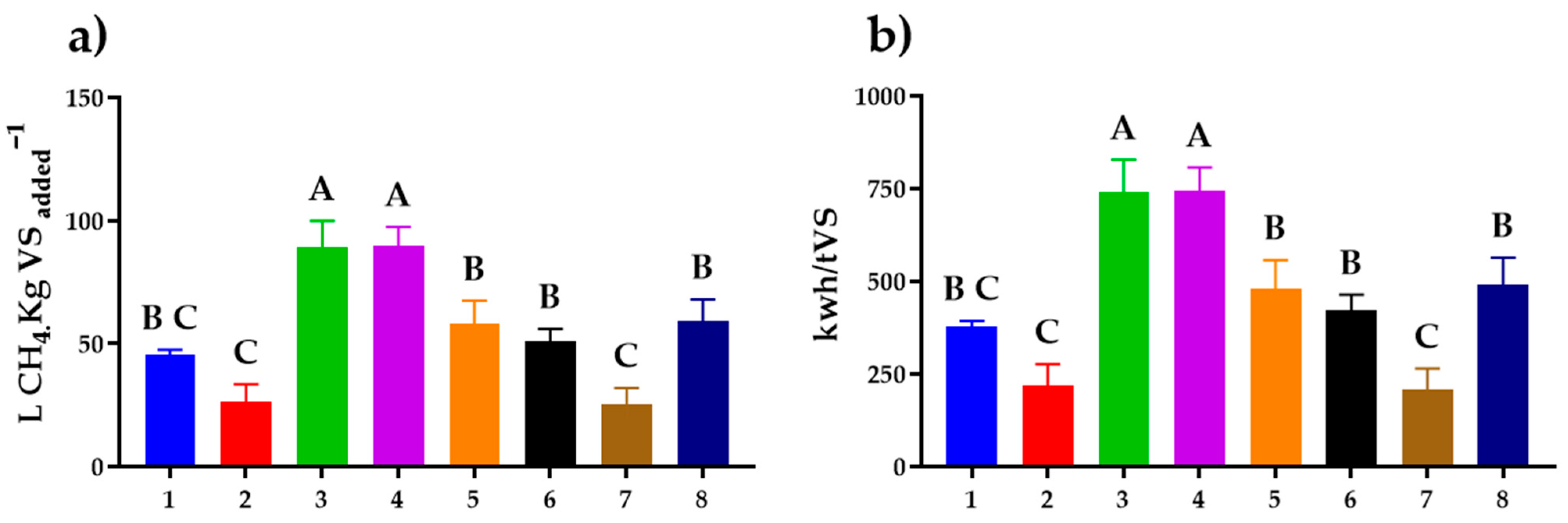
The specific methane potential, calculated based on the volatile solids content and corrected for inoculum background production, ranged widely, underscoring the significant influence of substrate composition on methanogenic efficiency (Figure 5a). The highest BMP was recorded for sample 4 (fresh pine bark), reaching 89.90 ± 7.70 L CH4·kg VS added−1, while the lowest was 25.17 ± 6.85 L CH4·kg VS added−1 for sample 7) (decomposed organic food waste). The high biochemical methane production of fresh pine bark is particularly notable, suggesting effective hydrolysis and robust microbial activity in this study.
The corresponding energy potential produced ranged from 743.83 ± 63.71 kWh/tVS (sample 4, fresh pine bark) to 208 ± 56.68 kWh/tVS (sample 7, decomposed organic food waste) (Figure 5b). These results indicate that forest residues, especially fresh pine bark, represent a valuable source of renewable energy through AD. These findings are consistent with previous studies demonstrating the bioenergy potential of forest biomass. Eftaxias et al. reported a methane yield of approximately 85 NL/kg VS for pine bark, with higher yields for fresh pine needles and branches. This result is comparable to the 89.90 ± 7.70 L CH4·kg VS added−1 achieved for fresh pine bark in the current study [49]. Other study has confirmed the effectiveness of using forest and lignocellulosic biomass for anaerobic digestion, in line with our results. The methane yields reported include yard waste (40.8 L CH4 kg−1 VS), leaves (55.4 L CH4 kg−1 VS) thus highlighting both the potential of forest and lignocellulosic residues for biogas production and the effect of substrate complexity on their biodegradability [50].
Statistical analysis revealed significant differences among samples in both BMP and energy output (p < 0.05), with samples 3, 4, 5, and 8 showing the highest performance (Figure 5). The superior performance of sample 4 may be attributed to its high VS content, a more favorable C/N ratio, and structural accessibility, which together facilitated efficient hydrolysis and methanogenesis during the thermophilic AD.

3.5. Nutrient Content of the Digestates

The digestates derived from the AD of various lignocellulosic samples exhibited high overall nutrient richness. The average nutrient content in the resultant digestates was found to be around 12.22 ± 0.06% for nitrogen, 7.97 ± 0.07% for phosphorus, and 15.64 ± 0.11% for potassium. The agronomic differences in the final nutrient profile between the individual substrate trials were minimal. This is attributed to the low Substrate-to-Inoculum ratio used in the co-digestion experiments. Consequently, the nutrient profile of the final digestate was primarily dominated by the consistent, highly concentrated nutrient content of the inoculum, diluting the added residues. The high N, P2O5, and K2O contents observed in the resulted digestates as valuable organic fertilizers, particularly in agricultural systems where synthetic inputs are limited or costly [51]. Digestate applications have been shown to improve soil fertility, enhance microbial activity, increase humic acid content, and promote long-term soil sustainability [52]. However, the use of digestate in agriculture is subject to regulatory constraints. According to the EU Nitrates Directive, nitrogen application must not exceed 170 kg per hectare per year to prevent water pollution [53]. Similarly, several Canadian provinces have set limits to regulate nitrogen use, despite the lack of a national directive comparable to the EU regulation. For example, the Nutrient Management Regulation of Manitoba limits nitrate-nitrogen concentrations in the top 60 cm of soil to approximately 157 kg N/ha in certain zones to protect water quality [54]. With global anaerobic digestate production projected to reach 177 million tons of dry matter by 2050 [53], sustainable management strategies are essential. Digestate treatment options, such as solid–liquid separation, are critical for separating nutrients. This facilitates the implementation of targeted nutrient applications to the land, diminishing the mass and volume of digestate-derived products, and consequently reducing transportation expenses [55]. Moreover, advanced separation technologies, including microfiltration, ultrafiltration, nanofiltration, and reverse osmosis, can be applied to recover water and nutrients and produce concentrated biofertilizers [53]. Beyond direct land application, digestate can be valorized into high-value products to promote a circular economy. These strategies include upcycling r into biodegradable pots as an alternative to plastic containers or transformation into granulated materials for use as adsorbents, biochar, or slow-release fertilizers [56,57]. These diverse applications demonstrate the full potential of AD to convert organic waste into valuable resources, promoting a circular, sustainable economy by transforming materials that would otherwise pollute the environment into essential agricultural inputs and renewable energy.

4. Conclusions

Anaerobic digestion of lignocellulosic residues represents a promising strategy for valorizing underutilized agricultural and industrial organic wastes. Under the thermophilic conditions applied, microbial consortia efficiently degraded the complex organic matter in these feedstocks, producing methane-rich biogas. Comparing the tested residues to the inoculum alone, the experimental results showed that approximately 70% of the methane content was reached in the produced biogas for most organic waste samples, compared with about 63% for the inoculum, indicating a clear improvement in biogas quality and overall process performance. The observed variations in methane potential can elucidate the disparities in substrate composition and structural intricacy that influence the degradation rate of organic matter and its availability to anaerobic microorganisms. As a sustainable substitute for fossil fuels, the biogas generated could be valued as a renewable energy source, directly lowering greenhouse gas emissions and assisting in the world’s shift to low-carbon energy systems. Furthermore, the resulting digestate retains important agronomic value, with high contents of organic matter, nitrogen, phosphorus, and potassium, the key nutrients essential for plant growth. This nutrient profile demonstrates the digestate’s potential to serve as tailored biofertilizers for organic and sustainable agriculture. The upcoming phase of this project will focus on the upcycling of digestate into value-added products, specifically nutrient-enriched granules and biodegradable biopots. This strategy aims to reduce reliance on synthetic fertilizers and non-biodegradable plastic containers, further enhancing the environmental benefits of the process.
Overall, AD enables the dual recovery of energy and nutrients from lignocellulosic waste, effectively transforming a significant environmental challenge into a resource opportunity. Crucially, this approach focuses on utilizing previously abandoned or underutilized residual biomass, thereby generating economic and ecological value from a waste stream that would otherwise require costly disposal. By fully integrating bioenergy production with nutrient recycling, this strategy aligns completely with the principles of the circular economy and sustainable development, offering a scalable and environmentally sound solution for waste valorization.

Author Contributions

Conceptualization, Investigation, and Methodology: Z.D. and P.F. Original draft preparation: Z.D. Supervision and Validation: H.H., S.T. and F.L.B. Project management: H.H. Writing—review and editing: H.H., S.T., S.L., Y.L., A.K. and F.L.B. Funding acquisition: H.H. and F.L.B. All authors have read and agreed to the published version of the manuscript.

Funding

This research was funded by Mitacs Acceleration (IT41622) and Fonds de Recherche du Québec-Nature et Technologie (358055).

Data Availability Statement

The data presented in this study are available on request from the corresponding author.

Acknowledgments

The authors gratefully acknowledge the Quebec Network for Research on Protein Function, Engineering, and Applications (PROTEO) for their essential support, which was crucial to the completion of this work.

Conflicts of Interest

Author Yann LeBihan was employed by the company Investissement Québec. The remaining authors declare that the research was conducted in the absence of any commercial or financial relationships that could be construed as a potential conflict of interest.

Abbreviations

ADAnaerobic digestion
AlkAlkalinity
BMPBiochemical methane potential
C−Negative controls
C/NRatio carbon/nitrogen
CH4Methane
COCarbon monoxide
CODChemical oxygen demand
CO2Carbon dioxide
DMDried matter
H2Hydrogen
H2SHydrogen sulfide
IInoculum
NH3Ammonia
N2Nitrogen
NPKNitrogen, phosphorus and potassium
NLsNormal liters
O2Oxygen
OMOrganic matter
OSWOrganic solid waste
SSubstrate
TSTotal Solids
TKNTotal Kjeldahl nitrogen
VSsVolatile solids
VFAsVolatile fatty acids

References

  1. Ferronato, N.; Torretta, V. Waste Mismanagement in Developing Countries: A Review of Global Issues. Int. J. Environ. Res. Public Health 2019, 16, 1060. [Google Scholar] [CrossRef]
  2. Allen, C. The Economic and Environmental Benefits of Efficient Waste Management. Adv. Recycl. Waste Manag. 2023, 8, 297. [Google Scholar]
  3. Abdel-Shafy, H.I.; Ibrahim, A.M.; Al-Sulaiman, A.M.; Okasha, R.A. Landfill Leachate: Sources, Nature, Organic Composition, and Treatment: An Environmental Overview. Ain Shams Eng. J. 2024, 15, 102293. [Google Scholar] [CrossRef]
  4. Hasan, M.R.; Anzar, N.; Sharma, P.; Malode, S.J.; Shetti, N.P.; Narang, J.; Kakarla, R.R. Converting Biowaste into Sustainable Bioenergy through Various Processes. Bioresour. Technol. Rep. 2023, 23, 101542. [Google Scholar] [CrossRef]
  5. Subbarao, P.M.V.; D’ Silva, T.C.; Adlak, K.; Kumar, S.; Chandra, R.; Vijay, V.K. Anaerobic Digestion as a Sustainable Technology for Efficiently Utilizing Biomass in the Context of Carbon Neutrality and Circular Economy. Environ. Res. 2023, 234, 116286. [Google Scholar] [CrossRef]
  6. Zhylina, M.; Miroshnichenko, D.; Melnykov, A.; Stepanova, V.; Lazdovica, K.; Zemcenkovs, V.; Sterna, V.; Ozolins, J. Biochar Structure Development during Slow Pyrolysis of Pellets from Barley Straw and Bran. Sci. Rep. 2025, 15, 42624. [Google Scholar] [CrossRef] [PubMed]
  7. Gao, F.; Bao, L.; Wang, Q. Gasification of Organic Waste: Parameters, Mechanism and Prediction with the Machine Learning Approach. J. Renew. Mater. 2023, 11, 2771–2786. [Google Scholar] [CrossRef]
  8. Prasanna Kumar, D.J.; Mishra, R.K.; Chinnam, S.; Binnal, P.; Dwivedi, N. A Comprehensive Study on Anaerobic Digestion of Organic Solid Waste: A Review on Configurations, Operating Parameters, Techno-Economic Analysis and Current Trends. Biotechnol. Notes 2024, 5, 33–49. [Google Scholar] [CrossRef]
  9. Dhaouefi, Z.; Lecoublet, M.; Taktek, S.; Lafontaine, S.; LeBihan, Y.; Braghiroli, F.; Horchani, H.; Koubaa, A. A Review of Operational Conditions of the Agroforestry Residues Biomethanization for Bioenergy Production Through Solid-State Anaerobic Digestion (SS-AD). Energies 2025, 18, 1397. [Google Scholar] [CrossRef]
  10. Kabeyi, M.J.B.; Olanrewaju, O.A. Biogas Production and Applications in the Sustainable Energy Transition. J. Energy 2022, 2022, 8750221. [Google Scholar] [CrossRef]
  11. Jameel, M.K.; Mustafa, M.A.; Ahmed, H.S.; Mohammed, A.J.; Ghazy, H.; Shakir, M.N.; Lawas, A.M.; Mohammed, S.K.; Idan, A.H.; Mahmoud, Z.H.; et al. Biogas: Production, Properties, Applications, Economic and Challenges: A Review. Results Chem. 2024, 7, 101549. [Google Scholar] [CrossRef]
  12. Kulichkova, G.I.; Ivanova, T.S.; Köttner, M.; Volodko, O.I.; Spivak, S.I.; Tsygankov, S.P.; Blume, Y.B. Plant Feedstocks and Their Biogas Production Potentials. Open Agric. J. 2020, 14, 219–234. [Google Scholar] [CrossRef]
  13. Francisco López, A.; Lago Rodríguez, T.; Faraji Abdolmaleki, S.; Galera Martínez, M.; Bello Bugallo, P.M. From Biogas to Biomethane: An In-Depth Review of Upgrading Technologies That Enhance Sustainability and Reduce Greenhouse Gas Emissions. Appl. Sci. 2024, 14, 2342. [Google Scholar] [CrossRef]
  14. Domingues, J.P.; Pelletier, C.; Brunelle, T. Cost of Ligno-Cellulosic Biomass Production for Bioenergy: A Review in 45 Countries. Biomass Bioenergy 2022, 165, 106583. [Google Scholar] [CrossRef]
  15. Braghiroli, F.L.; Bouafif, H.; Hamza, N.; Neculita, C.M.; Koubaa, A. Production, Characterization, and Potential of Activated Biochar as Adsorbent for Phenolic Compounds from Leachates in a Lumber Industry Site. Environ. Sci. Pollut. Res. 2018, 25, 26562–26575. [Google Scholar] [CrossRef]
  16. El-Saadony, M.T.; Saad, A.M.; El-Wafai, N.A.; Abou-Aly, H.E.; Salem, H.M.; Soliman, S.M.; Abd El-Mageed, T.A.; Elrys, A.S.; Selim, S.; Abd El-Hack, M.E.; et al. Hazardous Wastes and Management Strategies of Landfill Leachates: A Comprehensive Review. Environ. Technol. Innov. 2023, 31, 103150. [Google Scholar] [CrossRef]
  17. Rex, J.; Dubé, S.; Krauskopf, P.; Berch, S. Investigating Potential Toxicity of Leachate from Wood Chip Piles Generated by Roadside Biomass Operations. Forests 2016, 7, 40. [Google Scholar] [CrossRef]
  18. Kannepalli, S.; Strom, P.F.; Krogmann, U.; Subroy, V.; Giménez, D.; Miskewitz, R. Characterization of Wood Mulch and Leachate/Runoff from Three Wood Recycling Facilities. J. Environ. Manag. 2016, 182, 421–428. [Google Scholar] [CrossRef] [PubMed]
  19. Kamal, N.; Galvez, R.; Buelna, G.; Dubé, R.; Kamal, N.; Galvez, R.; Buelna, G.; Dubé, R. Phenolic Compounds Removal in Woodwaste Leachate by a Trickling Biofilter. In Phenolic Compounds—Natural Sources, Importance and Applications; IntechOpen: London, UK, 2017. [Google Scholar] [CrossRef]
  20. Bharadwaj, A.; Holwerda, E.K.; Regan, J.M.; Lynd, L.R.; Richard, T.L. Enhancing Anaerobic Digestion of Lignocellulosic Biomass by Mechanical Cotreatment. Biotechnol. Biofuels Bioprod. 2024, 17, 76. [Google Scholar] [CrossRef] [PubMed]
  21. Xu, M.; Uludag-Demirer, S.; Liu, Y.; Liao, W. Improving Anaerobic Digestion Efficiency of Animal Manure Through Ball Milling Pretreatment. Agronomy 2025, 15, 305. [Google Scholar] [CrossRef]
  22. Eaton, A.D.; Clesceri, L.S.; Rice, E.W.; Greenberg, A.E.; Franson. Standard Methods for the Examination of Water and Wastewater 5, 21st ed.; American Public Health Association: Washington, DC, USA; American Water Works Association: Denver, CO, USA; Water Environment Federation: Alexandria, VA, USA, 2005. [Google Scholar]
  23. Hach. Water Analysis Handbook. Available online: https://www.hach.com/resources/water-analysis-handbook (accessed on 9 June 2025).
  24. Zabaleta, I.; Mertenat, A.; Scholten, L.; Zurbrügg, C. Selecting Organic Waste Treatment Technologies. SOWATT; Swiss Federal Institute of Aquatic Science and Technology (Eawag): Dübendorf, Switzerland, 2020. [Google Scholar]
  25. Agri-Réseau. Méthode D’analyse des Sols, des Fumiers et des Tissus Végétaux—AGDEX 533—Mai 1988 Agri-Réseau|Documents. Available online: https://www.agrireseau.net/documents/96351/methode-d_analyse-des-sols-des-fumiers-et-des-tissus-vegetaux-agdex-533-mai-1988 (accessed on 10 June 2025).
  26. Dhaouefi, Z.; Taktek, S.; Bélanger, F.; Fortin, P.; Charbonneau, J.; Lange, S.; Horchani, H. Optimized Biogas Yield and Safe Digestate Valorization Through Intensified Anaerobic Digestion of Invasive Plant Biomass. Energies 2025, 18, 5151. [Google Scholar] [CrossRef]
  27. Holliger, C.; Astals, S.; De Laclos, H.F.; Hafner, S.D.; Koch, K.; Weinrich, S. Towards a Standardization of Biomethane Potential Tests: A Commentary. Water Sci. Technol. 2021, 83, 247–250. [Google Scholar] [CrossRef] [PubMed]
  28. Québec Centre D’expertise en Analyse Environnementale du. Détermination de L’alcalinité et de L’acidité: Méthode Titrimétrique Automatisée; MA. 315—Alc-Aci 1.0; Ministère de Développement Durable, de l’Environnement et Des Parcs Du Québec: Québec, QC, Canada, 2014. [Google Scholar]
  29. VDI 4630; Fermentation of Organic Materials—Characterization of the Substrate, Sampling, Collection of Material Data, Fermentation Tests. GlobalSpec: Albany, NY, USA, 2016. Available online: https://standards.globalspec.com/std/10052171/vdi-4630 (accessed on 4 September 2025).
  30. Pramanik, S.K.; Suja, F.B.; Porhemmat, M.; Pramanik, B.K. Performance and Kinetic Model of a Single-Stage Anaerobic Digestion System Operated at Different Successive Operating Stages for the Treatment of Food Waste. Processes 2019, 7, 600. [Google Scholar] [CrossRef]
  31. Akhiar, A.; Battimelli, A.; Torrijos, M.; Carrere, H. Comprehensive Characterization of the Liquid Fraction of Digestates from Full-Scale Anaerobic Co-Digestion. Waste Manag. 2017, 59, 118–128. [Google Scholar] [CrossRef]
  32. Fonoll, X.; Shrestha, S.; Khanal, S.K.; Dosta, J.; Mata-Alvarez, J.; Raskin, L. Understanding the Anaerobic Digestibility of Lignocellulosic Substrates Using Rumen Content as a Cosubstrate and an Inoculum. ACS EST Eng. 2021, 1, 424–435. [Google Scholar] [CrossRef]
  33. Bareha, Y.; Girault, R.; Jimenez, J.; Trémier, A. Characterization and Prediction of Organic Nitrogen Biodegradability during Anaerobic Digestion: A Bioaccessibility Approach. Bioresour. Technol. 2018, 263, 425–436. [Google Scholar] [CrossRef]
  34. Fernández-Domínguez, D.; Patureau, D.; Houot, S.; Sertillanges, N.; Zennaro, B.; Jimenez, J. Prediction of Organic Matter Accessibility and Complexity in Anaerobic Digestates. Waste Manag. 2021, 136, 132–142. [Google Scholar] [CrossRef] [PubMed]
  35. Park, J.-G.; Shin, W.-B.; Shi, W.-Q.; Jun, H.-B. Changes of Bacterial Communities in an Anaerobic Digestion and a Bio-Electrochemical Anaerobic Digestion Reactors According to Organic Load. Energies 2019, 12, 2958. [Google Scholar] [CrossRef]
  36. Diniz, B.C.; Wilfert, P.; Sorokin, D.Y.; van Loosdrecht, M.C.M. Anaerobic Digestion at High-pH and Alkalinity for Biomethane Production: Insights into Methane Yield, Biomethane Purity, and Process Performance. Bioresour. Technol. 2025, 429, 132505. [Google Scholar] [CrossRef]
  37. Beschkov, V.N.; Angelov, I.K. Volatile Fatty Acid Production vs. Methane and Hydrogen in Anaerobic Digestion. Fermentation 2025, 11, 172. [Google Scholar] [CrossRef]
  38. Wang, S.; Li, D.; Zhang, K.; Ma, Y.; Liu, F.; Li, Z.; Gao, X.; Gao, W.; Du, L. Effects of Initial Volatile Fatty Acid Concentrations on Process Characteristics, Microbial Communities, and Metabolic Pathways on Solid-State Anaerobic Digestion. Bioresour. Technol. 2023, 369, 128461. [Google Scholar] [CrossRef]
  39. Tao, B.; Zhang, Y.; Heaven, S.; Banks, C.J. Predicting pH Rise as a Control Measure for Integration of CO2 Biomethanisation with Anaerobic Digestion. Appl. Energy 2020, 277, 115535. [Google Scholar] [CrossRef]
  40. Chen, B.; Azman, S.; Dewil, R.; Appels, L. Alkaline Anaerobic Digestion of Livestock Manure: Unveiling Mechanisms, Applications, and Perspective. Chem. Eng. J. 2023, 477, 146852. [Google Scholar] [CrossRef]
  41. Koch, K. Calculating the Degree of Degradation of the Volatile Solids in Continuously Operated Bioreactors. Biomass Bioenergy 2015, 74, 79–83. [Google Scholar] [CrossRef]
  42. Wang, Z.; Jiang, Y.; Wang, S.; Zhang, Y.; Hu, Y.; Hu, Z.; Wu, G.; Zhan, X. Impact of Total Solids Content on Anaerobic Co-Digestion of Pig Manure and Food Waste: Insights into Shifting of the Methanogenic Pathway. Waste Manag. 2020, 114, 96–106. [Google Scholar] [CrossRef]
  43. Nasrin, T.; Saha, C.K.; Nandi, R.; Huda, S.; Alam, M. Kinetic Study and Optimization of Total Solids for Anaerobic Digestion of Kitchen Waste: Bangladesh Perspective. Water Sci. Technol. 2021, 84, 1136–1145. [Google Scholar] [CrossRef] [PubMed]
  44. Kalamaras, S.D.; Vasileiadis, S.; Karas, P.; Angelidaki, I.; Kotsopoulos, T.A. Microbial Adaptation to High Ammonia Concentrations during Anaerobic Digestion of Manure-based Feedstock: Biomethanation and 16S rRNA Gene Sequencing. J. Chem. Technol. Biotechnol. 2020, 95, 1970–1979. [Google Scholar] [CrossRef]
  45. Choi, Y.; Ryu, J.; Lee, S.R. Influence of Carbon Type and Carbon to Nitrogen Ratio on the Biochemical Methane Potential, pH, and Ammonia Nitrogen in Anaerobic Digestion. J. Anim. Sci. Technol. 2020, 62, 74–83. [Google Scholar] [CrossRef]
  46. Dhaniswara, T.K.; Rahkadima, Y.T.; Fitri, M.A.; Azizah, Z.; Aziz, A.M.; Ulumuddin, I. The Effect of Pre-Treatment of Water Hyacinth (Eichhornia crassipes) and the Use of Cow Dung on Biogas Production. IOP Conf. Ser. Earth Environ. Sci. 2022, 1097, 012068. [Google Scholar] [CrossRef]
  47. Vigueras-Carmona, S.E.; Velasco-Pérez, A.; Montes-García, M.M.; Puebla, H.; Rodríguez-Jara, M.; Vian, J. Particle Size Effect on Biodegradability and Kinetics During Anaerobic Digestion of Fruit and Vegetable Waste. Processes 2025, 13, 937. [Google Scholar] [CrossRef]
  48. Kamperidou, V.; Terzopoulou, P. Anaerobic Digestion of Lignocellulosic Waste Materials. Sustainability 2021, 13, 12810. [Google Scholar] [CrossRef]
  49. Eftaxias, A.; Passa, E.A.; Michailidis, C.; Daoutis, C.; Kantartzis, A.; Diamantis, V. Residual Forest Biomass in Pinus Stands: Accumulation and Biogas Production Potential. Energies 2022, 15, 5233. [Google Scholar] [CrossRef]
  50. Liew, L.N.; Shi, J.; Li, Y. Methane Production from Solid-State Anaerobic Digestion of Lignocellulosic Biomass. Biomass Bioenergy 2012, 46, 125–132. [Google Scholar] [CrossRef]
  51. Möller, K.; Müller, T. Effects of Anaerobic Digestion on Digestate Nutrient Availability and Crop Growth: A Review. Eng. Life Sci. 2012, 12, 242–257. [Google Scholar] [CrossRef]
  52. Slepetiene, A.; Volungevicius, J.; Jurgutis, L.; Liaudanskiene, I.; Amaleviciute-Volunge, K.; Slepetys, J.; Ceseviciene, J. The Potential of Digestate as a Biofertilizer in Eroded Soils of Lithuania. Waste Manag. 2020, 102, 441–451. [Google Scholar] [CrossRef]
  53. Rizzioli, F.; Cirilli, M.; Frison, N.; Bolzonella, D.; Battista, F. Nutrient Recovery from Anaerobic Digestate by Different Combination of Pressure Driven Membranes. J. Clean. Prod. 2025, 494, 144958. [Google Scholar] [CrossRef]
  54. Manitoba. Nutrient Management Regulation; M.R. 62/2008; Government of Manitoba: Winnipeg, MB, Canada, 2008. Available online: https://web2.gov.mb.ca/laws/regs/current/_pdf-regs.php?reg=62/2008 (accessed on 4 February 2026).
  55. O’Shea, R.; Lin, R.; Wall, D.M.; Browne, J.D.; Murphy, J.D. A Comparison of Digestate Management Options at a Large Anaerobic Digestion Plant. J. Environ. Manag. 2022, 317, 115312. [Google Scholar] [CrossRef]
  56. Manafi-Dastjerdi, M.; Ebrahimi-Nik, M.; Rohani, A.; Lawson, S. Production of Biodegradable Pots from Cattle Manure and Wood Waste: Effects of Natural Binders on Mechanical Performances and Biodegradability. Environ. Sci. Pollut. Res. 2022, 29, 20265–20278. [Google Scholar] [CrossRef]
  57. Chen, H.; Osman, A.I.; Mangwandi, C.; Rooney, D. Upcycling Food Waste Digestate for Energy and Heavy Metal Remediation Applications. Resour. Conserv. Recycl. X 2019, 3, 100015. [Google Scholar] [CrossRef]
Figure 1. Photographs and identification of the collected samples.
Energies 19 00921 g001
Figure 2. Change in dry matter (a), volatile solids (b), C/N ratio (c) and ammonium increase (d) in the inoculum-substrate mixture after AD. Values represent mean percentages ± standard deviation (n = 3). Different letters above the bars indicate statistically significant differences between the samples as determined by One-way ANOVA followed by Tukey’s multiple comparisons test (p < 0.05). Legend: 1: landfilled wood waste, 2: softwood sawdust, 3: hardwood Sawdust, 4: fresh pine bark, 5: decomposed pine bark, 6: decomposed leaf and yard waste, 7: decomposed organic food waste and 8: aged barn dust. C−: Negative control.
Energies 19 00921 g002
Figure 3. Cumulative biogas production over 25 days for different substrates. Legend: 1: landfilled wood waste, 2: softwood sawdust, 3: hardwood Sawdust, 4: fresh pine bark, 5: decomposed pine bark, 6: decomposed leaf and yard waste, 7: decomposed organic food waste, 8: aged barn dust, C−: negative control. Symbols (markers) represent experimentally measured biogas production, while dashed lines indicate values predicted by the modified Gompertz model.
Energies 19 00921 g003
Figure 5. Specific BMP (a) and energy potential (b) produced from different samples. Values represent mean percentages ± standard deviation. Different letters indicate statistically significant differences between results (p < 0.05), with n = 3. Legend: 1: landfilled wood waste, 2: softwood sawdust, 3: hardwood Sawdust, 4: fresh pine bark, 5: decomposed pine bark, 6: decomposed leaf and yard waste, 7: decomposed organic food waste, 8: aged barn dust.
Energies 19 00921 g005
Table 1. Identification and physicochemical characterization of forest residues for bioenergy potential assessment.
SamplesDry Matter
(% w/w)
Volatile Solids
(% DM)
COT
(g/kg)
NTK
(g/kg)
C/NP2O5
(%DM)
K2O
(%DM)
197.73 ± 0.0478.18 ± 0.52431.09 ± 11.190.29 ± 0.031297.11 ± 74.180.48 ± 0.000.13 ± 0.00
295.43 ± 2.0595.08 ± 2.04486.58 ± 9.790.57 ± 0.01833.06 ± 17.870.02 ± 0.000.04 ± 0.00
397.58 ± 2.0186.22 ± 2.24391.56 ± 3.182.77 ± 0.27151.53 ± 13.780.08 ± 0.000.33 ± 0.01
485.05 ± 1.4178.31 ± 0.64397.41 ± 10.072.34 ± 0.29168.7 ± 22.480.07 ± 0.000.11 ± 0.04
597.45 ± 1.9779.48 ± 2.01475.42 ± 10.202.3 ± 0.30174.65 ± 27.310.07 ± 0.000.14 ± 0.00
698.11 ± 0.0452.24 ± 0.30291.64 ± 4.0312.97 ± 0.7720.18 ± 1.3011.98 ± 0.020.97 ± 0.00
797.41 ± 1.2740.27 ± 1.81390.90 ± 2.6218.47 ± 1.2510.94 ± 1.220.53 ± 0.030.88 ± 0.02
898.51 ± 0.0658.33 ± 0.81228.92 ± 1.903.32 ± 0.3889.36 ± 11.180.09 ± 0.000.17 ± 0.00
Legend: (w/ww) weight/wet weight, 1: landfilled wood waste, 2: softwood sawdust, 3: hardwood Sawdust, 4: fresh pine bark, 5: decomposed pine bark, 6: decomposed leaf and yard waste, 7: decomposed organic food waste, 8: aged barn dust.
Table 2. Fluctuation in physicochemical properties during AD of the inoculum-substrate mixture.
pHAlkalinity (mg/L CaCO3) Volatile Fatty Acids (mg/L)
InitialPost ADInitialPost ADIncrease (%)InitialPost ADDecrease (%)
18.44 ± 0.028.26 ± 0.058550.18 ± 2080.978660.89 ± 26.951.281522.5 ± 74.25343.5 ± 2.1277.44
28.53 ± 0.018.26 ± 0.127420.52 ± 551.238543.93 ± 305.5913.151525 ± 0.00397 ± 8.4973.97
38.45 ± 0.18.19 ± 0.047421.45 ± 283.778853.21 ± 398.5316.171617.5 ± 95.46311 ± 15.5680.77
48.41 ± 0.018.24 ± 0.077682.59 ± 979.078615.57 ± 259.4710.831627.5 ± 24.75326 ± 2.1279.97
58.41 ± 0.018.24 ± 0.037101.78 ± 328.788370.35 ± 597.1315.161577.5 ± 38.89326.25 ± 1.0679.32
68.58 ± 0.028.27 ± 0.068337.04 ± 120.099105.1 ± 234.198.441650 ± 7.07462.5 ± 2.8371.97
78.55 ± 0.038.27 ± 0.138962.29 ± 832.779080.19 ± 465.121.301647.5 ± 45.96740.25 ± 37.1255.07
88.51 ± 0.028.19 ± 0.067292.29 ± 266.818623.88 ± 205.9915.441502.5 ± 152.03306.75 ± 6.7279.58
C− 8.51 ± 0.008.50 ± 0.007672.24 ± 282.268328.36 ± 35.957.881725.00 ± 7.07435.5 ± 4.9574.75
Legend: 1: landfilled wood waste, 2: softwood sawdust, 3: hardwood Sawdust, 4: fresh pine bark, 5: decomposed pine bark, 6: decomposed leaf and yard waste, 7: decomposed organic food waste, 8: aged barn dust, C− refers to the negative control (inoculum only).
Table 3. Dry and organic matter degradation, variability of C/N ratio and release of ammonium before and after AD of the inoculum-substrate mixtures.
Dry Matter (%w/wt)Volatile Solids (%DM)C/N RatioNH4 (mg/L)
InitialPost ADInitialPost ADInitialPost ADInitialPost AD
13.94 ± 0.003.54 ± 0.212.71 ± 0.072.33 ± 0.145.75 ± 0.065.55 ± 0.151397.25 ± 9.551647.00 ± 19.09
23.69 ± 0.052.19 ± 0.032.63 ± 0.031.34 ± 0.035.55 ± 0.063.49 ± 0.281566.00 ± 0.001660.50 ± 0.00
33.26 ± 0.321.92 ± 0.042.19 ± 0.271.05 ± 0.014.51 ± 0.282.67 ± 0.121566.00 ± 0.001687.50 ± 0.00
43.80 ± 0.212.33 ± 0.012.68 ± 0.171.45 ± 0.014.93 ± 0.033.84 ± 0.121518.75 ± 9.551687.50 ± 0.00
53.87 ± 0.011.49 ± 0.022.72 ± 0.010.78 ± 0.035.65 ± 0.271.91 ± 0.131404.00 ± 0.001626.75 ± 9.55
64.48 ± 0.333.78 ± 0.442.74 ± 0.342.2 ± 0.255.09 ± 0.54.62 ± 0.591397.25 ± 9.551660.50 ± 38.18
74.60 ± 0.014.35 ± 0.172.65 ± 0.022.22 ± 0.054.77 ± 0.224.68 ± 0.101404.00 ± 38.181674.00 ± 19.09
84.01 ± 0.073.23 ± 0.472.69 ± 0.031.98 ± 0.325.61 ± 0.074.86 ± 0.611437.75 ± 47.731626.75 ± 9.55
C−2.66 ± 0.031.47 ± 0.021.58 ± 0.030.73 ± 0.023.00 ± 0.181.97 ± 0.051471.50 ± 0.001485.00 ± 0.00
Legend: 1: landfilled wood waste, 2: softwood sawdust, 3: hardwood Sawdust, 4: fresh pine bark, 5: decomposed pine bark, 6: decomposed leaf and yard waste, 7: decomposed organic food waste, 8: aged barn dust, C−: negative control.
Disclaimer/Publisher’s Note: The statements, opinions and data contained in all publications are solely those of the individual author(s) and contributor(s) and not of MDPI and/or the editor(s). MDPI and/or the editor(s) disclaim responsibility for any injury to people or property resulting from any ideas, methods, instructions or products referred to in the content.