Systematic Review

Energy-Efficient Innovations in Agricultural and Food Systems: A Systematic Review of Productivity and Sustainability Outcomes and Adoption Trends


Department of Agronomy, Faculty of Science and Agriculture, University of Fort Hare, Private Bag X1314, Alice 5700, Eastern Cape, South Africa
*
Author to whom correspondence should be addressed.
Energies 2026, 19(4), 1092; https://doi.org/10.3390/en19041092
Submission received: 15 October 2025 / Revised: 26 December 2025 / Accepted: 28 December 2025 / Published: 21 February 2026
(This article belongs to the Special Issue Renewable Energy Integration into Agricultural and Food Engineering)

Abstract

Agriculture and food systems are among the world’s greatest energy consumers and emitters of greenhouse gases (GHGs), highlighting the importance of energy-efficient strategies that maintain a balance between productivity and sustainability. This study used the PRISMA-ScR methodology and the Biblioshiny platform to conduct a systematic review and evaluation of renewable energy integration and digital advances in agriculture and food systems. Fifty-one peer-reviewed research articles published between 2009 and 2025 were examined to determine technology trends, performance outcomes, and adoption challenges. The findings identified two significant innovation pathways: renewable energy technology such as solar-powered irrigation, biogas generation, and agrivoltaic systems, and digital solutions such as precision agriculture, Internet of Things (IoT)-enabled monitoring, and automation. Results indicate yield improvements of 10–25%, irrigation water savings of up to 40%, and yearly GHG emissions reductions of 0.3 to 0.6 tonnes of CO2 per hectare. However, adoption remains uneven across regions, restricted by infrastructural constraints, capital costs, and inadequate policy support especially in underdeveloped countries. Overall, combining renewable energy and digital technology improves productivity, resource-use efficiency, and environmental performance while promoting various SDGs. Furthermore, integrating these two types of technologies leads to digital economic transformation in agriculture and food systems. These findings show the innovative potential of energy-efficient solutions in enabling sustainable intensification and climate resilience in agriculture.

1. Introduction

The agricultural sector, which is critical to global food security and economic development, anticipates rising challenges in the twenty-first century due to climate change [1], population growth, soil degradation, and limited natural resources, increasing the need for sustainable practices [2]. Among the most pressing concerns are water scarcity, decline in soil fertility/arable land, and energy inefficiency, which all threaten long-term resilience and productivity [3]. Agriculture and food systems are among the world’s greatest energy-consuming sectors, ranked as the fifth biggest contributor to greenhouse gas (GHG) emissions [4] and resource depletion [5]. In addition to these challenges, global population is projected to reach 9.7 billion [6,7] and food demand is predicted to increase by 70% in 2050 [8,9]. Agricultural energy use is also increasing annually and hence improving energy efficiency has emerged as a key priority [10].
Energy inefficiency continues to be one of the most significant challenges to agricultural productivity, especially in emerging economies. The combination of renewable energy and digital technologies presents the potential to decarbonize food systems while boosting efficiency of production and resilience [7]. Recent renewable energy advancements, such as agrivoltaic systems that combine solar photovoltaic electricity generation with agricultural production, solar-powered irrigation, and bioenergy production from agricultural residue, promise scalable alternatives for sustainable agriculture. Incorporating renewable energy technology into agricultural operations provides benefits of decarbonization and increased productivity [7,11,12]. The technical efficiency of adopters of renewable energy was found to be 10% higher than that of non-adopters in China [13].
Digital advancements such as precision agriculture or smart farming, Internet of Things (IoT)-enabled smart irrigation practices, use of drones, and artificial intelligence (AI)-driven analytics offer even more precise control of water, fertilizer, and energy inputs, hence supporting global climate change and productivity goals [9,14,15,16]. Furthermore, artificial intelligence-powered drones are transforming precision agriculture through real-time sensing, imaging, and data analytics [17]. In addition to this, digital advances such as smart sensors in precision agriculture [14], IoT-enabled monitoring [18], and self-driving machinery are transforming farms into data-driven systems capable of maximizing energy and resource inputs [14]. Digital innovations are causing a systematic economic transformation in how value is created, delivered, and captured, specifically for stakeholders such as small and medium enterprises in agriculture (Agri-SMEs), who are involved in production and processing. These SMEs are differentiated from large agribusinesses in that they typically exhibit low capital intensity, informal structures, and high sensitivity to market fluctuations [9]. Despite these gains, adoption remains varied across locations, with differences being influenced by factors such as policy backing, infrastructure, and socio-economic factors.
While individual technologies have shown effectiveness in the field, there has been limited synthesis of their combined effects across the entire agri-food value chain. Integrating renewable energy and precise management techniques into agricultural operations increases production while simultaneously reducing greenhouse gas emissions and conserving resources [2,19]. Thus, this review discusses synergies between renewable energy and digitalization in agriculture, by drawing together evidence from various sources. Integrating renewable energy and digital solutions is leading to digital economic transformation in agriculture and food systems. However, regional variations in access, financing, and institutional support continue to limit widespread adoption. Understanding these systemic interactions is critical for developing comprehensive strategies related to agricultural energy efficiency, leading to climate-resilient development pathways [20,21].
There is a paucity of studies and reviews focusing on the cumulative effects of energy-efficient technology across the entire food system from production and processing to distribution. Specific gaps exist in combining productivity and sustainability assessments, documenting global adoption patterns and challenges, and connecting these breakthroughs to broader circular economy models and sustainability, including the sustainable development goals (SDGs) [20].
This review addresses these gaps by taking a systematic approach to identifying research opportunities in energy-efficient agricultural technology. This study analyzes co-occurrence and citation networks to capture both technology improvements and policy connections that shape sustainable agricultural transitions. The findings are intended to help academics, researchers, and policymakers connect renewable energy integration with sustainable development goals (SDGs), including SDG 2 (zero hunger), SDG 7 (clean energy), SDG 12 (responsible consumption), and SDG 13 (climate action). This study will eventually add to the globally existing evidence base supporting the United Nations 2030 Agenda through providing actionable insights on sustainable energy transformations in agriculture.
This study explored and evaluated energy-efficient solutions that enhance the productivity and sustainability of agricultural and food systems. Bibliometric analysis and Scientometrics research such as mapping, clustering, co-citation, and co-occurrence analyses were implemented to gain a greater perspective on a particular research topic. Biblioshiny (an R-based bibliometric analysis tool) was used to facilitate this process as it allows for trends to be more easily identified and visualized by (i) highlighting the research that has shaped the understanding of the productivity and sustainability research focus area, (ii) identifying key themes within the literature, (iii) illuminating the links between these themes, and (iv) exploring their evolution over time. This review aims to address the following specific objectives:
(i)
To identify energy-efficient technologies and practices implemented in agricultural and food systems;
(ii)
To evaluate the impact of these solutions on productivity outcomes such as yield, processing efficiency, and operational costs;
(iii)
To assess the sustainability benefits of energy-efficient interventions, including reductions in greenhouse gas emissions, resource use, and waste generation;
(iv)
To explore regional trends and adoption barriers related to energy-efficient innovations in agriculture and food sectors.
The central research question guiding this study is whether renewable energy and digital innovations have measurably improved both productivity and sustainability indicators in agricultural and food systems. Guided by the PRISMA-ScR framework and a bibliometric research design, the review is conceptually grounded in the premise that energy efficiency in agriculture emerges from the interaction of two complementary innovation pathways: renewable energy integration and digitalization. These pathways influence productivity outcomes: yield, operational efficiency, and cost reduction, environmental performance (greenhouse gas mitigation and resource-use efficiency), and technology adoption dynamics. Rather than testing a hypothesis, the study adopts a scoping approach to systematically map, synthesize, and interpret existing evidence on how these interconnected technologies shape energy-efficient transitions across agricultural and food systems, with the research question providing the analytical lens for literature screening, analysis, and discussion.

2. Materials and Methods

The systematic literature review was conducted in accordance with the Preferred Reporting Items for Systematic Reviews and Meta-Analysis for Scoping Reviews (PRISMA-ScR) guidelines [13]. The bibliometric database was compiled exclusively from the Scopus database, selected for its comprehensive coverage of high-quality, peer-reviewed literature across agriculture, energy, and environmental sciences, as well as its standardized indexing and strong compatibility with bibliometric and text-mining analysis tools.
A structured search strategy was developed using combinations of keywords and their variants: (“energy-efficient” OR “energy efficiency” OR “low-energy” OR “sustainable energy” OR “green technology” OR “energy-saving”) AND (“agriculture” OR “agricultural machinery” OR “farming equipment” OR “irrigation systems” OR “crop production” OR “food processing” OR “post-harvest technology”) AND (“innovation*” OR “technology” OR “technological advancement” OR “best practices”) AND (“productivity” OR “yield” OR “operational cost” OR “processing efficiency” OR “resource efficiency”) AND (“sustainability” OR “greenhouse gas” OR “GHG” OR “emissions reduction” OR “environmental impact” OR “waste management” OR “resource use”) AND (“adoption” OR “uptake” OR “diffusion” OR “implementation” OR “barriers” OR “trends” OR “regional variation”).
The search was conducted on 10 May 2025 using an iterative keyword-refinement process informed by preliminary searches and relevant literature to ensure relevance and methodological rigor. To ensure relevance and quality, filters were applied to include only peer-reviewed, open-access journal articles written in English, published between 2009 and 2025, and classified under relevant Scopus subject areas such as agriculture, energy, and environment. The initial search yielded 91 potentially relevant articles, which were subsequently screened and assessed for eligibility in accordance with the PRISMA-ScR framework to minimize bias reporting (Figure 1). The final dataset comprised 51 articles, selected based on the inclusion criteria summarized in Table 1.
Although Scopus hosts a large volume of publications, the focused sample size reflects the specificity of the inclusion criteria rather than limitations in database coverage and indicates that integrated research on energy efficiency, productivity, sustainability, and adoption in agricultural and food systems remains an emerging field. The final dataset is appropriate for a scoping review and bibliometric analysis, as it enables the identification of dominant research themes, innovation pathways, and conceptual linkages consistent with PRISMA-ScR objectives [13,22].
During the screening stages, no duplicate or retracted records were identified. In the second screening stage, 14 records were excluded for failing to meet the inclusion criteria. A further 20 records were excluded because they were not available in open-access format. An additional six records were removed as conference publications.
In addition to the PRISMA-ScR screening process, a bibliometric and text-mining analysis was conducted to map research themes, technological trends, and conceptual linkages within the selected literature. Biblioshiny (Biblioshiny 5.0), an R-based interface (R version 4.4.2), was used for the bibliometric [22] and text-mining analysis; two types of keywords were extracted from the Scopus database: Author keywords (DE) and keywords plus (ID). Author keywords (DE) are terms provided by the authors of the original publications to summarize the main focus of their studies. Keywords plus (ID) are index terms automatically generated by Scopus based on the titles of references cited within each article, enabling broader thematic coverage and enhanced detection of conceptual linkages in the literature [22]. Keywords were cleaned and harmonized prior to analysis to reduce redundancy. In the resulting co-occurrence network, nodes represent keywords, node size reflects their frequency of occurrence, and links indicate co-occurrence strength, with clustering used to identify thematically coherent groups. Network visualization was interpreted at an aggregate thematic level to identify dominant innovation pathways in energy-efficient agriculture and food systems, in line with established bibliometric and text-mining meta-analysis practices.

3. Results

3.1. Overview of Results

General characteristics of studies included in the final literature database are summarized in Table 2. The final literature dataset spans 2009–2025, encompassing 51 published articles in 41 journal sources. An average of 4.96 co-authorship per article and an international co-authorship rate of 37.25% highlight high levels of collaboration in agricultural innovations and food systems for sustainable agricultural production. The dataset included 601 keywords plus (ID) and 267 author keywords (DE), demonstrating a broader thematic scope of the reviewed studies.
The reviewed literature encompasses a wide range of study designs, including on-farm field trials, experimental plot studies, modeling and simulation analyses, life cycle and techno-economic assessments, as well as case studies of pilot and research projects. Field-based studies primarily provide empirical evidence on yield performance, water use, and emissions outcomes, whereas modeling and simulation approaches examine system-level efficiency gains under varying climatic, technological, and management scenarios. This methodological diversity reflects the interdisciplinary nature of research on energy-efficient innovations in agriculture but also introduces variability in the robustness and comparability of reported outcomes.
Within this context, the quantitative values synthesized in this review such as yield improvements, water savings, and greenhouse gas emissions reductions represent aggregated evidence patterns derived from the frequency and consistency of outcomes reported across the final dataset of 51 articles. These values are not statistically weighted means nor representative global averages; rather, they reflect dominant performance ranges observed across multiple independent studies. This synthesis approach is consistent with the objectives of a PRISMA-ScR-based scoping review and bibliometric analysis, which prioritize mapping prevailing research trends, thematic convergence, and recurring performance signals [22,23]. Consequently, while the analysis identifies robust and consistent evidence patterns, causal attribution and formal effect-size estimation remain beyond the scope of this review.

3.2. Energy-Efficient Innovations in Agriculture and Food Systems

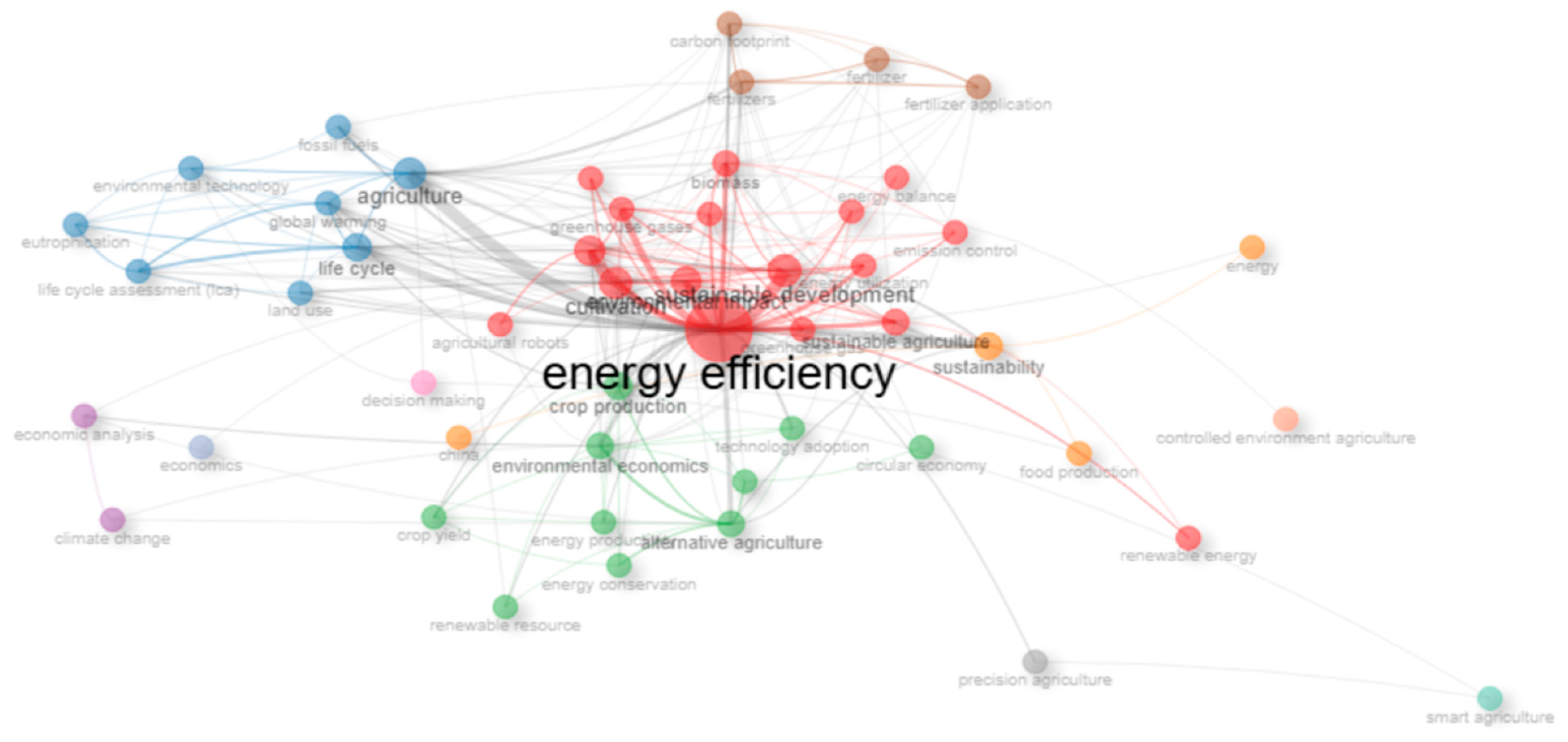
The keyword co-occurrence network derived from bibliometric and text-mining analysis (Figure 2) illustrates the structural organization of research on energy efficiency in agriculture and food systems. Nodes represent frequently occurring keywords, with node size reflecting relative frequency and links indicating co-occurrence relationships. Cluster colors denote thematically coherent groupings identified through network clustering and are interpreted at an aggregate level to highlight dominant research themes rather than individual study outcomes.
Two major thematic clusters emerge from the analysis. The first cluster centers on renewable energy and sustainability, encompassing biomass utilization, renewable energy integration, agrivoltaic systems, and sustainable development. This body of research examines how bioenergy production, solar-powered technologies, and hybrid land-use systems contribute to improved energy efficiency, reduced greenhouse gas (GHG) emissions, and enhanced land- and water-use efficiency in agricultural systems [11,19,24,25,26,27,28,29]. Biomass technologies, in particular, convert agricultural residues into bioenergy, thereby lowering dependence on fossil fuels and reducing emissions [19,25,26,27,28]. Agrivoltaic systems that integrate photovoltaic electricity generation with crop production consistently demonstrate improved land-use efficiency, with empirical studies reporting irrigation water savings of up to 30% and yield improvements under optimized shading conditions [24]. Broader assessments of renewable-energy-based interventions, including agrivoltaics and biogas systems, further report recurring GHG emissions reductions in the range of 0.3–0.6 t CO2 ha−1 yr−1 across diverse agroecological contexts, indicating robust decarbonization potential rather than isolated case-specific benefits [30]. Complementary evidence from wheat and livestock systems in Saskatchewan, Canada highlights the agricultural, environmental, and socio-economic benefits of agrivoltaics, with policy integration identified as a key enabler of large-scale adoption [31,32]. Similarly, renewable energy applications such as solar-powered irrigation and wind-assisted grain processing reduce operational costs while strengthening farm-level energy resilience [2]. Evidence from China further indicates that adopters of renewable energy technologies achieve approximately 10% higher technical efficiency compared to non-adopters [32].
The second dominant cluster focuses on resource optimization and digital innovation, including precision agriculture, smart irrigation, Internet of Things (IoT)-enabled monitoring, automation, and energy reduction strategies. Studies within this cluster demonstrate how sensor-based technologies, real-time data analytics, and automated machinery enhance the efficiency of water, nutrient, and energy inputs, resulting in measurable productivity gains and operational efficiencies [14,16,18,21,33,34,35]. Across the reviewed literature, yield improvements associated with precision agriculture and smart irrigation technologies most commonly fall within the 10–25% range, while water savings of 20–40% are consistently reported in water-scarce and climate-sensitive regions [36]. IoT-enabled smart irrigation systems, in particular, stabilize crop yields under variable climatic conditions by enabling real-time control and adaptive water management [16,33]. AI-assisted decision-support tools further enhance these outcomes by dynamically monitoring soil and crop conditions, reinforcing the reproducibility of efficiency gains across different production systems.
Additional, less central nodes point to complementary and emerging themes such as controlled-environment agriculture (CEA), conservation tillage, crop rotation, and circular-economy approaches. CEA systems, including greenhouses and vertical farms, allow precise control of temperature, humidity, light, and nutrient delivery, thereby reducing resource losses while maintaining consistent productivity [7,37,38]. Conservation practices such as reduced tillage and diversified crop rotations improve soil health while lowering emissions; conservation tillage alone can reduce soil carbon losses by 20–40% compared to conventional systems [26,39,40]. These practices contribute to long-term soil productivity, climate resilience, and progress toward national mitigation targets [41]. Peripheral nodes associated with smart and precision agriculture also highlight automation-driven solutions such as drones, autonomous tractors, and GPS-based auto-guidance, which reduce field overlap, fuel consumption, labor requirements, and soil compaction, resulting in 15–25% improvements in field efficiency and lower operational costs [21,34,35].
The network analysis indicates that research on energy efficiency in agriculture and food systems is structured around two interconnected innovation pathways: renewable energy technologies that support decarbonization and energy resilience, and digital and management innovations that optimize resource use at the production level. The repeated co-occurrence of these themes, together with the consistency of reported performance ranges across geographical and climatic contexts, underscores their complementarity and signals a mature and robust evidence base. This convergence highlights a growing emphasis on integrated technological approaches to improving productivity and sustainability across agricultural and food systems. These technologies and practices are further synthesized in Table 3, which provides a global overview of energy-efficient innovations spanning agriculture, energy, and transportation systems.

3.3. Effect of Energy-Efficient Solutions on Productivity and Operational Performance

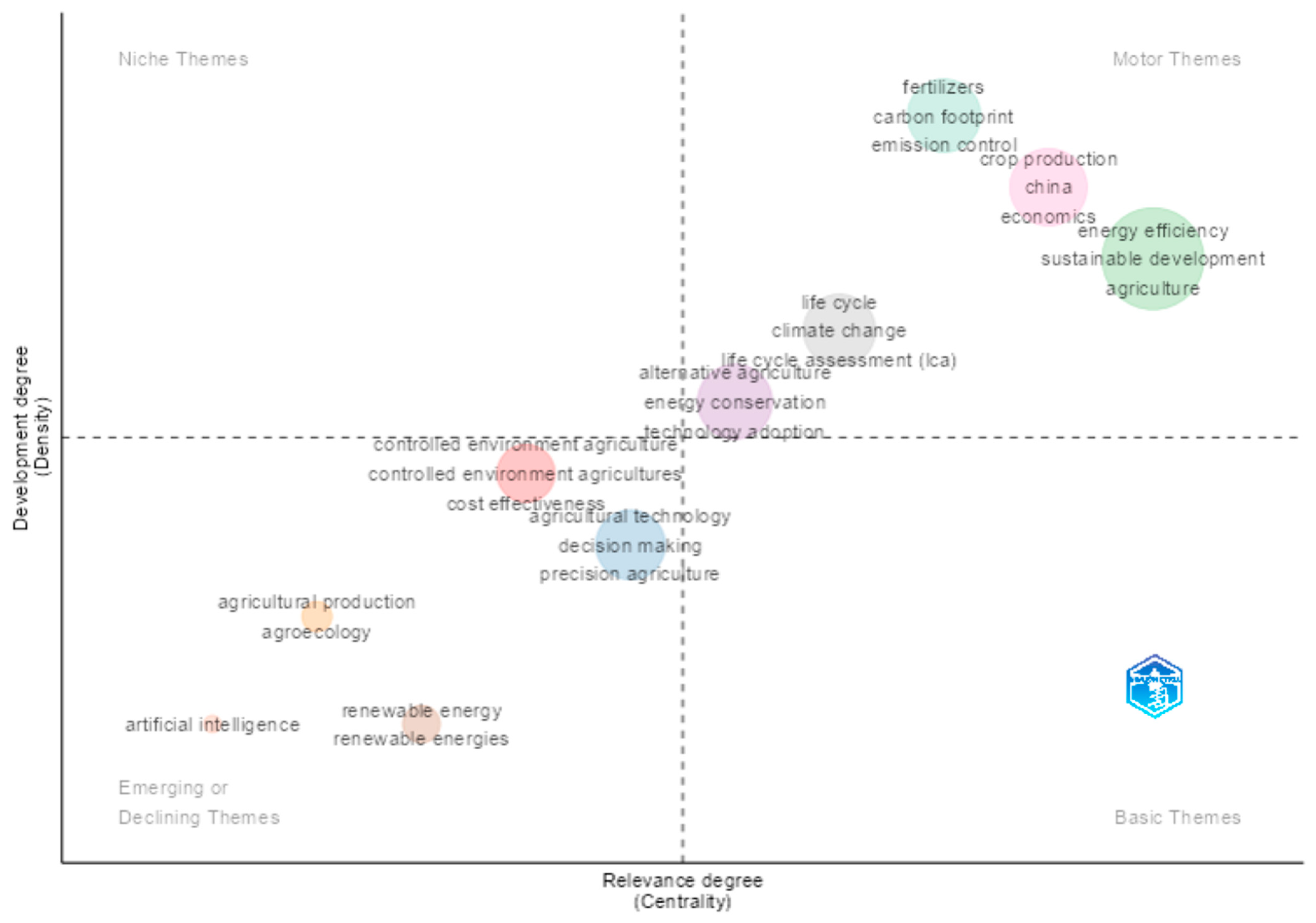
The thematic map reveals four categories of themes within energy-efficient innovations in agriculture and food systems, plotted according to their centrality and density (Figure 3). This literature highlights the transformative potential of energy-efficient technologies in agriculture to boost productivity and operational performance by reducing costs, minimizing resource consumption, and enhancing crop quality through optimized energy use. The motor themes, located in the upper-right quadrant, represent the core areas of inquiry in topics such as energy efficiency, sustainable development, and crop production, forming the dominant research area aimed at improving productivity and sustainability. For example, adoption of solar-powered smart irrigation systems has been shown to increase crop yields by 15–30%, while reduce energy consumption and water use through precise water delivery and improved energy efficiency [2,12,33]. In Sub-Saharan Africa, life cycle cost comparisons between solar photovoltaic and diesel-powered groundwater pumps indicate that solar solutions offer more cost-effective and sustainable performance, especially over longer time periods and under volatile fuel prices [50,51].
Basic themes, in the lower-right quadrant, include precision agriculture and technology adoption, but are underdeveloped and require further refinement. Niche themes, in the upper-left quadrant, encompass specialized topics like cost-effectiveness but lack integration into the broader landscape. Lastly, emerging or declining themes in the lower-left quadrant, including artificial intelligence and renewable energy, suggest areas of potential growth emphasis. For example, in Sub-Saharan Africa, switching from grid-electric to photovoltaic irrigation in maize cultivation resulted in a 34% reduction in global warming potential, demonstrating that energy-efficient interventions can align environmental and productivity goals [50]. Complementary to these energy innovations, conservation agriculture demonstrates significant promise in improving soil health, reducing erosion, and increasing yield stability, particularly in climate-vulnerable regions [10,40,52]. Additionally, the use of biofertilizers, including nitrogen-fixing bacteria, phosphate-solubilizing microorganisms, and microalgae-based bio-stimulants, enhances nutrient availability and soil microbiome diversity, reducing reliance on chemical inputs while supporting long-term soil fertility [53,54].

3.4. Environmental Sustainability Outcomes of Energy-Efficient Innovations

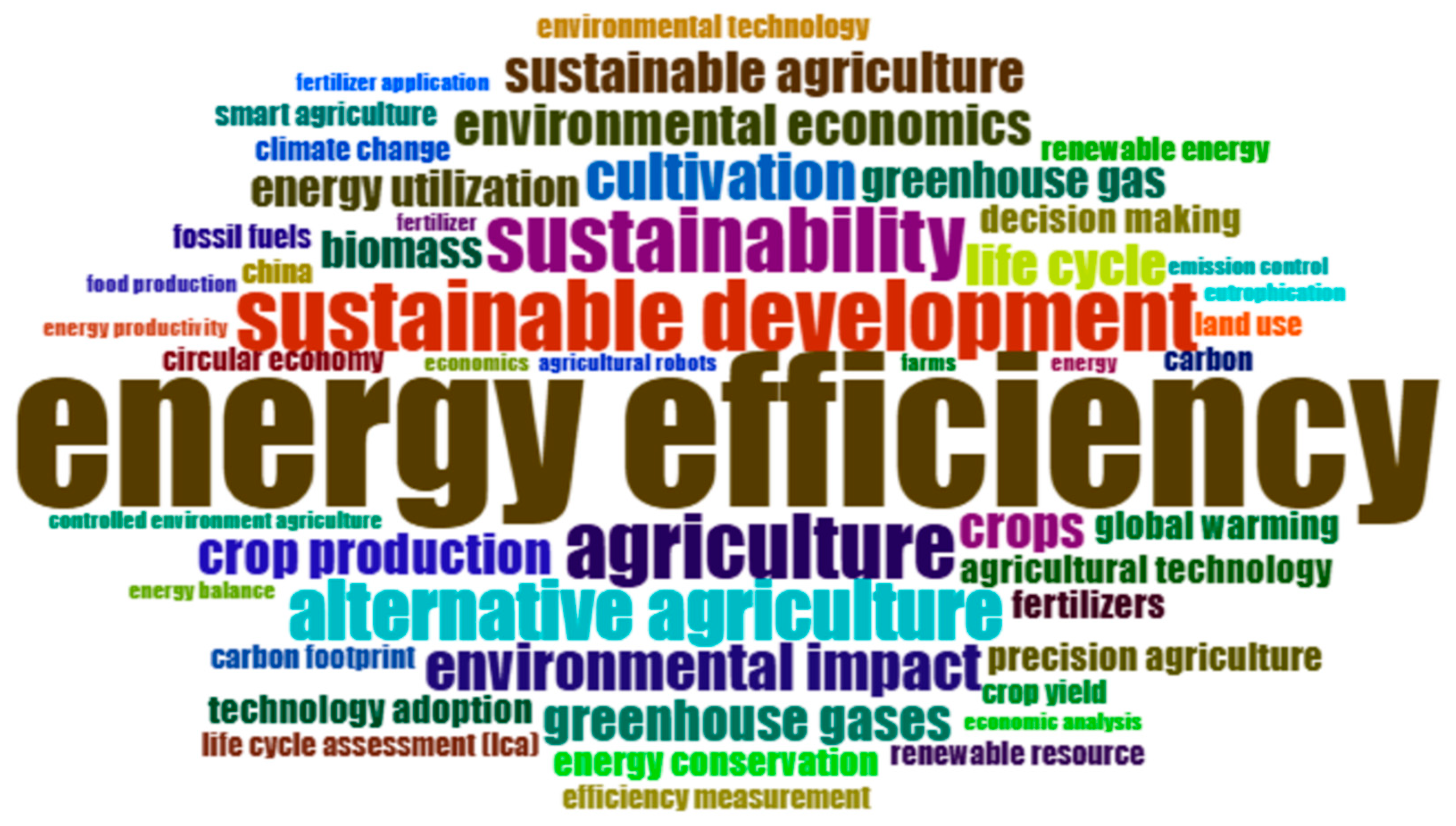
The word cloud diagram (Figure 4) shows energy efficiency as the largest and most prominent term, underscoring energy efficiency as the central research focus. Its frequent co-occurrence with terms such as sustainable development, sustainability, and environmental impact shows that energy efficiency is framed not only as a technical issue but also as a pathway to environmental and socio-economic sustainability. Advancements in energy-efficient agriculture and food systems provide significant contributions to environmental sustainability by reducing emissions, improving soil health, and conserving natural resources. For example, solar-powered irrigation, agrivoltaics, and biogas plants have been found to reduce fossil-fuel dependence by 30–60% and GHG emissions by up to 45% compared to traditional energy systems [2,19,24].
Sustainable development, agriculture, alternative agriculture, crop production, and environmental impact are also large, suggesting that much of the literature connects energy efficiency directly to food production outcomes and global sustainability goals. For example, biofertilizer applications and energy-efficient nutrient management reduce resource intensity, and nanofertilizers provide an emerging pathway for nutrient efficiency and soil-health restoration [4,53,55]. Terms such as artificial intelligence, agricultural robots, and circular economy appear smaller, showing that they are relevant though they are still emerging within this field of research. In addition, artificial intelligence, agricultural robotics, precision agriculture, controlled environment agriculture, renewable energy conservation, technology adoption, and biomass indicate that digital technologies, energy efficiency, and renewable resource strategies are central to discussions of the growing interest in energy efficient innovations. The literature underscores that CEA systems with AI-optimized irrigation can cut water and energy inputs by up to 40% while preserving or increasing yields [6,7,16]. Research integrating IoT with sensing infrastructure and aligning it with sustainability principles is gaining traction; ref [21] demonstrated how such a framework can enhance energy efficiency and sustainability through optimization of resource allocations in sugarcane plantations. Beyond production, advances such as crop-residue-based biodiesel and energy-efficient refrigeration reduce energy intensity in post-harvest processing and transportation, supporting circular-economy models [8,44]. Sustainable nutrient recovery from animal manure also contributes to reduced waste and renewable-energy generation within the agri-food chain [56].

3.5. Geographical Patterns and Constraints in Trends and Adoption of Energy-Efficient Practices

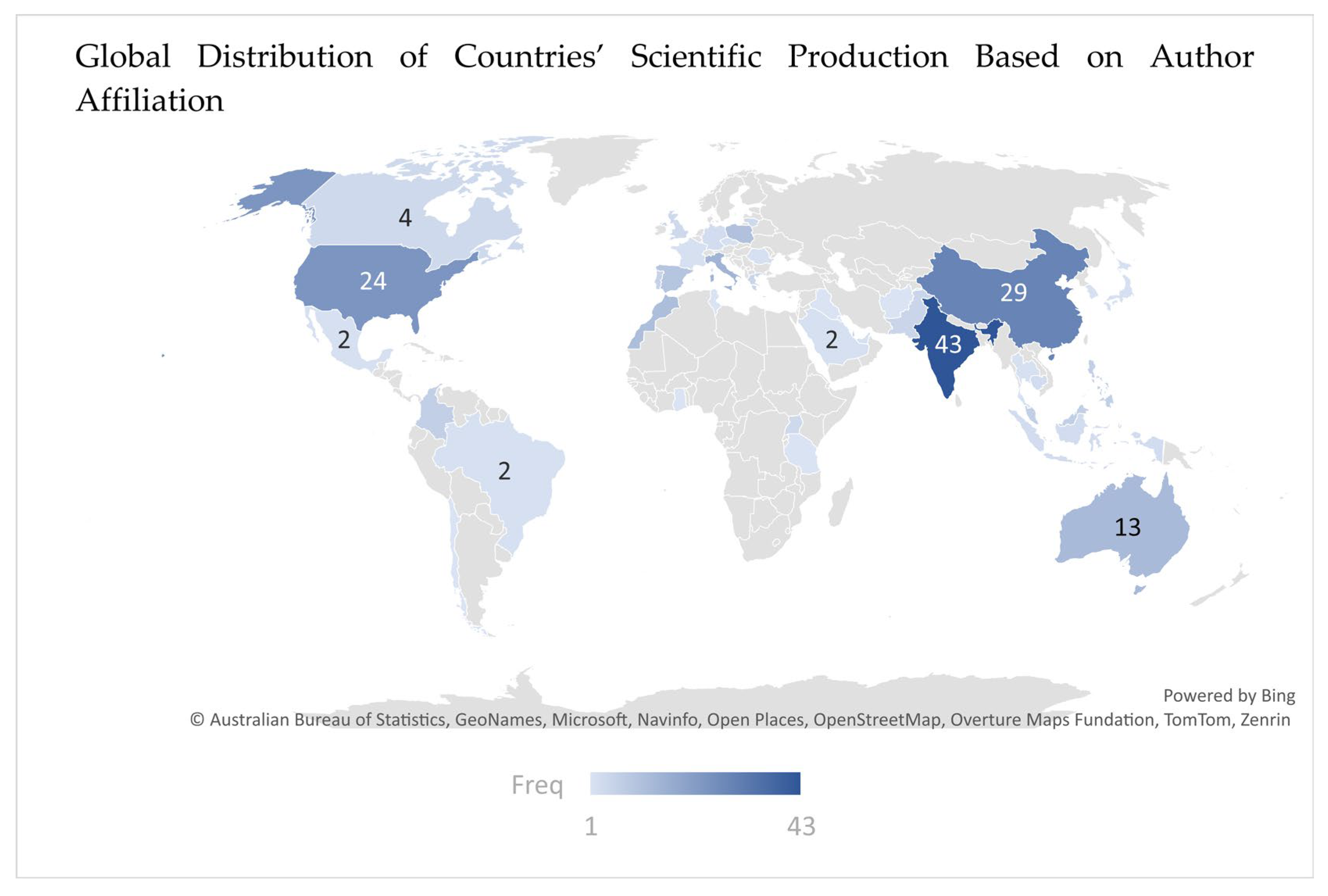
The literature reveals substantial geographical variation in both the adoption of energy-efficient practices and the distribution of research attention across agricultural food systems, as illustrated in Figure 5. Adoption levels are highest in developed economies such as Europe and North America, where supportive policy frameworks, financial incentives, and strong research infrastructure have enabled the large-scale integration of renewable energy technologies and precision agriculture. This pattern is reinforced by a regional frequency analysis of the reviewed studies, which shows a pronounced concentration of research output in Europe and North America, followed by Asia, while Sub-Saharan Africa (SSA) and other developing regions remain underrepresented. Of the 51 articles reviewed, the uneven geographical distribution of empirical evidence reflects disparities in research capacity, infrastructure, and policy support, resulting in more extensively documented adoption trends and performance outcomes in developed regions.
Empirical examples from high-income contexts further illustrate this trajectory. In the United States, for instance, the adoption of autonomous tractors demonstrates that the integration of digitalization and clean energy in farming systems has been underway for more than a decade [34]. In contrast, developing regions continue to experience slower adoption rates due to financial constraints, infrastructure gaps, and less favorable policy environments. These structural limitations restrict both implementation and the generation of robust empirical evidence, thereby reinforcing existing knowledge gaps.
Regional priorities within the literature also differ according to local biophysical and socio-economic conditions. Solar-powered irrigation features prominently in water-scarce countries such as Pakistan, while IoT-enabled smart irrigation systems are emphasized in Greece, reflecting context-specific responses to climatic stress. In China, research places greater emphasis on integrating renewable energy sources including bioenergy, biogas, and biodiesel alongside circular-economy strategies to decarbonize entire food systems. This focus responds to the growing transport energy demand and concerns about fossil fuel depletion [44]. Meanwhile, in SSA, the literature highlights increasing interest in biofertilizers and conservation practices aimed at improving soil health and reducing input dependence; however, large-scale mechanization and digital technology adoption remain limited due to restricted access to capital.
Across developing regions, persistent constraints including the high capital costs of solar, biogas, and automation technologies continue to impede adoption. Additional barriers such as limited grid connectivity, shortages of technical and maintenance expertise, weak supply chains, and farmers’ risk aversion toward unfamiliar technologies further slow scaling, particularly in rural Africa and parts of Asia. Collectively, these factors underscore the need for greater empirical attention to resource-constrained contexts and for policy and financing mechanisms that can bridge adoption and evidence gaps in energy-efficient agricultural innovations.

4. Discussion

4.1. Innovation Pathways for Energy Efficiency and Digitalization of Agriculture

The reviewed literature identifies two pathways for advancing energy-efficient innovation in agriculture and food systems: the adoption of renewable energy technologies and the deployment of digital agricultural tools. Together, these approaches redefine energy efficiency in agri-food systems. Rather than operating separately, they demonstrate strong complementarity. Renewable energy applications such as agrivoltaics [24], concentrating solar power for vertical farming [45], solar-powered irrigation [2], biogas production [19], and bioenergy systems using co-gasification and co-pyrolysis for efficient fuel generation [11,25,29] share co-benefits such as improved land-use efficiency, low-carbon energy production, and energy savings that enhance resilience to fuel price volatility and unreliable grid access.
The digital tools, including IoT-enabled irrigation systems, AI-assisted decision platforms, automation, and precision agriculture, further strengthen control over resource use and improve the efficiency with which water, fertilizers, and energy are managed. Beyond the technical functionality of these tools, the recent literature on the digital economy highlights that such technologies are embedded within a broader transformation shaped by digital infrastructure, data-driven business models, and innovation ecosystems. Emerging research demonstrates how digital innovation is altering value generation, organizational behaviors, and sector-wide collaboration, including agriculture. Studies on business model transformation in agricultural SMEs [9] and analyses of networked innovation within digital economies [23] show how data platforms, interfirm knowledge flow, and digitally enabled coordination reshape entire production systems. Situating agricultural digitalization within this wider framework highlights that these technologies are not isolated tools but components of systemic economic restructuring. This broader perspective elevates their relevance for agricultural sustainability, circular economy transitions, and global goals such as SDG 2 (zero hunger), SDG 7 (affordable and clean energy), and SDG 13 (climate action). Their scalability, however, remains contingent on supportive policies, financing, and infrastructure.
In water-scarce regions, innovations such as smart irrigation [33], IoT-enabled platforms [16], and precision land leveling for sustainable crop production [46] enable real-time responses to soil moisture and evapotranspiration. Agrivoltaic systems similarly benefit from precision monitoring that optimizes shading patterns, microclimate regulation, and crop performance beneath solar modules. Collectively, these technologies improve water-use efficiency while sustaining crop yields, marking progress toward SDG 6 (clean water and sanitation).
Digitalization is also evident in production systems such as autonomous tractors and Smart-X platforms, designed to reduce resource inputs. Conservation practices such as conservation tillage and biofertilizers [21,47] offer low-input pathways that enhance sustainability, while regionally adapted systems such as sustainable horticulture [57] strengthen soil health and biodiversity, supporting SDG 12 (responsible consumption and production) and SDG 15 (life on land). Digital sensing platforms further improve biogas and bioenergy systems by enhancing feedstock monitoring, operational stability, and waste-to-energy efficiency.
Across the reviewed studies, renewable energy technology and digital innovations promote agricultural sustainability through mutual reinforcement. Agrivoltaics, solar-powered irrigation, biogas, and bioenergy systems reduce fossil-fuel dependence, stabilize energy supply, and lower GHG emissions, while digital tools such as precision agriculture, IoT sensing, automation, and AI-based optimization enhance the efficiency of water, nutrients, and energy management across the value chain.
Precision monitoring improves the performance of solar-powered and smart irrigation systems, and renewable-energy infrastructure provides dependable power for advanced sensing, automation, and data-driven decision-making. These synergies show how renewable energy strengthens the reliability of digital agriculture, while digitalization improves the performance of renewable systems. Yet, many of the innovations remain focused on primary production stage, with limited adoption in downstream sectors such as processing, cold-chain logistics, and transportation. A system-wide perspective that incorporates the wider digital economic transformation is therefore essential for advancing energy efficiency across the entire agri-food value chain.
A critical evaluation of the reviewed studies indicates notable variation in methodological rigor and reliability. Empirical field trials and long-term experimental studies tend to provide more robust evidence of productivity and sustainability outcomes, particularly where repeated measurements and standardized indicators are employed. In contrast, modeling-based and simulation studies, while valuable for scenario analysis and system optimization, rely on assumptions that may limit their external validity. Case studies and pilot demonstrations often highlight context-specific benefits but may be subject to scale limitations and selection bias toward successful implementations. Additionally, publication bias may favor studies reporting positive performance outcomes, potentially underrepresenting implementation failures or trade-offs. Consistent with PRISMA-ScR guidance, this review therefore emphasizes evidence mapping and trend synthesis rather than formal quality scoring, while acknowledging that heterogeneity in study design and methodological approaches influences the strength and generalizability of reported outcomes.

4.2. Productivity and Sustainability Outcomes of Energy-Efficient Interventions

The integrated adoption of renewable energy and digital technologies results in significant productivity gains across diverse agricultural systems, which extend beyond isolated gains in productivity or environmental performance. When studied together, the literature shows that these advances form an interlinked technological ecosystem capable of transforming how an agricultural value chain functions, responds to climatic variability, and aligns with long-term sustainability targets. The reviewed studies demonstrate that the true value of energy-efficient interventions lies not only in discrete improvements such as 10–25% yield gains from precision irrigation [16,33] or 30–60% reductions in fossil-fuel dependence from biogas and solar-powered systems [2,19], but also in the systemic synergies that emerge when digital and renewable technologies complement one another.
Digitalization enhances renewable energy systems by enabling precise, real-time orchestration of water, nutrients, and energy flows. IoT-enabled smart irrigation, autonomous tractors, and sensor-driven decision platforms optimize input timing and reduce waste, thereby enhancing the benefits of renewable-energy-powered infrastructure. For example, solar-powered pumping combined with intelligent irrigation control translates to increased irrigation reliability and measurable improvements in water-use efficiency, while also reducing dependence on fuel price fluctuation, which is a major constraint for farms in Sub-Saharan Africa and South Asia [50,51]. Similarly, AI-driven monitoring in controlled-environment agriculture (CEA) enhances the resource-efficiency benefits of renewable energy by integrating microclimate regulation with renewable energy availability [7,16]. These coupled systems demonstrate how digital tools can serve as force accelerators, unlocking the full productivity potential of renewable energy advances.
Consequently, renewable energy technologies provide the reliable, low-carbon energy infrastructure needed to grow digital agriculture. Precision monitoring, automation, and cloud-based analytics are dependent on consistent, affordable power, which is generally unavailable in rural areas. Renewable energy, particularly solar PV and biogas, provides energy security, allowing digital systems to function without relying on unstable grids or expensive diesel generation. This combination decreases operational risks while also strengthening farmers’ adaptive capacity in the face of more changeable weather circumstances. These trends suggest a broader agricultural transition in which energy resilience is required for digital transformation, particularly in emerging nations.
When energy-efficient innovations are combined, sustainability outcomes improve significantly. Conservation tillage and crop rotations minimize soil carbon losses by 20–40% [10,40], resulting in soil environments that respond more effectively to precision fertilizer management and climate-informed irrigation scheduling. Similarly, biofertilizers and regenerative techniques improve digital technologies’ ability to optimize nutrient treatments while maintaining yield stability under climate stress [53,54]. Waste-to-energy technologies, such as biogas and hydrothermal carbonization, contribute to close nutrient cycles in circular economy frameworks by converting waste products into sustainable fuels and soil supplements [19,29]. When combined with digital sensing to monitor feedstock quality and reactor performance, these systems improve efficiency, stability, and scalability. Thus, coordinated approaches serve as the foundation for sustainable intensification, a technique that increases productivity while restoring natural functions.
When viewed together, the combined trends indicate that the future of sustainable agriculture will be defined by digitally coordinated, clean-energy-powered agricultural systems that increase productivity while lowering emissions and strengthening resilience. The research suggests that the strategic combination of renewable energy, precision management, sustainable practices, and circular-economy methods has significantly higher disruptive potential than any single technology alone. This represents a shift in perspective in which agricultural sustainability is no longer a trade-off between productivity and environmental protection, but rather an achievable co-outcome driven by linked innovation pathways.

4.3. Adoption Trends, Barriers, and Pathways for Energy-Efficient Innovations

Adoption patterns of energy-efficient agricultural innovations show pronounced regional disparities shaped by structural capacity, digital readiness, energy access, and institutional support. High-income regions such as Europe and North America demonstrate concentrated adoption of agrivoltaics, biogas systems, autonomous machinery, and precision agriculture due to strong enabling conditions. In Europe, for instance, renewable-energy strategies are tightly integrated with agricultural policy frameworks such as the EU’s Solar Energy Strategy and Common Agricultural Policy, accelerating the uptake of agrivoltaics, precision farming, and biogas technologies [19,35]. In these settings, renewable energy and digital technologies co-evolve, enabling farms to adopt integrated solutions such as solar-powered smart irrigation or IoT-enhanced autonomous machinery, demonstrating a broader shift towards digitally coordinated, clean-energy-based production systems.
In contrast, Sub-Saharan Africa and South Asia face persistent barriers such as high capital costs, poor maintenance and supply chains, unreliable grid infrastructure, and limited digital connectivity which constrain the adoption of both renewable and digital solutions [58]. As a result, adoption tends to focus on affordable, context-specific options such as solar irrigation, conservation agriculture, biofertilizers, and residue-to-energy systems [2,10,21]. Regional priorities also reflect environmental constraints: arid regions emphasize smart irrigation, while biomass-rich regions prioritize biogas and crop-residue-based energy systems [19]. These trends show that the interaction between renewable energy and digitalization is itself uneven across regions, shaping long-term sustainability trajectories. When both innovations advance together, their benefits compound, improving irrigation reliability, optimizing input-use efficiency, and reducing emissions [2,50]. When foundational energy or digital infrastructure is lacking, this synergy collapses, limiting productivity gains and widening technological inequities.
Scaling these innovations therefore requires coordinated strategies that treat renewable energy and digitalization as mutually reinforcing [59]. Expanding decentralized renewable-energy access provides the energy stability needed for digital agriculture, while improved connectivity, data systems, and extension support enable farmers to capture the full value of clean-energy technologies. Region-specific innovation pathways, such as pairing PV pumping with smart irrigation in arid zones or linking biomass residues to circular bioenergy systems, can further align technologies with local conditions. Financial tools such as blended finance, targeted subsidies, and risk-sharing schemes are required to offset the high initial costs of solar irrigation, smart sensors, and automation. Policies should encourage circular economy integration by promoting waste-to-energy systems, biofertilizer production, and regenerative practices that maximize the benefits of digital and renewable technology

5. Conclusions

This review provides comprehensive evidence that energy-efficient innovations including renewable energy technologies, precision agriculture, and automation deliver substantial co-benefits for agricultural productivity, resource-use efficiency, and environmental sustainability. Across the reviewed literature, the convergence of these innovations is consistently associated with yield improvements, irrigation water savings of up to 40%, and reductions in greenhouse gas emissions of approximately 0.3–0.6 t CO2 ha−1 yr−1. Beyond isolated performance gains, these technologies collectively strengthen climate resilience and accelerate transitions toward circular and low-emissions agri-food systems. The findings highlight the importance of integrated policy frameworks that simultaneously promote digital preparedness, renewable energy investment, and institutional capacity building, particularly in resource-constrained regions where adoption barriers remain most pronounced. While the potential benefits are well-demonstrated, uptake in such contexts remains uneven, highlighting the need for enabling policy environments that combine financial incentives, technical support, and supportive infrastructure. Integrating renewable energy within the broader food–energy–water nexus, supported by digital transformation, offers significant opportunities to unlock sustainable intensification pathways across diverse agricultural systems.
Several limitations of this review should be acknowledged. The bibliometric dataset was derived exclusively from the Scopus database. Although Scopus offers extensive and standardized coverage of peer-reviewed literature, reliance on a single database may have resulted in the omission of relevant studies indexed elsewhere, thereby limiting journal diversity and introducing potential database-related bias. In addition, the relatively small final sample size reflects the strict inclusion criteria applied, which required studies to jointly address energy efficiency, productivity, sustainability outcomes, and adoption dimensions. Although this approach ensured analytical rigor and thematic consistency, it may have excluded studies focusing on individual aspects of energy-efficient innovation. Furthermore, the reviewed literature exhibits geographical and methodological imbalances, with a concentration of studies from developed regions and a predominance of positive outcome reporting, which may constrain the generalizability of the synthesized findings.
These limitations point to several important directions for future research. Expanding database coverage to include multiple bibliographic sources, relaxing inclusion criteria to capture complementary strands of evidence, and increasing empirical attention to underrepresented regions such as Sub-Saharan Africa and South Asia would strengthen the breadth and balance of future reviews. Additionally, greater emphasis on longitudinal field studies, standardized performance indicators, and comparative experimental designs across the agri-food value chain is needed to enhance causal inference and reduce reporting bias. Advancing methodological consistency and fostering multidisciplinary collaboration among governments, academia, and industry will be critical for strengthening the evidence base, informing effective policy implementation, and supporting progress toward the sustainable development goals.

Author Contributions

Conceptualization, S.G. and C.S.M.; methodology S.G. and C.S.M.; software, S.G.; validation, A.S., N.E.C. and C.S.M.; formal analysis, S.G., A.S., N.E.C. and C.S.M.; investigation, S.G., A.S., N.E.C. and C.S.M.; writing—original draft preparation, S.G., A.S., N.E.C. and C.S.M.; writing—review and editing, S.G., A.S., N.E.C. and C.S.M.; visualization, S.G., A.S., N.E.C. and C.S.M.; supervision, C.S.M.; project administration S.G., A.S., N.E.C. and C.S.M. All authors have read and agreed to the published version of the manuscript.

Funding

This research received no external funding.

Data Availability Statement

No new data were created or analyzed in this study. Data sharing is not applicable to this article.

Acknowledgments

During the preparation of this manuscript/study, the authors used Grammarly Inc. Grammarly. Available online: https://www.grammarly.com (accessed on 13 October 2025) Grammarly for the purposes of improving language. The authors have reviewed and edited the output and take full responsibility for the content of this publication.

Conflicts of Interest

The authors declare no conflicts of interest.

Abbreviations

The following abbreviations are used in this manuscript:
AIArtificial intelligence
CO2Carbon dioxide
GHGGreenhouse gas
IoTInternet of Things
PRISMA-ScRPreferred Reporting 91 Items for Systematic Reviews and Meta-Analysis for Scoping Reviews
SDG(s)Sustainable development goals
FAOFood and Agriculture Organization (of the United Nations)
LCALife cycle assessment
CAPCommon Agricultural Policy (European Union)
CSPConcentrating solar power
NFsNanofertilizers
NUENutrient use efficiency
FEWFood–Water–Energy
R-basedRefers to “R programming language-based”
SSASub-Saharan Africa
CEA Controlled environment agriculture

References

  1. Liu, H.; Wen, S.; Wang, Z. Agricultural production agglomeration and total factor carbon productivity: Based on NDDF–MML index analysis. China Agric. Econ. Rev. 2022, 14, 709–740. [Google Scholar] [CrossRef]
  2. Abdelhamid, M.A.; Abdelkader, T.K.; Sayed, H.A.; Zhang, Z.; Zhao, X.; Atia, M.F. Design and evaluation of a solar powered smart irrigation system for sustainable urban agriculture. Sci. Rep. 2025, 15, 11761. [Google Scholar] [CrossRef] [PubMed]
  3. Villagran, E.; Espitia, J.J.; Rodriguez, J.; Gomez, L.; Amado, G.; Baeza, E.; Aguilar-Rodríguez, C.E.; Flores-Velazquez, J.; Akrami, M.; Gil, R.; et al. Use of lighting technology in controlled and semi-controlled agriculture in greenhouses and protected agriculture Systems—Part 1: Scientific and bibliometric analysis. Sustainability 2025, 17, 1712. [Google Scholar] [CrossRef]
  4. Rupawalla, Z.; Robinson, N.; Schmidt, S.; Li, S.; Carruthers, S.; Buisset, E.; Roles, J.; Hankamer, B.; Wolf, J. Algae biofertilisers promote sustainable food production and a circular nutrient economy. Sci. Total Environ. 2021, 796, 148913. [Google Scholar] [CrossRef]
  5. Saldukaitė, L.; Šarauskis, E.; Lekavičienė, K.; Savickas, D. Predicting energy efficiency and greenhouse gases reduction potential under different tillage management and farm size scenarios for winter wheat production. Sustain. Energy Technol. Assess. 2020, 42, 100841. [Google Scholar] [CrossRef]
  6. Guo, Y.; Zhao, H.; Zhang, S.; Wang, Y.; Chow, D. Modeling and optimization of environment in agricultural greenhouses for improving cleaner and sustainable crop production. J. Clean. Prod. 2021, 285, 124843. [Google Scholar] [CrossRef]
  7. Rerhrhaye, F.; Ennaciri, Y.; Rerhrhaye, B.; Lahlouh, I.; Khouili, D.; Martaoui, C.E.; Akkary, A.E.; Sefiani, N. Design and implementation of a low energy consumption data logger for a nano-grid applied to a solar smart greenhouse. In Proceedings of the 3rd International Conference on Embedded Systems and Artificial Intelligence (ESAI), Fez, Morocco, 19–20 December 2024. [Google Scholar]
  8. Morais, D.; Gaspar, P.; Silva, P.; Pires, L.; Andrade, L.; Nunes, J. Characterization of refrigeration systems in the Portuguese food processing industry. In Proceedings of the 25th IIR International Congress of Refrigeration (ICR 2019), Montreal, QC, Canada, 24–30 August 2019. [Google Scholar]
  9. Sun, B.; Yu, J.; Khattak, S.I.; Tariq, S.; Zahid, M. Digital innovation, business models transformations, and agricultural smes: A prisma-based review of challenges and prospects. Systems 2025, 13, 673. [Google Scholar] [CrossRef]
  10. Dash, P.K.; Bhattacharyya, P.; Padhy, S.R.; Shahid, M.; Nayak, A.K. Optimizing sustainability in rice-based cropping systems: A holistic approach for integrating soil carbon farming, energy efficiency, and greenhouse gas reduction strategies via resource conservation practices. Agron. Sustain. Dev. 2025, 45, 11. [Google Scholar] [CrossRef]
  11. Mariyam, S.; Shahbaz, M.; Al-Ansari, T.; Mackey, H.R.; McKay, G. A critical review on co-gasification and co-pyrolysis for gas production. Renew. Sustain. Energy Rev. 2022, 161, 112349. [Google Scholar] [CrossRef]
  12. Wang, Z.; Zhang, X.; Lu, H.; Kang, X.; Liu, B. The effect of industrial agglomeration on agricultural green production efficiency. Sustainability 2023, 15, 12215. [Google Scholar] [CrossRef]
  13. Wang, J.; Li, W.; Haq, S.u.; Shahbaz, P. Adoption of renewable energy technology on farms. Sustainability 2023, 15, 5611. [Google Scholar] [CrossRef]
  14. Aarif, K.O.M.; Alam, A.; Hotak, Y. Smart Sensor Technologies Shaping the Future of Precision Agriculture: Recent Advances and Future Outlooks. J. Sens. 2025, 2025, 2460098. [Google Scholar] [CrossRef]
  15. Dennison, M.S.; Kumar, P.S.; Wamyil, F.; Meji, M.A.; Ganapathy, T. The role of automation and robotics in transforming hydroponics and aquaponics to large scale. Discover Sustain. 2025, 6, 105. [Google Scholar] [CrossRef]
  16. Liopa-Tsakalidi, A.; Thomopoulos, V.; Barouchas, P.; Boursianis, A.D.; Goudos, S.K. A LoRaWAN-based IoT platform for smart irrigation in olive groves. Smart Agric. Technol. 2024, 9, 100673. [Google Scholar] [CrossRef]
  17. Agrawal, J.; Arafat, M.Y. Transforming Farming: A Review of AI-Powered UAV Technologies in Precision Agriculture. Drones 2024, 8, 664. [Google Scholar] [CrossRef]
  18. Wu, J.; Guo, S.; Li, J.; Zeng, D. Big data meet green challenges. IEEE Syst. J. 2016, 10, 888–900. [Google Scholar] [CrossRef]
  19. Dach, J.; Boniecki, P.; Przybył, J.; Janczak, D.; Lewicki, A.; Czekała, W.; Witaszek, K.; Rodríguez Carmona, P.C.; Cieślik, M. Energetic efficiency analysis of the agricultural biogas plant in 250 kWe experimental installation. Energy 2014, 69, 34–38. [Google Scholar] [CrossRef]
  20. Chaher, N.E.H.; Nassour, A.; Nelles, M. The (FWE)2 nexus: Bridging food, food waste, water, energy, and ecosystems for circular systems and sustainable development. Trends Food Sci. Technol. 2024, 154, 104788. [Google Scholar] [CrossRef]
  21. Eriyadi, M.; Supangkat, S.H.; Hidayat, F. Sensing as a Service Reinvented: A Unified and Sustainable Sensing Framework for Smart X Development. IEEE Access 2025, 13, 65121–65137. [Google Scholar] [CrossRef]
  22. Tricco, A.C.; Lillie, E.; Zarin, W.; O’Brien, K.K.; Colquhoun, H.; Levac, D.; Moher, D.; Peters, M.D.J.; Horsley, T.; Weeks, L.; et al. PRISMA extension for scoping reviews. Ann. Intern. Med. 2018, 169, 467–473. [Google Scholar] [CrossRef]
  23. Aria, M.; Cuccurullo, C. Bibliometrix: An R-tool for comprehensive science mapping analysis. J. Informetr. 2017, 11, 959–975. [Google Scholar] [CrossRef]
  24. Agostini, A.; Colauzzi, M.; Amaducci, S. Innovative agrivoltaic systems to produce sustainable energy: An economic and environmental assessment. Appl. Energy 2021, 281, 116102. [Google Scholar] [CrossRef]
  25. Agregán, R.; Lorenzo, J.M.; Kumar, M.; Shariati, M.A.; Khan, M.U.; Sarwar, A.; Sultan, M.; Rebezov, M.; Usman, M. Anaerobic Digestion of Lignocellulose Components: Challenges and Novel Approaches. Energies 2022, 15, 8413. [Google Scholar] [CrossRef]
  26. Czyżewski, B.; Kryszak, Ł. Impact of different models of agriculture on greenhouse gases (GHG) emissions: A sectoral approach. Outlook Agric. 2018, 47, 68–76. [Google Scholar] [CrossRef]
  27. Lee, M.; Lin, Y.-L.; Chiueh, P.-T.; Den, W. Environmental and energy assessment of biomass residues to biochar as fuel: A brief review with recommendations for future bioenergy systems. J. Clean. Prod. 2020, 251, 119714. [Google Scholar] [CrossRef]
  28. Liska, A.J.; Yang, H.S.; Bremer, V.R.; Klopfenstein, T.J.; Walters, D.T.; Erickson, G.E.; Cassman, K.G. Improvements in life cycle energy efficiency and greenhouse gas emissions of corn-ethanol. J. Ind. Ecol. 2009, 13, 58–74. [Google Scholar] [CrossRef]
  29. Singh, A.; Bin Abu Sofian, A.D.A.; Chan, Y.J.; Chakrabarty, A.; Selvarajoo, A.; Abakr, Y.A.; Show, P.L. Hydrothermal carbonization: Sustainable pathways for waste-to-energy conversion and biocoal production. GCB Bioenergy 2024, 16, e13150. [Google Scholar] [CrossRef]
  30. He, J.; Han, M. Analysis of spatial and temporal characteristics and evolution of green total factor productivity in agriculture in the lower Yellow River basin. Front. Sustain. Food Syst. 2024, 8, 1474813. [Google Scholar] [CrossRef]
  31. Jamil, U.; Pearce, J.M. Maximizing biomass with agrivoltaics. Biomass 2023, 3, 188–216. [Google Scholar] [CrossRef]
  32. Bosman, L.; Kádár, J.; Yonnie, B.; LeGrande, A. Market transformation policies and agrivoltaics. Sustainability 2024, 16, 11172. [Google Scholar] [CrossRef]
  33. Almahmoud, I.; Attar, E. Implementing a Smart Irrigation System Using IoT Technology to Achieve Saudi’s Green Ambition. In Proceedings of the 2023 IEEE 7th Conference on Energy Internet and Energy System Integration (EI2), Hangzhou, China, 15–18 December 2023. [Google Scholar]
  34. Bora, G.C.; Nowatzki, J.F.; Roberts, D.C. Energy savings by adopting precision agriculture in rural USA. Energy Sustain. Soc. 2012, 2, 22. [Google Scholar] [CrossRef]
  35. Călin, M.; Svasta, P. Innovations in Electric Vehicle Supply Equipment: The Path Towards Smart Agriculture. In Proceedings of the 2024 IEEE 30th International Symposium for Design and Technology in Electronic Packaging (SIITME), Sibiu, Romania, 16–19 October 2024. [Google Scholar]
  36. Nasso, N.N.D.; Roncucci, N.; Bonari, E. Giant reed (Arundo donax L.) as energy crop in Central Italy: A review. Ital. J. Agron. 2013, 8, 10–17. [Google Scholar] [CrossRef]
  37. Allali, F.E.; Fatnassi, H.; Demrati, H.; Errais, R.; Wifaya, A.; Aharoune, A. Greenhouse cooling systems: A systematic review of research trends, challenges, and recommendations for improving sustainability. Clean. Eng. Technol. 2025, 26, 100973. [Google Scholar] [CrossRef]
  38. Ravishankar, E.; Booth, R.E.; Saravitz, C.; Sederoff, H.; Ade, H.W.; O’Connor, B.T. Achieving net zero energy greenhouses by integrating semitransparent organic solar cells. Joule 2020, 4, 490–506. [Google Scholar] [CrossRef]
  39. Baig, A.A.; Fung, A.S.; Kumar, R. Auditing and Analysis of Natural Gas Consumptions in Small- and Medium-Sized Industrial Facilities in the Greater Toronto Area for Energy Conservation Opportunities. Energies 2024, 17, 1744. [Google Scholar] [CrossRef]
  40. Canali, S.; Campanelli, G.; Ciaccia, C.; Leteo, F.; Testani, E.; Montemurro, F. Conservation tillage strategy based on the roller crimper technology for weed control in Mediterranean vegetable organic cropping systems. Eur. J. Agron. 2013, 50, 11–18. [Google Scholar] [CrossRef]
  41. Fess, T.L.; Benedito, V.A. Organic versus Conventional Cropping Sustainability: A Comparative System Analysis. Sustainability 2018, 10, 272. [Google Scholar] [CrossRef]
  42. Adnan, N.; Nordin, S.M.; Rasli, A.M. A possible resolution of Malaysian sunset industry by green fertilizer technology: Factors affecting the adoption among paddy farmers. Environ. Sci. Pollut. Res. 2019, 26, 27198–27224. [Google Scholar] [CrossRef]
  43. Capellesso, A.; Cazella, A. Sustainability indicator of agroecosystems: A case study in areas of maize cultivation. Cienc. Rural 2013, 43, 2297–2303. [Google Scholar] [CrossRef]
  44. Hou, J.; Zhang, P.; Yuan, X.; Zheng, Y. Life cycle assessment of biodiesel from soybean, jatropha and microalgae in China conditions. Renew. Sustain. Energy Rev. 2011, 15, 5081–5091. [Google Scholar] [CrossRef]
  45. Khalaf, K.A.; Gamil, A.; Attiya, B.; Cuello, J. Exploring the potential of concentrating solar power technologies for vertical farming in arid regions: The case of Western Iraq. Energy Sustain. Dev. 2023, 77, 101310. [Google Scholar] [CrossRef]
  46. Nguyen Van, H.; Balingbing, C.; Sandro, J.; Khandai, S.; Chea, H.; Songmethakrit, T.; Meas, P.; Hitzler, G.; Zwick, W.; Viriyangkura, L.; et al. Precision land leveling for sustainable rice production. Precis. Agric. 2022, 23, 1633–1652. [Google Scholar] [CrossRef]
  47. Pratibha, G.; Srinivas, I.; Raju, B.M.K.; Suvana, S.; Rao, K.V.; Rao, M.S.; Jha, A.; Anna, S.; Prabhakar, M.; Singh, V.K.; et al. Do rainfed production systems have lower environmental impact over irrigated production systems? Sci. Total Environ. 2024, 917, 170190. [Google Scholar] [CrossRef] [PubMed]
  48. Shukla, S.K.; Solomon, S.; Sharma, L.; Jaiswal, V.P.; Pathak, A.D.; Singh, P. Green technologies for improving cane sugar productivity. Sugar Tech 2019, 21, 186–196. [Google Scholar] [CrossRef]
  49. Yadav, G.S.; Das, A.; Lal, R.; Babu, S.; Meena, R.S.; Saha, P.; Singh, R.; Datta, M. Energy budget and carbon footprint. J. Clean. Prod. 2018, 191, 144–157. [Google Scholar] [CrossRef]
  50. Wettstein, S.; Muir, K.; Scharfy, D.; Stucki, M. The environmental mitigation potential of photovoltaic-powered irrigation in the production of South African maize. Sustainability 2017, 9, 1772. [Google Scholar] [CrossRef]
  51. Xie, H.; Ringler, C.; Mondal, M.A.H. Solar or Diesel: A Comparison of Costs for Groundwater-Fed Irrigation in Sub-Saharan Africa Under Two Energy Solutions. Earth’s Future 2021, 9, e2020EF001611. [Google Scholar] [CrossRef]
  52. FAO. Scaling Up Adoption of Conservation Agriculture in South Africa; Food and Agriculture Organization of the United Nations: Rome, Italy, 2022; Available online: https://www.fao.org/africa/news-stories/news-detail/Scaling-up-adoption-of-Conservation-Agriculture-in-South-Africa-/en (accessed on 16 July 2025).
  53. Miranda, A.M.; Hernandez-Tenorio, F.; Villalta, F.; Vargas, G.J.; Sáez, A.A. Advances in the Development of Biofertilizers and Biostimulants from Microalgae. Biology 2024, 13, 199. [Google Scholar] [CrossRef]
  54. Cao, T.N.D.; Mukhtar, H.; Le, L.T.; Tran, D.P.H.; Ngo, M.T.T.; Pham, M.D.T.; Nguyen, T.B.; Vo, T.K.Q.; Bui, X.T. Roles of microalgae-based biofertilizer in sustainability of green agriculture and food-water-energy security nexus. Sci. Total Environ. 2023, 870, 16192. [Google Scholar] [CrossRef]
  55. Pudhuvai, B.; Koul, B.; Das, R.; Shah, M.P. Nano-Fertilizers (NFs) for Resurgence in Nutrient Use Efficiency (NUE): A Sustainable Agricultural Strategy. Curr. Pollut. Rep. 2024, 11, 1. [Google Scholar] [CrossRef]
  56. Dadrasnia, A.; de Bona Muñoz, I.; Yáñez, E.H.; Lamkaddam, I.U.; Mora, M.; Ponsá, S.; Ahmed, M.; Argelaguet, L.L.; Williams, P.M.; Oatley-Radcliffe, D.L. Sustainable nutrient recovery from animal manure: A review of current best practice technology and the potential for freeze concentration. J. Clean. Prod. 2021, 315, 128106. [Google Scholar] [CrossRef]
  57. Maggio, A.; Testolin, R.; Gianquinto, G. Sistemi ortofrutticoli sostenibili. Ital. J. Agron. 2011, 6, e3. [Google Scholar] [CrossRef]
  58. Arhin, I.; Mei, H.; Li, J.; Gyamfi, E.; Antwi-Boasiako, A.; Chen, X.; Li, X.; Liu, A. Analysis of the determinants of sustainable agricultural technologies adoption in tea production in China: A systematic review. Int. J. Agric. Sustain. 2023, 21, 2239047. [Google Scholar] [CrossRef]
  59. Fan, R.; Qi, Y.; Wang, Y.; Zhu, C.; Yao, Q.; Yang, P.; Chen, R. Network dynamics of inter-firm innovation in China’s digital economy: A two-layer network perspective. Technol. Anal. Strateg. Manag. 2025, 1–20. [Google Scholar] [CrossRef]
Figure 1. PRISMA-ScR flow diagram illustrating the study identification, screening, and inclusion process. Database refers to the Scopus bibliographic database searched in this study. Registers denote records retrieved from the database prior to screening. Reports of included studies indicate full-text articles assessed for eligibility, while Studies included in the review represent the final set of articles meeting all inclusion criteria.
Energies 19 01092 g001
Figure 2. Co-occurrence network on energy efficiency in agriculture and food systems: interlinkages with sustainability, productivity, and innovation pathways.
Energies 19 01092 g002
Figure 3. Thematic map of research on energy-efficient innovations in agriculture and food systems, showing clusters of keywords based on relevance and development.
Energies 19 01092 g003
Figure 4. Word cloud illustrating key sustainability and energy-efficiency concepts, where word size represents relative frequency.
Energies 19 01092 g004
Figure 5. Global distribution of countries’ scientific production based on the total number of scientific publications produced by authors affiliated with institutions in each country within the reviewed dataset (Scopus, 2009–2025). The map uses a graduated color scale to represent increasing publication intensity, with darker shades indicating higher numbers of publications. Grey-colored areas indicate countries for which no eligible publications meeting the inclusion criteria were identified in the dataset. This indicator reflects the geographical distribution of research output rather than technology adoption or implementation levels.
Energies 19 01092 g005
Table 1. Inclusion criteria for studies on energy-efficient technologies and practices in agriculture and food systems.
CategoryInclusionRationale
Research focusFocus on energy-efficient technologies or practices in agriculture or food systems Ensures the research directly contributes to understanding sustainable energy use in the agricultural sector
Field of studyResearch related to agricultural production, machinery, processing, or post-harvest operationsFocuses the scope to core areas of the agricultural supply chain where energy efficiency can have a measurable impact
ScopeIncludes analysis of productivity, costs, and efficiency, along with metrics such as greenhouse gas (GHG) reduction, resource use, waste minimization, and overall environmental impactEnsures inclusion of data-driven studies that provide quantitative or qualitative evidence on environmental and economic outcomes
Socio-economic and policy contextDiscusses adoption trends, barriers, regional differences, or scaling of innovationsAdds value by addressing the practical implementation and diffusion of sustainable technologies
Publication typePeer-reviewed articles published in EnglishEnsures data reliability, comparability, and accessibility for review
Timespan2009 onwardsCaptures contemporary advancements and relevance to current sustainability and climate goals
Table 2. A summary of the bibliographic information of the final literature database included in this study.
DescriptionResultsDescriptionResults
Time span2009–2025Keywords plus (ID)601
Sources 41Author keywords (DE)267
Documents51Authors250
Annual growth rate %9.05Single-authored articles2
Document average years5.1Co-authors per article4.96
Average citation per doc46.98International co-authorships %37.25
Table 3. Energy-efficient technologies and practices in agriculture, energy, and transportation across global regions.
Technology/PracticeApplication AreaDescriptionRegionReference
Green fertilizer technologyCrop productionImprove productivity on crop productionMalaysia, Asia[42]
Agrivoltaic systemsCrop productionPreserve agricultural land and improve water-use efficiencyPiacenza, Italy[24]
Bioenergy productionEnergy productionClean and sustainable energy productionOurense, Spain[25]
Smart irrigation systemCrop productionReduces water and energy useRiyadh, Saudi Arabia[33]
Autonomous tractorsCrop productionFuel and labor savingsNorth Dakota, USA[34]
Smart electric vehicle supply equipmentSustainable transportationReduce operational costsBucharest, Romania[35]
Conservation tillageCrop productionEnhance the sustainability of the organically managed vegetable cropping systemsItaly, Poland[40,43]
Biogas plantGreen energy productionBiowaste valorization technologyPoznan, Poland[19]
Solar-powered smart irrigation systemsCrop productionReduces water and energy useCholistan Desert, Pakistan [2]
Rice-green gram system (Crop rotation)Crop production Improve soil health, reduce emissions, and increase productivityIndia[10]
Smart-X (Precision agriculture systems)Crop production (sugarcane) Enable real-time monitoring, precision farming, and optimized crop management to boost productivity and sustainabilityIndonesia[21]
Biodiesel production Transportation Promoting energy efficiencyChina[44]
Concentrating solar power (CSP)Vertical farming—crop productionPromoting energy efficiencyIraq[45]
IoT platform for smart irrigationCrop productivity Enhances yields, and supports sustainabilityGreece[16]
Corn ethanol productionCrop productionIncrease energy efficiency and profitability in crop productionUnited States[28]
Refrigeration systemsFood processingImprove efficiency and productivityCovilhã, Portuguese[8]
Precision land leveling—laser-controlled land leveling (LLL)Crop productionOptimized water and crop managementCambodia, Thailand, Philippines, Vietnam, and India[46]
Sustainability analysisCrop productionImproved crop productivityChina[47]
Greenhouse Crop productionIncrease agricultural land-use efficiencyUnited States[38]
Solar smart greenhouseCrop productionIntegration of renewable energy technology with advanced agricultural practicesMorrocco[7]
Biofertilizer Crop productionEnhances sustainabilityAustralia[4]
Integration of sustainable agricultural productionCro productionEnergy efficiency and greenhouse gases reductionLithuania[5]
Green technologiesCrop productionProductivity and sustaining soil fertilityIndia[48]
Hydrothermal carbonizationWaste-to-energy conversion and biocoal productionImproved efficiencyMalaysia[29]
Energy budget and carbon footprint in a no-till and mulch productionCrop productionImproving the environmental quality and conserving natural resources.India[49]
Disclaimer/Publisher’s Note: The statements, opinions and data contained in all publications are solely those of the individual author(s) and contributor(s) and not of MDPI and/or the editor(s). MDPI and/or the editor(s) disclaim responsibility for any injury to people or property resulting from any ideas, methods, instructions or products referred to in the content.