Article

Halogen Doping in Na3PS4 Solid Electrolytes for High Performance All-Solid-State Sodium Batteries


1
State Key Laboratory of Advanced Metallurgy, University of Science and Technology Beijing, Beijing 100083, China
2
CITIC Pacific Special Steel Group Jiangsu, Beijing 214400, China
3
School of Metallurgical and Ecological Engineering, University of Science and Technology Beijing, Beijing 100083, China
*
Authors to whom correspondence should be addressed.
Energies 2026, 19(3), 850; https://doi.org/10.3390/en19030850
Submission received: 15 December 2025 / Revised: 28 January 2026 / Accepted: 30 January 2026 / Published: 5 February 2026

Abstract

Sulfide-based solid electrolytes are promising for all-solid-state sodium batteries due to their high ionic conductivity and facile processability, but their practical use is limited by moisture sensitivity and poor interfacial stability. To address these issues, Na3−xPS4−xMx (M = F, Cl, Br, I) electrolytes were first synthesized as a preliminary study to evaluate the effect of halogen doping. Chlorine was identified as the most effective dopant and was therefore selected for a systematic investigation of doping concentration. Na3−xPS4−xClx (x = 0.1–0.3) electrolytes were prepared by solid-state sintering, and the optimum composition was determined to be Na2.85PS3.85Cl0.15, which achieved a high ionic conductivity of 5.5 × 10⁻⁴ S·cm−1 with a reduced activation energy of 33.3 kJ·mol−1. When employed in TiS2|Na2.85PS3.85Cl0.15|Na3Sn full cells, the optimized electrolyte enabled high initial capacity, excellent rate capability, and stable long-term cycling. These results highlight the effectiveness of Cl doping concentration control in enhancing both the intrinsic properties of Na3PS4-based electrolytes and the overall electrochemical performance of all-solid-state sodium batteries.

1. Introduction

With the accelerating global transition toward renewable energy, sodium-ion batteries (SIBs) have emerged as promising candidates for large scale energy storage owing to the abundance, low cost, and wide distribution of sodium resources. However, conventional liquid electrolyte SIBs face inherent safety challenges, including electrolyte leakage, flammability, and uncontrolled dendrite growth, that severely hinder their practical deployment. To address these issues, all-solid-state sodium-ion batteries (ASSIBs) employing solid-state electrolytes (SSEs) have attracted extensive attention because of their superior thermal stability, wide electrochemical window, and enhanced interfacial compatibility with sodium metal anodes [1,2,3].
Among various SSEs, sulfide-based electrolytes, particularly Na3PS4, are regarded as highly attractive due to their relatively high ionic conductivity at room temperature, favorable mechanical properties, and facile processability. Na3PS4 can be synthesized via cost-effective mechanochemical routes under ambient conditions without high temperature sintering, while its soft nature ensures good interfacial contact with electrodes and thus lowers interfacial resistance [4,5,6]. Nevertheless, pristine Na3PS4 suffers from several intrinsic drawbacks: (i) high sensitivity to moisture, accompanied by the release of toxic H2S gas; (ii) insufficient chemical stability against sodium metal, leading to side reactions and dendrite growth; and (iii) limited ionic conductivity compared with oxide-based conductors [7,8,9]. Recent studies have sought to address these issues through multiple strategies, such as surface molecular engineering for improved processing stability [10], polymeric or buffer interphases to suppress interfacial degradation [11], fluorine-rich interphase chemistries to homogenize the electric field and inhibit dendrites [9], and oxysulfide compositions to enhance chemical robustness [12]. Despite these advances, achieving a balance between high ionic conductivity and long-term interfacial stability remains a pressing challenge [13,14,15].
Doping has emerged as a particularly effective strategy for improving SSE performance by introducing lattice distortions, optimizing Na+ migration pathways, and tailoring defect chemistry [16,17]. In sulfide-based electrolytes such as Na3SbS4, halogen substitution for sulfur has been shown to expand the lattice, lower migration barriers, and thereby enhance ionic conductivity [18]. More recently, systematic investigations have begun to explore halogen doping in Na3PS4, with encouraging results: Cl doping has been reported to stabilize the Na|Na3PS4 interface and suppress dendritic growth [19,20,21], while Br doping can reduce activation energy and improve bulk ionic conductivity [22,23]. However, excessive doping may disrupt the Na3PS4 framework and introduce impurity phases, ultimately compromising conductivity [24]. Thus, careful optimization of the dopant type and concentration is essential to simultaneously maximize ionic conductivity and interfacial stability.
In this context, the present study focuses on the design and synthesis of halogen-doped Na3PS4 electrolytes (Na3−xPS4−xMx, M = F, Cl, Br, I) via solid-state sintering. Systematic structural and electrochemical investigations are conducted to clarify the effects of halogen type and doping level on lattice stability, Na+ migration, and electrochemical performance. Particular attention is devoted to Cl-doped Na3PS4, which exhibits the most favorable balance between ionic conductivity and interfacial stability. This work provides mechanistic insights into halogen-induced structural modulation and offers practical guidance for the rational design of high-performance sulfide-based SSEs for next-generation all-solid-state sodium batteries.

2. Material and Experimental Method

2.1. Preparation of Halogen-Doped Na3PS4 Electrolytes

Halogen-doped Na3PS4 solid electrolytes with the nominal composition Na3−xPS4−xMx (M = F, Cl, Br, I; x = 0.1, 0.15, 0.2, 0.3) were synthesized via a solid-state method. Stoichiometric amounts of Na2S, P2S5, and the corresponding halide sources (NaF, NaCl, NaBr, or NaI) were weighed in an argon filled glovebox (H2O/O2 < 0.1 ppm), with a total batch mass of 1.5 g. The mixtures were ground for ~15 min and then were transferred to a sealed ball mill container to mill at 550 rpm for 11 h. The smiled powders were finely ground, pressed into pellets, sealed in evacuated quartz tubes, and sintered at 420 °C for 12 h, followed by furnace cooling to room temperature.

2.2. Cathode Preparation and Cell Assembly

Electrolyte pellets for electrochemical testing were prepared by pressing 100 mg of powder into 12 mm disks under 350 MPa for 3 min to obtain dense pellets of ~0.5 mm thickness. For the composite cathode, TiS2 (Alfa Aesar, Ward Hill, Haverhill, MA, USA, 99.8%), solid electrolyte and Super P (TIMCAL, Bodil, Switzerland, 99.5%) were mixed at a mass ratio of 4:6:1 and ground in an agate mortar for ~20 min. For full-cell assembly, the composite cathode was spread onto one side of the electrolyte pellet, while a Na3Sn alloy anode was placed on the opposite side. The stack was pressed at 400 MPa for 3 min to ensure intimate interfacial contact. All procedures were carried out in an argon glovebox (MBraun, Garching, Germany).

2.3. Characterization Methods

The phase structures of the electrolytes were analyzed by X-ray diffraction (XRD, Rigaku SmartLab, Kyoto, Japan, Cu Kα radiation, λ = 1.5406 Å). Raman spectra were collected on a Raman spectrometer (Horiba HR800, Kyoto, Japan) with a 532 nm laser source. Morphology and elemental distribution were examined by scanning electron microscopy (SEM, Zeiss GeminiSEM 300, Baden, Germany) equipped with energy-dispersive X-ray spectroscopy (EDS).

2.4. Electrochemical Measurements

Electrochemical impedance spectroscopy (EIS, ParStat 4000, Princeton, NJ, USA) was carried out in the frequency range of 0.1 Hz–10 MHz with an AC amplitude of 30 mV. Ionic conductivities were measured at 303–373 K, and activation energies were determined from Arrhenius plots according to σ = Aexp(–Ea/RT).
Galvanostatic charge–discharge (GCD, CT-4008, Neware, Shenzhen, China) and cycling tests were carried out in the voltage range of 1.2–2.4 V at various C-rates. Rate capability and long-term cycling stability were also evaluated under different C-rates. Sodium symmetric cells were assembled with Na metal as both electrodes and solid electrolyte pellets as separators, and were cycled at current densities from 0.01 to 0.1 mA cm−2 in 0.01 mA cm−2 increments.

3. Results and Discussion

3.1. Structural, Transport, and Interfacial Properties of Halogen-Doped Na3PS4

To investigate the effect of halogen doping on Na3PS4, four halide ions (F, Cl, Br, I) were introduced by substituting sulfur sites in the lattice. This approach utilizes the differences in ionic radius and electronegativity to tune the local structure and transport channels. The resulting compositions, Na3−xPS4−xMx (M = F, Cl, Br, I; denoted as NPSF, NPSCl, NPSBr, and NPSI), were synthesized under identical conditions for direct comparison.
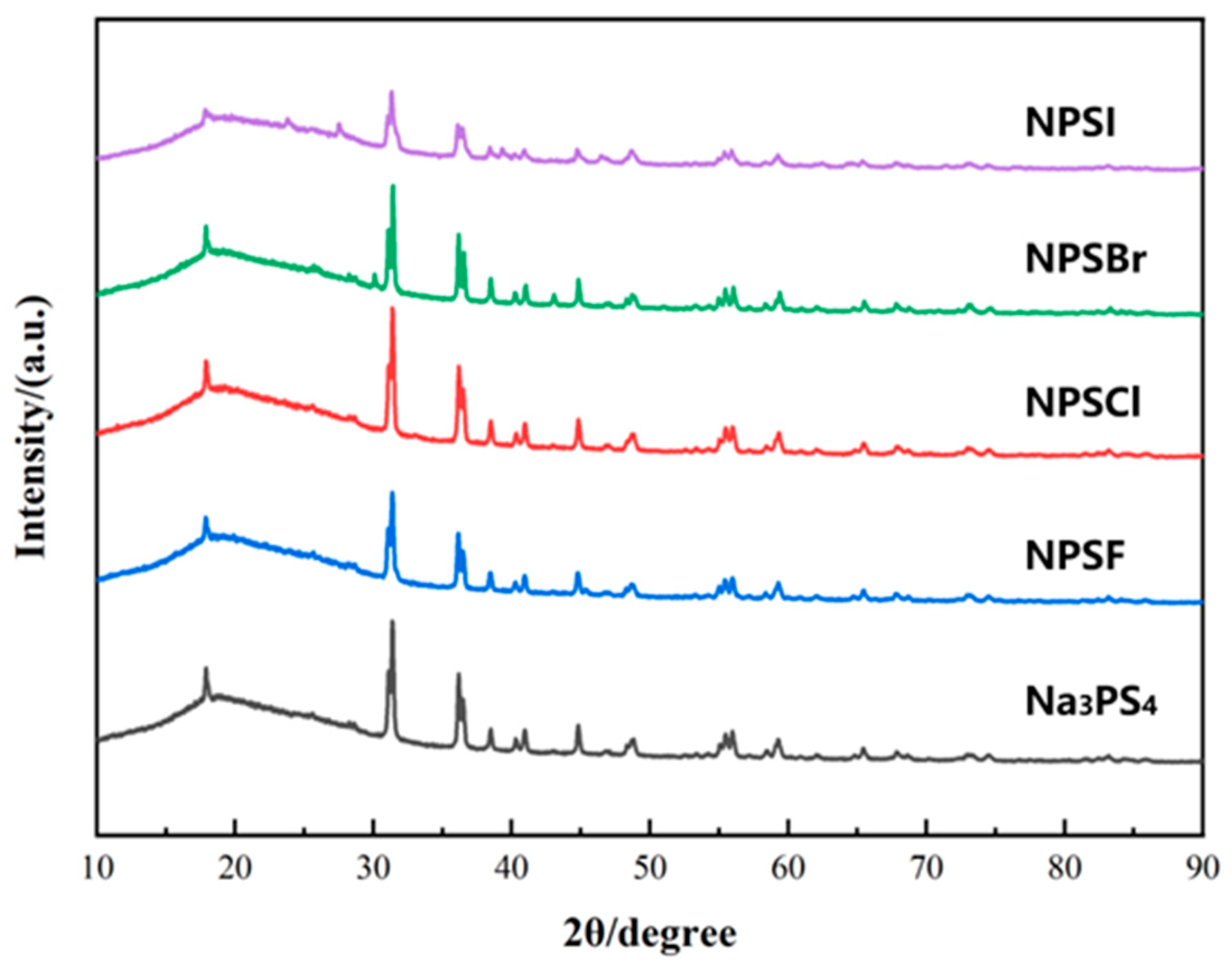
Figure 1 shows the XRD patterns of the halogen-doped electrolytes. The reveals that the characteristic diffraction peaks of electrolytes doped with four halogens (F, Cl, Br, and I) are consistent with those of pure Na3PS4 and closely match the standard NPS phase structure. Notably, despite the incorporation of halogen ions with different electronegativities and ionic radii, no significant shift is observed in the diffraction peak positions of the doped samples. This indicates that, under the present doping conditions, the introduction of halogen atoms does not noticeably affect the lattice parameters or crystal structure of the electrolytes. Accordingly, the four halogen-doped electrolytes, together with pure Na3PS4, can be classified as fast ion conductors. The XRD pattern of pure Na3PS4, shown by the black line in the figure, is consistent with the diffraction peaks reported in the literature [11]. In addition, several unidentified peaks appear in the patterns of the NaBr- and NaI-doped electrolytes, suggesting the presence of impurity phases introduced during the doping process. By contrast, the NaF- and NaCl-doped electrolytes show no impurity peaks. However, the diffraction peak intensity of the NaF-doped sample is slightly reduced, whereas that of the NaCl-doped sample is enhanced, indicating that the synthesized solid electrolytes exhibit a high degree of crystallinity while maintaining the tetragonal crystal structure of Na3PS4.
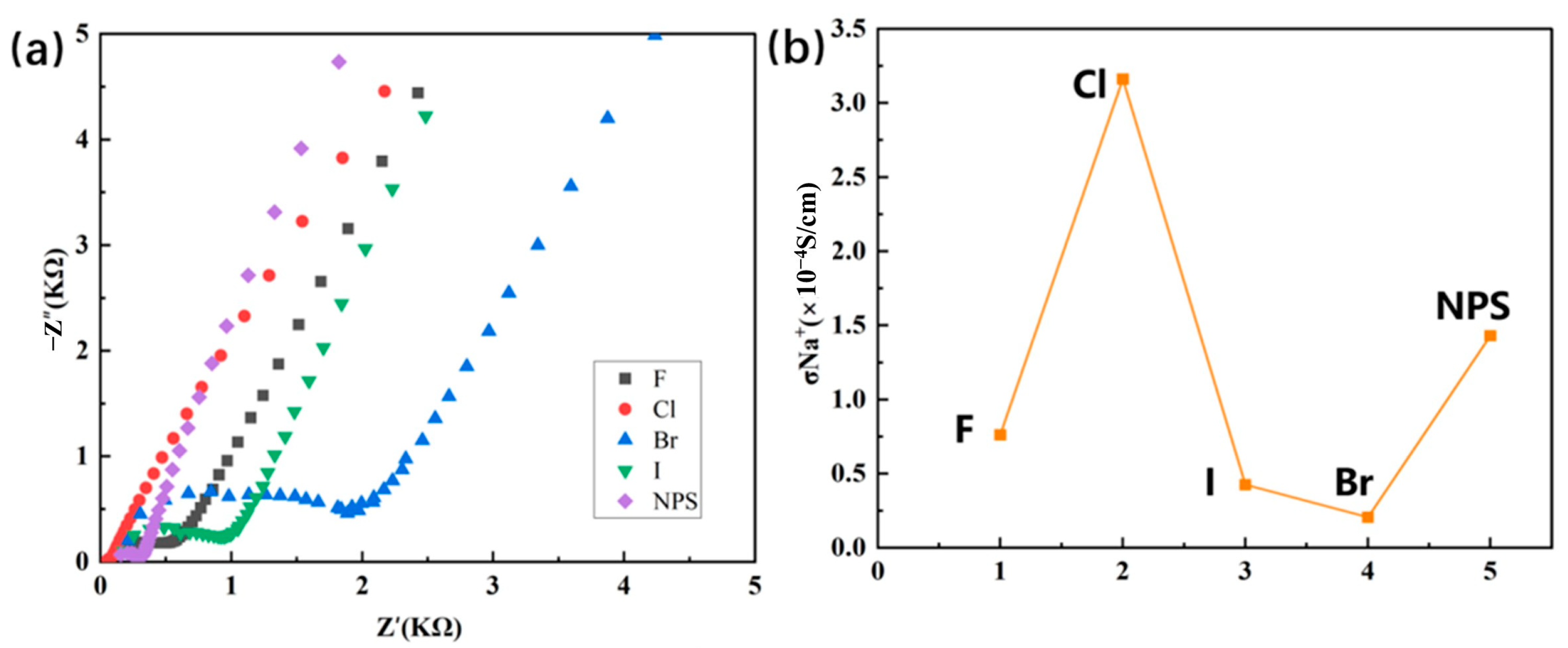
The ionic transport behavior was examined by EIS (0.1 Hz–10 MHz, 30 mV). As shown in Figure 2a, NPSCl exhibits a nearly linear response with negligible semicircle, suggesting suppressed grain boundary resistance. In contrast, NPSF, NPSBr, and NPSI display pronounced semicircles, indicating significant grain boundary contributions [25]. The calculated room temperature ionic conductivities (Figure 2b) are 7.62 × 10⁻⁵ S·cm−1 (NPSF), 3.16 × 10⁻⁴ S·cm−1 (NPSCl), 4.25 × 10⁻⁵ S·cm−1 (NPSBr), 2.05 × 10⁻⁵ S·cm−1 (NPSI), and 1.43 × 10⁻⁴ S·cm−1 (pristine Na3PS4). Thus, Cl doping enhances conductivity by more than twofold compared to the pristine sample, while Br and I doping reduce conductivity by nearly an order of magnitude. Notably, the ionic radius and electronegativity differences lead to varying degrees of lattice distortion. Cl (1.81 Å) closely matches S2− (1.84 Å), allowing isovalent substitution without disrupting PS4 tetrahedra. F is too small (1.33 Å), causing local contraction that hinders Na+ migration. Br (1.96 Å) and I (2.20 Å) are too large, inducing lattice strain and impurity phases, thereby lowering conductivity [12].
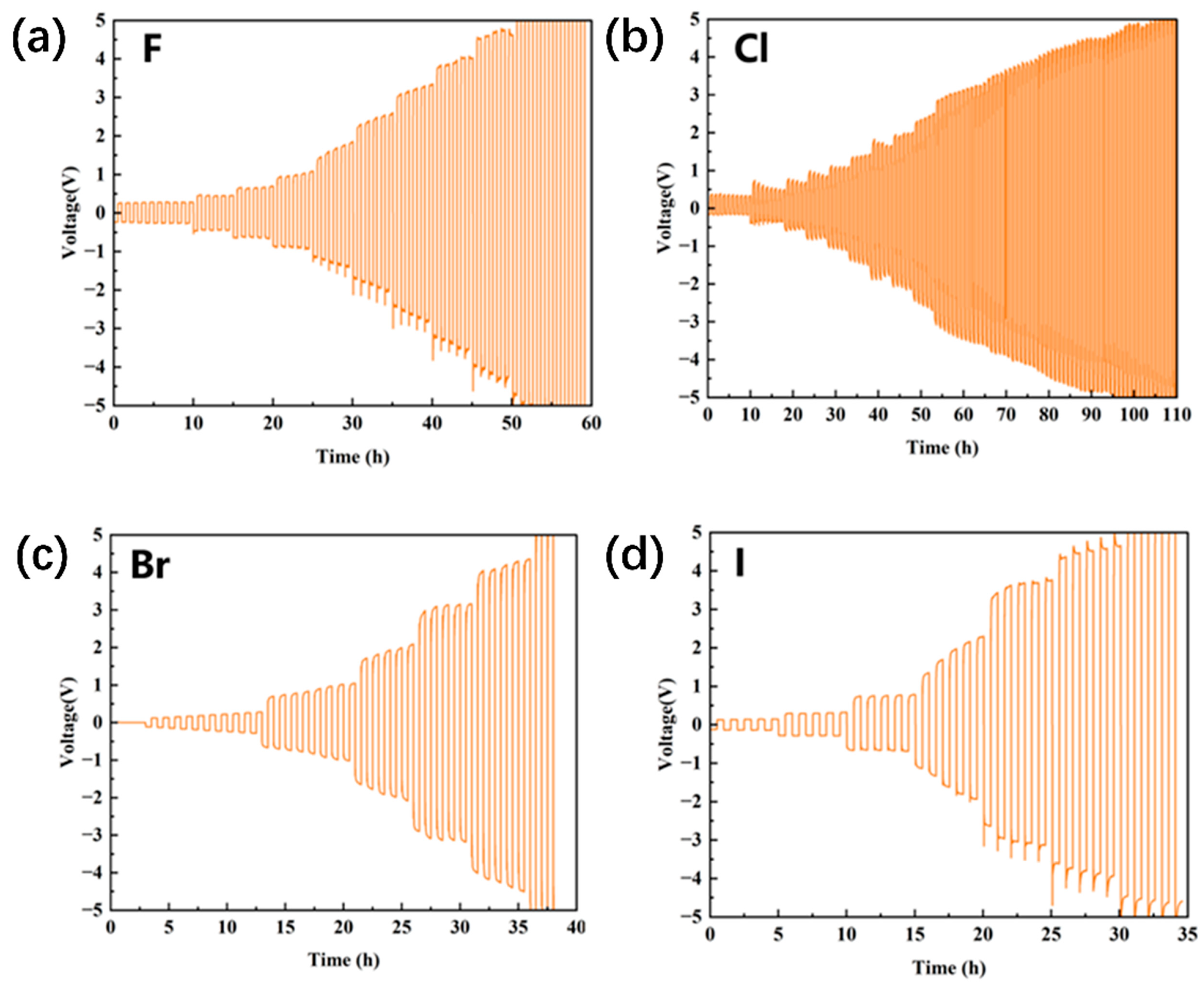
The interfacial stability with sodium metal was evaluated using TiS2|Na3−xPS4−xClx|Na3Sn symmetric cells (Figure 3). Cycling was performed at 0.01–0.1 mA cm−2 in steps of 0.01 mA cm−2, with at least five cycles at each current density. At low current densities, all halide-doped electrolytes displayed stable cycling with low polarization voltages. However, when the current density reached 0.04 mA·cm−2, cells with NPSBr and NPSI exhibited sharp polarization increases to ~3 V and ~2 V, respectively, indicating severe interfacial side reactions with sodium metal. The decomposition products formed at the interface possess poor ionic conductivity, thereby accelerating polarization growth and eventually leading to continuous electrolyte degradation. As a result, both NPSBr and NPSI failed within 30–35 h, reaching the 5 V cut-off voltage. In contrast, the NPSF and NPSCl electrolytes exhibited superior compatibility with sodium. NPSF remained stable up to 0.09 mA·cm−2 for ~50 h, while NPSCl maintained excellent cycling stability, sustaining 0.1 mA·cm−2 for more than 100 h with polarization below 1 V. This enhanced stability can be attributed to the formation of a passivating interfacial layer, which suppresses continuous electrolyte decomposition. These observations, consistent with the XRD and EIS analyses, highlight the crucial role of Cl doping in optimizing both ionic conductivity and interfacial stability.
Collectively, the structural, transport, and interfacial analyses identify Cl as the most effective halogen dopant, laying the foundation for a detailed investigation of NaCl-doped electrolytes in the following section.

3.2. Structure and Properties of Cl-Doped Na3PS4 Electrolytes

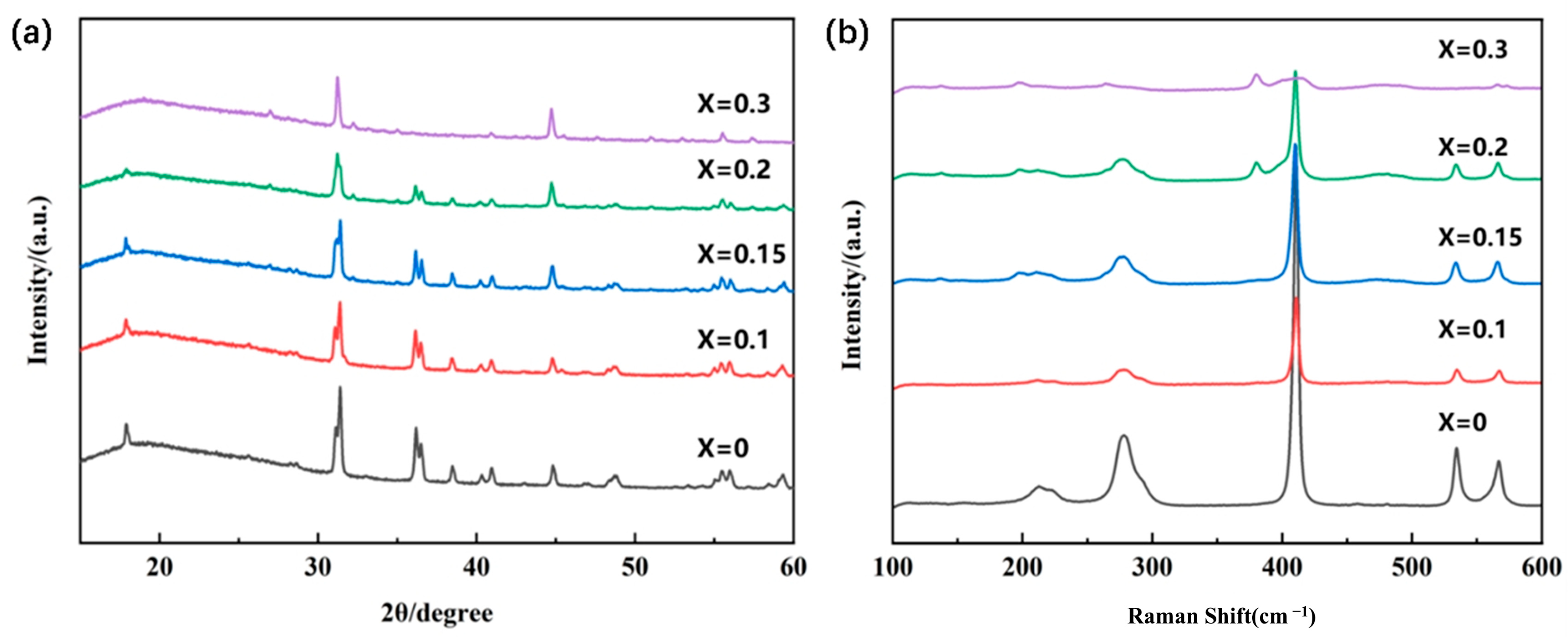
To further clarify the role of chlorine as the most effective halogen dopant, structural and vibrational characterizations of Na3−xPS4−xClx (x = 0.1, 0.15, 0.2, 0.3) were investigated by X-ray diffraction (XRD) and Raman spectroscopy. As shown in Figure 4a, all samples largely maintain the tetragonal Na3PS4 framework, confirming the successful synthesis of sulfide solid electrolytes. When the Cl content exceeds x = 0.2, additional reflections, likely originating from Cl-rich secondary phases, appear near 32° and 52°, accompanied by weakened intensities of the main peaks. At x = 0.3, the reflection near 32° is no longer discernible, suggesting partial structural distortion or the formation of secondary phases, which correlates with the observed reduction in ionic conductivity at higher doping levels. However, the impurity content is too low to be detected (for x = 0.3) [18]. Raman spectra recorded with a 532 nm laser in the 100–600 cm−1 range are presented in Figure 4b. For x ≤ 0.15, the characteristic Raman bands of PS43− units at ~410 and ~560 cm−1 remain essentially unchanged apart from a gradual decrease in intensity. At higher doping levels (x ≥ 0.2), additional bands emerge and the ~410 cm−1 band diminishes markedly; at x = 0.3 it becomes nearly invisible. These observations corroborate the XRD results, indicating the onset of structural disorder and the presence of Cl-related secondary phases at elevated doping levels.
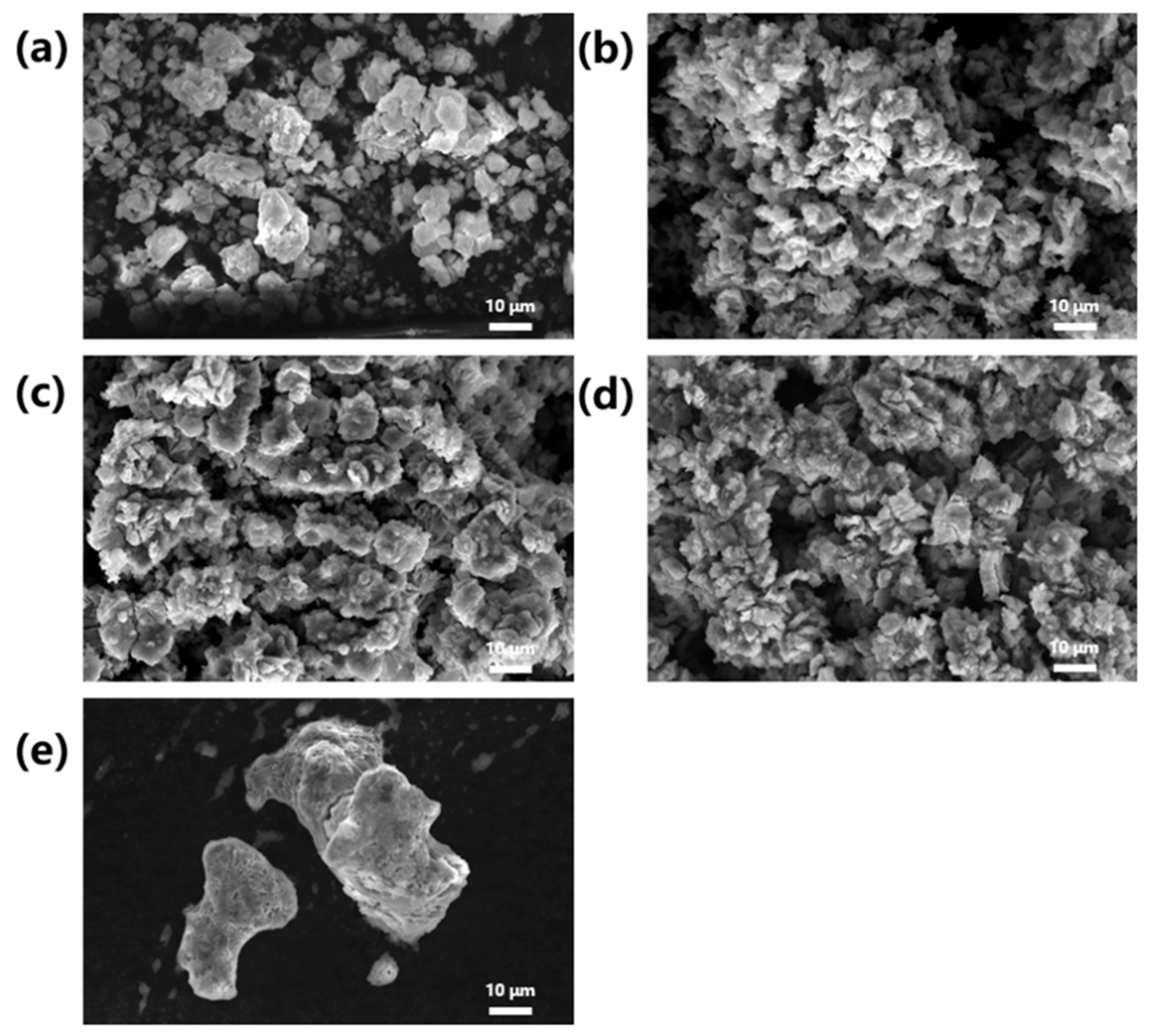
The surface morphologies of Na3−xPS4−xClx electrolytes are presented in Figure 5a–e. All samples exhibit irregularly shaped particles with a broad size distribution. As the Cl content increases to x = 0.15, the particles become larger and exhibit partial agglomeration (Figure 5c). No significant morphological changes are observed at x = 0.2 (Figure 5d). In contrast, the sample with x = 0.3 shows dense block-like aggregates with visible surface pores, which are unfavorable for pellet densification and are expected to increase interfacial resistance (Figure 5e).
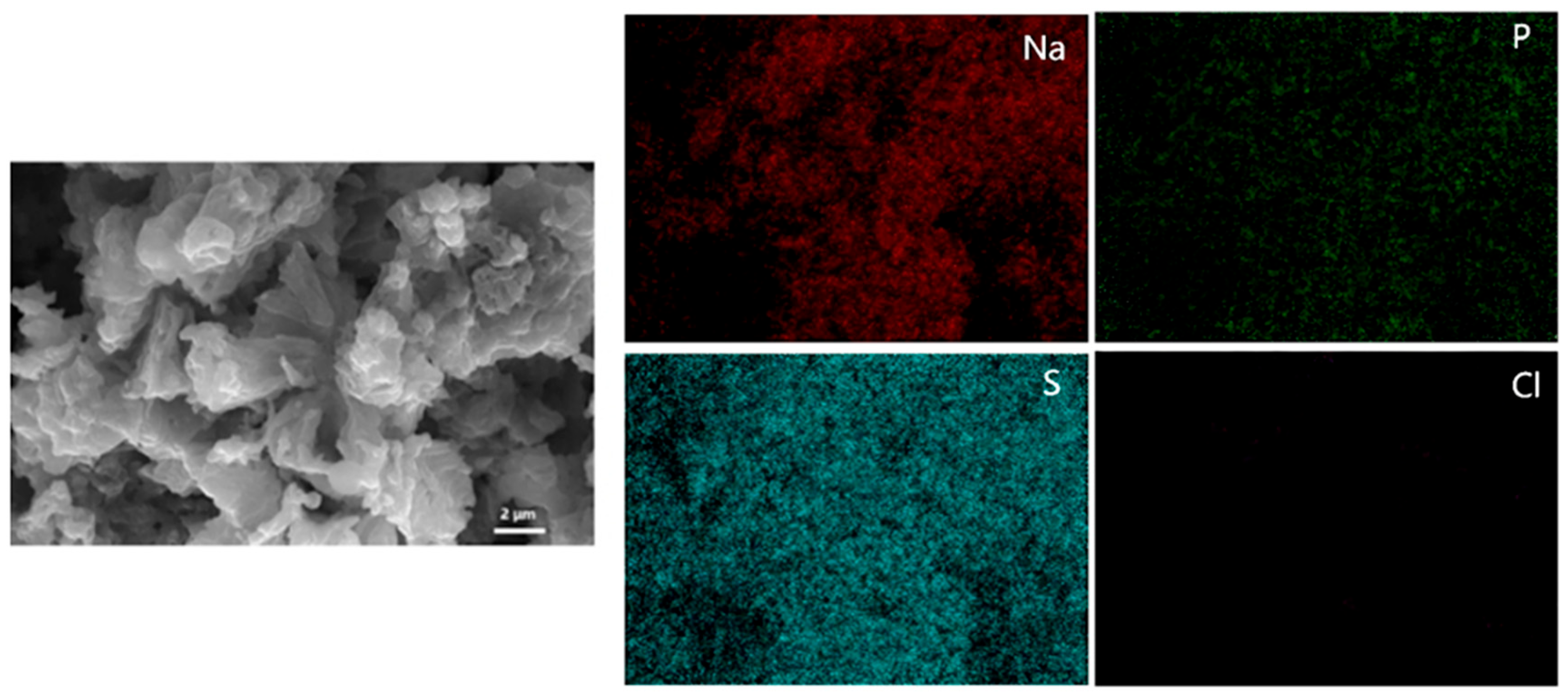
The elemental distribution of the optimized Na2.85PS3.85Cl0.15 composition was further examined by EDS mapping (Figure 6). Na, P, S, and Cl are homogeneously distributed across the particles, confirming the uniform incorporation of Cl into the Na3PS4 framework after ball milling and sintering.

3.3. Electrochemical Performance of Cl-Doped Na3PS4 Electrolytes

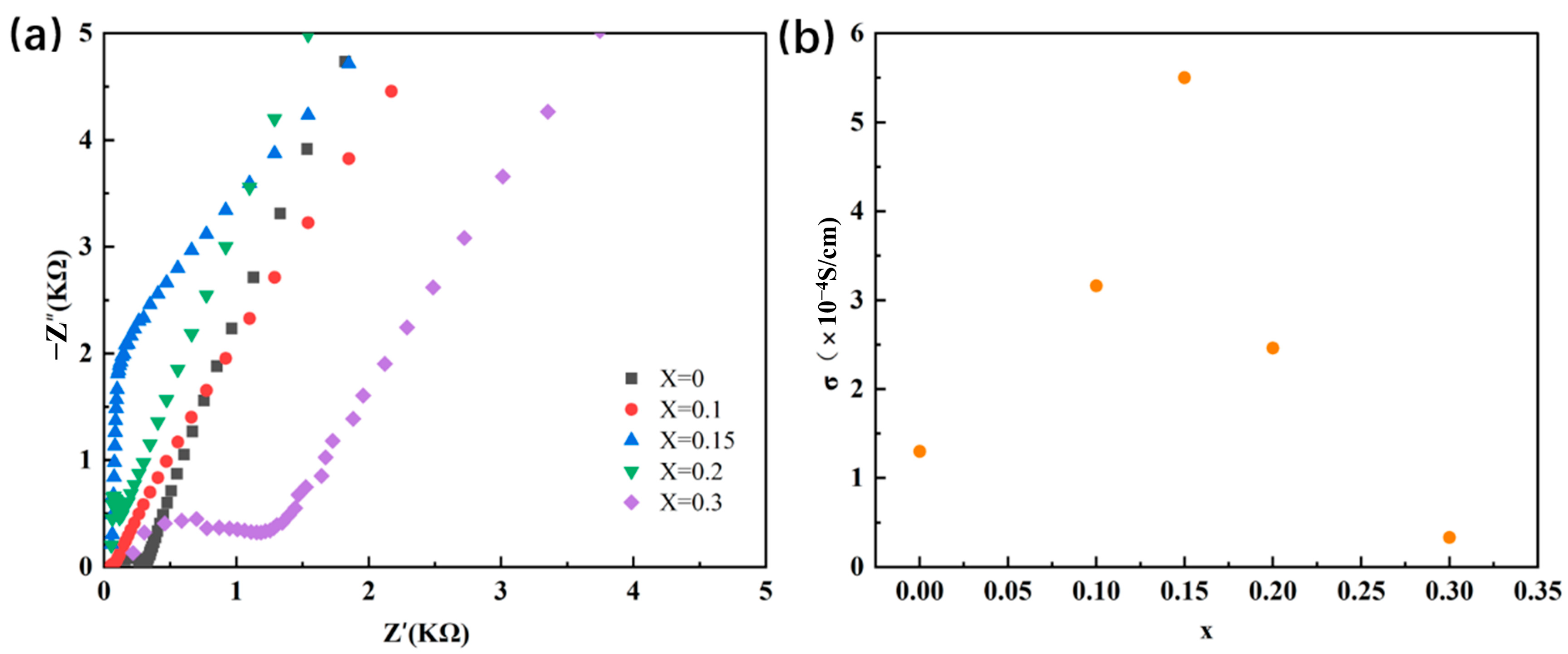
The ionic conductivities of Na3−xPS4−xClx (x = 0, 0.1, 0.15, 0.2, 0.3) were measured by electrochemical impedance spectroscopy (EIS). As shown in Figure 7, the conductivity strongly depends on the Cl content. The highest value of 5.5 × 10⁻⁴ S·cm−1 was obtained at x = 0.15, where a balance between defect formation and structural stability was achieved. At a lower content (x = 0.1), the conductivity moderately increased compared with pristine Na3PS4, while higher doping levels (x ≥ 0.2) resulted in a decline due to the emergence of impurity phases and disruption of Na+ transport pathways.
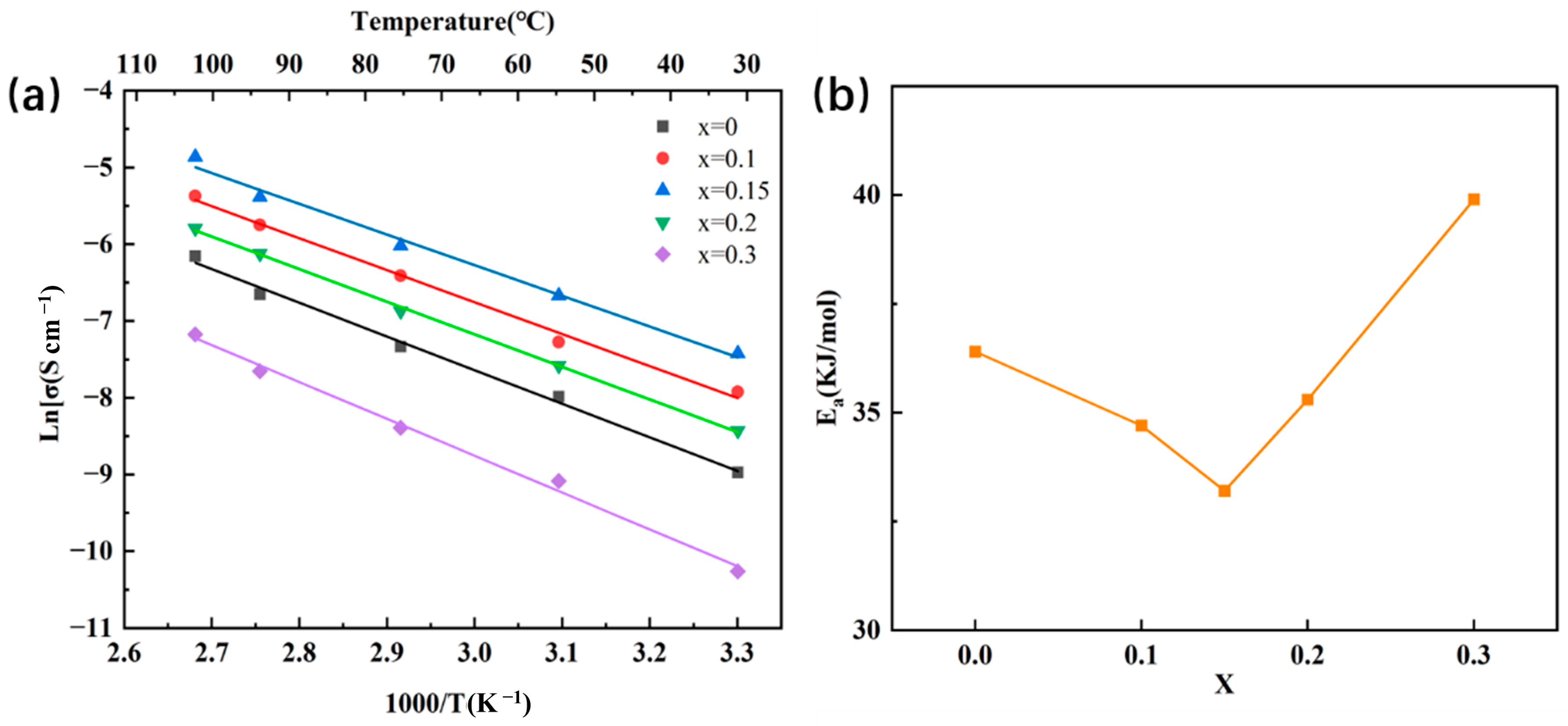
Impedance changes of electrolyte materials prepared with different NaCl doping amounts were tested at 303 K, 323 K, 343 K, 363 K, and 373 K. The activation energies of the corresponding solid electrolytes were calculated according to the Arrhenius equation σ = Aexp(−Ea/RT) (where A is the pre-exponential factor, R is the molar gas constant, and T is the thermodynamic temperature), as shown in Table 1. Figure 8 presents the Arrhenius curves and corresponding activation energies of NPS electrolytes prepared at different temperatures. From the activation energy data shown in Figure 8b, it can be seen that the content of doped elements has a significant impact on the activation energy of the electrolyte: with the increase in the amount of doped elements introduced, the activation energy first decreases and then increases. The lowest activation energy of 33.3 kJ/mol is achieved when x = 0.15; when the doping amount exceeds 0.15, the activation energy gradually increases, reaching the highest value of 39.9 kJ/mol at x = 0.3.
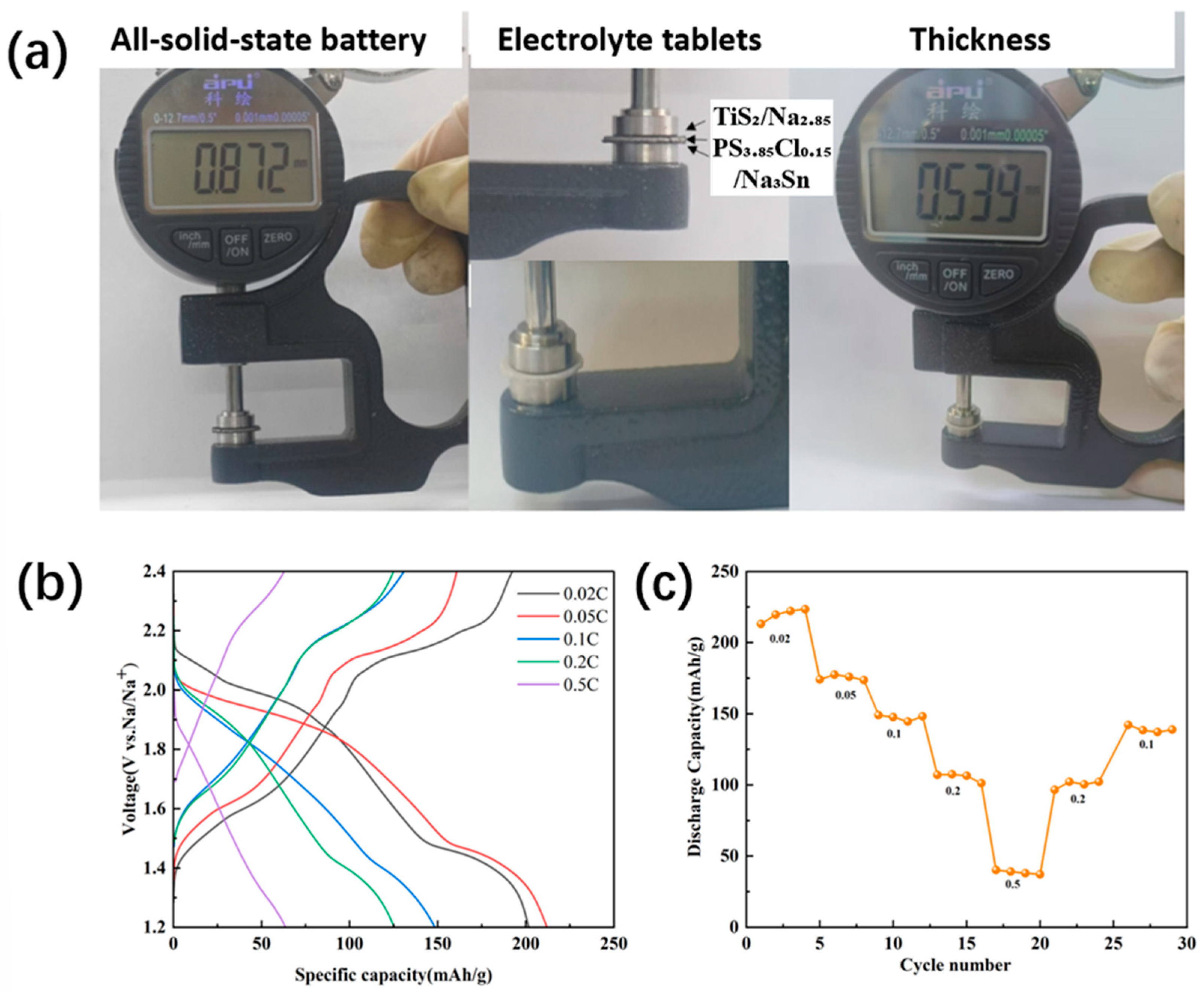
To demonstrate practical applicability, Na2.85PS3.85Cl0.15 was integrated into all-solid-state batteries with TiS2 composite cathodes and Na3Sn alloy anodes. A schematic illustration of the pelletized electrolyte and the assembled cell is presented in Figure 9. The thin electrolyte layer (~0.54 mm) and intimate electrode–electrolyte contact provide favorable conditions for stable operation.
The rate performance of TiS2|Na2.85PS3.85Cl0.15|Na3Sn cells is shown in Figure 9b,c. At 0.02, 0.05, 0.1, 0.2, and 0.5C, the initial discharge capacities were 201.6, 211.9, 148.4, 125.3, and 63.7 mAh·g−1, respectively. Even at elevated current densities, the voltage profiles remained smooth and reproducible, indicating highly reversible Na+ intercalation and deintercalation.
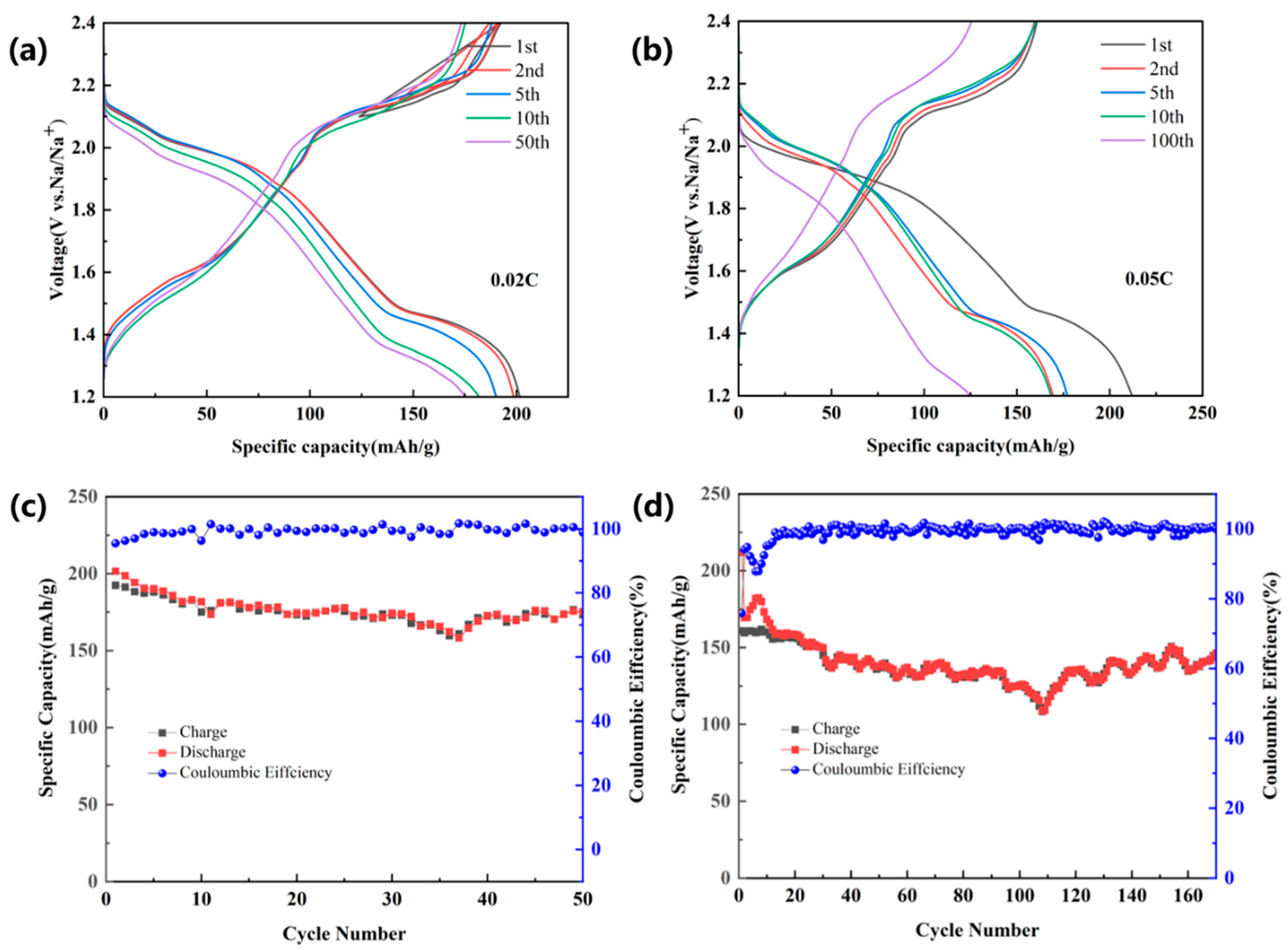
Cycling performance under different rates is summarized in Figure 10. At 0.02C, the cell retained 86% of its capacity after 50 cycles, while at 0.05C it maintained 77.6% after 175 cycles. Although the voltage plateau gradually decreased with extended cycling, the overall retention remained competitive. At 0.1–0.2C, capacities stabilized around 98–97 mAh·g−1 after 100 cycles, whereas at 0.5C the discharge capacity dropped to 64.5 mAh·g−1 after 100 cycles. These results demonstrate that the optimized Cl-doped electrolyte enables stable cycling at low to moderate rates, while at higher rates the growth of interfacial resistance and polarization leads to accelerated capacity fading.
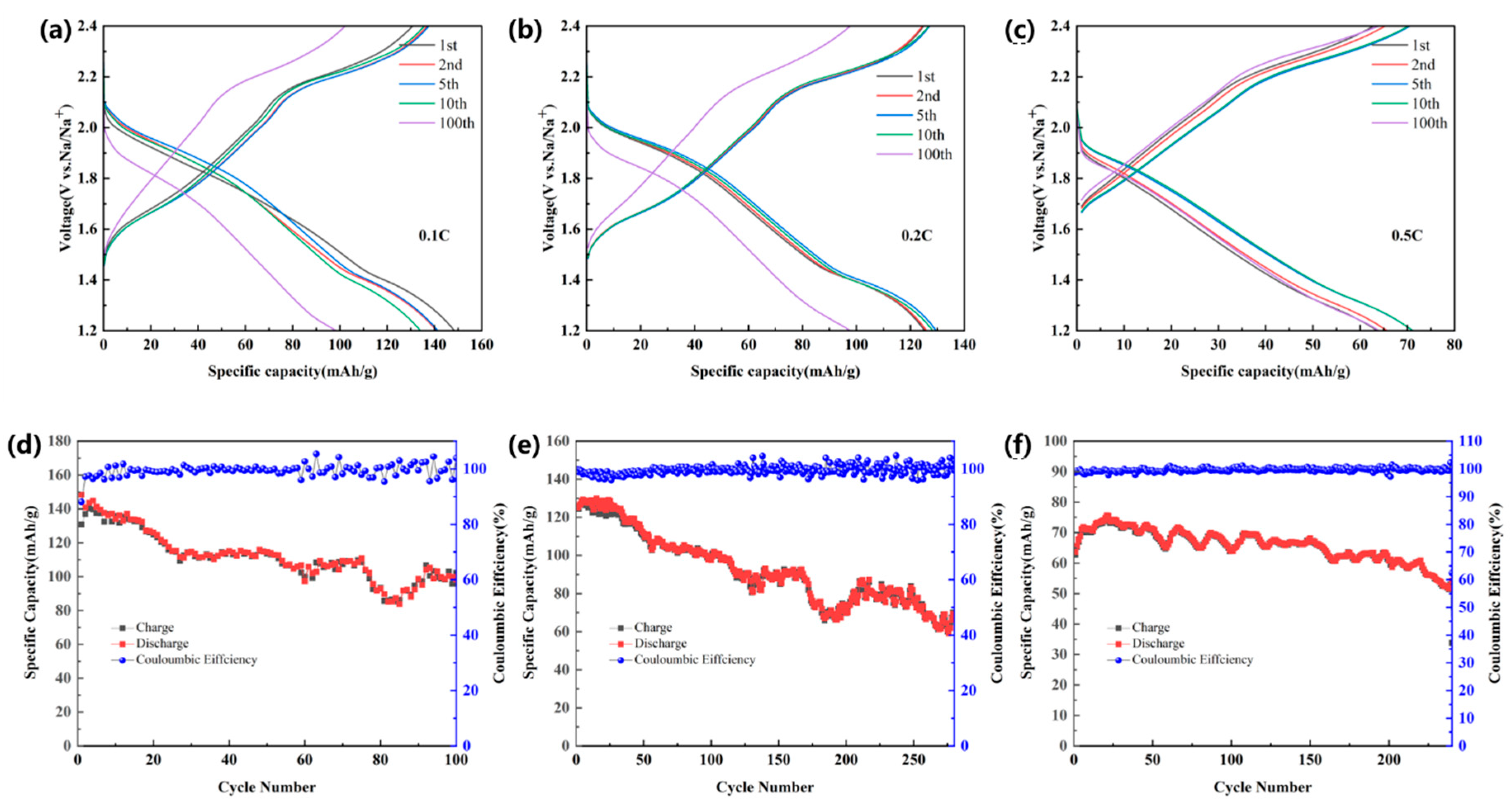
When the rate was increased to 0.5 C, the charge and discharge curves and cycling profiles (Figure 11) showed no distinct voltage plateaus even in the 1st, 2nd, 5th, 10th, and 100th cycles. This behavior contrasts sharply with conventional batteries that exhibit defined plateaus, suggesting anomalies in the reaction kinetics, the phase transition mechanisms of the electrode materials, or the interfacial processes between the electrolyte and electrodes. In other words, stable redox reactions are not established, and substantial resistance arises during Na+ intercalation and deintercalation, while the electrolyte may fail to sustain stable interfacial reactions. As a result, the voltage changes continuously and gradually throughout the charge–discharge process. This phenomenon is consistent with the observations reported by Chu et al. [9], implying that the present system shares mechanistic features with previously studied solid-state sodium batteries.
After 100 cycles, the capacity at 0.5 C was only 64.46 mAh·g−1, whereas at 0.1 C and 0.2 C the capacities remained 98.37 and 97.6 mAh·g−1, respectively. The capacity degradation at higher rates is attributed to structural damage and aggravated side reactions. Because ion diffusion in the electrode materials is intrinsically limited, high rate cycling forces a large flux of Na+ ions to intercalate or deintercalated within a short time, generating steep concentration gradients at the electrode surface. Ions in some regions cannot diffuse rapidly enough, resulting in polarization and reduced accessible capacity. Meanwhile, enhanced side reactions continuously consume both the solid electrolyte and sodium ions, further accelerating capacity fading.

4. Conclusions

In this work, halogen doping was employed to tailor the properties of Na3PS4 solid electrolytes for all-solid-state sodium batteries. Preliminary screening indicated that chlorine is the most effective dopant, and subsequent studies focused on controlling its substitution level.
Systematic investigation of Na3−xPS4−xClx revealed that the optimal composition, Na2.85PS3.85Cl0.15, achieves an ionic conductivity of 5.5 × 10⁻⁴ S·cm−1 at room temperature, owing to a favorable balance between defect formation and lattice stability. Excessive Cl incorporation was found to introduce secondary phases and impair ion transport. Electrochemical testing further demonstrated that the optimized Cl-doped electrolyte enhances interfacial stability with sodium metal, reduces polarization, and suppresses dendrite formation in symmetric cells. Integration into TiS2|Na2.85PS3.85Cl0.15|Na3Sn full cells yielded high capacity, good rate capability and stable cycling. This confirms that controlled Cl doping in Na3PS4 effectively enhances ionic conductivity and interfacial stability, offering a viable route to advance sulfide-based solid electrolytes for all-solid-state sodium batteries.

Author Contributions

Conceptualization, L.M. and S.J.; methodology, L.M. and L.C.; software, L.M.; validation, W.W. and Y.Z.; formal analysis, Y.Z.; investigation, Y.Z. and S.J.; resources, S.J.; data curation, W.W.; writing—original draft preparation, L.M.; writing—review and editing, L.C. and S.J.; visualization, Y.L.; supervision, W.W.; project administration, Y.L.; funding acquisition, Y.L. All authors have read and agreed to the published version of the manuscript.

Funding

This research was funded by the Science and Technology Project of Gansu Province (24RCKA004), the National Science Foundation of China (52374350, 52474318), and Fundamental Research Funds for the Central Universities (FRF-TP-22-012A1), and the Beijing Nova Program (No. 20250484955).

Data Availability Statement

The data presented in this study are available within the article.

Conflicts of Interest

The authors declare that they have no known competing financial interests or personal relationships that could have appeared to influence the work reported in this paper.

References

  1. Janek, J.; Zeier, W.G. Challenges in speeding up solid-state battery development. Nat. Energy 2023, 8, 230–240. [Google Scholar] [CrossRef]
  2. Yang, Y.; Yang, S.; Xue, X.; Zhang, X.; Li, Q.; Yao, Y. Inorganic all-solid-state sodium batteries: Electrolyte designing and interface engineering. Adv. Mater. 2024, 36, 2308332. [Google Scholar] [CrossRef]
  3. Yang, Z.; Tang, B.; Ren, D.; Yu, X.; Gao, Y.; Wu, Y.; Yang, Y.; Chen, Z.; Zhou, Z. Advancing solid-state sodium batteries: Status quo of sulfide-based solid electrolytes. Mater. Today 2024, 80, 429–449. [Google Scholar] [CrossRef]
  4. Yang, D.; Zhang, D.; Ren, K.; Li, F.; Dong, P.; Zhang, J.; Yang, B.; Liang, F. All Solid-State Sodium Batteries and Its Interface Modification. Prog. Chem. 2023, 35, 1177–1190. [Google Scholar]
  5. Hayashi, A.; Masuzawa, N.; Yubuchi, S.; Tsuji, F.; Sakuda, A.; Tasumisago, M. A sodium-ion sulfide solid electrolyte with unprecedented conductivity at room temperature. Nat. Commun. 2019, 10, 5266. [Google Scholar] [CrossRef]
  6. Zhang, X.; Phuah, K.C.; Adams, S. Anion control of the electrolyte Na3–xSbS4–xBrx extends cycle life in solid-state sodium batteries. Chem. Mater. 2021, 33, 9184–9193. [Google Scholar] [CrossRef]
  7. de Klerk, N.J.J.; Wagemaker, M. Diffusion mechanism of the sodium-ion solid electrolyte Na3PS4 and potential improvements of halogen doping. Chem. Mater. 2016, 28, 3122–3130. [Google Scholar] [CrossRef]
  8. Cao, H.; Yu, M.; Zhang, L.; Zhang, Z.; Yan, X.; Li, P.; Yu, C. Stabilizing Na3SbS4/Na interface by rational design via Cl doping and aqueous processing. J. Mater. Sci. Technol. 2021, 70, 168–175. [Google Scholar] [CrossRef]
  9. Chu, I.H.; Kompella, C.S.; Nguyen, H.; Zhu, Z.; Hy, S.; Deng, Z.; Meng, Y.S.; Ong, S.P. Room-temperature all-solid-state rechargeable sodium-ion batteries with a Cl-doped Na3PS4 superionic conductor. Sci. Rep. 2016, 6, 33733. [Google Scholar] [CrossRef]
  10. Wu, E.A.; Kompella, C.S.; Zhu, Z.; Lee, J.Z.; Lee, S.C.; Chu, I.H.; Nguyen, H.; Ong, S.P.; Banerjee, A.; Meng, S.Y. New insights into the interphase between the na metal anode and sulfide solid-state electrolytes: A joint experimental and computational study. ACS Appl. Mater. Interfaces 2018, 10, 10076–10086. [Google Scholar] [CrossRef]
  11. Hayashi, A.; Noi, K.; Sakuda, A.; Tastumisago, M. Superionic glass-ceramic electrolytes for room-temperature rechargeable sodium batteries. Nat. Commun. 2012, 3, 856. [Google Scholar] [CrossRef] [PubMed]
  12. Radjendirane, A.C.; Maurya, D.K.; Ren, J.; Hou, H.; Algadi, H.; Xu, B.B.; Guo, Z.; Angaiah, S. Overview of Inorganic Electrolytes for All-Solid-State Sodium Batteries. Langmuir 2024, 40, 16690–16712. [Google Scholar] [CrossRef]
  13. Bekaert, L.; Akatsuka, S.; Tanibata, N.; Proft, F.D.; Hubin, A.; Mamme, M.H.; Nakayama, M. Assessing the Reactivity of the Na3PS4 Solid-State Electrolyte with the Sodium Metal Negative Electrode Using Total Trajectory Analysis with Neural-Network Potential Molecular Dynamics. J. Phys. Chem. C 2023, 127, 8503–8514. [Google Scholar] [CrossRef]
  14. He, R.; Hu, Z.; Gao, J.; Zhang, G.; Shen, K. Role of Halogen Doping on Ionic Diffusion in the Grain Boundary Structure of Cubic Na3PS4: Ab Initio Molecular Dynamic Study. J. Phys. Chem. C 2022, 126, 10593–10600. [Google Scholar] [CrossRef]
  15. Hogrefe, K.; Konigsreiter, J.; Bernroitner, A.; Gadermaier, B.; Ashbrook, S.E.; Wilkening, M. Length-Scale-Dependent Ion Dynamics in Ca-Doped Na3PS4. Chem. Mater. 2024, 36, 980–993. [Google Scholar] [CrossRef]
  16. Shu, L.; Gao, C.; Liu, Y.; Zhou, X.; Ma, H.; Zhang, X.; Shen, X.; Dai, S.; Lin, C.; Jiao, Q. Enhancing Interface Stability and Ionic Conductivity in the Designed Na3SbP0.4xS4-xOx Sulfide Solid Electrolyte Through Bridging Oxygen. J. Colloid Interface Sci. 2025, 652, 2042–2053. [Google Scholar] [CrossRef] [PubMed]
  17. Mwemezi, M.; Ikhe, A.B.; Park, W.B. Improvement of Interfacial Stability Between Na Metal and Na3PS4 Family Solid Electrolyte for All-Solid-state Sodium Metal Batteries. Electrochim. Acta 2024, 480, 143919. [Google Scholar] [CrossRef]
  18. Ma, A.; Liu, S.; Li, D.; Gu, B.; Li, S.; Wang, J. Fabrication and Electrochemical Performance of Br-Doped Na3PS4 Solid-State Electrolyte for Sodium–Sulfur Batteries via Melt-Quenching and Hot-Pressing. Inorganics 2025, 13, 73. [Google Scholar] [CrossRef]
  19. Wu, M.; Liu, H.; Qi, X.; Li, D.; Wang, C.; Nan, C.; Fan, L. Structure designing, interface engineering, and application prospects for sodium-ion inorganic solid electrolytes. InfoMat 2024, 6, 12606. [Google Scholar] [CrossRef]
  20. Ganesan, B.K.; Lee, Y.; Kim, D. Tailoring defects and interfaces in sulfide solid electrolytes for high-performance solid-state sodium batteries. Chem. Commun. 2025, 61, 12232. [Google Scholar] [CrossRef] [PubMed]
  21. Yang, S.; Tang, Y.; Yao, Y.; He, S.; Wu, Z.; Yang, Y.; Pan, H.; Rui, X.; Yu, Y. Sulfide Electrolytes for All-Solid-state Sodium Batteries: Fundamentals and Modification Strategies. Mater. Horiz. 2025, 12, 1058–1083. [Google Scholar] [CrossRef]
  22. Yang, S.; Tang, Y.; Yab, Y.; He, S.; Wu, Z.; Yang, Y.; Pan, H.; Rui, X.; Yu, Y. Amorphous Sulfide Solid Electrolytes Based on Na3PS4–NaxMOy (M = P and S) for All-Solid-State Sodium Batteries. ACS Appl. Energy Mater. 2025, 8, 8216–8223. [Google Scholar]
  23. Deysher, G.; Chen, Y.; Sayahpour, B.; Lin, S.W.; Ham, S.Y.; Ridley, P.; Cronk, A.; Wu, E.A.; Tan, D.; Doux, J.M.; et al. Evaluating electrolyte–anode interface stability in sodium all-solid-state batteries. ACS Appl. Mater. Interfaces 2022, 14, 47706–47715. [Google Scholar] [CrossRef] [PubMed]
  24. Azmi, Z.; Goswami, A.K.; Mohapatra, S.R. Sulfide Based Solid Electrolytes for Sodium-Ion Battery: Synthesis, Structure Design, Stability, and Cell Performance. Sustain. Mater. Technol. 2024, 4, 01176. [Google Scholar] [CrossRef]
  25. Dey, S.; Singh, G. Differentiating cyclability and kinetics of Na+ ions in surface-functionalized and nanostructured graphite using electrochemical impedance spectroscopy. Batteries 2023, 9, 534. [Google Scholar] [CrossRef]
Figure 1. XRD patterns of NPS electrolytes with different halogen doping.
Energies 19 00850 g001
Figure 2. (a) Room-temperature EIS spectra and (b) ionic conductivities of NPS electrolytes with different halide doping.
Energies 19 00850 g002
Figure 3. Galvanostatic charge–discharge profiles for halogen-doped Na3PS4 electrolytes: (a) F-doped (NPSF), (b) Cl-doped (NPSCl), (c) Br-doped (NPSBr), and (d) I-doped (NPSI). Symmetric cell cycling conditions were tested under current density of 0.01–0.1 mA·cm−2, 5 cycles per step.
Energies 19 00850 g003
Figure 4. (a) XRD patterns of Na3−xPS4−xClx electrolytes (x = 0, 0.1, 0.15, 0.2, 0.3), and (b) Raman spectra of NPS electrolytes doped with different NaCl contents.
Energies 19 00850 g004
Figure 5. SEM images of Na3−xPS4−xClx solid electrolytes with different Cl contents: (a) x = 0, (b) x = 0.1, (c) x = 0.15, (d) x = 0.2, and (e) x = 0.3.
Energies 19 00850 g005
Figure 6. EDS elemental mapping of the Na2.85PS3.85Cl0.15 solid electrolyte.
Energies 19 00850 g006
Figure 7. (a) Impedance spectra of Na3−xPS4−xClx (x = 0–0.3) and (b) ionic conductivities as a function of Cl content.
Energies 19 00850 g007
Figure 8. (a) Arrhenius plots and (b) activation energies of Na3−xPS4−xClx electrolytes with different doping levels.
Energies 19 00850 g008
Figure 9. (a) Schematic diagram of Na2.85PS3.85Cl0.15 pellet and TiS2/Na2.85PS3.85Cl0.15/Na3Sn cell assembly. (b) Charge–discharge curves at different rates and (c) corresponding rate performance.
Energies 19 00850 g009
Figure 10. (a) Charge–discharge curves at 0.02 C and (c) corresponding cycling performance; (b) Charge–discharge curves at 0.05 C and (d) corresponding cycling performance of TiS2/Na2.85PS3.85M0.15/Na3Sn all-solid-state batteries.
Energies 19 00850 g010
Figure 11. Charge–discharge curves and cycling performance of TiS2/Na2.85PS3.85M0.15/Na3Sn all-solid-state batteries: (a,d) 0.1 C, (b,e) 0.2 C, and (c,f) 0.5 C.
Energies 19 00850 g011
Table 1. Activation Energies Corresponding to Na3−xPS4−xMx Series Electrolytes.
Activation Energy (KJ/mol)
Na3PS436.4
Na2.9PS3.9M0.134.7
Na2.85PS3.85M0.1533.3
Na2.8PS3.8M0.235.3
Na2.7PS3.7M0.339.9
Disclaimer/Publisher’s Note: The statements, opinions and data contained in all publications are solely those of the individual author(s) and contributor(s) and not of MDPI and/or the editor(s). MDPI and/or the editor(s) disclaim responsibility for any injury to people or property resulting from any ideas, methods, instructions or products referred to in the content.