1. Introduction
The pursuit of the net-zero target is prominent worldwide. In quest of achieving the net-zero target, electric networks are undergoing a paradigm shift towards consumer energy resources or distributed generation (DG). Integrating DG enables a significant reduction in greenhouse gas emissions by incorporating renewable sources such as solar, wind, biomass, and hydropower. Locating DG units closer to end-users offers several operational advantages, including voltage support, loss reduction, deferred infrastructure upgrades, and improved system reliability, all of which collectively contribute to lowering the overall carbon footprint [
1,
2].
Furthermore, the built-in scalability of DG increases the generation in the network, which makes it easier to adapt to fluctuating energy demands and evolving technological advancements. DG systems such as solar, wind and hydrogenerators can be implemented in varying sizes, from small, residential-scale installations to large farm-scale installations. These size variations aid in gradually increasing energy capacity as demand increases or additional funding becomes available. For instance, a community starting with a modest solar farm can add more panels over time as energy consumption grows, which reduces dependency on the conventional grid.
Moreover, DG plays a pivotal role in enhancing grid resilience and stability. By distributing generation across multiple smaller sources, power networks are less vulnerable to single points of failure. This enhances the security and stability of the system, ensuring that if one source in the electric line goes offline, the impact on the overall system is minimised, and other sources can potentially increase output to compensate. Additionally, as DGs are closer to the load of consumption, they reduce potential loss and stress on the grid infrastructure, further enhancing the network stability.
Though DG brings about advantages in improving system performance and sustainability, its incorporation into power grids poses challenges. In network scenarios, DG may unexpectedly result in issues such as voltage instability, grid congestion, and added complexity. Additionally, renewable power generation patterns and time-varying load demands are stochastic in nature. Furthermore, different DG generators have different reactive power capabilities. The non-consideration of generation pattern, time-varying load, and reactive power capability of DG type can have different impacts on the power system, affecting DG’s size. To study and analyse the network, DNSPs must understand and observe the ongoing effects happening within the network when generation and loads are varying with time. Recognising the level of certainty within the network is crucial to properly assess and manage its inherent uncertainties.
These factors emphasise that a novel methodology must be developed to optimally allocate DG in the distribution network. Furthermore, the outcome of the methodology produces a vast amount of data, which is difficult to interpret and to analyse how the integration of DG affects the rest of the system [
3,
4,
5]. Hence, a visualisation technique is to be developed that identifies the system condition lucidly and identifies the sphere of influence of DG. The identification of the influence of DG has practical benefits for operations: it aids in reactive power management during voltage fluctuation, locates and focuses on protection settings within the affected area, improves grid performance instantly after disruptive events and amplifies grid visibility to identify precursors of extreme events.
By employing visualisation, the influence of DG connected in the network can be clearly delineated, thereby enabling DNSPs to take necessary actions to mitigate the effect of DG. For example, electric vehicles acting as both loads during charging and generators during vehicle-to-grid operation can create bidirectional and time-varying stresses on distribution feeders [
6]. The ability of the visualisation to highlight probabilistic influence zones under such scenarios provides the network operators with early warning of potential vulnerabilities, thereby enabling the development of proactive mitigation strategies. With this approach, growing penetration of DG can be accommodated while maintaining grid reliability, strengthening the grid security and resilience of modern distribution networks. Hence, this research paper proposes a novel approach considering both real and reactive powers of DG units concurrently and by introducing a probabilistic visualisation technique based on polar histograms or wind rose.
1.1. Techniques in Determining DG Sphere
This section delves into the existing literature review of determining the sphere of influence of DG in the network. The sphere of influence is defined as the segment of the distribution network where a DG unit exerts a dominant influence on current flows and voltage behaviour under varying conditions. Unlike power flow, which provides instantaneous current or voltage values at a specific location, it describes a region of DG impact across different nodes and line sections.
Historically, three main techniques, namely sensitivity analysis, probabilistic analysis, and visualisation techniques, have been employed to analyse the sphere of influence of DG in the distribution networks. Authors in [
7,
8,
9,
10,
11,
12] applied the sensitivity analysis method to quantify the changes in network parameters such as voltage profiles, power flows, and stability margins under DG integration. These methods identify critical locations and the relative influence of DG units. However, they are deterministic and assume DG is constant and neglects the stochastic nature of variable generation. Furthermore, it approximates that DG is supplying either real or reactive power and does not take into consideration of both real and reactive power simultaneously.
Recognising these limitations, several studies [
13,
14,
15] have applied probabilistic approaches to characterise the DG influence zones. The statistical evaluation of network response under varying conditions is determined by modelling the stochastic nature of DG and using Monte Carlo Simulation (MCS), while such frameworks provide a broader representation of DG variability, they typically build on sensitivity analysis and continue to evaluate real and reactive power separately. Furthermore, translating these complex probabilistic results into actionable insights remains challenging task without effective visualisation techniques.
In parallel, visualisation techniques have gained momentum in illustrating DG influence zones. Methods such as quiver plots [
16], contour plots [
17], Sankey diagrams [
18], and connectivity diagrams [
19] have been employed to offer intuitive spatial representations of DG impacts on distribution networks. Although these visualisations provide valuable visual insights on the DG sphere, the stochastic aspects of DG variability and its impacts on neighbouring buses are not incorporated.
To address these gaps, an approach proposed in [
20] concurrently considers both real and reactive power contributions of DG units and introduces a probabilistic visualisation framework based on polar histograms to capture dynamic influence zones, while this approach incorporates real-time load data and acknowledges the stochastic behaviour of DG units, it does not explicitly account for the visual representation of reverse power flows, which remains critical limitation in existing polar histogram techniques. Hence, this paper proposes an enhanced polar histogram-based visualisation approach to determine dynamic spheres of influence, explicitly accounting for reverse power flows within the network. Such an advancement empowers grid operators to evaluate how often and to what extent DGs influence power flows, thereby identifying critical areas where voltage and network stability issues may arise. In addition, it facilitates proactive measures to mitigate associated challenges and enables better decision-making processes, including dispatch by DG units, grid operation, and planning, thereby improving grid reliability, stability, and efficiency.
1.2. Organisation of the Paper
The remainder of this paper is organised as follows:
Section 2 illustrates the probabilistic modelling of DG and load.
Section 3 details the application of probabilistic approaches in power systems.
Section 4 depicts the proposed polar histogram approach.
Section 5 describes the methodology of polar histogram to determine the DG spheres.
Section 6 illustrates the results and simulation, and
Section 7 presents the concluding remarks.
2. Probabilistic Modelling of DG and Load
This section details probabilistic modelling of DG and load. Probabilistic modelling is essential to analyse the variability and uncertainty associated with renewable DG and time-varying load demand.
2.1. Modelling Solar Photovoltaic Generation
The solar power is uncertain in nature and exhibits variability, which primarily arises from cloud cover, time of the day, wind speed, humidity, seasonal changes, and geographical locations. The power output generated by solar photovoltaic (PV) is dependent on solar irradiance, solar panel efficiency, and system losses, and can be formulated as follows [
21]:
where
is the power generated by solar PV,
is the solar panel efficiency,
is the solar irradiance which can be modelled from several probabilistic distributions,
is the total area of the PV module and
is the lossess due to PV cell temperature, i.e., temperature coefficient. Assuming solar irradiance follows normal distribution, the model for
is given by
where
is the mean irradiance and
is the standard deviation of the irradiance. As power generated by solar PV is directly proportional to solar irradiance, the output power follows normal distribution which is given as
There are also several probabilistic distribution functions (PDFs), such as Weibull, beta, lognormal, logistic, and normal, that can be applied to model solar irradiance [
22].
2.2. Load Modelling
The active and reactive power components of load demand can be modelled from real time load data or can be expressed as various PDFs. Load demand that follows normal distribution can be expressed as follows [
23]:
where
and
are the active and reactive powers,
and
are their mean values, and
and
are their standard deviations, respectively.
The other method for load modelling is by obtaining hourly load factor data. The load factor is defined as the ratio of actual load to the maximum load during a specific time period. It provides valuable insights into how the load varies hourly, daily, or seasonally. The load factor for each hour is calculated by dividing the actual load by the maximum load observed in the dataset or within specific periods, such as daily, monthly, and annually:
Equation (
6) normalises the load data, which enhances the analysis and comparison of electrical load data across different times or seasons.
3. Application of Probabilistic Approaches in Power Systems
This section delves into application of probabilistic approaches in power system. Probabilistic approaches are crucial in managing and understanding the inherent uncertainties associated with load demand, DG output, sphere of influence, and network configuration.
3.1. Probabilistic Approaches in Power System
Probabilistic approaches encompass a variety of techniques to account for unpredictability and fluctuation in power systems. One of the fundamental methods is an MCS [
24,
25], which is used to model the behaviour of complex systems by generating a large number of random samples. In power systems, an MCS is often employed to simulate different scenarios of power generation, load demand, and system parameters. By running simulations with random inputs, it provides probabilistic distributions of outcomes, such as voltage levels, power flows, and system reliability.
Probabilistic load flow analysis (PLF) [
22,
26] is another essential technique that extends traditional load flow analysis by considering uncertainties from existing load demand, variable generation, and network configuration. It incorporates multiple load flow scenarios with the probability density function of the generator and load as input parameters in the system. The output from the PLF generates a probability density function of output variables such as bus voltage, line current, and power flow to compute the probabilistic behaviour of the power network under different operating conditions.
Statistical methods [
23,
27,
28,
29] are integral to probabilistic approaches in power systems. Techniques such as descriptive statistics, regression analysis, probability distributions, hypothesis testing, and time series analysis are employed to model uncertainty and variability in power system analysis. Descriptive statistics provides data profiling and aids in understanding system operating conditions. Probabilistic distributions such as normal, log normal, beta, and Weibull distributions model the variability of load demand and DG units. Hypothesis testing and regression analysis are applied to infer relationships and make predictions based on historical data. Time series analysis helps in forecasting load and generation demand over time.
Probabilistic visualisation [
13,
20] effectively represents probabilistic data in power systems. Several visualisation techniques such as heatmap, contour plots, choropleth maps, and box plots are deployed in the power system to show trends, patterns, probability densities, confidence intervals, and distribution. However, a polar histogram is a highly effective probabilistic visualisation tool that analyses where directional data and probability distributions must be exhaustively represented. Here is a detailed exploration of why polar histograms excel in this role:
- 1.
Directional data representation: polar histograms are designed to represent directional data, making them ideal for scenarios where understanding directional influences is critical.
- 2.
Intuitive interpretation the bin and circular format of polar histograms provides intuitive interpretation of directional data and probability distributions. Users can quickly identify predominant directions or patterns in the data.
- 3.
Incorporation of probability distributions: polar histograms can easily incorporate probability distributions, providing a quick representation of the likelihood of different outcomes, which enables stakeholders to assess uncertainty effectively.
- 4.
Comparative analysis: polar histograms easily compare different generating sources or scenarios. Also, multiple histograms can be overlaid on a same network, facilitating comparative analysis and aiding decision-making processes.
- 5.
Dynamic visualisation: polar histograms represent dynamic data that changes over time, enabling stakeholders to explore probabilistic data interactively. This dynamic visualisation helps users understand complex relationships and data flows that are difficult to interpret using snapshot charts.
3.2. Key Roles of Probabilistic Visualisation
Probabilistic visualisation plays a vital role in power systems by translating complex probabilistic data into intrinsic, transparent visual formats, particularly with the increasing incorporation of DG from renewable sources. Employing probabilistic visualisation aids in understanding power system dynamic behaviour under uncertainty and variability. This section explores the critical roles of probabilistic visualisation in power systems:
- 1.
Risk assessment: probabilistic visualisation enables power system operators and planners to assess and visualise risks associated with different scenarios. Heat maps, contour plots, and polar histograms communicate possible events and outcomes, such as extreme weather events, equipment failures, and cyber-attacks, thereby helping distribution network operators (DNOs) identify vulnerabilities and develop strategies to mitigate risks.
- 2.
Operational planning and decision making: probabilistic visualisation tools assist in operational planning and decision-making processes. For instance, a polar histogram illustrates the current flow distribution that aids in identifying areas of influence in DG. Contour plots show the spatial distribution of load and voltage violations, thereby helping operators to make proactive decisions such as resource allocation to enhance overall system performance.
- 3.
Resilience analysis: probabilistic visualisation facilitates resilience analysis by allowing power system stakeholders to evaluate the system’s durability towards disturbances and disruptions. By visualising the probabilistic distribution of the DG sphere, operators and planners can identify outages and system vulnerabilities for improvement and invest in resilience-enhancing measures.
Overall, probabilistic visualisation enhances the interpretation of complex probabilistic data, enabling stakeholders to explore different future trajectories and develop robust long-term plans and strategies.
3.3. Comparative Analyses of Probabilistic Visualisation Tools
Table 1 presents an overview of different probabilistic visualisation tools, including Monte Carlo simulations, probabilistic load flow analysis, scenario analysis, and polar histograms. The advantages, challenges, and comparison of each tool with polar histograms are summarised to provide insights into associated strengths and challenges.
Monte Carlo simulations offer detailed outcomes and insights into various scenarios, but are computationally intensive and require more intuitive visualisation. Probabilistic load flow analysis extends traditional load flow analysis to consider uncertainties, but it involves complex calculations and requires specialised software. Statistical analysis provides a structured framework to explore data relationships and test hypotheses, but faces challenges in visualising complex datasets. In contrast, polar histograms yield simplified and insightful visualisation, particularly for directional data, making them valuable for decision support in power system analysis.
In summary, while other probabilistic visualisation tools provide valuable insights, polar histograms stand out for their unique advantages such as simplicity, intuitive interpretation, and effectiveness in visualising directional data not only to provide stakeholders with a clear and accessible way to understand probabilistic information, but also in terms of opening up new possibilities for decision-making in power system analysis.
4. Proposed Polar Histogram-Based Visualisation Techniques
This section details the polar histogram techniques which visualise time-varying current magnitudes and directions at line sections by analysing dominant current flow patterns as demonstrated by authors in their prior studies [
16,
20], and thereby identifies the respective contributions from DG units and grid sources.
By sampling these line and load currents over time, a time series of real and imaginary current components is obtained, which characterises the variations in magnitude and direction of current flows across the distribution network. These time-varying current vectors form the input data for constructing the polar histograms. To illustrate the proposed approach,
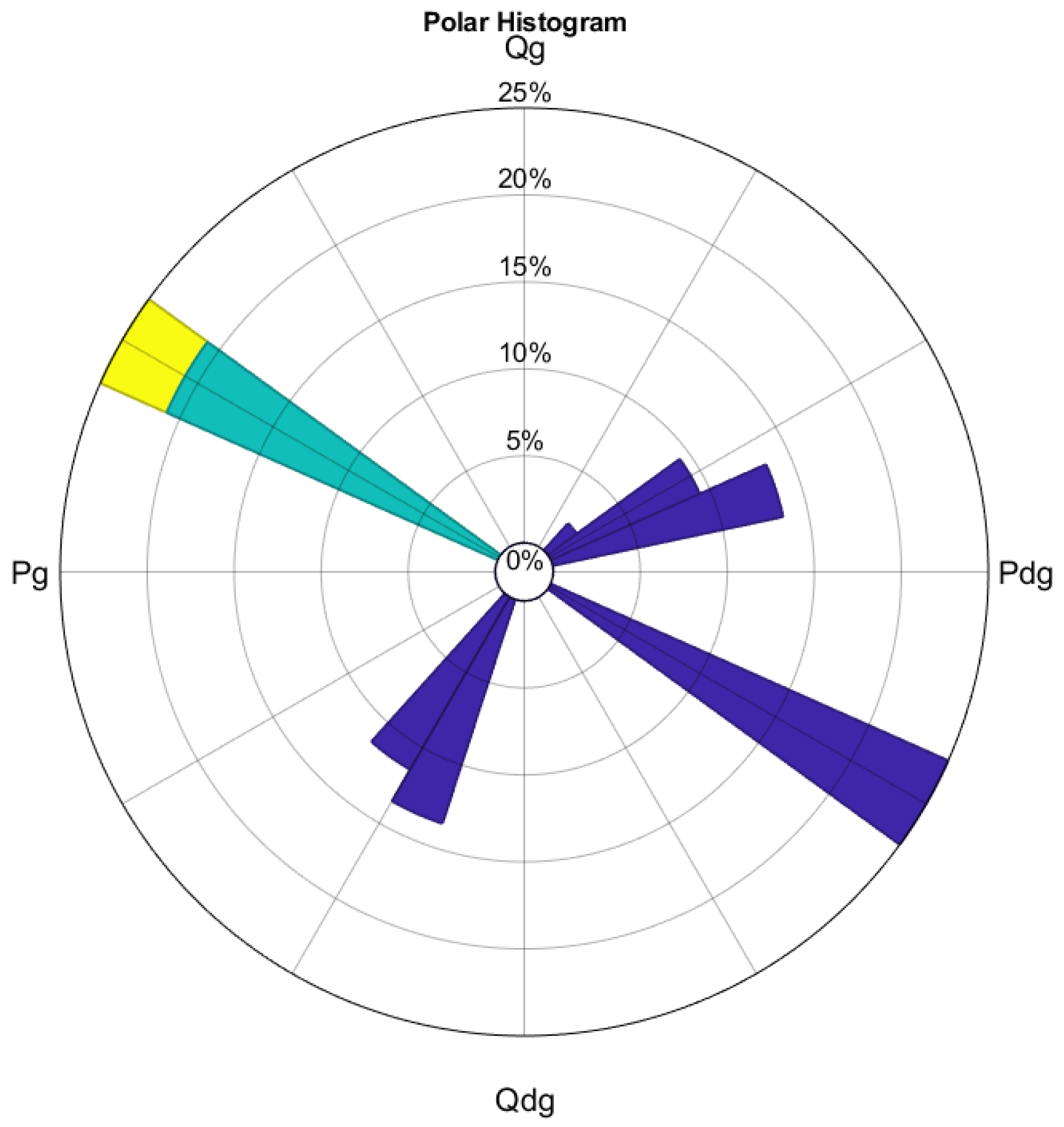
Figure 1 presents a representative polar histogram, where the angular bins represent the direction of current flow which is derived from the phase angle of the complex current and the radial segments represent the probability distribution of the corresponding magnitudes. Thus, the polar histogram serves as a probabilistic visualisation of the dynamic behaviour described by the current and voltage equations, allowing operators to intuitively assess the dominant current flow patterns in the network.
Through examining the current magnitudes and directions, polar histograms can be segmented into four quadrants, as shown in
Figure 1, with each reflecting specific combinations of real and reactive power contributions such as the following:
DG real power and grid reactive power (Quadrant 1)
Grid real and reactive power (Quadrant 2)
Grid real power and DG reactive power (Quadrant 3)
DG real and DG reactive power (Quadrant 4)
By constructing polar histograms for every line section and evaluating the corresponding quadrant patterns, the probabilistic dynamics of power flows can be effectively inferred by system operators. Each line section can be associated with its own histogram, derived from the time series of current magnitudes and angles. This enables a line-by-line assessment of how currents vary not only in strength, but also in direction over time. Line sections where the polar histograms are concentrated in specific quadrants indicate stable and consistent power contributions. For instance, a polar histogram with quadrant 4 highlights a section predominantly influenced by customer energy resources, while one concentrated in the quadrant 2 reflects dependence on the grid supply. In contrast, line sections with widely dispersed histogram patterns reveal strong probabilistic variations in current behaviour. These often correspond to areas where distributed generation and grid sources interact dynamically, leading to bidirectional flows. Such dispersion is critical because it signals regions where operational conditions are less predictable, and where security concerns such as reverse power flows, local overloads, or voltage instability are more likely to arise.
By comparing polar histograms across the entire distribution system, operators can identify critical zones of DG influence to support operational strategies such as voltage management, demand balance, and controlled DG curtailment by targeting the sections with the highest variability or security risk.
5. Methodology
This section outlines a detailed step-by-step procedure for identifying the sphere of influence of DG. The process of determining the dynamic DG sphere using polar histograms can be formulated under two scenarios: with and without the reflection principle. The scenario without reflection-based formulation has been previously introduced and validated in the authors’ earlier research work [
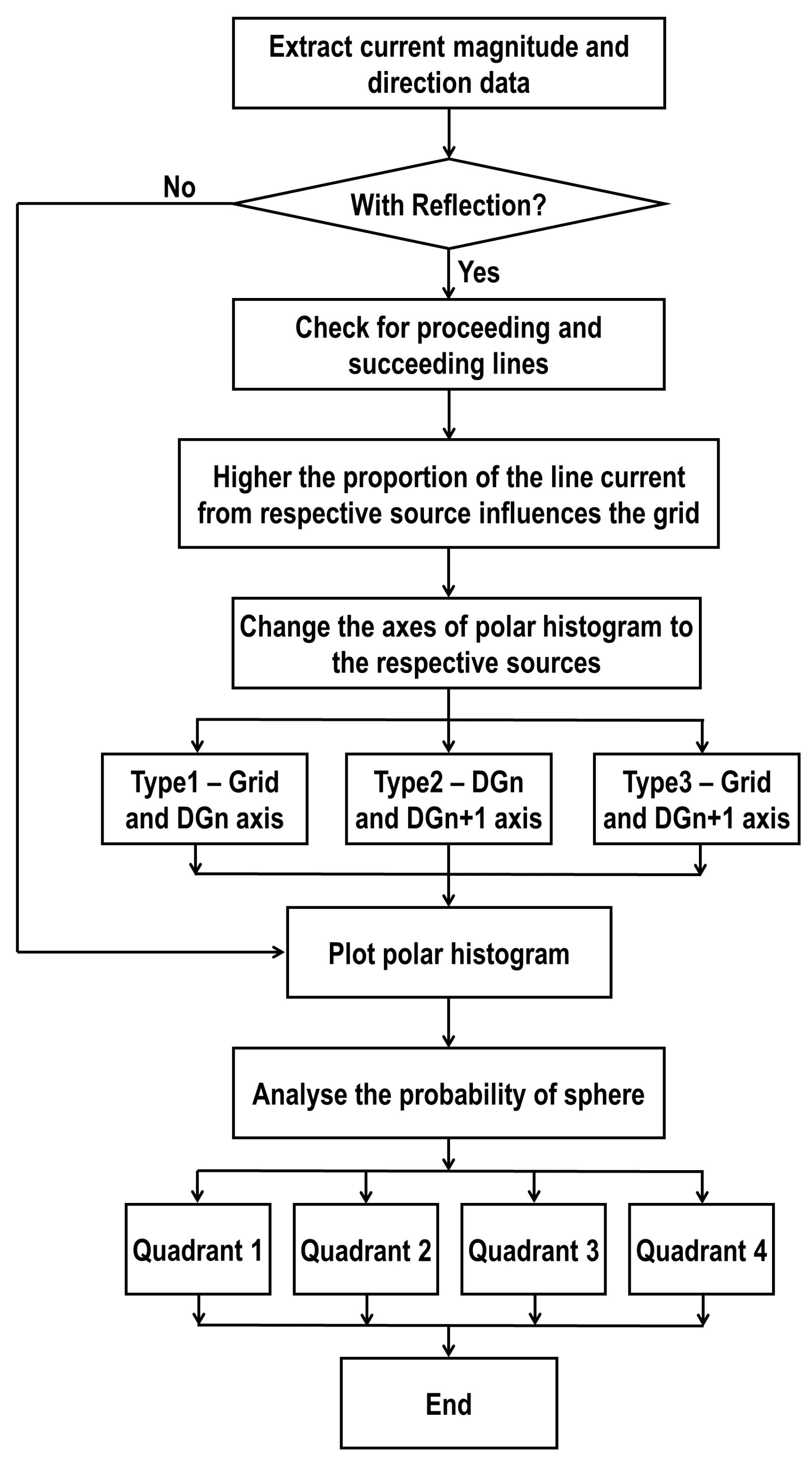
20], and is not repeated here to avoid duplication. Accordingly, this paper focuses on the scenario with the reflection principle, which extends the previous work by enabling accurate identification of source influence in network sections where current reversal does not occur. A flowchart summarising the complete methodology adopted in this study is presented in
Figure 2.
Reflection-Based Methodology for Determining the Sphere of Influence of DG
In distribution networks with multiple power sources, certain line sections may not exhibit current reversal regardless of DG size or type. To address this limitation, a reflection analysis of the polar histogram is employed to correctly attribute the influence of the grid and multiple DG units. This section provides a detailed explanation of the reflection analyses of polar histograms. These analyses are pivotal in determining the influence of various power sources in the network, such as the grid and multiple DG units. As multiple n sources exist in the network, certain line sections do not represent the current reversal in the polar histogram by having current vectors always fall in the specific quadrant irrespective of DG size and type. For instance, in a network with a lateral, both the grid and DG serve the lateral. However, the current vector in the lateral always falls in the quadrant 2 as no current reversal occurs in the lateral. This is because the lateral is always served by the same source supplying the connection point. The reflection-based approach modifies the polar histogram to accurately identify the true source of influence for a particular lateral or each network section. The steps involved in implementing this reflection-based methodology are described below.
Step 1: conduct time-series power flow simulations
Step 2: acquire phasor information for the line currents using simulated outcomes
Step 3: assess upstream and downstream line sections to identify the dominant real and reactive power contributions influencing each bus
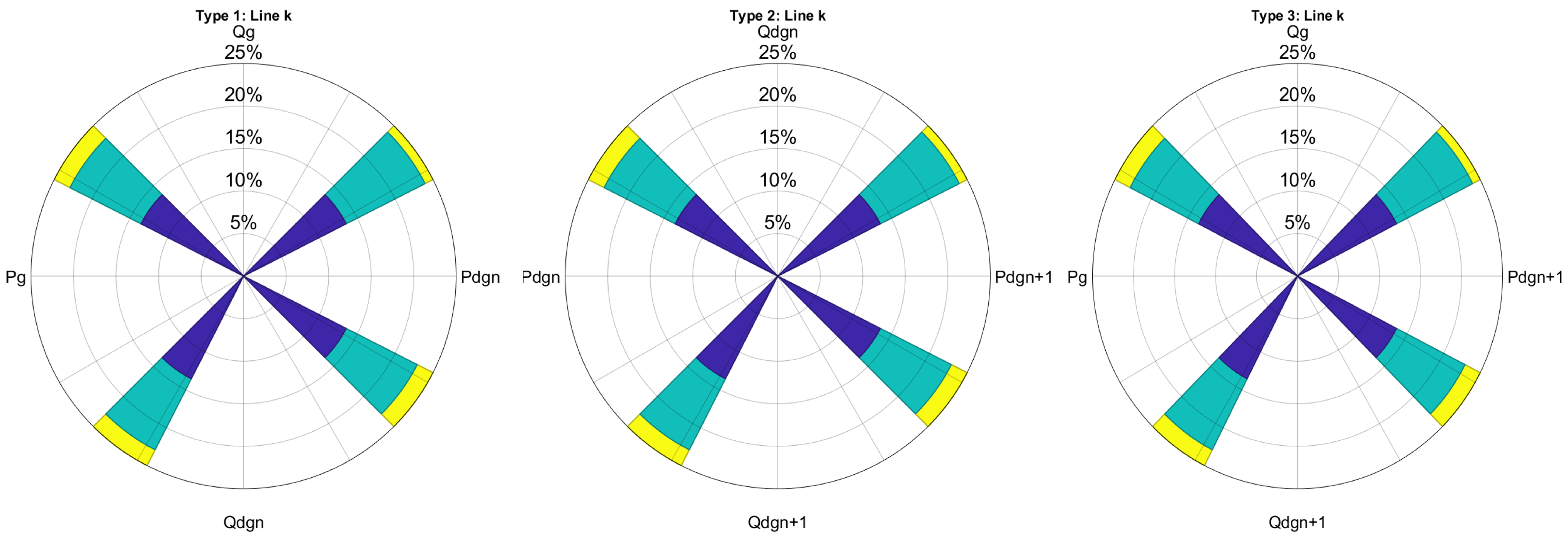
Step 4: adjust the axes of the polar histogram based on the dominant source of DG identified from the preceding or succeeding lines to reflect the exact source of influence. The adjustment of polar histogram axes ensures that the dominant source of influence, whether from the grid, a local DG, or other DGs in the network, is accurately represented. These axes’ adjustments in the polar histogram can be classified into three types, as shown in
Figure 3.
- 1.
Type 1—grid and DGn axis: this type describes scenarios in which the grid and DG unit’s real and reactive powers influence a specific area or node in the network. For example, currents may reflect real power support from the grid and reactive contributions from DGn. This type highlights grid–DG shared zones.
- 2.
Type 2—DGn and DGn+1 axis: this classification focuses on influences between multiple DG units, highlighting an area of the network where the primary DG and an additional DG unit (DGn+1) are predominant without direct interaction from the primary grid source. For instance, in a mid-feeder line between DG1 and DG2, the polar histogram axis is adjusted to reflect the comparative influence of both DGs.
- 3.
Type 3—grid and DGn+1 axis: type 3 involves the interaction between the grid and an additional DG unit, DGn+1. This type indicates influences that do not directly involve the primary DG unit but involve subsequent DG units added to the system. This type is typically observed in feeder-end sections where DGn+1 is electrically closer to the loads than the upstream DGn.
Step 5: using the reflected current phasor information, construct a polar histogram to characterise the distribution of current magnitude and direction for each line section.
Step 6: map the polar histogram in the line section and analyse the probability distribution of the current vector across four quadrants considering three types of axis adjustment classifications. When the probability of current magnitude and direction falls in quadrant 1, it indicates the influence of real power from DG and reactive power from the grid. Quadrant 2 reflects the grid’s dominance in both real and reactive power contributions. Quadrant 3 corresponds to grid-supplied real power combined with DG-supplied reactive power, while quadrant 4 indicates DG contributions in both real and reactive powers. These quadrant-based interpretations from [
16] are extended in this work through a probabilistic framework, where polar histograms are used to capture time-varying current behaviour.
Step 7: determine the sphere of influence of a DG unit by analysing the transition of polar histogram patterns along consecutive line sections. Specifically, the sphere of influence is defined as the contiguous set of line sections where DG contributions dominate or significantly alter the probabilistic behaviour of current flows. Beyond this boundary, the histograms become grid-dominated, signifying the limit of the DG’s operational impact on the network.
6. Simulation and Results
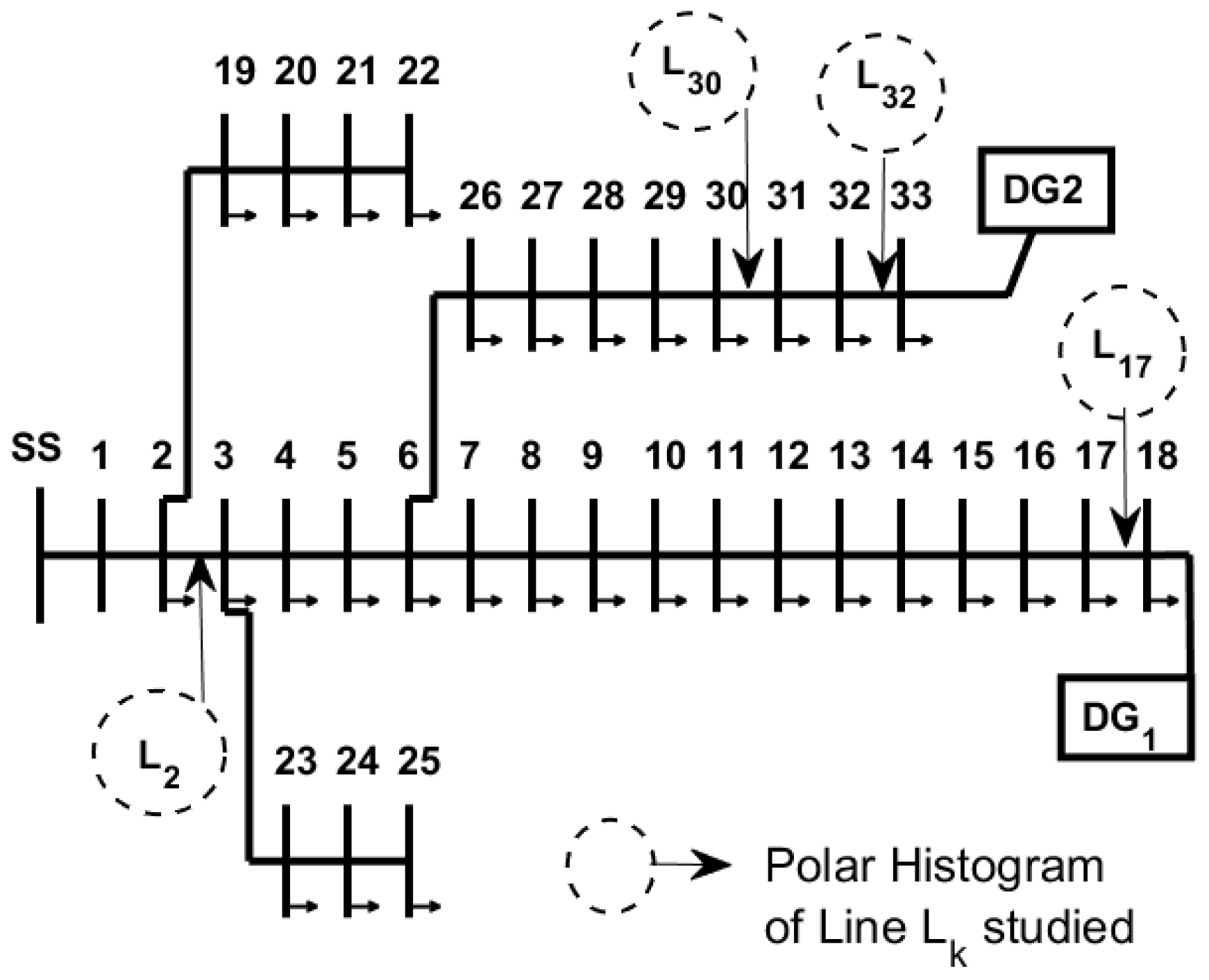
The proposed methodology was validated through simulations conducted on a 33-bus distribution network, as depicted in
Figure 4, using DIgSILENT PowerFactory 2020 in conjunction with Python 3.8 and MATLAB R2020. The same test system has been employed in the previous study conducted by the authors [
20] to enable consistent comparison. These tools were selected because they provide complementary strengths: DIgSILENT ensures accurate network modelling and quasi-dynamic simulations, MATLAB enables flexible data processing and custom visualisation, while Python facilitates probabilistic data analysis and integration with histogram-based techniques. The network voltage magnitude is regulated within the permissible range of 0.95 pu. to 1.05 pu. The test system incorporates time-varying real and reactive load patterns, as described in [
12], while the DG units are modelled with constant generation output to simplify the interpretation of the polar histograms. Quasi-dynamic simulations are carried out using an hourly time step over a 24 h period and data on current magnitude and direction are extracted from each line section. These data points are then visualised as polar histograms, illustrating the probability distributions of real and reactive currents flowing through the line sections.
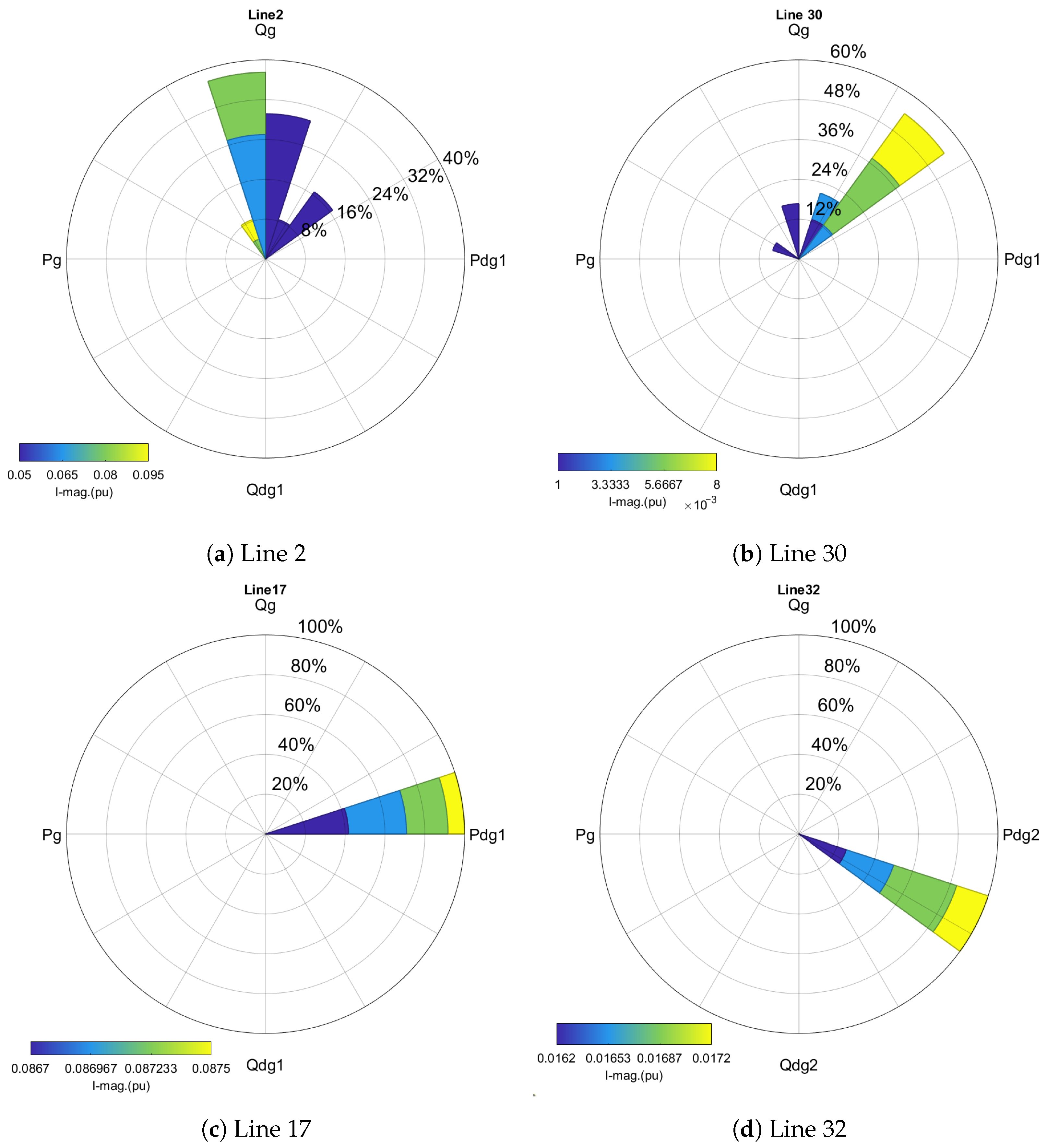
Only the specific line sections mentioned in
Figure 4 are shown in the results due to their significance and strategic proximity to the source. Line 2 reflects the grid-dominated region near the substation, line 17 captures the direct impact of DG1, line 30 lies between DG1 and DG2 and highlights their comparative influence, and line 32 represents the feeder end influenced by DG2. This line sections are selected to capture grid-dominated, DG-dominated, and shared-influence regions across the network. To evaluate the proposed visualisation framework, two case-study scenarios are considered, (i) application without the reflection principle and (ii) application with the reflection principle, both involving multiple DG units and temporal load variations. The results corresponding to the non-reflection scenario have been previously reported by the authors in [
20]. To avoid duplication, this paper exclusively focuses on the reflection-based scenario, which constitutes a substantive extension of the prior work.
Application of Reflection Principle with Multiple DGs and Temporal Load Variations
This section presents the outcomes obtained from the polar histogram analysis incorporating reflection behaviour for multiple DG units. For completeness, the corresponding results obtained by authors without applying the reflection principle under identical network configurations and loading conditions are available in [
20] and are not repeated in this paper for brevity. In this case study, two DG units are positioned at buses 18 and 33, respectively, operating under time-varying load conditions with constant generation output. It is considered that DG1 at bus 18 delivers approximately 60% of the real power, while DG2 at bus 33 contributes 10% of real power along with 10% of reactive power. Since the DG units supply most of the real power demand, the current flowing from
to
and
are primarily served by the DG units 1 and 2. In contrast, other line segments, such as
to
,
,
, are mainly supported by the grid. The interaction zones, representing the influence regions of the grid, DG1, and DG2, are illustrated in the polar histogram line sections shown in
Figure 5.
In line section , the polar histogram illustrates variations in line current contributed by both DG1 and the main grid, primarily distributed across the first and second quadrants. Because DG1 delivers only real power, the grid remains the sole source of reactive power for this section. This behaviour is reflected in the probability distribution, where current magnitudes are concentrated in the first and second quadrants, demonstrating that real power is shared between DG1 and the grid, whereas reactive power originates solely from the grid. The higher probability density in the second quadrant further indicates that the grid exerts a stronger influence on line .
Similarly, examining the line section , despite DG2’s proximity to , the probability distribution reveals that DG1 (connected at bus 18) contributes more real power influence, while the grid continues to supply the dominant portion of reactive power. This inference is drawn by comparing the adjacent line sections and , which together highlight that DG1 and the grid exert the most significant impact on the real and reactive power components of , respectively.
For line section , as DG1 is located at bus 18, the current distribution predominantly appears in the first quadrant, signifying DG1’s major contribution to real power and the grid’s prevailing role in reactive power support. In contrast, in line section , DG2—supplying 10% real and 10% reactive power— shows a distinct probability concentration in the fourth quadrant, confirming that both power components originate from DG2 in this case. It should be noted that the polar histogram axes are redefined as Pdg2 and Qdg2 to denote the respective DG sources.
In summary, mapping line current to the respective quadrant and reorienting the histogram axes according to each generating source provides a clearer visual interpretation of how DG units and the grid dynamically interact within medium-voltage distribution networks.
7. Conclusions
This research investigates the dynamic influence zones of customer energy resources through polar histogram analysis. These polar histograms are derived from the statistical patterns of both real and imaginary current components that are flowing within line sections, which represent the influence of grid and DG sources. Simulation studies demonstrated that the approach provides intuitive insights into DG-dominated, grid-dominated, and shared-influence zones, while highlighting regions susceptible to voltage fluctuations and bidirectional flows. The probabilistic visualisation method helps grid operators understand DG integration challenges, which they can use to plan network development and distributed resource integration and enhance operational performance and network planning efficiency. Nevertheless, the scalability of the method remains a limitation, as applying polar histograms across very large or meshed urban networks may become computationally intensive and difficult to interpret. Future work will therefore focus on clustering and aggregation strategies to address the scalability challenges.
Author Contributions
Conceptualization, Y.N.A.R., A.P.A. and K.M.; Methodology, Y.N.A.R., A.P.A. and K.M.; Software, Y.N.A.R.; Validation, Y.N.A.R.; Formal analysis, Y.N.A.R.; Investigation, Y.N.A.R.; Resources, A.P.A. and K.M.; Data curation, Y.N.A.R.; Writing—original draft, Y.N.A.R.; Writing—review & editing, Y.N.A.R., A.P.A. and K.M.; Visualization, Y.N.A.R.; Supervision, A.P.A. and K.M.; Project administration, A.P.A. and K.M. All authors have read and agreed to the published version of the manuscript.
Funding
This research received no external funding.
Data Availability Statement
The original contributions presented in this study are included in the article. Further inquiries can be directed to the corresponding author.
Conflicts of Interest
The authors declare no conflict of interest.
References
- Nguyen, V.G.; Sirohi, R.; Tran, M.H.; Truong, T.H.; Duong, M.T.; Pham, M.T.; Cao, D.N. Renewable energy role in low-carbon economy and net-zero goal: Perspectives and prospects. Energy Environ. 2025, 36, 2248–2287. [Google Scholar] [CrossRef]
- Fernandez, M.I.; Go, Y.I.; Wong, D.M.; Früh, W.G. Review of challenges and key enablers in energy systems towards net zero target: Renewables, storage, buildings, & grid technologies. Heliyon 2024, 10, e40691. [Google Scholar] [CrossRef]
- Miraftabzadeh, S.M.; Colombo, C.G.; Longo, M.; Foiadelli, F. K-means and alternative clustering methods in modern power systems. IEEE Access 2023, 11, 119596–119633. [Google Scholar] [CrossRef]
- Arévalo, P.; Jurado, F. Impact of artificial intelligence on the planning and operation of distributed energy systems in smart grids. Energies 2024, 17, 4501. [Google Scholar] [CrossRef]
- Strezoski, L. Distributed energy resource management systems—DERMS: State of the art and how to move forward. Wiley Interdiscip. Rev. Energy Environ. 2023, 12, e460. [Google Scholar] [CrossRef]
- Lei, X.; Zhong, J.; Chen, Y.; Shao, Z.; Jian, L. Grid Integration of Electric Vehicles within Electricity and Carbon Markets: A Comprehensive Overview. eTransportation 2025, 25, 100435. [Google Scholar] [CrossRef]
- Tamp, F.; Ciufo, P. A sensitivity analysis toolkit for the simplification of MV distribution network voltage management. IEEE Trans. Smart Grid 2014, 5, 559–568. [Google Scholar] [CrossRef]
- Lagonotte, P.; Sabonnadiere, J.; Leost, J.Y.; Paul, J.P. Structural analysis of the electrical system: Application to secondary voltage control in France. IEEE Trans. Power Syst. 1989, 4, 479–486. [Google Scholar] [CrossRef]
- Liu, H.; Bose, A.; Venkatasubramanian, V. A fast voltage security assessment method using adaptive bounding. In Proceedings of the 21st International Conference on Power Industry Computer Applications. Connecting Utilities, Santa Clara, CA, USA, 21 May 1999; pp. 325–330. [Google Scholar]
- Huang, Z.; Huang, L.; Lai, C.S.; Jia, Y.; Zhao, Z.; Li, X.; Lai, L.L. Line outage distribution factors of a linearized AC model with reactive power and voltage magnitude for resilience-constrained economic dispatch. Sustain. Energy Grids Networks 2022, 32, 100793. [Google Scholar] [CrossRef]
- Baranwal, M.; Salapaka, S. Clustering and supervisory voltage control in power systems. Int. J. Electr. Power Energy Syst. 2019, 109, 641–651. [Google Scholar] [CrossRef]
- Nigar, Y.; Agalgaonkar, A.P.; Ciufo, P. Impact of variable solar PV generation on MV distribution systems. In Proceedings of the Australasian Universities Power Engineering Conference (AUPEC), Perth, WA, Australia, 28 September–1 October 2014; pp. 1–6. [Google Scholar]
- Guo, T.; Alimisis, V.; Milanović, J.V.; Taylor, P.C. Probabilistic assessment of voltage control zones and visualization using choropleth map. In Proceedings of the IEEE Manchester PowerTech, Manchester, UK, 18–22 June 2017; pp. 1–6. [Google Scholar]
- Anand, M.; Bagen, B.; Rajapakse, A. Probabilistic reliability evaluation of distribution systems considering the spatial and temporal distribution of electric vehicles. Int. J. Electr. Power Energy Syst. 2020, 117, 105609. [Google Scholar] [CrossRef]
- Chihota, M.J.; Bekker, B.; Gaunt, T. A stochastic analytic-probabilistic approach to distributed generation hosting capacity evaluation of active feeders. Int. J. Electr. Power Energy Syst. 2022, 136, 107598. [Google Scholar] [CrossRef]
- Nigar, Y.; Agalgaonkar, A.P.; Muttaqi, K.M. Visualisation of spheres of influence of distributed generation through critical line flow analysis. Sustain. Energy Grids Netw. 2023, 34, 101046. [Google Scholar] [CrossRef]
- Barnes, A.; Nagarajan, H.; Yamangil, E.; Bent, R.; Backhaus, S. Resilient design of large-scale distribution feeders with networked microgrids. Electr. Power Syst. Res. 2019, 171, 150–157. [Google Scholar] [CrossRef]
- Beiranvand, A.; Cuffe, P. Sankey network diagrams to depict bulk power transactions for operator situational awareness. In Proceedings of the 2021 IEEE Madrid PowerTech, Madrid, Spain, 28 June–2 July 2021; pp. 1–6. [Google Scholar]
- Cuffe, P.; Keane, A. Visualizing the electrical structure of power systems. IEEE Syst. J. 2015, 11, 1810–1821. [Google Scholar] [CrossRef]
- Nigar, Y.; Agalgaonkar, A.P.; Muttaqi, K.M. Unveiling the Dynamic Influence Zones of Distributed Generation Units Using a Visualisation Approach. In Proceedings of the 2023 IEEE International Conference on Energy Technologies for Future Grids (ETFG), Wollongong, Australia, 3–6 December 2023; pp. 1–6. [Google Scholar]
- Fan, M.; Vittal, V.; Heydt, G.T.; Ayyanar, R. Probabilistic Power Flow Studies for Transmission Systems With Photovoltaic Generation Using Cumulants. IEEE Trans. Power Syst. 2012, 27, 2251–2261. [Google Scholar] [CrossRef]
- Ramadhani, U.H.; Shepero, M.; Munkhammar, J.; Widén, J.; Etherden, N. Review of probabilistic load flow approaches for power distribution systems with photovoltaic generation and electric vehicle charging. Int. J. Electr. Power Energy Syst. 2020, 120, 106003. [Google Scholar] [CrossRef]
- Billinton, R.; Li, W. Reliability Assessment of Electric Power Systems Using Monte Carlo Methods; Springer: New York, NY, USA, 1994; pp. 33–73. Available online: https://link.springer.com/book/10.1007/978-1-4899-1346-3 (accessed on 28 March 2024).
- Stefopoulos, G.; Meliopoulos, A.; Cokkinides, G. Probabilistic power flow with nonconforming electric loads. In Proceedings of the 2004 International Conference on Probabilistic Methods Applied to Power Systems, Ames, IA, USA, 12–16 September 2004; pp. 525–531. [Google Scholar]
- Guimarães, I.O.; da Silva, A.M.L.; Nascimento, L.C.; Fotuhi-Firuzabad, M. Reliability assessment of distribution grids with DG via quasi-sequential Monte Carlo simulation. Electr. Power Syst. Res. 2024, 229, 110122. [Google Scholar] [CrossRef]
- Peres, W. A probabilistic load flow for unbalanced three-phase islanded microgrids using unscented transformation. Int. J. Electr. Power Energy Syst. 2024, 155, 109554. [Google Scholar] [CrossRef]
- AlKandari, M.; Ahmad, I. Solar power generation forecasting using ensemble approach based on deep learning and statistical methods. Appl. Comput. Inform. 2024, 20, 231–250. [Google Scholar] [CrossRef]
- Li, Y.; Ding, Y.; He, S.; Hu, F.; Duan, J.; Wen, G.; Geng, H.; Wu, Z.; Gooi, H.B.; Zhao, Y.; et al. Artificial intelligence-based methods for renewable power system operation. Nat. Rev. Electr. Eng. 2024, 1, 163–179. [Google Scholar] [CrossRef]
- Ritchie, M.; Engelbrecht, J.; Booysen, M. Predicting residential water and electricity usage profiles with a temporal histogram model. Sustain. Cities Soc. 2023, 99, 104884. [Google Scholar] [CrossRef]
| Disclaimer/Publisher’s Note: The statements, opinions and data contained in all publications are solely those of the individual author(s) and contributor(s) and not of MDPI and/or the editor(s). MDPI and/or the editor(s) disclaim responsibility for any injury to people or property resulting from any ideas, methods, instructions or products referred to in the content. |