


Abstract
Hydrogen has emerged as a cornerstone of global decarbonisation strategies, offering a flexible pathway to reduce dependence on fossil fuels and accelerate progress towards net-zero targets. However, the development of a globally integrated hydrogen economy remains uneven, reflecting disparities in renewable energy potential, infrastructure readiness, investment capacity, and policy commitment. To better understand these differences and the barriers they create, this study undertakes a comprehensive comparative assessment of the global hydrogen supply chain encompassing resources, production, storage, transport, and end-use applications. Further, a structured analytical framework comprising ten principles and twenty-nine sub-factors was developed to evaluate national hydrogen policies, technological readiness, and enabling conditions across twenty-six countries. The results show that the United States, China, Japan, South Korea, and Germany lead global progress, while many countries remain at an early stage of engagement. These findings further inform persistent regional asymmetries and emphasise the need for stronger international coordination. Drawing on these findings, the paper advances targeted policy and research recommendations to lower production costs, expand storage and transport capacity, and harmonise regulatory frameworks, thereby defining a coherent pathway towards a secure, cost-competitive, and equitable global hydrogen economy by 2050.
1. Introduction
1.1. Global Need for Decarbonisation and an Alternative Energy Source
The demand for a clean and sustainable energy source has gained prominence in recent decades due to the continued consumption of carbon-based fuels [1], resulting in heavy emissions that contribute to global warming [2,3] (Figure 1). Together with the primary greenhouse gas, CO2, Nitric oxides (NOx) and Hydrocarbons (CxHy) contribute more than 75% to the overall greenhouse gas impact [4]. In line with the Paris Agreement’s objective of limiting the global temperature rise to 1.5 °C, governments worldwide aim to reduce global greenhouse gas (GHG) emissions by 45% by 2030, compared to 2010 levels. This ambitious aim would reduce GHG emissions by about 21 billion tonnes annually [4]. Furthermore, a substantial percentage of the global community, notably the United Kingdom (UK), the European Union (EU), and Japan, has set goals to achieve net-zero emissions by 2050. Meanwhile, major emitters such as China and India plan to achieve net-zero emissions by 2060 and 2070, respectively [5,6]. In light of these global efforts, the world continues to seek a reliable, sustainable, and scalable alternative energy source [7].
Figure 1.
Global greenhouse gas emissions in the energy sector [8]—Refer to Supplementary Material—Annexure A for more details (Industry—Consumes energy for manufacturing, processing and construction).
1.2. Growth of Renewable Energy
The need to achieve net-zero targets and ensure energy security has propelled many countries to expand their renewable energy production capacity. Throughout the last decade, a noticeable emphasis on transitioning to renewable energy was shown, accounting for 28.7% of global electricity production by 2021 [9]. Further, the reinforcement through substantial incentives, such as feed-in tariffs and tax exemptions, has accelerated the development of renewable projects, with hydro, wind, and solar energy emerging as the driving forces. China is estimated to lead this transformational trend, achieving cumulative renewable energy production of 16.8 GW by 2027. Leading countries with installed renewable energy capacity are presented in Figure 2.
Figure 2.
Leading countries in installed renewable energy capacity 2023 [10,11,12].
1.3. Challenges in Renewable Energy Deployment
Renewable energies are on the brink of becoming the next significant source of electricity generation, particularly in low-carbon economies [13]. Nevertheless, the inherent intermittency of renewable energy and the shortage of suitable land for installations continue to be significant impediments to the effective use of renewable energy [14,15]. The levelised cost of electricity from solar photovoltaics (PVs) is lowest during periods of high daytime irradiance [16], whereas wind energy generally achieves higher output and lower marginal cost during nighttime or off-peak hours. An efficient energy storage system would enable the retention of these energies during the low-cost operational periods and their release during grid surges, thereby reducing the overall cost of electricity and alleviating transmission congestion [17]. In this regard, Hydrogen-based Energy Storage (HES), Battery Energy Storage (BES), and Pumped Hydro Storage (PHS) have been adopted as the most efficient energy storage systems [18]. However, the limited flexibility and the necessity for specialised infrastructure have limited the potential of PHS for localised applications [19]. Additionally, the scarcity of materials necessary for the BES and the capacity fade present obstacles to its widespread use [20]. Hence, hydrogen has emerged as one of the most effective storage systems due to its flexibility in production, storage, and transport [21].
In this context, this study systematically examines how hydrogen can underpin global decarbonisation by evaluating the maturity and interlinkages of its complete supply chain. Specifically, the paper develops a structured comparative framework comprising ten principles and twenty-nine sub-factors to assess national hydrogen policies, supply chain readiness, and enabling conditions across twenty-six countries. This framework extends existing scientific literature, which often considers hydrogen policy, technology, or economics in isolation, by integrating these dimensions into a unified global assessment. The resulting analysis identifies critical regional asymmetries, policy gaps, and governance challenges that constrain large-scale deployment. Beyond policy benchmarking, the paper adopts a deliberately comprehensive approach that traces the evolution of the hydrogen economy from the broader energy context to global strategies and national implementation. This integrated perspective enables readers to interpret the hydrogen landscape holistically from systemic drivers and enabling factors to policy execution and future outlook, thereby presenting a cohesive and complete narrative of the global hydrogen transition. By articulating both the operational and policy context, this study further aims to inform coordinated strategies towards a balanced and resilient hydrogen economy by 2050. Figure 3 provides a structured representation of the global hydrogen economy considered in this study, illustrating the interrelationships among context and drivers, enabling factors, and the core hydrogen supply chain that together form the analytical foundation of the framework applied throughout this paper.
Figure 3.
Structured representation of the global hydrogen economy considered in this paper: Context and drivers, Enabling factors and Core hydrogen supply chain (Graphical Abstract).
2. Emergence of Hydrogen as an Alternative Energy Fuel
Hydrogen has emerged as a promising alternative fuel, energy storage and carrier medium due to its versatility [22], low environmental impact in combustion, and high energy density per unit mass [23]. Furthermore, it can be produced effectively using renewable energy and water via electrolysis, leading to minimal production and operational emissions [21]. Furthermore, its higher energy density compared to traditional fuels such as diesel and gasoline has solidified hydrogen’s viability as an alternative fuel [24,25] (Table 1).
Table 1.
Energy and combustion characteristics between hydrogen and other prominent fuel types [7,25,26,27,28,29,30].
2.1. Need for a Global Hydrogen Supply Chain
Deploying hydrogen as a global energy source requires a well-established, reliable and widespread supply chain. This includes establishing supporting infrastructure for high-capacity hydrogen generation, conversion to different hydrogen storage modes, mega-scale stationary storage, an effective shipping fleet, vehicular fleet and end-user application stations, which would allow reaching the International Energy Agency (IEA) goal of 550 Million Metric Tonnes (MMT) of hydrogen demand by 2050 [31].
Furthermore, the development of hydrogen as an alternative fuel relies upon its production being ‘Green’ [32] and it is essential for maximising its impact as a clean energy source. This requires improved renewable energy generation at high capacity, which not all countries possess, as shown in Figure 4. This surplus shortage between renewable energy capacity and current energy demand has motivated many countries to establish an effective hydrogen supply chain to import or export energy.
Figure 4.
Percentage of land available for renewable energy generation by country 2023 [10].
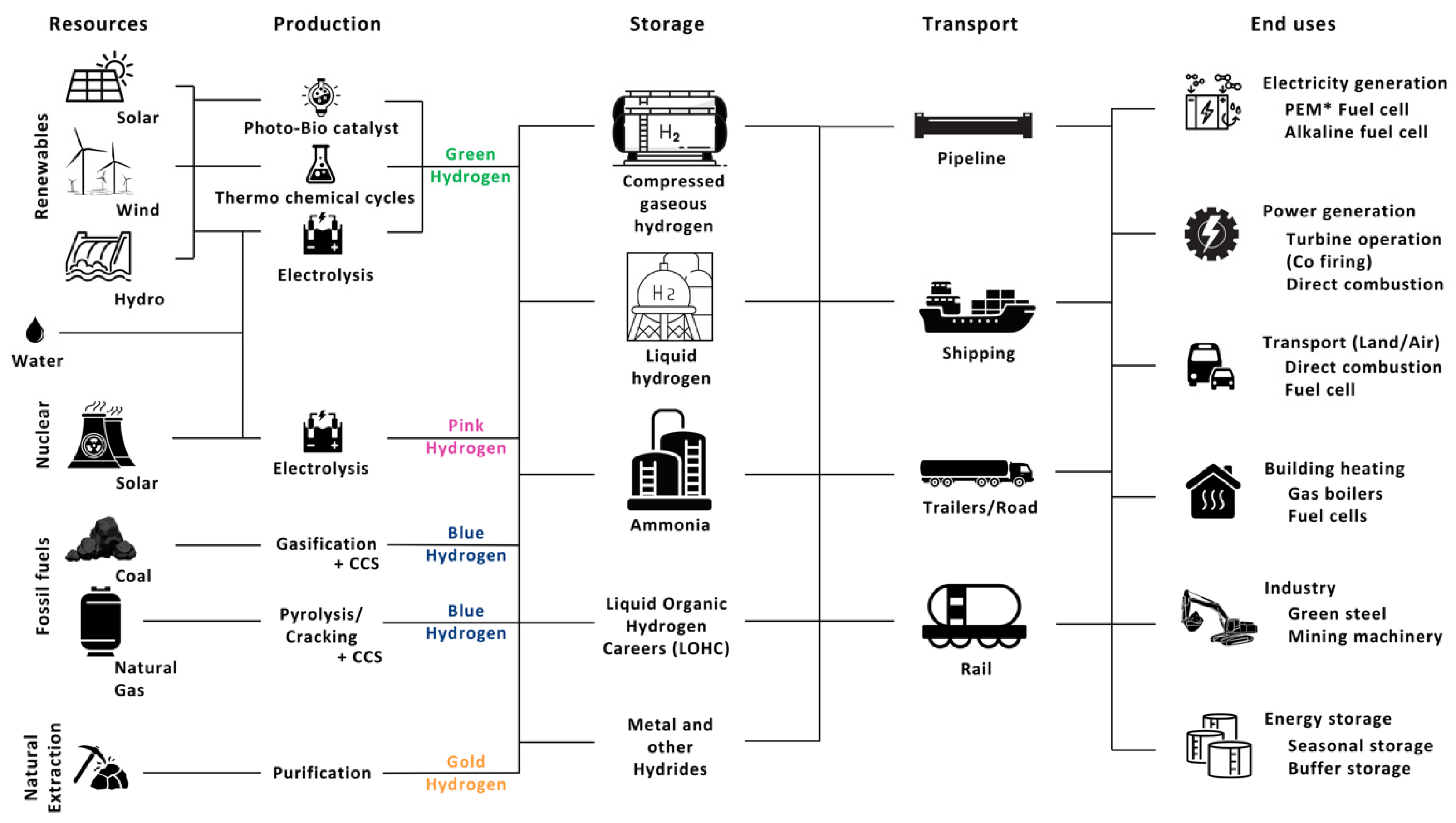
Moreover, the utilisation of hydrogen in different sectors and its applications are crucial to establishing a robust supply chain. However, the current energy transition is mainly driven by the countries’ decarbonisation targets, trajectories, and commitments towards net-zero application. Also, higher operational and capital costs associated with green hydrogen production, storage, transportation, and conversion back into energy are other key hindrances to hydrogen adaptation. To frame this under the analysis, Figure 5 highlights the key components of the global hydrogen supply chain across five avenues—resources, production, storage, transport, and end use—offering a detailed, comparative overview of the core topics covered in this paper.
2.2. Obstacles to an Effective Global Hydrogen Supply Chain and the Need for National Initiatives
Despite its potential benefits, the transition to a hydrogen economy faces substantial challenges. Green hydrogen production remains highly energy-intensive, resulting in high embodied energy and cost [33]. Financial mechanisms such as carbon pricing and targeted tax incentives can improve its competitiveness; while scaling up production, transport, and conversion infrastructure will progressively reduce costs through economies of scale. However, capital cost constraints in generation, conversion, storage, and dehydrogenation have so far prevented the establishment of large-scale global infrastructure. Maritime and freight transport capacities remain limited, and hydrogen applications such as fuel-cell vehicles, refuelling stations, power generation, and building heating are still confined to a small number of countries [31]. Addressing these challenges requires implementing national and multinational strategies and policies.
Figure 5.
Hydrogen supply chain and its components considered for this study. The colour coding denotes hydrogen production pathways: green hydrogen (renewable-based electrolysis), blue hydrogen (fossil-fuel-based production with carbon capture and storage), pink hydrogen (nuclear-powered electrolysis), and gold hydrogen (naturally occurring hydrogen extracted from geological formation (*—Polymer Electrolyte Membrane) [34].
Recent years have seen the publication of a large number of national hydrogen policies and strategies, which outline priority sectors, key drivers, associated initiatives, and indicative timelines for hydrogen deployment. However, these strategies are predominantly shaped by country-specific contexts, including decarbonisation targets, the composition of the existing energy mix, renewable and clean energy capacity, anticipated import–export roles, economic scale, and national industrial priorities [35]. As a result, the structure, depth, and scope of hydrogen strategies vary significantly across countries, ranging from comprehensive policy frameworks to broad, aspirational roadmaps.
2.2.1. Research Gap
Despite this growing body of national hydrogen documentation, the literature lacks a systematic, comparative evaluation that enables meaningful cross-country assessment of hydrogen strategies and their readiness for large-scale deployment. Existing studies often examine hydrogen policy, technology development, or economic feasibility in isolation, without integrating these dimensions into a unified descriptive framework. This fragmentation limits the ability to identify comparative strengths, gaps, and asymmetries in national hydrogen approaches at a global level.
2.2.2. Research Objectives and Contribution
Addressing the above-mentioned gap, this paper presents a wide-ranging overview of national policies, targets, strategies, and initiatives for adapting and utilising hydrogen as a viable energy alternative, along with each country’s operational and prospective contexts. The evaluation informs this thorough perspective of the aforementioned data across three distinct domains: (1) Context and Drivers, (2) Enabling Factors, and (3) Core Hydrogen Supply Chain.
Furthermore, the statistical data and operational structure of hydrogen in the present day and future estimates for 2030 and 2050 are elaborated in the assessment, providing a baseline for governments, organisations, and research entities to understand the global trajectory of hydrogen. By combining policy analysis, operational benchmarking, and future scenario evaluation within a single framework, the study offers an integrated understanding of the hydrogen economy linking strategic intent with practical implementation and long-term outlook. Moreover, the study also identifies key policy-relevant recommendations and future directions to support coordinated and scalable hydrogen deployment.
Figure 3 illustrates the complete structure of this paper, while the methodology employed for the corresponding assessment is outlined in the subsequent section.
3. Methodology
3.1. Identification of Assessment Criteria Through Keyword Clustering
As global interest in hydrogen is diversified and widespread, identifying advances in production, supply chains, and end uses, along with country-level involvement through policies and strategies to advance hydrogen, is not straightforward. Hence, a comprehensive keyword analysis was carried out to determine the evaluation criteria for the overall assessment. The keyword analysis started from three primary aspects: (1) Hydrogen production, (2) Hydrogen storage and (3) Hydrogen transport, which were then expanded to end-user applications through the keywords (4) Fuel cell, (5) Hydrogen vehicles, and (6) Power generation. Further, the economic, safety and policy aspects of hydrogen deployment were included in the assessment through the keywords (7) Hydrogen policies, (8) Hydrogen economy, (9) Hydrogen safety and finally, the contribution to net-zero goals over hydrogen was encompassed through the keyword (10) Decarbonisation. The respective assessment focused on the hydrogen policy and strategy documents published by different countries and publications found in Scopus-indexed journals. These were included in the VOSviewer software (Version 1.6.19) to generate a co-occurrence network and clusters of keywords linked to the input keywords (Figure 6). Based on keyword clustering, 29 distinct categories were identified to assess countries’ operational backgrounds and the efficiency of deployed policies, strategies, and plans (Supplementary Material—Annexure B).
Figure 6.
Main research clusters using a co-occurrence network of keywords (157 Studies and Documents).
3.2. Comparative Assessment Framework and Scope of Evaluation
However, countries’ operational context and national hydrogen strategies showed considerable diversity. Hence, 29 factors were grouped into 10 principal categories to incorporate into the assessment and ensure comparative evaluation (Figure 7). The scope of each principal category was well-defined, allowing all the operational features of a country to be understood and presented. Furthermore, to provide a more comprehensive understanding of the operational dynamics, this assessment considered different national energy policies, statistics, announcements, and private-sector involvement in hydrogen development.
Figure 7.
The employed methodology for the cross-comparative assessment of national hydrogen publications. (See Supplementary Materials—Annexure B, for A–K for detailed designations).
Through this paper, 26 countries were selected to present information based on the comprehensiveness of the presented/published policies and the operational hydrogen backdrop. Finally, this study discusses the diverse features of the hydrogen economy across countries, their strengths and weaknesses relative to one another, and suggests areas for improvement to inform the development of new agendas for large-scale hydrogen utilisation. The framework for this assessment is outlined in Figure 7, and the subcategories under each principal category are detailed in Supplementary Material—Annexure B.
While this assessment draws on the most comprehensive set of available data, it is based on published policy and strategy documents as of the first quarter of 2025, which may not fully capture ongoing industrial developments or unpublished initiatives. Quantitative techno-economic modelling lies beyond the study’s scope; therefore, cost and capacity estimates rely on secondary data from established global sources.
Based on all those factors, the following sections examine the global energy structure, renewable energy capacity, issues within the current energy mix, and the proposed hydrogen policies and strategies to align with global energy demands and effectively address its deficiencies.
4. Global Context on National Hydrogen Policies
By June 2025, 42 countries had published their national strategies alongside the supranational strategy of the European Commission [36] for developing hydrogen as an alternative fuel and advancing global decarbonisation. In addition, 17 countries have published national road maps, four have published national policies, and another four have presented national vision statements and guidelines (Figure 8) [36]. Among these publications, only four countries—Japan, South Korea, Australia, and the USA (California)—had their national strategies in place before 2020, positioning them as global leaders in hydrogen utilisation and research. By the end of 2021, the number had grown to 31, and by the end of 2022 to 39; the remaining publications have emerged after 2022, totalling 67 worldwide [36,37].
Figure 8.
National publications on hydrogen as alternative energy by document type [37,38] (Refer to Supplementary Material—Annexure C for more details).
The phrases “strategies,” “policies,” “roadmaps,” and “vision statements” refer to various yet interrelated approaches to hydrogen development within national and regional contexts. Strategies provide a detailed, long-term blueprint outlining broad objectives, key milestones, and pathways for integrating hydrogen into energy systems. For example, Australia’s National Hydrogen Strategy offers a thorough plan to establish the country as a global hydrogen leader by 2030, focusing on local production and export markets [39]. Policies, on the other hand, emphasise concrete measures and regulatory frameworks that facilitate the execution of strategy. The United States and China have taken the lead in hydrogen policy development, with efforts such as tax credits under the US Inflation Reduction Act and Chinese subsidies for green hydrogen generation fuelling industry expansion [36]. Vision statements express high-level goals and broad commitments, often serving as the foundation for subsequent initiatives and policies. Countries such as Russia, Algeria, and Spain have issued hydrogen roadmaps indicating their intentions to include hydrogen in their energy systems but often lack the granular detail in fully defined strategies or policies [37]. Supplementary Material—Annexure C contains a concise summary of the character of these various documents in relation to their respective countries.
This paper comprehensively discusses these policies and the respective operational backdrop based on the framework outlined in Figure 7. Subsequently, the following section discusses future demand for hydrogen, current hydrogen export and import quantities, and the policy involvement of different countries.
5. Scale of Hydrogen Demand and Utilisation
In 2023, global hydrogen demand reached 97 MMT, up 2.5% from the previous year. The recovery of the chemical sector and refining activities has primarily influenced this increase [8]. According to World Bank statistics, hydrogen exports in 2021 amounted to USD 198 million. In this mix, countries have tailored national strategies to their visions of the hydrogen economy. While countries like South Korea, Japan, and Germany anticipate relying on imports, others, such as Australia, the UAE, and China, strategically target export-oriented markets. (Figure 9).
Figure 9.
Quantity and respective economic value of hydrogen exports by different countries in 2021 [40,41].
Numerous international organisations have projected global hydrogen demand for 2050 under a range of policy and technology scenarios, as illustrated in Figure 10. Achieving these forecasted demand levels will depend critically on establishing efficient and reliable hydrogen import and export capacities to balance regional production and consumption gaps [42].
Figure 10.
Predicted global demand for hydrogen by 2050 by different organisations and the required annual growth rate to achieve the respective demand [5,42,43,44,45,46].
However, the world currently lacks the technology and infrastructure to handle large volumes of hydrogen in the supply chain. Hence, technological development through research remains paramount in achieving these ambitious goals while using existing infrastructure [37]. Repurposing LNG infrastructure to store and transport hydrogen [47] employing depleted gas reservoirs to store compressed gaseous hydrogen [48] and using existing ammonia infrastructure as an energy medium for hydrogen [49] are some emerging avenues supporting this transition. The following section presents an overview of the hydrogen production methods that play a critical role in the global hydrogen supply chain, and the strides countries have made to meet the predicted demand.
6. Hydrogen Production, Storage and Distribution in the Global Supply Chain
6.1. Production of Hydrogen
6.1.1. Different Production Methods of Hydrogen and Associated Challenges
Numerous technologies have been developed to produce hydrogen from various feedstocks, broadly categorised into fossil-fuel-based and renewable-energy-based hydrogen. Within each category, multiple technologies have emerged (Figure 11). The primary methods currently employed for hydrogen production are Steam Methane Reforming (SMR) and coal gasification. Both methods rely on non-renewable energy sources and are characterised by high energy requirements and significant CO2 emissions. In 2023, steam reforming accounted for 80% of total hydrogen production, while coal gasification accounted for 19%. Hydrogen production in 2023 resulted in approximately 900 MMT of CO2 emissions, underscoring the urgent need to integrate green hydrogen production technologies [8].
Figure 11.
Main technologies of hydrogen production [50,51,52,53].
The electrolysis method utilising renewable energy sources is considered the most environmentally friendly approach to hydrogen production, as it has a minimal carbon footprint. Electrolysis technology encompasses three main types: (1) Polymer electrolyte membrane electrolysers, (2) Alkaline electrolysers, and (3) Solid oxide electrolysers [54]. Among these, Alkaline electrolysers are already commercially available. However, the current production volume of hydrogen from electrolysis remains relatively small, accounting for less than 1% of total hydrogen production in 2023 [38]. Even though electrolysis remains the most commercially viable green hydrogen production technology, associated costs and technological gaps remain significant obstacles to large-scale adoption.
Despite its modest share, hydrogen production through electrolysis is gaining attention. Between 2020 and 2021, this method experienced a 20% growth. Europe and Australia are at the forefront of these developments, aiming for a production capacity of five million tonnes and three million tonnes by 2030, respectively [37]. Moreover, the EU, Australia, and the USA have targets to establish specialised green hydrogen production facilities, with respective capacities of 7.3 GW, 6.4 GW, and 4.2 GW, thereby meeting the global projection of 50 GW by the year 2027 [44,49,55]. Furthermore, with announced funding for the mega-scale facility: ‘HyDeal’, the project has outlined plans to produce 67 GW of green hydrogen capacity across Western Europe by 2030, accompanying 95 GW of solar power as the primary energy source [56]. IEA estimates that with the operational capacities of these projects, the green hydrogen production capacity of 150 GW will be achieved by 2030, tripling the capacity anticipated for 2027 [38].
Large-scale electrolyser production plants such as the Asian Renewable Energy Hub and ‘Rechaz’, —Kazakhstan, are planned to be operated by 2027, with an estimated 49-fold increase in production compared to the 2023 recorded value of 1.4 GW. This will facilitate reaching 49 MMT annually in accelerated conditions (Figure 12 and Figure 13) [31,38].
Figure 12.
Existing green hydrogen production capacity and production perspective by 2030 by different countries [57].
Figure 13.
Main electrolyser capacities and projects announced by countries for green hydrogen production (Bubble size represents the electrolyser capacity—Australia (42 GW), and label denotes the project name) (Refer Supplementary Material—Annexure D for more details) [37].
However, the development is constrained by high projected expenses. It is estimated that achieving the 2030 EU objective of 10 million tonnes of renewable hydrogen production alone would require between USD 700 and 850 billion in investment [58]. Only about 20% of projects classified as concept or feasibility studies will advance to the FID or construction/operational stage. Hence, a primary focus is on developing strategies to reduce production costs in tandem with scaling up worldwide, underscoring the importance of cost-effective hydrogen production strategies [39,58,59].
Although not exclusively in the ‘Green’ form, numerous initiatives have been announced and are active worldwide to produce hydrogen. The USA has announced several of these projects, such as the Mid-Atlantic hydrogen hub, Heartland hydrogen hub, and Midwest hydrogen hub, which focus on producing pink and blue hydrogen on par with green [39]. However, our assessment mainly focused on green hydrogen production development efforts, emphasising the clean energy development goals by 2050 (Figure 13). Furthermore, ‘Gold Hydrogen,’ naturally formed through geochemical processes, is gaining global interest as a low-cost, sustainable alternative. Conversely, large-scale extraction of this hydrogen faces challenges in exploration, feasibility, and regulation [60].
6.1.2. Production Costs of Hydrogen
The primary economic hurdle for hydrogen as a competitive alternative to conventional energy sources is its higher production costs, driven by its complex manufacturing process. As emphasised in Section 2, fossil-fuel-based hydrogen is not a sustainable long-term solution due to associated carbon emissions. According to an IEA analysis (2019), hydrogen production from coal is the only process whose costs are not heavily dependent on fuel prices. Also, CO2 emissions taxes have a significant impact on overall costs, driving up production costs from non-renewable methods.
Therefore, there is a clear need to reduce the cost of hydrogen produced by electrolysis. The capital cost of an alkaline electrolyser was recorded at around USD 500–1400/kW in 2019, and it is projected that by 2030 these costs will reduce to around USD 400–850/kW owing to technological advances and increased utilisation scale. Similarly, polymer electrolyte membrane (PEM) electrolysers had recorded capital costs of USD 1100–1800/kW in 2019, but it is expected that by 2030, these costs will be reduced to USD 650–1500/kW [61].
Studies by [55,62] on the capital expenditure (CAPEX) of electrolysers from 2000 projected until 2030 emphasise these efforts. According to their study, CAPEX has been reduced by 2–3 times compared to initial levels, with reduced deviation indicating consistent, steady, rapid development (Figure 14).
Figure 14.
Electrolyser cost variation from literature and projections from 2000 to 2030 (a) Alkaline electrolysers, (b) PEM electrolysis [55,62].
With respect to electrolyser efficiency, performance improvements are fundamentally constrained by losses associated with electrode kinetics, ionic and electronic transport, and system-level energy dissipation [63]. Accordingly, significant research efforts have focused on directly addressing these mechanisms by reducing activation overpotentials through advanced electrocatalyst development, lowering ohmic losses via enhanced membrane and electrolyte conductivity, and mitigating mass-transport limitations at high current densities through optimised electrode architectures [64]. Further advances target key degradation mechanisms, including catalyst dissolution, membrane thinning, and interfacial delamination, which constrain long-term efficiency retention under dynamic operating conditions [63]. At elevated operating temperatures, solid oxide electrolysers offer intrinsically higher thermodynamic efficiency by shifting part of the energy demand from electricity to heat; however, continued scientific progress is required to overcome challenges related to materials stability, redox cycling, and thermo-mechanical degradation [37,65].
Building on these technological advances, several national hydrogen strategies have articulated ambitious deployment targets for electrolysis-based hydrogen production. The Australian hydrogen plan intends to lead electrolysis-based hydrogen generation by 2030, with a target of six Million Metric Tonnes Per Annum (MTPA). Furthermore, several African governments have stated an interest in delivering 7 MTPA by 2030, although most of these projects have yet to reach the development stage and are demonstrating their ambition. On the other hand, the USA intends to lead the way in low-emission hydrogen production by accounting for 5.6 MTPA by 2030, alongside the EU, which has set a target of 3.5 MTPA by 2030. Even though the advancing technology behind hydrogen production brings these targets closer to realisation, the economic barriers they entail pose significant impediments.
Beyond cost and carbon intensity, the effectiveness of hydrogen production pathways is strongly influenced by scale, efficiency, and end-use requirements [31,66] production via electrolysis is well suited to decentralised, high-purity supply at small to medium scales, such as refuelling infrastructure, distributed energy systems, and chemical applications requiring high purities [64]. In contrast, large industrial consumers, including steelmaking, refineries, and bulk chemical production, require hydrogen at substantially higher throughputs. In such applications, SMR and Auto Thermal Reforming (ATR) currently offer higher productivity and lower unit costs at scale [67]. The relative cost-effectiveness of these production routes is highly context-dependent, shaped by sector-specific demand profiles, renewable energy availability, and national policy and regulatory frameworks. Hence, a detailed techno-economic analysis at the level of individual industries and regional settings, therefore, falls outside the scope of this global comparative study.
On the other hand, incorporating carbon capture and storage (CCS) technology into low-carbon hydrogen production methods introduces additional costs. Ref. [68] has estimated that integrating CCS with coal gasification would raise capital and fuel costs by approximately 5%, while operational costs would increase by about 130%. Similarly, it has been identified that Steam Methane Reforming (SMR), including CCS, would result in a 50% increase in capital costs, a 10% increase in fuel costs, and a 100% increase in operational costs, as elaborated in Section 10.1 (Figure 15).
Figure 15.
Targeted green hydrogen production cost with different electrolyser costs, operating hours and cross-comparison with grid electricity cost and grey hydrogen cost [69].
Several countries have established cost benchmarks for hydrogen production to ensure market competitiveness through their national hydrogen strategies. The United States Department of Energy has benchmarked a target of USD 1/kg for hydrogen production costs [70]. Similarly, Japan’s Hydrogen Strategy targets 20 Yen/Nm3 (Normalised cubic metre) (222 Yen/kg or 1.45 USD/kg with 1 USD = 152.88 Yen conversion rate) for imported hydrogen [71]. Further, Germany aims to keep the cost of imported hydrogen under €3/kg (3.15 USD/kg with 1 USD = €0.95 conversion rate), and South Korea aims to keep the cost at 3000 KEW/kg (2.15 USD/kg with 1 USD = 1396.02 KRW conversion rate) by 2030. Australia has also set a production cost target of AUD 2/kg for clean hydrogen, equivalent to approximately USD 1.29 (at a 1 USD = 1.55 AUD conversion rate), by 2050 [39].
Along with production, effective hydrogen storage is essential to meet global demand. The following subsection highlights the efforts of numerous countries to develop hydrogen storage systems, focusing on the policy and strategic implications.
6.2. Different Types of Hydrogen Storage
Similarly to production, developing a robust network of large-scale, efficient storage is paramount to building a reliable hydrogen supply chain. However, hydrogen storage is not straightforward, as its natural state is gaseous and requires specific compounds and system controls to accumulate, store, and extract it according to the intended application [72] (Figure 16).
Figure 16.
Prominent hydrogen storage types and respective leading storage mediums with gravimetric and volumetric densities [73,74,75,76,77,78].
Material-based hydrogen storage employs adsorption and absorption mechanisms to retain hydrogen on solid surfaces or within materials [79]. In adsorption, physisorption dominates, where molecular hydrogen is stored via weak van der Waals forces on high-surface-area materials [80]. Emerging technologies, such as Metal–Organic and Covalent-Organic Frameworks (MOFs and COFs) [81,82] and cryo-adsorbed silica aerogel blankets [83] are being extensively explored for their potential in enhancing hydrogen storage efficiency [84].
Beyond adsorption-based materials, metal and chemical hydrides play a significant role in material-based hydrogen storage. However, due to the associated high cost, metal hydrides are not used for large-scale storage [85]. Storing hydrogen chemically, such as in ammonia, is popular due to its high storage capacity, stability, and safety. Furthermore, Ammonia (NH3) storage tanks are widely available due to a well-established industry, with the largest reported storage in Texas, USA, at 70,000 m3 [86]. These preexisting infrastructure and know-how offer significant benefits for future hydrogen storage. Methanol (CH3OH) and Methylcyclohexane (LOHC1) are also pursued as energy carriers for hydrogen due to their well-established global supply chains.
The physical-based mechanisms mainly consist of compressed gas (CGH2), cryo-compressed storage (CCGH2) and liquid hydrogen (LH2) storage [75]. In large-scale compressed gas storage, the storage pressure is set not to exceed 100 bar (Volumetric density-7.8 g/cm3, 20 °C) in above-ground storage and 200 bar in underground storage, due to economic, structural, and safety constraints, beyond which cost and material requirements increase disproportionately [87]. Most large-scale compressed hydrogen storage systems use salt caverns, owing to their low construction and operating costs, low propensity to leak, and fast withdrawal rates [88]. The largest recorded underground hydrogen storage is under construction in Zuidwending, Netherlands, with a capacity of 73 million m3 in a salt cavern [89]. High-pressure steel tanks are the predominant choice for hydrogen storage applications, particularly in vehicle fuel storage. These tanks are designed to operate at 350 bar and 700 bar pressures, achieving volumetric hydrogen densities of approximately 23.3 kg/m3 and 39.2 kg/m3, respectively. Additionally, cryo-compressed hydrogen storage systems operating at pressures between 250 and 350 bar and temperatures ranging from 50 K to 20 K can achieve densities of 50–70 kg/m3 [90].
In addition to the compression storage, a higher volumetric density of 70 kg/m3 at one bar pressure is reached through liquefaction and storage as liquid hydrogen (LH2) [73] (Figure 16). The largest operational liquid hydrogen storage facility is at NASA Kennedy Space Centre in the USA, with a capacity of 4732 m3 [91]. Because LH2 must be held at −253 °C and presents issues in achieving the requisite insulation, large-scale LH2 storage is not being sought on the scale of compression gas storage [7]. Table 2 provides a summary of energy consumption to produce and for the dehydrogenation of different hydrogen mediums.
Table 2.
Energy consumption for production and dehydrogenation of different hydrogen storage mediums (CGH21—Compressed hydrogen gas at 35 MPa, CGH22—Compressed gas hydrogen at 70 MPa, LOHC1—Methylcyclohexane) [92].
As highlighted in Table 2, the production costs associated with chemicals and liquid organic hydrogen carriers (LOHCs) are generally lower than those of physical hydrogen storage mediums. However, the downstream processes required for dehydrogenation present significant challenges. These processes require additional energy inputs to convert the carrier back into usable hydrogen, leading to inefficiencies and cost escalations. Furthermore, the direct utilisation of these carriers often results in harmful emissions, including nitrogen oxides (NOx), carbon dioxide (CO2), and hydrocarbons, which contribute significantly to GHG effects. Dehydrogenation plays a pivotal role in shaping the total cost of hydrogen carriers, as evidenced by the levelized cost per unit of specific energy for ammonia and methylcyclohexane being substantially higher than that of liquid hydrogen [92]. However, liquid hydrogen involves higher transport and storage costs. Conversely, storage and transport costs will be significantly reduced when infrastructure and ships with capacities of 160,000 m3 or higher are available, as in the LNG trade.
Additionally, liquid hydrogen provides the advantage of high purity, which is particularly advantageous for downstream applications that require rigorous quality standards. This has sparked ongoing debate over the most suitable hydrogen storage medium, as each option involves trade-offs in cost, efficiency, environmental impact, and end-use applications. A global consensus on the optimal storage medium for enabling hydrogen’s role in the energy transition has yet to be reached.
Costs and Scalability Hydrogen Storage
The expenses associated with hydrogen storage exhibit substantial fluctuations due to the diverse storage techniques employed. The two pivotal factors influencing storage costs are the efficiency of the storage medium and the duration of the storage cycle. A storage cycle involves hydrogenation, storage, and dehydrogenation. This trend is evident in above-ground compressed hydrogen storage costs, which start at USD 0.33/kg for daily cycles and increase to USD 25.20/kg for a four-month cycle (Daily cycle—Hydrogenation, storage for a day and dehydrogenation) (Figure 17a) [93].
Figure 17.
(a) Current capital cost for 5000-ton hydrogen storage for daily cycles, (b) Levelized cost for daily storage cycles and four monthly storage cycles per kg.
Further, ref. [93] have comprehensively analysed the capital and the Levelized Cost of Hydrogen Storage (LCHS) across various storage methods. The current capital cost for a 5000-ton hydrogen storage facility designed for daily cycles is illustrated in Figure 17a. The LCHS encompasses factors beyond capital cost, including operational and decommissioning costs. The results for both daily and four-month storage cycles are outlined in Figure 17b.
The observed cost differentials highlight cryo-compressed hydrogen as the most economical option, while ammonia incurs the highest storage cost (Figure 17b). However, the low energy density in gaseous hydrogen and the high dehydrogenation energy consumption of ammonia sparks debate over their utilisation. However, these costs associated with hydrogen storage are anticipated to decline substantially with ongoing technological advancements [37]. To meet the projected global demand for hydrogen—550 MMT annually, it is essential to develop storage solutions capable of holding volumes similar to or exceeding current above-ground liquefied natural gas (LNG) storage capacities, which can reach up to 200,000 m3 [47]. Such storage would need to accommodate large volumes of hydrogen, given its relatively low volumetric density compared to LNG. As none of the specific storage methods depicted in Figure 17 has been recognised as the predominant hydrogen storage medium, countries have shown significant variation in their selection of the principal hydrogen storage medium.
To address the identified hydrogen storage deficit, most countries have preferred to develop extensive hydrogen storage facilities, primarily underground compressed gas storage. Of the 60 announced large-scale hydrogen storage projects, 20 are still in the conceptual stage, 12 are undergoing feasibility reviews, three have been cancelled, and just four are now under construction [38]. This indicates that, despite the countries’ strong interest in developing large-scale hydrogen storage through their national policies and objectives, no substantial progress has been made. Table 3 shows the primary large-scale hydrogen storage solutions proposed by several countries to address the hydrogen storage deficit.
Table 3.
Some leading hydrogen storage projects announced around the world. (N/A—No data available).
6.3. Hydrogen Transport and Distribution
6.3.1. Inland Transportation and Distribution
Not only the manufacturing and storage processes, but hydrogen transportation also has contingent costs, as transporting each hydrogen vector requires different technologies and infrastructure. Based on the predominant hydrogen medium chosen by different countries, the respective technologies have been optimised. A comparative cost assessment of hydrogen transportation methods currently practised worldwide is explained in Figure 18.
Figure 18.
Associated costs of hydrogen transportation with different vectors (LOHC—Liquid Organic Hydrogen Careers, tpd—tonnes per day, NH3—Ammonia) [61].
Transporting hydrogen in its gaseous state over short distances (typically up to 320 km) is a well-established practice, particularly in regions like Europe and the United States. For such operations, hydrogen is stored at pressures exceeding 180 bar in long, cylindrical containers mounted on trailer trucks, commonly referred to as tube trailers [59]. These systems offer a practical solution for industrial delivery and refuelling stations. For longer-haul distances—typically over 1000 km—liquefied hydrogen (LH2) tanker trucks are a viable alternative due to their significantly higher storage capacity [101].
A comparative study by [102] revealed that, for the same tanker volume, LH2 tankers can carry nearly six times the mass of hydrogen compared to compressed gaseous hydrogen (CGH2) tankers. However, the operational expenditure (OPEX) for transporting LH2 over short distances (e.g., 50 km) is approximately five times higher than that of CGH2. These cost dynamics highlight the trade-offs between transport efficiency and operational costs. While trailer trucks offer unmatched flexibility for hydrogen distribution, their cost-effectiveness diminishes at longer distances. This limitation underscores the need for alternative solutions, such as pipeline networks or maritime transport, for large-scale, long-distance hydrogen distribution.
As illustrated in Figure 18, pipelines are the most cost-effective mode of hydrogen transport. Currently, hydrogen pipeline infrastructure is primarily concentrated in the USA, with an operational network spanning 2600 km, and in Europe, with approximately 2000 km dedicated to serving industrial users [103]. Significant projects are underway to expand this network [104]. The South H2 Corridor, proposed by Austria, Germany, and Italy, aims to connect North Africa to Europe, introducing cross-continental hydrogen transport [105]. Similarly, the Netherlands has announced plans for a 1400 km hydrogen pipeline with an estimated funding of EUR 750 million [104]. Additionally, an undersea pipeline connecting Spain and France, and extending to Germany, is under planning. In Oman, a 1000 km pipeline project is also being planned to link the country’s northern and southern regions [105].
Despite the promise of these projects, the high capital costs of constructing new pipelines capable of withstanding hydrogen embrittlement and high operational pressures remain significant barriers. As a cost-effective alternative, repurposing existing natural gas pipelines for blended hydrogen transport has gained traction. This approach is estimated to reduce costs by approximately 10–35% compared to new construction [106]. With ongoing repurposing and new developments, IEA projects that a total of 40,000 km of hydrogen pipelines will be operational globally by 2040, underscoring the critical role of pipelines in the future hydrogen economy [38].
6.3.2. Maritime Shipping of Hydrogen
For transport distances exceeding 3000 km, especially with an annual demand of 10 megatonnes, shipping hydrogen in liquefied form (LH2) offers significant advantages [102]. A comparative analysis of hydrogen transport modes, including CGH2, LH2, and pipelines, conducted by [107] highlights the cost-effectiveness and feasibility of LH2 for such scenarios. Supporting this, the first-ever LH2 shipment was successfully transported from Port Hastings in Melbourne, Australia, to Kobe, Japan, in 2022, using a vessel with a cargo capacity of 1250 m3 [108].
Following this milestone, Kawasaki Heavy Industries, Ltd. (Japan) has received Approval in Principle (AIP) for the design of a liquid hydrogen carrier with a capacity of 160,000 m3. This vessel is planned to incorporate boil-off gas from the cargo as a fuel source, a significant innovation in reducing operational emissions [109]. The construction of this large-scale carrier is anticipated within the current decade and is expected to play a pivotal role in scaling the global LH2 supply chain and significantly reducing LH2 transport costs. However, achieving such scalability will require advances in liquefaction technology, which must evolve from the current capacity of approximately 30 tonnes per day to at least 274 tonnes per day to meet projected demand efficiently [107].
A robust production and transportation infrastructure alone is insufficient to achieve the hydrogen objectives set for the next decades; end-user applications, including vehicles, power generation, industries, and building energy consumption, must also adapt to hydrogen utilisation. Governments, private entities, and corporations have documented numerous initiatives, pilot projects, and efforts to attain these goals, and several prominent measures among them are elaborated in the next section.
7. End-Use Applications of Hydrogen
The effectiveness of the hydrogen supply chain is ultimately demonstrated in its end-use applications, which create demand and influence developments across production, storage, and distribution technologies. Hydrogen’s versatility as a clean energy carrier positions it as a key solution across sectors such as power generation, transportation, and building heating, where it can reduce emissions and support the transition to a low-carbon economy.
This section examines how countries advance hydrogen end-use applications within their broader hydrogen strategies. It further assesses progress in deploying hydrogen technologies and highlights countries’ plans and targets to scale adoption in key sectors.
7.1. Hydrogen in Power Generation
The power generation using hydrogen is currently minimal, and the IEA 2022 global review has estimated the hydrogen-based power generation to be less than 0.2% of the global power mix [31]. However, with the national hydrogen strategies in place and announced by different countries conglomerated explicitly in Asia-Pacific, Europe, and North America, the world’s hydrogen power sector is expected to operate at a capacity of 5800 MW by 2030 (Figure 19). However, most announced projects for generating power from hydrogen consider co-firing hydrogen with readily industrially available options, such as ammonia and coal, targeting lower emissions than current production methods before converting to zero-emission [110]. The drawback is that impure hydrogen blends produce NOx emissions, which rank highly on the harmful industrial emissions spectrum, requiring additional efforts to reduce these emissions [111]. Further regulatory guidelines for nitrogen oxide (NOx) emissions require that power generation facilities with capacities exceeding 250 MW limit NOx emissions to a maximum of 15 ppm. Hence, gas turbine technologies are continually being developed to use 100% hydrogen as the fuel.
Figure 19.
Expected power installation capacity by 2030 through hydrogen and ammonia for electricity with the respective technology [31].
Furthermore, considering the improvements in blending hydrogen as a co-firing share, Siemens Energy has incorporated a 38% Hydrogen blend with natural gas into the Constellation’s ‘Hillabee’ generating station in the USA, which houses 753 MW capacity [112,113]. In parallel with combining hydrogen with natural gas, co-firing with coal has also reached demonstration phases, with Japan opting to test 20% co-firing of ammonia with coal at the ‘Hekinan’ coal power plant [114]. Figure 20 elaborates on the leading demonstrational and operational project of blending hydrogen in the power generation context.
Figure 20.
Leading demonstrational and operational projects of blending hydrogen for power generation in the world [37,51]—Bubble Size—Generation capacity.
7.2. Hydrogen in Transportation
7.2.1. Hydrogen-Powered Vehicles
Bringing hydrogen-based end products to the market is one of the more common and crucial components that many hydrogen policies and strategies have outlined. Hydrogen-powered vehicles lead this effort due to the high technical capabilities and capacity already in the field, as well as the involvement of private entrepreneurs. Three types of hydrogen-powered road vehicles have emerged worldwide: Hydrogen Internal Combustion Engine Vehicles (HICEVs), Hydrogen Fuel Cell Electric Vehicles (HFCEVs), and Hydrogen Hybrid Vehicles (HHVs). Among these, HFCEVs have gained the most attention, with a global operational fleet of over 34,000 in 2022 [115].
Japan took the global lead in hydrogen fuel cell electric vehicles (HFCEVs) when Toyota launched the ‘Mirai’—the world’s first mass-produced hydrogen fuel cell car in 2014, supported by strong government incentives and policy backing [116]. Japan was reported to operate 8700 HFCEVs by 2022, whereas South Korea and the United States followed with HFCEV fleets of 19,660 and 12,384, respectively (Figure 21). All countries have outlined their targets for HFCEVs by 2030, and South Korea aims to reach the highest number—2,900,000 HFCEVs—by 2030 (Figure 21). This effort alone would require a substantial 86% annual growth rate. Such growth demands a high level of manufacturing, operational, technical, and financial capacity, which the global hydrogen industry still does not possess.
Figure 21.
Number of HFCEVs in operation and expected by 2030 by leading countries in the HFCEVs industry [59,68,71,115,117,118,119,120].
7.2.2. Hydrogen in Mass Public Transportation and Freight Transportation
Given the success of HFCEVs as Passenger Light Duty Vehicles (PLDVs), many countries have also focused on adapting hydrogen for other purpose vehicles in their policies to grow hydrogen end applications. For example, China plans to convert its entire fleet of buses and trucks to hydrogen-powered ones. China currently owns 94% and 98% of the global hydrogen-powered (FCV) bus and truck fleets, which exemplifies this effort [31]. Considering the adaptation to train transportation, Germany is at the forefront with 14 trains operated by Alstom’s Coradia iLint running on high-pressure gaseous hydrogen. This successful adaptation has sparked interest in hydrogen trains from China, France, Austria, the Netherlands, and Sweden, with these countries adopting policies to integrate hydrogen into their public transport networks [121].
Decarbonising the shipping industry through hydrogen is another avenue that has been pursued not only by countries but also by multinational maritime organisations. One such leading effort is the approved interim guidelines for the safety of ships using fuel cell power installations in April 2022 by the International Maritime Organisation’s (IMO) Maritime Safety Committee [122]. Further, the International Code of Safety for Ships Using Gases or Other Low-Flashpoint Fuel (IGF Code), originally developed for LNG, has been applied to hydrogen-powered vessels [123]. Norway currently operates the largest up-to-date passenger vessel, ‘MF Hydra’, a liquid hydrogen-powered ferry (Capacity—300 Passengers and 80 cars) [124]. Adapting hydrogen into cargo vessels is also emerging following the success of passenger ferries, with France launching the world’s first hydrogen-powered fluvial cargo vessel in 2022 [125].
The aviation sector has also expressed interest in employing hydrogen to mitigate the substantial operating emissions of conventional aircraft. This initiative extends beyond governmental policy measures and has garnered interest from prominent aviation corporations. The ‘ZEROe’ demonstration, now in the development phase, is a collaborative initiative between Airbus and the UK that exemplifies these efforts. Further, ‘Amelia’ in France, ‘Wright’ in the USA and ‘Universal Hydrogen’ in Canada, in partnership with respective governments, have also announced plans for retrofitting and converting their fleet to be operated by liquid hydrogen in the next decade, following the global decarbonisation strategies [126,127]. A summary of key developments in hydrogen-fuelled transportation is outlined in Figure 22 and Supplementary Material—Annexure E.
Figure 22.
Predominant entities and their origin in hydrogen transportation development [37]—Refer to Supplementary Material—Annexure E for other types of vehicles.
7.2.3. Hydrogen Refuelling Stations
An analysis of the distribution of hydrogen refuelling stations for PLDVs was incorporated into this study to provide a comprehensive perspective on governments’ focused, planned efforts to develop hydrogen industries and end-use applications worldwide. As storing hydrogen requires complex systems running with high operation costs, not many countries have promoted the establishment of refuelling stations [128]. Furthermore, not all countries possess or have the capacity to produce hydrogen on large scales, and maritime shipping of hydrogen is still at a preliminary level, which has further hindered the steadfast development of refuelling infrastructure [43].
China has the largest refuelling network, with 254 operational stations, followed by Japan with 161 and South Korea with 141. Even though the USA has the second-largest HFCEV network in the world, it operates only 93 active refuelling hubs, mainly in California, thereby hindering nationwide deployment. This limited interest and operational refuelling station, altogether 859 in the world, has stalled automobile manufacturers from deploying their HFCEVs on a larger scale (Figure 23) [129,130]. This was well demonstrated in 2021, when ‘Honda’ discontinued the ‘Clarity’ model, citing limited growth prospects and an 84% decline in sales since 2019 [131].
Figure 23.
Distribution of hydrogen refuelling stations (a) around the globe, (b) in Europe (Bubble size represents the number of refuelling stations: China—254, Germany—93) (The white box in panel (a) indicates the region expanded in panel (b))—[129,130,132].
To meet the future demand for hydrogen refuelling stations required by the expanding market for HFCEVs, laid-out hydrogen policies have specifically targeted increasing the number of refuelling stations to 6080 by 2030, with coordinated initiatives led by China, South Korea, Japan, the USA, and France. Furthermore, about 73% of refuelling stations in service in 2023 have the ability to supply 500 kg or less per day; as a result, the United States and China are focused on increasing their refuelling capacity to 1000 kg/day while simultaneously expanding the number of stations [130,133].
7.3. Hydrogen in Building Heating
Incorporating hydrogen as a source for building heating has gained increasing attention in policy-driven efforts to address its significant energy consumption globally, which accounted for approximately 30% (135 Exa Joules (EJ = 135 × 109 Giga Joules)) of the world’s energy demand in 2022. These consumptions can be attributed to coal (4.3 EJ), oil (13.5 EJ), biomass (23.9 EJ), district heating (6.9 EJ), renewables (7.8 EJ), natural gas (30.3 EJ), and grid electricity (45.3 EJ). This consumption accounts for 27% of total emissions, reaching a carbon dioxide (CO2) tally of 9.9 Giga tonnes from residential and non-residential buildings alone (Figure 24) [134].
Figure 24.
CO2 emissions (Gt) due to building operation in 2021 (Left) and expected in 2030 (Right) [134]—Gt—Giga tonnes.
Addressing these adverse impacts, the transition to hydrogen as a heating source in the building sector has witnessed prominent policy-driven advancements in Germany, the Netherlands, Japan, and the United Kingdom, with different pilot initiatives [37]. Germany, for instance, is poised to launch a pilot hydrogen heating project in a small Bavarian town, targeting an 18-month duration (in 2023). This serves as an initial step toward achieving their goal of converting all heating systems to hydrogen by 2035, as per the recently unveiled draft law by the German coalition government [135]. The government of the Netherlands has also initiated a large-scale project to develop a hydrogen-based domestic heating system. Currently operational in ‘Lochem’, this project utilises 100% hydrogen boilers connected to existing natural gas pipelines [136].
The Scottish town of ‘Levenmouth’ has implemented a comparable setup, serving as a testbed with 300 houses equipped with hydrogen boilers [137]. England is also making strides in adopting hydrogen for heating applications, with plans to establish the country’s first hydrogen village in ‘Whitby’, Ellesmere Port, by 2025 [138]. Japan has taken a distinctive approach by utilising fuel cells for heat generation powered by green hydrogen and hydrogen derived from plastic waste in Tokyo [139]. A summary of leading operations on using hydrogen in building heating is outlined in Table 4.
Table 4.
Different companies and their respective strides in building heating through hydrogen.
Until the technology is ready to use a 100% hydrogen mix, existing gas networks and boilers are targeting aiming to use a 20% hydrogen mix in natural gas to reduce emissions. The UK government aims to enable this blend to mitigate 6.5 million tons of CO2 annually. Furthermore, the USA Material Durability and Integrity Management Institute of Gas Technology has stated that a 20% hydrogen blend can be handled through existing networks without any modifications [38]. A comprehensive study by [146] assesses the feasibility of repurposing existing LNG pipelines for hydrogen transport. The analysis emphasises that the functioning LNG boilers and pipeline infrastructure can be used to blend hydrogen at concentrations of up to 20–23% by volume without requiring substantial modifications. Minor modifications to the transmission network are required to increase the hydrogen content to 50% by volume. It is emphasised that extensive infrastructure changes would be required when hydrogen concentration exceeds 50% by volume. At 70%, the safety and compatibility of extant pipeline systems are significantly compromised, primarily due to embrittlement in the pipe materials and associated permeations.
7.4. Resource Recovery, Manufacturing and Processing Industries
Many national hydrogen strategies emphasise the necessity of industrial decarbonisation, which is supported by major funding and technological developments. Hydrogen is crucial for reducing emissions and supporting sustainable practices across industries, including ammonia and methanol production, petroleum refining, steel manufacturing, and food processing [5]. Table 5 shows the targeted industries in many countries’ hydrogen initiatives, demonstrating efforts to integrate hydrogen into various industrial applications.
Table 5.
Summary of the targeted industries through hydrogen by different countries in national strategies [35,81].
The resource recovery and mining sectors, along with the metal industries, account for roughly 5–8% of GHG emissions. These emissions are heavily driven by international industrial cooperations rather than individual countries [38]. As a result, decarbonising mining and its related subdomains have gained government and corporate attention [147]. Key initiatives include replacing diesel in large mining vehicles with hydrogen, shifting from ammonia-based explosives to hydrogen alternatives, and utilising hydrogen for high-temperature applications such as smelting and refining [61].
For example, the Quebec mine in Canada demonstrates this change by using wind-generated energy stored as hydrogen to power its vehicle fleet, significantly reducing diesel use and transportation costs. As a result of such pilot projects, numerous hydrogen-powered industrial vehicles have been developed worldwide. Over 50,000 hydrogen-powered material handling units are in use in the United States, with the majority provided by Plug Power [148,149]. By 2022, countries such as Japan, Canada, and France had adopted over 400 hydrogen-powered forklifts [31]. Similarly, large-scale cargo-handling equipment has evolved, as evidenced by China’s launch of the world’s first hydrogen-fuel-cell-powered mobile crane in 2021 [150].
Considering iron and steel production, the integration of hydrogen as a decarbonisation agent is advancing through innovative technologies and pilot projects globally. Beyond the expansion of hydrogen-based Direct Reduction of Iron (H-DRI), Electric Arc Furnaces (EAF) powered by green hydrogen are emerging as a transformative approach to decarbonising the industry [151]. Companies such as BlueScope Steel, POSCO, and Fortescue Metals Group in Australia are at the forefront, conducting pilot projects and R&D initiatives to advance H-DRI and hydrogen-fuelled ElectroSlag Refining (ESR) [152].
Further in Europe, firms like Voestalpine in Austria and Germany’s Salzgitter Group and Thyssenkrupp are pioneering both pilot and large-scale projects focused on H-DRI and hydrogen-powered EAF technologies, supported by national and EU-wide hydrogen strategies. Similarly, China’s HBIS Group is conducting full-scale trials of H-DRI as part of its hydrogen roadmap, aligning with the country’s goal of transitioning to low-carbon steelmaking [152].
In 2023, industrial hydrogen demand reached 54 MMT, driven mainly by Steel, Methanol, and Ammonia production, with China reinstated as the top user, accounting for 34% of world hydrogen consumption. Given the projected hydrogen demand for 2050, driven by the industrial hydrogen strategies and policies of China, the USA, Saudi Arabia, India, and Europe (notably Germany and France), 268 MMT (49% of the total projected demand) would stem from industrial activities [153,154].
In addition to developing end applications, the countries have prioritised establishing bilateral and multilateral relationships with other countries to meet the anticipated hydrogen demand. The section that follows examines the progress of these partnerships that foster a hydrogen supply chain that is both consistent and dependable.
8. Hydrogen Export and Import Potential
The international hydrogen trade is characterised by the export capabilities of resource abundant countries and the import requirements of industrialised countries without clean energy potential. To enable this trade effectively, many countries have established import and export fees at terminals serving low-carbon hydrogen (Figure 25). However, these estimates often exclude transport and storage expenses, which play a critical role in the overall cost assessment (Table 2), ultimately slowing the large-scale commercialisation and integration of hydrogen into global energy markets.
Figure 25.
Countries with projected hydrogen production costs by 2030 and plans of being exporters (Left) and importers (Right) in the hydrogen supply chain [37,154].
At the national level, no specific quantities for hydrogen trade have been announced or established to date. The [38] does, however, forecast a hydrogen trade flow map for 2030 based on data from various government sources and corporate statements (Figure 26). According to the research, half of the world’s export volume will come from five large projects in Australia, the US, Chile, Brazil and Denmark. Germany, Japan, the Netherlands, and South Korea are major importers. In response, hydrogen-importing countries are actively forming bilateral alliances to secure long-term energy supply agreements, which are discussed in detail in the following sections.
Figure 26.
Potential low-emission cumulative hydrogen trade flows by 2030 (reprinted from [38] report).
8.1. Bilateral Alliances
Since not every country has the capacity to generate renewable energy at scale and faces economic and resource constraints, their hydrogen policies and strategies focus on shaping their industries to adapt to the emerging hydrogen supply chain through international alliances and partnerships [155]. Specifically, countries such as Australia, Chile, and the UAE have demonstrated greater involvement in hydrogen exports, thereby adopting a supply-focused approach. Conversely, countries such as Japan, Germany, and South Korea have emphasised importing hydrogen and adopted a demand-focused approach (Figure 25). In January 2022, Japan and Australia continued their collaboration in clean hydrogen by announcing the ‘Australia-Japan Clean Hydrogen Trade Partnership’, which emphasised liquid hydrogen trade and the commercialisation of green hydrogen in Australia [156].
Through the ‘Australia–Germany Hydrogen Accord’, Germany has extended its commitment to supporting real-world hydrogen projects and facilitating industry-to-industry cooperation [157]. South Korean and Saudi Arabian collaboration in 2023 is also noteworthy, as the two countries have partnered in clean hydrogen production and trade [158]. In addition, many partnerships are in place, led by South Korea, Japan, and Germany, as leading importers of hydrogen, along with Australia, Chile, Argentina, Nigeria, Colombia, and Morocco (Figure 27).
Figure 27.
Bi-lateral partnerships in operation and announced between nations on promoting a hydrogen economy—Overall View (Refer to Supplementary Material—Annexure F for evaluations on a country-wise standpoint) (Arrowhead shows the direction of hydrogen flows) [38,159].
8.2. International/Multi-Lateral Partnerships
Collaborative partnerships on an international scale have also played a pivotal role in advancing research, development, and deployment of hydrogen technologies. The International Partnership for Hydrogen and Fuel Cells in the Economy (IPHE) was initiated in 2003, with 15 member countries spearheading these collaborations. With the objective of advancing the hydrogen economy on a broader scale, IPHE has focused on hydrogen utilisation through demonstration projects, commercial feasibility assessments, policy formulation, and the development of safety codes and protocols (Figure 28a) [160].
Figure 28.
(a) IPHE partner countries, (b) Mission innovation—Clean hydrogen mission partner countries [160,161].
Similarly, under the ‘Mission Innovation’ umbrella, the Clean Hydrogen Mission has garnered participation from 25 countries since 2015. The objective of reducing the cost of clean hydrogen production to USD 2/kg by the year 2030 is expected under this coalition. Australia, Chile, the European Union, England, and the USA spearhead this coalition as co-leaders, with the ultimatum to deliver 100 large-scale, integrated clean hydrogen valleys (Figure 28b) [161].
Another initiative, the Hydrogen Council, was established in 2017 with 13 founding members and now includes over 150 steering, supportive, and investor group members. The council builds on its progress in advocacy, business acceleration, and investor outreach. The council’s main focuses are transportation, decarbonised industries, power generation, and building heating [162]. In addition, several regional alliances are in operation, such as the Asia Pacific Hydrogen Association (APAC Hydrogen), initiated in 2019; the Clean Hydrogen Alliance, set up in 2020; and ‘Hydrogen Europe’, founded in 2020. The timeline of the initiation of prominent international, regional, and multilateral organisations in the development of hydrogen is depicted in Figure 29. Building upon this, the subsequent section explores the technical and financial aspects that these organisations and various countries have prioritised in developing the hydrogen economy.
Figure 29.
Timeline of the emergence of prominent international, regional, and multi-lateral alliances promoting a Hydrogen economy (Refer to Supplementary Material—Annexure G for more details.
9. Technical Capabilities and Capacity
The realisation of the goals and objectives laid out by national hydrogen strategies and policies primarily depends on the technical maturity that the country has and is expected to develop, financial readiness for implementation and resource endowment. Together, these dimensions determine any country’s ability to delve into the hydrogen economy. This section evaluates how the technical capacities and resource availability have leveraged the adaptation of hydrogen technologies in different countries.
Utilisations and Adaptation Capabilities
Europe, particularly Germany, Austria, France, and Sweden, currently possesses green steel capabilities, notably with H-DRI and DAF at the pilot scale [61]. Their national hydrogen strategies outline plans to retrofit H-DRI facilities with Carbon Capture and Storage (CCS) technologies to fully transition steel plants to hydrogen operation, anticipated to commence after 2027 [151]. Being the largest hydrogen producer, China is leveraging its domestic production capabilities, particularly in oil refining through hydrotreatment and hydrocracking, to eliminate impurities, primarily sulphur, and enhance quality [163]. With tightening sulphur emission regulations, hydrogen demand for refineries is projected to reach 41 MMT/year by 2030, with the USA, China, and Europe prioritising this demand [38].
Chemical production ranks second to oil refining in meeting current world hydrogen demand, primarily utilising hydrogen as a feedstock for ammonia and methanol synthesis. The remainder is primarily utilised to synthesise benzene, propylene, ethylene, toluene, and mixed xylene [38]. Ammonia is primarily used in fertiliser manufacturing, while methanol is used to produce various solvents and industrial chemicals. China, the United States, India, Qatar, and Russia are at the forefront of global ammonia and methanol production, possessing advanced industrial capabilities [164,165]. This enables these countries to develop hydrogen storage using Liquid Organic Hydrogen Carriers (LOHCs) rather than pure storage, as the technology is widely accessible; however, it has not gained significant traction in their national hydrogen programmes due to the additional costs associated with dehydrogenation and the harmful emissions upon use.
Japan and South Korea, in addition to having robust HFCEV networks, excel in import-oriented technology, with Japan particularly focused on facilitating LH2 shipping and developing related infrastructure [166]. South Korea is collaborating with Japan to build hydrogen ports, as outlined in its hydrogen economy strategy, with the Incheon Hydrogen Port anticipated to handle 3 MMT/year by 2030. Furthermore, Europe is committed to developing a robust hydrogen pipeline network of up to 40,000 km by constructing new and reintegrating LNG pipelines [94].
In the context of turbine technology for power generation by co-firing hydrogen and natural gas, advanced technology is particularly evident in Japan, South Korea, and China [167]. Further, the UK, motivated by its policies, has prioritised the development of co-firing technology, particularly in the Hynet project series [168]. In 2023, France demonstrated an unparalleled 100% hydrogen 1 MW turbine operation in collaboration with Siemens Energy, following Kawasaki Heavy Industries’ accomplishment in Japan in 2020 [112].
By the end of 2023, the globally installed stationary fuel cell capacity had grown by more than 2 GW, but only 5% of it had been accounted for as operating on hydrogen [169]. Only a few countries have shown interest in their national hydrogen publications to utilise hydrogen fuel cells in the power sector. Among them, Japan leads with an expectation of 1 GW of power capacity by 2030 [166]. Similarly, South Korea is working towards an ambitious target of 15 GW by 2040 [61]. As fuel cell technology is readily available but not exclusively to hydrogen, in the USA, the UK and Germany, these countries have the potential to develop and adapt stationary fuel cell technology but have not received substantial policy backing from national hydrogen programmes. Hence, the technological advancements achieved by these countries are the result of coordinated efforts between governments and private corporations. Table 6 highlights leading private companies and their operational bases driving progress in hydrogen production, distribution, and utilisation.
Table 6.
Leading private sector players in hydrogen technology development and their countries of operation [38,43,101,170].
In addition to technology developments, cost dynamics significantly influence the hydrogen economy. Given that hydrogen technologies are still in their infancy, government financial incentives and tax benefits are essential to expedite their adoption. These approaches not only reduce initial investment obstacles but also promote private-sector participation. The following section examines the essential role of governmental policies and the engagement of major corporations in private finance, emphasising the collaborative initiatives propelling the global hydrogen transition.
10. Financial Feasibility, Government Funding and Incentives, Private Sector Investment
10.1. Financial Feasibility of Using Hydrogen
Given the high cost of producing, storing, and transporting green hydrogen (Figure 30), countries have not relied solely on green hydrogen to meet their hydrogen demand goals through policy. An excellent example is the USA’s announcement that their large hydrogen production projects will include pink and blue hydrogen on par with green hydrogen [39].
Figure 30.
Comparison of CAPEX and OPEX with and without CCS, associated with hydrogen production using natural gas in different regions [37,61]; CAPEX—upfront investment costs, OPEX—Ongoing costs of running and maintaining the hydrogen production systems, Fuel cost—Expense for primary energy source used in hydrogen production.
Furthermore, natural gas remains the primary energy source for hydrogen production due to its relatively lower costs. The undesirable emissions from this process have been mitigated through Carbon Capture and Storage (CCS) technology [108]. Nevertheless, incorporating CCS into the process significantly raises both CAPEX and Operational expenditure (OPEX), as illustrated in Figure 30.
Additionally, Figure 31 compares CAPEX and OPEX for the three leading hydrogen generation technologies: electrolysis, steam methane reforming, and coal gasification. Energy cost is a crucial consideration when producing green hydrogen. Therefore, to provide adequate cost justifications and to advance green hydrogen, policy interventions are necessary, and the progress made by various nations in this regard is elaborated upon in the subsequent subsection.
Figure 31.
CAPEX and OPEX of different hydrogen production methods [37,61]; CO2 cost—Monetised cost of residual carbon dioxide emissions under carbon pricing or emissions-regulation mechanisms, CO2 price sensitivity for natural gas—1.9–2.8 USD/kg and for coal 1.8–3.8 USD/kg, Cost components are reported for single-product hydrogen production systems, assuming commercial hydrogen purity and standard industrial CCS configurations.
10.2. Incentives by the Government
Investments are paramount to the growth of the hydrogen economy, especially in developing technologies and scaling up to reduce production and transport costs. Many governments have mobilised funding for hydrogen initiatives to promote private-sector investment and confidence. The USA government’s investments in the hydrogen energy sector under the Infrastructure Act of 2021 constitute one such intervention [171,172]. An allocation of eight billion USD has been proposed to establish a minimum of four regional clean hydrogen hubs to generate employment opportunities and expand the utilisation of hydrogen in the industrial sector [173]. Additionally, one billion USD has been proposed to drive cost reductions in green hydrogen production, while another USD 500 million will support domestic clean hydrogen supply chains [174]. To complement these efforts, the Inflation Reduction Act, passed in 2022, has introduced tax credits specifically for promoting green hydrogen production to reduce the cost of producing green hydrogen to one USD within a decade (Figure 32).
Figure 32.
The impact of USA tax credits on the production cost of Hydrogen [175].
Further, the loan programme introduced by the Department of Energy (DOE) in the USA has enabled a variety of companies to invest in the development of hydrogen-focused technologies [59,176]. Through this incorporation, the USA government has been able to align private-sector interests with its targets to increase patent filings and job creation in the hydrogen energy sector [177]. Furthermore, the European Union (EU) has funded projects to achieve 40 GW of renewable hydrogen capacity across Europe by 2030 [58].
In Australia, national and regional governments have recently boosted their investments to promote hydrogen adoption. The Australian Government has announced funding of two billion AUD in the ‘Hydrogen Head Start’ programme. This initiative aims to support large-scale renewable hydrogen projects by offering competitive hydrogen production contracts and revenue support. This program further addresses the commercial challenges of early-stage hydrogen projects [178]. Supplementary Material—Annexure H summarises some of these significant government investments in the hydrogen economy.
On the other hand, the government of China’s involvement in promoting HFCEVs has enabled the country to build a modern, robust hydrogen-fuelling infrastructure network and to operate the largest HFCEV bus and truck service in the world [115]. Additionally, the HFCEV adaptation in Finland operates in an environment conducive by the government to an effective transition from conventional to Fuel Cell Electric Vehicles (FCEVs) [179].
From a global standpoint, Japan dominates the hydrogen industry with over 53.5 billion USD in funding announced/deployed for developing hydrogen technologies, industry, and infrastructure [166]. Japan aims to realise three achievements: (1) Decarbonisation, (2) Stable energy supply, and (3) Economic growth through this funding. Furthermore, the Japanese government has invested in establishing partnerships with Indo-Pacific countries, Middle Eastern countries, Chile, Brunei, and Australia to secure a prominent supply of green hydrogen. Comparing financial resource allocation in Japan with the rest of the world, Figure 33 outlines major funding by different countries for large-scale hydrogen adaptation, and the following section discusses private investments to boost the hydrogen economy.
Figure 33.
Comparison of government announced/employed funding in developing hydrogen technologies and industries (Japan—USD millions 53,500) [39,180,181,182,183,184,185,186,187,188,189,190,191,192].
10.3. The Private Sector Involvement and Role
While governments provide policy frameworks and funding, the private sector has also accelerated the development of hydrogen technologies through investments, innovation, and market-driven strategies, which are thoroughly assessed in this section. Private investments in hydrogen technologies were initially expected to reach approximately 1.5 billion USD globally by 2020 [31]. Since then, participation has increased substantially, with the EU alone anticipating 150–180 USD billion in private investment across Europe by 2030 [193]. As a result, the cost of renewable hydrogen has decreased by nearly 50% over the past decade, making it more competitive [194], and it is expected to decrease further as more renewable energy is added to the grid.
From a global standpoint, substantial investments were observed, especially in the USA, Australia, Germany, South Korea, Japan, and China, where industries in each country (Table 7) have shown keen interest in advancing green hydrogen production capacity. Further, the USA, South Korea, and China are leading in the adoption of HFCEVs in their transportation systems, with many investments from automakers.
Table 7.
A summary of major projects by private partners in hydrogen adaptation in different countries by December 2023.
However, changing public perceptions of new technologies is challenging, and education and ongoing research to make the technology more desirable are critical. The following section discusses the strides in these avenues in detail.
11. Education and Research
11.1. University Research Contributions
In line with policy-driven interventions to promote hydrogen research, the USA Department of Energy (DOE) has allocated USD 540 million to 54 universities and 11 labs for clean energy research, with a substantial portion dedicated to hydrogen-related research [211]. Similarly, the Australian Renewable Energy Agency (ARENA) has invested AUD 308 million in hydrogen research and development projects, with plans for further commitments in significant hydrogen storage maturities [212]. Moreover, the European Union has allocated one billion Euros until 2027 for research and innovation activities related to clean hydrogen technologies, underscoring the global momentum in this direction [193].
Within these institutions, the Global Hydrogen Production Technologies (HyPT) Centre [213], an international collaboration led by Arizona State University (USA), the University of Adelaide (Australia), the University of Toronto (Canada), and Cranfield University (UK), pioneers as they aim to reduce hydrogen production costs to USD 1/kg, with a target of one gigaton/year green hydrogen production [214]. University of Dresden, Germany, is pioneering the development of a highly efficient O-P catalyst for liquid hydrogen, and a research team from the University of Melbourne (Australia) is positioning itself as a global leader in mega-scale liquid hydrogen storage for energy storage and transport and cryogenic testing required for such developments [215]. Further, the University of Western Australia (UWA) focuses on green hydrogen production and storage solutions, while Washington State University (WSU), USA, leads in fuel cell and ammonia-based hydrogen-carrier research [210,216]. The University of Twente (Netherlands) excels in electrochemical processes, particularly membrane technologies, and the Karlsruhe Institute of Technology (KIT) (Germany) advances hydrogen storage and fuel cell integration in industrial applications [217,218]. Moreover, several institutes in India, led by the Indian Institute of Technology (IIT) Bombay, have collaboratively established the Energy Storage Platform on Hydrogen (ESPHy) to foster innovation and provide training for academia and industry [219,220].
11.2. Required Resources and Workforce
Improving and educating the workforce needed to develop hydrogen applications was not identified as common across all assessed national policies and strategies. Nevertheless, technical employment, including positions such as engineers, technicians, gas fitters, plumbers, builders, and other associated crafts and services, is paramount for large-scale hydrogen industry operations [39]. While some skills may be transferable from other industrial sectors, having qualified, licenced “hydrogen-ready” workers who can ensure safe, compliant operations will be crucial.
The Japanese action plan to promote hydrogen among citizens and develop the required workforce is noteworthy. In contention, many pilot projects, especially hydrogen fuel cells, have been promoted by local governments in collaboration with major private businesses [71]. Furthermore, Japanese authorities aim to promote hydrogen-driven initiatives in significant events such as EXPO 2025, followed by successfully integrating hydrogen utilisation into Tokyo summer and para-Olympic events [221,222]. In addition, the Japanese government and industries remain pioneers in the global organisations IPHE and ‘Mission Innovation’, bridging the technical gap for large-scale hydrogen adoption while successfully training and developing the required workforce [160,161].
Another noteworthy incorporation is illustrated in the South African Hydrogen Society roadmap, which introduces Technical, Vocational Education and Training (TVET) for hydrogen utilisation, primarily targeting fuel cells. Further, the strategy suggests developing a comprehensive public awareness platform to showcase hydrogen technologies, evidence-based information, and demonstrations. Furthermore, the county has adopted a comprehensive learning framework that effectively maps the two categories of ‘who learns’ and ‘learn about’, achieved through continuous monitoring and evaluation [223]. The UK publication of the ‘Green Employment Taskforce’ is another prominent initiative focused on developing the necessary workforce, with projections indicating that the hydrogen sector alone will provide 250,000 employees in the UK by 2030. The report emphasises key employment categories, including safety professionals—plant and pipeline operations engineers, infrastructure technicians, educators, and researchers focused on expanding hydrogen technology [224].
Overall, strategies for human resource development induced in hydrogen national programmes by countries can be categorised into four aspects: (1) Public discussions and knowledge dissemination, (2) Skill training for the workforce, (3) Tertiary education programmes and (4) Incentive programmes promoting hydrogen employment. Many countries have only covered the aspects of public discussions and knowledge dissemination. In contrast, hydrogen leaders in the world, such as Japan, South Korea, and the USA, have announced comprehensive schemes for raising public awareness, human resource development and workforce training [59,71,119]. Alongside workforce education and training, adequate and comprehensive law is a significant and distinctive element that several policies have addressed, which is discussed in detail in the following section of this study.
12. Legislation, Guidelines and Safety
12.1. Legal/Governance Structure
Considering the hydrogen backdrop of countries, developing a specialised legal framework or a governance structure was often overlooked. However, several countries, including Japan, South Korea, Australia, the USA, and Colombia, have proposed, and some have implemented, a comprehensive and specific legal framework to oversee the hydrogen industry, in which stakeholders are required to comply with the relevant hydrogen safety standards. Many European countries have discussed the need for legal backing for hydrogen or hydrogen mixtures in their gas networks. Countries with high renewable energy capacities have shown interest in regulating the industry and the land tenures required to establish renewable facilities for green hydrogen production.
Given prominent efforts to establish governance in the hydrogen sector, Japan has created an extensive regulatory framework, particularly regarding the transportation of liquid hydrogen and the operation of uncrewed hydrogen refuelling stations. South Korea has enacted significant legislation, notably the ‘Hydrogen Law’, which delineates safety standards, certification procedures, and the obligations of governmental bodies concerning hydrogen-related initiatives. The proposed legal framework in Colombia emphasises the importance of encouraging private investment, maintaining fair competition, and aligning with national climate strategies, all while safeguarding environmental interests. Additional information regarding these frameworks is available in Supplementary Material—Annexure I.
12.2. Regulations and Safety for Hydrogen Utilisation
As an emerging fuel with high combustion characteristics, ensuring the required safety in utilisation and storage is a significant obstacle to promoting prompt hydrogen deployment worldwide. To address this barrier, many organisations and international regulatory bodies, such as the International Organisation for Standardisation (ISO), the International Electrotechnical Commission (IEC), the Compressed Gas Association (CGA), and the European Industrial Gases Association (EIGA), have developed a range of international standards [130]. Furthermore, many countries have implemented national standards to govern various aspects of the hydrogen industry. For instance, Australia adopted eight international hydrogen safety standards in July 2020 [225] for industrial deployment. Further, China has developed a comprehensive set of national standards covering all stages of the hydrogen supply chain [120]. The Energy Policy Act of 2005 governs hydrogen-related activities in the USA [211]. Moreover, specific regulations, such as the High-Pressure Gas Safety Act (HPGSA) in Japan, which oversees the production, storage, consumption, disposal, sale, and transportation of pressurised gases, also encompass adequate hydrogen applications [226].
Among the predominant safety regulations and guidelines, the Hydrogen Technologies Code (HTC) and the Compressed Gases and Cryogenic Fluids Code (CGCFC) by the National Fire Protection Association, USA (NFPA 55), lead [227]. Further, NSFPA 2 provides requirements for the installation, storage, use, and handling of hydrogen in various applications, whereas NFPA 55 provides guidelines for the safe handling, storage, and use of compressed gases, including but not limited to hydrogen. Furthermore, AIAA G-095 Guide to Safety of Hydrogen and Hydrogen Systems provides Guidelines for system design, material selection, operations, storage, and transportation of hydrogen [228]. The ‘Hydrogen Safety Guidelines’ published by the German Federal Ministry for Economic Affairs and Energy also covers hydrogen application in a broader spectrum, similar to Australian and NFPA 2 codes. This documentation further emphasises different storage mechanisms for cryogenic gas, liquid and transportation modes of pipelines and mobile transportation [229]. The safety documents published in Japanese and South Korean contexts, as well as those of the European Commission, tend to focus more on transportation vectors for HFCEVs and refuelling stations [36,166,186] (Figure 34).
Figure 34.
Global statistical representation of published safety standards/guidelines/regulations on hydrogen utilisation [130,230] (Refer to Supplementary Material—Annexure J for more details).
However, as depicted in Figure 34, most of these standards have originated and been adopted in concentrated parts of the world, indicating a delay in other parts of the world in adopting the required safety regulations.
Statistics published by [231] give insights into accidents related to hydrogen utilisation. Among 230 incidents and accidents related to hydrogen safety over the past 20 years, most have been reported in the USA and Europe [231]. Further investigation shows that 65% of these accidents were associated with hydrogen storage, whereas 21% occurred in production and 14% in transport. While occurrences could be categorised into these three aspects, the causes of these accidents have shown a wide variety, including human errors, equipment failures, design issues, inadequate operational protocols, training deficiencies, changes in procedures and equipment, and a lack of situational awareness. In response, a diverse range of international standards and regulatory frameworks has been developed to enhance the safe design, handling, and management of hydrogen across all stages of its value chain (Figure 35).
Figure 35.
Number of published standards/guidelines in different aspects of hydrogen utilisation [130,230,231]) (*—Dispensing systems, Unmanned aircraft, Aircraft fuel).
As Figure 35 depicts, many aspects of hydrogen fuel cells and their respective applications have been addressed. However, the storage and transport of other hydrogen mediums, such as liquid hydrogen, cryo-compressed gas, liquid organic carriers, and metal hydrides, requires the development of dedicated safety standards and guidelines [232].
13. Discussion and Conclusions
This study presents a comprehensive cross-national evaluation of hydrogen readiness developed through a ten-principle, twenty-nine-factor framework. Building on the collective analyses of the IEA, Hydrogen Council, and IRENA, which have advanced understanding through technology outlooks, deployment tracking, and policy mapping, this work extends beyond their descriptive scope by establishing a normalised and comparative structure that quantifies national hydrogen preparedness through quantifiable indicators. This multidimensional approach enables a holistic understanding of how national strategies align or diverge in operational maturity, infrastructure preparedness, and governance coherence, offering insights not previously presented in the existing literature. Further, this paper explores the status of the hydrogen supply chain from production to utilisation, its prospects and the challenges hindering its large-scale adoption and utilisation. Also, it discusses export and import potential, technical capabilities and capacity, finance feasibility, investment and incentives, education and research and legislation and guidelines, which are decisive in enabling a hydrogen economy and a robust supply chain.
Key Findings
- Global Cost and Policy Challenges
Overcoming cost, affordability, and energy security constraints remains fundamental to achieving a hydrogen future. Although countries such as Germany (3.15 USD/kg), South Korea (2.15 USD/kg), and Japan (1.45 USD/kg) are positioned as hydrogen importers, and Chile (USD 1/kg—Production) and Australia (USD 1.29/kg—Production) as exporters, wide disparities between production costs and terminal prices hinder trade. The high costs of producing, storing, and transporting hydrogen continue to delay mainstream adoption. These challenges are compounded by fossil-fuel price distortions that fail to account for emission externalities and by weak or inconsistent climate policies. Bridging these gaps will require decisive interventions, including carbon pricing, targeted incentives, and accelerated technological progress, to enhance hydrogen’s competitiveness.
- Progress and Gaps in Global Deployment
Hydrogen development is advancing, yet progress falls short of the ambitions set for 2030 and 2050. In 2022, green hydrogen from electrolysis represented only around 1% of global production and 0.2% of the global power mix. Meeting 2027 targets would require a forty-nine-fold increase in electrolyser capacity. Demand is projected to expand fivefold by 2050, necessitating significant investment in production, storage, and transport infrastructure. Although global production capacity of 150 GW of green hydrogen is forecast for 2030, led by Australia, Chile, China, and the USA, the current cost gap between green hydrogen and fossil-based alternatives remains substantial, depending on each country’s technological maturity and scale of operation.
- Storage and Transport Readiness
The debate over the most efficient storage medium persists. While Ammonia and Methanol have gained attention as interim carriers, their high dehydrogenation energy requirements [NH3—7.94 kWh/kg-H2, CH3OH—(6.7–15.4) kWh/kg-H2] and associated emissions constrain large-scale use. Consequently, the storage of pure hydrogen, particularly as compressed gas in underground facilities, is gaining traction. However, higher-density alternatives such as liquid hydrogen (LH2—70.9 kg/m3) and liquid organic hydrogen carriers (LOHCs—e.g., MCH-TOL—47 kg/m3) have not yet reached the anticipated maturity. Infrastructure for hydrogen transport remains similarly uneven across regions. Europe and the United States are expanding dedicated pipeline networks, projected to exceed 40,000 km by 2040, and both already possess a mature short-haul trucking industry capable of distributing hydrogen over distances of up to 320 km. In contrast, Asian economies are prioritising maritime transport capacity, led by Japan’s Kawasaki Heavy Industries and South Korea’s Incheon Port developments, which are pioneering large-scale liquid-hydrogen shipping technologies.
- Sectoral Utilisation and Industrial Transformation
Hydrogen is emerging across power generation, building heating, and transport. Blended-fuel turbine technologies capable of up to 60% hydrogen are operational in China, Germany, France, and Japan, with pathways to 100% hydrogen combustion under development. The UK and Germany are piloting hydrogen boilers for domestic heating. In mobility, Japan, South Korea, and the USA collectively operate over 30,000 fuel-cell vehicles, while China dominates heavy-duty fleets, accounting for over 95% of global hydrogen buses and trucks. Hydrogen-powered trains in Germany and ferries in Norway exemplify progress in public transport, and the aviation sector is moving towards demonstrator aircraft such as Airbus’s ZEROe.
- Governance, Investment and Institutional Progress
To date, 63 national hydrogen publications—including strategies, roadmaps, and policies—document the global shift towards hydrogen. However, only around 20 have implemented detailed frameworks and economic instruments capable of driving large-scale innovation. International alliances such as IPHE, Mission Innovation, the Hydrogen Council, and Hydrogen Europe have helped fill this governance vacuum, fostering knowledge exchange and industry partnerships.
Governmental and private investments remain critical. Japan leads with over USD 50 billion committed to hydrogen development, followed by the USA and Germany. Substantial private-sector participation in Japan, South Korea, Germany, and Australia has accelerated technology deployment across steel production, vehicle rollout, and green hydrogen production. Universities and research institutes also play a pivotal role, supported by major funding commitments from the US DOE (USD 540 million), ARENA (AUD 308 million), and the EU (EUR 1 billion).
- Legislation, Safety and Workforce Development
Comprehensive legal and policy frameworks are still emerging. Japan, South Korea, Australia, the USA, and Colombia have enacted or proposed national legislation to regulate safety and operations in the hydrogen industry. The USA (202) leads in publishing safety standards, followed by China (79) and Japan (37). Workforce education has become a parallel priority, with the UK and Japan pioneering training programmes to produce hydrogen-ready engineers and technicians.
14. Recommendations and Future Directions
Building upon the comparative findings presented in Section 13, the following recommendations address the principal technological, infrastructural, and policy bottlenecks identified across the hydrogen value chain and outline the actions required to achieve the 2050 IEA hydrogen consumption target of 550 MMT. This study further outlines the most critical research and development objectives required to support the development of a comprehensive hydrogen economy aligned with the 2050 hydrogen consumption target (550 MMT). These recommendations are structured around the main components of the hydrogen supply chain (Figure 5) and are informed by a multifactorial analysis of technology readiness, urgency, current deployment progress, and potential cost impacts, as discussed throughout this paper.
- Scaling Green Hydrogen Production and Achieving Cost Parity
Achieving cost parity with fossil fuels by 2030 will require accelerated progress in electrolyser efficiency, durability, and flexible operation. Presently, commercial alkaline and PEM electrolysers achieve system efficiencies of approximately 65–70% (HHV), with stack lifetimes of 60,000–80,000 operating hours. To reach competitive hydrogen production costs of USD 1–1.5/kg, efficiency must improve to at least 80–85%, while capital expenditure needs to fall below USD 400–500 per kW by 2030. Research should prioritise PEM and alkaline systems while supporting the development of emerging anion-exchange (AEM) and solid-oxide electrolysis (SOE) technologies that enable wider feedstock adaptability and high-temperature integration with industrial processes. Coupling electrolysis with hybrid renewable assets (solar/wind) and optimising manufacturing supply chains can further reduce capital intensity and improve capacity utilisation [233]. Further strategic public–private partnerships and regional manufacturing hubs will be essential to achieve the targeted production costs by 2030 and expand green hydrogen output beyond its current 1% (2024) share of global supply.
- Diversifying and Decentralising Hydrogen Storage
Hydrogen storage underpins supply reliability and system flexibility across the hydrogen value chain. Underground compressed-gas storage in salt caverns is technically mature but geographically constrained. Large-scale deployment will therefore depend on expanding above-ground cryogenic liquid hydrogen (LH2) systems and developing hybrid thermo-chemical and material-based storage technologies. Current LH2 storage capacities range around 5000 m3, whereas achieving global-scale reliability will require storage volumes comparable to existing LNG infrastructure on the order of 150,000–200,000 m3 per tank, with multiple-tank configurations at major export terminals [37,134,212].
Further specialised materials and multilayer insulation systems must be developed to enable the safe and efficient containment of LH2, as conventional LNG or cryogenic fuel tanks cannot be directly repurposed due to hydrogen embrittlement, increased permeability, and extreme boil-off sensitivity. The design of structural alloys, composites, and insulation foams capable of withstanding 20 K operating conditions is, therefore, a key research priority for next-generation hydrogen infrastructure.
While liquid organic hydrogen carriers (LOHCs) and chemical storage routes such as ammonia and methanol are comparatively well established, high dehydrogenation energy penalties and associated process costs limit their widespread use. Further international collaboration on safety codes, environmental performance, and life-cycle assessment should accompany deployment to ensure sustainable large-scale storage. Therefore, expanding global storage capacity towards 50 TWh by 2035 would align with long-duration energy storage strategies in leading economies.
- Building an Integrated Transport and Logistics Network
Transport infrastructure remains the least developed component of the hydrogen value chain and requires decisive scale-up to enable global trade. Establishing a viable international logistics system will depend on large-capacity hydrogen carriers (150,000–200,000 m3) and hydrogen-ready export/import terminals comparable to LNG. Crucially, shipboard containment must advance beyond the current pilot scale, which remains limited to 1000–5000 m3 per tank. For LH2, this requires independent, double-wall, vacuum-insulated tanks with adequate insulation and low-permeation, embrittlement-tolerant materials to maintain structural integrity at cryogenic conditions. These systems should further be engineered to achieve boil-off rates of ≤0.1%/day and incorporate onboard reliquefication or utilisation mechanisms to minimise losses during transit. For ammonia carriers, established refrigerated practice can be adapted with integrated reconversion interfaces; for LOHCs, conventional product tanks remain viable with provision for segregation, heating, and dehydrogenation at terminals.
Future investment must also extend beyond maritime transport, linking vessel and terminal standardisation with the development of long-distance hydrogen pipeline corridors such as the ‘European Hydrogen Backbone’, targeting 40,000 km of operational network by 2040, alongside short-haul distribution systems within 300 km to strengthen regional supply [103]. Advancing this infrastructure will rely on research into pipeline materials, fracture control, and leak-detection technologies to ensure durability and safety under high-purity hydrogen service. Further establishing harmonised international standards, including IMO and IGF codes, together with uniform certification for hydrogen purity and carbon intensity, remains essential for achieving safe, interoperable, and transparent trade by the mid-2030s.
- Accelerating End-Use Deployment
Hydrogen use across mobility, heat, power, and industry must progress from demonstration to commercial scale.
- -
- Transport: Coordinated rollouts of refuelling corridors and fleet conversion incentives can accelerate deployment of hydrogen fuel-cell electric vehicles (HFCEVs) and heavy-duty transport.
- -
- Power and heat: Transitioning from co-firing to 100% hydrogen turbines demands long-term demonstration programmes supported by materials research, while hydrogen boilers for industrial and residential applications require policy incentives for large-scale adoption.
- -
- Industry: Hydrogen-based direct reduction (H-DRI) steelmaking, ammonia synthesis, and methanol production should be clustered in industrial hubs that share infrastructure and benefit from carbon-contract-for-difference mechanisms.
- Expanding Global Participation and Trade Cooperation
Global hydrogen development remains concentrated among a limited number of advanced economies (Approximately 20). Hence, a broader participation is needed to avoid a two-tier energy landscape. International partnerships should connect renewable-rich exporters such as Australia, Chile, Namibia, and the UAE with major importers, including Japan, South Korea, and Germany, through long-term offtake agreements and joint infrastructure financing. Establishing an international hydrogen market observatory under the guidance of multilateral agencies (IPHA, Mission Hydrogen) could improve transparency in trade flows, pricing, and sustainability certification, thereby supporting market confidence and equitable access.
- Harmonising Regulation, Standards, and Workforce Development
Robust regulation and a skilled workforce are essential for safe and socially acceptable hydrogen deployment. Existing standards in Japan, the USA, Germany, China, and South Korea address discrete stages of the value chain but lack global coherence. Alignment through international standard-setting bodies (ISO, IEC, CEN) will reduce investment risk and accelerate cross-border projects. Many aspects of hydrogen fuel cells and their respective applications have already been addressed within current codes and guidelines. However, the storage and transport of other hydrogen carriers still require the development of dedicated safety standards and operational protocols to ensure consistent global practice. Parallel initiatives in education and technical training supported by universities, research institutes, and industry should create accredited hydrogen technology programmes to ensure an adequately trained workforce by 2030.
- Advancing Research, Innovation, and Digital Integration
Innovation remains fragmented across national programmes. Establishing global research consortia that link initiatives such as the US DOE National Labs, Europe’s Clean Hydrogen Partnership, and Australia’s ARENA would enhance coordination and minimise duplication. Open-access data platforms for techno-economic analysis should become standard practice. In parallel, digital integration within the hydrogen value chain should focus on developing advanced modelling and simulation tools for system optimisation, real-time safety monitoring, and predictive maintenance of storage and transport assets. Such efforts would enhance reliability, operational efficiency, and safety assurance, while building an adaptive innovation ecosystem capable of sustaining long-term growth in the global hydrogen economy.
These recommendations inform and define a roadmap for transforming hydrogen from an emerging fuel into a cornerstone of the decarbonised global economy. Delivering this vision will require not only technological advancement but also coherent governance, predictable financing, and sustained multilateral collaboration. Aligning national strategies with shared international standards and transparent investment frameworks will ensure that hydrogen contributes simultaneously to emissions reduction, energy security, and long-term economic resilience.
14.1. Limitations of the Study
This study provides a global comparative evaluation of national hydrogen strategies and supply-chain developments. While it offers a comprehensive policy and technical overview, several limitations should be noted:
- Scope of Data Sources:The analysis is based on national hydrogen policies, strategies, and major international reports published up to the first quarter of 2025. Unpublished or region-specific industrial developments may not be fully captured.
- Secondary Data Dependence:Quantitative estimates for costs, capacities, and growth projections are derived from secondary data issued by agencies such as IEA, IRENA, and the Hydrogen Council, which may include assumptions that vary across sources.
- Lack of Empirical Modelling:This review does not employ techno-economic or uncertainty modelling or theory-driven analysis; therefore, outcomes are descriptive and comparative rather than predictive.
- Temporal Dynamics:Hydrogen policies and targets evolve rapidly. The findings represent the status as of the first quarter of 2025 and may shift with future policy updates or new project announcements.
- Regional Disparities:Although 26 countries were evaluated, the selection prioritised those with published frameworks and operational data, meaning smaller or emerging economies with limited documentation were not assessed in depth.
14.2. Advancing the Analysis Framework for Future Studies
Building on the global comparative framework established in this study, future research will extend and refine the analysis through the following directions:
- Integrating Quantitative Modelling:Combine cost–benefit, techno-economic, and uncertainty models to enhance the predictive assessment of hydrogen deployment and policy effectiveness.
- Regional and Sectoral Validation:Apply the framework to regional case studies to evaluate supply-chain feasibility, investment risk, and the scalability of infrastructure and trade mechanisms.
- Broadening Data Coverage:Extend the dataset to include developing economies and private-sector projects, ensuring a more balanced representation of global hydrogen development.
- Linking Technical, Social, and Environmental Dimensions:Integrate analysis of social equity, environmental impact, and community readiness into future assessments of large-scale hydrogen adoption.
Supplementary Materials
The following supporting information can be downloaded at: https://www.mdpi.com/article/10.3390/en19020524/s1, Annexure A [8,164,234,235]; Annexure B; Annexure C [36,39,46,58,59,66,89,97,118,119,120,144,163,170,177,179,180,182,184,186,187,188,189,191,198,199,203,223,236,237,238,239,240,241]; Annexure D [37,56,78,200,242,243,244,245]; Annexure E [38,95,116,121,124,126,127,131,200,205,246,247,248,249]; Annexure F [38,39,46,47,89,99,114,119,144,156,157,158,187,188,189,191,203,205,237,238,241,248,250,251]; Annexure G [43,160,161,170,193,252,253,254,255,256,257,258,259]; Annexure H [135,180,181,188,205,215,251,260]; Annexure I [39,59,71,95,110,119,138,186,236,237,240,241,250,261,262]; Annexure J [36,122,130,166,186,211,225,226,228,229,230,231,232].
Author Contributions
Conceptualization, S.K.B. and A.P.; methodology, A.P.; software, A.P.; resources, A.P. and U.G.; writing—original draft preparation, A.P. and U.G.; writing—review and editing, S.T., S.C., P.M., A.S., S.A.G., W.N. and G.L.; visualisation, A.P.; supervision, S.K.B. and S.T.; project administration, S.K.B.; funding acquisition, S.K.B. All authors have read and agreed to the published version of the manuscript.
Funding
This work was supported by the ARENA—Hydrogen Research and Development Funding Round 2023 [MK019].
Data Availability Statement
The data supporting this study’s findings are available on request from the corresponding authors.
Acknowledgments
The authors gratefully acknowledge the University of Melbourne for providing the resources and infrastructure that enabled this study.
Conflicts of Interest
Authors Adam Swanger and William Notardonato are employed at NASA Kennedy Space Centre, Cryogenics Test Laboratory and ETA SPACE LLC., respectively. The remaining authors declare that the research was conducted in the absence of any commercial or financial relationships that could be construed as a potential conflict of interest.
Abbreviations
The following abbreviations are used in this manuscript:
| AIP | Approval In Principle |
| AFDC | Alternative Fuels Data Centre |
| ANZ | Australia and New Zealand Banking Group |
| ARENA | Australian Renewable Energy Agency |
| ATR | Auto Thermal Reforming |
| AUD | Australian Dollar |
| CAPEX | Capital Expenditure |
| CCS | Carbon Capture and Storage |
| CGA | Compressed Gas Association |
| CGH2 | Compressed Gaseous Hydrogen |
| CCGH2 | Cryo-Compressed Gaseous Hydrogen |
| COF | Covalent Organic Framework |
| CO2 | Carbon Dioxide |
| DOE | Department of Energy (United States) |
| DRI | Direct Reduction of Iron |
| EAF | Electric Arc Furnace |
| EHB | European Hydrogen Backbone |
| EIGA | European Industrial Gases Association |
| EPA | Environmental Protection Agency |
| ESR | Electro Slag Refining |
| EU | European Union |
| FCEV | Fuel Cell Electric Vehicle |
| FID | Final Investment Decision |
| GHG | Greenhouse Gas |
| GH2 | Gaseous Hydrogen |
| GW | Gigawatt |
| HFCEV | Hydrogen Fuel Cell Electric Vehicle |
| HHV | Higher Heating Value |
| HICEV | Hydrogen Internal Combustion Engine Vehicle |
| HES | Hydrogen-based Energy Storage |
| HPGSA | High-Pressure Gas Safety Act (Japan) |
| H-DRI | Hydrogen-based Direct Reduction of Iron |
| H2 | Hydrogen |
| H2Tools | Hydrogen Tools Database |
| IEA | International Energy Agency |
| IEC | International Electrotechnical Commission |
| IGF Code | International Code of Safety for Ships Using Gases or Other Low-Flashpoint Fuels |
| IRENA | International Renewable Energy Agency |
| IPHE | International Partnership for Hydrogen and Fuel Cells in the Economy |
| ISO | International Organization for Standardization |
| K | Kelvin |
| kg | Kilogram |
| kWh | Kilowatt-hour |
| LCHS | Levelized Cost of Hydrogen Storage |
| LDV | Light Duty Vehicle |
| LH2 | Liquid Hydrogen |
| LNG | Liquefied Natural Gas |
| LOHC | Liquid Organic Hydrogen Carrier |
| LOHC1 | Methylcyclohexane |
| MMT | Million Metric Tonnes |
| MOF | Metal–Organic Framework |
| MTPA | Million Tonnes Per Annum |
| MW | Megawatt |
| NFPA | National Fire Protection Association |
| NH3 | Ammonia |
| NOx | Nitrogen Oxides |
| OPEX | Operational Expenditure |
| PEM | Proton Exchange Membrane (or Polymer Electrolyte Membrane) |
| PHS | Pumped Hydro Storage |
| PLDV | Passenger Light Duty Vehicle |
| PV | Photovoltaic |
| USD | United States Dollar |
| CSIRO | Commonwealth Scientific and Industrial Research Organisation |
References
- Baranzini, A.; van den Bergh, J.C.J.M.; Carattini, S.; Howarth, R.B.; Padilla, E.; Roca, J. Carbon pricing in climate policy: Seven reasons, complementary instruments, and political economy considerations. WIREs Clim. Change 2017, 8, e462. [Google Scholar] [CrossRef] [Scilit]
- Colding, J.; Barthel, S.; Ljung, R.; Eriksson, F.; Sjöberg, S. Urban Commons and Collective Action to Address Climate Change. Soc. Incl. 2021, 10, 103–114. [Google Scholar] [CrossRef] [Scilit]
- Izaguirre, C.; Losada, I.J.; Camus, P.; González-Lamuño, P.; Stenek, V. Seaport climate change impact assessment using a multi-level methodology. Marit. Policy Manag. 2020, 47, 544–557. [Google Scholar] [CrossRef] [Scilit]
- Hannah Ritchie, Pablo Rosado, and Max Roser (2023)—“CO2 and Greenhouse Gas Emissions”. Data adapted from Global Carbon Project. Available online: https://archive.ourworldindata.org/20251204-133459/grapher/annual-co2-emissions-per-country.html (accessed on 4 December 2025).
- IEA. Net Zero by 2050; IEA; 2021; Available online: https://www.iea.org/reports/net-zero-by-2050 (accessed on 7 March 2024).
- Latake, P.T.; Pawar, P.; Ranveer, A.C. The greenhouse effect and its impacts on environment. Int. J. Innov. Res. Creat. Technol. 2015, 1, 333–337. [Google Scholar]
- Abe, J.O.; Popoola, A.P.I.; Ajenifuja, E.; Popoola, O.M. Hydrogen energy, economy and storage: Review and recommendation. Int. J. Hydrogen Energy 2019, 44, 15072–15086. [Google Scholar] [CrossRef] [Scilit]
- IEA. CO2 Emissions in 2023; IEA, 2024; Available online: https://www.iea.org/reports/co2-emissions-in-2023 (accessed on 27 August 2024).
- IEA. World Energy Outlook 2022; International Energy Agency, 2022; Available online: https://iea.blob.core.windows.net/assets/830fe099-5530-48f2-a7c1-11f35d510983/WorldEnergyOutlook2022.pdf (accessed on 19 June 2024).
- IEA. Renewable—Energy System; IEA, 2023; Available online: https://www.iea.org/energy-system/renewables (accessed on 13 February 2025).
- IRENA. Renewable Capacity Statistics 2022; IRENA, 2022; Available online: https://www.irena.org/publications/2022/Apr/Renewable-Capacity-Statistics-2022 (accessed on 14 August 2024).
- REN21. Renewables 2022 Global Status Report; REN21, 2022; Available online: https://www.ren21.net/gsr-2022/ (accessed on 27 May 2024).
- British Petroleum. Statistical Review of World Energy. BP Global. 2022. Available online: https://www.bp.com/en/global/corporate/energy-economics/statistical-review-of-world-energy.html (accessed on 15 February 2024).
- Alhamrouni, I.; Ramli, F.; Salem, M.; Ismail, B.; Jusoh, A.; Sutikno, T. Optimal power scheduling of renewable energy sources in micro-grid via distributed energy storage system. Telecommun. Comput. Electron. Control 2020, 18, 2158. [Google Scholar] [CrossRef] [Scilit]
- Holechek, J.L.; Geli, H.M.E.; Sawalhah, M.N.; Valdez, R. A Global Assessment: Can Renewable Energy Replace Fossil Fuels by 2050? Sustainability 2022, 14, 4792. [Google Scholar] [CrossRef] [Scilit]
- Zhai, P.; Williams, E.D. Dynamic Hybrid Life Cycle Assessment of Energy and Carbon of Multicrystalline Silicon Photovoltaic Systems. Environ. Sci. Technol. 2010, 44, 7950–7955. [Google Scholar] [CrossRef] [Scilit] [PubMed]
- Shu, Z.; Jirutitijaroen, P. Optimal Operation Strategy of Energy Storage System for Grid-Connected Wind Power Plants. IEEE Trans. Sustain. Energy 2014, 5, 190–199. [Google Scholar] [CrossRef] [Scilit]
- Pickard, W.F.; Shen, A.Q.; Hansing, N.J. Parking the power: Strategies and physical limitations for bulk energy storage in supply–demand matching on a grid whose input power is provided by intermittent sources. Renew. Sustain. Energy Rev. 2009, 13, 1934–1945. [Google Scholar] [CrossRef] [Scilit]
- Blakers, A.; Stocks, M.; Lu, B.; Cheng, C. A review of pumped hydro energy storage. Prog. Energy 2021, 3, 022003. [Google Scholar] [CrossRef] [Scilit]
- Yang, Y.; Bremner, S.; Menictas, C.; Kay, M. Battery energy storage system size determination in renewable energy systems: A review. Renew. Sustain. Energy Rev. 2018, 91, 109–125. [Google Scholar] [CrossRef] [Scilit]
- Yang, Z.-X.; Li, X.-G.; Yao, Q.-L.; Lu, Z.-H.; Zhang, N.; Xia, J.; Yang, K.; Wang, Y.-Q.; Zhang, K.; Liu, H.-Z.; et al. 2022 roadmap on hydrogen energy from production to utilizations. Rare Met. 2022, 41, 3251–3267. [Google Scholar] [CrossRef] [Scilit]
- Newborough, M.; Cooley, G. Developments in the global hydrogen market: Electrolyser deployment rationale and renewable hydrogen strategies and policies. Fuel Cells Bull. 2020, 2020, 16–22. [Google Scholar] [CrossRef] [Scilit]
- Winter, C.-J.; Nitsch, J. (Eds.) Hydrogen as an Energy Carrier; Springer: Berlin/Heidelberg, Germany, 1988. [Google Scholar] [CrossRef] [Scilit]
- Berry, G.D.; Pasternak, A.D.; Rambach, G.D.; Ray Smith, J.; Schock, R.N. Hydrogen as a future transportation fuel. Energy 1996, 21, 289–303. [Google Scholar] [CrossRef] [Scilit]
- Preuster, P.; Papp, C.; Wasserscheid, P. Liquid Organic Hydrogen Carriers (LOHCs): Toward a Hydrogen-free Hydrogen Economy. Acc. Chem. Res. 2017, 50, 74–85. [Google Scholar] [CrossRef] [Scilit]
- Akram, M.; Saxena, P.; Kumar, S. Laminar Burning Velocity of Methane–Air Mixtures at Elevated Temperatures. Energy Fuels 2013, 27, 3460–3466. [Google Scholar] [CrossRef] [Scilit]
- Gainey, B.; Yan, Z.; Gandolfo, J.; Lawler, B. Methanol and wet ethanol as interchangeable fuels for internal combustion engines: LCA, TEA, and experimental comparison. Fuel 2023, 333, 126257. [Google Scholar] [CrossRef] [Scilit]
- H2tools. Lower and Higher Heating Values of Fuels|Hydrogen Tools. 2019. Available online: https://h2tools.org/hyarc/calculator-tools/lower-and-higher-heating-values-fuels (accessed on 24 July 2025).
- Sileghem, L.; Alekseev, V.A.; Vancoillie, J.; Van Geem, K.M.; Nilsson, E.J.K.; Verhelst, S.; Konnov, A.A. Laminar burning velocity of gasoline and the gasoline surrogate components iso-octane, n-heptane and toluene. Fuel 2013, 112, 355–365. [Google Scholar] [CrossRef] [Scilit]
- Verhelst, S.; Wallner, T. Hydrogen-fueled internal combustion engines. Prog. Energy Combust. Sci. 2009, 35, 490–527. [Google Scholar] [CrossRef] [Scilit]
- IEA. Global Hydrogen Review 2022; International Energy Agency; 2022; Available online: https://iea.blob.core.windows.net/assets/c5bc75b1-9e4d-460d-9056-6e8e626a11c4/GlobalHydrogenReview2022.pdf (accessed on 29 October 2024).
- Dawood, F.; Anda, M.; Shafiullah, G.M. Hydrogen production for energy: An overview. Int. J. Hydrogen Energy 2020, 45, 3847–3869. [Google Scholar] [CrossRef] [Scilit]
- Tripathi, K.; Subramanian, K.A. Comparative life cycle energy and GHG emissions assessment of green hydrogen production with different electrolysers and solar photovoltaics system. In Proceedings of the 2022 IEEE North Karnataka Subsection Flagship International Conference (NKCon), Vijaypur, India, 20–21 November 2022; pp. 1–9. [Google Scholar] [CrossRef] [Scilit]
- Ajanovic, A.; Sayer, M.; Haas, R. The economics and the environmental benignity of different colors of hydrogen. Int. J. Hydrogen Energy 2022, 47, 24136–24154. [Google Scholar] [CrossRef] [Scilit]
- World Energy Council. Working Paper: Hydrogen on the Horizon: National Hydrogen Strategies. 2021. Available online: https://www.worldenergy.org/publications/entry/working-paper-hydrogen-on-the-horizon-national-hydrogen-strategies (accessed on 11 June 2024).
- Hyresource. HyResource. 2024. Available online: https://research.csiro.au/hyresource/ (accessed on 19 August 2025).
- IEA. Executive Summary—Global Hydrogen Review 2023—Analysis. 2023. Available online: https://www.iea.org/reports/global-hydrogen-review-2023/executive-summary (accessed on 2 July 2024).
- IEA. Global Hydrogen Review 2024; IEA, 2024; Available online: https://www.iea.org/reports/global-hydrogen-review-2024 (accessed on 4 April 2025).
- Dcceew. Australia’s National Hydrogen Strategy—DCCEEW. 2022. Available online: https://www.dcceew.gov.au/energy/publications/australias-national-hydrogen-strategy (accessed on 17 August 2024).
- WITS. Hydrogen Exports by Country. Worldbank. 2022. Available online: https://wits.worldbank.org/trade/comtrade/en/country/ALL/year/2022/tradeflow/Exports/partner/WLD/product/280410# (accessed on 18 June 2024).
- World Bank. Hydrogen Exports by Country in 2021 [Dataset]. Worl Bank. 2022. Available online: https://wits.worldbank.org/trade/comtrade/en/country/ALL/year/2021/tradeflow/Exports/partner/WLD/product/280410 (accessed on 18 June 2024).
- Pepe, J.M.; Ansari, D.; Gehrung, R.M. The Geopolitics of Hydrogen|Technologies, Actors, and Scenarios Until 2040. 2023. Available online: https://www.swp-berlin.org/publications/products/research_papers/2023RP13_GeopoliticsHydrogen.pdf (accessed on 8 August 2024).
- Hydrogen Council. Path to Hydrogen Competitiveness A Cost Perspective. 2020. Available online: https://hydrogencouncil.com/wp-content/uploads/2020/01/Path-to-Hydrogen-Competitiveness_Full-Study-1.pdf (accessed on 21 February 2024).
- Hydrogen Economy Outlook Key Messages. 2020. Available online: https://data.bloomberglp.com/professional/sites/24/BNEF-Hydrogen-Economy-Outlook-Key-Messages-30-Mar-2020.pdf (accessed on 14 August 2024).
- IEA. World Energy Outlook 2020—Analysis; IEA, 2020; Available online: https://www.iea.org/reports/world-energy-outlook-2020 (accessed on 15 May 2024).
- IRENA. Renewable Energy Statistics 2018; IRENA; 2018; Available online: https://www.irena.org/publications/2018/Jul/Renewable-Energy-Statistics-2018 (accessed on 11 June 2024).
- Schreiner, F.; Riemer, M.; Wachsmuth, J. Conversion of LNG Terminals for Liquid Hydrogen or Ammonia; ISI Fraunhofer: Karlsruhe, Germany, 2022; Available online: https://www.isi.fraunhofer.de/content/dam/isi/dokumente/cce/2022/Report_Conversion_of_LNG_Terminals_for_Liquid_Hydrogen_or_Ammonia.pdf (accessed on 27 October 2025).
- Muhammed, N.S.; Haq, M.B.; Al Shehri, D.A.; Al-Ahmed, A.; Rahman, M.M.; Zaman, E.; Iglauer, S. Hydrogen storage in depleted gas reservoirs: A comprehensive review. Fuel 2023, 337, 127032. [Google Scholar] [CrossRef] [Scilit]
- Wan, Z.; Tao, Y.; Shao, J.; Zhang, Y.; You, H. Ammonia as an effective hydrogen carrier and a clean fuel for solid oxide fuel cells. Energy Convers. Manag. 2021, 228, 113729. [Google Scholar] [CrossRef] [Scilit]
- El-Shafie, M.; Kambara, S.; Hayakawa, Y. Hydrogen Production Technologies Overview. J. Power Energy Eng. 2019, 7, 107–154. [Google Scholar] [CrossRef]
- Holladay, J.D.; Hu, J.; King, D.L.; Wang, Y. An overview of hydrogen production technologies. Catal. Today 2009, 139, 244–260. [Google Scholar] [CrossRef] [Scilit]
- Kalamaras, C.M.; Efstathiou, A.M. Hydrogen Production Technologies: Current State and Future Developments. Conf. Pap. Energy 2013, 2013, 1–9. [Google Scholar] [CrossRef] [Scilit]
- Megía, P.J.; Vizcaíno, A.J.; Calles, J.A.; Carrero, A. Hydrogen Production Technologies: From Fossil Fuels toward Renewable Sources. A Mini Review. Energy Fuels 2021, 35, 16403–16415. [Google Scholar] [CrossRef] [Scilit]
- Hu, K.; Fang, J.; Ai, X.; Huang, D.; Zhong, Z.; Yang, X.; Wang, L. Comparative study of alkaline water electrolysis, proton exchange membrane water electrolysis and solid oxide electrolysis through Multiphysics modelling. Appl. Energy 2022, 312, 118788. [Google Scholar] [CrossRef] [Scilit]
- Reksten, A.H.; Thomassen, M.S.; Møller-Holst, S.; Sundseth, K. Projecting the future cost of PEM and alkaline water electrolysers; a CAPEX model including electrolyser plant size and technology development. Int. J. Hydrogen Energy 2022, 47, 38106–38113. [Google Scholar] [CrossRef] [Scilit]
- Hydeal. HyDeal. 2023. Available online: https://www.hydeal.com (accessed on 8 October 2024).
- Klevstrand, A. EXCLUSIVE|Which Ten Countries Will Be the Biggest Producers of Green Hydrogen in 2030? Hydrogen News and Intelligence|Hydrogen Insight. 2023. Available online: https://www.hydrogeninsight.com/production/exclusive-which-ten-countries-will-be-the-biggest-producers-of-green-hydrogen-in-2030-/2-1-1405571 (accessed on 12 September 2024).
- European Commission. Hydrogen. Energy Climate Change and Environment. 2022. Available online: https://energy.ec.europa.eu/topics/energy-systems-integration/hydrogen_en (accessed on 18 March 2024).
- DOE National Clean Hydrogen Strategy and Roadmap. U.S. National Clean Hydrogen Strategy and Roadmap. 2022. Available online: https://www.hydrogen.energy.gov/library/roadmaps-vision/clean-hydrogen-strategy-roadmap (accessed on 20 June 2024).
- Blay-Roger, R.; Bach, W.; Bobadilla, L.F.; Reina, T.R.; Odriozola, J.A.; Amils, R.; Blay, V. Natural hydrogen in the energy transition: Fundamentals, promise, and enigmas. Renew. Sustain. Energy Rev. 2024, 189, 113888. [Google Scholar] [CrossRef] [Scilit]
- IEA. The Future of Hydrogen|Seizing Today’s Opportunities. 2019. Available online: https://www.iea.org/reports/the-future-of-hydrogen (accessed on 22 November 2025).
- Saba, S.M.; Müller, M.; Robinius, M.; Stolten, D. The investment costs of electrolysis—A comparison of cost studies from the past 30 years. Int. J. Hydrogen Energy 2018, 43, 1209–1223. [Google Scholar] [CrossRef] [Scilit]
- Franco, A.; Giovannini, C. Recent and Future Advances in Water Electrolysis for Green Hydrogen Generation: Critical Analysis and Perspectives. Sustainability 2023, 15, 16917. [Google Scholar] [CrossRef] [Scilit]
- Buttler, A.; Spliethoff, H. Current status of water electrolysis for energy storage, grid balancing and sector coupling via power-to-gas and power-to-liquids: A review. Renew. Sustain. Energy Rev. 2018, 82, 2440–2454. [Google Scholar] [CrossRef] [Scilit]
- Qiu, P.; Li, C.; Liu, B.; Yan, D.; Li, J.; Jia, L. Materials of solid oxide electrolysis cells for H2O and CO2 electrolysis: A review. J. Adv. Ceram. 2023, 12, 1463–1510. [Google Scholar] [CrossRef] [Scilit]
- ITA. Italy Invests in Green Hydrogen. International Trade Administration|USA. 2021. Available online: https://www.trade.gov/market-intelligence/italy-invests-green-hydrogen (accessed on 18 November 2024).
- Rissman, J.; Bataille, C.; Masanet, E.; Aden, N.; Morrow, W.R.; Zhou, N.; Elliott, N.; Dell, R.; Heeren, N.; Huckestein, B.; et al. Technologies and policies to decarbonize global industry: Review and assessment of mitigation drivers through 2070. Appl. Energy 2020, 266, 114848. [Google Scholar] [CrossRef] [Scilit]
- Moon, S.; Lee, J.; Choi, H.; Woo, J. Impact of energy production mix on alternative fuel vehicle adoption in Korea. Transp. Res. Part D Transp. Environ. 2022, 105, 103219. [Google Scholar] [CrossRef] [Scilit]
- IRENA. Green Hydrogen Policy; IEA, 2020; Available online: https://www.irena.org/-/media/Files/IRENA/Agency/Publication/2020/Nov/IRENA_Green_hydrogen_policy_2020.pdf (accessed on 3 October 2024).
- Department of Energy. Hydrogen Shot. 2023. Available online: https://www.energy.gov/eere/fuelcells/hydrogen-shot (accessed on 12 September 2024).
- The Strategic Road Map for Hydrogen and Fuel Cells. Industry-Academia-Government Action Plan to Realize a ‘Hydrogen Society’—Hydrogen and Fuel Cell Strategy Council. 2019. Available online: https://www.hydrogenenergysupplychain.com/wp-content/uploads/2021/07/0312_002b.pdf (accessed on 6 March 2024).
- Millet, P. Hydrogen storage in hydride-forming materials. In Advances in Hydrogen Production, Storage and Distribution; Elsevier: Amsterdam, The Netherlands, 2014; pp. 368–409. [Google Scholar] [CrossRef] [Scilit]
- Andersson, J.; Grönkvist, S. Large-scale storage of hydrogen. Int. J. Hydrogen Energy 2019, 44, 11901–11919. [Google Scholar] [CrossRef] [Scilit]
- Blankenship, L.S.; Balahmar, N.; Mokaya, R. Author Correction: Oxygen-rich microporous carbons with exceptional hydrogen storage capacity. Nat. Commun. 2021, 12, 6368. [Google Scholar] [CrossRef] [Scilit]
- Li, M.; Bai, Y.; Zhang, C.; Song, Y.; Jiang, S.; Grouset, D.; Zhang, M. Review on the research of hydrogen storage system fast refueling in fuel cell vehicle. Int. J. Hydrogen Energy 2019, 44, 10677–10693. [Google Scholar] [CrossRef] [Scilit]
- Yu, M.; Zhu, Z.; Li, H.-P.; Yan, Q.-L. Advanced preparation and processing techniques for high energy fuel AlH3. Chem. Eng. J. 2021, 421, 129753. [Google Scholar] [CrossRef] [Scilit]
- Züttel, A. Materials for hydrogen storage. Mater. Today 2003, 6, 24–33. [Google Scholar] [CrossRef] [Scilit]
- Wester Green Energy Hub. Clean Energy from Mirning Traditional Lands. Wgeh. 2022. Available online: https://wgeh.com.au/ (accessed on 10 October 2025).
- Office of Energy Efficiency & Renewable Energy. Hydrogen Storage. US Department of Energy. 2010. Available online: https://www.energy.gov/eere/fuelcells/hydrogen-storage (accessed on 29 August 2024).
- Berenguer-Murcia, Á.; Marco-Lozar, J.P.; Cazorla-Amorós, D. Hydrogen Storage in Porous Materials: Status, Milestones, and Challenges. Chem. Rec. 2018, 18, 900–912. [Google Scholar] [CrossRef] [Scilit]
- Chrouda, A.; Briki, C.; Slimi, K.; Jemni, A.; Ahmadipour, M. Synthesis of highly porous covalent organic frameworks for green hydrogen storage applications. J. Taiwan Inst. Chem. Eng. 2025, 170, 106005. [Google Scholar] [CrossRef] [Scilit]
- Zhang, X.; Li, X.; Zhang, Y. The application of MOFs for hydrogen storage. Inorganica Chim. Acta 2023, 557, 121683. [Google Scholar] [CrossRef] [Scilit]
- Swanger, A.M.; Khlyapov, Y.; Bone, J.; Fernandez, E.; Otto, M.; Schmitt, J.; Blair, R.; Notardonato, W.U.; Kapat, J. Preliminary experimental studies into the storage capacity of cryogenic hydrogen in aerogel blanket materials. IOP Conf. Ser. Mater. Sci. Eng. 2024, 1302, 012022. [Google Scholar] [CrossRef] [Scilit]
- Pohlmann, C.; Röntzsch, L.; Heubner, F.; Weißgärber, T.; Kieback, B. Solid-state hydrogen storage in Hydralloy–graphite composites. J. Power Sources 2013, 231, 97–105. [Google Scholar] [CrossRef] [Scilit]
- Modi, P.; Aguey-Zinsou, K.-F. Room Temperature Metal Hydrides for Stationary and Heat Storage Applications: A Review. Front. Energy Res. 2021, 9, 616115. [Google Scholar] [CrossRef] [Scilit]
- STI/SPFA. World’s Largest Ammonia Tank—STI/SPFA. STI-SPFA. 2024. Available online: https://stispfa.org/award/worlds-largest-ammonia-tank (accessed on 11 June 2025).
- Wolf, E. Large-Scale Hydrogen Energy Storage. In Electrochemical Energy Storage for Renewable Sources and Grid Balancing; Elsevier: Amsterdam, The Netherlands, 2015; pp. 129–142. [Google Scholar] [CrossRef] [Scilit]
- Kruck, O.; Crotogino, F.; Prelicz, R.; Rudolph, T. Overview on All Known Underground Storage Technologies for Hydrogen. Project HyUnder–Assessment of the Potential, the Actors and Relevant Business Cases for Large Scale and Seasonal Storage of Renewable Electricity by Hydrogen Underground Storage in Europe. Report D, 3. 2013. Available online: https://hyunder.eu/wp-content/uploads/2016/01/D3.1_Overview-of-all-known-underground-storage-technologies.pdf (accessed on 9 July 2024).
- HyStock Hydrogen Storage; Gasunie: Groningen, The Netherlands, 2024. Available online: https://www.gasunie.nl/en/projects/hystock-hydrogen-storage (accessed on 28 May 2025).
- Zheng, J.; Liu, X.; Xu, P.; Liu, P.; Zhao, Y.; Yang, J. Development of high pressure gaseous hydrogen storage technologies. Int. J. Hydrogen Energy 2012, 37, 1048–1057. [Google Scholar] [CrossRef] [Scilit]
- Fesmire, J.; Swanger, A.; Jacobson, J.; Notardonato, W. Energy efficient large-scale storage of liquid hydrogen. IOP Conf. Ser. Mater. Sci. Eng. 2022, 1240, 012088. [Google Scholar] [CrossRef] [Scilit]
- Ghafri, S.Z.A.; Munro, S.; Cardella, U.; Funke, T.; Notardonato, W.; Trusler, J.P.M.; Leachman, J.; Span, R.; Kamiya, S.; Pearce, G.; et al. Hydrogen liquefaction: A review of the fundamental physics, engineering practice and future opportunities. Energy Environ. Sci. 2022, 15, 2690–2731. [Google Scholar] [CrossRef] [Scilit]
- Abdin, Z.; Khalilpour, K.; Catchpole, K. Projecting the levelized cost of large-scale hydrogen storage for stationary applications. Energy Convers. Manag. 2022, 270, 116241. [Google Scholar] [CrossRef] [Scilit]
- EHB. The European Hydrogen Backbone (EHB) Initiative|EHB European Hydrogen Backbone. 2024. Available online: https://ehb.eu (accessed on 8 April 2025).
- LSE. UK Oil & Gas Regulatory News. 2022. Available online: https://www.lse.co.uk/rns/UKOG/future-hydrogen-ready-energy-storage-project-v6o32c2ixbxmut6.html (accessed on 22 May 2024).
- Enagás. Transporte Hidrógeno—Infraestructuras Energéticas–Enagás. Enagás. 2024. Available online: https://www.enagas.es/es/transicion-energetica/red-gasista/infraestructuras-energeticas/transporte-hidrogeno (accessed on 16 January 2025).
- ESB Corporate. ESB and dCarbonX Expand Irish Offshore Energy Storage Partnership; ESB Corporate: Dublin, Ireland, 2022; Available online: https://esb.ie/media-centre-news/press-releases/article/2022/09/05/esb-and-dcarbonx-expand-irish-offshore-energy-storage-partnership (accessed on 27 March 2025).
- Fluxys Storage Data. 2022. Available online: https://www.fluxys.com/en/natural-gas-and-biomethane/products-services/ztp-storage-storage-data (accessed on 13 June 2024).
- Mcdermott. Press Release Detail|McDermott. 2018. Available online: https://www.mcdermott.com/press-release-detail/122883/cbi-receives-approval-liquid-hydrogen-cargo-containment-system-gas-carriers-dnv (accessed on 4 April 2025).
- Kun, Z.; Rajagiri, N.; Domle-Mogri, S. Hydrogen: A Small But Mighty Molecule with a Critical Net-Zero Role to Play. Shell Global. 2024. Available online: https://www.shell.com/what-we-do/technology-and-innovation (accessed on 18 November 2024).
- US Department of Energy. DOE Announces $540 Million for Technologies to Transform Energy Production and Cut Emissions. Department of Energy. 2023. Available online: https://www.energy.gov/articles/doe-announces-540-million-technologies-transform-energy-production-and-cut-emissions (accessed on 3 October 2024).
- Tonkin, C. ANZ Hydrogen Handbook 2.0. ANZ (2024). Available online: https://www.anz.com/content/dam/anzcom/pdf/institutional/reports/hydrogen-handbook-vol-2.pdf (accessed on 30 May 2025).
- European Hydrogen Backbone Maps|EHB European Hydrogen Backbone. European Hydrogen Infrastructure Map 2024. Available online: https://www.ehb.eu/page/h2-infrastructure-map (accessed on 30 May 2025).
- IEA. Hydrogen. International Energy Agency. 2023. Available online: https://www.iea.org/energy-system/low-emission-fuels/hydrogen (accessed on 16 January 2025).
- Shine, I. Which Countries are Building Hydrogen Pipelines Fastest? World Economic Forum. 2023. Available online: https://www.weforum.org/stories/2023/12/hydrogen-pipelines-countries-fastest/ (accessed on 18 March 2024).
- Topolski, K.; Reznicek, E.; Erdener, B.; San Marchi, C.; Ronevich, J.; Fring, L.; Simmons, K.; Guerra Fernandez, O.; Hodge, B.-M.; Chung, M. Hydrogen Blending into Natural Gas Pipeline Infrastructure: Review of the State of Technology; NREL: Golden, CO, USA, 2022. Available online: https://www.nrel.gov/docs/fy23osti/81704.pdf (accessed on 29 August 2024).
- d’Amore-Domenech, R.; Meca, V.L.; Pollet, B.G.; Leo, T.J. On the bulk transport of green hydrogen at sea: Comparison between submarine pipeline and compressed and liquefied transport by ship. Energy 2023, 267, 126621. [Google Scholar] [CrossRef] [Scilit]
- Howarth, R.W.; Jacobson, M.Z. How green is blue hydrogen? Energy Sci. Eng. 2021, 9, 1676–1687. [Google Scholar] [CrossRef] [Scilit]
- Kawasaki. Initiatives for Hydrogen|Kawasaki Heavy Industries, Ltd. 2023. Available online: https://global.kawasaki.com/en/corp/ir/finance/bond_hydrogen.html (accessed on 23 April 2025).
- DOE. Potential Roles of Ammonia in a Hydrogen Economy A Study of Issues Related to the Use Ammonia for On-Board Vehicular Hydrogen Storage. 2006. Available online: https://www.energy.gov/eere/fuelcells/articles/potential-roles-ammonia-hydrogen-economy#:~:text=Ammonia%20has%20a%20number%20of (accessed on 24 September 2024).
- Wright, M.L.; Lewis, A.C. Emissions of NOx from blending of hydrogen and natural gas in space heating boilers. Elem. Sci. Anthr. 2021, 10, 00114. [Google Scholar] [CrossRef] [Scilit]
- Collins, L. CORRECTION: Siemens Energy Burns 100% Hydrogen in Industrial Gas Turbine in Energy-Storage Pilot|Hydrogen Insight. Hydrogen insight. 2023. Available online: https://www.hydrogeninsight.com/power/correction-siemens-energy-burns-100-hydrogen-in-industrial-gas-turbine-in-energy-storage-pilot/2-1-1535850 (accessed on 11 December 2024).
- Siemens-Energy. Hydrogen Power Plants. 2023. Available online: https://www.siemens-energy.com/global/en/home/products-services/product/hydrogen-power-plants.html#:~:text=Hillabee%2C%20US (accessed on 9 April 2025).
- Martin. Japan’s Power Sector will be ‘First’ to Offtake Hydrogen and Ammonia—But Why? Hydrogen News and Intelligence|Hydrogen Insight. 2023. Available online: https://www.hydrogeninsight.com/power/japan-s-power-sector-will-be-first-to-offtake-hydrogen-and-ammonia-but-why-/2-1-1542180 (accessed on 5 March 2025).
- Khan, U.; Yamamoto, T.; Sato, H. Understanding the discontinuance trend of hydrogen fuel cell vehicles in Japan. Int. J. Hydrogen Energy 2022, 47, 31949–31963. [Google Scholar] [CrossRef] [Scilit]
- Toyota. All-New Mirai 2021|Hydrogen Fuel Cell Electric Vehicle|Toyota, AU. New Cars Toyota Australia: Prices, Service Centres, Dealers, Test Drives. 2021. Available online: https://www.toyota.com.au/mirai (accessed on 14 February 2025).
- Climate-laws.org. National Hydrogen Strategy (NWS)—Climate Change Laws of the World. 2022. Available online: https://climate-laws.org/documents/national-hydrogen-strategy-nws_93ff?id=national-hydrogen-strategy-nws_e4d5 (accessed on 12 March 2024).
- Ministry of the Economy, Finance and the Recovery. National Strategy for the Development of Decarbonised and Renewable Hydrogen in France. 2020. Available online: https://www.bdi.fr/wp-content/uploads/2020/03/PressKitProvisionalDraft-National-strategy-for-the-development-of-decarbonised-and-renewable-hydrogen-in-France.pdf (accessed on 7 March 2025).
- The Hydrogen Economy South Korea. Market Intelligence Report. 2021. Available online: https://145866222.fs1.hubspotusercontent-eu1.net/hubfs/145866222/Published%20Reports/Korean-Market-Intelligence-Report-Hydrogen-v7-1_JAN-2021pdf.pdf (accessed on 24 June 2024).
- World Economic Forum. Green Hydrogen in China: A Roadmap for Progress. 2023. Available online: https://www.weforum.org/publications/green-hydrogen-in-china-a-roadmap-for-progress/ (accessed on 9 September 2024).
- Alstom. Alstom Coradia iLint—The world’s 1st Hydrogen Powered Passenger Train. 2023. Available online: https://www.alstom.com/solutions/rolling-stock/alstom-coradia-ilint-worlds-1st-hydrogen-powered-passenger-train (accessed on 14 February 2025).
- DNV. IMO Maritime Safety Committee (MSC 105). 2022. Available online: https://www.dnv.com/news/imo-maritime-safety-committee-msc-105--224289 (accessed on 29 February 2024).
- Portnews. IMO to Develop Guidelines for Safe Use of Ammonia. Portnews. 2022. Available online: https://en.portnews.ru/news/328916 (accessed on 25 March 2024).
- Norled. MF Hydra Sails on Zero-Emission Liquid Hydrogen—Norled. 2021. Available online: https://www.norled.no/en/nyhet/mf-hydra-the-worlds-first/ (accessed on 18 February 2024).
- Futurism. The World’s First Hydrogen-Powered Cargo Vessel is About to Set Sail. 2022. Available online: https://futurism.com/the-byte/worlds-first-hydrogen-powered-cargo-ship-set-sail (accessed on 17 October 2024).
- Amelia. Universal Hydrogen and Amelia (by Regourd Aviation) Sign LOI to Drive the Decarbonization of Regional Air Travel Routes Across France—Amelia by Regourd Aviation. 2022. Available online: https://corporate.flyamelia.com/en/universal-hydrogen-and-amelia-by-regourd-aviation-sign-loi-to-drive-the-decarbonization-of-regional-air-travel-routes-across-france (accessed on 18 January 2025).
- New Atlas. Wright Proposes a 100-Seat Electric Airliner Powered by Aluminum. 2021. Available online: https://newatlas.com/aircraft/wright-airliner-100-seat-aluminum-fuel-cell (accessed on 22 November 2024).
- Hassan, Q.; Azzawi, I.D.J.; Sameen, A.Z.; Salman, H.M. Hydrogen Fuel Cell Vehicles: Opportunities and Challenges. Sustainability 2023, 15, 11501. [Google Scholar] [CrossRef] [Scilit]
- H2Stations. Hydrogen Refuelling Stations Worldwide. 2023. Available online: https://www.h2stations.org (accessed on 21 February 2025).
- H2tools. Fuel Cell Standards|Hydrogen Tools. 2024. Available online: https://h2tools.org/fuel-cell-codes-and-standards?search_api_fulltext= (accessed on 12 February 2025).
- Warrick, J. Honda Discontinues Hydrogen-Fuelled Clarity FCV Due to Slow Sales. Autocar. 2021. Available online: https://www.autocar.co.uk/car-news/business-tech%2C-development-and-manufacturing/honda-discontinues-hydrogen-fuelled-clarity (accessed on 22 November 2024).
- H2Tools. International Hydrogen Fuelling Stations|Hydrogen Tools. H2tools. 2024. Available online: https://h2tools.org/hyarc/hydrogen-data/international-hydrogen-fueling-stations (accessed on 3 June 2025).
- Haworth, T. 1000 Hydrogen Refueling Stations in Operation Globally, with a Six-Fold Increase Forecast by 2030—Interact Analysis. Interact Analysis. 2024. Available online: https://interactanalysis.com/1000-hydrogen-refueling-stations-in-operation-globally-with-a-six-fold-increase-forecast-by-2030/ (accessed on 17 April 2025).
- IEA. Buildings—Energy System. 2023. Available online: https://www.iea.org/energy-system/buildings# (accessed on 21 October 2024).
- Collins, L. Germany to Begin Its First Hydrogen Heating Trial Later this Year After Households Sign Contracts. Hydrogen News and Intelligence. 2023. Available online: https://www.hydrogeninsight.com/innovation/germany-to-begin-its-first-hydrogen-heating-trial-later-this-year-after-households-sign-contracts/2-1-1389267 (accessed on 18 January 2024).
- Ruitenburg, L. A Global First: Alliander Heats Homes Using Hydrogen Through the Existing Gas Grid; Alliander: Arnhem, The Netherlands, 2022; Available online: https://www.alliander.com/en/news/a-global-first-alliander-heats-homes-using-hydrogen-through-the-existing-gas-grid (accessed on 10 December 2024).
- SGN. Levenmouth Area, Fife|SGN Your Gas. Our Network. 2023. Available online: https://www.sgn.co.uk/our-gas-works/major-planned-projects/levenmouth-area-fife (accessed on 30 September 2024).
- Lawson, A. ‘We’ve Got no Choice’: Locals Fear Life as Lab Rats in UK Hydrogen Heating Pilot. The Guardian. 2022. Available online: https://www.theguardian.com/environment/2022/nov/21/no-choice-hydrogen-heating-pilot-whitby-ellesmere-port-lab-rats (accessed on 15 November 2024).
- Bergenson, A. Waste Plastic Green Hydrogen Revolutionary System Unveiled by Japanese Consortium. Hydrogen Fuel News 2023. Available online: https://www.hydrogenfuelnews.com/waste-plastic-hydrogen-green/8558948/ (accessed on 6 January 2025).
- BDR Thermea Group. Hydrogen Boilers. 2023. Available online: https://www.bdrthermeagroup.com/en/products-and-services/products/hydrogen-boilers (accessed on 9 December 2024).
- Viessmann-Climate Solutions. For Gas Heating: 100 Percent Hydrogen Operation Planned|Viessmann Climate Solutions. 2023. Available online: https://www.viessmann-climatesolutions.com/en/hydrogen/100-percent-hydrogen-operation-planned-from-2025.html#:~:text=Breakthrough%20on%20the%20way%20to (accessed on 16 January 2025).
- Worcester-Bosch. Hydrogen Ready|Worcester Bosch. 2023. Available online: https://www.worcester-bosch.co.uk/hydrogen-blend-boilers (accessed on 28 October 2024).
- Equinor. We Energize the Lives of 170 Million People. Every Day. Equinor. 2023. Available online: https://www.equinor.com (accessed on 3 June 2024).
- Ballard. Ballard in Canada|About Ballard|Ballard Power. 2023. Available online: https://www.ballard.com/about-ballard/ballard-in-canada (accessed on 2 July 2024).
- Vaillant. Gas Condensing Boilers. Valliant. 2023. Available online: https://www.vaillant.com/home/advice-knowledge/how-different-technologies-work/gas-condensing-boilers (accessed on 7 March 2025).
- Badakhsh, A.; Mothilal Bhagavathy, S. Caveats of green hydrogen for decarbonisation of heating in buildings. Appl. Energy 2024, 353, 122152. [Google Scholar] [CrossRef] [Scilit]
- CSIRO. Hydrogen’s Key Role in Decarbonising the Mining Industry; CSIRO: Canberra, Australia, 2020; Available online: https://www.csiro.au/en/news/all/articles/2020/august/moving-to-hydrogen (accessed on 20 January 2024).
- Plug Power. Material Handling—Plug Power. 2020. Available online: https://www.plugpower.com/applications/material-handling (accessed on 3 June 2024).
- Plug Power. Hydrogen. Plug Power. 2023. Available online: https://www.plugpower.com/hydrogen/ (accessed on 14 February 2024).
- World Energy. Shanghai Port Test ‘World’s First’ Hydrogen Fuel Cell Powered Mobile Crane—World-Energy. 2021. Available online: https://www.world-energy.org/article/21392.html (accessed on 6 September 2024).
- Waagsaether, K.; Lehne, J. Country Profiles 1 2023 Steel Policy Scorecard. Third Generation Environmentalism: E3G, 2024. Available online: https://www.e3g.org/wp-content/uploads/E3G-2023-Steel-Policy-Scorecard-Country-Profiles.pdf (accessed on 27 February 2025).
- Sadowski, S. Green Steel Tracker—Leadership Group for Industry Transition. 2023. Available online: https://www.industrytransition.org/green-steel-tracker/ (accessed on 22 April 2025).
- McKinsey & Company. Global Energy Perspective 2023: Hydrogen Outlook; McKinsey: New York, NY, USA, 2024; Available online: https://www.mckinsey.com/industries/oil-and-gas/our-insights/global-energy-perspective-2023-hydrogen-outlook (accessed on 30 May 2025).
- Mckinsey and Company. Five Charts on Clean Hydrogen and Net Zero; McKinsey: New York, NY, USA, 2021; Available online: https://www.mckinsey.com/capabilities/sustainability/our-insights/five-charts-on-hydrogens-role-in-a-net-zero-future#/ (accessed on 19 August 2024).
- Butzengeiger, S.; Veh, P.; Michaelowa, A.; Pepe, J.M.; Turna, K.A. The Structures of the Emerging International Hydrogen Trade and Their Geopolitical Implications. 2023. Available online: https://perspectives.cc/wp-content/uploads/2024/01/H2-Economy-Diplomacy_2023-6-20_final.pdf (accessed on 22 January 2024).
- Lowyinstitute. Japan-Australia: Building a Hydrogen Supply Chain. Lowy Institute. 2022. Available online: https://www.lowyinstitute.org/the-interpreter/japan-australia-building-hydrogen-supply-chain (accessed on 30 September 2024).
- Dcceew. Australia’s International Clean Energy Partnerships—DCCEEW. 2023. Available online: https://www.dcceew.gov.au/climate-change/international-climate-action/international-partnerships#germany (accessed on 17 August 2024).
- Habibic, A. Saudi Arabia and Korea Shake Hands on Clean Hydrogen Cooperation. Offshore Energy. 2023. Available online: https://www.offshore-energy.biz/saudi-arabia-and-korea-shake-hands-on-clean-hydrogen-cooperation (accessed on 6 May 2023).
- Global Hydrogen Flows. Hydrogen Council. 2022. Available online: https://hydrogencouncil.com/wp-content/uploads/2022/10/Global-Hydrogen-Flows.pdf (accessed on 19 December 2024).
- IPHE. Home International Partnership for Hydrogen & Fuel Cells in the Economy. 2023. Available online: https://www.iphe.net (accessed on 8 May 2024).
- Mission Innovation. Clean Hydrogen Mission—Mission Innovation. 2023. Available online: https://mission-innovation.net/missions/hydrogen/ (accessed on 12 December 2024).
- Hydrogen Council. Hydrogen in Action. 2021. Available online: https://hydrogencouncil.com/en/hydrogen-in-action/ (accessed on 30 September 2024).
- IEA. Opportunities for Hydrogen Production with CCUS in China; IEA, 2022; Available online: https://iea.blob.core.windows.net/assets/9c01430d-9e8f-4707-862c-35453b9e7d89/OpportunitiesforHydrogenProductionwithCCUSinChina.pdf (accessed on 6 December 2025).
- IRENA. World Energy Transitions Outlook 2022; IRENA, 2022; Available online: https://www.irena.org/Digital-Report/World-Energy-Transitions-Outlook-2022 (accessed on 20 February 2025).
- Ministry of New and Renewable Energy. Status of Adoption of Green Hydrogen in the Country. 2023. Available online: https://www.pib.gov.in/PressReleaseIframePage.aspx?PRID=1989809®=3&lang=2 (accessed on 27 February 2025).
- Meti. Interim Report for the Hydrogen Safety Strategy Released. 2023. Available online: https://www.meti.go.jp/english/press/2023/0313_003.html (accessed on 11 June 2025).
- Gülen, S.C. Gas Turbine Combined Cycle Power Plants; Taylor and Francis Group: Boca Raton, FL, USA, 2019; Volume 1. [Google Scholar]
- Hynet. About HyNet. Hynet North West. 2024. Available online: https://hynet.co.uk/about/ (accessed on 11 January 2025).
- Hart, D.; Jones, S.; Cordobes, X.; Bates, G.; Lewis, J. The Fuel Cell Industry Review 2022; ERM, 2022; Available online: https://www.erm.com/contentassets/55c43361e857413387f28fbacea6e91a/the-fuel-cell-industry-review-2022.pdf (accessed on 29 October 2024).
- Fuel Cells and Hydrogen 2 Joint Undertaking. Hydrogen Roadmap Europe: A Sustainable Pathway for the European Energy Transition; Publications Office: Luxembourg, 2016. Available online: https://data.europa.eu/doi/10.2843/341510 (accessed on 28 February 2024).
- US Congress. Infrastructure Investment and Jobs Act, H.R.3684; US Congress: Washington, DC, USA, 2021. [Google Scholar]
- The White House. Biden-Harris Administration Announces Regional Clean Hydrogen Hubs to Drive Clean Manufacturing and Jobs; The White House, 2023; Available online: https://www.presidency.ucsb.edu/documents/white-house-press-release-biden-harris-administration-announces-regional-clean-hydrogen (accessed on 25 March 2024).
- White & Case. Hydrogen Hub Projects Awarded $7 Billion by US Department of Energy|White & Case LLP. 2023. Available online: https://www.whitecase.com/insight-alert/hydrogen-hub-projects-awarded-7-billion-us-department-energy (accessed on 12 December 2024).
- Department of Energy. Regional Clean Hydrogen Hubs. 2023. Available online: https://www.energy.gov/oced/regional-clean-hydrogen-hubs-0 (accessed on 19 May 2024).
- International Council on Clean Transportation. Home. 2023. Available online: https://theicct.org (accessed on 26 September 2024).
- DOE. Hydrogen and Fuel Cell Technologies Office. Department of Energy. 2024. Available online: https://www.energy.gov/eere/fuelcells/hydrogen-and-fuel-cell-technologies-office (accessed on 6 March 2025).
- Dasgupta, S.; De Cian, E.; Verdolini, E. The political economy of energy innovation. In WIDER Working Paper; UNU-WIDER: Helsinki, Finland, 2016. [Google Scholar] [CrossRef] [Scilit]
- ARENA. Australian Renewable Energy Agency Funding Opportunities. 2023. Available online: https://arena.gov.au/funding (accessed on 5 April 2024).
- Clean Hydrogen Economy Strategy for Finland. 2023. Available online: https://h2cluster.fi/wp-content/uploads/2023/06/H2C-H2-Strategy-for-Finland.pdf (accessed on 19 February 2024).
- Arasu, S. India Approves $2.3 Billion to Develop Green Hydrogen. AP News. 2023. Available online: https://apnews.com/article/technology-india-business-climate-and-environment-2331ebc2e2d5bfce16452865b4e6673c (accessed on 21 December 2025).
- ARENA. $2 Billion for Scaling Up Green Hydrogen Production in Australia. Australian Renewable Energy Agency. 2023. Available online: https://arena.gov.au/news/2-billion-for-scaling-up-green-hydrogen-production-in-australia/ (accessed on 5 April 2024).
- Baker McKenzie Resource Hub. Hydrogen Developments|Finland|Global Hydrogen Policy Tracker. 2023. Available online: https://resourcehub.bakermckenzie.com/pl-pl/resources/hydrogen-heat-map/emea/finland/topics/hydrogen-developments (accessed on 7 January 2025).
- FPS Economy. Vision and Strategy Hydrogen. Federal Public Service Economy Belgium. 2022. Available online: https://economie.fgov.be/sites/default/files/Files/Energy/View-strategy-hydrogen.pdf (accessed on 25 September 2024).
- Green Hydrogen Organisation|United Kingdom. Green Hydrogen Organisation. 2023. Available online: http://gh2.org/countries/united-kingdom (accessed on 26 May 2024).
- Green Hydrogen Organisation|United States. Green Hydrogen Organisation. 2023. Available online: http://gh2.org/countries/united-states (accessed on 26 May 2024).
- HyResources. HyResources|Policy|International|Portugal. HyResource. 2023. Available online: https://research.csiro.au/hyresource/policy/international/portugal/ (accessed on 9 July 2024).
- HyResources. HyResources|Policy|International|Germany. HyResource. 2024. Available online: https://research.csiro.au/hyresource/policy/international/germany/ (accessed on 9 July 2024).
- HyResources. HyResources|Policy|International|Japan. HyResource. 2024. Available online: https://research.csiro.au/hyresource/policy/international/japan/ (accessed on 9 July 2024).
- Ministry of Business, Innovation & Employment. Hydrogen in New Zealand. 2023. Available online: https://www.mbie.govt.nz/building-and-energy/energy-and-natural-resources/energy-generation-and-markets/hydrogen (accessed on 16 October 2024).
- Saul, J.-P. Danish Hydrogen Ambitions need Political Courage to Materialise. Ramboll. 2023. Available online: https://www.ramboll.com/news/in-the-media-danish-hydrogen-ambitions-need-political-courage-to-materialise# (accessed on 16 October 2024).
- Theien, I.-J. Norway Invests Big to Realise Clean Hydrogen Future. Buisness Norway. 2023. Available online: https://businessnorway.com/articles/norway-invests-big-realise-clean-hydrogen-future (accessed on 20 February 2025).
- Thompson, L. Belgium’s Bid to Become a Green Hydrogen Gateway; The Parliament: London, UK, 2023. Available online: https://www.theparliamentmagazine.eu/news/article/belgium-green-hydrogen-eu (accessed on 21 October 2024).
- European Commission. Clean Hydrogen Partnership. 2023. Available online: https://www.clean-hydrogen.europa.eu/about-us/who-we-are_en (accessed on 5 February 2024).
- IEA. Tracking Clean Energy Progress 2023—Analysis; IEA, 2023; Available online: https://www.iea.org/reports/tracking-clean-energy-progress-2023 (accessed on 9 September 2024).
- Adnoc. Hydrogen. Adnoc. 2022. Available online: https://www.adnoc.ae/en/our-business/hydrogen (accessed on 22 March 2023).
- Airliquide. Air Liquide Takes a Further Step in Developing the Hydrogen Sector in France|Air Liquide. Airliquide.com. 2023. Available online: https://www.airliquide.com/group/press-releases-news/2023-09-14/air-liquide-takes-further-step-developing-hydrogen-sector-france (accessed on 6 June 2025).
- Ballard. Hydrogen Facts|About Ballard|Ballard Power. 2023. Available online: https://www.ballard.com/about-ballard/hydrogen (accessed on 28 November 2024).
- Energycapitalpower. Sasol Advances Green Hydrogen Agenda with $2.2M Investment. 2023. Available online: https://energycapitalpower.com/sasol-green-hydrogen-agenda-investment (accessed on 11 June 2025).
- European Investment Bank. Belgium: EIB Signs Memorandum of Understanding on Hydrogen with Flanders. 2021. Available online: https://www.eib.org/en/press/all/2021-340-eib-signs-memorandum-of-understanding-on-hydrogen-with-flanders (accessed on 22 August 2024).
- FuelCellsWorks. Hyundai Steps Up Hydrogen Investment by $6.7 Billion Commitment—FuelCellsWorks. 2022. Available online: https://fuelcellsworks.com/news/hyundai-steps-up-hydrogen-investment-by-6-7-billion-committment/#:~:text=The%20Hyundai%20Group%20has%20announced (accessed on 15 April 2025).
- Hy24. Hy24|The World’s First Clean Hydrogen Infrastructure Investment Platform. 2023. Available online: https://www.hy24partners.com (accessed on 12 June 2024).
- Hydrogen Fuel. Hydrogen Fuel. Shell. 2019. Available online: https://www.shell.com/energy-and-innovation/new-energies/hydrogen.html (accessed on 5 March 2025).
- Largue, P. Keppel and Mitsubishi Partner on Hydrogen-Ready Gas Plant in Singapore. Power Engineering International. 2022. Available online: https://www.powerengineeringint.com/news/keppel-and-mitsubishi-partner-on-hydrogen-ready-gas-plant-in-singapore (accessed on 7 February 2024).
- Linde Engineering. Press Releases. LNDE. 2023. Available online: https://www.linde-engineering.com/en/news_and_media/press_releases/index.html#:~:text=Woking%2C%20UK%2C%20August%2024%2C (accessed on 4 June 2024).
- Nel Hydrogen. Nel ASA: Establishes Joint Venture to Supply Green Hydrogen to Hyundai Trucks in Norway. 2019. Available online: https://nelhydrogen.com/press-release/nel-asa-establishes-joint-venture-to-supply-green-hydrogen-to-hyundai-trucks-in-norway (accessed on 18 June 2024).
- Redactoramexico. Powercell to Invest in Solar Cells and Electrolysers to Create Industrial Testbed and Own Hydrogen Production. Hydrogen Central. 2021. Available online: https://hydrogen-central.com/powercell-solar-cells-electrolysers-hydrogen-production (accessed on 6 February 2024).
- REPSOL. Repsol Begins Producing Renewable Hydrogen at Petronor. Repsol. 2023. Available online: https://www.repsol.com/en/press-room/press-releases/2023/repsol-begins-producing-renewable-hydrogen-at-petronor/index.cshtml#:~:text=Repsol%20has%20started%20up%20its (accessed on 2 July 2024).
- Struben, B. Fortescue Share Price Lifts on 2023 Budget’s $2 Billion Hydrogen Program. The Motley Fool Australia. 2023. Available online: https://www.fool.com.au/2023/05/10/fortescue-share-price-lifts-on-2023-budgets-2-billion-hydrogen-program (accessed on 7 November 2024).
- Toyota EU. Hydrogen Economy|Toyota Europe. 2023. Available online: https://www.toyota-europe.com/innovation/hydrogen-economy (accessed on 11 January 2025).
- WSM Staff. Hydrogen Fuel Research at WSU. WSU. 2021. Available online: https://magazine.wsu.edu/web-extra/hydrogen-fuel-research-at-wsu/ (accessed on 7 February 2025).
- AFDC. Alternative Fuels Data Center: Key Federal Legislation; US Department of Energy; 2023. Available online: https://afdc.energy.gov/laws/key_legislation (accessed on 12 December 2024).
- IRENA. Hydrogen Headstart Information Webinar. 2023. Available online: https://arena.gov.au/assets/2023/10/H2-Headstart-Launch-Webinar.pdf (accessed on 25 March 2024).
- Politecnico di Torino. HySET Introduction Master. HySET—Hydrogen Systems and Enabling Technologies. 2023. Available online: https://hysetmaster.polito.it/introduction-master (accessed on 6 September 2024).
- Arizona State University. Global HYPT Centre. Global Hydrogen Production Technologies (HyPT) Center. 2023. Available online: https://hyptcenter.asu.edu/ (accessed on 11 February 2024).
- ARENA. Six Shortlisted for $2 Billion Hydrogen Headstart Funding. Australian Renewable Energy Agency. 2023. Available online: https://arena.gov.au/news/six-shortlisted-for-2-billion-hydrogen-headstart-funding (accessed on 3 March 2025).
- UWA. Australia’s Green Hydrogen Vision: Shaping a New Market; UWA, 2024; Available online: https://www.uwa.edu.au/news/article/2024/november/australia-green-hydrogen-vision-shaping-a-new-market (accessed on 5 December 2024).
- Oberdorf, I.S. Hydrogen Technologies: KIT Is Involved in All Three German Lead Projects. KIT. 2024. Available online: https://www.kit.edu/kit/english/pi_2021_078_hydrogen-technologies-kit-is-involved-in-all-three-german-lead-projects.php (accessed on 9 April 2025).
- Utwente. Hydrogen|Sustainability at the University of Twente. Universiteit Twente. 2024. Available online: https://www.utwente.nl/en/sustainability/climate-centre/research/energy/hydrogen/ (accessed on 30 May 2025).
- IIT Bombay. Energy Storage Platform on Hydrogen (ESPHy). 2019. Available online: https://www.ese.iitb.ac.in/esphy/ (accessed on 12 April 2024).
- Quacquarelli Symonds. QS World University Rankings by Subject 2023: Engineering & Technology [Dataset]. 2023. Available online: https://www.topuniversities.com/university-subject-rankings/engineering-technology (accessed on 6 February 2024).
- Euronews. Japan’s ‘Hydrogen Economy’ to Power the Tokyo Olympic Games. 2021. Available online: https://www.euronews.com/green/2021/07/21/japan-hydrogen-economy-to-power-the-tokyo-olympic-games (accessed on 7 February 2024).
- Expo 2025. Osaka, Kansai, Japan. 2023. Available online: https://www.meti.go.jp/english/policy/energy_environment/global_warming/ggs2050/pdf/7_rxpo.pdf (accessed on 10 January 2025).
- Hydrogen Society Roadmap for South Africa. Department of Science and Innovation. 2021. Available online: https://www.dst.gov.za/images/South_African_Hydrogen_Society_RoadmapV1.pdf (accessed on 27 May 2024).
- Green Jobs Taskforce. Report to Government, Industry and the Skills Sector Report to Government, Industry and the Skills Sector 2; UK Government; 2022. Available online: https://assets.publishing.service.gov.uk/media/650466aadec5be000dc35f85/green-jobs-taskforce-report-2021.pdf (accessed on 8 April 2024).
- H2council. Hydrogen Regulations and Standards Australia|H2 Council. 2022. Available online: https://h2council.com.au/regulations-and-standards/ (accessed on 6 November 2024).
- The High-Pressure Gas Safety Institute of Japan. Overview of the High-Pressure Gas Safety Act in Japan|The High Pressure Gas Safety Institute of Japan. 2020. Available online: https://www.khk.or.jp/english/overview_of_hpg_safety_act.html (accessed on 28 February 2024).
- NFPA 55. Compressed Gases and Cryogenic Fluids Code (2023). NFPA. 2023. Available online: https://www.nfpa.org/product/nfpa-55-code/p0055code# (accessed on 21 May 2025).
- ANSI. Guide to Safety of Hydrogen and Hydrogen Systems (ANSI/AIAA G-095A-2017). AIAA Standards. 2017. Available online: https://arc.aiaa.org/doi/book/10.2514/4.105197 (accessed on 9 March 2024).
- Wurster, R.; Hof, E. The German hydrogen regulation, codes and standards roadmap. Int. J. Energy Res. 2021, 45, 4835–4840. [Google Scholar] [CrossRef] [Scilit]
- Lafleur, C. Global Hydrogen Safety Codes and Standards. 2021. Available online: https://www.aiche.org/sites/default/files/community/278666/aiche-community-site-newsletter/2984996/3globalh2safetycodesnstandardsdrchrislafleurpe21jul2021.pdf (accessed on 28 October 2024).
- H2tools. Lessons Learned|Hydrogen Tools. 2023. Available online: https://h2tools.org/lessons?search_api_fulltext= (accessed on 16 April 2024).
- Salehi, F.; Abbassi, R.; Asadnia, M.; Chan, B.; Chen, L. Overview of safety practices in sustainable hydrogen economy—An Australian perspective. Int. J. Hydrogen Energy 2022, 47, 34689–34703. [Google Scholar] [CrossRef] [Scilit]
- Yue, M.; Lambert, H.; Pahon, E.; Roche, R.; Jemei, S.; Hissel, D. Hydrogen energy systems: A critical review of technologies, applications, trends and challenges. Renew. Sustain. Energy Rev. 2021, 146, 111180. [Google Scholar] [CrossRef] [Scilit]
- Eurostat. EU Imports of Energy Products—Latest Developments. 2023. Available online: https://ec.europa.eu/eurostat/statistics-explained/index.php?title=EU_imports_of_energy_products_recent_developments&oldid=554503 (accessed on 9 October 2024).
- GlobalData. ShieldSquare. Industry–Mining, 2023. Available online: https://www.globaldata.com/data-insights/mining/total-ghg-emissions-of-major-metals-and-mining-companies-worldwide-by-revenue-2090961/ (accessed on 12 June 2024).
- Colombia’s Hydrogen Roadmap. 2021. Available online: https://www.minenergia.gov.co/documents/5862/Colombias_Hydrogen_Roadmap_2810.pdf (accessed on 14 February 2024).
- HyResource. Republic of Korea (South Korea). 2024. Available online: https://research.csiro.au/hyresource/policy/international/republic-of-korea-south-korea/ (accessed on 6 February 2025).
- Japan’s Vision and Actions Toward Hydrogen-Based Economy Hydrogen and Fuel Cell Strategy. Office METI. 2018. Available online: https://iea.blob.core.windows.net/assets/dc5e783e-c4b4-4878-9534-48e8a6472c98/20211124-IEA-EGRD_HYoshida.pdf (accessed on 6 March 2025).
- KPMG. How to Evaluate the Cost of the Green Hydrogen Business Case? Assessing Green Hydrogen Production Costs; KPMG International Limited: Amstelveen, The Netherlands, 2022. [Google Scholar]
- De Sousa, V.-A.L.; Cascão, V. A Simplified Guide to the Portuguese Hydrogen Strategy. Viera De Almeida (2020). Available online: https://www.vda.pt/xms/files/05_Publicacoes/2020/Flashes_Newsletters/VdA_-_Guide_to_the_Portuguese_Hydrogen_Strategy.pdf (accessed on 19 August 2024).
- Stangarone, T. South Korean efforts to transition to a hydrogen economy. Clean Technol. Environ. Policy 2020, 23, 509–516. [Google Scholar] [CrossRef] [Scilit] [PubMed]
- GEO. Green Energy Oman. 2022. Available online: https://geo.om (accessed on 11 October 2025).
- Austrade. CWP Global Thinks Big (26GW-Big) for Australia’s Hydrogen Revolution. Austrade. 2022. Available online: https://www.austrade.gov.au/en/news-and-analysis/news/cwp-global-thinks-big-26gw-big-for-australias-hydrogen-revolution (accessed on 24 June 2025).
- NortH2. Kickstarting the Green Hydrogen Economy. NortH2. 2022. Available online: www.north2.eu (accessed on 24 June 2025).
- RWE AquaVentus. Hydrogen Production in the North Sea. RWE. 2021. Available online: https://www.rwe.com/en/research-and-development/hydrogen-projects/aquaventus/ (accessed on 29 July 2025).
- Airbus. The ZEROe Demonstrator has Arrived|Airbus. 2022. Available online: https://www.airbus.com/en/newsroom/stories/2022-02-the-zeroe-demonstrator-has-arrived (accessed on 25 November 2024).
- CMB.TECH. Hydrogtug: The World’s First Hydrogen Powered Tugboat. 2020. Available online: https://cmb.tech/news/hydrotug-the-worlds-first-hydrogen-powered-tugboat (accessed on 5 December 2024).
- Collins, L. South Korea to Create Six “Hydrogen Cities” that Would Use H2 in Buildings and Transport as Part of Daily Life. Hydrogen News and Intelligence|Hydrogen Insight. 2023. Available online: https://www.hydrogeninsight.com/policy/south-korea-to-create-six-hydrogen-cities-that-would-use-h2-in-buildings-and-transport-as-part-of-daily-life/2-1-1385821 (accessed on 13 October 2025).
- Voice of America. Hydrogen-Powered Passenger Boat to Launch in San Francisco. VOA. 2022. Available online: https://learningenglish.voanews.com/a/hydrogen-powered-passenger-boat-to-launch-in-san-francisco/6543920.html (accessed on 8 May 2024).
- Draft Roadmap for Production and Use of Hydrogen in Ukraine. 2021. Available online: https://unece.org/sites/default/files/2021-03/Hydrogen%20Roadmap%20Draft%20Report_ENG%20March%202021.pdf (accessed on 6 February 2024).
- The Japan Times. Japan to Raise Hydrogen Supply Sixfold by 2040 to Promote Renewables. 2023. Available online: https://www.japantimes.co.jp/news/2023/04/04/business/economy-business/hydrogen-supply-sixfold-2040/ (accessed on 12 September 2024).
- APHA. Asia-Pacific Hydrogen Association. APAC. 2020. Available online: https://apac-hydrogen.org/about-us/ (accessed on 14 May 2025).
- Hydrogen Europe. Hydrogen. 2023. Available online: https://hydrogeneurope.eu/# (accessed on 5 July 2025).
- Green hydrogen catapult. Launching a New Era of Renewables-Based Hydrogen Production. 2023. Available online: https://greenh2catapult.com (accessed on 7 June 2025).
- FCHEA. A Clean Future. The Fuel Cell and Hydrogen Energy Association. 2023. Available online: https://fchea.org (accessed on 27 October 2024).
- Alshawaf, M.; van Haute, M.; Alsayegh, O.; Constantinou, A.; Dewil, R.; Bellotti, D.; Barberis, S.; Rivarolo, M.; Magistri, L.; Massardo, F.; et al. Hydrogen Energy Prospects in Gulf Cooperation Council States: Opportunities and Challenges. Renew. Sustain. Energy Rev. 2025, 212, 115421. [Google Scholar] [CrossRef] [Scilit]
- NHP. Hydrogen for Transport in the Scandinavian Region. Nordic Hydrogen Partnership. 2023. Available online: https://www.nordichydrogenpartnership.com (accessed on 2 October 2025).
- NEDO. Fifth Hydrogen Energy Ministerial Meeting Held in Tokyo. 2022. Available online: https://www.nedo.go.jp/english/whatsnew_00286.html (accessed on 9 October 2025).
- European Union. Advancing European Research and Innovation on Hydrogen Technologies. Clean Hydrogen Partnership. 2023. Available online: https://www.clean-hydrogen.europa.eu/index_en (accessed on 11 October 2025).
- US Congress. Inflation Reduction Act of 2022, H.R.5376; US Congress: Washington, DC, USA, 2022. [Google Scholar]
- European Central Bank. Economic Bulletin Issue 4, 2022. 2022. Available online: https://www.ecb.europa.eu/pub/economic-bulletin/html/eb202204.en.html (accessed on 14 November 2024).
- UK Hydrogen Strategy. HM Government. 2021. Available online: https://assets.publishing.service.gov.uk/media/64c7e8bad8b1a70011b05e38/UK-Hydrogen-Strategy_web.pdf (accessed on 19 June 2024).
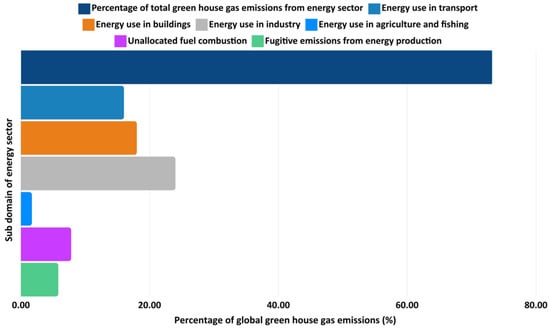
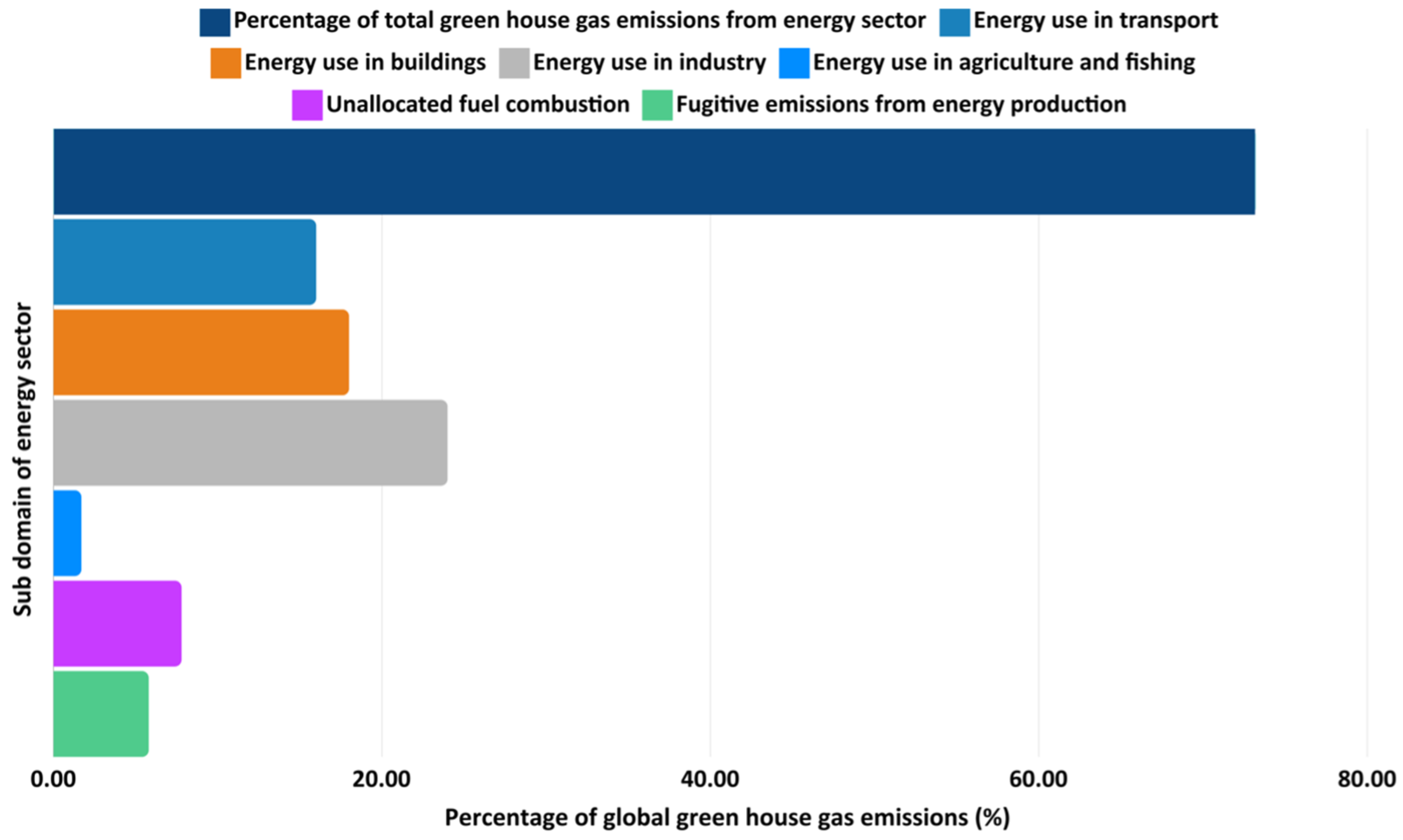
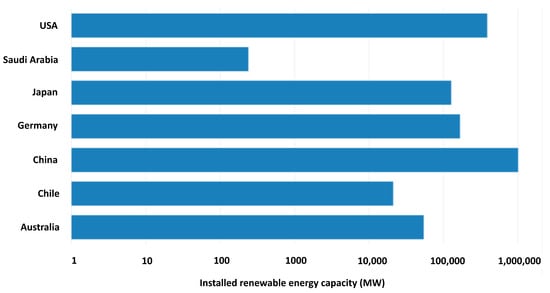
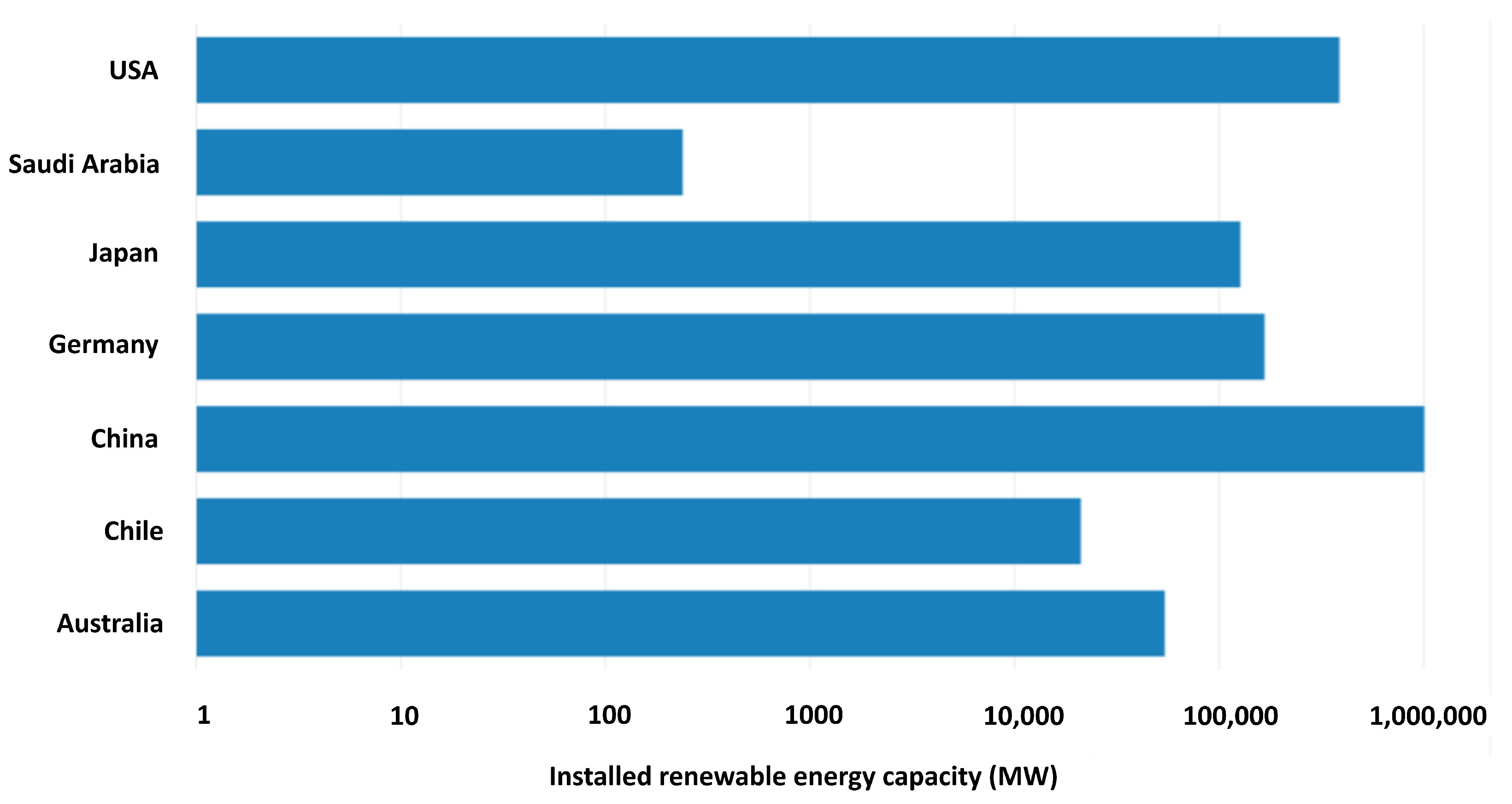
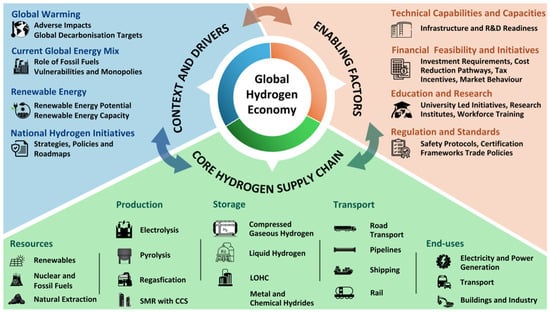
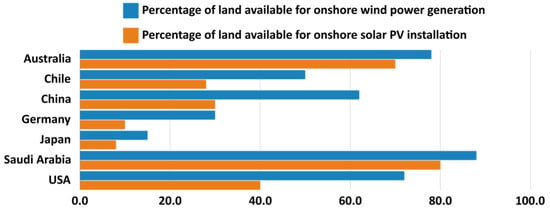
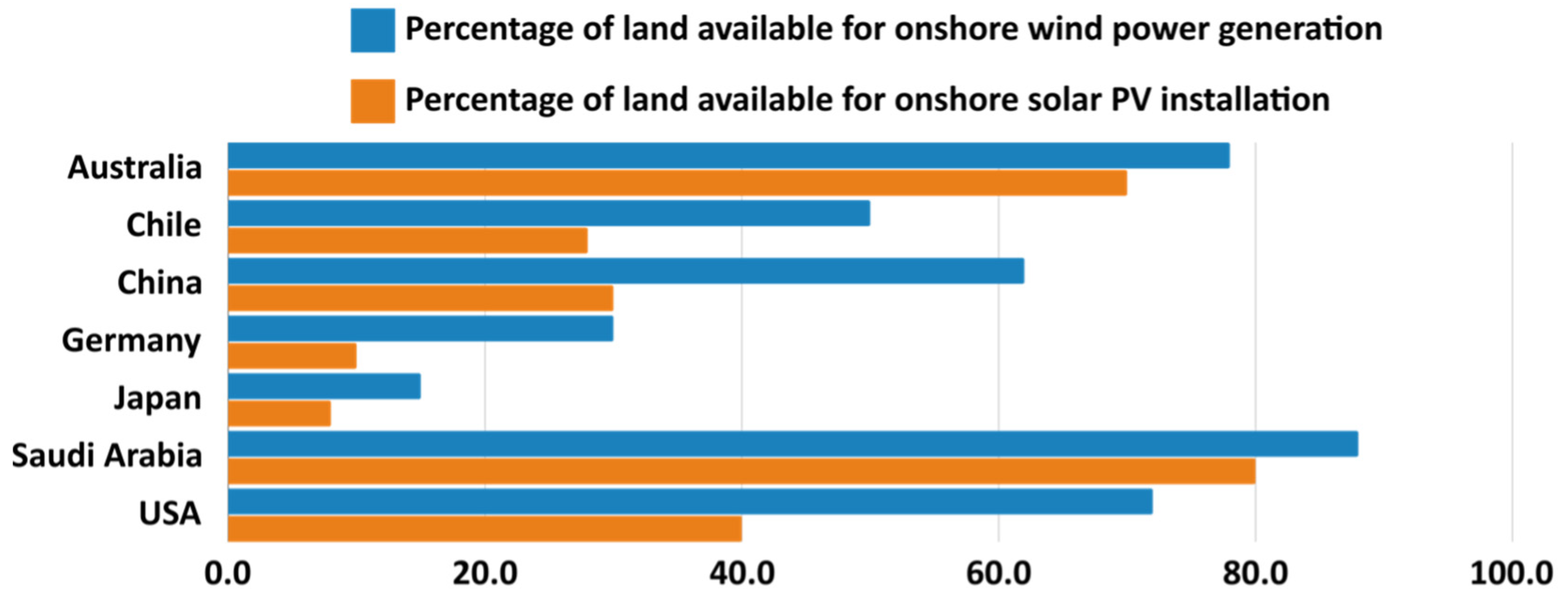
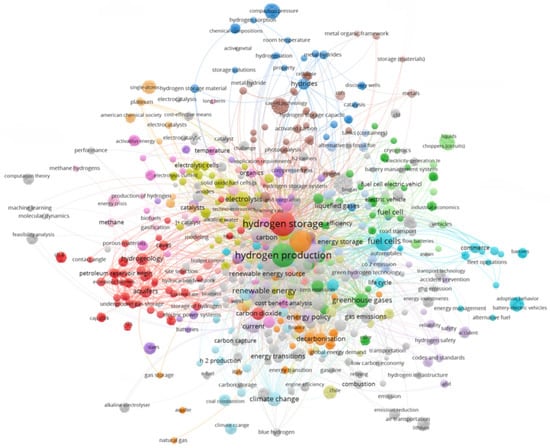
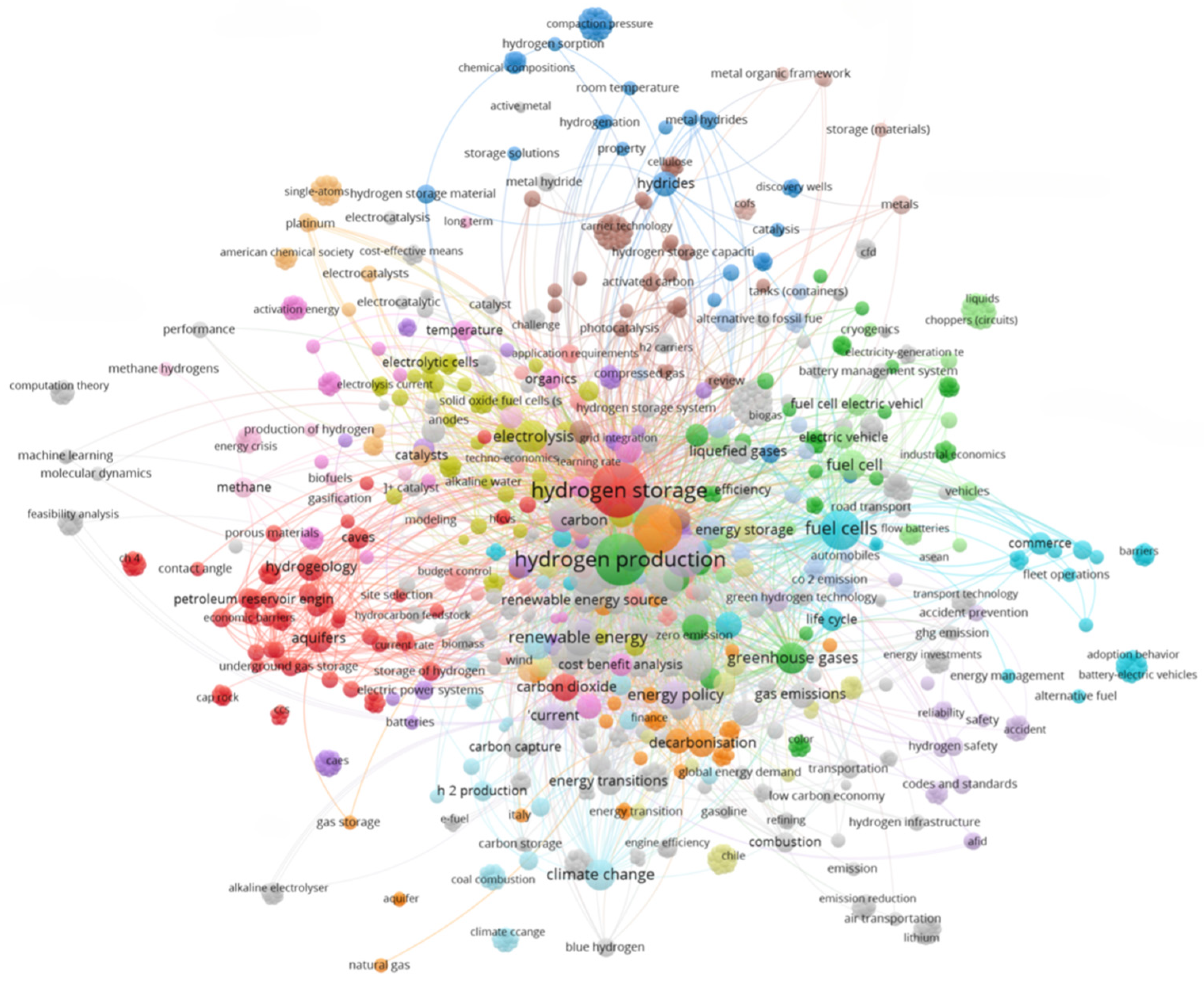
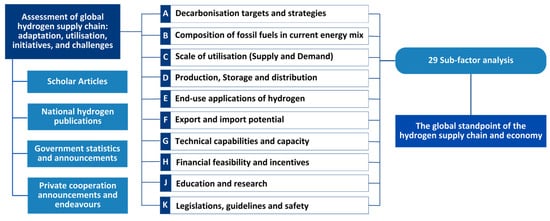
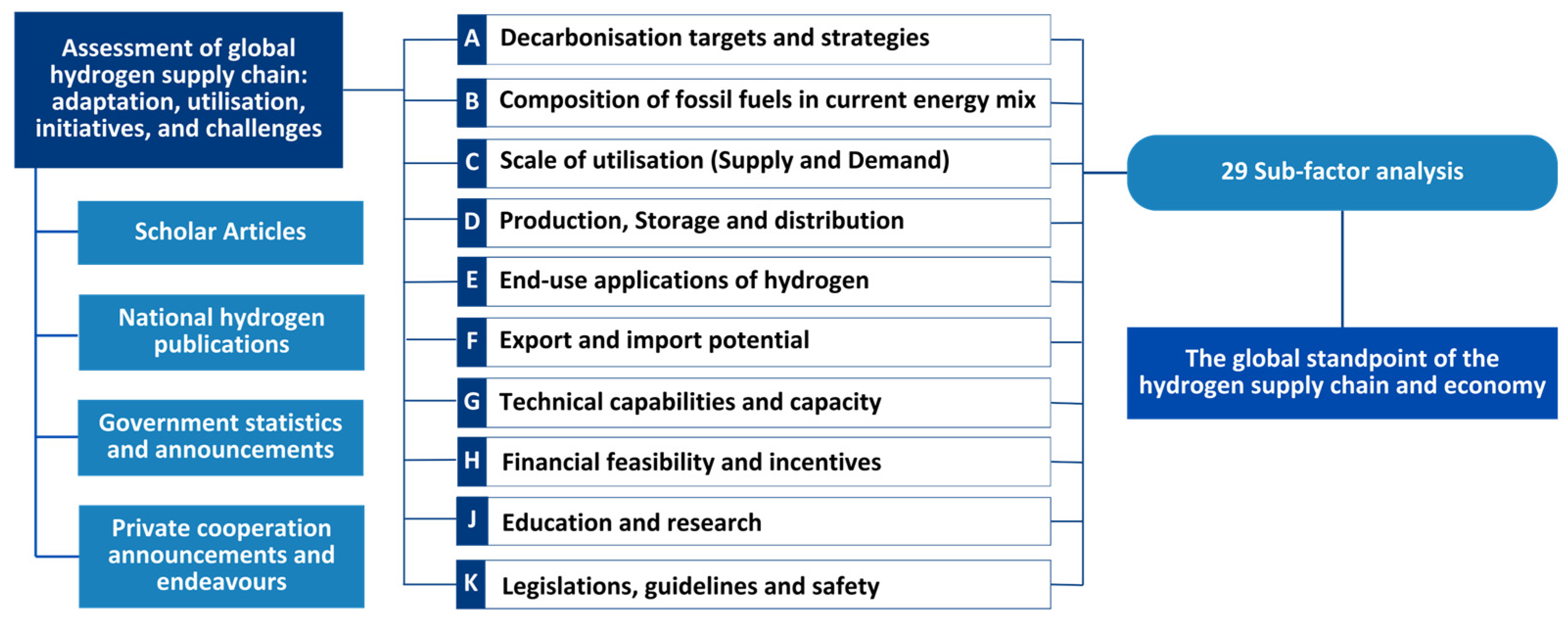
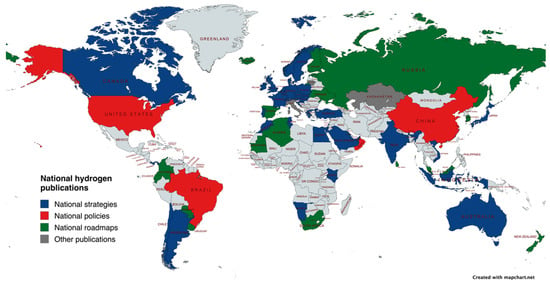
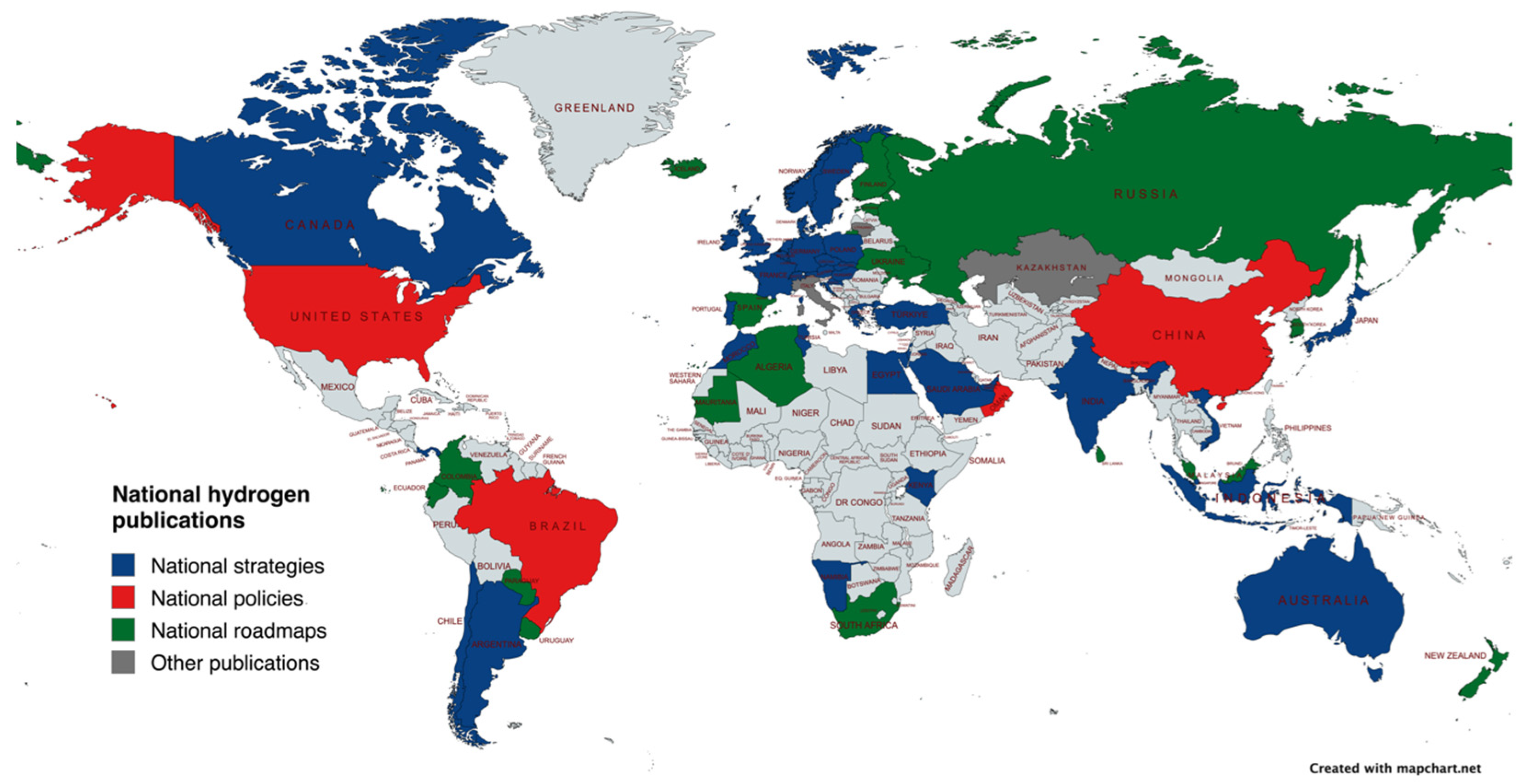
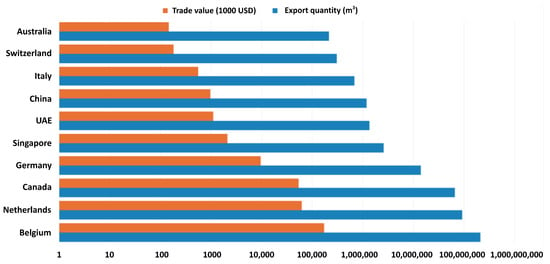
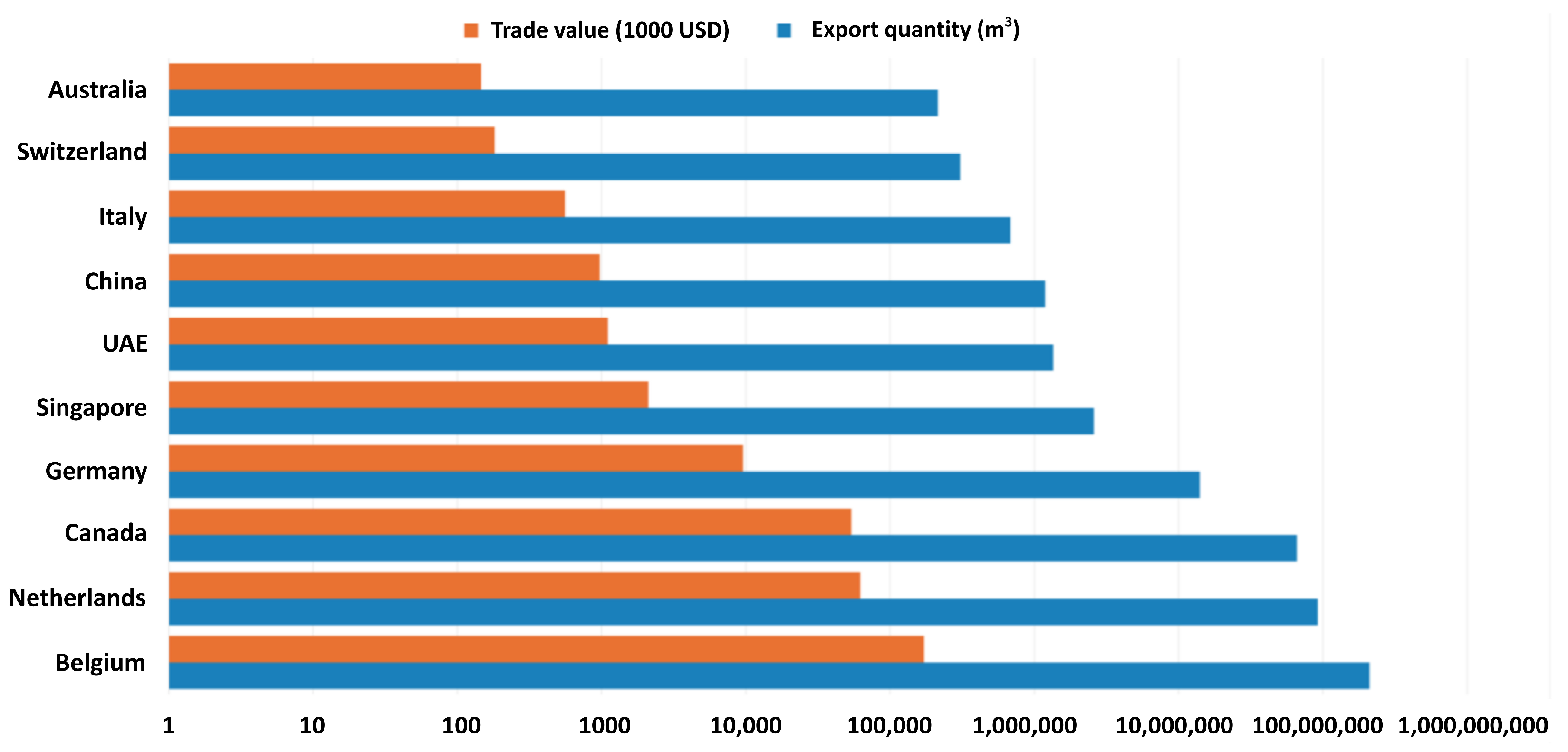
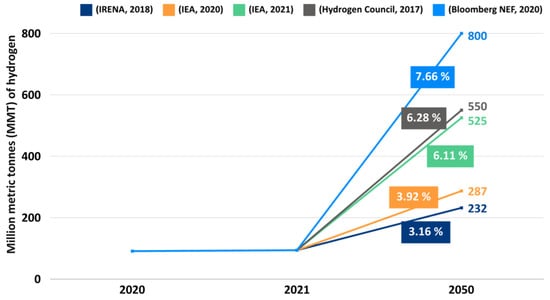
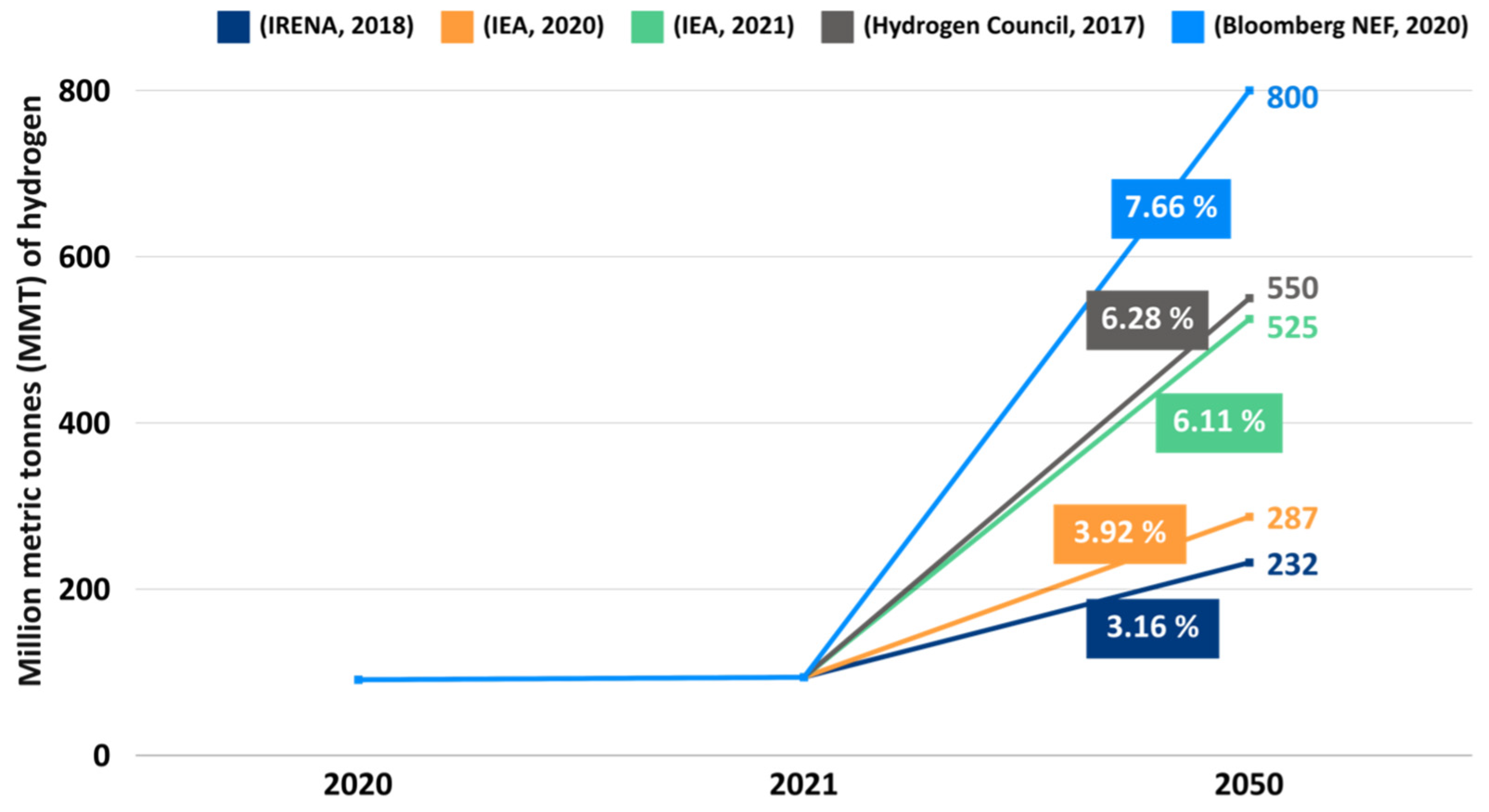
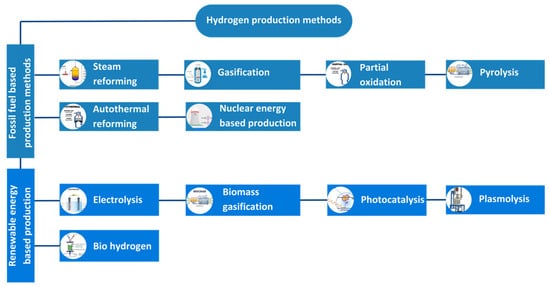
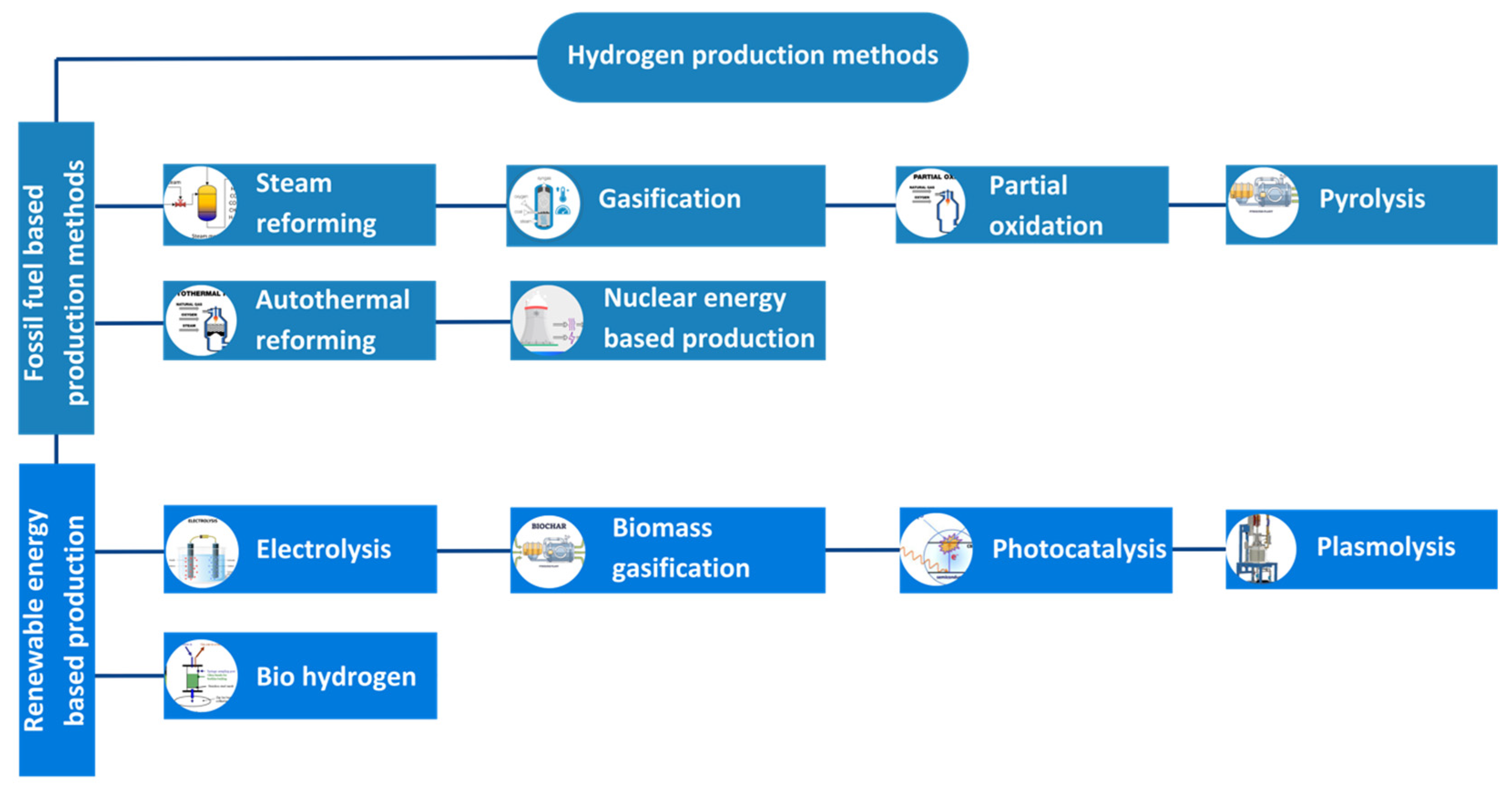
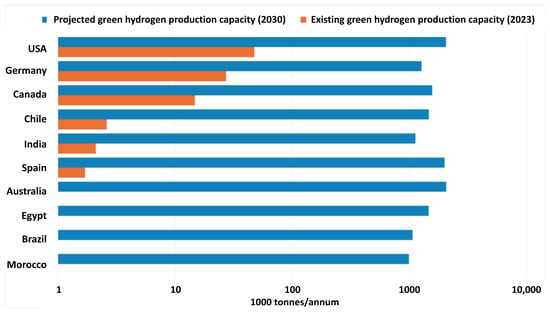
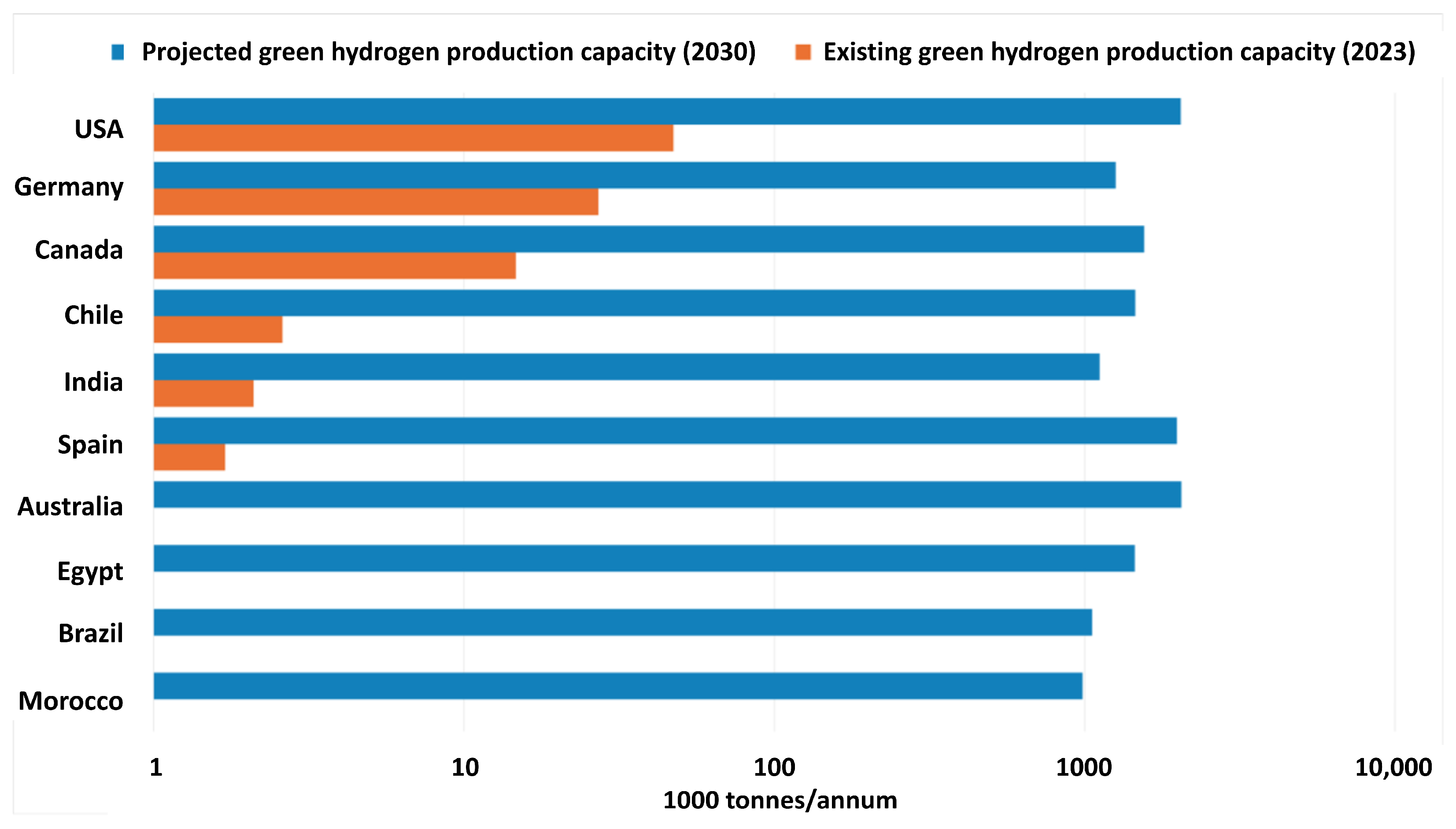
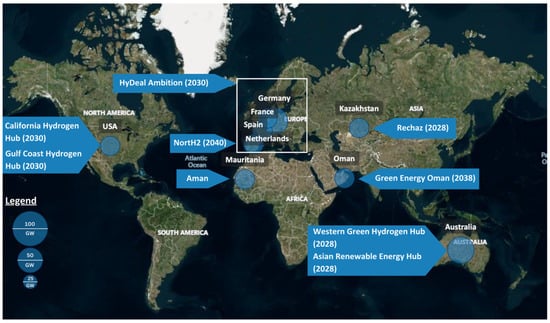
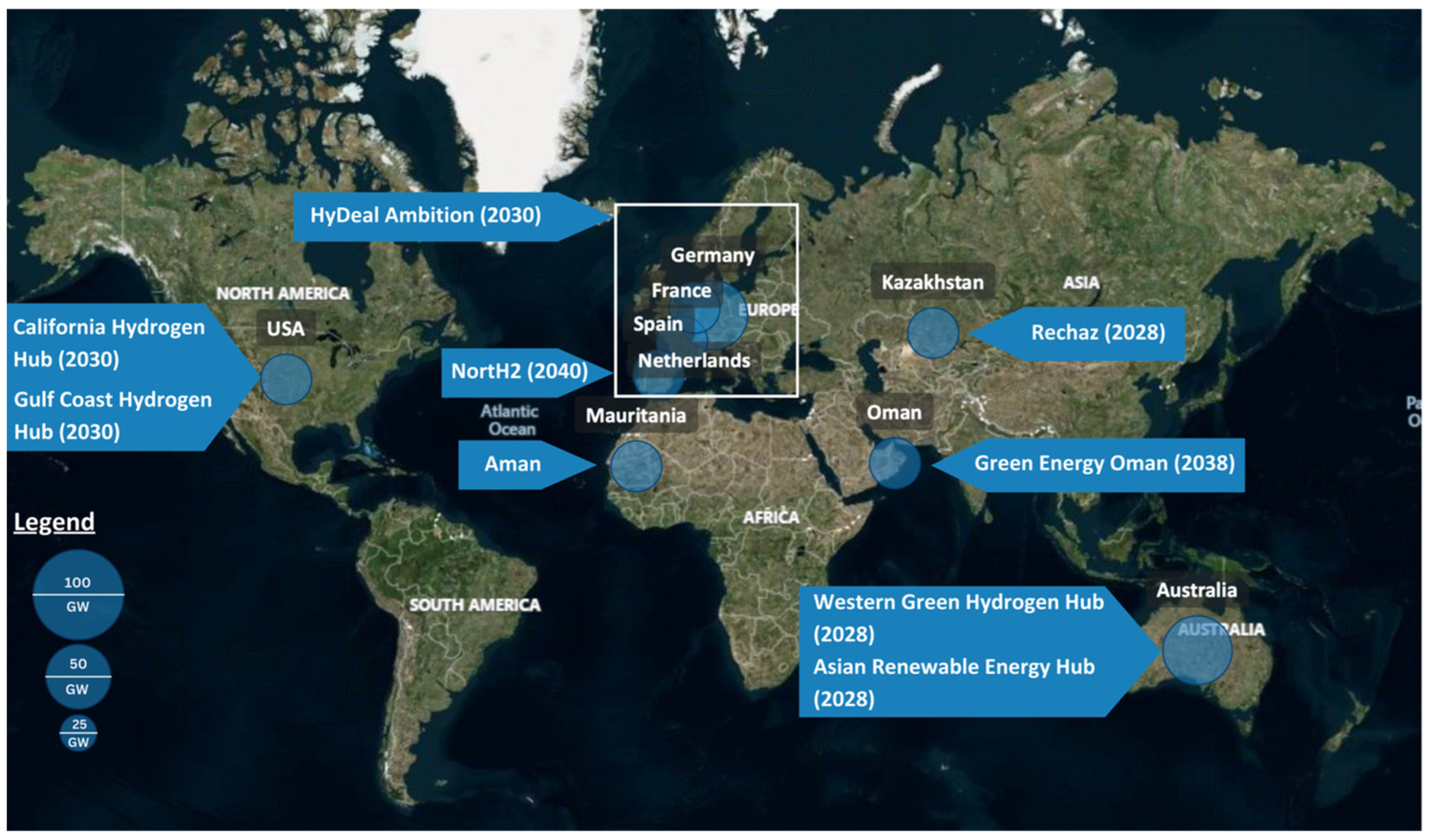
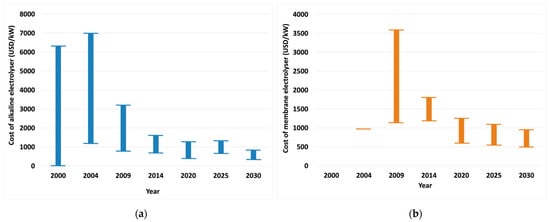
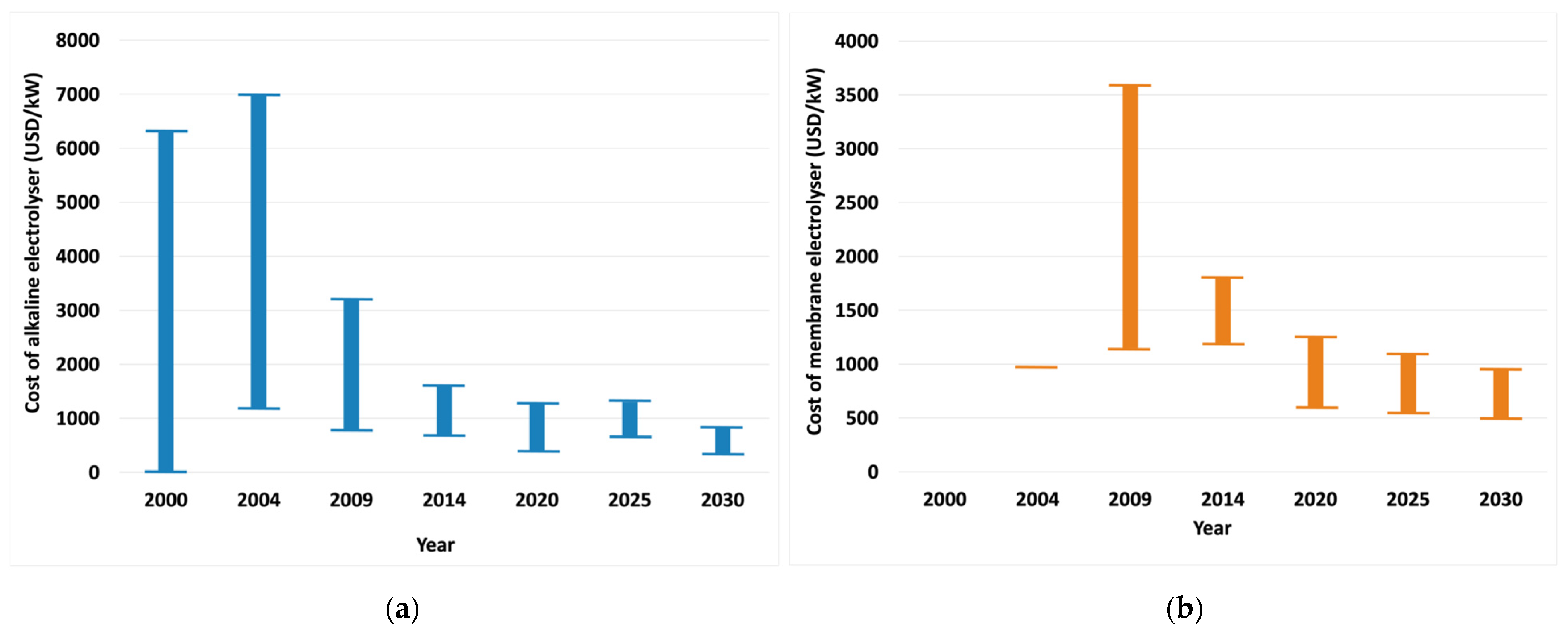
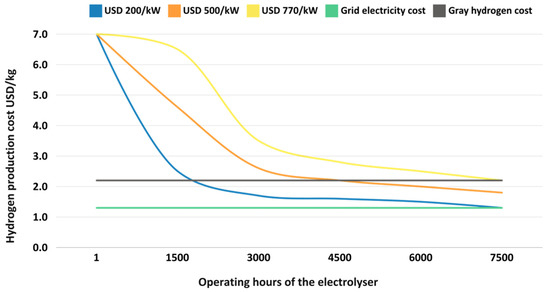
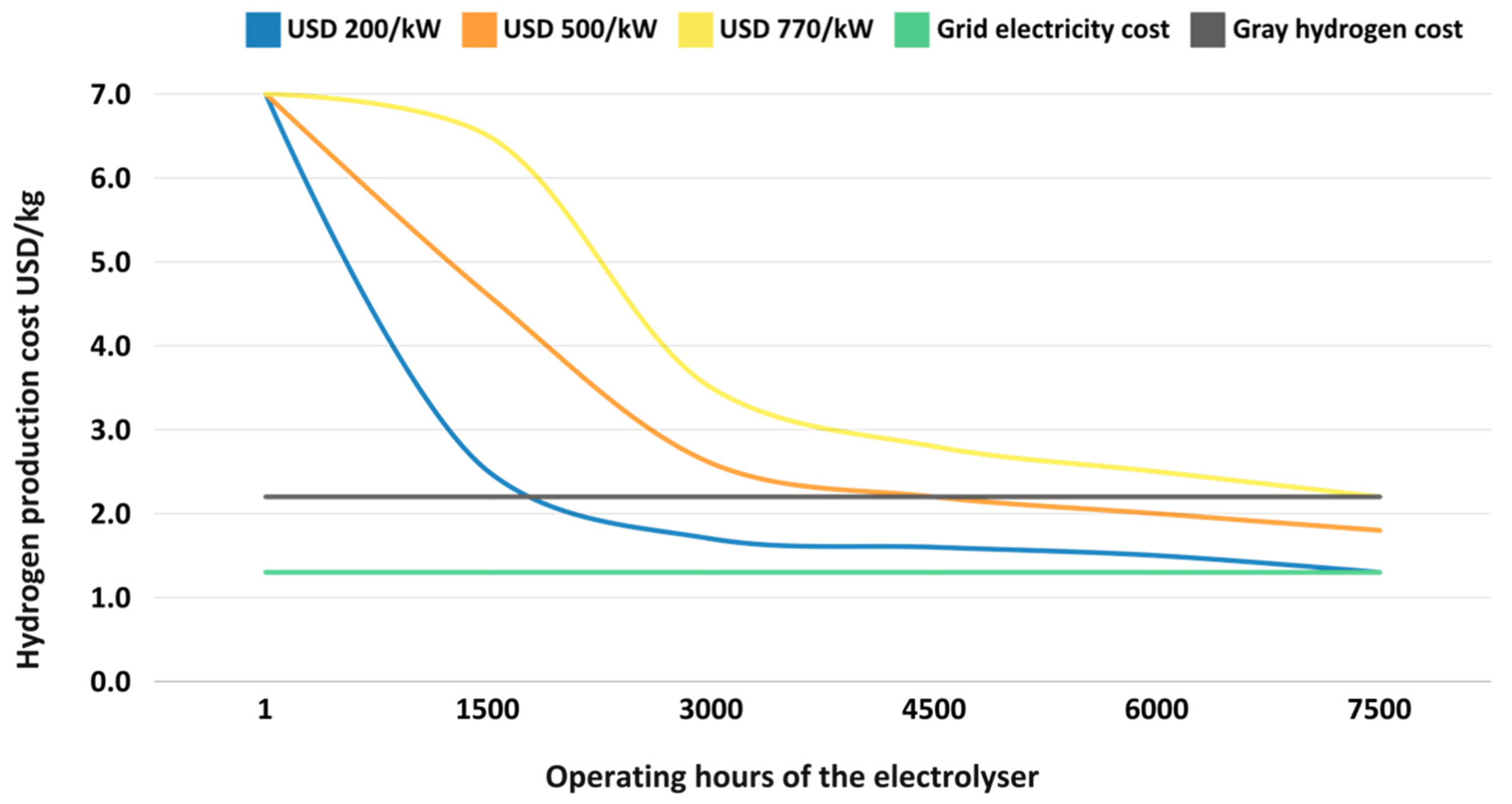
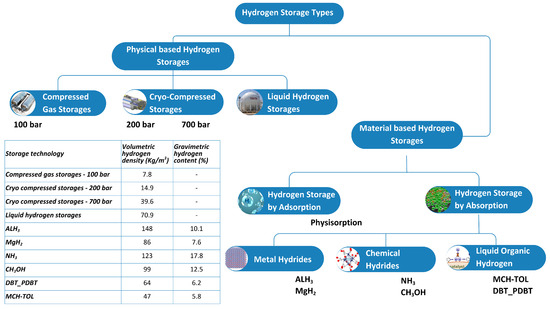
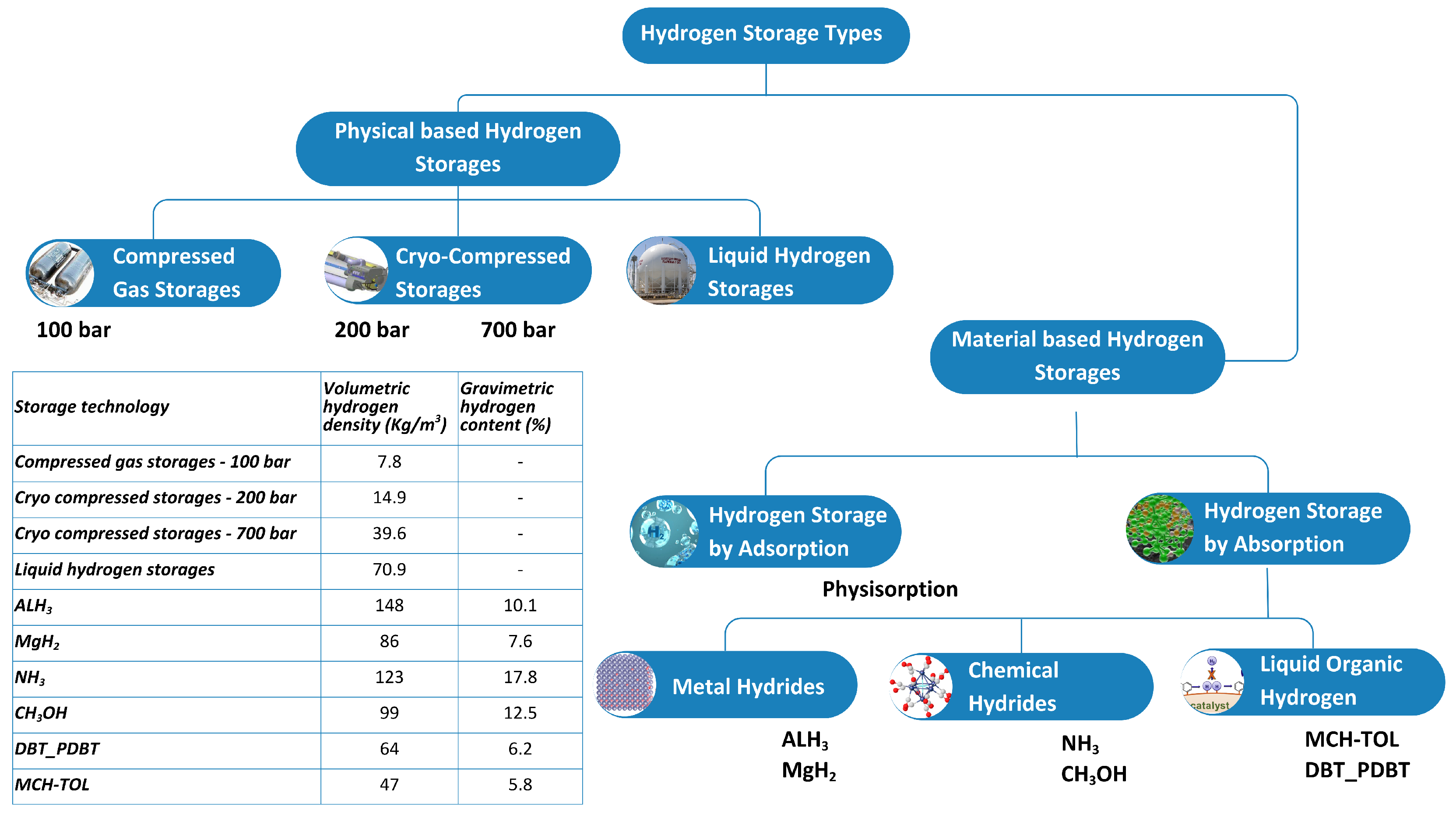
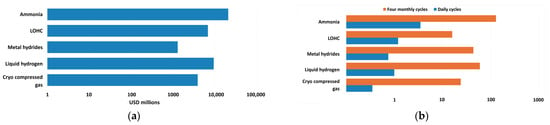
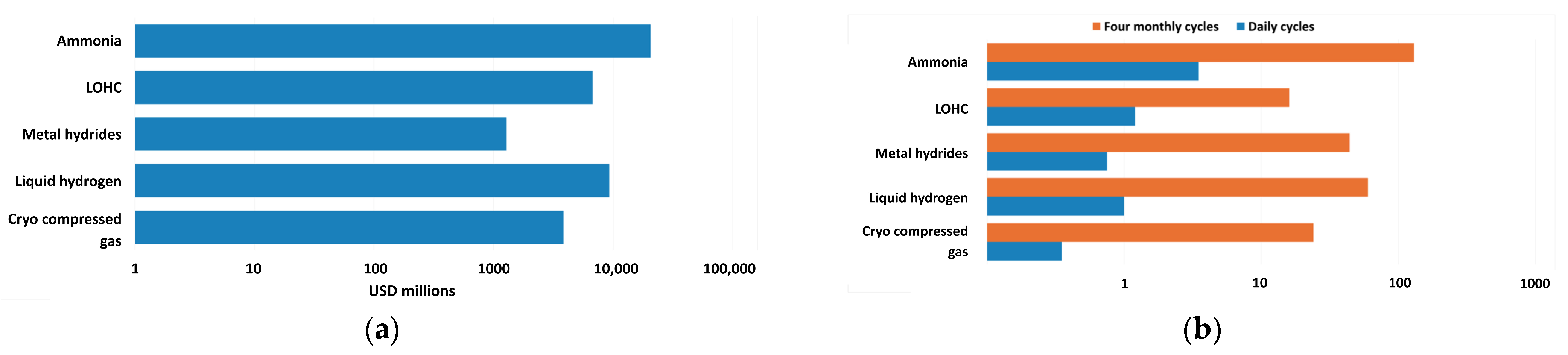
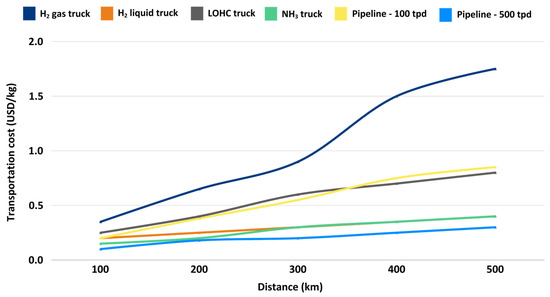
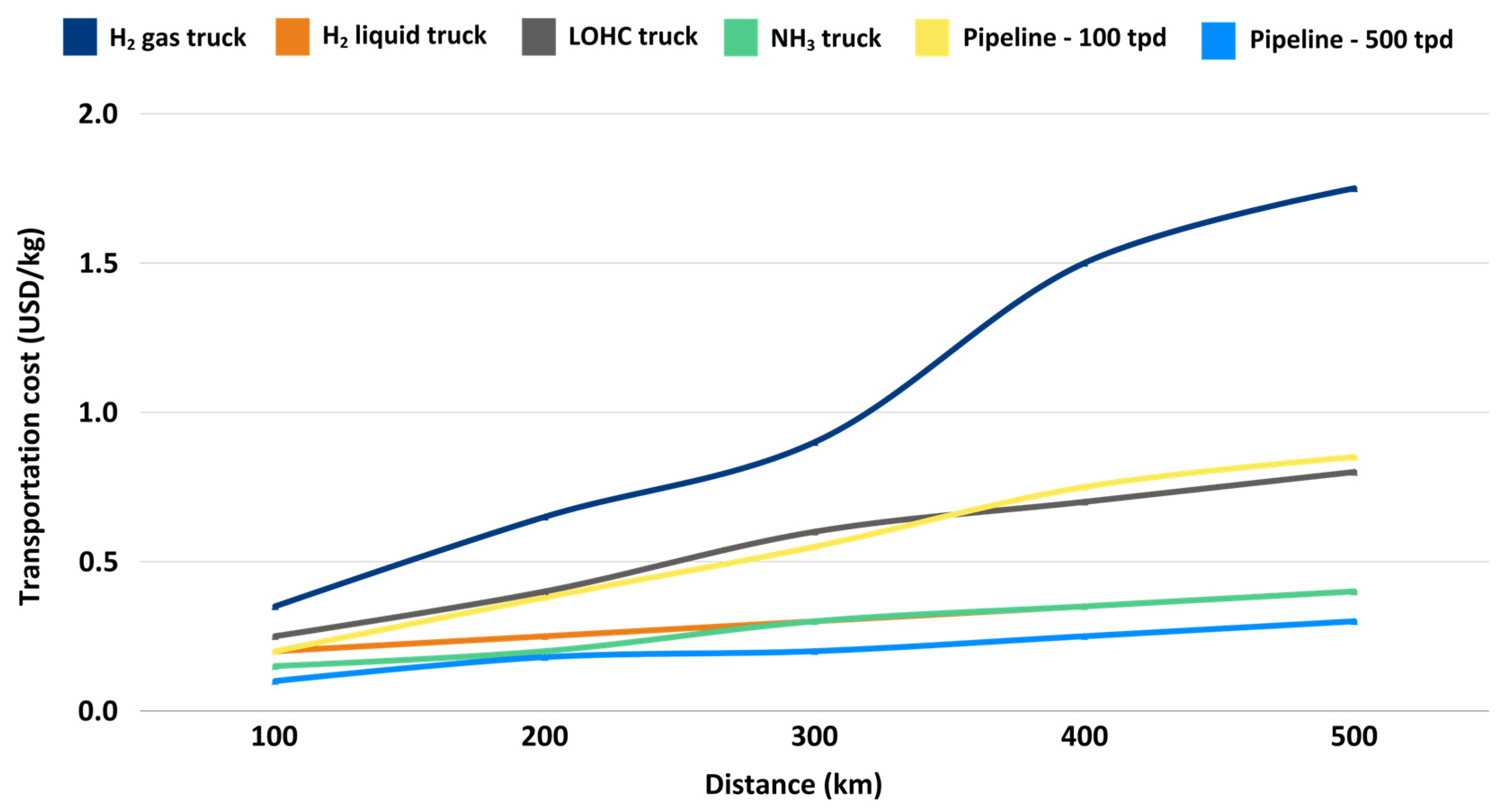
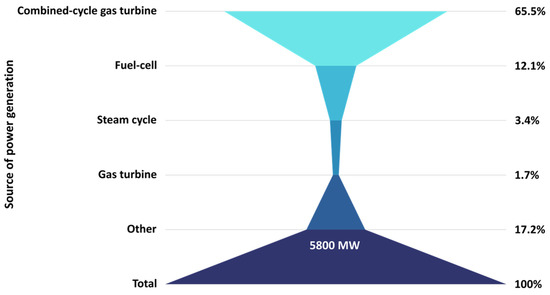
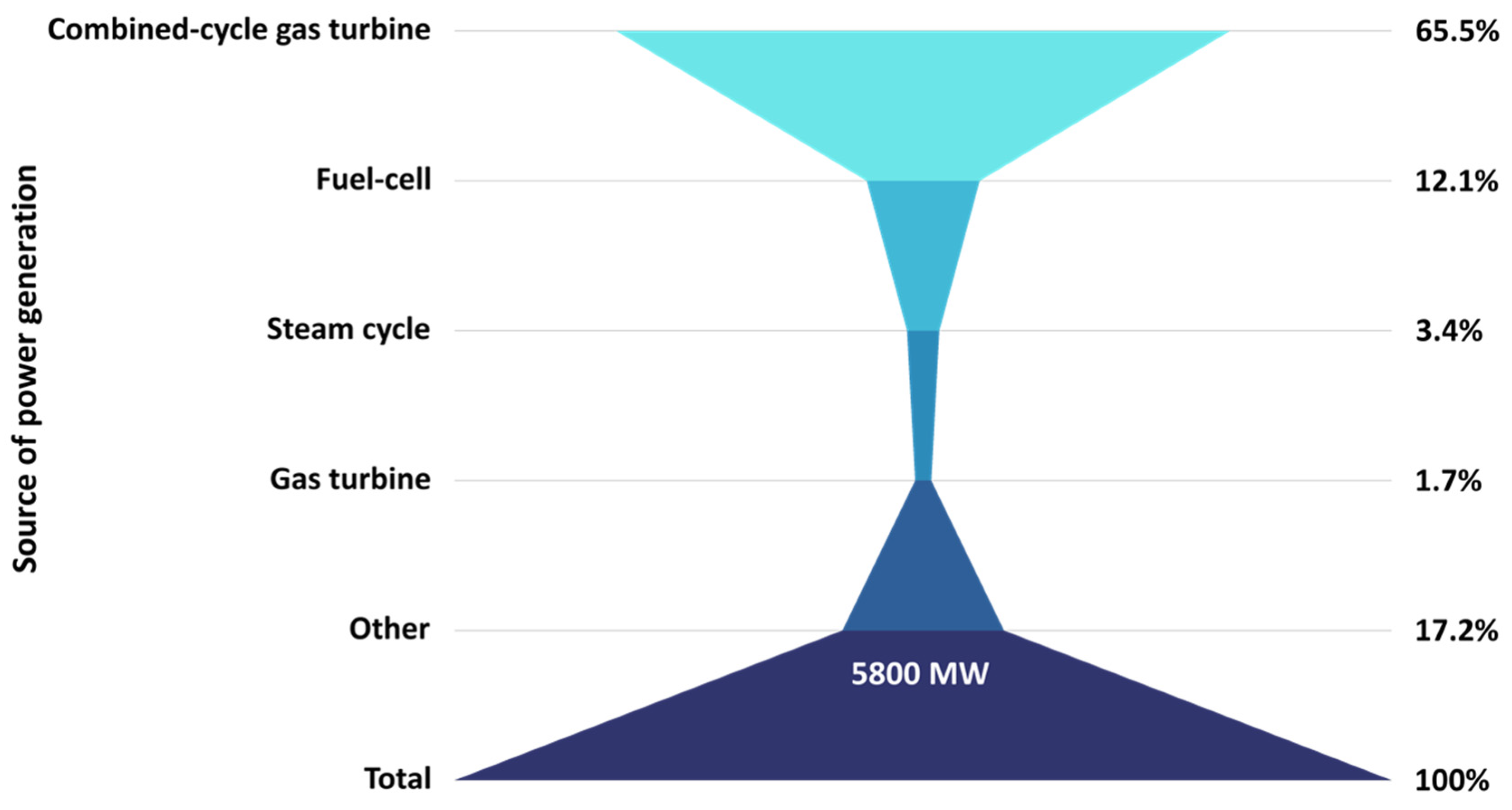
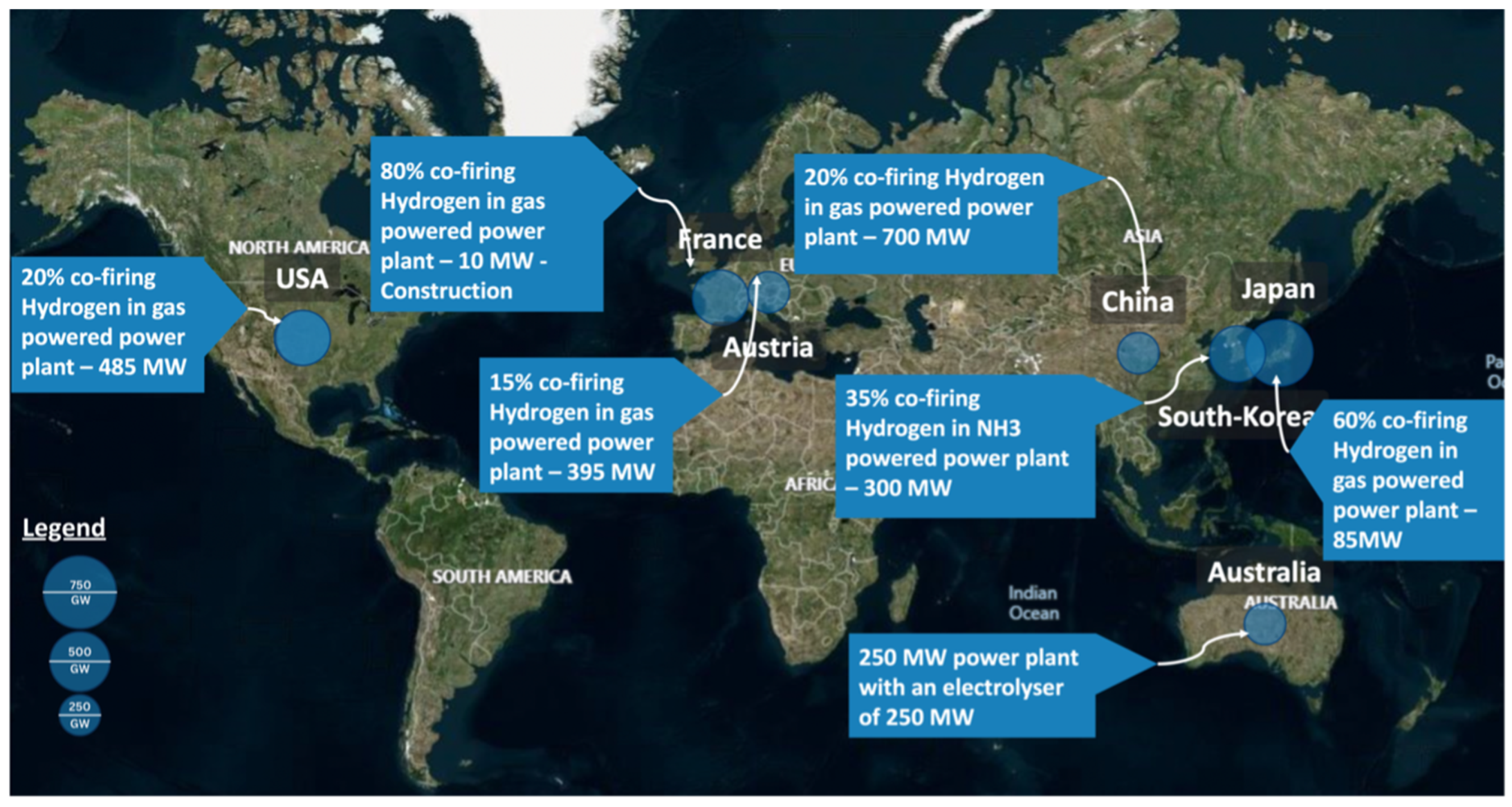
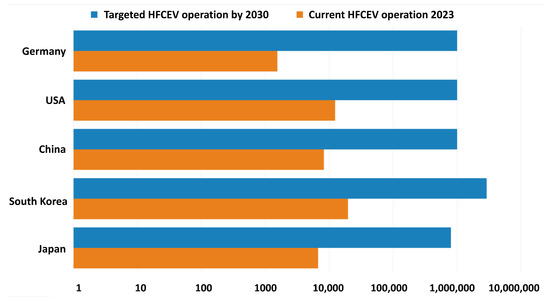
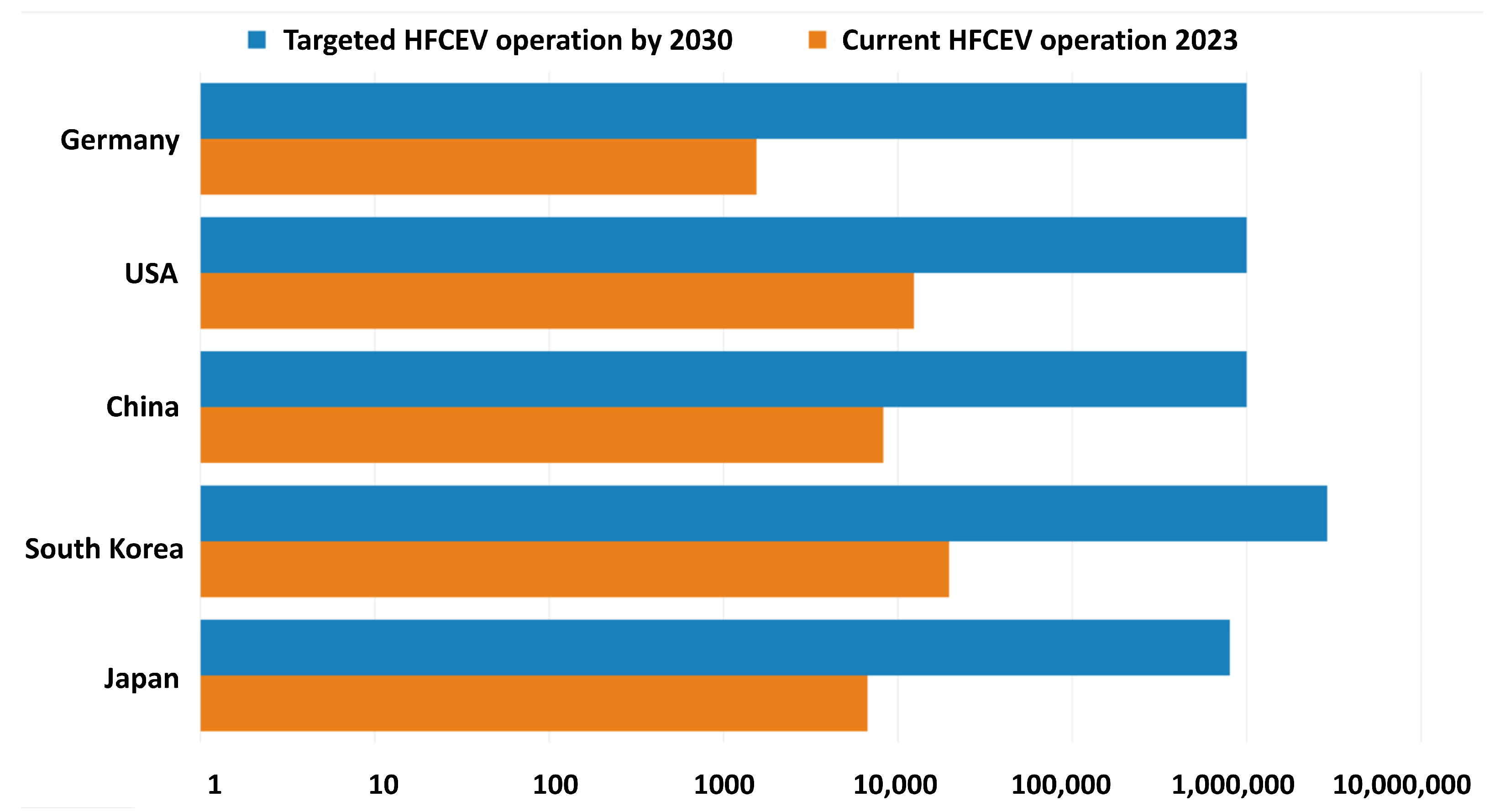
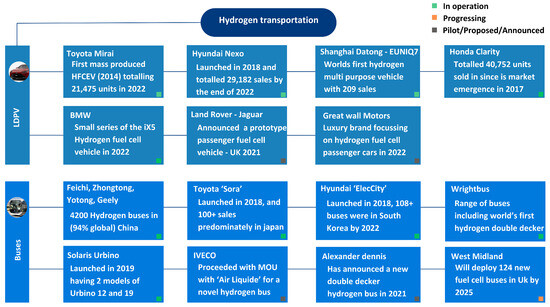
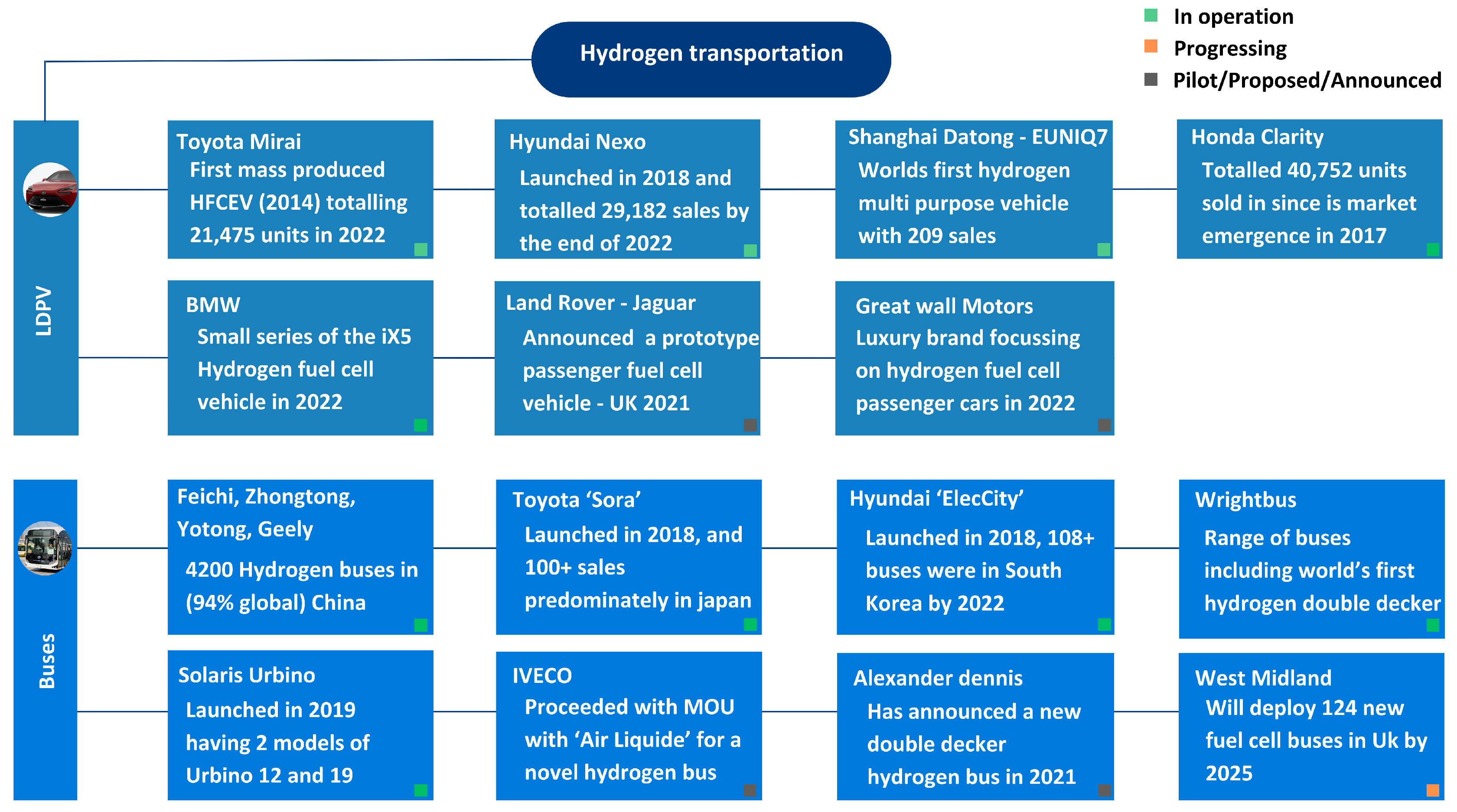
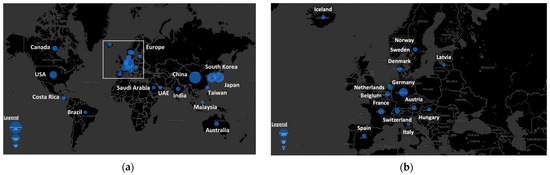
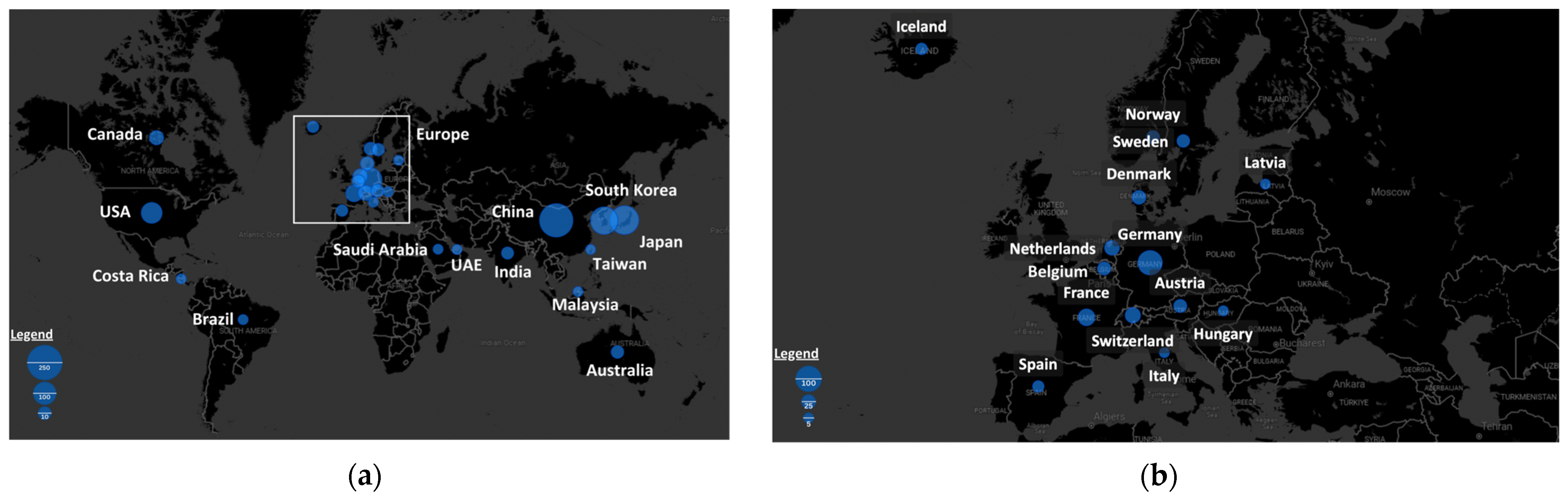
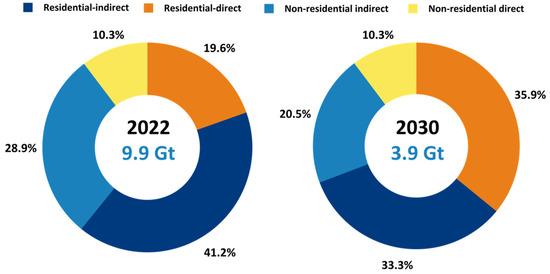
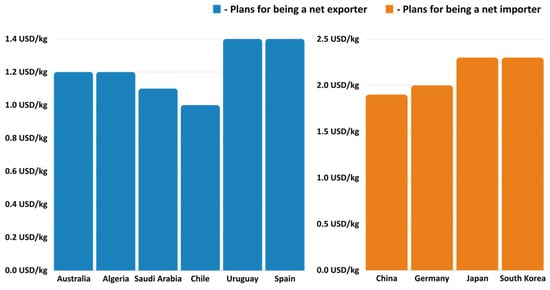
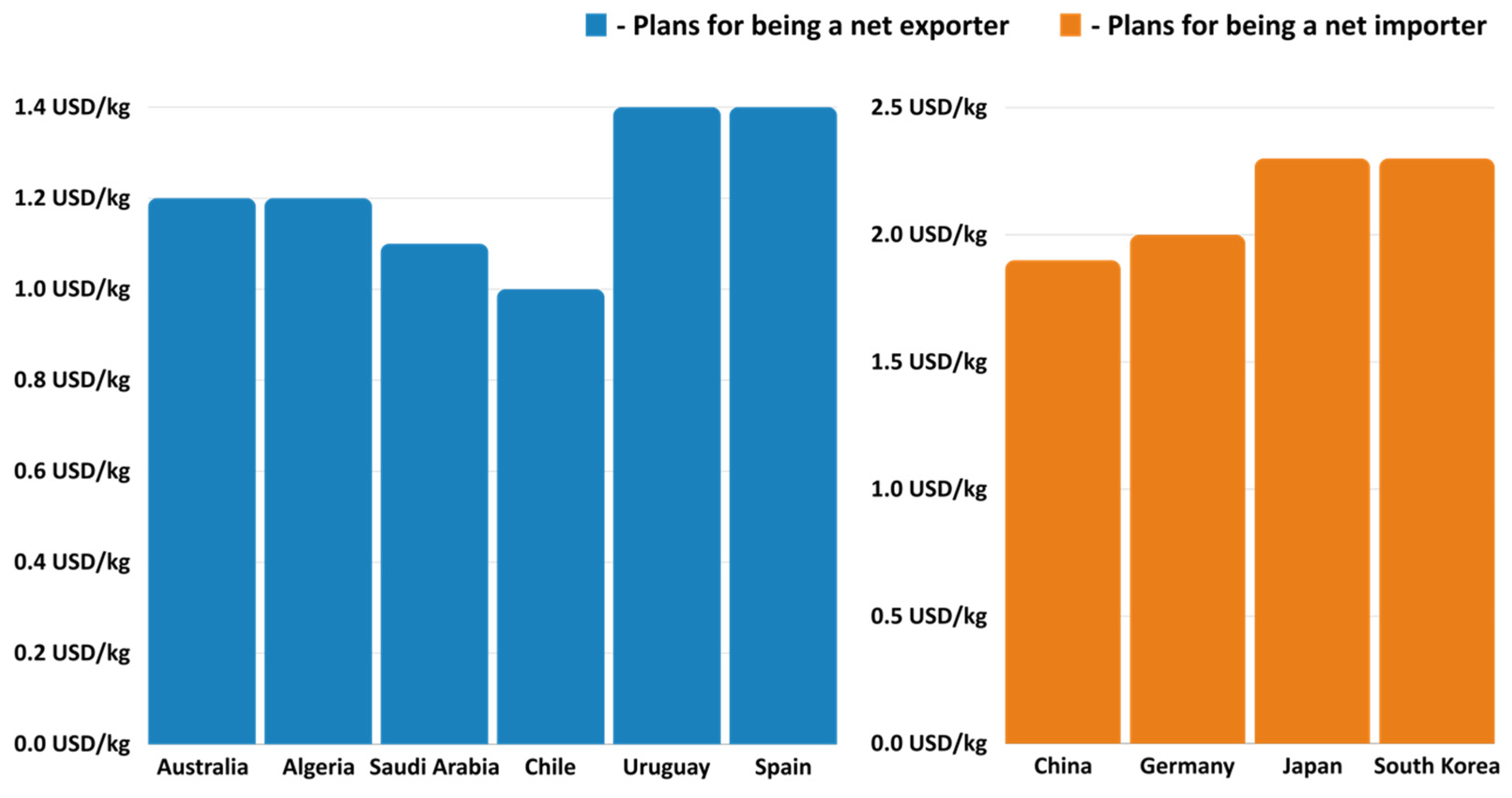
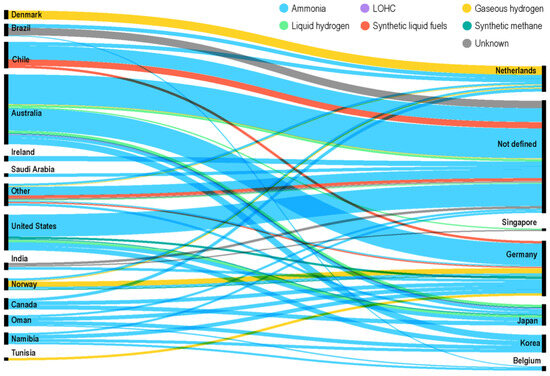
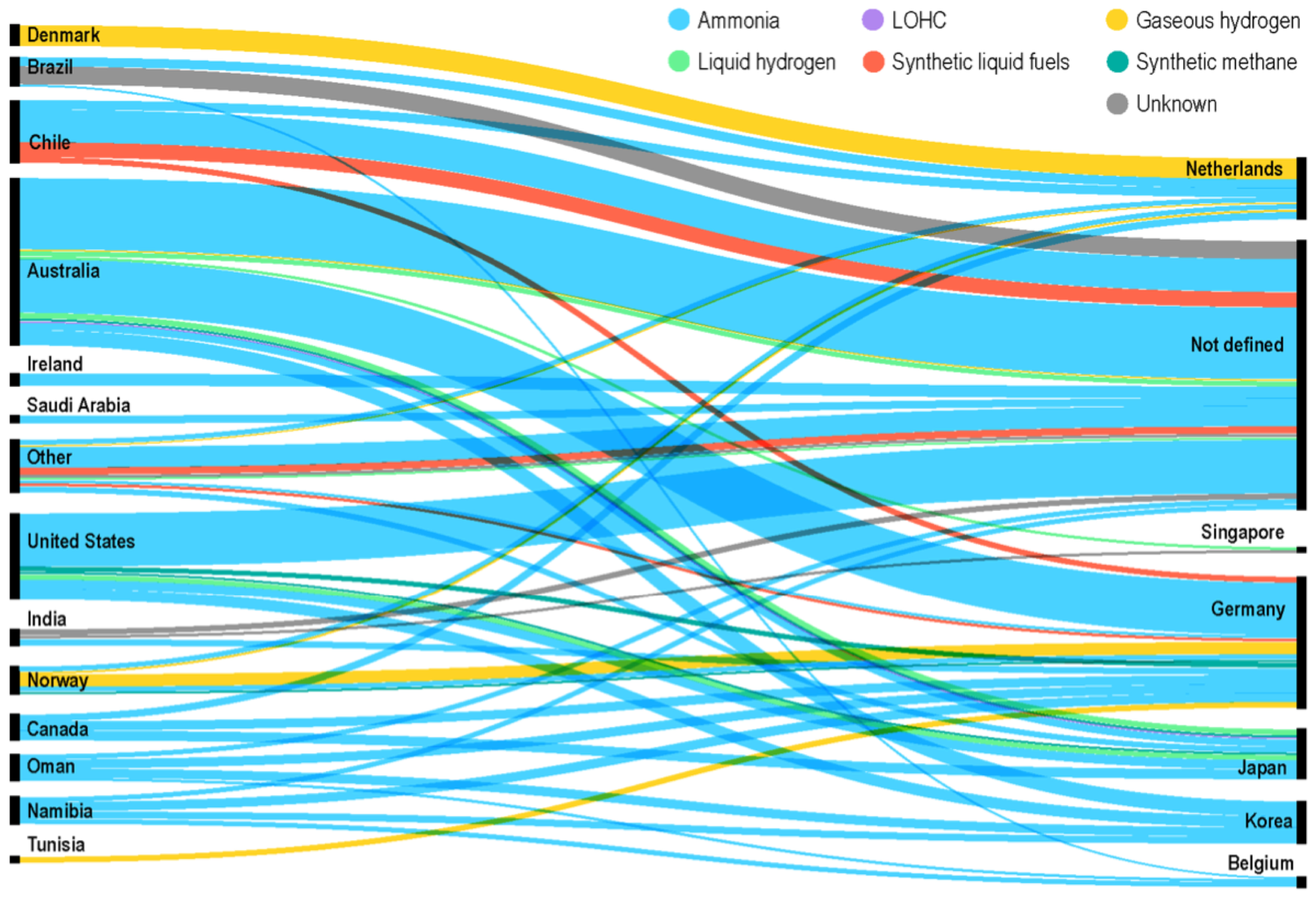
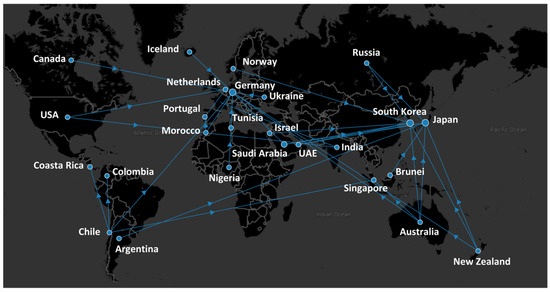
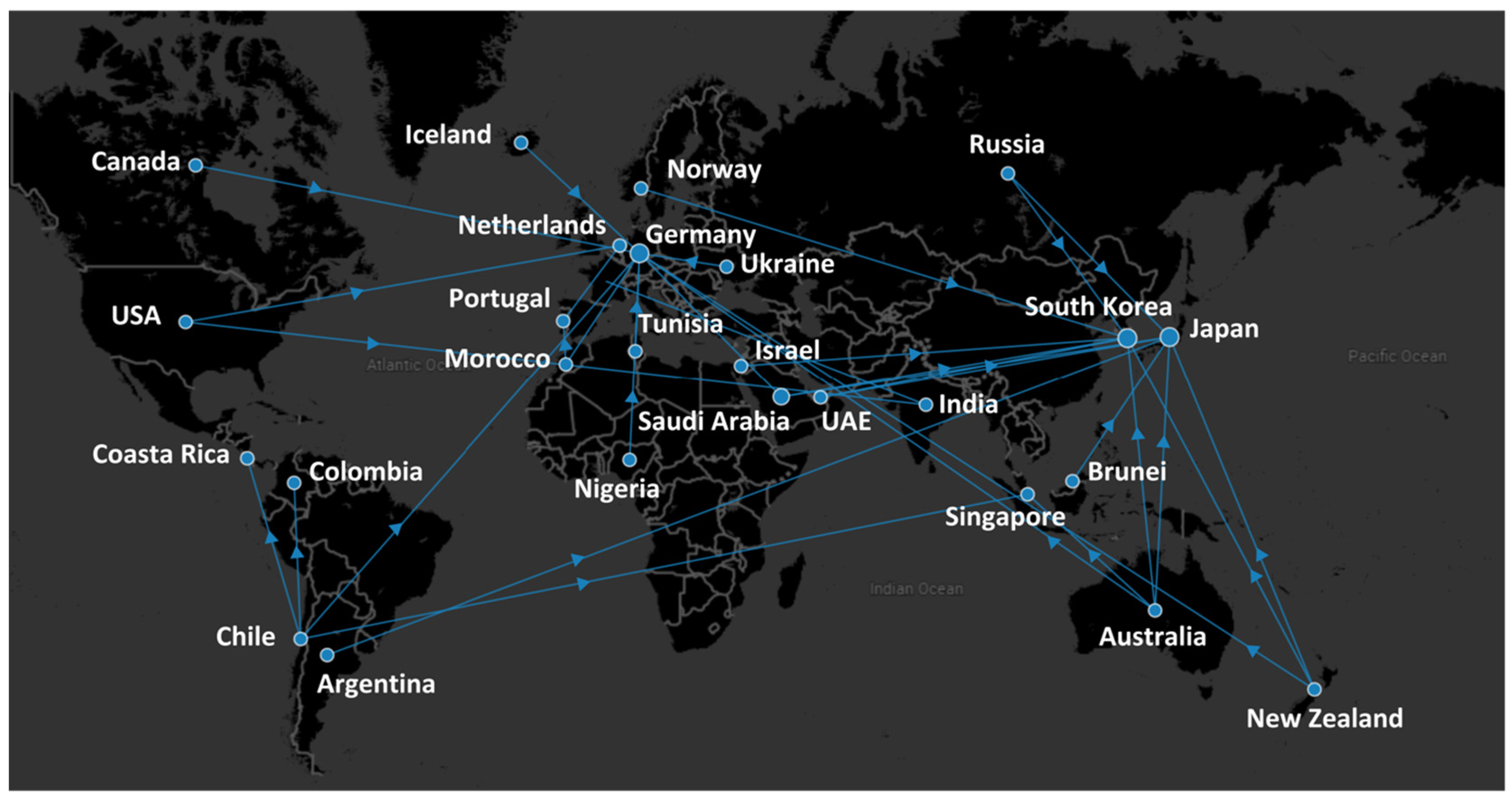
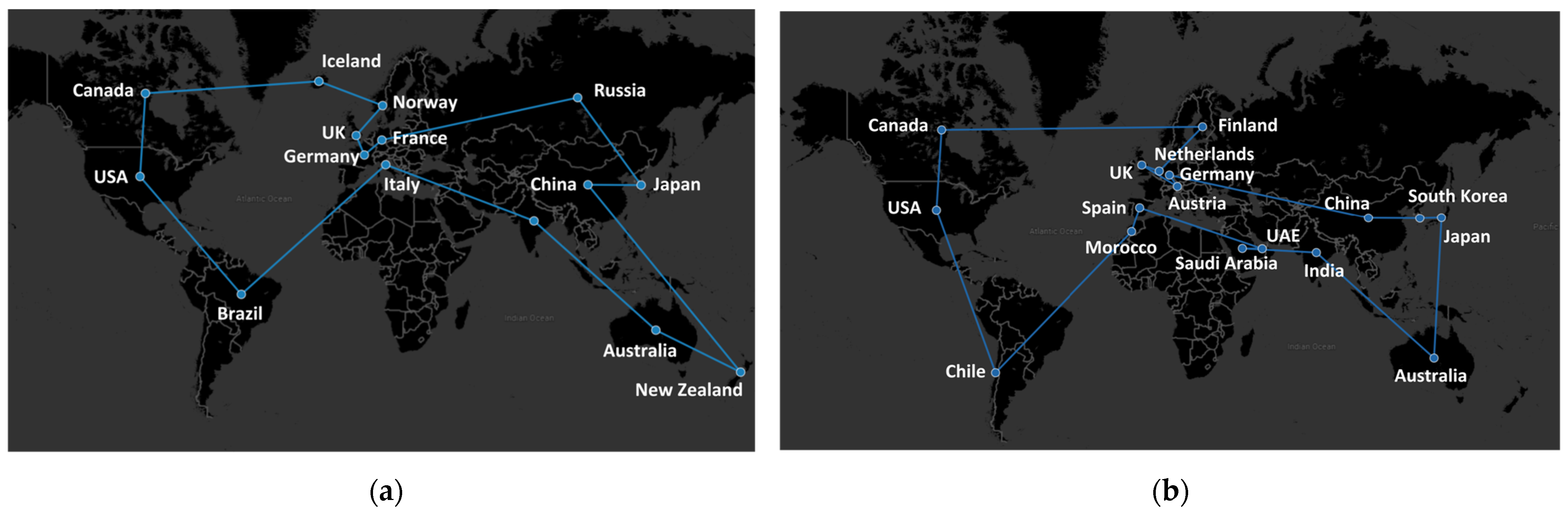
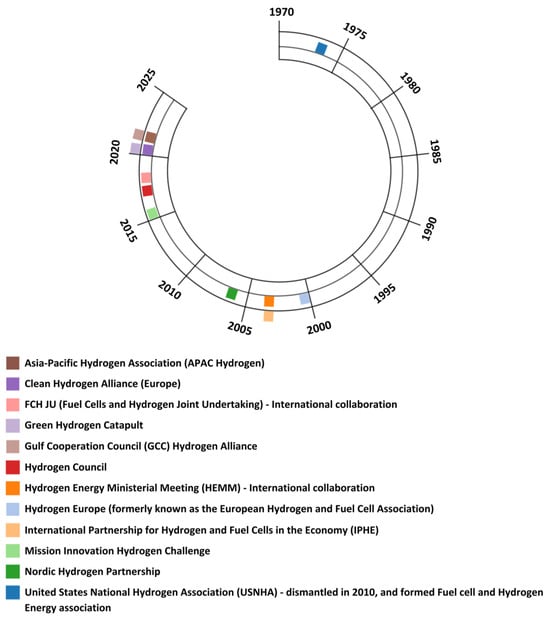
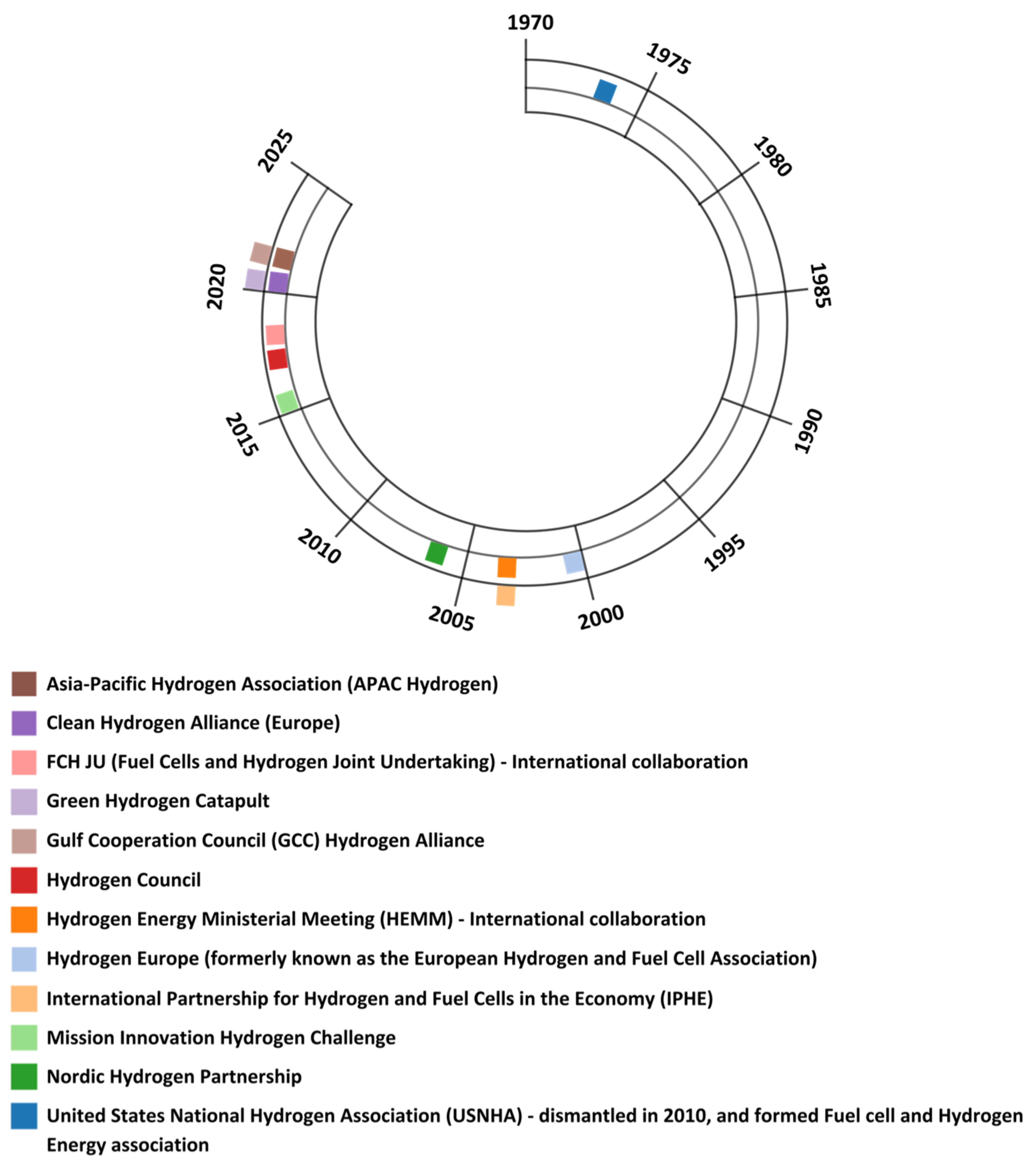
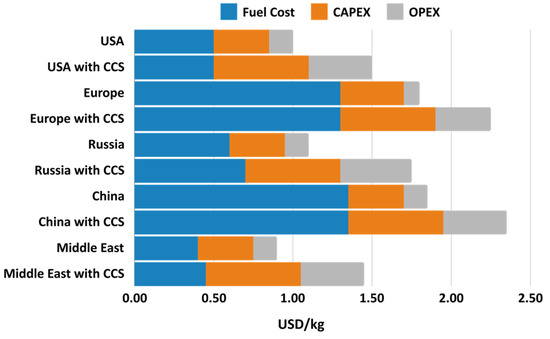
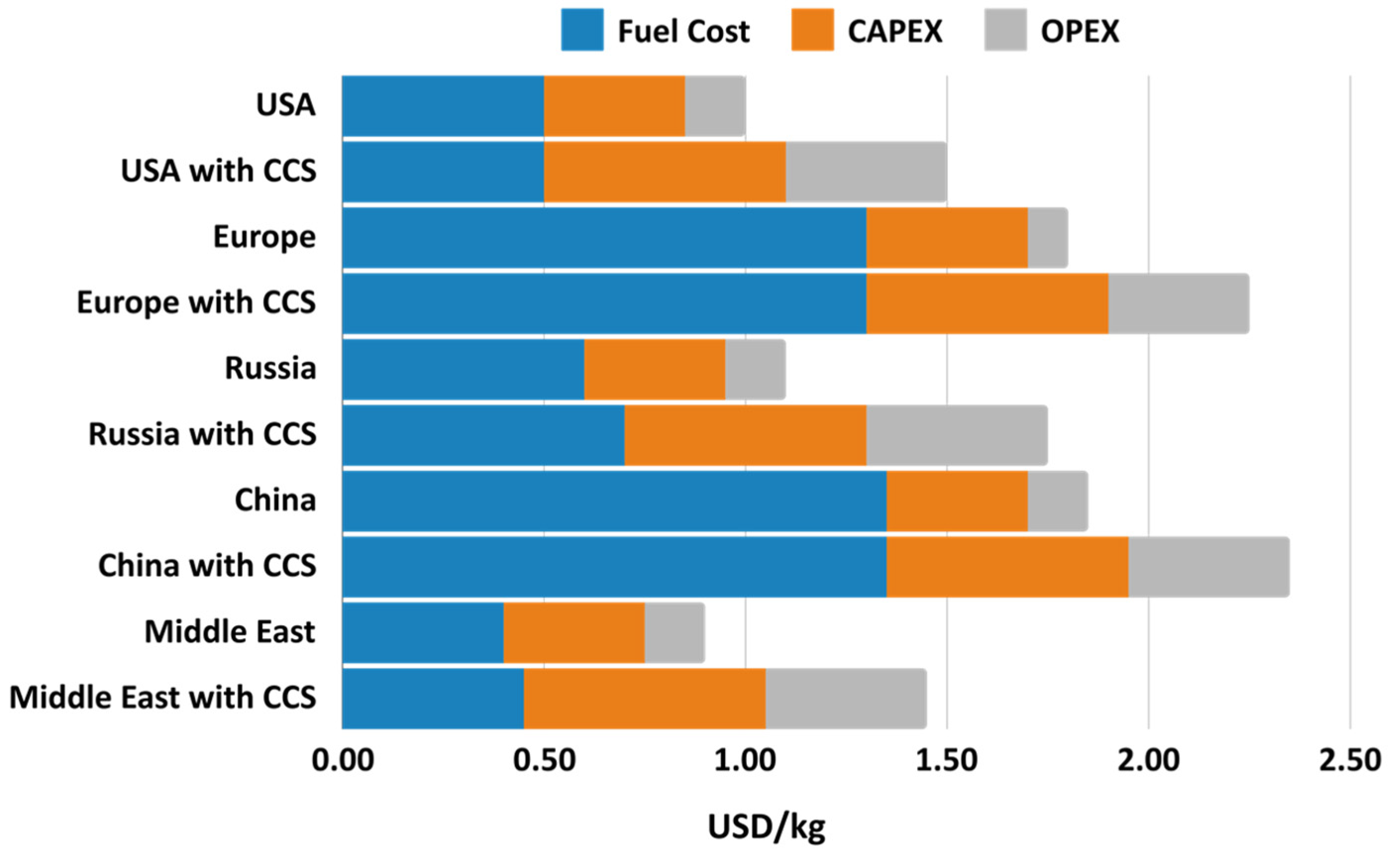
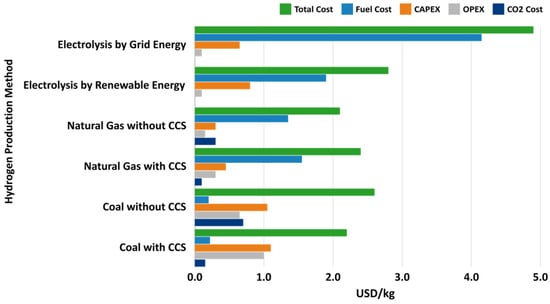
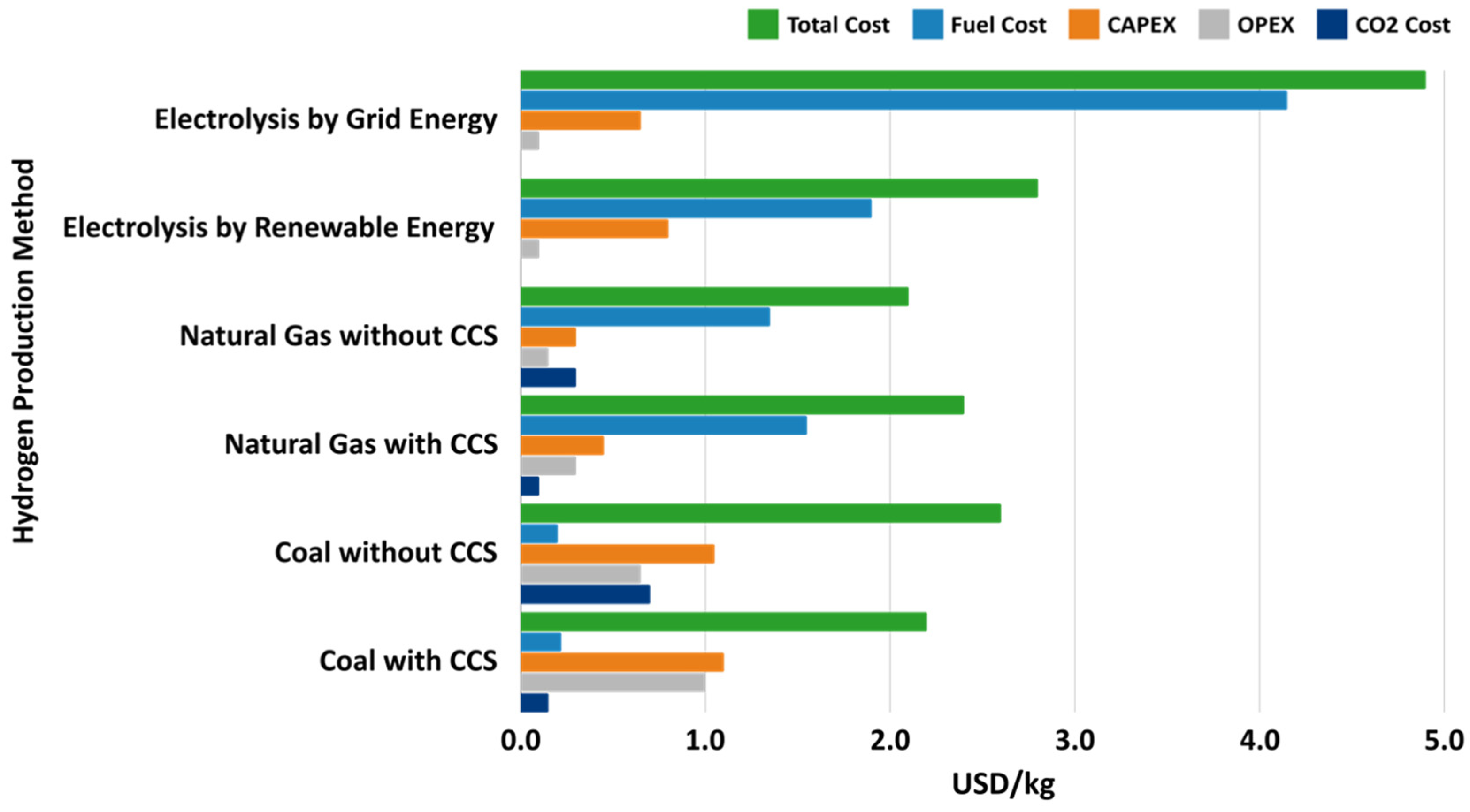
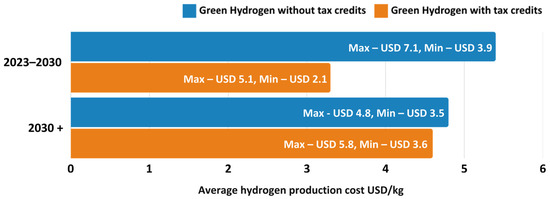
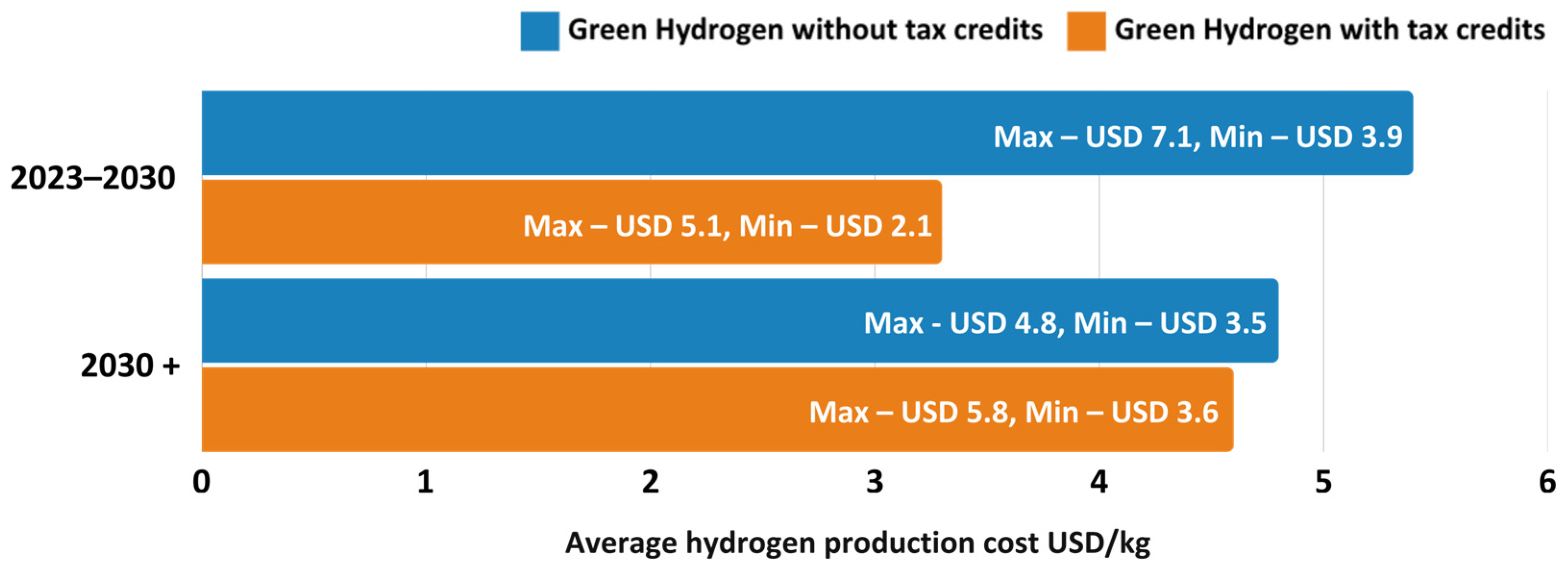
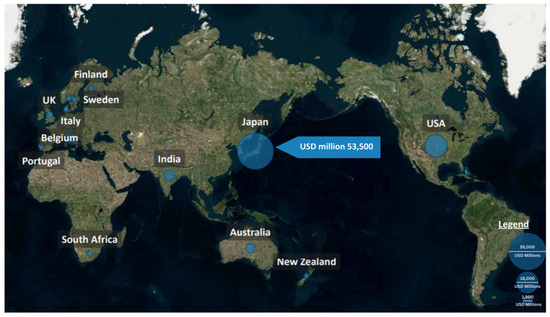
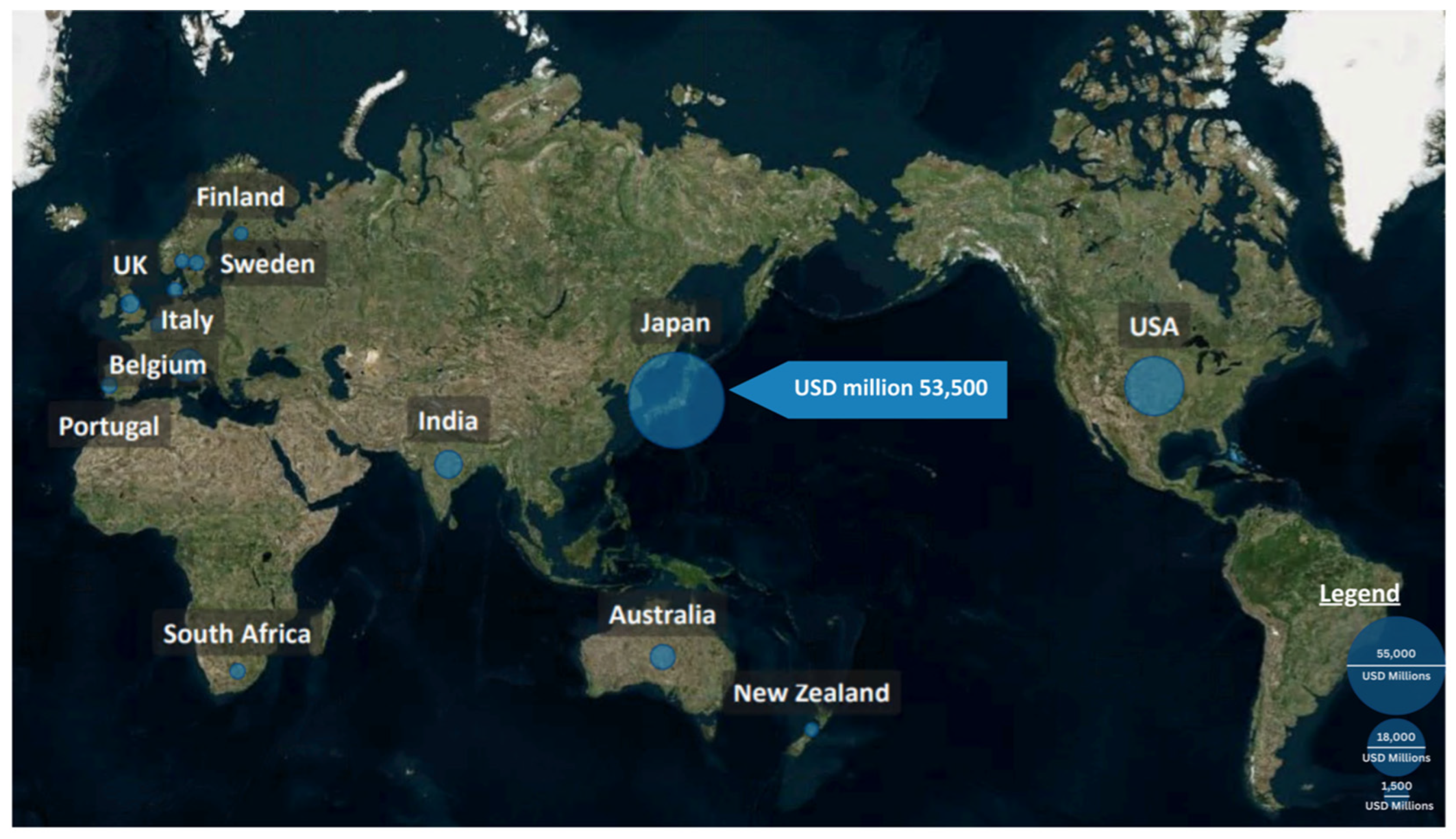
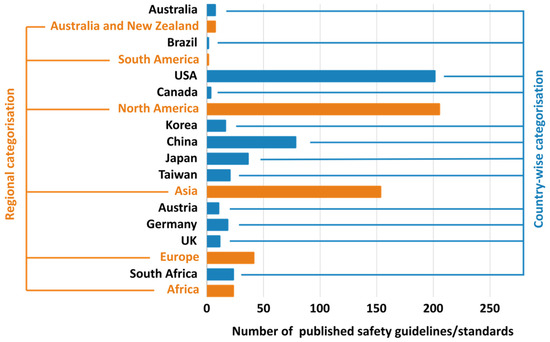
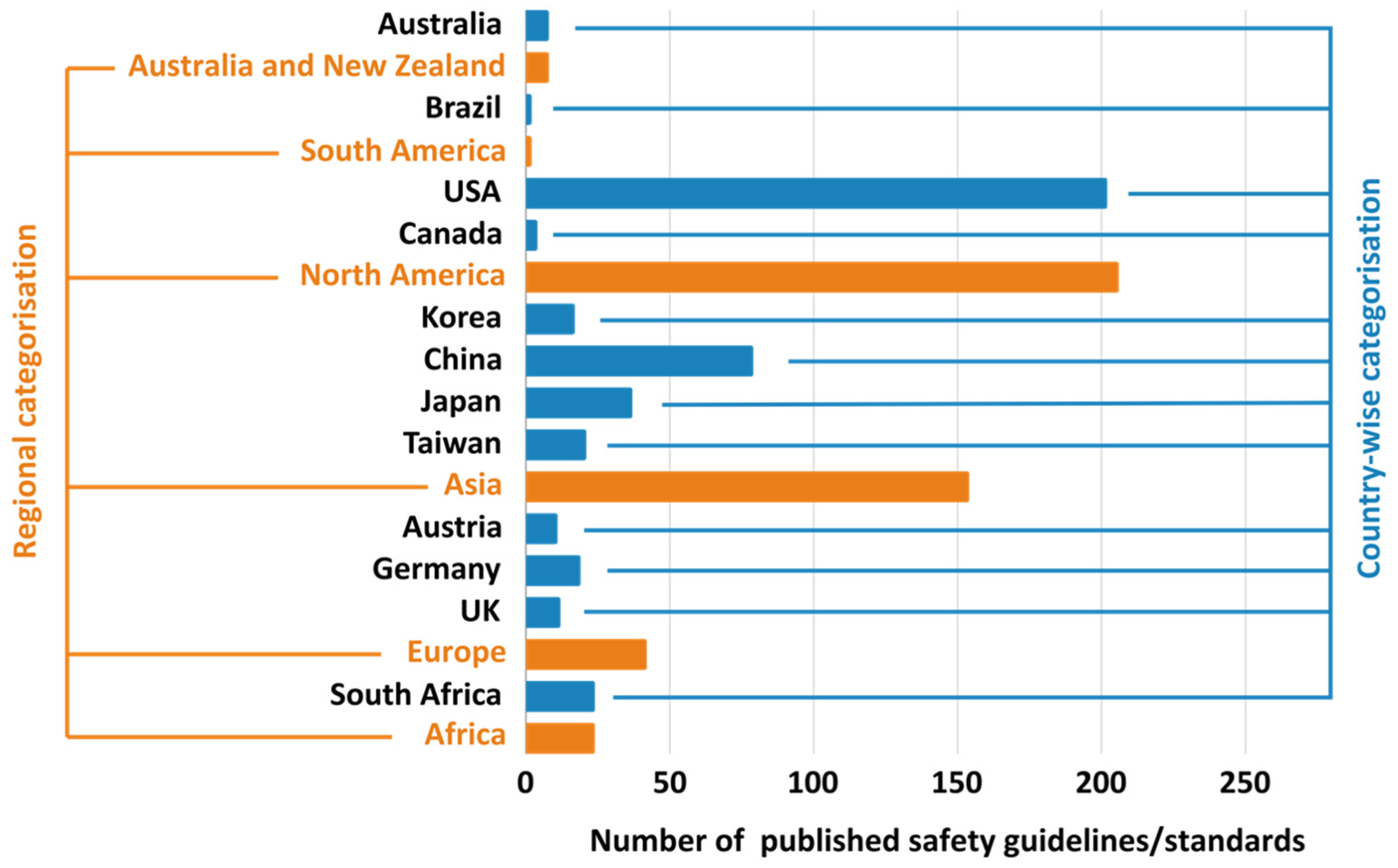
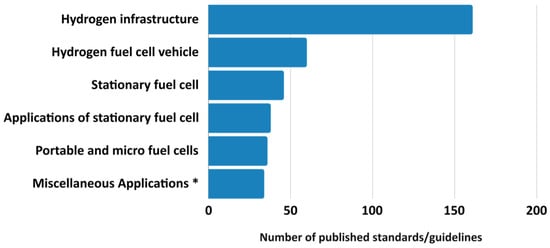
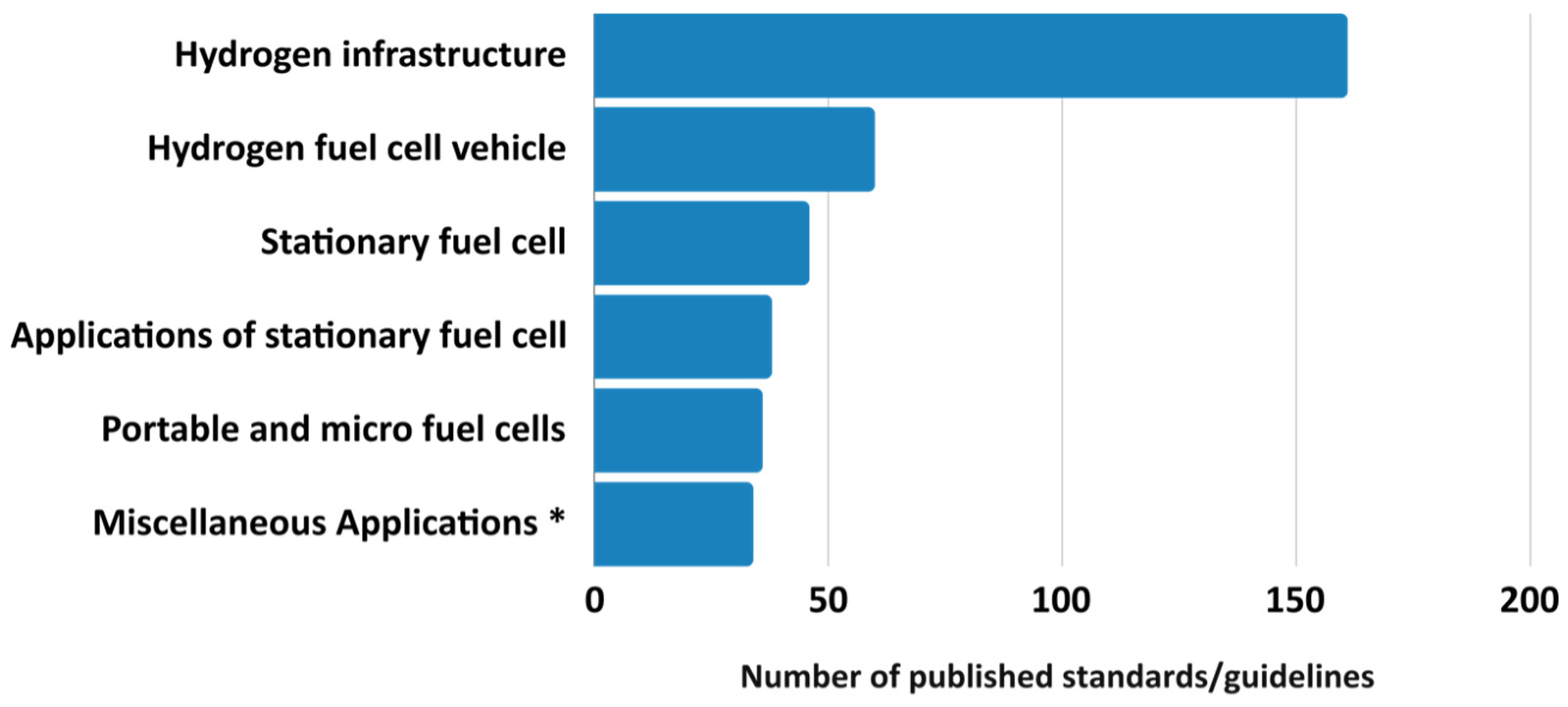

Disclaimer/Publisher’s Note: The statements, opinions and data contained in all publications are solely those of the individual author(s) and contributor(s) and not of MDPI and/or the editor(s). MDPI and/or the editor(s) disclaim responsibility for any injury to people or property resulting from any ideas, methods, instructions or products referred to in the content. |
© 2026 by the authors. Licensee MDPI, Basel, Switzerland. This article is an open access article distributed under the terms and conditions of the Creative Commons Attribution (CC BY) license.